

Assi Ghat
Major GhatThe southernmost and most famous ghat of Kashi, built at the meeting of the Asi stream and the Ganga. The Puranas fix the sacred city as beginning here — from Assi to Varuna. Home of the sunrise, the morning aarti and the boat rides.


Type
Major Ghat
Boat Fare
1.2x base fare
Best Time
Sunrise 5-7 AM for the darshan, the dip and the Subah-e-Banaras aarti at 6 AM; evening Ganga aarti around 6:30-7 PM.
History
The Asi stream, rising in the countryside south of the city, joins the Ganga at this ghat. The Puranas declare the bounds of sacred Kashi as "from the Asi to the Varuna", which is why a pilgrimage to Kashi has always begun here — and the Mahavishnu temple stands exactly on the sangam.
The name is tied to a sword: legend holds that Vishnu’s blade (asi) touched this very shore when he slew the demons Madhu and Kaitabha, giving the stream its name and the ghat a special power of liberation. Even today a dip at the sangam is counted among the great purifying acts of Kashi.
Tulsidas made his home in the quarter between this ghat and Tulsi Ghat while composing the Ramcharitmanas (begun in 1574). In later centuries the steps became the favoured haunt of painters, poets and musicians, which is why the ass of Assi is called the cradle of Banaras culture.
Every morning the "Subah-e-Banaras" aarti is held here around 6 AM at the sangam temple, and the grand Ganga Mahotsav (November-December) has been anchored on this ghat since 1982. Behind the steps, the Lolark Kund has been a Surya-tirtha and a child-blessing site for more than fourteen centuries.
Highlights
- Sunrise view at the Assi river confluence
- Mahamrityunjay Temple — believed to grant peace and health
- Blissful morning Ganga Aarti atmosphere
- Favourite hangout of artists, poets and students
- Most popular starting point for boat rides
Festivals & Events
How pricing works in the NaviX app
No haggling at the ghat — everything is fixed in the app first
- 1
Fixed price before you board
The fare is shown in the app upfront — no bargaining at the ghat
- 2
Sharing or private — your choice
Share with fellow travelers or take the whole boat for your group
- 3
Pay only after the ride
UPI, card or cash — with an instant receipt
5:00 AM (Summer) / 5:30 AM (Winter)
Small dawn aarti with sunrise songs at the sangam, about an hour
6:00 AM & 6:00 PM
Peaceful morning and evening aarti
5:30 AM - 7:00 AM
Live classical music at dawn
Complete Guide
Assi Ghat — The Complete Guide
History, mythology, rites and practical details — everything in depth.
On this page
- 1.Assi Ghat — Gateway of the South
- 2.The Legend of the Name — The Sword of Durga
- 3.The Fifth Tirtha of the Panch Tirtha Yatra
- 4.A Ghat Rebuilt and Reinvented
- 5.The Sangam — Where Two Rivers Meet
- 6.Subah-e-Banaras — The Dawn Aarti
- 7.Maha Shivratri — The Night of Shiva at Assi
- 8.Life on the Banks — Boats, Laundry and Cafés
- 9.The Lanes Behind — Varanasi's Artsy Quarter
- 10.Around Assi — Temples and the University
- 11.Etiquette at Assi — Respectful Visiting
- 12.Practical Guide — Reaching and Timing Assi
📅 Updated: 21 Aug 2026 · Author: NaviX Field Team (field research 2024-26) · 12 sections · 12 photos
Assi Ghat — Gateway of the South
Assi Ghat is the southernmost of Varanasi's great riverside bathing places, lying at the point where the small Assi rivulet slides into the Ganga after a short journey through the city's southern fringe. For centuries it has been counted as the first and the last ghat of Kashi — the terminus from which pilgrims begin or conclude the famous circumambulation of the eighty-four ghats, and the threshold where the great river is first touched. The wide stone steps, the tall pipal trees, the handful of temples and the restless river all give the place an unhurried, village-like calm that is rare along the busier northern stretch of the waterfront. Where the steps farther north swarm with boatmen, hawkers and tour parties, Assi keeps a quieter, more human rhythm, and that is exactly why it has won the hearts of so many who come to the city and choose to linger.
Residents of Varanasi themselves regard Assi as their own backyard, and their ease tells a visitor everything. Students from nearby Banaras Hindu University wander down at dusk, artists set up their easels among the boats, musicians practise on the terraces, and long-stay travellers settle into the guesthouses and cafés that have turned the lanes behind the ghat into the city's most creative quarter. The day here unfolds slowly: early morning baths and the sunrise aarti, unhurried breakfasts of puri-sabzi in the lane stalls, afternoons of reading in the shade, and evenings when the river turns to gold and the lamps begin to drift out upon the water. Assi Ghat is not the oldest or the grandest of Kashi's ghats, but it is the one that feels most alive and most welcoming to the traveller who wishes to stay a while rather than merely pass through.
Assi also marks the boundary between the crowded, centuries-old lanes of the northern city and the leafy, university-centred streets of the south. To the traveller arriving by train or by road it is often the first ghat they reach, and to the pilgrim it is the first water touched; to the returning son of Kashi it is the place where home announces itself in the smell of the river and the sound of the bells. Stand on the steps at Assi, and you stand where the modern city meets the eternal river — the beginning of every story that Varanasi has to tell, and the quiet promise of everything that is still to come in the hours, and the years, ahead.
The Legend of the Name — The Sword of Durga
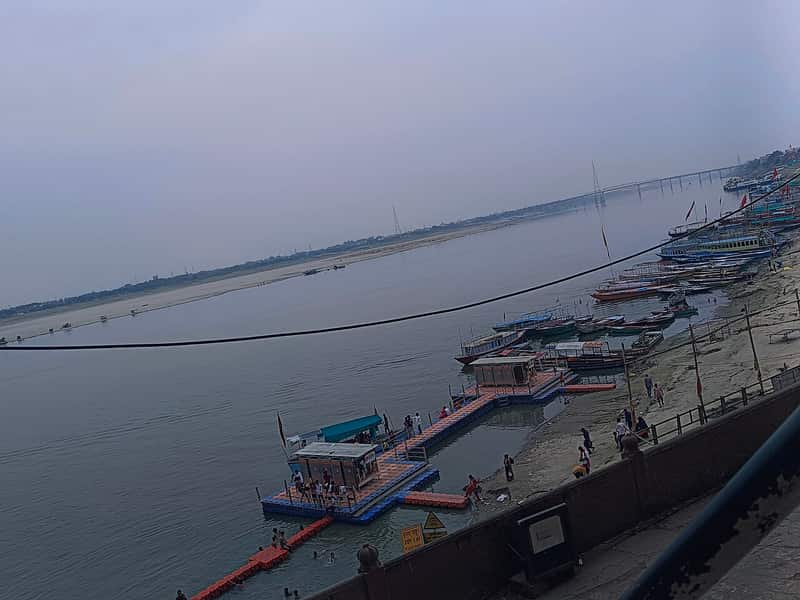
According to the most beloved legend, the name Assi comes from the word asi, the sword of Goddess Durga. It is said that when the goddess slew the demons Shumbha and Nishumbha, the tip of her blade — or, in some tellings, the sword itself — fell to the earth and created the small river that now meets the Ganga here. The rivulet is therefore considered sacred, a living trace of divine power, and the ghat built where the two waters join takes its name from that blessing. Older texts and local tradition sometimes spell the word as Asi, and some scholars see a connection with the Sanskrit root that suggests the edge or blade of a weapon, keeping the martial story alive in the very geography of the city.
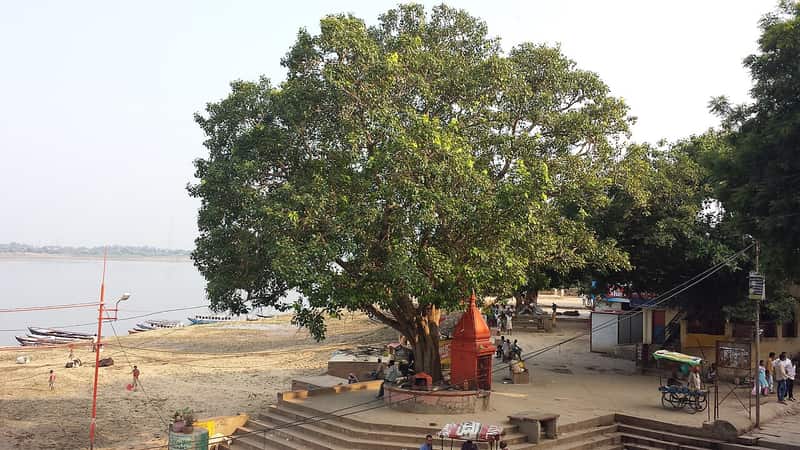
Beside the water's meeting place grows a great pipal tree, and beneath it rests a stone shrine to Shiva — the spot where, tradition holds, the god himself comes to sit and rest. Pilgrims who bathe at the confluence, it is believed, win every battle of their lives, because the water carries the memory of Durga's victory and Shiva's blessing at once. The belief is so strong that many brides and grooms begin married life by bathing here, and the student who is about to sit an examination, or the soldier about to leave home, will first come to Assi for strength. The ghat, in other words, is not merely a bathing place; it is a place where the sacred stories of the city are written into stone, water and tree.
The sword of the goddess is not the only story told at Assi, for the ghat wears many layers of memory. Some traditions connect the name with the Persian word for the place, while others point to the ancient grammarian Patanjali, who mentions an Asi in his writings, making the rivulet one of the oldest attested place names in all of India. Whatever the etymology, the ghat has carried the name for so long that legend and geography have become one — the small river, the divine weapon, and the place of victory are a single idea in the mind of the city, repeated in every prayer and every offering left at the water's edge.
The Fifth Tirtha of the Panch Tirtha Yatra
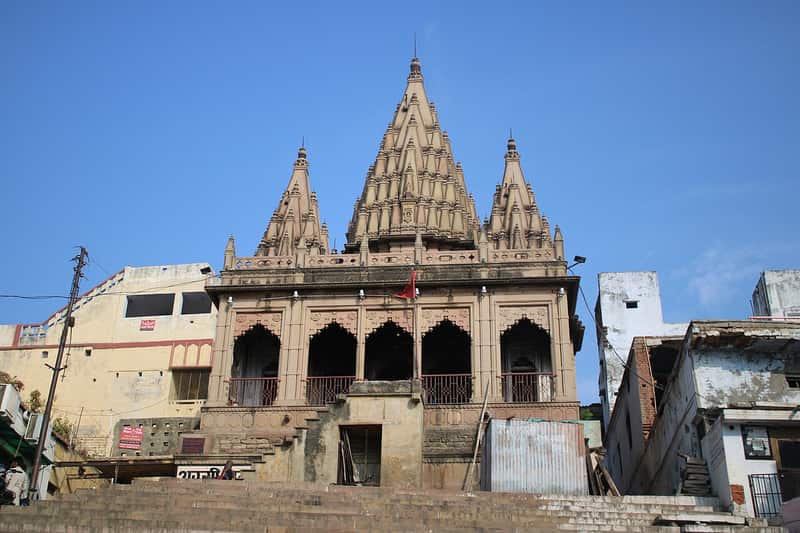
In the old scheme of Kashi's sacred geography, a pilgrim was expected to complete a circuit of five bathing places known as the Panch Tirtha, and Assi Ghat was counted as the fifth and southernmost of them. The traditional order began at Asi or Assi and proceeded to Dashashwamedha Ghat, then on to the Varana at Raj Ghat, the Manikarnika region, and finally the sacred pool at Lolark Kund, or the order was reversed for those who began at the northern end. Whichever direction the yatra followed, Assi held its place as a threshold — the water at which the pilgrim washed before the long walk began, or the point where the tired walker was released back into ordinary life.
Pilgrims undertaking the Panch Tirtha often spend the night on the banks, sleeping in the open air under the arcades and trees so that the first bathing of the new day can take place at the holiest moment of dawn. The scriptures associated with the pilgrimage instruct that each of the five tirthas should be approached with reverence, gifts offered, and the ancestors remembered, and the reward is said to be the merit of countless pilgrimages to other holy places. For many families the walk is still a real event, performed with the same faith that their ancestors carried, and the evening they reach Assi is marked by lamps, songs and a simple meal beside the river. The ghat is thus not an isolated destination but an essential station on a journey that binds the whole city together as one great sacred map.
The Panch Tirtha remains a living practice, not merely a page of scripture, and it is easy to meet it on the riverbank. On almost any morning a small procession of pilgrims can be seen winding southward along the bank, or resting at Assi after completing the northern stations, their foreheads marked with sacred ashes and their bundles of offerings close at hand. For the visitor the significance is simpler: to stand at Assi is to stand at one of the five sacred waters that, taken together, define Kashi itself. The ghat is not a footnote to the city's holiness — it is one of the very pillars on which that holiness has stood, unbroken, for longer than history can remember.
A Ghat Rebuilt and Reinvented
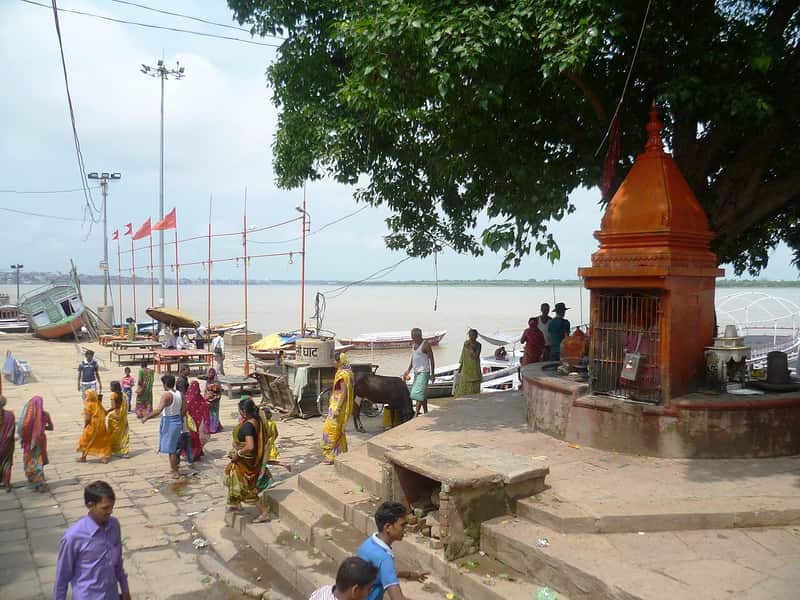
Assi Ghat is old, but its present shape is the work of many hands across the centuries. Repairs carried out in the eighteenth century, when the ghats of the city were being rebuilt and ornamented under the patronage of Maratha rulers and local rajas, gave the stone steps much of their current form, and later additions extended the landing toward the water and strengthened it against the river's flood. In the older order of the city, Assi Ghat was the traditional terminus of the walk of the eighty-four ghats, the point where the great circuit began or ended, and boatmen still speak of the crossing as the natural starting line for a journey up the river toward the heart of Kashi.
The lanes behind the ghat carry their own quiet history of famous residents. Scholars of Sanskrit and Hindi, musicians of the Banaras gharana, poets and painters have all made their homes along Assi at one time or another, drawn by its calm and its neighbourhood of thinkers. It is said that some of the great masters of the sitar and the tabla lived within a short walk of the water, and that the morning riyaz that drifts from the windows is a tradition as old as the ghat itself. To walk these lanes is to follow the footsteps of the city's intellectual life, where every courtyard seems to hide a story, and the river below has listened to the songs and arguments of generations without ever giving away their secrets.
The riverfront itself preserves the memory of the eighteenth-century rebuilding in its stone, for many of the landings and pavilions at Assi carry the characteristic style of that later age of ghat construction. The restorations were not vanity but necessity, for the floods of the Ganga and the slow weight of time had claimed many an earlier platform. Walking south from the old heart of the city you can read the centuries in the masonry — the coarse, massive blocks of the older foundations giving way to the smoother dressed stone of the later repairs, each course a record of a different era of devotion. Assi's history is therefore written twice: once in the chronicles and once in the very steps on which the bathers stand, and both versions agree that this ghat has been a living place of worship without interruption for centuries.
The Sangam — Where Two Rivers Meet
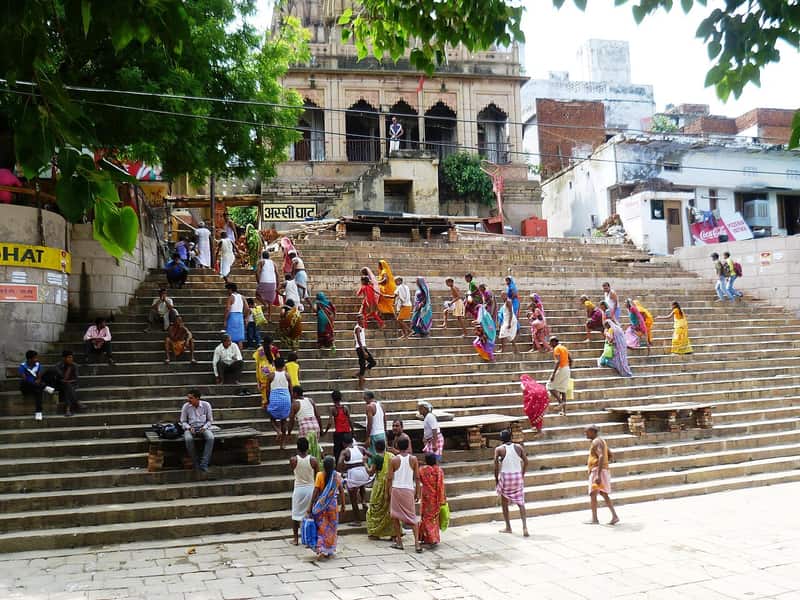
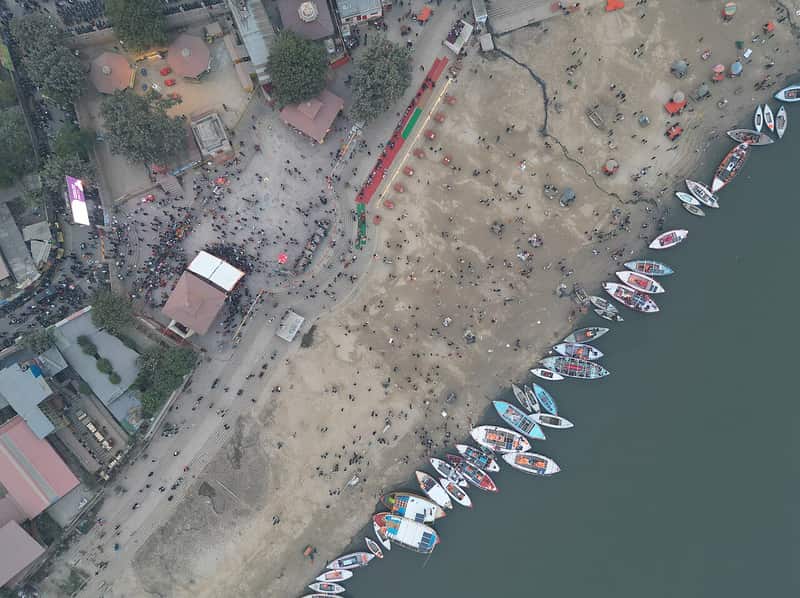
The heart of Assi Ghat is the sangam, the point where the dark thread of the Assi river slides into the broad body of the Ganga. In the dry months the meeting place appears as a low shingle bank of sand and pebbles, exposed by the falling water, where bathers step carefully across the stones to find the deeper current; in the monsoon the two rivers embrace invisibly under the swollen flood. At all seasons this junction is treated with particular reverence, for the coming together of two sacred waters multiplies their power, and many pilgrims perform their oblations exactly at the line of the meeting rather than on the main steps.
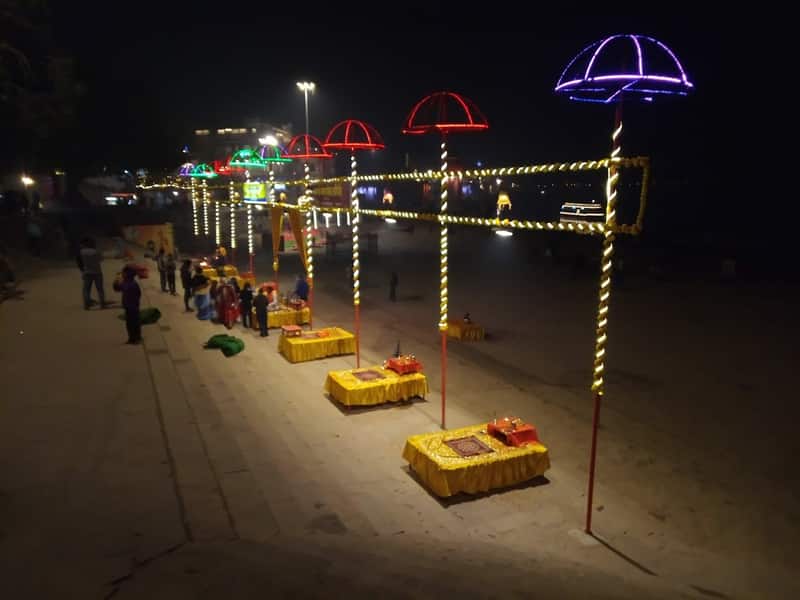
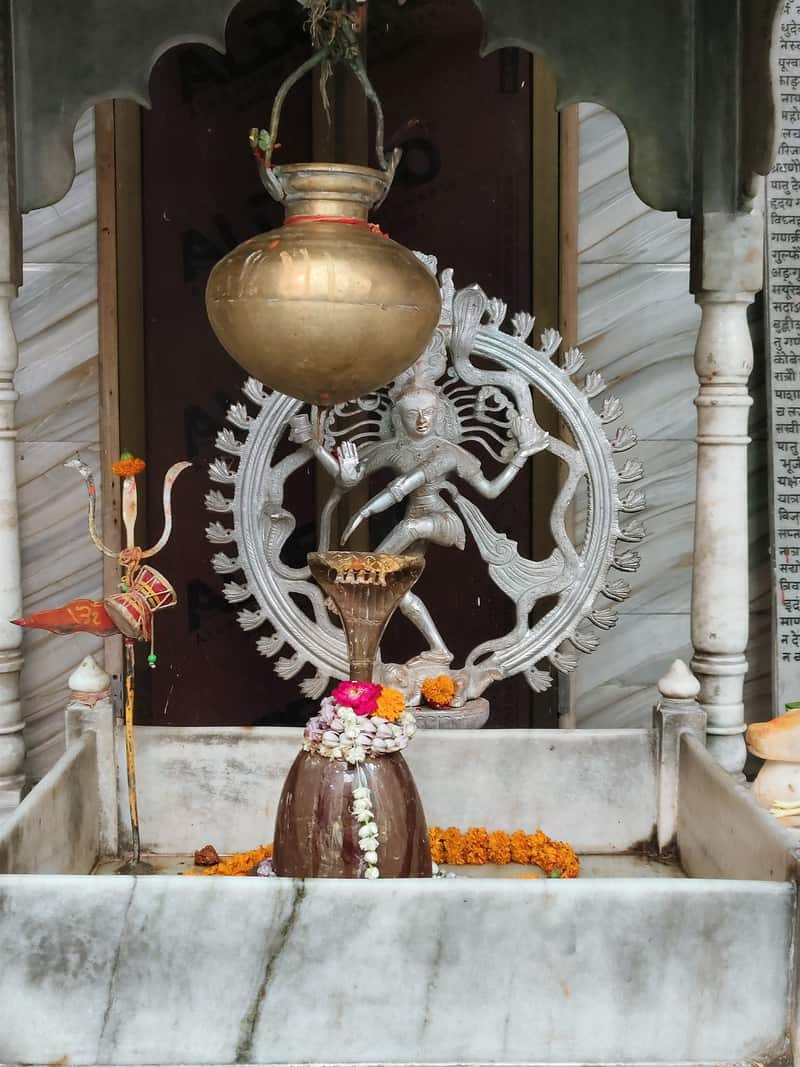
At the bank stands an old Shiva linga shrine sheltered beneath a pipal tree, and it is here that the legend of the resting god is acted out daily: offerings of flowers and marigold, small brass lamps, and the chant of Om Namah Shivaya rising with the morning mist. The day at the sangam begins before sunrise, when the earliest bathers arrive with brass lota, copper and cloth, to stand waist-deep in the cool water and greet the rising sun. In the evening a smaller but deeply felt aarti is held at the Assi sangam itself, distinct from the grand ceremony at Dashashwamedha — lamps, drums and voices gathered close around the water, as if the two rivers themselves were listening.
For those who cannot travel to the great confluence at Prayag, the sangam at Assi offers a local, daily version of the same reverence — a smaller meeting of waters where the same ancient gestures are performed without ceremony or fuss. Boats gather here in the late afternoon, and the boatmen know exactly where the line of the meeting lies beneath the surface, pointing it out to their passengers as they row across in the golden light. To cross the sangam, even once, is to take part in the oldest ritual of the ghat: the quiet acknowledgement that where rivers join, heaven leans a little closer to the earth, and the blessing of the water is within reach of every hand.
Subah-e-Banaras — The Dawn Aarti
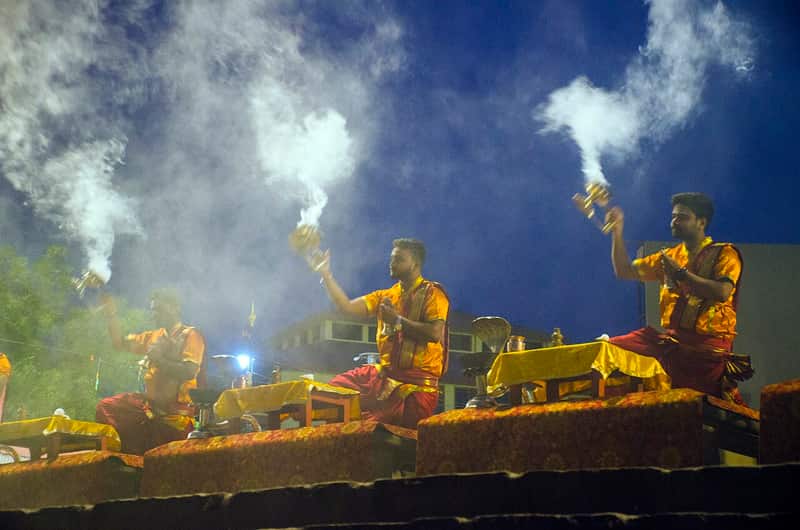
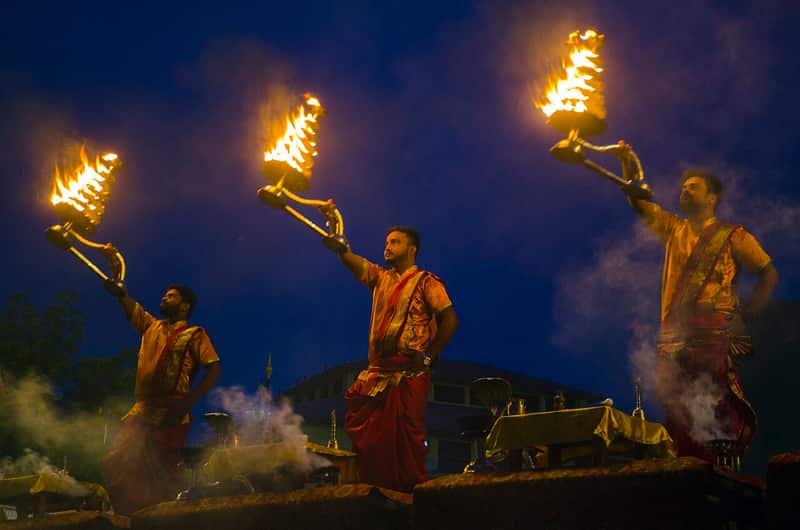
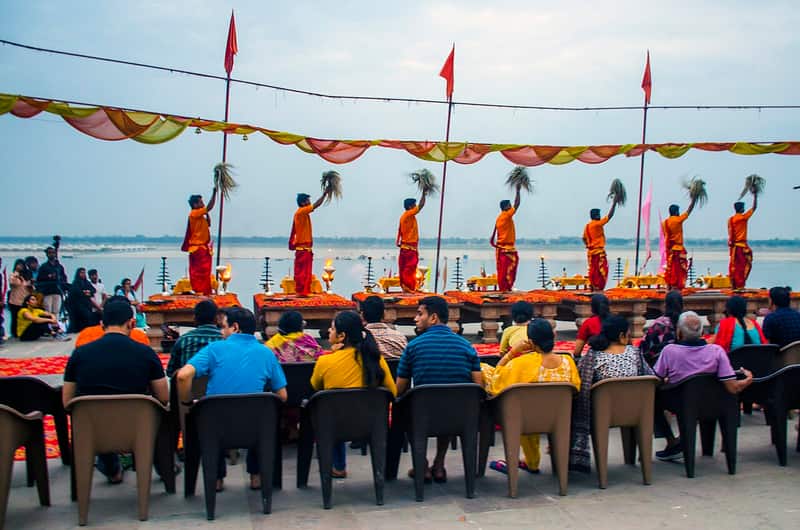
While most of the city is still asleep, the early risers gather on the wide platform at Assi Ghat for Subah-e-Banaras, the morning Ganga Aarti that has become one of the defining experiences of a visit to Varanasi. As the sky turns from violet to rose, the young men of the city step forward with tall brass lamps, camphor flames and clouds of incense, and begin the chanted prayers of dawn. The ritual is deliberately different from the grand evening ceremony: it is smaller, more intimate, conducted in the cool light of morning, with the river calm and the birds loud, and the whole performance feels like a slow awakening rather than a spectacle.
The morning aarti was shaped and sustained for years by the Sankat Mochan Foundation, the organisation associated with the great Hanuman temple across the city, which organised the ceremony and the accompanying educational work on the river. Around the lamps the crowd sways and sings along, many holding tiny clay lamps to set afloat afterward, and the atmosphere is one of shared, unforced devotion. Those who come early enough also witness a beloved local ritual at dawn — the feeding of the crows on the ghat, when handfuls of grain are scattered for the birds that arrive in noisy flocks, a custom that marks the beginning of the day's charity and keeps the old ways of the ghat alive alongside the newer ceremonies.
The Subah-e-Banaras aarti runs through much of the year, and its mood changes with the seasons — brisk and clear in the winter cold, slow and languid in the monsoon heat, and at all times utterly sincere. Visitors who sit on the platform during the ceremony find themselves drawn into its unhurried rhythm, some joining the chanting, others simply watching the light grow across the water until the smoke of the incense dissolves into the pale sky. It is a perfect introduction to Varanasi for the first-time visitor: a ceremony of astonishing beauty performed without fuss, at a human scale, in the open air beside the holiest river of India.
Maha Shivratri — The Night of Shiva at Assi
If there is one night when Assi Ghat becomes the very centre of the city, it is Maha Shivratri, the great night of Shiva. On this festival the southern ghat is transformed beyond recognition: hundreds of thousands of devotees pour onto the steps and the surrounding streets, the sangam platform disappears under a living carpet of humanity, and the air thickens with the chant of Om Namah Shivaya, the sound of damaru and conch, and the continuous ringing of bells. Fire rituals are performed through the night, ghee-fed flames rising above the crowds, while the songs and hymns of Shiva's praise continue without pause from dusk until the first light of the next morning.
The spectacle is counted among the biggest ghat festivals of Varanasi, an event that draws pilgrims not only from the city but from all over north India. Stall-holders line the approaches selling marigold garlands, rudraksha beads and tiny pots of camphor, while the faithful queue for hours simply to touch the water and offer their prayers at the confluence. As midnight approaches the excitement peaks, and fireworks burst over the river, their colours falling in reflection across the black water, watched by a crowd that seems to hold its breath together. To be on Assi Ghat on Maha Shivratri is to see the ancient, unbroken worship of Kashi at its most overwhelming, a night of faith so dense that it can be felt in the chest.
Visiting Assi on Maha Shivratri requires real planning: arrive hours before the main crowds, keep to the edges of the densest gatherings, and bring patience, drinking water and sturdy shoes. The reward is an experience no guidebook can prepare you for — the sense of an entire city holding one single thought, expressed in a million voices at once, rising together toward the dark sky above the river. Even travellers who know nothing of Shiva find themselves moved by the weight of so much faith gathered in one place. For the believer it is the fulfilment of an ancient promise; for the stranger, an unforgettable glimpse into the very heart of Kashi.
Life on the Banks — Boats, Laundry and Cafés
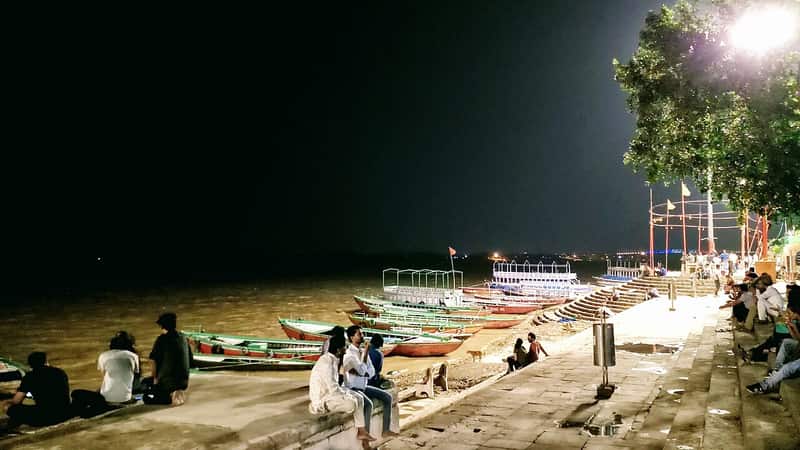
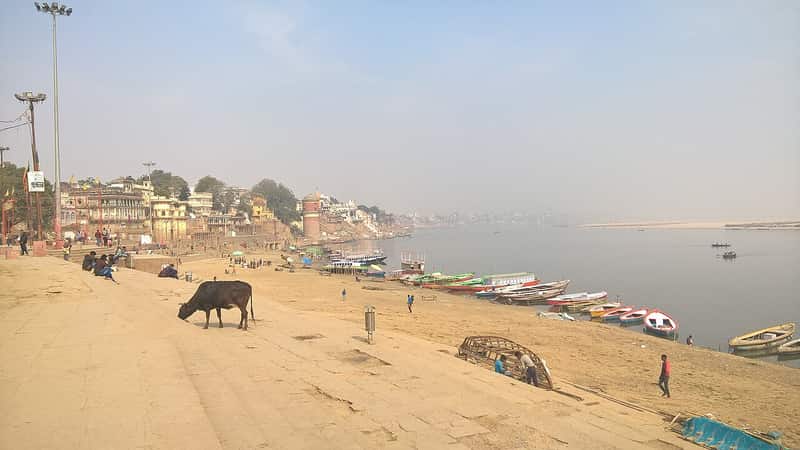
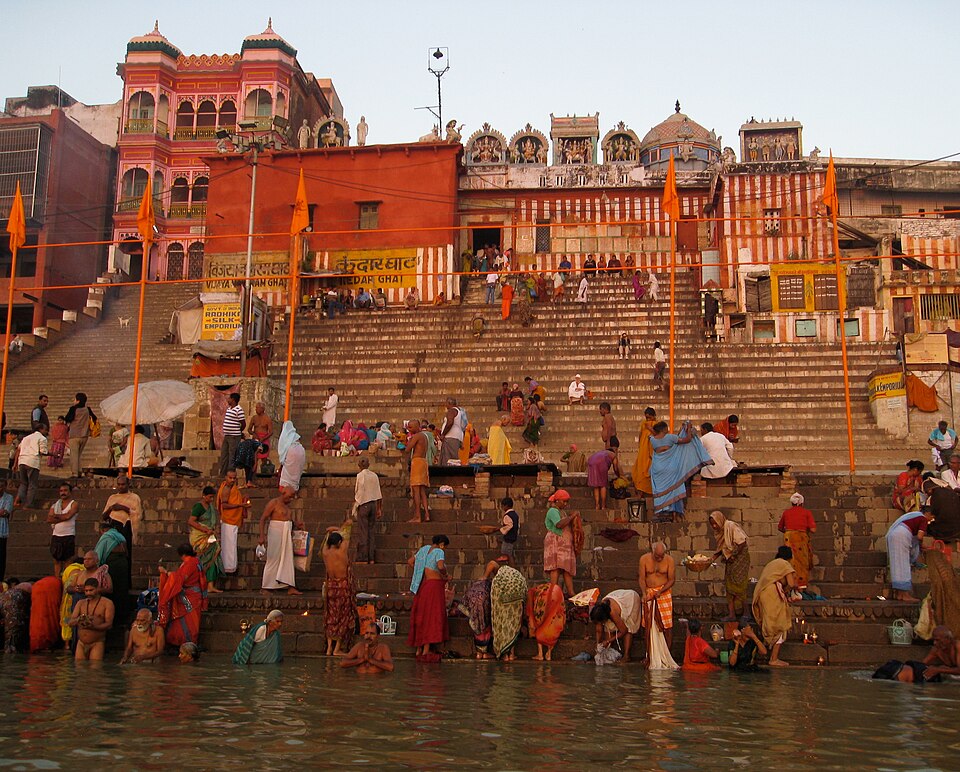
The long stretch of steps between Assi and the ghats to the north is one of the most lived-in stretches of the Varanasi riverfront. Here boat builders work with adze and hammer on the upturned hulls of wooden craft, fishermen spread their nets in the morning light, and men bring their buffaloes down to the water for a slow, grunting bath that has been repeated for generations. Between the stone landings, dhobi ghats keep their ancient trade alive, rows of white and coloured cloth beaten and rinsed and then spread to dry in geometric patterns over the steps, so that the bank flashes with colour on a sunny afternoon.
Behind the waterfront, and woven into the scene, is a newer Assi — the Assi of riverside cafés, bookshops and art studios. Tables on the terraces overlook the water, and their menu boards sit oddly but happily beside the brass pots and the marigold stalls, a sign of how the old and the new share this single bank. One of the sights that has become inseparable from Assi is the series of large murals known as the Ganga Face paintings on the walls beside the river, bold faces of the goddess and of musicians and boatmen in brilliant colour, painted by local artists. The banks of Assi, in other words, are a living collage: prayer and labour, laundry and latte, ancient stone and fresh paint, all side by side.
The daily rhythm of the banks is best enjoyed slowly, at the pace of the river itself. Morning brings the fishermen mending their nets and the dhobis beginning their washing; noon is quiet, when the buffaloes are driven home and the steps bake in the sun; evening restores the full chorus, with the café lights coming on, the last boats tying up for the night and the first lamps of the sangam aarti beginning to glow. Those who take a boat south from Assi in the late afternoon see this whole world from the water, where the murals, the washing and the temple spires arrange themselves into a single, moving picture of life on the Ganga.
The Lanes Behind — Varanasi's Artsy Quarter
Leave the water behind and Assi turns into a different creature — a labyrinth of narrow lanes where the modern bohemian life of Varanasi beats strongest. The walls here are a gallery in themselves, covered in street art that ranges from portraits of Shiva and Kabir to murals of musicians and abstract swirls of colour, painted by a community of young Indian and foreign artists who have made the neighbourhood their studio. Along these lanes you will find second-hand bookshops stacked to the ceiling with old paperbacks, cafés that serve everything from chai to cappuccino, yoga studios whose mats are laid out each morning in quiet courtyards, and a web of homestays that allow travellers to live in the middle of an old Banaras household.
The crossing at Assi, where the lanes meet the main road, is a constant theatre of horns, bicycles and rickshaws, and above it all hangs the reputation that has made this the artsy quarter of Varanasi. Writers live here and write about the city, painters find their subjects in the boatmen and the morning light, musicians come to learn from the old masters, and the students of the university give everything a young and restless energy. The neat boundary between the sacred ghat and the creative lane is a false one, because the same city that prays with such intensity also plays and creates with equal intensity. To wander behind Assi is to see the other face of Kashi — not the face of the pilgrim, but of the poet.
This is also the quarter where many long-stay travellers choose to settle, and their presence has reshaped the neighbourhood without erasing its character. Old families still celebrate their festivals in the lanes, the milkman still makes his round at dawn, and the smell of incense still mingles with the smell of filter coffee in the doorways of the studios. The result is a rare balance — a place modern enough for comfort and traditional enough for enchantment, where a sitar lesson and a heritage walk fit into the same afternoon. Assi's lanes have become, in effect, the drawing-room of contemporary Varanasi, where the city talks to itself and to the world in the same breath.
Around Assi — Temples and the University
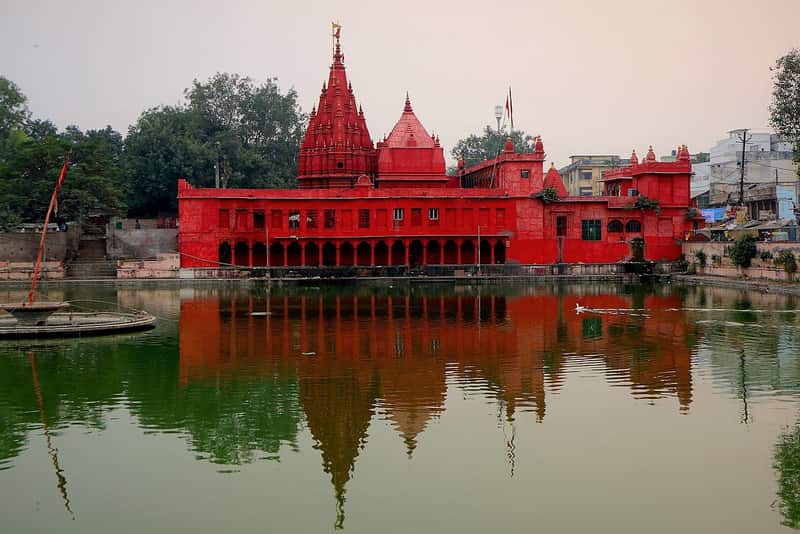
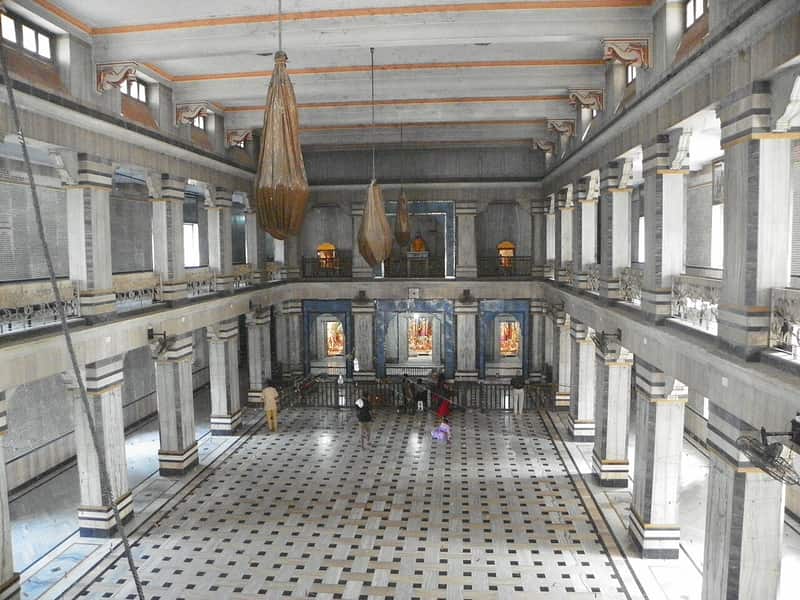
Assi Ghat is the natural base for exploring the southern quarter of Varanasi, and the first of the great sights lies only a short walk or rickshaw ride away. Durga Kund, the temple of the warrior goddess Durga, stands by a sacred pond in a compound of red-stone, its shikhara rising sharply against the sky, and it is thronged with devotees, especially on Tuesdays and Saturdays and during the autumn festivals. A little further along the same road stands Tulsi Manas Mandir, the marble temple built where the poet Tulsidas is said to have composed the Ramcharitmanas, its walls carved with scenes from the Ramayana; on a quiet morning the recitation of the verses still floats through its pillared halls.
The greatest neighbour of all is Banaras Hindu University, a vast green campus founded by Pandit Madan Mohan Malaviya, whose broad avenues and peaceful lawns lie within easy reach of the ghat. At its heart rises the New Vishwanath Temple, also called Birla Temple, a tall tower of white marble built in the twentieth century to stand as a modern counterpart to the ancient Kashi Vishwanath at the heart of the old city. It is one of the few temples where non-Hindus are freely welcome to enter, and the view from its precincts over the treetops of the campus is one of the gentlest in Varanasi. Together these sights make Assi the doorway to a whole district of devotion, learning and architecture, all within an easy morning's walk.
The great advantage of staying near Assi is that so much of southern Varanasi lies within a gentle walk. After the temples and the university, the visitor can continue to the calm reaches of the river south of the ghat, where the ghats grow fewer and wilder, the crowds thin, and the water deepens toward the green countryside. Many visitors combine a morning at Durga Kund and Tulsi Manas with an afternoon on the university lawns, ending the day back on the steps of Assi for the sunset and the first drifting lamps. Seen this way, the ghat is not an endpoint but a hub — the natural centre of the whole southern quarter of Kashi.
Etiquette at Assi — Respectful Visiting
Assi Ghat is a living place of worship, and a few simple courtesies will keep your visit comfortable for everyone. At the confluence, watch the bathers and the priests and give them their space; if you are not bathing, keep to the steps and do not block the passages used by those who come to the water. Photography is a delicate matter: many pilgrims do not mind a quick, polite photograph, but always ask first, lower your camera when asked, and never press for a picture of a ritual that is clearly private. The sadhus who sit along the bank are often happy to talk, yet they are not a spectacle; a respectful greeting, a small offering if you wish, and no pushing for a pose will be appreciated.
The river itself asks for your care. Plastic bottles, wrappers and flowers wrapped in plastic have no place in the Ganga, so carry your rubbish with you and choose a biodegradable offering — loose petals and plain camphor are traditional and kind. On festival days such as Maha Shivratri the ghat becomes extremely crowded, so hold on to children, keep valuables close, agree on a meeting point before you lose sight of your group, and move slowly through the crowds rather than pushing. Arriving early is its own form of courtesy: it gives you the calm of dawn and leaves the busiest hours to the pilgrims. Treat Assi the way you would treat a great temple, and it will return the gift of an unforgettable visit.
One more courtesy matters above all others at Assi: patience with the scale of it all. The ghat is a place that rewards those who wait — who sit on the steps a little longer than planned, who let the ceremonies unfold without rushing to the next photograph, who accept that the water, the weather and the crowd have their own schedule. Travellers who surrender to that rhythm often carry away far more than photographs: a lasting sense of having truly touched the life of the place. Assi does not demand anything from the visitor except respect, and in exchange it gives something that cannot be bought or hurried anywhere else in the world.
Practical Guide — Reaching and Timing Assi
Assi Ghat is easy to reach and pleasant to arrive at. From Shivala Ghat it is a gentle twenty-minute walk along the riverbank, and the whole stretch is a walk through the life of the ghats; alternatively, cycle-rickshaws and shared e-rickshaws ply constantly from the Assi crossing and from Godowlia, and taxis and app-based autos can drop you within a few steps of the water. There is no entry fee at any point — the ghat and its ceremonies are open to all, and the boats for a sunrise trip along the river are hired directly on the steps. The city's main railway stations and the airport are connected to the Assi side by road, so the ghat works as well as a first stop as a final one.
The best times to be here are built into the rhythm of the day. Arrive by 5:00 or 6:00 in the morning to see the dawn bath and the river waking, return around 7:00 for the Subah-e-Banaras aarti, and come back in the evening, shortly before sunset, for the last gold of the day and the small sangam ceremony. Because Assi sits at the southern end of the ghat line, it is the natural starting point for the traditional 84-ghat walk heading north — past Tulsi Ghat and Kedar Ghat, where the older, quieter atmosphere continues. With the confluence, the temple quarter and the university all within easy reach, Assi Ghat gives the visitor a complete Varanasi in miniature, from first light to the last lamp.
A little advance planning makes the visit effortless. Comfortable footwear is essential, for the steps and the lanes are uneven; a shawl or light scarf is useful against the morning and evening river chill; and modest clothing is appreciated at the temples and the sangam. Those who wish to stay nearby will find guesthouses and hotels clustered around the Assi crossing in every price range, and the ghat's cafés and studios give the area a life that continues long after the boats have stopped. With the ghat as your base, the whole of Varanasi opens outward in widening circles — the river in the morning, the temples by midday, the lanes by evening, and always, at the end of the day, the steady, unhurried pulse of Assi itself.
Assi Ghat — Gallery (12 Photos)
Image Credits
assi-01.jpg · assi-02.jpg · assi-03.jpg · assi-04.jpg · assi-05.jpg · assi-06.jpg · assi-07.jpg · assi-08.jpg · assi-09.jpg · assi-10.jpg · assi-11.jpg · assi-12.jpg — Wikimedia Commons, under free licenses.
Continue exploring
Similar Ghats Nearby
Book This Ghat — Get Notified
Download the app now and book a boat ride to Assi Ghat