
Day Trip from Varanasi
Sarnath — Where Buddha Gave His First Sermon
The holiest Buddhist pilgrimage site, just 10 km from Varanasi. A 2,500-year-old story carved in stone — stupas, a world-famous museum and temples from across Asia.
About Sarnath
The Birthplace of Buddhism
Sarnath (Isipatana in Pali, from Rishipattana — "where the sages fell") is one of the four holiest Buddhist pilgrimage sites in the world. In 528 BCE, Prince Siddhartha Gautama — freshly enlightened at Bodhgaya — came here and delivered his first sermon, the Dhammacakkappavattana Sutta (Setting the Wheel of Dharma in Motion), to five former companions. With that single discourse, the wheel of Dharma began to turn and the Buddhist sangha came into existence.
For the next 1,500 years Sarnath was a seat of Buddhist learning rivaling Nalanda. Emperors from Ashoka to the Guptas added stupas, pillars and monasteries; pilgrims from China, Tibet and Southeast Asia studied here. The art style born at Sarnath — the "Sarnath school" — defined how the Buddha was depicted for centuries.
Destroyed in the 12th century and rediscovered in 1794, Sarnath today is a peaceful archaeological park where ancient ruins, a remarkable museum and living Buddhist temples from Japan, Thailand, Myanmar, China, Tibet and Sri Lanka stand side by side.
2,500 Years of History
Timeline of Sarnath
The First Sermon
Buddha arrives after enlightenment at Bodhgaya and delivers the Dhammacakkappavattana Sutta to five ascetics — the First Turning of the Wheel of Dharma.
Emperor Ashoka Visits
Ashoka builds the Dhamek Stupa, erects the Ashoka Pillar with the Lion Capital, and founds monasteries here.
Gupta Golden Age
Sarnath becomes a world-famous centre of Buddhist learning, art and sculpture. The famous Sarnath style of Buddha statues develops.
Xuanzang's Account
Chinese pilgrim Xuanzang visits and describes a thriving city with 1,500 monks and a 300-ft-high stupa.
Destruction
Sarnath is destroyed by invaders. The site is buried and forgotten for 600 years.
Rediscovered
Maharaja Jagat Singh of Kashi begins excavation for bricks and stumbles upon the buried Dhamek Stupa.
Cunningham Excavations
Alexander Cunningham carries out the first systematic excavations, uncovering the main shrine, stupas and monasteries.
Major Excavation
A large-scale excavation by the Archaeological Survey of India reveals the full extent of the monastic complex.
Mulagandhakuti Vihara
The Mahabodhi Society completes the modern temple with its famous murals by Japanese artist Kosetsu Nosu.
Gallery
Sarnath in Pictures
What to See
Top Attractions at Sarnath
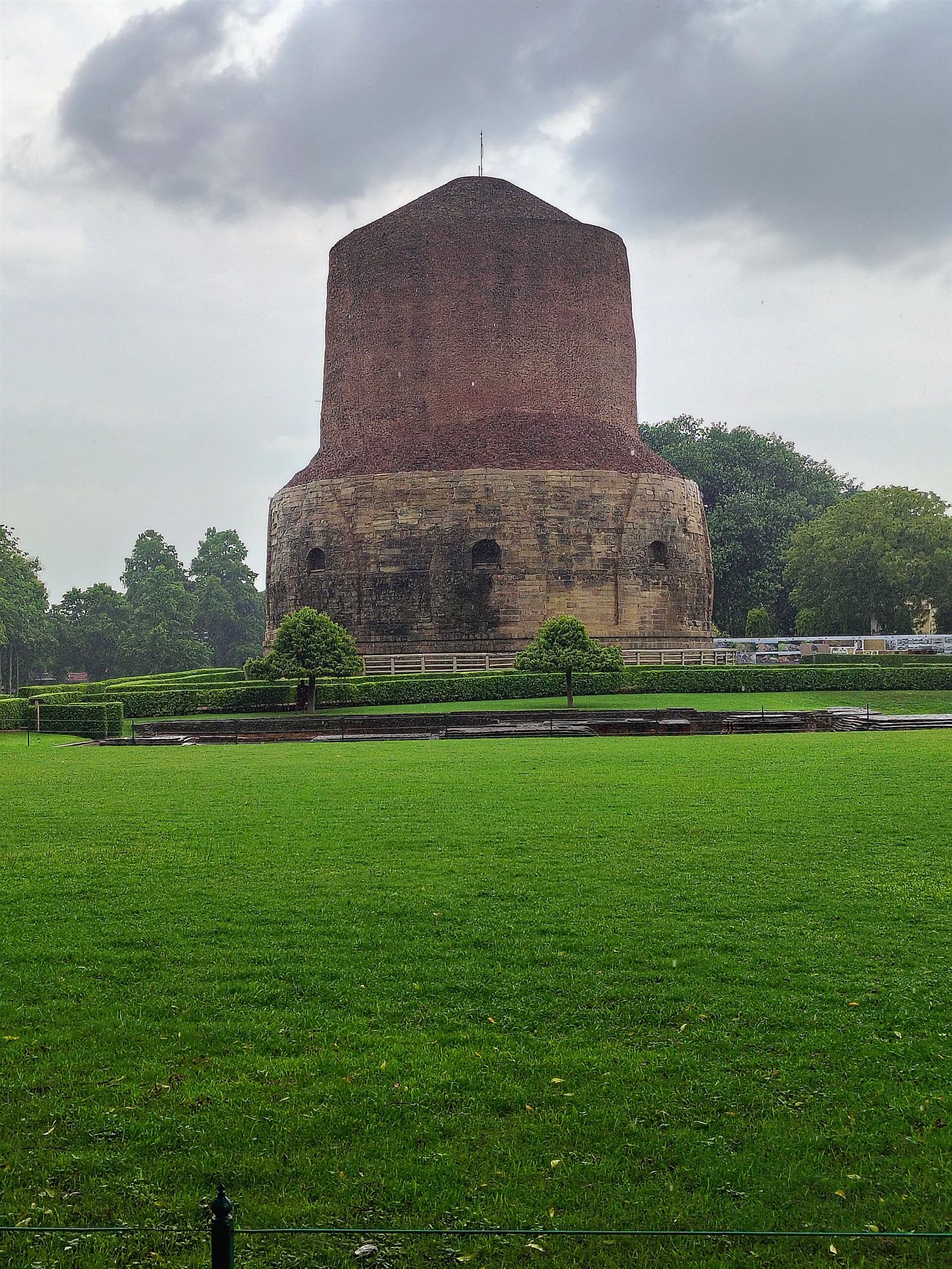
Dhamek Stupa
128 ft tall stupa built by Ashoka (249 BC) and enlarged in the Gupta era. Floral carvings and geometric bands cover its surface. Circumambulate it clockwise like pilgrims have done for 2,500 years.
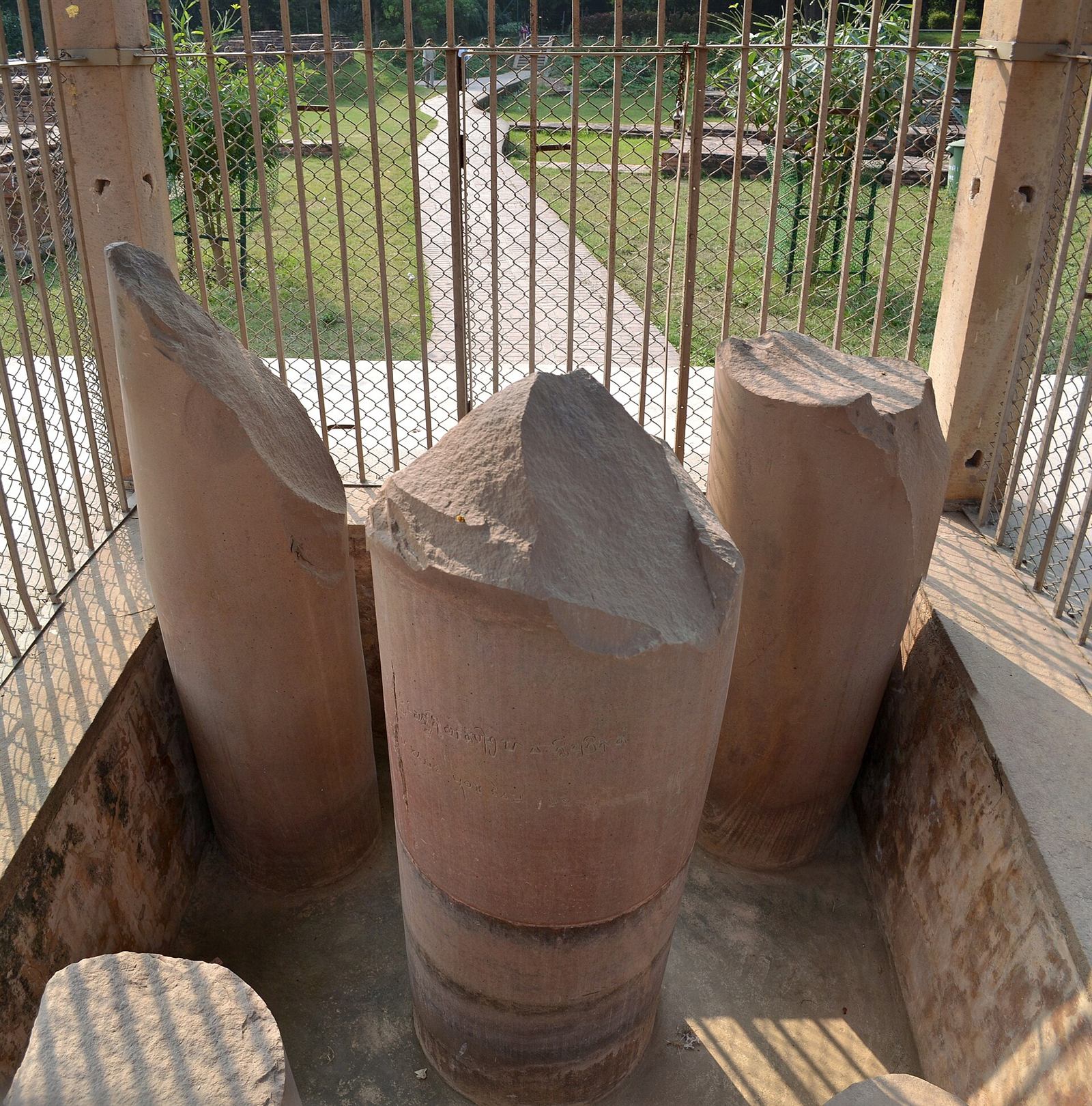
Ashoka Pillar
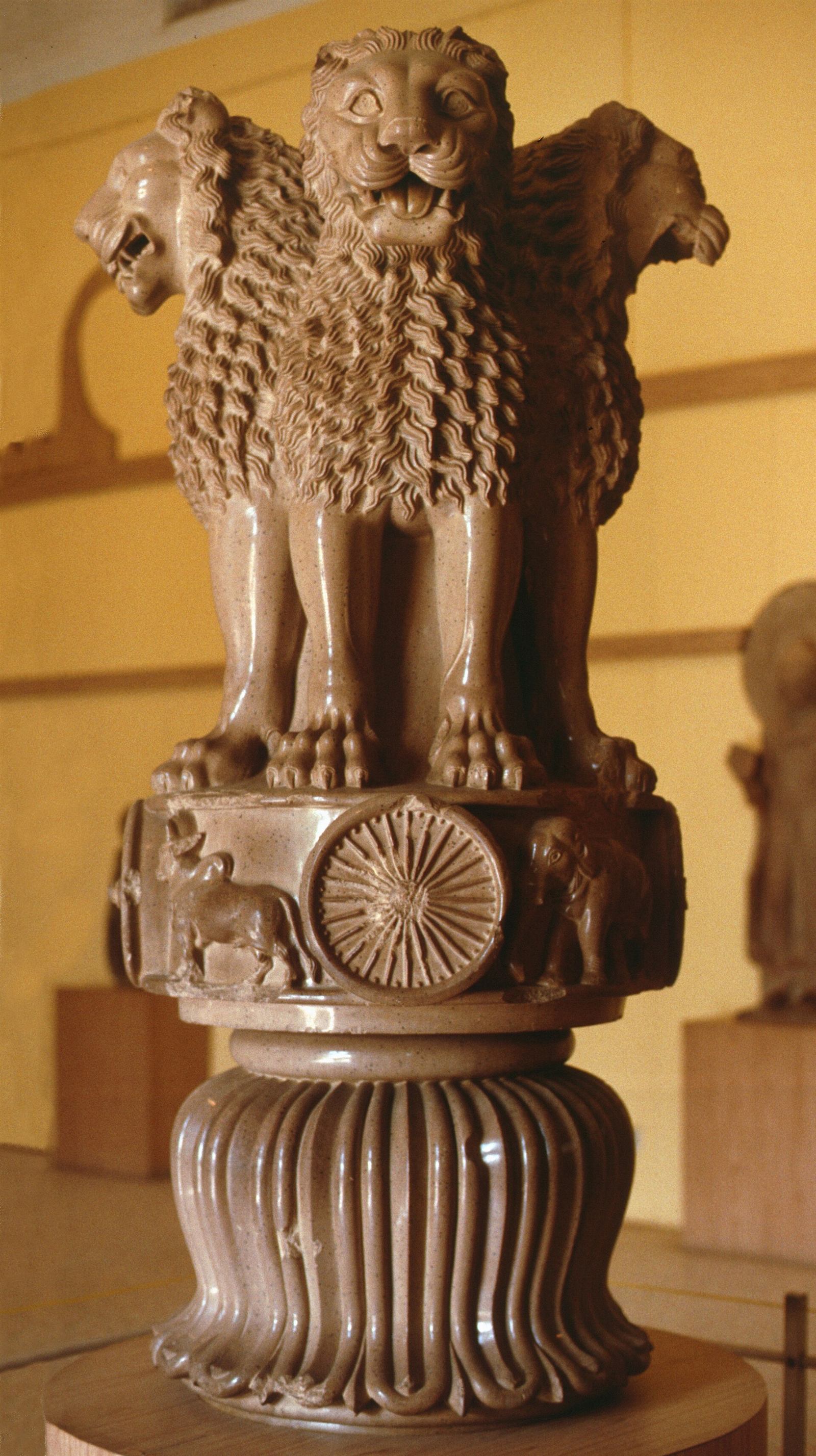
The pillar's broken shaft stands in situ — but its world-famous Lion Capital now lives in the Sarnath Museum. The capital became India's national emblem in 1950.
Sarnath Museum
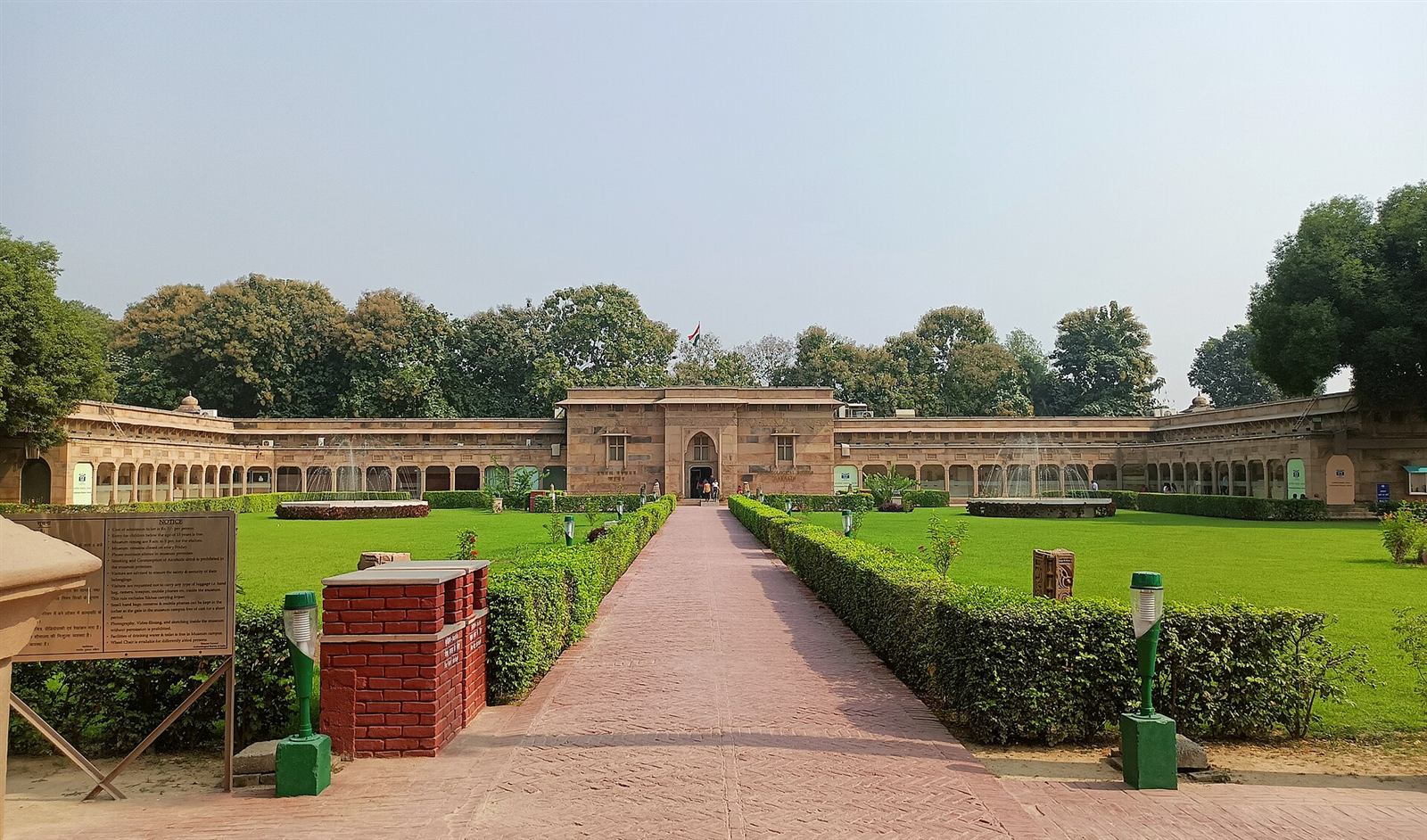
Opened 1910, this is the oldest site museum in India. The original Lion Capital, exquisite Buddha statues of the Sarnath school, and centuries of sculpture are displayed here. Photography of some exhibits is allowed.
Mulagandhakuti Vihara
The modern Buddhist temple (1931) by the Mahabodhi Society. Its magnificent murals — painted by Japanese artist Kosetsu Nosu — narrate the life of the Buddha across 22 panels.
Chaukhandi Stupa
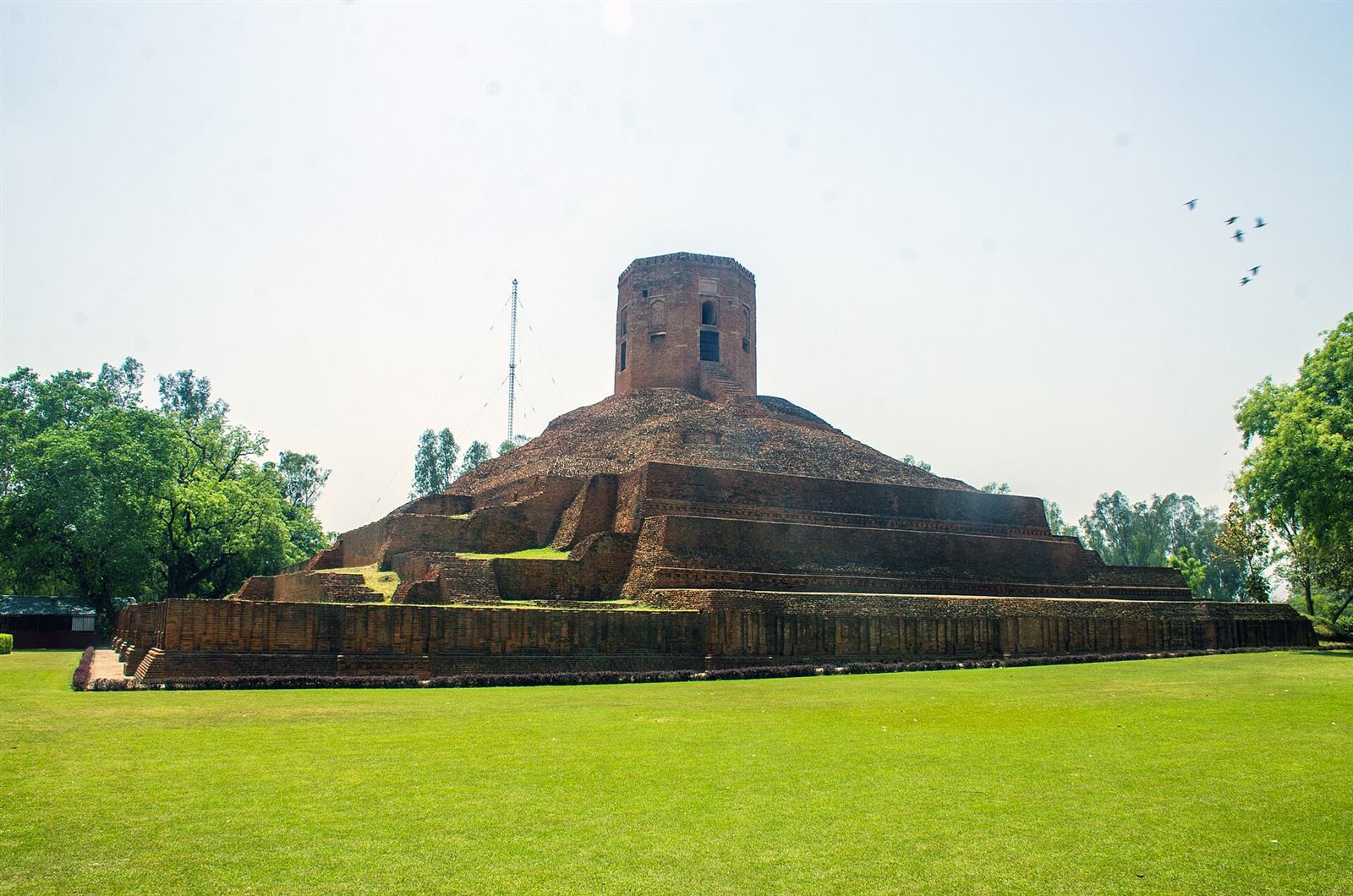
This octagonal brick stupa on a raised mound marks the spot where Buddha met his first five disciples on the way to Sarnath. The Mughal tower on top was added in 1588 by Emperor Akbar.
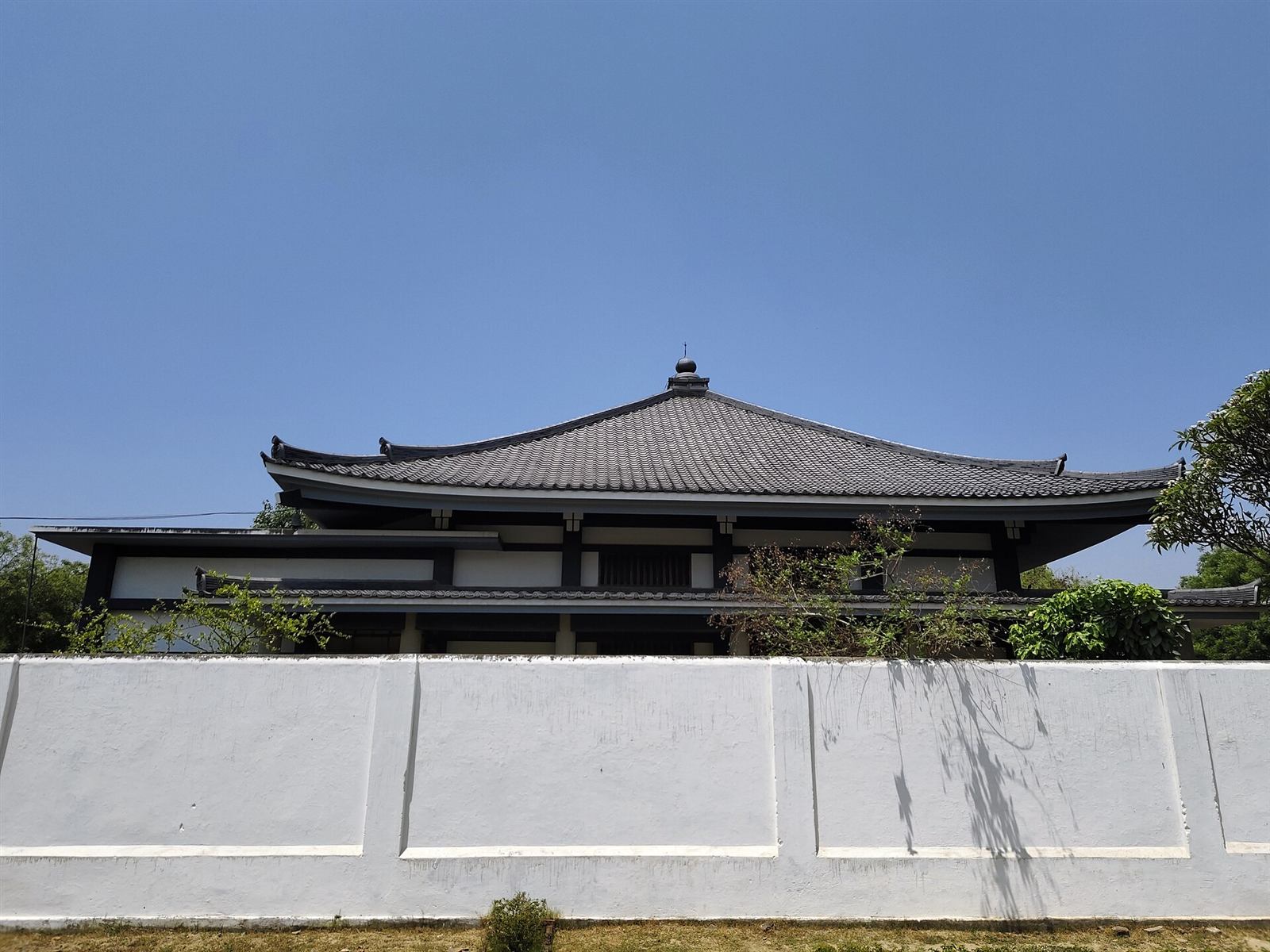
Japanese Temple (Nipponzan Myohoji)
A serene Japanese-style temple with a golden Buddha, a meditation garden and the ringing of chanting monks at dawn. Built by the Nipponzan-Myohoji order.
Wat Thai Sarnath
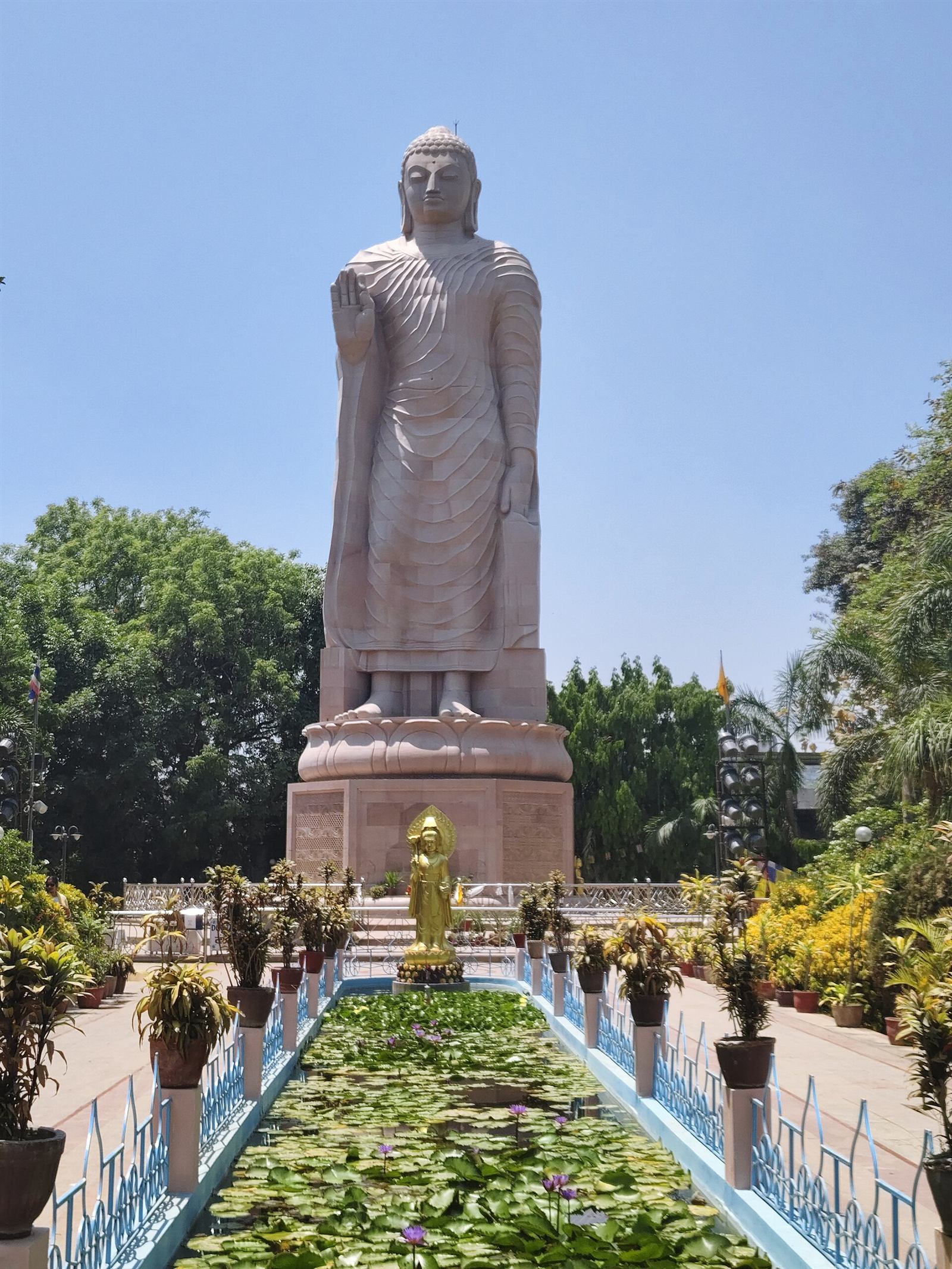
A gorgeous Thai temple with a golden chedi (stupa), vividly painted walls and a garden with a large Buddha. Feel transported to Thailand for a few minutes.
Deer Park & Monastery Ruins
Stroll through the park where deer still roam — the name Sarnath comes from Saranganath, "Lord of the Deer". Explore the excavated monastery ruins that once housed 1,500 monks.
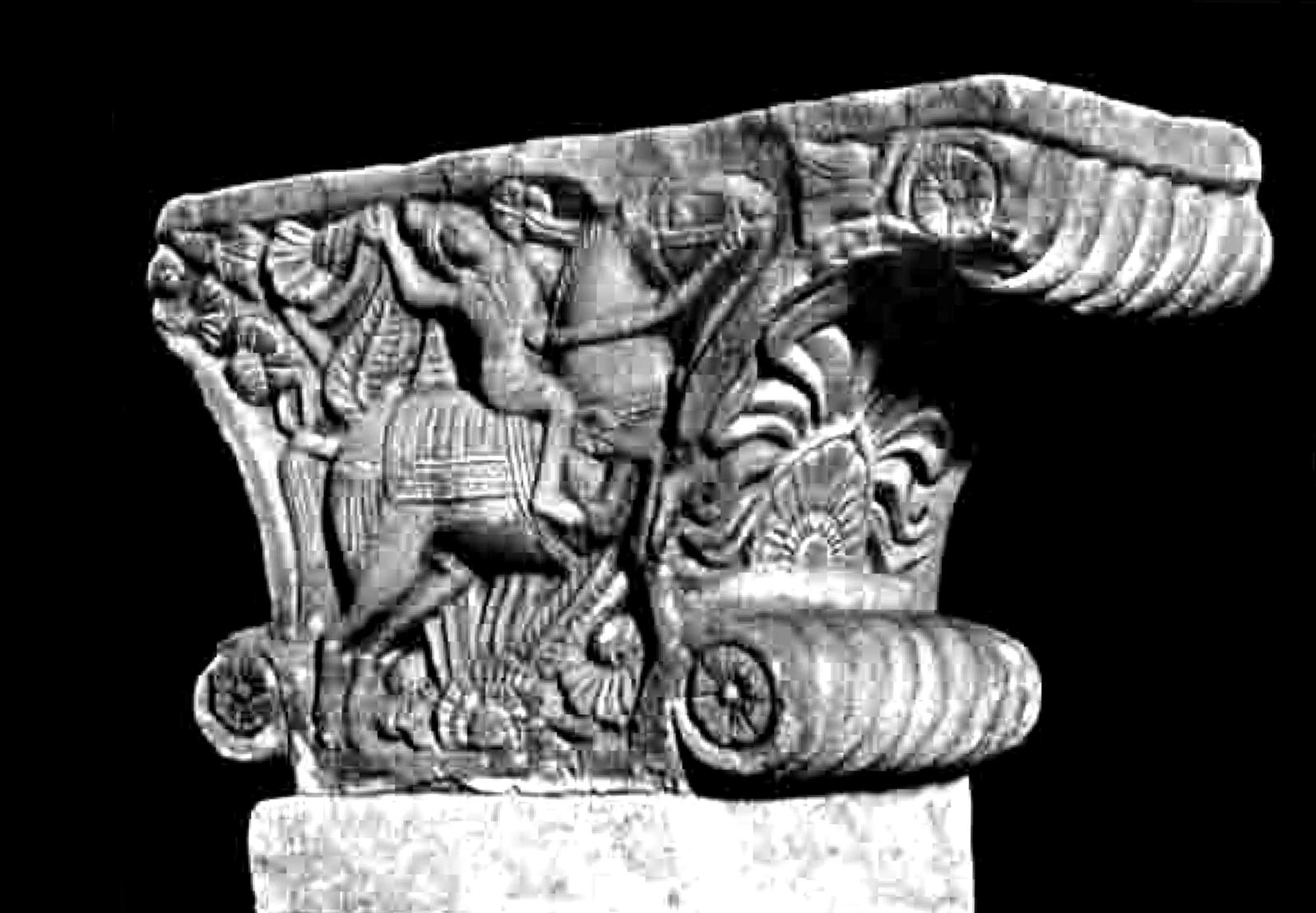
Don't Miss
Sarnath Archaeological Museum
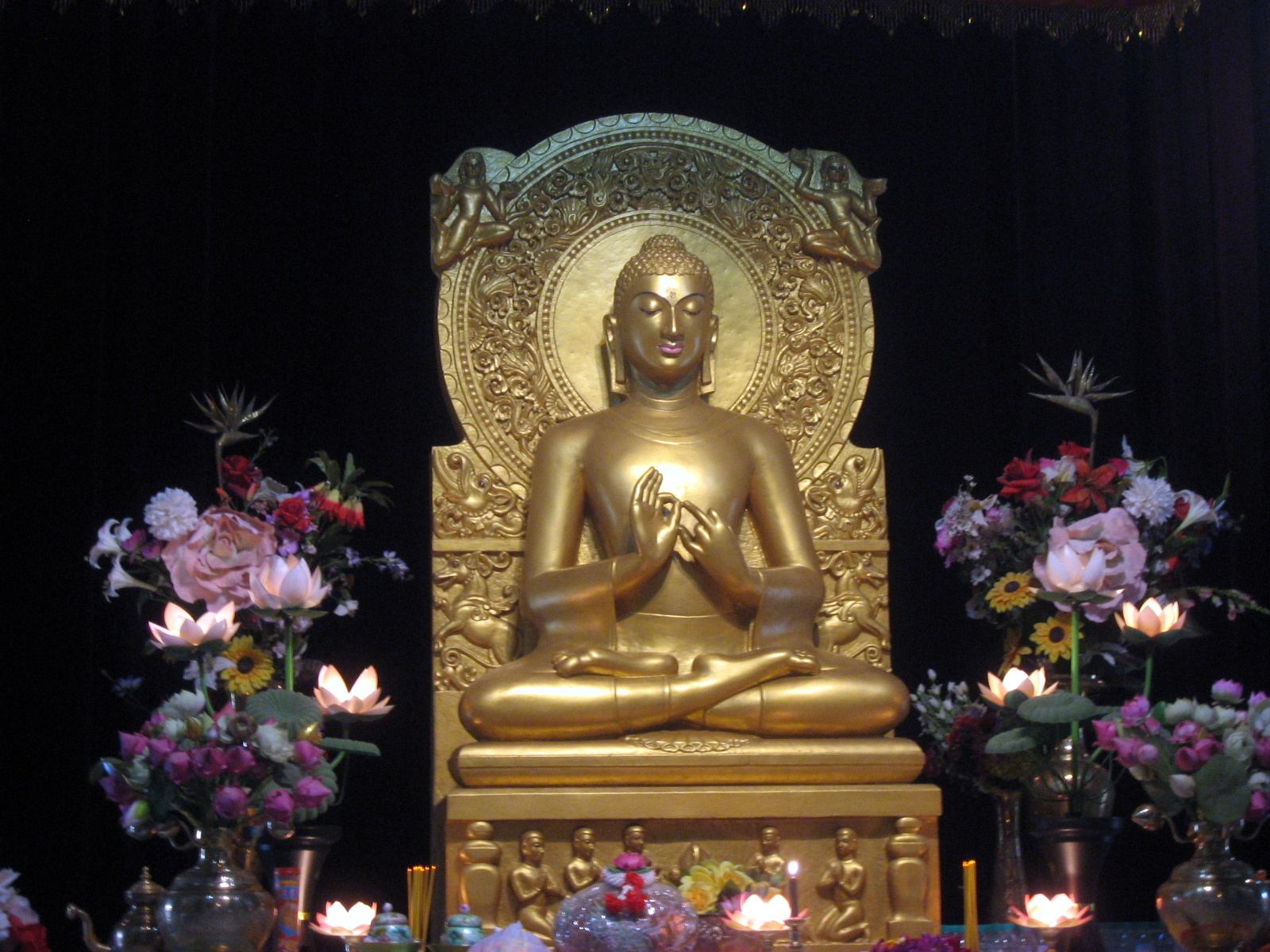
One of the oldest site museums in India (est. 1910), its galleries hold the original Ashokan Lion Capital, the famous Buddha statues of the Sarnath school — including the serene "first sermon" Buddha — and sculptures spanning the Mauryan to medieval periods.
- ✓Lion Capital of Ashoka — India's national emblem (Main Gallery)
- ✓Buddha's First Sermon statue — the finest Sarnath-school masterpiece
- ✓Hundreds of stone sculptures, inscriptions and everyday relics
- ✓Museum bookshop with guides on Buddhist art
Around the World in One Park
International Buddhist Temples
Buddhist communities from across Asia have built temples around the Sarnath complex — each a little journey to another country.
Japanese Temple
Golden Buddha, morning chanting
Wat Thai
Golden chedi, Thai-style murals
Myanmar Temple
Colonial-era Burmese architecture
Chinese Temple
Painted pagoda-style hall
Sri Lankan Temple
Built on ancient monastery ruins
Tibetan Temple
Prayer flags and mani wheels
Korean Temple
Buddhist studies centre
Mongolian Monastery
Newest addition to the complex
Getting There
How to Reach Sarnath
Auto-rickshaw
The most common option. ₹150-200 from Dashashwamedh or Godowlia. Takes 25-35 minutes. Negotiate the fare before boarding.
Best for solo travellersTaxi / Cab
₹250-400 from the city centre. Uber and Ola operate in Varanasi — app fares are fixed and AC cars make the ride comfortable.
Best for familiesLocal Bus
BSRTC buses from Varanasi Cantt and Chaukaghat run to Sarnath every 10-15 minutes. Fare is just ₹10-15. Takes 40-50 minutes.
Cheapest optionBoat + Auto Combo
Start with a sunrise boat ride from Dashashwamedh Ghat to the Varuna river confluence, then take an auto the remaining 6 km. A favourite of photographers.
Most scenicPlan Your Visit
Half-Day Sarnath Itinerary
Start with a sunrise boat ride — the classic Varanasi + Sarnath combo.
Boat ride on the Ganga from Dashashwamedh Ghat. Watch the ghats wake up as the sun rises.
Arrive at Sarnath. Entry to the ASI site — walk straight to Dhamek Stupa in the soft morning light.
Circumambulate the stupa, then explore the Ashoka Pillar and the excavated monastery ruins.
Walk to Chaukhandi Stupa (10 min away), then back to the museum queue.
Sarnath Museum opens. See the original Lion Capital and the Sarnath-school Buddhas.
Mulagandhakuti Vihara — admire the murals and sit in the prayer hall for a few quiet minutes.
Deer Park stroll, then the Japanese and Thai temples for photos.
Lunch at one of the restaurants near the entrance gate, then return to Varanasi.
Tips for Visiting Sarnath
Visit early morning (6-8 AM) to avoid crowds and heat — the light on Dhamek Stupa is gorgeous too
Hire a licensed guide at the entrance for ₹200-400 — they bring 2,500 years of history alive
The museum closes at 5 PM and is closed on Fridays — visit it first if you arrive in the afternoon
Carry water and wear comfortable shoes — you will walk 3-4 km across the complex
The Lion Capital is inside the museum — do not miss it, it is India's national emblem
Sarnath means "deer park" — don't skip the deer park, the deer are friendly and photogenic
Photography is allowed at the monuments but is restricted for some museum exhibits
Combine Sarnath with a Ganga Aarti evening — return by 5 PM and go straight to Dashashwamedh
Frequently Asked Questions
How far is Sarnath from Varanasi?
What are the timings of Sarnath?
Is there an entry fee for Sarnath?
How much time is needed for Sarnath?
Can I combine Sarnath with Varanasi sightseeing?
Is there a dress code for Sarnath?
Is Sarnath worth visiting with kids?
Are guides available at Sarnath?
Combine Sarnath With
Book a Boat Before You Go to Sarnath
Start your day with a sunrise boat ride on the Ganges, then head to Sarnath. NaviX makes it easy.
Download the App