

Kedar Ghat
Major GhatKedar Ghat, named after the Kedareshwar lingam, is called 'Kedarnath of the Plains'. Ganga and Gauri together — Shiva's worship.


Type
Major Ghat
Boat Fare
1.1x base fare
Best Time
5:00-7:30 AM for a holy dip and peaceful darshan.
History
Kedar Ghat lies in Kedar Khanda, one of Kashi's three Khands. The Kashi Khand (Chapter 77) states that worshipping Kedareshwar here yields seven times the punya of worshipping at the Himalayan Kedarnath. Dying in Kedar Khanda grants immediate mukti (liberation), while the other two Khands carry some hardship.
The legend of Sage Vashistha: while travelling to the Himalayan Kedareshwar, his guru died on the way. Vashistha prayed to Shiva, who appeared as Kedareshwar in Kashi itself, promising that worship here equals seven times the merit of the Himalayan shrine. This is recorded in the Kashi Khand, Chapter 77, Shlok 46.
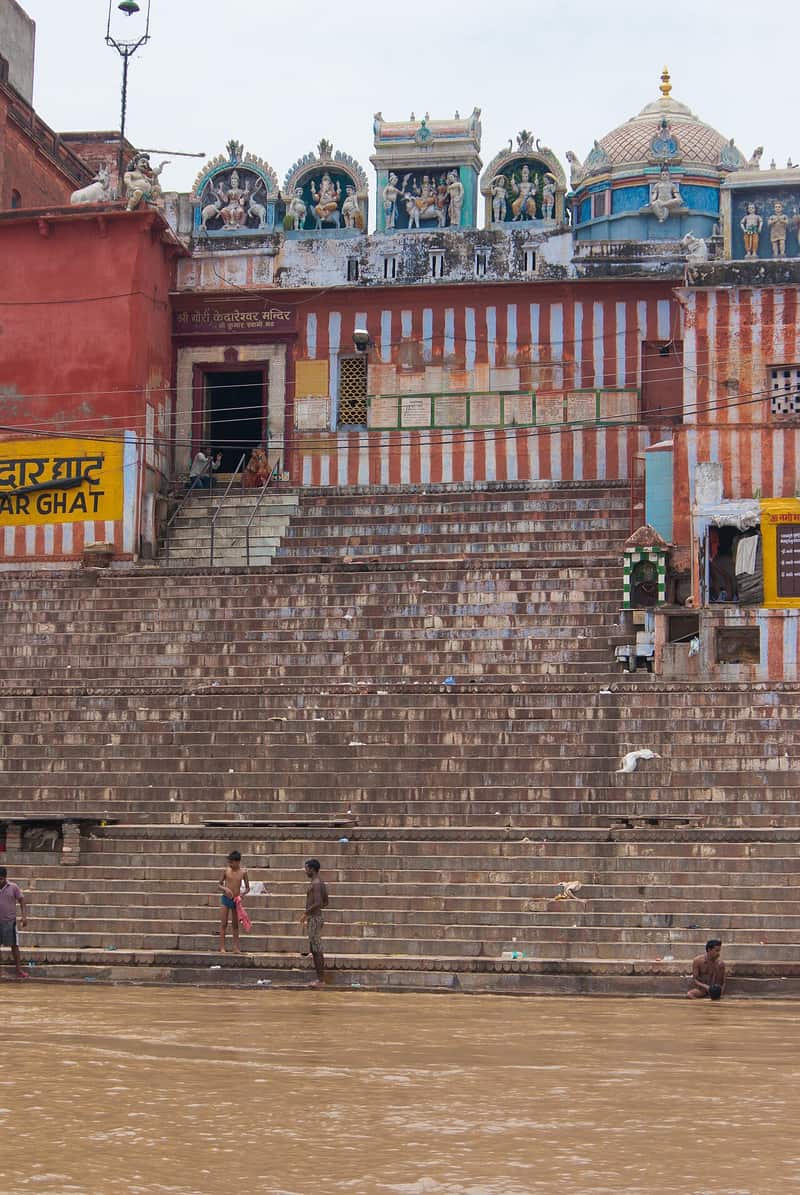
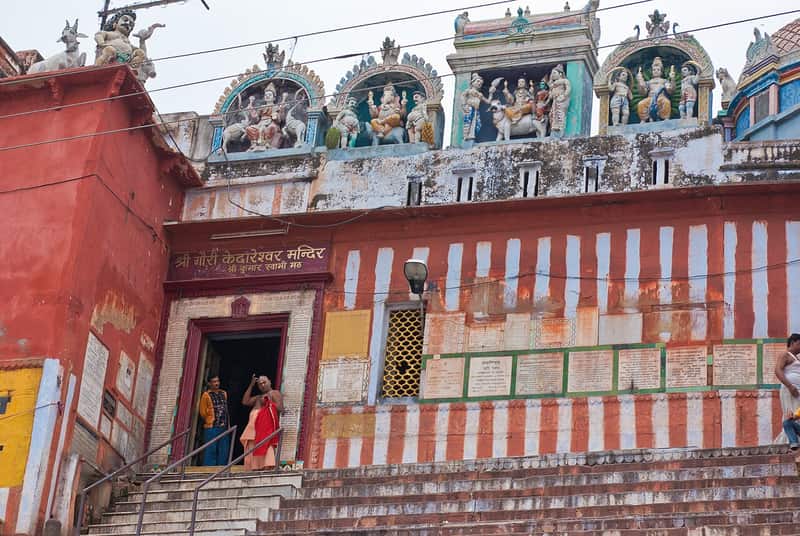
Kedareshwar Temple is open 4:00 AM–11:00 PM with four daily aartis: Mangala at 3:15 AM, second at 10:00 AM, third at 5:30 PM, and Shayan at 10:30 PM. The temple enshrines a svayambhu (self-manifested) Shiva lingam — left in its rough, unpolished mountain-rock form, anointed continuously with sandal paste, ash, and bilva patra.
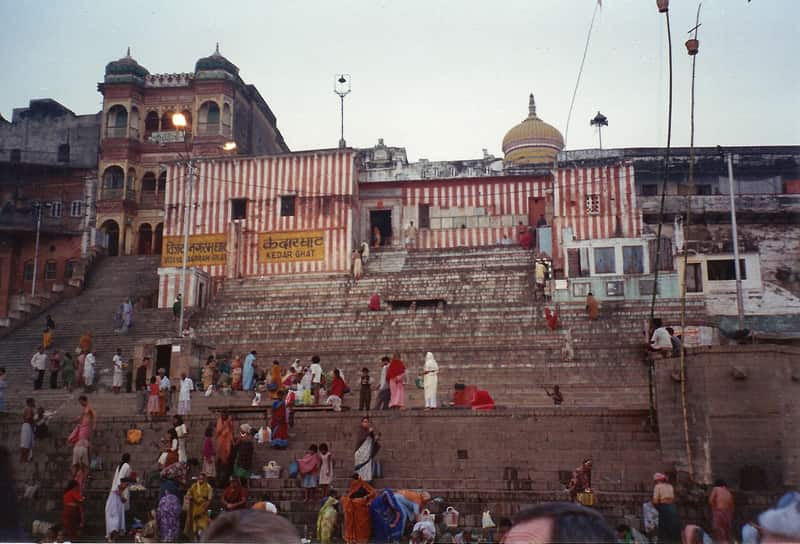
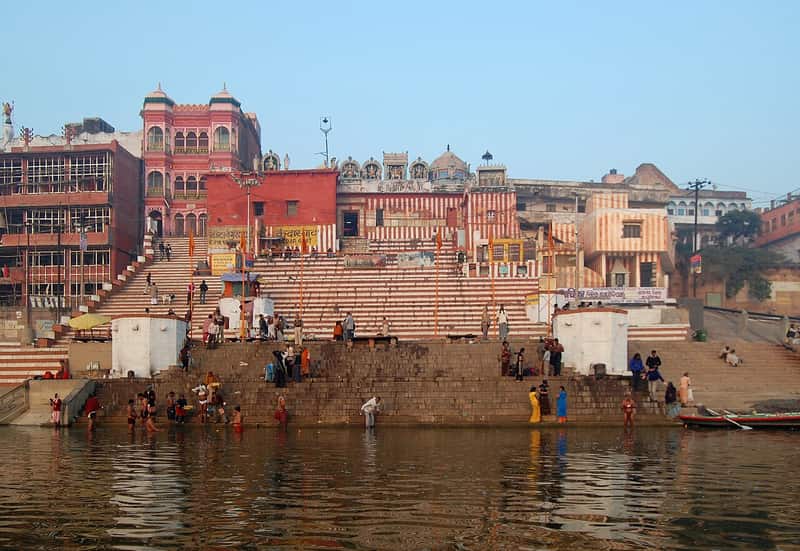
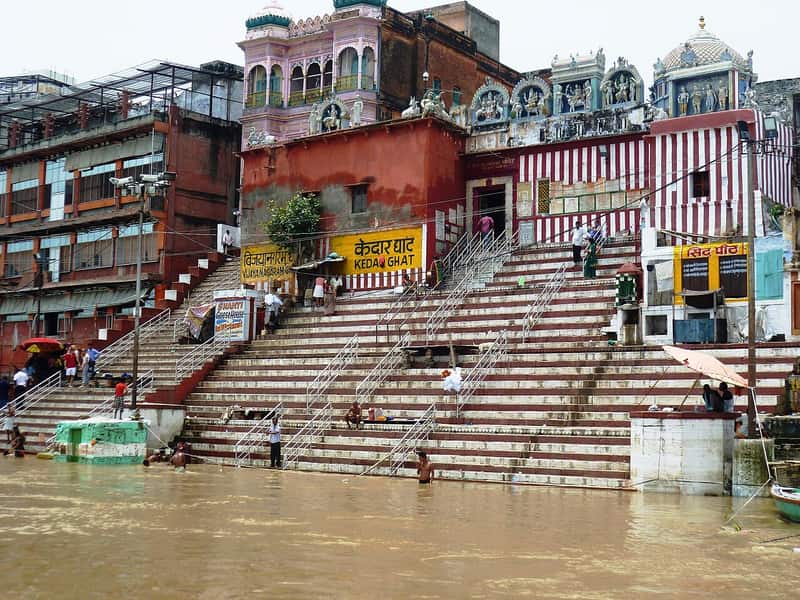
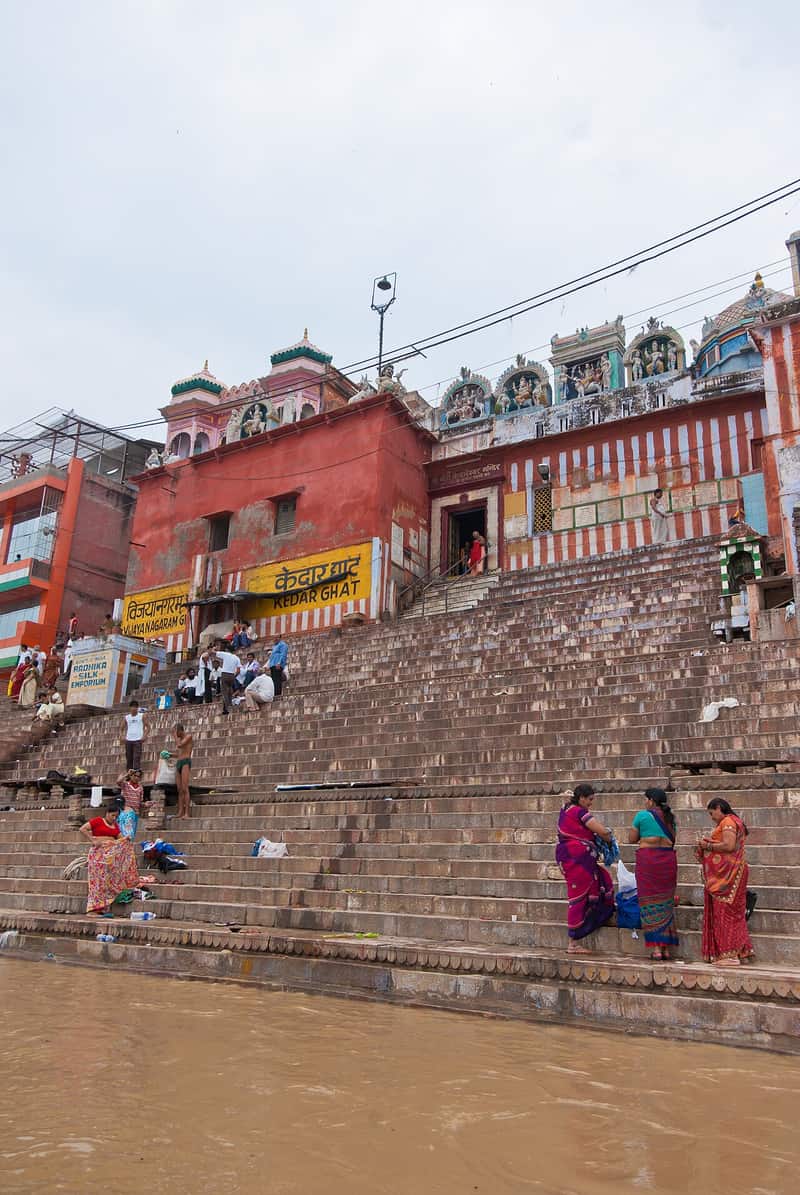
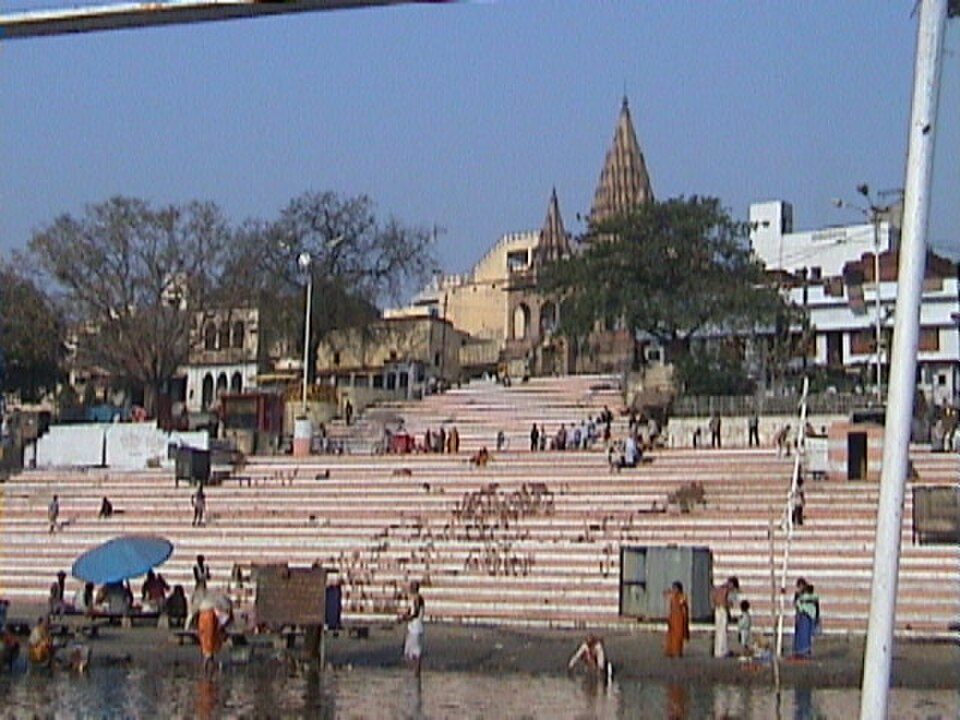
The ghat is a stronghold of South Indian pilgrimage — the red-and-white striped steps are unmistakably South Indian in style. You'll hear Tamil and Telugu spoken here as often as Hindi. The ghat and temple are managed by the Kumaraswamy Mutt of Tamil Nadu (contact: 0542-2454064). South Indian mathas and dharamshalas in the surrounding lanes have hosted Tamil, Telugu, and Bengali pilgrims for centuries.
The sacred Gauri Kund at the base of the temple steps is a purifying holy pond. Devotees take a dip before darshan. The nearby Annapurna Temple adds to the spiritual cluster. The ghat is one of the Pancha Tirtha — the five essential bathing ghats every Kashi pilgrim must visit.
The khichdi katha: legend says the lingam manifested from offerings of khichdi (simple rice-lentil porridge) made by Sage Mandhata. This teaches that a simple offering made with love is received by Shiva as fully as any elaborate ritual. Ahilyabai Holkar of Indore rebuilt the ghat and temple in the 1770s, also commissioning a 365-room dharamshala for pilgrims. Aurangzeb's troops damaged the Nandi bull in the 17th century — the scars are still visible.
Special rituals include Anna Abhishek (once yearly, when the lingam is anointed with cooked rice) and Pradosh (twilight of the 13th tithi, twice monthly). Amavasya (new moon) falling on a Tuesday is considered especially auspicious for Shraddha ceremonies at this ghat.
Highlights
- Darshan of Kedareshwar Temple
- Annapurna Temple nearby
- Centre of devotional bathing and darshan
- Divine atmosphere during aarti
Festivals & Events
How pricing works in the NaviX app
No haggling at the ghat — everything is fixed in the app first
- 1
Fixed price before you board
The fare is shown in the app upfront — no bargaining at the ghat
- 2
Sharing or private — your choice
Share with fellow travelers or take the whole boat for your group
- 3
Pay only after the ride
UPI, card or cash — with an instant receipt
3:15 AM
First of four daily aartis at Kedareshwar Mahadev (temple open 4:00 AM - 11:00 PM)
10:00 AM
5:30 PM
10:30 PM
Complete Guide
Kedar Ghat — The Complete Guide
History, mythology, rites and practical details — everything in depth.
On this page
- 1.Kedar Ghat — Between the Old City and the Southern Ghats
- 2.A Name Borrowed from the Mountains
- 3.The Ghat of the Renunciates
- 4.A Thousand Years on the Riverbank
- 5.The Temple of Kedareshwar
- 6.Dawn Baths and Morning Ritual
- 7.Maha Shivratri — The Night of Shiva
- 8.The Old Lanes Behind the Ghat
- 9.Neighbours Along the Water
- 10.Life on the River
- 11.How to Behave at Kedar Ghat
- 12.Practical Guide for Your Visit
📅 Updated: 21 Aug 2026 · Author: NaviX Field Team (field research 2024-26) · 12 sections · 12 photos
Kedar Ghat — Between the Old City and the Southern Ghats
Kedar Ghat is one of the gentler, more contemplative stairways of Varanasi, resting between the busy heart of the old city and the quieter sweep of the southern ghats. It takes its name from Kedarnath, the distant Himalayan abode of Shiva, and that single name sets the mood of the whole place: devotional, austere and turned toward the mountains. For centuries, pilgrims who could not endure the long climb to the high peaks have considered a dip in these dark, slow waters a worthy substitute, and the ghat itself makes the comparison easy. Its plain stone steps, unpainted walls and modest shrines carry none of the clamour of the grander bathing places, yet the worship here is no less earnest. There is a stillness about Kedar Ghat that feels genuinely old, as though the river has been lapping these same stones for a thousand years and will lap them for a thousand more.
The ghat is best known for two things: the community of Shiva's renunciates who have made it their home, and the festivals that occasionally sweep away its calm. Its fame in this corner of Varanasi rests less on monuments than on living tradition — the saffron-clad sadhus who sit among the shrines, the ritual baths taken at dawn, and the great Maha Shivratri celebration that draws crowds from every quarter of the city. Standing on the steps, one faces the river with the towers of Assi and Tulsi Ghats to the south and the older, more sombre ghats to the north, a long crescent of stone that tells the whole story of Kashi in a single glance. This is a ghat of everyday religion rather than spectacle, and that is precisely its charm.
Visitors who arrive expecting the crowds of Dashashwamedh will find Kedar a different, quieter world. Here the ceremonies are smaller and more personal — a grandmother pouring water from a copper pot, a boy learning the mantras from his father, a sadhu reading alone in the shade. Yet the ghat is not asleep; it hums with a low, constant activity that rewards the unhurried traveller. This long-form guide walks you through the ghat's name and sacred geography, its sanyasi tradition, its history, temples, festivals and daily riverine life, ending with practical advice for your own visit. Whether you come for a dawn bath, a Shivratri vigil or simply a slow afternoon by the water, Kedar Ghat will meet you on its own quiet terms.
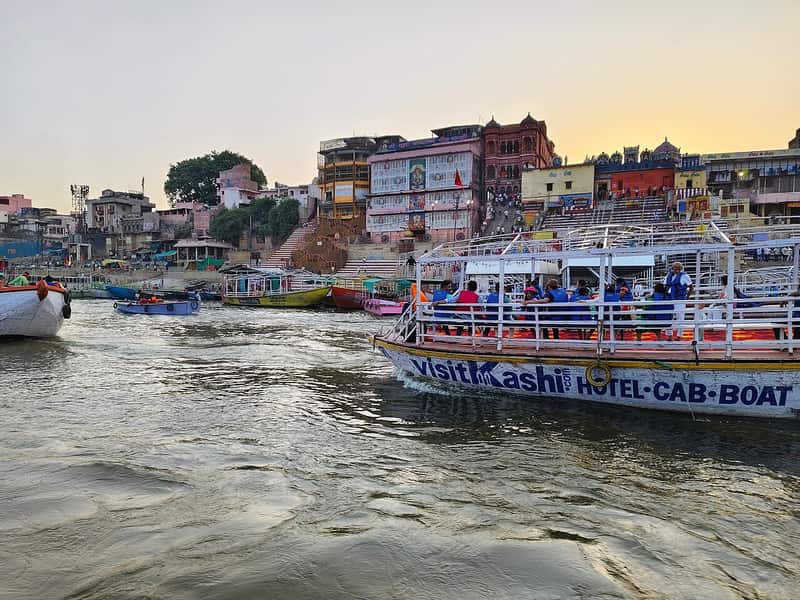
A Name Borrowed from the Mountains
The name Kedar comes straight from the Himalayas. Kedarnath, one of the twelve jyotirlingas and the highest of the great Shiva shrines, sits at nearly four thousand metres in the Garhwal range, ringed by snow peaks and open to pilgrims only a few months of the year. When the people of Varanasi gave this ghat the same name, they were making a bold spiritual claim: that the Shiva of the mountain and the Shiva of the river are one and the same, and that a bath at Kedar Ghat carries the grace of a journey to the high shrine itself. In the old temple records and in the oral tradition of the city, the ghat is repeatedly praised as Kedareshwar, the lord of Kedar, a place where the pilgrimage of the north and the pilgrimage of the river meet.
This habit of naming Varanasi's ghats after Himalayan places is part of a wider sacred geography. Kashi has long been imagined as a miniature of India, a living map of every holy site, so that a devotee could circle the entire subcontinent simply by walking its riverbank. The ghats carry names borrowed from Prayag, from Badrinath, from the great temples of the south, and each name renews a promise of pilgrimage with every telling. Bathing at Kedar Ghat therefore was never merely a bath; it was an act of imagination, in which the cold stone steps stood for the long road to the mountains, and the dark river stood for the melting snows of Kedarnath. Even today the pilgrims of Kashi speak of the ghat with a reverence usually reserved for the distant shrine itself.
The connection runs deeper than legend. Many sadhus who winter in Varanasi spend the warm months in the Himalayas, moving between the two Kedars as the seasons turn, so that the ghat has become a kind of lower station of Kedarnath for the renunciate community. When the great pilgrim road to the mountains was long and perilous, Kedar Ghat offered the aged, the sick and the poor an honest substitute, and the ritual of bathing here with the name of Kedareshwar on the lips is still believed to open the same door to Shiva. For the traveller, knowing this story changes the experience of the ghat: the modest steps become a threshold, the row of shrines a porch of the great shrine, and the river itself a road leading toward the snows.
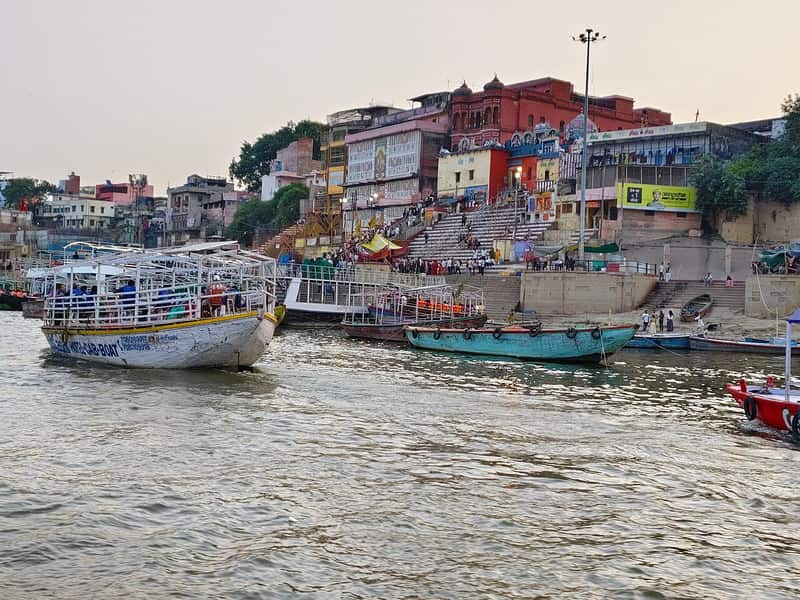
The Ghat of the Renunciates
For as long as anyone in the mohalla can remember, Kedar Ghat has been a ghat of renunciates. The community of Shivite sanyasis and Naga sadhus who gather here is among the oldest traditions of the city, and their presence shapes the character of the place more than any building. Ash-smeared and saffron-clad, often with tridents leaning against the wall beside them, they sit on the steps and platforms with the unhurried air of men who own nothing and owe nothing to anyone. They come from many akhadas — the ancient monastic orders of warrior ascetics — and on festival days their processions, with banners, conches and peacock feathers, turn the quiet ghat into a pageant of Shiva's army. On ordinary days, however, they ask for nothing and expect little, sliding their beads between thumb and finger and watching the river with the settled patience of men who have chosen the long road. Some have walked for years and speak of the Himalayas as a memory; others are young and will leave before the rains. Their presence is constant, and that constancy is a kind of teaching in itself.
The old belief that links the Kedar sanyasis to sacred offering sites is still retold in the lanes. According to one tradition, the renunciates of Kedar were long associated with the great bathing fairs and with the ritual honouring of ancestors, serving as keepers of certain tirthas along the river. Another account says that when the sadhus could not reach Kedarnath itself, they chose this ghat as their own Kedara, the place where they could perform the rites that elsewhere demanded the mountain shrine. Whether or not the stories are literally true, they explain the deep bond between the ghat and the saffron robe, and why the sanyasi is not an incidental figure here but the very soul of the place.
Today the tradition lives on, though changed by the times. The Naga sadhus still appear at the great festivals and at the Kumbh gatherings that many of them attend, and younger initiates can be seen learning the old ways beside their gurus. For the visitor, the sanyasis are approachable, though convention demands respect: they are men of vows, not objects of curiosity. A folded hand, a soft namaste, and a moment of genuine interest in their path are usually welcomed, while demanding photographs or casual disregard is not. Their calm is the ghat's calm, and those who sit quietly beside them often leave with a little of that stillness in themselves.
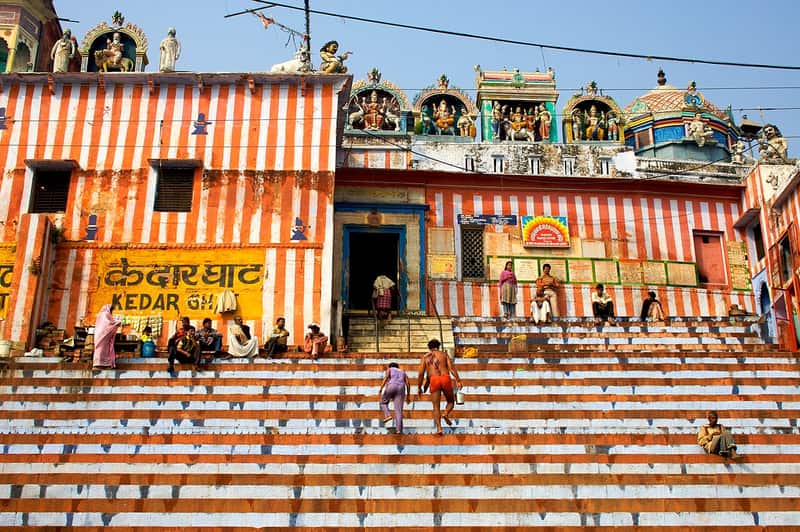
A Thousand Years on the Riverbank
Kedar Ghat is older than most of the landmarks of the modern city. Pilgrimage records and temple inscriptions suggest that the ghat was already an established place of worship before the tenth century, which makes it one of the ancient bathing places on this stretch of the river. Over the centuries the steps were rebuilt again and again, but the site itself seems never to have shifted, and the continuity is remarkable: the same currents of the Ganga, the same arc of the sun over the same flight of stone, generation after generation. The antiquity is felt rather than announced — there is no grand museum here, only the quiet authority of a place that has been holy longer than anyone can remember, and that has never needed to prove it.
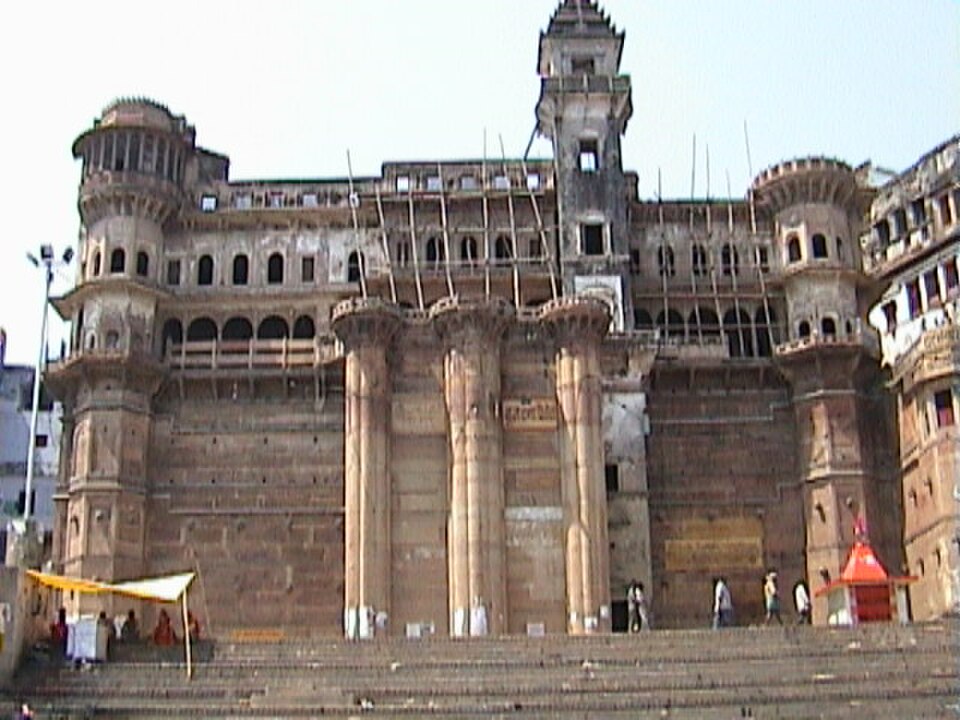
The ghat received major renovation in the seventeenth and eighteenth centuries, when the Maratha and Brahmin patrons of Varanasi were rebuilding the whole riverfront in stone. Mansion blocks, pavilions and temples rose along the banks, and Kedar Ghat was brought into the new grandeur, its steps widened and its shrines enclosed in carved stone. References to the ghat appear in the temple records of the period, often in connection with gifts of land and endowments for the daily worship of the Kedar temple, and in the accounts of pilgrims who describe the ghat as a place of both bathing and learning. A number of the structures that remain today date from this confident era of rebuilding, and the older masonry can still be seen beneath them. In later centuries the ghat suffered the usual fate of the riverfront — floods, repairs, the slow wearing of the stone — but each generation restored it, so that the history of the ghat is written not in a single monument but in the very grain of its steps, where the chisel marks of different ages lie side by side.
Nearby, a little above the waterline, stands an old well and a small shrine that locals call by the name of the same guardian spirit, silent witnesses to the ghat's long layering of history. In the older days the well served the pilgrims before piped water reached the lanes, and its stone rim is worn smooth by centuries of ropes and hands. The shrine beside it, small and easily missed, is one of those places where the centuries seem to fold together, a reminder that the history of Kedar Ghat is not a museum exhibit but a living sediment — layers of worship, repair, flood and festival all pressed together into the stones under your feet.
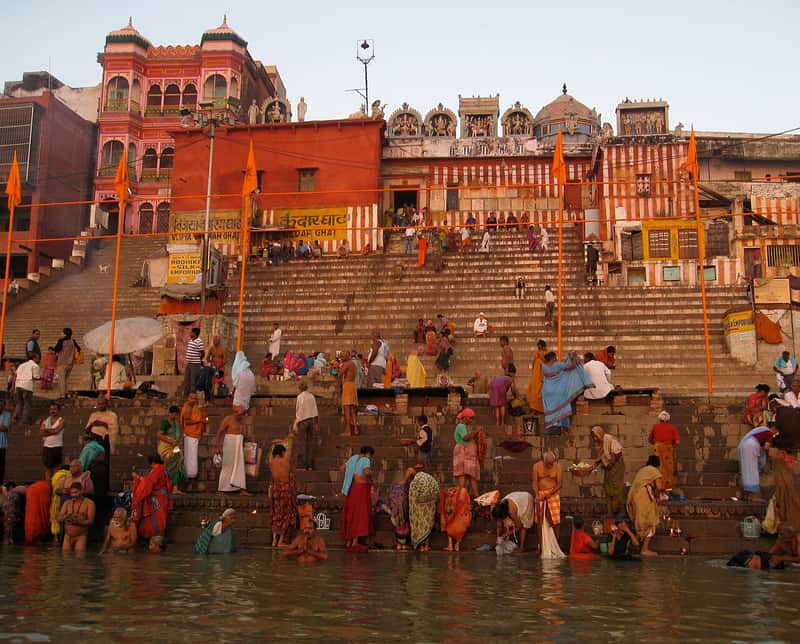
The Temple of Kedareshwar
At the heart of the ghat, set back a little from the water, stands the Kedar Ghat temple of Shiva. Unlike the towering spires of some of the city's famous shrines, it is a compact, dignified building whose stone walls and low shikhara rise from the same modest architecture as the houses around it. Inside, the dark sanctum houses the linga that gives the ghat its spiritual centre, and the air is thick with the old smells of incense, ghee lamps and marigold. Morning and evening the temple comes alive with worship — bells, conch and mantras — and the small courtyard in front becomes a meeting place where the faithful pause on their way down to the river.
The daily rituals here are unhurried and personal. The priests, or pandas, know their regular devotees by name, and the puja follows a rhythm set long ago: the early arati at dawn, the offerings of water and bilva leaves through the day, and the evening arati with the ringing of bells as the light fades over the river. Unlike the grander temples of Kashi, where the visitor is swept along in a current of crowds, the Kedar temple allows a quieter, closer participation. Devotees may sit in the courtyard, offer their own prayers, or simply watch the ritual unfold from the steps, and on ordinary days there is room and time for all of it. This intimacy, this unhurried closeness to the divine, is the temple's special gift. On festival days the little courtyard brims over with devotees and the priests move among them with lamps and flowers, yet even then the mood stays strangely measured, as though the temple had learned the art of being crowded without being chaotic. Standing in the courtyard, one hears the river at one's back and the bells overhead, and the two sounds together make a single quiet music that belongs to no other ghat in the city.
Clustered around the main shrine are a number of small temples and niches that make the ghat a little constellation of worship. A Durga temple stands close by, drawing its own devotees with its particular atmosphere, and there are smaller shrines to Hanuman, Ganesha and local guardian deities tucked into the walls and corners. Between them, the pilgrims move from one sacred point to the next, each shrine adding its blessing to the journey. For the visitor, this cluster is a reminder that a Kashi ghat is never a single monument but a living neighbourhood of the divine, where every deity has a doorstep and every doorstep has its own story to tell.
Dawn Baths and Morning Ritual
The first light at Kedar Ghat belongs to the bathers. Long before the sun clears the eastern horizon, figures move down the steps in the half-dark, carrying brass lotas and steel pails, their voices low in the morning air. They wade into the cold river, murmur the mantras of the bath, and pour the offered water back toward the rising sun, then stand for a moment with folded hands facing the east. It is a scene repeated across a thousand Varanasi mornings, but here it has a particular quietness, because the ghat is small and the crowds of the busier stairways stay far to the north. The water seems darker and older at this hour, and the ritual feels both ancient and intensely personal.
At the waterline, the priests and ritual workers have set up their stations. A pandit sits beneath a cloth canopy with his almanacs, marking the auspicious hour and reciting the sankalp as the bather pours his first lota; nearby, barbers keep their shaving stands, where men of certain sects complete the ritual tonsure that accompanies a holy dip. The bargaining is gentle and familiar, conducted in the same slow morning idiom as the chanting, and the prices are modest. There is none of the hard sell that can sour a visitor's experience at the grander ghats; here the transactions feel like part of the ritual itself, woven quietly into the fabric of the dawn. A pilgrim finishes, dries himself with a twist of cloth, and climbs the steps with the satisfied air of a duty completed; another descends to take his place. The waterline at Kedar is thus a place of quiet continuity, where the same small gestures have been exchanged for so many generations that they have become a language of their own, understood by everyone who comes to the river.
The mood of bathing at Kedar is meditative rather than festive. Families come together, grandmothers and children, and the water is shared between the ablution of pilgrims and the mundane washing of clothes, the two activities lying side by side without conflict. For the traveller who wishes to bathe, the etiquette is simple: approach with humility, keep the body modest, follow the example of those beside you, and treat the water as sacred even when it is cold. Those who do often report that the memory of this quiet bath — the gray river, the rising sun, the murmur of mantras — outlasts every louder spectacle of the city.
Maha Shivratri — The Night of Shiva
Once a year the quiet of Kedar Ghat is completely transformed, when the great festival of Maha Shivratri — the night of Shiva — falls upon the city. On this holiest of Shiva's nights, the ghat and the lanes around it overflow with devotees as though the whole of Kashi had resolved to gather at the feet of Kedareshwar. Through the day, pilgrims arrive in a steady stream, and by nightfall the steps are dense with worshippers, their oil lamps and flowers crowding every ledge and niche. The air fills with the smoke of small fires, the clamour of bells, and the endless rolling chant of Shiva's name, rising and falling like the river itself as the long night wears on.
The observance is a true night vigil. The faithful fast during the day and remain awake through the long darkness, performing the four watches of the night with prayers, ritual baths and offerings of bilva leaves, each watch dedicated to a different aspect of the lord. In the temples the aratis come one after another, and processions of devotees — often led by the akhadas of the Naga sadhus — wind through the narrow lanes, carrying decorated images of Shiva and chanting without pause. Around the ghat, small fires burn where families sit together wrapped in shawls, and the stories of Shiva and Parvati are retold in low voices until the first gray light of the new day touches the river.
For the visitor, Shivratri on Kedar Ghat is one of the great sights of the religious year, but it demands preparation. The crowds are enormous, the night is long and cold, and the ghat, usually so peaceful, becomes a place of intense collective fervour. It is wise to arrive early, dress warmly, keep valuables close, and watch the processions from a respectful distance rather than forcing a way through the throng. For those who surrender to the occasion, though, the reward is unforgettable: to see Kedar Ghat, normally the retreat of a few contemplative souls, transformed into a sea of lamps and chanting is to understand why this city is called the very home of Shiva. And when the night ends, the ghat empties as quickly as it filled, leaving only the ashes of the small fires, the scattered marigolds and the memory of a thousand voices calling one name until dawn — then the quiet returns, and Kedar is once again the tranquil place that the rest of the year knows.
The Old Lanes Behind the Ghat
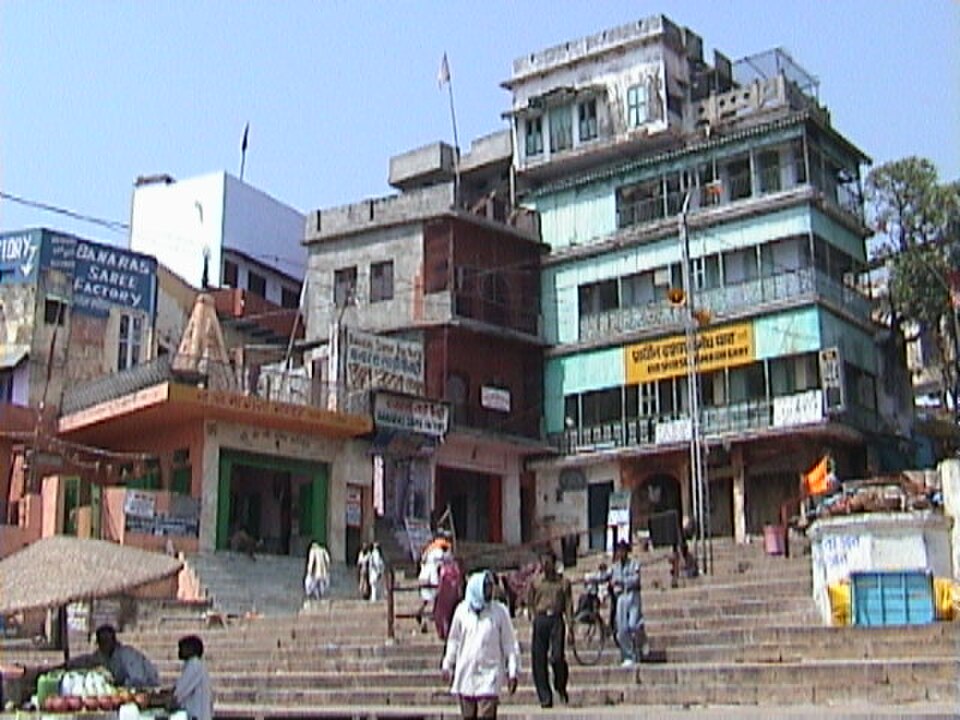
Behind Kedar Ghat begins a labyrinth of lanes that is one of the oldest residential quarters of Varanasi. The houses here are built in the city's characteristic fashion — dark stone or brick lower floors, warm wood upper storeys with latticed balconies, and deep carved doorways that open into cool inner courtyards. In the mornings the lanes carry the sounds of sweeping, the cry of the milkman, and the first bells of the small temples tucked between the houses. Though the area is compact and close-built, it is no slum of grey neglect; it is a living old town, layered with the wear and colour of centuries, and its alleys reward every turning.
Every few steps the visitor passes another shrine, another niche, another fragment of the sacred woven into the domestic. Some are large enough to hold a handful of worshippers; others are barely an arm's length deep, a carved stone and a lamp beneath a lintel. Around them the daily life of the mohalla continues — women drawing water, children racing down the steps, shopkeepers stacking brass and marigold at their doors. The boundaries between home and temple, labour and worship, are deliberately thin here, and the traveller soon understands that in Kashi the divine is not kept at a distance but invited to the doorstep.
The lanes are also the stage for the ghat's festivals, when the narrow alleys that seem so cramped on ordinary days expand into processional routes, garlanded and crowded. Food sellers set up their stalls, musicians take up positions at the corners, and the whole quarter becomes a single slow river of celebration. For the visitor, wandering without a plan is the best plan: the quarter rewards the unhurried, revealing its courtyards, carvings and quiet temples to those who simply follow the lane to its end. What seems at first a tangle soon becomes a map, and the map tells the story of how the city of Shiva has lived for a thousand years. Here a doorway bears a faded painting of Ganesha, there a courtyard shelters a banyan that has outlived the family that planted it, and everywhere the smell of wood smoke and frying spice mingles with the faint sweetness of temple incense. It is easy to lose an afternoon here, and hard to regret it.
Neighbours Along the Water
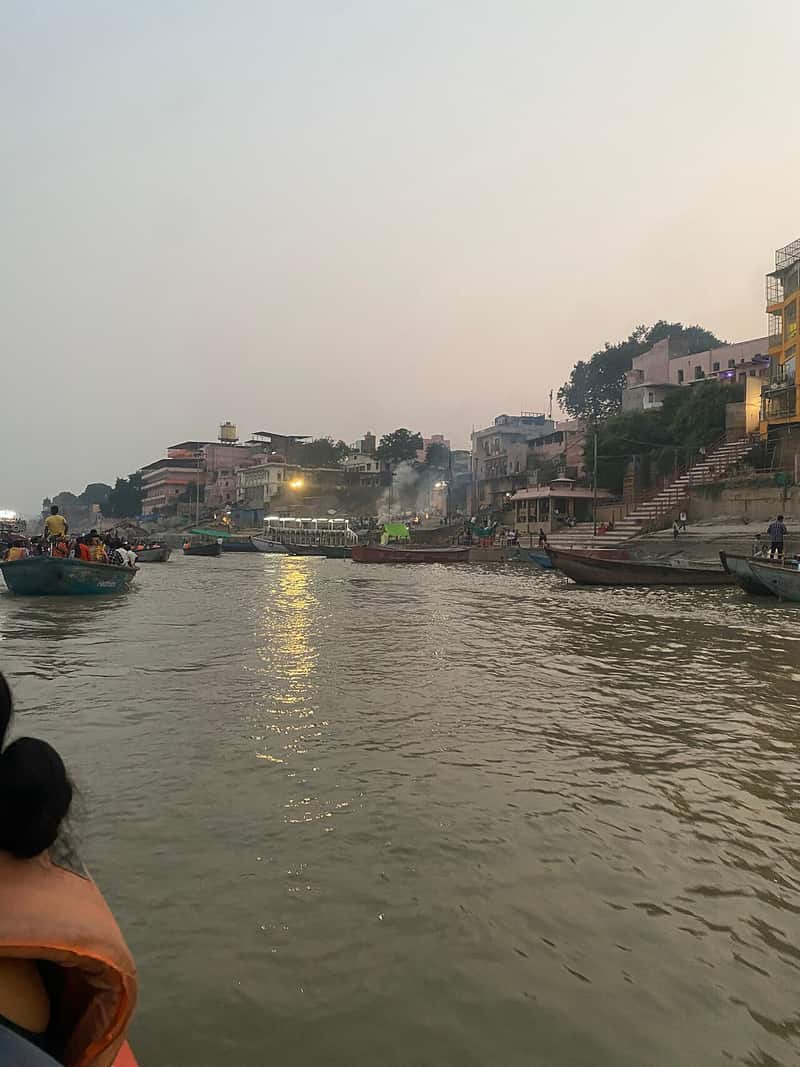
Kedar Ghat does not stand alone; it is one link in the long chain of stairways that curves along the Ganga. To the north lie the older and more sombre ghats of the cremation grounds and the ancient riverfront, including the great burning ghats of Manikarnika and the weathered steps of Harishchandra, where the smoke of the pyres is almost always on the air. These northern neighbours give Kedar its sober context — a reminder that the riverfront of Kashi is not only a place of life and festival but also of death and release. Yet Kedar, with its cluster of temples and its meditative bathers, stands among them as a gentler, more domestic presence.
To the south the character changes again. A short walk brings the traveller to Tulsi Ghat, named for the poet-saint Tulsidas and one of the loveliest of the southern ghats, and beyond it the busy Assi Ghat, where the river Assi meets the Ganga and where pilgrims and students gather for the famous evening aarti. Between the old burning ground in the north and the youthful bustle of Assi in the south, Kedar Ghat occupies a middle ground of quiet devotion. The whole stretch is best seen on foot, and the walk along the water is one of the most rewarding in Varanasi, the river and the skyline changing their mood at every turn.
Walking from Kedar toward Assi, the ghats pass like the pages of a book: the shrines of Nirmal, the lawns of Ganga Mahal, the wide stone of Tulsi with its tulsi plant at the entrance, and finally the long ceremonial stairs of Assi. Pausing at the water's edge, the traveller can look back and see Kedar in its setting — a modest interruption in the great curve of stone, held between death to the north and renewal to the south. It is a position that seems almost symbolic: not the loudest ghat, not the holiest, but the quiet hinge on which the two faces of Kashi turn. Locals know this stretch well, and on mild evenings families stroll the whole curve together, stopping at each ghat as at a series of old friends. For the visitor it is the best of all introductions to the riverfront, because it shows the ghats as they live, not as they pose.
Life on the River
Life on the water below Kedar Ghat follows the river's own slow clock. Early in the morning the fishermen pole their flat-bottomed boats out onto the gray current, casting their nets in a rhythm as old as the town, while farther out the cargo boats from the countryside move upriver with loads of sand, timber and firewood. Closer to the steps, the boatmen loll in their painted craft, watching for pilgrims who might want a ferry ride across to the far bank or a slow cruise past the ghats. Their calls drift across the water, and the answer comes back in the splash of an oar or the slap of a net.
The buffaloes arrive as the morning settles. Herded down through the lanes to the water's edge, they wallow with immense contentment in the shallows while their keepers scrub the big gray bodies and the women of the quarter wash clothes on the wide stone platforms, beating the cloth against the rock in the immemorial laundry rhythm of the river. Crows and gulls scavenge the margins; a kite circles overhead; and the whole scene goes about its business with the unhurried self-absorption of a place that has looked much the same for centuries. The river here is not a spectacle for the tourist but a working river, and it wears its working clothes with dignity. Even the visitors come to accept this, learning to step around the washing and the wallowing with the same matter-of-fact ease as the residents, so that by mid-morning the ghat has settled into its daily rhythm again, the last bather gone and the fishermen hauling in their catches below the steps.
In the dry winter months the river retreats, and broad sandbanks rise in the middle of the channel, glittering white and pale gold in the low sun. Across these temporary islands wander goats, washermen hanging their drying cloth, and the occasional heron stalking the shallows. It is the gentlest season at Kedar, when the ghat seems wider, the water farther away, and the winter light softens every stone. For the visitor these months offer the best of the river life — the sandbanks walkable on bare feet, the ferry rides easy, and the whole riverine world of Kedar Ghat spread out like a slow, glittering painting.
How to Behave at Kedar Ghat
Kedar Ghat is a living place of worship, and a little thoughtfulness goes a long way. The first rule is modesty of dress: shoulders covered, legs covered to the knee, clothes that a worshipper would consider decent for the presence of a deity. Before touching the water, most visitors remove their shoes on the upper steps, and it is courteous to follow the example of those around you. The ghat is also a place of ritual and concentration; loud voices, music and disruptive behaviour belong elsewhere. A quiet step, a soft word, and a genuine attitude of respect will make you welcome almost anywhere on the riverfront.
The sadhus who sit on the ghat are men of vows, and the correct approach to them is gentle and formal. A folded hand, a soft namaste, a question asked with humility — this is how conversation begins. Many will respond warmly, and some enjoy speaking about their life and their order, but they should not be treated as exhibits. Do not photograph them without asking, and accept a refusal gracefully; the same courtesy applies to the priests, the bathers and the women at the washing platforms. In general, if someone seems to be at prayer or ablution, that moment belongs to them, not to your camera.
Finally, a few practical courtesies protect both you and the place. Keep valuables close and secure, since crowds and festival nights attract their share of pickpockets. If you wish to bathe, do so with the same dignity as the pilgrims, and never dispose of plastic, wrappers or refuse on the steps or in the river — the Ganga that you have come to honour should be left cleaner than you found her. And when you offer money to a priest or a sadhu, do it discreetly and without bargaining fanfare. These small habits cost nothing, and they are the surest way to receive the ghat's true gift: its trust. Once trust is given, the people of Kedar open up remarkably — a boatman will linger to tell the history of the ghats, a priest will explain a ritual he has performed a thousand times, a shopkeeper will call you in for chai. Nothing is demanded in return except the same courtesy that you brought to the steps. That is the final secret of Kedar Ghat: it treats those who respect it as its own.
Practical Guide for Your Visit
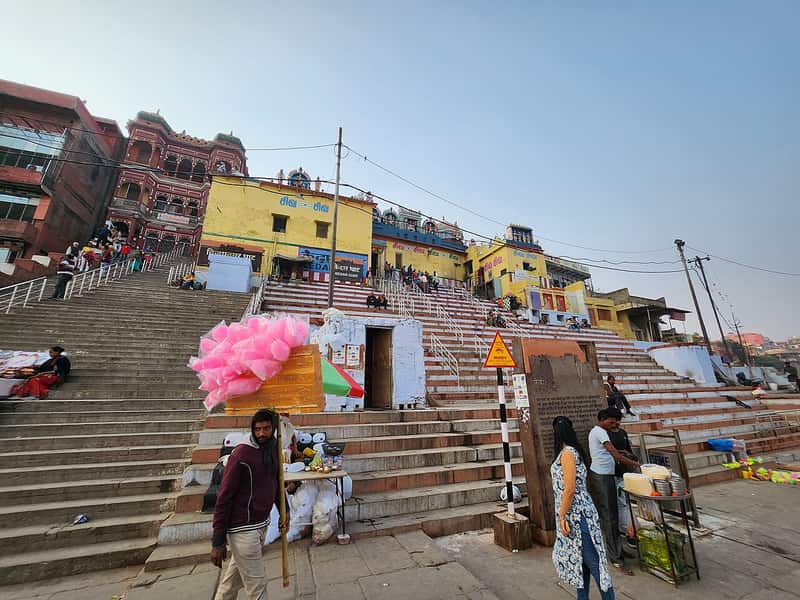
Reaching Kedar Ghat is simple and, in its own way, part of the pleasure. The ghat lies on the southern stretch of the riverfront, and the easiest approach on foot is to walk south from Dashashwamedh, the great central ghat, following the bank past a succession of stairways for about two kilometres until the steps of Kedar come into view. The walk itself is one of Varanasi's finest, threading between the water and the old lanes, and it takes barely half an hour at a leisurely pace. Alternatively, a shared or private boat from Dashashwamedh or Assi will bring you straight to the ghat's landing, offering the whole crescent of ghats as you come.
The best time to visit is early morning, when the bathers are at work and the light lies long and soft on the stone; a visit at sunrise, followed by a slow wander through the lanes, will show you the ghat at its truest. For a different kind of experience, plan your visit around Maha Shivratri, when the ghat is transformed by the night of Shiva — but come prepared for crowds, cold and a long, unforgettable vigil. There is no entry fee at Kedar Ghat; the ghat, its temples and the bathing area are open to all, and the only costs are what you choose to give in offerings or to hire a boat.
Kedar sits close to several other fine ghats, and it rewards combination. Vijayanagara Ghat lies almost next door, Tulsi Ghat is a short walk to the south, and Assi Ghat, with its famous evening aarti, is only a little further on. The natural way to see them all is the celebrated Assi–Tulsi–Kedar walking trail, a gentle riverside circuit that takes in the three ghats with their temples, boat rides and river views, and can easily fill a relaxed half-day. Whatever your route, save time to sit on Kedar's steps at the end of it — the ghat will repay you with the quietest view of the Ganga that a visitor could ask for. Bring nothing but time; buy nothing but perhaps a garland of marigolds or a small boat ride; and let the ghat set its own slow pace. If you are lucky, a sadhu will nod to you as you leave, and you will carry that small blessing home with you.
Kedar Ghat — Gallery (12 Photos)
Image Credits
kedar-01.jpg · kedar-02.jpg · kedar-03.jpg · kedar-04.jpg · kedar-05.jpg · kedar-06.jpg · kedar-07.jpg · kedar-08.jpg · kedar-09.jpg · kedar-10.jpg · kedar-11.jpg · kedar-12.jpg — Wikimedia Commons, under free licenses.
Continue exploring
Similar Ghats Nearby
Book This Ghat — Get Notified
Download the app now and book a boat ride to Kedar Ghat