

Manikarnika Ghat
Cremation GhatThe door of Moksha. Its pyre flame is said never to have gone out.


Type
Cremation Ghat
Boat Fare
1x base fare
Best Time
Darshan: 6-9 AM (please visit with reverence — cremation site)
History
Vishnu’s ear-jewel fell into the kund he dug - hence the name. Shiva promised here: those cremated never return to rebirth.
Highlights
- Gateway to moksha — Kashi’s holiest ghat
- Legend of the Vishnu chakra kund
- Dedicated yagya and aarti site
- The Ganga flows closest here
Festivals & Events
How pricing works in the NaviX app
No haggling at the ghat — everything is fixed in the app first
- 1
Fixed price before you board
The fare is shown in the app upfront — no bargaining at the ghat
- 2
Sharing or private — your choice
Share with fellow travelers or take the whole boat for your group
- 3
Pay only after the ride
UPI, card or cash — with an instant receipt
6:00 AM & 6:00 PM
At the main cremation ghat — deeply spiritual
Complete Guide
Manikarnika Ghat — The Complete Guide
History, mythology, rites and practical details — everything in depth.
On this page
- 1.Manikarnika Ghat — The Door of Liberation
- 2.The Legend of the Earring — How the Ghat Got Its Name
- 3.Savitri, Yama and the Gift of Immortality
- 4.An Antiquity Beyond Memory
- 5.The Flame That Never Dies
- 6.The Rites of Fire — How Cremation Happens Here
- 7.The Doms — Custodians of the Sacred Fire
- 8.Beyond the Pyre — The Journey of the Soul
- 9.The Sacred Kund and the Temples of Manikarnika
- 10.Death Without Fear — The Philosophy of the Ghat
- 11.The View from the River — A Boat Ride Past the Ghat
- 12.Etiquette and Respect — How to Visit Manikarnika
- 13.Around Manikarnika — Neighbouring Ghats and Shrines
- 14.Festivals and Sacred Days of Manikarnika
- 15.Practical Guide — How to Reach, When to Visit
📅 Updated: 21 Aug 2026 · Author: NaviX Field Team (field research 2024-26) · 15 sections · 15 photos
Manikarnika Ghat — The Door of Liberation
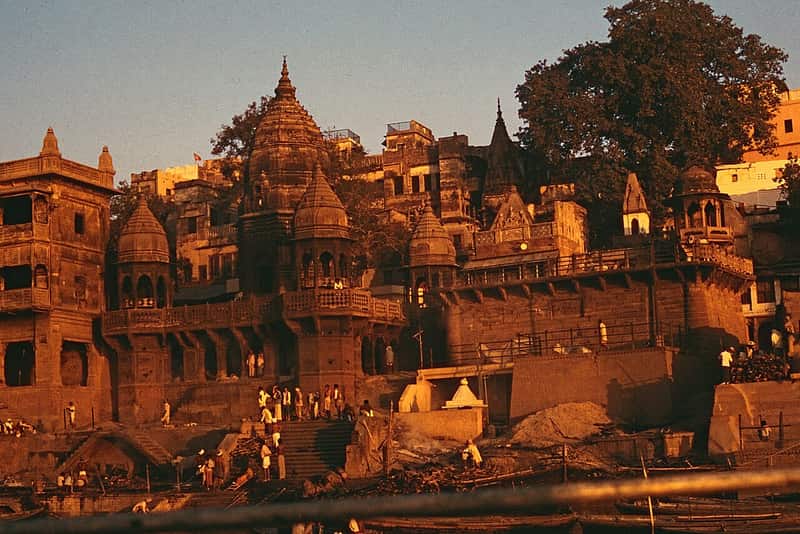
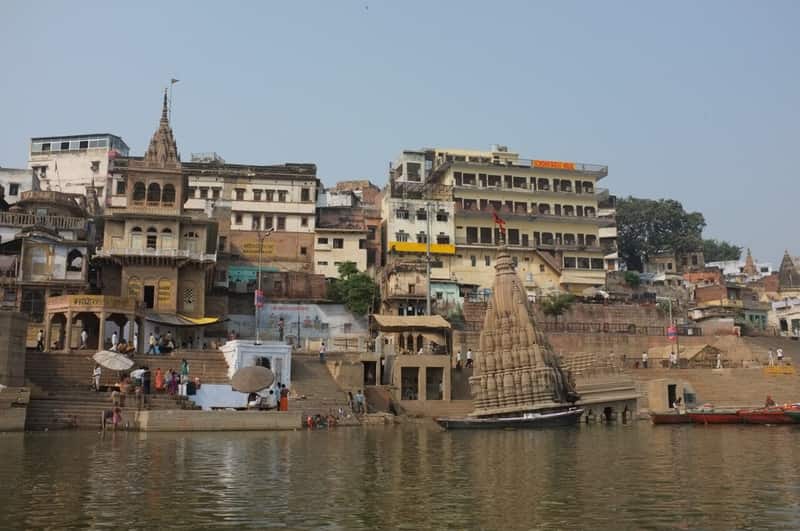
Manikarnika Ghat is the most sacred cremation ground in the world and the holiest ghat of Varanasi. It stands in the very heart of the crescent of ghats, between Scindia Ghat to the south and Jaisingh Ghat to the north, its tall tower and temple rising above the great river. For Hindus, this is not a place of sorrow but the ultimate destination of the soul — the spot where the cycle of birth and death comes to an end. The Puranas declare that whoever is cremated here is granted moksha, liberation from the wheel of rebirth, because the place itself is the eternal abode of Shiva, the god of death and dissolution.
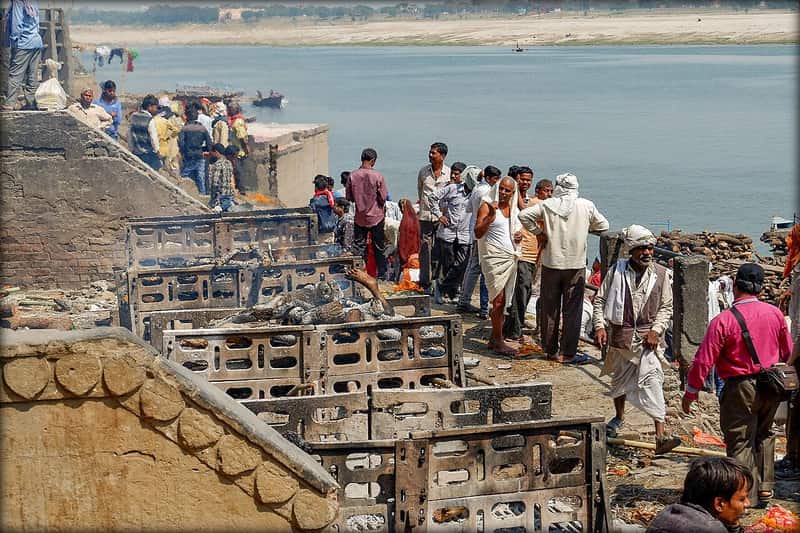
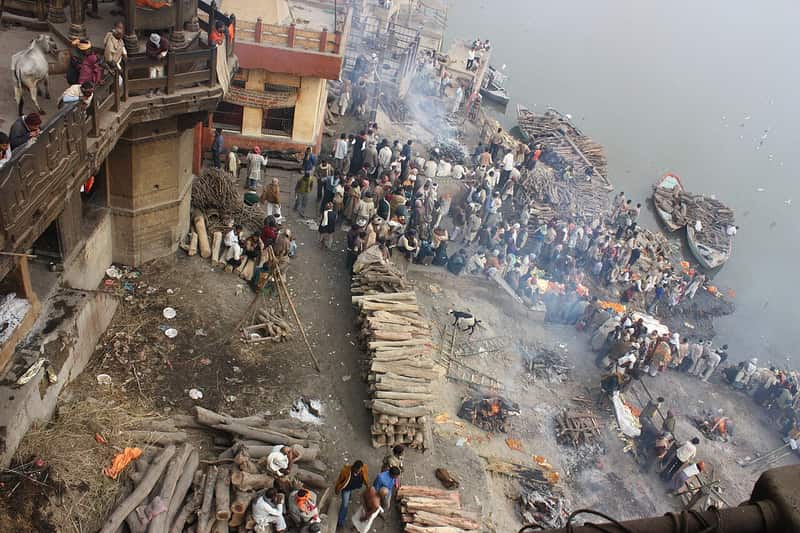
Every day, around three hundred bodies are brought to the ghat, each one announced by the same name — Ram Naam Satya Hai, "the name of Ram is truth" — chanted by the bearers as they wind through the lanes. On the great stone platform at the water's edge, funeral pyres burn day and night without pause, the flames fed by wood, ghee, camphor and sandalwood, while the smoke rises toward the same sky that has watched over this ghat for more than two thousand years. The atmosphere is dense with incense and fire, chanting and bell-ringing, yet strangely peaceful, because here death is not an end but a homecoming. To stand on the steps of Manikarnika is to understand the deepest teaching of Kashi: that the body burns, but the soul is eternal.
The ghat is also a place of astonishing continuity. Pilgrims have bathed in the Ganga at this very point, and mourners have consigned their dead to the flames here, generation after generation, since long before the birth of Buddha and Mahavira. The sacred fire is said to have been burning for over three thousand years without ever being extinguished — the same flame that lit a pyre in the age of the Mahabharata is believed to be the one that lights the pyres today. It is this unbroken thread of faith, more than any monument, that makes Manikarnika the spiritual centre of Kashi.
The Legend of the Earring — How the Ghat Got Its Name
The name Manikarnika comes from two words: mani, meaning jewel or earring, and karnika, meaning the lobe of the ear. According to the most famous legend, the goddess Parvati — Shiva's consort — was bathing in the Ganga at this very spot with her maidservant. As she removed her clothes at the water's edge, she placed her precious earrings on the bank, where they were stolen by a demon named Shankhachuda. The grief-stricken Parvati pleaded with her husband, and Shiva, in his anger, unleashed a great storm that churned the Ganga until the earring was restored to her.
But an older and more beautiful version of the legend is told on the ghat itself. When Parvati's earring was lost, Shiva asked Vishnu, the Preserver, to search for it. Vishnu dug the earth with his divine discus, the Sudarshana Chakra, and out of the hole sprang a spring of sacred water — the Manikarnika Kund, which still stands beside the ghat today. When Vishnu found the earring, he sat down on the edge of the kund and declared that the spot was the most sacred on earth. A marble slab with the impression of Vishnu's footprints, called the Charanpaduka, still marks the place where he is said to have stood, and pilgrims come daily to bow before it.
The Puranas add a third layer to the tale. When Vishnu told Shiva that Manikarnika was holier than even his own abode of Kailash, Shiva replied with the words that give this ghat its eternal power: Tarakasho jivata mam — "one who dies here attains liberation." Thus, it is believed, the earring of the goddess became the seed of the greatest promise in Hinduism — that death at Manikarnika ends all rebirth.
Savitri, Yama and the Gift of Immortality
Manikarnika is woven into some of the oldest myths of Hindu scripture. The Skanda Purana and the Matsya Purana both describe how Vishnu dug the sacred kund with his discus, and how Shiva, standing beside it, granted the place the power of final liberation. Another tradition holds that when Sati, Shiva's first wife, gave up her body, her earring fell at this spot and was never found — the ghat became the resting place of the goddess's ornament, and hence a place of supreme sanctity.
The most moving of the ghat's legends, however, concerns Savitri, the princess whose name means "daughter of the Sun". When Yama, the god of death, came to take the soul of her husband Satyavan, Savitri followed him step by step, speaking to him with such wisdom and devotion that Yama finally turned and granted her a boon. She asked first for her father-in-law's sight, then for his kingdom, and finally — in the very shadow of Manikarnika, where the boundary between the living and the dead is thin — she asked for her husband's life itself. Bound by his word, Yama returned the soul, and Satyavan was restored to her. Some tellers of the tale place this meeting at this very ghat, where death himself stands at the water's edge and may yet be moved by love.
These stories are not mere decoration. They explain why the burning ghat is treated not with horror but with reverence, why mourners bring sweets and milk as offerings alongside firewood, and why the dying are carried here — some from hundreds of miles away — to spend their last hours on ground that has been blessed since the beginning of time. In the mythology of Kashi, Manikarnika is where death meets its own master, and where the soul finally wins its freedom.
An Antiquity Beyond Memory
The history of Manikarnika Ghat reaches back so far that it blurs into legend. The ghat is mentioned in the Skanda Purana, one of the oldest scriptures of Hinduism, and by the eleventh-century poet-scholar Al Biruni, who recorded that the Hindus regarded the spot as the most sacred place for cremation. The great Maratha king Peshwa Bajirao II, the Maharaja of Indore and countless other rulers added their stones to the ghat over the centuries, and the huge platform where the fires burn is itself a patchwork of royal donations — some slabs carry inscriptions from the eighteenth century naming the kings who laid them.
What makes the ghat's history so remarkable is its continuity. When the Greek conqueror Alexander's soldiers camped near the Ganga, the fires of Manikarnika were already old. When the Chinese pilgrim Xuanzang visited Kashi in the seventh century, he wrote of the "holy pool" beside the burning ground, a clear reference to the Manikarnika Kund. When the Mughal emperor Aurangzeb devastated Kashi in the seventeenth century, the flames on this ghat did not stop for a single day — no conqueror, no army, no fire of another kind has ever managed to extinguish the sacred pyres.
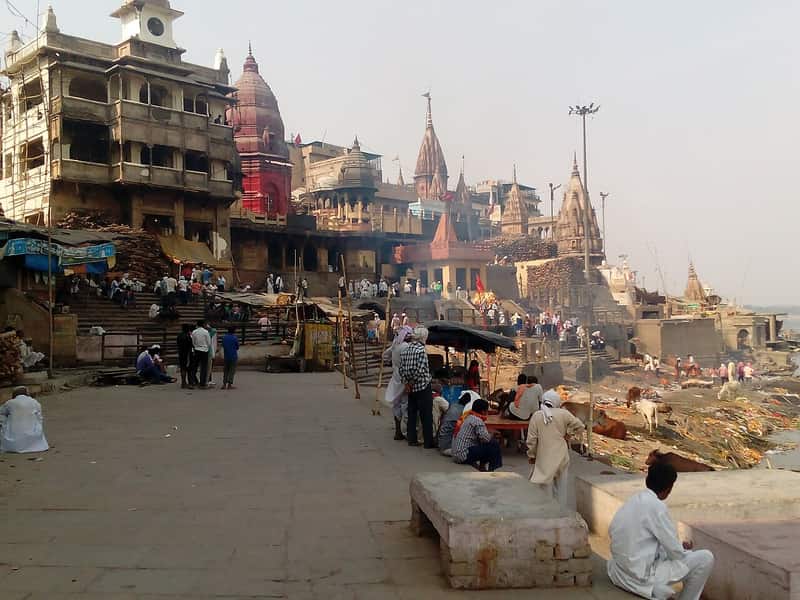
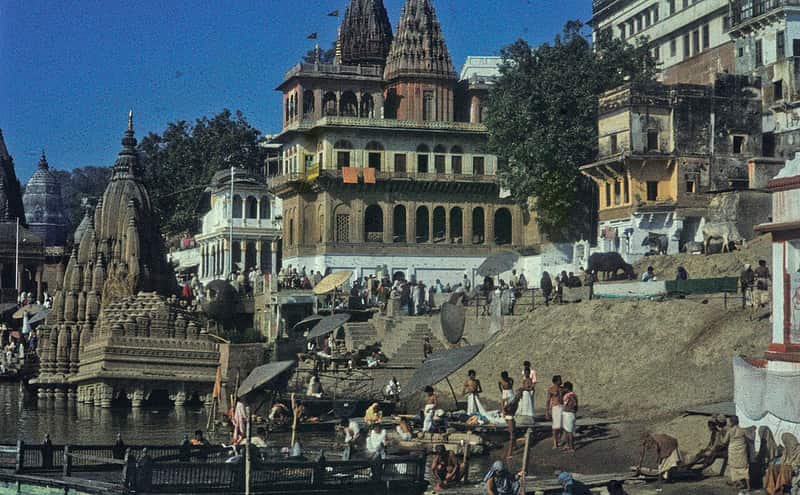
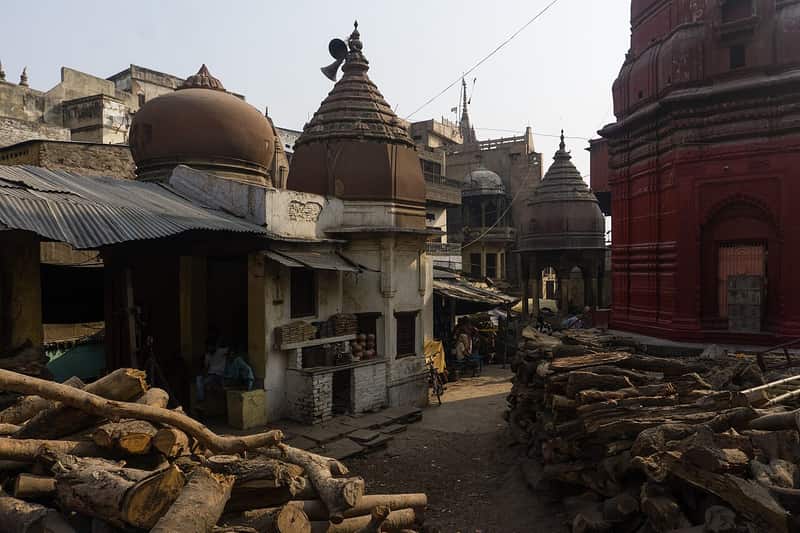
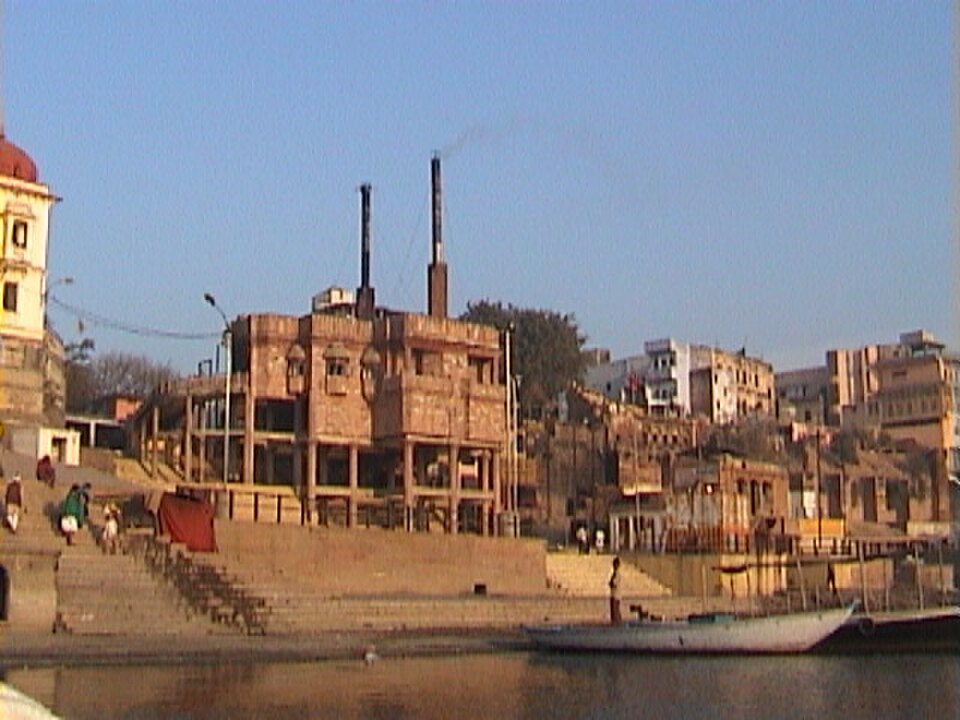
Photographs from the nineteenth century, and even earlier sketches by European travellers, show the ghat almost exactly as it appears today: the same tower, the same temple, the same wood sellers, the same smoke hanging over the water. The ghat was rebuilt and improved in the 1980s with modern facilities, including an electric crematorium beside the traditional pyres, but the essential form of the place — its steps, its kund, its eternal fire — has remained unchanged for centuries, a living monument to the oldest city on earth.
The Flame That Never Dies
At the heart of Manikarnika burns its most precious treasure: a sacred flame said to have been kept alive for more than three thousand years. According to tradition, the flame was first lit by the gods themselves, and it has been guarded since by the Dom community, the hereditary custodians of the ghat, who hand the duty from father to son. Even when the whole city was plunged into darkness, when riots and wars swept through Kashi, the flame on this ghat was kept burning — a single spark passed carefully from pyre to pyre, never allowed to die.
Every pyre at Manikarnika is lit from this same source. The mourners do not bring fire from their homes; the Dom kindles the wood with coals taken from the sacred flame, charging a small fee for the privilege. This is why even the cheapest pyre at Manikarnika is lit with the oldest fire in the world — a continuum that links every soul cremated here to the very dawn of the faith. The flame also gives the ghat its local name, the Agni Tirtha, the sacred ford of fire.
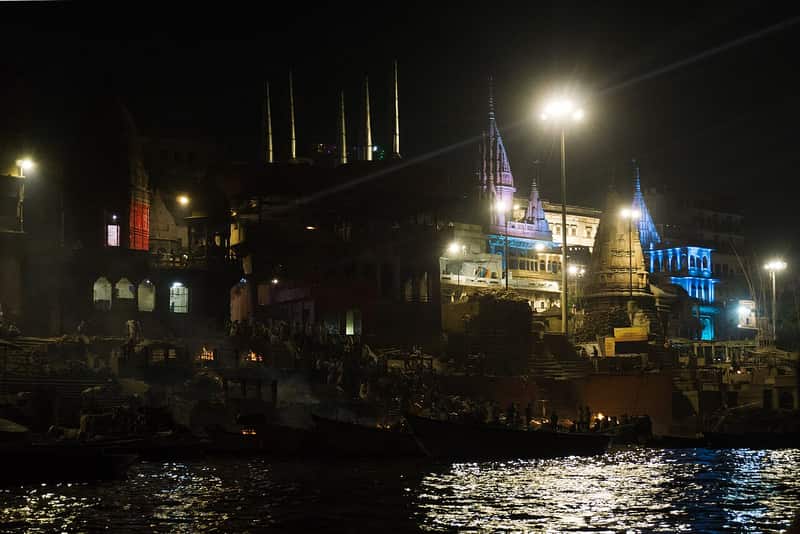
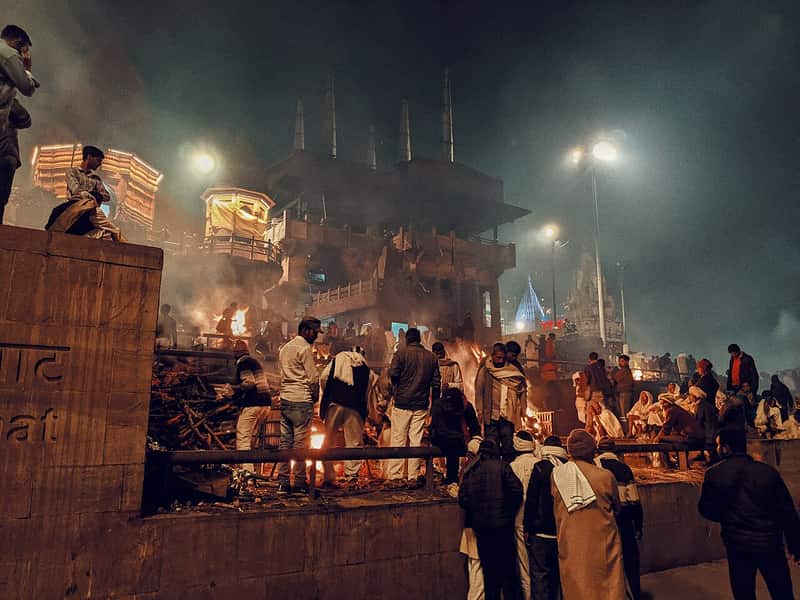
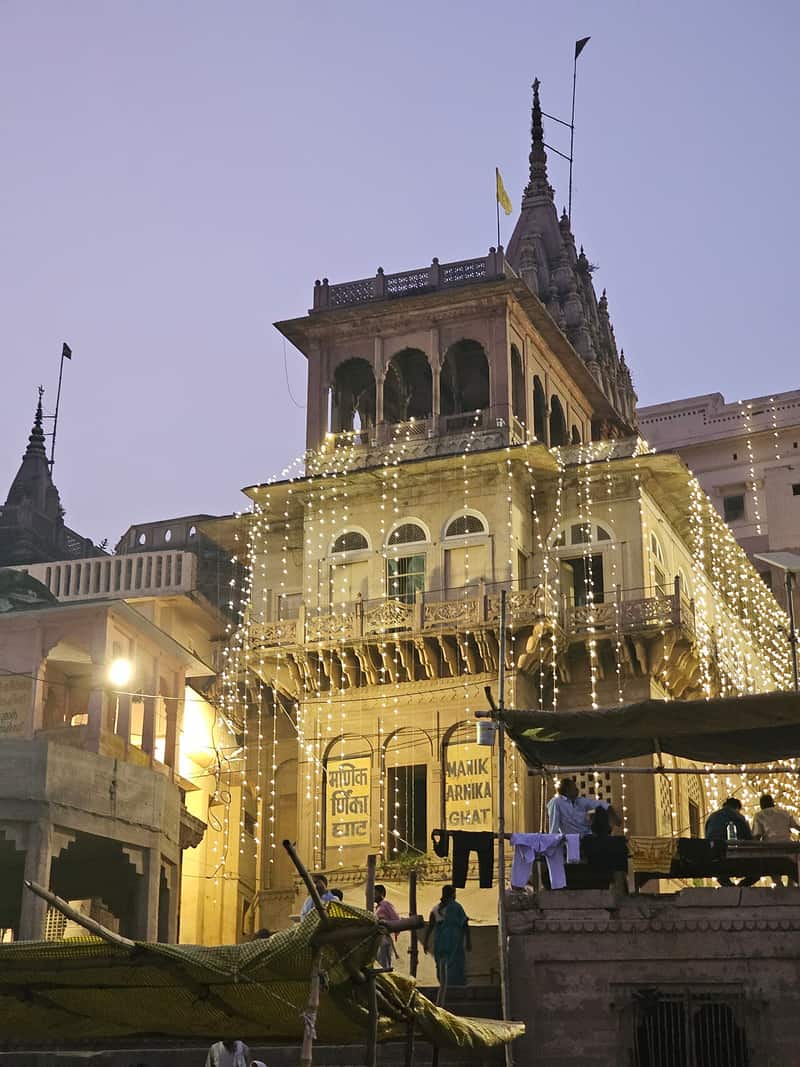
Seeing the fire at night is an experience that stays with a visitor forever. From a boat on the river, or from the steps of the ghat, the glow of half a dozen pyres lights the water with flickering orange, the smoke turns gold against the dark sky, and the constant chant of "Ram Naam Satya Hai" drifts across the river. The eternal flame of Manikarnika has inspired poets, travellers and filmmakers for centuries, and for every pilgrim who comes to Kashi, watching it burn is not a morbid sight but a profound reminder of the truth at the centre of their faith.
The Rites of Fire — How Cremation Happens Here
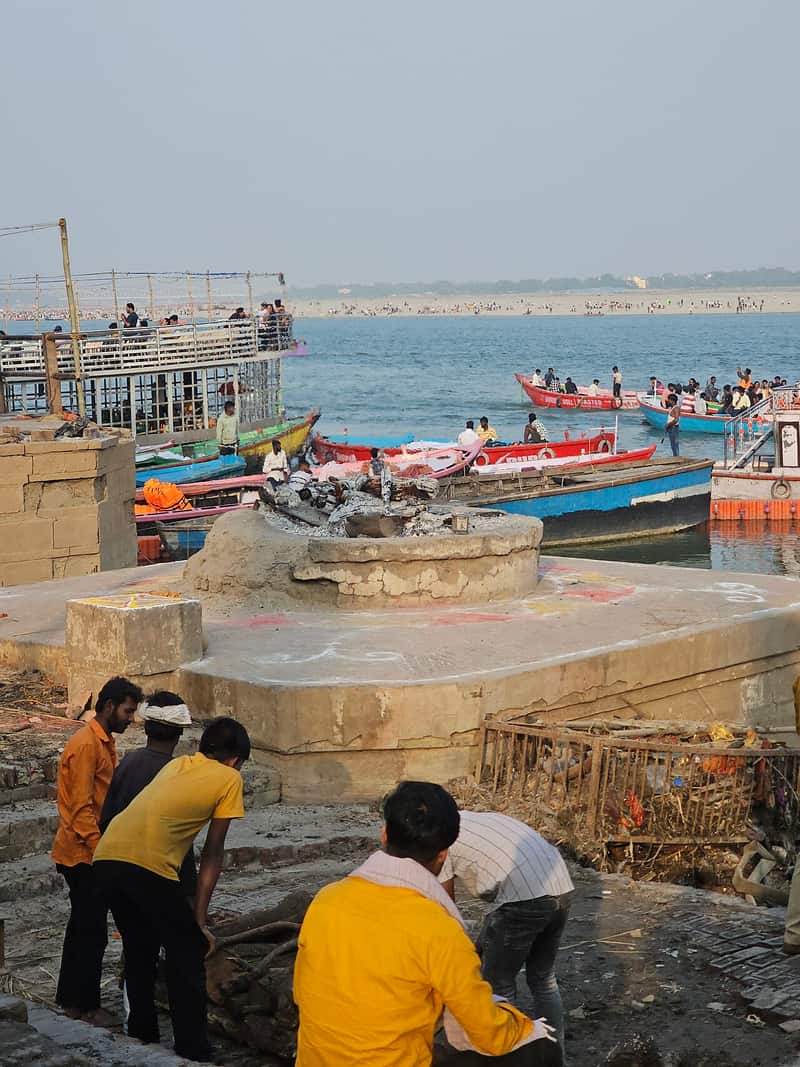
When a body reaches Manikarnika, it is first dipped in the Ganga — the final bath, washing away the sins of a lifetime. The body is then placed on the stone platform beside the water, where the family carries out the last rites under the guidance of the priests who wait on the ghat day and night. A pyre is built of logs, often of mango or sandalwood, arranged in a careful lattice; on top are laid ghee, camphor, sandalwood powder, grains and sweets — offerings that travel with the soul. The chief mourner, usually the eldest son, walks around the pyre three times with the fire, then lights it, and the flames rise to the chant of the crowd.
The burning itself takes three to four hours, and a constant rotation of mourners keeps watch, occasionally adding wood and reciting the Ram naam. When the pyre has cooled, the bones are gathered with a branch of the sacred banyan tree and consigned to the Ganga, with prayers for the soul's journey. In recent decades, an electric crematorium has been built beside the traditional pyres, offering a cheaper and cleaner alternative; some families choose it, but the great majority still prefer the fire of the eternal flame, believing that the ritual itself — passed down unbroken since the Vedas — is as important as the liberation it brings.
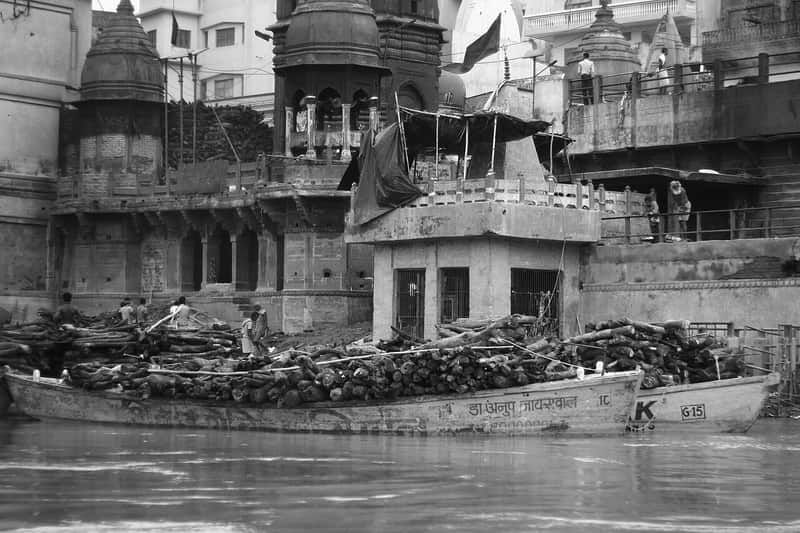
The scale of the ghat's work is staggering: anywhere between two hundred and four hundred cremations take place here every day, around the clock. The wood sellers' stalls, the ghee sellers, the priests, the Dom helpers, the musicians who play during the rituals — all are part of a living economy that has operated on this spot for millennia. For the visitor, the most important thing to know is that this is not a tourist attraction but a functioning place of sacred duty; the rites being performed are the last gift of a family to their beloved, and they are conducted with a dignity that commands silence and respect.
The Doms — Custodians of the Sacred Fire
The flame of Manikarnika is guarded by the Dom community, whose hereditary chief, the Dom Raja, is one of the most powerful figures in the ritual life of Kashi. The Doms have performed this sacred duty for centuries: they supply the fire, manage the pyres, help the families through every step of the rites, and collect the traditional fee that makes the ghat function. Far from being looked down upon, the Dom is treated with awe in Banaras, because he holds the key to the city's greatest promise — moksha itself.
The legend that explains the Doms' status is told at the ghat to this day. When the young son of a Dom died, the grieving father went to the wise men of Kashi asking how a funeral could be held, since no priest would touch the work of the untouchables. The wise men answered that the boy was being denied cremation only because his father had no title or privilege. The Dom, in despair, carried his son's body to the sacred flame and burned it himself — and the gods were so moved that they declared the Doms the eternal guardians of the fire, with the right of kings. From that day, the Dom Raja has held his charge, and even the Maharaja of Kashi has traditionally paid homage to him.
The Dom Raja's residence stands near the ghat, and his authority extends over the whole burning ground: no cremation may be performed without his permission, and every one carries his fee. The community also manages the Muktibhavan, the "house of liberation" — a shelter where the dying come to spend their final days in Kashi, certain that death on this ground brings freedom. The Doms' knowledge of the rites, their patience with the grieving, and their stewardship of the eternal flame make them, in the truest sense, the priests of this most sacred of places.
Beyond the Pyre — The Journey of the Soul
The cremation at Manikarnika is only the beginning of a long ritual journey. The family returns to the ghat on the third day to gather the ashes and bone fragments, which are carried to the Ganga with offerings of milk, honey and flowers. During the mourning period, known as the dasagatra, the family performs daily rites at the water's edge, and on the thirteenth day — the terahvin — a great ceremony is held, often including a feast for priests and the poor, after which the family is released from the state of impurity. Throughout this time the priests of Manikarnika serve as guides, their knowledge of the scriptures supporting the family through their grief.
One of the most distinctive rituals of the ghat is the Mahasati, the great vigil of the fifth night after death, when the soul is said to pass through the realm of Chitragupta, the divine accountant who records every deed of a lifetime. On this night the family gathers at the ghat, lamps are lit on the water, and the priest recites the tale of the soul's journey — a long recitation that tells of the court of Yama, the weighing of deeds, and the final destination of the soul. It is a night of both sorrow and hope, for the rites promise that a soul cremated at Manikarnika will not be reborn, whatever its deeds may have been.
The river itself is the final shrine. The ashes of countless generations have been consigned to the Ganga from this ghat, carried on the current toward the sea. Pilgrims who visit Manikarnika often bring small offerings — a coin, a flower, a diya — to float on the water in memory of those who have gone before, joining their prayers to the eternal chain of souls that began here in the age of the gods and continues with every breath of the burning fire.
The Sacred Kund and the Temples of Manikarnika
Beside the burning ghat stands the Manikarnika Kund, the sacred well from which the whole place takes its name. It is said to have been dug by Vishnu himself, and its water is believed to be identical with that of the far-away Himalayan lake Mansarovar — the same divine spring. Pilgrims who bathe in the kund are promised freedom from rebirth, and even today, before the rites of the burning ground begin, mourners and priests draw its water for the final purification. The kund never dries, even in the fiercest summer, and it is surrounded by small shrines and a deep atmosphere of age.
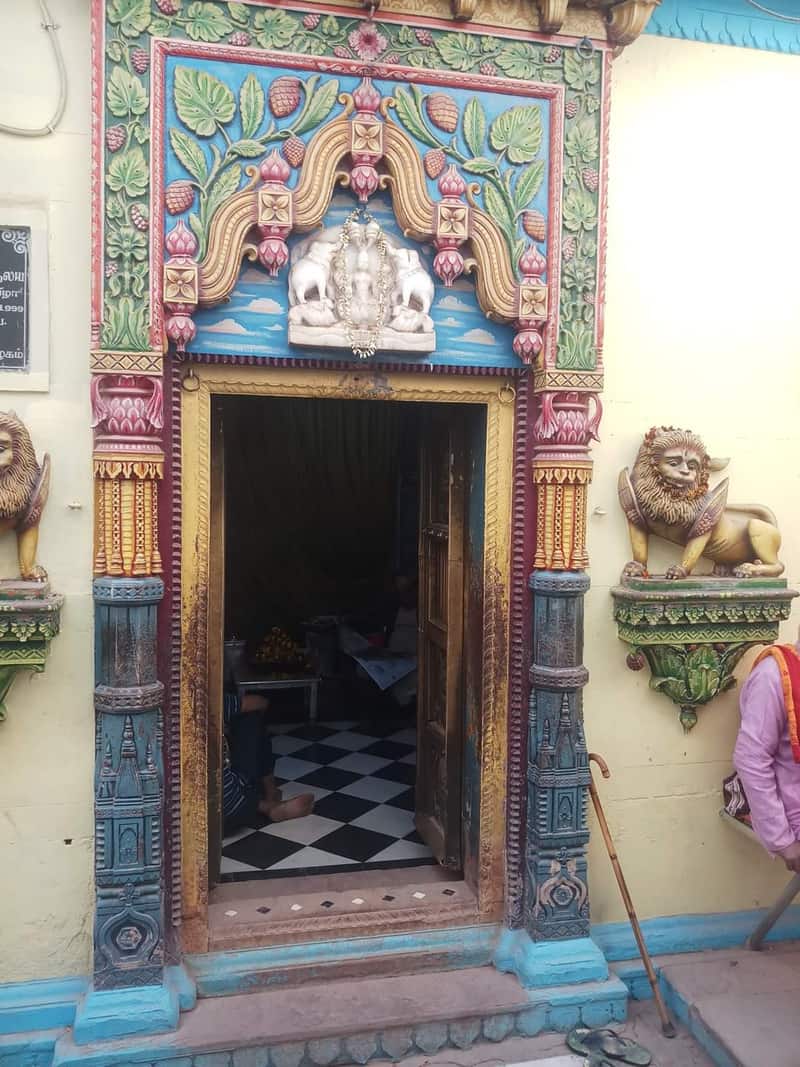
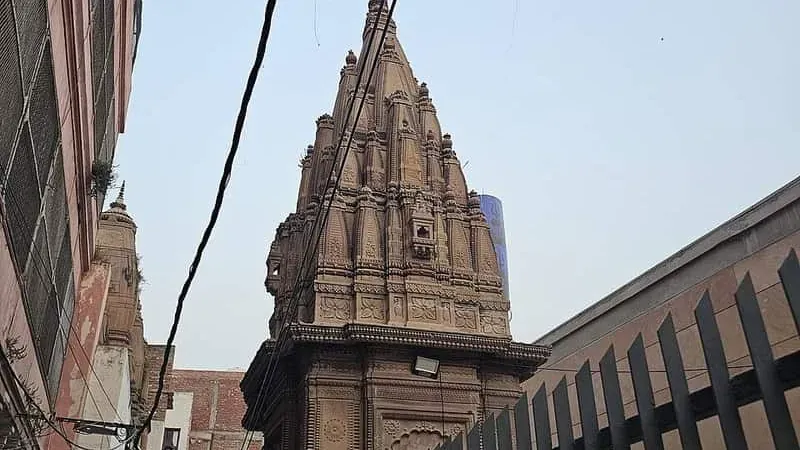
The most venerable of the temples here is Tilbhandeshwar Mahadev, one of the oldest Shiva temples in all of Varanasi, whose shrine stands in a hollow below the level of the street — a sign of the ground rising over the centuries. Its stone linga is worn smooth by ten centuries of worship, and the temple courtyard, lit by oil lamps even in daytime, holds the fragrance of incense and age. Near the kund stands the shrine of Vishnu's Charanpaduka, the marble slab bearing the impression of Vishnu's footprints, which pilgrims bow to before any journey, and a small Ganesha temple guards the entrance of the ghat, ensuring that no obstacle blocks the path of liberation.
The area around the ghat is a dense web of lanes, each one named for the trade that has been practised there for centuries: the lane of the wood sellers, the lane of the bell founders, the lane of the flower vendors. Some lanes open onto small temples hidden in shadow, others onto the stalls where families buy ghee, camphor and cloth for the pyre. Walking these lanes is like walking through the pages of Kashi's oldest story — a quarter that has never changed its character, guarded day and night by the smoke of the eternal fire at its centre.
Death Without Fear — The Philosophy of the Ghat
To walk up to Manikarnika is to walk toward the one truth that every human being tries to forget: that we are mortal. Yet the ghat wears this truth without a trace of fear, and that is its miracle. Here death is not a catastrophe that interrupts life; it is the fulfilment of life, the last and greatest act of a soul that has spent its days in the world and now returns home. The mourners of Kashi do not wail in despair; they chant the name of Ram, they pour ghee on the fire, they feed the priests and the poor, and they let their loved one go with a dignity that turns grief into grace.
This philosophy is older than any scripture. It rests on the belief that Manikarnika is a tirtha — a ford, a crossing place — where the river of life meets the river of death, and where the soul, having crossed, does not return. Mark Twain, who visited in 1896, wrote that "Benares is older than history, older than tradition, older even than legend, and looks twice as old as all of them put together." He was standing on the steps of this very ghat when the weight of those words came upon him. For Hindus, the old writer's awe is simply the shadow of a deeper certainty: that the fire burning here has burned since before time was measured, and that every soul it consumes is set free.
Visitors who come expecting horror are almost always surprised to find the opposite. They find wood sellers and chai stalls, priests and pilgrims, children playing on the steps and boats bobbing on the river — life, in other words, pressing close against death, so close that the two begin to look like one thing. That is the final teaching of Manikarnika: not that death is to be feared, nor that it is to be sought, but that it is to be understood — a door in the wall of the world, and this ghat, the brightest of all its doors.
The View from the River — A Boat Ride Past the Ghat
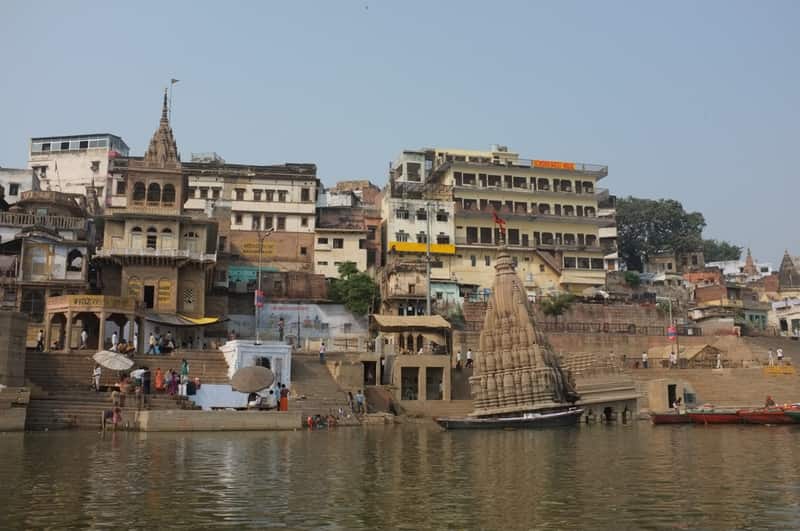
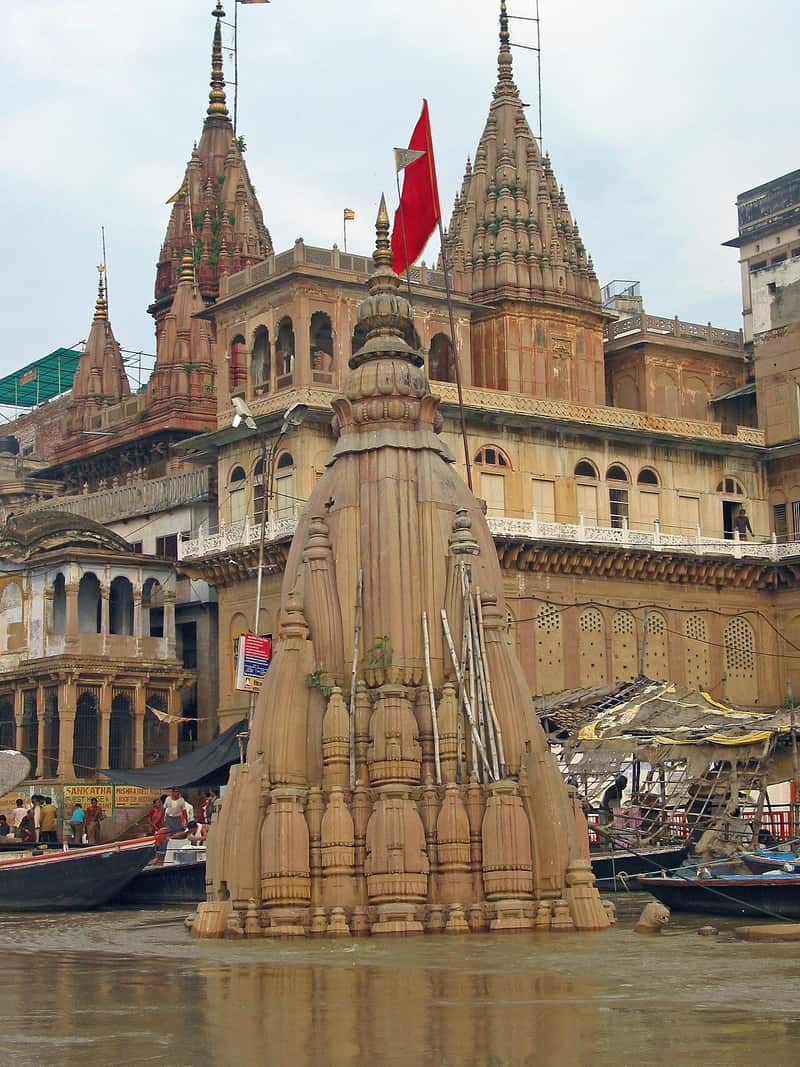
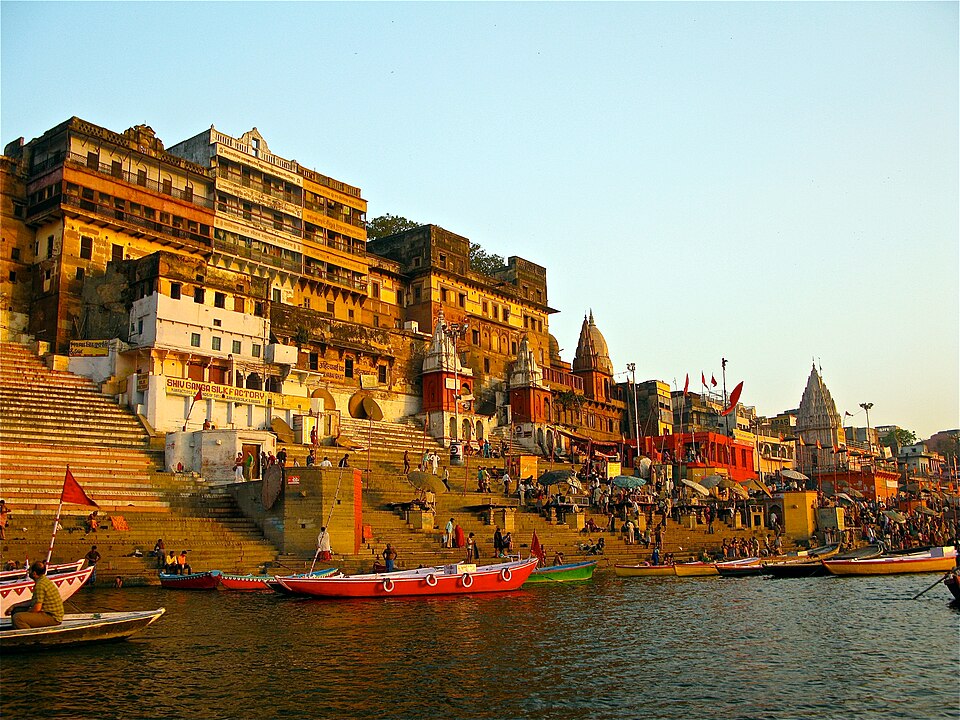
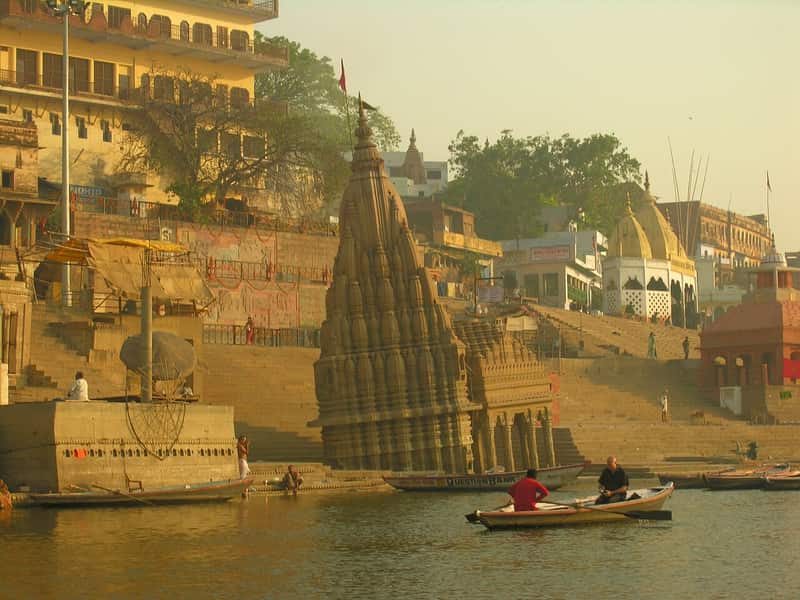
The best way to see Manikarnika, and the only way to see it whole, is from the water. A boat ride along the ghats of Varanasi is the classic experience of the city, and as the boat slides north past Scindia Ghat — with its famous temple half-sunk beneath the water — the tall tower of Manikarnika rises ahead, wreathed in smoke. From the river you can see the full stage of the ghat at once: the great platform where the pyres burn, the kund hidden in the lanes behind, the steps crowded with priests and mourners, and the constant drift of firewood boats bringing their cargo to the landing.
The captains of Varanasi have been taking visitors past this ghat for centuries, and they know its every mood. At sunrise the light lies flat and golden on the water, and the smoke hangs in a long ribbon over the ghat; at dusk the flames become visible against the darkening sky, and the chant of the mourners carries across the river with strange clarity. A good captain will slow the boat and tell the story of the earring, point out the Dom Raja's quarters and the Muktibhavan, and explain the meaning of the rituals — all without ever bringing the boat too close to the burning platform, out of respect for the families.
For the visitor, the boat is also a place of reflection. To float on the Ganga and watch the smoke of Manikarnika rise is to watch the oldest story of mankind — the story of what we do with our dead — still being told, in exactly the same way it was told when the city was young. Many visitors find that this half-hour on the water, more than any temple or palace, is the memory they carry home from Kashi.
Etiquette and Respect — How to Visit Manikarnika
Manikarnika is a working sacred ground, not a museum, and the first rule of visiting is respect. Photography of the cremations is strictly forbidden and deeply offensive to the families; visitors should leave their cameras and phones put away in the lanes around the ghat, and never aim a lens at the pyres or the mourners. The second rule is silence: this is a place where people are saying goodbye forever, and laughter, loud conversation and pointing are all out of place. Shoes are removed in the temple precincts, and visitors should dress modestly, covering shoulders and knees, as they would in any temple of India.
The third rule concerns money. Touts and guides approach visitors on the ghat offering blessings, "special" views or donations for wood, and the honest visitor must be aware that many of these approaches are scams. There are legitimate institutions — temples and trusts — that accept wood donations for families who cannot afford a pyre, but no priest or stranger on the ghat has the right to demand money from you. The respectful way to contribute, if you wish to, is through a recognised trust or by purchasing wood at a fixed-price counter; otherwise, a polite refusal is enough.
Finally, it is wise to remember what you are seeing. A pyre at Manikarnika is a family performing the last duty of love for someone they have lost, and the mourners around it are ordinary people in the worst moment of their lives. Visitors who stand a respectful distance away, who remain silent and unhurried, and who carry the memory of the eternal flame with quiet gratitude, will find that Manikarnika gives them far more than any photograph could — the chance to touch, for one moment, the oldest and deepest truth of India.
Around Manikarnika — Neighbouring Ghats and Shrines
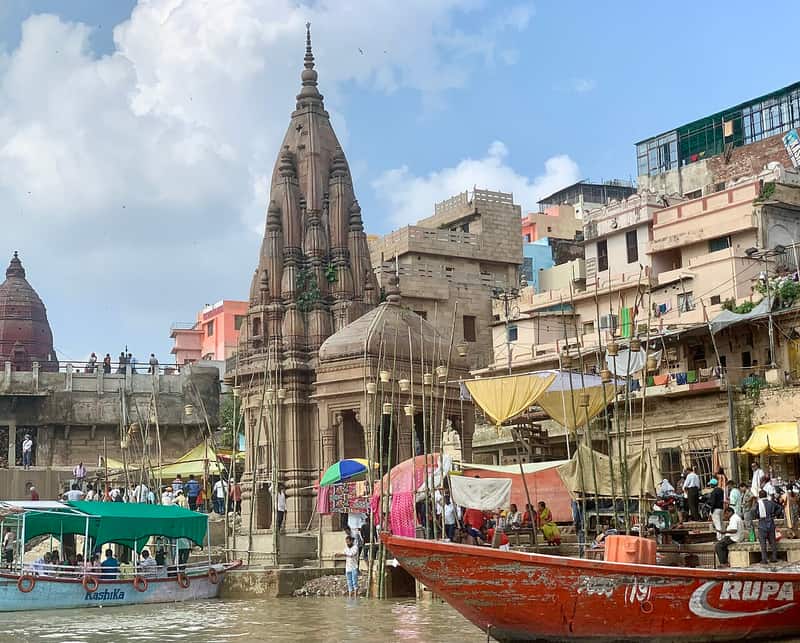
Manikarnika sits at the heart of the most sacred stretch of the Varanasi riverfront, and the area rewards a slow visit. Just to the south lies Scindia Ghat, with its famous leaning temple and the huge pipal tree that has grown across it for centuries; the ghat's ancient steps, many half-swallowed by the river, lead down to the water in a beautiful, broken cascade. To the north, Jaisingh Ghat — built by the astronomer-king Jai Singh II — is one of the most elegant on the river, its tower and pavilions reflecting in the water at sunrise.
Behind the ghat, the lanes climb toward the heart of the old city. A ten-minute walk brings you to the Kashi Vishwanath Temple, the most famous shrine in Varanasi, and to the broad new corridor that runs from the temple to the river. On the way you will pass the Ganesh Mahal, an old riverside palace now used as a government office, and dozens of small shrines tucked into the alleys. For the adventurous walker, the route north along the river continues through Panchganga Ghat — where the five rivers are said to meet — and up to Raj Ghat, the oldest quarter of the city, with its fort and the ruins of ancient monasteries.
A practical loop for visitors is to take a morning boat from Assi or Dashashwamedh Ghat, pass the great arc of ghats, disembark at Manikarnika, walk the lanes up to Kashi Vishwanath, and return through the bazaars of Vishwanath Gali, with their silk, sweets and the famous kachori stalls of the old city. In a single morning, this route touches the three faces of Kashi — the holy river, the sacred fire and the crowded lanes of faith — each one inseparable from the others.
Festivals and Sacred Days of Manikarnika
The ghat follows the great wheel of the Hindu calendar, and its most spectacular moment comes on Kartik Purnima, the full moon of November, during Dev Deepawali — the Festival of the Lights of the Gods. While the whole of Varanasi glitters with lamps on this night, Manikarnika holds its own silent observance: thousands of diyas are floated on the river from the ghat, and the flames of the pyres are joined by the light of a million lamps, so that the water seems to burn with blessing. It is believed that on this night the gods themselves descend to bathe in the Ganga, and the smoke of Manikarnika rises to meet them.
During the month of Kartik itself, the ghat is the site of the Agnihotra — the fire sacrifice — performed at the burning platform, one of the oldest ritual forms preserved in India. In these days pilgrims gather at dawn and dusk for prayers, and the ghat, normally a place of grief, takes on the brightness of a fair. Other sacred days draw the faithful in their thousands: Somvati Amavasya, the new moon that falls on a Monday, when a bath in the kund is believed to bring a woman the blessings of her husband and children; Maha Shivaratri, when the temples around the ghat are thronged; and the month of Sawan, when the faithful carry the holy water of the Ganga over their shoulders to the nearest temple of Shiva.
For the faithful, these festivals are not separate from the cremation rites but part of the same rhythm — life and death, grief and celebration, turning together on the wheel of time. The Manikarnika that blazes with lamps at Dev Deepawali is the same Manikarnika whose pyres blaze every night of the year; the light is the light, whether it floats on water or rises from fire.
Practical Guide — How to Reach, When to Visit
Manikarnika Ghat is open day and night, every day of the year, and there is no entry fee. The easiest way to reach it is on foot from the Kashi Vishwanath Temple: from the main temple gate, follow the corridor toward the river, and at the riverside turn left and walk five minutes past the Ganesh Mahal. Auto-rickshaws and e-rickshaws can bring you to the top of the lanes leading to the ghat, but the last stretch is always on foot through the narrow alleys. The nearest major road is the Bhelupur–Godowlia stretch, and by boat, the ghat is a twenty-minute ride from Dashashwamedh and ten from Scindia.
The best time to visit is early morning, between 5:30 and 7:30 AM, when the light is soft, the ghat is at its quietest, and you can stand at a respectful distance and watch the rites begin the day. The evening, around 6 to 8 PM, shows the ghat at its most dramatic, with the pyres glowing against the dusk, but it is also the busiest time for funerals. Winter months, from October to March, are the most comfortable; in summer the heat of the fires adds to the heat of the sun, and visiting between noon and 3 PM is not recommended. Allow forty minutes to an hour for the ghat itself, and half a day if you combine it with the boat ride and the Vishwanath temple.
A few practical cautions: keep your valuables close, as the lanes are crowded and touts are persistent; do not accept unsolicited "blessings" or "donations" from strangers; wear shoes you can take off quickly, since the temple courtyards require it; and carry water, especially in summer. If you wish to make a donation for funeral wood, give through a recognised temple trust and ask for a receipt. Above all, remember that you are a guest at the most sacred fire in the world — visit with humility, and the ghat will give you a memory no other place on earth can offer.
Manikarnika Ghat — Gallery (15 Photos)
Image Credits
Manikarnika Ghat, 6 April 2019.jpg · Manikarnika Ghat 2016.jpg · Manikarnika Ghat (33412451120).jpg · Manikarnika Ghat in Night, 6 April 2019.jpg · Manikarnika Cremation Ghat, Varanasi from boat.jpg · Manikarnika Ghat close view.jpg · Manikarnika Ghat, Varanasi, Uttar Pradesh, India (1961) -179 hg.jpg · Manikarnika Ghat, Varanasi, Uttar Pradesh, India (1961) -246 hg.jpg · Manikarnika Ghat, Varanasi, Uttar Pradesh, India (2011) 5.jpg · Manikarnika Ghat, Varanasi, Uttar Pradesh, India (2011) 3.jpg · Manikarnika Ghat (4956575129).jpg · Varanasi, Manikarnika Ghat (6291880051).jpg · Manikarnika Ghat 2.jpg · Manikarnika Ghat 10.jpg · Way to Manikarnika Ghat, 6 April 2019.jpg — Wikimedia Commons, under free licenses.
Continue exploring
Similar Ghats Nearby
Book This Ghat — Get Notified
Download the app now and book a boat ride to Manikarnika Ghat