
The Most Comprehensive Guide
Varanasi Complete Travel Guide 2026
Everything you need to know about Kashi — 84 ghats, 50+ temples, street food, boat rides, festivals, transport, hotels, photography, shopping, safety & 3000+ years of history.
3000+
Years of Continuous Settlement
2000+
Ancient Temples
88
Sacred Ghats Along the Ganges
100+
Daily Religious Ceremonies
Ancient Origins (3000 BCE – 500 CE)
Varanasi, known as Kashi in ancient times, stands as one of the oldest continuously inhabited cities on Earth. Nestled on the western bank of the Ganges in Uttar Pradesh, the city's origins stretch back into the mists of prehistory. Archaeological excavations in the broader Gangetic plain have uncovered evidence of human settlements dating as far back as 3000 BCE, though the earliest definitive remains of urban life in Varanasi itself point to organized habitation by around 1100 BCE. These early settlers were likely part of the late Vedic civilization that was reshaping the Indo-Gangetic heartland.
The city finds mention in the Rigveda, one of the oldest known religious texts in the world, composed between 1500 and 1200 BCE. The Rigveda refers to Kashi as a region of spiritual importance, and the city's association with the goddess Annapurna — the Hindu deity of nourishment — dates to this remote period. The Atharvaveda also references Kashi, describing it as a city of learning and divine blessing. By the time of the later Upanishads and the Brahmanas, Kashi had already established itself as a center of philosophical inquiry and ritual practice.
The city's connection to Buddhism adds another profound layer to its ancient heritage. In 528 BCE, Siddhartha Gautama — the Buddha — is believed to have given his first sermon, the Dhammacakkappavattana Sutta, at the nearby Deer Park in Sarnath, just a few kilometers from Varanasi. This event, known as the "Turning of the Wheel of Dharma," is one of the most momentous occasions in the history of world religion. Sarnath became a major Buddhist center, and Emperor Ashoka later erected pillars and monasteries there in the 3rd century BCE. Buddhist monasteries, stupas, and sculptures proliferated throughout the Varanasi region for centuries, and the city remained an important stop on Buddhist pilgrimage routes well into the medieval period.
Jain tradition also connects deeply with Varanasi. The 23rd Tirthankara, Parshvanatha, is believed to have been born in the Varanasi region around the 9th century BCE. Jain texts describe the city as a thriving center of commerce and philosophy. The coexistence of Hindu, Buddhist, and Jain traditions in Varanasi created a remarkably pluralistic intellectual environment that attracted scholars, monks, and traders from across the Indian subcontinent and beyond.
During the Maurya Empire (322–185 BCE), particularly under Emperor Ashoka (268–232 BCE), Varanasi grew in both size and importance. Ashoka's patronage of Buddhism led to the construction of numerous stupas, monasteries, and pillars in and around the city. The famous Ashoka Pillar at Sarnath, with its four lions standing back to back, later became the national emblem of India. After the Mauryas, the Shunga dynasty and the Gupta Empire continued to invest in the city's religious and cultural infrastructure.
The Gupta Empire (4th–6th century CE) is often called the "Golden Age of India," and Varanasi was at its heart. Under rulers like Chandragupta I, Samudragupta, and Chandragupta II, the city became a flourishing center of art, literature, mathematics, and astronomy. The great Sanskrit poet Kalidasa is believed to have been active in Varanasi during this era. The Gupta period saw the construction of magnificent temples, the development of classical sculpture, and the compilation of texts that would shape Hindu philosophy for millennia. The city's silk-weaving tradition also traces its origins to this golden age, when artisans began producing the exquisite brocades that would later become world-famous.
In the 7th century CE, the Chinese pilgrim Xuanzang visited Kashi and documented its grandeur. He described a city of immense size, with hundreds of Buddhist monasteries and temples, and a population estimated at over 100,000. His accounts provide one of the most detailed external descriptions of the city in the ancient period, painting a picture of a cosmopolitan urban center that rivaled any city in the contemporary world.
Key Events — Ancient Period
• 3000 BCE — Earliest evidence of human habitation in the Gangetic plain near Varanasi
• 1500–1200 BCE — Kashi referenced in the Rigveda, the oldest Vedic text
• 1100 BCE — Archaeological evidence of organized urban settlement
• 528 BCE — Buddha delivers his first sermon at Sarnath near Varanasi
• 268–232 BCE — Emperor Ashoka patronizes Buddhist construction in Varanasi
• 4th–6th century CE — Gupta Empire golden age; Varanasi becomes a global center of learning
• 7th century CE — Chinese pilgrim Xuanzang visits and documents Kashi's grandeur
Historical Fact
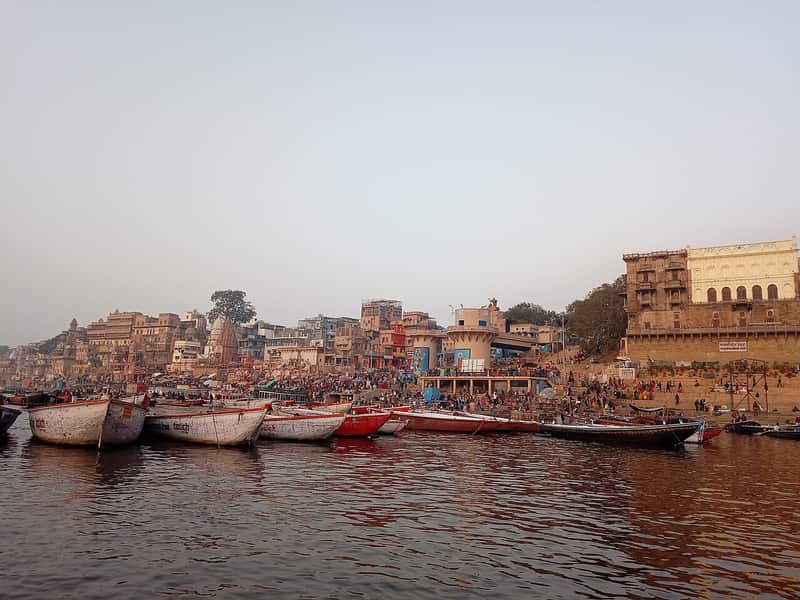
The ancient name "Kashi" translates to "City of Light" in Sanskrit. This name is deeply symbolic — Kashi was considered the radiant center of spiritual enlightenment, where the veil between the physical world and the divine was thinnest. Even today, the evening Ganga Aarti at Dashashwamedh Ghat, where thousands of oil lamps are lit along the river, evokes this ancient meaning.
Medieval Period (500 – 1700 CE)
The medieval period brought both upheaval and transformation to Varanasi. Following the decline of the Gupta Empire, the city passed through the hands of numerous regional powers — the Vakatakas, the Maukharis, the Pushyabhuti dynasty, and the Kannauj Empire. Despite frequent political instability, Varanasi's spiritual magnetism ensured it never lost its identity as India's foremost sacred city. Pilgrims continued to stream in from across the subcontinent, and the tradition of temple-building remained vigorous even as empires rose and fell around it.
The arrival of Islamic rule in northern India brought profound changes. Mahmud of Ghazni's raids into the Gangetic plain in the early 11th century damaged several temples, but Varanasi itself survived largely intact due to its distance from the primary invasion routes. However, the establishment of the Delhi Sultanate in the 13th century brought the city under direct Muslim rule for the first time. The Sultanate's control was often tenuous — local Hindu chieftains maintained significant autonomy — but periodic waves of iconoclasm caused damage to the city's sacred architecture.
Despite these challenges, the medieval period was also a time of extraordinary cultural flowering. The Bhakti movement, which swept across India between the 13th and 17th centuries, found one of its most important centers in Varanasi. The poet-saint Kabir (1398–1518), a Muslim weaver who became one of India's most beloved mystic poets, lived and worked in Varanasi. Kabir's verses, which challenged religious orthodoxy and celebrated the unity of all faiths, were composed in the Bhasha language and became foundational texts of the Nirguna Bhakti tradition. His poetry continues to be sung by millions to this day, and his followers — the Kabir Panth — maintain a significant presence in Varanasi.
Perhaps the most towering figure of medieval Varanasi was Goswami Tulsidas (1532–1623), the author of the Ramcharitmanas — a retelling of the Ramayana in Awadhi Hindi. Tulsidas composed much of this epic work in Varanasi, and the poem is believed to have been dictated to him by Lord Hanuman at the Assi Ghat. The Ramcharitmanas became the most widely read and recited literary work in the Hindi-speaking world, and Tulsidas's legacy is inseparable from the cultural identity of Varanasi. The tulsi (holy basil) plant, associated with Tulsidas's name, is found in virtually every Hindu household in India, a living tribute to the poet's enduring influence.
The Mughal Empire brought both destruction and, paradoxically, a certain cultural synthesis to Varanasi. While Mughal emperor Aurangzeb is infamous for ordering the demolition of the original Kashi Vishwanath Temple in 1669 and constructing the Gyanvapi Mosque on a portion of its foundations, earlier Mughal rulers — particularly Akbar (r. 1556–1605) — were relatively tolerant. Akbar visited Varanasi and made grants to Hindu temples, recognizing the city's economic and cultural importance. The Mughal period also saw the development of the distinctive syncretic musical traditions of the Benaras Gharana, which blended Hindu devotional music with Persian and Central Asian influences.
The city's famous silk-weaving industry also expanded significantly during the medieval period. Banarasi silk saris, woven with intricate gold and silver zari work, became prized possessions across India and were exported as far as Southeast Asia and the Middle East. The silk weavers of Varanasi developed techniques — such as the use of real gold and silver threads — that remain unmatched in the world of textiles. This industry not only brought prosperity to the city but also created a distinctive cultural identity, as the sari became an integral part of Indian ceremonial dress.
Dynasties That Ruled
Delhi Sultanate (1200–1500)
Period of conflict but the city's spiritual identity survived and endured.
Mughal Empire (1500–1700)
Mixed patronage, temple destruction under Aurangzeb, cultural synthesis.
Maratha Empire (1700–1800)
Hindu cultural revival, major temple rebuilding campaigns.
Benaras State (1800–1947)
Princely state under nominal British suzerainty.
Historical Fact
Kabir, the weaver-poet of Varanasi, composed his verses on a loom. Legend has it that when he died, his Hindu and Muslim followers both claimed his body. When they lifted the shroud, they found only a heap of flowers — half were taken to be cremated at the Manikarnika Ghat, and half to be buried at a Muslim shrine. This story beautifully captures Varanasi's spirit of spiritual inclusivity.
Maratha & Colonial Era (1700 – 1947)
The Maratha Empire's expansion into the Gangetic plain in the 18th century brought a powerful renaissance of Hindu cultural life to Varanasi. Under Maratha patronage, several of the city's most iconic temples were rebuilt or restored. The most significant of these was the reconstruction of the Kashi Vishwanath Temple by Rani Ahilyabai Holkar of Indore in 1780, after its destruction by Aurangzeb over a century earlier. Ahilyabai, one of the most celebrated queens in Indian history, devoted her life and treasury to rebuilding temples across India, and her contribution to Varanasi's sacred landscape remains unparalleled.
The Maratha period also saw the consolidation of Varanasi's role as a center of Sanskrit scholarship. The Mahamaya Sanskrit Pathshala and numerous other institutions preserved ancient learning, and the city's pandits became renowned for their mastery of Vedantic philosophy, grammar, and ritual. The Bhairon Nath Temple, the Durga Temple, and several other major shrines received significant Maratha-era renovations, and the distinctive Maratha architectural style — characterized by towering shikharas (spires) — became a defining feature of the Varanasi skyline.
The arrival of British colonial power in the late 18th century transformed Varanasi's political landscape. The city became the seat of the Benaras State, a princely state under British suzerainty. The British initially maintained a complex relationship with Varanasi's religious establishment, recognizing the city's immense importance to Hindu identity. Colonel James Warren Hastings, the first Governor-General of India, resided in Varanasi and maintained a close relationship with the city's Brahmin scholars. However, colonial modernization also brought changes — the construction of roads, railways, and government buildings altered the ancient cityscape, and colonial administrators often viewed Varanasi's religious practices with a mixture of curiosity and condescension.
The 1857 Indian Rebellion — the first major uprising against British rule — had a significant impact on Varanasi. The city witnessed intense fighting, and many of its residents participated in the revolt. The British response was swift and brutal — widespread reprisals, confiscation of property, and public executions followed. The trauma of 1857 left a lasting mark on Varanasi's collective memory and galvanized the city's involvement in the broader independence movement that would unfold over the next century.
The founding of Banaras Hindu University (BHU) in 1916 was a watershed moment in the modern history of Varanasi. Founded by Madan Mohan Malaviya, with support from Annie Besant and other national leaders, BHU was envisioned as a living embodiment of the national education movement. The university's magnificent campus, designed by architect Charles Heeramaneck, blends modern and traditional architectural styles and became a beacon of Indian intellectual and cultural renaissance. BHU attracted students and scholars from across the country and became a nursery of nationalist thought.
Varanasi's role in the Indian independence movement was multifaceted. The city was a stronghold of the Indian National Congress, and leaders like Bal Gangadhar Tilak, Madan Mohan Malaviya, and Sri Aurobindo used the city as a base for organizing nationalist activities. The 1942 Quit India Movement, launched by Mahatma Gandhi, saw massive participation in Varanasi. Students from BHU played a particularly prominent role, and the city became known as a center of revolutionary activity. The British authorities imposed martial law and imprisoned hundreds of activists, but the spirit of resistance could not be suppressed.
The silk industry, which had been a source of Varanasi's prosperity for centuries, faced severe challenges during the colonial period. British industrial policy flooded the Indian market with cheap machine-made textiles, and traditional handloom weavers suffered greatly. However, the Banarasi weavers adapted — they developed new designs, incorporated machine-spun silk alongside handspun yarn, and cultivated new markets among the Indian elite. The sari became a symbol of Indian identity, and Banarasi silk became synonymous with elegance and tradition.
Key Events — Maratha & Colonial Period
• 1780 — Rani Ahilyabai Holkar rebuilds the Kashi Vishwanath Temple
• 1775–1818 — Maratha Empire exercises control over Varanasi region
• 1857 — Indian Rebellion; Varanasi witnesses intense fighting against British rule
• 1916 — Banaras Hindu University (BHU) is founded by Madan Mohan Malaviya
• 1942 — Quit India Movement; BHU students lead massive protests in Varanasi
• 1947 — India gains independence; Varanasi becomes part of Uttar Pradesh
Modern Varanasi (1947 – Present)
After independence in 1947, Varanasi transitioned from a princely state to a city within the newly formed Indian Union. The integration into Uttar Pradesh brought new administrative structures, but the city's cultural identity remained firmly rooted in its ancient heritage. The post-independence decades saw both preservation and transformation — new industries emerged alongside traditional crafts, modern educational institutions complemented centuries-old Sanskrit schools, and the city grappled with the challenges of urbanization, population growth, and environmental degradation along the Ganges.
The silk industry experienced a remarkable revival in the post-independence era. The Indian government established the Banaras Silk Factory and the Central Silk Board, which provided technical assistance and market access to traditional weavers. The Banarasi sari became the garment of choice for Indian brides, and the industry grew to employ hundreds of thousands of workers in Varanasi and surrounding districts. The distinctive gold zari work, the intricate brocade patterns, and the legendary softness of Banarasi silk became recognized worldwide, and the sari was granted a Geographical Indication (GI) tag to protect its authenticity.
Varanasi's spiritual significance continued to draw millions of pilgrims annually, and the city's religious institutions evolved to accommodate modern needs. The Ganga Aarti at Dashashwamedh Ghat, a spectacular evening ceremony of light, sound, and devotion, became one of India's most iconic tourist attractions. The ritual, performed by young priests trained in Vedic chanting, was telecast nationally and became a symbol of Varanasi's living spiritual heritage. The city's numerous ashrams and spiritual retreat centers attracted seekers from around the world.
The Kashi Vishwanath Corridor, inaugurated in December 2021, represents the most dramatic transformation of Varanasi's ancient core in centuries. The massive urban renewal project created a direct 500-meter pathway connecting the Manikarnika and Dashashwamedh ghats to the Kashi Vishwanath Temple. The project involved the demolition of hundreds of old structures, the relocation of thousands of residents, and a complete redesign of the ancient precincts. While the project was praised for improving pilgrim access and creating a grand spiritual boulevard, it also drew criticism for the destruction of historic buildings and the displacement of long-standing communities.
In 2023, Varanasi was inscribed as a UNESCO World Heritage Site, a recognition of the city's extraordinary cultural significance. The designation covered not only the physical monuments and architecture but also the intangible cultural heritage — the living traditions of worship, music, craft, and ritual that have made Varanasi unique for over three millennia. The inscription marked the culmination of decades of effort by historians, cultural advocates, and the Indian government.
Today, Varanasi stands at a crossroads between preservation and modernization. The city faces challenges common to many ancient urban centers — managing tourism pressures, preserving historic architecture, addressing pollution in the Ganges, and providing modern infrastructure while respecting centuries-old urban fabric. Yet its spiritual heartbeat remains undimmed. Each dawn, the ghats come alive with pilgrims performing ritual ablutions in the Ganges, temple bells ring across the city, and the ancient chants of Vedic priests echo through the narrow lanes. Varanasi endures as it always has — a city where the eternal and the everyday coexist in a dance that has lasted for three thousand years.
Key Events — Modern Period
• 1947 — Indian independence; Varanasi becomes part of Uttar Pradesh
• 1960s — Silk industry revival with government support
• 1991 — Ganga Aarti at Dashashwamedh Ghat becomes a daily spectacle
• 2014 — Narendra Modi elected as MP from Varanasi; major development push begins
• 2021 — Kashi Vishwanath Corridor inaugurated
• 2023 — Varanasi inscribed as a UNESCO World Heritage Site
Key Historical Figures
Throughout its storied history, Varanasi has been home to and shaped by extraordinary individuals whose influence extended far beyond the city's ancient walls. Here are some of the most significant figures in the history of Kashi.
Goswami Tulsidas (1532–1623)
The author of the Ramcharitmanas, a vernacular retelling of the Ramayana in Awadhi Hindi. Tulsidas is said to have composed the epic at the Assi Ghat, with Lord Hanuman himself serving as his muse. His work is the most widely recited literary text in the Hindi-speaking world and has shaped Hindu devotional practice for centuries.
Kabir (1398–1518)
A Muslim weaver who became one of India's greatest mystic poets and a foundational figure of the Nirguna Bhakti movement. Kabir's verses challenged religious orthodoxy and celebrated the unity of all faiths. His dohas (couplets) are still part of everyday speech in India, and his followers, the Kabir Panth, number in the millions.
Rani Ahilyabai Holkar (1725–1795)
The Maratha queen of Indore who rebuilt the Kashi Vishwanath Temple in 1780 after its destruction by Aurangzeb. Ahilyabai devoted her life and personal fortune to restoring temples across India. Her reign is remembered as a golden age of Maratha patronage, and she remains one of the most revered women in Indian history.
Madan Mohan Malaviya (1861–1946)
An educationist, freedom fighter, and the founder of Banaras Hindu University (BHU) in 1916. Malaviya envisioned BHU as a center of national education that would blend modern learning with Indian cultural traditions. He was awarded the Bharat Ratna posthumously in 2015 for his extraordinary contributions to Indian education and the freedom movement.
Annie Besant (1847–1933)
The British-born social reformer, theosophist, and Indian independence activist who played a key role in the founding of BHU alongside Malaviya. Besant became the first woman president of the Indian National Congress in 1917 and was a tireless advocate for Indian self-rule, education, and women's rights.
Xuanzang (602–664 CE)
The Chinese Buddhist pilgrim who traveled thousands of miles across India and spent significant time in Varanasi documenting its temples, monasteries, and scholarly traditions. His detailed accounts, written in the 7th century, provide some of the most valuable external descriptions of ancient Kashi and remain essential sources for historians of medieval India.
Bharatendu Harishchandra (1850–1885)
Known as the "Father of Modern Hindi Literature," Bharatendu was born in Varanasi and used the city as his base for a literary revolution. He founded the journal "Kavi Vachan Sudha" and wrote plays, poems, and prose that modernized Hindi and made it a vehicle for social commentary. His Varanasi home is now a museum.
Sant Raidas (15th century)
A poet-saint of the Bhakti movement who was born in Varanasi and worked as a leather craftsman. Raidas's devotional songs emphasized equality, humility, and devotion to the divine. He is the patron saint of leather workers in India, and his hymns are included in the Sikh holy scripture, the Guru Granth Sahib.
Did You Know?
The Eternal Flame
The eternal flame at the Jnana Vapi (Wisdom Well) inside the Kashi Vishwanath Temple complex is said to have been burning since ancient times. According to tradition, this flame was lit by Lord Shiva himself, and it has never been extinguished — even during the Mughal invasions.
A City of Music
The Benaras Gharana is one of the oldest and most respected schools of Hindustani classical music. Founded during the Mughal period, it is known for its distinctive style of tabla playing and vocal music that blends devotional intensity with technical brilliance. Legendary musicians like Baba Allauddin Khan trained here.
The Living Dead
Varanasi is one of the few places in India where cremation is considered auspicious at any of the city's ghats. However, the Manikarnika Ghat has been the primary cremation ground for over 3,000 years, with fires believed to have burned continuously for millennia. Families travel from across India to perform last rites here.
BHU's Secret Tunnels
Banaras Hindu University campus is said to contain a network of underground tunnels that were used during the Indian independence movement to smuggle freedom fighters and clandestine materials past British surveillance. Some sections remain unexplored to this day.
The Ganges' Curative Powers
While the Ganges water in modern Varanasi is no longer clean enough for safe drinking, ancient texts describe the river as having curative properties. Scientific studies have found that Ganges water does contain bacteriophages — viruses that attack harmful bacteria — which may explain its historical reputation for purity.
A City of Scholars
Varanasi has produced more Sanskrit scholars per capita than any other city in the world. The city's tradition of Vedic scholarship has been maintained through a network of gurukuls (traditional schools) for over 3,000 years, making it the oldest continuously operating center of learning on the planet.
Fascinating Trivia
The Ghats of Varanasi — 88 stone staircases leading down to the Ganges — are collectively longer than any other set of riverfront steps in the world. Stretching over 6.8 kilometers along the western bank of the Ganges, they form a continuous urban waterfront that has been continuously maintained for over 1,500 years.
Architectural Heritage
The narrow winding lanes of old Varanasi (known as galis) are so tight that in many places only a single person can walk through at a time. This labyrinthine layout is deliberate — it was designed to slow down invading armies and provide defenders with tactical advantages during medieval warfare.
History You Can Touch — Sites to Visit Today
Varanasi's history isn't just in books — it's in the stones, the walls, and the steps you walk on. Here are the places where you can physically connect with 3,000 years of history:
Kashi Vishwanath Temple
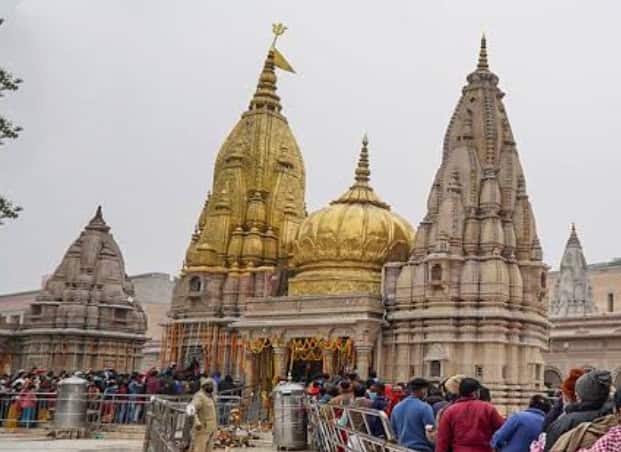
Original Jyotirlinga since 1000+ years. The current gold dome was added by Maharaja Ranjit Singh in 1839.
Ramnagar Fort
17th-century Mughal fort. Houses a museum with vintage cars, weapons, and the famous Dakshinavarti Shankh.
Sarnath
Where Buddha gave his first sermon in 528 BCE. The Dhamek Stupa is 43.6 meters tall.
Bharat Kala Bhawan
BHU campus museum with 100,000+ artifacts including Mughal miniatures and ancient sculptures.
Complete Guide to All 84 Ghats of Varanasi
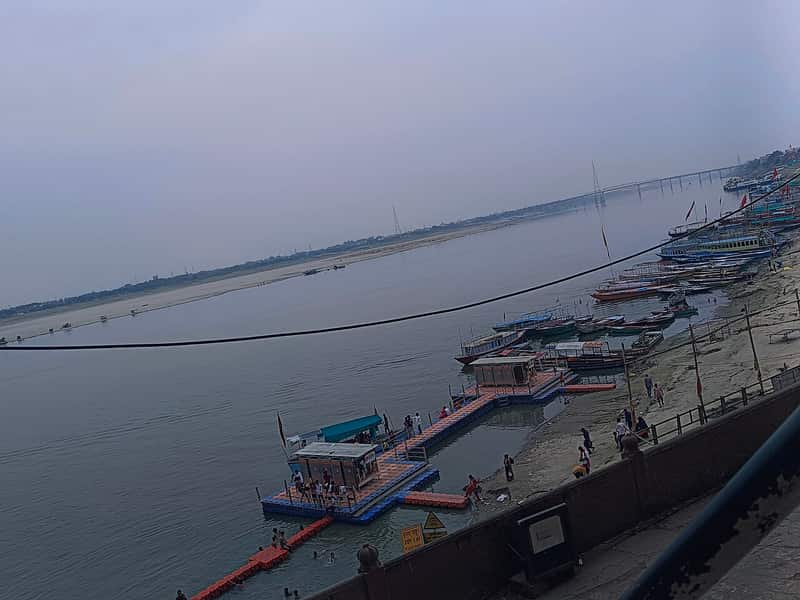
The 84 ghats stretch along 6.8 km of the crescent-shaped western bank of the Ganga. Each ghat has its own history, significance, and character. A full walk from Assi Ghat to Adi Keshava Ghat takes 2-3 hours. The best way to see them all is by boat at sunrise.
Top 10 Must-Visit Ghats
1. Dashashwamedh Ghat
The most famous ghat and site of the spectacular evening Ganga Aarti performed daily at 6:45-7:00 PM by seven priests. Named after the mythical sacrifice of ten horses by Lord Brahma. Arrive 90 minutes before aarti for a good seat.
2. Manikarnika Ghat
The principal cremation ghat, burning 24/7 since antiquity. Hindus believe cremation here grants moksha (liberation from rebirth). NO photography allowed. Do not engage with "donation" collectors.
3. Assi Ghat
Southernmost major ghat where the Assi river meets the Ganga. Popular with students, backpackers, and artists. Morning aarti at sunrise, yoga classes, and cafe-lined street above. Best for first-time visitors.
4. Kedar Ghat
Colorful, photogenic ghat with red-and-white striped walls. Linked to Kedareshwar Temple. Popular with South Indian pilgrims. One of the most photographed ghats in Varanasi.
5. Tulsi Ghat
Named after poet-saint Tulsidas who composed parts of Ramcharitmanas here. Hosts annual Sankat Mochan music festival. Beautiful crumbling architecture.
6. Panchganga Ghat
Named for five sacred rivers believed to meet underground. Topped by the striking Alamgir Mosque built by Aurangzeb. Best viewed from a boat for full silhouette.
7. Scindia Ghat
Famous for the half-submerged Shiva temple that tilted into the river. Built by Scindia royal family of Gwalior. Iconic photography spot, best seen Oct-Feb at low water levels.
8. Man Mandir Ghat
Built by Maharaja Man Singh of Amber in the late 16th century. Features a historic observatory on the upper level. Beautiful Rajput architecture with carved windows.
9. Harishchandra Ghat
Second cremation ghat, smaller and older than Manikarnika. Named after legendary King Harishchandra known for truthfulness. No photos of cremations.
10. Namo Ghat (85th Ghat)
The newest ghat, opened in 2023. Wheelchair accessible, large parking area. Best for travelers with mobility constraints or large luggage.
Complete List of All 84 Ghats
Adi Keshava, Ahilyabai, Ahilya, Anandamai, Assi, Badri Narayan, Bajirao, Bauli, Bhadaini, Bhonsale, Brahma, Bundi Parakota, Chaowki, Chausatthi, Cheta Singh, Dandi, Darbhanga, Dashashwamedh, Digpatia, Durga, Gaay, Ganga Mahal (I), Ganga Mahal (II), Ganesh, Gola, Gularia, Hanuman, Hanumanagardhi, Harishchandra, Jain, Jalasayi, Janaki, Jatara, Karnataka State, Kedar, Khirkia/Namo, Khori, Lala, Lalita, Mahanirvani, Man Mandir, Manasarovar, Mangala Gauri, Manikarnika, Mata Anandamai, Meer, Mehta, Munshi, Naga, Narad, Naya, Nishad, Panchganga, Rajendra Prasad, Ravidas, Ratneshwar, Rewa, Scindia, Shitala, Shivala, Singh, Someshwar, Suraj, Tulsi, Venimadhav, and more.
Walking Route: Assi to Manikarnika
- Start at Assi Ghat — morning aarti, chai at a cafe
- Walk north through Tulsi Ghat, Kedar Ghat
- Pass Harishchandra Ghat — observe respectfully (cremation ghat)
- Continue to Dashashwamedh Ghat — stop for chai, watch aarti preparation
- Walk through Man Mandir, Scindia Ghat
- Reach Manikarnika Ghat — walk through quietly (cremation ghat)
- End at Panchganga Ghat — mosque-topped, river views
Pro Tip: The full walk is best done at sunrise (5:30-7:00 AM) when the ghats are alive with morning rituals but not yet crowded. Alternatively, take a boat ride to see all ghats from the river — the most efficient way to see them all.
Complete Temples Guide
Varanasi has over 23,000 temples — from grand golden-domed shrines to tiny neighborhood temples tucked into narrow lanes. Here are the must-visit ones.
Kashi Vishwanath Temple (Golden Temple)
One of 12 Jyotirlingas. 800 kg gold spire donated by Maharaja Ranjit Singh in 1835. Current structure built by Queen Ahilyabai Holkar in 1780. Timings: 3:00 AM - 11:00 PM. Entry: Hindus only (ID required). NO phones, cameras, bags — free lockers at Gate 4.
Daily Aarti: Mangala (3:00 AM), Bhog (11:15 AM), Sandhya (7:00 PM), Shayan (10:30 PM)
Sankat Mochan Hanuman Temple
Founded by Tulsidas in 16th century. Famous for besan laddoo prasad. Monkeys roam campus (considered sacred — do NOT carry food). Tuesday and Saturday are special days. Timings: 4:00 AM - 10:00 PM.
Durga Temple (Monkey Temple)
Built in 18th century. Striking red color from ochre paint. Nagara architectural style with no pillars — entire structure is interlocking stone. Large monkey population. Timings: 5:00 AM - 10:00 PM.
Tulsi Manas Temple
Built in 1964 of white marble on the spot where Tulsidas composed Ramcharitmanas. Walls carved with verses from the epic. Peaceful and uncrowded. Timings: 5:30 AM - 12:00 PM, 3:30 PM - 9:00 PM.
New Vishwanath Temple (BHU)
Built by Birla family in 1966. Modeled after original Kashi Vishwanath. Open to all castes/religions. Stunning white marble architecture inside BHU campus. Timings: 4:00 AM - 12:00 PM, 1:00 PM - 9:00 PM.
Bharat Mata Temple
Unique — no deity, contains a relief map of undivided India carved in marble. Inaugurated by Mahatma Gandhi in 1936. Secular temple, open to all. Timings: 6:00 AM - 8:00 PM.
Annapurna Temple
Dedicated to Goddess Annapurna (goddess of nourishment). Located near Kashi Vishwanath Temple. Timings: 4:00 AM - 12:00 PM, 3:00 PM - 11:00 PM.
Temple Etiquette
- Remove shoes before entering (free storage near entrance, ₹5-10)
- Dress modestly — cover shoulders and knees
- Walk clockwise around sanctum (parikrama)
- Do not touch idols unless permitted
- Accept prasad with right hand
- Confirm price before agreeing to special puja
- Avoid black clothing at some temples
- Carry only ID and offerings — no phones, cameras, bags at Kashi Vishwanath
Varanasi Street Food Guide
Varanasi is a vegetarian food paradise. 90% of street food is vegetarian. Daily food spend rarely crosses ₹800-1,000 even sampling widely.
Must-Try Street Foods
Kachori Sabzi (Breakfast King)
Where: Ram Bhandar (Vishwanath Gali) • Price: ₹30-60 • Time: 7:00-10:00 AM
Tamatar Chaat
Where: Kashi/Deena Chaat Bhandar (Godowlia) • Price: ₹50-100 • Time: 4:00-7:00 PM
Blue Lassi
Where: Blue Lassi Shop (Kachori Gali) • Price: ₹50-120 • Time: 11 AM-5 PM
Malaiyyo (Winter Only)
Where: Chaukhamba Lane • Price: ₹40-80 • Time: Winter mornings 5:30-8:00 AM only
Baati Chokha
Where: Baati Chokha Restaurant (Lanka) • Price: ₹100-200
Rabri-Jalebi
Where: Ksheer Sagar (Godowlia) • Price: ₹50-80 • Time: 8:00 AM - 10:00 PM
Thandai
Where: Baba Thandai (Godowlia) • Price: ₹40-60 • Traditional milk with almonds, saffron
Banarasi Paan
Where: Throughout old city • Price: ₹20-50 • Available anytime
Food Walk Itinerary
7:00 AM — Kachori-Sabzi at Ram Bhandar (Vishwanath Gali)
7:30 AM — Kulhad Chai at lane stall (Vishwanath Gali)
8:00 AM — Malaiyo in winter or Poori-Sabzi at Thatheri Bazar
8:30 AM — Blue Lassi at Blue Lassi Shop (Kachori Gali)
12:30 PM — Litti Chokha at Baati Chokha restaurant (Lanka)
4:00 PM — Chai + sunset at Assi Ghat stalls
5:45 PM — Tamatar Chaat at Deena Chaat (Dashashwamedh)
6:15 PM — Rabri-Jalebi at Ksheer Sagar (Godowlia)
8:00 PM — Banarasi Paan at Godowlia
Best Restaurants & Cafes
Rooftop/Cafe
Pizzeria Vaatika (Assi), Brown Bread Bakery (Assi), Dolphin Restaurant (Dashashwamedh), I:BA Cafe (Shivala)
Street Food Zones
Vishwanath Gali — sweets, paan • Lanka/BHU — budget meals • Assi Ghat — cafes • Godowlia — chaat, jalebi
Varanasi Festival Calendar 2026
Varanasi celebrates festivals with unmatched intensity. Plan your trip around these events for the most memorable experience.
| Festival | 2026 Date | Crowd | Significance |
|---|---|---|---|
| Mahashivratri | Feb 26 | EXTREME | Biggest event; KV temple open 24hrs; millions of pilgrims |
| Holi | Mar 14 | HIGH | Color festival; bhang thandai; Rang Bhari Ekadashi 4 days before |
| Ganga Dussehra | Jun 7 | MODERATE | Descent of Ganga from heaven; diyas floated on river |
| Chhath Puja | Nov 15 | VERY HIGH | Sun worship; women fast 36 hours; ghats packed |
| Dev Deepawali | Nov 24 | EXTREME | 1 million+ diyas on all 84 ghats; most spectacular night of the year |
| Diwali | Oct 21 | HIGH | Festival of lights; old city lanes illuminated |
| Navratri | Oct 11-20 | HIGH | Nine nights of worship; Durga Temple special |
Dev Deepawali 2026 — Don't Miss This!
Tuesday, November 24, 2026. All 84 ghats lit with millions of earthen diyas. The most spectacular night in Varanasi. Hotel prices 3-4x normal — book 2-3 months in advance. Ghat-facing rooms sell out months ahead.
How to Reach Varanasi
Varanasi is well connected by air, rail, and road. Here's everything you need to know about getting there and getting around.
By Air
Lal Bahadur Shastri International Airport (VNS) — 26 km from Dashashwamedh Ghat, 45-70 minutes by taxi. Domestic + international terminals. Pre-booked sedan fare from ₹899.
Airlines: IndiGo, Air India, SpiceJet, Vistara. Delhi-Varanasi: ₹3,000-8,000 (1.5 hours).
By Train
Three stations: Varanasi Junction (BSB) — main; Manduadih (MUV) — closer to Assi Ghat; Varanasi City (BCY) — nearest to ghats but fewest trains.
Vande Bharat Express — Delhi → BSB, ~8hrs, ₹1,500-2,800 (meals included)
Shiv Ganga Express — Delhi → BSB, ~12hrs, ₹385-1,500
Mahamana Express — Delhi → BSB, ~11.5hrs, ₹395-1,600
Vibhuti Express — Mumbai → BSB, ~24hrs, ₹520-1,950
Book 120 days in advance for peak season (Oct-Mar). Tatkal opens at 10:00 AM IST (AC) / 11:00 AM (sleeper).
By Road
Delhi → Varanasi: 820 km, 12-14 hrs
Lucknow → Varanasi: 320 km, 5-7 hrs
Prayagraj → Varanasi: 125 km, 2.5-3 hrs
Ayodhya → Varanasi: 200 km, 4-6 hrs
Local Transport
Cars cannot reach the ghats — dropped at nearest accessible point. Google Maps unreliable in old city — ask locals.
E-rickshaw: Lanka to Assi = ₹20 shared, ₹50 private
Day taxi: 4hrs/40km = ₹1,200-1,500 | 8hrs/80km = ₹1,800-2,200
Where to Stay in Varanasi
Choose your area based on what kind of experience you want.
Assi Ghat Area (Best for First-Timers)
Safety: 7.5/10. Cafes, relaxed atmosphere, vehicle access, sunrise aarti. 2 km to Dashashwamedh. Budget hostels to mid-range hotels.
Dashashwamedh/Old City (Heart of Action)
Walking distance to everything. Narrow lanes, no vehicle access, noisy. Closed to cars 9am-9pm. Atmospheric but intense.
Cantonment Area (Best for Families)
Vehicle access, modern hotels, quieter. Farther from ghats but comfortable.
Lanka/BHU Area (Budget Friendly)
Cheaper, near BHU campus. 15-min taxi to ghats.
Price Range
₹800-1,200
Hostel/Backpacker
₹1,500-5,000
Mid-Range Hotel
₹8,000-30,000+
Luxury Heritage
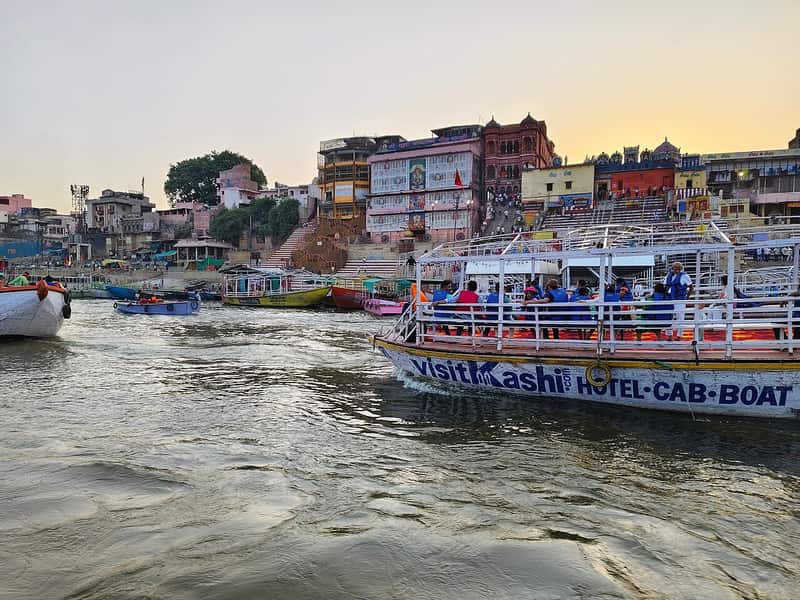
Complete Boat Ride Guide
A boat ride on the Ganga is THE essential Varanasi experience. Here's everything about prices, timing, and booking.
Boat Prices (2026)
| Boat Type | Price | Duration | Best For |
|---|---|---|---|
| Shared Row Boat | ₹80-400/person | 45-60 min | Budget travelers |
| Private Row Boat | ₹600-2,500 | 1-2 hours | Couples, families |
| Private Motor Boat | ₹1,200-2,500 | 1-2 hours | Speed, comfort |
| Alaknanda Cruise | ₹900-1,200/pp | 1-2 hours | Premium experience |
| Bajra (Luxury) | ₹10,000-25,000 | 2-3 hours | Groups, events |
Best Time Slots
Sunrise Ride (5:30-7:30 AM)
60-90 minutes. Most photographed. Peaceful. Best for photography and first-time visitors.
Sunset Ride (5:00-6:00 PM)
45-60 minutes. Shortest and most relaxed. Best for river atmosphere.
Ganga Aarti (4:00-6:00 PM)
90-120 minutes. Watch ceremony from the river — unobstructed view. Best for spiritual focus.
Day Ride (5:30 AM-3:00 PM)
Flexible. Longer loop, photography stops. Best for private charter.
Boarding Ghats
Dashashwamedh Ghat — Most popular, best for aarti viewing
Assi Ghat — Calmer, best for sunrise
Namo Ghat — Newest, easiest parking, wheelchair accessible
Raj Ghat / Tulsi Ghat — Quiet alternatives
Book Online: Visit NaviX Kashi Boat Ride Guide for detailed pricing and online booking. During Dev Deepawali, boat prices surge to ₹1,500-3,000 — book 1 day ahead through your hotel.
Photography Guide
Varanasi is one of the most photogenic cities on earth. Here are the best spots, times, and tips.
Ganges at Sunrise (from boat)
Best timing: 5:30-7:00 AM. Golden hour ~49 minutes. East-facing ghats catch sunrise perfectly.
Dashashwamedh Ghat Aarti
Evening ceremony — spectacular fire/light photography. Arrive 90 min before aarti.
Kedar Ghat
Red-and-white striped walls. Most photographed ghat.
Old City Lanes (Galis)
Narrow winding alleys, cows, temples, daily life, markets.
Scindia Ghat
Half-submerged tilted temple. Best Oct-Feb at low water.
BHU Campus
Beautiful university grounds, New Vishwanath Temple.
Photography Rules
- NO photography at Manikarnika/Harishchandra ghats (cremation) — camera may be confiscated
- Ask permission before photographing bathing pilgrims, especially women
- Sadhus: some pose free, others charge ₹20-50. Ask first
- From a boat: no restrictions except cremation areas
- Best golden hour: 5:30-7:00 AM (winter sunrise ~6:00-6:30 AM)
Shopping Guide — Banarasi Silk & More
Varanasi is world-famous for its Banarasi silk saris. Here's what to buy and where.
What to Buy
Banarasi Silk Sari
₹5,000-50,000+. Look for GI tag. Katan silk is finest quality with real gold/silver zari work.
Dupattas & Shawls
Lighter, versatile. Great gifts. ₹1,000-10,000.
Brassware & Handicrafts
Hand-shaped brass items, wooden toys, glass bangles, Rudraksha beads.
Gulabi Meenakari
Rose-colored enamel work — unique to Varanasi. Beautiful jewelry and decor items.
Best Markets
Thateri Bazaar — Heart of Varanasi. Traditional Banarasi saris and fabrics.
Vishwanath Gali — Narrow lanes, silk items, direct interaction with weavers.
Godowlia Market — Largest selection of Banarasi silk saris. Bargaining expected.
Chowk Area — Sweets, paan, local specialties.
Silk Shopping Tips
- Feel the fabric: authentic Banarasi silk has smooth texture with natural sheen
- Check the weave: handwoven saris have tiny "floaters" on backside
- Look for GI (Geographical Indication) tag
- Compare shops — don't settle for first shop
- Bargain — vendors quote high for tourists
- Avoid "silk factory" detours suggested by taxi/auto drivers — they earn commission
Safety Tips & Common Scams
Varanasi is generally safe for tourists, but be aware of common scams and safety practices.
Boat Ride Scam
Quote ₹800/hr, negotiate down to ₹300-500. Arrange independently, not through hotel/taxi commission.
Cremation Donation Scam
People ask for "wood for the poor." Well-known scam — ignore completely.
Taxi Commission Scam
Drivers take you to shops for commission. Refuse firmly. Arrange independently.
Temple Priest Scam
"Special puja" then demand large donation. Confirm price BEFORE agreeing.
Do's and Don'ts
DO's
- Dress modestly (cover shoulders and knees)
- Carry ID for temple entry
- Use bottled water only
- Negotiate prices before agreeing
- Wear sturdy shoes with grip
- Visit temples early morning
DON'Ts
- Don't follow touts from stations/airports
- Don't photograph cremation ghats
- Don't carry food near monkeys
- Don't accept "blessings" without confirming cost
- Don't use ice in drinks (may be tap water)
- Don't point feet toward deity
Emergency Numbers
Police: 100 | Ambulance: 108 | Tourist Helpline: 1363 | Emergency: 112
Best Day Trips from Varanasi
Explore beyond the city with these incredible nearby destinations.
Sarnath (10 km, 30 min)
Where Buddha gave his first sermon in 528 BCE. Dhamek Stupa (43m tall), Ashoka Pillar, Buddhist museum. UNESCO World Heritage Site. ASI ticket required. Half-day trip.
Prayagraj (125 km, 2.5-3 hrs)
Triveni Sangam — confluence of Ganga, Yamuna, and mythical Saraswati. One of holiest Hindu sites. Day trip possible but better as overnight.
Ayodhya (200 km, 4-6 hrs)
Ram Janmabhoomi — birthplace of Lord Ram. Major pilgrimage site. AC cab recommended. Full day trip.
Ramnagar Fort (across Ganges)
18th-century Mughal fort. Museum with vintage cars, weapons, costumes. Headquarters of Kashi Naresh. Short boat ride from ghats.
Varanasi Budget Breakdown (2026)
Varanasi is one of India's most affordable travel destinations. Here's what to expect.
| Category | Budget | Mid-Range | Luxury |
|---|---|---|---|
| Hotel (per night) | ₹800-1,500 | ₹2,000-5,000 | ₹8,000-30,000 |
| Food (per day) | ₹300-500 | ₹600-1,000 | ₹1,500-3,000 |
| Boat Ride | ₹80-300 | ₹500-1,500 | ₹3,000-10,000 |
| Local Transport | ₹100-200 | ₹300-600 | ₹1,000-2,000 |
| Daily Total | ₹1,500-2,500 | ₹3,500-8,000 | ₹15,000-45,000 |
Money-Saving Tips: Walk between ghats (free!). Eat street food (₹30-100 per meal). Use e-rickshaws (₹20-50). Visit temples (free entry). Sunrise boat ride is best value (₹80-300).
Sample Itineraries
How to make the most of your time in Varanasi.
1-Day Essential Varanasi
5:30 AM — Sunrise boat ride from Assi Ghat
7:30 AM — Breakfast at Ram Bhandar (Kachori-Sabzi)
9:00 AM — Walk through old city lanes to Kashi Vishwanath Temple
11:00 AM — Visit Sankat Mochan & Durga Temple
1:00 PM — Lunch at Blue Lassi Shop area
3:00 PM — Visit BHU Campus & New Vishwanath Temple
5:00 PM — Return to ghats, chai at Assi Ghat
6:45 PM — Ganga Aarti at Dashashwamedh Ghat
8:30 PM — Dinner + Banarasi Paan
2-Day Varanasi + Sarnath
Day 1: Same as 1-Day itinerary above
Day 2 Morning: Sunrise boat ride from Dashashwamedh Ghat
Day 2 9:00 AM: Drive to Sarnath (30 min) — Dhamek Stupa, Museum, Deer Park
Day 2 1:00 PM: Lunch in Sarnath
Day 2 3:00 PM: Return to Varanasi — Ramnagar Fort
Day 2 5:30 PM: Evening walk along ghats, shopping in Vishwanath Gali
Day 2 7:00 PM: Final Ganga Aarti
3-Day Complete Varanasi
Day 1: Ghats walk + temples + Ganga Aarti
Day 2: Sarnath + Ramnagar Fort + evening shopping
Day 3: Sunrise boat ride + food walk + silk shopping + hidden ghats
Optional Day 3: Day trip to Prayagraj (Sangam) or Ayodhya
Packing Checklist
What to bring for your Varanasi trip.
Essentials
- Modest clothing (long pants, kurtas, cover shoulders)
- Comfortable walking shoes with grip
- Slip-on shoes (easy temple removal)
- Scarf/dupatta for temple visits
- Sunscreen & sunglasses
- Reusable water bottle
Tech & Health
- Power bank (long days out)
- Camera (no phones at KV temple)
- Basic medicines (digestive, pain relief)
- Hand sanitizer
- Tissue paper / wet wipes
- Small daypack
Best Time to Visit
Varanasi's weather varies dramatically by season.
Oct-Mar (BEST)
10-25°C. Clear skies, morning mist. Perfect for ghats and boat rides. Peak tourist season — book early.
Apr-Jun (HOT)
35-45°C. Extremely hot. Fewer tourists. Budget deals available. Carry water, avoid midday sun.
Jul-Sep (MONSOON)
25-35°C. Heavy rain, flooding possible. River levels high. Beautiful but challenging. Carry rain gear.
Nov-Dec (OPTIMAL)
15-25°C. Clear skies, morning mist. Dev Deepawali (Nov). Best month for photography.
Frequently Asked Questions
How old is Varanasi?
What was Varanasi called in ancient times?
Which dynasty ruled Varanasi the longest?
When was Varanasi founded?
Why is Varanasi called the Spiritual Capital of India?
What happened to the Kashi Vishwanath Temple?
What role did Varanasi play in the Indian independence movement?
Is Varanasi a UNESCO World Heritage Site?
What is the significance of the Kashi Vishwanath Corridor?
How many ghats are there in Varanasi?
What is the best time to visit Varanasi?
What should I wear in Varanasi?
How do I get to Varanasi from Delhi?
How much does a Varanasi trip cost?
What is the Ganga Aarti?
Can I take a boat ride on the Ganges?
Is Varanasi safe for solo female travelers?
What are the must-try foods in Varanasi?
Can I visit the cremation ghats?
What day trips can I take from Varanasi?
What should I buy in Varanasi?
Is the drinking water safe in Varanasi?
How do I get around Varanasi?
What are the main festivals in Varanasi?
Can I attend the evening aarti from a boat?
What are the opening hours of Kashi Vishwanath Temple?
Do I need to remove shoes at temples?
Is Varanasi wheelchair accessible?
How many days do I need in Varanasi?
Related Varanasi Guides
Architecture of Varanasi
Explore the architectural heritage — temples, ghats, and havelis of Kashi.
🕉️Religion & Spirituality
The spiritual traditions that have defined Varanasi for millennia.
🛕Kashi Vishwanath Corridor
The grand spiritual boulevard connecting ghats to the sacred temple.
☸️Sarnath Buddhist Site
Where Buddha gave his first sermon — ruins, museum, and meditation.
Download NaviX — Explore Varanasi's Living Heritage
Walk the same streets that have been walked for 3,000 years.
Download the App