
Spiritual Heart of India
Religious Significance of Varanasi
The holiest city in Hinduism — where life, death, and liberation converge on the banks of the Ganges.
Kashi — City of Light
Varanasi is known as Kashi (City of Light) because it is believed to be illuminated by divine consciousness. In Hindu theology, Kashi is the earthly abode of Lord Shiva and Goddess Parvati. The city is one of the seven sacred cities (Sapta Puri) of Hinduism and is considered the holiest of all.
The spiritual significance is rooted in the belief that the Ganges in Varanasi is not merely a river but a goddess descending to earth. The city is also one of the 51 Shakti Pithas, making it a center for both Shaiva and Shakta traditions.
The 88 Ghats
The ghats are a series of steps leading to the Ganges, each with its own story and spiritual significance. They form the spiritual heart of the city.
Dashashwamedh Ghat
The main ghat where the spectacular Ganga Aarti takes place every evening. The name means "ghat of the ten horses" — where Brahma sacrificed ten horses.
Manikarnika Ghat
The sacred cremation ghat where cremations happen 24/7. Believed to grant instant moksha to those who die here.
Assi Ghat
Southernmost ghat, popular among tourists. Known for morning yoga sessions, coffee shops, and a vibrant atmosphere.
Harishchandra Ghat
The other cremation ghat, named after King Harishchandra who worked here as a dom (cremation worker) to uphold truth.
Major Temples & Sacred Sites
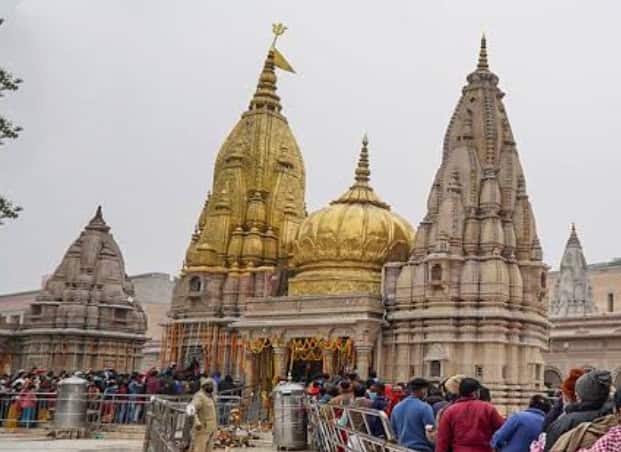
Kashi Vishwanath Temple
One of the twelve Jyotirlingas, the most sacred Shiva temple. The current structure was built by Rani Ahilyabai Holkar in 1780. The Kashi Vishwanath Corridor connects it to the Ganges.
Sankat Mochan Hanuman Temple
Dedicated to Lord Hanuman, the remover of obstacles. Built by Goswami Tulsidas, the author of Ramcharitmanas. Famous for its evening bhajan sessions.
Durga Kund Temple
18th-century temple dedicated to Goddess Durga. Known for its red color and the sacred pond (kund) adjacent to it. Monkeys are common here.
Spiritual Practices & Rituals
Ganga Aarti
Nightly ceremony at Dashashwamedh Ghat with fire, music, and devotion. A must-see spectacle.
Subah-e-Banaras
Morning prayers and cultural program at Assi Ghat. Classical music and yoga at sunrise.
Pind Daan
Ancestral rites performed at Manikarnika Ghat to liberate souls of departed family members.
Frequently Asked Questions
Why is Varanasi the holiest city in Hinduism?
How many ghats are there in Varanasi?
What is the significance of Manikarnika Ghat?
Can non-Hindus visit Varanasi temples?
Download NaviX — Guide to Spiritual Varanasi
Temple timings, Aarti schedules, and ritual guides — all in one app.
Download the App