

Tripura Bhairavi Ghat
Neighbourhood GhatTripura Bhairavi Ghat is a famous ghat for worship of Goddess Bhairavi.


Type
Neighbourhood Ghat
Boat Fare
1x base fare
Best Time
6-10 AM when morning light illuminates the temple.
History
Named after Goddess Bhairavi. A famous Bhairavi Maa temple is at the ghat center.
Highlights
- Sadhana of Devi Tripura Bhairavi
- Site of shakti worship
- Calm atmosphere
Festivals & Events
How pricing works in the NaviX app
No haggling at the ghat — everything is fixed in the app first
- 1
Fixed price before you board
The fare is shown in the app upfront — no bargaining at the ghat
- 2
Sharing or private — your choice
Share with fellow travelers or take the whole boat for your group
- 3
Pay only after the ride
UPI, card or cash — with an instant receipt
Daily at dawn
Camphor flame and conch as the priest bathes and dresses the image
Daily in the evening
Boatmen fall silent and fold their hands as it begins
Complete Guide
Tripura Bhairavi Ghat — The Complete Guide
History, mythology, rites and practical details — everything in depth.
On this page
- 1.Tripura Bhairavi Ghat — A Hidden Seat of the Goddess
- 2.Tripura Bhairavi — The Fierce Mother of the Three Worlds
- 3.The Shrine of Bhairavi Maa at the Heart of the Ghat
- 4.Kashi and the Tantric Path of the Goddess
- 5.Dawn Bathing at the Ghat of the Goddess
- 6.The Everyday Rhythm — Bathers, Boatmen and Locals
- 7.The Ganga at Tripura Bhairavi — River and View
- 8.The Lanes Behind the Ghat — The Old City at Work
- 9.Neighbours on the River — Lalita and Manikarnika
- 10.Navratri and the Nights of the Goddess
- 11.Visiting with Respect — Etiquette at the Ghat
- 12.Practical Guide — Reaching Tripura Bhairavi Ghat
📅 Updated: 21 Aug 2026 · Author: NaviX Field Team (field research 2024-26) · 12 sections · 12 photos
Tripura Bhairavi Ghat — A Hidden Seat of the Goddess
Tripura Bhairavi Ghat is one of the quietest and least known of the minor ghats of Varanasi, a modest landing of old stone steps set into the northern riverfront of the Ganga. It belongs to the chain of small ghats that runs north from Man Mandir toward Lalita and Pandey, close to the great cremation ground of Manikarnika, yet it occupies a world apart — a place of everyday devotion rather than grand ceremony. The ghat takes its name from the goddess who dwells here, Tripura Bhairavi, a fierce and formidable form of the Divine Mother honoured in the tantric tradition of the city. Unlike the celebrated ghats of the south, it has no palaces, no ranks of tourist boats and no souvenir stalls; it is simply a working place of faith, where pilgrims, bathers and boatmen share the same worn steps day after day.
What gives the ghat its character is an atmosphere of intense, intimate devotion mixed with something older and stranger. The shrine of the goddess stands close to the water, its small sanctum dark and fragrant with incense, and the air around it hums with the murmur of prayer from dawn to dusk. Women of the old quarter bring red flowers and coconut; priests recite the praises of the goddess; and at certain hours the ghat feels less like a sight for visitors and more like a secret guarded by the neighbourhood. The steps themselves are modest and uneven, worn smooth by generations of bare feet, and the stone platform where the boats tie up is barely wide enough for two boats abreast. This is a ghat that asks nothing of the traveller except stillness — a place to sit, to watch, and to let the ancient rhythm of the river work its way into the senses.
For anyone exploring the northern riverfront, Tripura Bhairavi rewards the detour. It lies within an easy walk or a short boat ride of celebrated ghats, yet it offers what they can no longer give: the experience of a living neighbourhood ghat, unchanged in its essentials for centuries. The bathers who come here at dawn are not performing for anyone; the boatmen mending nets on the platform are simply going about their day; the priests attending the shrine carry on a duty their ancestors kept for generations. To stand on these steps is to glimpse the Kashi of the past — the city of narrow lanes, small temples and unbroken faith, before the age of mass tourism. It is a place of quiet power, and those who find it seldom forget it.
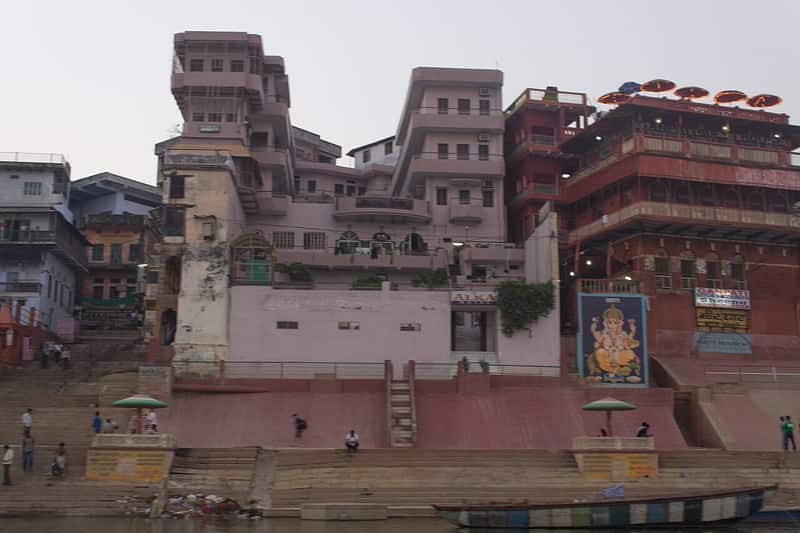
Tripura Bhairavi — The Fierce Mother of the Three Worlds
Tripura Bhairavi belongs to the ten Mahavidyas, the ten great wisdom goddesses of the tantric tradition, each of them a face of the one Divine Mother. She is the fierce form of the Goddess — the Bhairavi of the three worlds, for tripura means the three cities or three worlds that make up all creation. In one interpretation these are the three states of consciousness through which every being passes: waking, dreaming and deep sleep. The Goddess who presides over all three is Tripura Bhairavi, the terrible and tender mother who holds the entire universe in her keeping. Her name joins the word bhairavi to bhairava, the terrible form of Shiva, for she is the power of the god of transformation — the force that burns away the false and leaves only the true. In the tantras she is worshipped as the embodiment of fire, the consuming flame of divine knowledge that destroys ignorance, fear and illusion in the devotee.
In her image the goddess shows both faces of her nature. She is usually depicted with three eyes, dark flowing hair and a garland, carrying a sword and a skull-cup, seated upon a lion or upon the cremation ground — terrible to the wicked, yet a refuge to those who call on her with love. Her worship, like that of Kali, has always belonged to the boldest strand of Hindu devotion, which insists that the Mother appears in frightening forms precisely so that her children may learn to fear nothing at all. Those who meditate on her seek courage, freedom from terror, and the grace of the goddess who moves through destruction as easily as through creation. Devotees say that once her fearlessness enters the heart, no shadow of this world can hold the soul captive again.
The presence of such a goddess at a small ghat of the northern riverfront is no accident. Kashi has always been a city of the fierce and the tender side by side — the flames of Manikarnika and the cradle of mothers, the terrors of death and the comforts of daily prayer. Tripura Bhairavi gathers both currents in one place: she is the goddess of the burning ground who is also the beloved mother of the old quarter, fierce in her protection and limitless in her compassion. At her ghat, the traveller stands at the meeting point of the most ancient stream of Hindu mysticism and the most ordinary stream of human life, and the two are not as different as they seem. The goddess of the three worlds watches over the three worlds at once — the heaven of the temples, the earth of the lanes, and the waters of the river that carries all souls.
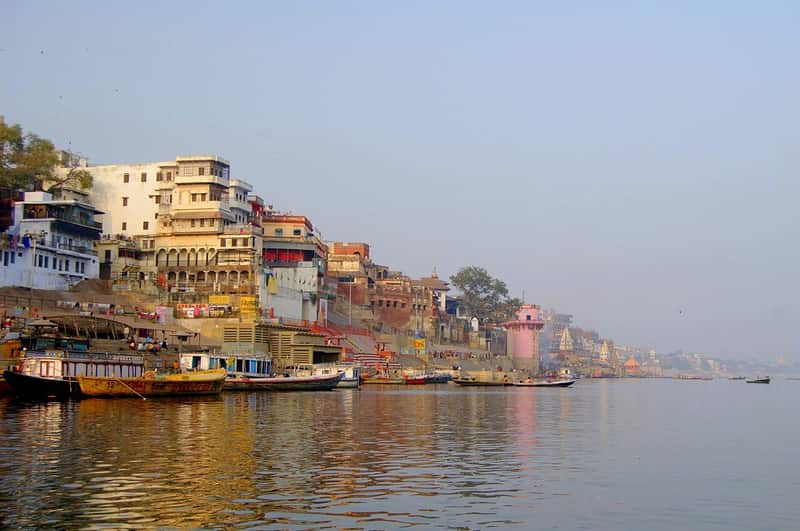
The Shrine of Bhairavi Maa at the Heart of the Ghat
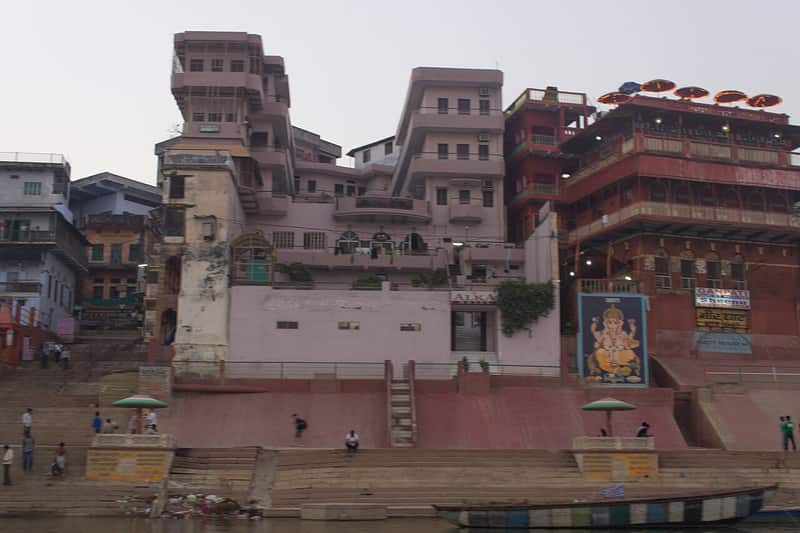
At the centre of the ghat, close to the water and the bustle of the boats, stands the small temple that gives the whole landing its name. The shrine of Bhairavi Maa is not a monument to be admired from outside; it is a living sanctuary, entered by the faithful every day of the year. Inside, the dark stone image of the goddess sits in a sanctum barely large enough for two worshippers at a time, its face framed by garlands of red hibiscus and marigold, its base crusted with vermilion from countless hands. Oil lamps burn before her from morning to night, and the bell above the door sounds at every arrival, so that the air of the little courtyard is never still — it trembles with the comings and goings of devotion.
The daily round of the shrine follows a rhythm as old as the ghat itself. At dawn the priest bathes the image, dresses it in fresh cloth and offers the morning aarti with camphor flame and conch; through the day a stream of women arrives with flowers, coconut and sweets, whispering their petitions to the Mother — for a child, for a marriage, for a sick relative, for a son gone to a distant city. In the evening the lamps are lit again and the hymns to the goddess rise over the sound of the river. The temple has no grand festivals of its own making, no processions and no crowds; its wealth is the steady, unstinting devotion of a neighbourhood that has trusted the goddess with its sorrows and its joys for as long as anyone can remember.
Standing in the little courtyard, the visitor begins to understand why this shrine matters so much to the quarter. Tantric texts connect Tripura Bhairavi with the cremation ground and with the powers of transformation, and even the most casual visitor feels something of that weight in the dark sanctum. Yet the women who come here treat her with the easy intimacy of a household goddess — they scold her when a prayer goes unanswered, thank her loudly when it does, and wipe their tears on the threshold before stepping back into the sun. It is this blend of the terrible and the familiar that makes the shrine unforgettable: a place where the fierce Mother of the tantras is also simply Maa, the mother of the lane, the river and the home. At dusk, with the lamps glowing and the Ganga whispering behind, one understands why the old city calls her by that one word alone — a word that needs no surname, because every heart in the quarter knows exactly who is meant.
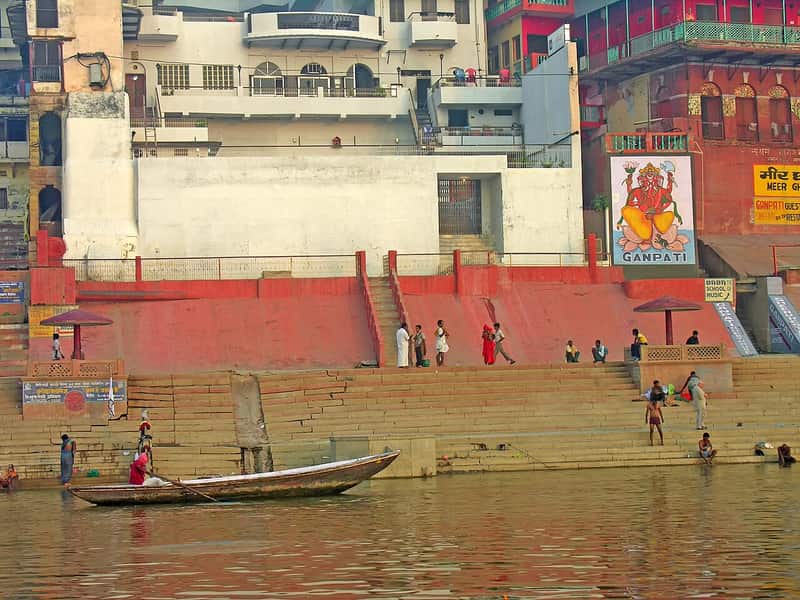
Kashi and the Tantric Path of the Goddess
To understand Tripura Bhairavi Ghat, one must understand the tantric tradition of Kashi, for the ghat is a living fragment of it. Varanasi has been a seat of tantra for more than a thousand years, a city where the worship of the Goddess in her most powerful and mysterious forms flourished alongside the great Shaiva temples. The city itself is built on the worship of opposites held together: Shiva and Shakti, the ascetic and the householder, the cremation ground and the cradle. In this tradition the Goddess is not a distant deity but the energy of the universe itself, present in every breath, every desire and every act of creation and destruction, and the tantric practitioner seeks to meet her directly, without the mediation of fear or doubt.
The tantric path is often misunderstood as a matter of strange rites and dark practices, but at its heart it is a demanding discipline of concentration, purity and devotion. The word tantra comes from a root meaning to weave, and the tradition weaves together meditation, mantra, ritual and the transformation of the everyday into the sacred. The goddesses of this path — Kali, Tara, Tripura Sundari and Tripura Bhairavi among them — are not separate beings but faces of one Mother, each revealing a different teaching. Tripura Bhairavi teaches the lesson of fire: that what is false must burn, that fear is the only real enemy, and that the soul which stands in the flame of truth is purified, not destroyed. Her devotees call her sadhana the worship of fearless surrender.
In and around Kashi, this tradition has never died. There are still houses in the old quarter where the goddess is worshipped according to the ancient texts, still ghats where sadhana is performed in the small hours of the morning, and still pilgrims who come to the city precisely because the power of the Goddess is felt here more intensely than anywhere else. Tripura Bhairavi Ghat belongs to this hidden Kashi — the Kashi of inner practice that tourists rarely glimpse. The shrine, the offerings, the murmured mantras and the barefoot priests all belong to a way of worship that is at once ancient and alive. For the visitor who comes without prejudice, the ghat offers a rare chance to stand at the edge of this mysterious world and to feel, even for a moment, the current of power that has drawn seekers here for a millennium.
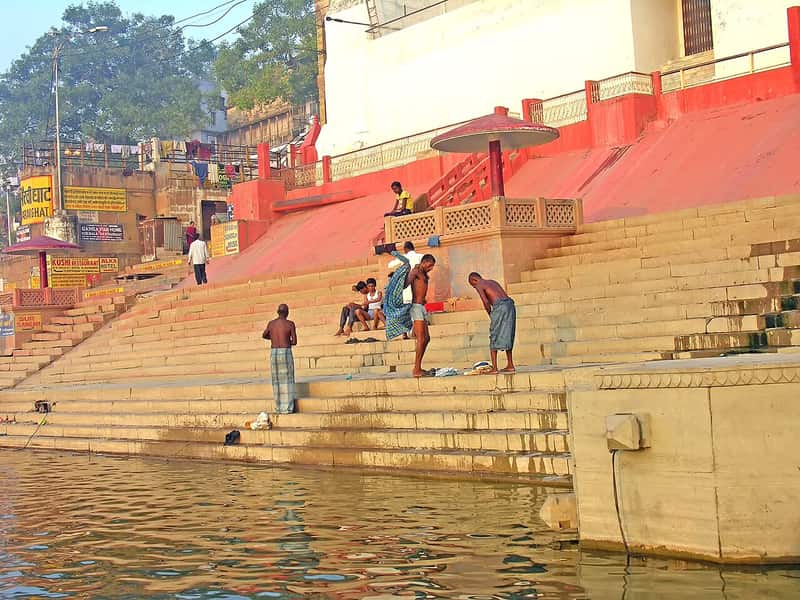
Dawn Bathing at the Ghat of the Goddess
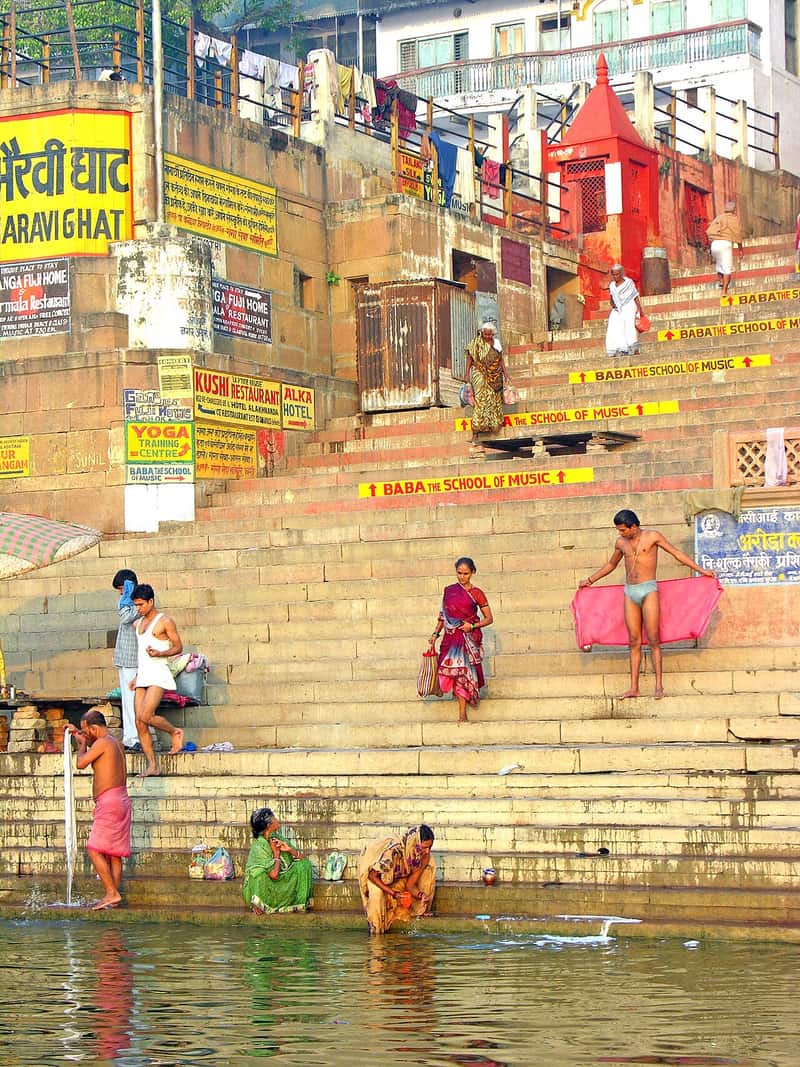
The true life of Tripura Bhairavi Ghat begins before the sun clears the rooftops of the far bank. In the pale half-light of dawn, when the river is a sheet of quicksilver and the city is still shaking off sleep, the bathers begin to come. They descend the worn steps carrying brass pots and towels, many of them stopping first at the shrine of the goddess for a quick darshan and a touch of vermilion on the forehead, and then they enter the water. The Ganga here is not the crowded spectacle it becomes further south; it is a working river of faith, where each bather finds a private corner of the current and offers the morning to the Mother — a mantra, a splash of water to the sun, a moment of silence between the noise of the city and the noise of the day.
The rituals at the water's edge are as varied as the people who perform them. Elderly men stand chest-deep reciting the Gayatri mantra with closed eyes; women in wet saris pour water from cupped hands in slow arches, a gift to the rising sun; children duck under the surface and come up laughing; and the priests of the ghat stand on the platform, blessing the bathers and accepting small offerings of grain and coin. Some pilgrims bathe as an act of penance, some for health, some in fulfilment of a vow, and some because their mothers and grandmothers bathed at this very spot before them. Every posture, every gesture, every whispered word belongs to a liturgy older than any temple in the city, passed from generation to generation without ever being written down.
To watch the bathing at Tripura Bhairavi is to watch Kashi at its most honest. There is no performance here, no photography, no vendors selling the experience; there is only the ancient act of a human being meeting the sacred river in the first light of day. The water is cold even in summer, and the shock of it wakes the body while the mantras wake the spirit. By mid-morning the ghat has largely emptied, the bathers have gone to their shops, schools and kitchens, and the steps steam gently in the strengthening sun. But the visitor who was there at dawn carries away something the ghat gives only to the early: the sight of a whole quarter of the city beginning its day in gratitude, one of the oldest scenes of human life on this river, repeated every morning since the age of the gods.
The Everyday Rhythm — Bathers, Boatmen and Locals
Between the fixed ceremonies of dawn and the quiet of evening, Tripura Bhairavi Ghat lives the ordinary life of the old city, and it is this ordinariness that gives the ghat its deepest charm. The boatmen are the true citizens of the river: they arrive before first light, untie their boats, sweep the water from the benches and set off into the current, returning hours later with pilgrims from the southern ghats. Between trips they squat on the platform, smoking, mending nets, bargaining with passengers, and telling stories that have been told on this stretch of bank since their grandfathers' grandfathers took to the water. Theirs is a life measured in river miles and monsoon seasons, and their knowledge of the Ganga — its currents, its moods, its shifting sandbanks — is a science no book has ever captured.
Around the boatmen moves the quiet commerce of the quarter. Women carry brass pots of river water back up the steps for the morning puja at home; a milkman ties his buffalo at the lane-head; the shopkeepers of the ghat-side stalls set out their wares — flowers, vermilion, incense, coconuts for the shrine, tea brewing over a small stove for anyone with a few rupees. Laundry is spread over the railings to dry, children play on the upper steps, cows wander down to drink, and the pigeons that nest in the old buildings circle and settle and circle again. Monkeys keep their distance and their dignity on the rooftops, waiting for the afternoon when the tea stall throws away its peelings and the whole ghat dozes in the heat.
What strikes the visitor most is how naturally faith and daily life flow into each other here. The same woman who scrubs her brass pot at the water's edge will touch her forehead to the shrine on her way up; the same boatman who jokes with his passengers will fall silent and fold his hands as the evening aarti begins; the same lane that smells of frying sweets leads directly to the goddess. This is the genius of Kashi, preserved in miniature at Tripura Bhairavi: the sacred is not cordoned off from the everyday but woven into it, so that worship is not a separate act but the colour of ordinary life itself. To spend a morning here is to understand why the old city has never needed to build a wall between the temple and the marketplace, the prayer and the breakfast, the goddess and the day.
The Ganga at Tripura Bhairavi — River and View
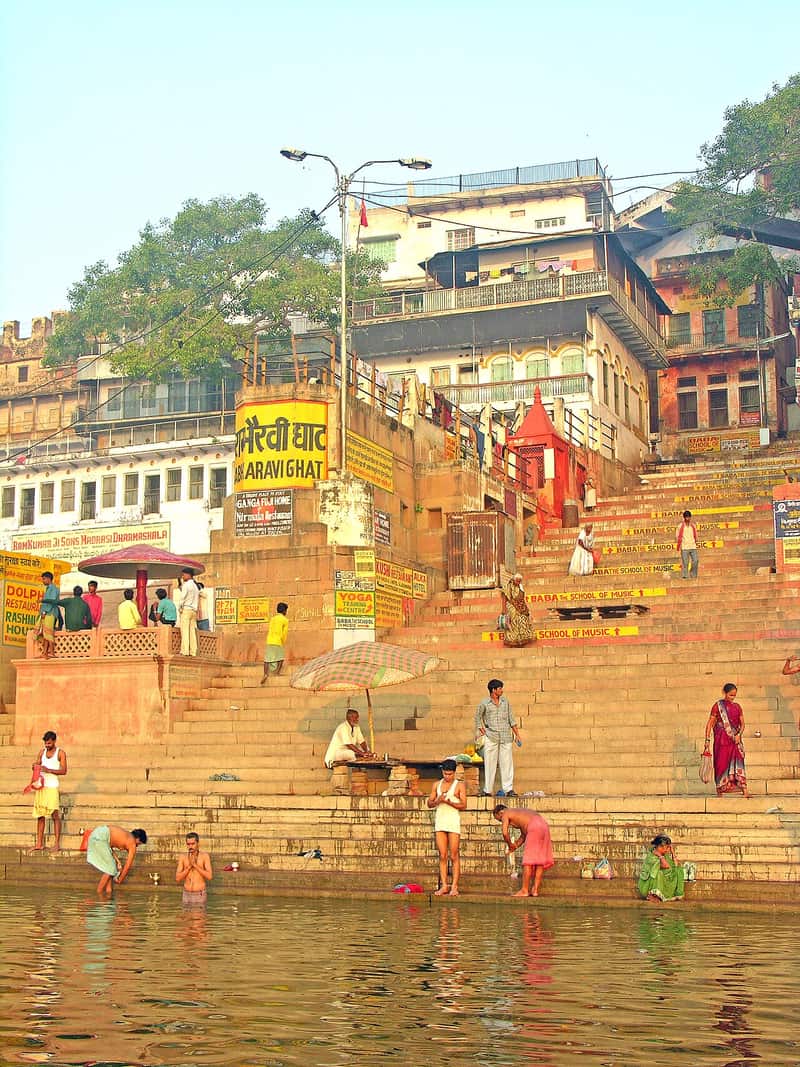
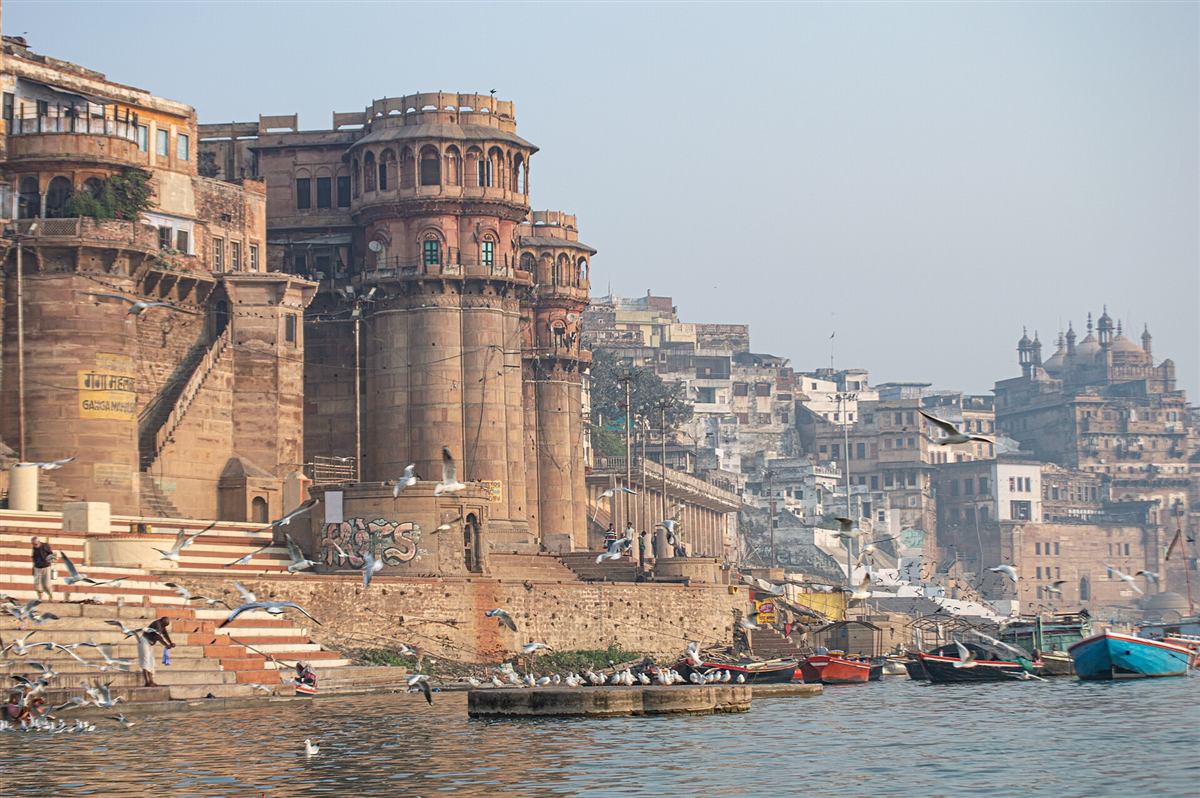
At Tripura Bhairavi the Ganga is at once a goddess, a highway and a mirror. The river here runs broad and slow, its current curling past the ghat before turning north toward the far end of the city, and the water carries everything that defines this stretch of the riverfront: the pilgrim boats from the south, the smoke of the pyres of Manikarnika drifting down with the breeze, the laundry and the lotas of the quarter, the reflections of temples and rooftops trembling in the ripples. Seen from the steps at dawn, the far bank is a line of pale green — fields and groves and the low haze of morning — and the river between seems to hold the whole sky in its arms, still and deep and older than memory.
The view from the ghat is a lesson in the geography of Kashi. Looking south along the curve of the bank, the eye travels past Man Mandir and the great ceremonial ghats toward the towers of the city centre; looking north, the riverfront narrows into the chain of small ghats — Lalita with its white Nepal palace, then Khori, Pandey and beyond — until the water opens out toward the forested far northern reach. Boats of every kind pass the landing: the broad wooden country boats of the pilgrims, the slim racing shells of the rowers, the fishing craft that slip out at dusk, and the occasional steamer carrying camera crews and wedding parties. Herons stand motionless at the water's edge; kingfishers dart like thrown emeralds; and the great river goes on its way, indifferent and immortal.
But the river here is not only a spectacle; it is a presence that shapes everything around it. The ghat exists because of the Ganga, the shrine faces her, the boatmen earn their bread from her, and the bathers offer their sins and their prayers to her current. In Hindu devotion the river is herself a goddess — Ganga, daughter of the mountains, who descended from heaven to earth — and at Tripura Bhairavi the two goddesses meet: the river below and the Mother in the shrine above, watching each other across the steps. In the evening, when the lamps are lit and the last boats come home, the water turns to hammered gold and then to darkness, and the ghat falls silent except for the lapping of the current — the sound of a million years of the sacred river, passing softly through the oldest city on earth.
The Lanes Behind the Ghat — The Old City at Work
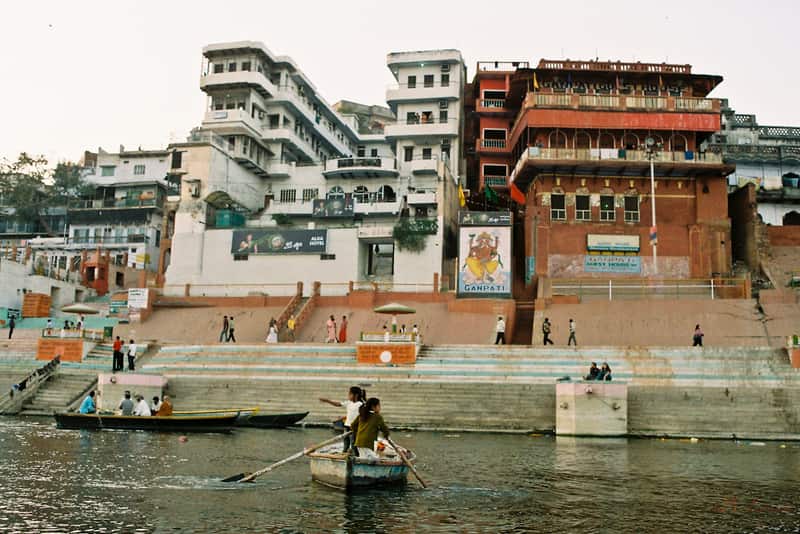
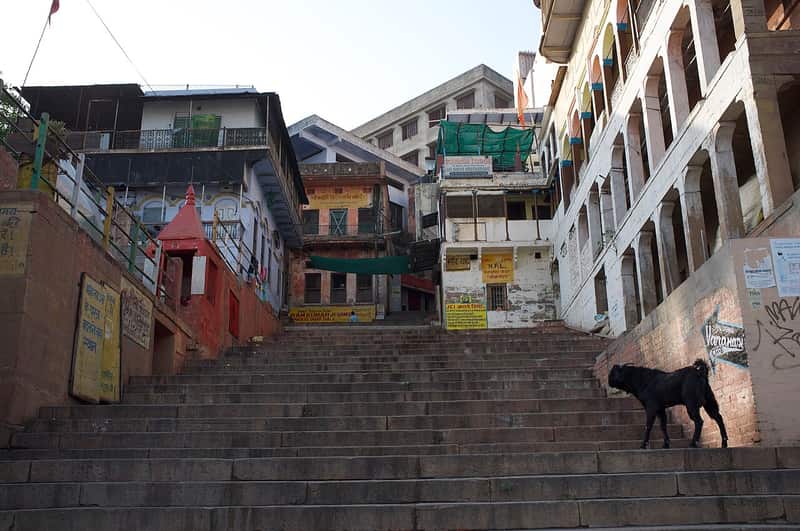
Behind Tripura Bhairavi Ghat, the old city begins where the last step ends. A web of narrow lanes climbs away from the river, paved with stone that gleams in the wet season, walled by tall houses whose balconies almost touch across the passage. These alleys are the arteries of the quarter, carrying its daily life in both directions: down to the water in the morning, with pots and prayers and washing; up again at night, with the day's stories and the day's weariness. The houses themselves are old beyond counting, built of brick and lime, their doorways low, their staircases dark, their rooftops open to the sky — and in the gaps between them, small temples appear without warning, some no larger than a cupboard, each with its own oil lamp and its own resident deity.
The lanes are the marketplace of the neighbourhood, and their commerce is intensely local. The sweet shops fry jalebis in open pans; the paan wallah piles betel leaves beside a mirror; the vegetable vendors set out their baskets of greens and gourds on the stones; and the spice stalls fill the air with the pungent grammar of Indian cooking — turmeric, cumin, coriander, chilli. A tailor sews on his machine in a doorway, a barber works under a tree, a shopkeeper reads the newspaper to his neighbours. The sounds are as rich as the smells: bells from a temple, the cry of a vendor, the call to prayer from a distant mosque, cycles and rickshaws weaving through the crowd, and everywhere the low, constant music of people talking, arguing, laughing and doing business in the oldest style in the world — face to face, hand to hand.
This labyrinth is the context of the ghat, and the ghat is the context of the labyrinth. The families who live in these lanes have used these steps for generations; their dead were carried from these doors to the fires of Manikarnika, their newborns were brought down to bathe, their daughters were married with the Ganga watching. A walk through the quarter is a walk through the continuous history of Kashi — the same stones, the same occupations, the same devotion, only the faces changed. For the visitor it is an education in how a city can live for three thousand years: not by monuments and museums, but by keeping its oldest habits alive in the smallest details of the day. The lanes of Tripura Bhairavi are narrow, but they open onto the widest view of India there is — the view of a civilisation that never stopped.
Neighbours on the River — Lalita and Manikarnika
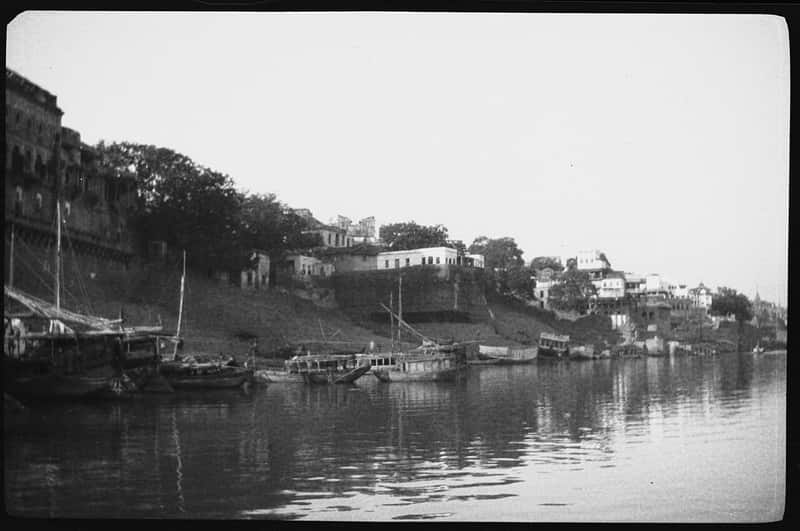
Tripura Bhairavi sits among the most interesting neighbours on the entire riverfront, and its position gives the visitor a rare map of Kashi in miniature. A short walk north along the bank lies Lalita Ghat, crowned by the white palace of the Rana kings of Nepal and dedicated to the Goddess Lalita, the playful beauty of the Divine Mother. Where Tripura Bhairavi is fierce and mysterious, Lalita is graceful and hospitable, and the two ghats together show the two faces of the Goddess — the terrible mother and the beautiful beloved — standing within sight of each other on the same stretch of sacred water. Between them the chain of minor ghats runs on, each with its own temple, its own legend and its own community of the faithful.
To the south, within a few minutes' walk, lies the ghat that gives all of Kashi its gravity: Manikarnika, the great cremation ground and the most sacred burning ghat in the world. Its towers rise above the neighbouring roofs, its smoke drifts across Tripura Bhairavi with the morning breeze, and its constant chant — Ram Naam Satya Hai — carries clearly through the still air. Hindus believe that death at Manikarnika brings liberation, and the ghat is therefore not a place of horror but of hope, crowded with mourners, priests and the faithful performing the oldest rites of the faith. For the visitor, Manikarnika demands respect and distance; it is best seen from the river or from the steps of a neighbouring ghat, never treated as a spectacle and never entered without humility.
A little further south stands Man Mandir Ghat, with its rooftop observatory of carved stone built by the astronomer king Jai Singh of Jaipur, whose instruments once measured the stars above this very river. Between and around these great landmarks run the lesser ghats of the quarter — Dastak, Durbar, Khori and Pandey — each with its own shrine and its own slice of the old city. The traveller who walks this stretch in a single morning follows the whole arc of Hindu life: birth, bathing, worship, marriage, death and liberation, all within a few hundred metres of riverbank. Few places on earth concentrate so much of a civilisation's meaning in so short a walk, and Tripura Bhairavi is the quiet pivot at the centre of it all — the small, fierce heart between the beauty of Lalita and the fire of Manikarnika.
Navratri and the Nights of the Goddess
Twice a year the whole city of Kashi turns to the Goddess, and at Tripura Bhairavi the turning is felt with special intensity. The two Navratris — the nine nights of the Mother celebrated in the spring month of Chaitra and again in the autumn month of Ashwin — transform the little ghat into a centre of worship. During these weeks the shrine is draped in fresh cloth and garlands, the courtyard is scrubbed and swept, and every evening the lamps multiply until the sanctum glows like a hearth. Devotees come in numbers the ghat rarely sees, many observing fasts, some sleeping at the temple, and the air is thick with the chanting of the Durga Saptashati, the ancient text of the Goddess, read aloud from beginning to end.
The autumn Navratri, which ends in Durga Puja and the great festival of Dashami, is the grander of the two. Across Varanasi, pandals rise in the lanes and the city erupts in drumming and processions, but the heart of the celebration at Tripura Bhairavi remains in the small courtyard beside the water. Here the goddess is worshipped in her own house, with her own priests, according to rites that predate every pandal in the city. The women of the quarter lead the singing, the children carry the lamps, and the boatmen tie up early to join the crowd; the river itself is honoured with offerings of flowers and lighted diyas set adrift on the current, hundreds of small flames sailing southward through the dark — a fleet of prayers bound for the sea.
Other festivals find their way to the ghat as well. On Kali Puja, the night of the new moon in autumn, the fierce Mother is honoured with red hibiscus and the glow of a thousand lamps. On Dev Deepawali, fifteen days later, the entire riverfront — this ghat among them — blazes with earthen lamps for the festival of the gods, and the water is a carpet of light. On ordinary Tuesdays and Saturdays, sacred to the Goddess, the shrine sees a steady stream of worshippers who may not wait for any festival at all. In every season, in other words, the ghat keeps its appointment with the Mother: the fierce Bhairavi who, for nine nights twice a year, becomes the undisputed queen of the whole city, and for the rest of the year remains the quiet, faithful heart of one small quarter of it.
Visiting with Respect — Etiquette at the Ghat
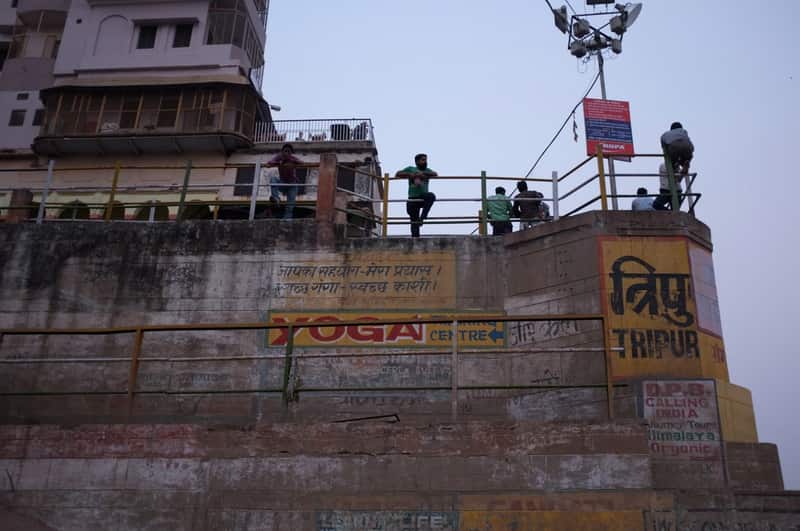
Tripura Bhairavi is a living place of worship, not a museum, and a few simple rules of conduct will make the visit a blessing instead of an intrusion. Dress modestly — shoulders and knees covered — and remove your shoes before entering the shrine, leaving them with the stack at the door as the locals do. Speak softly inside the temple and at the water's edge, where the prayers of others are not background music but the sacred business of the day. Before taking photographs, ask: many devotees will happily agree, but the elderly and the bereaved may not wish to be captured, and the shrine itself is often closed to cameras. In a city that is photographed to death, the kindness of asking is itself a form of worship.
The presence of Manikarnika close by calls for particular care. The cremation ghat is not a spectacle; it is a family performing its last rites, and staring, pointing or photographing the pyres is deeply offensive. If the smoke drifts over Tripura Bhairavi, treat it with the same silence you would grant a funeral at home. Keep a respectful distance from mourners wherever you see them, and let the boatmen — who have seen every kind of visitor — guide your conduct on the water. Offering a small donation at the shrine is customary and welcomed; the coins and notes keep the temple lamps burning, the priest's family fed, and the tradition of the ghat alive from one generation to the next.
Finally, come as a pilgrim, not as a consumer. Sit on the steps and let the ghat teach you its rhythm before you pull out your phone; buy your tea from the stall at the lane-head; greet the boatmen with a namaste; and if a sadhu speaks to you, listen with patience. The people of this quarter have welcomed travellers for thousands of years, and they read the difference between a respectful visitor and a careless one in a single glance. Those who come with open hands and humble hearts find that the fierce goddess of the ghat shows them her gentlest face, and that the old city, which has seen empires rise and fall, still has time for one more guest — if that guest knows how to be a guest.
Practical Guide — Reaching Tripura Bhairavi Ghat
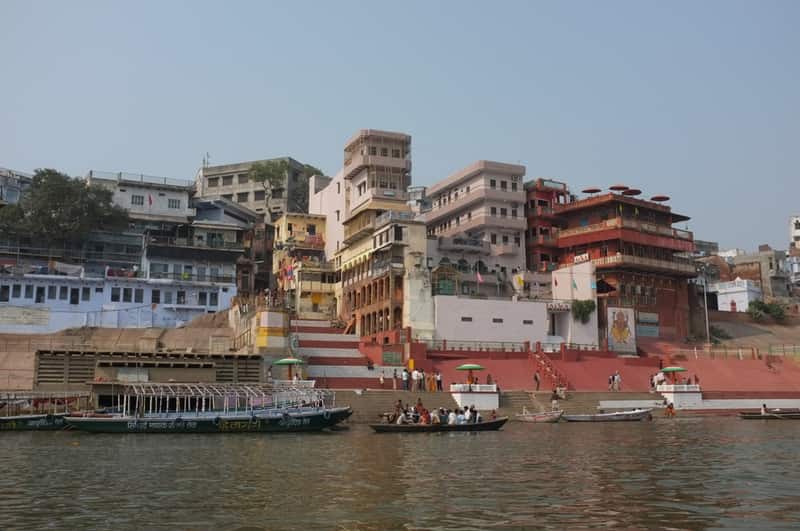
The most beautiful way to reach Tripura Bhairavi is by water. From Dashashwamedh or Man Mandir, a country boat will carry you north along the riverfront in fifteen to twenty minutes, passing the great ghats and the smoke of Manikarnika before drawing up at the modest steps of the goddess; any boatman on the central ghats knows the landing. On foot, walk north from Dashashwamedh along the bank, past Man Mandir, and the ghat appears within half an hour; from Lalita Ghat it is only a few minutes further south. By road, a cycle-rickshaw or auto-rickshaw from Chowk or the northern lanes will bring you close, but the last stretch is always on foot, through the narrow alleys that open suddenly onto the river.
The best time to visit is the early morning, between six and ten, when the rising sun lights the shrine and the bathers fill the steps; this is the hour the ghat was made for. The late afternoon is also lovely, when the light turns gold and the ghat grows quiet before the evening aarti. There is no entry fee, and the shrine is open from dawn until nightfall; a small donation is customary. Allow at least an hour, and longer if you wish to sit and watch the river. Carry water, wear shoes you can slip off at the temple, and remember that the quarter is conservative — modest dress will make you welcome in the lanes as well as the shrine. Monsoon mornings can be dramatic and beautiful, but the winter months from October to February give the clearest skies.
Combine the ghat with its neighbours for a complete morning on the northern riverfront. Start at Man Mandir with its observatory, walk north to Tripura Bhairavi for the heart of the morning, then continue to Lalita Ghat and its Nepal palace, and if you wish, take a respectful boat ride past Manikarnika on the return. The whole circuit is comfortably done in three or four unhurried hours, with tea stops in the lanes and time to sit at the water's edge. Alternatively, join a sunrise boat tour from the central ghats and ask the boatman to pause at Tripura Bhairavi on the way back. However you come, come early, come quietly, and let the fierce little goddess of the northern bank give you her blessing — it is one of the oldest in Varanasi, and one of the most freely given.
Tripura Bhairavi Ghat — Gallery (12 Photos)
Image Credits
tripura-bhairavi-01.jpg · tripura-bhairavi-02.jpg · tripura-bhairavi-03.jpg · tripura-bhairavi-04.jpg · tripura-bhairavi-05.jpg · tripura-bhairavi-06.jpg · tripura-bhairavi-07.jpg · tripura-bhairavi-08.jpg · tripura-bhairavi-09.jpg · tripura-bhairavi-10.jpg · tripura-bhairavi-11.jpg · tripura-bhairavi-12.jpg — Wikimedia Commons, under free licenses.
Continue exploring
Similar Ghats Nearby
Book This Ghat — Get Notified
Download the app now and book a boat ride to Tripura Bhairavi Ghat