

Janaki Ghat
Neighbourhood GhatJanaki Ghat is a famous ghat named after Goddess Sita (Janaki).


Type
Neighbourhood Ghat
Boat Fare
1x base fare
Best Time
6-9 AM
History
This ghat carries the memory of Janakpuri, the birthplace of Sita Mata. It holds special significance for devotees of Lord Ram.
Highlights
- Sacred link to Maa Sita
- Special faith of Ram devotees
- Peaceful bathing and darshan
Festivals & Events
How pricing works in the NaviX app
No haggling at the ghat — everything is fixed in the app first
- 1
Fixed price before you board
The fare is shown in the app upfront — no bargaining at the ghat
- 2
Sharing or private — your choice
Share with fellow travelers or take the whole boat for your group
- 3
Pay only after the ride
UPI, card or cash — with an instant receipt
🕉️
Aarti details not available for this ghat yet
Complete Guide
Janaki Ghat — The Complete Guide
History, mythology, rites and practical details — everything in depth.
On this page
- 1.Janaki Ghat — A Quiet Corner of Kashi
- 2.Janaki — The Beloved Name of Sita
- 3.A Ghat of Gentle Devotion
- 4.The Quiet Morning Bath
- 5.The River and Its Seasons
- 6.The Working Life of the Ghat
- 7.Behind the Steps — The Lanes of the Mohalla
- 8.The Southern Walk — Assi to Shivala
- 9.The Peacefulness of Janaki
- 10.Ram Navami and the Days of Celebration
- 11.Walking With Respect
- 12.Practical Notes — Reaching Janaki Ghat
📅 Updated: 21 Aug 2026 · Author: NaviX Field Team (field research 2024-26) · 12 sections · 12 photos
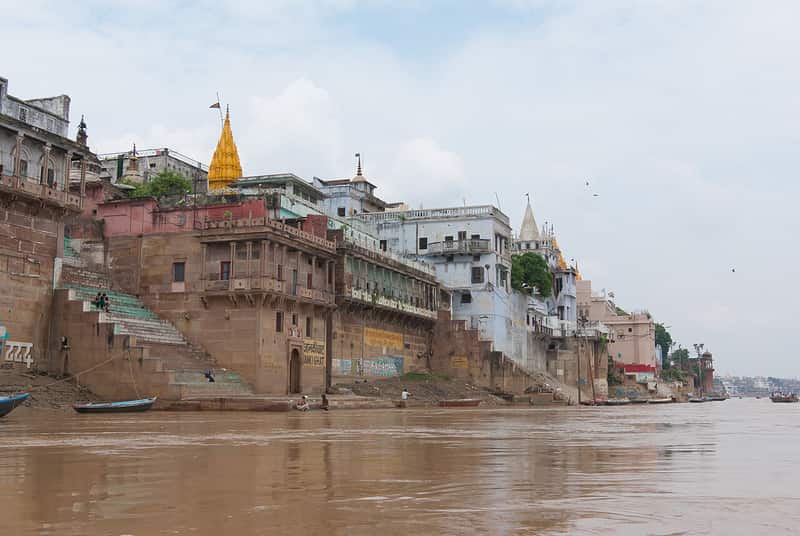
Janaki Ghat — A Quiet Corner of Kashi
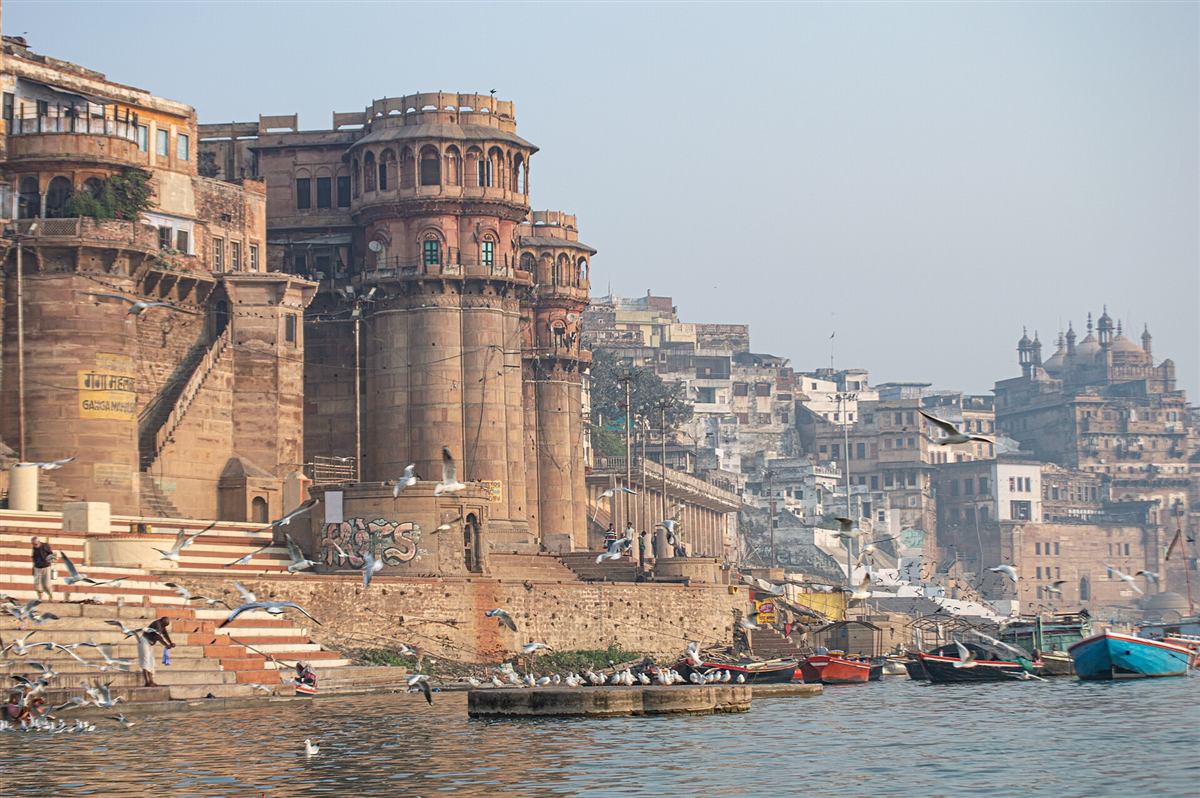
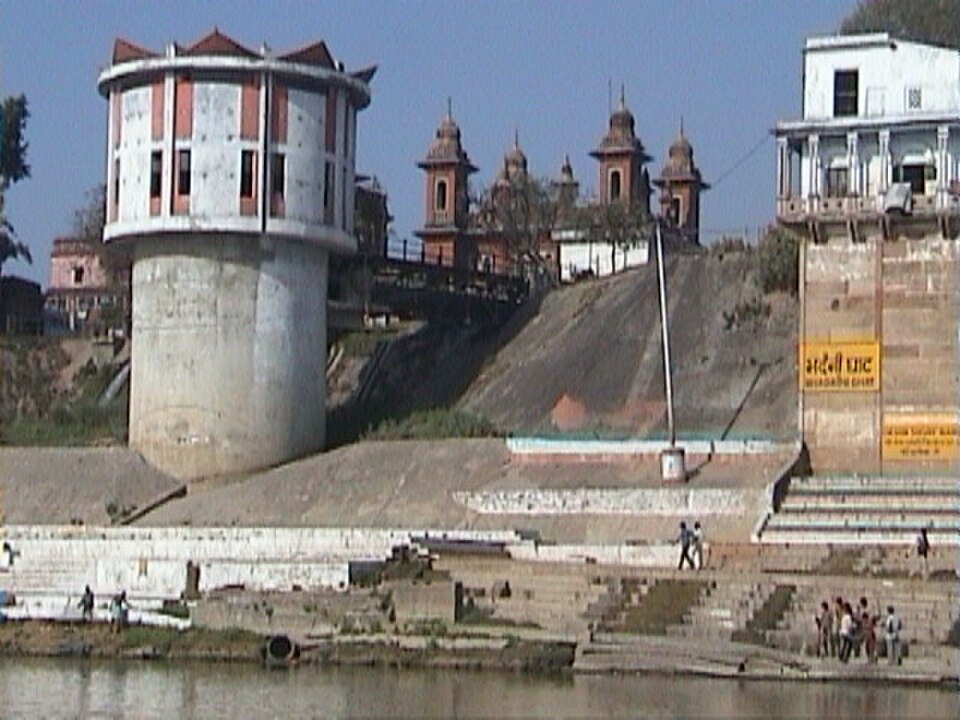
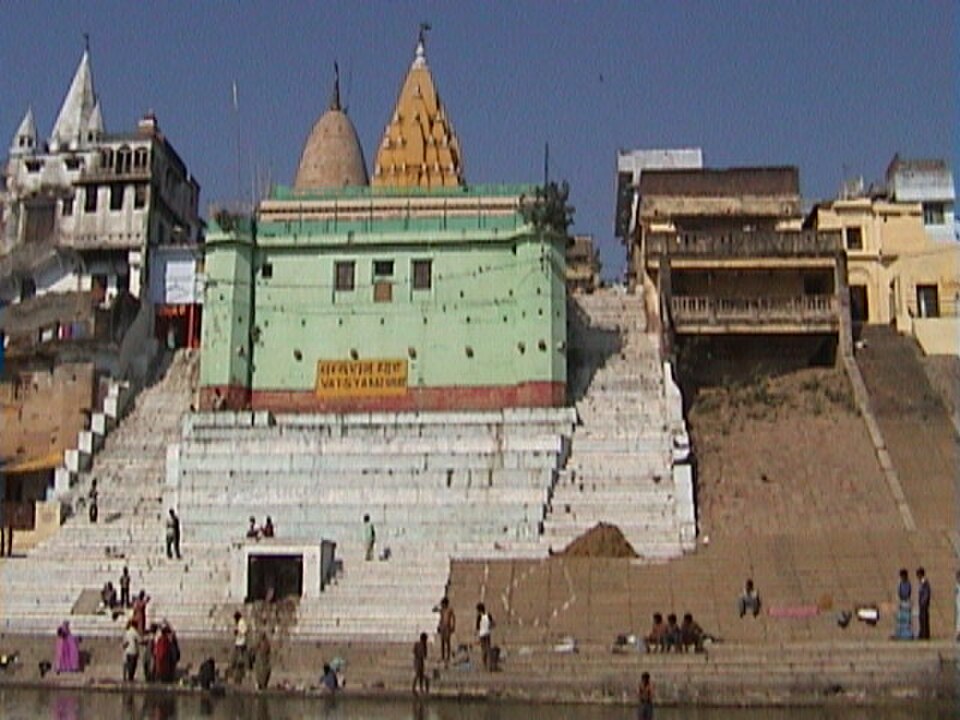
Janaki Ghat is a small, unassuming bathing place on the southern stretch of Varanasi's riverfront, set between the busy steps of Bhadaini Ghat and the quiet garden walls of Mata Anandamayee Ghat. It makes no claim to grandeur: a modest flight of stone steps, a narrow landing where a few boats are tied, and a handful of small shrines pressed against the old houses behind. Yet for the walker who passes it, and for the bathers who come at first light, the ghat holds a gentle charm that the famous ghats of the north have long since lost. Its name, which belongs to Sita, the consort of Lord Rama, gives the place a soft devotional character, and everything about it — the unhurried pace, the absence of hawkers, the murmur of the river — seems to belong to an older and quieter Kashi.
The ghat lies on the long residential stretch of the southern riverfront, a short walk beyond the better-known ghats of Assi and Tulsi, and it belongs to the ordinary life of the city rather than to the world of pilgrims and photographers. The people who use it are the people who live behind it: men and women from the lanes of the neighbourhood, students from nearby colleges, old men who have bathed at the same step for sixty years. There are no touts, no priests waving incense, no souvenir stalls, no loudspeakers. What the visitor finds instead is a rare thing in Varanasi — a ghat that exists simply for bathing, for washing, for prayer and for quiet, and that has not yet been turned into a spectacle for tourists.
For the traveller who takes the long riverside walk from Assi toward the northern ghats, Janaki is one of those small discoveries that make the journey memorable. The famous sights — the towers of Dashashwamedh, the smoke of Manikarnika, the palace fronts of the north — wait further on; here there is only the river, a few steps, and the daily life of a city quarter. It is the sort of ghat where one sits down for a while without planning to, and finds that an hour has passed in watching the water and the boats. In the flood of impressions that is Varanasi, Janaki Ghat offers a quiet harbour, a place to breathe, and a reminder that the holiness of Kashi lives not only in its great monuments but in its smallest, most ordinary corners.
Janaki — The Beloved Name of Sita
The name Janaki comes from Janak, the wise king of Mithila, whose daughter Sita is called Janaki throughout the Ramayana — the daughter of Janak, the princess of the plough. When Valmiki tells of the girl found in a furrow of the king's field, he names her Janaki, Vaidehi and Maithili, each word marking a different bond: to her father, to her homeland of Videha, and to the kingdom of Mithila. The ghat that bears the name carries all that story inside a single syllable, and for the devotees who come here the word is not a label but a prayer. To say Janaki is to remember the princess who chose exile beside her husband, who walked barefoot into the forest with Rama, and who remains, in Hindu tradition, the great and gentle example of wifely devotion.
Why this particular stretch of the southern riverfront came to be called Janaki Ghat is not recorded in any royal chronicle. Unlike the great ghats built by kings and merchants, Janaki is a neighbourhood ghat, named by the people who lived beside it, and its name tells of the piety of a locality rather than the ambition of a court. Local elders say the name honours the quiet, domestic virtues that Sita represents — patience, faith, endurance — the very virtues the bathers who come each morning recognise in their own lives. In that sense the ghat is a naming of the everyday: a small tribute to a goddess who was a daughter, a wife and a woman of the home long before she became an icon of the Ramayana.
The name also carries the sound of the epic into the streets around the ghat. Ram-naam is murmured on these steps at dawn; bhajan groups gather on the landing in the evening; and the names of Rama and Sita are joined in a thousand small prayers spoken over water, fire and the foreheads of children. The ghat belongs, in this way, to the great stream of devotion that has flowed through Varanasi since Tulsidas set the Ramcharitmanas to the language of the people. Where the grander ghats remember kings and battles, Janaki remembers a marriage of love and duty, and it does so quietly — for the visitor, a key to the gentle character of the place.
A Ghat of Gentle Devotion
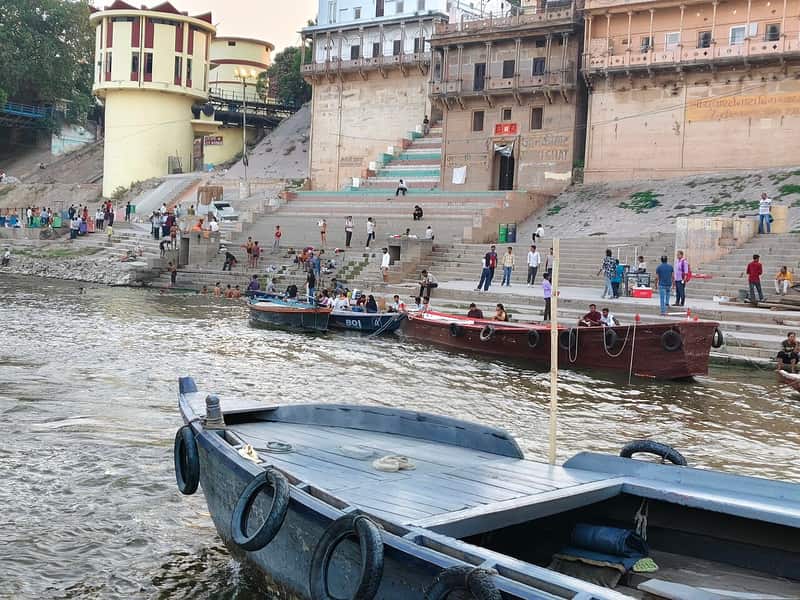
The devotional character of Janaki Ghat grows directly from its name. Where the great ghats of the north are loud with bells, mantras and the cries of pujaris, devotion here takes a quieter form. A woman kneels at the water's edge and pours a little river water through her cupped hands toward the rising sun; an old man sits on a step with a worn copy of the Ramcharitmanas and reads aloud in a low, musical voice; a mother touches her child's forehead with Ganga water before sending him off to school. This is the piety of the Ramayana as it is actually lived — not the temple festival with its crowds and drums, but the daily remembrance of Sita and Rama in the small rituals of home and riverbank.
The ghat is especially dear to women, and the reason lies in Janaki herself. For generations the women of the neighbourhood have come here to pray for the well-being of their families, to ask for the strength and faithfulness that Sita embodies, and to keep vows taken in her name. On certain days small groups gather at the shrines behind the ghat to sing the story of Sita's trials — the exile, the abduction by Ravana, the test of fire — and the songs are sung with a feeling that no performance could imitate. The devotion is personal and unperformed; no one is watching, no camera is pointed, and the prayers are spoken to the river as one speaks to a trusted friend.
Yet the gentle character of the ghat should not be mistaken for weakness. The worship of Janaki carries the memory of Sita's steadfastness — her refusal to be broken by exile, abduction and trial, her trust in Rama through every darkness. For the faithful, to pray at Janaki Ghat is to draw on that strength: the strength to endure hardship with grace, to keep faith when everything seems lost, and to walk through the forest of difficulties without fear. The ghat, in its smallness, teaches the great lesson of the Ramayana — that devotion is not noise but constancy, not display but the quiet holding of faith, and that the truest worship is the one that asks nothing in return. It is the worship of the everyday, offered not in the great temples but on the bare steps of a small ghat, and that is precisely why it endures.
The Quiet Morning Bath
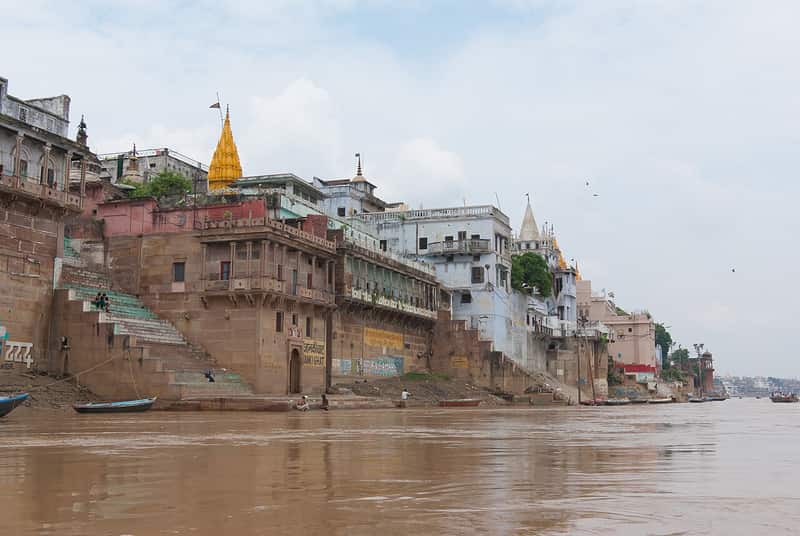
Bathing at Janaki Ghat is a private and unhurried affair. There is no crowd, no queue for the water, no priest demanding a donation and a photograph. A handful of bathers come down the steps at first light, each moving at his own pace: a young man with a brass lota, three elderly women wrapped in their saris, a father with his son. They immerse themselves in the flowing water, face the rising sun and dip three times, and the only sounds are the lapping of the Ganga, the splash of the dips and the distant cry of birds. It is the kind of bathing the scriptures describe — a personal meeting between the soul and the river, unobserved, unadvertised and unhurried.
For the people of the neighbourhood, the morning bath is more than cleanliness; it is the anchor of the whole day. The water is taken as a blessing — a few drops on the head, a mouthful offered to the sun, the wet clothes wrung out at the landing and carried home. Old residents say that the Ganga here is gentler than at the crowded ghats, quieter and closer to its nature, and that a bath at Janaki leaves the body light and the mind clear. Women in particular favour the ghat because it offers space and a measure of privacy, and the practice passes from mother to daughter and grandmother to granddaughter, unchanged for generations, as such practices do in old Kashi.
Even those who cannot enter the water take part in the ritual. The infirm sit on the steps while a relative sprinkles Ganga water over them; the hurried drop a coin and a flower into the river as they pass; and in the evening the same steps serve for washing pots, cooling tired feet and filling brass vessels for the household shrines. The bath at Janaki is woven into the whole texture of daily life — a rite that asks for nothing but water, a little faith and a few quiet minutes at the edge of the great river, and that gives back, in return, the peace that the crowded ghats can no longer offer. For many bathers this privacy is the whole point of Janaki; they travel past the famous ghats to reach it, and they say their prayers undisturbed, as their mothers and grandmothers did before them.
The River and Its Seasons
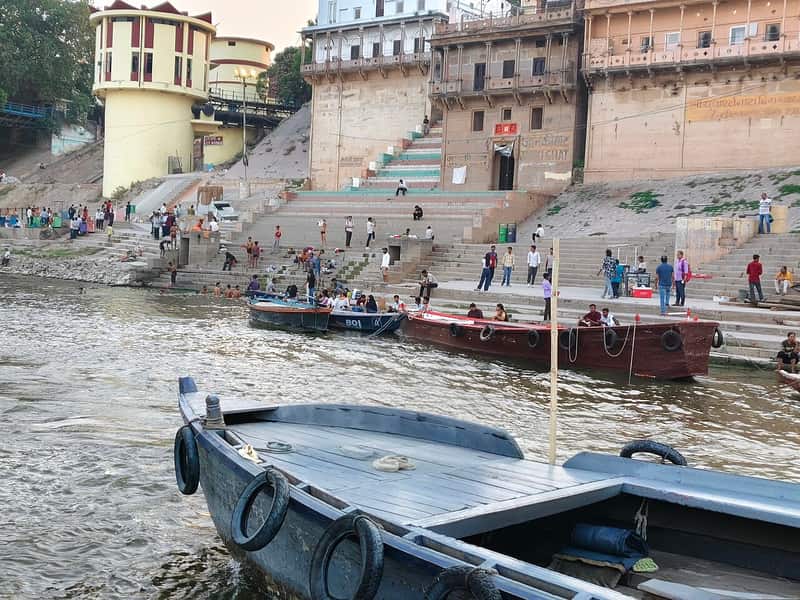
The Ganga at Janaki Ghat is wide and slow, for the southern stretch of the river is broader and gentler here than in the crowded reaches of the north. The ghat was built for the river at its lowest; through the dry months the water recedes far from the steps and leaves broad sandbanks gleaming in the sun, so that the bather must walk out across the sand to reach the stream. In the rains, by contrast, the swollen river climbs the steps, covers the landing, and turns the ghat into a water's edge that shifts from week to week. Those who bathe here learn to read the river — to know where the current runs, where the sand is firm and where the water has carved new channels overnight.
The sandbanks give the ghat its distinctive character in the winter months. Boats lie tilted on the dry sand, their hulls being caulked and painted; children run kite strings across the flats; fishermen spread their nets in the sun; and cows wander down to drink at the edge of the stream. Pilgrims and walkers cross the sand to the water with their shoes in their hands, and in the late afternoon the whole scene turns gold — the sand, the river, the far bank and the ghat's pale steps all lit by the same low sun. It is a landscape that changes with every season, and the people of the neighbourhood measure the year by it.
The river at Janaki also teaches the patience that is the heart of Kashi. Water that is high in August is far away by March; sandbanks that are islands in one month are joined to the shore in the next; and the steps that touch the Ganga in the monsoon stand above dry sand in the heat. The bather who returns year after year knows that the river, like faith itself, is not fixed but living — moving, changing, and yet always the same Ganga. To sit on the steps and watch the water come and go is to understand the oldest teaching of this city: that everything flows, that nothing is lost, and that the river returns to the same shore, season after season, as surely as the morning sun.
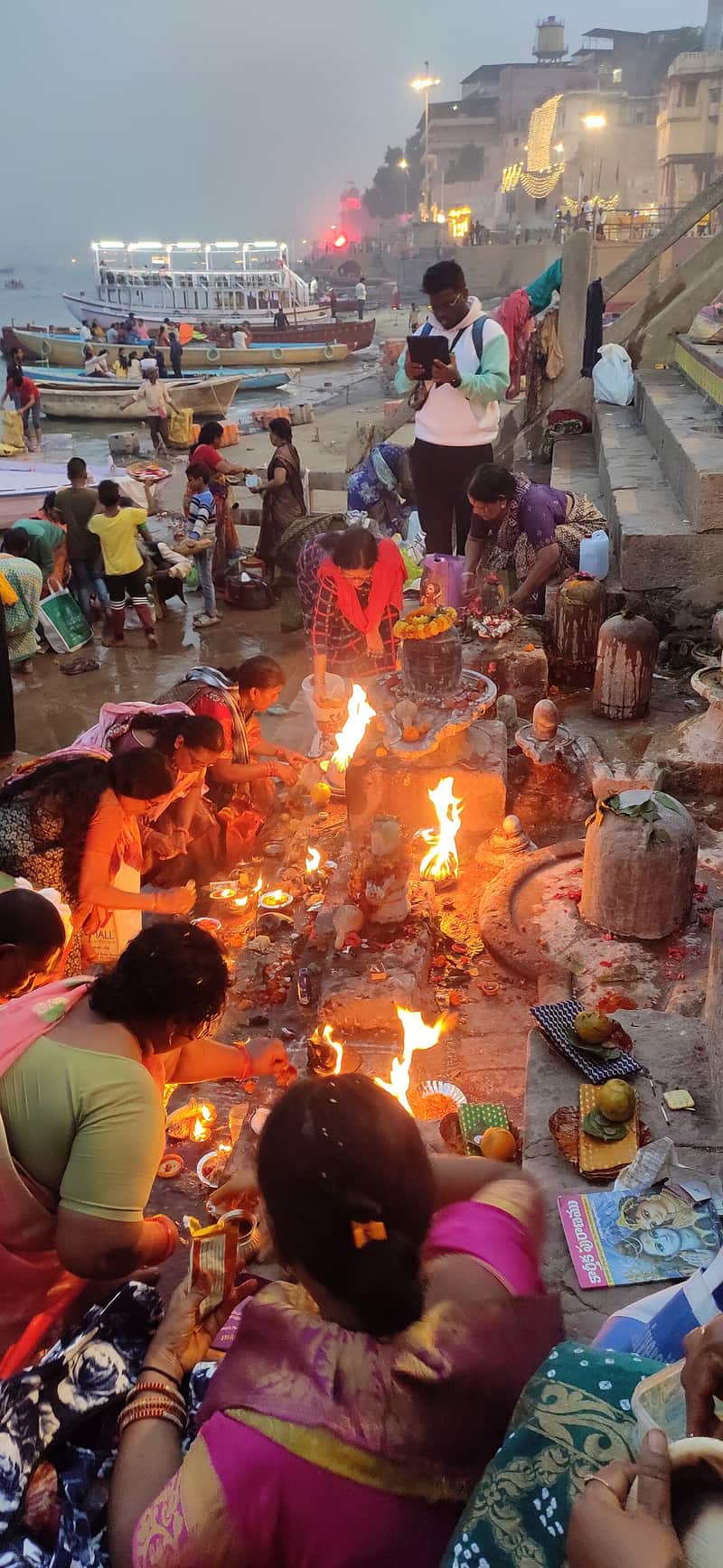
The Working Life of the Ghat
Janaki Ghat is a working ghat, and its life is the life of the river people. The boatmen who moor here are ferrymen and fishermen rather than tourist pilots; their boats carry wood, vegetables, fodder and occasionally a pilgrim across the water, and their day begins before the sun. Washermen beat their clothes on the flat stones of the landing, spreading white sheets over the sand to dry. Fishermen mend their nets in the shade, and in the evening their small boats glide out onto the darkening water, each with a lantern, to cast their lines for the night's catch. The ghat earns its keep, and the river feeds the families who live behind it.
Through the day the steps serve as the front porch of the neighbourhood. Women come down to wash pots and clothes, to fill brass vessels and to exchange news; children gather after school; and old men occupy the same steps at the same hour, season after season, watching the river as they have watched it for fifty years. A tea stall at the head of the ghat is the true heart of the place, where boatmen, milkmen and retired teachers argue over the day's news. No one hurries, because hurry is for the northern ghats; here time moves with the river, and the river moves slowly.
The small economy of the ghat is a lesson in itself. Everything is reused, exchanged or repaired; a boat is patched rather than replaced, a sari is washed rather than discarded, and the sandbanks are used as freely as a common field. There is poverty here, but there is also dignity and a deep competence — the competence of people who have lived beside a great river for generations and know exactly how to read it, to work it and to thank it. For the visitor, watching this ordinary working life is one of the quiet pleasures of Janaki, a glimpse of a Varanasi that exists apart from temples, tourists and photographs. To sit among these people is to understand that the ghats of Kashi were never built for display; they were built for use, and a ghat that is used has a dignity that no monument can imitate.
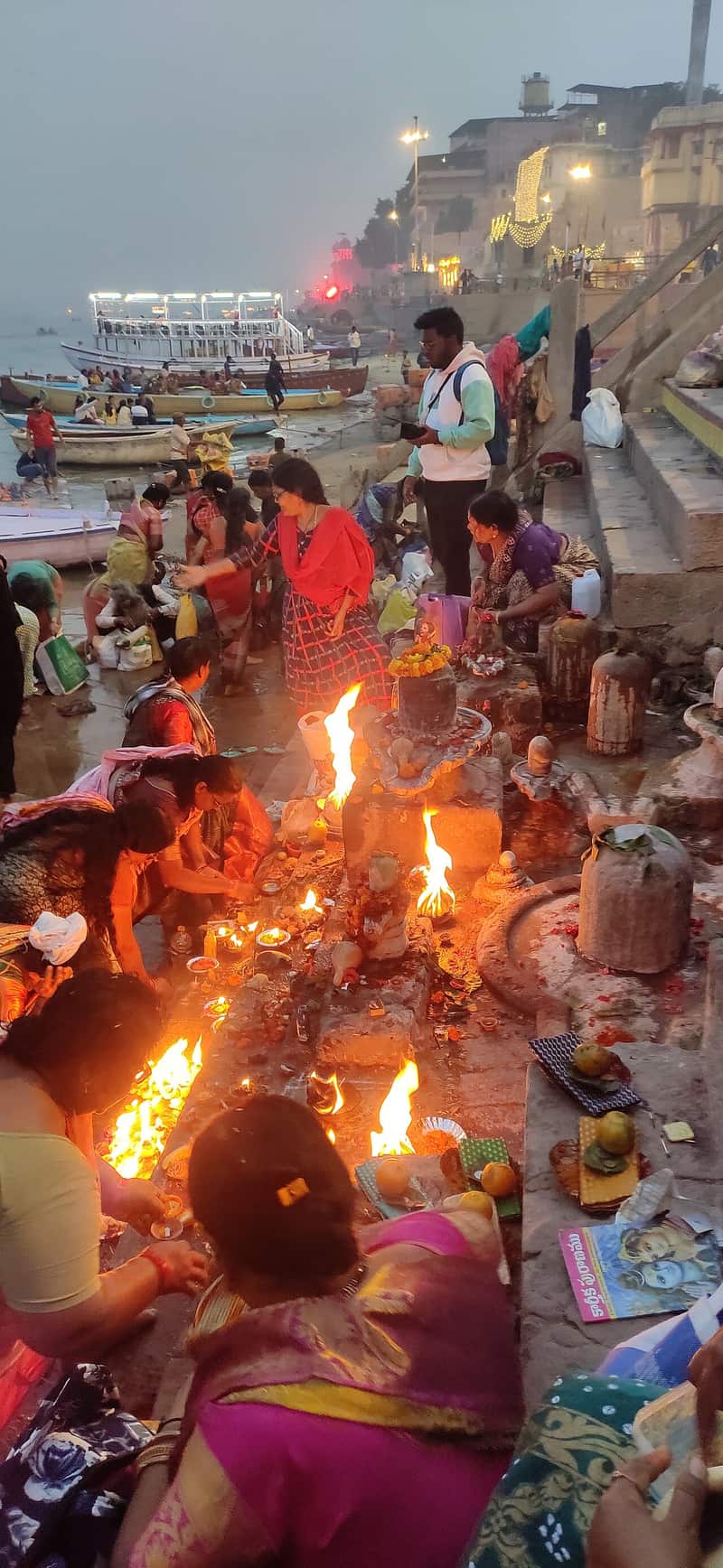
Behind the Steps — The Lanes of the Mohalla
The lanes that rise behind Janaki Ghat are the ordinary streets of old Varanasi, and they repay every minute spent in them. They are narrow and winding, shaded by the upper storeys of houses that have stood for two hundred years, with carved wooden balconies, brass plaques and thresholds worn hollow by generations of feet. At every corner there is a small temple — a Shiva lingam under a peepal tree, a Hanuman shrine in a doorway, a painted image of Sita and Rama on a wall — each with its own lamp, its own devotees and its own daily story. To walk these lanes is to walk through a living museum that no ticket booth guards and no guidebook fully describes.
The mohalla is self-sufficient in the manner of old city quarters. A vegetable seller arrives each morning with his cart; the milkman makes his rounds with brass cans; sweet shops fry jalebis for the evening; and small stalls sell flowers, incense, kumkum and the other small things that ritual requires. The neighbourhood has its own barber, its own tailor, its own cycle-repair man, and its own families of priests who serve the temples. In the early morning the lanes smell of marigolds and coal smoke; by noon they are noisy with children and scooter horns; and at dusk they fill with the sound of bhajans drifting from the upper rooms where the families gather.
For the visitor the lanes are also a doorway into a way of life that the riverfront alone cannot show. Here one sees how the ghat is used from the back: the stairways that lead down to the water, the taps and wells of the quarter, the kitchens where the morning meal is cooked before the bath, the courtyards where marriages are held and where the family priest ties the thread of a vow. The people of the mohalla are accustomed to being watched with curiosity and respond with patience and good humour. A namaste and a smile open more doors than a guidebook ever could, and the lanes behind Janaki remain one of the most genuine quarters of the city. The visitor who lingers here, who buys a cup of tea from the stall, who greets the children and asks about the old temple, will carry away an impression of Varanasi that no photograph can capture.
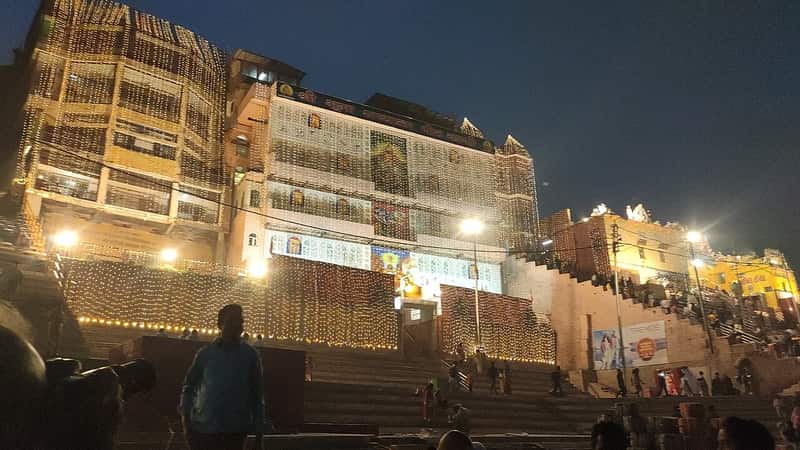
The Southern Walk — Assi to Shivala
Janaki Ghat sits in the middle of the southern sequence of ghats, and its position explains its character. Walking north from Assi Ghat, the visitor passes Tulsi Ghat, named for the poet Tulsidas, and Bhadaini Ghat, where a cave shrine of Shiva is hidden at the foot of the steps; then comes Janaki, modest and quiet; and immediately beyond it rise the garden walls of Mata Anandamayee Ghat, built in honour of the great saint Anandamayee Ma. The whole walk from Assi to Janaki takes about twenty minutes at a strolling pace, and every step of it is worth taking slowly, for each ghat has its own face, its own people and its own story.
Each neighbour gives Janaki its setting. To the south, Bhadaini is busier and older, its steps crowded with shrines and its name linked to a legend of the demon Bhandasura slain by the goddess; its cave and its bustle make the quiet of Janaki all the more striking. To the north, Mata Anandamayee Ghat is entirely different again — a broad, walled garden with a graceful entrance and a spacious lawn, built in 1968 in honour of the mystic who died in 1982, and used by locals and visitors alike for rest and recreation. Between these two neighbours, Janaki keeps its own small identity: not old enough to be legendary, not grand enough to be famous, simply itself.
The walk that takes in all three — and continues north past Prayag Ghat to Shivala, the palace quarter of the southern city — is one of the finest riverside promenades in Varanasi. It offers the traveller everything that the northern ghats have lost: open space, ordinary life, the river close at hand, and the freedom to walk without being sold anything. For the return, a boat can be taken from Shivala or Assi, or the same path can be walked south again at sunset, when the ghats turn gold and the smoke of the evening lamps begins to rise. Seen in this way, from the middle of the walk, Janaki reveals itself as a bridge between two worlds of the southern riverfront — the old and the new, the busy and the calm. For those who have time, the walk can even be extended further north through the lesser-known ghats of the palace quarter, where the crowds thin and the riverfront becomes quieter still.
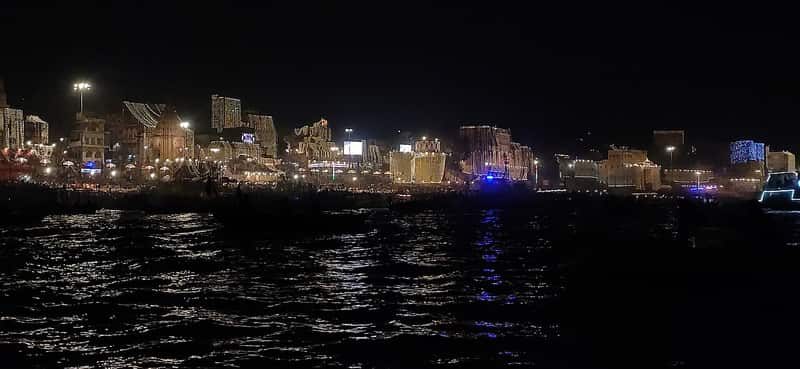
The Peacefulness of Janaki
The first thing a visitor notices at Janaki Ghat is the absence of demand. No one asks for money, no one waves incense, no one insists on a boat ride; the ghat asks for nothing and offers everything. The sounds are the sounds of water and air: the soft lapping of the Ganga against the steps, the cry of a kingfisher, the distant bells of a temple, the chatter of women washing clothes on the landing. In the morning the light is pale gold and the far bank is a green haze; in the evening the river turns to molten silver and the lamps of the southern ghats begin to glow one by one. Time here is measured by the sun on the water, not by clocks.
People come to Janaki to be quiet, and the ghat rewards them. Students sit on the upper steps with their books, their voices low; a musician may practise a raga to the accompaniment of the river; travellers who have been stunned by the noise of the northern ghats come here to recover, to sit for an hour and to let the water do what the water has always done. There is a meditative quality to the place that needs no temple and no priest — the simple presence of a great river moving past a small flight of steps, unchanged in its essentials for centuries. Many who come for ten minutes stay for an hour, and many who stay for an hour return the next day.
This peacefulness is the ghat's truest gift, and it is rare in a city that lives at full volume. It is the peace not of emptiness but of sufficiency — of a place that does not need to prove itself, advertise itself or perform itself. The bathers who come at dawn, the old men who sit in the afternoon, the families who picnic on the sandbanks at dusk: all of them are part of a rhythm that has repeated itself here for centuries and will repeat itself long after the visitor has gone. To have known such a place, even briefly, is to have touched the quieter heart of Kashi — the heart that beats beneath the noise and carries the city through its endless days.
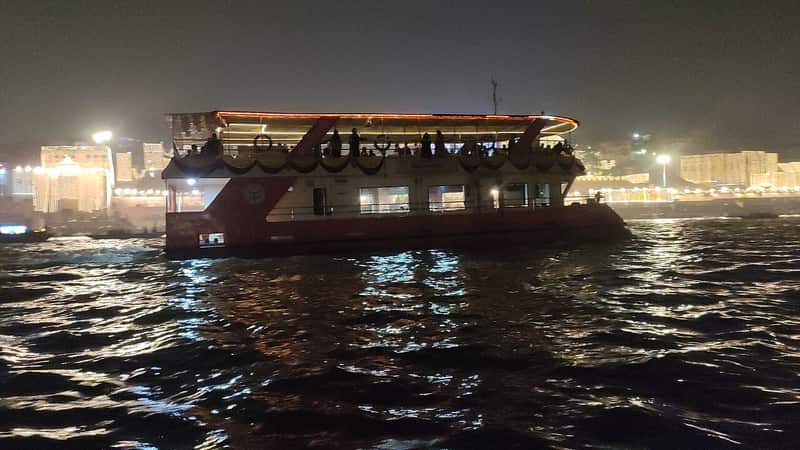
Ram Navami and the Days of Celebration
Through most of the year Janaki Ghat keeps its quiet rhythm, but on the great days of the Ramayana calendar the neighbourhood awakens. The first and greatest of these is Ram Navami, the birth festival of Lord Rama, celebrated in the bright fortnight of Chaitra, which usually falls in March or April. On this day the small temples of the mohalla are washed and decorated, the shrines of Sita and Rama are dressed in new clothes, and the lanes fill with the sound of the Ramcharitmanas recited from beginning to end, page after page, by voices that have performed the same service for generations. Devotees walk down to the ghat in procession, and the water itself receives flowers, sweets and lamps.
The women of the quarter observe the festival with particular care, for Ram Navami is also the festival of Janaki's household. Vows are taken and kept; songs describing the birth of Rama and the joy of Mithila are sung in the courtyards; and the story of how Janak found the baby in the furrow of the plough is retold to the children. In some years the celebration extends to Vivah Panchami in Margashirsha, the winter month when the marriage of Rama and Sita is re-enacted with processions, decorated images and the chanting of wedding hymns, and the lanes behind the ghat glow with lamps strung across the balconies. Every celebration, great or small, ends at the river, because the river is the thread that binds the neighbourhood to its faith.
Smaller observances mark the local year. On Sita Navami, the birthday of Janaki herself, which falls in Vaishakha, women gather at the ghat with offerings of fruit and flowers; on the festival of Kartik Purnima the steps are lit with rows of lamps; and on ordinary Thursdays, the day of Brihaspati, small groups may be seen making offerings at the shrines. None of these celebrations draws crowds or makes news; they are the private festivals of a neighbourhood, passed from mother to daughter, priest to pupil, year after year. To be present at the ghat on such a day is to see the faith of Kashi at its most personal — not performed for visitors, but simply lived, as it has been lived here for centuries. The traveller who happens to be in Varanasi during Ram Navami should make a point of walking the southern stretch on that day, for the sight of the whole neighbourhood — old and young, bathed and dressed in their finest — moving together toward the river is one of the most moving experiences the city offers.
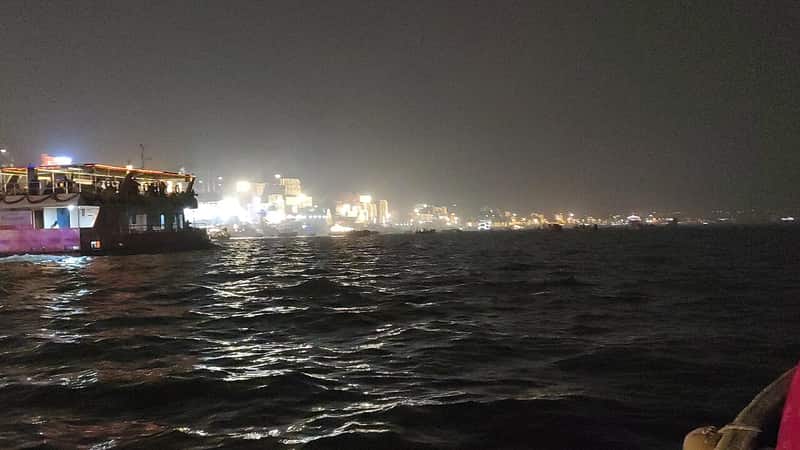
Walking With Respect
Janaki Ghat is a place of daily worship, and the visitor who walks through it with respect is received with warmth. The first courtesy is dress: those who wish to bathe should come modestly dressed, and even those who only sit by the water should avoid revealing clothing, for the ghat is used by families and the faithful. Ask before photographing anyone, and put the camera away during prayers; the people of the ghat are unfailingly gracious, but they value their privacy, and a person at prayer is not a subject for a picture. A simple namaste, offered to bathers, boatmen and old residents alike, opens every door.
The small rules of sacred space are easy to follow. Remove shoes before stepping onto the platforms of the shrines and before walking on the areas where offerings are made; leave the flowers, incense and lamps of the devotees untouched; and never stand between a worshipper and the shrine or the sun during arghya. Alcohol and tobacco have no place on the steps, and litter — especially plastic — should never be thrown into the river, which is regarded as a living goddess. Whatever the visitor's own belief, to treat the Ganga with the reverence the locals show it is to honour the very heart of the place.
Finally, remember that Janaki is a working and residential ghat, not a stage. Do not occupy the landing where the washermen work, do not block the steps with large groups, and do not treat the bathing area as a swimming pool; the bathers are performing a sacred act, not exercising. With these small courtesies the visitor becomes, for a few hours, part of the neighbourhood rather than an observer of it — and the ghat, which asks for so little, responds with its quiet friendship. Those who come with humility usually leave with the sense of having touched something real: an ancient way of life, still intact, still gentle, still welcoming. And when in doubt, watch what the locals do and follow their example; there is no surer guide to courtesy than the behaviour of the people who have lived beside this river all their lives.
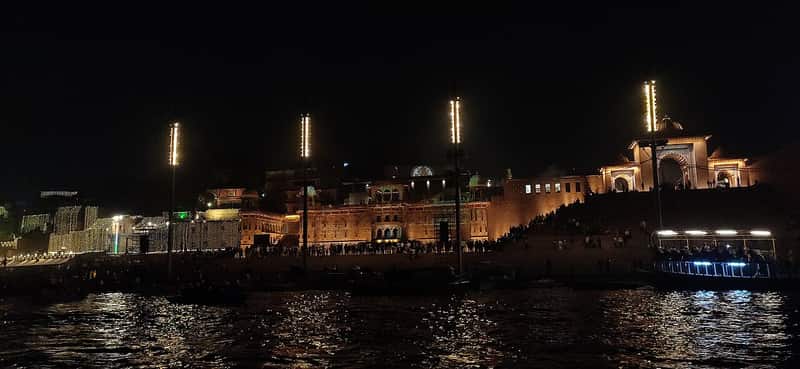
Practical Notes — Reaching Janaki Ghat
Janaki Ghat is easiest to reach on foot, and the walk is half the pleasure. From Assi Ghat, follow the riverbank north past Tulsi and Bhadaini ghats for about twenty minutes, and Janaki appears on the right, just before the garden walls of Mata Anandamayee Ghat. From the city side, take a cycle-rickshaw or auto to the Shivala or Bhadaini crossing and walk down the lanes toward the river; any passer-by will point the way, for the ghat is well known to the neighbourhood. By boat, it is a pleasant thirty or forty minutes from Dashashwamedh Ghat downstream, or a few minutes by rowboat from Assi; boatmen will name the ghat as easily as any of the famous ones.
The best hours are the first hour of daylight and the last hour before sunset, when the light is golden, the bathers are at their prayers, and the river is at its most beautiful. The season from October to March is ideal, with cool mornings and long, luminous afternoons; in April and May the sun is fierce and the sand is hot, though the early morning is still rewarding; and in the monsoon months the river rises to the steps, and the ghat shows a dramatic face that most visitors never see. Carry water, a hat and modest clothing, and keep valuables at home, for the ghat has no lockers and no facilities to speak of.
Facilities at the ghat itself are minimal, which is exactly its charm — there is no ticket office, no café, no souvenir stall. The nearest amenities lie to the south at Assi Ghat, with its cafés, restaurants and guesthouses, and to the north at Shivala, where tea stalls and shops cluster at the head of the ghat. A visit to Janaki is best planned as part of the larger southern walk: begin at Assi at sunrise, pause at Janaki for the quiet, and end at Anandamayee's garden or continue to Shivala for breakfast. In this way the smallest ghat of the southern stretch becomes, for the traveller, one of its most memorable — a place of stillness in a city of ceaseless movement. A final word: the ghat is rarely crowded, but at sunrise on weekends and festival mornings a few extra bathers appear, so the early hour remains the surest way to find Janaki at its most serene.
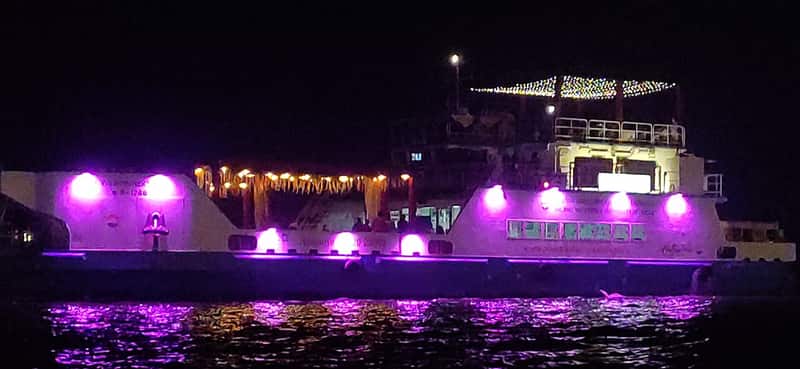
Janaki Ghat — Gallery (12 Photos)
Image Credits
janaki-01.jpg · janaki-02.jpg · janaki-03.jpg · janaki-04.jpg · janaki-05.jpg · janaki-06.jpg · janaki-07.jpg · janaki-08.jpg · janaki-09.jpg · janaki-10.jpg · janaki-11.jpg · janaki-12.jpg — Wikimedia Commons, under free licenses.
Continue exploring
Similar Ghats Nearby
Book This Ghat — Get Notified
Download the app now and book a boat ride to Janaki Ghat