

Sankata Ghat
Neighbourhood GhatSankata Ghat is a small ordinary ghat.


Type
Neighbourhood Ghat
Boat Fare
1x base fare
Best Time
6-9 AM
History
This ghat is linked to the Sankata Devi temple, where devotees believe worshipping the goddess removes their troubles (kast).
Highlights
- Darshan of the Sankata Devi temple
- Faith in relief from troubles
- Peaceful bathing site
Festivals & Events
How pricing works in the NaviX app
No haggling at the ghat — everything is fixed in the app first
- 1
Fixed price before you board
The fare is shown in the app upfront — no bargaining at the ghat
- 2
Sharing or private — your choice
Share with fellow travelers or take the whole boat for your group
- 3
Pay only after the ride
UPI, card or cash — with an instant receipt
6:00 AM, 12:00 PM & 7:00 PM
Three daily aartis at the temple
Complete Guide
Sankata Ghat — The Complete Guide
History, mythology, rites and practical details — everything in depth.
On this page
- 1.Sankata Ghat — The Goddess Who Removes Danger
- 2.Sankata Devi — The Goddess Who Removes Peril
- 3.The Temple of Sankata Devi
- 4.Mothers at the Door of the Goddess — Women, Faith and Family Protection
- 5.Bathing at Dawn — The Morning Ritual of the Ganga
- 6.The Day on the Steps — Bathers, Boatmen and Neighbours
- 7.The River and the View — The Ganga at Sankata
- 8.Behind the Ghat — The Lanes of the Old City
- 9.The Neighbouring Ghats — Scindia, Ganga Mahal and the Chain
- 10.Festivals of the Goddess — Navratri and the Nights of Sankata
- 11.Conduct at the Ghat — Etiquette and Respect
- 12.Practical Guide — Reaching Sankata Ghat and Planning a Visit
📅 Updated: 21 Aug 2026 · Author: NaviX Field Team (field research 2024-26) · 12 sections · 12 photos
Sankata Ghat — The Goddess Who Removes Danger
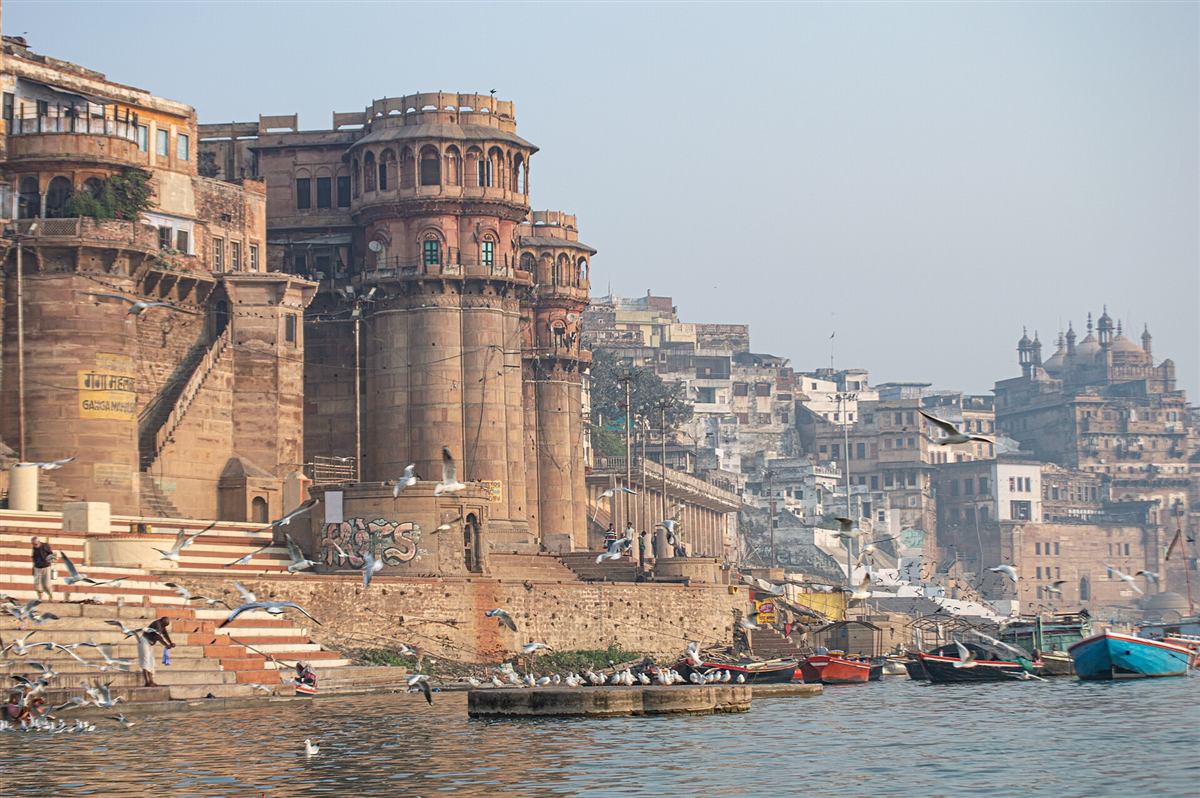
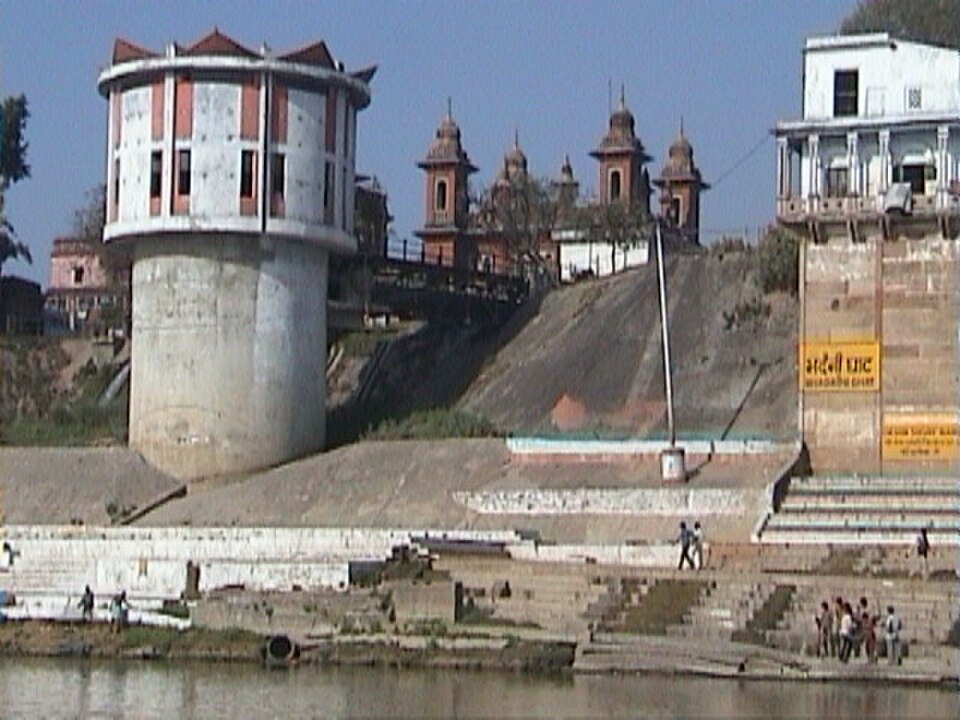
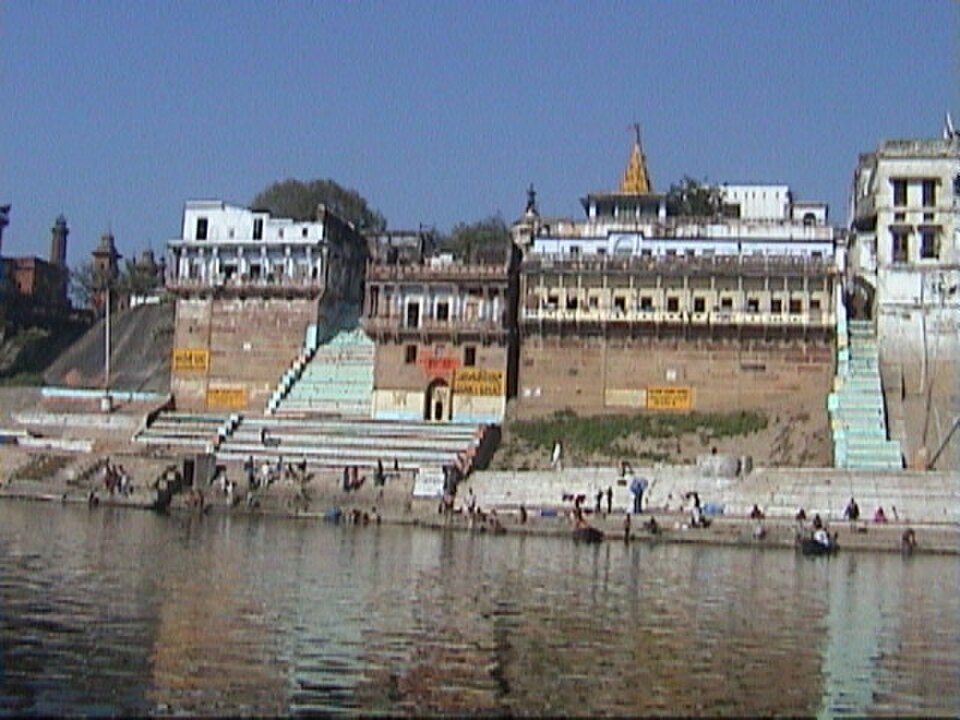
Sankata Ghat is a small and deeply personal ghat on the northern riverfront of Varanasi, tucked quietly between the grandeur of Scindia Ghat and the old palace of Ganga Mahal. Unlike the great ceremonial landings of the city, it has no towering spires and no crowded festival grounds; it is a modest flight of stone steps serving a modest neighbourhood, and that is exactly its charm. The ghat takes its name from the Sankata Devi temple that rises close behind it, a shrine to the goddess who removes sankat — danger, trouble, calamity. For centuries the mothers and grandmothers of Kashi have climbed these steps with their prayers, believing that the goddess who watches over the water also watches over their families.
The landing itself is a gentle curve of worn stone, wide enough for a handful of boats and a knot of bathers. In the early light, women from the old city descend with brass pots and marigold garlands, while boatmen untie their long wooden craft and a few pilgrims pour sacred water over the small shrines at the water line. The steps lead up to a narrow lane and, a few houses back, the temple of the goddess, where bells sound from morning to night. Everything about the ghat is on a human scale: no hawkers, no crowds, no performance. What remains is the oldest kind of Kashi worship — a family, a prayer, a river.
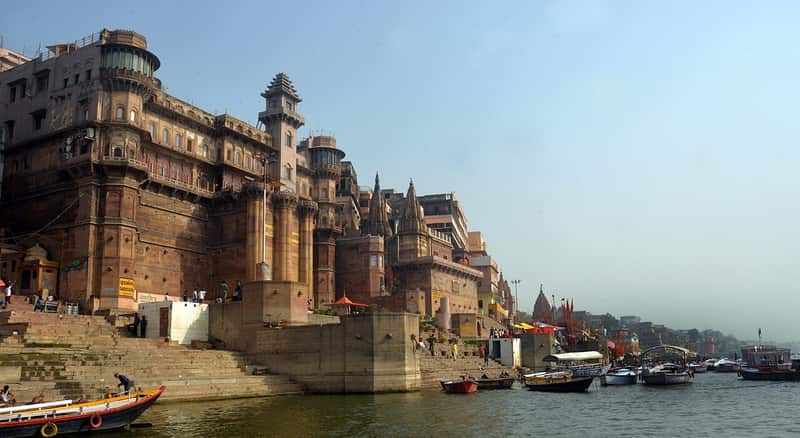
Positioned in the chain of minor ghats between Scindia and Ganga Mahal, Sankata belongs to the quieter stretch of the riverfront where the great processional life of the city thins out and the devotion of ordinary households takes over. Seen from a boat, it is a ribbon of ochre and white houses above a few steps of stone, indistinguishable at a glance from its neighbours, yet known to every boatman as the ghat of the danger-removing goddess. For the traveller seeking the living, everyday piety of Banaras rather than its spectacles, Sankata Ghat is a place to slow down, sit on the steps, and watch a sacred city being faithful.
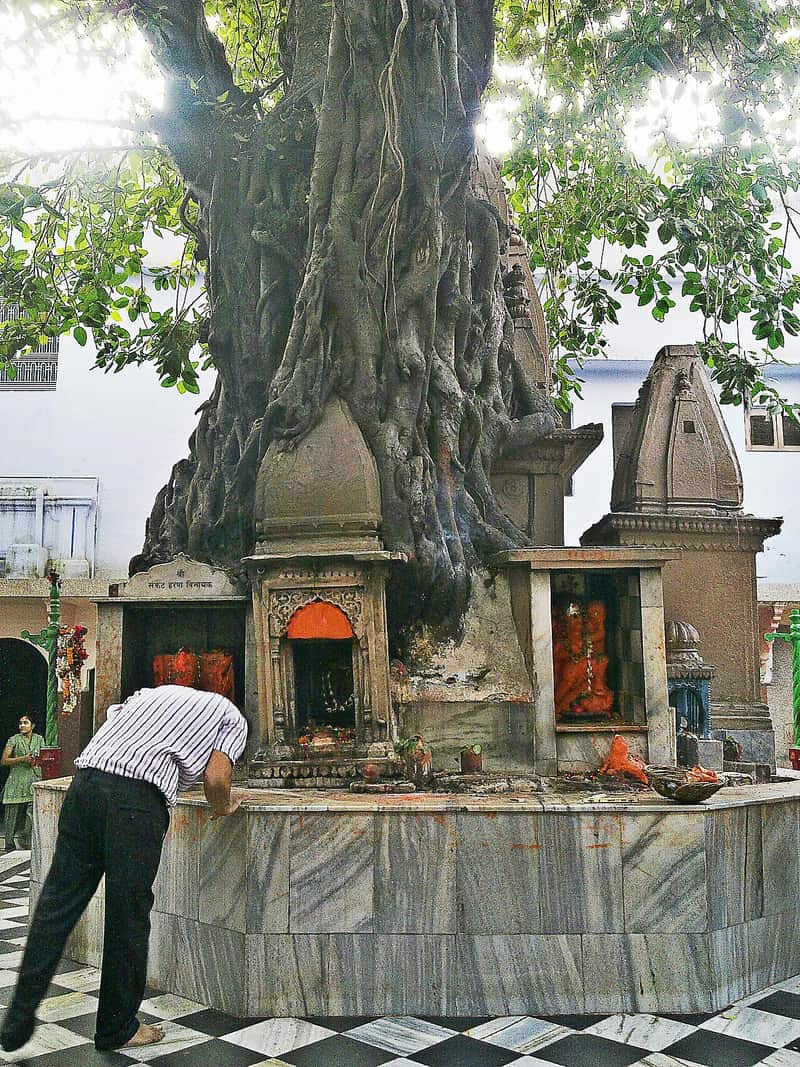
Sankata Devi — The Goddess Who Removes Peril
Sankata Devi is a form of the great Mother Goddess, an aspect of Durga and Parvati whose name is itself a promise. Sankata means danger, calamity or crisis, and the goddess of this name is worshipped precisely as the one who removes sankat — the deity a frightened devotee calls upon when illness strikes, when a journey is undertaken, when a child is in trouble, when the family faces an evil that no human power can turn aside. In the mythology of Kashi, she is a warrior-mother, gentle with her children and terrible to the dangers that threaten them, and the small temple above the ghat has served this purpose for generations without interruption.
Her worship is above all the worship of protection. Devotees approach her with simple, urgent prayers rather than elaborate ceremony: a coconut broken at the threshold, a garland of marigolds, a lamp of ghee, a vow to fast on her day if the prayer is answered. Tuesday and Friday are considered especially auspicious, and during the nine nights of Navratri the temple hums with the names of the goddess from dawn to dusk. Mothers in particular keep her fasts, for the oldest bargain of this shrine is between a mother and a mother-goddess: protect my child, and I will honour you all my life.
Local tradition weaves the goddess into the life of the river. It is said that Sankata Devi chose this spot because she could watch over the bathers at the water line and the families in the lanes behind, and boatmen who pass at night still dip their oars and murmur her name before setting out in the dark. In a city of countless deities, each with its own work, Sankata Devi is the specialist of trouble — the goddess you remember when everything else has failed, the fierce and tender mother who stands between her children and the dangers of the world.
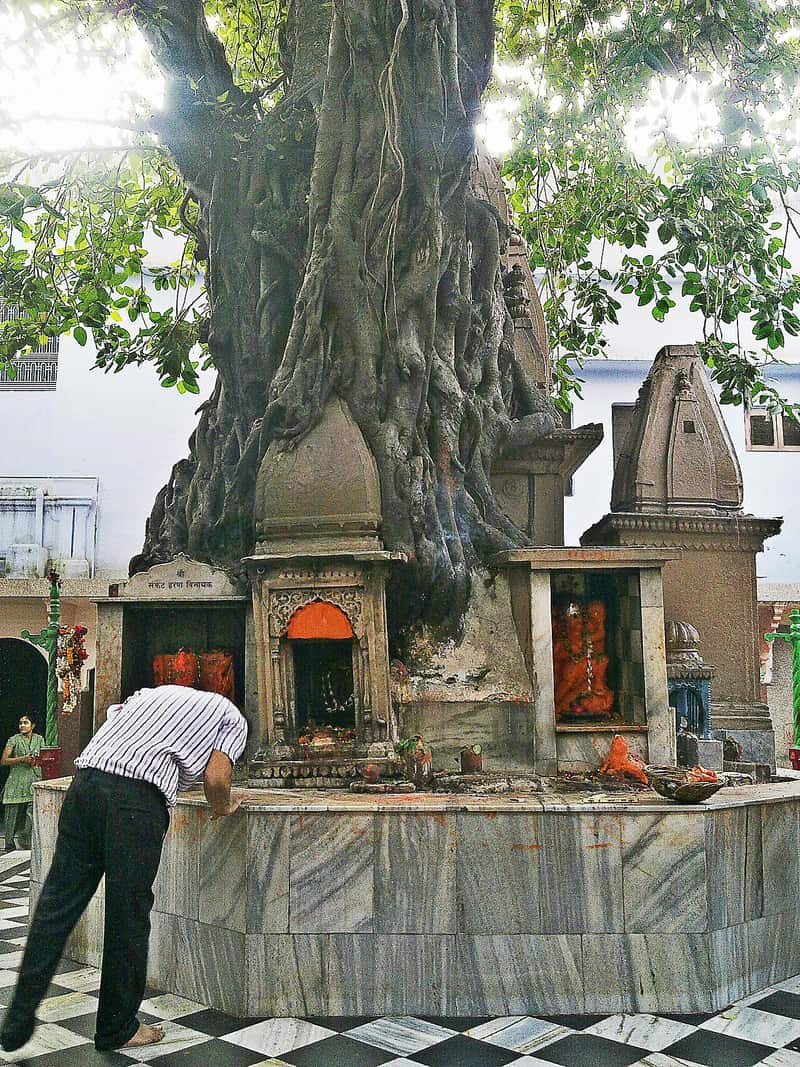
The Temple of Sankata Devi
The Sankata Devi temple stands a short climb above the ghat, set back from the water behind the first row of old houses. It is not one of the great monuments of Varanasi — no marble halls, no towering shikhara, no crowds of tour buses — and that is precisely the point. It is a neighbourhood temple, the sort of shrine that has stood here for centuries, rebuilt and repainted by the devotion of the families who live around it. The sanctum is small and dark, lit by oil lamps and the glow of tinsel, and in the centre sits the image of the goddess — dark, serene, garlanded, her eyes fixed on the devotee who has come with a burden of fear and a request for safety.
The daily rhythm of the temple follows the ancient clock of Hindu worship. Before dawn the priest opens the doors, bathes the image, and dresses her in fresh cloth; through the day devotees come and go, ringing the great bell as they enter so that the goddess knows a child has arrived. At noon the bhog of sweets and fruits is offered; in the evening the aarti is performed with flames, incense and drums, and the narrow lane outside fills with the sound of bells and the smell of marigolds and camphor. On festival nights the courtyard glows with hundreds of lamps, and the goddess, lit from below, seems to float above the crowd.
Like the ghat below it, the temple has its own quiet history. Older residents say the shrine is very ancient, though the present structure was rebuilt in the nineteenth century and repaired many times since. What has never changed is the contract between the goddess and her neighbourhood: the families of this quarter have prayed at this door for their sick children, their travelling sons, their marriages and their harvests, generation after generation. To visit the temple is to enter the heart of the ghat's meaning — for it is the goddess in this small sanctum who gives the steps below their name, their purpose and their peace.
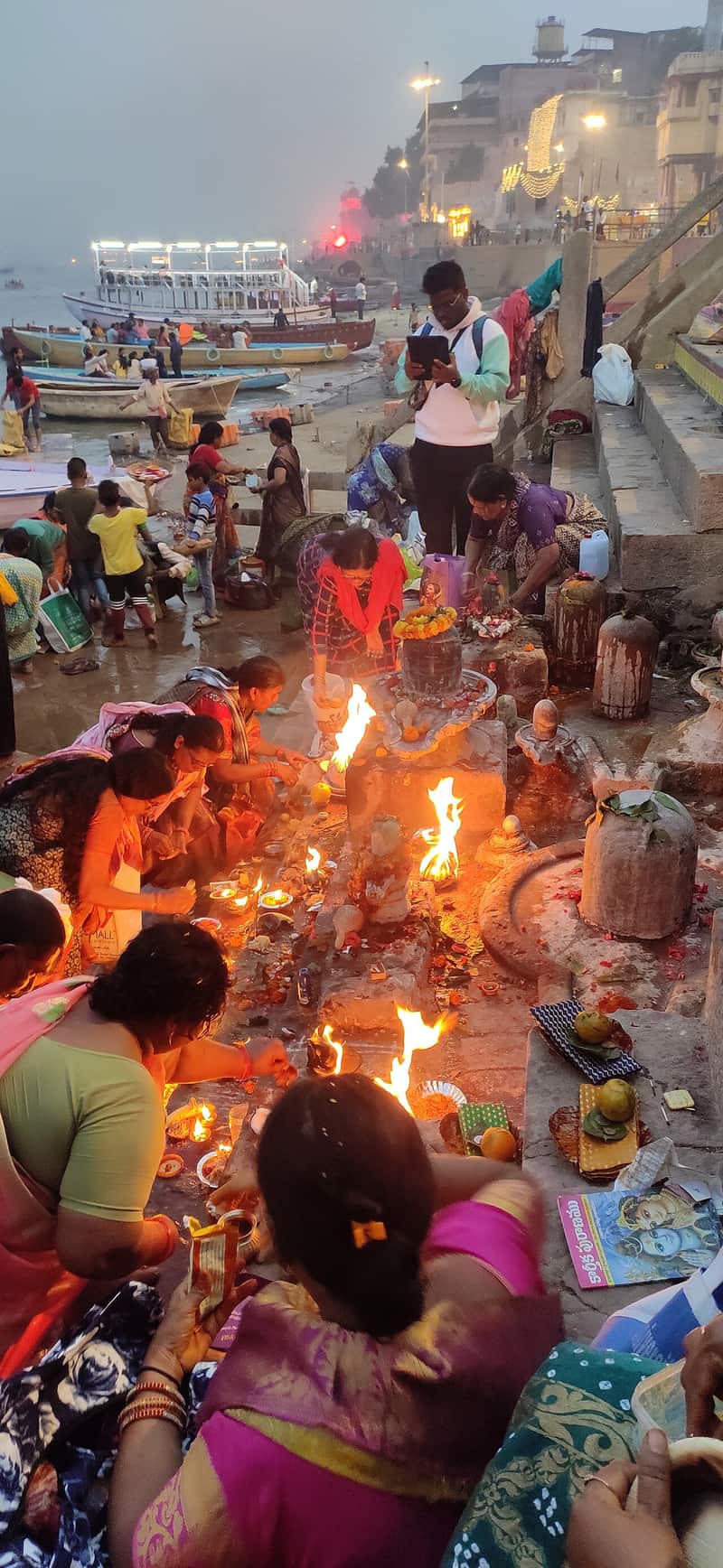
Mothers at the Door of the Goddess — Women, Faith and Family Protection
The deepest life of Sankata Ghat belongs to women. From first light, when the lanes are still grey, the mothers of the old city begin to arrive at the temple — some carrying brass thalis with coconuts and kumkum, some leading small children, some walking slowly with the help of a daughter, having made this climb for sixty years and more. Their prayers are rarely for themselves. They ask the goddess for the health of a son, the safety of a husband on a long journey, a daughter-in-law who will be kind, a grandchild soon. The goddess of this ghat is understood above all as a mother, and it is mothers who know best what to ask of her.
The vows and fasts observed here are part of a living domestic religion that has no written liturgy but a very exact memory. A woman who prays for a sick child may vow to break her fast only when the child recovers; a family facing calamity may promise the goddess a silver bell or a new sari for her image; brides are brought here within days of their wedding to be blessed; newborns are carried up the steps in their first month. The temple is thus a ledger of family history, each vow recorded not on paper but in the memory of the households, passed from grandmother to granddaughter like a treasury of answered prayers.
This is the devotion that the word sankat makes real: the ordinary dangers of an ordinary life — fever, flood, debt, a wayward son, a difficult birth — laid at the feet of a goddess who understands them because she is a mother herself. Watching the women of the ghat, one sees what pilgrimage means at its simplest: fear carried up the steps, and hope carried down again. For the visitor, the sight is both humbling and instructive, for it reveals the true religion of Kashi — not the spectacular ceremonies of the great ghats, but the daily, patient, unrecorded faith of women, which has protected this city for longer than any monument has stood.
Bathing at Dawn — The Morning Ritual of the Ganga
The real day of Sankata Ghat begins before the sun, when the first bathers step down the wet stone in the half-dark. The Ganga here is wide and slow, and at this hour the river is still and silver, the far bank a pale line, the city behind the ghat barely awake. The bathers — old men with their folded dhotis, women in saris that will be changed on the steps, pilgrims who have walked from the station with their brass lotas — immerse themselves three times, facing the rising sun, while mantras murmur over the water. The cold is a shock and a purification; the river accepts them, and the day has properly begun.
Bathing at this ghat is not a spectacle but a discipline, and the rituals are precise. Water is cupped in the hands and offered to the sun with the words of the morning sandhya; a little is poured for the ancestors; some bathers fill their lotas and carry the sacred water home to the family shrine, to be touched by those who could not come. Many perform the ritual of the sankalp — the formal intention — standing waist-deep, naming the day, the place and the purpose of their bath, so that the act itself becomes a prayer. Around them, boatmen wash their craft, dhobis beat clothes on the stones, and the smoke of cooking fires begins to rise from the houses behind.
The faith behind the bath is very old. The Puranas say that a single dip in the Ganga at Kashi washes away the sins of many births, and the bathers of Sankata take that promise literally, morning after morning, monsoon and winter alike. Some arrive with earthen lamps to float on the water; others simply stand a long moment with closed eyes, letting the current do its silent work. For the traveller watching from the steps, the morning bath at this quiet ghat is the purest glimpse of Kashi religion — a thousand years of practice reduced to one woman, one immersion, one whispered name of the goddess, and a river that has witnessed it all.
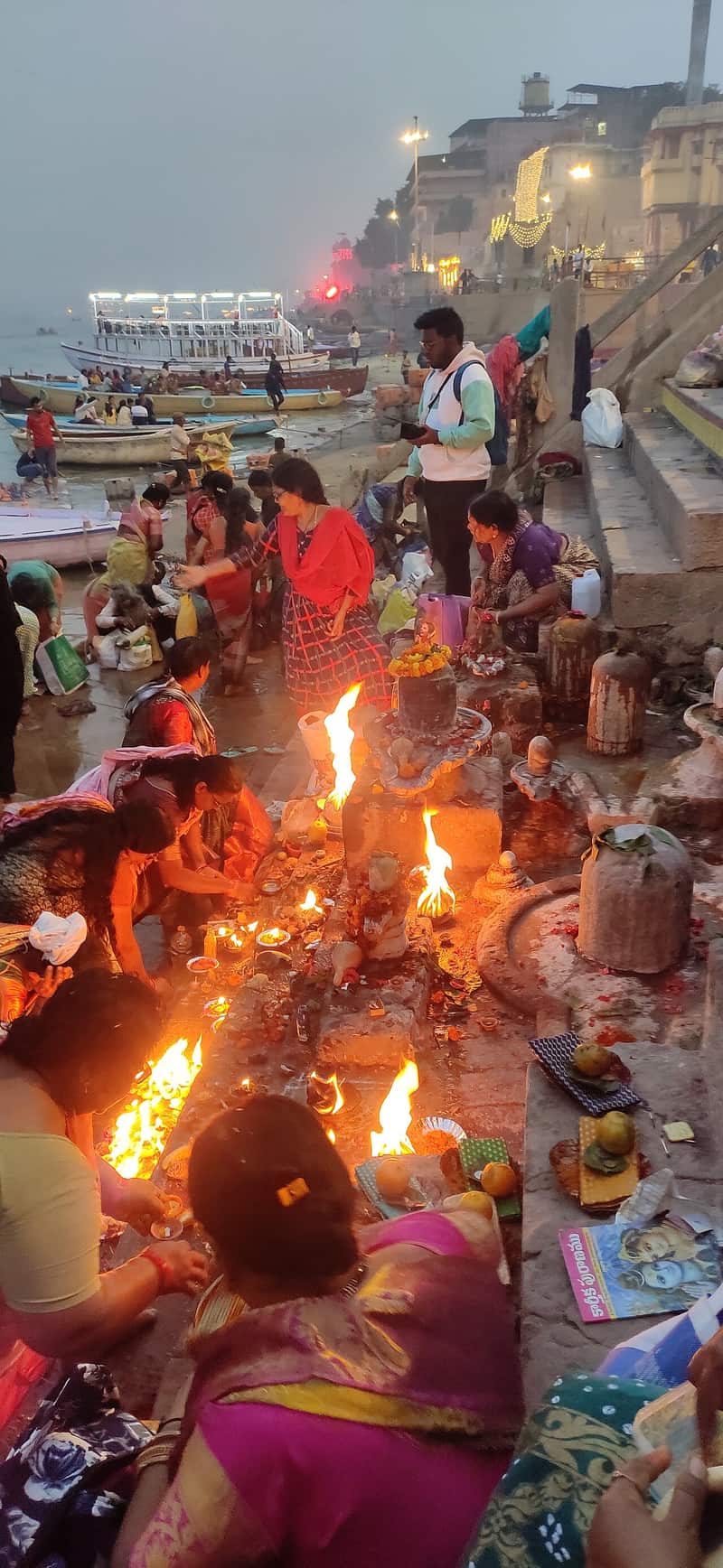
The Day on the Steps — Bathers, Boatmen and Neighbours
By mid-morning the great ceremonies are over and Sankata Ghat settles into its ordinary business. The steps become a working place: boatmen squat beside their moored craft, painting hulls or splicing rope; a washerman spreads wet clothes over the railings of the landing; boys dive from a broken slab with shrieks of pleasure; women from the lane above come down to rinse brass vessels and gossip at the water line. The goddess is never forgotten — a bell rings from the temple every few minutes — but the ghat lives now in the key of daily life, easy and unhurried.
The boatmen of Sankata are its most permanent citizens. Many families have rowed the Ganga from this ghat for generations, and the long wooden boats tied at the steps are old friends, each with a name and a history. In the slack hours they doze in the shade of the hulls, mending nets, telling the news of the river — the depth of the current, the position of the sandbars, the price of fish at the market. When a pilgrim arrives asking for a crossing, the boat is pushed off within minutes, and the boatman settles into the rhythm of the oars, calling the strokes in the old dialect of the river.
The ghat is also a theatre of small kindnesses that a visitor might miss. A boatman lends his shoulder to a trembling old woman stepping from the water; a priest at the small shrine shares his prasad with the children; a tea seller from the lane above brings his kettle down to the bathers at noon. This is the social life of the riverfront, built on generations of acquaintance — everyone knows whose boat is whose, whose family is sick, whose daughter is to be married. For the traveller, sitting on the steps of Sankata for an hour is a lesson in the true texture of Banaras: not a museum of temples, but a city of people, living their days beside a goddess who protects them.
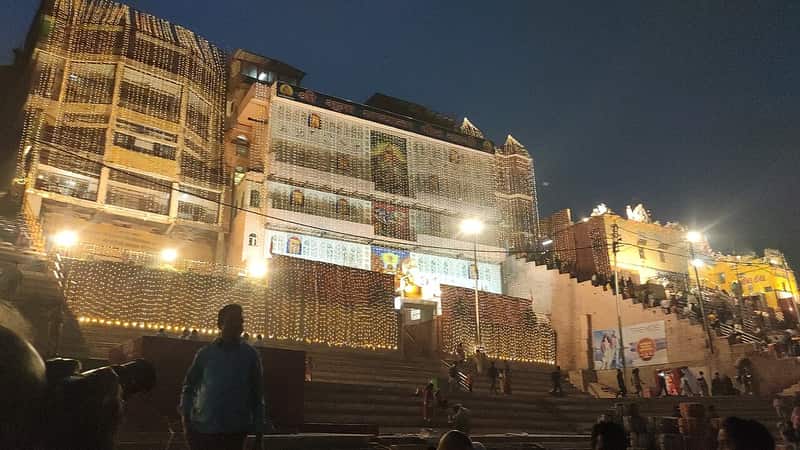
The River and the View — The Ganga at Sankata
The Ganga at Sankata Ghat is at its most spacious. Here, on the northern stretch of the riverfront, the great river has room to spread out, and the far bank is a full kilometre of pale sand and dark tamarisk, so distant that the city on the western shore feels like an island of temples. The water moves slowly but with enormous power, and on its surface the whole life of the ghat is reflected: the steps, the boats, the ochre houses, the temple bells. At this latitude of the city the river seems older, less tamed than at the great ceremonial ghats downstream, and the boatmen who know it say it carries more of the forest in it here.
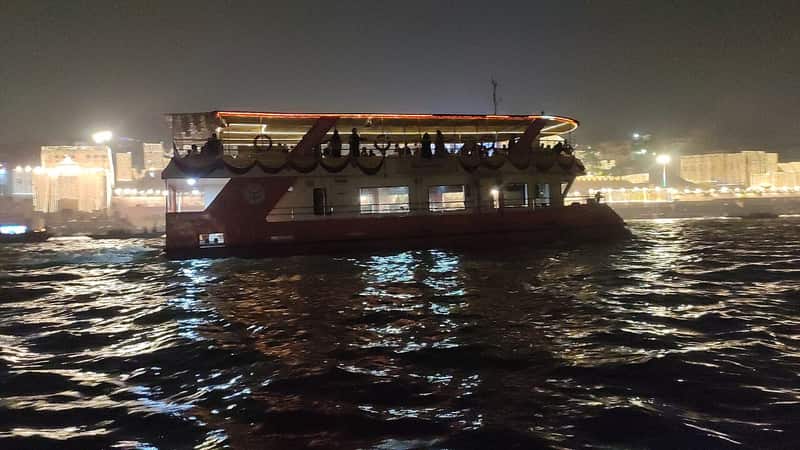
The view changes with the hour as all great views do. At dawn the water turns rose and gold, and the bathers stand in light that seems poured from the sky itself. At noon the river becomes a sheet of white heat, and the ghat empties except for the boatmen under their awnings. In the late afternoon the light comes from behind the city, and the far sandbank glows while the steps fall into violet shadow; at dusk the lamps of the temple and the houses are lit, and their reflections stretch across the current like a second city floating on the water. Travellers who make the effort to watch the evening aarti from a boat say that no other stretch of the riverfront frames it so beautifully.
The river is not only scenery; it is the working highway of the ghat. Cargo boats carry sand and timber; fishing boats go out at dusk and return at dawn; ferries shuttle pilgrims between the shore and the scattered ghats; and every morning the boatmen of Sankata sweep the steps of driftwood and water hyacinth brought down by the night current. The Ganga gives the ghat its water, its livelihood and its sacredness in a single gesture, and the residents of this quarter understand the river the way farmers understand rain. To stand at the water line of Sankata and look out across that immense, moving plain of water is to understand why Kashi, of all the cities of the earth, chose to be built beside the Ganga.
Behind the Ghat — The Lanes of the Old City
Behind Sankata Ghat the city rises in the famous maze of the old quarter — lanes so narrow that a handcart fills them, houses of three and four storeys leaning toward each other until only a ribbon of sky remains overhead. The approach from the land side is a descent through time: past a sweet shop where jalebis fry in giant pans, past a cycle-repair workshop, past doorways painted with the footprints of the goddess, until suddenly the lane opens and the whole river appears, silver and enormous, at the bottom of the steps. Every resident of these lanes is a neighbour of the goddess, and the proximity shows in small ways — marigold petals crushed into the drains, the smell of camphor from open doors, the chant of the temple aarti audible in the evening like a second pulse of the quarter.
The lanes hold the ghat's true economy. Here are the florists who sell garlands to the devotees, the brass sellers whose shops gleam with lotas and thalis, the puja suppliers stocking coconuts and kumkum and sacred thread. Old men sit on carved wooden platforms playing cards and discussing the news; children play cricket with a tennis ball in the rare open courtyard; cows wander with the unhurried authority of the street. At festival times the lane becomes a fair, with stalls of toys, sugar elephants and painted masks, and the narrowest passages are impassable with the crowds of families on their way to the temple.
This neighbourhood is one of the oldest layers of Kashi, and walking through it is like reading the city's history in brick and wood. Some of the houses bear carved doorways of the seventeenth century; others were rebuilt after the floods and fires that have periodically tested the quarter; a few, opened to the sky, reveal courtyards with tulsi plants and old wells. The residents keep the memory of the ghat's past — they can tell you which shrine stood where, which family endowed the temple, how the steps looked before the river rose. For the traveller, the lanes behind Sankata are the perfect counterpoint to the water: the same devotion, lived out in the ordinary rooms and rooftops of a quarter that has guarded the goddess for centuries.
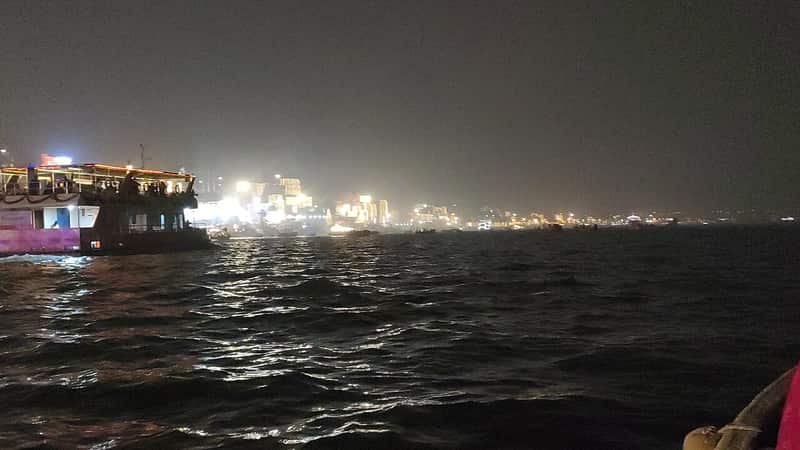
The Neighbouring Ghats — Scindia, Ganga Mahal and the Chain
Sankata Ghat belongs to a chain of smaller landings that runs along this stretch of the riverfront, and its two famous neighbours frame its quiet character. To the south lies Scindia Ghat, one of the grandest landings of Kashi, built by the Maratha queens of Gwalior and famous the world over for its leaning temple half sunk in the river. To the north lies Ganga Mahal, the riverfront palace of the old royal house of the city, its long balconies and carved facades rising above the water. Between these two monuments of stone and history, Sankata keeps the human scale — the prayer of a household rather than the pride of a dynasty.
The three ghats make a natural walking route, each with a different character. Scindia is the photographer's ghat, its tilted tower composing itself differently at every hour; Ganga Mahal is the historian's, its palace walls speaking of the Rajput princes who once watched the river from its windows; Sankata is the devotee's, its temple and its women keeping alive the oldest worship of the quarter. A walk of twenty minutes covers all three, and the contrast between them — grandeur, memory and faith — is one of the most instructive strolls on the entire riverfront. Boatmen know the route by heart and will tell its stories for the price of a fare.
The chain continues beyond these three. To the south, past Scindia, lie the great processional ghats and eventually Dashashwamedh, the heart of the city's ritual life; to the north the landings grow quieter still, running past small shrines and bathing places toward the older, more withdrawn reaches of the river. Sankata is thus the hinge of the chain — close enough to the splendours of the south to borrow their light, far enough from the crowds to keep its own peace. For the traveller who visits all the ghats of this stretch, the memory that lingers is of a city built entirely on the water's edge, each landing with its own deity, its own boats, and its own claim on eternity.
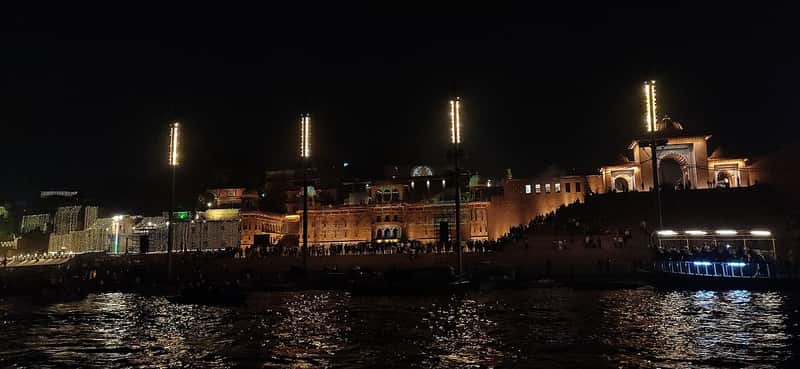
Festivals of the Goddess — Navratri and the Nights of Sankata
The year of Sankata Ghat turns on the festivals of the goddess, and none is greater than Navratri — the nine nights of the Mother — celebrated twice a year, in the spring month of Chaitra and in the autumn month of Ashwin. During these weeks the temple becomes the centre of the quarter: the image is dressed in new clothes each evening, the lamps are lit in tiers, and the aarti is performed with a splendour far beyond the daily rite. Devotees come from other quarters of the city, and the narrow lane outside the temple is a river of marigold and incense from dusk until late night. For nine nights the goddess of this ghat receives the full honours of her name — the remover of danger, crowned and worshipped as the Mother of the universe.
The older festival of the quarter is Chaitra Navratri, which coincides with the Hindu new year, when the temple marks the victory of the goddess over the demons of chaos and the beginning of the growing season. Families bring the first fruits and grains of the year to the shrine; girls are worshipped as living forms of the goddess in the rite of Kanya Puja, their feet washed and their foreheads marked with vermilion; and the ghat below is crowded with bathers who believe that bathing at the ghat of Sankata during Navratri carries double merit. The women who fast through the nine days are the heart of the festival, their white and red saris filling the courtyard like a field of flowers.
Other festivals find their own shape here. On Ganga Dussehra, when the descent of the Ganga to earth is remembered, the steps are lined with lamps and pilgrims bathe at the exact hour the river is believed to have arrived; on Diwali the temple glows with hundreds of flames and the quarter descends to the water with diyas; on Makar Sankranti the bathers of Sankata join the great holy dip, and kites fill the sky above the river. Throughout the year, on the Sankatahara Chaturthi that bears the goddess's name, special pujas are held for the removal of dangers. For the visitor, arriving on any of these nights is to see the ghat at its fullest — the goddess honoured, the quarter united, and the ancient promise of protection renewed before the river.

Conduct at the Ghat — Etiquette and Respect
Sankata Ghat is a working place of worship, not a monument staged for visitors, and its etiquette follows from that simple fact. Dress modestly, as the residents do — shoulders and knees covered, and for women a dupatta or shawl to wrap over the head inside the temple. Shoes are left at the entrance of the shrine, and they should be removed with care, for the floors of these old temples are cleaned by hand and treated with reverence. Do not walk on the plinths where devotees sit, do not step on the offerings placed at the water line, and do not touch the sacred images or the brass vessels of the priests without being invited.
Photography requires particular discretion. On the ghat itself, photographing the bathers and boatmen without asking is considered an intrusion; many pilgrims do not wish to be photographed at their devotions, and a request — almost always granted with a smile — is the proper way. Inside the temple, photography is generally not permitted, and the flash of a camera during the aarti is deeply unwelcome; put the camera away and watch instead. When people are praying, keep a respectful distance and a low voice; when the aarti is being performed, do not stand between the priest and the image. The language of respect is universal here, and a greeting with folded hands and the word namaste opens every door.
Money, too, has its manners at the ghat. Donations to the temple are welcome and may be placed in the offering box or given to the priest, but the beggars and sadhus who approach visitors should be declined gently, with a namaste, rather than dismissed harshly — they belong to the life of the place. Boatmen will quote fares for a tour of the ghats; agree the price before boarding, and remember that a modest tip for a long story well told is customary. Finally, the river itself asks for respect: do not throw litter into the Ganga, do not bathe in street clothes, and be careful on the worn and slippery steps, especially in the rainy season, when the stone turns treacherously green. Conduct yourself as a guest in someone's home, and Sankata will receive you as one.
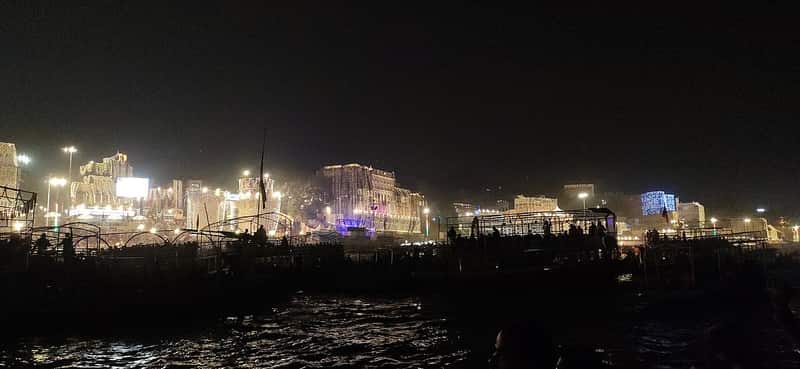
Practical Guide — Reaching Sankata Ghat and Planning a Visit
Sankata Ghat lies on the northern riverfront of Varanasi, roughly midway between the great Dashashwamedh Ghat and the quieter reaches of the river. The easiest approach is on foot along the ghat road: from Dashashwamedh, walk north for about twenty minutes, passing Manikarnika and Scindia on the way, and Sankata appears as a modest flight of steps shortly before Ganga Mahal. Alternatively, take a cycle-rickshaw or auto from the old city to the lane behind the ghat, and descend the last few hundred metres through the neighbourhood. For those who prefer the river, a boat from Dashashwamedh or Assi is the most atmospheric route, and every boatman knows the ghat of the goddess.
The best time to visit is early morning, between dawn and eight, when the bathers are at their devotions and the light on the water is at its most beautiful; the evening aarti at the temple, around dusk, is the other great moment. Winters are the pleasant season, from November to February, when the days are mild and clear; summers are fierce, and the monsoon months bring rain and rising water that can cover the lowest steps, so check the river level before venturing down. The temple is open from early morning until late evening, with a break after the noon offering, and the ghat itself is accessible at all hours. Allow at least half a day to combine the ghat with its neighbours, and carry water, a hat and modest clothing.
Around Sankata the visitor will find everything needed for the day. The lanes behind the ghat have small tea stalls, sweet shops and simple eateries; drinking water is available near the temple; and toilet facilities, where present, are basic, so it is wise to plan accordingly. For a fuller visit, combine Sankata with Scindia Ghat and its famous leaning temple to the south, and Ganga Mahal to the north — all within a twenty-minute walk or a short boat ride. Local guides at the ghat offer walks that cover the history and the worship of the quarter, and boatmen will row you past the whole chain of ghats for a negotiated fare. Come with time and patience, leave your hurry at the top of the steps, and the goddess of the ghat will reward you with the peace that has drawn mothers to her door for centuries.
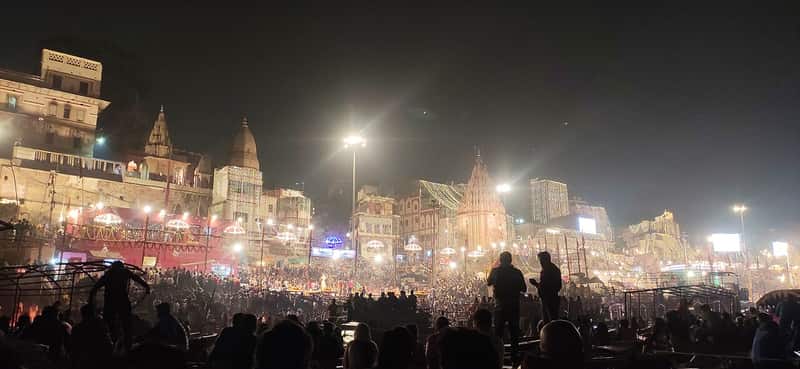
Sankata Ghat — Gallery (12 Photos)
Image Credits
sankata-01.jpg · sankata-02.jpg · sankata-03.jpg · sankata-04.jpg · sankata-05.jpg · sankata-06.jpg · sankata-07.jpg · sankata-08.jpg · sankata-09.jpg · sankata-10.jpg · sankata-11.jpg · sankata-12.jpg — Wikimedia Commons, under free licenses.
Continue exploring
Similar Ghats Nearby
Book This Ghat — Get Notified
Download the app now and book a boat ride to Sankata Ghat