

Ganga Mahal Ghat (II)
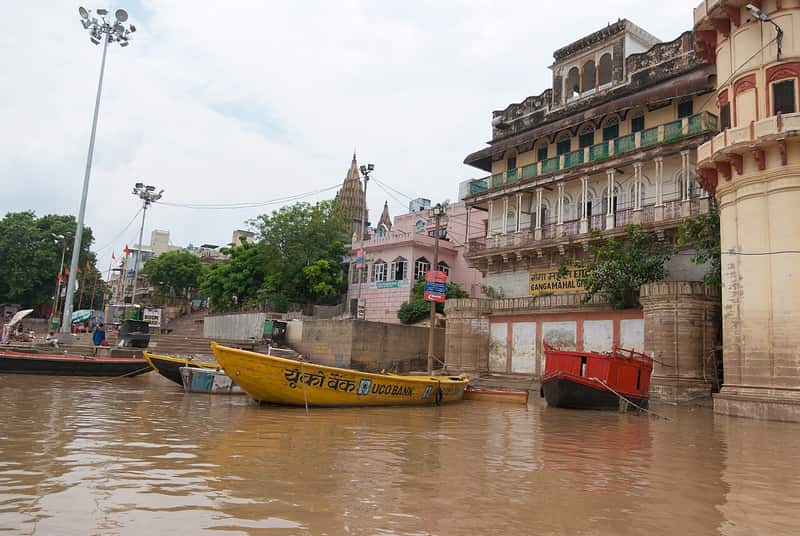
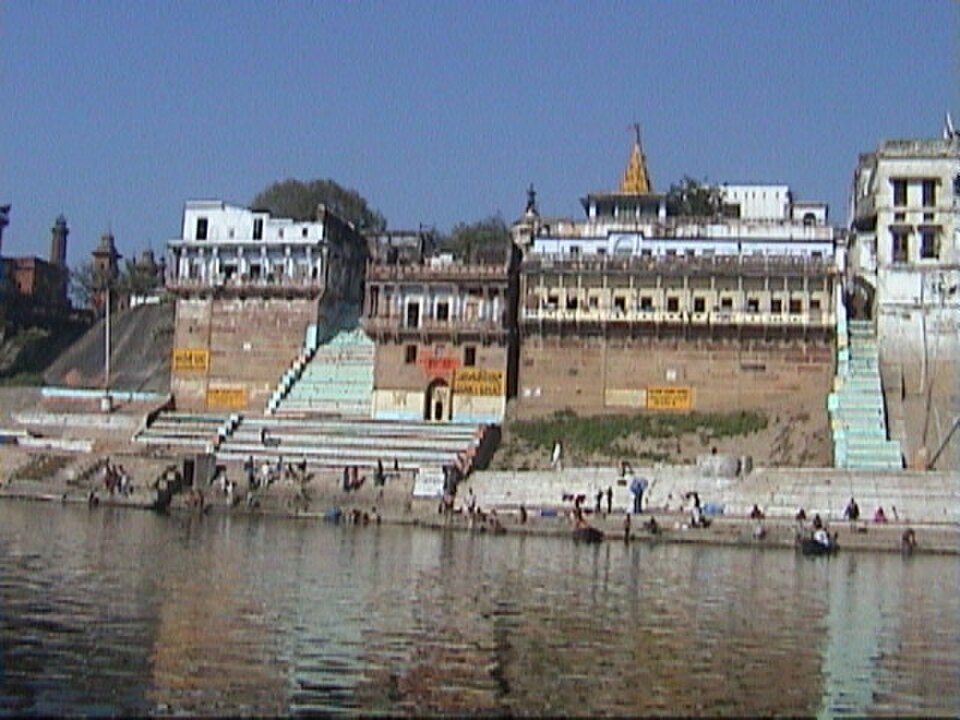
Neighbourhood GhatGanga Mahal Ghat II has an old palace in a state of collapse.


Type
Neighbourhood Ghat
Boat Fare
1x base fare
Best Time
6-9 AM
History
Ganga Mahal Ghat II has an old palace in a state of collapse. It is an important architectural structure.
Highlights
- Glimpse of palace architecture
- Peaceful local bathing
- Stop near Panchganga
Festivals & Events
How pricing works in the NaviX app
No haggling at the ghat — everything is fixed in the app first
- 1
Fixed price before you board
The fare is shown in the app upfront — no bargaining at the ghat
- 2
Sharing or private — your choice
Share with fellow travelers or take the whole boat for your group
- 3
Pay only after the ride
UPI, card or cash — with an instant receipt
🕉️
Aarti details not available for this ghat yet
Complete Guide
Ganga Mahal Ghat (II) — The Complete Guide
History, mythology, rites and practical details — everything in depth.
On this page
- 1.Ganga Mahal Ghat II — The Quiet Palace Steps
- 2.The Ganga Mahal Buildings — A Palace Beside the Water
- 3.The Royal Connection — A History of Kings and the River
- 4.Facades, Balconies and Steps — The Architecture of the Ghat
- 5.The Daily Bathing Scene
- 6.Moorings and Boatmen
- 7.The River and the View
- 8.Lanes and Mohalla — The Quarter Behind the Ghat
- 9.Neighbouring Ghats — Ganga Mahal I and Nishadraj
- 10.Etiquette — Visiting with Respect
- 11.Practical Guide — Reaching the Ghat and Best Times
📅 Updated: 21 Aug 2026 · Author: NaviX Field Team (field research 2024-26) · 11 sections · 11 photos
Ganga Mahal Ghat II — The Quiet Palace Steps
Ganga Mahal Ghat II is the second of the two palace ghats of Varanasi that carry the name of the Ganga Mahal, the riverside residence of the royal house of Kashi. It stands on the southern riverfront, within the long chain of steps that climbs from Assi Ghat northward, and it is separated from its better-known neighbour, Ganga Mahal Ghat I, by only a short stroll along the bank. What sets this ghat apart at first glance is its frontage: instead of a temple tower or an ashram, the crest of the ghat is crowned by a graceful painted palace wall, softened by long balconies, arched windows and pale colours that catch the morning light. The steps themselves are broad and unhurried, descending in wide flights to the water, and the mood is so calm that first-time visitors often pause, wondering whether they have wandered into a private courtyard rather than a public ghat.
This palace-fronted landing was built to serve the royal Ganga Mahal buildings, and for generations it acted as the family doorstep to the river. The ghat never became a showpiece of pilgrimage commerce; there are no great bazaars, no crowds of touts, no floodlit ceremonies staged for tourists. Instead, daily life here belongs to a residential riverfront: brahmins performing their morning sandhya at dawn, women filling brass pots at the water, boatmen mending nets between trips, children drying themselves in the sun. It is this unpretentious rhythm, set against an unmistakably royal backdrop, that gives Ganga Mahal Ghat II its particular charm and keeps it so different from the busy spectacle of Dashashwamedh further north. Pilgrims hurrying toward the great ghats often pass without a glance, which suits the residents of the quarter perfectly; those who do linger discover one of the most elegant and least crowded bathing places in the whole of Kashi.
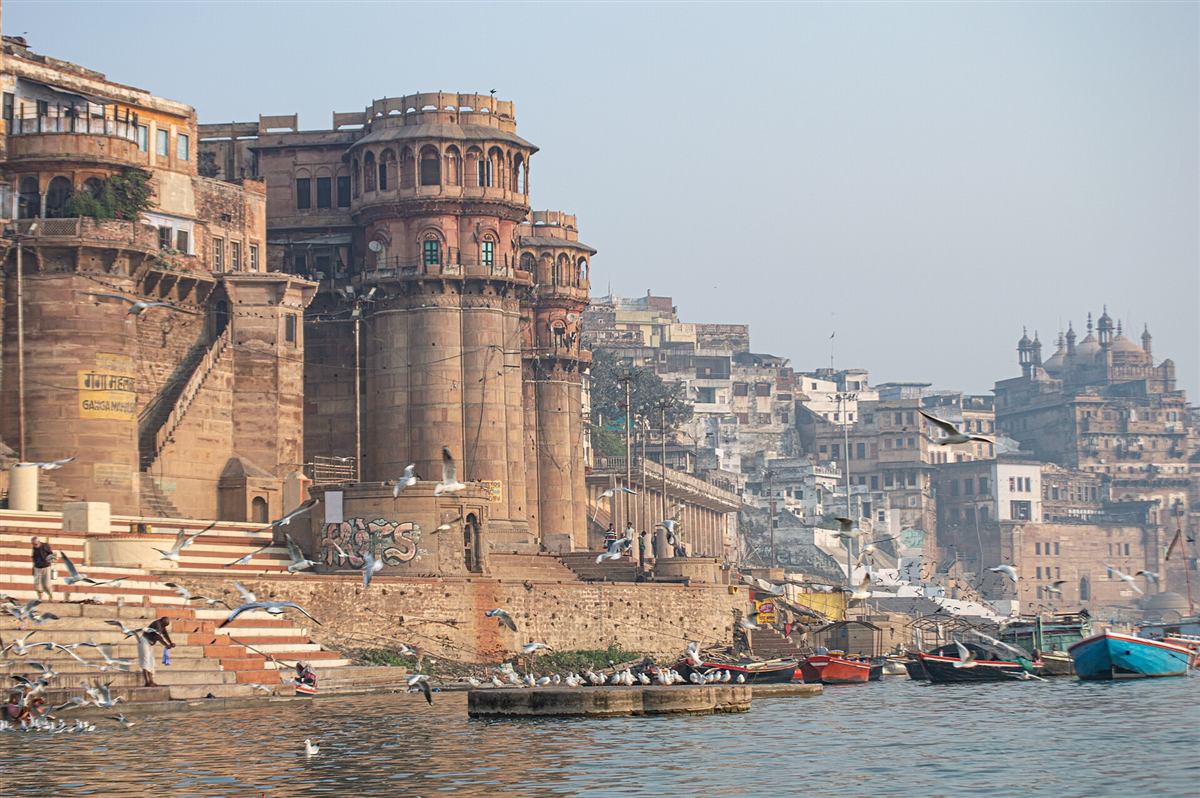
In the geography of the riverfront, Ganga Mahal Ghat II sits in a region of royal and clerical ghats, with Nishadraj Ghat nearby to the north and the crowded quarter of Shivala to the south. The Ganga here swings in a wide southern bend, and the current, though strong in the monsoon, is gentle enough in the dry season for children to learn swimming in the shallows. From the upper steps one can see the whole southern chain of ghats, from Shivala and Bhadaini to Janaki and Assi, curving away into the haze, while directly opposite the far shore is low and green. For the visitor seeking the quieter soul of Kashi, this ghat offers exactly that: palace, river and everyday life coexisting on a single set of steps, with nothing theatrical about it at all.
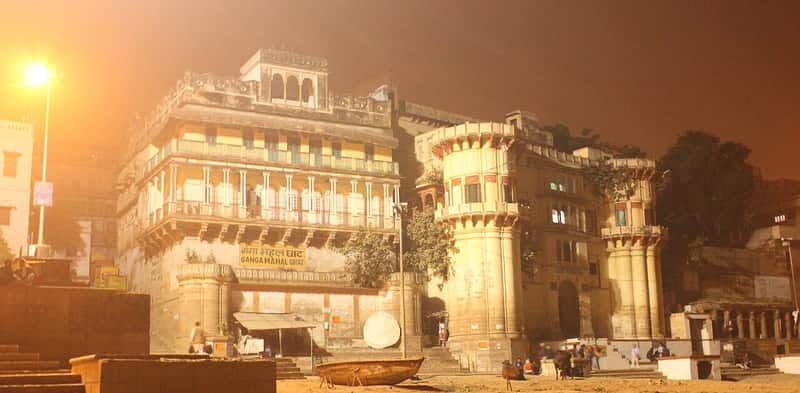
The Ganga Mahal Buildings — A Palace Beside the Water
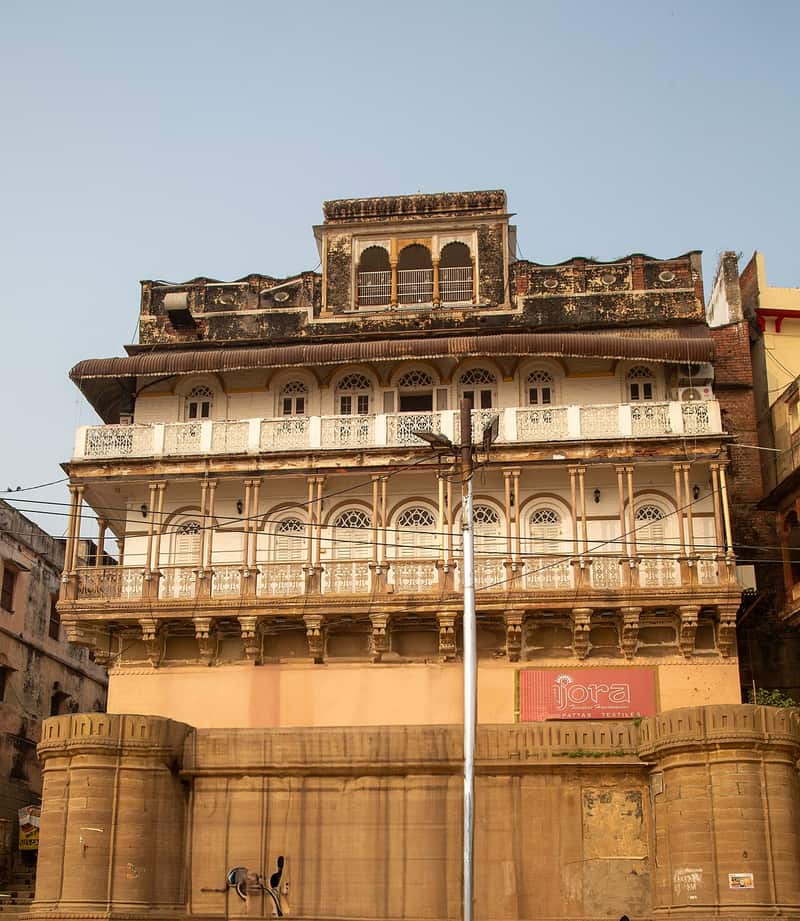
The Ganga Mahal buildings rise directly from the crest of Ganga Mahal Ghat II, a riverside palace complex associated with the royal house of Kashi, the hereditary Maharajas of Varanasi whose seat lay across the river at Ramnagar. The palace was conceived as a residence with the river as its principal prospect; every balcony and window was arranged to take in the morning sun over the Ganga and the constant movement of boats along the southern bend. Unlike the towering fortifications of a hill fort, this is a comfortable, lived-in frontage, built on a human scale — two and three storeys of rooms opening onto long balconies, with the ghat steps falling away directly below. From the water, the palace appears to float on its own reflection; from the ghat, the palace looks down on the bathers with the quiet familiarity of an old neighbour rather than the sternness of a fortress.
The royal connection is written in the details of the building. Carved wooden lintels frame the doorways, iron grilles protect the lower windows, and the walls are finished in the soft traditional palette of the Banarasi riverfront — cream, ochre, sky blue and faded rose. On festival days of the old court, the household descended these very steps: the Maharaja and his family came to bathe, to make offerings, and to launch the boats that carried the ceremonial processions onto the river. Because the palace sat on the southern ghats, away from the great public ceremonies of Dashashwamedh, these rites had a private, family character, witnessed only by the boatmen and the local residents who had served the house for generations. The same steps that once received the court now receive the neighbourhood, and the continuity is part of the building's quiet dignity.
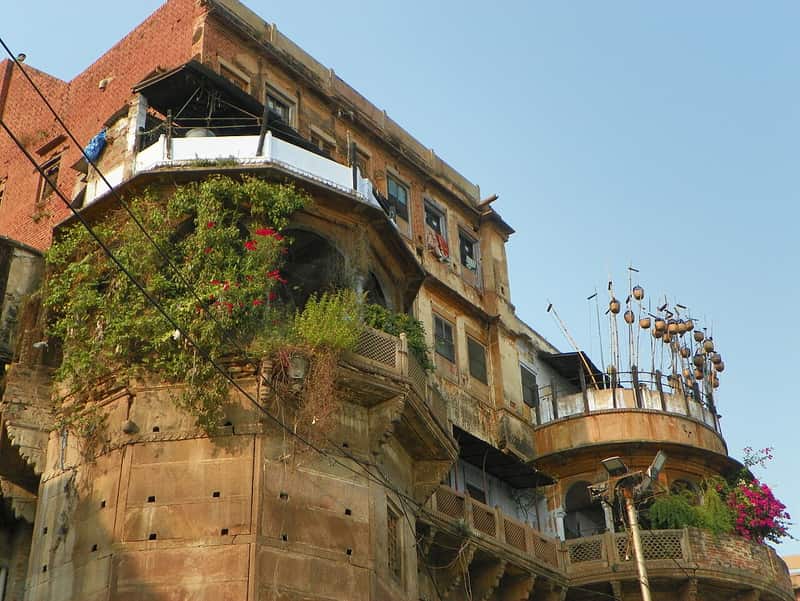
Today the palace buildings are no longer a royal residence in the old sense; parts are occupied by private tenants and small offices, and the upkeep speaks honestly of the changing fortunes of princely India after independence. Yet the facade remains one of the finest on the southern riverfront, and the connection with the Kashi Naresh is still remembered locally. Older residents can tell of a time when the palace windows were lit for festivals, when boatmen wore the livery of the household, and when the Maharaja's barge was hauled out on the sandbank for painting. The royal family of Banaras still holds a ceremonial place in the life of the city, and when the lamps are lit on the palace balconies during Diwali and Dev Deepawali, Ganga Mahal Ghat II looks once again exactly as it did in the age of kings.
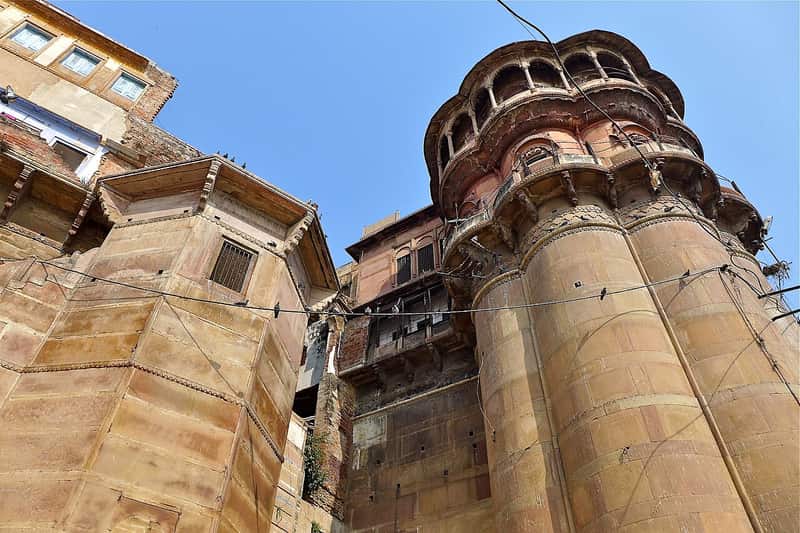
The Royal Connection — A History of Kings and the River
The ghats of Varanasi were raised over the centuries by a remarkable procession of patrons — Maratha generals, Rajput princes, wealthy merchants and the great temple trusts. The Ganga Mahal ghats belong to the royal tradition of that building spree, commissioned in the nineteenth century as part of the riverside palace complex of the Kashi Naresh, the hereditary king of Banaras, whose dynasty traces its rule to the founding of the princely state in the eighteenth century. The Narayan dynasty chose the southern riverfront for its residence, well away from the crowded core of the old city, and the palace was built to look across the wide southern bend of the Ganga toward Ramnagar, the family's fortified home on the opposite shore. In an era when European travellers were beginning to paint and photograph the ghats, this new palace became one of the most striking additions to the skyline, its painted walls visible from far downstream.
The history of the ghat is inseparable from the ceremonial role of the Maharaja of Kashi. As the city's foremost Hindu prince, the Kashi Naresh was expected to lead the great religious festivals, inaugurate the sacred bathing seasons, and uphold the rites of the river — duties that required a residence on the water itself. The Ganga Mahal served this purpose: a dwelling from which the king could perform his daily puja, greet the morning sun with his family, and descend to bathe on the days prescribed by the calendar. Local tradition adds that the ghat was also a place of charity, where the royal household distributed grain and cloth to the poor during the harsh months of summer, and where learned pandits gathered for discussions of scripture, supported by royal patronage. In this way the ghat was not merely a landing but an instrument of kingship, a visible proof that the ruler of Kashi lived by the same holy river as his humblest subject.
The two Ganga Mahal ghats share this single history, though they were always distinct landings with distinct characters — the first associated with the ceremonial entrance of the palace, the second with the everyday life of the household and its retainers. Over the decades the ghats passed through the great changes of the twentieth century: independence, the abolition of the princely states, the growth of the modern city. Restoration work, private and public, has preserved the fabric of the palace wall, and the steps have been repaired many times. Visitors who arrive knowing nothing of this history still feel it in the proportions of the building and the confidence of its line; those who know the story see in every painted balcony a chapter of the last royal house of Kashi.
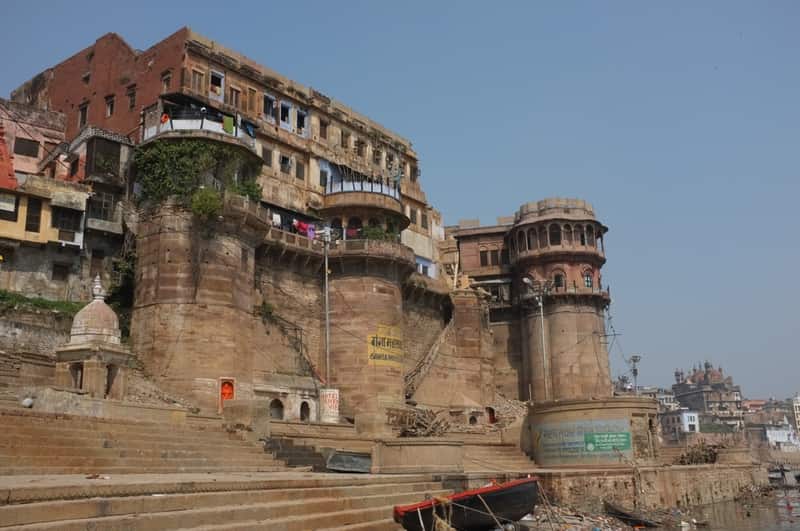
Facades, Balconies and Steps — The Architecture of the Ghat
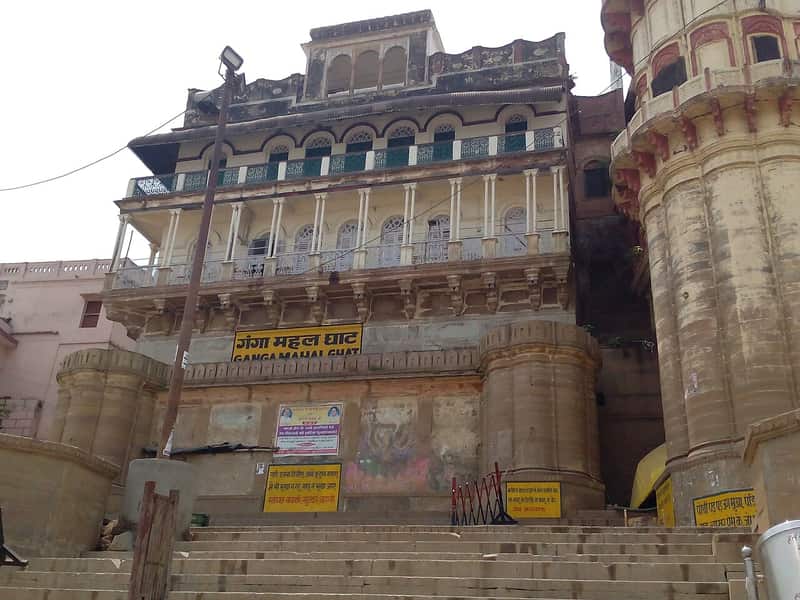
The architecture of Ganga Mahal Ghat II is dominated by its painted facades, which give the ghat a character unlike any other along the river. The palace wall presents a long composition of cream plaster, warm ochre and faded sky blue, broken at regular intervals by balconies with cusped arches, slender columns and carved wooden railings. Deep eaves, the traditional chajjas of Banarasi building, project above each floor, throwing strong shadows that change with the sun and make the building seem to breathe with the light. The effect is graceful rather than monumental: the palace has the air of a great music room set beside the water, its long windows designed less for defence than for the pleasure of sitting and watching the river. Decorative parapets and scalloped arches crown the roofline, and small shrines nestle in the depth of the wall, where residents pause to touch the vermilion before climbing down to bathe.
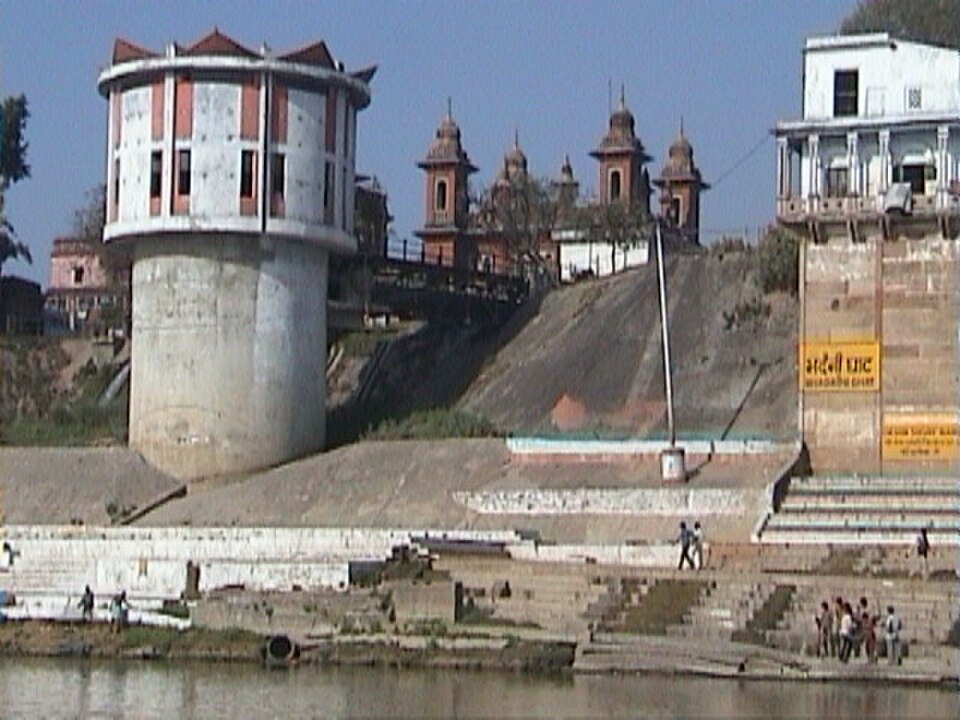
The steps themselves are a piece of engineering as elegant as the palace. They descend in broad, shallow flights designed for the movement of bathers and laden porters, with wide landings at intervals where priests spread their mats and where wet clothes can be wrung and dried in the sun. Stone parapets border the upper reaches, and a paved promenade runs along the crest, linking the ghat with its neighbours. Because the river's level changes dramatically between seasons, the steps continue far below the waterline; when the Ganga is low, the exposed lower stairs are used for drying nets and washing vessels, and when the monsoon floods rise, the water climbs past the landings to within a few steps of the palace door, and boats are moored almost at the top of the ghat. Every flood and every dry season leaves its mark on the stone, so that the steps themselves are a record of the river's years.
Light is the final architect of this ghat. At sunrise the east-facing facades catch the first gold and blaze softly against the cool shadow of the river; by noon they are pale and almost white, shimmering in the heat; at sunset they turn rose and lavender, and the water carries their reflection in long trembling columns. Photographers have made the palace wall one of the most painted and photographed backdrops of the southern ghats, yet the building itself remains unselfconscious, its plaster peeling gently in places, its colours the honest work of many repaintings. The architects who designed the palace understood that in Varanasi the river is the true theatre; the building was made to frame it, to hold it in its balconies, and to let the light of the Ganga do the rest.

The Daily Bathing Scene
Daily bathing at Ganga Mahal Ghat II begins long before sunrise, when the first bathers arrive through the lanes with brass lotas and folded towels, their footsteps the only sound in the dark. They descend to the water's edge, where the temperature of the river is exactly right for the ritual dip — three immersions, each with a name on the lips, a whispered prayer for the family, a word for the ancestors. Facing the rising sun, the bathers pour the first water of the day as an offering, the arghya, watching it flash in the light as it falls. Priests sit under the palace wall with their boxes of sandalwood paste, vermilion and tulsi leaves, marking the foreheads of those who wish it, and the whole scene proceeds with an order and gentleness that has hardly changed in a century.
The bathing scene is reverent but also intensely social. Men gather in one stretch of steps, women in another, and between the immersions there is constant quiet conversation — news of the neighbourhood, arrangements for the day, the slow commerce of family life. Mothers bathe their children with brisk devotion, shaking their heads at the cold; older women dry their hair while exchanging the day's gossip; young men arrive late, rinse, and climb back up in search of breakfast. By the time the sun is fully up, dhobis are beating clothes at the water's edge, brass pots are being scoured with ash, and the morning's first boat has pushed off from the mooring with a load of passengers for Assi. In these hours the ghat functions as the front courtyard of the entire mohalla.
For pilgrims, bathing at a palace ghat carries a particular meaning: these are the steps that kings descended, the water that royal hands consecrated, and to perform the same ablutions here is to join a lineage that includes the rulers of Kashi themselves. The faithful say that a dip taken between Ganga Mahal Ghat I and Ganga Mahal Ghat II brings the merit of bathing at a hundred ordinary ghats, and older locals repeat the saying with a smile. By mid-morning the serious bathing is over and the steps begin to dry; the bathers have returned to the lanes, the priests have folded their boxes, and only the boatmen and a few children remain in the sun, holding the ghat in the calm possession of the afternoon. Those who miss the dawn can still bathe later, for the river accepts its pilgrims at every hour.
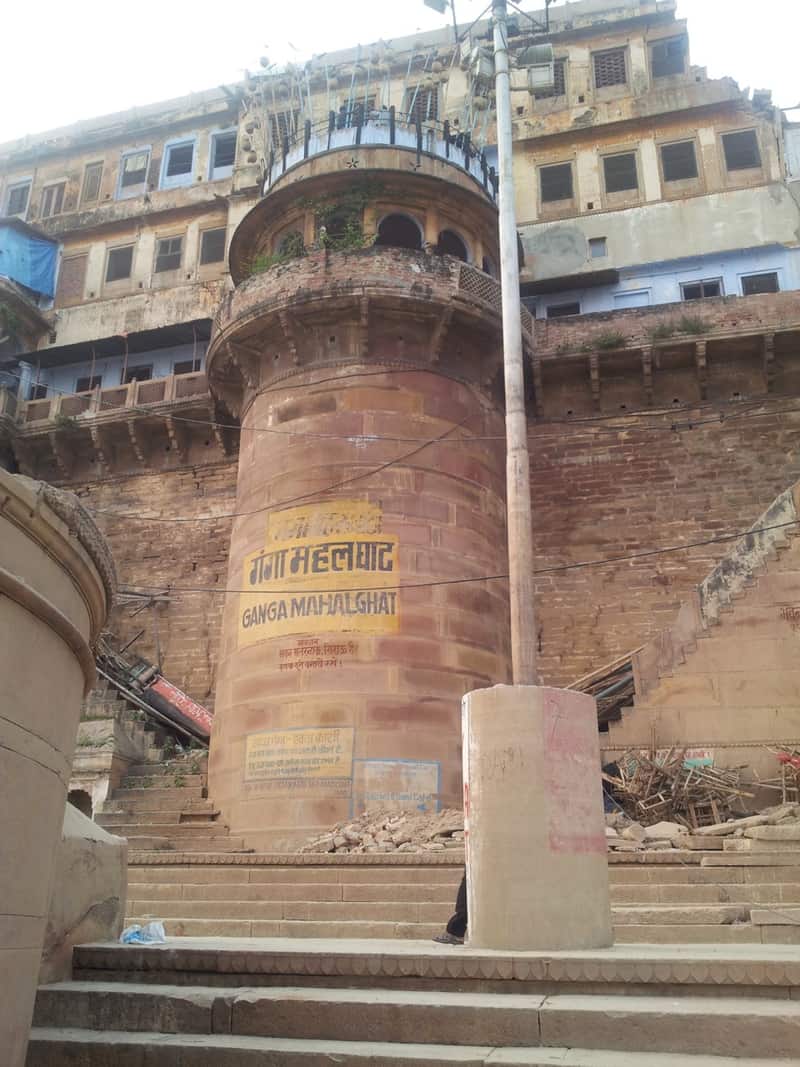
Moorings and Boatmen
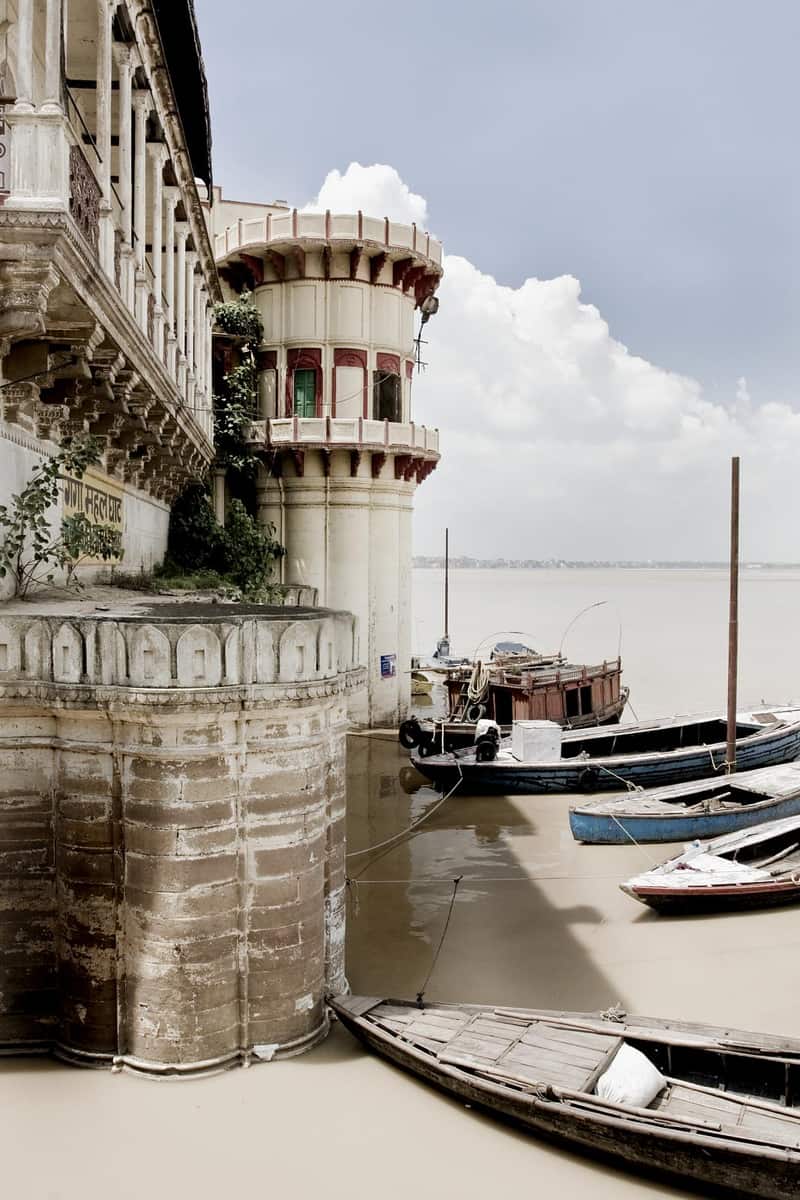
A small fleet of wooden rowing boats is moored at Ganga Mahal Ghat II, bobbing at the foot of the steps in a neat, workmanlike line. These are the classic Banarasi kishtis, sturdy craft with high curved bows, painted in bright blues and greens, with iron rings at the gunwales where the mooring ropes pass. Their owners are the boatmen of the southern ghats, a hereditary fraternity that has worked this stretch of the river for generations, and they know every current, sandbank and wind shift of the southern bend the way farmers know their fields. In the early morning the boats are washed and bailed, and by eight o'clock the boatmen have settled on the steps with their mats, their tea, and their endless slow negotiations with the day.
The boatman's life here is a mix of many trades. Passengers are rowed north to Dashashwamedh or south to Assi and beyond; fishermen tend their nets from the same boats between trips; and in the monsoon, when the river rises, the same men turn pilots, guiding their craft through a flooded landscape of submerged steps and drowned temples. The southern riverfront is favoured by boatmen because its currents are gentler than those around the great central ghats, and because the broad sandbanks provide safe anchorage when the water is low. A good boatman takes pride in the silence of his rowing, the blade entering the water without a splash, and in the exact placement of his boat for the best view of the palace at dawn. Fares are small and fixed by custom rather than meter, and the negotiation is part of the ritual.
For the visitor, the boats are the finest way to understand Ganga Mahal Ghat II. From the water, the palace reveals itself as a complete composition — steps, wall, balconies and roofline rising in perfect order, with the reflection doubling every line. A dawn ride from this ghat floats past Ganga Mahal Ghat I, Nishadraj and the southern chain before the sun has cleared the far shore, and the boatmen, who have watched a thousand such dawns, name each ghat and its story without being asked. Returning in the evening, the boat comes home to the same mooring, the boatman steps out, coils his rope, and the ghat closes its day as it has closed every day — quietly, on the water, in the gathering dark.
The River and the View
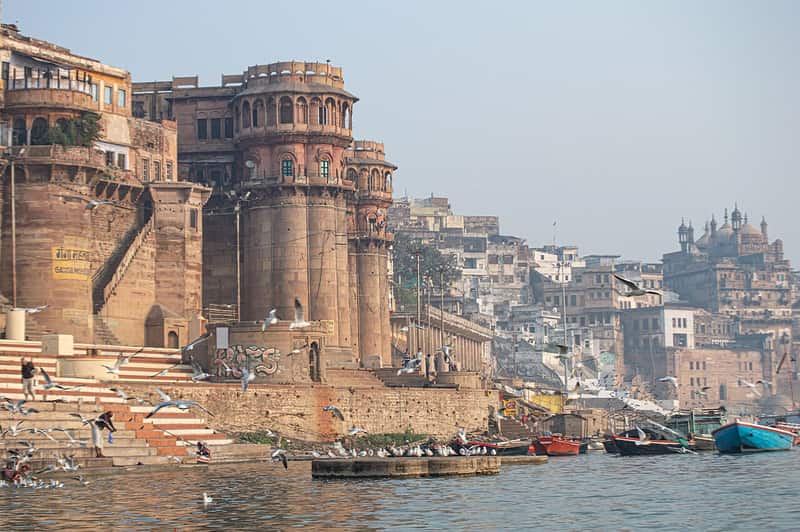
The river at Ganga Mahal Ghat II is a wide, open expanse of water, sweeping past in a grand southern bend that gives the ghat an almost unbounded horizon. In the dry season the far shore lies low and green across the current, its fields and occasional temple spire softened by haze; in the rains the river spreads enormously, and the water seems to fill the world. The immediate shallows are clear enough in winter to see the old stone steps descending into the deep, and flocks of gulls and cormorants work the river through the day, diving and resettling on the sandbanks. Here the Ganga is still a working river, crossed by ferries, fished by nets, and watched from a thousand steps — yet its power is felt most strongly in silence. People who live on the ghat say the river speaks, and they have learned to read its voice in the colour of the water.
The view from the steps changes with every hour, and each phase has its devotees. At dawn the river is a sheet of hammered gold, the palace wall reflected in long trembling columns; at noon it is silver and white, so bright that bathers shade their eyes; at sunset it turns to rose, then violet, then a dark luminous blue, with the lights of the opposite shore beginning to prick through. At night the river is black glass, broken only by the lamps of fishing boats and, on festival nights, by thousands of floating diyas that carry their small flames downstream toward the sea. Photographers stay until the last colour has drained from the sky, and still find themselves unable to leave. The far bank, lit faintly by villages, seems impossibly remote, a world away from the crowded lanes behind the ghat.
The Ganga here is never still. Even in the slack of summer, when the sandbanks grow and the channel narrows, the current slides past with a continuous, muscular motion that holds the eye and slows the mind. Elderly residents sit for hours on the upper steps simply watching the water, and they insist that the river heals — that a morning spent looking at the Ganga is worth a dozen medicines. In the monsoon the character of the river changes utterly: the water turns swift and brown, the sandbanks vanish, and the ghat becomes the rim of a vast inland sea whose power is audible day and night. To know Varanasi is to know this rhythm, and there is no better seat for it than the broad steps of this palace ghat.
Lanes and Mohalla — The Quarter Behind the Ghat
Behind Ganga Mahal Ghat II stretches one of the most charming residential quarters of the southern riverfront, a dense web of narrow lanes that climb away from the water between old brick houses. These are the homes of boatmen, priests, shopkeepers and artisans, many of them living in houses their great-grandparents built, and the life of the mohalla spills out of every doorway. Women wash vessels at the corner taps, men sit on the low platforms of the paan shops, children play cricket in the gaps between houses, and the sounds of the neighbourhood — the clang of a brass shop, the cry of a vegetable seller, the bell of a passing cycle rickshaw — layer over one another in the humid air. The lanes are shaded and surprisingly cool, and they carry the smell of incense, woodsmoke and frying batter from the morning kitchens.
The quarter is a living museum of Banarasi domestic architecture. Houses rise two and three storeys with carved wooden doors, jharokha balconies projecting over the lane, and brass doorplates worn smooth by a century of hands. Small shrines stand at every corner — a shivaling under a peepal tree, an image of Hanuman in a niche, a painted tablet of the river goddess — and passers-by pause to touch them as they pass. Old men can be found in the evenings on the chabutras, the raised sitting platforms, engaged in the serious local business of gossip and the discussion of the day's news. The lanes connect the ghat to the larger roads of Shivala and Bhadaini, so a walk inland leads quickly to markets, temples and tea stalls without ever quite leaving the world of the river.
What strikes a visitor most is the rootedness of the neighbourhood. Families here measure their residence in centuries, not decades, and many can trace their ancestors to the time when the Ganga Mahal was being built, when their forefathers were masons, palanquin bearers or household servants of the palace. The ghat and the mohalla are one community: the boy who polishes the brass pots in the morning may be rowing a tourist boat by afternoon, and the priest who marked the pilgrims' foreheads may be the same man whose family has served the palace shrine for nine generations. At dusk the lanes fill with the smoke of evening lamps, the doorway diyas are lit, and the whole quarter turns inward, toward its kitchens and its prayers, until the ghat below is left alone with the river and the stars.
Neighbouring Ghats — Ganga Mahal I and Nishadraj
Ganga Mahal Ghat I lies immediately north along the same bank, and the two ghats are so close that a walker can pass from one to the other in the time it takes to finish a cup of tea. The first ghat is the more photographed of the pair, its palace frontage framing the view from many a boat trip, while Ganga Mahal Ghat II is the quieter companion — the same royal wall, the same painted balconies, but with fewer visitors and a more domestic air. Between them the two ghats present a continuous length of palace-fronted steps, a rare sight even in a city of ghats, and walking their combined length gives a vivid sense of how the royal household used the river: the grand entrance on one, the everyday landing on the other.
Nishadraj Ghat lies a short distance further north, a wide modern ghat named after Nishadraj, the boatman-king who, in the Ramayana, carried Lord Rama across the Ganga on his boat. The ghat is popular with bathers and boatmen, and its broad paved expanse makes a pleasant open space for an evening stroll. To the south, the busy quarter of Shivala takes over the riverfront, with its great temple, its crowded lanes and its own set of ghats leading toward Bhadaini, Janaki and ultimately Assi. Where the palace ghats are hushed and residential, Shivala is loud and commercial, and the contrast between the two moods of Kashi — the royal silence and the market hum — is one of the great pleasures of walking this stretch. The Ganga Mahal itself stands at the hinge between these worlds, and its shadow reaches across both.
These ghats together form a small kingdom of steps that rewards an unhurried morning. A suggested circuit begins at Shivala Ghat in the south, follows the bank north past the two Ganga Mahal ghats with their painted palaces, continues past Nishadraj with its wide new stairway, and ends wherever the day has led you — at a tea stall, a boat, or a quiet seat above the water. Alternatively, the same ground can be covered from the river, drifting by boat in one direction and returning by lane on foot. However it is done, the walk makes clear why this stretch of the southern riverfront was chosen by kings: here the river is at its most generous, the steps at their finest, and the city at its most itself.
Etiquette — Visiting with Respect
Ganga Mahal Ghat II is a place of worship, a working river landing and a family neighbourhood, and the rules of conduct are the simple ones that apply to any living Indian ghat. Dress modestly — shoulders covered, nothing too brief — because the same steps are used by bathers, priests and grandmothers. Remove your footwear before entering any temple or shrine in the wall, and before stepping onto the sacred platforms where the priests sit. Ask permission before photographing people; the bather at prayer or the woman filling her pot may decline, and that refusal must be accepted gracefully. What looks like casual loitering to a tourist is often a private ritual, and the camera held at eye level can intrude where no offence was intended.
The bathing itself deserves particular care. Do not enter the water in the middle of a line of bathers, do not splash or shout, and never film or photograph anyone mid-ablution. The morning hours before nine are sacred to the serious bathers; visitors who only wish to dip for pleasure should choose a quieter hour and a less crowded stretch of steps. If you are approached by priests offering to perform rituals on your behalf, it is polite to decline gently if you do not wish to participate — no one is obliged, and a respectful refusal is universally understood. Offerings and donations are voluntary; hand them only to the person who has actually performed a service for you. And whatever the pressure of commerce at the busier ghats, here the custom is calmer, and patience is returned with courtesy.
Finally, remember that this ghat is somebody's home. The lanes behind the steps are private residences, and visitors should not peer into doorways or wander into courtyards uninvited. Litter belongs in the bins, not in the river, and the plastic bag that drifts down the Ganga will be seen by the very people whose hospitality you are enjoying. Boats should be hired with a clear agreement on the fare and the duration before you step aboard, and the agreed price paid without argument. Above all, move gently: the grace of this place — royal walls, sacred water, quiet people — is preserved by the simple practice of treating it exactly as one would treat a great temple: with cleanliness, with humility, and with time.
Practical Guide — Reaching the Ghat and Best Times
Ganga Mahal Ghat II stands on the southern riverfront of Varanasi, about three kilometres south of Dashashwamedh Ghat and less than two kilometres from Assi Ghat, and it is easiest to reach by a combination of the ghat road and the lanes. An auto rickshaw from the city centre or Cantonment can be hired for the Ganga Mahal area; it will stop at the top of the lane above the ghat, from where the river is a short walk downhill through the mohalla. By boat, any of the ghats from Assi to Dashashwamedh can be reached in twenty to forty minutes of easy rowing. Walking the entire riverfront from Assi northward is also pleasant and takes about forty minutes, passing Shivala and the palace ghats along the way. Shoes, a towel and modest clothing are all that a visit requires.
The best time to visit is between October and March, when the days are warm, the evenings cool and the river low and clear. Arrive at sunrise for the bathing scene and the palace in its golden light; return at dusk for the view across the water. February and November bring festivals — Nag Panchami, Kartik Purnima, Dev Deepawali — when the ghat and its neighbours glow with lamps and the river carries thousands of diyas. The monsoon months of July to September are dramatic but practical to avoid: the river floods the lower steps, the lanes are slick with rain, and boat trips are curtailed. Whenever you come, mornings are the soul of the ghat, and an afternoon visit, when the steps are quiet, is the second best thing.
Facilities at the ghat are simple and sufficient. Small tea stalls appear among the boats in the early morning, serving chai in the traditional clay cups; there are a few shops in the lanes above for water, snacks and flowers for offerings. Public boats can be hired from the mooring for trips to Assi, the great burning ghats or the sunrise view, and the boatmen speak enough English or Hindi for negotiation. Nearby landmarks help with orientation: Nishadraj Ghat to the north, Shivala Ghat to the south, and the broad bend of the river where the palace stands. Plan to combine the ghat with a walk of the southern chain — the royal palace steps deserve a full morning, and the visitor who gives them one will carry the image home for years.
Ganga Mahal Ghat (II) — Gallery (11 Photos)
Image Credits
ganga-mahal-ii-01.jpg · ganga-mahal-ii-02.jpg · ganga-mahal-ii-03.jpg · ganga-mahal-ii-04.jpg · ganga-mahal-ii-05.jpg · ganga-mahal-ii-06.jpg · ganga-mahal-ii-07.jpg · ganga-mahal-ii-08.jpg · ganga-mahal-ii-09.jpg · ganga-mahal-ii-10.jpg · ganga-mahal-ii-11.jpg — Wikimedia Commons, under free licenses.
Continue exploring
Similar Ghats Nearby
Book This Ghat — Get Notified
Download the app now and book a boat ride to Ganga Mahal Ghat (II)