

Nishadraj Ghat
Neighbourhood GhatNishadraj Ghat is a famous ghat named after the Nishad community.


Type
Neighbourhood Ghat
Boat Fare
1x base fare
Best Time
6-10 AM when morning light illuminates the temple.
History
Named after the Nishad community. A famous temple at the ghat center is associated with Nishadraj.
Highlights
- Ramayana memory of Nishadraj Guh
- Great meeting of devotion and story
- Peaceful morning bathing
Festivals & Events
How pricing works in the NaviX app
No haggling at the ghat — everything is fixed in the app first
- 1
Fixed price before you board
The fare is shown in the app upfront — no bargaining at the ghat
- 2
Sharing or private — your choice
Share with fellow travelers or take the whole boat for your group
- 3
Pay only after the ride
UPI, card or cash — with an instant receipt
🕉️
Aarti details not available for this ghat yet
Complete Guide
Nishadraj Ghat — The Complete Guide
History, mythology, rites and practical details — everything in depth.
On this page
- 1.Nishadraj Ghat — An Introduction to the Working Riverfront
- 2.Guha and the Crossing of the Ganga
- 3.The Boatmen of Nishadraj
- 4.Wooden Boats, Oars and Moorings
- 5.Bathing in the Sacred Water
- 6.The River and Its Views
- 7.A Working Ghat in Full Motion
- 8.The Lanes Behind the Ghat
- 9.Ganga Mahal and Shivala — Neighbouring Ghats
- 10.Festivals on the Riverfront
- 11.Etiquette of the Working Ghat
- 12.Practical Guide — Reaching, Timing and Fares
📅 Updated: 21 Aug 2026 · Author: NaviX Field Team (field research 2024-26) · 12 sections · 12 photos
Nishadraj Ghat — An Introduction to the Working Riverfront
Nishadraj Ghat is one of the liveliest working ghats on the southern riverfront of Varanasi, a genuine boating centre where the business of the Ganga — boats, ropes, oars and cargo — is carried on from dawn until dusk. It stands between Ganga Mahal Ghat to the north and Shivala Ghat to the south, in a stretch of the riverbank that is older and less polished than the grand ghats of the city centre, yet far more alive with the everyday rhythm of the river. The ghat takes its name from Nishadraj Guha, the great boatman king of the Ramayana who ferried Lord Rama, Sita and Lakshmana across the Ganga at the beginning of their exile. Where other ghats commemorate kings and emperors, this one honours a boatman, and the choice says everything about the character of the place.
Approach the ghat at any hour and you will find it busy: wooden country boats drawn up on the sand, their hulls dark with years of water; boatmen coiling ropes and mending nets; pilgrims descending the wide steps to bathe; porters carrying bundles down to the waiting craft. The landing is a working space rather than a monument, and the air smells of wet wood, hemp and river water. Unlike the ceremonial ghats upstream, where visitors come to watch the sunset and the great aarti, Nishadraj is where the river is actually worked — where cargo moves, where ferries load and unload, and where a thousand small transactions of the water economy take place each day. For the traveller it offers the most honest picture in all of Kashi of how a riverfront city has lived with its river for centuries.
Despite the workaday atmosphere, the ghat keeps a strong devotional side. Pilgrims and local families bathe in the Ganga here every morning, priests sit beneath the trees with their begging bowls and almanacs, and small shrines along the bank receive their daily offerings of marigold and incense. The boatmen themselves, whether they acknowledge it or not, carry the spirit of Guha in their trade: the same skill with oar and current, the same knowledge of sandbars and winds, the same hospitality that makes a boatman a ferryman of strangers as well as of goods. A boat ride launched from Nishadraj is among the most pleasant ways to see the southern ghats, and watching the boat life here is itself a kind of pilgrimage to the working soul of Varanasi. Even the air of the ghat seems older and more honest than elsewhere, carrying the smell of wood smoke and wet rope rather than incense and privilege; this is the riverfront as it has always been, unpolished and unapologetic.
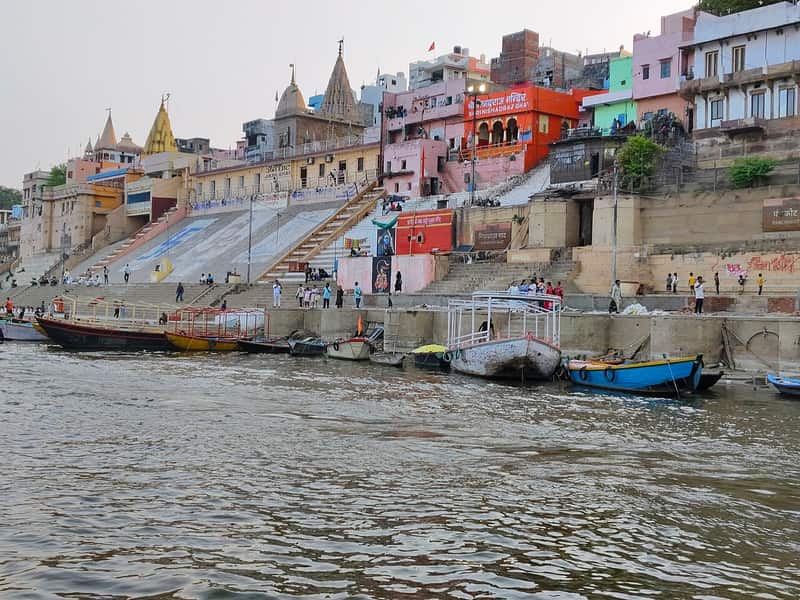
Guha and the Crossing of the Ganga
The ghat's name rests on one of the most beloved episodes of the Ramayana, the crossing of the Ganga that begins the fourteen years of exile. When Lord Rama, Sita and Lakshmana left Ayodhya and walked south, they came to the great river at the kingdom of the Nishadas, whose king was Guha — a hunter-boatman, a man of the forests and the water. Guha greeted the princes with reverence, laid out a feast of fruits and honey, and offered his boat for the crossing. Rama accepted his friendship, and in that moment the young boatman king entered the great story of the faith, remembered ever after as the loyal friend who stood by the exiled prince when the whole world had turned away.
The crossing itself is told with deep tenderness in the epic. Guha ferried the three exiles across the Ganga in the dark, steering by the light of the moon and the memory of the river, while Sita wept for the city she had left behind. When they reached the far bank, Rama refused to let Guha return without a gift; the king of the Nishadas, in reply, asked instead for something far greater — that he might be remembered as Rama's friend, and that the touch of Rama's feet might wash away the sins of his birth as a hunter. Rama granted the blessing, and tradition holds that Guha touched the feet of the prince, and the stain of the boatman's lowly calling fell away like river water from his hands. Some say that the place where this blessing was given is the very bank where Nishadraj Ghat now stands.
The story has made Guha one of the most beloved figures of the Ramayana, the proof that loyalty and love outweigh birth and rank. In Kashi his memory lives on the southern riverfront, where the boatmen of the ghat still tell the tale to their passengers, pointing out the current and the sandbanks as Guha must have done, and joking that every boatman in Varanasi carries a drop of Guha's blood. For the visitor the legend deepens the meaning of the ghat: the busy landing is not merely a working waterfront but a memorial to the first ferryman of the faith, the man who carried God across the water, and the reason why a boat ride on the Ganga has always been, in this city, a holy act in itself. It is a story the boatmen tell with a special pride, for it raises their own humble trade to the level of scripture, and it gives the ghat a dignity that no stone monument could bestow.
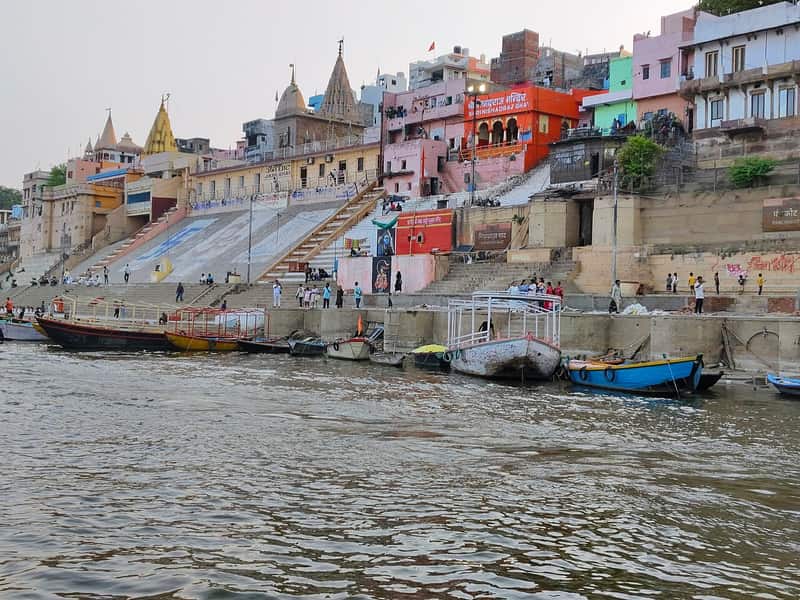
The Boatmen of Nishadraj
Boating is the lifeblood of Nishadraj Ghat, and the boatmen who work here are among the finest oarsmen on the whole riverfront. Many come from families that have worked the Ganga for generations, passing the skill from father to son exactly as Guha's trade was passed on in the age of the Ramayana. A Banaras boatman reads the river the way a scholar reads a book: he knows where the current runs deep and where the sandbars rise, where the wind will help him and where he must pull against it, and how the river changes with every season, from the shrunken channels of summer to the roaring flood of the monsoon. To watch one of these men bring a heavy wooden boat alongside a crowded landing, without a word, with a single stroke of the oar, is to watch mastery of a kind that can only be learned on the water itself.
The ghat's boatmen do more than ferry pilgrims; they are the working backbone of the southern riverfront. They carry goods and building materials, market produce and wedding parties, milk cans and school children across the water to the villages on the far bank. They know every ghat upstream and downstream, and their prices, like their craft, are a matter of long tradition and careful bargaining. In the season of festivals they become something more — ferrymen of celebration, rowing family after family to the aarti or to the great burning of effigies, their boats strung with marigolds and tiny lamps. A visitor who hires a boat here and lets the boatman choose the route will be shown the river as the boatmen see it: the real river of sandbanks and current, herons and cremation smoke, laundry drying on the steps and the long shadows of the evening ghats.
The spirit of Guha is not a museum piece here; it is a daily working ethic. The boatmen of Nishadraj will carry a sick person to the hospital ferry without fuss, wait for a late pilgrim, or row a stranger across at dusk and ask only the regular fare. They treat the river as both livelihood and goddess, offering the first coin of the day to the water and touching their foreheads when the Ganga is mentioned. In their hands the oldest profession of this city continues unchanged: a man, an oar and a wooden boat, moving against the current of the oldest river of India, carrying whoever comes — pilgrim, merchant or traveller — with the same unhurried courtesy that Guha showed to three exiles on the night the world was against them.
Wooden Boats, Oars and Moorings
The boats of Nishadraj are the traditional wooden country craft of the Ganga, built by the boatwrights of the river towns from the timber of the region — usually teak, sal or shisham — chosen for strength and resistance to water. A good boat lives for decades, and its life shows in its skin: layers of paint worn down to the wood, patches and caulking along the seams, initials and prayers scratched into the gunwales. The most common craft here is the patela, the broad-beamed cargo boat with a curved bow that handles the current with ease, often fitted with a bamboo frame and a canvas awning to shelter passengers. Smaller skiffs, the dinghies of the river, dart between the landings, while the great ferries, capable of carrying dozens of people or tonnes of cargo, sit low in the water, waiting for their loads.
Every boat carries its own tools of trade. The long oars, carved from a single piece of wood, are handled from the stern, their blades broad enough to pull the heavy craft against the current; a single steering oar, longer still, is lashed to the stern and guides the boat like a tail. The mooring rope, thick and fibrous, is the boatman's second hand — thrown in a perfect loop to a boy on the landing, wrapped around a stone pillar, or tied to one of the great rings set into the ghat's masonry. Anchors are usually simple stones or iron weights, lowered with the rope to hold the boat in the current while the crew rests or the family cooks its midday meal on the deck. Everything is hand-made, hand-mended and handed down, and nothing on the boat is wasted.
The moorings themselves tell the story of a working ghat. Along the landing, boats lie two or three deep, tied in a shifting, tide-like pattern that changes with the water level and the season. In summer, when the river falls, the boats are moved out on the broad sandbanks, their keels resting on the dry bed while the crews patch and repaint them; in the monsoon, they are hauled up to the highest steps and lashed fast against the rising flood. Between these extremes, the daily ballet of arrival and departure goes on — a constant shuffling of wooden hulls, ropes thrown and hauled, oars dipping in unison, as the boats of Nishadraj carry the commerce and the faith of Kashi, exactly as they have for centuries.
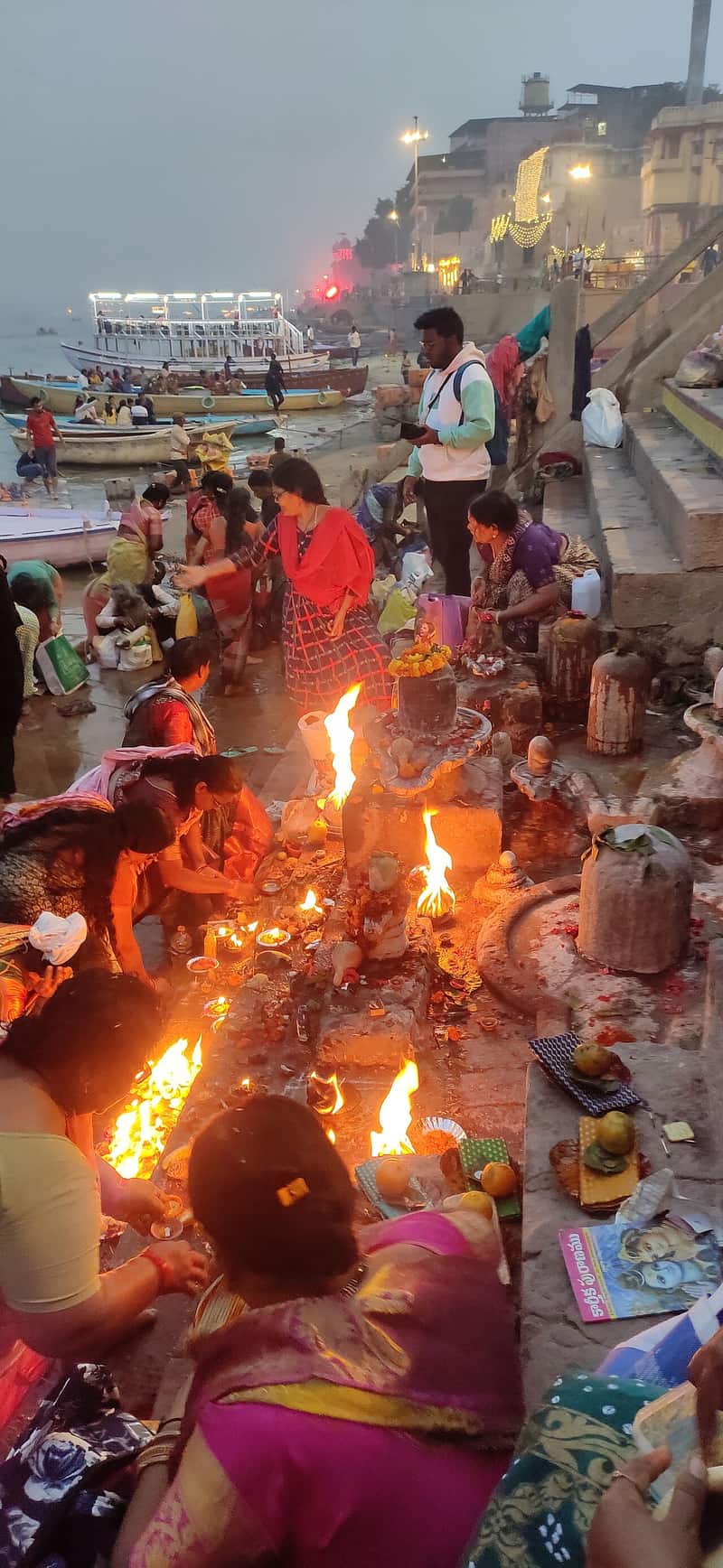
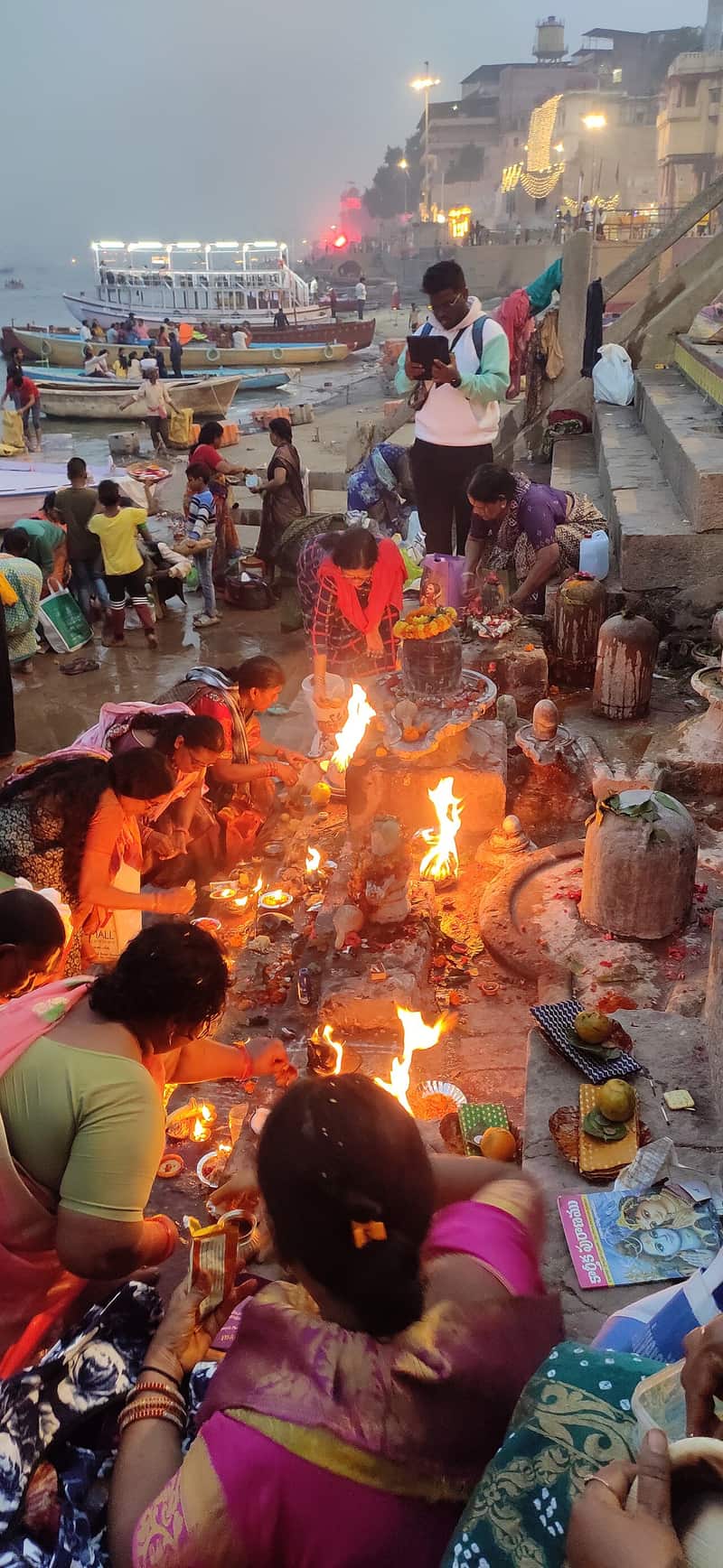
Bathing in the Sacred Water
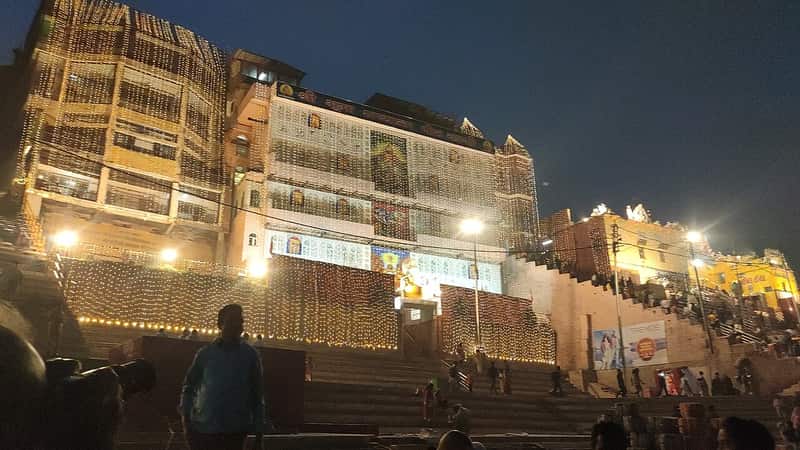
Nishadraj Ghat is first and foremost a bathing ghat, and the day here opens with the oldest ritual of the river. Long before sunrise, the first bathers arrive — old men with brass lotas and towels, women in red and green saris, children still sleepy from bed — descending the wide steps in the half-dark to the water's edge. The morning Ganga at Nishadraj is cold and clean, and the bathing is done with the seriousness of a duty: the dip, the pouring of water over the head, the facing of the rising sun, the silent prayer. Then, one by one, the bathers climb out, wring their clothes, and sit on the steps to dry in the first light, their wet bodies steaming slightly in the cool air.
The bathing here is both private devotion and public spectacle, and the two mingle easily on the steps. Pundits sit at the waterline with their almanacs, fixing the auspicious hour for a child's first bath or a widow's month-end rite; pilgrims make offerings of flowers and coins, and the barbers, who work from a patch of stone at the top of the ghat, shave the heads of mourners and of children celebrating their first haircut. Old women pour water for the ancestors, young men dive from the moored boats for sport, and the sadhus, ash-smeared and aloof, sit apart with their rosaries. Through it all the river receives everything with the same patience, and the steps below the waterline are worn smooth and white by the touch of a thousand thousand feet.
For the visitor, the bathing scene at Nishadraj is best enjoyed quietly, from the upper steps, in the first hour of light. It is a working ritual, not a performance, and it asks only to be left alone; a respectful distance and a small offering of one's own — a coin, a flower, a silent prayer — are the right way to take part. The sacredness of the moment is real, whatever one's own faith: here a city of three thousand years washes itself each morning, and the river receives the weariness, the prayers and the sins of millions with an equanimity that no temple can match. To sit on the steps of Nishadraj at sunrise is to watch the most ancient habit of Varanasi, performed with the same devotion that the first bathers of Kashi gave it, untold centuries ago.
The River and Its Views
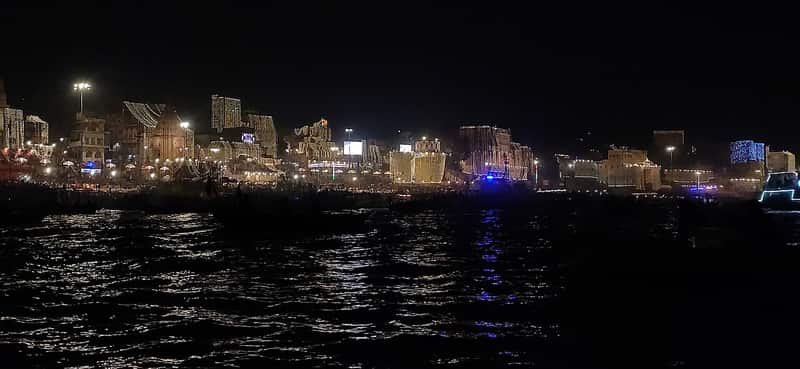
At Nishadraj Ghat the Ganga runs wide and strong, and the river here has a different character from the crowded reaches of the city centre. The far bank is a low line of sand and green fields, dotted with villages and temple spires, so that the view is open to the sky in a way that the northern ghats never are. In the dry months the river shrinks, exposing great plains of sand where cattle graze and children fly kites; in the monsoon it swells until the steps disappear and the ghat becomes a sheer wall of water. Between these seasons the river at Nishadraj is a broad, moving mirror — steel grey at dawn, silver at noon, and molten gold in the last hour of the day.
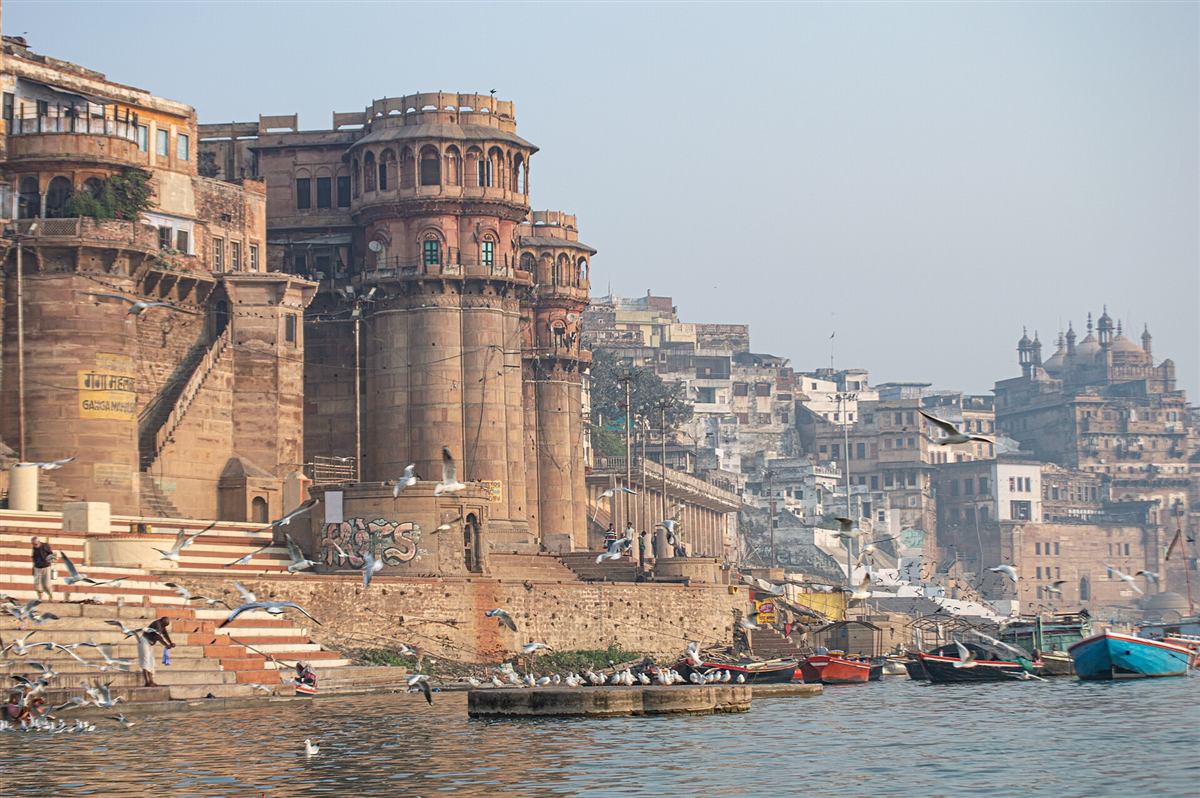
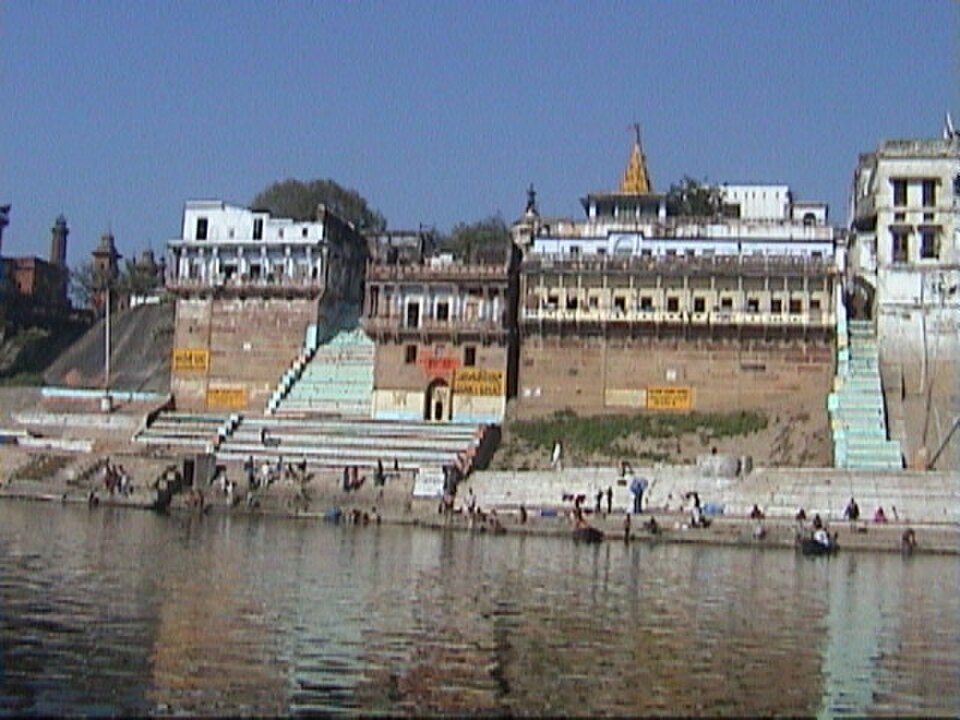
The best views of the river begin at the waterline. From a boat a hundred yards out, the whole southern riverfront unfolds: the massive stone ramparts of Ganga Mahal rising to the north, the low white and ochre houses of Shivala behind the ghat, the steps of Nishadraj crowded with tiny figures, and beyond, the great curve of the river bending southward toward the open country. The water itself is alive with birds — herons standing motionless in the shallows, cormorants drying their wings on the sandbanks, kingfishers flashing blue over the current. In the evenings the river darkens to indigo, the lamps of the ghats begin to glimmer, and the distant music of an aarti drifts across the water, carried on the same wind that fills the sails of the returning boats.
The river at Nishadraj has moods that the city centre never shows. Here the Ganga is a working river first — ferries crossing, dredgers at anchor, fishermen laying their nets in the dusk — and a holy river second, and the two do not quarrel. The water is the ghat's great public square, its road, its laundry, its playground and its shrine at once. On quiet afternoons the only sounds are the lap of the current, the creak of a rope, the cry of a gull; on festival nights the same water is crowded with a thousand lamps. To stand on the steps and watch the Ganga flow past is to understand why this river has been worshipped for so long: it is not only the giver of life and purity, but the oldest, most faithful witness of everything that has ever happened on its banks.
A Working Ghat in Full Motion
By the time the sun is fully up, Nishadraj Ghat is in full working motion. The landing is a stage of constant activity: boats arriving and departing, porters with headloads of grain and timber, traders bargaining over bundles on the stones, and the boatmen calling out in the rolling dialect of the river. The day's work begins with the ferries, which carry villagers from the far bank to the markets and schools of the city, and ends only when the last boat is tied up after dark. Between these two moments the ghat serves as warehouse, bus stop, bath and temple for half the southern neighbourhoods of Varanasi, and its rhythm is the rhythm of the river itself — swift in the morning, slack at midday, and busy again in the cool of the evening.
Look closely and the ghat reveals a complete economy. There are stalls for tea and samosas, sellers of flowers and incense for the shrines, men who rent out boats and boys who guard them, women selling fish from woven baskets, and a washerman or two beating clothes against the stones of the lower steps. Laundry spreads like flags over the rails and the bushes; milk cans stand in rows waiting for the ferry; sacks of potatoes and onions are rolled up the steps on carrying poles. Between the human traffic, the ghat's own animals do their part: the patient cows that wander the landing, the dogs that sleep on the warm stones, and the goats that seem to live permanently on the sandbanks below. Nothing here is arranged for the visitor; everything is simply life, as it has been lived on this stretch of the river for centuries.
Watching the daily life of Nishadraj Ghat is a quiet education in how a great riverfront city actually works. The ghat is the frontier between land and water, and every hour it performs a hundred small miracles of transfer: grain becomes cargo, cargo becomes coins, coins become vegetables, vegetables become the evening meal. The people of the ghat move between two worlds with an ease that seems effortless — stepping from the solid stone of the steps onto the swaying deck of a boat as if the two were the same ground. For the traveller, this is the great lesson of the southern ghats: that the romance of the river has its foundation in the simplest, most honest work, and that the same boatmen who will row you out to watch the sunset are the ones who keep the city itself afloat.
The Lanes Behind the Ghat
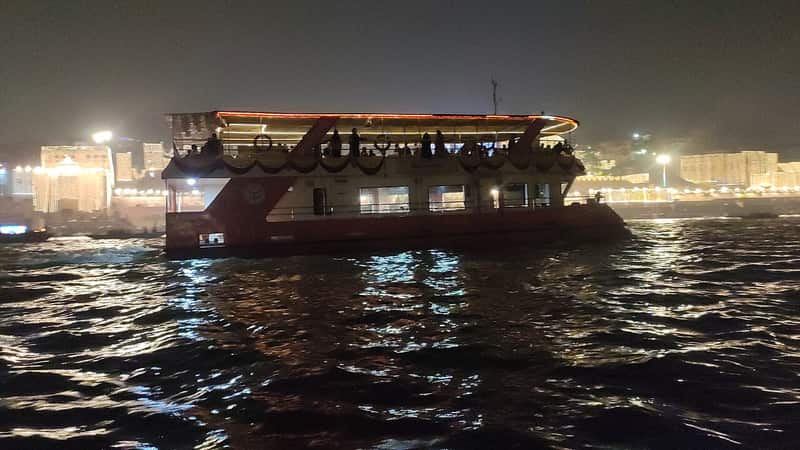
Behind Nishadraj Ghat runs the old neighbourhood of the southern city — a dense, shadowed world of lanes and courtyards that has grown up over centuries of river commerce. The houses are tall and close-set, their facades covered with faded paint and old wooden balconies, their doorways opening onto small shops and workshops. Here the trade of the river continues inland: rope-makers twisting their cords, carpenters planing timber for boat repairs, brass workers hammering lotas, and vendors selling everything from marigold garlands to the heavy iron weights used for anchors. The lanes are too narrow for cars, and their traffic is on foot — porters, schoolchildren, housewives with brass vessels, and the eternal presence of cows and bicycles.
The lanes open unexpectedly on small temples and shrines that have no names for the visitor but are crowded with local devotion. A stone image of Hanuman under a peepal tree receives its daily vermilion and marigold; a Ganesha shrine in a corner shop never lacks a worshipper; and in one courtyard a Neem tree is worshipped as a goddess, its trunk wound with red thread. The neighbourhood celebrates the same festivals as the rest of Kashi, but with a riverfront flavour: at Ram Navami the effigies are built in the lanes and carried down to the water, and at every full moon the families light lamps on the steps and set them adrift. The ghat and the neighbourhood are one organism, and the life of the houses cannot be separated from the life of the boats.
For the visitor, the lanes behind Nishadraj reward a slow afternoon. Here you can watch the last of a dying craft — the boatwrights shaping a keel from a single log, the rope-makers walking backward along their cords — and buy, at honest prices, the same simple things the boatmen buy: a rope, a brass lamp, a warm paratha from a lane-side tawa. The people are accustomed to strangers and treat them with the easy courtesy of a working quarter; a question about the ghat leads naturally to a cup of tea and a story about the river. Walk far enough and the lanes climb away from the water toward the broad streets of Shivala, but linger too long and the river will call you back — for the neighbourhood is charming, but the ghat is its heart, and the heart beats on the water.
Ganga Mahal and Shivala — Neighbouring Ghats
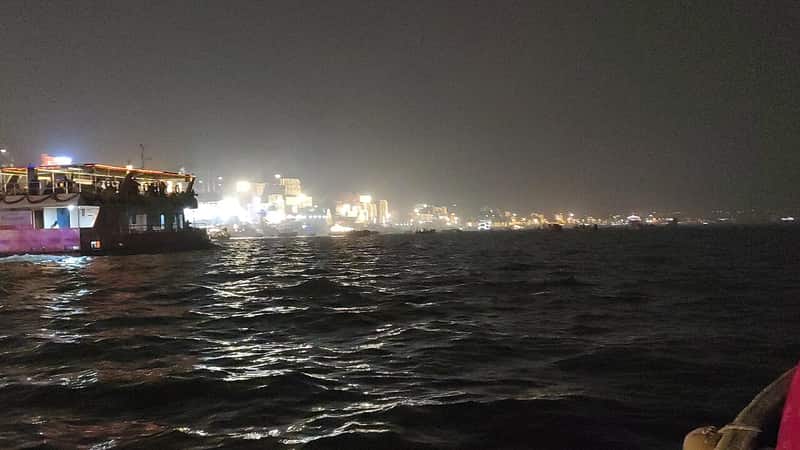
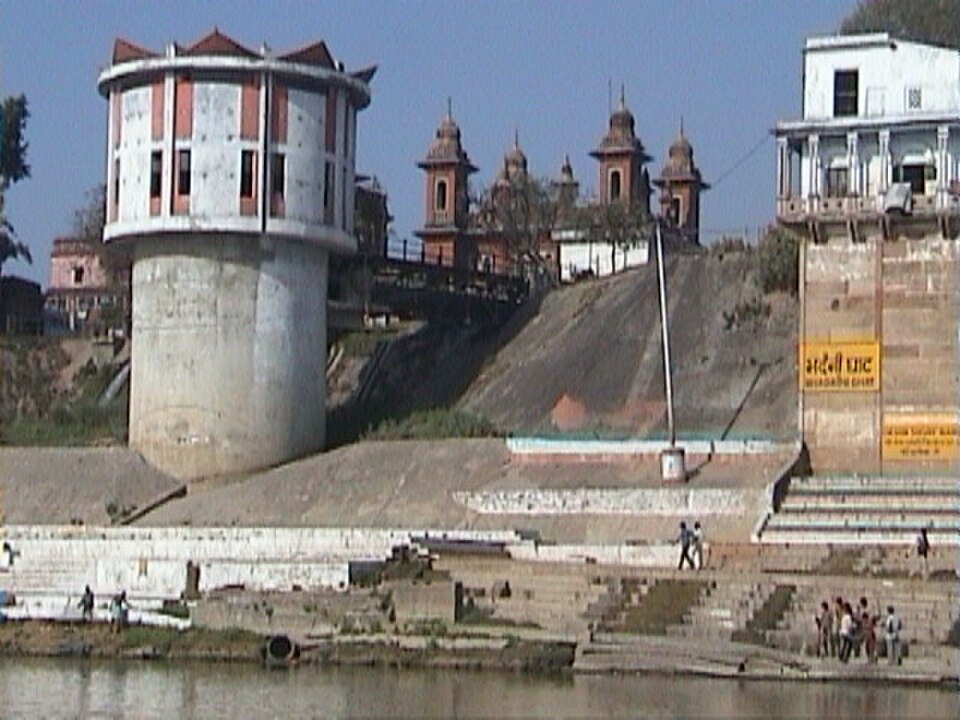
Nishadraj Ghat sits in a close company of famous neighbours. Immediately to the north, joined to it by a short stretch of steps, rises Ganga Mahal Ghat, dominated by the grand palace of the same name — a massive, cliff-like building of arched windows and balconies built in the early nineteenth century for a noble family of the city. The palace gives the ghat an air of old authority, its long facade facing the river like a fortress, and its grounds, when the river is low, open onto broad sandy terraces used by the bathers and the boatmen alike. To the south, beyond a short interval, lies Shivala Ghat, named for the Shiva temple that stands above it, a busy commercial landing with its own long history of trade and pilgrimage.
The three ghats work together as a single stretch of riverfront, and a walk along the water connects them without interruption. From Nishadraj you can follow the steps north past the Ganga Mahal palace, its ground floor given over to shops and godowns, and continue to the point where the riverfront turns toward the grand ghats of the old city. To the south, the steps of Shivala lead up to one of the busiest markets of the neighbourhood, where cloth, brass and vegetables are sold in a cheerful clamour, and where the evening aarti at the temple draws its own devoted crowd. Between the two, Nishadraj is the hinge — the working ghat where the palace's grandeur and the market's noise meet the plain, honest business of boats and water.
For the visitor, the closeness of these ghats makes the southern riverfront an easy day's exploration. Begin at Nishadraj with a boat ride, watch the palace of Ganga Mahal from the water, land again at Shivala, and wander up into its market for a meal; or reverse the order and end the day with the sunset from the steps of Nishadraj. The whole stretch is compact enough to walk, and each ghat gives a different face of the same river city — the palace ghat of the aristocracy, the market ghat of commerce, and the working ghat of the boatmen who still carry the spirit of Guha. Few places in Varanasi reward the pedestrian so richly, or show so clearly how one river can feed so many ways of life.
Festivals on the Riverfront
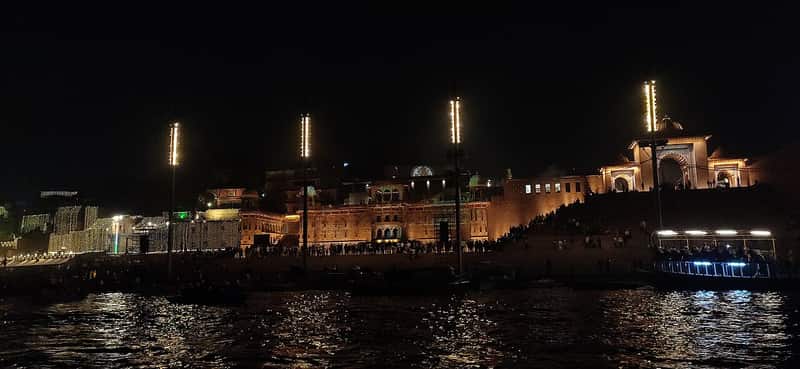
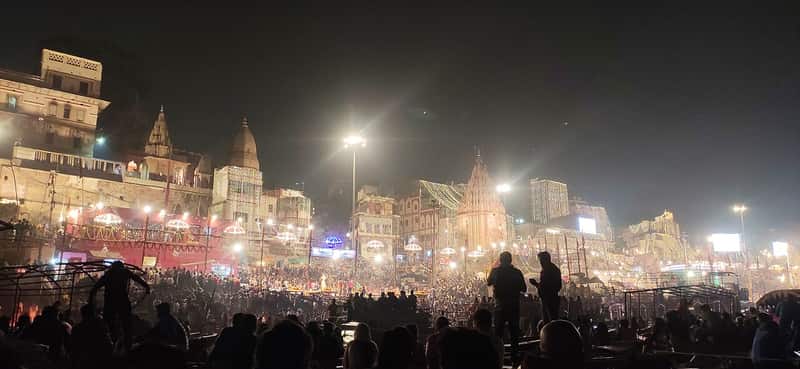
The festivals of Nishadraj Ghat are the festivals of the river itself, and the greatest of them is Ram Navami, the birthday of Lord Rama. Because the ghat belongs to the hero of the Ramayana, the celebration here has a special intimacy: on the night of the festival the lanes behind the ghat are lit with lamps, effigies of Rama are carried down to the water in small processions with drums and singing, and the whole neighbourhood gathers on the steps as the boats are decked with marigolds and streamers. The great aarti of the evening is offered from a boat midstream, and the river, crowded with lanterns and reflected flames, becomes a floating city of light.
Through the year the ghat follows the great wheel of the Hindu calendar. On Kartik Purnima, the full moon of the autumn, the riverfront glows with a thousand diyas set afloat by families in memory of their ancestors, and the boatmen say that the spirits of the departed gather on the water to receive them. The nights of Shivaratri see processions of devotees moving along the bank toward the temples of Shivala, and during the month of Sawan, Mondays are crowded with pilgrims carrying brass pots of Ganga water for the worship of Shiva. At Holi, the ghat becomes a battlefield of colour, and the boatmen, painted in yellow and pink, row through clouds of gulal; at Diwali the entire riverfront is a garland of flame.
Every festival at Nishadraj ends the same way, at the water's edge, with offerings set adrift and prayers carried on the current. The lamps, flowers and marigold garlands that bob away from the steps are the ghat's own signature — small, perishable gifts to the eternal river, launched with the same gesture that Guha himself would have recognised. For the visitor the festival nights are the riverfront at its most magical, but they come with a gentle warning: the ghat is crowded, the boats are in demand, and the best positions on the steps go to the early. Come early, find a place on the stone, and watch how a working ghat becomes, once a year, a place of pure celebration — the boatmen's festival, the river's festival, the whole city's festival at once.
Etiquette of the Working Ghat
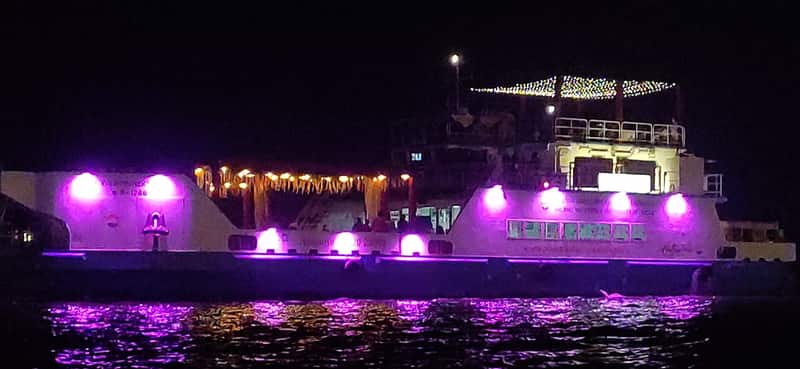
Nishadraj Ghat is a working place before it is a tourist attraction, and its first rule of etiquette is respect for its work. The landing, the boats, the cargo and the crowds of men and women going about their business are not a show arranged for visitors; they are the daily labour of a river community. Step carefully around the porters carrying loads, do not stand in the way of a boat coming in to moor, and remember that the boatmen are tradesmen, not performers — a polite greeting in Hindi, a smile, and an unhurried manner will be received far better than a demand or a bargain attempted in a rush. Modest dress is appreciated, and at the bathing steps, the privacy of the bathers, particularly women, is to be respected without question.
Dealing with the boatmen fairly is the heart of good conduct at Nishadraj. Agree on the fare before you step into the boat, and understand that the price reflects the skill, the fuel and the time of a professional; the classic Banaras fare for a sightseeing row, for an hour or so, is a modest matter of a few hundred rupees, and haggling beyond reason demeans both sides. If a boatman offers a longer route or a stop at a sandbank, ask the price before accepting. Tips are welcome but not demanded, and the best practice of all is to hire a boat, sit quietly, and let the boatman choose the moment — for he knows the river's moods, and he will not risk his boat or his passengers for a few extra rupees. The river's safety rules are simple: sit in the boat as the boatman directs, do not stand suddenly, and keep the children close.
Photography at Nishadraj needs a gentle touch. The boatmen, the bathers and the washermen are people at work, not exhibits, and a camera aimed without asking will rightly offend; ask first, in a friendly way, and you will almost always be granted a smile and a pose. The ghat's shrines are places of worship, so shoes stay off, and offerings — a flower, a coin — are better left at the temple than in your pocket. Finally, the one gift the ghat asks of every visitor is patience. The river works on its own clock, the boat comes when it comes, and the crowd parts in its own time; whoever waits calmly at Nishadraj, watching the water and the work, will leave with the deepest memory of all — the sense of having been, for an hour, part of the oldest working riverfront in India.
Practical Guide — Reaching, Timing and Fares
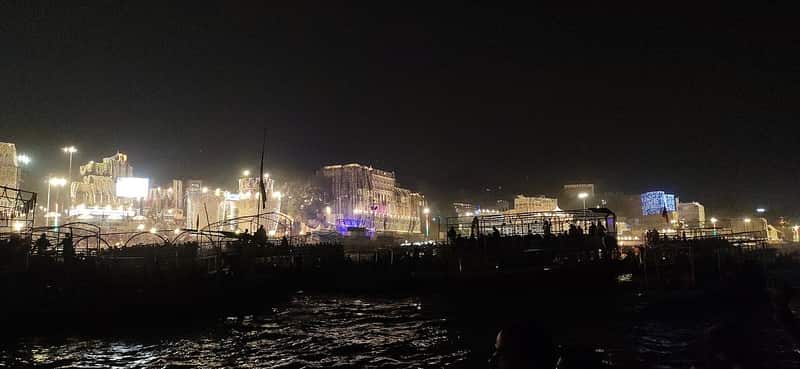
Reaching Nishadraj Ghat is easy, for the southern riverfront is well connected to the rest of Varanasi. From Dashashwamedh Ghat in the old city, a pleasant walk of about three kilometres along the riverbank brings you to the ghat in under an hour; the route passes the great ghats of the centre and grows quieter and more rural as it goes south. Alternatively, an auto-rickshaw or cycle-rickshaw from the cantonment, Godowlia or Assi will drop you at the top of the ghat, and buses and shared tempos along the main road of Shivala leave you a short walk from the steps. The nearest railway station is Kashi (Manduadih), about six kilometres away, while Varanasi Junction is roughly seven; a taxi or auto from either is straightforward, and drivers know the ghat by name.
The best time to visit Nishadraj is in the first light of morning, between about five and eight, when the bathing is at its fullest and the boatmen are launching the day's work; the evenings, from four until sunset, are the second golden window, when the river turns to copper and the ferries come home. The cool months from October to March are the most comfortable, with crisp air and clear skies; April to June is hot but the river is low and the sandbanks broad, and the monsoon, from July to September, is dramatic, green and crowded with floodwater — the ghat then requires care, and some boat rides are suspended. A boat ride of one to two hours from the ghat, taking in Ganga Mahal and Shivala, typically costs a few hundred rupees; longer trips toward Assi or the cremation ghats are priced by negotiation, and the rates are fair if the fare is settled before boarding.
A few final notes for the practical traveller. Carry small change, for the boat fares, the tea stalls and the offerings at the shrines all work in cash, and the riverfront has no ATMs close by. Wear shoes that can handle water and sand, bring a hat and water in summer, and keep your phone and camera in a waterproof pouch — river trips splash. The ghat has basic facilities but no grand amenities: public toilets exist nearby, and the best food is found in the lanes of Shivala a few minutes away. Finally, remember that Nishadraj is not a one-hour stop; it is a place to sit, to watch, to take a boat and to come back. Combined with a walk to Ganga Mahal and Shivala, a morning at Nishadraj Ghat offers the traveller the truest and most complete picture of the working river of Kashi.
Nishadraj Ghat — Gallery (12 Photos)
Image Credits
nishadraj-01.jpg · nishadraj-02.jpg · nishadraj-03.jpg · nishadraj-04.jpg · nishadraj-05.jpg · nishadraj-06.jpg · nishadraj-07.jpg · nishadraj-08.jpg · nishadraj-09.jpg · nishadraj-10.jpg · nishadraj-11.jpg · nishadraj-12.jpg — Wikimedia Commons, under free licenses.
Continue exploring
Similar Ghats Nearby
Book This Ghat — Get Notified
Download the app now and book a boat ride to Nishadraj Ghat