

Jain Ghat
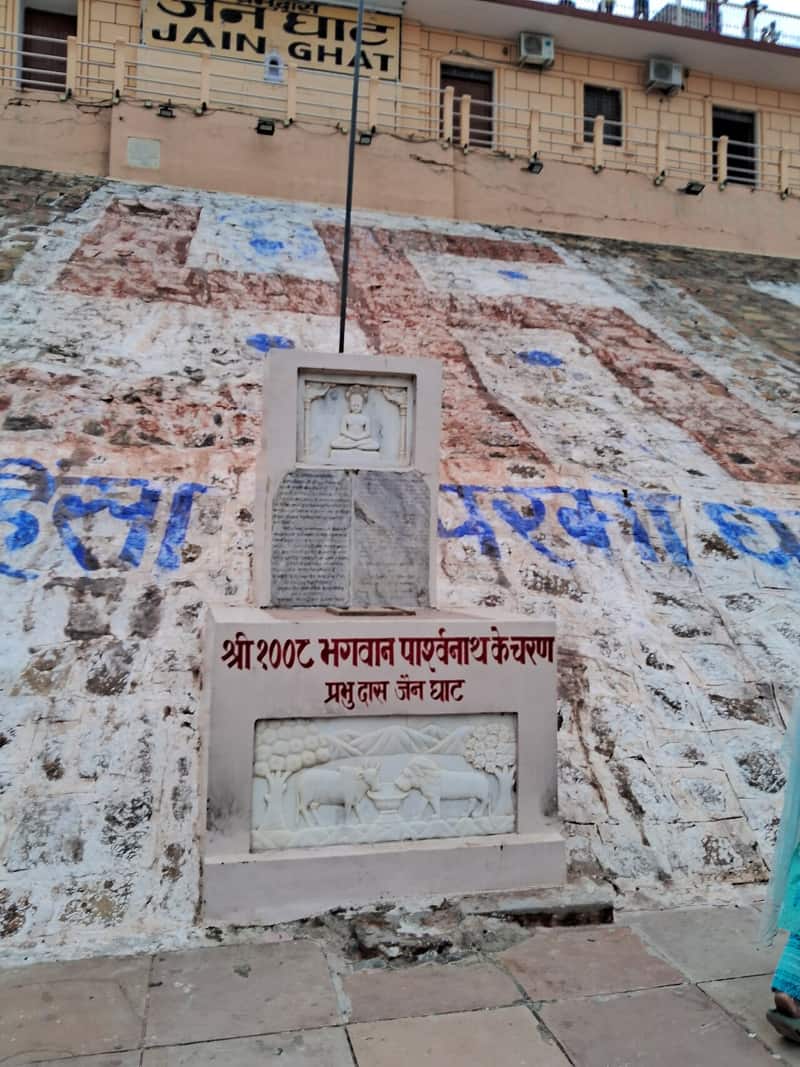
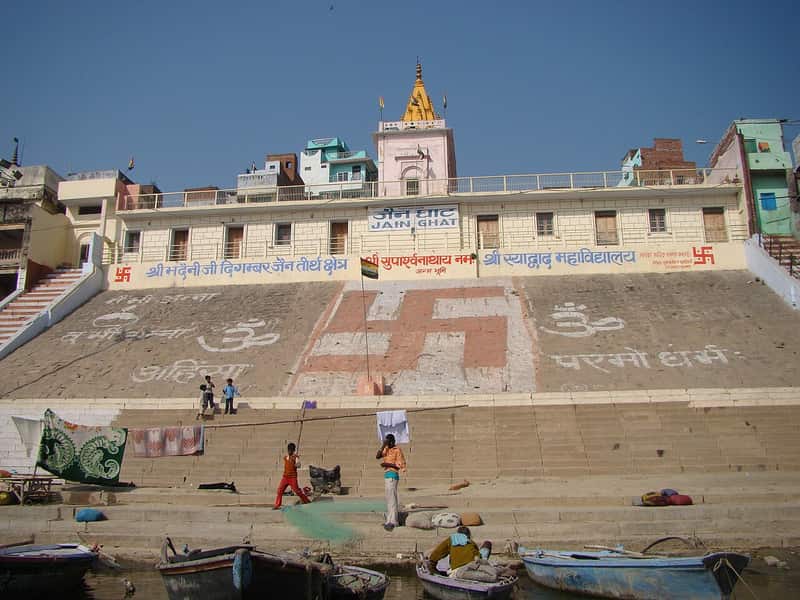
Neighbourhood GhatJain Ghat is a famous ghat for Jains. It has a famous Jain temple.


Type
Neighbourhood Ghat
Boat Fare
1x base fare
Best Time
6-10 AM when morning light illuminates the temple.
History
Named for the Jain faith. Three famous Jain temples are at the ghat center, including an ancient Suparshwanath temple.
Highlights
- Darshan of the ancient Jain temple
- Sacred traditions of the Jain community
- Calm and clean surroundings
Festivals & Events
How pricing works in the NaviX app
No haggling at the ghat — everything is fixed in the app first
- 1
Fixed price before you board
The fare is shown in the app upfront — no bargaining at the ghat
- 2
Sharing or private — your choice
Share with fellow travelers or take the whole boat for your group
- 3
Pay only after the ride
UPI, card or cash — with an instant receipt
🕉️
Aarti details not available for this ghat yet
Complete Guide
Jain Ghat — The Complete Guide
History, mythology, rites and practical details — everything in depth.
On this page
- 1.Jain Ghat — A Sacred Shore of the South
- 2.Jain Heritage — The Tirthankaras and Kashi
- 3.The Temple Complex — White Marble and Serenity
- 4.Architecture — Steps, Shikhara and Marble Halls
- 5.Bathing at the Ghat — Rituals of the Morning Water
- 6.The Community — Merchants, Monks and Families
- 7.The River — Broad Water and Golden Light
- 8.The Neighborhood — Lanes, Old Houses and the Market
- 9.Nearby — Kedar Ghat, Anandamayee and the Southern Walk
- 10.Festivals — Mahavir Jayanti and the Sacred Year
- 11.Etiquette — Respectful Conduct at a Holy Site
- 12.Practical — Reaching, Timing and Neighbouring Ghats
📅 Updated: 21 Aug 2026 · Author: NaviX Field Team (field research 2024-26) · 12 sections · 12 photos
Jain Ghat — A Sacred Shore of the South
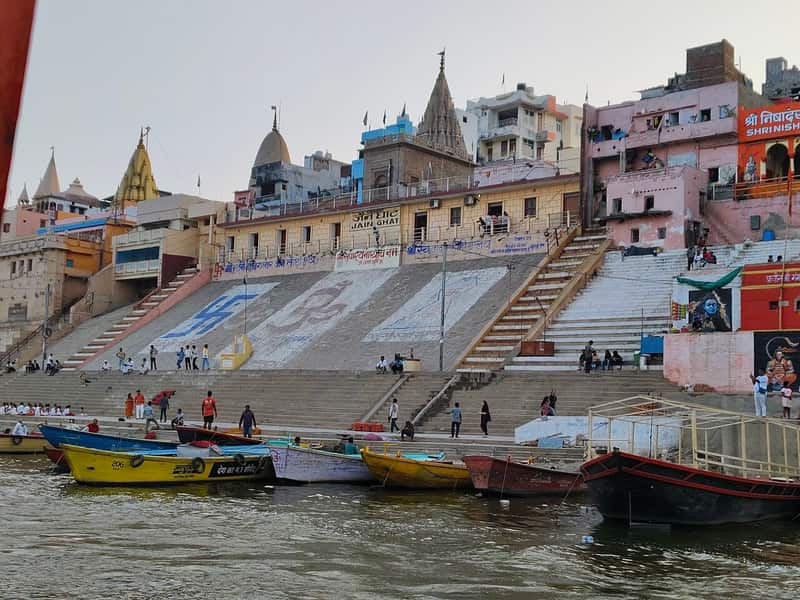
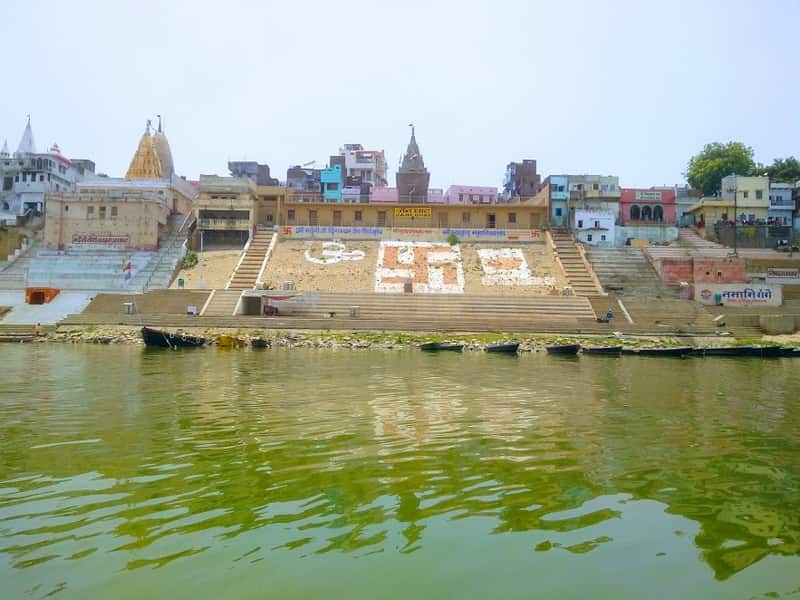
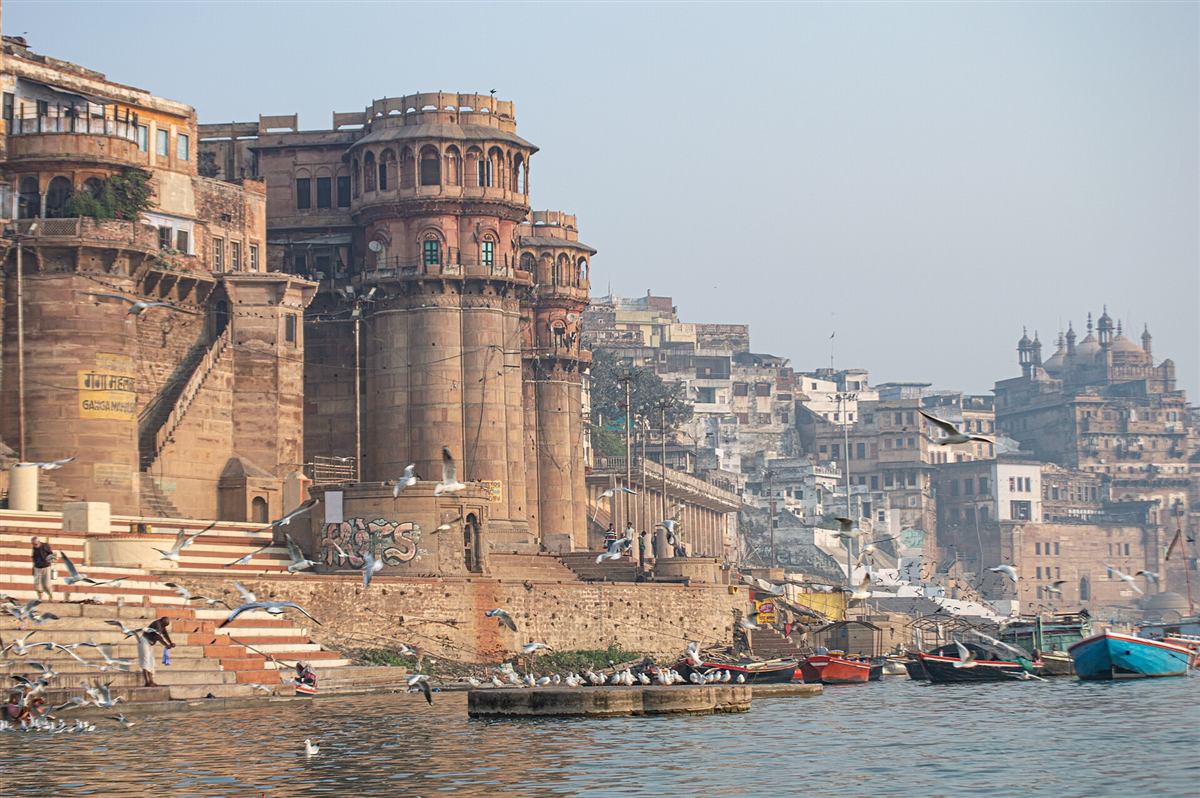
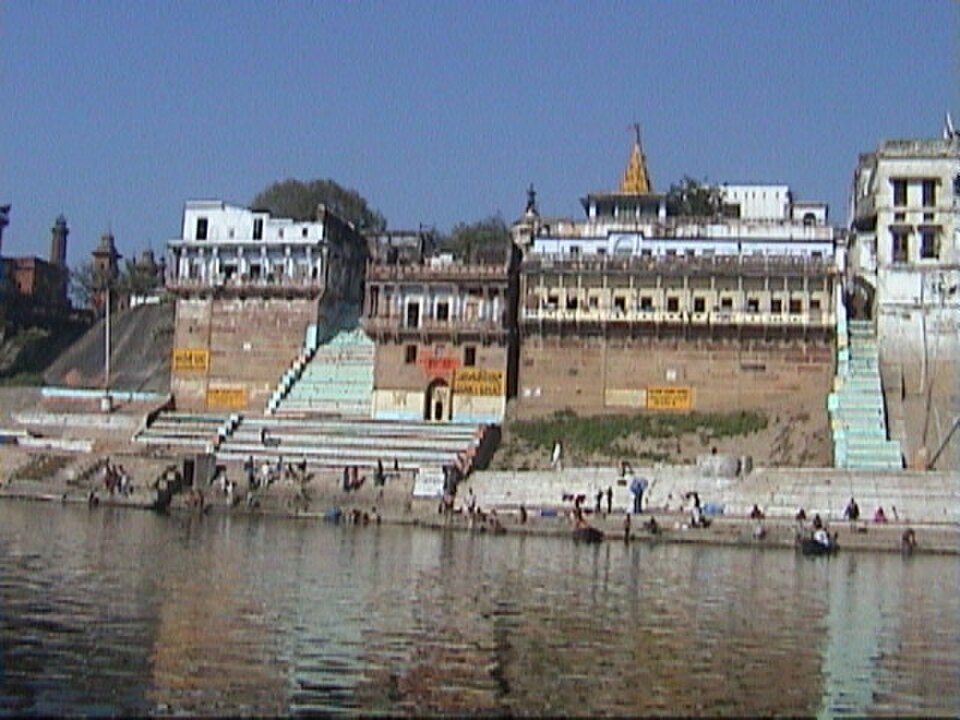
Jain Ghat rises from the southern bank of the Ganga as one of the broadest and most gracefully built bathing places of Varanasi, its wide stone steps fanning out toward the water in a calm, unhurried sweep. For the Jain community this ghat is not one attraction among many but a homecoming, a threshold where pilgrims from across India touch the sacred river before entering the nearby temples. The atmosphere is distinctive: quieter than the great northern ghats, dignified rather than crowded, with men and women in white robes descending the steps at dawn to offer their prayers to the rising sun. Devotees in white, the colour of purity and non-violence, give the ghat its gentle and memorable character. The broad landing at the water's edge, where boats tie up and pilgrims assemble, is among the most welcoming spaces on the whole southern bank, and even at its busiest hour the ghat keeps an air of composure rare on the Ganga.
Varanasi, the ancient Kashi, has been woven into the Jain faith for more than twenty-five centuries, and Jain Ghat is the living symbol of that bond. Jain texts remember this city as a place where great teachers walked, where kings and merchants embraced the path of ahimsa, and where the doctrine of non-violence was first carried across the length of India. The ghat itself was developed and maintained through the generosity of Jain merchants and pilgrims, and its broad stairways, resting platforms and smooth stonework speak of centuries of careful upkeep. Here the river, the temple and the faithful form one continuous picture of devotion. It is a picture that renews itself with every dawn, when the first lamps are lit in the temple and the first white-robed figures take their places on the steps.
For the traveller, Jain Ghat is one of the most peaceful introductions to the southern riverfront of Varanasi. It lies between Kedar Ghat to the north and Mata Anandamayee Ghat to the south, on a stretch of the bank where the river runs wide and the crowds of the old city thin out. To stand on its steps in the early morning, watching the white-robed pilgrims and listening to the soft bells of the temple, is to understand how Varanasi is not the property of any single faith but a sacred city shared by many. The ghat is a place of quiet instruction in tolerance, devotion and the simple dignity of a community at prayer. Few places in India teach these lessons so gently, and few visitors leave without carrying something of that quiet teaching away with them.
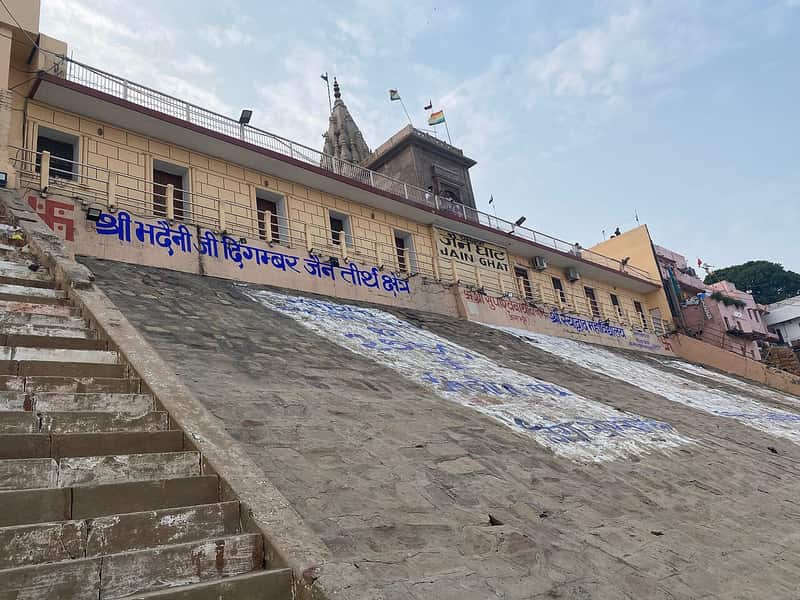
Jain Heritage — The Tirthankaras and Kashi
The connection between Varanasi and the Jain faith is among the oldest in India, and it runs through the very person of the Tirthankaras. Tradition holds that Parshvanatha, the twenty-third Tirthankara, was born in Varanasi, and that he renounced the world from the very streets that pilgrims still walk today. His teachings of non-violence, truth and detachment were preached in this region, and the city is named in the sacred Kalpa Sutra as a place where the lineage of the enlightened ones was maintained for generations. For Jains everywhere, Kashi is therefore not merely a Hindu holy city but a land of their own teachers. To walk these steps is to walk in the footsteps of that ancient tradition, and the ghat itself is one of the places where the memory of the Tirthankaras is kept alive.
Mahavira, the twenty-fourth and last Tirthankara, also walked these roads. He visited Kashi during his long years of wandering, and Jain scriptures record his presence in the region, his debates with scholars of other faiths, and the conversions of kings and merchants who came to hear him. The city at that time was already a centre of learning, trade and religious debate, and it was precisely this atmosphere of questioning that Jain teachers prized. The community that grew from their visits never left: through the rise and fall of empires, through Buddhist, Hindu and Muslim rule, Varanasi remained home to a continuous Jain presence. Thus the ghat is not merely a relic of the past but a living bridge between the age of the Tirthankaras and the city of today.
The Jain Ghat itself is the visible trace of this long heritage. Unlike many ghats, whose patrons are forgotten, this one carries the mark of a community that has cared for it for centuries. Jain pilgrims still arrive in numbers, especially from western India, and for them the ghat is a fixed station on a spiritual map that also includes Sarnath, where Mahavira is said to have stayed, and the Jain temples of the old city. To stand at Jain Ghat is to stand inside a tradition of faith that is older than almost any monument in India — a tradition that chose Kashi, and has kept it holy ever since. It is a heritage measured not in centuries alone but in the daily prayers of a community that has never ceased to call Kashi its own.
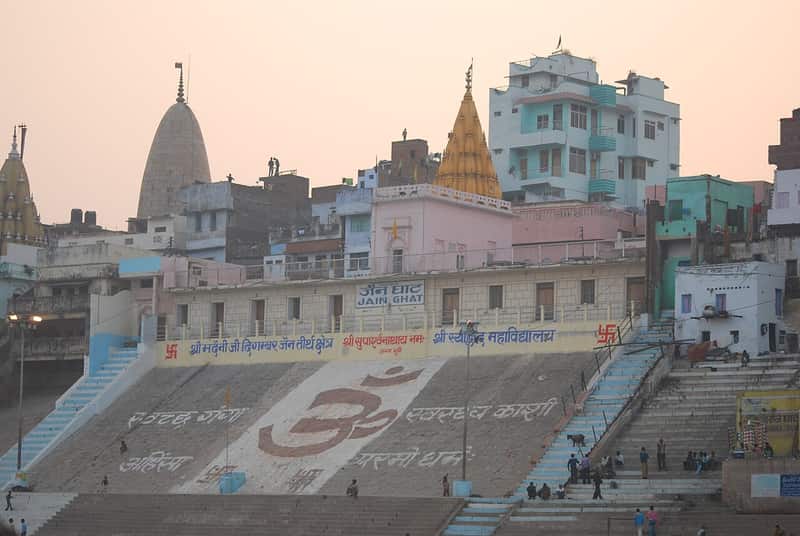
The Temple Complex — White Marble and Serenity
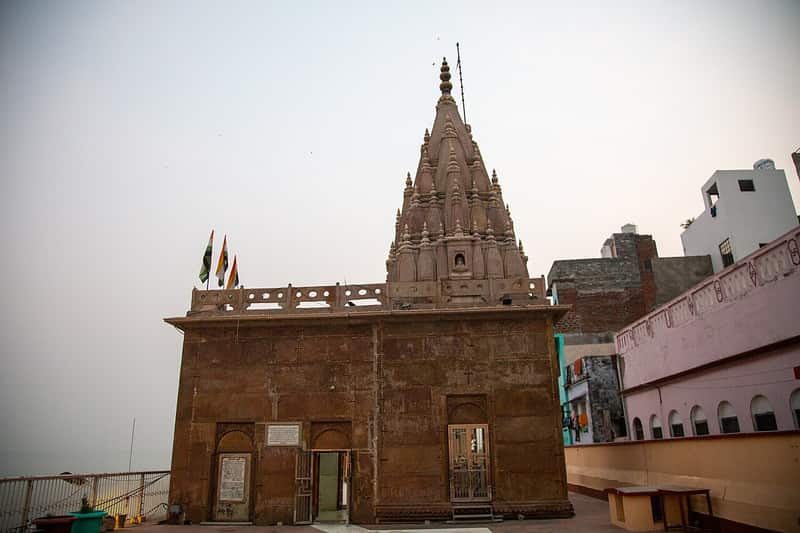
Rising behind the steps of Jain Ghat is the temple complex that gives the place its spiritual centre, a cluster of white marble shrines whose towers are visible from the river long before the boat reaches the bank. The principal temple is dedicated to the Tirthankaras, and its sanctum houses finely carved images of the enlightened teachers, seated in meditation with serene, half-closed eyes. The architecture follows the classical Jain manner: a high shikhara over the sanctum, a pillared hall for the faithful, and marble floors so polished that they mirror the white robes of the devotees. It is a place of extreme cleanliness and order, maintained with a care that is itself a form of worship. Everything about the complex speaks of that same devotion — from the brass bells at the entrance to the quiet order of the courtyard beyond.
Inside the complex, smaller shrines and pavilions stand around a courtyard where the air is heavy with the scent of incense and marigold. Images of Parshvanatha, the ghat's particular patron, are honoured with special devotion, for he is the Tirthankara of this city, and his blue-bodied, serpented figure appears again and again in the temple's carvings and paintings. The walls are painted with scenes from the lives of the Tirthankaras, from the births of the enlightened ones to their final liberation, and pilgrims walk around the sanctum slowly, tracing these stories with their eyes and counting their prayers on wooden beads. The temple is open to all visitors, regardless of faith, and its custodians welcome the curious traveller with quiet courtesy. The stories painted on the walls, like the faith that fills the hall, ask no explanation; they are simply present, like the light that falls through the carved windows.
The temple is not merely a building but the heart of a way of life. Monks and nuns, clad in white and carrying the soft whisk that sweeps insects from their path, may be seen in the courtyard, and their presence changes the atmosphere of the whole ghat. Lay members of the community gather here for daily worship, for study of the scriptures, and for the great festivals that fill the complex with lamps and song. For the visitor, the temple offers one of the clearest windows into Jainism anywhere in northern India — a faith of peace, discipline and compassion, expressed here in marble, incense and silent prayer. Those who come only to look will find themselves quietly drawn into the peace of the place, for the temple's serenity is its most persuasive sermon.
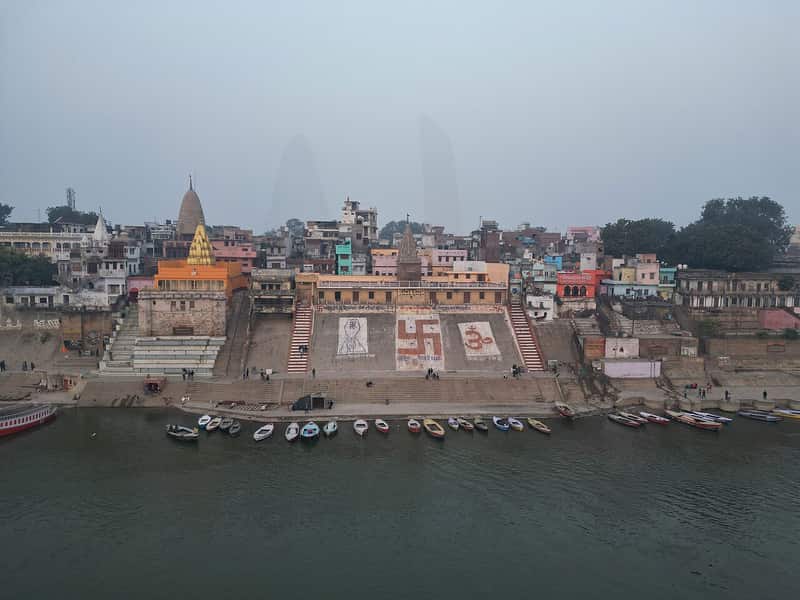
Architecture — Steps, Shikhara and Marble Halls
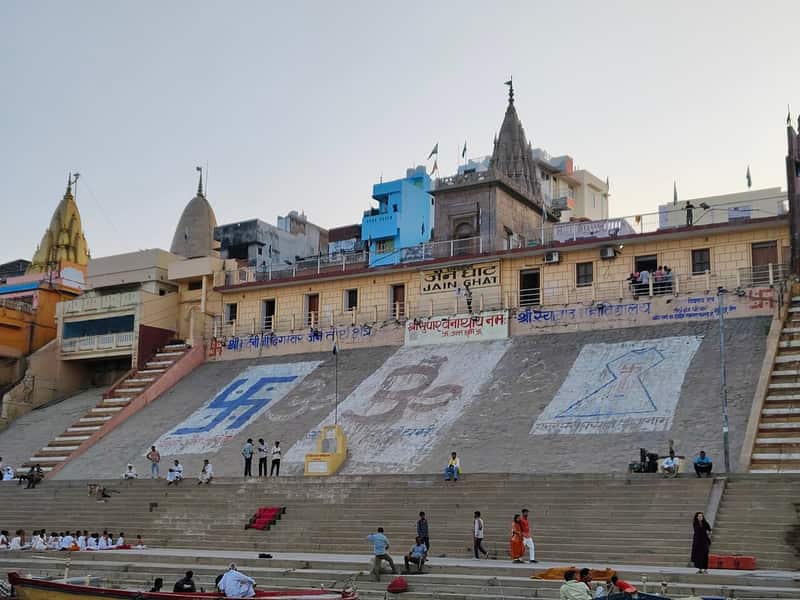
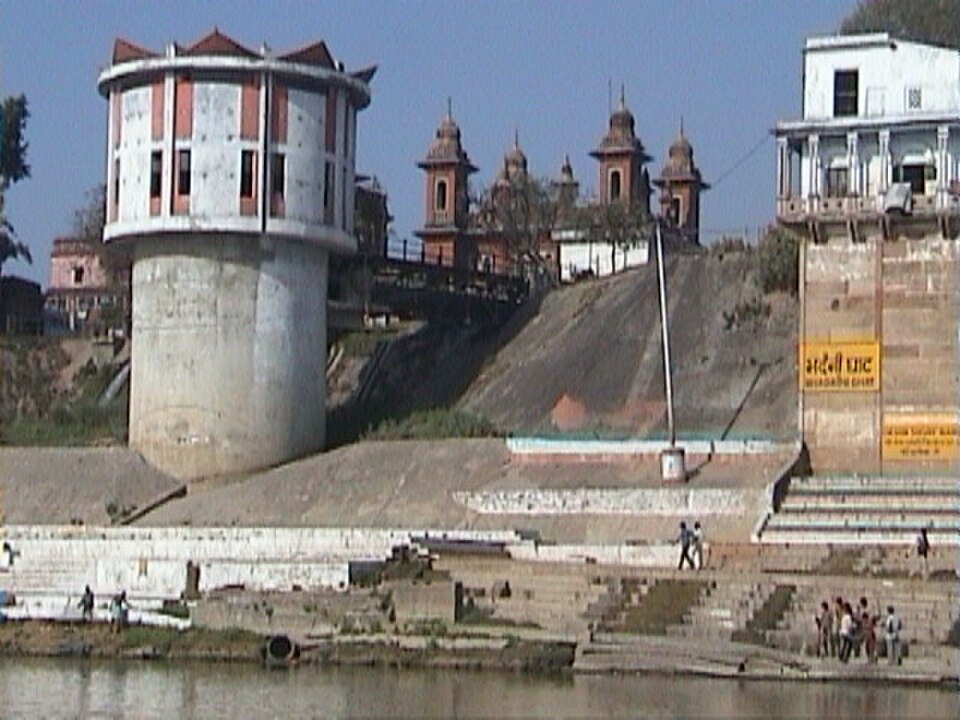
The architecture of Jain Ghat combines the sturdy engineering of the riverbank with the refined aesthetics of Jain temple building. The steps themselves are the ghat's oldest and most important feature: great slabs of local stone, laid in broad terraces that rise from the water in a gentle curve, with resting platforms at intervals where pilgrims may sit in the shade of the trees that line the bank. Unlike the steep, narrow stairways of some northern ghats, the steps of Jain Ghat are wide and forgiving, built for crowds in festival season and for quiet meditation at other times. Their wear-polished surfaces record centuries of bare feet, and the slight unevenness of the older stones gives the whole sweep a sense of living age. All of this makes the ghat a monument that is as easy to read as it is to walk.
The temple architecture above the ghat belongs to the graceful style of the late Maratha and British periods, when most of the present buildings were erected. White marble is the dominant material, used in pillars, floor panels and the images themselves, while the shikhara towers rise in stepped tiers crowned by kalasha finials and fluttering flags. The pillared hall of the temple, with its carved brackets and hanging lamps, is a fine example of the Jain aesthetic — lavish in ornament yet severe in discipline, every carving serving the same teaching of restraint and purity. The whole composition of dome, spire, flag and porch is repeated in miniature in countless Jain shrines across the city, as if the quarter were a garden of the same devotion.
Together, steps and temple make a single composition of devotion. The symmetry of the shikhara is answered by the symmetry of the stairway, and the whiteness of the marble is echoed in the white clothes of the faithful, so that the human and the architectural become one image. At festival time the whole complex is lit with small oil lamps, and the reflections in the river double the towers, the steps and the crowd into a single radiant picture. Jain Ghat is a lesson in how a community builds: not for display alone, but so that every stone, every step and every spire points the mind toward the same goal of peace. Such building is rare in the modern world, and it is one of the reasons why Jain Ghat is treasured by all who know it.
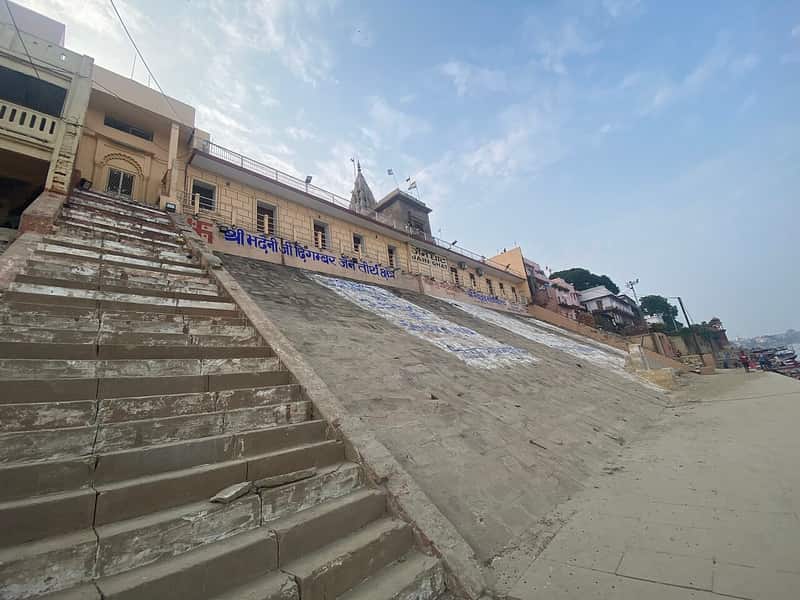
Bathing at the Ghat — Rituals of the Morning Water
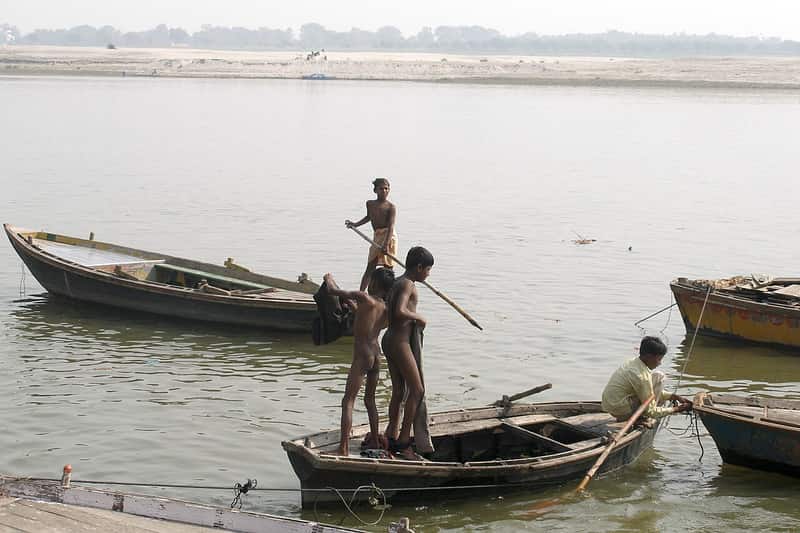
Bathing at Jain Ghat is performed with a quiet intensity that distinguishes it from the more theatrical ceremonies of the northern ghats. Jain pilgrims rise before sunrise, descend the broad steps to the water, and bathe with slow, deliberate motions, their bodies covered and their heads bowed in prayer. For them the Ganga is not merely a river but the great mother of cleansing, and the bath is a purification of the soul as well as the body. The water here runs deep and clear near the bank, and the gentle current makes even the most reverent bather feel the power of the river's ancient flow. There is nothing hurried in their movements, for the Jain teaching holds that even the bath should be performed with full awareness of every action.
After the bath, pilgrims offer water to the rising sun, then climb the steps to the temple, where the same water is used to bathe the images of the Tirthankaras in the ritual called abhisheka. This double bathing — of the body in the river and of the images in the temple — is the central act of worship at Jain Ghat, and it gives the morning hours their particular rhythm. The ghat is busiest between dawn and mid-morning, when families arrive together, the elderly helped down the steps by their children, and the whole community performs its ablutions in a great, ordered choreography of faith. It is a rhythm that has barely changed for centuries, and watching it is like reading a page from the oldest guidebook of the city.
Certain days bring greater numbers to the water. The full moon, the new moon, and the days of the great festivals draw pilgrims from far away, and then the steps fill with white-clad figures from early morning until late afternoon. On these days the ghat takes on a festive dignity, with songs rising from the groups of women, the elderly seated on the platforms with their prayer beads, and the temple bells ringing out across the water. For the observer, the bathing of Jain Ghat is a lesson in humility — a reminder that the simplest act, repeated daily with devotion, is the truest expression of faith.
The Community — Merchants, Monks and Families
Behind the ghat and its temple lies the living community of Varanasi's Jains, one of the oldest mercantile communities of the city. For generations the Jains of Kashi have been traders and financiers, jewellers and textile merchants, and their presence has shaped the economy of the whole southern quarter. Their houses rise in tall, narrow structures around the temple, painted in the bright colours of the old city, with balconies overlooking the lanes where goods are still loaded and unloaded by hand. In these houses the family, the shop and the faith are one: the prayer room is as much a part of the home as the kitchen, and the day begins with worship before the counter opens. This intertwining of work and worship is the very genius of the quarter, and it gives the ghat its human warmth.
The community's institutions surround the ghat like the roots of a great tree. There are upashrayas, the quiet halls where monks and nuns stay during their residence in the city; there are schools that teach the Jain scriptures alongside the ordinary subjects; and there are the great dining halls where, on festival days, the whole community feeds the poor, the monks and each other in a single great act of giving. The principle of ahimsa governs this life down to its smallest details: the diet is strictly vegetarian, the hospitality is unstinting, and the giving of charity is counted not as a duty but as the natural fruit of wealth.
Despite its antiquity, the community is not closed to the stranger. The Jain families of Varanasi are known for their courtesy to visitors, and the traveller who shows respect for their customs will be welcomed with an openness that is rare in any ancient city. Many families have lived in the same houses for three or four centuries, and their memory of the city's history — the riots, the floods, the festivals, the processions — is itself a living archive of Varanasi. To spend an evening in their company, drinking the thin sweet milk and hearing the old stories, is to see the city through the eyes of its most faithful citizens.
The River — Broad Water and Golden Light
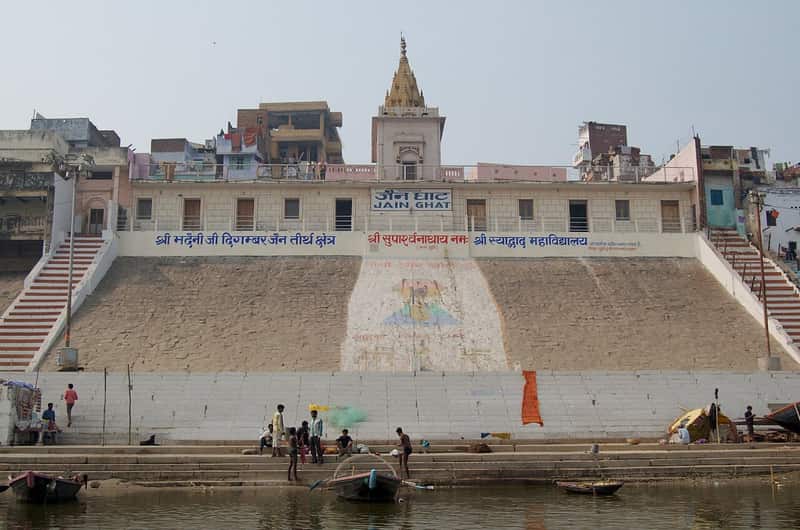
The Ganga at Jain Ghat is a river of great breadth and calm. Here, on the southern stretch of the city's riverfront, the current runs slower than at the crowded northern ghats, and the water spreads out across a wide bed toward the low sandbanks of the eastern shore. In the early morning the surface is a sheet of silver and rose, broken only by the dipping of oars as the first boats move out from the ghat; by evening it turns to molten gold under the setting sun. The view from the steps takes in the whole sweep of the southern riverfront, with the towers of other ghats rising in the haze to the north. The river here belongs to the pilgrims, the boatmen and the birds alike, and its unhurried mood colours everything that happens on the ghat.
The river is a highway as well as a shrine. Small boats ferry pilgrims across to the far bank, where the sandbars offer a vast, silent wilderness, and fishermen cast their nets in the shallows at dawn. From the ghat one may watch the great passenger boats from Patna and the holy towns downstream, the water buffaloes bathing beside the bathers, and the dhobi colonies where the city's washing is beaten clean on the stones. The life of the river is endless, and the ghat is a grandstand for its spectacle — a front row seat on the oldest theatre in the world. Nothing on this river is ever still for long, and the ghat offers a seat at the centre of the ceaseless movement of Indian life.
At night the river turns inward and darkens, and the ghat becomes a place of solitude. The temple lights reflect in the water in wavering columns of gold, the boats lie motionless at their moorings, and the only sound is the soft lap of the current against the steps. Pilgrims still sit on the platforms, murmuring their prayers, and the stars double themselves in the black water. It is this deep, still beauty of the river at night that lingers longest in the memory of visitors to Jain Ghat — a beauty that belongs to no faith and to every faith, the gift of the Ganga herself.
The Neighborhood — Lanes, Old Houses and the Market
Behind Jain Ghat begins one of the most fascinating quarters of the southern old city, a dense web of lanes where the life of Varanasi continues almost unchanged for centuries. The narrow alleys rise from the riverbank through a jumble of houses, some painted in bright blues and greens, some bare brick, all of them leaning together so closely that the sun only reaches the ground at noon. Wooden balconies hang over the lanes, their railings carved in the old patterns, and doorways open onto courtyards where sacred tulsi plants stand in painted pots. It is a neighbourhood built for the monsoon, the heat and the river, and its architecture has the same practical beauty as the ghat itself.
The lanes are alive with the commerce that has always sustained the Jain community. Sweetshops display trays of milk sweets made fresh each morning; sari shops fold their gleaming silks in deep piles; and jewellers, the traditional craft of the community, work at their benches behind open doors. The morning market spreads along the lower lanes, with vegetable sellers, flower vendors and the women who carry brass pots of curd on their heads, and the air is filled with the sounds of bargaining, the clatter of cycles and the bells of bicycles. For the visitor this is a place to walk slowly, to eat where the locals eat, and to watch a trading city at work. It is the same commerce that built the temple, and the two — worship and trade — remain bound together as they have been for centuries.
The neighbourhood is also a landscape of faith. Small shrines appear at every turning — a Jain image in a niche, a painted Hanuman, a Shiva lingam under a tree — and the coexistence of these devotions in a few square metres is itself a sermon on the tolerance of Kashi. The lanes are used by pilgrims, students, merchants and monks alike, and the ordinary courtesy of the quarter extends to every one of them. To wander behind Jain Ghat is to discover that the ghat does not end at the top of the steps; it continues into every courtyard, every shop and every home of the quarter it has shaped for centuries. Every lane has its own story, and the quarter rewards those who give it time with glimpses of a city within the city.
Nearby — Kedar Ghat, Anandamayee and the Southern Walk
Jain Ghat sits in excellent company on the southern riverfront. A short walk north along the bank brings the traveller to Kedar Ghat, one of the most atmospheric of all Varanasi's bathing places, dominated by the great Kedar temple with its high tower and its legend of Shiva disguised as a boar. Between the two ghats the riverbank passes a succession of smaller bathing places, each with its own temple and its own crowd of devotees, and the whole stretch offers one of the finest walks in the city. To the south, the riverfront continues toward the green spaces of the university quarter, and the character of the city changes visibly as the old houses give way to gardens. For the walker who wants variety, this short stretch of riverbank concentrates more history and more worship than any other quarter of the city.
South of Jain Ghat lies Mata Anandamayee Ghat, named for the celebrated saint and mystic who lived in Varanasi for many years and whose ashram stands close by the water. The ghat is a place of gentle pilgrimage for followers of the saint from across India, and its atmosphere of quiet devotion blends harmoniously with the Jain Ghat's own serenity. The Anandamayee ashram, with its white buildings and its peaceful gardens, is open to visitors, and the walk from Jain Ghat to its gates passes through one of the most pleasant stretches of the southern bank. The two ghats, though belonging to different traditions, share a single mood of gentle devotion, and together they make the southern bank one of the most spiritual walks in Varanasi.
The southern walk is best taken at dawn or in the cool of the evening, when the light lies low and golden on the river and the crowds of the day have not yet gathered. Boatmen wait at every ghat for passengers who wish to drift back to the centre of the city by water, and a journey by boat from Anandamayee to Dashashwamedh is one of the great experiences of Varanasi. Alternatively, the walk can be continued inland, past the Jain Ghat's own lanes, toward the busy markets of Bhelupura and the university beyond. Whichever direction the traveller chooses, Jain Ghat is the perfect point of departure.
Festivals — Mahavir Jayanti and the Sacred Year
The great festival of the Jain year at Varanasi is Mahavir Jayanti, the birth anniversary of the twenty-fourth Tirthankara, celebrated with a splendour that transforms the whole quarter. The temple complex is decorated with marigold garlands, lamps and banners; the images are bathed in milk and saffron water in a grand abhisheka; and the day is marked by processions in which the image of Mahavira is carried through the lanes on a flower-decked chariot, followed by the faithful in their thousands. The ghat itself fills with pilgrims, and the steps become a white sea of devotees singing the hymns of praise. For the visitor, this is the single best day of the year to see Jain Varanasi at its most glorious. For those who cannot be present, the day is captured in photographs and remembered in the homes of every Jain family in the city.
The other great season is that of Paryushana, the eight-day festival of repentance and forgiveness observed by the Svetambara tradition, when monks preach daily from the temple halls and the community fasts, studies and renews its vows of non-violence. The Digambara community observes the parallel festival of Das Lakshana, with its ten days of reflection on the virtues. During these weeks the atmosphere of the ghat deepens: the music of the temple becomes more intense, the numbers at the morning bath grow, and the whole community lives in a state of heightened devotion. On the final day of Paryushana, the great act of forgiveness is exchanged — the community asks and grants pardon in a ritual of reconciliation that is unique to Jainism.
Other festivals bring their own colour to the ghat. Akshaya Tritiya is a favourite day for the purchase of gold and for beginning new enterprises, and the jewellers of the lanes do their best business of the year; Diwali, the festival of lights, is also the day on which Mahavira attained liberation, and the temple burns with a special radiance; and the many small parvas of the Jain calendar bring their own processions, songs and feasts. Through all of them the ghat itself remains the fixed centre — the same broad steps, the same white marble temple, the same river receiving the same prayers. To visit Jain Ghat during any of these seasons is to see the community at its most joyful and its most devout. Wherever the festival calendar falls, the ghat remains the fixed point around which the year of the community revolves.
Etiquette — Respectful Conduct at a Holy Site
Jain Ghat and its temple are living places of worship, and the visitor who comes with respect will be received with respect. Dress modestly, with shoulders and knees covered; remove shoes before entering the temple, as at any Hindu or Jain shrine; and avoid leather articles, including belts and bags, since the Jain path of non-violence forbids the use of animal products in sacred places. Photography inside the temple is generally not permitted, and even outside, the images and the devotees should be photographed only with permission. A quiet voice and unhurried movements are the simplest way to honour the peace of the place. In a place where every gesture has meaning, the visitor's own gestures will be read with goodwill, and respect will always be repaid with warmth.
Monks and nuns of the Jain orders follow rules of strict detachment, and the visitor should never touch them, offer them money or food directly, or photograph them without asking. It is customary to greet them with folded hands and to stand aside as they pass, for their path is swept before them to avoid harming even the smallest insect. The lay devotees, for their part, are unfailingly courteous, and a genuine question about the faith will be answered with patience and warmth. Remember that for the community, the ghat is not a monument but a home, and the same courtesy expected in a family home applies here.
At the water's edge, the same considerations hold. Pilgrims bathing are engaged in an act of profound devotion, and should not be disturbed, photographed or intruded upon; the devout should be given space on the steps and in the water. Do not leave litter on the ghat, and do not throw anything into the river — the Ganga is the goddess herself, and her cleanliness is a matter of faith. If you are invited to join a meal, accept with gratitude, eat with the right hand as is the custom, and do not refuse the hospitality of people for whom feeding a guest is an act of worship. Simple courtesy, in other words, is the truest language of the ghat, and it is spoken and understood by everyone who comes to its waters.
Practical — Reaching, Timing and Neighbouring Ghats
Jain Ghat is easily reached on foot from the southern centre of Varanasi. The walk from Kedar Ghat takes barely ten minutes along the riverbank, and from the main road at Bhelupura a network of lanes descends directly to the water. Cycle rickshaws and e-rickshaws ply the nearby streets, and a boat from any ghat north of Assi will bring the visitor to the ghat's own landing in a pleasant fifteen-minute drift downriver. The ghat is open at all hours, but the early morning, between dawn and nine o'clock, is the time to see the community at its most characteristic — bathing, praying and beginning the day's commerce. However one arrives, the first view of the white temple above the broad steps is one of the gentle surprises of Varanasi.
The best season for a visit is the cool half of the year, from October to March, when the mornings are bright and the afternoons gentle. The monsoon months from July to September bring the great floods, when the river rises over the lower steps and the ghat takes on a dramatic, diminished beauty; at such times the upper platforms remain dry and the temple is unaffected. As at all ghats, the traveller should carry water, wear shoes that are easy to remove, and keep valuables in a secure bag, for the crowds of festival days are dense and the lanes behind the ghat are narrow.
Jain Ghat belongs to a chain of famous bathing places, and a full day can be spent visiting its neighbours. Kedar Ghat and its great temple lie a few minutes to the north; Mata Anandamayee Ghat and the saint's ashram lie to the south; and beyond them the riverfront continues to the confluence at Assi, the traditional southern boundary of sacred Kashi. The Dashashwamedh Ghat, the city's greatest spectacle, is a twenty-minute walk or a short boat ride away. With its temple, its steps, its lanes and its neighbours, Jain Ghat rewards the traveller who gives it time — an hour yields a memory, a morning yields the soul of Varanasi.
Jain Ghat — Gallery (12 Photos)
Image Credits
jain-01.jpg · jain-02.jpg · jain-03.jpg · jain-04.jpg · jain-05.jpg · jain-06.jpg · jain-07.jpg · jain-08.jpg · jain-09.jpg · jain-10.jpg · jain-11.jpg · jain-12.jpg — Wikimedia Commons, under free licenses.
Continue exploring
Similar Ghats Nearby
Book This Ghat — Get Notified
Download the app now and book a boat ride to Jain Ghat