

Prabhu Ghat
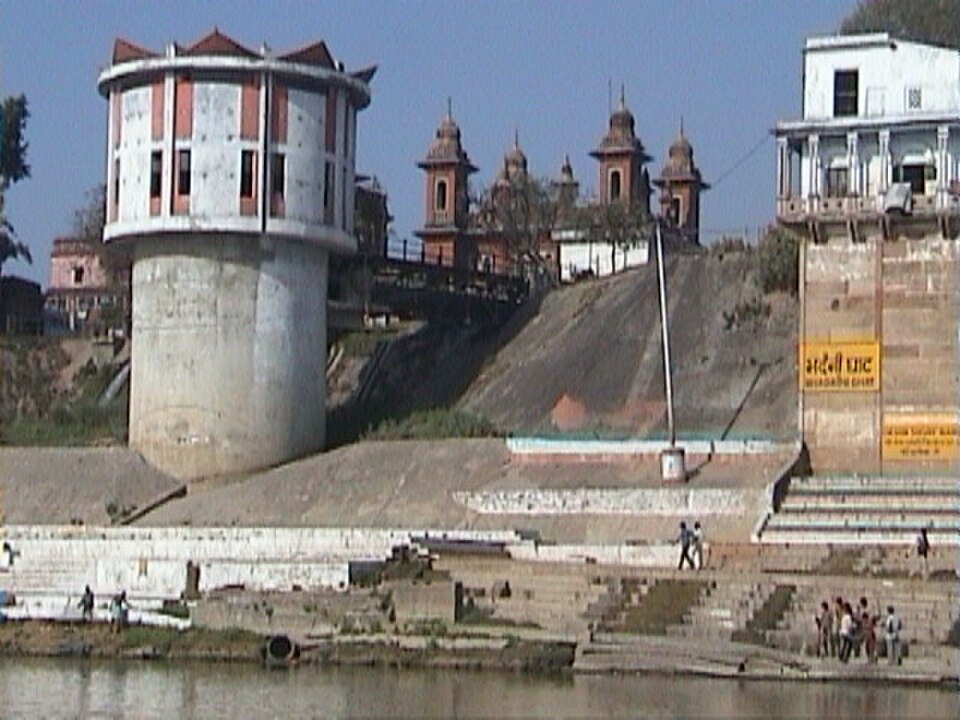
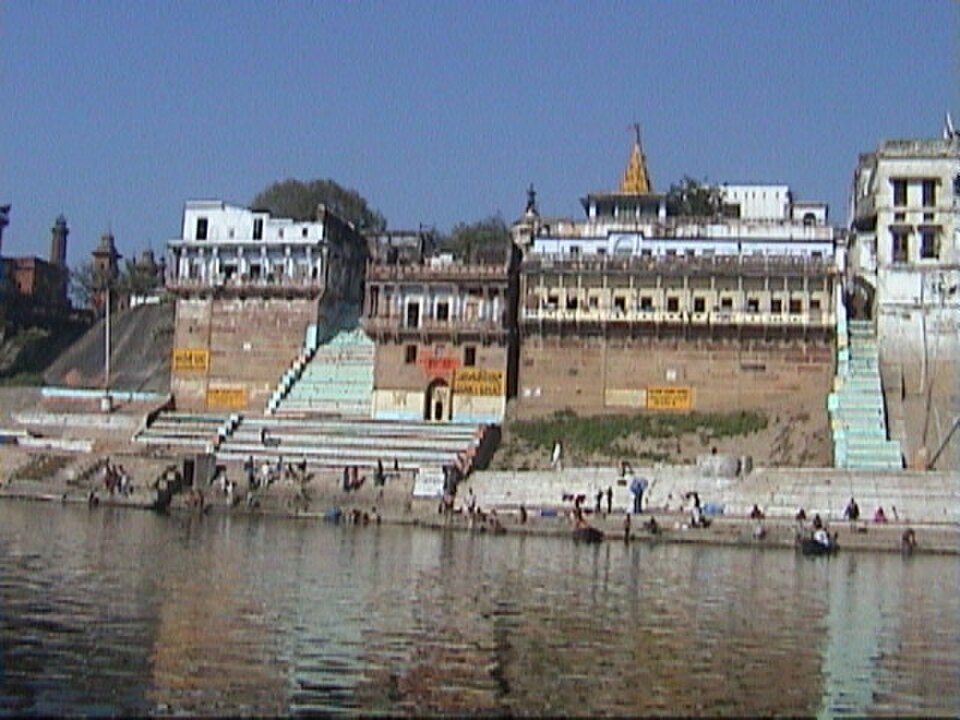
Neighbourhood GhatPrabhu Ghat is a small ordinary ghat.


Type
Neighbourhood Ghat
Boat Fare
1x base fare
Best Time
5-8 AM
History
A small, serene ghat loved by the local people for bathing. It offers a calm, open view of the river.
Highlights
- Favourite local bathing spot
- Quiet and crowd-free
- Open view of the Ganga
Festivals & Events
How pricing works in the NaviX app
No haggling at the ghat — everything is fixed in the app first
- 1
Fixed price before you board
The fare is shown in the app upfront — no bargaining at the ghat
- 2
Sharing or private — your choice
Share with fellow travelers or take the whole boat for your group
- 3
Pay only after the ride
UPI, card or cash — with an instant receipt
🕉️
Aarti details not available for this ghat yet
Complete Guide
Prabhu Ghat — The Complete Guide
History, mythology, rites and practical details — everything in depth.
On this page
- 1.Prabhu Ghat — The Lord's Quiet Stairway
- 2.The Meaning of Prabhu — A Name of Devotion
- 3.The Ordinary Rhythm of the Shore
- 4.The Morning Bath — A Sacred Plunge
- 5.The River Here — Water, Sand and Light
- 6.Boats and Boatmen — The Working Shore
- 7.The Lanes Behind — A Mohalla of Ordinary Kashi
- 8.Neighbouring Ghats — Nishadraj, Shivala and Tulsi
- 9.A Quiet Character — Unspoiled by Tourism
- 10.Festivals on the Shore — The Mohalla at Prayer
- 11.Etiquette and Respect — Conduct at the Ghat
- 12.Practical Notes — Reaching Prabhu Ghat
📅 Updated: 21 Aug 2026 · Author: NaviX Field Team (field research 2024-26) · 12 sections · 12 photos
Prabhu Ghat — The Lord's Quiet Stairway
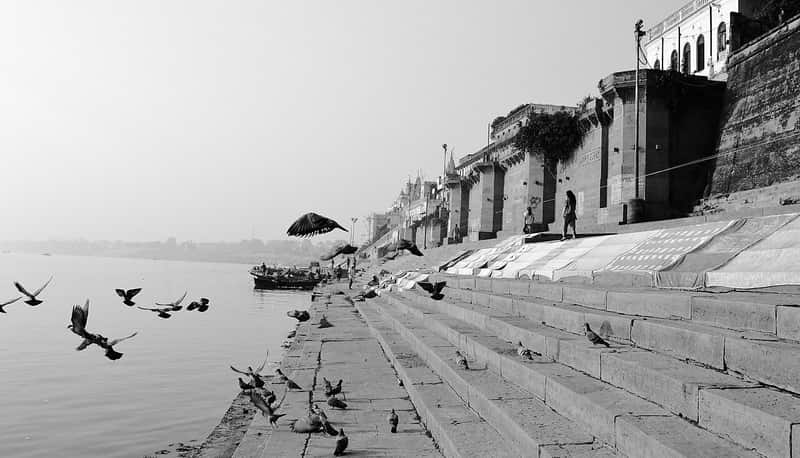
Prabhu Ghat is a small, quiet residential ghat on the southern riverfront of Varanasi, one link in the long chain of bathing places that stretches between Assi Ghat and the crowded steps of the old city. Its name, meaning Lord, speaks of the devotional character of the shore, yet nothing here announces itself as a monument. There are no great temple towers, no vast stone platforms, no touts and no crowds of guides. Instead there is a modest flight of steps, a handful of shrines tucked against the old walls, a few trees leaning over the water, and the slow, unhurried business of everyday life carried on at the river's edge. The ghat belongs to the people who live beside it — bathers, boatmen, washermen and priests — and it wears their presence the way a family home wears the years.
Because Prabhu Ghat lies south of the famous ceremonial centres, most visitors pass it without a second glance, their boats gliding by on the way to the more celebrated ghats upstream. This is precisely its gift. The place has been left to its own rhythms, untouched by the machinery of tourism that has transformed so much of Kashi's riverfront. The steps are worn by bare feet rather than polished for photographs; the water is used for washing and bathing rather than admired from a distance; and the little puja platforms hold offerings left by neighbours rather than by pilgrims on a checklist. To arrive here is to step out of the itinerary and into the actual life of the city, where the Ganga is not a spectacle but a daily companion.
For the traveller who wants to understand Varanasi beyond its famous sights, Prabhu Ghat offers an education in the ordinary. Stand on the steps in the early morning and you will see what the river has meant to this city for three thousand years: women rinsing clothes, men oiling their bodies before the plunge, children splashing in the shallows, an old man feeding the pigeons, a boatman repairing his craft with patient hands. There is no performance here, only practice — the practice of a faith lived quietly, day after day. Prabhu Ghat will not appear on any postcard, and that is exactly why it is worth seeking out. It is a place to sit, to watch, and to feel the steady pulse of a holy city that has never needed an audience.
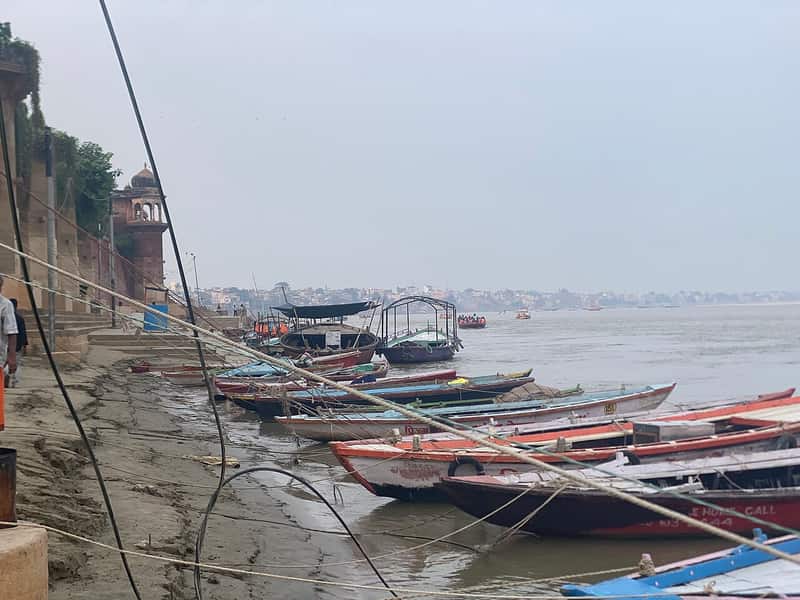
The Meaning of Prabhu — A Name of Devotion
The name Prabhu is the Hindi word for Lord or Master, the title Hindus use for the divine — for Vishnu, for Krishna, for Shiva, for Ram. It is a word of address that carries warmth rather than distance, the way a devotee speaks to a beloved deity rather than to an abstract power. That a whole ghat should bear this name tells us something important about the character of the place: it was never a royal project or a merchant's grand donation, but a neighbourhood shore, named by ordinary people for the God they worshipped at their own doorstep. In the long catalogue of Varanasi's ghats — most of them named for kings, ministers, saints and merchants — Prabhu Ghat stands apart, dedicated simply to the Lord.
Nobody knows exactly when the name was first used, and the ghat carries no inscription to explain itself. What is certain is that the devotional mood still hangs over the steps. Morning and evening, the little shrines at the back of the ghat are lit with oil lamps; tulsi plants grow in painted pots on the landings; and the old women of the mohalla come down at dusk with their brass plates of flowers and sweets. The name, in other words, is not a historical relic but a living description of what happens here every day. The people of the neighbourhood still treat the shore as a place where the Lord is close — where the river is His river, the steps His steps, and the day's prayers His due.
This devotional naming is typical of the southern ghats, which were settled later than the ancient heart of the city and grew up around the quiet faith of ordinary households rather than the patronage of courts. While the great northern ghats carry the names of empires — Dashashwamedh, Rajendra Prasad, Scindia — the southern shore is dotted with humbler names: Nishadraj, the ghat of the boatman caste; Shivala, the neighbourhood of Shiva; and Prabhu, the Lord himself. Taken together they read like a litany of popular devotion, spoken in the everyday language of the people. To walk from Assi toward the old city along this stretch of river is to walk through a prayer, and Prabhu Ghat is one of its softest, most sincere syllables.
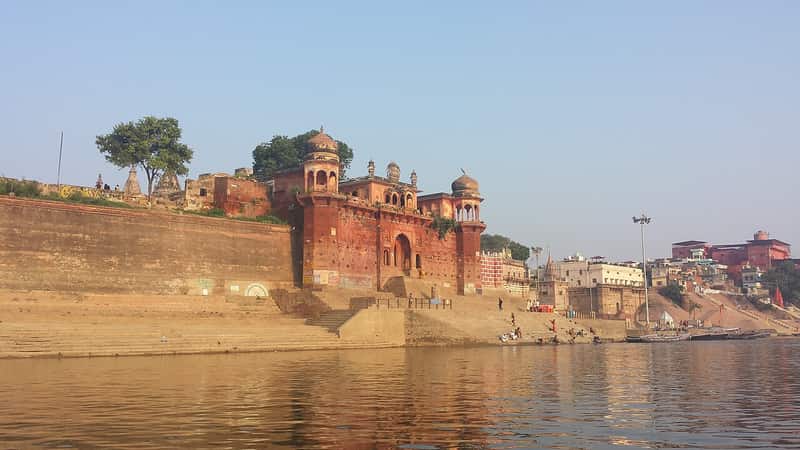
The Ordinary Rhythm of the Shore
The day at Prabhu Ghat begins before the sun, in the blue-grey hour when the river is still dark and the city is waking to the first bells of the temples. The early risers come down the steps with brass pots and towels — old men who have bathed in the Ganga every morning for seventy years, women who time their arrival to the tide of the household, students who pause for a dip on the way to tuition. By the time the first light touches the water, the ghat is already at work: water is being fetched for the household gods, pitchers are being rinsed, and the stone steps are being swept by a thin man with a short-handled broom. Nobody pays much attention to anybody else; everyone is part of a routine that has been repeated here since long before anyone can remember.
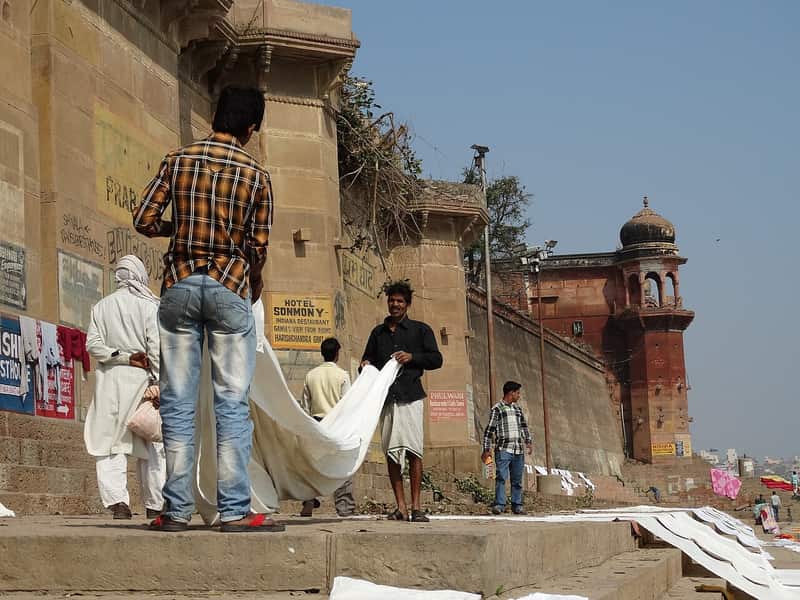
Through the morning the ghat settles into the occupations that define it. Fishermen haul their nets onto the bank and spread them over the railings to dry, mending a tear with swift fingers while they talk. Washermen pound clothes on the flat stones at the water's edge, their rhythm steady as a drum. A fruit seller balances his basket on his head and works the steps; a woman fills a long line of brass pots; a barber sets up a stool in the shade and gives a shave to an old regular, the razor moving over the jaw with unhurried certainty. These are not sights staged for visitors — they are the actual economy of the shore, the way a river community has always made its living.
As evening falls, the mood of the ghat changes again. The labour is over; the river takes on the pink and grey of dusk; and the people of the mohalla come down to sit on the steps, to talk, to smoke, to watch the boats return. Children play at the water's edge while their mothers finish the last of the washing. A few diyas float on the current, lit by someone who lost a relative, or won an exam, or simply felt like thanking the river. The ghat grows quiet, then nearly empty, and the water laps the steps under the stars. It is the same scene played out across the whole of Kashi, but here it feels closer, simpler, more human — the ordinary rhythm of a shore that belongs entirely to everyday life.
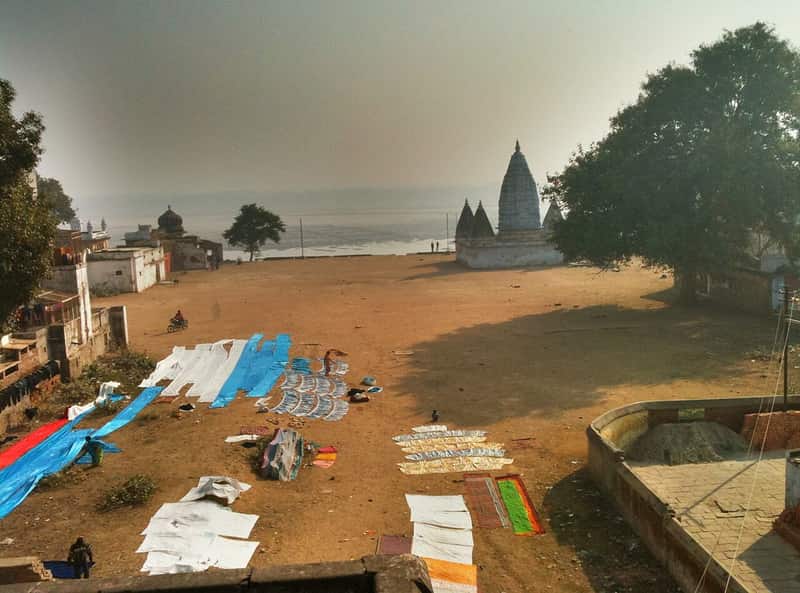
The Morning Bath — A Sacred Plunge
Bathing is the first duty of the day at every ghat of Varanasi, and at Prabhu Ghat it is performed with a plainness that shows the rite at its most essential. The bathers come down at their own pace — a man in his lungi carrying a small pot of water from the temple, a woman in a dry sari who will change behind a cloth held by a friend, a father bringing his small son for his first serious dip. They step into the cold river without ceremony, speak the name of the Ganga, and go under. Three dips, some rising water in the cupped hands toward the sun, a whispered prayer. Then the climb back up, the water sluicing off the steps, the shivering and laughing, the drying with a towel that is older than the bather's marriage.
The water here is cleaner and quieter than at the crowded northern ghats, where the current is churned by hundreds of bodies and the boats. At Prabhu Ghat the river moves at a gentler pace, and the morning bath has the feeling of a private act — as if the Ganga were still the same river the hermits knew, before the engines and the floodlights. Old men who have bathed here for decades will tell you the river changes its mood with the seasons: green and slow in the winter, swollen and brown in the monsoon, clear and cold in the month of Magh, when the morning mist lies over the water like a blanket and the sun rises late and pale over the far bank.
For Hindus, bathing in the Ganga is not merely cleansing but a form of worship, and every gesture at the ghat has its purpose. The water taken home in the pot is for the household shrine; the wet clothes wrung out over the steps are believed to carry the river's blessing back into the house; the sandalwood paste smeared on the forehead after the bath seals the act of purification. At Prabhu Ghat these customs are observed without ostentation, passed from parent to child in the same quiet way they have been passed for centuries. Watching the morning bath here — unhurried, unselfconscious, utterly sincere — is to see the oldest religious practice of Kashi still living in its original simplicity.
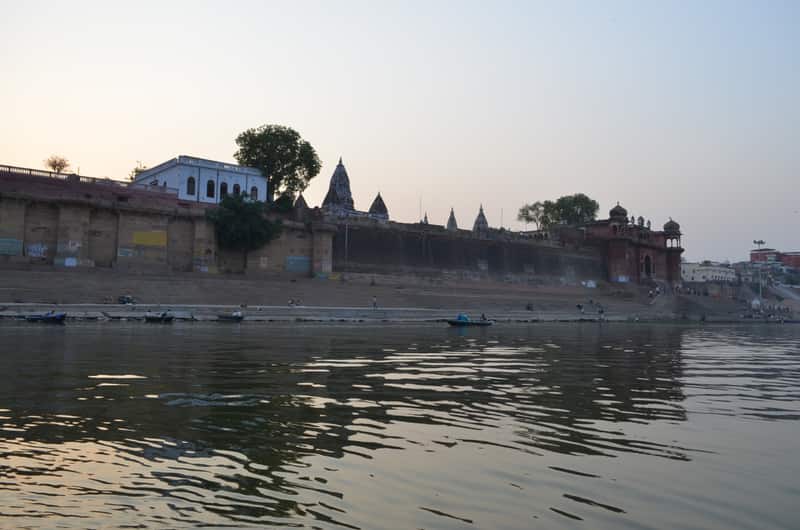
The River Here — Water, Sand and Light
At Prabhu Ghat the Ganga is not yet the broad, engine-churned highway it becomes in the heart of the city. Here, on the southern reach, the river is wider and shallower, breaking into channels around long sandbanks that appear and vanish with the seasons. In the dry months great islands of pale sand rise from the middle of the stream, drawing herons and gulls and the footprints of children who wade out to explore them. The far bank is low and green — fields, willows, an occasional white temple — and the horizon over the water is enormous, so that standing on the steps one feels the full scale of the river, its slow authority, its ancient indifference to the small drama of a city.
The river's mood at this ghat changes with every hour. At dawn it is mother-of-pearl, the sandbanks flushing pink in the first light. By noon it is a sheet of hammered silver too bright to look at, and the bathers have long since retreated to the shade of the trees. In the late afternoon the light turns honey-coloured, and the boats returning upstream cut long wakes of gold. In the monsoon the whole scene is transformed: the sandbanks drown, the river turns wide and brown and muscular, and the water climbs the lower steps until it seems the ghat is about to be taken back into the stream. The people of the mohalla watch this rise and fall every year, and their calendar is measured in its moods.
For those who have read the mythology of Kashi, the river here carries a particular poetry. The Puranas say the Ganga is the daughter of the Himalaya, brought down to earth through the matted locks of Shiva to wash away the sins of the world — and this southern shore, close to the confluence of the Varuna and Assi rivers that guard the city, has long been regarded as part of the holiest water of all. Pilgrims who come to bathe at Prabhu Ghat do so in the belief that this same water flows from the mountains, purified by the gods, older than memory. To stand at the water's edge here and watch the current run is to understand why the Ganga is not a river to Kashi but a presence — vast, beautiful and endlessly patient.
Boats and Boatmen — The Working Shore
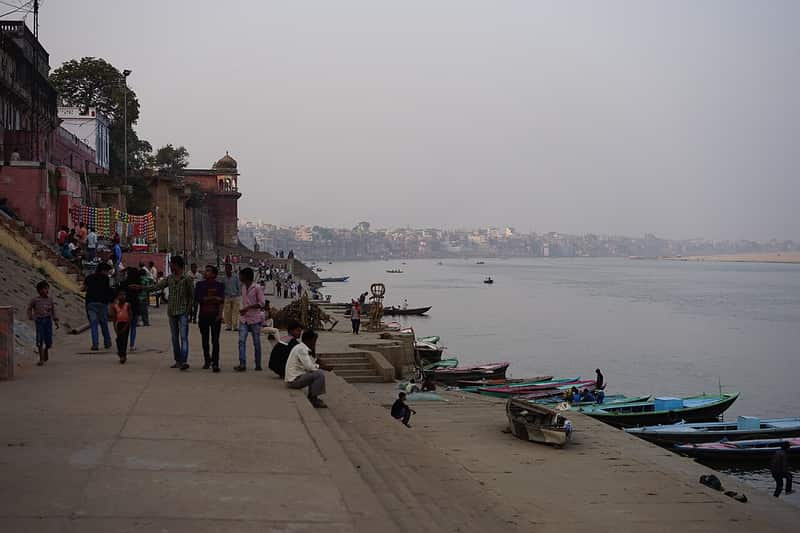
The boats of Prabhu Ghat are not the polished, cushion-seated craft of the tourist ghats, but the working boats of a river community — fishing boats, ferries, cargo boats, the long wooden skiffs in which the boatmen of Kashi have plied the Ganga for generations. They are moored in a loose line along the shore, tied to iron rings and stone posts, bobbing gently with the current. Their paint is faded, their timbers worn smooth, and their names — painted in Hindi on the bows — are those of gods and daughters: Ganga Maiya, Jai Hanuman, Lakshmi. Every boat has its keeper, a man or a family who has counted the river's moods since childhood, and who treats his craft with the familiarity of a second skin.
The boatmen of this ghat make their living from the river in ways that tourists never see. Some fish — casting lines and nets in the channels between the sandbanks, selling their catch at the morning market of the neighbourhood. Some ferry people and goods across to the far bank, where the villages lie among the fields. Some work the long routes, carrying pilgrims, firewood and grain between the ghats of the city. In the evenings they sit together at the top of the steps, mending nets and ropes, discussing the weather, the price of diesel, the state of the river. They are the true sons of the Ganga, and the river keeps their calendar, their conversation and their living.
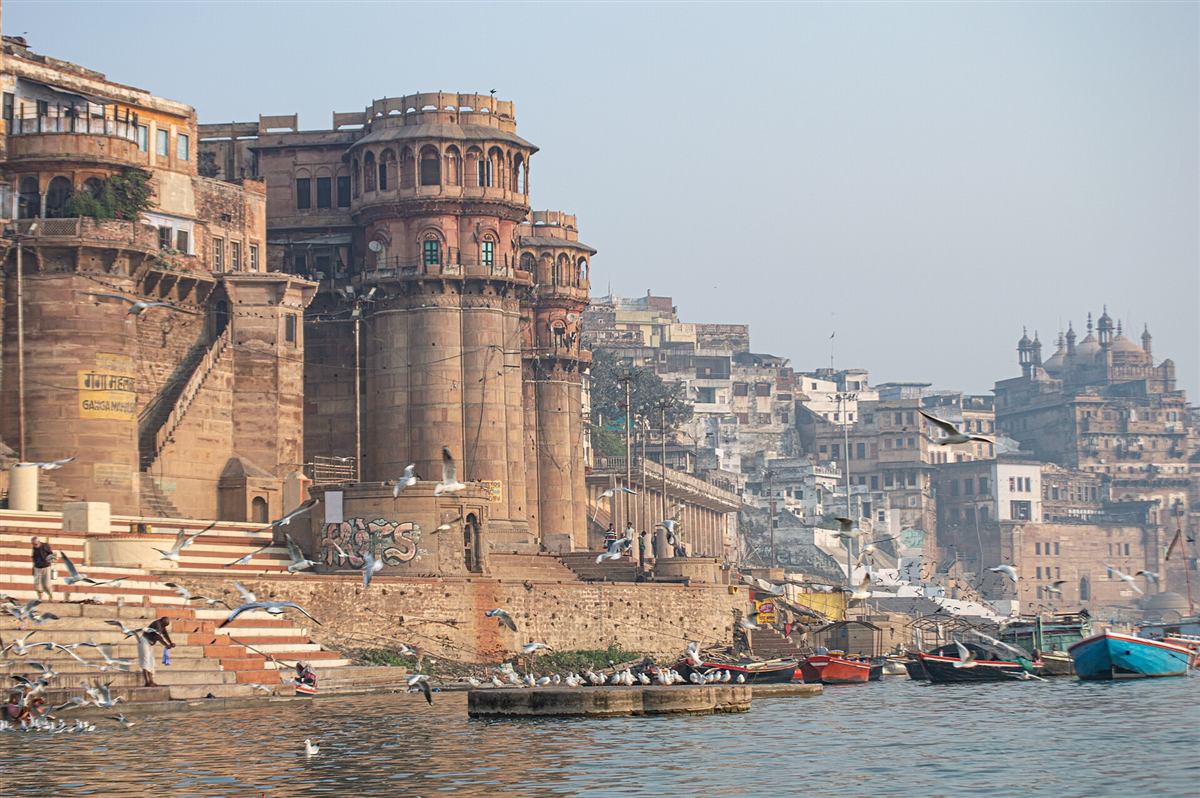
For the visitor, a slow boat ride from Prabhu Ghat is one of the best ways to see the southern shore, for from the water the whole chain of ghats opens out in a single sweeping vista — the quiet steps of Prabhu, the temples and walls of Shivala, the white tower of Tulsi Ghat beyond, and far to the north the smoke of Manikarnika rising over the city. The boatmen of Prabhu are unhurried, and pleased to find a passenger who wants to go south rather than north. They know every shrine, every sandbank and every story of this stretch of river, and they tell them in the unhurried idiom of the river people, to the rhythm of the oars.
The Lanes Behind — A Mohalla of Ordinary Kashi
Behind Prabhu Ghat lies the dense, fragrant tangle of lanes that is the real Varanasi — the Varanasi of courtyards and water taps, of bicycles and drying chillies, of temple bells and television sets playing in the same breath. The mohalla rises steeply from the river in narrow alleys that open now and then into small squares, each with its own character: a paan shop that has stood for three generations, a sweet shop whose jalebis draw customers from four streets away, a barber whose chair has outlasted five politicians, a temple with a peepal tree older than the oldest inhabitant. The houses press close together, their upper floors leaning toward each other as if exchanging gossip, their walls painted in faded pinks and blues.
Life in the mohalla is conducted in the open, and the lane is the true living room of the neighbourhood. Women sit on the steps of the doorways shelling peas and discussing the price of vegetables; children play cricket with a rubber ball and a wicket chalked on a wall; the milkman makes his rounds on a bicycle, the vegetable cart comes through at dusk, and the ice-cream man's bell is the soundtrack of the summer evenings. Everything a family needs can be found within two hundred paces of the ghat — temple, barber, paan shop, stationer, chemist, chai stall — and so the people of Prabhu live as their ancestors lived: a self-sufficient world between the river and the lane, complete in itself.
For the traveller, walking these lanes is an education in scale. The Varanasi of the guidebooks is made of ghats and temples, monuments and rituals; the Varanasi of the mohalla is made of the thousand small transactions of daily life. Here you will see the ordinary holiness of the city: a threshold painted with rangoli, a small shrine at the foot of a tree where a bus stop has gathered around it, a woman drawing a pot of water from the tap for the household gods, a boy delivering the local paper by bicycle. The lanes behind Prabhu Ghat are not a tourist attraction and never will be — they are simply home, the place where the people who bathe at the ghat come back to eat, sleep, quarrel, love and pray.
Neighbouring Ghats — Nishadraj, Shivala and Tulsi
Prabhu Ghat is the middle neighbour of a trio of quiet southern ghats, and each of its neighbours adds its own note to the stretch of river. To the south, between Prabhu and the great busy amphitheatre of Assi, lies Nishadraj Ghat, named for the Nishad, the boatman caste of legend — the community of the fisherman-king Guha who ferried the exiled Ram across the river in the Ramayana. The ghat is a working fishermen's shore, dense with boats and nets, and it shares with Prabhu the same unhurried, unvisited character. A short walk from Prabhu's steps, it offers a view of the same river from a slightly different angle — the angle of the people who make their living from it.
To the north, past a few smaller landings, lies Shivala Ghat, a larger and more important shore, the landing place of the old southern approach to the city. Its broad steps climb to a temple of Shiva, and in the nineteenth century the ghat was the seat of the Maharaja of Banaras, whose fort and palace stand nearby. Beyond Shivala, only a little farther north, rises the most famous ghat of the southern shore — Tulsi Ghat, named for the poet-saint Tulsidas, who is said to have lived and prayed on its steps while composing the Ramcharitmanas. The three ghats together — Prabhu, Shivala, Tulsi — form a natural walk: from the quiet of a fishermen's shore, through the old princely landing, to the steps where the greatest poem of northern India was written.
Walking this stretch of the riverfront is one of the most rewarding ways to spend a morning in Varanasi, for it shows the southern ghats in their proper relationship — as a chain of connected lives rather than a list of separate sights. The steps are continuous, the river uninterrupted, and one ghat flows into the next as naturally as one household flows into another in the lanes behind. From the fishermen mending nets at Nishadraj, to the bathers of Prabhu, to the pilgrims of Shivala, to the poet's shadows at Tulsi, the walk tells the story of a city that has always lived with its back to the lane and its face to the water. Begin early, walk slowly, and the southern shore will give you Kashi as its own people know it.
A Quiet Character — Unspoiled by Tourism
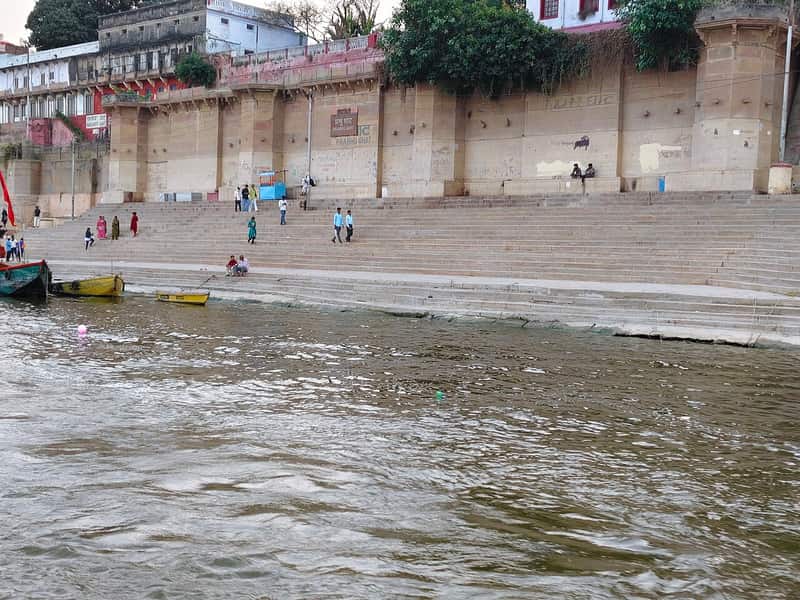
The great distinction of Prabhu Ghat is what it lacks: the signs, the ticket booths, the souvenir stalls, the touts with laminated cards, the loudspeakers, the floodlights, the queues. In an age when the famous ghats of Varanasi have been polished, organised and photographed into postcards, Prabhu Ghat remains what it has always been — a plain neighbourhood shore, worn by use rather than restored for display. The plaster is peeling on the old walls; the paint on the boats is blistered; the steps have been patched with cement in a dozen different years. Nothing here has been done for the camera, and the place has a lived-in dignity that no restoration can manufacture.
This unspoiled character is not an accident but a kind of miracle. The southern ghats have been spared the worst of the tourist economy precisely because they are not on the way to anything — the boatmen of Dashashwamedh skim past them, the evening arti draws its crowds to the north, and the visitors who do wander this far are the minority who came to Varanasi for something quieter. So the bathers of Prabhu still bathe without an audience; the priests still read without a crowd; the fishermen still spread their nets without photographers crouching over them. The ghat's plainness is its protection, and its modesty is its charm — the whole place seems to say that the river does not need to be performed in order to be sacred.
The mood of Prabhu Ghat, then, is the mood of ordinary Kashi — the Kashi that exists in the margins of every guidebook and the heart of every local. It is the mood of a city that is holy first and famous second, where faith is worn like an old coat rather than displayed like a new one. Sitting on the steps here, watching the river and the life around it, a visitor may feel a strange and valuable sensation: the sense that nothing here is being shown to them, that they are simply present in a place that does not know it is being watched. That feeling — of being inside a life rather than outside a sight — is perhaps the rarest thing Varanasi has to offer, and Prabhu Ghat gives it freely.
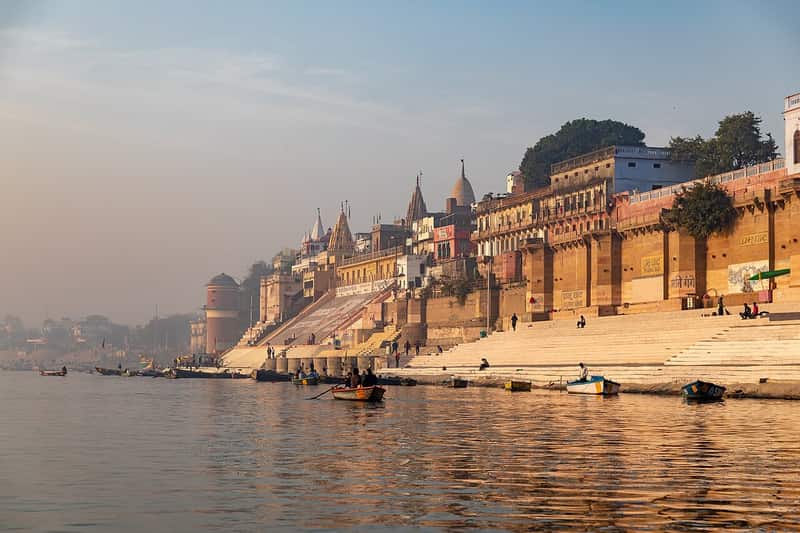
Festivals on the Shore — The Mohalla at Prayer
Although Prabhu Ghat hosts none of the great public spectacles of the northern ghats — no monsoon arti with its thousand lamps, no grand processions of the royal house — the year here is nevertheless measured in festivals, and they are observed with a warmth that spectacle can never imitate. On Ganga Dussehra the whole mohalla comes down to the water to honour the river's descent to earth, bathing at dawn and floating little lamps downstream at dusk. On Kartik Purnima, the full moon of autumn, the steps fill with families and the river carries thousands of flames into the night. The celebrations are local, homemade and sincere — the same festivals the neighbourhood has kept for centuries, in the same forms.
The great festivals of the temple calendar bring their own colour to the ghat. On Diwali the landings are strung with oil lamps, and the river reflects a double city of lights; on Holi the steps run with colour and laughter, and even the boatmen join in the water-fights from their moored boats. During the month of Kartik, the morning is sweet with the songs of women singing the Ganga aarti; during the rains, in the month of Shravan, the boys of the mohalla swing on ropes tied to the old peepal tree, and the festival of Raksha Bandhan ties the whole lane together with its threads. None of these occasions draws a single tourist, and that is precisely what makes them precious — they are the religion of the neighbourhood, practised for its own sake.
For the visitor who happens to be in Varanasi during a festival, Prabhu Ghat offers something the great ghats cannot: proximity without performance. Here you can stand among the people and simply be part of the celebration — no barrier, no platform, no organiser asking for a donation. The families will smile at a stranger, sometimes offer a sweet or a flower, and then return to their worship, and the visitor is free to watch, or even to join, without feeling like an exhibit. It is the kind of welcome that comes naturally to a neighbourhood which has never learned to see outsiders as customers. Come at dusk, stand on the steps, and let the festival of the mohalla fold you into its quiet, radiant life.
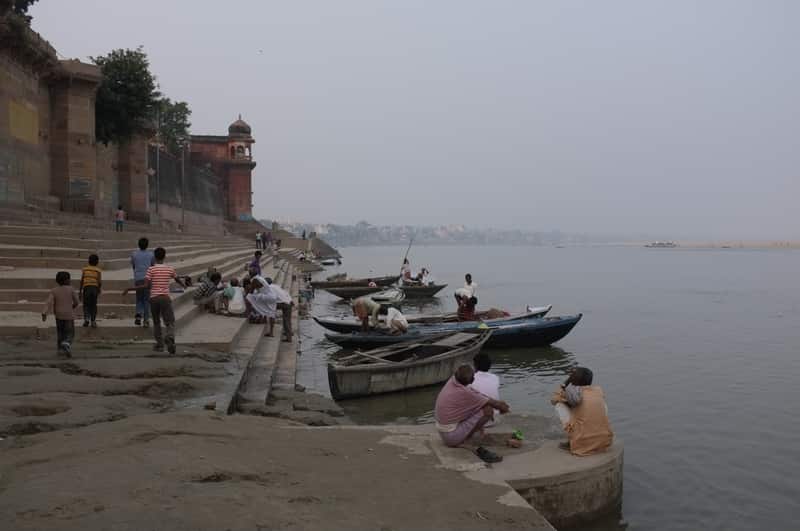
Etiquette and Respect — Conduct at the Ghat
Because Prabhu Ghat is a living neighbourhood rather than a monument, the first rule of visiting is simple: behave as a guest in someone's home, not as a spectator at a show. The people on the steps are not performing for you — the bather at her prayers, the priest at his text, the woman at her washing are all engaged in the serious business of daily and sacred life. Speak softly, move slowly, and give them the privacy they give one another. A photograph of a stranger is a kind of taking, and many locals, especially women, are uncomfortable being photographed at the water; ask first, and accept a refusal with a smile and a namaste.
Modesty of dress matters more at the smaller ghats than at the tourist centres, where foreigners are an expected sight. At Prabhu Ghat, where the whole neighbourhood knows everyone, a visitor in swimwear will cause real embarrassment. Men should wear shorts and a shirt or a lungi; women should keep shoulders and knees covered, and a dupatta or scarf is appreciated. Bathing, if you wish to try it, is acceptable and often welcomed — but bathe as the locals do, in loose modest clothing rather than swimwear, and never wade into the area where the fishermen's nets or the washermen's stones are at work. The river here is treated with the respect due to a mother; enter it as a respectful child.
Finally, the visitor should know what not to do. Do not litter — the residents keep their shore clean and will watch you with silent displeasure if you leave plastic behind. Do not hand money to children; it encourages begging in a neighbourhood that has none. Do not touch the offerings left at the shrines, and do not climb onto the boats without the owner's invitation. And do not be afraid of making a small mistake: the people of Prabhu are famously tolerant of the clumsy but sincere foreigner, and folded hands, a smile and a few words of Hindi will smooth every awkward moment. Come with respect, and you will leave with the memory of having been welcomed — quietly, generously, like an old acquaintance of the shore.
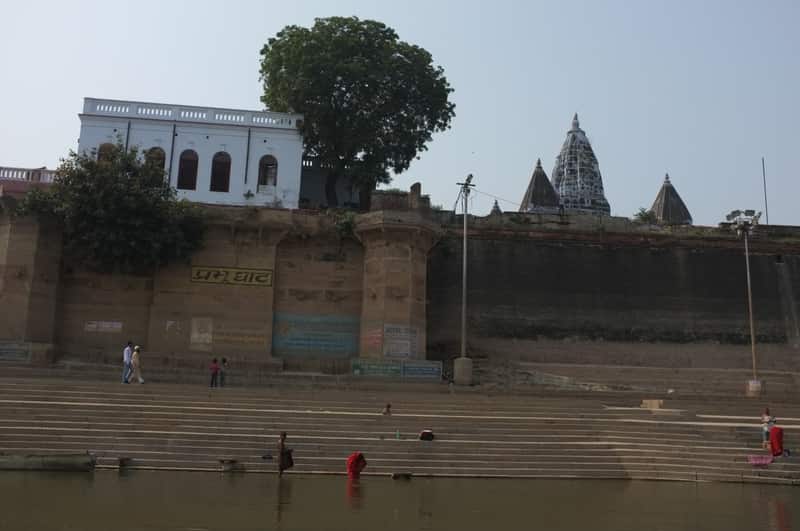
Practical Notes — Reaching Prabhu Ghat
Prabhu Ghat lies on the southern riverfront of Varanasi, roughly midway along the walking stretch between Assi Ghat, the southern terminus of the ghats, and the old city. The easiest approach is on foot along the continuous riverside path from Assi: leave the crowds of the great ghat behind, pass the fishermen of Nishadraj, and within twenty-five minutes of unhurried walking you will reach Prabhu's quiet steps. From the north, the same path comes down from Tulsi Ghat and Shivala. Rickshaws and taxis can bring you close, but the lane to the ghat is narrow and the last hundred metres must be walked; ask the driver to stop at the Prabhu Ghat lane on the main road.
The best time to visit is early morning, between dawn and nine o'clock, when the bathing is in full flow and the light on the river is at its loveliest. The late afternoon is the second choice — golden, quiet, with the boats returning and the evening lamps being lit in the shrines. Avoid the middle of the day in summer, when the stone burns and the river glare is intense, and be aware that in the monsoon the lower steps may be under water. Carry a bottle of water, wear shoes you can slip off for the steps, and keep a small offering in mind — a few marigolds or a diya — if you wish to honour the river as the locals do.
The practical visitor will find few facilities at the ghat itself, and that is part of its character: there is no café, no ticket window, no information board. The nearest amenities are in the mohalla behind — a couple of chai stalls, a small general store, a sweetshop — and the larger services are at Shivala and Assi, both a short walk away. Allow an hour or two for the ghat itself, longer if you plan to walk the full southern shore. And remember the final practical point of all: Prabhu Ghat is not a destination to be ticked off but a place to be absorbed. Come without a list, sit without a plan, and let the ordinary river life of Kashi do what it has done for three thousand years — quietly, patiently, teaching you how to be still.
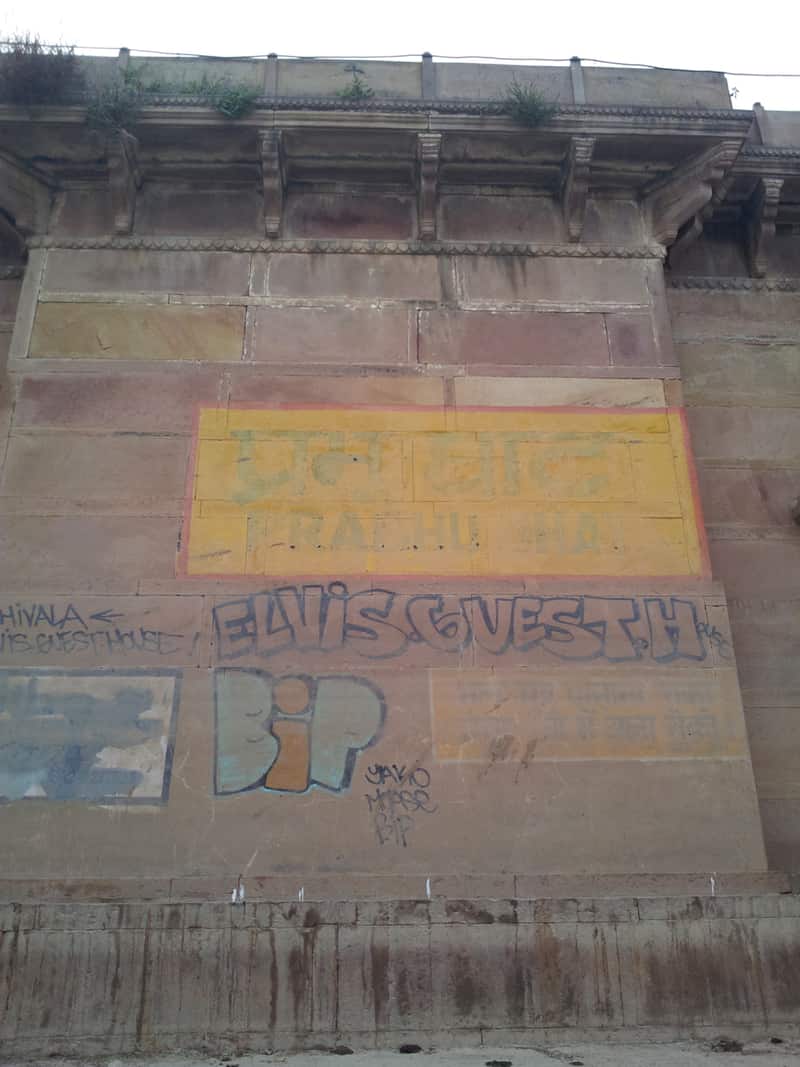
Prabhu Ghat — Gallery (12 Photos)
Image Credits
prabhu-01.jpg · prabhu-02.jpg · prabhu-03.jpg · prabhu-04.jpg · prabhu-05.jpg · prabhu-06.jpg · prabhu-07.jpg · prabhu-08.jpg · prabhu-09.jpg · prabhu-10.jpg · prabhu-11.jpg · prabhu-12.jpg — Wikimedia Commons, under free licenses.
Continue exploring
Similar Ghats Nearby
Book This Ghat — Get Notified
Download the app now and book a boat ride to Prabhu Ghat