

Narad Ghat
Neighbourhood GhatNarad Ghat is a small ghat named after Sage Narada.


Type
Neighbourhood Ghat
Boat Fare
1x base fare
Best Time
6-9 AM
History
This ghat is named after Devarshi Narad, the divine sage — a symbol of knowledge and devotion.
Highlights
- Memory of Devarshi Narad
- Meeting of wisdom and devotion
- Calm atmosphere
Festivals & Events
How pricing works in the NaviX app
No haggling at the ghat — everything is fixed in the app first
- 1
Fixed price before you board
The fare is shown in the app upfront — no bargaining at the ghat
- 2
Sharing or private — your choice
Share with fellow travelers or take the whole boat for your group
- 3
Pay only after the ride
UPI, card or cash — with an instant receipt
🕉️
Aarti details not available for this ghat yet
Complete Guide
Narad Ghat — The Complete Guide
History, mythology, rites and practical details — everything in depth.
On this page
- 1.Narad Ghat: An Introduction
- 2.The Sage Narada
- 3.How the Ghat Got Its Name
- 4.Bhajans and the Musical Soul
- 5.Morning Bathing Rituals
- 6.Bathers, Boatmen, and Daily Life
- 7.The River and the View
- 8.Lanes and the Neighborhood
- 9.Neighboring Ghats: Mansarovar and Raja
- 10.Festivals and Local Celebrations
- 11.Etiquette for Visitors
- 12.Practical Information
📅 Updated: 21 Aug 2026 · Author: NaviX Field Team (field research 2024-26) · 12 sections · 12 photos
Narad Ghat: An Introduction
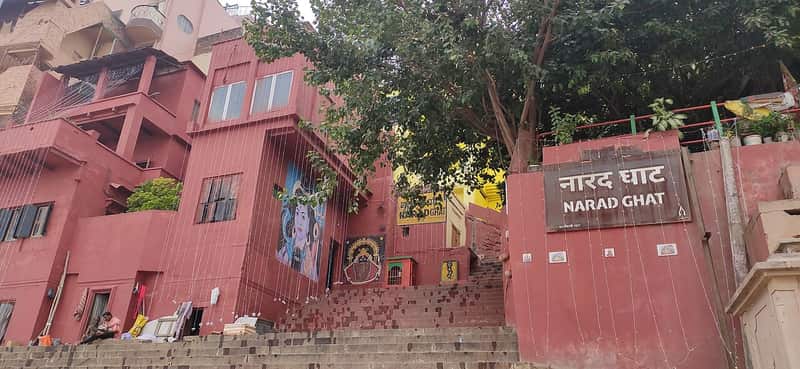
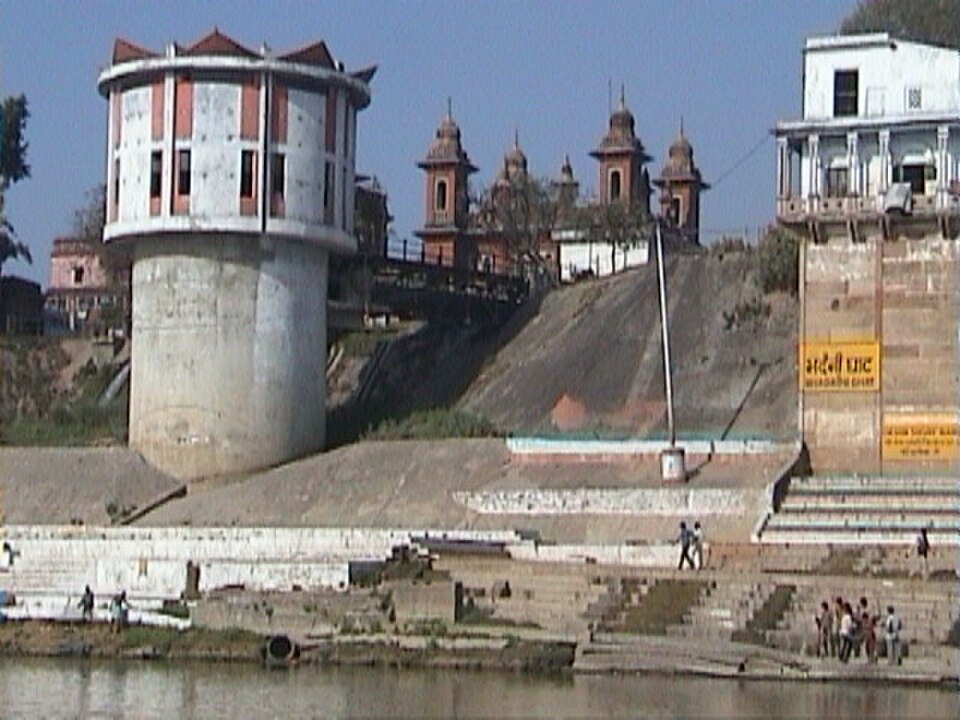
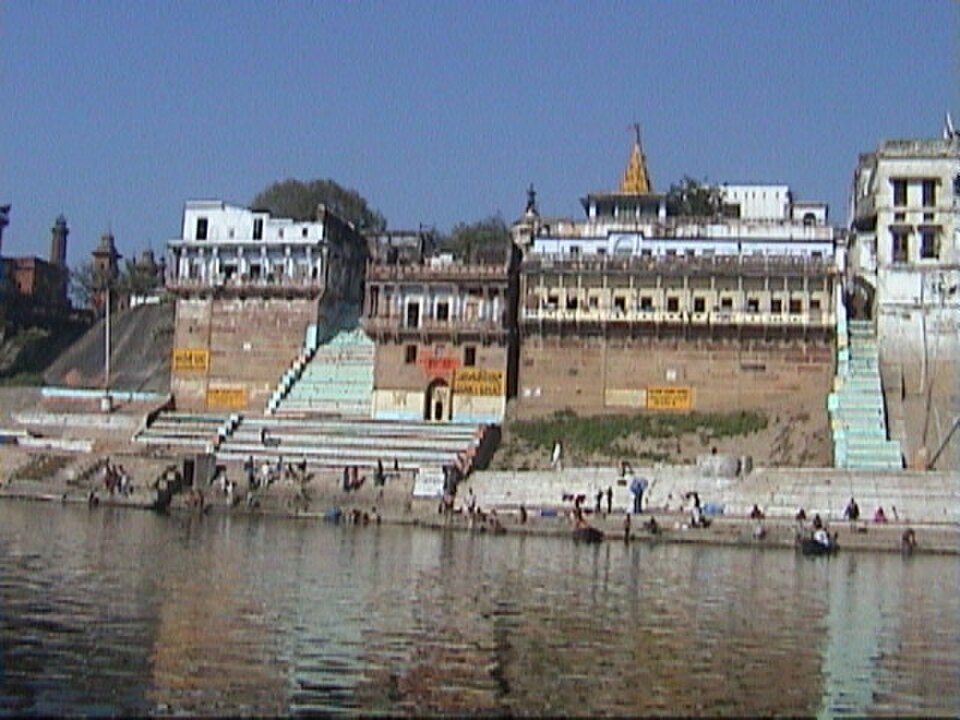
Narad Ghat is a small and quiet landing on the northern riverfront of Varanasi, tucked between the busy steps of Panchganga Ghat and the open stretch of Raj Ghat. It does not announce itself with towering spires or palace facades; its charm lies in plain stone steps, a handful of small shrines, and the unhurried rhythm of everyday life. Named for the celestial sage Narada, the divine musician and messenger of Hindu lore, the ghat carries a distinctly devotional and musical character. Pilgrims come here to bathe in the Ganga, boatmen moor their wooden vessels along its edge, and on many mornings the air carries the sound of bhajans rising from the water. There is no grand architecture to photograph and no famous aarti to attend; there is only the river, the steps, and the faith of the people who use them, and that is more than enough.
The ghat belongs to the long chain of bathing places that lines the holy river from Assi Ghat in the south to Raj Ghat in the north. In this northern neighbourhood the crowds of the central ghats thin out, and Narad Ghat feels more like a village riverfront than a pilgrimage stage. Houses crowd close behind the steps, laundry hangs from railings, and the pace of life follows the river rather than the tourist clock. Yet the sacred purpose of the place is never far away. Bathers perform their ablutions at dawn, singers gather for devotional music, and small festivals draw the whole neighbourhood to the water's edge. It is an intimate, honest slice of old Varanasi, the kind of corner that guidebooks mention in a sentence and travellers remember for a lifetime. It is the Varanasi of the old novels and the old songs, a place that has escaped the modern age not by accident but by choice.
For the visitor, Narad Ghat rewards unhurried attention. There is no ticket window and no museum; there is simply the river, the steps, the shrines, and the people whose lives revolve around both. The best way to understand the ghat is to sit on the steps at sunrise, watch the light spread across the water, and listen to the mixture of prayers, songs, and boatmen's calls that defines this stretch of the bank. Modest, musical, and deeply devotional, Narad Ghat is one of those places where the spirit of Varanasi reveals itself not in grand monuments but in quiet, repeated acts of faith. Come without expectations, and the ghat will give you exactly what you need: a bench of stone, a view of the river, and time. Time, in this city, is the truest currency, and here it is spent generously, the way it always should be.
The Sage Narada
Narada, the celestial sage to whom this ghat is dedicated, is one of the most beloved figures of Hindu mythology. Known as Devarishi Narada, the divine sage, he moves freely between the heavens and the earth, carrying messages between gods and mortals, and always singing the praises of Vishnu. He is the eternal wanderer, the cosmic messenger who appears in the epics, the Puranas, and countless local legends, with a veena in his hands and a knowing smile on his face. His name is invoked at the beginning of many rituals, and his tales are told in every household of the holy city. To the people of the ghat, he is not a distant figure in a temple painting but a presence as familiar as the river itself. His name comes both in the first mantra of the morning and the last song of the evening, and his shadow lies over every act of the ghat. Children learn his mischief, singers imitate his devotion, and old men argue amiably over which of his stories is the truest.
Narada's character is full of delightful contradictions. He is a sage without a fixed hermitage, a musician whose songs soothe the gods, and a mischief-maker whose well-meant meddling sets entire epics in motion. It was his report that set the stage for the Ramayana, and his counsel that shaped many events of the Mahabharata. Yet he is never malicious; his tricks, however troublesome, always point toward a deeper truth. In the devotional tradition of northern India, he is above all the eternal bhajan singer, the one who wandered the three worlds with his veena, singing the names of God and teaching that devotion, not learning, opens the door to liberation. That teaching, more than any miracle, is what this ghat keeps alive in its daily music. Listen to the morning bhajans and you will hear his lesson again: that God is best reached through song, and that the simplest voice, lifted in love, is a prayer no temple can contain.
Varanasi, the city of Shiva, is full of legends that tie such figures to its stones, and Narada is no exception. Some local traditions hold that the sage bathed here on his frequent visits to the holy city, singing hymns at the water's edge. Others say he rested on this very stretch of bank during his endless journeys between the heavens and the earth, tuning his veena to the sound of the Ganga. Whether the tale is ancient or recently retold, it gives the ghat its identity: a place where music and devotion meet, and where the memory of the divine minstrel still hangs over the morning mists of the river. It is a fitting memory, for of all the sages of Hindu lore, none loved song and the road quite as he did. He carried his home on his back, as the old texts say, and the Ganga carried his songs; between the two, this ghat found its patron.
How the Ghat Got Its Name
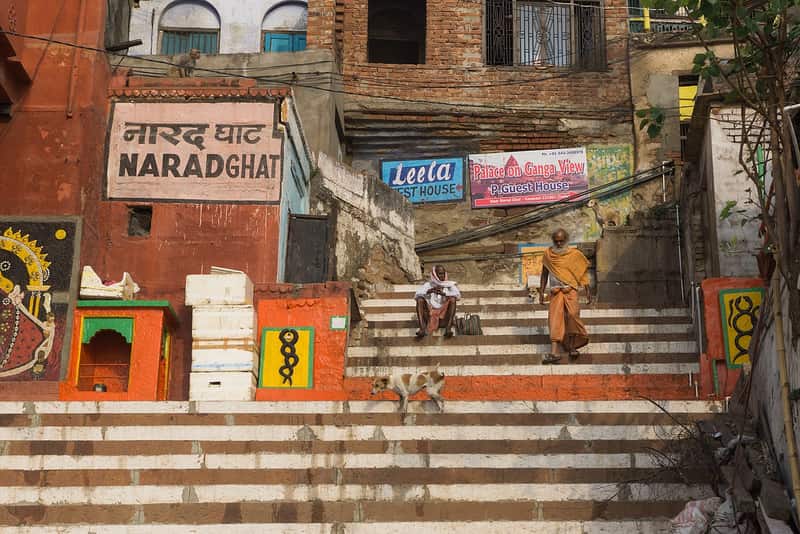
The name of Narad Ghat is not written in bold letters for visitors to see; it lives in the speech of the boatmen, the memory of the neighbourhood, and the records of the municipality. Like many ghats of the northern stretch, it bears the name of a figure from sacred lore rather than a patron king or merchant. The association with the sage Narada is the natural result of centuries of local tradition, which placed the divine musician and messenger somewhere on the banks of the Ganga in this part of the city. Old pilgrims still ask for the ghat by its full name, and the answer, when it comes, is always accompanied by a story. In a city where every stone has a name and every name has a tale, Narad Ghat wears its heritage lightly but never forgets it. The name is spoken with the casual ease of a household word, yet it carries the dignity of a thousand years.
According to the stories still told on the ghat, Narada chose this spot for his baths and his songs during his travels. The simple steps, the absence of grand structures, and the musical character of the place all seem to echo the personality of the sage himself. Local priests point to small shrines along the bank and repeat the legend to curious pilgrims, while the boatmen, who know every stone of the riverfront, call the ghat by its old name as they ply their oars between Panchganga and Raj Ghat. No one can say exactly when the name was first used, but the faithfulness with which it has been passed down from generation to generation is itself a kind of proof of its age. The municipality's records, the pilgrims' guidebooks, and the memories of the oldest residents all agree on one thing: the ghat was called Narad long before any of them were born.
Naming, in Varanasi, is a form of worship. When a ghat takes the name of a deity or a sage, the riverbank itself becomes an act of remembrance. So it is with Narad Ghat: every dip in the water, every bhajan sung on the steps, and every boat that touches the shore quietly renews the memory of the celestial minstrel. For the traveller, the name is the key to the place. Understand who Narada was, and the small ghat with its plain steps suddenly becomes a shrine to music, devotion, and the endless wandering of the divine messenger. Stand at the water's edge, speak the name aloud, and you will feel the weight of all the centuries that have kept it. The river, which has heard the name longer than anyone, answers with its own music. And the singers on the steps, who repeat the sage's name in every verse, are the latest link in a chain of remembrance that reaches back to the age of the gods.
Bhajans and the Musical Soul
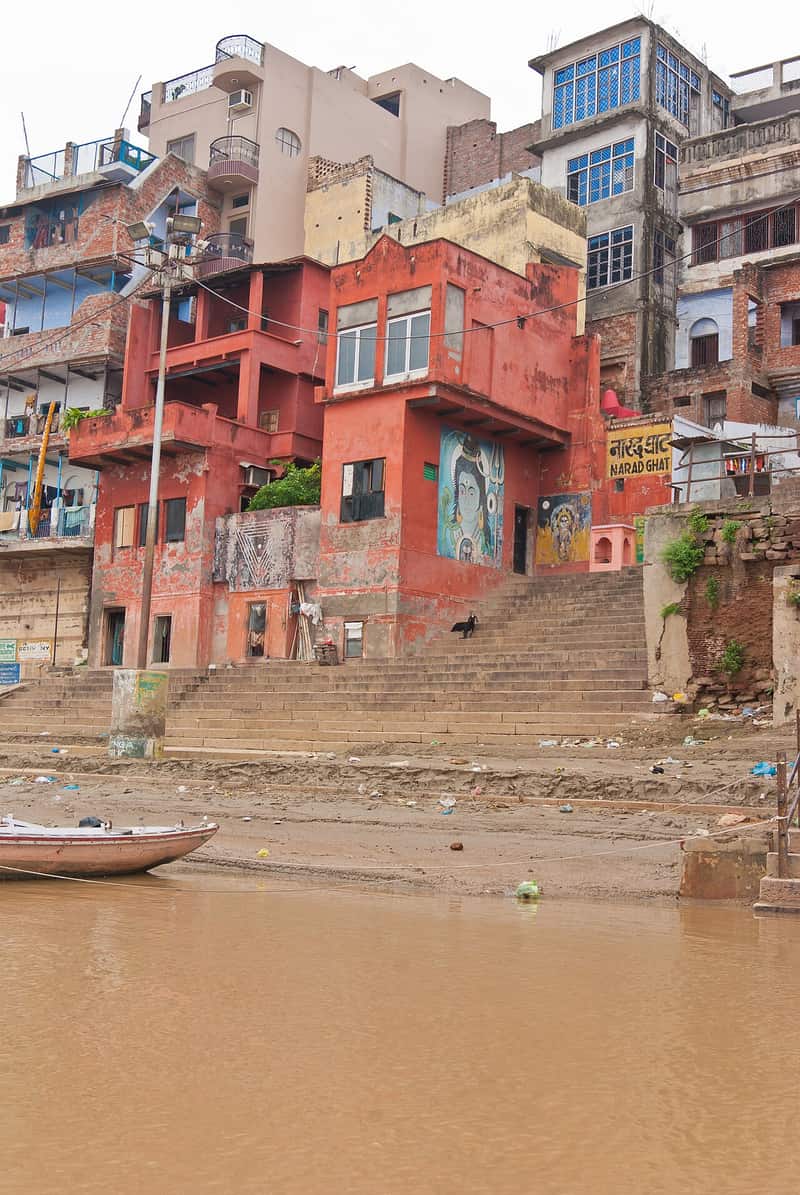
If the ghat has a soul, it is music. Narad Ghat is one of the few places on the Varanasi riverfront where devotional singing is not confined to festival nights but belongs to the ordinary rhythm of the day. In the early mornings, groups of singers gather on the upper steps with harmoniums and tablas, and the bhajans of Meera, Kabir, and Surdas drift across the water. The singing is unhurried and unpolished in the best sense; it is the music of people who sing to God the way they speak to a neighbour. Sometimes a single old man begins a tune alone, and by the third verse the whole group has joined him, voices weaving together without any conductor at all. It is impossible to hear such singing and remain untouched, whether you understand the words or not. The music follows no schedule and obeys no audience; it begins when the heart is ready and ends when the river says so. To sit among these singers is to understand why Varanasi is called the city of music as much as the city of light.
The tradition connects directly to Narada himself, the original minstrel of Hindu mythology, who is said to have invented the veena and to have wandered the three worlds singing the praises of Vishnu. In the same spirit, the singers of the ghat consider their art a form of service rather than performance. They sing for the river, for the morning, and for anyone who cares to stop and listen. During festivals the music swells into longer sessions that last through the night, with oil lamps burning on the steps and voices rising and falling with the sound of the water. The repertoire is old, the instruments are few, and the devotion is entire; nothing more is needed for an evening that will stay in the memory for years. No tickets are sold and no applause is expected; the song itself is the reward, and the singers ask only for a listening ear. In this, they are true disciples of Narada, who taught that music is the shortest road between the human heart and the divine.
For the visitor, this musical life is the ghat's greatest gift. A traveller who arrives at dawn with no plan beyond sitting quietly will be given a concert of remarkable simplicity and depth. The songs may be unfamiliar, but the feeling needs no translation. Whether it is a lone old man humming to himself at the water's edge or a full group singing in the evening, the music of Narad Ghat is the living echo of the sage whose name the place carries. It turns a modest landing into one of the most atmospheric corners of the old city, and it costs nothing but a little attention. Come with ears open and a heart willing to be moved; the ghat will do the rest. There are performances elsewhere in Varanasi that cost a fortune and last an hour; this one costs nothing and lasts as long as you care to stay.
Morning Bathing Rituals
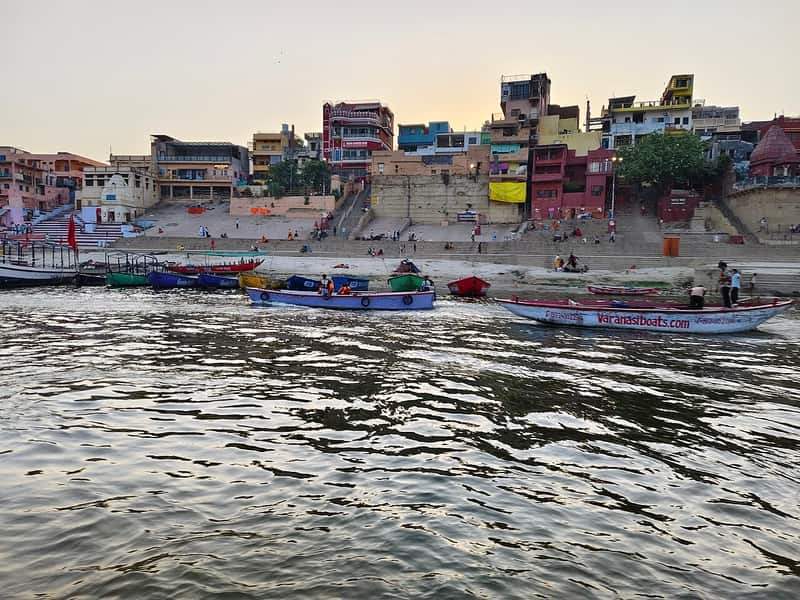
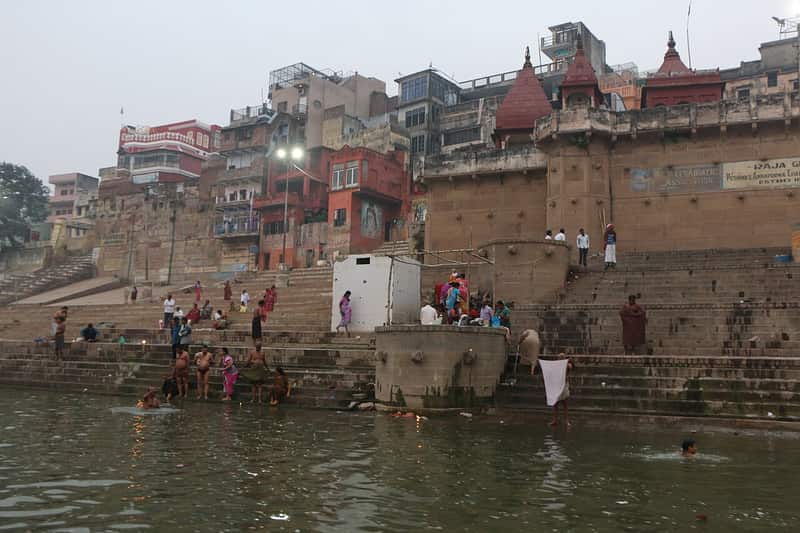
Bathing is the oldest reason for the existence of Narad Ghat, and every day begins the same way. Long before sunrise, the first bathers arrive on the steps, carrying brass lotas, prayer cloths, and small offerings of flowers. They descend to the water in the half-darkness, chant the name of the Ganga, and enter the river with the careful reverence that marks every ritual act in this city. By the time the sun clears the eastern horizon, the water's edge is busy with men and women performing their ablutions, each lost in his or her own private conversation with the river. The chill of the winter water is braved without complaint, for the bath is not a comfort but a duty, and the cold is part of its point. The old bathers say the water knows who has come with love, and treats each one accordingly.
The bath on this northern stretch of the Ganga has its own character. The current is strong here, the river wide, and the water less crowded than at the famous central ghats. Bathers who know the river well choose their spots with care, favouring the sheltered pockets between the stone edges where the flow is gentler. After the dip, they stand waist-deep or kneel on the steps, pour water for the rising sun, and murmur their prayers. The whole ritual takes perhaps half an hour, but it has been repeated here in essentially the same form for centuries, and the continuity is part of its power. To watch it is to see time itself stand still. The water laps against the same stones where a thousand generations of the faithful have stood, and that continuity is the most moving part of the sight.
Bathing at Narad Ghat is not a performance for visitors; it is simply what the river is for. The presence of a few foreign travellers on the steps does not change the mood of the place. The bathers carry on with their mantras, the boatmen carry on with their ropes, and the water carries on with its eternal movement. For those who wish to take part, the etiquette is simple: arrive early, watch quietly, ask before photographing, and, if the water seems inviting, enter with the same reverence as the locals. The Ganga, the old proverb says, grants her grace to whoever comes to her with faith, and on this quiet ghat the faith is as deep as the river itself. Do not be shy; the bathers will make room for you with a nod, and the river will do the rest.
Bathers, Boatmen, and Daily Life
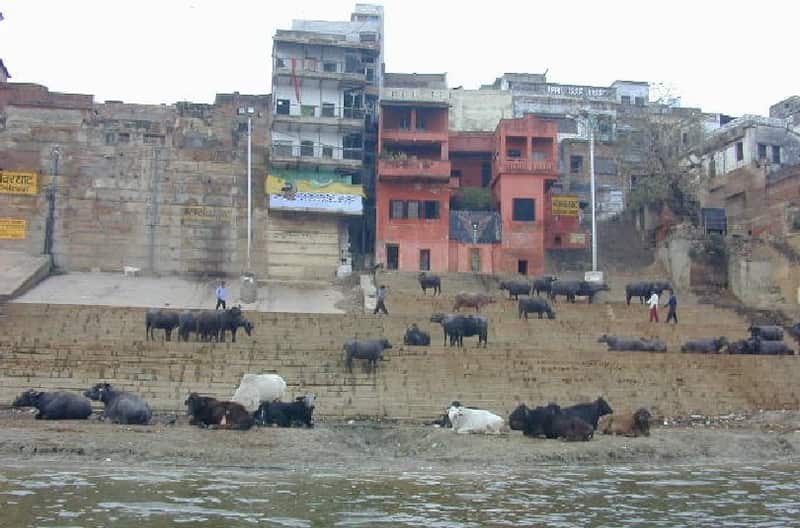
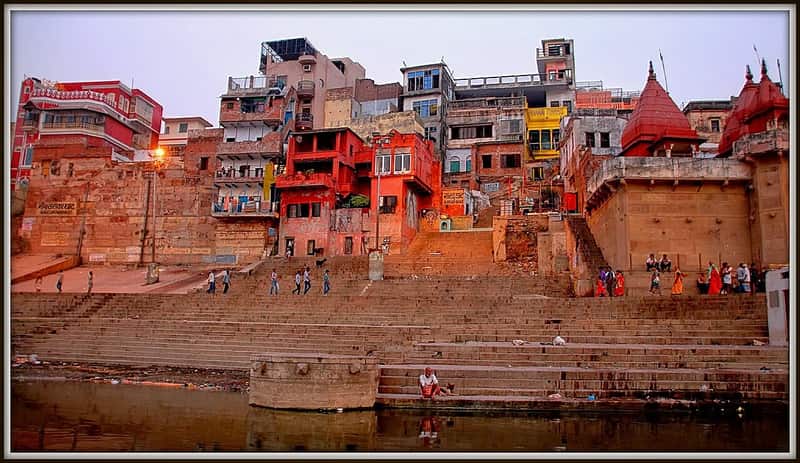
Between the rituals, Narad Ghat is a working place. The boatmen of the northern stretch moor their wooden vessels here, mending nets, coiling ropes, and painting hulls between trips across the river. Some ferry passengers to the far bank, where the sand stretches toward the horizon; others carry pilgrims on longer journeys along the ghats. The dhobi ghats of the neighbourhood send washermen to the steps with bundles of laundry, and the water's edge resounds with the rhythmic beating of cloth on stone, a sound that has accompanied the river for as long as anyone can remember. Milkmen cool their bottles in the shallows, children chase each other along the edge before school, and the day's small commerce unfolds without fuss. The ghat, in short, is never idle; even its rest is a kind of work, the quiet between two tides of activity.
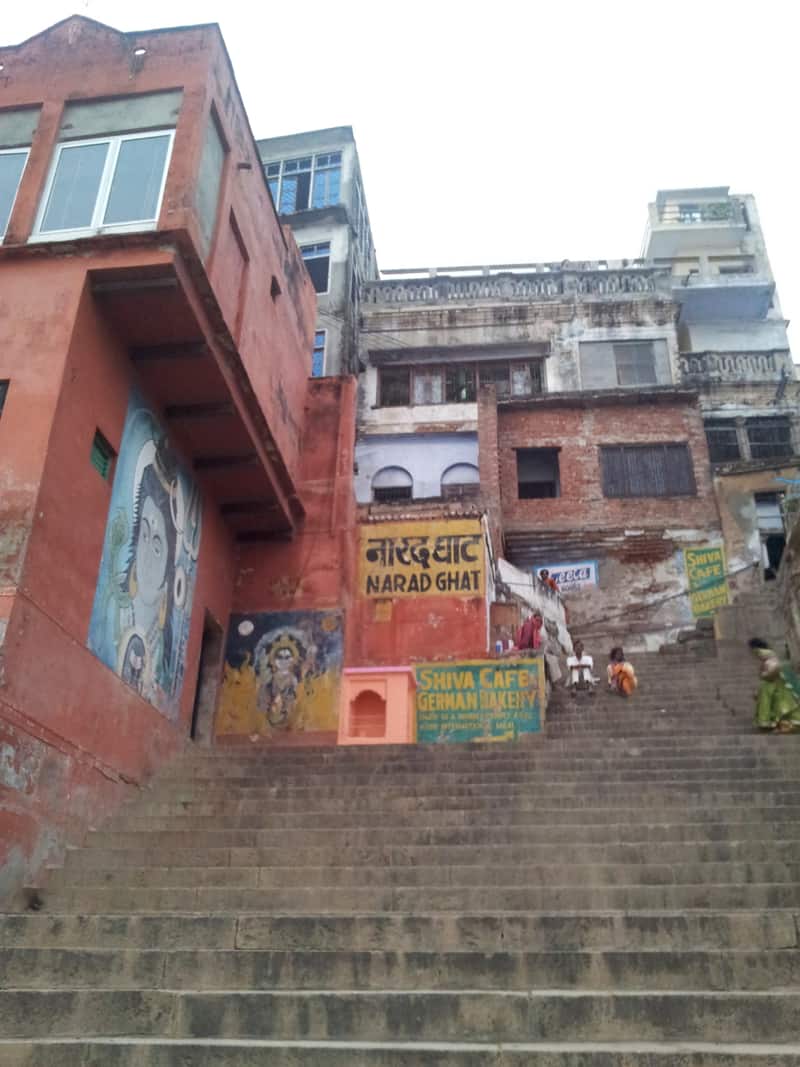
The permanent residents of the ghat give it its human scale. Families live in the houses that crowd behind the steps, and their everyday life spills out onto the landing: children playing on the stones, women filling vessels at the public taps, shopkeepers opening their tiny stalls of prasad, flowers, and sacred thread as the morning advances. The ghat is not a stage but a street, and the people who use it are not actors but neighbours. This is what makes the northern ghats different from the grand showpieces of the centre: here, the holy and the ordinary share the same stones without ceremony, and neither one diminishes the other. The prayer and the washing of pots happen side by side, and the Ganga blesses both. The stranger who joins this life, even for a morning, quickly understands why the riverfront is the true heart of the neighbourhood.
For the traveller who lingers, these small scenes are the real portrait of Varanasi. A boatman sharing tea from a single glass, a grandmother showing a child how to fold a leaf offering, a group of friends arguing cheerfully over the price of a boat ride: all of this is the daily life that the postcards leave out. Narad Ghat asks nothing of the visitor but patience. Sit long enough, and the riverfront will show you its whole rhythm: the morning bath, the midday quiet, the afternoon laundry, the evening lamps, and the night, when only the water and the stars keep watch. There is no better lesson in the unhurried wisdom of this city. Watch, and you will learn; wait, and you will belong, at least for the length of an afternoon.
The River and the View
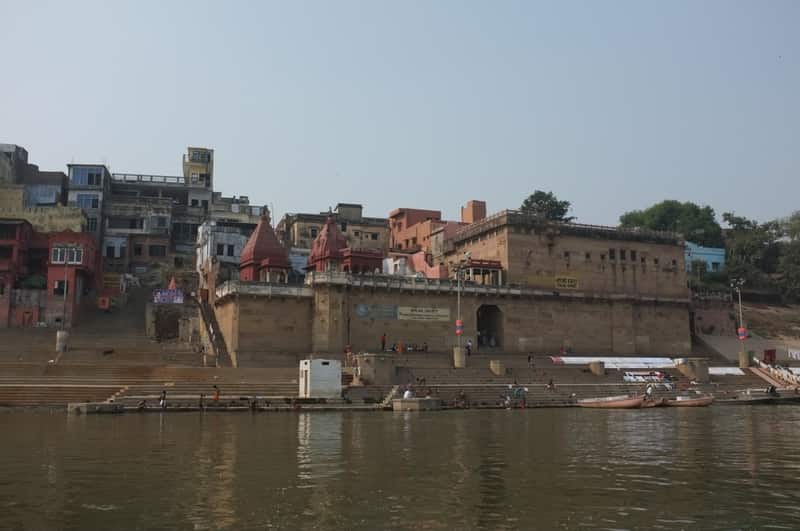
The Ganga at Narad Ghat is a broad and powerful presence. Here, on the northern stretch of the city, the river runs wide and the opposite bank lies far away, a pale line of sand and greenery under the huge sky. The current is muscular, and even the strongest swimmers keep close to the steps. At dawn the water turns from grey to gold, and the reflections of the ghats stretch and shiver across its surface. In the monsoon months the river rises high, swallowing the lower steps and giving the ghat the air of a ship's deck at the waterline. On such days the boats ride high at their moorings, and the river seems to claim the shore for its own. After the rains, the steps that were submerged emerge again, and the ghat resumes its patient conversation with the water.
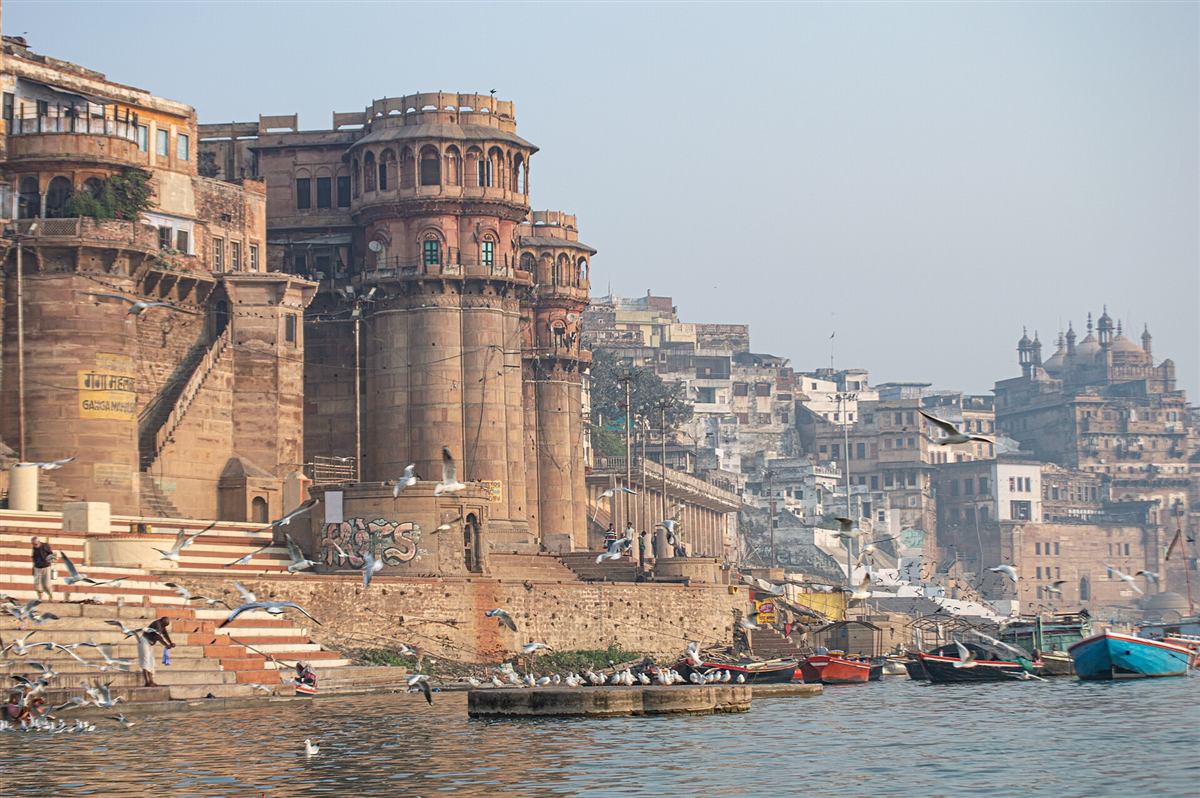
The view from the steps is one of the finest simple panoramas in Varanasi. To the south, the long curve of the ghats rises and falls with the city's skyline, punctuated by temple spires and the great dome of the Kashi Vishwanath temple. To the north, the riverfront thins out and gives way to open ground, where Raj Ghat and the old bridges begin. Across the water, the fields and villages of the far bank are mostly unchanged by time, and boats drift between the two shores carrying pilgrims, cattle, and cargo. At evening the scene turns to amber, the lamps of the central ghats begin to glow, and the whole riverfront becomes a line of soft gold against the darkening sky. Photographers chase this hour, but the best camera is the eye, and the best frame is the memory.
The river, of course, is more than a view. For the people of the ghat, the Ganga is a goddess, a mother, a witness to every life that has been lived along her banks. Her water is taken home in bottles for rituals, her sound is the background music of the neighbourhood, and her moods are the seasons by which the ghat measures its year. To sit on the steps and watch the river is to take part in the oldest meditation of this city, and the Ganga, patient and immense, returns the gaze of every traveller who comes to her. Few places in Varanasi make the river's majesty so simply present. Come once, and you will understand why the people of the ghat speak to her as to a person, and why the city is called her daughter.
Lanes and the Neighborhood
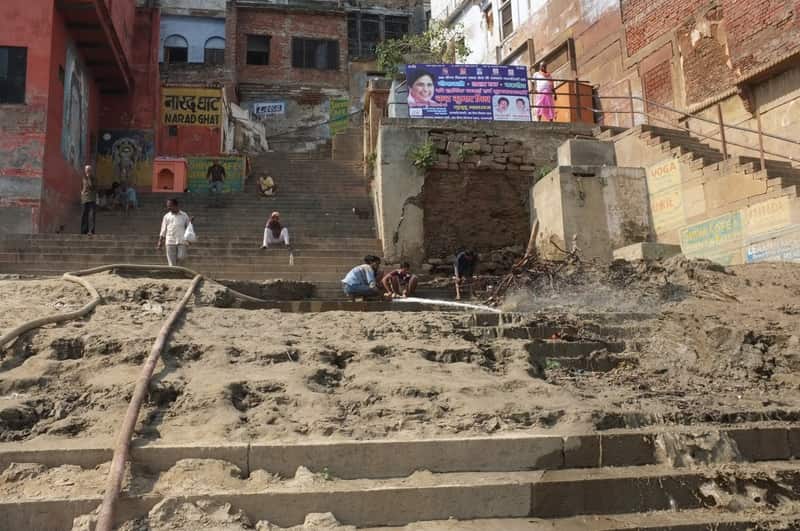
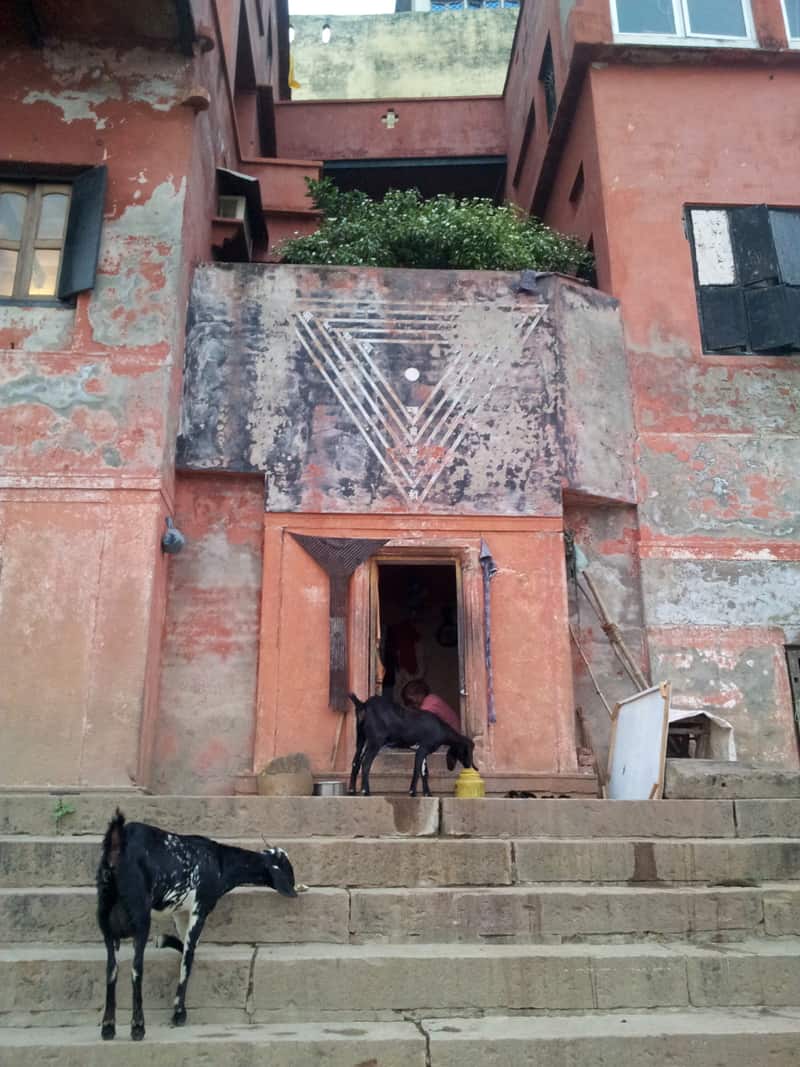
Behind Narad Ghat, the old city begins. Narrow lanes wind away from the river between houses whose upper storeys lean toward each other, filtering the sunlight into long strips. These are the mohallas of the northern riverfront, home to families whose ancestors have lived beside the Ganga for generations. Small temples hide in the shadow of the lanes, their bells sounding at odd hours, and shrines to local deities occupy corners where the walls meet. The neighbourhood has its own economy, its own gossip, and its own unhurried sense of time, and it guards these things with the quiet confidence of a place that has never needed to prove itself. Its courtyards are full of morning songs and afternoon silences, and its doors are open to anyone who walks in peace.
Walking these lanes is an education in the everyday sacredness of Varanasi. A doorway holds a freshly painted image of Ganesha; a courtyard resounds with the grinding of spices; a barber works beneath a peepal tree; a sweet shop sends the smell of jalebi into the morning air. The lanes converge on the ghat like streams on a river, and the ghat, in turn, feeds the lanes with water, pilgrims, and trade. The relationship between the two is so close that the neighbourhood cannot be understood without the steps, nor the steps without the neighbourhood. Every resident is both a person of the lanes and a person of the river, and it is a double citizenship that gives the place its particular warmth. The lanes and the ghat are one organism, breathing together at the water's edge.
For the visitor, the lanes offer the simplest and most rewarding kind of exploration. There is no itinerary and no map that will do them justice; the pleasure is in getting lost, in following the sound of a bell or the smell of incense, in accepting the tea that a shopkeeper offers and the story that comes with it. The people of the neighbourhood are accustomed to travellers and are generally happy to point the way back to the river. And when the lanes finally open onto the ghat again, the sight of the Ganga, wide and bright, feels like a homecoming. Allow a full morning for this walk; it will be the best-spent morning of your stay. And if you lose your way entirely, consider it a gift; the city only rarely allows itself to be found.
Neighboring Ghats: Mansarovar and Raja
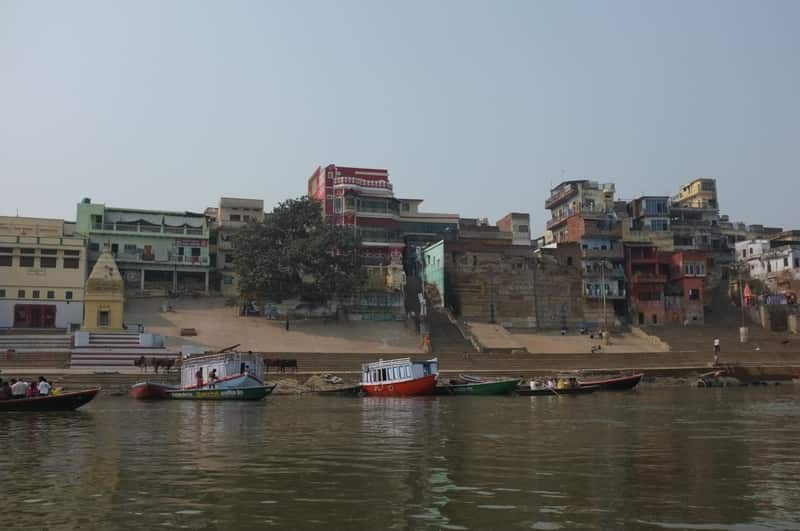
Narad Ghat sits in the company of neighbours that together form a quiet, unglamorous stretch of the riverfront. To the south lies Mansarovar Ghat, a modest landing of the same character, where the faithful come to bathe and where a handful of temples stand close to the water. Named, like its Himalayan counterpart, after the sacred lake, the ghat has its own circle of regular bathers and its own small legends. Between Mansarovar and Narad the steps flow into one another, and in the absence of big crowds it is easy to walk the whole stretch as one continuous shore, pausing at each shrine as the mood takes you. The two ghats are so alike in spirit that locals treat them almost as a single place. A walk between the two takes no more than a few minutes, and the boundary between them is marked only by a change in the pattern of the stones.
To the north, the riverfront opens toward Raja Ghat, a ghat of a different mood. Here the old railway bridge strides across the river, and the bustle of boats, barges, and ferries gives the place a workaday character. Raja Ghat is one of the oldest crossings of Varanasi, a point where pilgrims from the north arrive by boat and where the city's industrial edge meets its sacred heart. Beyond it, the ghats run out altogether, and the bank turns to open ground beneath the walls of the old fort area. The contrast between the two neighbours is instructive: one looks inward toward the city, the other outward toward the world, and both, in their own ways, belong to the river completely. Between them, Narad keeps the middle note, devotional and domestic at once, and the three together tell the story of the northern bank.
Taken together, the three ghats compose a small itinerary for a quiet morning. Begin at Mansarovar at dawn, walk slowly north past Narad, and finish at Raja Ghat as the sun climbs over the river. There are no grand aartis on this stretch, no floodlit ceremonies, only the honest business of bathing, ferrying, and living. For travellers who have seen the spectacle of Dashashwamedh and want to know the quieter Varanasi, this northern walk is one of the most rewarding in the city. And at its heart, modest and musical, stands Narad Ghat, the reason most visitors discover this stretch of shore at all. Plan your walk for a clear morning, wear comfortable shoes, and carry nothing you would not want to lose; the reward is a riverfront almost entirely free of crowds.
Festivals and Local Celebrations
Narad Ghat keeps the festivals of the river with the same devotion as the great ghats, though on a smaller, more intimate scale. On Ganga Dussehra, when the goddess's descent to the earth is celebrated, the steps fill with lamps and flowers, and families gather at the water's edge for the evening offerings. Kartik Purnima brings the biggest crowds of the year, with pilgrims bathing at dawn and the ghat glowing with oil lamps through the night. On these nights the neighbourhood turns out as one, and the boundary between visitors and locals disappears in the press of bodies on the steps. Everyone is dressed in their best, everyone carries a diya, and the river receives the light of a thousand small flames. The smoke of the lamps mingles with the smoke of the kitchens, and the whole neighbourhood smells of devotion and dinner at once.
The musical tradition of the ghat comes into its own during the festivals. Long bhajan sessions run through the nights of Kartik, and on Shivratri the singers of the neighbourhood gather with their harmoniums and drums to keep an all-night vigil of song. The songs are old, the voices are ordinary, and the effect is extraordinary. There is no stage and no audience in any formal sense; everyone is a participant, and the river itself seems to listen. The festival calendar, in this way, simply intensifies the daily music of the ghat, raising it from background to ceremony without changing its nature. It is devotion, amplified. The visitor who joins such a night comes away with the sense of having heard something older than the city itself, something the river has been carrying since the beginning.
Smaller observances mark the local calendar as well. The janmashtami of Krishna brings processions of children, the month of Sawan fills the mornings with Shiva bhajans, and the yearly festival of the local shrines gathers the mohalla for food, songs, and the distribution of prasad. Visitors are welcome at all of these, provided they come with respect and without pushing themselves to the front. To attend a festival at Narad Ghat is to see the holy city at its most human, celebrating not for show but because celebration is what the river, and the gods, deserve. Carry your own diya, offer it to the water, and you will be one of the family. The festivals of the northern ghats are small in scale but entire in spirit, and Narad keeps its share with a quiet pride.
Etiquette for Visitors
Narad Ghat is a living place of worship, and visitors are guests in it. The first rule is simple: dress modestly, covering shoulders and knees, as the bathers themselves do. The second is to be mindful of the rituals. When a puja is in progress, keep a respectful distance, do not walk between the priest and the river, and do not photograph the ceremony without a clear invitation. The people of the ghat are welcoming, but their worship is not a performance, and the camera that captures a blessing can also interrupt it. When in doubt, lower the camera and raise your awareness; observation, freely given, is the finest compliment. A soft word in Hindi, even a broken one, opens doors that no amount of money can. A smile, a folded hand, a gentle namaste: these are the true entry tickets of Varanasi.
The river deserves the same respect as the steps. Plastic bottles, wrappers, and other waste should never be left on the ghat or thrown into the water. The Ganga is the mother of this city, and the cleanliness campaigns of recent years have made the river's health a matter of public devotion. If you wish to bathe, enter the water with the same reverence as the locals, and be aware that the current on this stretch is strong. It is also wise to leave valuables behind; the ghat is safe, but the river takes what it is offered, and a dropped phone in deep water is gone forever. Keep your possessions close and your attention on the water. The ghat rewards the careful visitor with its confidence, and that trust is not easily earned twice.
Finally, come with patience and an open hand. The boatmen who offer their services are tradesmen making an honest living; a price agreed beforehand is a fair price, and bargaining should be light-hearted rather than fierce. The children who ask for money are best given something useful instead, like fruit or pencils. And the traveller who gives a little of his time, who sits and listens and lets the ghat reveal itself, will leave with far more than he brought. Respect, in Varanasi, is returned in kind, and nowhere more surely than on the quiet steps of this small ghat. Come as a guest, and you will be treated as one of the family. The reward for good manners here is simple and complete: the ghat will treat you as it treats its own, with warmth and without ceremony.
Practical Information
Narad Ghat is easy to reach and best visited slowly. The simplest approach is on foot along the riverfront: from Dashashwamedh Ghat walk north past Manikarnika and Panchganga, and the ghat appears within half an hour, part of the same continuous line of steps. From the city side, auto-rickshaws can bring you close through the northern lanes, and a short walk from the road delivers you to the water. A boat from Assi or Dashashwamedh is the most scenic option, drifting north along the whole chain of ghats with the city opening up from the river. Whatever route you choose, arrive early; the ghat is at its best when the day is new. The boatmen will tell you the same thing with a grin: the morning belongs to the river, and the evening belongs to the city.
The best time to visit is early morning, between sunrise and nine o'clock, when the bathing is at its height and the light is at its best. Winter mornings, from October to February, are the finest, with clear skies and gentle air; the monsoon months bring a dramatic river but slippery steps. Evening visits are quieter, with the lamps of the central ghats glowing to the south and the northern stretch falling into darkness. Allow at least an hour for the ghat itself, and twice that if you plan to explore the lanes behind it. Carry water, wear shoes you can remove quickly, and keep your camera handy but discreet. A light pack and an early start are the two essentials; everything else the ghat will provide or the river will forgive. Remember that the northern stretch is best savoured slowly, so resist the urge to rush.
Practical details are simple. The ghat is open at all hours and entry is free. Nearby facilities are limited, so carry water and use the toilets of the larger ghats before you arrive. For a fuller morning, combine Narad with its neighbours: bathe at Mansarovar, walk through Narad, and end at Raja Ghat, where boats return to the centre. And if you have time, come back at night, when the moon lays a path of silver on the water and the bhajans of the ghat carry across the river, as they have for centuries. This is the ghat's secret gift: it gives the same river, and gives it differently. That is the quiet magic of the place, and it waits for whoever comes with time to spare. Come once for the day, come again for the night, and the ghat will seem like two different rivers.
Narad Ghat — Gallery (12 Photos)
Image Credits
narad-01.jpg · narad-02.jpg · narad-03.jpg · narad-04.jpg · narad-05.jpg · narad-06.jpg · narad-07.jpg · narad-08.jpg · narad-09.jpg · narad-10.jpg · narad-11.jpg · narad-12.jpg — Wikimedia Commons, under free licenses.
Continue exploring
Similar Ghats Nearby
Book This Ghat — Get Notified
Download the app now and book a boat ride to Narad Ghat