

Mahanirvani Ghat
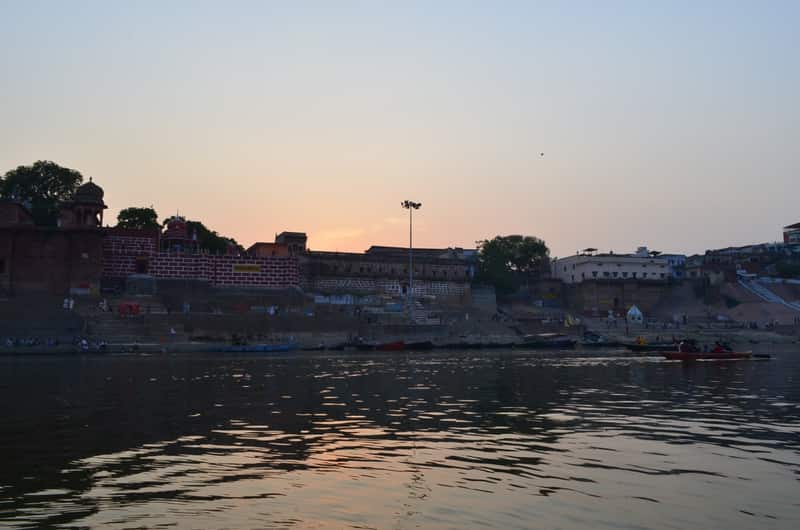
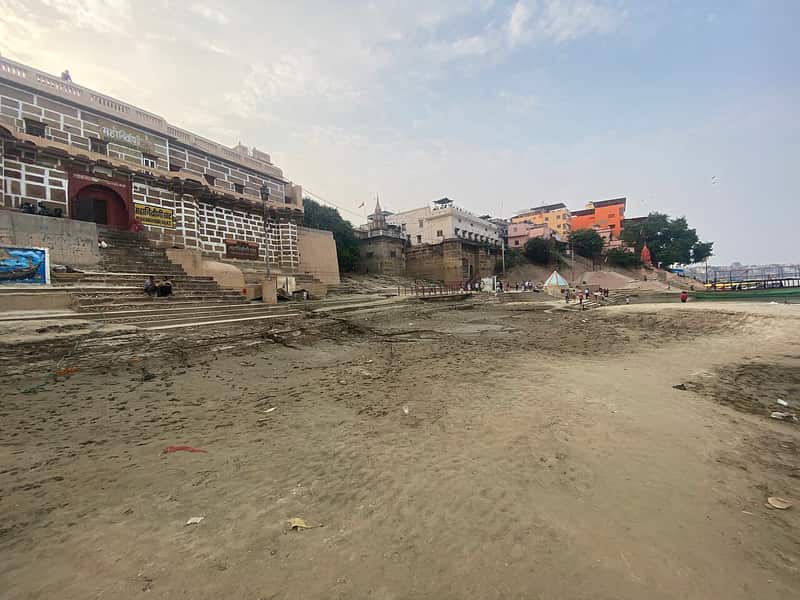
Neighbourhood GhatMahanirvani Ghat is a small ordinary ghat.


Type
Neighbourhood Ghat
Boat Fare
1x base fare
Best Time
5-9 AM
History
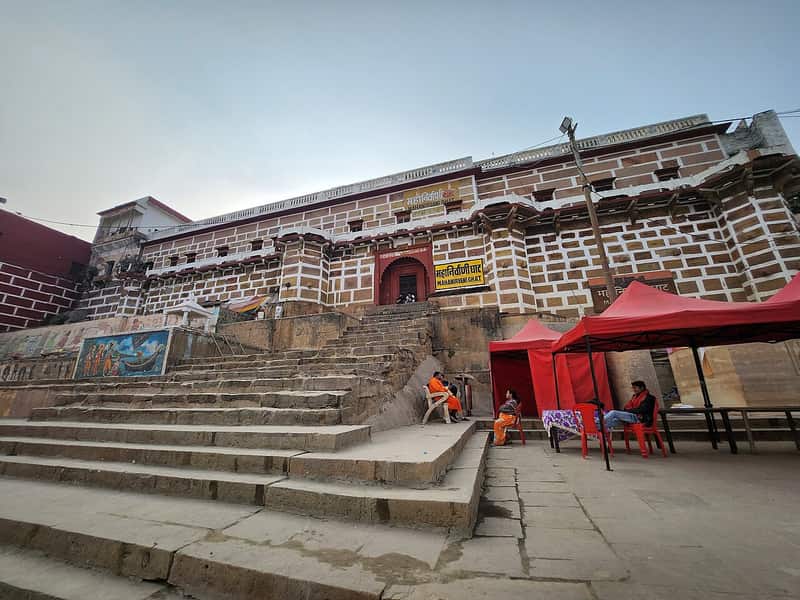
This is the ghat of the Mahanirvani Akhada. The traditions of Kashi’s akhadas remain alive here, making it holy for naga sadhus and devotees of Shiva.
Highlights
- Sacred ground of the Mahanirvani Akhada
- Tradition of the naga sadhus
- Holy link to Shiva devotion
Festivals & Events
How pricing works in the NaviX app
No haggling at the ghat — everything is fixed in the app first
- 1
Fixed price before you board
The fare is shown in the app upfront — no bargaining at the ghat
- 2
Sharing or private — your choice
Share with fellow travelers or take the whole boat for your group
- 3
Pay only after the ride
UPI, card or cash — with an instant receipt
Daily at dusk
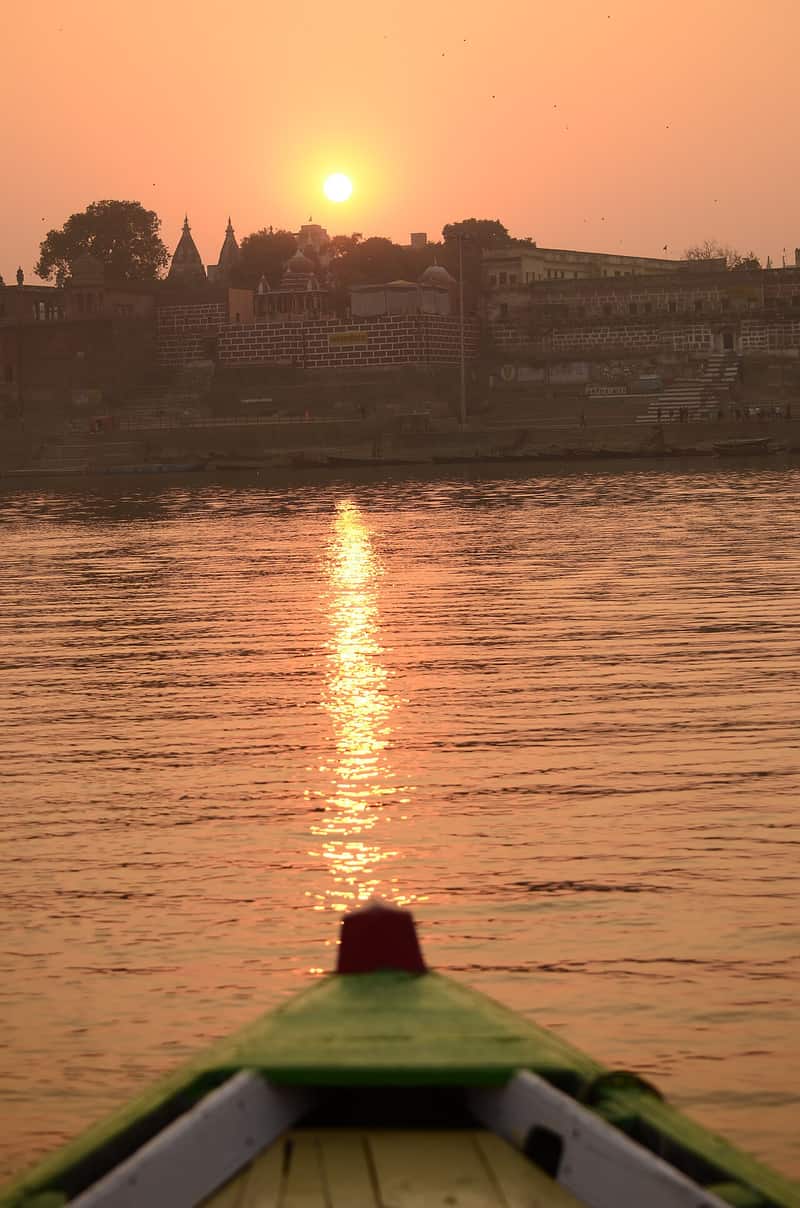
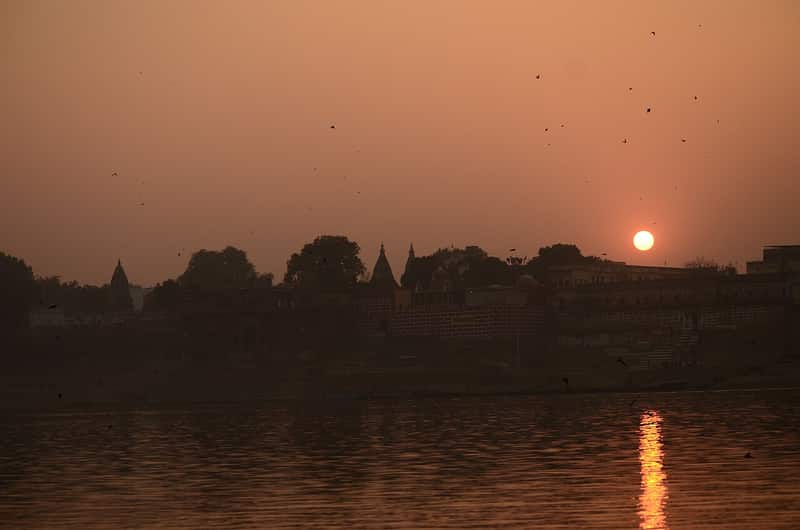
Sadhus wave lamps before the river as the ghat glows in fading light
Complete Guide
Mahanirvani Ghat — The Complete Guide
History, mythology, rites and practical details — everything in depth.
On this page
- 1.Mahanirvani Ghat — The Ascetics' Shore of Kashi
- 2.The Mahanirvani Akhara — A Millennia-Old Order of Renunciates
- 3.Life on the Ghat — The Daily World of the Renunciates
- 4.Festivals and Processions — The Akhara in Full Glory
- 5.Pilgrim Bathing — The Sacred Dip at Mahanirvani
- 6.Steps, Shrines and Akhara Buildings — The Architecture of the Ghat
- 7.The Old City Lanes Behind the Ghat
- 8.Neighbouring Ghats — Rajendra Prasad and Niranjani
- 9.Etiquette with Sadhus — Conduct on the Ascetic Shore
- 10.Practical Guide — Reaching the Ghat and Best Times
📅 Updated: 21 Aug 2026 · Author: NaviX Field Team (field research 2024-26) · 10 sections · 10 photos
Mahanirvani Ghat — The Ascetics' Shore of Kashi
Mahanirvani Ghat sits on the northern stretch of Varanasi's great riverfront, a quiet shore of broad steps and open courtyards set between Rajendra Prasad Ghat and Niranjani Ghat. Unlike the crowded spectacle of Dashashwamedh or the solemn fires of Manikarnika, this ghat keeps the atmosphere of an ascetic's retreat, for it is the home of the Mahanirvani Akhara, one of the oldest and largest orders of Shaivite renunciates in India. The name itself means the great liberation, and the ghat has been a seat of sadhu life for many centuries, long before the first European travellers sketched its steps in the nineteenth century. Its stone terraces are shaded by ancient trees, its courtyards ring with the chants of monks, and its upper platforms are the daily haunt of orange-robed sanyasis and ash-smeared Nagas who have chosen to abandon the world and live on the banks of the sacred river.
Most of the year the ghat is a place of quiet routine. In the soft light of dawn, Naga ascetics can be seen performing their ablutions and fire rituals on the river's edge, their bodies smeared with ash and their matted hair bound high. Sanyasis sit cross-legged in meditation beneath the trees, scripture teachers hold court in the verandas, and the sound of conch shells and temple bells drifts across the water. The pace of life is slow and deliberate, measured by the rituals of the day rather than the demands of the city, and pilgrims who come here find a side of Kashi that many visitors never see — the living, breathing world of Hindu monasticism. Children of the akhara run errands between the kitchens and the shrines, while the older monks repair their rudraksha beads and argue softly over the fine points of philosophy.
The ghat is at its most spectacular on festival days, when the akhara comes out in full glory. Processions of hundreds of ascetics wind down the steps with banners, tridents and drums; Nagas ride on decorated elephants or march with swords and spears; and the whole riverfront fills with the noise and colour of a monastic army on parade. On such days Mahanirvani becomes the focus of the old city, drawing crowds from every corner of Kashi. On ordinary days, however, it is simply the calmest of the northern ghats — a place to sit on the steps, watch the boats pass, and reflect on the vow of renunciation that has given this shore its character. Evening brings the arati, when lamps are waved before the river and the ghat glows in the gathering dark, and even those who come only to pass through find themselves lingering, held by a stillness that the busier ghats can never offer.
The Mahanirvani Akhara — A Millennia-Old Order of Renunciates
The Mahanirvani Akhara is among the oldest institutions of Hindu monasticism, and its history is woven into the story of Kashi itself. The akhara belongs to the broad family of Shaivite orders that trace their lineage to the teachings of Adi Shankaracharya and the revival of monastic life in the early centuries of the common era. Renowned across India for its learning and discipline, it is one of the thirteen great akharas that traditionally claim the right to lead the Shahi Snan, the royal bathing procession at the Kumbh Mela. Its spiritual head, the Mahant, is counted among the most respected figures in the sadhu world, and its name is spoken with reverence from the Himalayas to Rameswaram.
From its seat on the ghat, the akhara has shaped not only religious life but also the politics of the holy city. Like other great akharas, it once fielded armies of armed Nagas who defended temples, settled disputes and upheld the dharma in times of turmoil, and its warriors fought in historic battles at the Kumbh gatherings and against foreign invasions. Today the martial tradition survives mostly in ceremony, but the akhara remains a powerful social and spiritual institution, with branches and hermitages across the country, a treasury supported by the donations of devotees, and a library of Sanskrit manuscripts preserved in its buildings behind the ghat. Its monks still observe the ancient rules of the order, from the vow of celibacy to the austere discipline of the monastic calendar, and the akhara's councils still meet to arbitrate the affairs of the sadhu community.
The akhara's renown rests equally on its reputation as a school of renunciation. Men from every region of India — Brahmins and peasants, clerks and soldiers — have joined its ranks over the centuries, surrendering their names and identities to take up the ochre robe; among the initiates have been princes who traded their palaces for begging bowls and scholars who exchanged their libraries for the banks of the Ganga. Initiation is a serious matter: the novice is tested, his head is shaved, and he receives a new name from his guru before being accepted as a full member of the order. The Mahants of Mahanirvani have also been patrons of learning, supporting Sanskrit colleges and feeding thousands of pilgrims during the great fairs, so that the akhara's name is known not only in the sadhu world but in every household of Kashi.
Life on the Ghat — The Daily World of the Renunciates
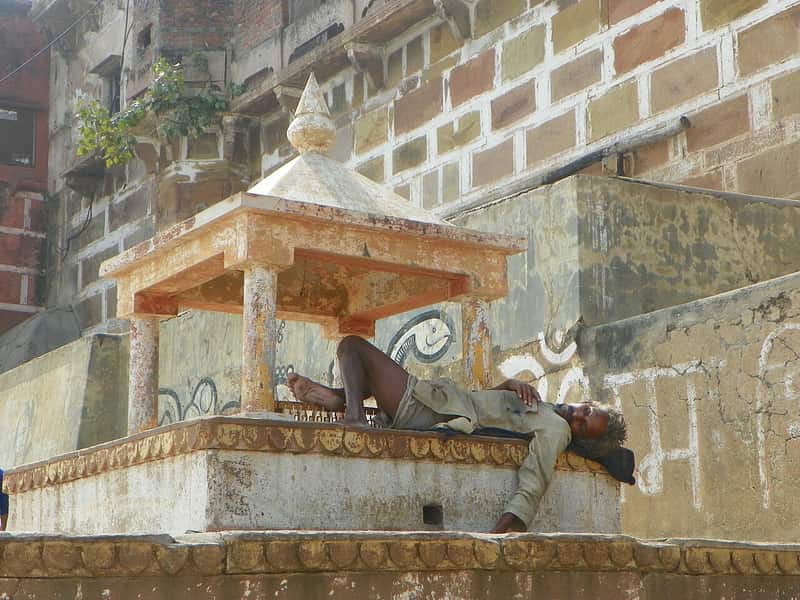
Life on Mahanirvani Ghat is governed by the rhythm of monastic discipline. The sadhus of the akhara rise before the sun, bathe in the Ganga, and perform their morning worship — the worship of Shiva, the recitation of mantras, and the offering of fire. Many of the Nagas, the naked ascetics who are the most striking figures of the order, spend hours in meditation on the stone platforms above the river, their bodies covered only in ash from the sacred fire. Others tend the akhara's shrines, read scripture in the verandas, or instruct the younger monks, and by mid-morning the ghat has settled into the calm, purposeful busyness of a monastery by the water, with the sound of chanting rising and falling through the day.
The ascetics of Mahanirvani belong to one of the strictest traditions of Hindu renunciation. They have given up family, property and caste identity, and their only possessions are the symbols of their order: the rudraksha beads, the trident, the begging bowl and the ochre cloth. Their austerity is legendary — some keep silence for years, some stand for days in meditation, some undertake penances that would break an ordinary body. Yet among themselves the sadhus are famously jovial, gathering in groups on the ghat to smoke, argue philosophy, share stories of their travels and tease the younger monks. The visitor who approaches them with humility usually finds not stern hermits but warm, witty and endlessly talkative men, delighted to explain their vows to a genuinely interested listener.
The ghat also shelters a second community of renunciates: the sadhvis and sanyasinis of the women's orders, who live in the akhara's quarters and follow the same discipline as the men. Widows from all over India, many of them elderly, spend their last years on the ghats of Kashi, and Mahanirvani has long been a favoured shore for them, its atmosphere of piety offering a dignified and peaceful old age. Whether male or female, the renunciates of Mahanirvani share one conviction — that the world of wealth and desire is passing, and that liberation is won by letting it go. To watch them live that conviction, day after day on the same steps, is to see the ideal of Kashi in its purest form, and no photograph or guidebook can capture what their silent presence gives to this stretch of the river.
Festivals and Processions — The Akhara in Full Glory
On festival days the quiet of Mahanirvani Ghat vanishes in a burst of sound and colour. The greatest of these is the procession of the akhara at Maha Shivratri, when hundreds of sadhus march down the steps in their ceremonial regalia — Nagas draped in marigold garlands, their bodies covered in fresh ash, sanyasis carrying tridents and swords, and elephants leading the column as drums thunder and conch shells blare. The ghat becomes a stage of the ancient monastic world, its terraces packed with devotees who have come to receive the darshan of the renunciates and to touch the dust of their feet, and the river itself seems to hold its breath as the great column moves toward the water.
Nag Panchami and Guru Purnima are other great days at Mahanirvani. On Guru Purnima, disciples from all over India gather to honour their teachers, the akhara's courtyard fills with flowers and offerings, and the Mahant gives blessings and discourses well into the night. On Nag Panchami, processions of ascetics honour the serpent god, and the ghat resounds with chanting. The akhara also takes part in the royal bathing processions of the Kumbh Mela, and before the sadhus depart for the great fair, the whole city gathers at the ghat to bid them farewell with garlands and drums — a scene so old that the British chroniclers of the nineteenth century described it in wonder.
Beyond the great festivals, the ghat marks the daily and weekly rhythms of the Hindu calendar. On every Purnima, the full-moon night, pilgrims and sadhus gather at the river for the ceremonial bath; on Mondays, the day of Shiva, the ghat is busier than usual; and at the time of the sacred bathing festivals of Kartik and Magh, thousands of devotees line the steps to take their holy dip. The festival calendar of Mahanirvani is really the calendar of Kashi itself, and those who plan a visit around one of these days will see the ghat in its full glory, transformed from a quiet monastic shore into the beating heart of the old city's faith, where the centuries-old traditions of the akhara meet the devotion of the common pilgrim.
Pilgrim Bathing — The Sacred Dip at Mahanirvani
For pilgrims, Mahanirvani is above all a bathing ghat, a place where the sacred river can be entered with devotion. The steps descend gently into the Ganga, and the water here is clear of the smoke and crowd of the burning ghats to the south, making it one of the more pleasant bathing spots of the old city. Pilgrims who bathe here follow the ancient sequence: a prayer to the river, a sip of the holy water, three dips with mantras on the lips, and the offering of flowers and lamps that float away on the current. The sadhus of the akhara regard the morning bath as the foundation of the day, and their presence on the terraces lends the pilgrims' dip an added sanctity.
The best time for the ritual bath is the hour of sunrise, when the river is still, the light is golden, and the ghat is alive with the sound of mantras. Families arrive with brass pots and baskets of offerings; elderly pilgrims are helped down the steps by their children; boatmen wait in the shallows to row the devout across the river. Even those who come only to watch are touched by the sight — the rows of worshippers facing the rising sun, the water catching fire in the morning light, the smoke of incense curling from the banks. For the people of Kashi, a bath at Mahanirvani is not a tourist experience but a renewal, a washing away of sins, and an act of devotion repeated by their ancestors on these same steps since time out of mind.
Certain days of the Hindu calendar make the bathing at Mahanirvani especially significant. On Kartik Purnima, the full moon of the holiest month, thousands of lamps are floated on the water and the ghat glitters like a field of stars; on Makar Sankranti, the first bathing festival of the year, the steps are thronged from before dawn. Pilgrims believe that a dip taken at any ghat of Kashi on these days carries the merit of a lifetime of penance, and the pleasure of bathing here is doubled by the knowledge that one is sharing the water with the renunciates — the very men who have given up the world to remain on the banks of the river. Many pilgrims, before leaving, offer a prayer at the akhara shrine as well, so that the bath and the blessing together complete the visit.
Steps, Shrines and Akhara Buildings — The Architecture of the Ghat
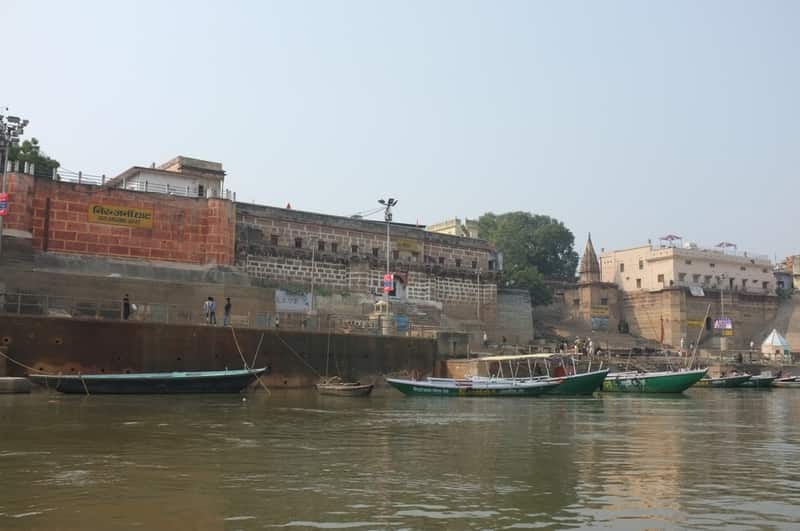
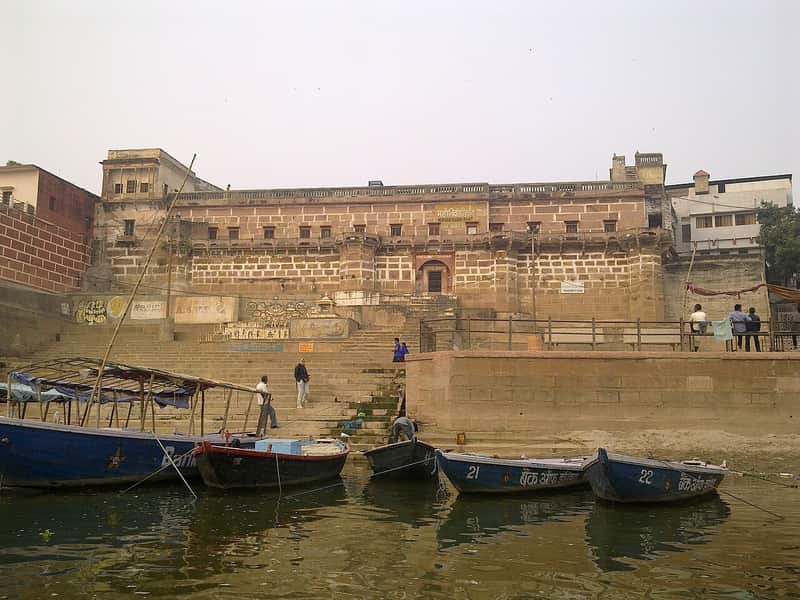
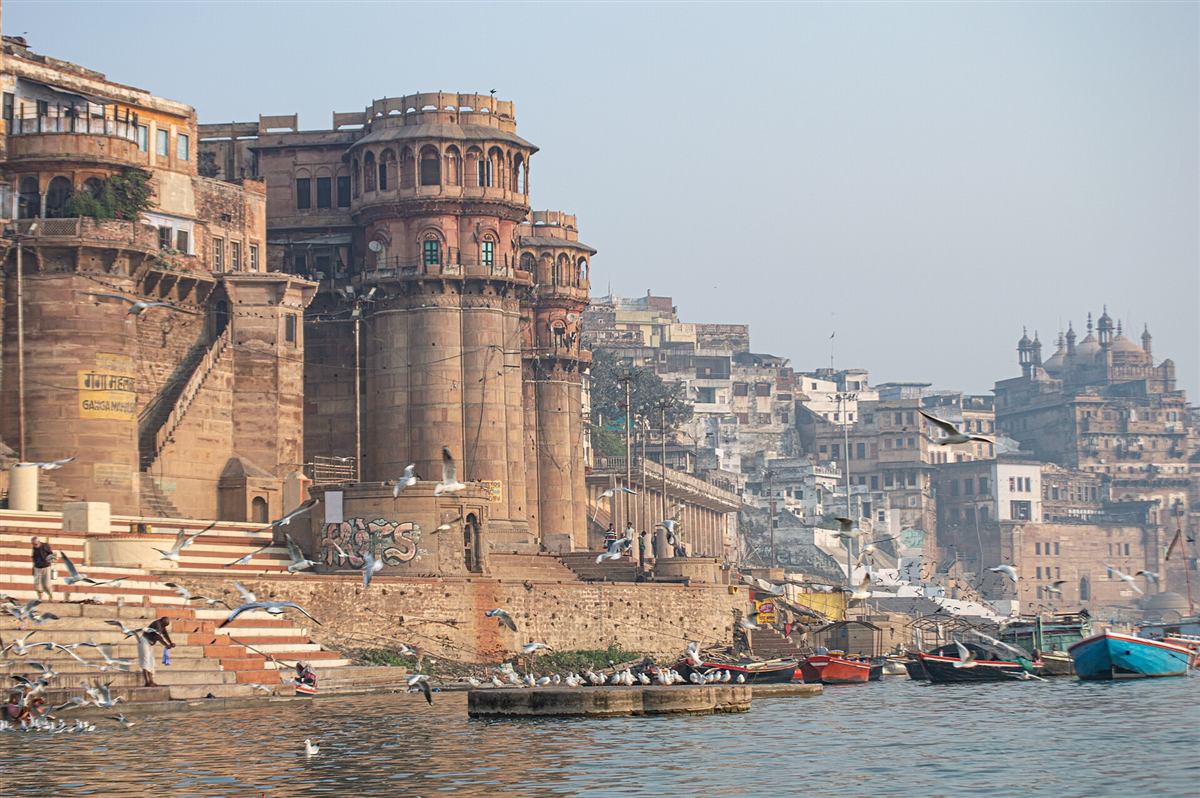
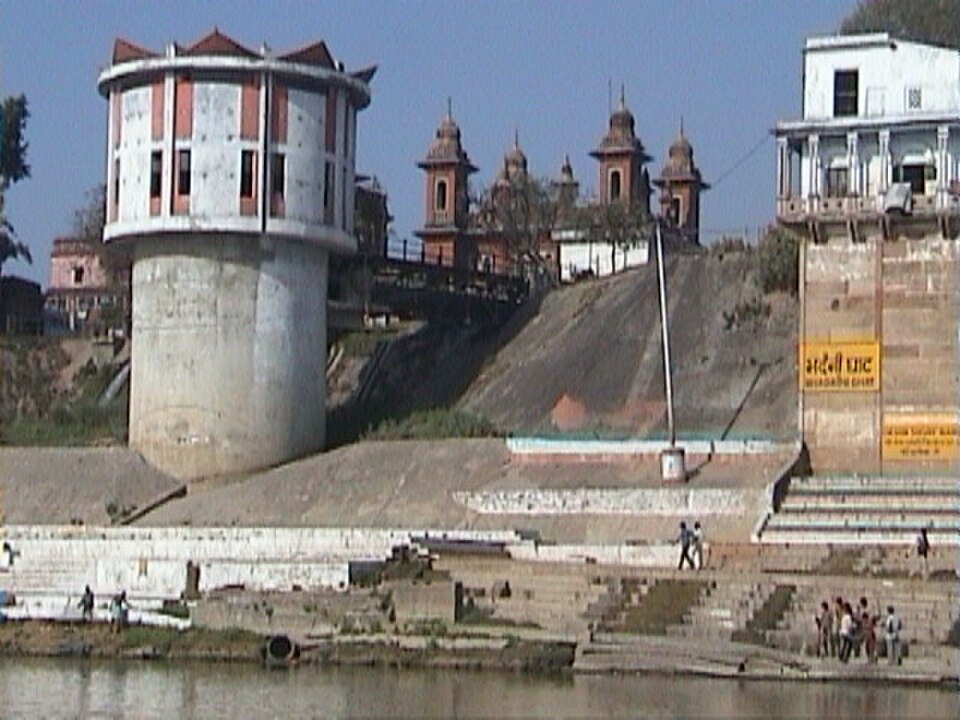
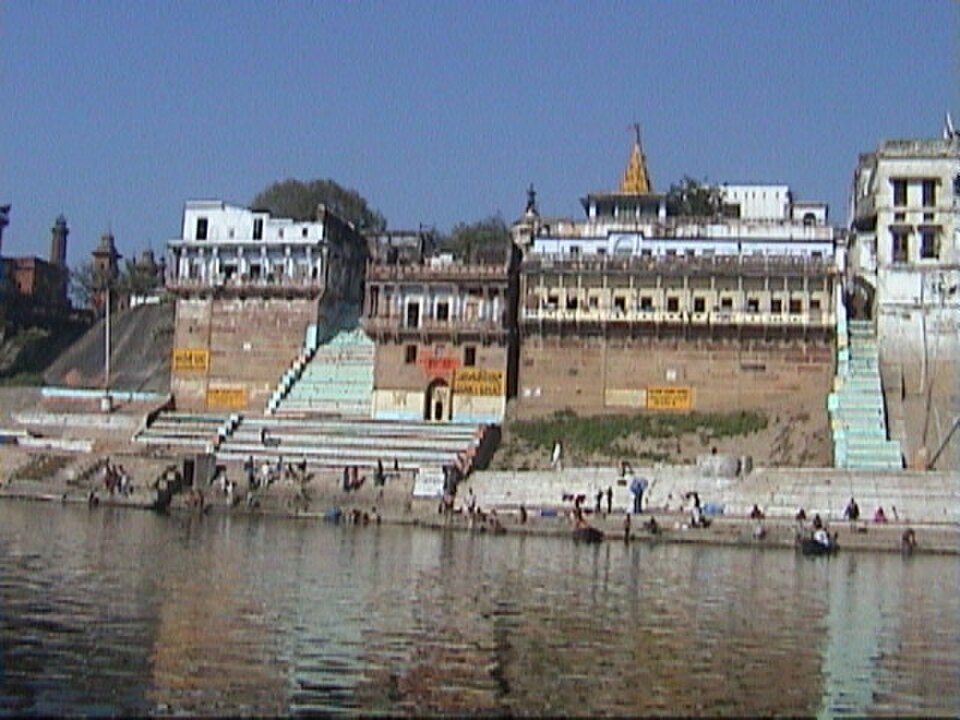
The architecture of Mahanirvani Ghat is not grand but deeply atmospheric, a composition of stone steps, open terraces and monastery buildings rather than towering temples. The ghat was substantially rebuilt in the twentieth century, and its wide flights of stairs and spacious platforms give it an air of calm that the crowded ghats to the south lack. Above the steps rise the buildings of the akhara — plain, ochre-washed houses with verandas and courtyards, where the monks live, study and receive guests. Here and there stand small shrines to Shiva, their domes and tridents marking the corners of the monastic quarter, and ancient trees spread their shade over the whole ensemble.
The most distinctive structures are the akhara's ceremonial buildings, where the great festivals are prepared. Wide halls with carved wooden pillars serve as gathering places for the monks, and the walls are decorated with paintings of the order's gurus and scenes from the life of Shiva. The Naga quarters are austere cells opening onto a common courtyard, where the fire of the order burns day and night, and where the ascetics smear themselves with ash before their rituals. Along the water's edge, stone platforms with steps descending into the river allow the sadhus and pilgrims to bathe with ease, and a few old dharamshalas, pilgrim rest houses, remind the visitor of the ghat's long tradition of hospitality to the countless travellers who have stopped here on their way through Kashi.
Though the ghat lacks the famous towers of Manikarnika or the palaces of the southern ghats, its architecture has its own story to tell. Every terrace, every carved pillar and every shrine speaks of the centuries of monastic life that have shaped this shore. The plainness is itself a statement — the akhara's buildings are built for use, not display, and their austerity mirrors the vows of the men who live in them. Much of the current fabric dates from the great renovations of the 1950s and 1980s, when the ghat was extended and beautified with the help of donations from across India, but the monastic character of the place is much older, and a walk through its courtyards is a walk through the living history of Indian renunciation.

The Old City Lanes Behind the Ghat
Behind Mahanirvani Ghat begins one of the oldest quarters of Varanasi — a labyrinth of narrow lanes where the city's past survives almost untouched. The streets wind between tall, weathered houses, past little shrines on every corner, sweet shops where jalebi and rabri are fried in huge pans, and stalls selling rudraksha beads, brass lamps and the ochre cloth of the sadhus. The smell of incense and frying ghee mingles with the sound of temple bells and the cries of vendors, and cows move through the crowds with the unhurried authority that only the cows of Banaras possess. For the visitor, these lanes are a world in themselves, endlessly photogenic and endlessly fascinating.
The lanes around Mahanirvani are also the working quarter of the city's ritual economy. Here the brass pots of the pilgrims are polished, the garlands are strung, the ghee and camphor are sold by measure, and the paper flags for the river offerings are folded by hand. Paan shops and tea stalls do a brisk trade from dawn, serving the sadhus, boatmen and pilgrims who pass on their way to the ghat. Deep in the maze stand the akhara's outbuildings, the storehouses and kitchens where the great festival feasts are prepared, and the dharamshalas where visiting monks and pilgrims are lodged. To wander these lanes is to understand how completely the sacred life of the ghat is woven into the everyday life of the city.
The neighbourhood changes character after dark. The shops close, the crowds thin, and the lanes fall into the deep quiet of an old city — lit here and there by a temple lamp, a paan shop's bare bulb, or the glow of a television in a doorway. The ghat itself becomes a place of stillness, where the sadhus chant the evening arati and the lamps float on the river. Many travellers find that the hours between sunset and midnight, when the noise of the day has faded, are the most magical of all. From the roof terraces of the houses behind the ghat, the whole sweep of the northern riverfront unfolds — the lights of the boats, the silhouettes of the temples, and the dark, gleaming expanse of the Ganga.
Neighbouring Ghats — Rajendra Prasad and Niranjani
Mahanirvani Ghat stands in a cluster of historic bathing steps that together make up one of the most atmospheric stretches of the Varanasi riverfront. Immediately to the south lies Rajendra Prasad Ghat, a wide, well-kept bathing ghat named after the first President of India, whose renovation in the mid-twentieth century gave it the broad terraces and clean lines it shows today. To the north, beyond a short stretch of older and more weathered steps, rises Niranjani Ghat, home to another great ascetic order, the Niranjani Akhara, and marked by its own cluster of monastery buildings and shrines. Between them, Mahanirvani forms the quiet heart of a continuous monastic shore that runs for nearly a kilometre.
The three ghats together make an easy and rewarding walk of about half an hour, with the river on one side and the old city on the other. Rajendra Prasad Ghat is the most comfortable for bathing, with its broad, gentle steps; Niranjani Ghat offers the same monastic atmosphere as Mahanirvani, with the added interest of its famous Gauri Kedareshwar temple and the legends attached to it. In between, the shore is dotted with small shrines, boat moorings and the terraces where the sadhus gather at sunset. A boat trip along this stretch, drifting slowly past the three ghats in the early morning, gives the finest view of the monastic quarter of Kashi — its ash-smeared ascetics, its ochre buildings and its unhurried river life.
Farther south, the walk from Mahanirvani leads past the great cremation ghats of Kashi to the heart of the old city, while to the north the riverfront continues through Shivala and beyond. The proximity of Manikarnika, the holiest of the burning ghats, gives the whole northern shore a particular gravity — the same pilgrims who bathe at Mahanirvani in the morning may stand at Manikarnika by afternoon. For a traveller planning a day on the northern riverfront, the ideal route begins at dawn with a bath at Mahanirvani, follows the shore past its neighbouring ghats, and ends at the ghats of the old city with a boat ride back as the sun sets over the Ganga.

Etiquette with Sadhus — Conduct on the Ascetic Shore
Visiting Mahanirvani Ghat means entering the working world of Hindu renunciates, and a few simple rules of conduct will make the visit comfortable for everyone. The first is modesty of dress: shoulders and knees should be covered, and bright beachwear left behind — this is a place of pilgrimage, not a resort. Photography, in particular, needs care. The sadhus of the akhara are famously reluctant to be photographed, and many consider the camera an intrusion on their austerities; always ask before taking a picture, and accept a refusal gracefully. Some ascetics will happily pose for a small donation to the akhara, but the respectful traveller asks first and never photographs during worship or meditation.
The second rule concerns offerings and begging. Some sadhus on the ghat will ask visiting pilgrims for alms — this is an ancient and legitimate part of monastic life — but visitors are under no obligation, and a small coin or a contribution to the akhara's collection box is the appropriate response. What is not appropriate is treating the sadhus as attractions or characters in a spectacle: they are not performers, and their rituals — the bathing, the fire ceremonies, the trance of meditation — should never be interrupted or staged for a camera. Approach the renunciates with folded hands and a namaskar, speak softly, and follow their lead; if they invite conversation, the traveller who listens with humility will hear the most remarkable stories in India.
Finally, remember that Mahanirvani is a living temple of renunciation, not a museum. Do not smoke, drink or eat meat on the ghat; remove shoes before entering the shrines; and leave the steps and courtyards as clean as you found them. Pilgrims traditionally bathe in the river, and visitors who join them should do so modestly and only at the marked bathing areas. If you are offered a blessing, a tilak on the forehead or a string of rudraksha, accept it graciously — and if the ghat feels overwhelming, sit quietly on the steps for a while. The ascetics of Mahanirvani have watched countless pilgrims come and go, and patience, humility and respect are the languages they understand best.
Practical Guide — Reaching the Ghat and Best Times
Mahanirvani Ghat lies on the northern stretch of the Varanasi riverfront, about four kilometres from the main railway station. The most atmospheric way to arrive is by boat from Dashashwamedh Ghat, the city's central landing — a thirty-minute ride that passes the great temples and burning ghats and ends at the quiet steps of the monastic quarter. By road, the ghat is reached through the lanes of the old city from the Godowlia area; auto-rickshaws and cycle-rickshaws drop visitors at the head of the lane, from where it is a short walk down to the river. The nearest railway station is Varanasi Junction, and the airport lies about twenty-five kilometres away with taxis and buses into the city.
The best time to visit is early morning, between sunrise and nine o'clock, when the bathing and the morning rituals give the ghat its fullest life; the hours just before sunset are also lovely, as the light turns gold and the sadhus gather for the evening worship. From October to March the climate is ideal, with cool mornings and clear skies; the summer months are punishingly hot, and the monsoon, from July to September, brings the river high and the steps crowded with flood water. Those who wish to see the akhara in its glory should plan around Maha Shivratri in late winter, Nag Panchami in the monsoon, or the full-moon nights of the Hindu calendar, when the ghat is transformed by lamps and crowds.
A few practical notes complete the picture. There is no entry fee at the ghat, and no official guides — boatmen and local boys will offer their services, and it is worth agreeing on a price in advance for anything you accept. Small shops on the ghat sell the basics: water, tea, flowers for offerings, and the rudraksha beads that pilgrims buy as souvenirs. The ghat is generally safe and peaceful, but visitors should keep wallets secure in the festival crowds and avoid the river at night unless in a boat. Finally, allow time to simply sit — the deep calm of Mahanirvani is one of the most valuable things the ghat offers, and those who hurry through it miss the point of the place entirely.
Mahanirvani Ghat — Gallery (10 Photos)
Image Credits
mahanirvani-01.jpg · mahanirvani-02.jpg · mahanirvani-03.jpg · mahanirvani-04.jpg · mahanirvani-05.jpg · mahanirvani-06.jpg · mahanirvani-07.jpg · mahanirvani-08.jpg · mahanirvani-09.jpg · mahanirvani-10.jpg — Wikimedia Commons, under free licenses.
Continue exploring
Similar Ghats Nearby
Book This Ghat — Get Notified
Download the app now and book a boat ride to Mahanirvani Ghat