

Lali Ghat
Neighbourhood GhatLali Ghat is a small ordinary ghat.


Type
Neighbourhood Ghat
Boat Fare
1x base fare
Best Time
5-8 AM
History
A small, serene ghat for local bathing. It carries a calm, red-hued (lal) charm true to its name.
Highlights
- Small peaceful ghat
- Local bathing tradition
- Hidden stop near Harishchandra
Festivals & Events
How pricing works in the NaviX app
No haggling at the ghat — everything is fixed in the app first
- 1
Fixed price before you board
The fare is shown in the app upfront — no bargaining at the ghat
- 2
Sharing or private — your choice
Share with fellow travelers or take the whole boat for your group
- 3
Pay only after the ride
UPI, card or cash — with an instant receipt
🕉️
Aarti details not available for this ghat yet
Complete Guide
Lali Ghat — The Complete Guide
History, mythology, rites and practical details — everything in depth.
On this page
- 1.Lali Ghat: An Overview
- 2.The Name and Its Meaning
- 3.Daily Life on the Steps
- 4.The Morning Bathing Scene
- 5.The River and Its Moods
- 6.Moorings and Boatmen
- 7.The Lanes Behind the Ghat
- 8.Harishchandra and Vijayanagaram
- 9.Quiet, Unpretentious Kashi
- 10.Local Celebrations
- 11.Respectful Conduct
- 12.Reaching Lali Ghat
📅 Updated: 21 Aug 2026 · Author: NaviX Field Team (field research 2024-26) · 12 sections · 12 photos
Lali Ghat: An Overview
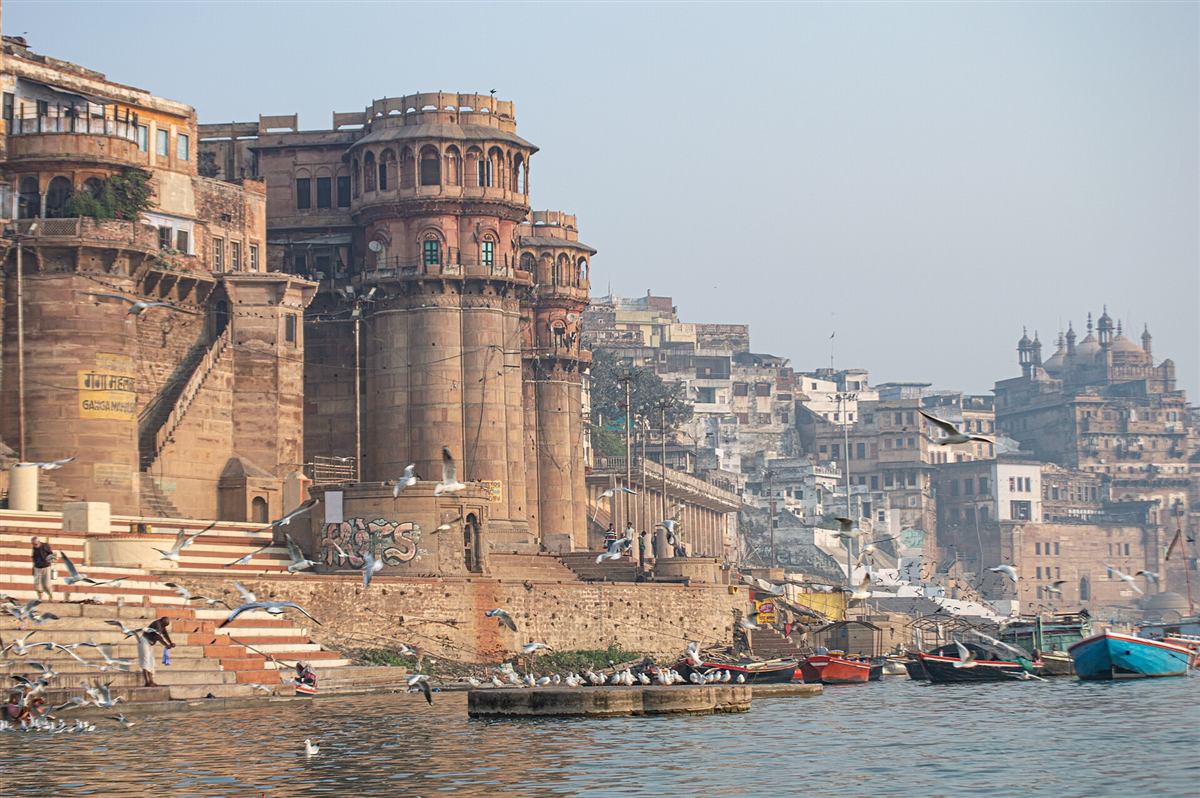
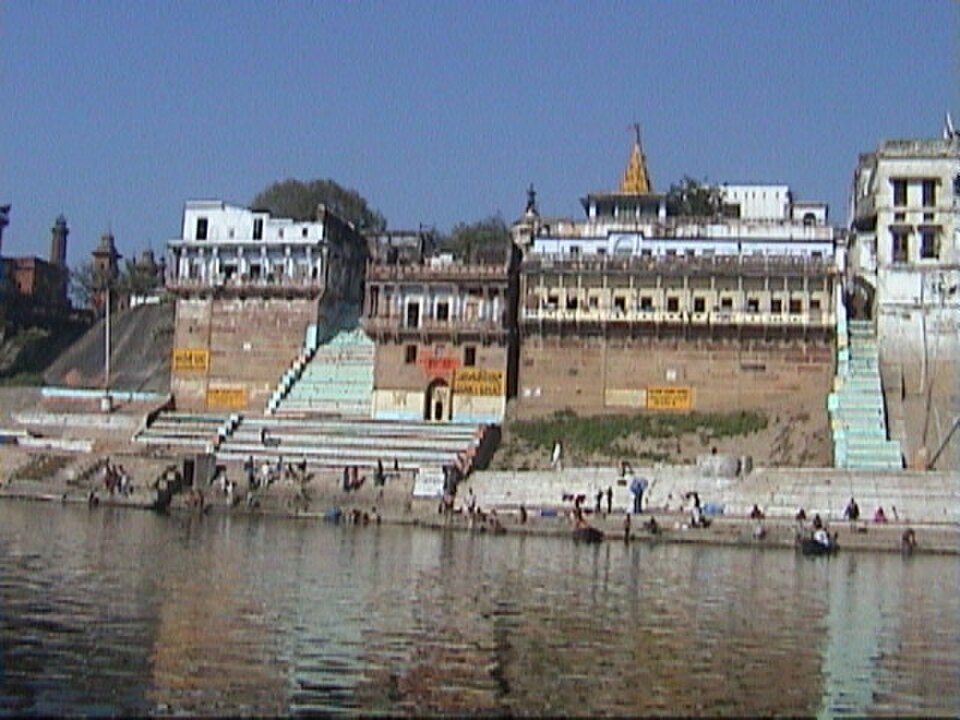
Lali Ghat sits on the middle stretch of the Varanasi riverfront, a modest landing of worn stone steps lying between the solemn burning ghats to the south and the crowded stairs of the old city to the north. No palace towers above it, no royal inscription announces its glory, and no festival stage crowds its edge. It is simply a residential ghat, the plainest kind of landing, where the river and the neighbourhood meet without ceremony. The steps are narrow and irregular, patched here and there with new stone, and they descend without drama to the edge of the Ganga. To travellers arriving by boat it appears almost shy, a quiet break in the long parade of temples and palaces that line the water elsewhere in Kashi. Yet within this modesty lies the essence of the city, for Kashi has never been only a city of monuments but also a city of daily devotion, and this ghat is devoted to that ordinary piety with complete honesty.
Lali Ghat belongs to the chain of minor ghats that links Harishchandra Ghat with the older landings of the ancient quarter, and in that chain it plays an unglamorous but essential part. The riverfront here is not a stage but a working margin, used by the people who live within a few minutes walk of the water. Every morning the steps carry bathers down and water pots back up, and every evening they carry lamps, flowers, and the quiet conversations of neighbours. The ghat is close enough to the old city to feel its presence in the air, yet far enough from the great ceremonial ghats to escape their crowds. In a city where every landing has a story, this one tells the story of the ordinary household, of the washerman, the boatman, the shopkeeper, and the grandmother who comes at dawn to touch the river and pray. There is no grandeur anywhere in the picture, and that is precisely the point, for the chain of minor ghats exists to remind the city that holiness does not require a monument.
For the pilgrim and the visitor alike, Lali Ghat offers an honest introduction to the living Kashi that photographs rarely capture. Here the Ganga is not a backdrop for spectacle but a working river, shared by bathers, boatmen, and the occasional funeral procession passing toward Harishchandra. The dignity of the place is not announced; it is simply present, in the unhurried way an old man lowers himself into the water, in the patience of a woman waiting with an empty brass pot, in the small temple niche where a lamp burns through the afternoon. Those who come expecting grand architecture will find instead the quieter architecture of habit and faith, which in Kashi is the older and more durable kind. This guide walks the reader step by step down the ghat, from its name to its festivals, from its morning bathers to its evening lamps, so that the meaning of such a place in the life of the city becomes clear before the first photograph is even taken.
The Name and Its Meaning
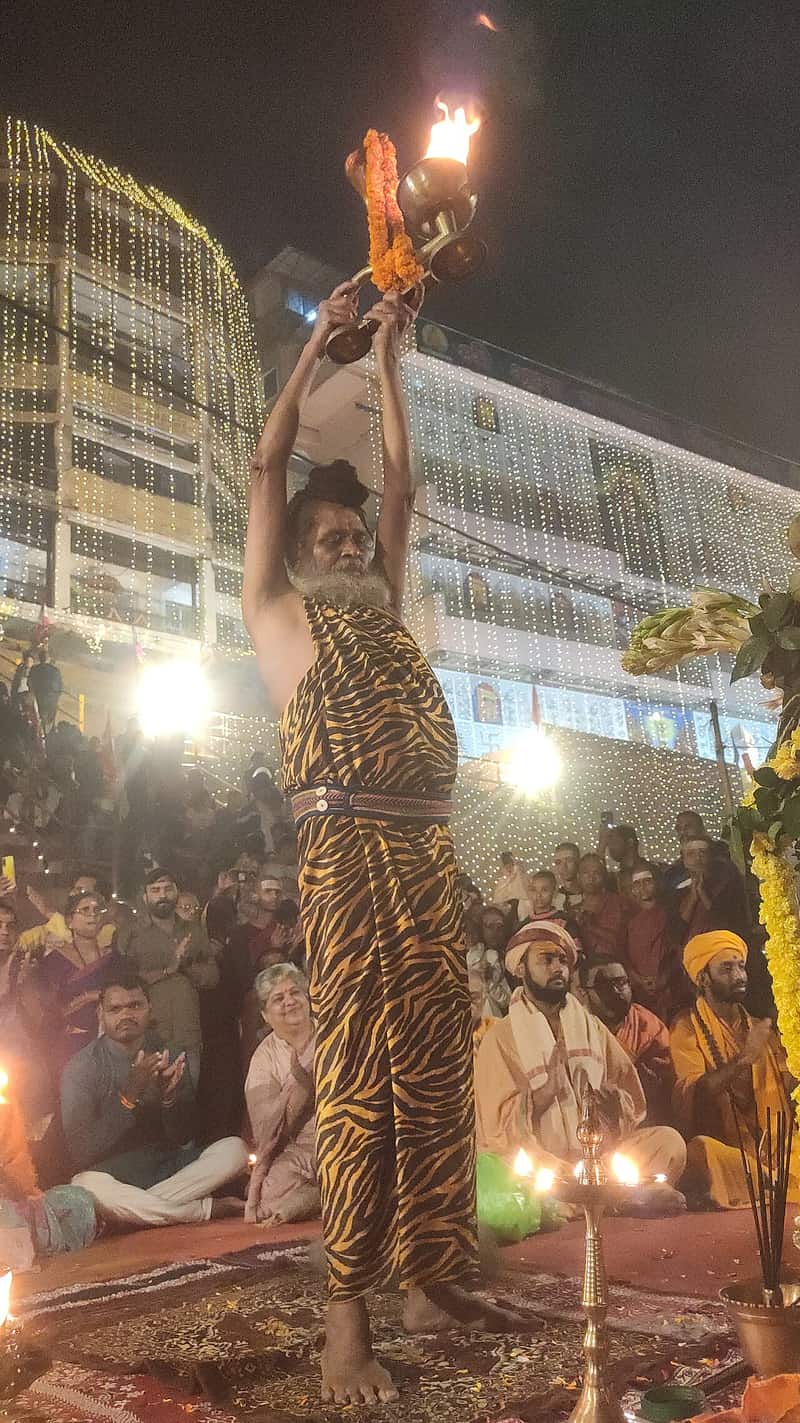
The name Lali is a local epithet, the kind of affectionate term that families and neighbours use rather than the formal title of a maharaja or a saint. It is a diminutive, tender and familiar, suggesting a small and loved thing, and it fits the ghat perfectly, for this is a small and loved landing rather than a monument built for fame. Unlike the great ghats named for kings, temples, or sacred stories, Lali Ghat carries a name that sounds like a household word, as if the riverfront itself were being addressed with affection. Such naming is common in the older quarters of Varanasi, where the city keeps two languages side by side: the grand Sanskritic vocabulary of the pilgrimage maps, and the intimate Hindi of the lanes, where places are called by what they are to the people who live beside them. Between these two languages the city's affection for its own riverfront is always visible.
No single inscription records who Lali was, and the oral memory of the mohalla offers only gentle possibilities: a devotee, an old woman of the neighbourhood, a beloved daughter whose name the ghat kept after her time. The absence of a definitive story is itself characteristic, for the minor ghats of Kashi were often named by custom rather than decree, and their names settled into use the way nicknames do, through repetition and affection. What matters is that the name preserves a human warmth that the grander ghats, with their bronze plaques and royal donors, do not carry. It reminds the passer-by that this landing belongs to ordinary people, and that their memory, humble as it is, is honoured here in stone and water. Whatever the true origin of the name, the ghat has worn it so long that the word and the place have become one.
The epithet also speaks to the character of the place, for a ghat called by a tender name behaves accordingly. It does not demand attention; it waits to be noticed. It has no gate, no ticket, no written history, only steps, water, and the daily traffic of a neighbourhood that trusts its river. Linguists and local scholars note that such affectionate place names are a living feature of Bhojpuri and Hindi speech along the Ganga, where villages and landings are often called by the names of daughters, mothers, and saints, and where the boundary between a person and a place can blur with use. In this sense the name Lali is not merely a label but a small poem about belonging, and the ghat itself is its quiet illustration, written in stone that the river has been polishing since long before the city kept records.
Daily Life on the Steps
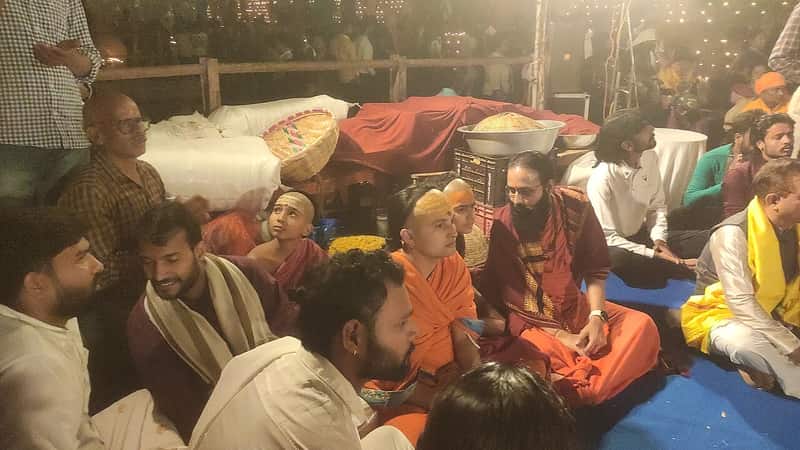
The true biography of Lali Ghat is written in its ordinary hours, not in its festivals. The day begins before sunrise, when the first bathers arrive with towels over their shoulders and brass pots under their arms, and the steps fill with the soft sounds of water, prayer, and greeting. By mid-morning the character of the ghat changes: laundry is beaten and rinsed at the water edge, children splash where the steps level out, and elderly men settle on the low stone ledges to watch the river and exchange the news of the mohalla. Women arrive with vessels to fill for household use, carrying them up the steps with the practised balance of those who have done it for decades. Nothing here is staged; every movement is a task, and every task carries the quiet dignity of work done well, which is the oldest form of virtue this riverfront knows.
The boatmen give the ghat its other pulse. They arrive with the first light, untying the ropes of their flat-bottomed wooden craft, bailing out the night's rain, and setting out for the far bank or the ferry point upstream. Some will spend the whole day on the water, returning only at dusk with their earnings and the day's gossip. Between departures they sit on the ghat itself, mending nets, coiling rope, or simply resting in the shade of a tree, and their presence ties the landing to the life of the river in a way no festival could. The washing of clothes, the filling of pots, the ferrying of passengers, the cooking of the midday meal in the houses above; all of it composes the slow rhythm that makes Lali Ghat a living place rather than a monument, and the rhythm is kept by no clock but by the river itself.
In the afternoon the ghat grows quiet, the sun burning white on the water, and the steps seem almost empty. This is the hour of the old city's siesta, and the landing rests like the neighbourhood behind it. Towards evening the rhythm returns, softer now, as families come down to sit by the water, children fly kites from the upper steps, and small lamps are floated out on little leaf boats. The day closes not with a performance but with the simple satisfaction of another day completed beside the river. For those who stay long enough to watch this full cycle, the ghat reveals what the guidebooks rarely say: that the daily life of Kashi, in all its repetition, is itself a form of worship, and that Lali Ghat is one of its most honest altars, standing open to the sky from first light to last.
The Morning Bathing Scene
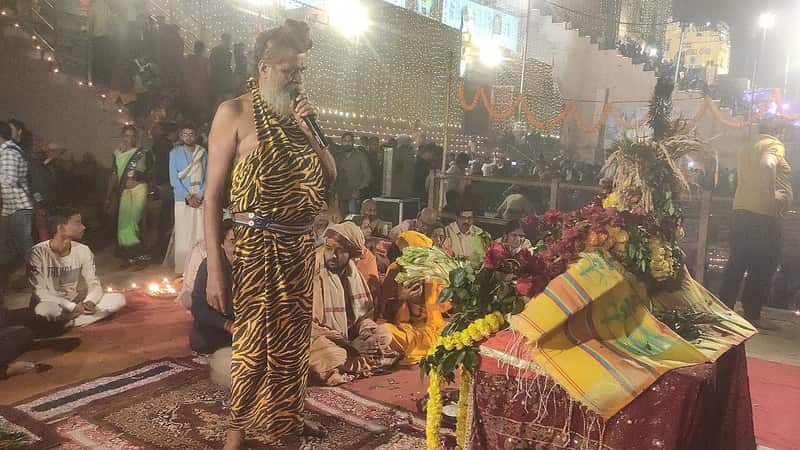
The morning bath at Lali Ghat is the heart of its day, a ritual performed without spectators and therefore without pretence. Bathers arrive in the half-dark, when the water is still grey and the lamps in the temple niches are the brightest things on the shore. Each person follows the same untaught order: a prayer on the steps, the touching of the water with folded hands, a slow descent into the cold current, and the dipping of the body three times while the name of the Ganga is murmured. The river here is deep enough at the step edge for a full immersion, and the current, though gentle, is alive, giving the bather the sense of being held and cleansed at once. There is no priest, no fee, no audience; only the river, the dawn, and the private conversation between a person and the sacred water that has been conducted on these same stones for centuries.
For many in the neighbourhood the daily snan is not a special act but a necessity of the morning, as ordinary as tea and as important. Some come with offerings for the river: marigold petals, a little milk, a coin, or simply a cupped handful of water raised to the sun. Others come with prayers for children, for the household, for ancestors, and the ghat, hearing all these petitions in silence, seems to store them in its stones. Old men take their time, rubbing wet hands over arms and chest, while younger bathers dive and swim a little before climbing out, laughing and shivering. By eight the bathing hour is over, the steps dry quickly in the rising sun, and the ghat passes back to the ordinary business of the day, holding its morning secret until tomorrow, when the same quiet procession will begin again.
Bathing here also carries a social meaning, for the water of the Ganga dissolves the distinctions of the street. The clerk from the lane above and the boatman from the mooring below stand in the same current; the rich woman's soap and the labourer's ash wash away in the same water. This equality is one of the oldest teachings of the riverfront, and at a ghat as unassuming as Lali it is felt with particular clarity, because nothing here reminds anyone of rank. Devotees say that a bath in the Ganga purifies not only the body but the memory, and at dawn, with the far bank still misty and the first boats setting out, such words do not seem exaggerated. The morning water of Lali Ghat asks nothing of the bather except honesty, and gives, in return, the oldest comfort in Kashi, which no fee and no ticket can ever buy.
The River and Its Moods
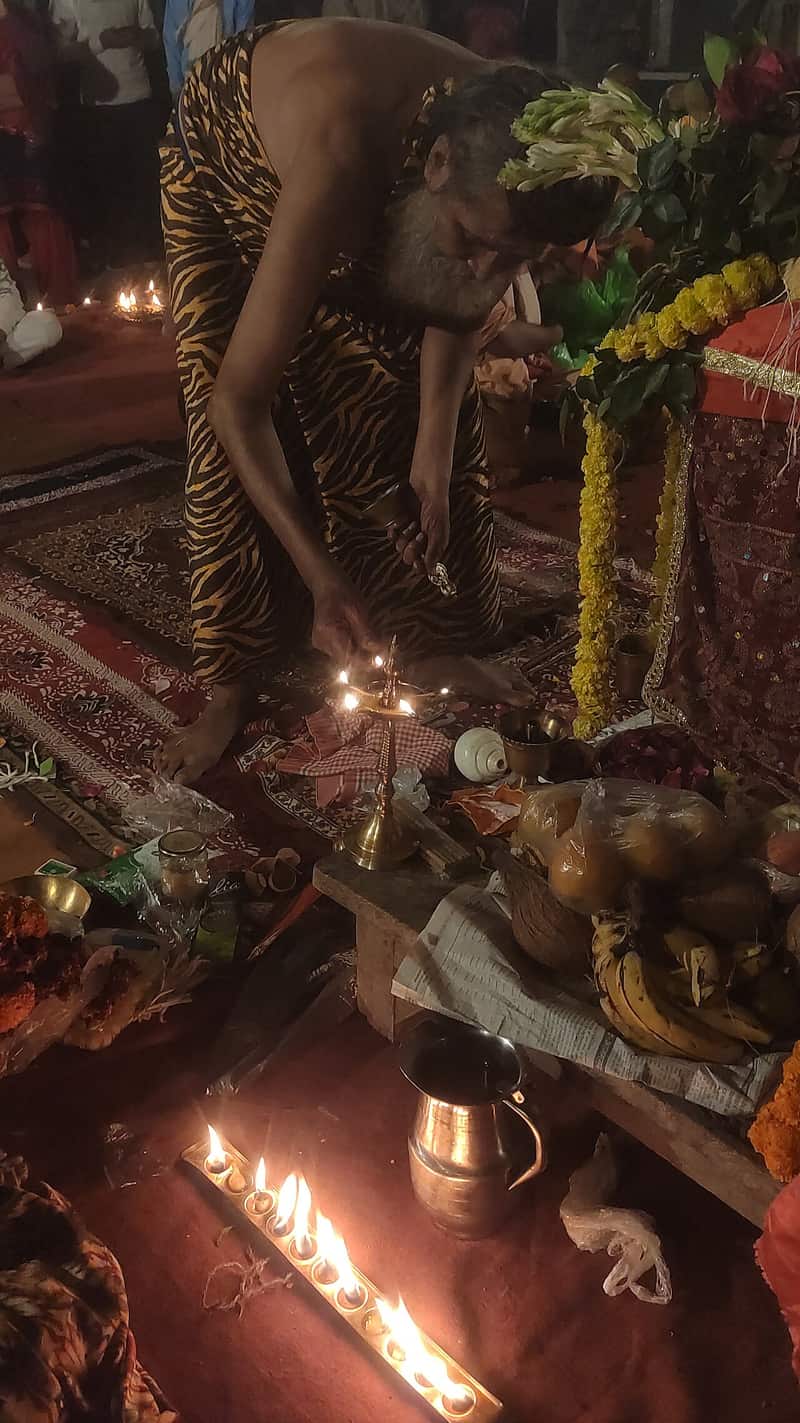
The Ganga at Lali Ghat is the river at its most workmanlike, neither the sparkling spectacle of the ceremonial ghats nor the wilderness of the rural reaches, but the everyday river of a working city. The current runs steadily south to north along this stretch, carrying the eye and the imagination with it, and the far bank lies low and sandy, changing shape with every season. In the dry months the water withdraws, leaving broad flats of pale sand where goats graze and children play, and the ghat steps end at a muddy shelf a good distance from the true channel. In the rains the river swells until it licks the highest steps, and the boatmen shorten their ropes and watch the horizon for the clouds that bring the flood. The ghat has learned to live with both faces of the river, as its people have for generations, and neither face surprises it anymore.
Water quality on this stretch of the river is a constant concern, and the people of the neighbourhood speak of it with the same frankness with which they discuss the weather. Municipal pumps and piped supply have replaced many of the old household uses of the river, and the great washing and filling that once crowded the steps have diminished, though bathing, prayer, and the rituals of life and death continue as they always have. Conservation efforts along the Varanasi riverfront have brought new attention to the mid-ghat stretch, with cleaning drives, sewage interventions, and a renewed civic conversation about what the city owes its river. The mood at Lali Ghat is neither despairing nor complacent; it is the practical patience of people who have lived beside the Ganga all their lives and intend to keep living beside her, whatever the season brings.
The moods of the river here are the moods of the sky. On winter mornings the water steams softly in the cold air, and the sun rises through the mist like a brass lamp behind muslin. In summer the surface shimmers under a white heat, and the far bank dissolves into haze by noon. At dusk the water turns the colour of old gold and then of slate, and the last boats come home to their moorings like birds to a roost. The river at Lali Ghat is not tame, but it is familiar, and familiarity, in this city, is itself a form of reverence. Those who sit long enough on the upper steps come to feel that the Ganga here is not scenery but a presence, patient, immense, and utterly indifferent to the small dramas of the shore, which is exactly why the shore loves her and keeps coming back.
Moorings and Boatmen
The boats of Lali Ghat are humble craft, flat-bottomed wooden ferries built to carry people, goats, bicycles, and sacks of grain across the river, and they are tied to iron rings driven into the stone or to stakes knocked into the sand. Their hulls are painted in the bright colours of the region, green and blue and vermilion, with a white eye on each prow to watch the water, and their oars are long ash blades worn smooth by calloused hands. In the morning the moorings come alive: ropes thrown, planks run out, fares argued and settled with laughter, and the boats push off one by one into the current, angling upstream to land far down on the opposite bank. The crossing is an art, for the river here runs faster than it looks, and the boatmen read the water the way others read a page of scripture.
The boatmen of the mid-ghat stretch are among the oldest working communities of the Varanasi riverfront, many of them the fourth or fifth generation of their families on the water. They know every sandbank, every current, every trick of the wind, and their knowledge is passed down not in manuals but in the long apprenticeship of the river itself. Ferrying is their livelihood and their identity, and the ghat is their office, where they wait between jobs with the patience of fishermen. Some have expanded into the tourist trade, taking visitors upstream for a view of the burning ghats at a respectful distance, but most still earn their bread from the ordinary crossings that keep a riverine city moving. Their stories, told in the unhurried intervals of the day, are a living archive of the ghat's memory, and the visitor who listens learns more than any book can teach.
By evening the boats return, and the mooring becomes a scene of orderly chaos: hulls bumping, ropes whistling through rings, children jumping ashore before the planks are laid. The day's takings are counted in small coins, the boats are bailed and covered, and the last ferryman settles into the stern of his craft as other men settle into an armchair. The river darkens, the lamps of the far bank come on one by one, and the boats rock gently in the current like cradles. For the visitor, the moorings of Lali Ghat offer the simplest pleasure in Kashi: to sit on the steps at dusk and watch the river traffic end its day, and to understand that the Ganga here is not a monument but a highway, and that the boatmen are its true citizens, whose names the city never records but could not do without.
The Lanes Behind the Ghat
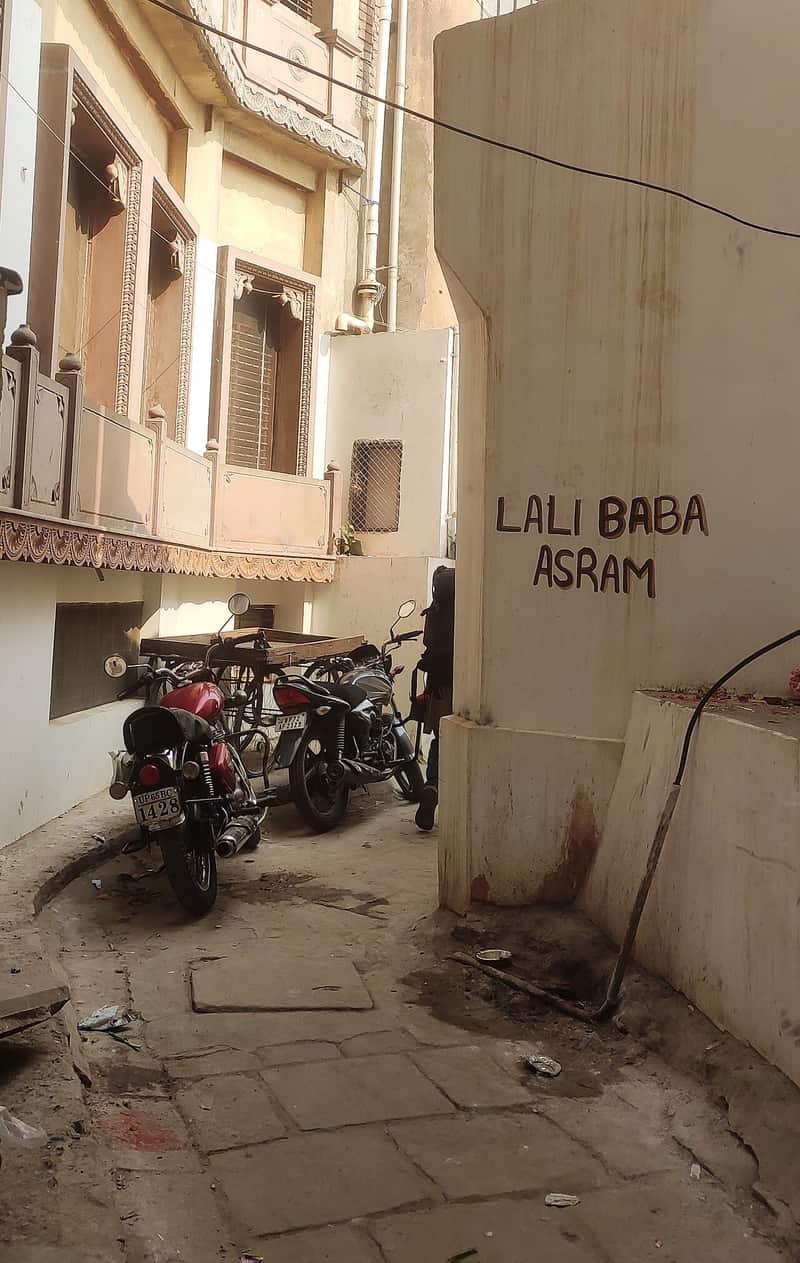
Behind Lali Ghat the old city rises in a tangle of lanes, the classic galis of Varanasi that turn and double back so often that newcomers are lost within a hundred steps. The houses are tall and narrow, built of brick and lime, with carved wooden doors, deep balconies, and roofs crowded with water tanks and television antennas. The lanes are too narrow for cars, and life moves through them on foot and on bicycle, with an occasional motorcycle threading its patient way past vendors, cows, and children playing cricket. This is the mohalla that the ghat serves, and the two are inseparable, for the ghat is the front door of the neighbourhood, its washing place, its ferry stop, its open-air veranda where the whole lane can gather at dusk and watch the river turn to gold.
The neighbourhood is old in the way that almost everything in this quarter of Kashi is old, layered with centuries of rebuilding on the same narrow plots. Small shrines occupy corners and niches, some no bigger than a cupboard, with fresh vermilion on their stones and a marigold garland renewed each morning. The lane has its trades, carried on in front rooms open to the street: a tailor with a hand-cranked machine, a sweetshop where jalebi bubbles in a great iron pan, a pan shop, a milk seller whose buffalo stands placidly in the doorway. The economy of the mohalla is small, cash-based, and deeply personal; the shopkeeper knows the names of every customer's children, and credit is a matter of honour rather than contract. It is a complete world, and the ghat is its window on the water, through which the whole city seems to flow.
The relationship between the lane and the ghat is daily and practical. Water pots still go down to the river for rituals and, in some old households, for washing; the dhobi carries his bundles to the steps; the dying and the dead pass this way toward Harishchandra, a fact the neighbourhood accepts with the calm of long familiarity. The ghat is also the place of announcement and assembly, where news is exchanged, disputes are softened, and marriages and deaths are discussed with equal matter-of-factness. Scholars of the city often remark that the true Kashi is not found on the grand ghats but in these lanes, and the lanes behind Lali Ghat make the point gently but firmly: the city's soul lives here, in the ordinary, crowded, generous domesticity of its oldest quarter, and the ghat below is that soul's reflection in the river.
Harishchandra and Vijayanagaram
A short walk south along the riverfront brings the visitor to Harishchandra Ghat, one of the two great cremation ghats of Varanasi, and the proximity defines the character of the whole mid-ghat stretch. Harishchandra is named for the legendary king who sold himself and his family into servitude to keep his word, and whose story of truthfulness is one of the most beloved in the Hindu imagination. The ghat is always at work, its pyres burning day and night, and its smoke drifts over the neighbouring landings, reminding them, without sentimentality, of the truth that every ghat exists to serve. The riverfront here is thus a complete landscape of life and death, with the ordinary ghats of the living standing in plain sight of the ghats of the dead, each accepting the other without embarrassment and without comment.
Between Lali and Harishchandra lie a few small landings and, just to the north, Vijayanagaram Ghat, another modest ghat of the same chain, named for the princely family of Vijayanagaram and used by the same neighbourhood world of bathers and boatmen. The proximity of these minor ghats to the cremation ground gives their daily life a particular colour; the washing, the ferry calls, and the cricket games of the children all happen within sight of the rising smoke. Visitors sometimes find this unsettling, but the people of the quarter find it ordinary, for in Kashi death is not hidden away but lived with, and the ghats of the living and the dead are neighbours in the oldest sense of the word. The river, indifferent and eternal, receives both the ash and the morning garland with the same current and the same patience.
Beyond Vijayanagaram the riverfront turns toward the old city ghats, and the chain of minor landings continues northward until the great ceremonial stairs begin. This whole stretch, from the burning ghats to the ancient quarter, forms what pilgrims and scholars call the working riverfront of Kashi, where the city's oldest habits survive without tourism's mediation. The great advantage of staying near Lali Ghat is precisely this position: within a few hundred steps one can stand at the most solemn place in the city and, moments later, at a quiet landing where children swim and clothes dry on the steps. Few places in Kashi compress life and death into such a short walk, and the ghat's residents, who make the journey daily, would not trade it for any palace on the water, not even for the promise of a quieter view.
Quiet, Unpretentious Kashi
The atmosphere of Lali Ghat is best described by what it lacks: no amplified bhajans, no tourist boats crowding the shore, no hawkers, no cameras, no floodlights. What remains is the atmosphere of Kashi itself, stripped of performance: the slap of water on stone, the creak of a boat's rope, the murmur of prayer, the cry of a vendor from the lane above, the great unhurried silence of the river. The ghat has the quality that old houses have, of holding the accumulated calm of generations, and visitors often remark that they feel the weight of the city's age here more acutely than at any monument. It is the atmosphere of a place that has never needed to prove itself, and that confidence, rare in any tourist city, is felt the moment the steps come into view.
This quiet is not emptiness but fullness of a particular kind. The ghat is alive all day, but its life is conducted at a volume that respects the neighbourhood and the dead nearby. Prayer here is murmured, conversation is low, and even the children, at least when the cremation smoke is rising, play with a muted instinct that they could not explain. The upper steps, shaded in the afternoon by the houses behind, are a place of rest and reflection, where old men sit for hours watching the river as if reading a book no one else can see. Pilgrims who have come to the city for the great aartis often find their way here by accident and stay longer than they planned, surprised to discover that the sacredness they sought in spectacle is available here in silence, and in a form that costs nothing.
At dusk the atmosphere deepens, as the riverfront turns gold and then violet, and the lamps of the far bank begin to glimmer. The distant sound of the Dashashwamedh aarti, faint as a memory, drifts across the water, and the ghat seems to listen without envy. It is at this hour that the phrase unpretentious piety finds its full meaning, for the devotion practised here asks for nothing, not even an audience. The smoke of Harishchandra rises straight into the darkening sky, the last boats come in, and the ghat settles into the oldest rhythm of the city, the rhythm of ending and beginning that the river has kept since before the first temple was built. Those who sit through this hour leave changed, though they could not say exactly why, and they rarely miss the chance to come back.
Local Celebrations
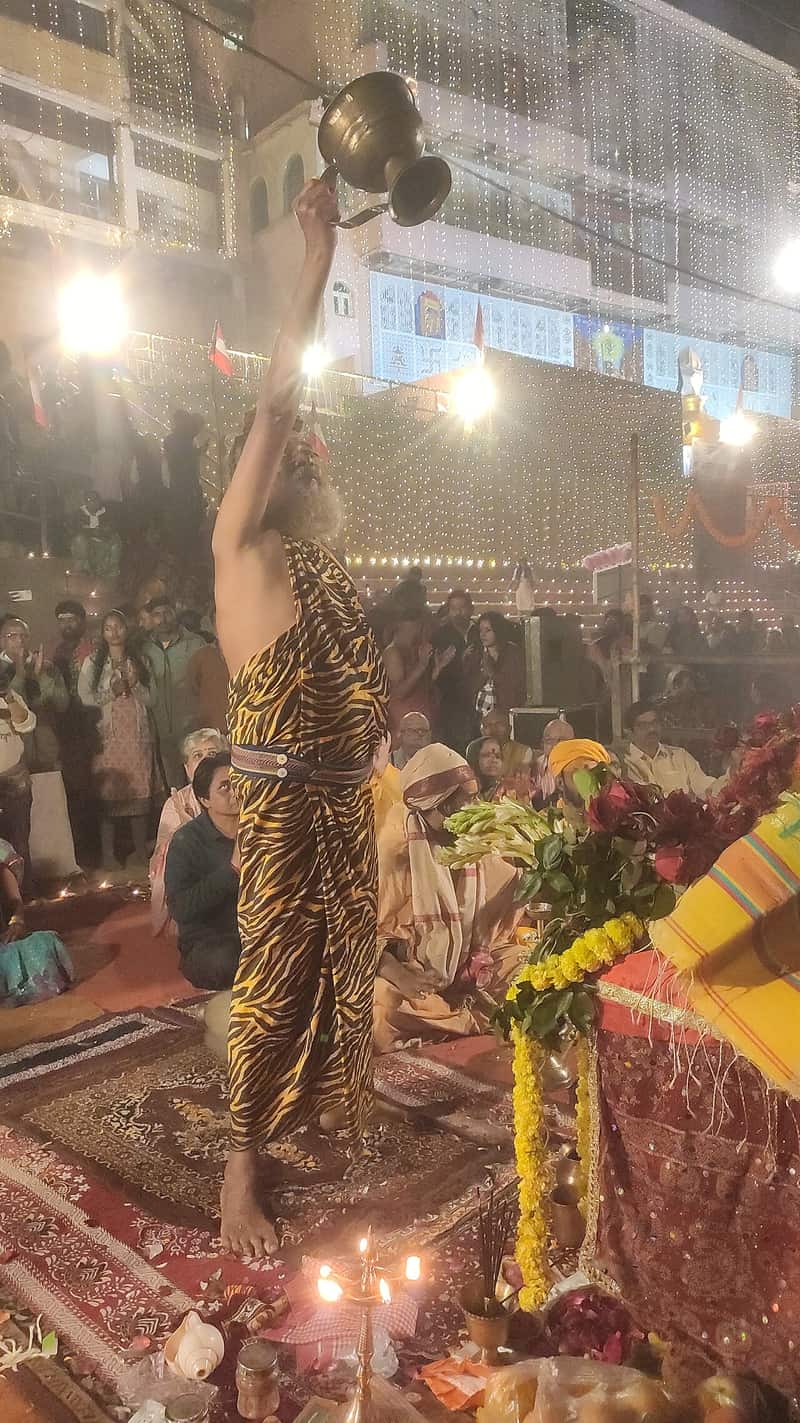
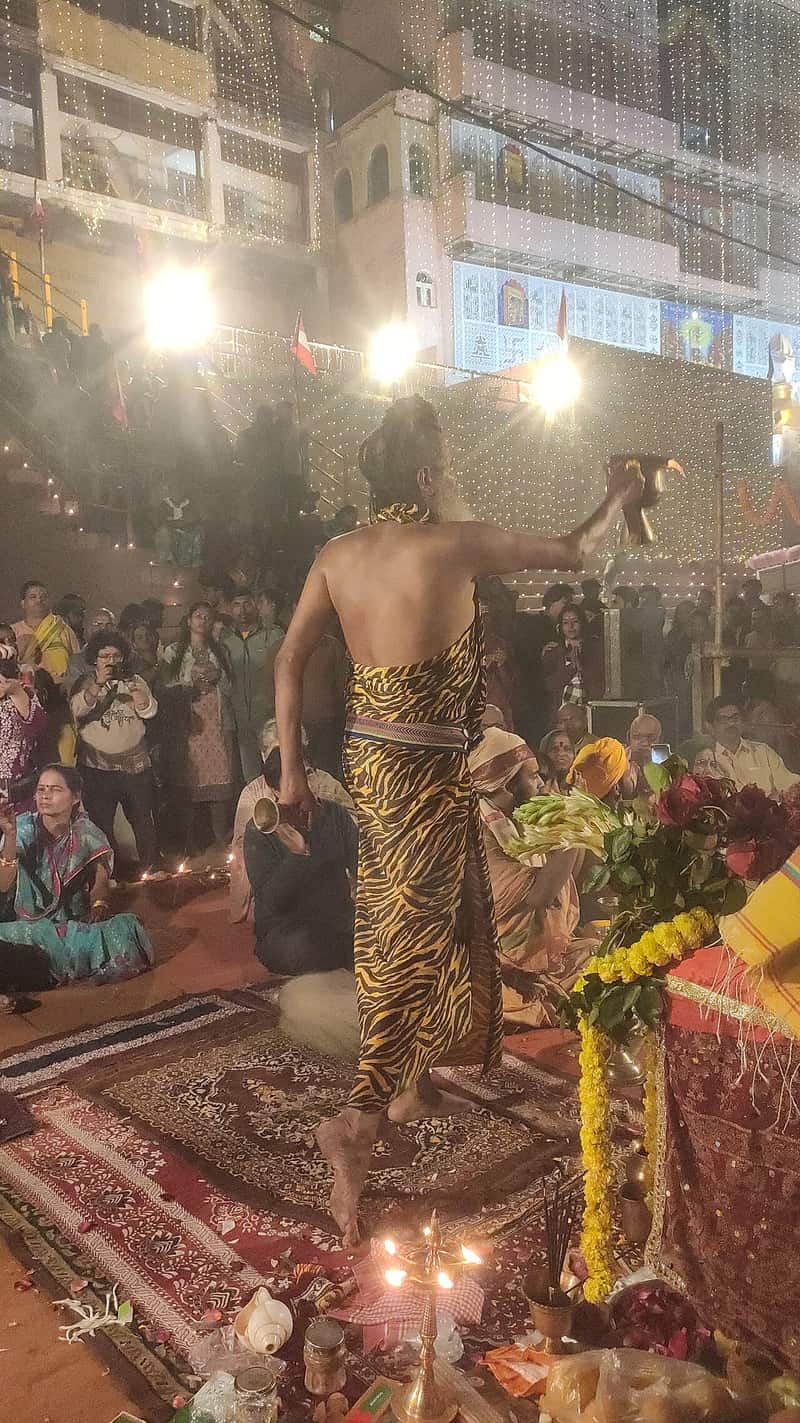
Lali Ghat does not host the great festivals of the ceremonial riverfront, but it celebrates the cycle of the year with the same festivals observed in every Kashi household, and on these days its quiet is transformed. On Ganga Dussehra, when the river's descent to the earth is remembered, the ghat fills with lamps and flowers, and the whole neighbourhood comes down to the water to offer gratitude and to take the purifying bath. On Kartik Purnima, the full moon of the autumn month, the steps are lined with oil lamps and the river carries thousands of tiny flames into the dark, each one a prayer set loose on the current. Dev Deepawali, the festival of the gods' lamps, is observed more modestly here than on the grand ghats, but with no less feeling, and the ghat glows like a smaller, humbler cousin of the great celebration upstream, content in its own light.
The local festivals are tied to the religious calendar of the mohalla behind the ghat, whose temples celebrate their own anniversaries and processions. During these days the lanes fill with music, the ghat steps are swept and washed, marigold garlands are strung between the iron mooring rings, and the riverfront becomes the neighbourhood's courtyard. On certain moonless nights the community performs the ritual of the tarpan, offering water to the ancestors from the same steps where the children swim in summer, and the continuity of the gesture, performed in the same way for centuries, gives the festival its depth. The ghat also marks the ordinary festivals of the year, from Makar Sankranti with its kites and sesame sweets to the swings of the monsoon month of Sawan, when young women sing on the steps and the river is high and generous.
What distinguishes festival days at Lali Ghat is that the celebrations remain the property of the neighbourhood. There are no tickets, no stages, no official programmes; the festival is simply the whole community doing together what it does privately all year, and the ghat becomes what it always is, only more so. Visitors are welcome, and are drawn into the celebration with the easy hospitality of the lanes, offered sweets and vermilion and a place on the steps. The deeper meaning of these days, as the elders explain, is that the river and the city renew their bond, and that the small ghat, forgotten by the guidebooks, remembers what the festival is for. The lamps that Lali sets afloat on Dev Deepawali are not fewer than those of the great ghats, only smaller, and the river receives them with the same tenderness it shows the grandest procession.
Respectful Conduct
Because Lali Ghat sits beside the cremation ghats and serves a devout neighbourhood, a few simple rules of conduct make the difference between a respectful visit and an awkward one. Modest dress is the first courtesy; the ghat is not a beach, and shoulders and knees are better covered, particularly for visitors from other cultures. Photography deserves particular care. The bathers, the mourners, and the boats of the ghat are not exhibits, and photographing people without their consent, especially anyone connected with a funeral procession, is deeply offensive. The smoke rising from Harishchandra may be photographed from a distance, but the pyres and the families gathered at them must never be treated as sights. When in doubt, the camera should stay in its bag, and the moment should be kept in the memory instead.
The processions that pass the ghat toward Harishchandra deserve a special respect of their own. When a funeral cortege approaches, the steps are cleared without fuss, heads are bowed, and the living pause for the dead; visitors should follow the lead of the neighbourhood and do the same. Bathing and swimming near the cremation area are avoided by local custom, and the water directly below the burning ghats is understood to be reserved for the dead, not for the living. Offerings and flowers should be given to the river where others give them, not tossed from odd angles, and nothing should be taken from the ghat, neither stones, nor sand, nor the marigolds that float at the water's edge, for what the river receives is considered hers from that moment on.
Everyday politeness completes the picture. The steps of the ghat are a working place, and visitors should not block the passage of water pots, laundry loads, or the elderly who move slowly and deserve the path. Shoes are left at the edge of the temple niche, not on the steps of worship; litter is carried away, for the neighbourhood keeps its ghat clean with a pride that visitors should not test. Finally, and most importantly, silence is the best compliment. The ghat does not require hymns or exclamations; it asks only to be used as it has always been used, with ease, with care, and with the understanding that in Kashi, manners and devotion are the same thing. Those who observe these small rules will find the ghat opens itself to them, and the memory they carry away will be exactly the one the ghat wanted to give.
Reaching Lali Ghat
Lali Ghat is reached most simply on foot from the old city, since no road reaches the water's edge along this stretch of the riverfront. Visitors staying in the lanes near Vishwanath Temple or Godowlia can walk south through the maze of galis, following the flow of bathers and the smell of river air, and emerge at the ghat within twenty or thirty minutes. Those coming from the northern ghats may prefer to take a boat, hiring a ferry from Dashashwamedh or Assi and asking to be set down at Lali, which boatmen of the mid-riverfront know well. The southern approach passes near Harishchandra, and first-time visitors may prefer the northern route to avoid arriving through the cremation ground unawares. Auto-rickshaws can reach the neighbourhood lanes, but the last stretch of the journey is always on foot, as it has been for centuries.
The best time to experience the ghat is early morning, between five and eight, when the bathing scene is at its height and the light is gentle; the hours of midday are quiet and hot, and the ghat is best left to its siesta. Winter, from November to February, is the most comfortable season, with crisp mornings and soft evening light, while the monsoon months bring the river to the top of its banks and a raw, dramatic beauty of their own. A full visit needs no more than an hour: time to descend to the water, sit on the steps, watch the boats, and perhaps take the small ferry to the far bank and back, which gives the best view of the ghat's modest skyline from the water. Combined with a walk to Harishchandra and Vijayanagaram, the mid-ghat stretch makes a complete morning of quiet Kashi.
The practical details are few. There is no entry fee, no ticket, and no official opening hour; the ghat is simply there, and its doors are the steps themselves. Drinking water and simple refreshments are available in the lanes above, and the shops of Godowlia are a short walk north. Visitors should carry modest clothing and remove shoes at the shrine; those who wish to bathe should bring their own towel and change of clothes, for there are no changing rooms. The nearest major landmarks, Harishchandra Ghat to the south and the old city's temples to the north, frame the walk, and any boatman can point the way in a language of gestures and smiles. Arrive early, move gently, sit long, and Lali Ghat will give back more than the guidebooks promise, for it is one of the last honest corners of the great riverfront.
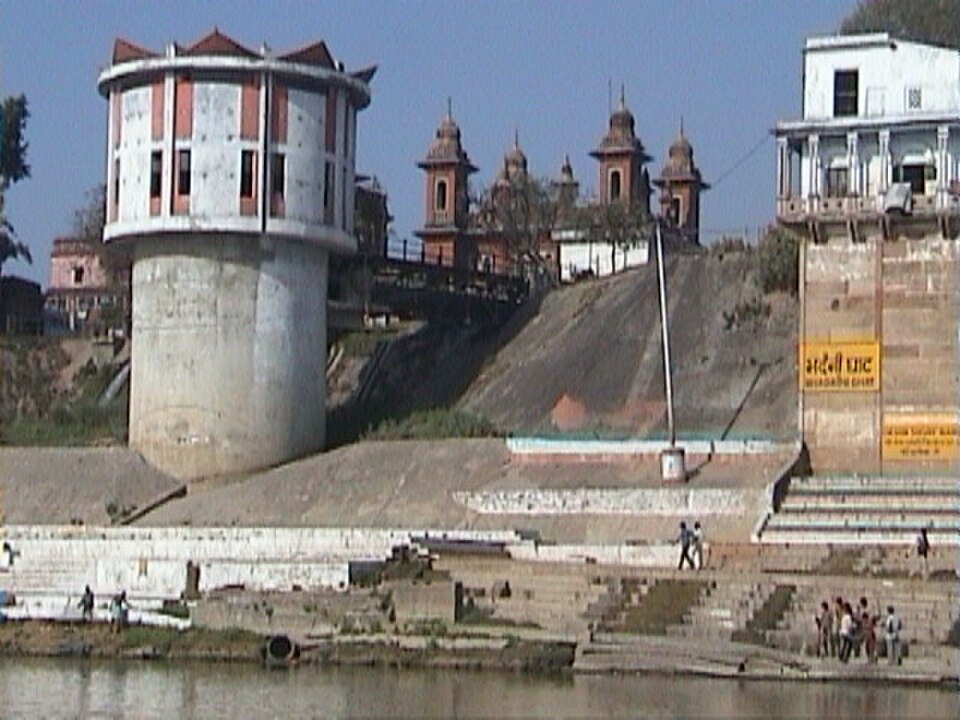
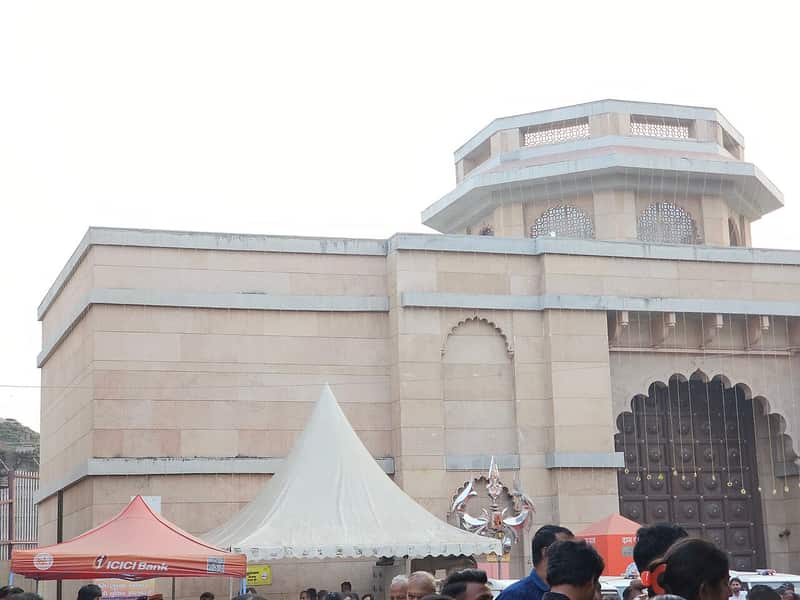
Lali Ghat — Gallery (12 Photos)
Image Credits
lali-01.jpg · lali-02.jpg · lali-03.jpg · lali-04.jpg · lali-05.jpg · lali-06.jpg · lali-07.jpg · lali-08.jpg · lali-09.jpg · lali-10.jpg · lali-11.jpg · lali-12.jpg — Wikimedia Commons, under free licenses.
Continue exploring
Similar Ghats Nearby
Book This Ghat — Get Notified
Download the app now and book a boat ride to Lali Ghat