

Kshemeshwar Ghat
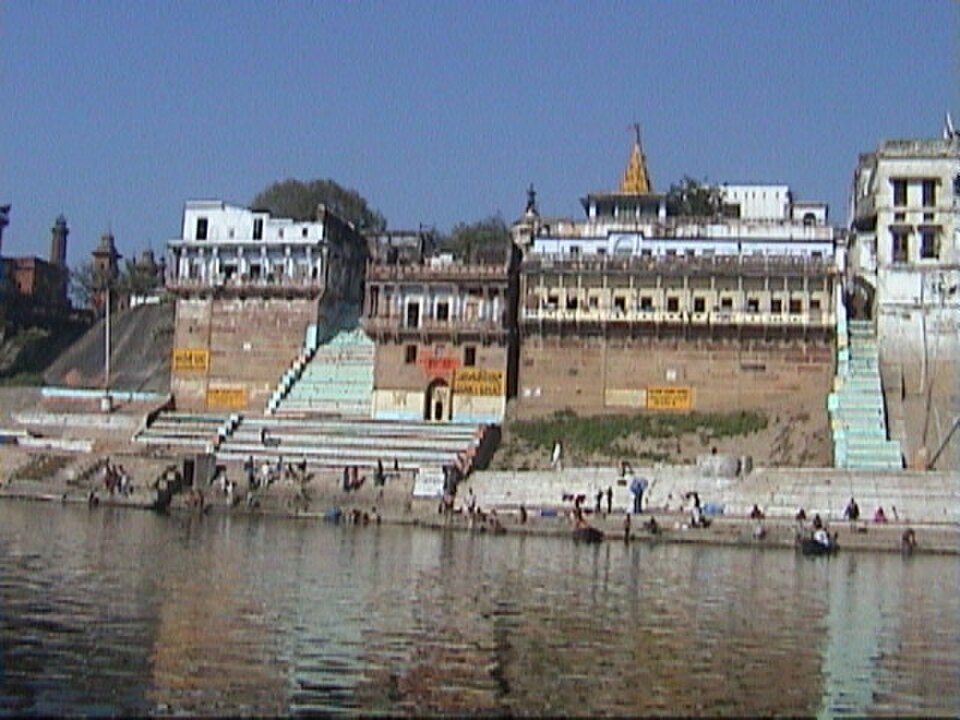
Neighbourhood GhatKshemeshwar Ghat is a small ordinary ghat.


Type
Neighbourhood Ghat
Boat Fare
1x base fare
Best Time
6-9 AM
History
This is the ghat of the Kshemeshwar Shiva temple, dedicated to the deity of welfare and protection. A sacred site for spiritual practice.
Highlights
- Darshan of Kshemeshwar Shiva temple
- Centre of spiritual practice
- Peaceful bathing atmosphere
Festivals & Events
How pricing works in the NaviX app
No haggling at the ghat — everything is fixed in the app first
- 1
Fixed price before you board
The fare is shown in the app upfront — no bargaining at the ghat
- 2
Sharing or private — your choice
Share with fellow travelers or take the whole boat for your group
- 3
Pay only after the ride
UPI, card or cash — with an instant receipt
Daily morning
Bells ring through the morning as the temple opens
Daily evening
The temple glows in warm light as lamps are waved before the deity
Complete Guide
Kshemeshwar Ghat — The Complete Guide
History, mythology, rites and practical details — everything in depth.
On this page
- 1.Kshemeshwar Ghat — A Quiet Corner of Devotion on the Northern Riverfront
- 2.The Temple of Kshemeshwar — Shiva in His House of Welfare
- 3.The Meaning of the Name — Kshemeshwar, the Lord of Welfare
- 4.Morning Bathing at Kshemeshwar — The First Rite of the Day
- 5.The Daily Rhythm — Bathers, Boatmen and the Life of the Ghat
- 6.The River and the View from the Steps
- 7.The Lanes and the Mohalla Behind the Ghat
- 8.The Neighbouring Ghats — Mansarovar and Narad
- 9.Festivals — Shivratri and the Celebrations of the Mohalla
- 10.The Devotional Character of the Ghat
- 11.Etiquette — How to Be a Respectful Guest
- 12.Practical Information — Reaching and Enjoying Kshemeshwar Ghat
📅 Updated: 21 Aug 2026 · Author: NaviX Field Team (field research 2024-26) · 12 sections · 12 photos
Kshemeshwar Ghat — A Quiet Corner of Devotion on the Northern Riverfront
Kshemeshwar Ghat is a small, devout corner of the northern riverfront of Varanasi, standing quietly between the grand expanse of Panchganga and the older ghats that lead into the heart of the old city. It takes its name from the Kshemeshwar temple that rises a few steps behind the water, a modest shrine whose deity is Shiva in his form as Kshemeshwar, the Lord of Welfare. Unlike the great bathing ghats of Kashi, Kshemeshwar makes no claim to monumentality. Its steps are plain and worn, its stone has been softened by a century of bare feet, and its character is that of a neighbourhood place of worship rather than a pilgrimage spectacle. There is no royal pavilion here, no carved gallery, no crowd of guides; there is only the river, the temple bells, and the unhurried rhythm of local life.
Yet this quiet ghat has a history and a sanctity of its own. It belongs to the long chain of ghats that the faithful have climbed for centuries between Panchganga and the old city, each one consecrated by the daily presence of pilgrims, priests, bathers and boatmen. For the people of the surrounding mohalla, Kshemeshwar is simply their ghat — the place where they bring the ashes of their dead to the Ganga, where mothers bathe their children in the morning, where the old sit and watch the river turn from grey to gold at sunrise. It is exactly this ordinariness, this unbroken domestic devotion, that makes the ghat so moving. In Kashi the sacred does not always announce itself; often it hides in plain sight, in the small temple, in the worn steps, in the murmur of a prayer that has been said on the same spot for generations.
For the traveller, Kshemeshwar offers something the famous ghats cannot: intimacy. A morning here is spent among neighbours rather than among crowds, and the river feels nearer and more personal than it does at the ceremonial heart of the city. The temple bells mark the hours, the boatmen call to one another across the water, and the smell of marigold, incense and wet stone fills the air. It is a place to slow down, to sit, and to let the city reveal its older, quieter self. This guide walks with you through the temple, the name, the bathing steps, the daily life, the river, the neighbourhood, the festivals and the practical details, so that your visit to Kshemeshwar Ghat becomes a true meeting with the living devotion of Kashi.
The Temple of Kshemeshwar — Shiva in His House of Welfare
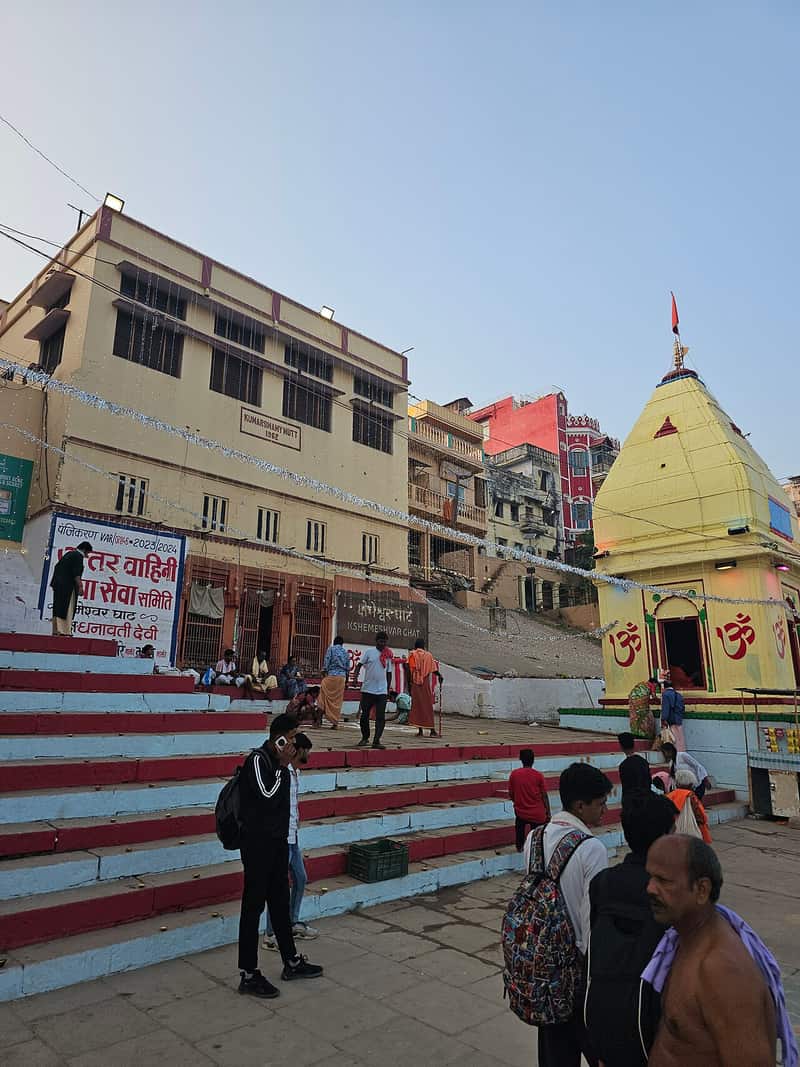
The Kshemeshwar temple stands a little way back from the water, as most temples on the northern ghats do, its shikhara rising modestly above the low roofs of the mohalla. It is not a great monument in the manner of Vishwanath; it is a neighbourhood temple in the truest sense, its walls aged by rain and incense, its doorway worn smooth by the hands of the faithful. Inside the sanctum, the linga of Shiva is installed as Kshemeshwar, the Lord of Welfare, a form of the god who is invoked not for worldly conquest but for safety, health and the quiet prosperity of the family. The name of the deity is written above the entrance, and on the stone lintel old carvings of Ganesha and Nandi keep watch over every step taken within.
Worship at the temple follows the unhurried pattern of ghat temples all along this stretch of the river. The day begins before dawn, when the priest opens the sanctum doors and performs the first abhishek with water from the Ganga. Through the morning the bells ring at every arati, and the sound carries across the water to the boatmen, who have told their passengers for generations that the bells of Kshemeshwar are the first to greet the sun on this bank of the river. Devotees come and go without ceremony — a woman with a small basket of flowers, an old man with a pot of milk, a group of children on their way to school who stop to touch the threshold before running on. The temple asks nothing of its worshippers beyond a moment of attention, and that is exactly what it receives, hour after hour, day after day.
The most beautiful moment at the temple is the evening arati, when the lamps are circled before the deity and the whole temple glows with a warm, gentle light. The neighbourhood gathers on the steps outside, some with folded hands, some merely resting, and the singing of the aarti rises and falls with the bell. On special days the temple is decorated with marigold garlands and strings of leaves, and the sound of the conch announces the blessing. For the visitor, the temple is best approached with the same simplicity it offers: remove your shoes, stand a moment in the courtyard, and let the smallness of the shrine teach what the great temples cannot — that in Kashi the divine dwells in every house, and the Lord of Welfare is present in the least of his homes.
The Meaning of the Name — Kshemeshwar, the Lord of Welfare
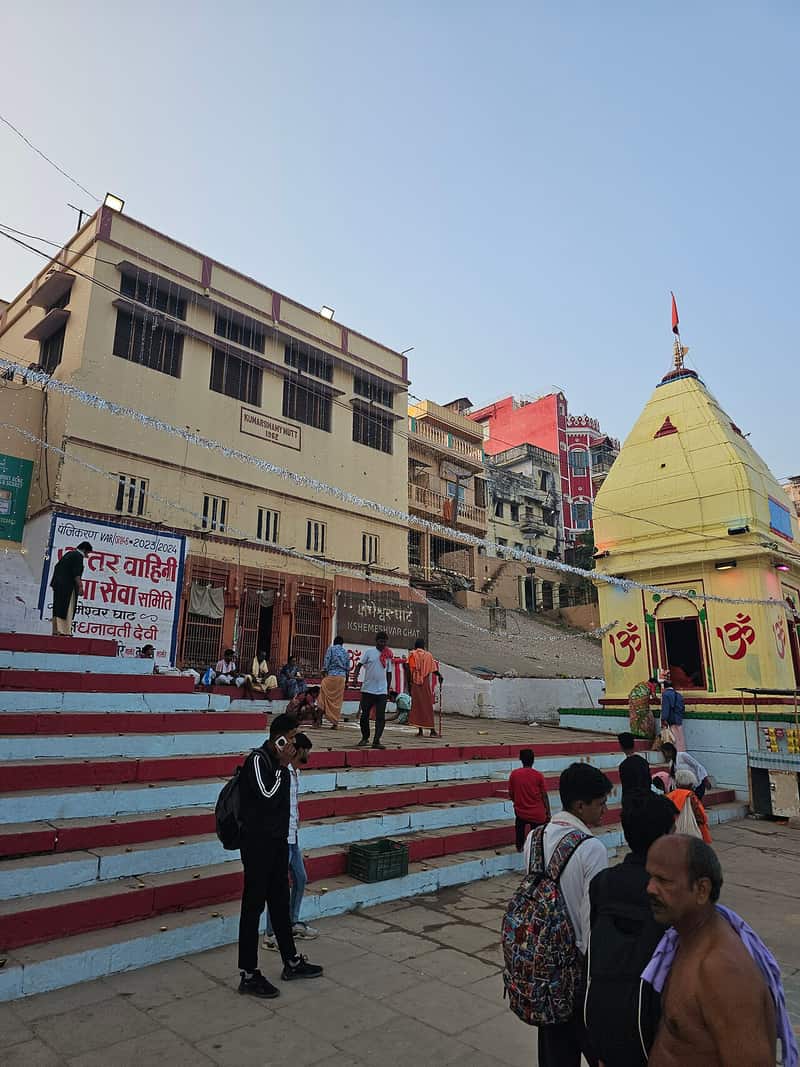
Every name in Kashi carries a story, and the name Kshemeshwar is among the most gentle in the city's vocabulary. It is a compound of two Sanskrit words: kshem, which means welfare, well-being, safety or prosperity, and ishwar, which means lord or god. Kshemeshwar, therefore, is the Lord of Welfare — the deity who is worshipped not for the destruction of enemies or the acquisition of power, but for the protection of home, family, health and livelihood. In the ancient vocabulary of the Vedas, kshem was already a word of great weight: it appears in the Rigveda alongside the ideal of sharing, and in later tradition the pairing of kshem and yogakshem — welfare and its preservation — became a familiar prayer for a settled and secure life.
The choice of the name for a ghat is no accident of language. In a city where most ghats bear the names of kings, conquerors and heroes — Scindia, Chet Singh, Dara — Kshemeshwar stands apart as a name devoted not to power but to blessing. The ghat was named for the temple that guards it, and the temple was named for the promise its deity makes: that the one who worships here shall be kept safe, that the household shall prosper, and that the river shall rise and fall without harm to those who live by its banks. The people of the mohalla will tell you that this is a ghat of good fortune, and that whatever troubles visit the wider city, the shadow of the Lord of Welfare keeps this small stretch of the river protected.
The same root runs through the language of everyday life. When a Banarasi says kshema, he means the sound health of a household; when a student of Sanskrit reads of kshem, he meets the ideal of a life lived in peace; and when the arati at the temple ends with a prayer for the welfare of all, the word echoes the very name of the ghat. So the name is at once a title of the deity, a blessing pronounced over the neighbourhood, and a quiet philosophy of the place: that holiness here is not a matter of grand renunciation but of protection, continuity and the daily grace of living well. To speak the name Kshemeshwar is itself a small act of prayer.
Morning Bathing at Kshemeshwar — The First Rite of the Day
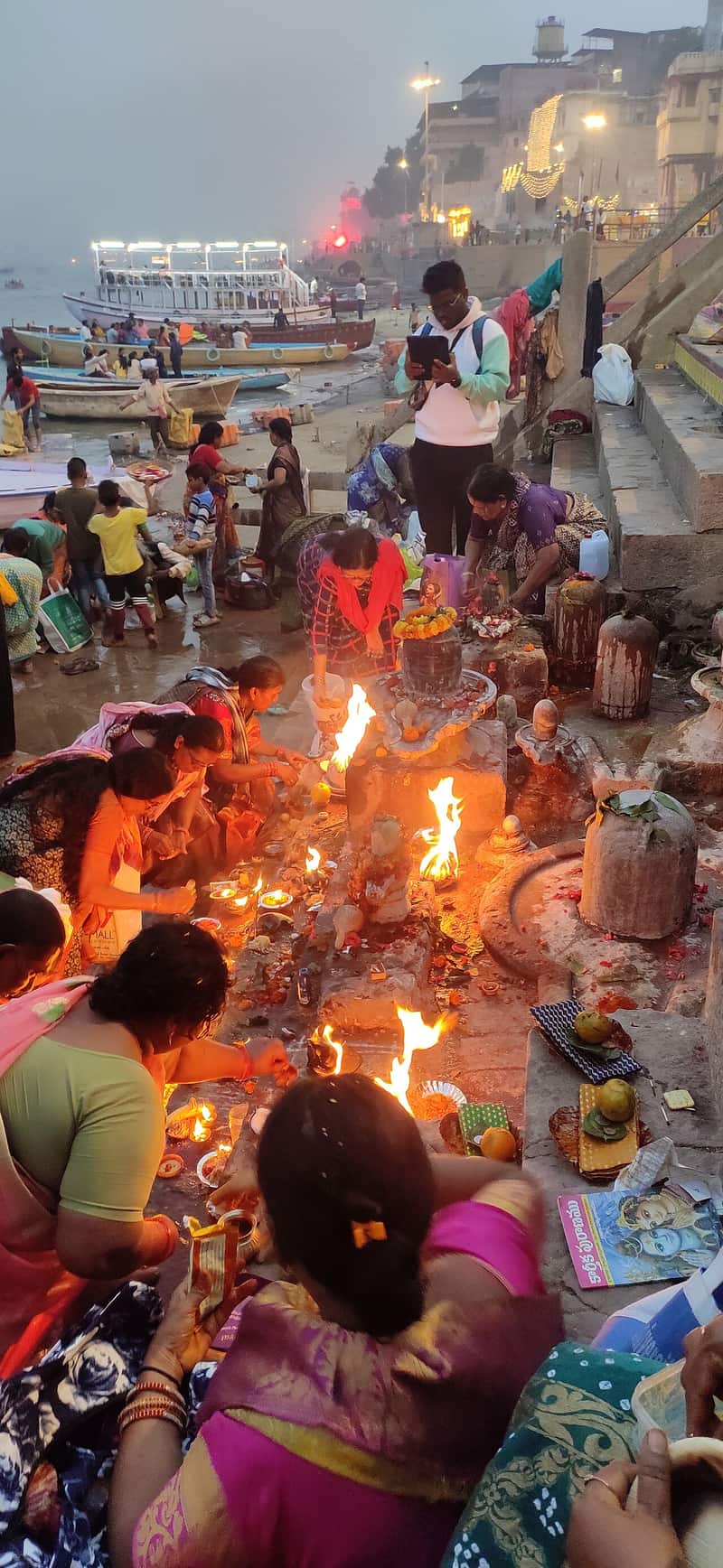
The day at Kshemeshwar Ghat begins in the grey hour before sunrise, when the first bathers make their way down the worn steps with brass lotas and small cloth bags of offerings. There is no queue, no rush, no pandit shouting instructions; the bathing here is a private conversation between the devotee and the river. Men in dhotis stand waist-deep in the cold water, murmuring mantras; women in wet saris wring the river from their hair; and the very old, who have bathed at this ghat since childhood, lower themselves slowly into the current, holding the iron rail fixed into the stone as if greeting an old friend. The water is cool, the light is soft, and the only music is the slap of the water and the distant bells of the temple.
The bath itself follows the ancient pattern of the karmakand. The bather cups water in both hands, sips it as an act of purification, and sprinkles it over the head while reciting the name of the Ganga. Facing the rising sun, he performs the arghya, offering water from the cupped hands toward the east, and then the main immersion — a full dip, repeated three times, each one washing away a layer of the world's dust. Some bathers bring flowers and marigold petals to scatter on the surface; some bring milk for the river; some simply stand and let the current move around them. When the rite is complete, the devotee climbs the steps, changes into dry clothes behind a cloth screen or in the small dressing rooms above, and carries home a lota of Ganga jal for the family shrine.
What makes bathing at Kshemeshwar different from the great ghats is the intimacy of the experience. At Dashashwamedh a bather is part of a crowd; here he is alone with the river, watched only by the temple and the few residents who pass by. There is a particular peace in this — the sense that the Ganga at this quiet stretch of the northern bank belongs to the people who live beside her, and that the simple act of bathing, unchanged for centuries, is still the most honest way to begin a day in Kashi. Pilgrims who come for the morning bath are advised to arrive before dawn, to carry nothing they cannot leave on the steps, and to let the cold water, the rising sun and the ringing bells do their old and gentle work.
The Daily Rhythm — Bathers, Boatmen and the Life of the Ghat
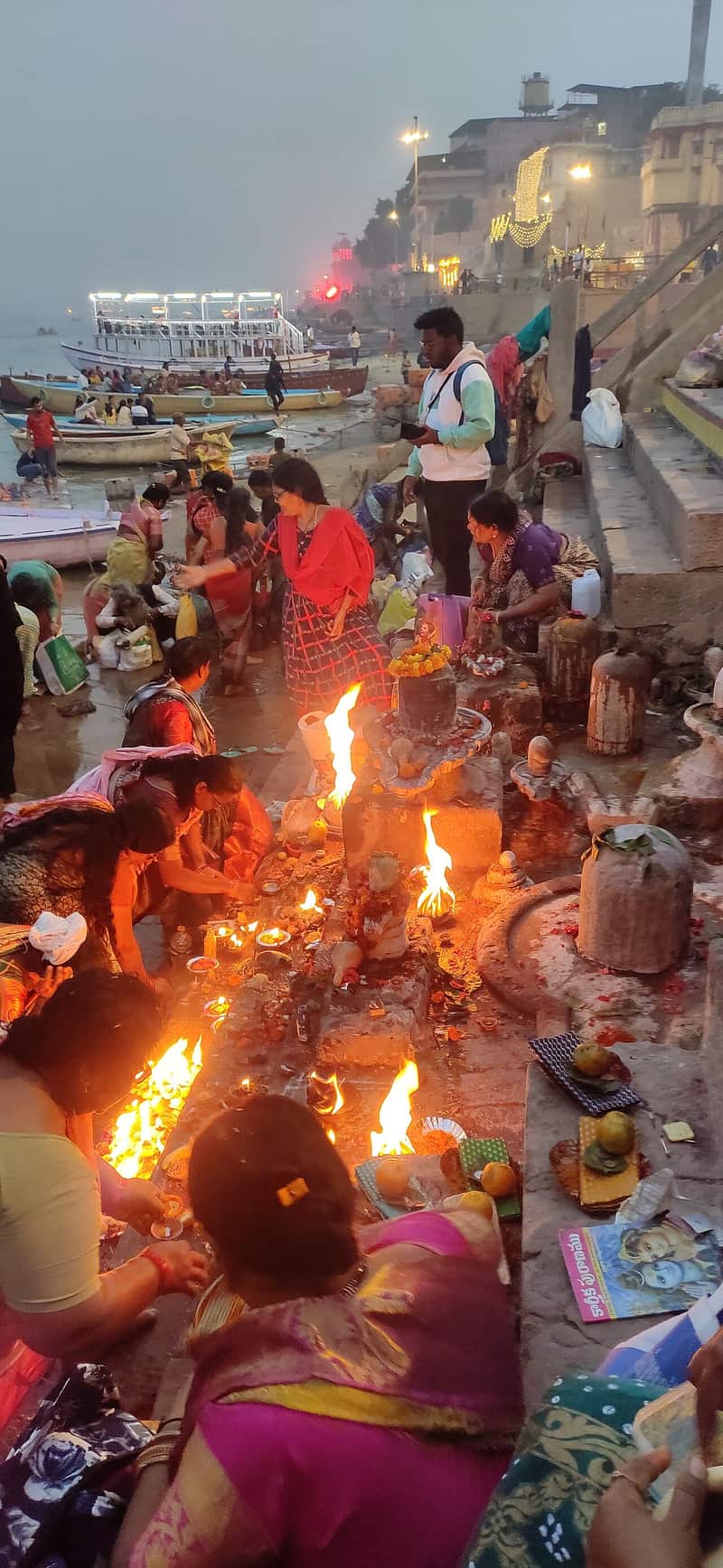
By the time the sun clears the rooftops, Kshemeshwar Ghat is fully awake and at work. Bathers are coming up from the water with dripping clothes; washermen have spread their loads of linen on the steps to dry, slapping the cloth against the stone with rhythmic strokes; and the boatmen of the ghat are hauling their wooden craft down the mud to the water's edge, checking ropes and oars for the day's work. The ghat is the front yard of the neighbourhood, and like every front yard it is full of small, purposeful activity: a woman filling a pot from the river, a boy chasing a stray dog, a shopkeeper arranging biscuits and incense on his wooden counter above the steps.
The boatmen are the ghat's oldest trade, and at Kshemeshwar they work the quieter water of the northern reach. Some take pilgrims across to the far bank for the day's rituals; some row visitors downriver toward the burning ghats; most simply earn their living on the river, as their fathers and grandfathers did, ferrying vegetables, firewood and passengers between the ghats. Their boats, painted in fading blues and greens, are moored along the steps with ropes tied to iron rings older than any living memory. In the late morning the fishermen arrive with their nets, and for an hour or two the ghat smells of river, wet rope and fresh catch, until the sun climbs high and the steps empty for the afternoon heat.
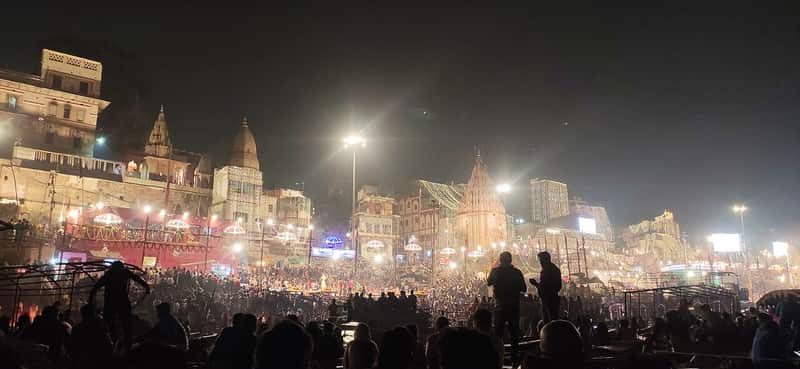
The evening brings the ghat back to life in a different key. Schoolchildren come down to dip their feet and shout across the water; old men gather on the upper steps with cloth-bound accounts of the city's gossip; and the temple bells call the neighbourhood to the evening arati. Vendors set up small braziers and sell roasted peanuts and chickpeas, and the smell of smoke drifts along the bank. For the visitor, this is the ghat at its most human — a place where the sacred and the ordinary share the same stones, where a prayer and a game of cricket happen within a few steps of each other, and where the river is simply part of the household, present at every meal, every quarrel and every celebration of the families who have made their home above these steps.
The River and the View from the Steps
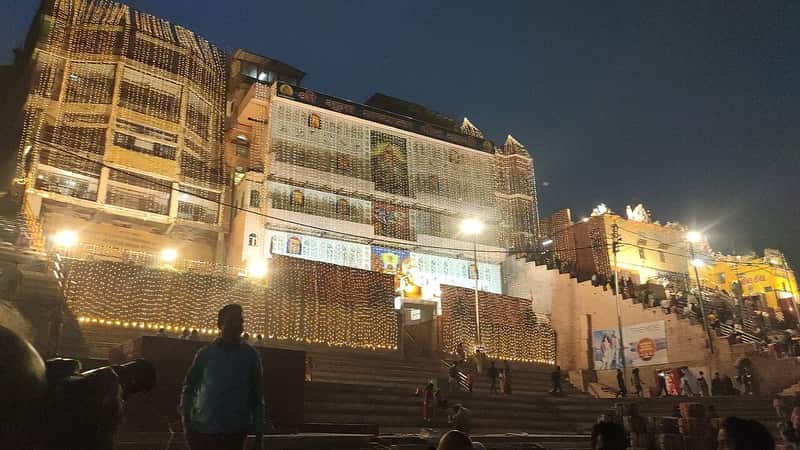
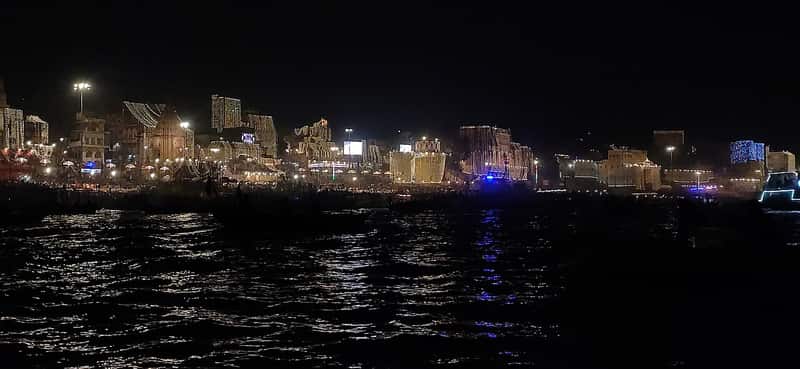
At Kshemeshwar the Ganga reveals her northern character: wide, unhurried and open to the sky. The city's crescent of ghats curves away to the south, its towers and temples strung along the bank like beads, while to the north the river broadens past the quieter ghats toward the open country. From the steps the water seems to fill the world — in the dry season the far bank is a pale line of sand and tamarisk, and in the monsoon it vanishes into a sheet of brown floodwater a mile across. The light is different here from the ghats downstream: softer in the morning, redder at dusk, and at night the river runs black and silver under the moon, dotted with the tiny flames of lamps floated by pilgrims.
The river is never still, and the ghat's life is measured by its moods. In winter the water falls, uncovering long sandbanks where children play and cattle graze, and the boatmen must walk a hundred yards of mud to reach their boats. In summer the Ganga shrinks to a deep green channel, fast and cold in the middle, and the far bank turns to shimmering heat-haze. Then come the rains, and the river rises hour by hour, eating the sandbanks, lapping at the lower steps, and finally covering the ghat's lowest landing until only the uppermost stones remain dry. The people of the mohalla watch the river as farmers watch the sky — for the Ganga here is not scenery but a living presence, a member of the family that gives and takes, floods and blesses, year after year.
The view from the steps changes with the hour in ways the visitor should not miss. At dawn, the sun rises across the water and the ghat glows amber, with the temple bells ringing over the still river. At noon, the glare is blinding and the boats sit idle, their shadows short and black. But the great moment is sunset, when the sky over the western bank turns orange and violet, the lights of the far ghats come on one by one, and the arati lamps begin to move on the water. Sitting on the upper steps of Kshemeshwar at this hour, watching the river carry the day's light away, the traveller understands why the people of this ghat say that the Ganga is the true deity of Kashi, and the temples only her ornaments.
The Lanes and the Mohalla Behind the Ghat
Behind Kshemeshwar Ghat the city rises in the tangled, fragrant web of lanes that is the old northern mohalla. The lanes are narrow enough that neighbours can shake hands across the rooftops, and dark enough that a shaft of morning sun falling through a gap in the eaves feels like a gift. Here live the families of the ghat — the priests who serve the temple, the boatmen, the washermen, the shopkeepers — in houses whose walls are centuries old, painted in the faded blues and ochres of Banaras, with brass pots on the balconies and tulsi plants growing in the courtyards. The lane is paved with broken stone, worn smooth by the rain and the passage of countless feet, and every few steps a doorway opens onto a small shrine or a painted image of the Ganga.
The mohalla is a world of its own, and it runs on its own clock. The chai stall at the mouth of the lane opens before dawn, serving the bathers as they pass; the milkman comes at the same hour; the sweetshop sets out its trays of jalebi and peda by mid-morning. Women sit in doorways shelling peas or winnowing grain, calling to one another across the lane, while the men gather at the paan shop to argue about prices, politics and the state of the river. At festival time the lane is strung with marigolds and lights, and the sound of bhajans pours from open doors. To walk these lanes is to walk through the living texture of old Banaras — a texture that the famous ghats, for all their glory, can only gesture toward.
The connection between the mohalla and the ghat is as close as that between a house and its courtyard. The ghat is where the neighbourhood bathes, washes, prays, mourns and celebrates; the lane is where it eats, sleeps and quarrels. When the river rises in the monsoon, the lower lanes flood first, and the whole mohalla turns out to help move furniture and cookstoves to higher rooms; when the water falls again, the ghat is scrubbed clean and life returns to the steps. For the visitor, entering the mohalla is a step into privacy, and it should be taken with respect — but the people of these lanes are famously hospitable, and a respectful traveller who greets them with a namaste will find doors opening, cups of chai offered, and stories told that no guidebook has ever printed.
The Neighbouring Ghats — Mansarovar and Narad
A short walk along the bank from Kshemeshwar brings the traveller to Mansarovar Ghat, one of the most ancient and most venerated ghats of the northern stretch. Its name recalls the great Himalayan lake of Mansarovar, the abode of the gods, and legend holds that bathing here bestows the merit of a pilgrimage to that distant sacred water. The ghat is associated in local tradition with the era of the great war epics — it is said that the Pandavas themselves bathed at this spot during their years of exile, and that the sage Vyasa, the author of the Mahabharata, blessed these stones. Even today the ghat carries an air of great age: its steps are massive and worn, its temples dark with centuries of incense, and its silence feels older than the city around it.
Just beyond Mansarovar stands Narad Ghat, named for the sage Narada, the celestial wanderer and messenger of the gods, who is said to have bathed and meditated here in the age of the Puranas. Of all the northern ghats, Narad is among the quietest — a place of simple stone and drifting smoke where local families come to perform their rites and where the river traffic slows to a murmur. Between the three ghats — Kshemeshwar, Mansarovar and Narad — a pilgrim can walk the whole history of devotion in miniature: the everyday worship of a neighbourhood shrine, the deep antiquity of an epic bathing place, and the mythic resonance of a sage's ford, all within a few hundred yards of riverbank.
For the visitor, the three ghats are best explored together, on foot, with the river on one side and the old lanes on the other. The walk between them is short but rich: every few steps reveals a tiny temple, a painted boat, a doorway of carved stone, a length of old railing where a child sits fishing. At Mansarovar the bathers are often pilgrims from afar, come specifically for the ghat's ancient fame; at Narad the steps are mostly given over to local life. Kshemeshwar sits between them as the everyday heart of the trio, its temple bells carrying across the water to both neighbours. Taken together, these three ghats form one of the most atmospheric and least crowded stretches of the entire riverfront — a place where the traveller can feel the age of Kashi without the crowds of its famous centre.

Festivals — Shivratri and the Celebrations of the Mohalla
The greatest festival of Kshemeshwar is Maha Shivratri, the great night of Shiva, when the temple of the Lord of Welfare becomes the heart of the whole neighbourhood. On this night the temple is decorated from top to bottom with marigold garlands and strings of lights, the courtyard is swept and washed, and devotees arrive from the surrounding lanes and from across the city to keep vigil. The abhishek of the linga continues through the night with water, milk, honey and bael leaves, each offering made with the same devotion whether by a child or a great-grandmother. The bells ring without pause, the conch sounds at every hour, and the steps of the ghat below fill with lamps and the murmur of prayers, so that the whole ghat — temple and river together — seems to be one single act of worship.
The calendar of the ghat carries many other festivals, each with its own character. In the month of Sawan, every Monday is a pilgrimage: the kanwariyas and local devotees throng the ghat with pots of Ganga jal, and the temple sees a stream of worshippers all day long. On Ganga Dussehra, the ghat celebrates the descent of the river to the earth, and the steps are crowded with bathers who light lamps and float them on the water as the sun goes down. Kartik Purnima brings the grandest scene of the year, when the full moon rises over the river, thousands of diyas are set adrift on the water, and the whole crescent of ghats glows with tiny flames. Nag Panchami, too, is observed at the temple, with milk and sweets offered to images of the serpent god.
What distinguishes the festivals of Kshemeshwar from the great city-wide celebrations is their scale and their intimacy. There are no processions with television cameras, no swarms of pilgrims from other states; there is a neighbourhood keeping its oldest customs alive, as it has for centuries. The same families who bathe at the ghat every morning prepare the decorations; the same boatmen row the extra boats that carry devotees across the river; the same chai shop stays open all night on Shivratri, fuelling the vigil. For the visitor lucky enough to be in Varanasi at such a time, the festival at Kshemeshwar offers a rare gift — the chance to see the faith of Kashi not as spectacle but as inheritance, celebrated in the lanes and on the steps where it has always lived.
The Devotional Character of the Ghat
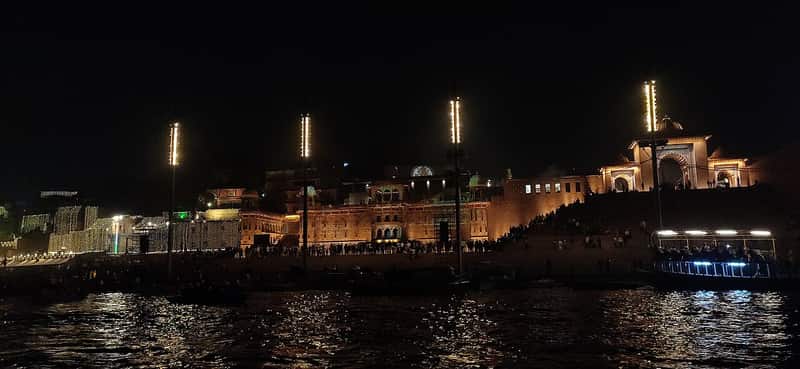
Every ghat of Varanasi has a temperament, and the temperament of Kshemeshwar is devotion — not the loud, theatrical devotion of the festival stage, but the quiet, daily devotion of a household that prays because prayer is as natural as breathing. The faith practised here is unspectacular: it does not require vast crowds or elaborate rites, only a clean body, a folded hand and a moment of attention. A man going to work stops at the temple for ten seconds; a woman on her way to the market touches the threshold; a boatman, pushing off from the bank, glances back at the shikhara and mutters a single name. These small acts, repeated a thousand times a day, are the true currency of the ghat's holiness — a holiness measured not in miracles but in constancy.
The devotion of Kshemeshwar is also a shared thing, woven into the life of the community. On the evenings of the week, small groups gather on the steps or in the temple courtyard to sing bhajans, their voices rising over the water in songs that are older than the buildings around them. The old women of the mohalla know the entire Ramcharitmanas by heart and take turns reading it aloud during the winter evenings; the children learn the aarti before they learn their multiplication tables. This is the faith of Kashi at its most domestic — a religion that lives in the kitchen and the courtyard as much as in the temple, that accompanies the cradle and the pyre, and that has made this small ghat a centre of worship for generation after generation.
For the traveller, the devotional character of the ghat is both its attraction and its demand. It is an attraction because here one can witness faith that is utterly unselfconscious — worshippers who do not notice being watched, rites performed exactly as they have been performed for centuries, without concession to the camera or the guidebook. It is a demand because this is not a museum of religion but a living one; the visitor who enters it as a spectator should remember that he stands in a place of prayer, and that the respect he shows to the devotees is the respect he shows to the faith itself. To sit quietly on the steps of Kshemeshwar, to let the bells and the bhajans wash over one, is to receive the ghat's only sermon — that the divine is not far away but here, in the river, in the stone, in the folded hands of a neighbour.

Etiquette — How to Be a Respectful Guest
Kshemeshwar is not a tourist attraction but a living place of worship, and the first duty of the visitor is to behave like a guest in someone's home. Dress modestly — shoulders and knees covered — and remove your shoes before stepping onto the temple courtyard, as you would in any Hindu shrine. Speak softly, keep a respectful distance from worshippers at prayer, and do not stand between a devotee and the deity. If you wish to photograph the temple or the ghat, ask permission first; many locals will happily agree, but some will not, and their refusal must be accepted with grace. Above all, remember that the rites you are witnessing are acts of faith, not performances arranged for visitors, and that your silence is the highest compliment you can pay them.
The river and the steps demand their own courtesy. Do not bathe in the ghat's sacred water unless you are prepared to do so in the traditional manner, fully immersed and dressed appropriately; otherwise, keep to the edges and do not disturb the bathers. Never throw rubbish into the Ganga — the people of the ghat are passionate about the river's cleanliness, and a visitor who drops litter will quickly feel the weight of their disapproval. Offerings left on the steps belong to the river and the gods; do not touch or collect them. And if a pandit or a local guide approaches to offer help or blessings, listen politely and decide freely — a small donation is customary if you accept his service, but you are never obliged to pay for a blessing you did not request.
The ghat rewards those who approach it gently. Sit quietly on the upper steps and you will be left in peace; start a conversation and you will find the people of the mohalla warm, curious and generous. A simple namaste and a few words of Hindi — even a faltering dhanyavad — will open doors that no fee can buy. Do not be alarmed by the rituals of mourning and cremation at the nearby ghats; they are part of the sacred geography of Kashi, and the dignity of grief deserves silence, not curiosity. If you attend a festival, take part only as the locals do — with folded hands and a full heart. The unwritten law of Kshemeshwar is simple: respect the river, respect the temple, respect the people, and the ghat will repay you with its quietest and truest self.
Practical Information — Reaching and Enjoying Kshemeshwar Ghat
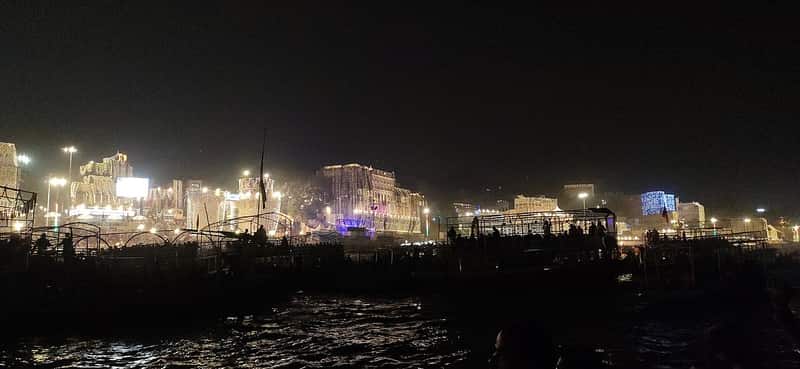
Kshemeshwar Ghat lies on the northern riverfront, in the chain of ghats between Panchganga and the old city, and it is best reached on foot. The simplest approach is to walk north along the riverbank from Panchganga Ghat, a pleasant stretch of fifteen minutes that passes several small temples and working ghats; alternatively, the ghat can be entered through the lanes of the old city, which lead down to the water through the mohalla of the same name. Rickshaws and e-rickshaws will take you as far as the lanes permit, but the last stretch is always on foot, through narrow alleys that are themselves part of the experience. A boat from the central ghats — Dashashwamedh or Manikarnika — is the most beautiful approach, bringing the traveller to Kshemeshwar as the river has always brought its pilgrims, from the water side.
The best time to visit is early morning, between sunrise and nine o'clock, when the bathing, the bells and the first light make the ghat at its most alive; the evening arati, around dusk, is the second golden hour. The winter months from October to February offer the most comfortable weather and the clearest light, while the monsoon, from July to September, is dramatic but wet, with the river rising to cover the lower steps. Maha Shivratri, which falls in February or March, is the finest festival moment, and Sawan Mondays bring the ghat its most fervent crowds. Whatever the season, carry water, wear shoes you can slip off quickly at the temple, and keep small change for offerings and boatmen — there are no ATMs in the immediate lanes.
Kshemeshwar is best combined with its neighbours to make a full morning of the northern ghats. Start at Mansarovar Ghat, with its ancient stones and its legends of the Pandavas; walk past Narad Ghat, where the sage's name still hangs over the quiet water; and finish at Kshemeshwar, where the temple bells will be ringing for the midday arati. From here the walk continues southward past the grander ghats back toward Panchganga and the old city, completing a circuit that shows both the spectacle and the simplicity of Kashi. For those who wish to linger, the lanes behind the ghat offer simple chai and snacks, and the boatmen at the mooring will take you onward along the river for a modest fare. Arrive early, walk slowly, and let the northern riverfront teach you its own pace.
Kshemeshwar Ghat — Gallery (12 Photos)
Image Credits
kshemeshwar-01.jpg · kshemeshwar-02.jpg · kshemeshwar-03.jpg · kshemeshwar-04.jpg · kshemeshwar-05.jpg · kshemeshwar-06.jpg · kshemeshwar-07.jpg · kshemeshwar-08.jpg · kshemeshwar-09.jpg · kshemeshwar-10.jpg · kshemeshwar-11.jpg · kshemeshwar-12.jpg — Wikimedia Commons, under free licenses.
Continue exploring
Similar Ghats Nearby
Book This Ghat — Get Notified
Download the app now and book a boat ride to Kshemeshwar Ghat