

Chowki Ghat
Neighbourhood GhatChowki Ghat is a small ordinary ghat.


Type
Neighbourhood Ghat
Boat Fare
1x base fare
Best Time
5-8 AM
History
A small bathing ghat with a peaceful environment — a local stop true to its simple name.
Highlights
- Peaceful local stop
- Bathing away from the crowd
- Hidden ghat near Kedar
Festivals & Events
How pricing works in the NaviX app
No haggling at the ghat — everything is fixed in the app first
- 1
Fixed price before you board
The fare is shown in the app upfront — no bargaining at the ghat
- 2
Sharing or private — your choice
Share with fellow travelers or take the whole boat for your group
- 3
Pay only after the ride
UPI, card or cash — with an instant receipt
🕉️
Aarti details not available for this ghat yet
Complete Guide
Chowki Ghat — The Complete Guide
History, mythology, rites and practical details — everything in depth.
On this page
- 1.Overview: A Quiet Step on the Old Riverfront
- 2.The Name: A Chowki, a Platform, a Place to Rest
- 3.Daily Life: The Ordinary Rhythm of the Steps
- 4.Bathing: The Morning Scene at the Water
- 5.The River: The Ganga Here and Its Moods
- 6.Boats: Moorings and the Men Who Row Them
- 7.The Neighborhood: Lanes and Mohallas Behind the Ghat
- 8.Nearby Ghats: Kedar and Vijayanagaram
- 9.Atmosphere: The Quiet, Unpretentious Kashi
- 10.Festivals: Local Celebrations at the Water's Edge
- 11.Etiquette: Conducting Yourself with Respect
- 12.Practical Guide: How to Reach, When to Come
📅 Updated: 21 Aug 2026 · Author: NaviX Field Team (field research 2024-26) · 12 sections · 12 photos
Overview: A Quiet Step on the Old Riverfront
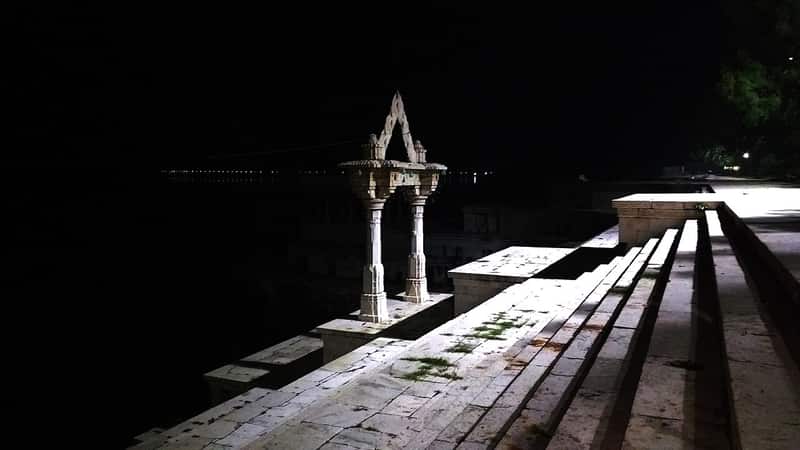
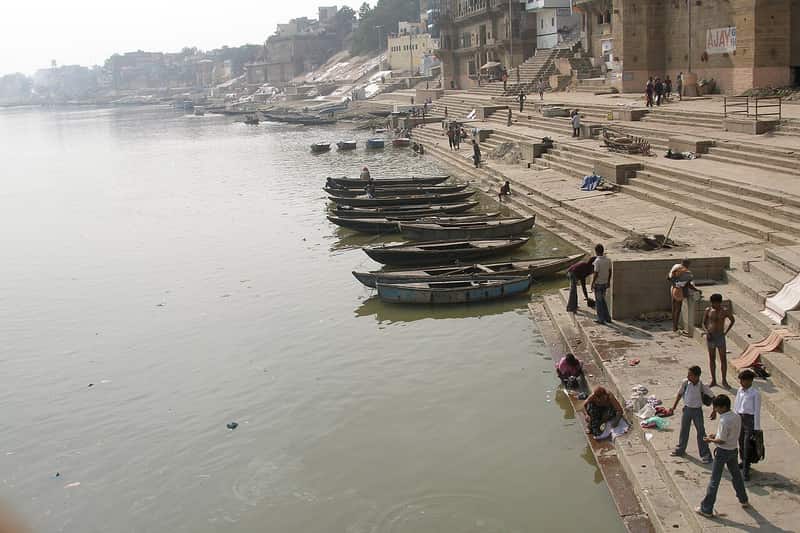
Chowki Ghat is one of the small, unpretentious ghats of Varanasi, set into the long unbroken chain of stone steps that runs along the middle stretch of the city's riverfront. It stands only a short walk from the better-known Kedar Ghat, and most visitors pass it without ever learning its name. The ghat is modest in every way: a handful of steps, a narrow landing, a few stone platforms where boats are tied. There are no towering temples here and no riverfront palaces, only the everyday architecture of a city that has lived beside the Ganga for centuries. There are no signboards and no ticket windows, no guards and no announcements; just a worn stairway descending to the water, and that is precisely why the ghat is so easy to overlook, and so worth finding.
Life at Chowki Ghat follows an old and unhurried rhythm. Before sunrise the first bathers arrive with brass pots and small cloth bundles, and the sound of water being poured is heard along the steps. By mid-morning the boatmen are mending nets and coiling ropes, women beat laundry against the stones, and children dive into the greenish current with delighted shouts. The afternoon brings quiet, when the ghat dozes under the sun and even the boatmen stretch out in the shade of their hulls. This is not a ghat built for ceremony; it is a ghat built for living, and living has gone on here for as long as anyone can remember. The rhythm is not planned and it is not performed; it simply is, the way the current of the river is, and visitors who slow themselves down to match it find that the ghat opens itself to them in unexpected ways.
For the traveler, Chowki Ghat offers something increasingly rare in Varanasi: a place where the river is not a spectacle but a neighbor. The crowds of Dashashwamedh and the holy bustle of Assi are far away, and here the Ganga is simply the river of a thousand ordinary mornings. Sitting on the warm stones at sunset, watching a single boatman paddle home against the current, one understands why Kashi is called the city of light. The light is not only in its temples; it is also in moments like this, small, quiet, and completely unperformed. It is a lesson in the art of looking slowly, and it rewards every traveler who is willing to sit still on the warm stones and simply let the river speak for itself.
The Name: A Chowki, a Platform, a Place to Rest
In the languages of the Ganga plain, a chowki is a low wooden seat, the kind that once stood in every Indian home, or a small platform raised a few inches above the ground. Along the riverfront, the word came to mean something slightly different: a raised stone platform built at the water's edge, a place to set down a load, to sit, to rest before wading into the river. Chowki Ghat is named for exactly such a platform. Unlike the grand ghats of Kashi, which carry the names of kings, deities and holy men, this one carries the name of a piece of furniture, and that says everything about its character. Here there is no legend of a goddess and no boast of a conqueror; the name is a working description, as honest as the stones themselves, and the people of the neighborhood still use it without a second thought, generation after generation.
Older residents of the neighborhood remember that a broad stone platform once stood at the foot of the steps, used by pilgrims for their bundles, by dhobis for their washing and by boatmen for their midday sleep. In time the platform crumbled and was rebuilt, but the name stayed. Some elders add another possibility: in an older usage a chowki was also a small covered palanquin, and they recall that the ghat once served as a landing place where such palanquins brought travelers from the water side. Whether the name came from the platform or the palanquin, no one can say with certainty, and the ghat seems content to keep its small secret. Whatever the truth may be, the name has worn well, as names do when they are rooted in daily use rather than in books, and it is spoken now with the same ease with which it was spoken a hundred years ago.
There is a quiet poetry in such naming. Where other ghats announce themselves with mythology, Chowki simply describes a bench by the river. Knowing this, a visitor begins to see the ghat differently: the flat stones become seats, the shadows become resting places, and the whole riverside reads as an invitation to pause. In a city of ten thousand names, it is the modest ones that often prove the most honest. A traveller who asks a boatman or a dhobi about the chowki will usually receive a shrug and a smile, as if to say that some questions are best answered by sitting down on the stones and watching the water for a while.
Daily Life: The Ordinary Rhythm of the Steps
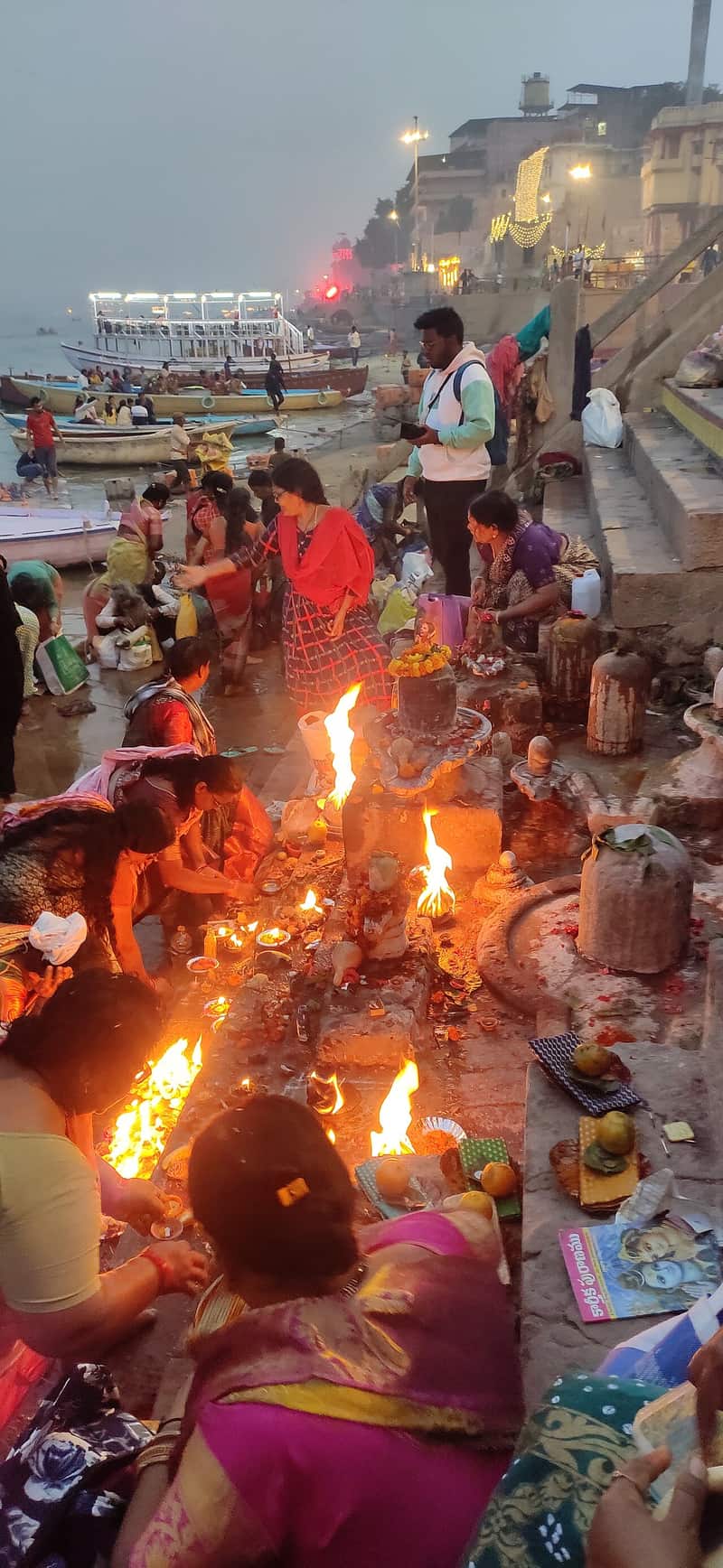
The day at Chowki Ghat begins before the city is fully awake. In the half-dark of early morning, figures move down the steps with pots and towels, and the first prayers rise over the water like smoke. By the time the sun clears the far bank, the ghat is busy in its quiet way: bathers stand chest-deep in the current, a barber trims a head of hair on a flat stone, and an old man sits motionless in meditation while a cow drinks from the river a few paces away. Everything happens slowly, deliberately, as if the river had taught the people its own patience. Nobody hurries anybody else here; even the temple bells seem to ring at the speed of the current, and a visitor who arrives in a hurry feels it at once, and gradually slows down to match the place.
Mid-morning belongs to the washerfolk. Dhobis and housewives kneel at the water's edge, beating garments against the stones with a rhythm that carries far along the riverfront, then spread the wet cloth over the steps and rails to dry in the sun. Nearby, fishermen examine their nets, mending a tear with quick, practiced fingers. Boatmen who have no passengers yet lounge on their upturned hulls, smoking, talking, and watching the river with the easy attention of men who read water the way others read books. Vendors appear at the top of the steps with baskets of greens and small brass lamps, calling their wares in a sing-song that belongs entirely to Kashi. The washing goes on until the sun is high, and then the stones steam dry in the heat and the ghat changes its costume for the long, lazy afternoon that follows.
Late afternoon softens the scene. Schoolchildren come to the ghat to play, their shouts echoing off the old stone, while women fill brass pots and carry them home on their heads in long, graceful lines. As dusk gathers, lamps are lit in the little shrines among the houses, and the sound of temple bells drifts down to the water. By night the ghat is almost empty, given over to the lapping of the river and the occasional glow of a boat lantern. It is a small day in a small ghat, but it has been repeated, with small variations, for centuries, and that continuity is itself a kind of sacredness. It is one of the quiet truths of Varanasi that the holiest places are often the most ordinary ones, and that the divine does not require grandeur to make its home among the daily habits of people.
Bathing: The Morning Scene at the Water
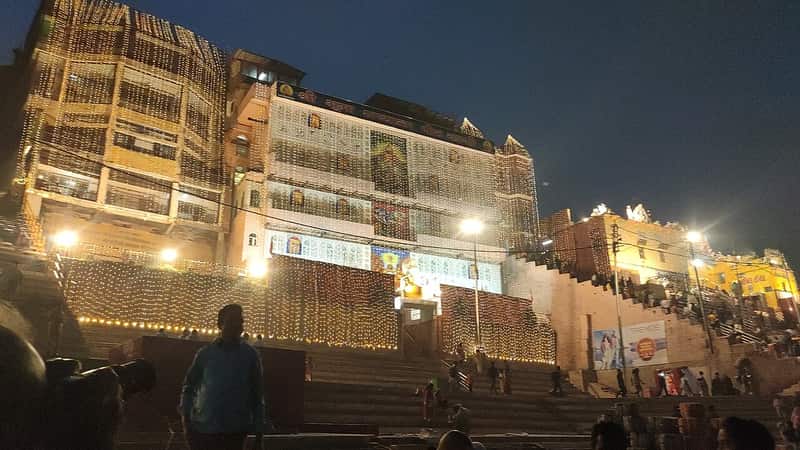
Bathing at Chowki Ghat is a private, unadorned affair. There is no ceremony and no audience; a man slips out of his clothes behind a towel held up by a friend, wades in up to his waist, and pours water over himself with his hands cupped. Women, modest and quick, take their dip further along where the steps widen, their voices low, their movements practiced. What the ghat lacks in grandeur it makes up for in sincerity. Here the ritual is stripped to its essence: water, intention, and the old words of prayer murmured into the dawn. No priest is needed here and no fee is paid; the water itself performs the office, and that has always been the genius of these small ghats that ask nothing of a pilgrim except sincerity.
The best of the day comes in the first hour of light. Bathers face the rising sun, lifting cupped hands of water in the arghya, the offering that greets the day; some sprinkle the holy water toward the sun three times, then pour a little back into the river as a gift. Old men stand waist-deep reciting the Gayatri Mantra in a low, steady voice, and even the indifferent river seems to listen. On festival days the numbers swell, but on ordinary mornings a bather may share the water with only a few others and a heron standing motionless on a sandbar. The chill of a winter morning makes the first immersion a small act of courage, which is perhaps why it is done so quickly and with such conviction, the body knowing what the mind has barely begun to decide.
To watch this scene without joining it is to understand something essential about Varanasi. The great ghats perform bathing for the world; Chowki performs it for itself. Pilgrims come here not for the spectacle but for the simple conviction that the Ganga carries away what troubles the heart, and they leave their troubles in the water with the same trust their ancestors did. A traveler who comes only to observe should stand quietly on the upper steps, keep a respectful distance, and perhaps learn what stillness looks like when it is practised daily, without any audience at all. For the faith here is not worn on the sleeve; it is carried in the body, in the daily dip, in the quiet murmur, and it asks for nothing more than the river's patience and the coming of the next morning.
The River: The Ganga Here and Its Moods
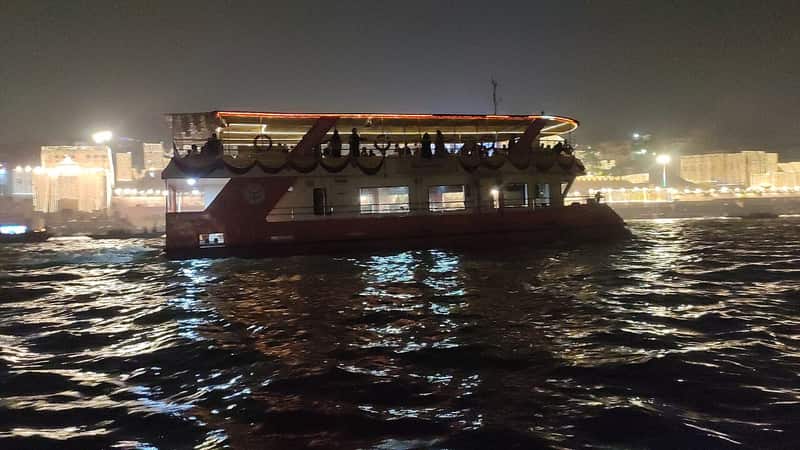
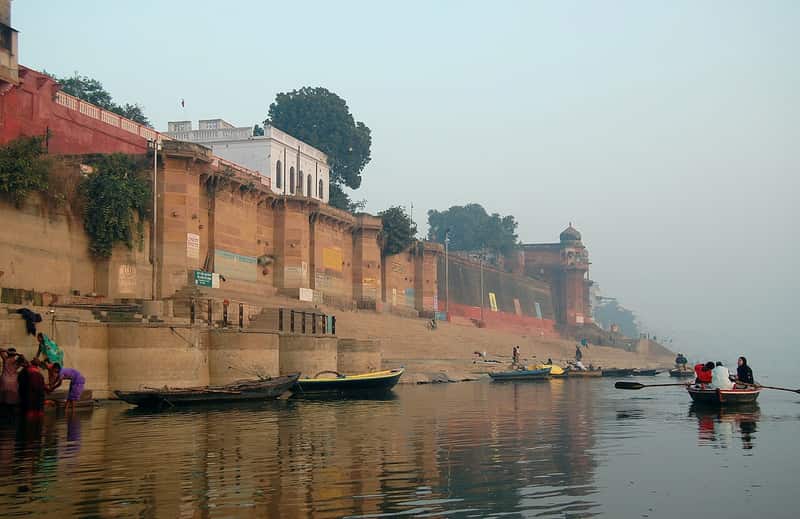
The Ganga at Chowki Ghat is a working river. The current here is honest and visible, pushing steadily south past the ghats, and the water level rises and falls with the seasons in a rhythm the whole city watches. In the hot months the river shrinks, leaving wide sandbanks where boys play cricket and boatmen walk far out to reach the water. In the monsoon it swells, brown and muscular, covering the lower steps and carrying whole trees and the occasional overturned boat past the landing. The people of the ghat have learned to read these moods the way farmers read the sky. They know which months bring the cleanest water, which bring the floods, and how long the sandbanks will last before the rising river swallows them again, and their plans follow the river's plans, not the calendar's.
Winter is the river at its most beautiful. The morning mist sits low over the water, turning the far bank into a ghostly suggestion, and the first bathers appear and disappear in the fog like figures in an old painting. By mid-morning the mist burns off, and the water turns a pale, milky green, almost luminous under the winter sun. Fishermen know exactly where the current runs by the colour of the surface; boatmen can tell from the ripples whether the day will be calm. The river keeps no secrets from those who live on it, and living on it is a skill learned over a lifetime. And yet the river is never predictable enough to be taken for granted; it is a living thing, with moods and tempers of its own, and the ghat treats it with the respect one owes an old and powerful neighbour.
Yet for all its practicality, the river here is never merely water. Small floats of marigold petals and burning lamps drift past on festival evenings, carrying the prayers of the whole city. A bather will touch his forehead with a drop of the same water that has carried the ashes of ancestors and the boats of pilgrims for untold centuries. To stand at the water's edge at Chowki Ghat is to stand at the meeting point of daily life and eternity, where the same river that takes away the year's silt also takes away the year's sorrows, and always comes back clean, shining, and full of the next morning. This is the paradox that every visitor to Chowki Ghat eventually feels: that the river is at once the most constant and the most changeable presence in the city, eternal in its habits and endlessly new in its moods.
Boats: Moorings and the Men Who Row Them
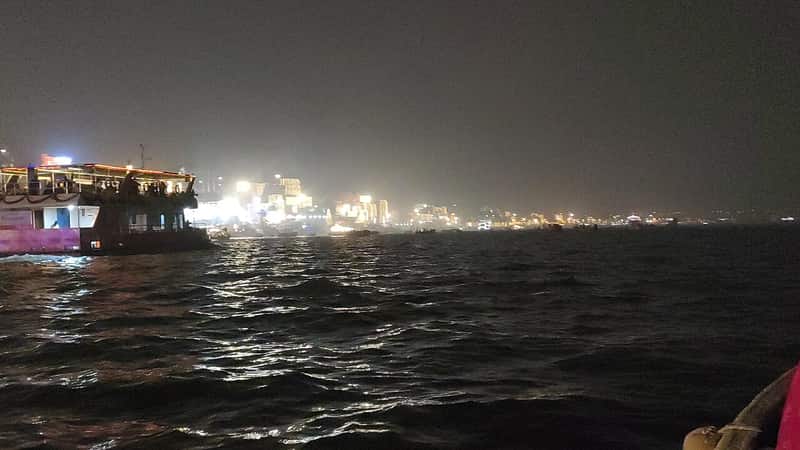
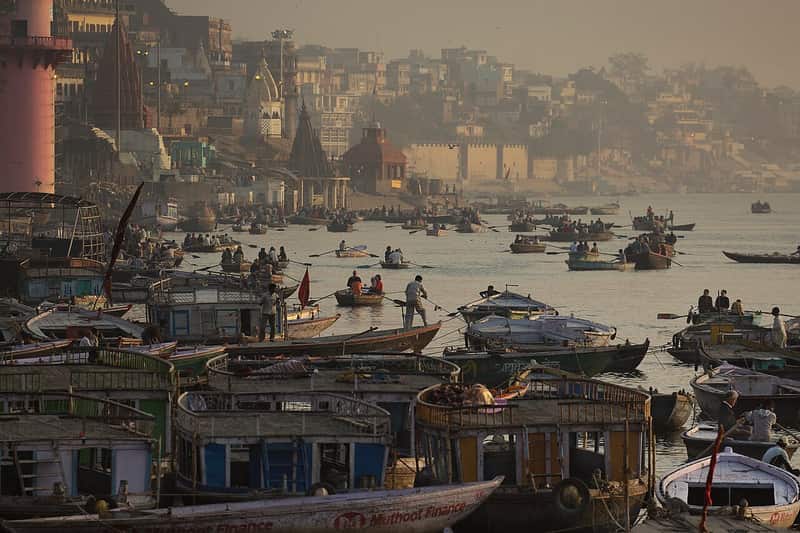
The boats of Chowki Ghat are not the painted pleasure craft of the tourist ghats, though a few of those find mooring here too. These are working boats: broad-bottomed ferries that carry people and bicycles across the river, cargo boats with blackened tar hulls, and small fishing skiffs that go out before dawn and return with silver piles of catch. The moorings are simple posts driven into the riverbed, the ropes thick and weathered, tied with knots that look careless but never fail. A boat here is not decoration; it is a livelihood, a home away from home, and a witness to every mood of the river. Their planks carry the scars of a hundred landings, and their paint, where it still exists, is worn thin by sun and rain and the hands of generations of boatmen who have pushed off from this same shore.
The boatmen of Chowki are a particular breed. They know every sandbank, every snag, every shifting channel between here and the far bank, and they can tell from the sky whether the crossing will be rough. In the early morning they wait at the landing with their oars upright, calling softly to regulars who cross each day for work or for vegetables from the village markets on the other side. Their talk is of weather and fish, of the height of the river and the price of diesel, and of the hundred small disasters and rescues that make up a lifetime on the water. An evening spent among them, listening to their slow accounts of the river's whims and the strange things it has carried down to them, is worth a dozen guidebooks.
Taking a boat from Chowki Ghat is a different experience from the tourist rides further north. There is no life-jacket, no printed rate card, no commentary in three languages; there is just a negotiation, a handshake, and a man who rows with his whole body, standing and pushing the oar the way his grandfather did. The river crossing takes ten minutes, and for that time the city recedes and the far bank grows, and the passenger is simply a passenger, as passengers have been on this river for a thousand years. For many visitors, this ordinary crossing becomes the most memorable ride of their journey. It is a reminder that in Varanasi even the simplest transaction can become a small ceremony, carried out with an old and unbroken courtesy that has nothing to do with tourism.
The Neighborhood: Lanes and Mohallas Behind the Ghat
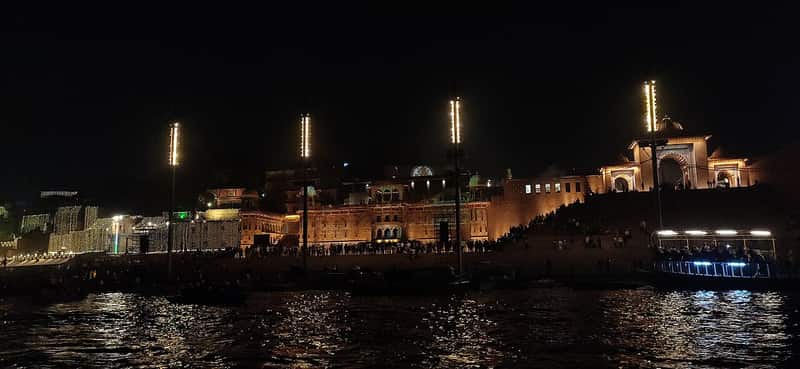
Behind Chowki Ghat begins the dense, living maze of old Kashi. Narrow lanes twist away from the river, barely wide enough for two people to pass, their walls painted in faded pinks and ochres and hung with drying laundry like flags of domestic life. Doorways open directly onto the lane, revealing courtyards, kitchens, and the small shrines that every household keeps. The lanes are cool even in summer, and they carry a particular smell: of wood smoke, frying spices, damp stone and old incense, the smell of a city that has been inhabited without interruption for thousands of years. Electric wires cross the sky in tangled lines, but beneath them the lanes are still the lanes of an older world, where the day is measured by the temple bell and the angle of the sun rather than by any clock.
The neighborhood is a working place. Small shops sell brass pots, marigold garlands, bangles and betel leaves; a sweet shop does brisk business in the evenings; a barber works in a corner with a mirror hung from a nail. Cows move through the lanes with the unhurried authority of residents, and the tinkle of cycle bells mingles with the calls of vendors and the chanting of a priest from an open window. Children play cricket in the courtyards, and old men sit on charpais outside their doors, discussing the day in the unhurried idiom of the region. There is a continuity here that is both humbling and heartening: the same trades, the same greetings, the same slow afternoons that these lanes have known for centuries, passing unchanged from one generation to the next.
To walk these lanes is to walk through the living layers of the city's history. A carved stone here, a temple doorway there, a step well hidden in a courtyard: the neighborhood is an archive without labels. Residents will greet a stranger with warmth, will point the way, and may even invite a curious traveler to look at an old well or a family temple. The ghat is the front door of this neighborhood, and the lanes are its rooms. A visitor who spends an hour among them will leave with a clearer sense of Kashi than many who spend a week at the great ghats. For the neighborhood is the real heart of Kashi, and the ghat is merely its threshold, the place where the life of the lanes steps down to meet the life of the water.
Nearby Ghats: Kedar and Vijayanagaram
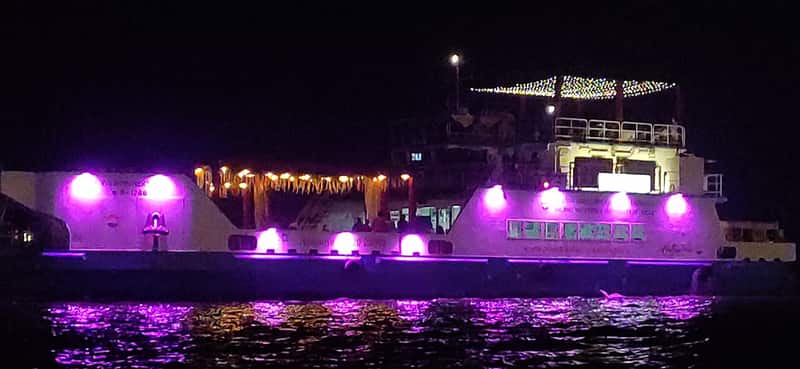
Chowki Ghat sits in a chain of ghats, and its two notable neighbours define its character. To the north, reached by a short walk along the steps, lies Kedar Ghat, one of the oldest and most revered bathing places of the city, named for the Kedareshwar temple that rises behind it. Kedar is busier and more obviously sacred: pilgrims come for the ancient shrine, and its steps are crowded at dawn. Yet it shares the same unhurried river, and on ordinary days the boundary between the two ghats is barely visible, a matter of a few worn steps and a change in the crowd. The old city wall that once divided the riverside has long since vanished, and today the ghats run together like the chapters of a single story that has been told in stone and water.
To the south stands Vijayanagaram Ghat, built by the maharaja of the South Indian state of the same name. Its most striking feature is the tall, tower-like shikhara of its Shiva temple, which rises above the neighbouring buildings like a foreign accent in the old city skyline. The ghat itself is dignified and relatively quiet, its architecture a reminder that the riverfront was shaped not only by local kings but by patrons from across India who wanted a place on the sacred water. Between these two, Chowki Ghat keeps its modest place, neither ancient landmark nor princely showpiece, simply a working step of the river. Its very ordinariness is a kind of statement, a quiet assertion that sanctity does not require monuments, and that a place can be holy simply because people have been kind to it for a long time.
Walking this short stretch of riverfront is one of the finest ways to see the variety of Kashi. Within a few hundred metres one passes a great pilgrimage shrine, a princely ghat and a nameless everyday landing, and the contrast is instructive: the same water, the same sunrise, the same prayers, three very different ways of meeting them. The walk is easy, the steps are well worn, and the whole stretch can be covered in half an hour, with time to sit and watch the river at each ghat. For a traveler staying near Chowki, these two neighbours make perfect companions for a morning or evening stroll. And because the stretch is little known to tourists, it remains one of the most honest views of the riverfront that Kashi has to offer, unpolished and unposed.
Atmosphere: The Quiet, Unpretentious Kashi
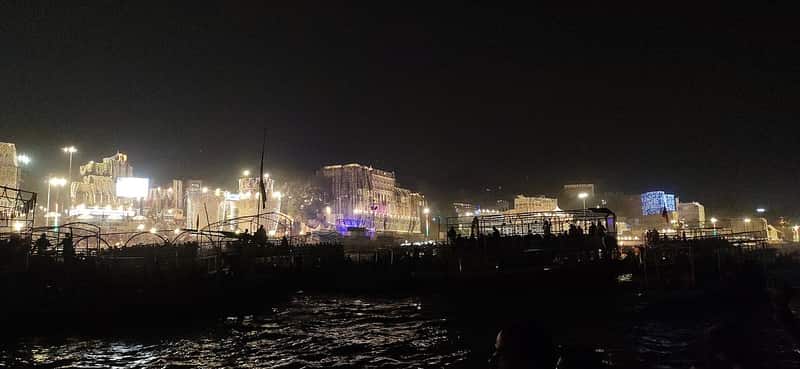
The atmosphere of Chowki Ghat is best described by what is absent. There are no hawkers tugging at sleeves, no photographers offering elephant rides, no amplified aarti broadcasts, no queues. The ghat is simply itself: water, stone, sun, and the unhurried commerce of daily life. The sounds are the sounds of a river town: the slap of wet clothes on stone, the creak of a boat rope, the far-off cry of a temple bell, the gossip of women washing pots. It is a soundscape that has not changed in essentials for centuries. The only additions are occasional: the clatter of a motorcycle at the top of the steps, the distant music of a wedding procession, the calls of birds settling for the night, and then the old silence returns.
This quiet is not emptiness; it is a positive quality, the particular peace of a place that has nothing to prove. Kashi is often described as intense, noisy, overwhelming, and all of that is true of its great centres. But the old city is also made of places like Chowki, where sanctity is worn so lightly that it is almost invisible. Here one can sit on the steps for an hour and watch the light change on the water, and feel that one has understood something about the city that no guidebook phrase quite captures. It is the feeling of being inside a place rather than in front of it, of being included in a rhythm that began long before one arrived and will continue long after one leaves, of mattering not at all and being entirely welcome.
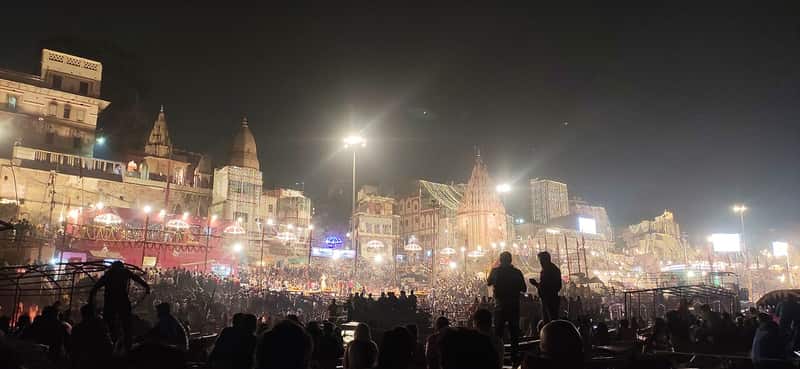
There is a particular hour that belongs to this ghat. It is late afternoon, when the sun has lost its fierceness and the river turns to hammered gold. The bathers have gone, the boats ride at anchor, and the ghat is given over to a handful of people: an old man reading, two women talking, a boy flying a kite from the upper steps. The riverfront, so crowded in imagination, feels entirely private. For many who find their way here, this is the real Kashi, the one that does not advertise itself, the one that must be discovered quietly, step by step. Sunset here is not an event; it is a gradual settling, and those who stay to the end are rewarded with the first stars over the water and a stillness that feels older than the city itself.
Festivals: Local Celebrations at the Water's Edge
Festivals at Chowki Ghat are kept at the modest scale of the ghat itself, but they are celebrated with complete devotion. On Kartik Purnima, the full moon of the holy month of Kartik, the ghat fills with bathers who come for the year's most auspicious bath, and the water glitters under the great white moon as lamps are set afloat. On Ganga Dussehra, when the river's descent to the earth is remembered, the steps are decorated with flower petals and rangoli, and the evening ends with rows of tiny lamps drifting past on leaf boats. The celebrations are neighborly rather than grand, and the same families return year after year, greeting each other across the water and carrying their children down the steps with the same unhurried devotion.
Dev Deepawali, the festival of lights held fifteen days after Diwali, transforms the entire riverfront, and Chowki is no exception. Where the great ghats are lit with thousands of lamps arranged in elaborate patterns, Chowki lights its own modest rows along the steps and the boats; the effect is less spectacular but more intimate, and the reflection of the flames in the quiet water is deeply moving. On Makar Sankranti, in the depth of winter, pilgrims come in their warmest clothes for a cold-weather dip, and kites fill the sky above the lanes, their strings humming over the rooftops. What the ghat lacks in spectacle it makes up for in warmth, and visitors who happen to be present are always made welcome to join the glow, offered a lamp to float or a place on the steps.
Besides the great calendar of festivals, the ghat hosts the small celebrations of ordinary life. Marriages are performed at the water's edge, the bride and groom walking seven steps around a small fire as their families sing; newborn children are brought for their first ritual contact with the river; anniversaries of the dead are marked with offerings of water and flowers. These small rites, witnessed by only a few relatives and a passing boatman, are the true festivals of Chowki Ghat, and they connect the people of the neighborhood to the river in a way no great celebration can. These are the ceremonies that never appear in any festival calendar, yet they are the oldest of all, older than the temples themselves, and they give the ghat its deepest meaning.
Etiquette: Conducting Yourself with Respect
Chowki Ghat is a working ghat, and its courtesies are those of a neighbourhood. Photographing people without asking is the first and most common offence; a smile and a gesture of the camera, or a few words, are almost always enough to earn permission, and the refusal of a request is equally to be respected. Bathers, especially women, should never be photographed at all; the river is their bathroom, and their modesty is not a spectacle. The simple rule is to behave as a guest in someone's home, because that is exactly what a visitor is. Ask first, smile often, and remember that a ghat is one of the few places left where human beings meet the sacred in the open air, without walls and without intermediaries.
Modest clothing is appropriate at all times, covering shoulders and knees, and shoes should be removed where others have removed theirs. Litter, even a plastic bag, should never be left on the steps; the river and the ghat are sacred to the people here, and garbage wounds them both. Offerings and ritual objects, however humble, must not be touched, moved or picked up: a garland, a small lamp, a pile of flowers left by a devotee is a communication with the divine, not a souvenir. Alcohol and meat are out of place on any ghat of Kashi, and the quiet of the place calls for a lowered voice. If in doubt, follow the example of the locals; they have been living this courtesy for centuries, and their instinct can be trusted more safely than any rule in a book.
Certain moments ask for particular care. During mourning rites, which may be performed at the water's edge, one should withdraw quietly and give the family space. During festivals, the crowds are cheerful but the rituals are earnest; joining in is welcome if one is invited, but standing apart to watch is always safe. Above all, the visitor should remember that the ghat is not a museum. It is a place where people bathe, wash, pray, mourn and celebrate, and every one of those acts deserves the respect that a guest owes a host. Treated with courtesy, Chowki Ghat will give back the truest thing it has: the sight of ordinary life lived beside an extraordinary river. That sight, freely given to those who look with respect, is worth more than any photograph, and it will remain in the memory long after the images have faded.
Practical Guide: How to Reach, When to Come
Chowki Ghat is easy to reach and easy to miss, and both facts are part of its charm. The simplest approach is on foot: from Kedar Ghat, walk south along the riverfront steps for a few minutes, and the ghat appears without announcement. Alternatively, take a boat from Dashashwamedh or Assi and ask the boatman to set down at Chowki; the journey along the water is itself a pleasure, and the boatman will know the ghat at once. From the old city, a web of lanes leads down to the steps, and any resident will point the way. There is no formal entrance and no marked boundary; the ghat simply begins where the steps meet the water, and that unmarked beginning is exactly its character, modest and unannounced.
The best time to visit is early morning, between sunrise and mid-morning, when the bathing is at its fullest and the light is kindest; late afternoon, in the hour before sunset, is the second golden window. The months from October to February offer the most comfortable weather, with crisp mornings and clear light; the monsoon months are dramatic but the steps can be slippery, and the river may cover the lower landing. Summers are punishing by midday, and the wise traveler comes in the cool of dawn or dusk. Whenever you come, come unhurried, for the ghat measures time in the slow turn of the river rather than in the hands of a clock, and haste here is the one thing that is always out of place.
Facilities at the ghat are minimal, which is precisely its nature: there is no ticket, no guide, no shop of any consequence, though small vendors may appear in the early morning. Visitors should carry their own water, wear shoes that can be removed easily for the steps, and come with time to spare, because the ghat rewards patience more than schedules. Combining a visit to Chowki with its neighbours, Kedar Ghat to the north and Vijayanagaram Ghat to the south, makes a perfect riverfront walk of an hour or two. Arrive quietly, sit for a while, and let the ghat introduce itself, as it has introduced itself to travellers for centuries. Leave nothing behind but your footprints, take nothing away but the memory of light on water, and the ghat will stay with you long after the city itself has been left behind.
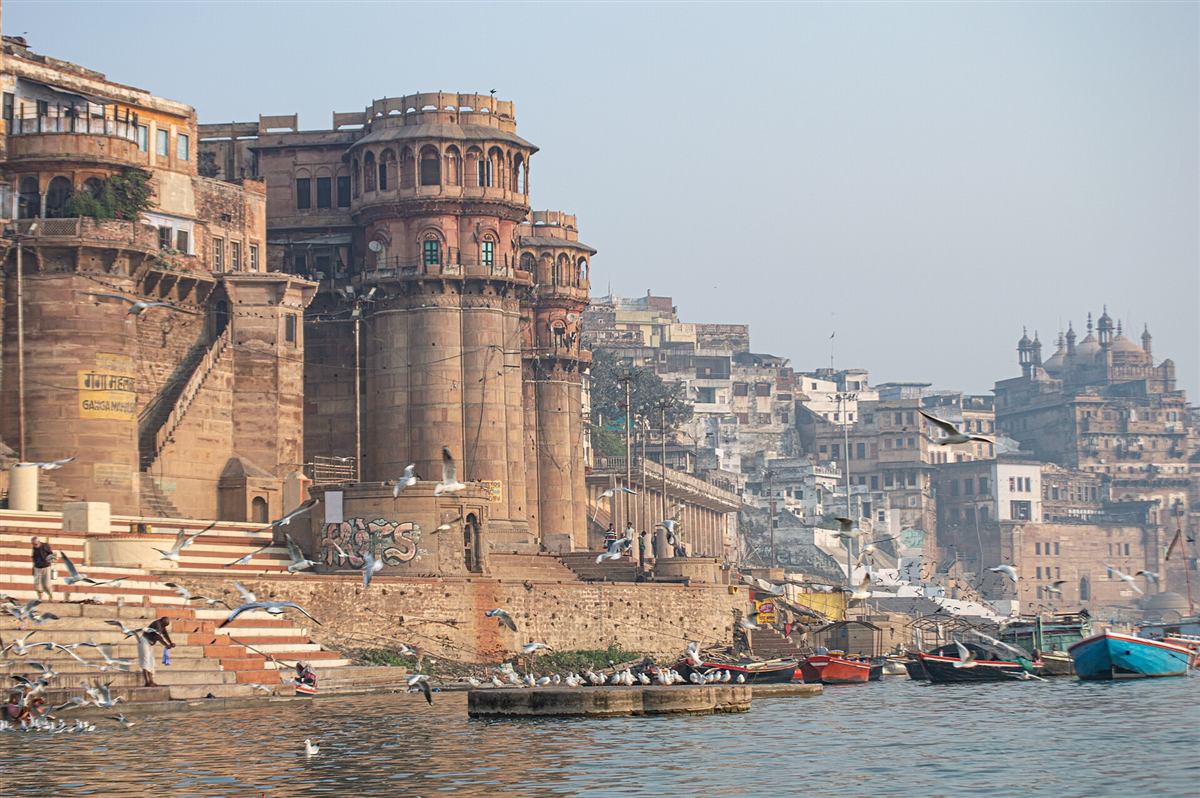
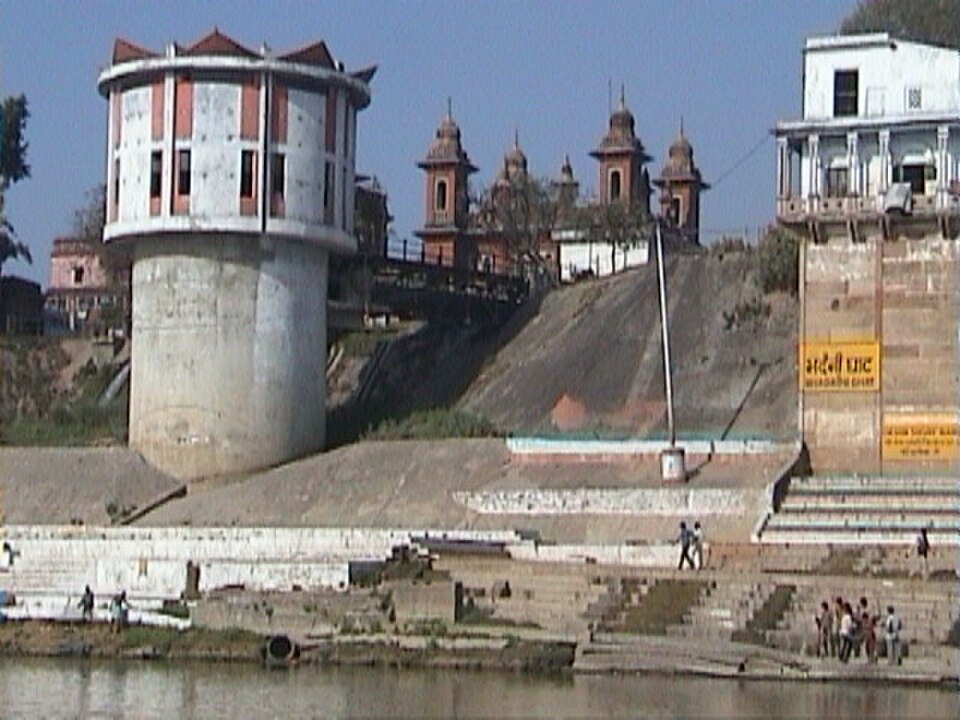
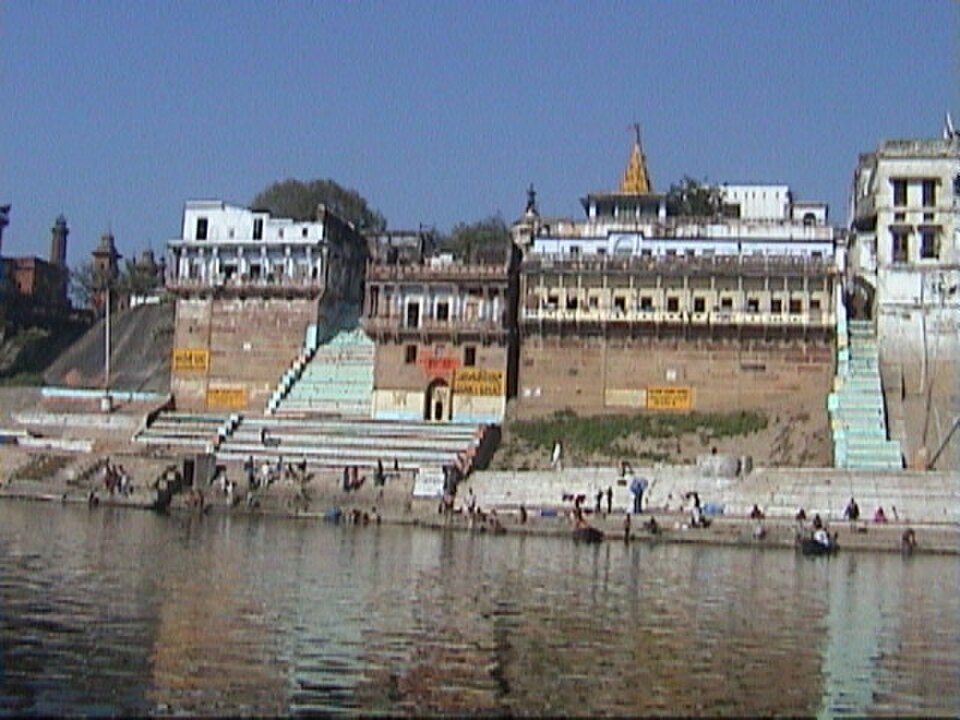
Chowki Ghat — Gallery (12 Photos)
Image Credits
chowki-01.jpg · chowki-02.jpg · chowki-03.jpg · chowki-04.jpg · chowki-05.jpg · chowki-06.jpg · chowki-07.jpg · chowki-08.jpg · chowki-09.jpg · chowki-10.jpg · chowki-11.jpg · chowki-12.jpg — Wikimedia Commons, under free licenses.
Continue exploring
Similar Ghats Nearby
Book This Ghat — Get Notified
Download the app now and book a boat ride to Chowki Ghat