

Gularia Ghat
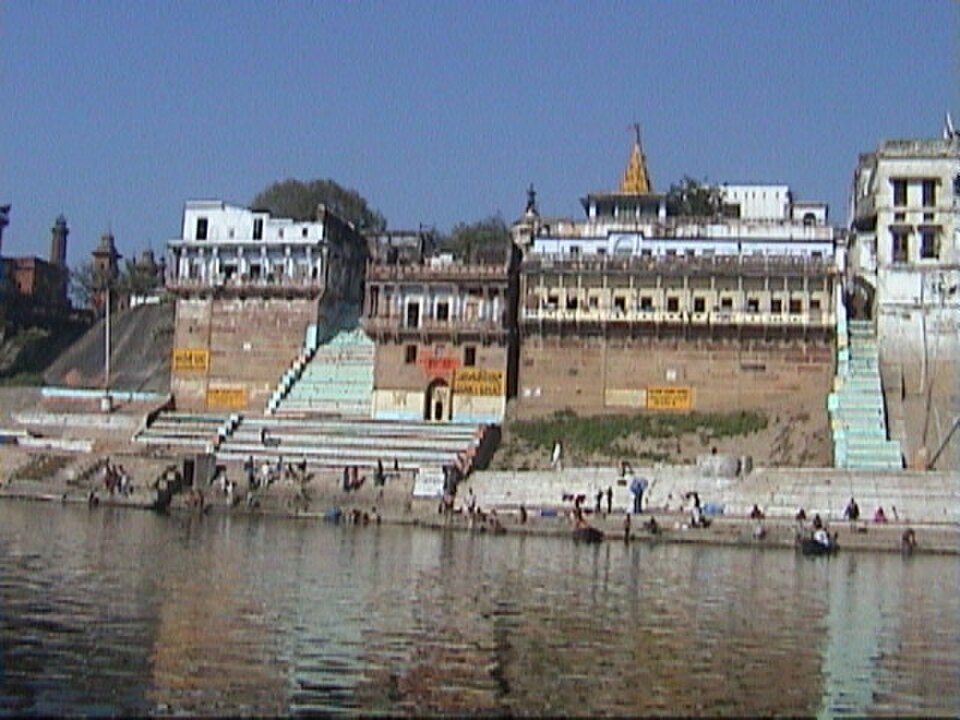
Neighbourhood GhatGularia Ghat is a small ordinary ghat.


Type
Neighbourhood Ghat
Boat Fare
1x base fare
Best Time
5-8 AM
History
A small and quiet bathing ghat, ideal for a peaceful dip. Locals have kept their daily bathing tradition alive here.
Highlights
- Crowd-free peaceful bathing
- Local bathing tradition
- Walking distance from Assi
Festivals & Events
How pricing works in the NaviX app
No haggling at the ghat — everything is fixed in the app first
- 1
Fixed price before you board
The fare is shown in the app upfront — no bargaining at the ghat
- 2
Sharing or private — your choice
Share with fellow travelers or take the whole boat for your group
- 3
Pay only after the ride
UPI, card or cash — with an instant receipt
🕉️
Aarti details not available for this ghat yet
Complete Guide
Gularia Ghat — The Complete Guide
History, mythology, rites and practical details — everything in depth.
On this page
- 1.Gularia Ghat — An Introduction to a Quiet Corner of Kashi
- 2.The Gular Tree: A Name Rooted in Faith
- 3.The Ordinary Rhythm of Daily Life
- 4.The Morning Bath
- 5.The River at Gularia
- 6.Boats and Boatmen
- 7.The Mohalla Behind the Ghat
- 8.Neighbouring Ghats: Shivala and Nishadraj
- 9.A Quiet, Unspoiled Character
- 10.Festivals at the Ghat
- 11.Etiquette for Visitors
- 12.Practical Information
📅 Updated: 21 Aug 2026 · Author: NaviX Field Team (field research 2024-26) · 12 sections · 12 photos
Gularia Ghat — An Introduction to a Quiet Corner of Kashi
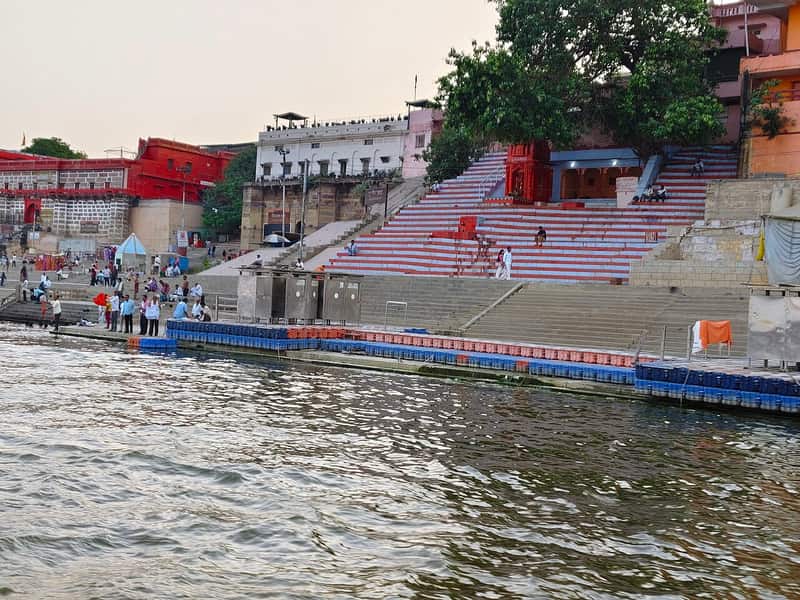
Gularia Ghat is one of the small, quiet ghats of Varanasi, set on the southern stretch of the riverfront where the great staircase of the city softens into an everyday landscape of water and stone. It does not appear on the itineraries of most tourists, and no guide will hurry you toward it, yet this is precisely its appeal. The ghat is a place where the Ganga and the people who live beside her are seen without ornament, without performance, without the careful staging that fame brings. A visitor who reaches it — by slow walking from Assi, or by boat along the shore — finds a stretch of river that belongs wholly to the neighbourhood behind it, unpolished, unhurried and wholly honest.
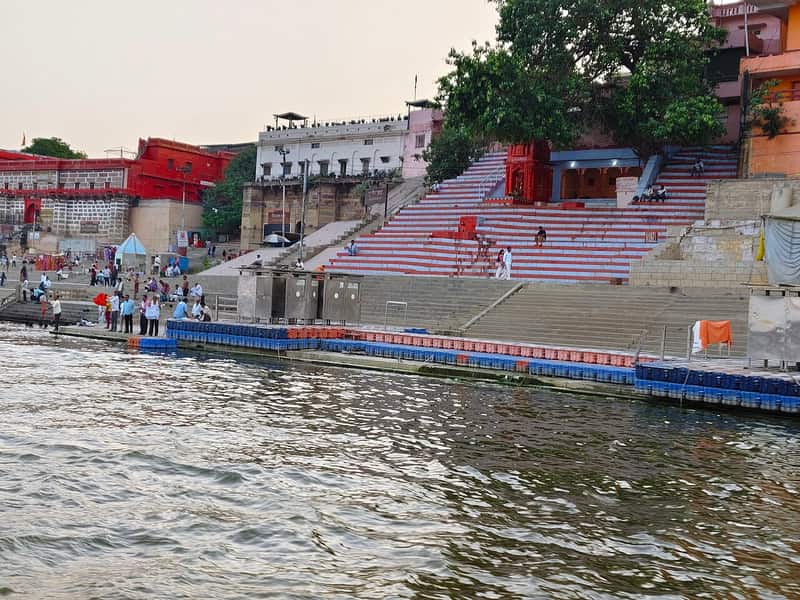
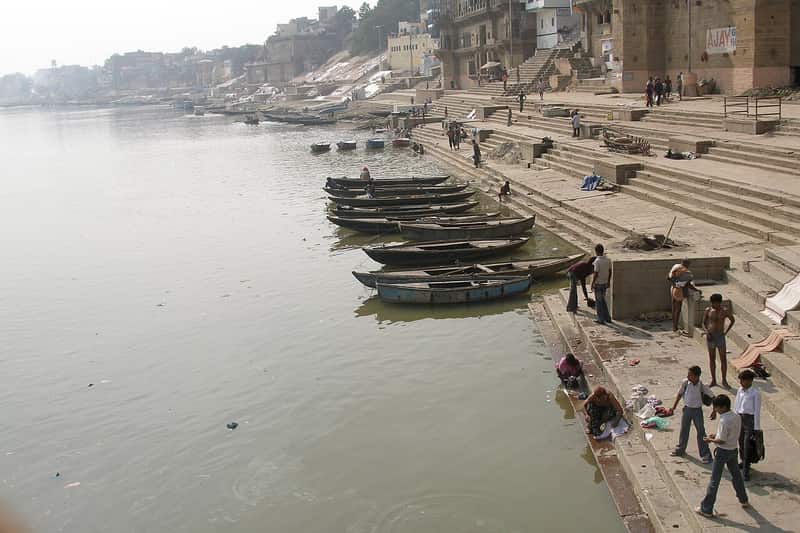
The ghat is one link in the long chain of bathing places that runs between Assi Ghat in the south and the dense lanes of the old city to the north. Every ghat in that chain has its own character: some are grand, some are devotional, some are given over to commerce. Gularia's character is modesty itself. Its steps are modest in width and height, its shade comes from a few old trees, and its traffic is the honest traffic of daily life — women carrying brass pots to the water, children splashing at the edge, fishermen mending nets on the sand, boatmen dozing in the shadow of their moored craft.
For the traveller, Gularia offers something increasingly rare in a city as famous as Varanasi: an unhurried hour by the river, with no admission ticket, no crowd and no performance. To sit on these steps is to watch ordinary Kashi carry on — a child being bathed, a cow drinking, a sadhu reading, a ferryman rowing across to the far sandbank. It is a gentle introduction to the truth that this ancient city is not only a place of temples and ceremonies but also a place of quiet mornings and simple routine, and that its holiest sights are often its most ordinary ones. Here, in the silence of the ghat, the river tells its oldest story simply.
The Gular Tree: A Name Rooted in Faith
The name Gularia comes from the gular, the cluster fig tree, one of the most sacred trees of Hinduism. In the scriptures the gular is counted among the great trees of the faith, praised for its generosity and its shelter; its broad canopy, its shade for travellers and its fruit that feeds birds, monkeys and men have made it a symbol of abundance since ancient times. Unlike the pipal and the banyan, which are associated with the trinity of gods, the gular has its own quiet sanctity: it is planted near temples and shrines, its wood feeds sacred fires in certain rituals, and its leaves and bark have served in worship and medicine alike.
The tree is woven into the daily faith of northern India in ways both great and small. In villages the gular is never cut without reason, for it is believed to shelter spirits and to hold the blessing of the gods; beneath its branches villagers set up small shrines of clay and stone, and passing pilgrims leave a coin or a flower. The fruit, which grows in dense clusters straight from the trunk and branches, gives the tree its other name, the country fig, and the sight of monkeys and mynas squabbling over the ripe crop is one of the oldest pictures of the Indian countryside. For the ghat, the tree is both shade and namesake, a reminder that even the smallest feature of Kashi carries meaning.
The tree that gave the ghat its name still stands near the steps, and the visitor who looks up into its branches is looking at the reason this place is called what it is. It is a gentle lesson of the city: in Varanasi nothing is too small to be remembered, nothing too ordinary to be named, and every stone, every tree, every turning of the river holds a story. The gular tree asks nothing of the passer-by except a moment of attention, and in return it gives shade, fruit, and a name that has travelled down the centuries. To understand the ghat, begin with the tree — and the tree, like the ghat, is patient, silent and full of quiet meaning.
The Ordinary Rhythm of Daily Life
The life of Gularia Ghat is the ordinary life of the river, and it begins before the sun. By the time the first light touches the water, the ghat is already moving: women from the lanes behind arrive with brass pots and buckets, kneeling at the waterline to fill them for the morning's chores; men come down to bathe and to offer the first prayer of the day; the milkman's boat is already out, and the fishermen are checking the nets they set the night before. There is no ceremony about any of it, no audience and no display — only the unhurried rhythm of people whose lives have been tied to the river for generations.
Through the morning the ghat changes like a slow tide. The bathers come and go; the washerman spreads wet clothes on the steps and beats them with a stone; the vegetable boats arrive from the far bank with greens and gourds for the market behind the ghat; children are bathed at the water's edge and sent off to school in pressed uniforms. Old men sit on the upper steps and argue about the price of grain; a barber sets up his mirror against a pillar; a sadhu settles into the shade with his rosary. Each of these lives brushes against the next for a moment, and the river receives them all with the same equanimity.
What makes the scene memorable is its refusal to perform. At the grand ghats upstream, daily life is folded around tourism; here it simply continues, and the visitor is welcome to watch without being the centre of attention. A morning spent on the steps of Gularia yields a picture of Varanasi that no guided tour can offer — of ordinary people making an ordinary living beside the oldest river of India, of children growing up to the sound of oars and temple bells, of a city that has always lived with its back to the water and its face to the world. This is not the Kashi of postcards; it is the Kashi that works, eats, bathes and sleeps.
The Morning Bath
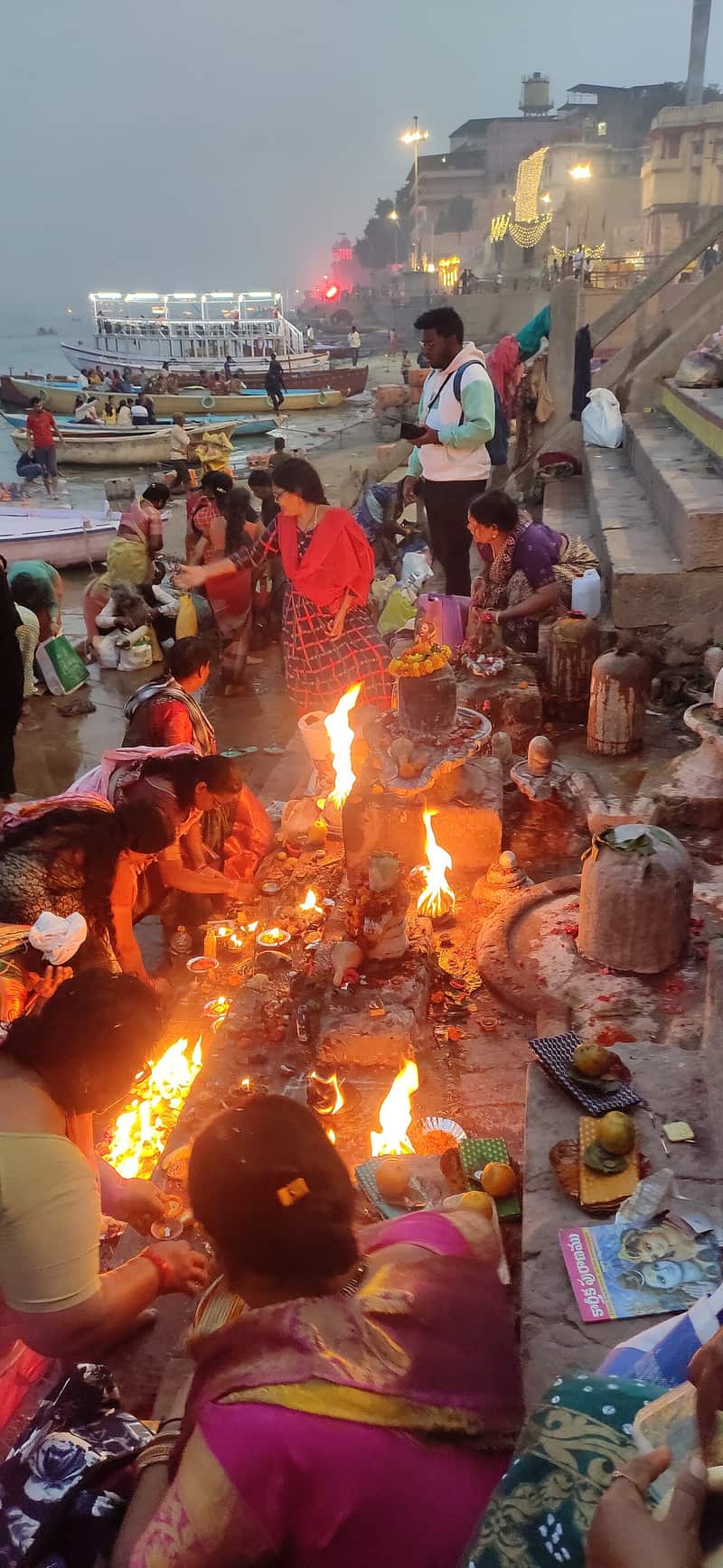
Bathing is the heart of every ghat, and at Gularia the morning bath is the day's first and most important act. The water here is cleaner and quieter than at the crowded ghats downstream, and the bathers — mostly local people — come with a seriousness that belongs to duty rather than display. The ritual is simple and ancient: a dip in the cold water, a pouring of water over the head, the naming of ancestors, a facing of the rising sun. Then the bather climbs out, wrings the cloth, and sits on the steps to dry, watching the river carry the night away.
Winter is the season when bathing here is most moving. The dawn air is cold and misty, the water colder still, and the bathers — old men with shawls, women in bright saris — shiver as they descend, then gasp, then dip with a kind of fierce joy. The pundit sits at the waterline with his almanac, fixing auspicious hours; the barber shaves a mourner's head at the top of the steps; an old widow pours water for her ancestors and prays for the whole family by name. These are the old habits of Kashi, unchanged in their essentials for centuries, and to watch them is to understand why the city is called the bathing place of the faith.
Visitors are welcome to bathe here too, and many do, finding the gentle water and the absence of crowds a rare luxury. The etiquette is simple: bathe with modesty, keep the steps clean, and treat the ritual of others with respect. There are no priests demanding fees and no photographers selling prints; there is only the river, the steps and the quiet company of the neighbourhood. To dip in the Ganga at Gularia is to share in the oldest habit of the city without any of its clamour — a private act performed in the open, witnessed by the sun, the sandbanks and the patient gular tree above.

The River at Gularia
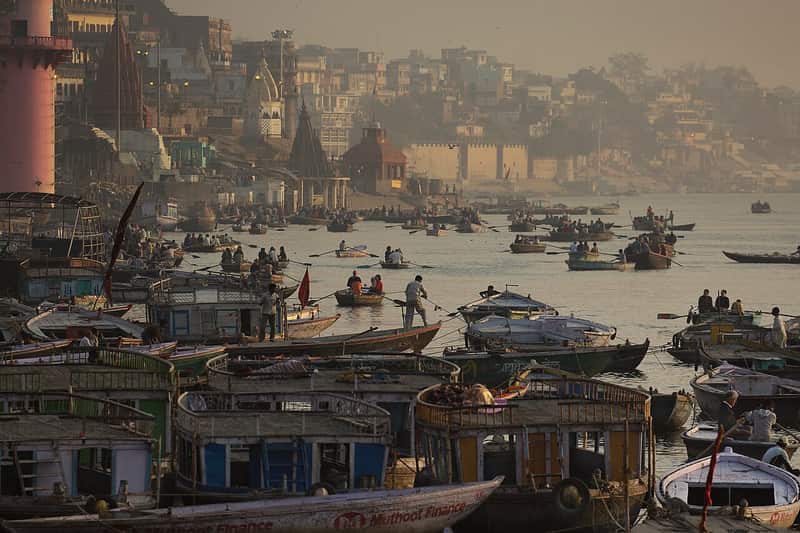
At Gularia the Ganga is at her widest and most serene. The city's great curve of ghats spreads out to the north, while to the south the bank opens into sandbanks and green fields, so that the river here seems more like a vast inland sea than a city waterway. In the dry months the water recedes and leaves broad beaches of pale sand where children play and cattle graze; in the rains the river rises until the lower steps vanish and the boats are hauled up to the top of the ghat. Either way, the water itself keeps its ancient character: slow-moving, brown-gold in the morning light, alive with birds.
The far bank, a low shore of fields and trees, belongs to the villages of the other side, and the crossing is a constant thread of the day's traffic. Ferries carry men, bicycles and bundles of produce across; fishermen work the shallows with cast nets that open like umbrellas against the sky; herons and kingfishers watch from the sandbanks. In summer, when the water is low, one can walk far out onto the exposed bed, where the river's history lies in broken pottery, old coins and the ribs of long-sunk boats — a silent archaeology of the water.
The river at Gularia teaches patience to those who watch it. Its current is slow and deep here, and the reflections of the old houses and the gular tree tremble on the surface without ever breaking; the sound is of water lapping stone, of oars, of distant singing from a temple. The great river is the reason the ghat exists, the reason the neighbourhood exists, the reason the city exists — and here, away from the crowds, one can sit and watch it simply be, hour after hour, in the unhurried way of rivers. It is a meditation of the most ordinary kind, and it costs nothing but time.
Boats and Boatmen
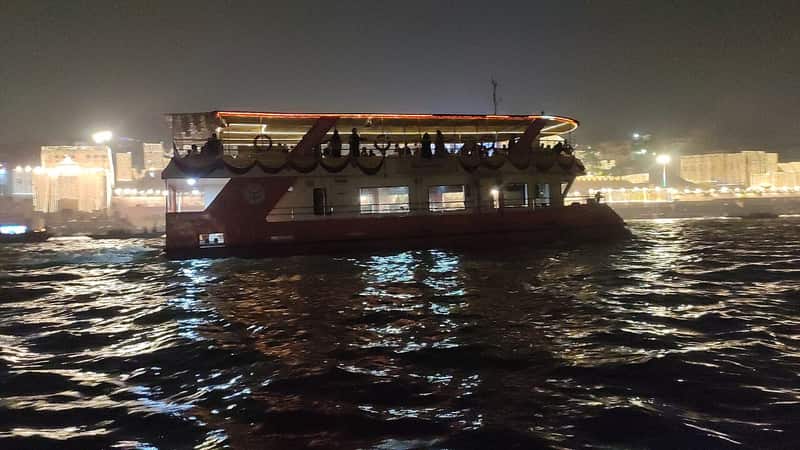
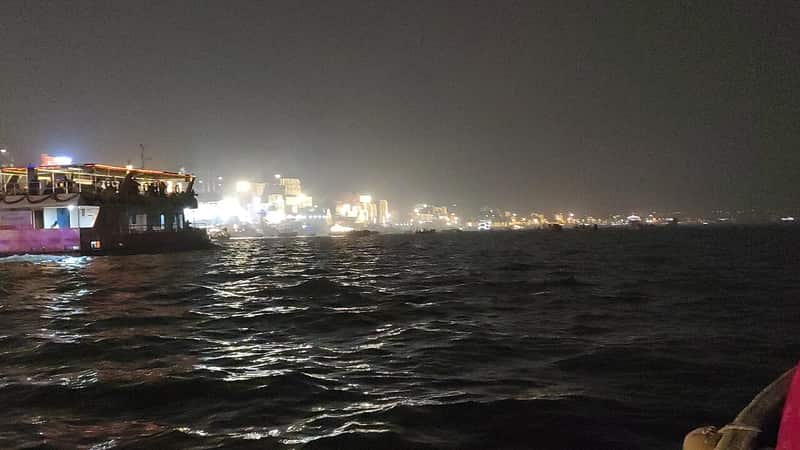
Moored along the sand and steps of Gularia lie the wooden boats of the neighbourhood — patelas with curved bows, small skiffs, and the broad ferries that ply between the shores. They are built in the river towns by men who learned the craft from their fathers, painted in faded reds and greens, and repaired again and again until every seam tells a story. In the morning the boatmen arrive with their oars and their day's plan: who is crossing to the market, whose wedding party must be ferried, what load of bricks is going upstream. The ghat wakes to the sound of ropes and the creak of hulls.
The boatmen of Gularia belong to the long tradition of the river's working people — the same trade celebrated at Nishadraj Ghat to the north, where the Ramayana's Guha ferried Rama across the Ganga. They know the river the way a farmer knows his fields: where the current runs deep, where the sandbars lie hidden, how the water rises and falls with the season. They will take a visitor out for a quiet row, or simply for a crossing to the far bank, and they do it without the bargaining that haunts the tourist ghats. A boat ride from Gularia is among the gentlest ways to see the southern riverfront.
Even when the boats are empty they are not idle. In the heat of midday the boatmen sleep under their awnings, and the boats rock gently at their moorings like patient animals; in the evening they are washed down and covered, and small lamps are lit in a few of them for the night. Children of the boatmen grow up on the water, learning to swim before they learn to walk properly, and the river is their playground, their schoolroom and their inheritance. To watch the boats of Gularia — coming, going, resting, rocking — is to watch the oldest rhythm of Varanasi, the rhythm on which the city itself was founded.
The Mohalla Behind the Ghat
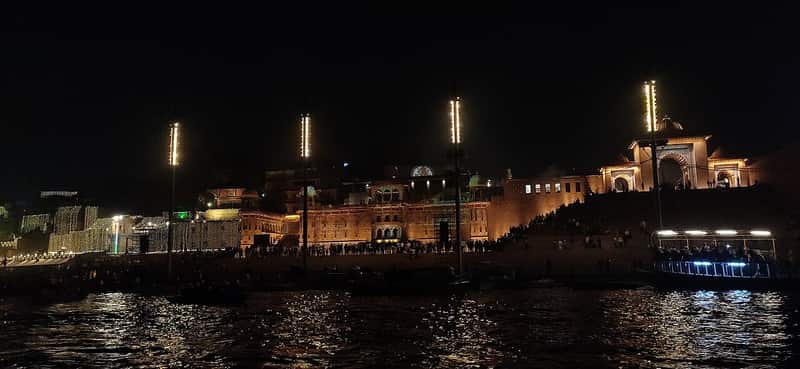
Behind the ghat begins the neighbourhood that owns it — a tangle of narrow lanes called the mohalla, where the life of the water and the life of the street meet. The lanes are too narrow for cars, cool with shadow even at noon, lined with old houses of brick and lime whose upper storeys lean toward one another as if in conversation. Small shops open onto the lane: a tea stall, a paan shop, a sweets-seller, a tailor sewing on his machine. The smells are of frying oil, incense, wet stone and the river — a blend that belongs to no other city.
This is a working, living quarter, not a museum. Temple bells ring at set hours; children play cricket with a tennis ball; women buy vegetables from the morning boats; a man repairs a bicycle, another grinds spices, another argues with a neighbour across a courtyard. The neighbourhood is dotted with small shrines — a Hanuman temple at a corner, a tiny Shiva shrine under a tree, a painted image of Ganga Maiya on a wall — and the faith of the quarter is woven into the day as naturally as the traffic of the lane.
For the visitor, walking the lanes behind Gularia is a step into the private heart of Kashi, and it should be done with the courtesy one owes a private home. Greet the shopkeepers, ask before photographing, and remember that this is where the people of the ghat live their real lives. The reward is a picture of the city that no monument can give: of families whose roots here reach back beyond memory, of courtyards where festivals are cooked and marriages are sung, of a quarter that holds its ghat the way a hand holds a bowl — close, careful and full of love.
Neighbouring Ghats: Shivala and Nishadraj
Gularia sits in good company on the southern riverfront. To the south lies Shivala Ghat, named for a great temple of Shiva that dominates the neighbourhood behind it; to the north lies Nishadraj Ghat, the busy boating centre of the riverfront, named for Guha, the boatman king of the Ramayana. The three ghats together make a short, rewarding walk, and each shows a different face of the river: Shivala devotional and temple-bound, Gularia quiet and domestic, Nishadraj loud with the commerce of boats and water.
Shivala Ghat, a short stroll to the south, is one of the older settlements of the riverfront, its broad steps leading up to a temple quarter famous across the city. Pilgrims and locals alike come for the Shiva worship, and the morning here is lively with bells and conch shells. The ghat itself is well kept and used by a steady traffic of bathers; from its upper end, the lane climbs through the old mohalla toward the busy streets of the neighbourhood, where shops, sweet-stalls and temples follow one another without pause.
Nishadraj Ghat, just to the north, is the working heart of the southern riverfront — the place where the boats are built, mended and moored, and where the boatmen of Guha's line carry on their ancient trade. Its landing is always busy, its sandbanks strewn with craft, its air full of rope and river smell; it is the liveliest of the three, and the best place to hire a boat for the southern ghats. Walking between the three — temple, home and harbour — is a compact lesson in the many lives of a riverfront, and Gularia, in the middle, is the quiet hinge between them.

A Quiet, Unspoiled Character
The mood of Gularia Ghat is its greatest gift. Where other ghats of Varanasi hum with pilgrims, sellers, photographers and boats crammed with tourists, Gularia keeps the temperament of a village riverbank: slow, mild, and entirely itself. There are no souvenir stalls, no touts, no loudspeakers; the commerce is confined to a tea stall or two in the lane behind. What the ghat offers instead is space — space to sit, space to think, space to watch the river without a single interruption. It is the kind of place where an hour passes without being noticed.
The unspoiled character is not an accident of neglect; it is the natural state of a ghat that belongs to a neighbourhood rather than to the city's tourism. The people who use it bathe, wash, pray, fish and cross the river as their grandparents did, and they treat the visitor with the easy courtesy of villagers rather than the practiced charm of the tourist trade. The old houses above the steps, the gular tree, the sandbanks, the boats — all have the settled look of things that have been left alone to age gracefully, and the beauty of the place lies precisely in that.
A writer once described Varanasi as the city where the sacred and the everyday are the same thing, and Gularia is proof of the claim. There is no grand temple here and no famous ceremony; there is only the river, the steps, the tree and the people — and yet the place feels holy in the way that ordinary things can be holy when they are wholeheartedly themselves. For those who come looking for the essence of Kashi, the quiet hours at Gularia may offer it more surely than any guidebook's itinerary. It is a place that rewards patience, silence and a willingness to sit still.
Festivals at the Ghat
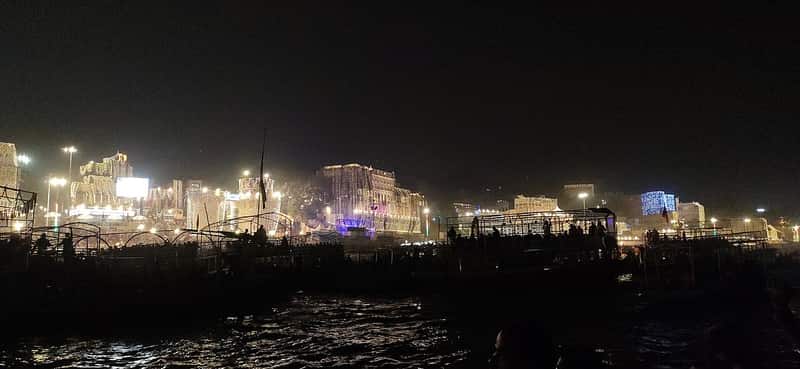
Gularia may be quiet, but it is not dead, and the festivals of the river bring it vividly alive. On Kartik Purnima and Dev Deepawali the whole riverfront lights up, and Gularia is no exception: diyas are set along the steps and floated on the water, families gather in their best clothes, and the river shimmers with a thousand small flames. The festival of lamps belongs to everyone, and here it is celebrated with the warmth of a family occasion rather than the scale of a public spectacle — a quiet glory of fire on dark water.
The bathing festivals draw the whole neighbourhood down to the water. On Ganga Dussehra, when the river's descent to the plains is celebrated, and on Makar Sankranti, when the sun turns northward, the steps are crowded from dawn with bathers, and pundits conduct rites at the waterline; in the evening the children sail little boats of paper and leaves, each with a lamp, out into the current. The festivals of the calendar — the full moons of Kartik and Magh in particular — turn the ghat into a place of pilgrimage for the families of the quarter, who come as their ancestors did, generation upon generation.
There are smaller celebrations too, no less dear to the people of the ghat: a thread ceremony on the steps, a first haircut at the water's edge, a wedding party ferried across for the blessings of the far bank. On such days the ghat becomes what it always was — the stage of the neighbourhood's joys, the place where life's passages are marked and blessed. The visitor who happens upon a festival here is fortunate, for these are not performances arranged for outsiders but the living faith of a community, and to witness them is to see the ghat at its most radiant, its quietness briefly transformed into celebration.
Etiquette for Visitors
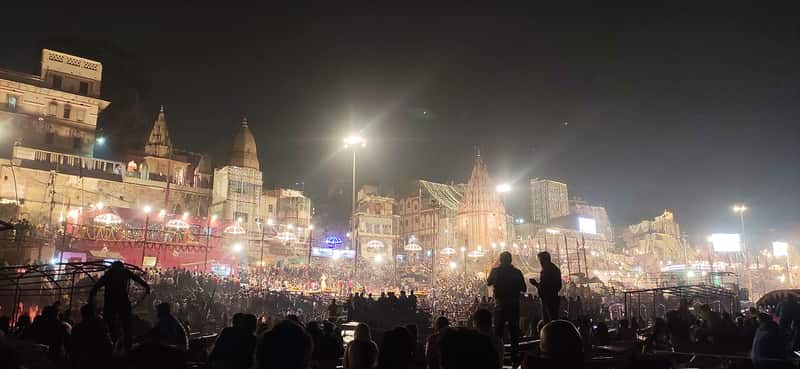
Gularia Ghat is a living, working place, and the courtesy a visitor shows it will be amply returned. The first rule is modesty: the ghat is used for bathing and worship, and dress should be respectful — shoulders and knees covered for most of the visit, and modest clothing if you bathe. Ask quietly before photographing people, especially women and bathers; many will agree, but the asking itself is part of the respect. Keep the steps clean, take your litter with you, and avoid bathing where the dhobis wash clothes or the fishermen work.
Do not disturb those at worship or meditation; a wide, silent passage is better than an apology. The pundits and priests here are not the touts of the tourist ghats, and they will not pressure you, but if you wish to offer a coin or a flower for a blessing, do so simply and without display. Bargaining with boatmen should be gentle — the fares are honest, and the men are neighbours first and boatmen second. Above all, remember that this is someone's home: the lanes behind the ghat are private streets, and the lives lived there deserve the same consideration you would expect in your own neighbourhood.
The rewards of good manners at Gularia are real. The visitor who sits quietly will be left in peace; the visitor who greets the tea-stall man in Hindi will be answered with a smile; the visitor who treats the ghat as a holy place will be shown its kindnesses — a boatman who waits, a woman who offers water, an old man who points out a heron on the sandbank. In a city where tourists are often preyed upon, this small ghat offers the rare pleasure of being simply a guest. Come gently, sit long, and leave the steps as you found them.
Practical Information
Gularia Ghat lies on the southern riverfront of Varanasi, roughly midway between Shivala Ghat to the south and Nishadraj Ghat to the north. The easiest way to reach it is on foot along the riverfront road that runs from Assi Ghat; from the Assi side it is a pleasant walk of about twenty minutes past Janaki and Nishadraj ghats. It can also be reached by rickshaw or auto through the lanes of the Shivala neighbourhood, which drop you at the top of the ghat. By boat, any ferryman from the southern ghats can bring you to the steps in a few minutes from the water.
The best time to visit is the early morning, when the bathing is at its fullest and the light is at its gentlest; the late afternoon, when the ghat is shadowed and quiet, is the second choice. The winter months from October to February are the most pleasant, with clear skies and cool air; in summer the midday heat is fierce, and in the monsoon the lower steps may be under water. Carry water, a hat and modest clothing, and if you plan to bathe, bring a towel and a change of clothes. There are few facilities — no great restaurants, no modern washrooms — so come prepared, as the locals do.
A suggested short walk: begin at Shivala Ghat in the morning, watch the temple rites and the bathing, then stroll north past Gularia — stopping for tea and a long sit on the steps — and finish at the busy landing of Nishadraj, where you can hire a boat for a ride past the southern ghats or simply watch the boatmen work. Allow two hours for the whole stretch, and the better part of a morning if you linger, as you should. Gularia is not a destination in the manner of the great ghats; it is a pause, a resting place on the river's long staircase — and that is exactly why it is worth the walk.
Gularia Ghat — Gallery (12 Photos)
Image Credits
gularia-01.jpg · gularia-02.jpg · gularia-03.jpg · gularia-04.jpg · gularia-05.jpg · gularia-06.jpg · gularia-07.jpg · gularia-08.jpg · gularia-09.jpg · gularia-10.jpg · gularia-11.jpg · gularia-12.jpg — Wikimedia Commons, under free licenses.
Continue exploring
Similar Ghats Nearby
Book This Ghat — Get Notified
Download the app now and book a boat ride to Gularia Ghat