

Dandi Ghat
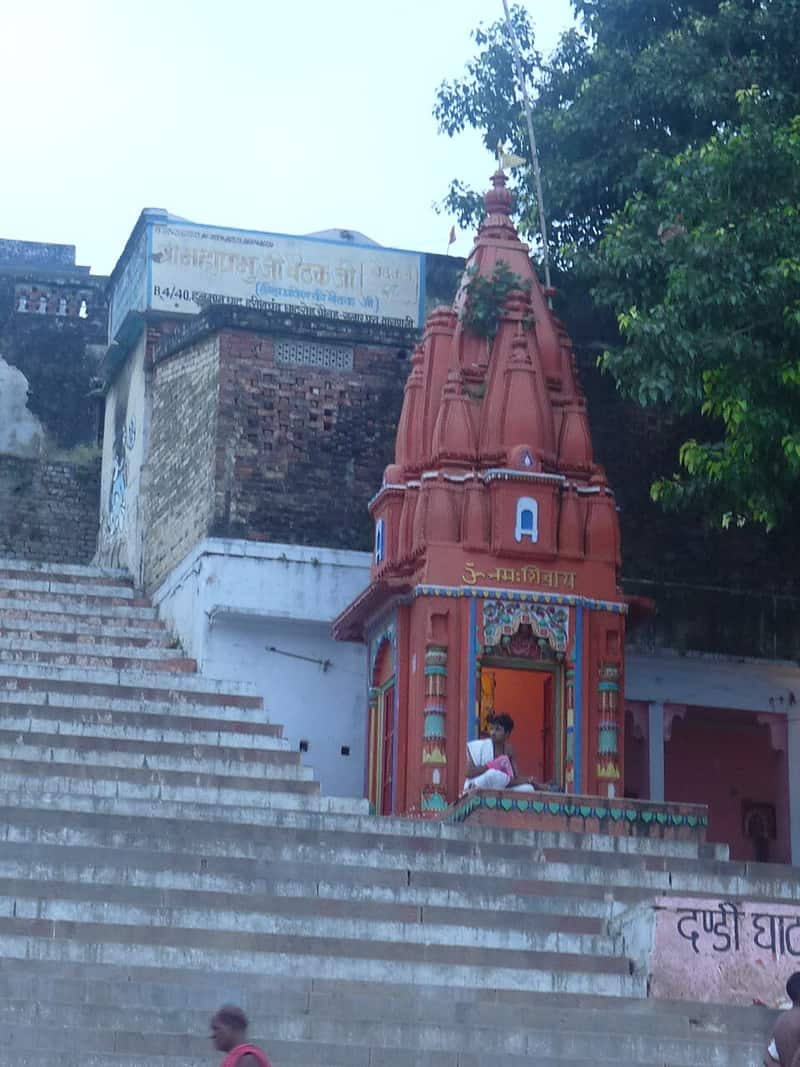
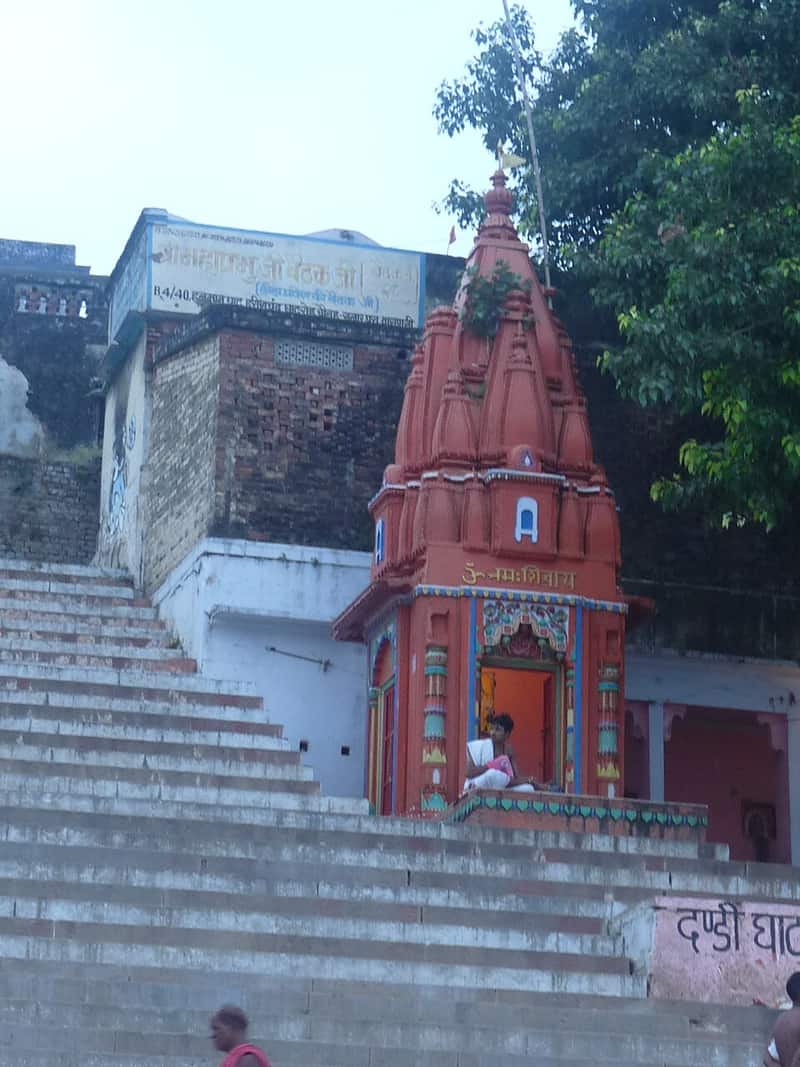
Neighbourhood GhatDandi Ghat is a small ordinary ghat.


Type
Neighbourhood Ghat
Boat Fare
1x base fare
Best Time
5-9 AM
History
This ghat is associated with the dandi sanyasis (staff-bearing monks) of Shankaracharya’s tradition. It is a symbol of wisdom and renunciation.
Highlights
- Tradition of the dandi sanyasis
- Symbol of wisdom and renunciation
- Peaceful spiritual atmosphere
Festivals & Events
How pricing works in the NaviX app
No haggling at the ghat — everything is fixed in the app first
- 1
Fixed price before you board
The fare is shown in the app upfront — no bargaining at the ghat
- 2
Sharing or private — your choice
Share with fellow travelers or take the whole boat for your group
- 3
Pay only after the ride
UPI, card or cash — with an instant receipt
Daily in the evening
A lively ghat of students and poets with its own evening aarti
Complete Guide
Dandi Ghat — The Complete Guide
History, mythology, rites and practical details — everything in depth.
On this page
- 1.An Introduction to Dandi Ghat
- 2.The Dandi Sanyasis and the Dashanami Order
- 3.Ascetic Life on the Ghat
- 4.Morning Bathing at Dandi Ghat
- 5.The River and the View
- 6.Daily Life on the Steps
- 7.The Lanes and Mohalla Behind the Ghat
- 8.Nearby Ghats: Shivala and Hanuman
- 9.Festival Gatherings of Ascetics
- 10.An Atmosphere of Austerity and Devotion
- 11.Etiquette: Respectful Conduct with Sadhus
- 12.Practical Notes: Reaching the Ghat
📅 Updated: 21 Aug 2026 · Author: NaviX Field Team (field research 2024-26) · 12 sections · 12 photos
An Introduction to Dandi Ghat
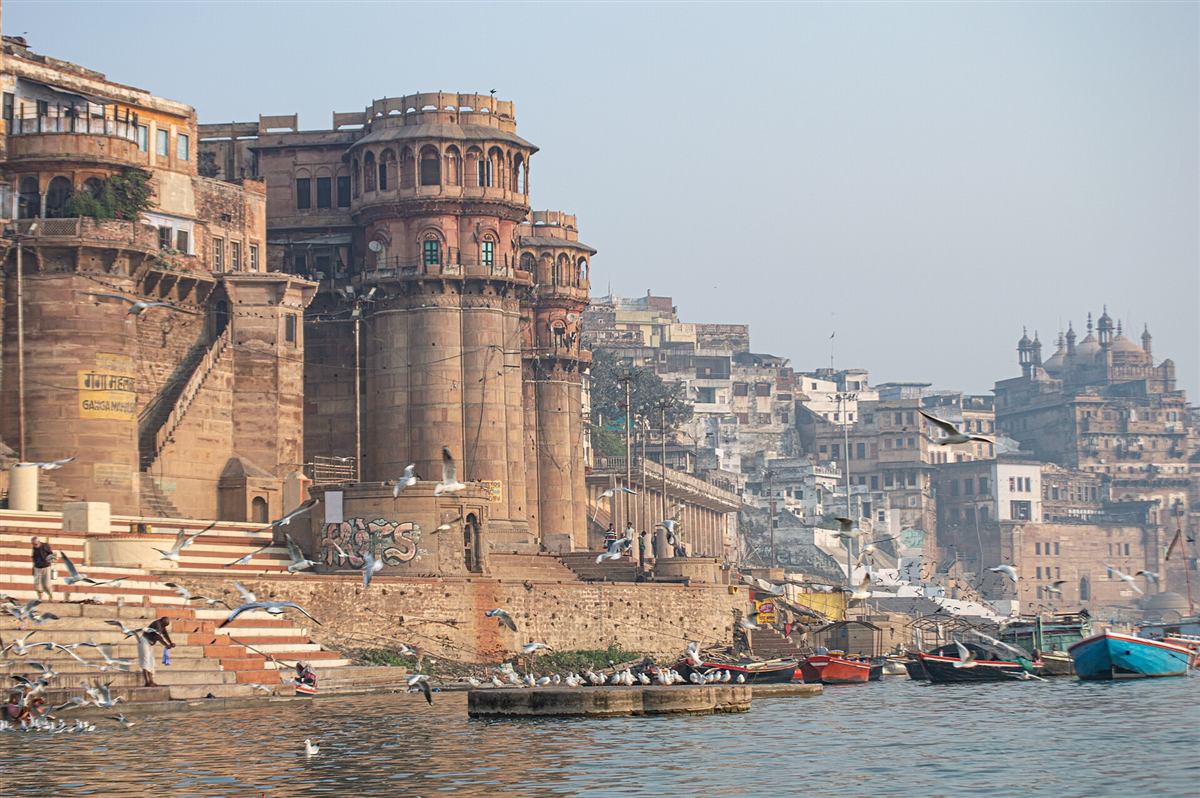
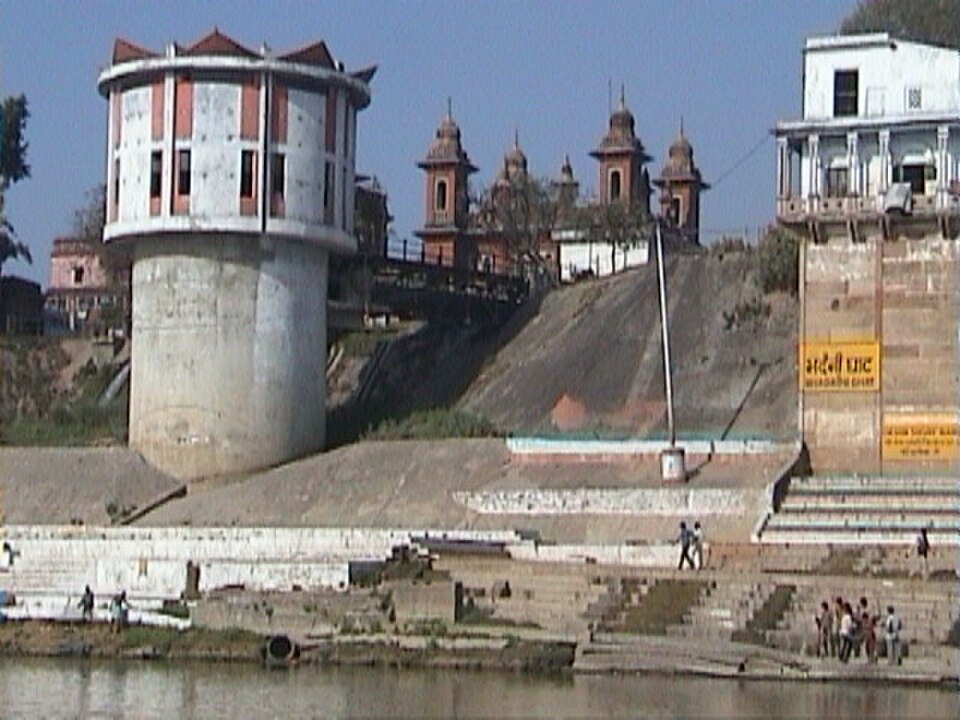
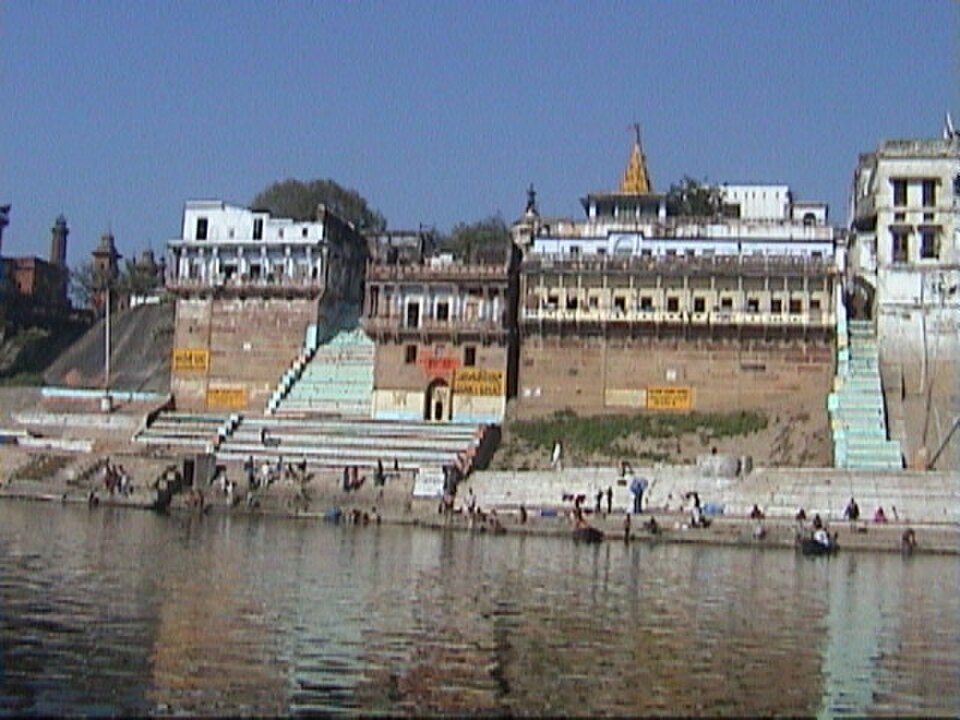
Dandi Ghat occupies a quiet stretch of Varanasi's southern riverfront, tucked between Assi and the old city, close to Shivala Ghat and Hanuman Ghat. Its name remembers the Dandi sanyasis — renunciates of the Dashanami order who carry a simple staff, or danda, as a mark of their vows. Where the great ghats of the north crowd with pilgrims, shops and ceremony, Dandi keeps a different temper: a plain flight of stone steps, a restrained devotional mood and the unhurried sound of water. Sadhus in ochre robes may be seen sitting or pacing here, and the ghat is part of Kashi's long ascetic tradition, a city where renunciation is held in the highest regard. Bathers come and go through the morning, boatmen lounge in their wooden boats, and the far bank shows as a low strip of green and sand. For a visitor coming from the clamour of the main ghats, Dandi feels like a secret held by the river — a place where the sacred life of the city continues without audience. The ghat belongs to the long chain of stone landings that runs from Assi northward toward the old city, and every link of that chain has its own story. Dandi's story is one of austerity, patience and the unbroken presence of the renunciate tradition.
To understand the ghat, one must understand what the danda means. In the Dashanami order, the staff is given to the sanyasi at initiation as a symbol of discipline, detachment and the solitary road of the seeker. A Dandi sanyasi carries this staff for life, and its presence on the steps of the ghat is a visible link to a tradition reaching back many centuries. That tradition is woven into the very atmosphere here: the absence of loud commerce, the slow movement of sadhus, the way bathers step quietly into the water. Pilgrims often remark that the ghat feels untouched by the hurry of modern tourism. Historically, ascetics from across India travelled to Kashi in their final years, drawn by the belief that dying here brings liberation, and ghats like Dandi received them with a plain welcome. Today the ghat still carries that gentle, austere air — a landing where the river, the renunciate and the ordinary bather share the same weathered stone, and where the city's oldest vocation, the search for freedom from the world, is still practised in full view of the passing current.
The Dandi Sanyasis and the Dashanami Order
The Dashanami order is one of the great monastic lineages of India, traditionally traced to the philosopher Adi Shankaracharya, who is said to have organised wandering renunciates into ten named branches — the dashanam, or ten names. Among these renunciates, the Dandis are distinguished by the danda, a staff carried as the emblem of their order and their vow. The danda is not a walking stick in the ordinary sense; it is a ritual object, received at initiation, and it stands for the sanyasi's self-mastery and his detachment from worldly support. In the visual landscape of Kashi, where saffron robes are common, the Dandi sanyasi is recognised at once by this single staff and often by a quieter, more severe bearing. He holds the danda as a soldier holds a weapon — a pledge of discipline kept through every weather of the spirit.
The discipline of the Dandis is demanding by design: control of the senses, strict rules of conduct, and a life that keeps the staff's promise of austerity. Not every member of the Dashanami order carries the danda; those who do follow the stricter path and are held in particular respect. For centuries such renunciates found their way to Kashi, and the ghat that bears their name became a natural home for their way of life. Here the distinction between the ghat and the tradition dissolves: the staff, the steps and the river all speak the same language of simplicity. To stand at Dandi Ghat is to stand where a living monastic tradition touches ordinary daily life, and the sight of a sadhu resting his danda on the stone is not a performance but the continuation of an old, unbroken habit. Visitors who spend an hour on these steps usually leave with a new understanding of what renunciation can mean — not the rejection of the world, but the quiet mastery of it.
Ascetic Life on the Ghat
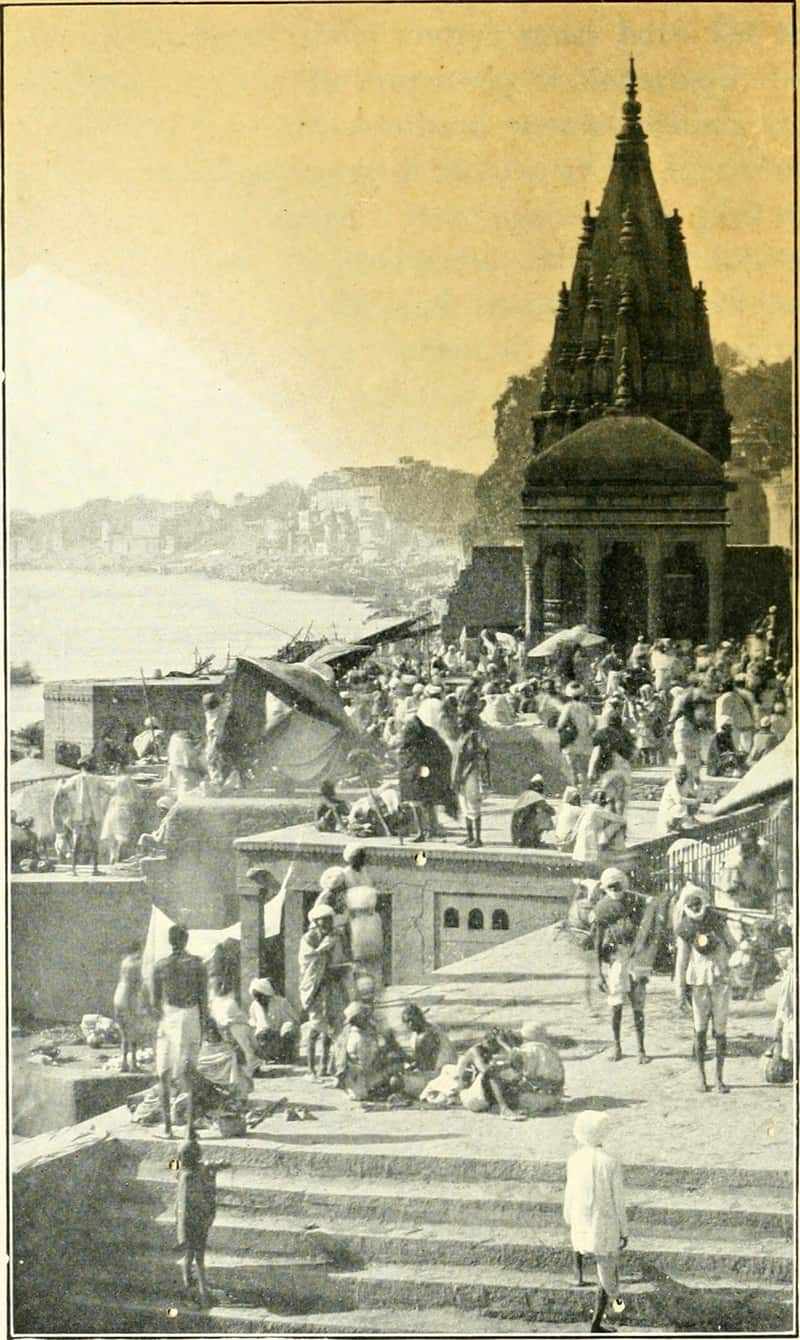
The sadhus of Dandi Ghat are not performing for visitors; they are living their vocation on the stone steps of Kashi. At dawn, before the sun clears the rooftops of the city, a sadhu may be seen seated in meditation, his danda laid across his knees, his eyes half closed, the river moving past below. Others perform their ablutions, chant the old mantras in low voices, mark their foreheads with vibhuti or sandal paste, and arrange their small possessions with careful ritual. Some keep jata, long matted hair, and wear rudraksha beads; others are shaven and bare. The variety is endless, but the spirit is one: a life pared down to worship, food and silence. Their days follow the sun — prayer at dawn, alms and rest at noon, meditation by the water as the light fails.
Their presence changes the quality of the ghat. Local bathers greet them with folded hands, boatmen know them by name, children bring them water without being asked. The sadhus remain aloof but never unwelcoming, answering a respectful question with a patient word or a blessing. Many are aged, having come to Kashi, as the tradition holds, to spend the closing years of life in the city of Shiva. On the steps of Dandi they read the scriptures, prepare small fires for their rituals and wait upon the seasons. For the visitor, watching this unhurried ascetic life is like watching the city's spiritual metabolism — slow, steady and utterly indifferent to fashion. It is the oldest feature of the ghat, and likely the one that will remain when everything else has changed. To see a sadhu fold his staff and rise from the stone is to see a thousand years of Kashi condensed into a single, ordinary gesture.
Morning Bathing at Dandi Ghat
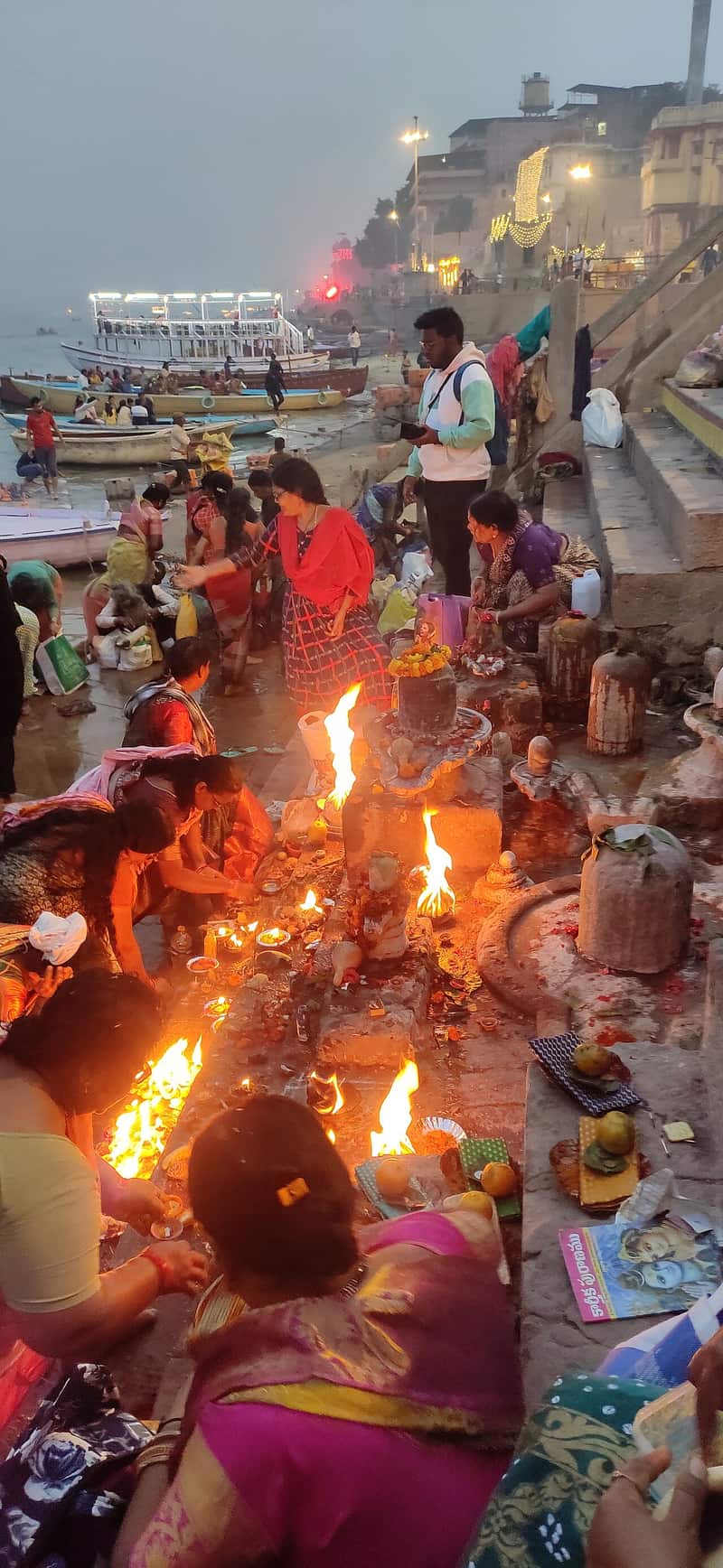
Bathing at Dandi Ghat begins before dawn. Through the winter mornings, when the steps are cold and the water sends up a thin mist, the first bathers arrive with brass lotas, towels and clean clothes folded under their arms. They descend the long stairway, wade out to waist depth and dip three times, rising each time with a murmured mantra, the water streaming from their shoulders. Cupped hands offer arghya to the rising sun, and the moment the light breaks over the eastern bank the whole ghat seems to pause and bow. For the devout, bathing here is not the cleansing of the body alone; it is an act of surrender, a daily renewal of the soul in the sacred current. The old mantras rise and fall with the rhythm of the water, and even a visitor who does not understand the words feels their gravity.
The water at this stretch of the river is gentler than in the north, and the steps shelve gradually, so families, elderly pilgrims and children bathe here with ease. Mothers hold their infants at the water's edge; old men perform the full ritual with unhurried precision; the sadhus complete their own ablutions apart, with a gravity that silences the steps around them. Washing is followed by the slow ritual of dressing on the stones, the spreading of wet clothes to dry on the railings, the brief offerings of flowers and small lamps set afloat on the current. By mid-morning the frenzy is over and the ghat returns to its quiet self. But the morning bathing has done its work — the water is blessed, the day is consecrated, and the memory of thousands of such mornings hangs over the place like incense. The visitor who arrives late has missed the ghat's truest hour and should return the next day before the sun.
The River and the View
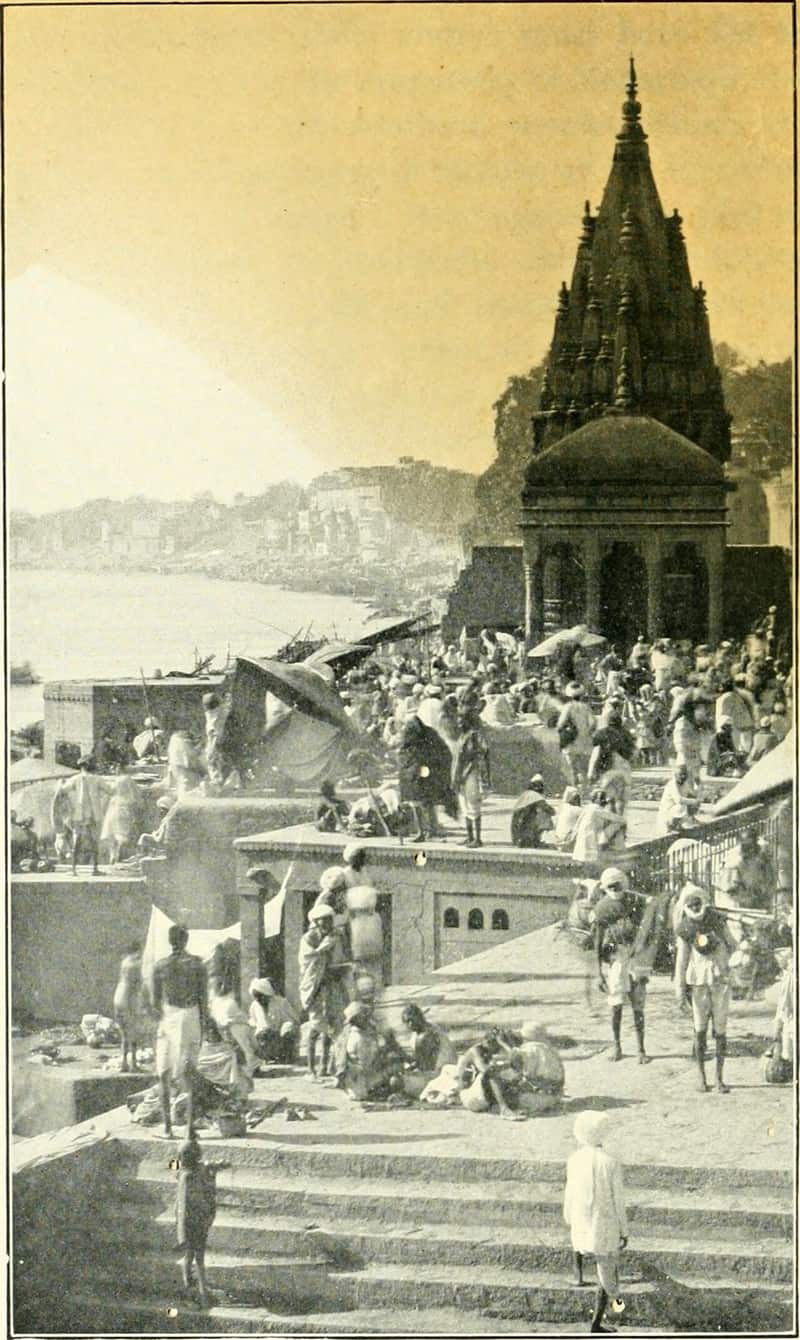
Standing on Dandi Ghat, the Ganga opens before you in a broad, calm sweep. To the south the river curves toward Assi, where the bank is low and green; to the north the ghats of the old city rise in a long, crowded skyline of stone, temples and domes. Here, in the middle distance, the river seems wider and slower than anywhere else, its surface moving with a patient, muscular ease. Boats lie at anchor along the steps, rocking gently; waterbirds drift on the current or stand one-legged on the sandbars. In winter the water is clear enough to see the bottom a few feet out, and the far bank shows as a thin line of fields and sand. The view rewards stillness — the longer you watch, the more the river seems to be doing the watching.
The river changes the ghat with the seasons. In the monsoon the Ganga swells and swallows the lower steps, so that the water climbs almost to the top of the stairway and the ghat becomes a simple edge where land meets flood. In winter the water retreats, exposing sandbanks where children play and boatmen stretch their nets. At dawn the surface turns silver, at noon a hard bright blue, and at evening a deep metallic gold as the lamps are lit along the shore. Every great ghat of Varanasi is a dialogue between stone and water, but at Dandi the stone keeps its modesty, so the river speaks with more authority. Those who come here to sit and watch the current soon understand why the sages of Kashi placed the river at the centre of their imagination of liberation — a boundless force, patient as eternity, that accepts everything and refuses nothing.
Daily Life on the Steps
For all its sanctity, Dandi Ghat is also a working place. The boatmen who moor here are among its most constant inhabitants — squatting on the bows of their wooden boats, mending nets, scraping paint and bargaining lazily with passengers for a ride down to the old city or across to the far bank. Some mornings, women of the neighbourhood come down with bundles of laundry to beat on the flat stones at the water's edge, a practice as old as the ghat itself. Chai wallahs set up small stoves in the courtyard above the steps; vendors offer puffed rice, peanuts and marigold garlands. Children chase each other along the stairway, and old men gather to argue about everything under the sun. The sounds are ordinary — laughter, splashing, the thud of oars — yet they play against a backdrop of bells and mantras.
This daily commerce is not a distraction from the ghat's sacred character; it is part of it. In Kashi, holiness and everyday life have never been separated, and the same steps that receive the sadhu's meditation also carry the fish-seller's basket and the schoolboy's satchel. Temple bells ring over the shouts of boatmen; the smell of incense mingles with the smell of river and smoke. Visitors who come expecting a museum of piety find instead a living street, and gradually they understand that this is the real genius of the ghats: they have never stopped being used. Dandi Ghat is not a monument to asceticism but a neighbourhood of the spirit, where the renunciate, the labourer and the pilgrim all draw their water from the same holy river. Stay long enough and you stop being a visitor — you become part of the morning, another figure on the steps.
The Lanes and Mohalla Behind the Ghat
Behind Dandi Ghat, the lanes of the Shivala neighbourhood climb steeply away from the river, a tangle of narrow passages, worn steps and overhanging balconies. These are the true corridors of old Kashi — too narrow for cars, too old for maps, and full of the smells of ghee, jasmine and damp stone. Doorways open into courtyards where buffaloes are tethered and marigolds dry on the roofs; small temples appear at every turning, their bells ringing at all hours. The houses are tall and ancient, their facades plastered with generations of lime, their carved wooden doors darkened by age. Laundry hangs across the lanes like flags, and the sound of a radio, a grindstone or a child's lesson drifts from every window. To walk here is to step behind the curtain of the ghat into the city's private, breathing life.
The mohalla is home to the families that have served the ghat for generations — boatmen, priests, flower growers and sweet-makers. Their shops line the main street above the ghat: tiny tea stalls with benches on the pavement, paan shops with their mirrors and betel leaves, confectioners displaying trays of barfi and jalebi behind glass. Pilgrims on their way to the river pause here for chai; sadhus pass through without stopping; the neighbourhood folds the ghat into its ordinary rhythm. Walking these lanes, the visitor feels the city's famous layering: the sacred at the water's edge, the domestic just behind it, and beyond, the endless, living maze of Kashi, where every stone has a memory and every corner a shrine. It is worth losing an hour here, letting the lanes lead wherever they please, for the mohalla holds the true texture of the place no photograph can capture.
Nearby Ghats: Shivala and Hanuman
Dandi Ghat sits within a chain of southern ghats, each with its own identity. Just to the south lies Hanuman Ghat, named for a temple of Hanuman that overlooks the water — a quiet landing much loved by families and by sadhus who prefer its shade. A little further south, the broader steps of Shivala Ghat belong to the neighbourhood devoted to Shiva, where the old palace quarter stands just inland. Between them and Assi, Dandi holds the middle ground — neither busy nor solitary, but steeped in the ascetic tradition that gives this whole stretch of the riverfront its particular character. Walking the bank from one ghat to the next takes minutes, yet each landing feels like a different world, separated by little more than a few hundred paces of stone.
Beyond these neighbours the chain continues. To the south, Assi Ghat marks the point where the Assi stream meets the Ganga, a lively ghat of students, poets and evening aarti. To the north, the ghats grow denser and more famous — Chet Singh, Mansarovar, and eventually the great ceremonial heart of the city at Dashashwamedh. A boat journey along this stretch reveals the ghats as a single long work: each landing a verse, together a poem of the city's devotion. For the visitor, the reward of staying near Dandi is perspective — the southern ghats offer a calm that the northern ones cannot, while the whole riverfront lies within an easy walk or a short boat ride in either direction. Morning at Dandi, noon at Hanuman's shade and dusk at Dashashwamedh make one of the finest days the river has to offer.
Festival Gatherings of Ascetics
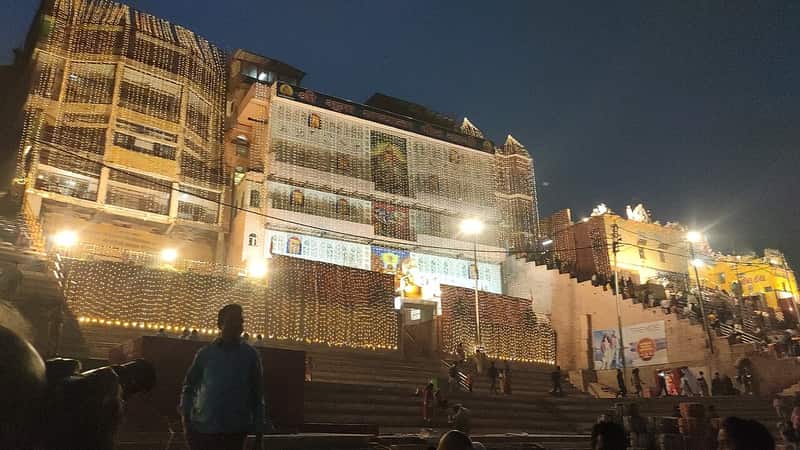
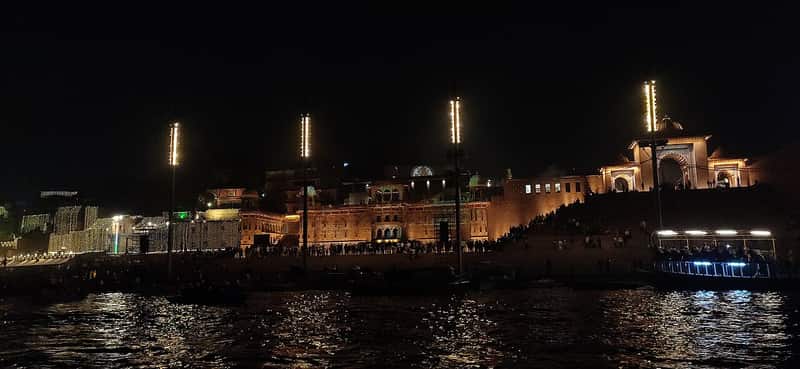
On festival days the character of Dandi Ghat changes. The ascetic community of Kashi, scattered through the city's ashrams and maths, gathers at the river on auspicious dates, and the southern ghats see a quiet influx of ochre robes and staffs. Processions of sadhus move along the bank with drums and conch shells, halting at the water for prayers and the ceremonial bath. On Shivratri, when the whole city keeps vigil for Shiva, the ghat glows with oil lamps and the chant of the Rudri; on the bathing festivals of the Hindu calendar — the full moons and solstices observed with particular devotion in Kashi — the steps fill from dawn with ascetics and householders alike, all seeking the same grace in the same water. The river, wide and patient, receives them all without distinction.
These gatherings are different in tone from the great fairs of the northern ghats. Here there are no megaphones and few pilgrim trains from other states; the crowds are smaller, the worship more inward. The sadhus of the Dandi tradition conduct their observances with the plainness that marks their whole way of life — a dip, a mantra, a handful of water offered to the sun, and then the slow return to the shade of the courtyard above. Yet the effect is profound: for a few hours the ghat becomes what it has always been meant to be, a meeting place of the renunciate community, and the ordinary visitor is reminded that behind the tourist's Varanasi lies another city — the ascetic's city, older, quieter and infinitely patient. To witness one such festival morning is to see the ghat in its native dress.
An Atmosphere of Austerity and Devotion
The atmosphere of Dandi Ghat is its greatest gift. Where Dashashwamedh shouts, Dandi whispers; where the northern ghats glitter with electric light and commerce, here the lamps are few and the shadows deep. The sounds are elemental: water lapping against stone, the creak of a boat, the low drone of prayer, a temple bell arriving from the lanes like a message from another century. There is no music blaring, no hawker shouting in the visitor's ear. The ghat seems to hold its breath, and in that stillness the devotional life of the city becomes visible in its purest form — a sadhu at his puja, a woman offering a lamp, an old man telling his beads in the last light. The restraint is not coldness; it is the warmth of a place that knows itself.
This austerity is not emptiness; it is a discipline. The ghat is austere in the way of the tradition it is named for — everything unnecessary has been stripped away, leaving stone, water, sky and devotion. Visitors often describe a strange sensation here: time slows, the mind settles, the noise of travel and planning falls away. It is the ghat's particular blessing that it asks nothing of the visitor but presence. Sit on the steps in the late afternoon, when the sun slants across the water and the boatmen nap in their boats, and the city's oldest idea — that the sacred is not elsewhere but here, in this river, at this landing — becomes quietly, undeniably convincing. Many leave Dandi Ghat with little to photograph and everything to remember.

Etiquette: Respectful Conduct with Sadhus
Visiting Dandi Ghat is visiting a place of worship and of living monastic practice, and a few courtesies make the experience respectful for everyone. Modest dress matters: shoulders and knees covered, nothing worn as beachwear. Bathing, if the visitor chooses it, should follow the ghat's rhythms — enter the water as locals do, without splashing or noise, and leave the steps as clean as they were found. Photography calls for particular care: the sadhus are not exhibits, and many renunciates dislike the camera. Ask first, with folded hands and a smile; if the answer is no, accept it without argument. Some ascetics observe strict rules of silence and touch, and a wise visitor gives them a wide and gentle berth. The ghat rewards those who watch with the eyes and not the lens.
Other gestures are simple and universal. Greet sadhus with a namaste, not a handshake; never touch their belongings, their danda or their sacred objects. If prasad or a blessing is offered, receive it with both hands and gratitude; if a sadhu accepts a donation, give it discreetly, without ceremony. Refrain from bargaining with sadhus or treating their presence as a spectacle, and never interrupt a meditation or a puja. Finally, remember the ghat's own spirit: it rewards those who are quiet, unhurried and humble. A visitor who carries that spirit down the steps will find the ghat opens itself — its silences, its rituals, and the strange peace that has kept sadhus, bathers and boatmen in this one small place for centuries. Come as a guest, and you will be treated as one.
Practical Notes: Reaching the Ghat
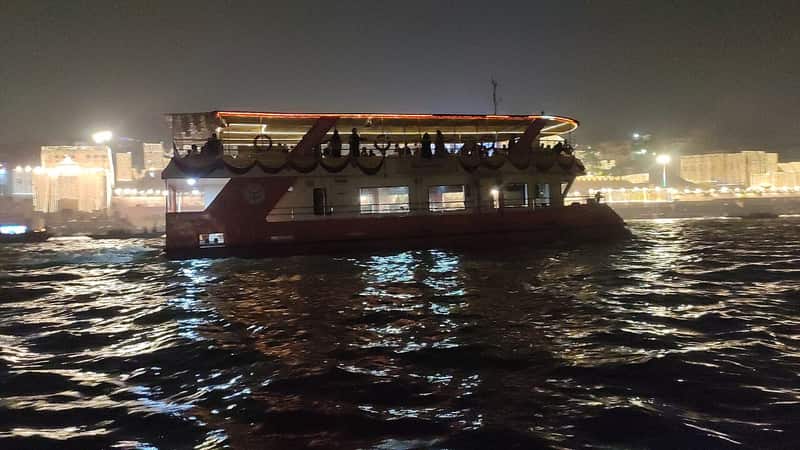
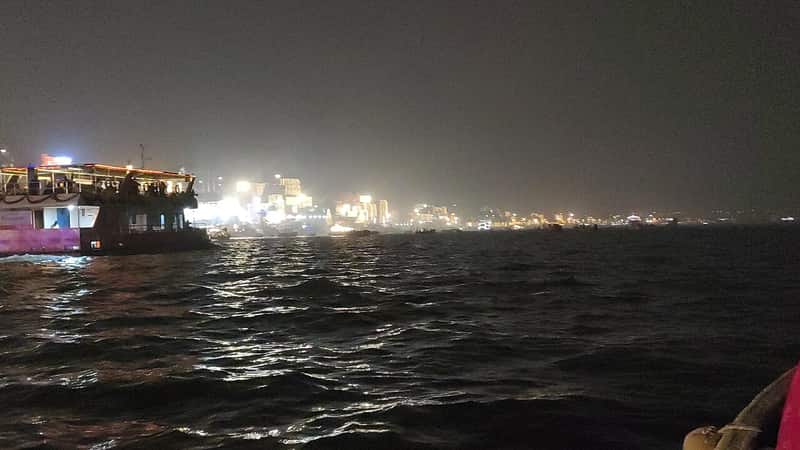
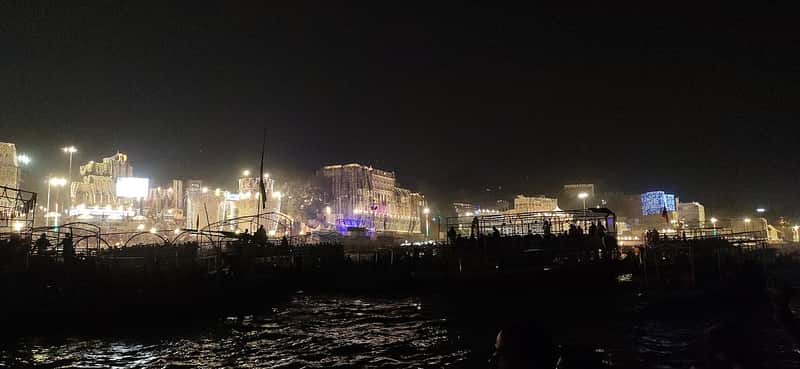
Dandi Ghat is easy to reach and rewards a little effort. The simplest approach is on foot along the riverfront: from Assi Ghat, walk north along the bank for roughly twenty minutes, passing the quieter southern ghats; from the old city, take the ghat road south through Shivala. Rickshaws and autos can bring a visitor to the Shivala crossing, from where the ghat is a short walk down the lanes. A boat is the loveliest arrival: rowboats and small cruisers ply the river between Dashashwamedh, Assi and the southern ghats, and seeing Dandi from the water, its steps rising from the current, is an introduction no photograph can match. Ask the boatman to pause midstream; the view from the river is the one the ghat was built for.
The best time to come is early morning, from about an hour before sunrise, when the bathing is at its fullest and the light is softest; the months from October to March are the most comfortable, with crisp air and clear water. Evenings are beautiful too, especially in winter, when the lamps are lit and the river turns to gold. From Dandi, the neighbouring ghats — Hanuman and Shivala to the south, and Assi beyond them — are all within an easy walk, and a boat ride north opens the whole procession of the old city's ghats. Carry water, wear shoes that grip the wet stone, and remember that in the monsoon the steps may be slippery or submerged. Come unhurried, with no fixed list of sights; the ghat has been waiting for centuries, and it will wait for you.
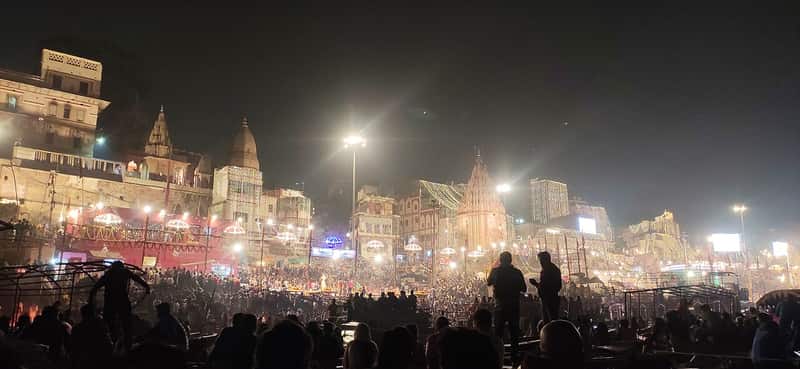
Dandi Ghat — Gallery (12 Photos)
Image Credits
dandi-01.jpg · dandi-02.jpg · dandi-03.jpg · dandi-04.jpg · dandi-05.jpg · dandi-06.jpg · dandi-07.jpg · dandi-08.jpg · dandi-09.jpg · dandi-10.jpg · dandi-11.jpg · dandi-12.jpg — Wikimedia Commons, under free licenses.
Continue exploring
Similar Ghats Nearby
Book This Ghat — Get Notified
Download the app now and book a boat ride to Dandi Ghat