

Hanuman Ghat
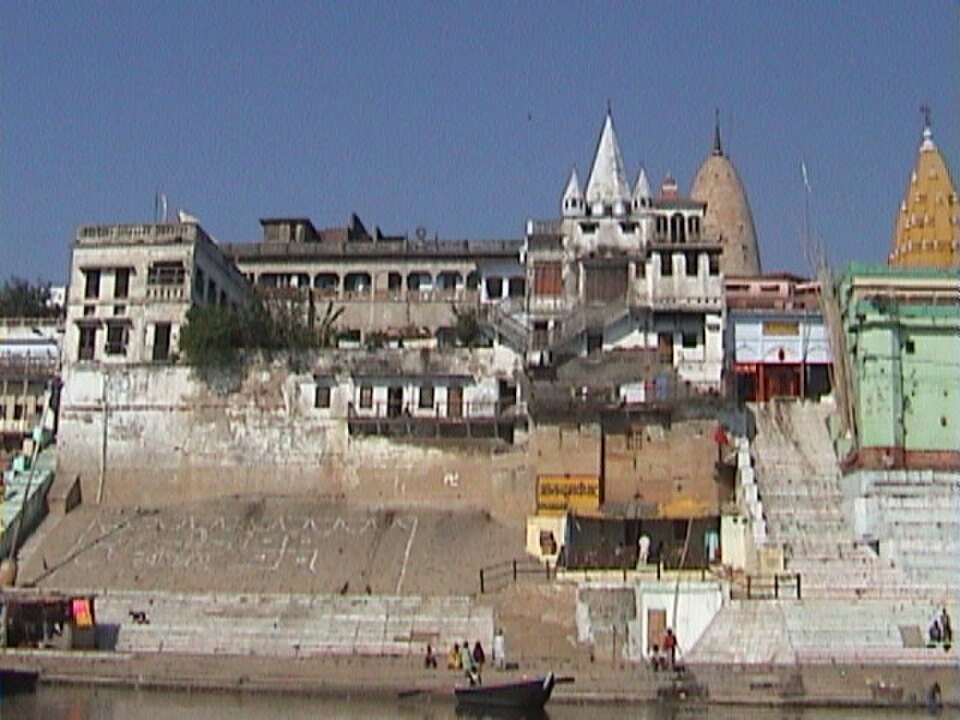
Heritage GhatHanuman Ghat is a famous ghat named after Lord Hanuman. It has a famous Hanuman temple.


Type
Heritage Ghat
Boat Fare
1x base fare
Best Time
5-9 AM; special crowds on Fridays
History
An ancient temple of Bajrangbali stands near this ghat. Every Friday, a special crowd gathers here, making it a centre of faith like Sankat Mochan.
Highlights
- Darshan of the ancient Hanuman temple
- Special aarti on Fridays
- Centre of strength and faith
Festivals & Events
How pricing works in the NaviX app
No haggling at the ghat — everything is fixed in the app first
- 1
Fixed price before you board
The fare is shown in the app upfront — no bargaining at the ghat
- 2
Sharing or private — your choice
Share with fellow travelers or take the whole boat for your group
- 3
Pay only after the ride
UPI, card or cash — with an instant receipt
6:00 AM, 12:00 PM & 7:00 PM
Special Friday aarti draws large crowds
Complete Guide
Hanuman Ghat — The Complete Guide
History, mythology, rites and practical details — everything in depth.
On this page
- 1.Hanuman Ghat — A Small Ghat with a Great Devotion
- 2.The Temple of the Monkey God — Heart of the Ghat
- 3.Hanuman in Kashi — The Devotion of a City
- 4.The Morning Bath — Temple First, Then the River
- 5.Bathers, Boatmen and Locals — The Everyday Ghat
- 6.The River and the View
- 7.The Lanes and the Mohalla
- 8.Neighbours on the Waterfront — Shivala and Prachin Hanuman
- 9.Festivals — Hanuman Jayanti and the Tuesday Gatherings
- 10.Etiquette — Visiting Hanuman Ghat with Respect
- 11.Practical Notes — Reaching and Visiting
📅 Updated: 21 Aug 2026 · Author: NaviX Field Team (field research 2024-26) · 11 sections · 11 photos
Hanuman Ghat — A Small Ghat with a Great Devotion
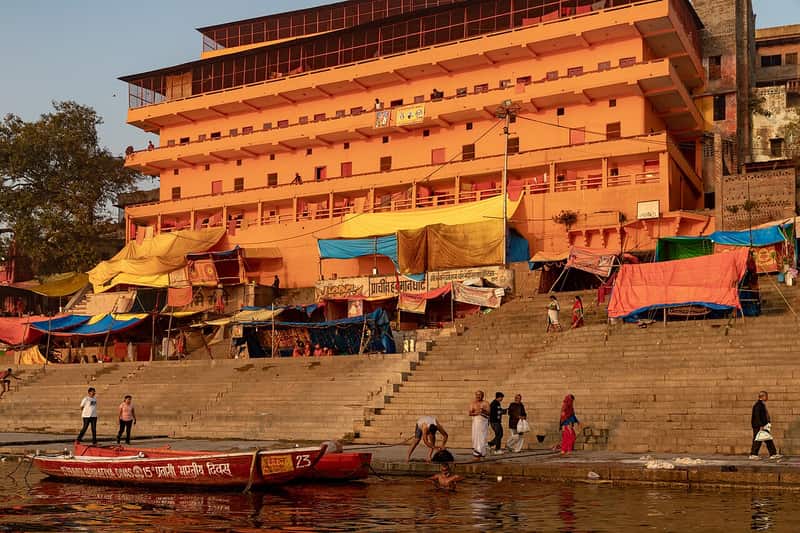
Hanuman Ghat is a small, devoutly used bathing place on the southern stretch of the Varanasi riverfront, tucked between the broad platform of Shivala Ghat and the dense lanes of the old city that begin a little further north. The ghat takes its name from the Hanuman temple that stands close to its steps, a modest shrine whose bells and lamps govern the rhythm of the whole landing. It has none of the monumentality of Dashashwamedha or the sombre fame of Manikarnika; its steps are short, its stone is worn, and its platform could be mistaken for an ordinary riverside yard. Yet for the people of the surrounding mohalla this is one of the most loved corners of Kashi, because here the temple, the river and the neighbourhood meet as friends, without ceremony or pretension.
Morning at Hanuman Ghat begins softly. The first bathers arrive while the stars are still out, pass through the temple courtyard to offer a prayer, and then walk down the worn steps into the cold water of the Ganga. Boatmen untie their boats and push off into the current, calling to one another in the cheerful Banarasi way; shopkeepers in the lane behind the ghat roll up their shutters; and the temple bell begins its day-long conversation with the river. The atmosphere is warm and unhurried, the atmosphere of a neighbourhood rather than a monument. Children splash in the shallows, elders sit on the platform telling their beads, the smoke of morning tea drifts down from the houses, and a visitor is soon treated less like a tourist and more like a guest of the mohalla itself.
Pilgrims who come to Hanuman Ghat follow a fixed order of devotion: the temple first, the bath second. The shrine is believed to give strength for the day, and the river is believed to wash away the weariness of the night. In this small ritual the character of the ghat is written — faith and daily life are one thing here, not two. The ghat belongs to the ancient circuit of eighty-four bathing places that girdles the city, yet it has none of the grand theatricality of the northern waterfront. It is simply a place where Kashi lives out its most ordinary and most sincere piety, and that, in the end, is why the small ghat of Hanuman holds such a large place in the city's heart.

The Temple of the Monkey God — Heart of the Ghat
The temple that gives the ghat its name stands only a few steps above the landing — a small, whitewashed shrine whose quiet presence rules the whole riverfront. Inside, the murti of Hanuman holds his gada in one hand, his body thick with the vermilion of countless offerings, marigold garlands piled high about his neck. The face is calm and trustworthy, the face of the guardian every Banarasi household trusts without question. Twice each day, at dawn and at dusk, the aarti is performed, and the ringing of the bells carries across the water to the far bank. The priest gathers the day's flowers, trims the wicks of the lamps, and marks the foreheads of the faithful with sindoor and sacred ash, so that no visitor leaves the small shrine unblessed. Barely taller than a man, the temple is easy to miss, yet no one who comes to the ghat misses it, for its bell is the first voice of the morning and the last of the night.
Through the day the temple never closes its doors. Someone is always reciting the Hanuman Chalisa in a low voice; someone else stands motionless with folded hands; and the offerings arrive in a steady stream — laddoo, roasted chana, coconut, vermilion and marigold — each one returned as a small share of prasad. Labourers pause for a single moment on their way to work, students ask for strength before examinations, grandmothers pray aloud for their grandsons by name. The queues are never long, because this is a neighbourhood temple: small, warm, and familiar with every face that enters. There is no hurry here, and no formality; a devotee may sit on the step of the sanctum as easily as in their own courtyard.
The bond between the temple and the ghat is what makes the landing sacred. Pilgrims bow to Hanuman before they touch the water, believing that his gaze protects the bather; at dusk the lamps of the aarti spill down the steps to the river's edge, and the sound of the bell floats out over the current like a blessing. The shrine is small, and that smallness is itself the lesson of the place — devotion needs no marble, no tower, no crowd. The temple is the heart around which the whole ghat beats, and it is in the name of this humble deity that the landing has been called Hanuman Ghat for as long as anyone can remember.
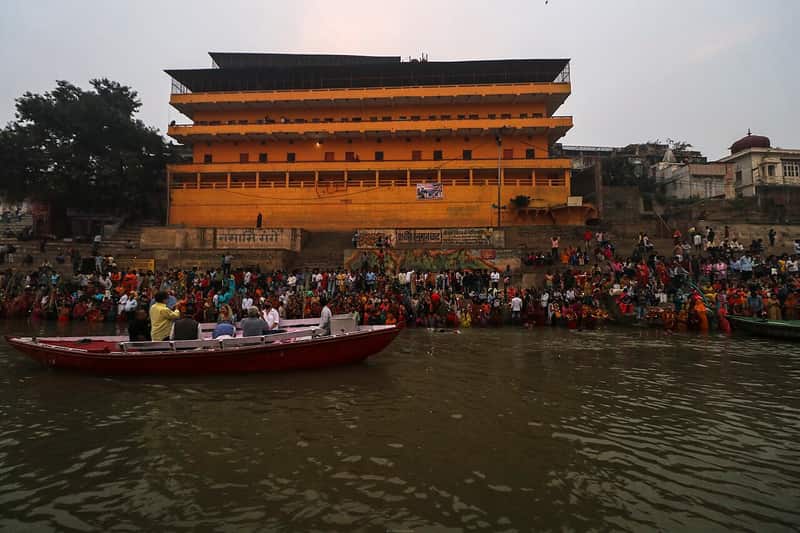
Hanuman in Kashi — The Devotion of a City
Among all the deities of Kashi, few are loved as simply and as deeply as Hanuman, the monkey god who is the city's great protector. He is the remover of obstacles, the reliever of sorrows, the servant of Ram whose strength is matched only by his humility, and his image stands at crossroads, beneath pipal trees and in the corners of countless homes. The devotion he inspires is the devotion of ordinary life: no long ceremonies, no costly offerings, only the trust of a son in a father's protection. The man who bows his head in the temple at dawn is asking for the strength to live that day well, and the whole city believes that such a prayer is never turned away.
Tuesday is Hanuman's day, and every Tuesday this small ghat keeps a festival of its own. From early morning the temple fills, the Hanuman Chalisa is recited aloud until its verses echo through the lanes, and the special aarti draws lines of devotees who have kept the Tuesday fast. Offerings of laddoo and vermilion change hands in a steady rhythm, and prasad is shared out to everyone who waits. Students come to ask for courage before their examinations, the sick ask for healing, merchants ask for the success of their work — every class of the city has its own prayer, and every prayer has the same address. On Tuesday the quiet ghat becomes a living proof of how deeply the monkey god is woven into the daily faith of Kashi.
This devotion is not a festival thing; it is stitched into the ordinary hours of the ghat. The temple before the bath, the day opened with a jaykara, the evening closed with the aarti — the order never changes, whether the visitor is a local or a stranger. Because Hanuman is loved so completely in Kashi, the small shrine is never empty, and the steps below it are never without life. The corner of the riverfront that no map of the world would mark is, for the faithful who bow here every morning, the centre of the universe. Hanuman is the guardian of this ghat, and the ghat is the living home of his worship.
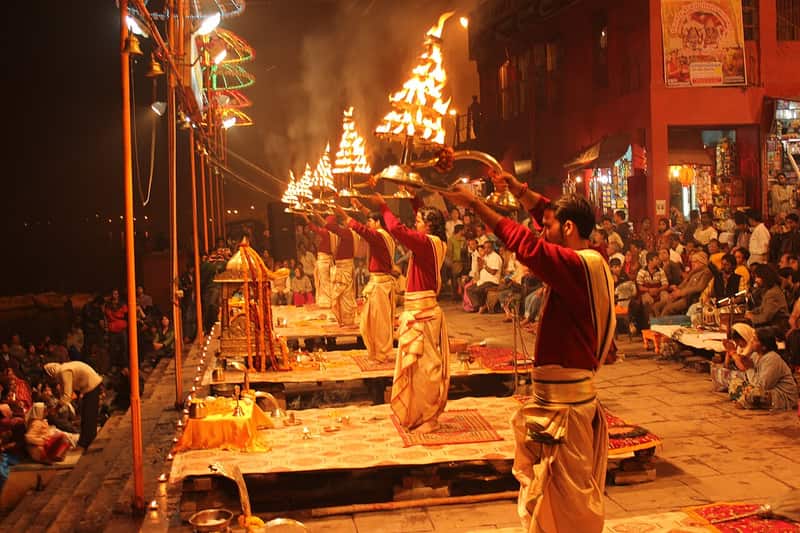
The Morning Bath — Temple First, Then the River
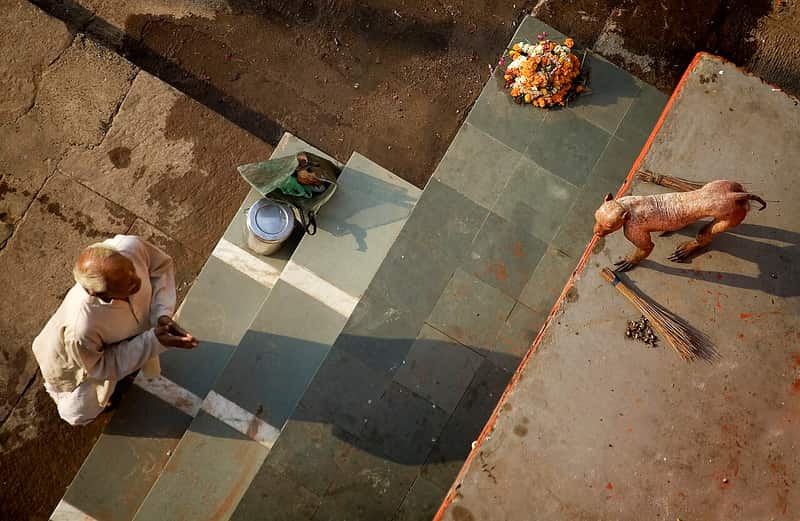
The day at Hanuman Ghat begins long before sunrise. In the half-dark the first pilgrims climb the temple steps, bow once, and then walk down to the water, brass lota in hand. The river is cold and deep at this hour, yet no one hesitates: three dips are taken, water is offered to the rising sun, and strength for the day is asked of Ganga Maiya herself. Because the steps are short and the platform intimate, bathing here feels personal rather than public — no crowds press in from behind, no hawkers call at the water's edge. There is only the river, the faith, and the hush of a city still half asleep.
The bath itself is the same ritual for everyone and yet different for each. One bather pours water over the head while murmuring mantras; another stands waist-deep and gazes at the sun; an elder sits in the shallows telling a rosary; children laugh and splash without a care. On the bank, clothes are changed discreetly behind towels, and wet cloth is laid out on the warm stone beside the lotas. The boatmen watch from their moorings, and when the bathers climb back up the steps, faces fresh from the river greet one another with folded hands and small smiles. The whole scene repeats itself each morning, as it has for generations, without ever growing tired.
Why pilgrims bathe here is a question every Banarasi can answer: the Ganga washes away sin, dissolves weariness, and a bath taken at the ghats of Kashi carries the merit of countless lifetimes. But the order of this ghat is particular — the temple first, the river second — as if bathing under the gaze of Hanuman were even more auspicious. To step out of the cold water into the morning sun, with the smell of wet stone, marigold and incense in the air, is to feel the day begin exactly as it should. The habit is passed from parent to child, and in that unbroken repetition the holiness of the ghat stays alive, morning after morning.
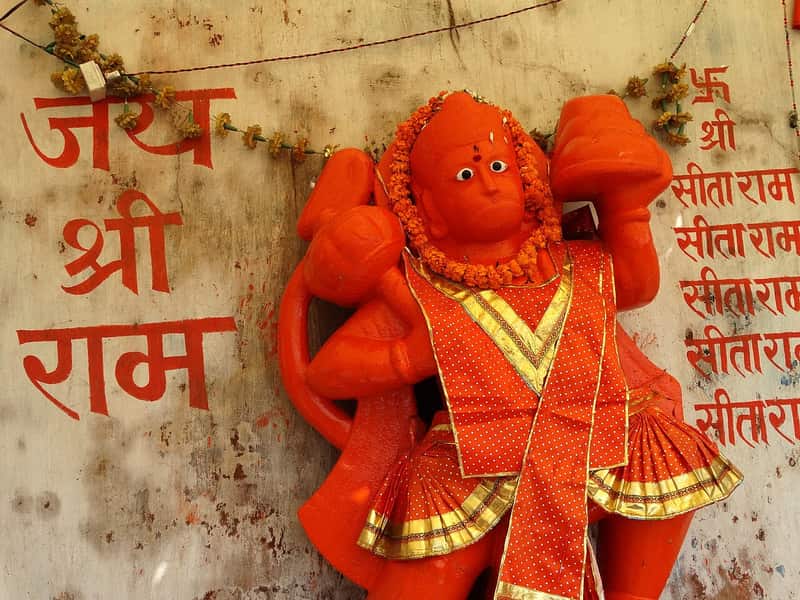
Bathers, Boatmen and Locals — The Everyday Ghat
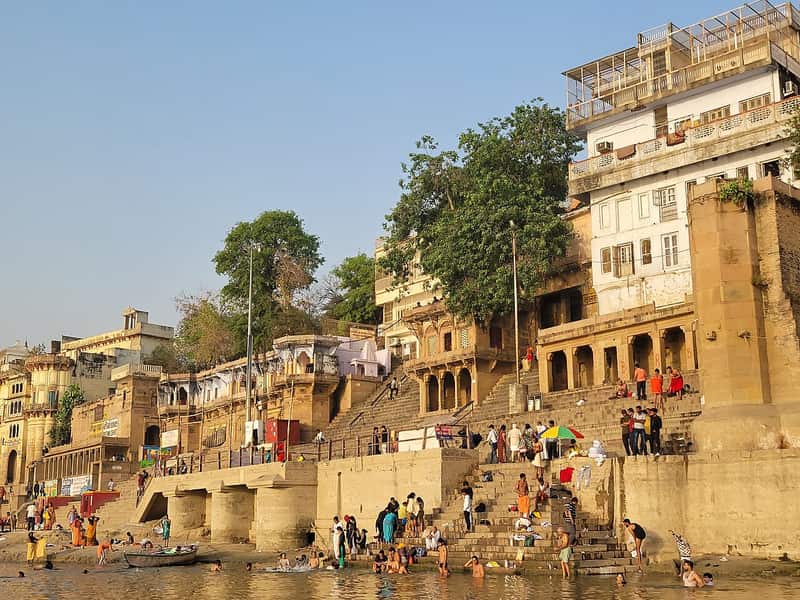
The true life of Hanuman Ghat is ordinary, and that ordinariness is its beauty. Bathers come at dawn, boatmen work through the whole day, and locals drift down between chores — women filling water, men washing clothes, elders simply sitting on the platform with a cup of tea. The platform is the sitting room of the neighbourhood: news is exchanged there, gossip is weighed, laughter rolls across the water, and the affairs of every house in the mohalla are discussed in the open air. Because the ghat is small, no one is a stranger for long; a face seen twice is greeted by name the third time, and the river is the quiet witness to it all.
The boatmen are the backbone of the ghat. Their boats lie moored along the steps through the day, and they ferry pilgrims across to the far bank, carry visitors up and down the riverfront, and put out into the current at dawn and dusk without fail. Their calls ring over the water in the rolling Banarasi dialect, and their knowledge of the river is exact — every current, every sandbank, every season's mood. The oar, the rope and the patched net are their day-long companions, and the boat itself is their inheritance: the livelihood and the identity passed down through generations of the same families who have worked these waters since before the city kept records.
The ghat's day has a rhythm of its own. The morning belongs to worship and bathing, the noon to stillness when the stone grows hot underfoot, the late afternoon to children swimming and clothes drying on the bank. As the sun drops, the temple bell sounds, lamps are lit, and the neighbourhood reassembles on the platform for the evening aarti. The day closes as it opened, with prayer, and the platform at the water's edge — the front yard of the mohalla — waits quietly for the next dawn. To sit on these steps through a single day is to understand what a ghat truly is: not a monument but a life, lived daily, beside the oldest river in the world.
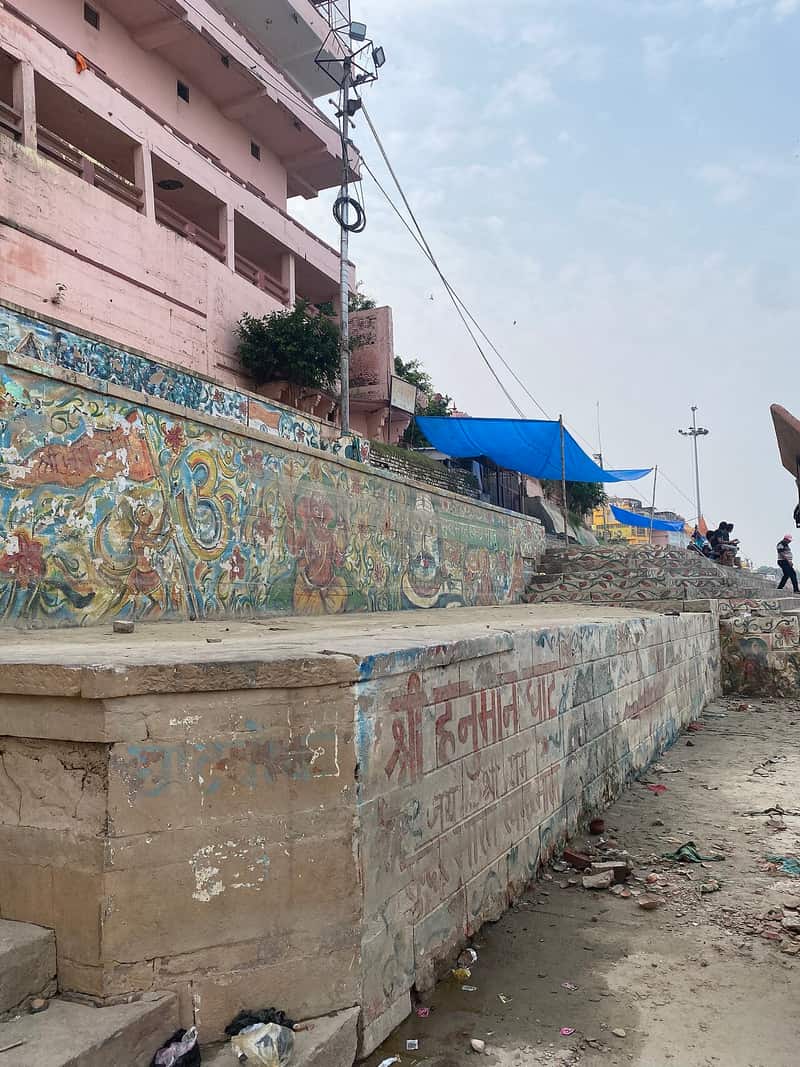
The River and the View
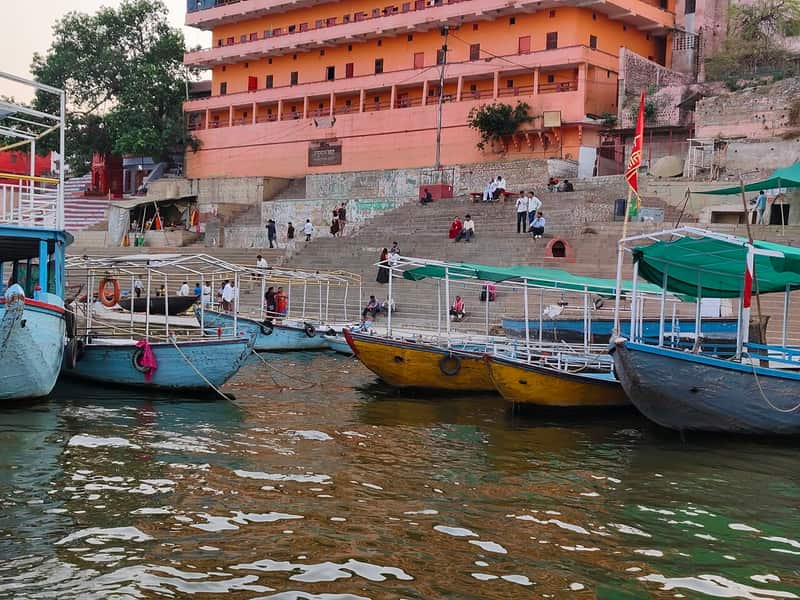
At this southern bend of the riverfront the Ganga runs broad and calm. The far bank is a low line of sand and green, and the water here carries none of the crowded boat traffic of the northern ghats, so the river keeps a stillness that the rest of the city cannot offer. Drifting logs, wheeling birds and the distant sail of a ferry mark the movement of the current, and the colour of the water changes with the seasons — khaki in the monsoon, clear blue in winter, green-brown in the summer heat. To stand on the steps of Hanuman Ghat is to watch the river breathe, unhurried and unbothered, exactly as it has for millennia.
The view from the ghat repays a little patience. To the south stretches Shivala Ghat and the tree-fringed bank beyond it; to the north rise the packed ghats and the towers of the old city; and straight ahead lies the empty breadth of the river itself. At sunrise the water turns to gold, at dusk the boats trace long shadows across its surface, and at night the lamps of the temple tremble in the current like small stars. A visitor who sits for an hour on the platform will see the whole southern riverfront pass before them — bathers, boats, birds, the changing light — and will carry that panorama away as the truest souvenir of the ghat.
The river is also the ghat's calendar. In the monsoon the flood rises over the lower steps and reaches toward the platform; in the dry months the water retreats, exposing sand and shingle where children play and where bathers must walk out to find the deeper current. The people of the ghat simply adjust — bathing from the higher steps when the river is full, walking further out when it is low — because the water is the true master of the place, and their relation to it is one of reverence and easy familiarity. Flowers and lamps are floated out at evening, and the eternal current carries them away, as it carries the prayers of everyone who has ever stood on this bank.
The Lanes and the Mohalla
Behind the ghat rises the old mohalla: narrow lanes, tall houses with carved balconies, courtyards with wells and tulsi plants, and a small shrine at almost every turning. The walls are lime-washed, the doors carry brasswork worn bright by generations of hands, and pigeons settle on the rooftops as they always have. These are houses where families have lived for centuries, where neighbours know one another's names, joys and anxieties, and where the warm neighbourhood atmosphere for which Hanuman Ghat is known is made real every single day. To walk these lanes is to step out of the traveller's city and into the city that lives.
The lanes have their own full life. Tea stalls steam from early morning, paan shops stay open late, and the little sweet shops keep their trays under glass. Children in school uniform hurry past in chattering groups, women bargain over vegetables at the corner, the tailor's machine hums through the afternoon, and in the evening men gather at the crossroads for cards and conversation. The noise of splashing from the ghat drifts up into the lanes, and the smells of the neighbourhood kitchens drift down to the river, so that the two — the water and the mohalla — exchange their news all day without a word being spoken.
The mohalla and the ghat are one body: the ghat is the front yard of the neighbourhood, and the path from lane to river is the main street of its life. The temple binds the two together, the festivals of the mohalla are celebrated on the ghat, and the river is the neighbourhood's window on the larger world. A visitor who stays a little while is drawn into this daily story almost without noticing — a namaste here, a cup of tea there, a shared laugh at the water's edge — and leaves Hanuman Ghat having known, if only briefly, what it means to belong to a Kashi neighbourhood rather than simply to visit it.
Neighbours on the Waterfront — Shivala and Prachin Hanuman
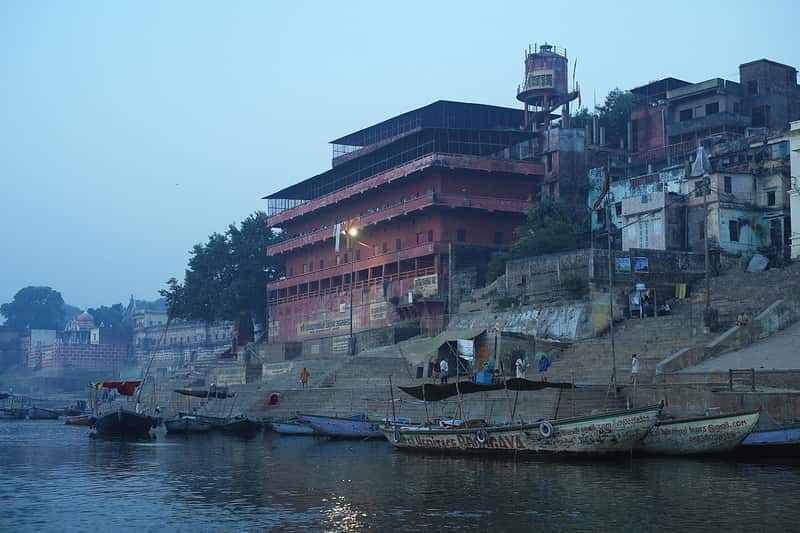
Hanuman Ghat does not stand alone. A short walk to the south brings the broad steps of Shivala Ghat, one of the principal bathing places of the southern waterfront, named for the Shiva temple in its neighbourhood — the word shivala means the residence of Shiva. Its wide platform and busy moorings give it a scale that Hanuman Ghat deliberately lacks, yet the two landings belong to the same chain of sacred steps and the same current of daily devotion. Between them, the riverfront offers a study in contrasts: grandeur and intimacy side by side, each lending the other its meaning.
In the other direction lies Prachin Hanuman Ghat, where an older image of the monkey god is worshipped — the very name, meaning the old Hanuman, speaks of centuries of unbroken prayer. The devotion of the two ghats is the same, one small and one ancient, and the faithful move easily between them, as they have always done. Further along the same walk, Kedara Ghat with its celebrated Kedareshwar temple continues the chain, and beyond it the crowded landings of the old city begin. A single stroll from Shivala to Kedara passes a museum of Kashi's riverfront — every ghat with its own temple, its own story, its own rhythm.
Walking the waterfront between these ghats is the best way to know the southern stretch of Kashi. The circuit of the eighty-four ghats runs through this very ground, and the boatmen of the neighbourhood will take a visitor past all of the landings in a single unhurried hour, naming each one as they pass. Every landing has its own character, yet together they form one continuous act of devotion, one long dialogue between the city and its river. In the middle of this chain sits Hanuman Ghat, small in stone and modest in fame, but rich in the quiet faith that has kept the whole southern riverfront alive since before the names of the ghats were written down.
Festivals — Hanuman Jayanti and the Tuesday Gatherings
The great festival of the ghat is Hanuman Jayanti, celebrated in the bright fortnight of Chaitra, the spring month, when the temple is decked with marigold and banana leaves and the air grows thick with incense. The idol is bathed, dressed in fresh clothes and adorned with new garlands, and recitations of the Hanuman Chalisa continue through the whole day without pause. The small courtyard overflows with devotees who have come from the lanes and from across the city; laddoo, chana and fruit are distributed as prasad to everyone who waits; and the ghat below, so quiet on ordinary days, is transformed into a sea of saffron and song. For the neighbourhood it is the proudest day of the year, the day the small ghat shows the whole of Kashi what it holds.
Every Tuesday the ghat keeps a smaller festival of its own, for Tuesday is the day of Hanuman. From early morning the temple fills with the faithful, the Chalisa is sung aloud until the verses ring through the lanes, and the evening aarti draws the largest crowd of the week — devotees who have fasted through the day, families with children, elders who have not missed a Tuesday in decades. Bells and conch sound together, lamps blaze on the altar, and the faithful press forward barefoot with their offerings of vermilion and sweets. The belief that a Tuesday prayer removes obstacles and grants strength draws the whole mohalla to the ghat week after week, and the riverbank glows with the lights of a devotion that never grows old.
On festival nights the ghat becomes something else entirely. The temple glows with lamps, their light trembling in the river below, and voices rise in song across the water. The whole neighbourhood gathers on the platform, and boats carrying singing devotees pass slowly in front of the ghat, their lanterns trailing reflections. For the visitor these are the best moments of all — devotion at its fullest, warm and unguarded, with no distance between the faithful and the curious. On such nights the small ghat of Hanuman is briefly the centre of the neighbourhood's joy, and anyone standing on its steps is reminded why Kashi is called the city of lights, and why Hanuman is its most beloved guardian.
Etiquette — Visiting Hanuman Ghat with Respect
Because Hanuman Ghat is a living place of worship, a visitor's respect matters as much as their curiosity. Shoes must be removed before entering the temple; dress should be modest; the sanctum should be kept quiet; and permission should be asked before photographing the idol or the devotees. During the aarti the right course is to stand aside and observe in silence, for the temple is not a museum but a home of faith, and every gesture being made inside it is someone's prayer. A visitor who follows these small rules will find the priest and the devotees generous with their welcome, as the people of this ghat have always been.
On the ghat itself the same spirit applies. Bathing is done modestly, and clothes are changed discreetly behind towels; alcohol, smoking and meat are out of place on the sacred steps, which should be kept clean for the bathers and the boatmen. A small donation or an offering of flowers is a thoughtful gesture, and if a sadhu offers a blessing, a few coins are the customary return. Visitors should not block the passage of the faithful, should not point at the idol, and should keep children from splashing near those who are praying. None of this is heavy etiquette; it is simply the courtesy the ghat extends to those who honour it, returned in kind.
The warm neighbourhood will welcome a respectful visitor as a guest, and guests are expected to accept its customs with grace. Greet with folded hands and a soft namaste; speak quietly near the temple; receive prasad with both hands; and if a priest offers to perform a puja for you, it is proper to give what you can afford in return. Photography of the everyday life of the ghat is usually welcomed with a smile if a smile is offered first, and a short conversation with a boatman or a shopkeeper will teach more about Kashi than any guidebook. The visitor who leaves the ghat as they found it — clean, quiet and holy — will be remembered kindly, and will carry the blessing of the place with them.
Practical Notes — Reaching and Visiting
Hanuman Ghat lies on the southern riverfront, within easy reach of the old city. A pleasant walk of about forty minutes from Dashashwamedha Ghat along the water brings you to it, or a short auto-rickshaw ride through the lanes behind the ghats; boats from Dashashwamedha and from Assi also land here throughout the day. The walk is the best introduction of all, passing Shivala Ghat and the quiet southern stretch, with the temple bells growing louder at every step. Whichever way you come, the ghat announces itself the way all of Kashi does — with the smell of the river and the sound of worship.
The best time to visit is early morning, when the temple is at its busiest and the light on the river is at its softest; late afternoon is equally lovely for the view and for the evening aarti. Tuesday mornings are crowded and colourful, though slower for photography; festival days such as Hanuman Jayanti are unforgettable but packed. In the monsoon the river rises and may cover the lower steps, so check the water level before planning a bath, and take care on the wet stone. From October to March the mornings are cool and clear, which makes winter the most comfortable season for a long visit.
Combine your visit with the neighbouring ghats to make a full morning of it: Shivala Ghat to the south, Kedara Ghat and the old city landings to the north, and the boatmen moored near Hanuman Ghat will take you on a circuit of the whole southern riverfront for a modest fare. Carry modest clothing, a small offering for the temple, and change for donations; leave your shoes at the temple entrance as the sign of respect it is. And above all, follow the local order of devotion — the temple first, then the river — because that single habit, repeated by millions of pilgrims before you, is the experience Kashi has offered its guests for centuries, and the one this small ghat still keeps perfectly intact.
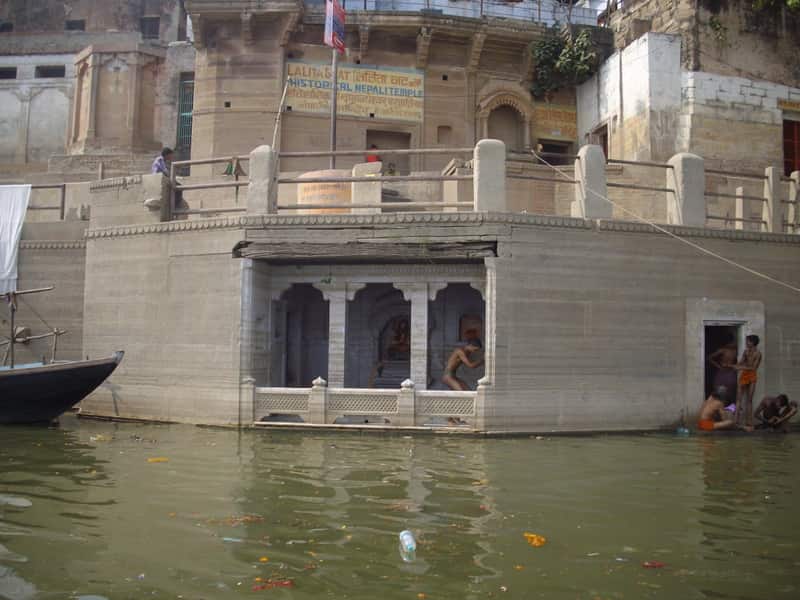
Hanuman Ghat — Gallery (11 Photos)
Image Credits
hanuman-01.jpg · hanuman-02.jpg · hanuman-03.jpg · hanuman-04.jpg · hanuman-05.jpg · hanuman-06.jpg · hanuman-07.jpg · hanuman-08.jpg · hanuman-09.jpg · hanuman-10.jpg · hanuman-11.jpg — Wikimedia Commons, under free licenses.
Continue exploring
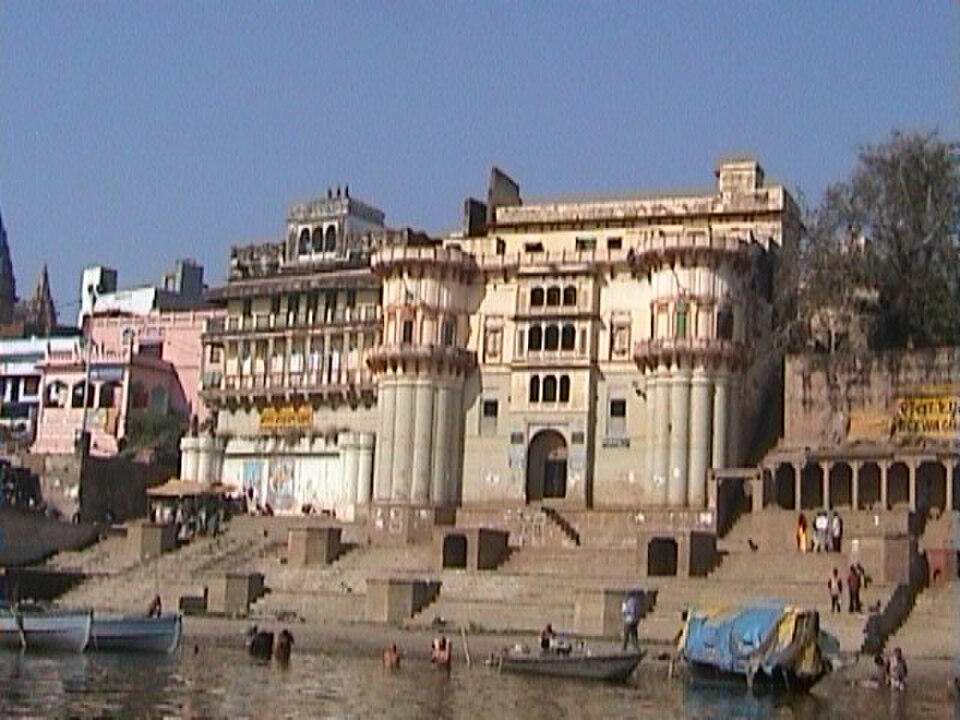
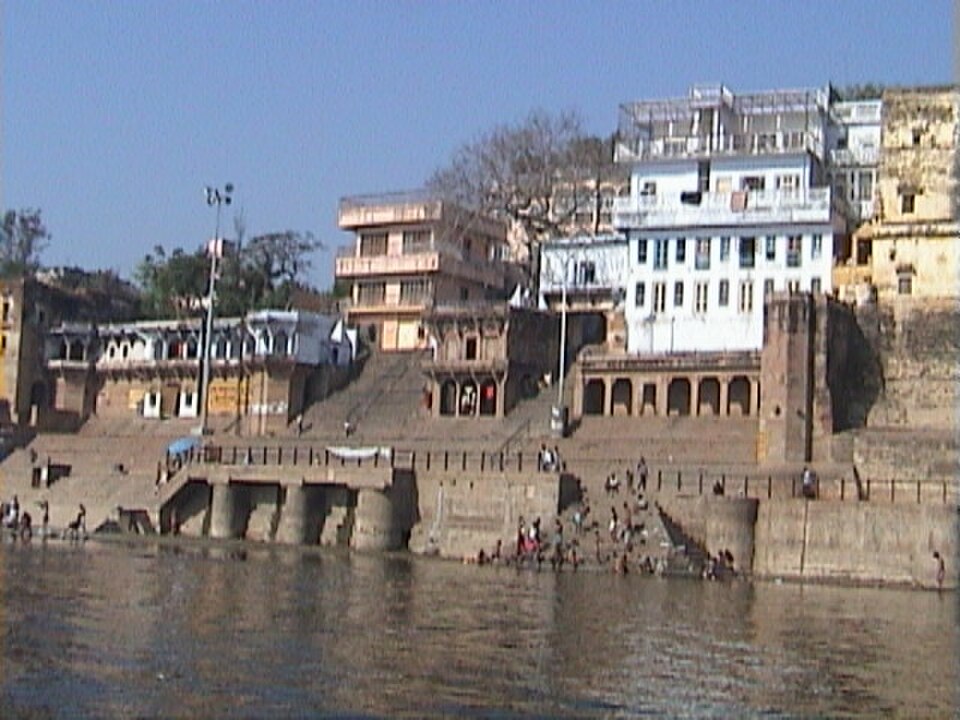
Similar Ghats Nearby
Book This Ghat — Get Notified
Download the app now and book a boat ride to Hanuman Ghat