

Bundi Parakota Ghat
Neighbourhood GhatBundi Parakota Ghat is an 18th-century historic ghat with a famous Shiva temple.


Type
Neighbourhood Ghat
Boat Fare
1x base fare
Best Time
6-9 AM
History
Built in the 18th century. A famous Shiva temple is at the ghat center.
Highlights
- Glimpse of Bundi architecture
- Historic significance
- Peaceful northern ghat
Festivals & Events
How pricing works in the NaviX app
No haggling at the ghat — everything is fixed in the app first
- 1
Fixed price before you board
The fare is shown in the app upfront — no bargaining at the ghat
- 2
Sharing or private — your choice
Share with fellow travelers or take the whole boat for your group
- 3
Pay only after the ride
UPI, card or cash — with an instant receipt
🕉️
Aarti details not available for this ghat yet
Complete Guide
Bundi Parakota Ghat — The Complete Guide
History, mythology, rites and practical details — everything in depth.
On this page
- 1.Bundi Parakota Ghat — A Quiet Corner of the Southern Riverfront
- 2.The Name of Bundi — A Piece of Rajasthan on the Ganga
- 3.Parakota — The Little Citadel
- 4.Morning Bathing — The Day Begins at the Water's Edge
- 5.Everyday River Life — Bathers, Boatmen and Locals
- 6.The River and the View
- 7.Lanes and Mohalla — The Old City Behind the Ghat
- 8.Ahilyabai and the Neighbouring Ghats
- 9.Calm and Little Visited — The Charm of Quiet
- 10.Everyday Piety — Faith Without Spectacle
- 11.Respectful Conduct — How to Behave at the Ghat
- 12.Practical Guide — How to Reach, When to Go, What to See Nearby
📅 Updated: 21 Aug 2026 · Author: NaviX Field Team (field research 2024-26) · 12 sections · 12 photos
Bundi Parakota Ghat — A Quiet Corner of the Southern Riverfront
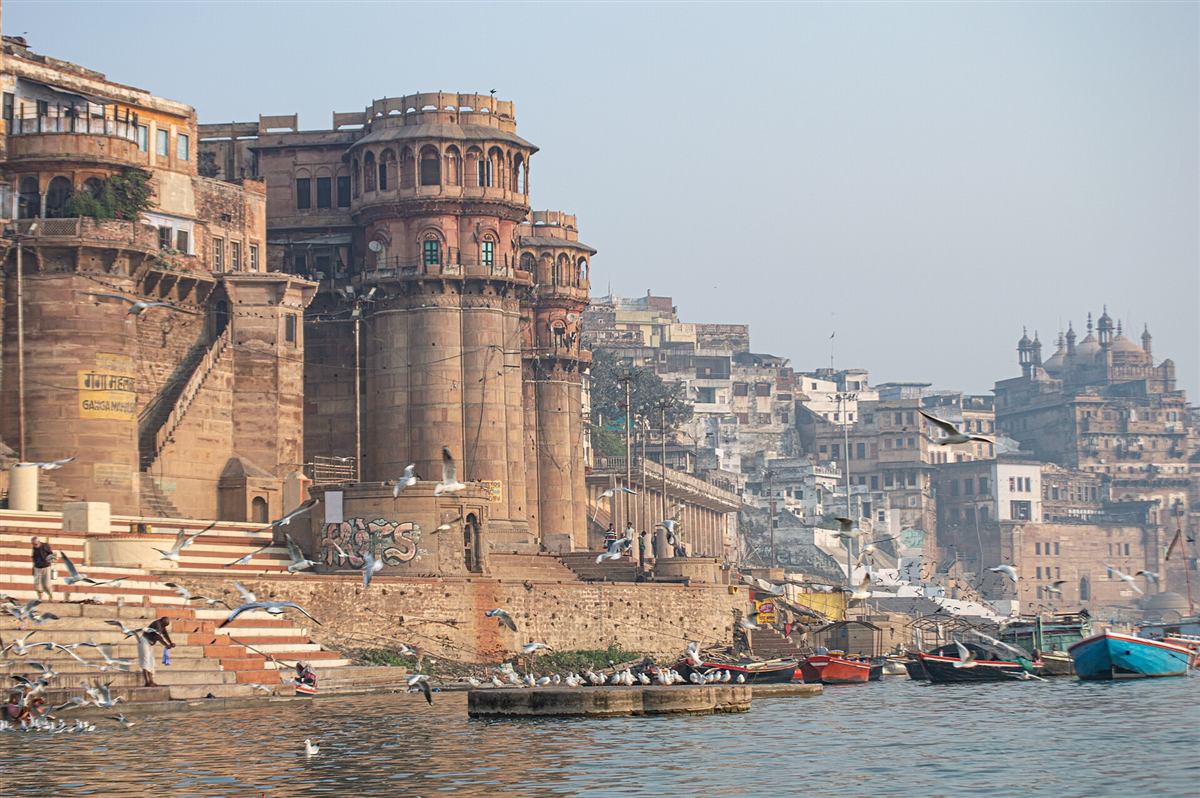
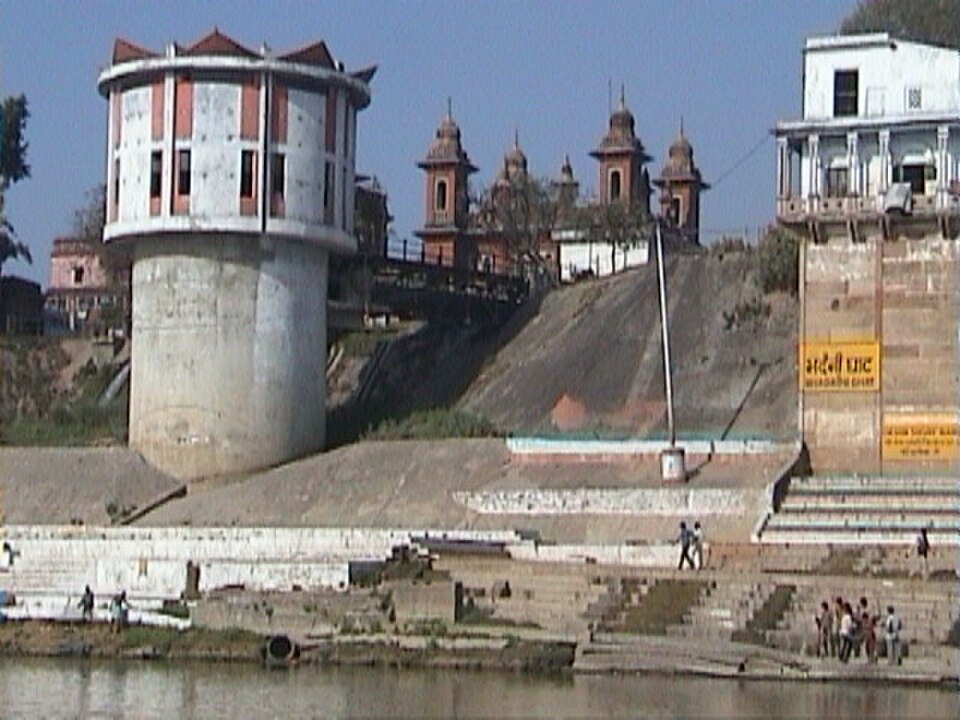
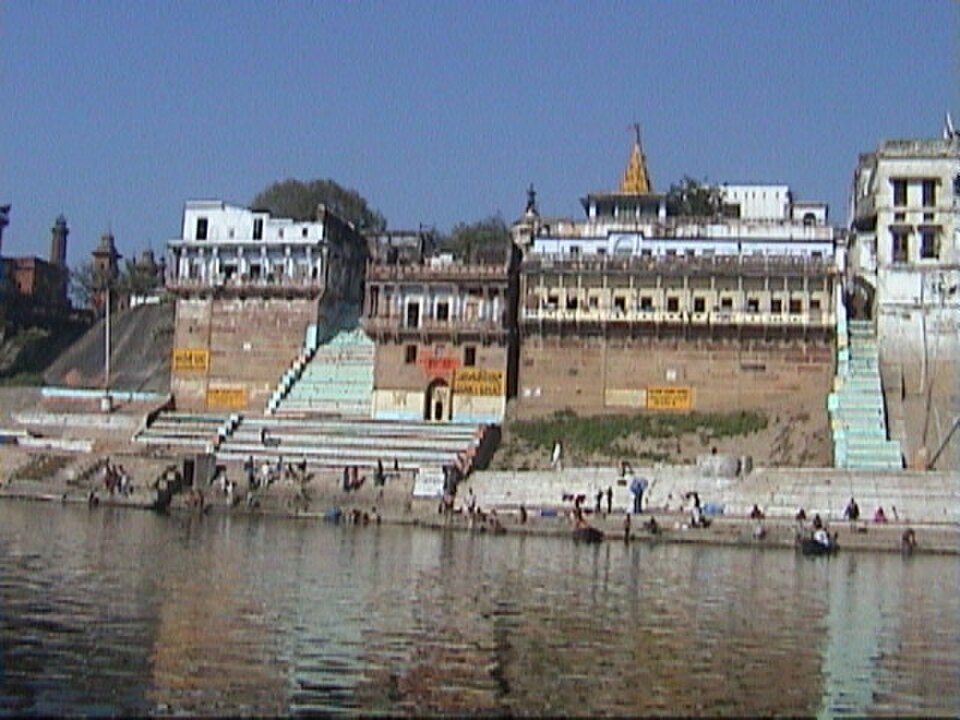
Bundi Parakota Ghat is one of the minor landings of Varanasi's southern riverfront, a modest flight of old stone steps that descends to the Ganga without fanfare or ornament. It has no towering temple, no royal pavilion, no great legend shouted from its stones; what it offers instead is the daily life of the river itself, played out at a pace that has not changed in generations. Simple steps lead down to the water, a plain building in the style of the Bundi courts of Rajasthan stands behind the landing, and the small patch of paved bank between them is given over to bathers, boatmen and the ordinary rhythm of morning and evening on the Ganga. For the traveller who has walked the crowded ghats of the south, arriving here is like stepping out of a fair and into a quiet lane — the same city, the same river, but a different world.
The ghat lies on the riverfront chain between the stretch associated with Ahilyabai Ghat and the northern reaches that run toward Niranjani, in the long curve of landings that makes up the southern crescent of Kashi. Its position is modest and so is its history: there is no dramatic founding legend, no inscription naming a famous patron, only the persistent local memory that the name of Bundi came here with traders, noblemen and priests from the town of Bundi in Rajasthan, who built in this quarter a small seat for their community. The word parakota, in the dialects of the region, means a small fort or citadel, a guarded enclosure, and together the two halves of the name describe a corner of Rajasthan transplanted to the bank of the Ganga: a little fortress of Bundi standing watch over a little stretch of Kashi.
Today the ghat is calm and little visited, and that is precisely its charm. The morning brings bathers and the evening brings boatmen home; through the middle of the day the steps lie almost empty in the sun, and the only commotion is the splash of a fisherman casting his net. Behind the landing, the lanes of the old mohalla wind away into the city, and the modest Bundi-style building, with its Rajasthani arches and chhatri-like details, stands as a quiet reminder of the merchants and pilgrims who once made this the corner of a distant kingdom. To visit Bundi Parakota is to see Kashi without its costume, the plain face of a city whose faith and work have always met on the same stretch of water.
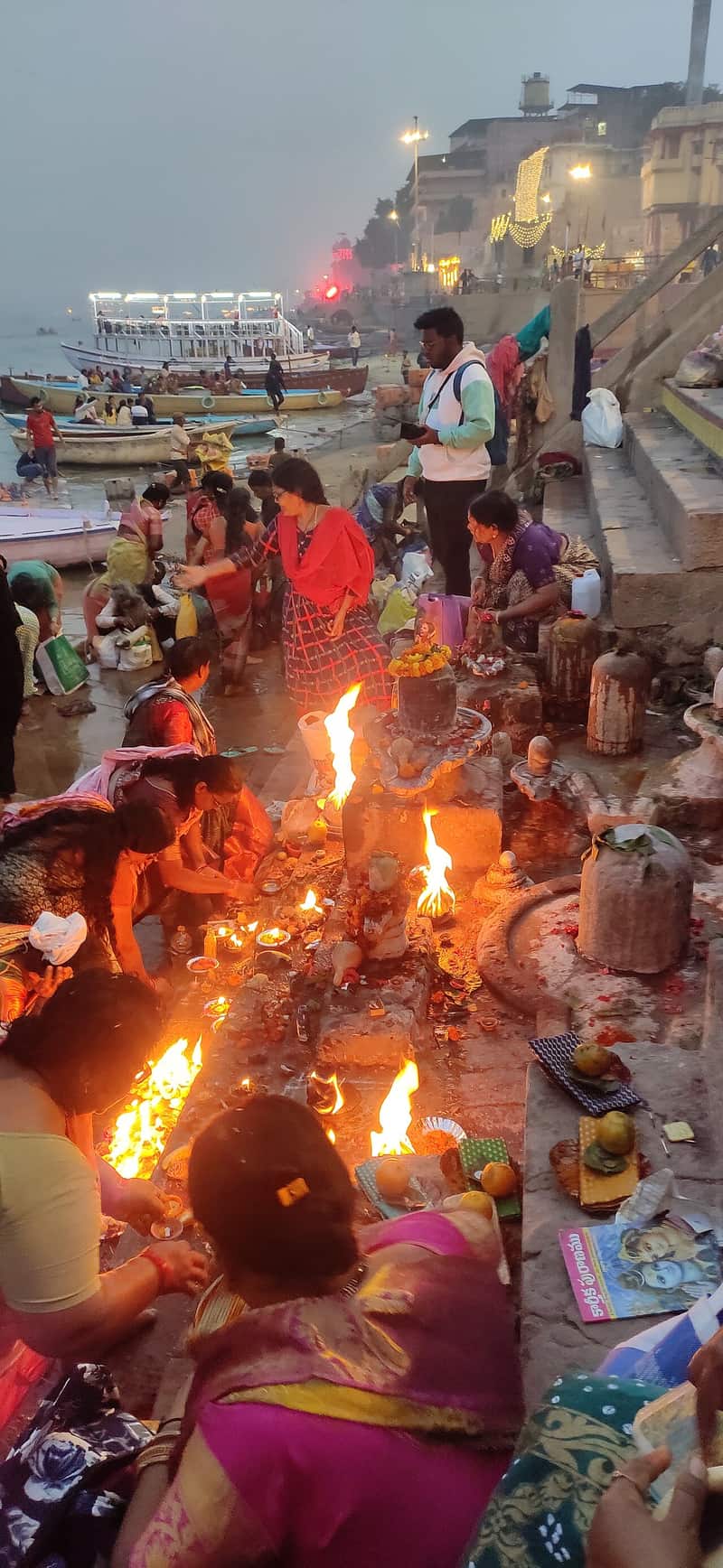
The Name of Bundi — A Piece of Rajasthan on the Ganga
The town of Bundi lies in the Hadoti region of south-eastern Rajasthan, tucked into the hills of the Aravalli range, and for five centuries it was the capital of a proud Rajput state. Its fame rests on the fortress of Taragarh that crowns the hill above the town, on the jade-green palace of Garh that rises from its water tank, and on the Raniji ki Baori, a stepwell so ornamented with carved pillars and niches that it is counted among the finest in all India. Bundi was a court of painters and poets, and its miniature paintings, with their dreamy washes of indigo and gold, are treasured in museums around the world. To say that this small hill town gave its name to a landing on the Ganga in faraway Varanasi is to tell a story of how India's regions travelled with their people.
The roads between Rajasthan and the Gangetic plain have always carried pilgrims as well as goods. Marwari merchants from the west ran counting houses in the cities of the east, Rajput noblemen served emperors and nawabs across the Gangetic basin, and priests and traders from the Rajput states made their way to Kashi, the holiest city in the land, to bathe, to study and to die. It is part of the genius of Banaras that every region of India has left its trace on the riverfront, and the habit of naming a ghat after a faraway home is an old one: the city's stones carry the names of kings, queens, temples and towns from every corner of the subcontinent. The modest building behind Bundi Parakota, with its Rajasthani proportions, is the visible remnant of that migration — a small piece of Hadoti lodged in the heart of Kashi.
What remains of the old Bundi connection today is memory more than stone. The community that built the ghat has long since dispersed into the city, and the building behind the landing is no longer the busy seat of a merchant guild, yet the name has never been forgotten. Generations of boatmen, bathers and lane-dwellers have passed the name on, and today it is spoken without any sense of strangeness, as naturally as the names of the great ghats themselves. The town of Bundi, far away in the Aravalli hills, may know nothing of its name on the Ganga, but in Varanasi the two places are joined forever in a single word — a reminder that in this city of eternal memory, even a quiet landing keeps the story of a distant home alive.
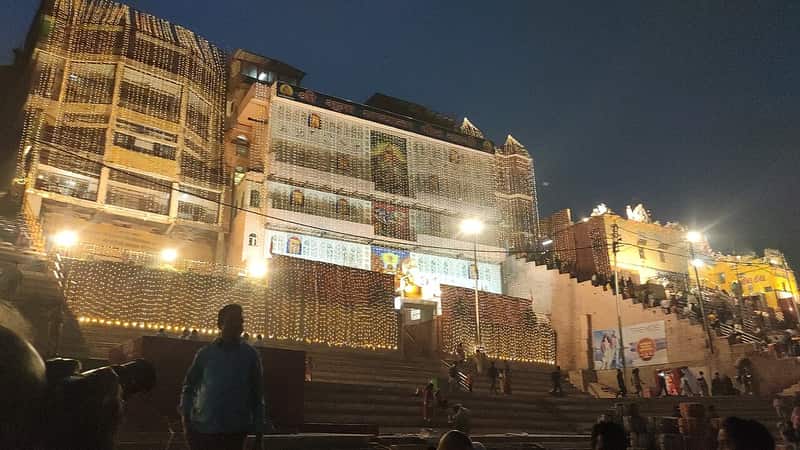
Parakota — The Little Citadel
The second half of the ghat's name, parakota, carries the meaning of a small fort or citadel, and in the dialects of northern India the word has a homely, familiar ring — kota is a fort, and para, in this compound, lends it the sense of a minor or lesser one, the sort of fortified enclosure that every little Rajput town once had. In Rajasthan, where the word is most at home, a kota might be a fortified quarter within a larger town, a nobleman's guarded residence, or a watch-post on the edge of a settlement; the great Taragarh of Bundi is a kota on the grandest scale, while the houses of its courtiers were small kotas in their own right. The name of the ghat, then, describes not a royal fort but a modest one — a place of walls and a gate, small enough to belong to a single family or community, big enough to offer shelter and safety.
The building that stands behind the ghat answers to that description. It is not a palace, and it makes no claim to be one: a solid, plain structure of brick and lime plaster, with an arched entrance, a small courtyard, and the guarded, inward-looking disposition of a building designed to protect its inhabitants from the noise of the world outside. Its Rajasthani character is unmistakable — the proportions of the arches, the slim pillars of the upper storey, the low parapet that runs along the roof — and together these details give the landing the air of a little citadel, as if a fragment of a Bundi nobleman's mansion had been carried across the plains and set down beside the Ganga. Seen from the river, the ghat presents exactly the silhouette its name promises: a small fortress of the spirit standing between the water and the city.
There is a deeper meaning in the name as well. A citadel is a place of last refuge, and in the language of the riverfront, the ghat itself is such a refuge — a guarded landing where the devotee steps from the streets of the world into the presence of the sacred river. For the people who named it, the little fort of Bundi and the little fort of the Ganga were the same kind of place: both were enclosures that kept something precious safe. And in a city where every stone remembers something, the name parakota has proven stronger than any wall: the fort that gave its name may stand in ruins in a faraway town, but the citadel of the name still guards its stretch of the Ganga, and the memory of safety it represents is renewed every morning with the first bathers who descend the steps.
Morning Bathing — The Day Begins at the Water's Edge
Long before the sun clears the rooftops of the old city, the first bathers are already at Bundi Parakota. They come down the lanes with brass pots balanced on their heads, with bundles of wet clothes, with children half-awake and clinging to their mothers' hands — the same procession that has descended to the Ganga at this spot for centuries. The bathing itself is unhurried and untheatrical: the triple immersion, the cupped hands raising water toward the rising sun, the whispered mantras, the offering of marigold flowers and rice that floats away on the current. There is no priest chanting over the bathers here, no photographer's flash; the ritual belongs entirely to the bather and the river, and the ghat's quiet makes that privacy complete.
For the residents of the surrounding mohalla, this is not a spectacle but a necessity of the day, like drawing water or lighting the stove. Old men come for the health of the body and the peace of the mind, women bring brass pots to carry home holy water, and on the days of the new moon and the full moon the numbers swell as families arrive to bathe for the ancestors. The virtue of a minor ghat is precisely this: with no crowds and no ceremony, the bathing is the ancient rite in its purest form, performed not for display but for the soul. Many of the old residents say they have bathed here every morning of their lives, and that the river at this landing has never once failed to answer them.
Visitors who are willing to rise early will find the ghat at its best in the first hour of light. The water is still and golden, the smoke of the burning ghats drifts thin and far away, and the only sounds are the splash of immersion, the slap of wet cloths on stone, and the murmur of prayers. Some travellers join the bathing themselves, and they are received with the easy courtesy of the neighbourhood — a shared diya of ghee, a handful of flowers, a nod of welcome. It is one of those small experiences of Varanasi that no guidebook can quite convey: to stand in the cold Ganga at a nameless landing while the city wakes around you, and to feel that you have taken part in the oldest ritual of this river in the plainest, most honest way possible.
Everyday River Life — Bathers, Boatmen and Locals
Through the whole of the day, Bundi Parakota carries the quiet traffic of a working ghat. In the morning the bathers come and go, shaking out their wet dhotis and saris over the steps, wringing them with practised twists until the water runs in silver ribbons down the stone. Women fill their brass pots at the water's edge, children paddle where the steps go shallow, and the washermen squat at the lowest landing, beating clothes against the flat stones in the ancient rhythm of their trade. Nothing here is arranged for show; every activity is a need, and the ghat's plainness gives those needs the dignity they always had in this city — the dignity of work done in full view of the sacred river.
The boatmen are the ghat's second population. Their long wooden rowing boats lie moored along the lower steps, and through the morning and afternoon the men sit in the shade of their hulls, mending nets, splicing rope, repainting a bow or arguing over the price of a trip in the easy, unhurried way of men who are masters of their water. Some earn their living carrying pilgrims between the ghats; others fish, and their catch — small silvery fish, laid out on the stone at sunset — is bought within the hour by the housewives of the mohalla. When a passenger does come asking for a ride, the negotiation is friendly and brief, conducted with the relaxed confidence of men who have spent their whole lives on this bend of the river.
The rest of the ghat's life is made of small episodes. A milkman brings his canisters down the steps to wash them in the river; a priest sits by the water reading the Ramcharitmanas in a low voice; children fly kites from the upper landing; a cow drifts down to drink. In the late afternoon the daily round repeats in reverse as the ghat empties toward evening, and the boatmen tie up for the night with the satisfaction of men closing their shop. This is the real life of Varanasi, the life the guidebooks rush past on their way to the grand ghats — a life of honest work and simple pleasure, carried on at the water's edge exactly as it has been carried on for centuries, and it is on quiet landings like Bundi Parakota that it can best be seen.
The River and the View
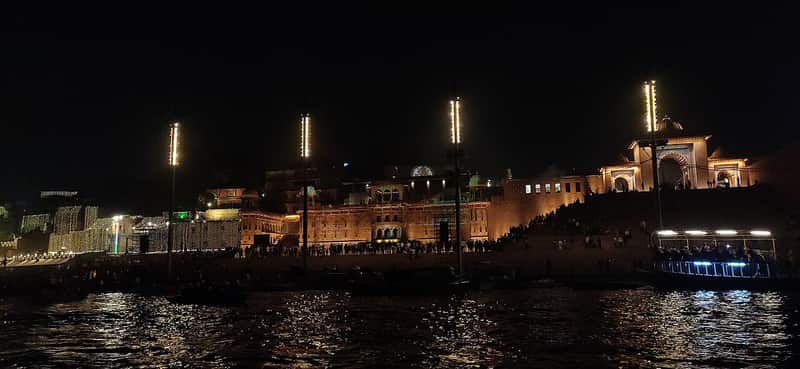
From the steps of Bundi Parakota, the Ganga presents herself in her middle course — wide, slow and silver-brown, with the far sandbanks of the other shore lying low on the horizon. Looking upstream, the eye travels along the chain of ghats that climbs toward the old city's heart; looking downstream, the river curves away past the rooftops and temple spires toward the southern reaches of the crescent. The view is the riverfront in its ordinary, unmagnificent truth: boats moving in slow lines, the opposite bank a pale strip of sand and green, and above everything the enormous sky that Kashi has always kept above its water. There is no panorama here that postcards sell, but there is what the postcards cannot sell — the river as she is lived with, hour by hour, from a landing that asks nothing of her but what she gives.
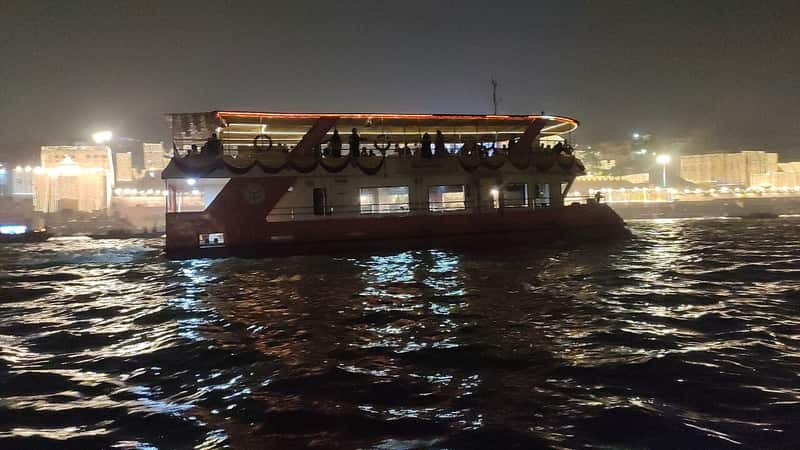
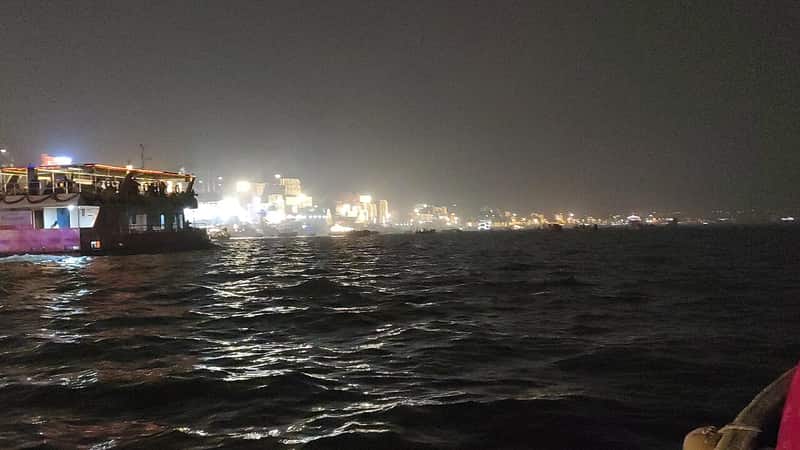
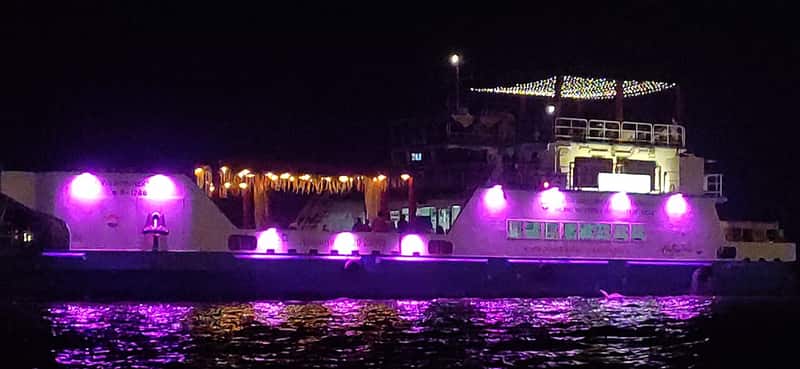
The river traffic is a spectacle in itself. Long wooden ferryboats cross from the ghats with passengers and bicycles; small canoes dart between the moorings with vegetables or laundry; a paddle steamer passes far out on the current, trailing its wake; and at dawn the rowers of the temple boats pull steadily toward the sun with their pilgrims, the oars flashing in the first light. In the monsoon the river rises until the lower steps vanish and the water laps at the landing's upper edge, and the same stretch that was a sandy margin in summer becomes a broad brown flood; in winter the morning mist lies over the water so thickly that the opposite shore disappears and the boats emerge out of the fog like ghosts, rowing by the sound of the temple bells alone.
At evening the view turns inward. The sun sets behind the old city, the water takes the colour of brass, and the lamps begin to appear — a diya on a boat's prow, a string of lights on a temple across the way, the cold flicker of the burning ghats far upstream. The river at Bundi Parakota never puts on a show, yet there is no hour when it does not reward a patient watcher: the flight of birds at dusk, the reflection of a full moon broken into coins of light, the silent passage of a night ferry with a single lantern. In the end, what the ghat gives the visitor is the river herself, in the form she takes when no one is performing for anyone — the Ganga as an everyday presence, immense, unhurried, and utterly at peace.
Lanes and Mohalla — The Old City Behind the Ghat
Behind Bundi Parakota, the old city closes in like a maze. Narrow lanes paved with stone run between tall houses whose upper storeys lean toward each other, their windows latticed against the sun, their balconies hung with washing and pigeon cages. Every few steps there is a shrine — a Shiva lingam under a tree, a Hanuman image in a wall niche, a little platform where marigold garlands are strung — and the air carries the mingled smells of frying batter, incense, dung and spices. This is the ordinary Kashi of everyday life, a quarter that has grown around the ghat as the town itself grew around the river, and its rhythms are the rhythms of the landing: when the ghat wakes, the lanes wake; when the ghat sleeps, the lanes sleep.
The mohalla is a working quarter. There are small shops selling brassware and flower petals, sweet shops with great trays of jalebi and besan ladoo, dyers whose vats of colour stand in the courtyards, and quiet workshops where men sit cross-legged at their looms. The houses are mostly old, built in the dense, inward style of the old city, and their occupants are families who have lived here for generations — shopkeepers, boatmen, priests, artisans, clerks — the same mixture of trades that has always sustained a Kashi mohalla. Around the festival season the lanes fill with activity: sweet sellers set up their stalls, flower sellers heap their counters with marigolds, and the whole quarter takes on the bright, busy temper of a city about to celebrate.
Walking these lanes is a pleasure that many travellers miss. The ghat itself is the natural gate to the quarter, and the quarter explains the ghat: the bathers of the morning are the shopkeepers of the afternoon, the boatmen of the steps are the fathers and uncles of the children who play in the alleys. Here and there the walker will find surprises — a painted doorway, a temple barely wide enough for one worshipper, a courtyard with a well and a peepal tree where the old men sit in the evening and talk. The Bundi-style building behind the ghat stands at the edge of this quarter like a landmark, and around it the life of the mohalla turns, as it has turned for centuries, on the daily descent of its people to the water.
Ahilyabai and the Neighbouring Ghats
Bundi Parakota belongs to the long chain of the southern riverfront, and its nearest landmark on the stretch is the ghat of Ahilyabai — the ghat of Rani Ahilyabai Holkar, the eighteenth-century queen of Indore, who did more for the riverfront of Varanasi than almost any other ruler. Widowed young, she governed her kingdom with extraordinary skill and devoted her wealth to sacred works; she rebuilt and restored ghats and temples across India, and in Kashi her name is remembered with reverence, for it was she who gave many of the ancient landings their present stone form. The stretch of riverfront that carries her name lies close to Bundi Parakota, and the two ghats are companions in the same quiet stretch of the crescent — one bearing the name of a queen, the other the name of a distant town, both of them resting points along the same unbroken walk.
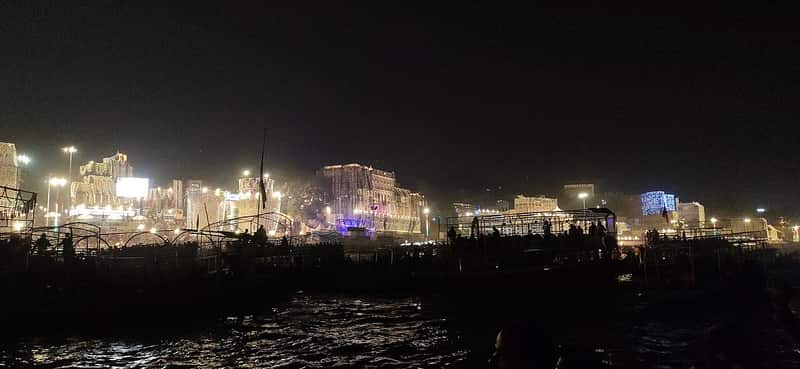
Beyond Ahilyabai, the riverfront continues its unhurried course. The neighbouring landings are themselves minor ghats, most of them simple flights of steps with a temple or two behind them, each with its own small world of bathers and boatmen; further along, the chain quickens and broadens toward the great ghats of the south, where the crowds and the colour return. Walking this stretch in the early morning, when the mist lies on the water and the bells begin, is one of the finest promenades in Varanasi — the river on one hand, the old city on the other, and almost no one else about. The distance between the ghats is short, and the traveller who follows the steps from one landing to the next will see the riverfront in the gradual, varied way it was meant to be seen.
The position of Bundi Parakota makes it an excellent base for exploring this part of the riverfront. From the ghat, a boat can carry the visitor north to the great bathing ghats and the temples of the old city, or south along the crescent past Ahilyabai toward the quieter reaches; the lanes behind lead in a few minutes' walk to the main roads, where cycle-rickshaws and taxis wait. The old city's most famous sights — the Kashi Vishwanath temple, the bazaars, the great cremation ghats — all lie within a modest distance, and returning to the calm of Bundi Parakota at the end of the day is like coming home to a quieter room in a busy house. For the traveller who wants the old city and the river both, without the noise of either at its loudest, this ghat and its neighbours make a perfect centre.
Calm and Little Visited — The Charm of Quiet
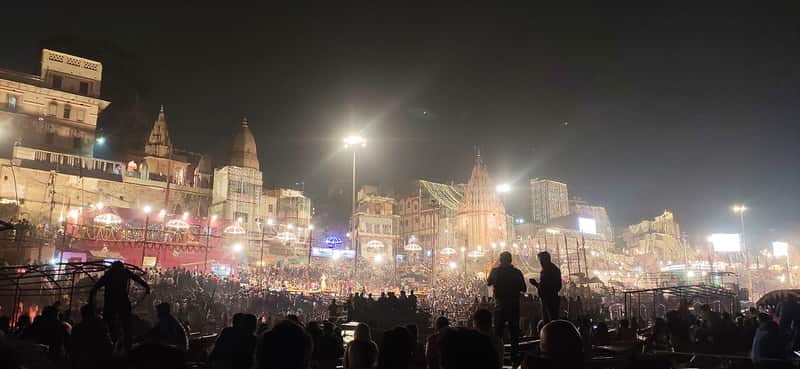
The first thing a visitor notices at Bundi Parakota is the absence of things: no vendors pulling at sleeves, no guides reciting prices, no loudspeakers, no crowds. Where the great ghats of Varanasi perform the city's spectacle, this landing simply exists, and that plainness gives the place an atmosphere that is hard to find anywhere else on the riverfront. The sounds are the sounds of the river itself — water lapping at the steps, oars turning in their locks, a boatman humming, temple bells arriving from the quarter behind in long, soft waves. To sit on the steps here is to understand what draws travellers to the quiet corners of Kashi: the feeling that the city is living its own life around you, and that you have been given a place to watch it without being asked to buy anything.
The atmosphere changes with the hours, and each hour has its own character. At dawn the ghat is busy with purpose — bathers, priests, the first ferry pulling out. By mid-morning the activity thins; by noon the steps are almost deserted and the sun lies hot on the stone, and the ghat feels like a courtyard of the old city in its afternoon sleep. In the late afternoon the boatmen return, the children come down to swim, and the evening gathers the neighbourhood once more; and after dark, when the lights of the far ghats prick the water with gold, the landing is left to the stars and the river. It is a full day, this small cycle, and watching it from the steps gives the visitor the sense of time moving at the pace the city set for it long ago.
There is a particular pleasure in being at a place no one has hurried to see. The great ghats of Varanasi are like famous rooms in a palace, always full of visitors; Bundi Parakota is the back veranda, cool, quiet, and all the more beautiful for being overlooked. Travellers who sit here for an hour find themselves slowing down without intending to — the breathing deepens, the thoughts wander, the eyes rest on the water. It is this gift of stillness, more than any monument, that the ghat offers, and for many visitors it becomes the memory they carry home from Varanasi: not a photograph of a famous temple, but the recollection of an afternoon on an almost empty landing, with the Ganga moving past in the sunlight, and no one anywhere in a hurry.
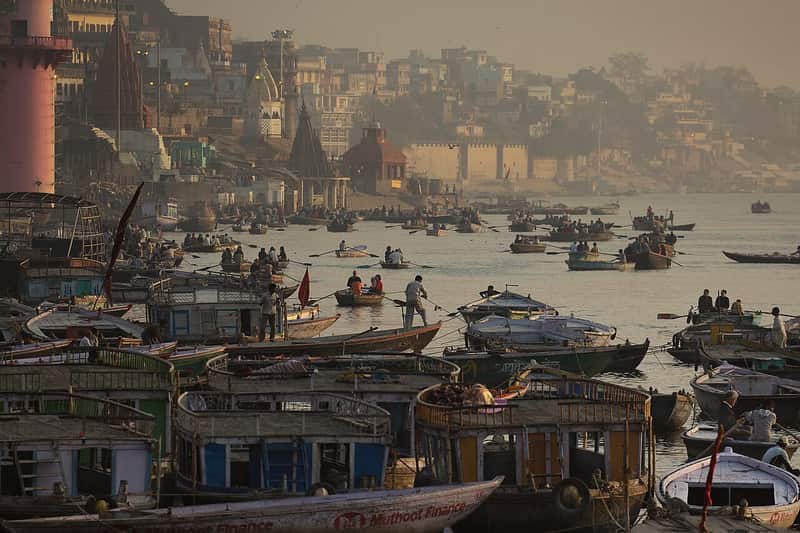
Everyday Piety — Faith Without Spectacle
The devotion of Bundi Parakota is the devotion of everyday life, and for that very reason it is among the most moving things on the riverfront. The small shrines of the quarter are the first signs: the roadside Shiva lingam washed and garlanded at dawn, the Hanuman of the wall niche with a fresh smear of vermilion, the tulsi plant on its raised platform before every house, watered each morning by the hand of a woman who does not think of it as worship but simply as what the day requires. The men who descend to the ghat with folded hands, the women who pour a little water toward the river before they fill their pots, the boatman who touches his boat before launching it — all of them perform their faith the way they breathe, without ceremony and without audience.
The river is the great temple of this faith, and the rites at the water's edge are the rites of the old religion in their plainest form. On the days of the moon's phases, families come to offer tarpan to their ancestors — sesame seeds and water trickled through the fingers, prayers for the departed murmured toward the sun. On the festivals of the year the quarter keeps its own calendar: the lamps of Kartik are floated on little leaf boats, the swings of the rain festivals go up in the lanes, and on the great days of the winter months the ghat fills quietly with families who have walked down to bathe before the temple visits of the afternoon. None of this is staged for visitors, and none of it notices them; it is the faith of the city going about its oldest work.
For the visitor, this unselfconscious piety is a rare gift, because it shows the religion of Varanasi as it is lived rather than performed. There is no ceremony here that exists for the sake of being watched; there is only the ancient habit of a people who have always brought their small joys and sorrows to the river. A woman praying for a son's return, a man thanking the Ganga for a harvest sold in the market, a child given a name at the water's edge — these are the transactions of this ghat, and they are as real as the stone of the steps. To be present at them, quietly and without intrusion, is to touch the reason Kashi has been holy for three thousand years: not its monuments and its miracles, but this unbroken conversation between the people and the river.
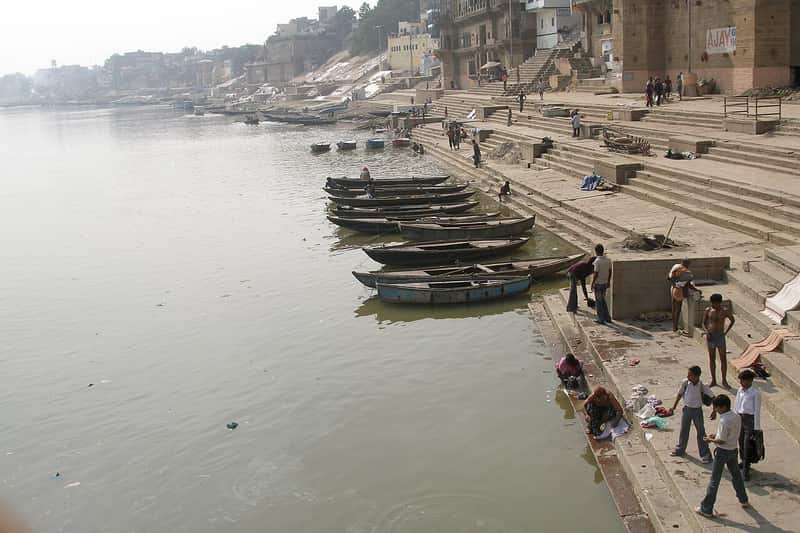
Respectful Conduct — How to Behave at the Ghat
Bundi Parakota is a living ghat, not a museum, and the first rule of visiting is the rule of respect for the people who use it. Bathing here is a sacred act for the bathers, and the visitor should keep a respectful distance from the water when rites are being performed, watch quietly, and never walk between a worshipper and the river. Modest dress is expected of everyone who approaches the water's edge, and shoes should be left at the upper steps rather than carried down where people bathe and pray. Photography requires the same courtesy it would in a temple: asking before pointing a camera at a bather, a sadhu or a family at prayer, and accepting a refusal with a smile rather than argument.
What is forbidden at the ghat is the same as what is forbidden in any temple of the old city: alcohol and tobacco in the open, litter of any kind, and any behaviour that disturbs the peace of the place. The river is not a swimming pool, and the current at this landing, like all the ghats, deserves respect — bathers who are not confident swimmers should stay where the steps are shallow, and children should be watched at all times. For those who wish to join the bathing, the proper course is modest: to approach the water as the locals do, immerse and pray briefly, and not to turn the rite into a photo opportunity for others on the steps. The ghat's people are famously tolerant of visitors, and that tolerance is repaid by simple courtesy.
The human courtesies matter as much as the rules. The boatmen who wait at the landing will give a fair price for a fair trip, and the agreement is made more pleasant by a little conversation; the priests and the shopkeepers of the lanes respond warmly to a greeting in Hindi, however halting. Tipping is appreciated but never demanded, and a visitor who offers help — with a heavy pot, a stuck boat, a load of firewood — will find the gesture received with genuine warmth. In the end, the best etiquette for Bundi Parakota is the etiquette of any neighbourhood anywhere: arrive quietly, observe with interest, treat every person as a host, and leave the ghat exactly as clean and peaceful as it was found. The ghat asks for nothing more, and rewards that little with its most precious possession — its trust.
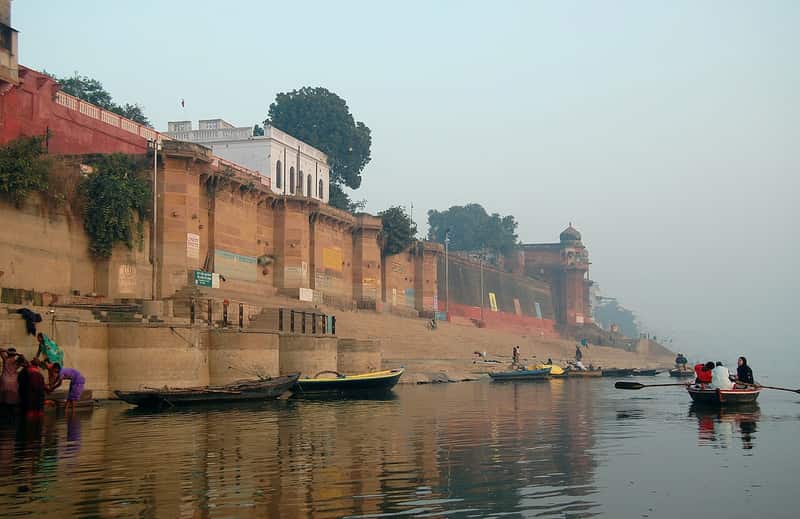
Practical Guide — How to Reach, When to Go, What to See Nearby
Reaching Bundi Parakota is easy from almost anywhere in the old city. A walk along the riverfront from the great ghats of the south takes barely half an hour, following the steps from one landing to the next past Ahilyabai Ghat; from the main road, a cycle-rickshaw or taxi will drop the visitor at the head of the lanes behind the ghat, from which the river is a few minutes' walk downhill. For those arriving by water, boatmen at any of the major ghats will row across or along the river to the landing for a modest fare, and this is the most pleasant approach of all, giving the ghat its proper first sighting from the Ganga itself. There is no entry fee and no gate; the riverfront is open to everyone at all hours.
The best time to visit is early morning, between first light and nine, when the bathing is at its height and the day is still cool; the evening, around sunset, is the second golden hour, when the boatmen return and the lamps come out. Between October and March the climate is mild and the light is beautiful; in April and May the heat is fierce but the ghat is almost empty, which some travellers find even more peaceful; and in the monsoon months the river rises and the lower steps vanish, an extraordinary sight in itself. Avoid the early morning of festival days only if crowds bother you, though even then the ghat remains calmer than the great ones. Whatever the season, a hat, water and modest clothing complete the visitor's kit.
A visit to the ghat combines naturally with the riverfront of the southern crescent. The famous ghats of the old city lie within a short walk or boat ride, the Kashi Vishwanath temple and the great bazaars of the old city are close behind, and the quieter reaches around Ahilyabai Ghat reward those who walk a little further. The lanes behind the ghat offer small tea stalls and sweet shops for a pause, and the boatmen can arrange sunrise trips that return along this stretch at the most beautiful hour of the day. Bundi Parakota asks nothing of the visitor but a little time; given that, it gives back the rarest thing in Varanasi — the sight of the holy city at rest, seen from a quiet corner of its oldest street, the riverfront itself.
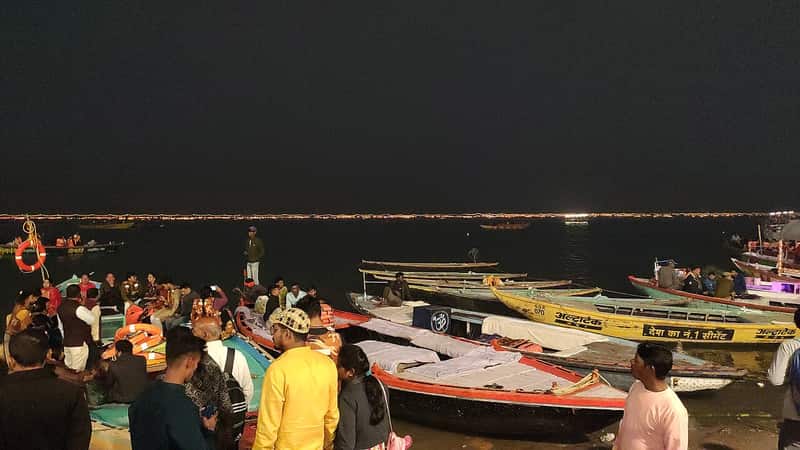
Bundi Parakota Ghat — Gallery (12 Photos)
Image Credits
bundi-parakota-01.jpg · bundi-parakota-02.jpg · bundi-parakota-03.jpg · bundi-parakota-04.jpg · bundi-parakota-05.jpg · bundi-parakota-06.jpg · bundi-parakota-07.jpg · bundi-parakota-08.jpg · bundi-parakota-09.jpg · bundi-parakota-10.jpg · bundi-parakota-11.jpg · bundi-parakota-12.jpg — Wikimedia Commons, under free licenses.
Continue exploring
Similar Ghats Nearby
Book This Ghat — Get Notified
Download the app now and book a boat ride to Bundi Parakota Ghat