

Brahma Ghat
Neighbourhood GhatBrahma Ghat is a famous ghat named after Lord Brahma. It has a famous Brahma temple.


Type
Neighbourhood Ghat
Boat Fare
1x base fare
Best Time
6-10 AM when morning light illuminates the temple.
History
Named after Lord Brahma. A famous Brahma temple is at the ghat center, known as a beautiful temple by locals.
Highlights
- Memory of Lord Brahma
- Peaceful northern ghat of Kashi
- Local bathing tradition
Festivals & Events
How pricing works in the NaviX app
No haggling at the ghat — everything is fixed in the app first
- 1
Fixed price before you board
The fare is shown in the app upfront — no bargaining at the ghat
- 2
Sharing or private — your choice
Share with fellow travelers or take the whole boat for your group
- 3
Pay only after the ride
UPI, card or cash — with an instant receipt
🕉️
Aarti details not available for this ghat yet
Complete Guide
Brahma Ghat — The Complete Guide
History, mythology, rites and practical details — everything in depth.
On this page
- 1.Brahma Ghat: An Introduction
- 2.Brahma in Kashi: The Creator's Story
- 3.The Name and the Naming
- 4.The Morning Bath
- 5.The Everyday River
- 6.The River and the View
- 7.Lanes and Mohalla
- 8.Neighbours: Durga and Adi Shitla
- 9.Festivals of the Northern Ghats
- 10.The Mythic Character
- 11.Etiquette at the Ghat
- 12.Practical Guide: Reaching Brahma Ghat
📅 Updated: 21 Aug 2026 · Author: NaviX Field Team (field research 2024-26) · 12 sections · 12 photos
Brahma Ghat: An Introduction
Brahma Ghat lies along the northern stretch of Varanasi's celebrated riverfront, a modest landing that most visitors pass without a second glance. Where Dashashwamedh and Manikarnika draw the crowds, Brahma Ghat keeps its own quiet rhythm — a few dozen worn stone steps, a small shrine, and the wide water of the Ganga rolling past. Pilgrims and guidebooks alike call it a minor ghat, yet that very modesty is its character. The river here feels closer and older, and the old town behind the steps seems to breathe more slowly. The ghat belongs to the long chain of small landings that runs north from Raj Ghat toward the iron bridge, and it takes its name from Brahma, the creator god of the Hindu trinity, whose presence the local folk still honour in a small temple just behind the steps. For those who know where to look, it is one of the most peaceful corners of the entire holy riverfront.
Walking the riverfront from Raj Ghat southward, a visitor moves through a sequence of humble landings — Durga, Adi Shitla, Brahma — each with its own deity, its own families of boatmen, its own circle of morning bathers. Brahma Ghat sits in the middle of this quiet chain, a place of everyday holiness rather than spectacle. There is no grand architecture here, no towering shikhara, only the gentle geometry of stone steps, the dark wooden hulls of moored boats, and the thin smoke of dhoop rising from the shrine at dawn. For the traveller who seeks the sacred heart of Kashi, this is where the city reveals itself without ornament or fuss. The ghat's fame lies precisely in being unfamous; its beauty in being unarranged. Old men who have bathed here all their lives will tell you that a ghat need not be famous to be holy, and that the Ganga blesses every step alike.
This guide follows the ghat from mythology to morning routine — the story of Brahma in Kashi, the ritual bathing at dawn, the boatmen and bathers who own the steps, the lanes of the old mohalla behind, the neighbouring ghats of Durga and Adi Shitla, the festivals that brighten the winter months, and the quiet devotion that gives the place its mythic calm. Read slowly, and visit slowly; that is the manner of the place. The best way to know Brahma Ghat is to arrive before sunrise, sit on the cool stone, and let the day assemble itself around you — a bather, a boat, a bell, a mantra — until the whole river seems to be reciting a single, unhurried prayer on the northern edge of the oldest living city in the world.
Brahma in Kashi: The Creator's Story
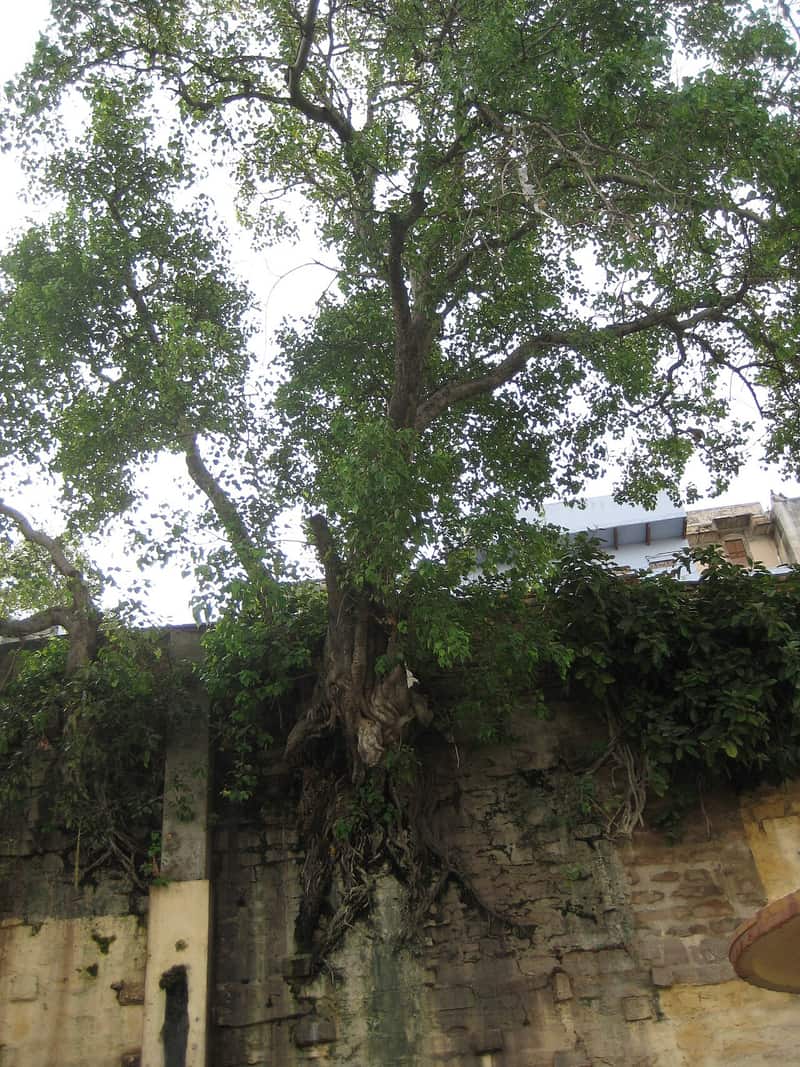
Of the three great gods of the Hindu trinity, Brahma is the most elusive. Vishnu preserves, Shiva destroys, but Brahma creates — and having created, he withdraws into the background of the universe he shaped. Temples dedicated to him are famously rare in India, and even in Kashi, where every deity seems to have a home, his presence is shy and scattered. Yet the city remembers him. In the Kashikhanda, the ancient glorification of Kashi, Brahma is said to have praised this city above all dwelling places and to have performed his tapasya on this very stretch of the northern river. The ghat that bears his name marks, according to local tradition, the place of that meditation, and the water before it still carries the memory of the creator's penance.
The deeper story of Brahma in Kashi is woven into the legend of Kal Bhairav. The myths tell that Brahma, proud of his five heads, once claimed a glory that belonged to Shiva, and that Shiva took the terrible form of Bhairava and severed that arrogant fifth head. The severed head clung to Bhairava's hand, and the sin of brahmahatya — the killing of a Brahmin, even a god — followed him wherever he walked, until he reached Kashi and was released from its burden at the temple of Kal Bhairav. Some storytellers add that the head itself was flung into the Ganga near the northern ghats, and that the waters here still carry its ancient peace. In this telling, Brahma Ghat is where the creator himself came to be freed of his own story, and where the river forgave a god.
Whatever the version of the tale, its meaning is constant. Kashi is imagined as a place where even gods come for redemption, where the most exalted beings stand humbled before the river and the linga. Brahma's presence at the northern ghats is therefore no small honour; it is a sign that this stretch of water has been sanctified since before memory. When a devotee bathes at Brahma Ghat today, local belief holds, he shares in the same cleansing water that once absolved the creator himself — a thought that gives the modest steps a weight out of all proportion to their size, and lends the quiet shrine its enduring hold on the neighbourhood.
The Name and the Naming
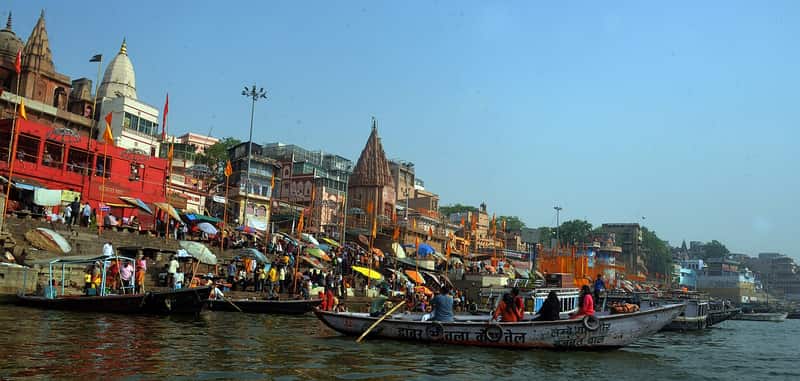
The naming of Varanasi's ghats is rarely accidental. Some are named for kings and patrons, some for the temples that crown them, and some for the gods themselves. Brahma Ghat belongs to the last group. A small shrine dedicated to Brahma stands behind the steps, and it is around this shrine that the ghat's identity has grown through the centuries. In a country where one can count the great temples of Brahma on the fingers of one hand — Pushkar in Rajasthan being the most famous — the presence of a Brahma shrine on the bank of the Ganga marks this landing as something of a rarity, a quiet exception among the thousand holy places of Kashi.
Brahma shrines are uncommon because his worship dwindled long ago; most traditions prefer to address Vishnu or Shiva, and Brahma is remembered more in story than in ritual. Yet the northern riverfront keeps his memory alive. Locals say the ghat was once known simply as the landing of the creator, where the priests who tended the shrine recited the morning Vedas to the water. The name has outlasted the old priesthood, the ancient rituals, and several rebuildings of the steps; it survives in the mouths of boatmen, in the registers of the ghat trust, and in the prayers offered at the little shrine on festival days, when the creator god is remembered with flowers and new lamps.
Names, in Kashi, are also prayers. To speak the word Brahma at this ghat is to call the creator into the present moment, and the naming functions as a constant, gentle invocation. It reminds the bather that the same consciousness that shaped the universe is present in the water before him. The shrine may be small and the temple compound modest, but the name carries the full weight of cosmogony — a reminder that in this city, even a minor ghat is a major gateway to the divine, and that the creator of all worlds still dwells quietly at the edge of the river he created.
The Morning Bath
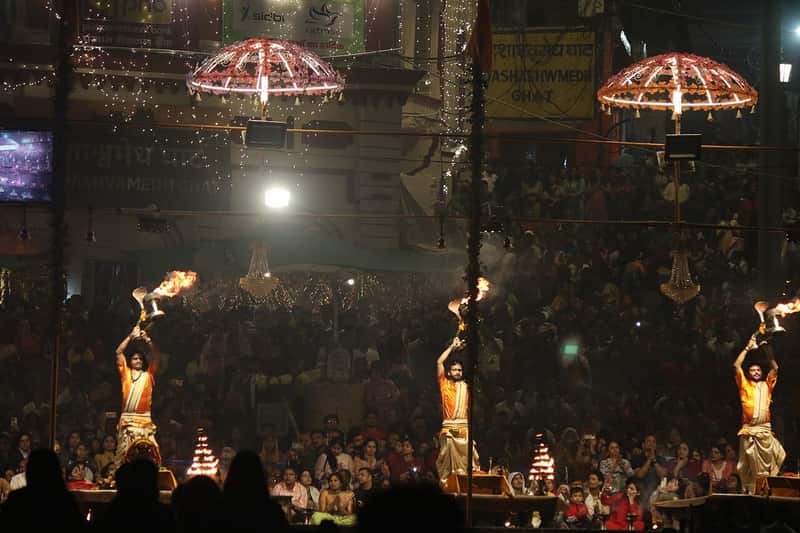
Long before the sun clears the far bank, the bathers come to Brahma Ghat. They arrive alone or in pairs — old women with brass lotas, young men with saffron shawls, children rubbing sleep from their eyes. The water is cold and grey, the steps are damp, and the first mantra of the day is usually the sound of a cloth being wrung out. Bathing here is a precise choreography of small acts: dipping, rising, offering water to the rising sun with cupped hands, sprinkling a few drops toward the shrine, then standing for a moment with eyes closed as the water runs off the skin and the mind settles into stillness. No priest directs the scene; each bather carries the ritual in his memory, learned from parents and grandparents who stood on these same steps.
For the residents of the nearby mohallas, this bath is both duty and delight. The river at the northern ghats is wider and less crowded than in the centre, and the current is gentler, so elderly people prefer it, arriving at the very first light when the water is at its calmest. Many come with small offerings — a flower, a pinch of vermilion, a handful of rice — to float on the surface near the steps. The ritual is unhurried. No pandit shouts here, no tourist cameras jostle for a frame; there is only the slap of water against the stone, the chatter of doves on the temple roof, and the occasional deep hum of a conch blown by a priest who has performed this same act every dawn for decades.
By seven the sun is up and the ghat changes character: the bathers have mostly gone, replaced by washermen, boatmen and children carrying schoolbags. But the real bathing — the sacred snana that purifies the spirit — is the one taken in the half-light of dawn, when the city is still dreaming and the Ganga is at her most maternal. Pilgrims who come to Brahma Ghat to bathe believe that the water here carries the blessing of the creator himself, and that no temple in the city can substitute for that first cold immersion. It is a faith measured not in ceremonies but in gooseflesh and gratitude, renewed every morning on the worn steps of the northern riverfront.
The Everyday River
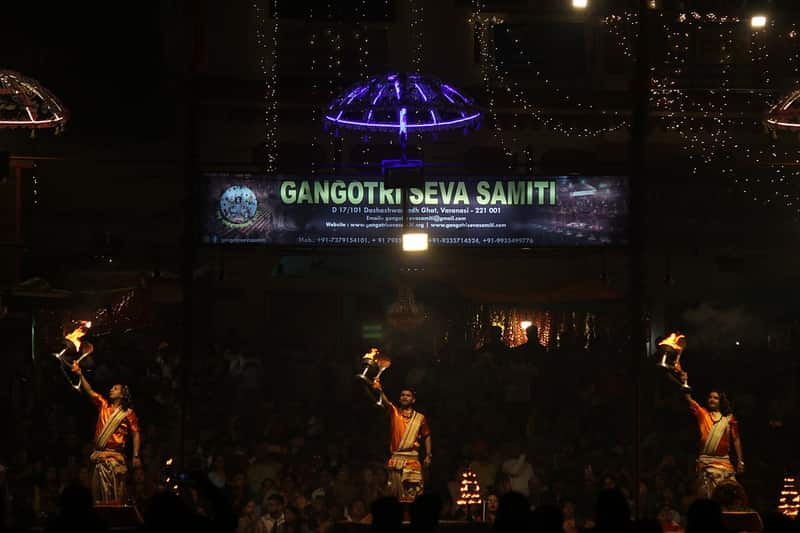
A ghat is never simply a place of worship; it is a working riverfront. At Brahma Ghat the boatmen arrive before the priests, their long oars over their shoulders, their voices carrying across the water in the familiar commerce of the river. They mend nets, paint hulls, argue about fares and recite fragments of songs learned from their fathers. Between the moored boats and the steps, a whole economy moves on foot and on water — ferrymen crossing to the far village, fishermen checking their lines at dusk, dhobis beating clothes against flat stones with a rhythm like a drum. The ghat serves them all without favour, its stones polished by bare feet, its water by a century of laundry and prayer.
Then there are the permanent residents of the ghat: the old sadhu who has sat under the same neem tree for thirty years, the tea vendor whose kettle never cools, the goat that appears every afternoon to graze the weedy margins of the steps. Children play cricket with a rolled-up sock on the landing between baths. Pilgrims from the countryside ask directions to Raj Ghat. A wedding party once arrived by boat, the bride's veil bright against the grey river. Such moments are not recorded in any guidebook, yet they are the true substance of the place — the daily life that has flowed over these steps for centuries, as constant and unconcerned as the water itself.
For the visitor, the lesson of daily life at Brahma Ghat is patience. Sit long enough and the ghat composes itself into a living painting — a boat crossing, a bather pouring water, a child waving, a priest ringing a small bell, the sun climbing over the far shore. Nothing here is staged for the pilgrim, and that is exactly its grace. The ghat does not perform holiness; it simply lives it, hour by hour, as its people have always done. The traveller who hurries through sees only steps and water; the one who stays learns the deeper truth of Kashi, that the sacred and the everyday are not two things but one, woven together on the northern riverfront since the beginning of the city's memory.
The River and the View
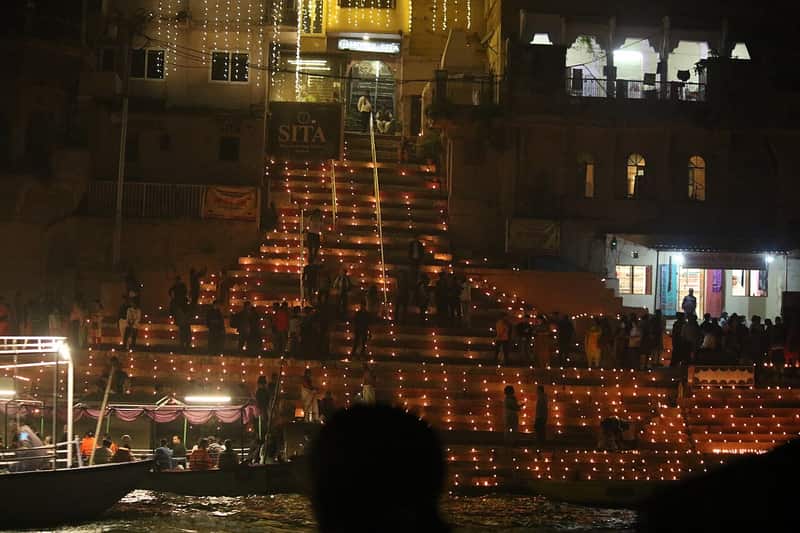
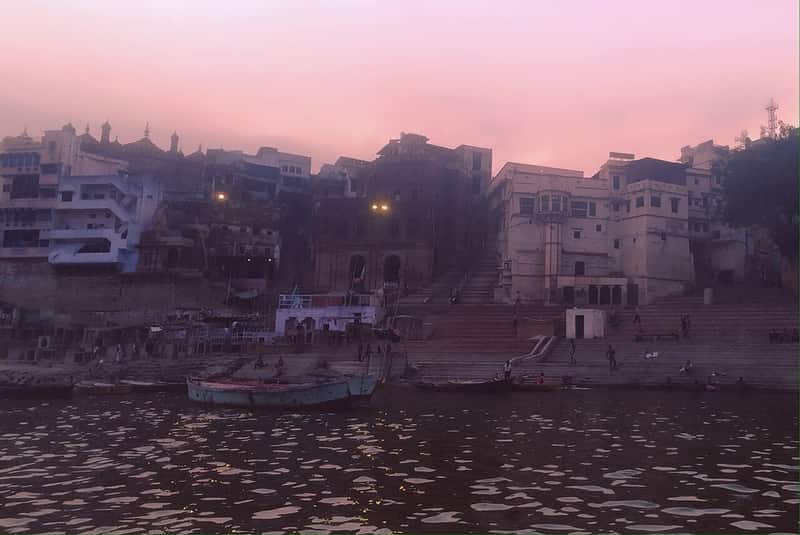
Stand at the waterline of Brahma Ghat and turn your face to the east. The Ganga at this point is a broad, unhurried sheet of moving water, wide enough that the far bank dissolves into a green haze of fields and scattered trees. This is the northern reach of the holy stretch, and the river here carries less of the city's noise and more of its silence. The current is steady but calm, and on still winter mornings the water becomes a perfect mirror, holding the sky, the boats and the ghats upside down in unbroken stillness. The air smells of river silt and woodsmoke, and the only persistent sound is the low murmur of water folding around the boats.
The view from the steps unfolds in layers. Closest are the boats — bright ferries, patched fishing skiffs, the long wooden passenger craft that ply between the ghats. Beyond them the river runs free, dotted with the distant figure of a lone swimmer or the white flash of a tern diving for fish. On the far bank, village women carry water jars along paths barely visible through the haze. To the south, the riverfront recedes in a broken line of ghats and temples, growing denser toward the centre of the city; to the north it thins out toward Raj Ghat and the great iron bridge, where the sacred city meets the countryside and the road to the north begins.
Sunrise and sunset are the ghat's two great performances. At dawn the light comes flat and golden across the water, turning every ripple to brass; at dusk the western sky burns behind the rooftops and the steps fill with people who have come simply to watch the day end. It is a view that asks for nothing, demands no ritual, and rewards every kind of attention — the pilgrim's prayer, the painter's palette, the traveller's wonder. Here, at the edge of the oldest living city, the river teaches a simple truth that the northern ghats have always known: everything flows, everything changes, everything returns — and the Ganga, patient and immense, remains.
Lanes and Mohalla
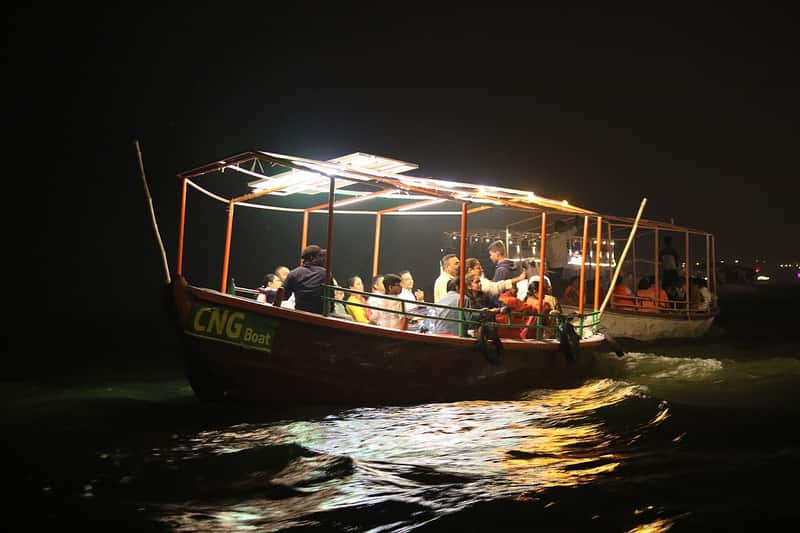
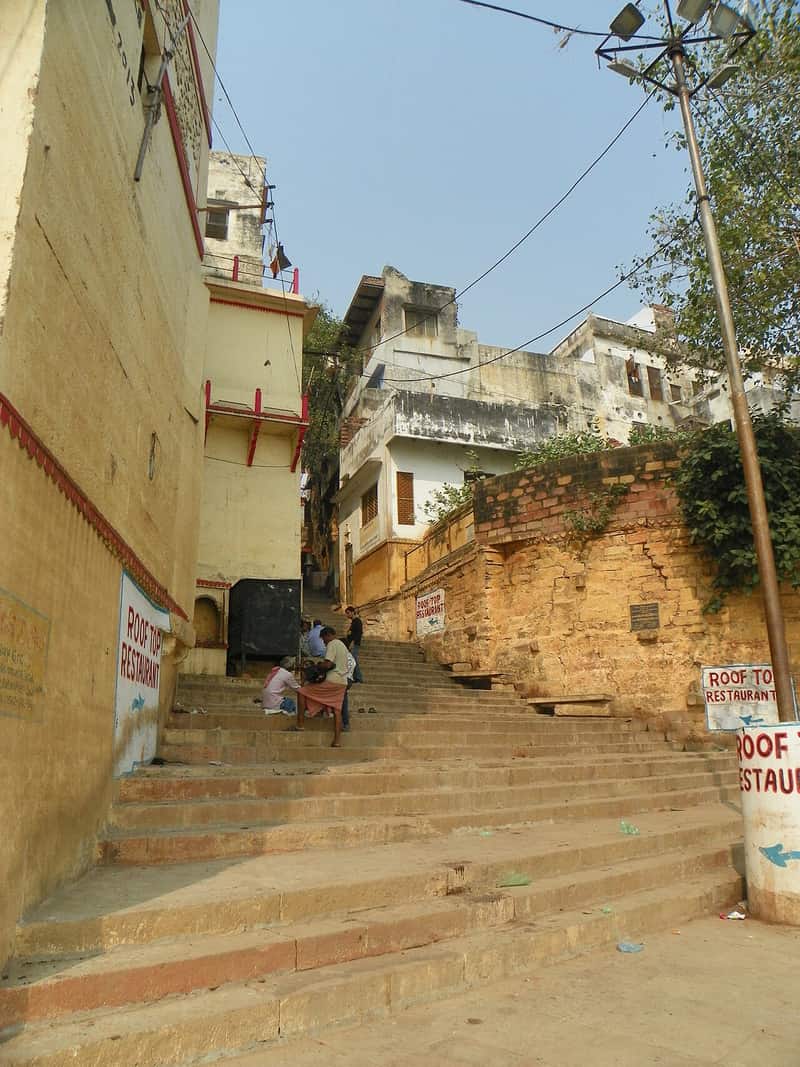
Behind Brahma Ghat the city climbs in a tangle of lanes, each one a corridor of lime-washed walls, carved wooden balconies and doorways painted with auspicious symbols. This is the old northern quarter, one of the least visited parts of Varanasi and one of the most lived-in. The mohalla wakes to the sound of temple bells and pressure cookers, of women sprinkling water on the lane to settle the dust, of the milkman's cycle rattling over uneven stone. These streets have no monuments to speak of, only houses that have stood for centuries, sheltering families whose ancestors bathed at the same ghat and kept the same small rituals in the same small kitchens.
The lanes are the ghat's extended family. From them come the bathers, the priests, the flower sellers and the bridegrooms who walk in procession to the water for the wedding bath. Small shrines appear at every turning — a Hanuman under a peepal, a Ganesha in a wall niche, a Shiva linga on a veranda — so that walking through the mohalla is itself a pilgrimage of small pauses. The neighbourhood is also thoroughly practical: tea shops that open before dawn, tailors at their machines, sweetmakers rolling laddus, and the mithai vendor whose shop, locals insist, has been filling wedding boxes since the time of the British.
To understand Brahma Ghat, one must walk these lanes, because the ghat and the mohalla are one organism. The steps feed the lanes and the lanes feed the steps; a festival in the neighbourhood brings the whole quarter down to the water, and a fair on the river pulls the whole quarter back up into the lanes. This unity of street and stream is the oldest pattern of Kashi life, and at Brahma Ghat it survives intact, undisturbed by the commerce that has reshaped the central ghats. Wander long enough and the lanes deliver you back to the river by a different door, as if the mohalla itself were a temple with many entrances, all of them leading to the water.
Neighbours: Durga and Adi Shitla
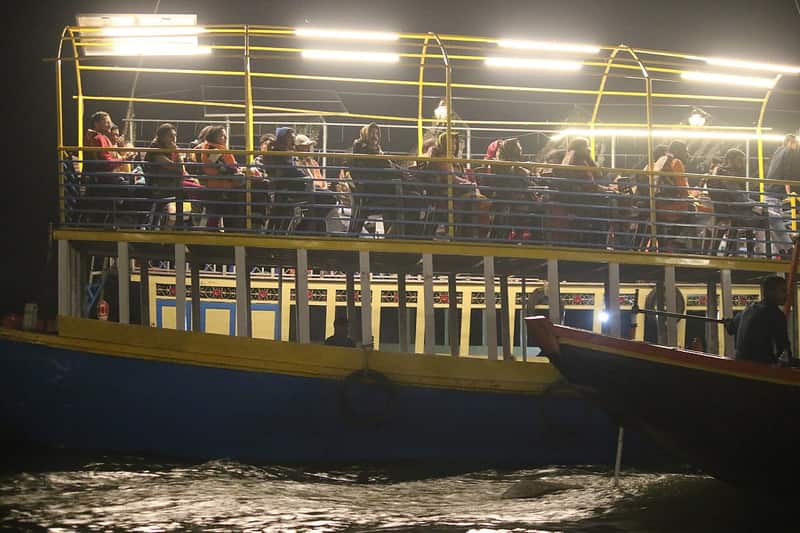
Brahma Ghat does not stand alone. To its north and south run the ghats of its sisters, a closely spaced chain of small landings that share steps, boatmen and festivals. Durga Ghat, named for the goddess Durga, is the nearest of these neighbours. The same goddess whose temple overlooks the famous Durga Kund some distance inland is honoured here at the water's edge, and the ghat shows her warlike devotion in its vigorous festivals, when the whole landing fills with the red banners and drumbeats of Navaratri, and lamps float past its steps for the goddess of the thousand arms.
Adi Shitla Ghat, close by on the other side, honours the goddess Shitla, the cooling mother of healing, worshipped across northern India as the deity of pox and fever and all the ills that visit children. Her worship is one of the most ancient strands of the riverfront, older perhaps than many of the grander temples of the city. Mothers bring their infants to bathe at her ghat, smear a little turmeric at the shrine and whisper her name against the child's forehead. The presence of such a ghat reminds the visitor that Kashi's holiness is not only cosmic but homely — the protection of kitchens and cradles, of fevers and first baths, kept at the water's edge since time out of mind.
Together with Brahma Ghat, these three landings form a miniature riverfront of their own — quiet, intimate and deeply local. A morning walk from Durga to Adi Shitla passes a museum of everyday sanctity: a milkman's puja, a bride's bath, a newborn's first dip. Where the central ghats stage great spectacles, these northern steps offer great privacy, and the pilgrim who tours them one by one will carry away a truer picture of Varanasi than any ticket-holder at the great shows. Brahma at the centre, Durga and Shitla at his flanks — a trinity of modest ghats for a city of gods, each one a quiet door into the same sacred river.
Festivals of the Northern Ghats
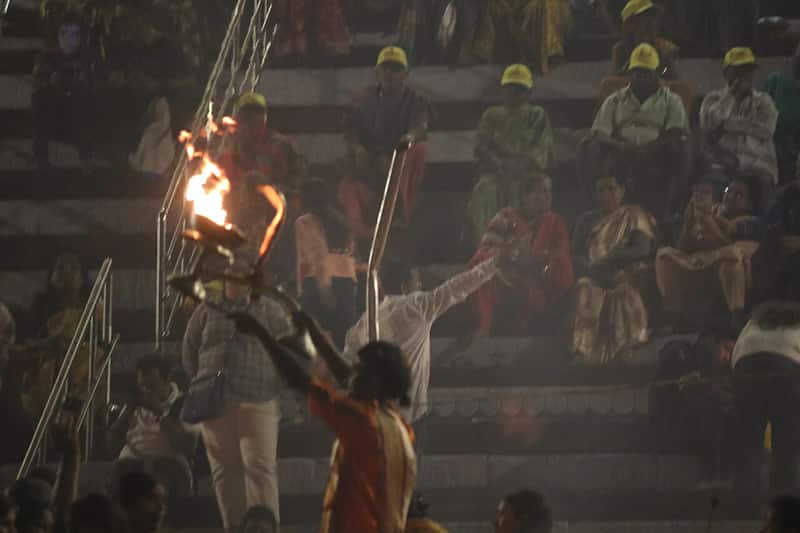
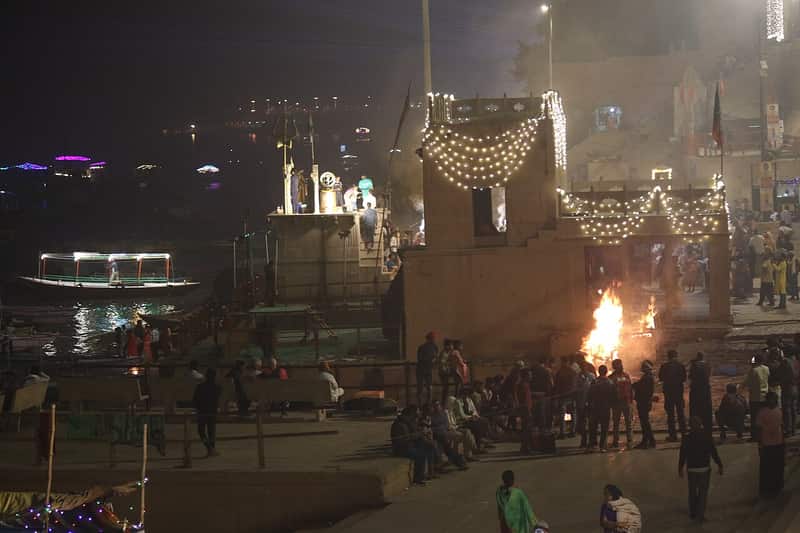
A minor ghat does not mean minor festivals. Through the winter months Brahma Ghat and its neighbours light up with observances as old as the riverfront. Kartik Purnima, the great full moon of the Kartik month, is the climax of the year: the steps are washed and swept, hundreds of earthen lamps are set floating on leaf boats, and every household of the mohalla comes down to the water with marigolds, incense and the haunting sound of bhajans that drift across the river until midnight. The moon rises over the far bank and is answered by ten thousand flames, each one a family's small prayer.
Ganga Dussehra, in the early summer, celebrates the descent of the goddess to earth, and at Brahma Ghat the celebration keeps a sweetness entirely local: small processions of children, prasad distributed from the Brahma shrine, and long queues of bathers who believe that on this single day the river absolves ten generations of sin. Dev Deepawali, the festival of lights held on Kartik Purnima, is usually associated with the central ghats, but the northern ghats keep their own smaller version — lamps arranged in the old patterns of the mohalla rather than in the grand fireworks displays downstream, lit by grandmothers who have arranged them the same way for sixty years.
Most touching of all are the family festivals that never reach the tourist calendar. Nag Nathaiya, the child Krishna's victory over the serpent, brings the neighbourhood's children to the ghat in costume, re-enacting the legend from a small platform on the water. A local saint's death anniversary draws a gentle crowd of devotees who chant and feed the ghat's fish with puffed rice. And every evening of the month of Kartik, the tulsi plant is watered at the shrine and a lamp is lit for the ancestors, so that the ghat's winter calendar closes each day with a small act of remembrance repeated, unbroken, for centuries.
The Mythic Character
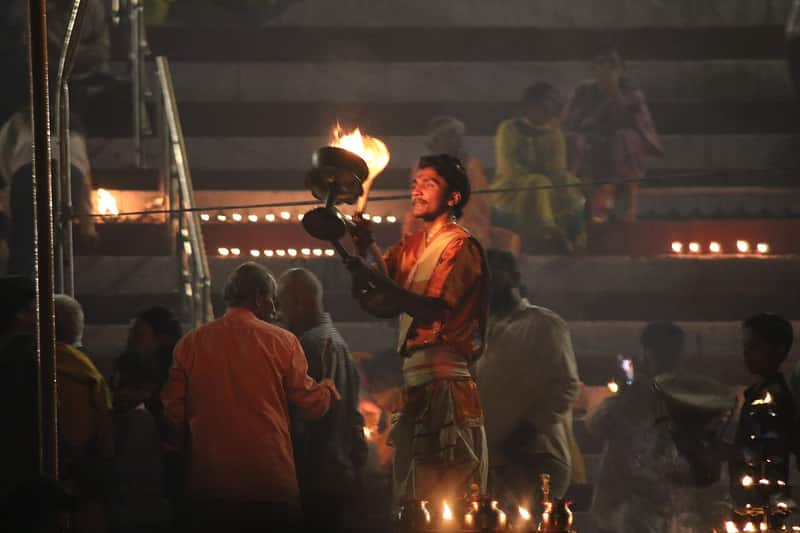
Every ghat of Varanasi has a temperament, and the temperament of Brahma Ghat is meditation. It is a place of the invisible — of gods who withdrew, of rivers that remember, of blessings too old to be spoken aloud. The devotee who comes here does not come for spectacle or crowds; he comes for the particular silence that the creator god leaves behind him. Old people say that the water of this ghat tastes of stillness, and that a single sitting on these steps can quiet a mind that temples have failed to calm. The very plainness of the ghat seems deliberate, as if simplicity itself were the offering it asks of those who come.
The mythology of the ghat supports this character. Brahma is the god of the beginning, of the first breath of creation, and his ghat stands at the northern edge of the holy stretch, as if marking the place where the city's sacred story commences. Pilgrims walking the Panchatirthi circuit, the ancient round of the five great bathing places, pass through this quarter of the river, and local belief holds that the creator himself once walked this path when the world was young. To bathe here, the traditions say, is to touch the origin of things — to stand in the very place where the divine began its work, and to feel the river carry that beginning into the present.
Yet the devotion of Brahma Ghat is not merely nostalgic. Every morning the shrine receives its flowers, the lamp is lit and the story is told again to whoever will listen. The mythic character of the place is renewed daily by small, ordinary acts of faith — a coconut broken at the steps, a thread tied to the shrine's rail, a whispered prayer for a new marriage or a new child. In this the ghat teaches the deepest lesson of Kashi: that the divine lives not only in great festivals but in the steady, patient love of ordinary people for their gods — and that the creator, who began the universe, is still honoured most truly at a modest ghat on a quiet morning.
Etiquette at the Ghat
Brahma Ghat is a living place of worship, and the first courtesy a visitor can offer is to remember that. Bathers at their morning rituals are performing acts of great personal significance; a camera held a hand's breadth from a woman pouring water for her ancestors is an intrusion, not a photograph. The gentle rule of the ghat is to observe with the eyes and the heart, and to ask before pointing a lens at anyone. A smile and folded hands go far; most bathers are pleased to share their morning with a respectful stranger, and many will greet you with the same blessing they offer the river.
Dress with modesty, as the ghat's own people do. Avoid alcohol and tobacco on the steps, keep noise low, and remember that shoes are removed before stepping onto the cleaned platforms around the shrine. The river itself deserves the deepest respect: plastic, food scraps and garbage must never be left behind, for the Ganga is not merely a scenic view but a mother to millions. Keep the ghat as you found it, cleaner if possible, and the boatmen, priests and bathers will treat you as one of their own. Small courtesies compound here; the northern ghats remember kindness longer than they remember names.
There are also quieter courtesies. Do not stand between a bather and the sun as he offers his arghya. Do not crowd the shrine during a puja; wait your turn, bow and step aside. If a boatman offers to take you to the middle of the river, settle the fare beforehand and pay what you promised. And if you are invited to sit with the old sadhu or to share the tea of the vendor, accept — the hospitality of the northern ghats is its own reward. Leave the ghat as you came, lighter of noise and heavier of peace, and the river will hold your visit in its long memory.
Practical Guide: Reaching Brahma Ghat
Brahma Ghat lies on the northern riverfront, in the chain of minor ghats beyond Raj Ghat. The simplest approach is by boat: ferries and shared passenger boats run along the river from the central ghats throughout the day, and a boat ride from Dashashwamedh delivers you to the steps in under half an hour, with the whole riverfront unfolding beside you. By land, an auto-rickshaw can drop you at Raj Ghat, from where a ten-minute walk south along the promenade brings you to Brahma Ghat. The walk itself is a pleasure, passing the small ghats and shrines that the fast road never reveals.
The best time to visit is early morning, between dawn and eight o'clock, when the bathers are at their rituals and the light is soft and golden. The winter months from October to March are the ideal season: the days are mild, the festivals crowd the calendar and the evening lamps turn the ghats into a necklace of fire. Summers are fierce and the monsoon months keep the river high and the steps slippery; if you come then, come in the cool of the morning and keep to the upper steps. Whatever the season, carry water and wear shoes that grip damp stone.
Plan your visit as part of a walk. From Raj Ghat, follow the river south through Brahma Ghat to Durga Ghat and Adi Shitla Ghat, then continue toward the better-known landings as the sun climbs. Combine the ghat with the old lanes behind it, and with the small temples of the quarter if time allows. Allow at least an hour for a place that rewards stillness, and remember that the ghat is at its most truthful in the half-light of morning, before the day's traffic begins. Brahma Ghat asks for nothing but your presence — and gives, in return, the oldest peace in Kashi.
Brahma Ghat — Gallery (12 Photos)
Image Credits
brahma-01.jpg · brahma-02.jpg · brahma-03.jpg · brahma-04.jpg · brahma-05.jpg · brahma-06.jpg · brahma-07.jpg · brahma-08.jpg · brahma-09.jpg · brahma-10.jpg · brahma-11.jpg · brahma-12.jpg — Wikimedia Commons, under free licenses.
Continue exploring
Similar Ghats Nearby
Book This Ghat — Get Notified
Download the app now and book a boat ride to Brahma Ghat