

Adi Shitla Ghat
Neighbourhood GhatAdi Shitla Ghat is a small ghat for worship of Goddess Shitala.


Type
Neighbourhood Ghat
Boat Fare
1x base fare
Best Time
6-10 AM when morning light illuminates the temple.
History
Named after Goddess Shitala. A famous Shitala Maa temple is at the ghat center.
Highlights
- Darshan of the ancient Shitla Mata temple
- Faith in healing
- Site for goddess devotees
Festivals & Events
How pricing works in the NaviX app
No haggling at the ghat — everything is fixed in the app first
- 1
Fixed price before you board
The fare is shown in the app upfront — no bargaining at the ghat
- 2
Sharing or private — your choice
Share with fellow travelers or take the whole boat for your group
- 3
Pay only after the ride
UPI, card or cash — with an instant receipt
🕉️
Aarti details not available for this ghat yet
Complete Guide
Adi Shitla Ghat — The Complete Guide
History, mythology, rites and practical details — everything in depth.
On this page
- 1.Adi Shitla Ghat: An Introduction
- 2.Goddess Shitala, the Cooling Mother
- 3.A Name That Means Coolness
- 4.Morning Bathing: The First Ritual
- 5.Bathers, Boatmen and the Rhythm of the Day
- 6.The Ganga: Water, Light and Sky
- 7.Lanes and Mohallas Behind the Ghat
- 8.Brahma Ghat and the Northern Chain
- 9.Festivals of Coolness and Faith
- 10.The Healing Character of the Ghat
- 11.A Traveller's Guide to Respect
- 12.Reaching Adi Shitla Ghat
📅 Updated: 21 Aug 2026 · Author: NaviX Field Team (field research 2024-26) · 12 sections · 12 photos
Adi Shitla Ghat: An Introduction
Every ghat on the Varanasi riverfront has its own name, its own deity and its own quiet story. Most travellers hurry from Dashashwamedh to Assi, but the northern stretch of the Ganga is a different world. Here the ghats are smaller, humbler and older in feeling, and among them, set in the long chain of worn steps between Raj Ghat and Brahma Ghat, lies Adi Shitla Ghat. It is a minor ghat in the official lists, yet for the people of the neighbouring mohallas it is a daily place of prayer, a washing place, a meeting place and a doorway to the river. Its name honours Goddess Shitala, the cooling mother who guards against fever, and the whole ghat carries the gentle, healing character of her worship.
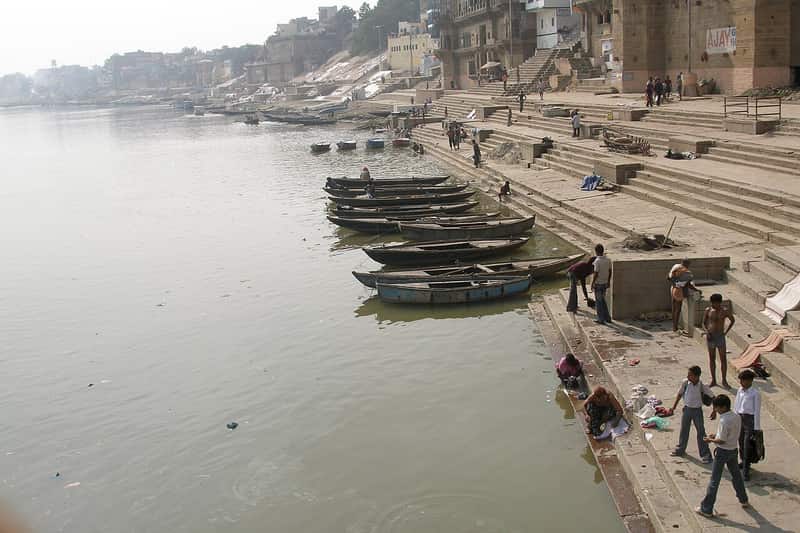
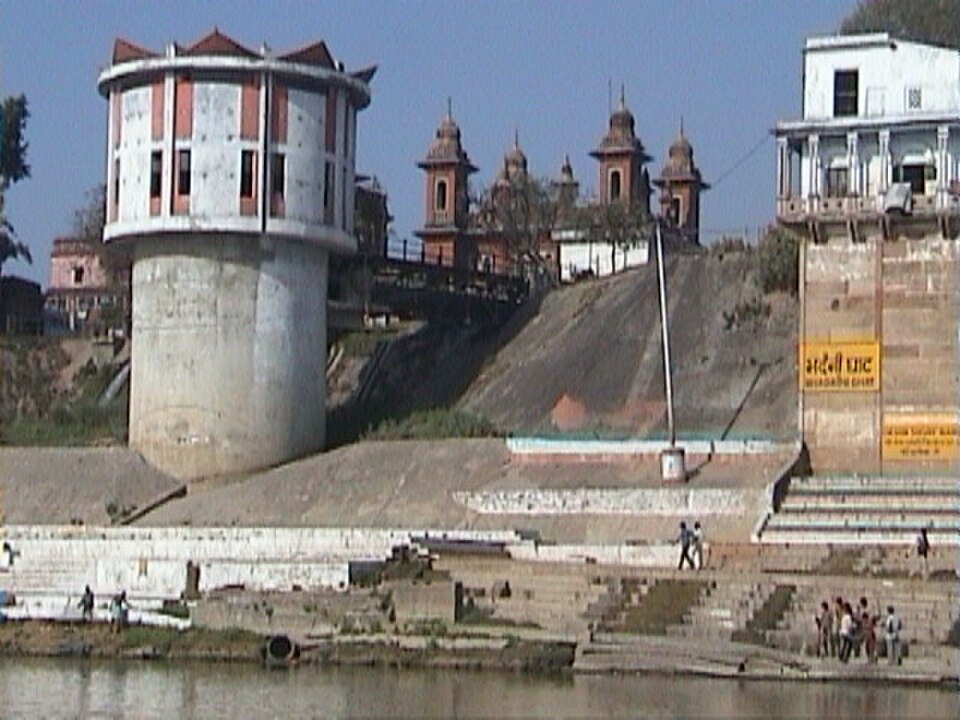
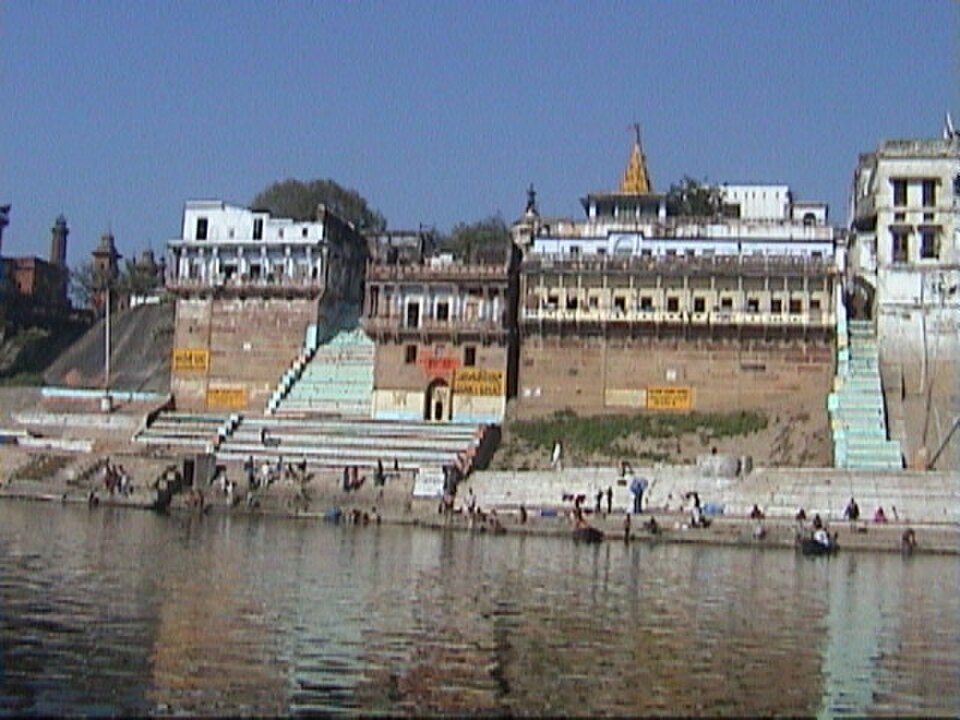
Do not come here looking for palaces, marble halls or crowds of pilgrims. Adi Shitla Ghat offers something rarer — the plain honesty of old Kashi. Simple stone steps run down to the water, worn smooth and uneven by more than a century of bare feet, monsoon rain and river silt. A few small shrines stand at the top, shaded by ancient trees where pigeons and parakeets argue at sunrise. Bathers arrive before dawn, boatmen untie their long wooden boats, washermen beat cloth on the stones, and the day opens exactly as it has opened for generations. The atmosphere is unhurried, intimate and deeply local.
For the slow traveller, this is the charm of the northern ghats. There is no entrance fee, no performance, no crowd — only the river, the steps and the devotion of ordinary people. Sitting on the stone ledges at dusk, watching the last boats slide across the golden water towards the great iron bridge at Raj Ghat, you understand why Kashi is called the city of light. The smell of woodsmoke from the lanes, the far-off chant of evening prayers, the soft knock of oars against wooden hulls — all of it gathers into a single impression of peace. Adi Shitla Ghat may be small on the map, but in the memory of anyone who lingers here, it grows very large indeed.
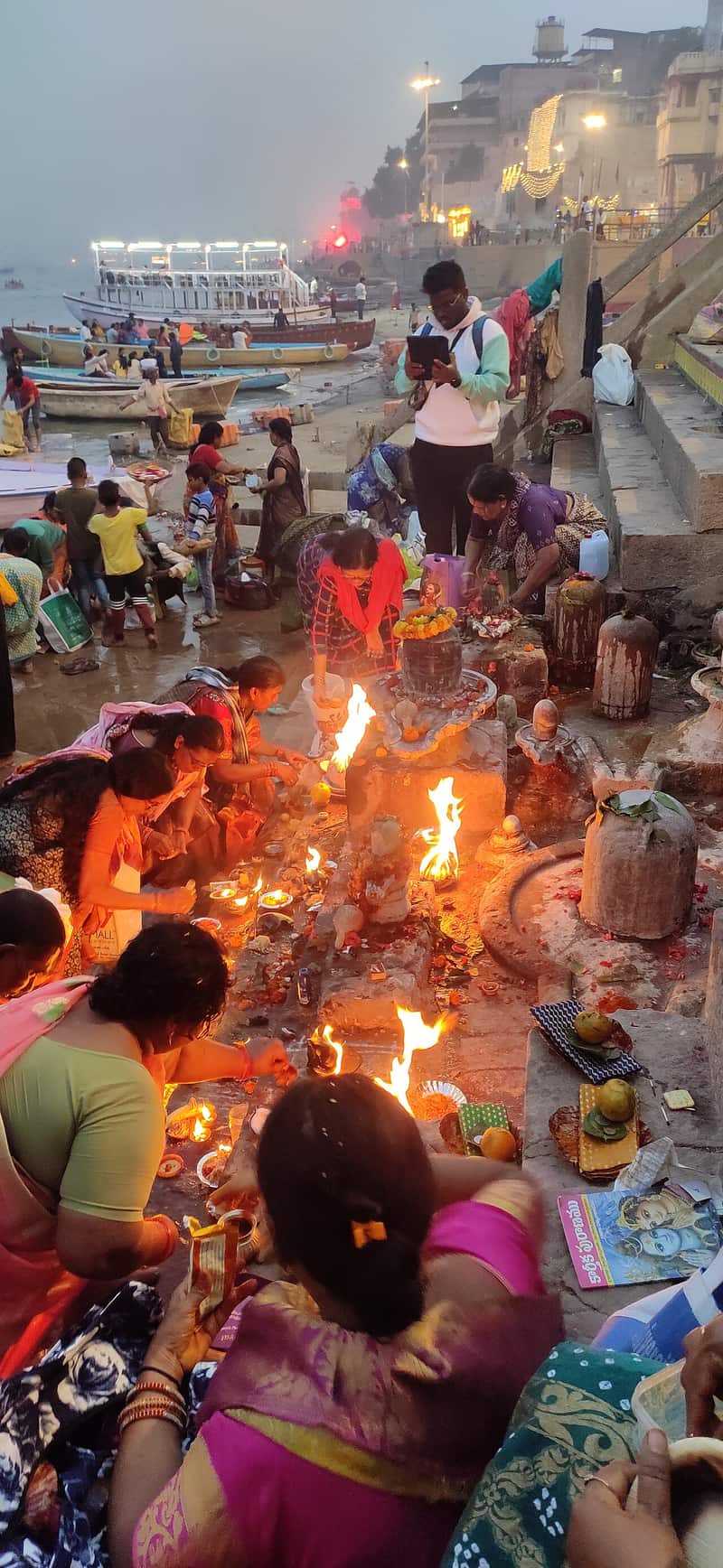
Goddess Shitala, the Cooling Mother
Of all the goddesses of the Gangetic plain, few are as beloved in everyday homes as Shitala Devi. She is the cooling mother, the deity who guards the family against fever, smallpox, chickenpox and every burning illness of the skin and the blood. Her worship is one of the oldest strands of folk Hinduism, practised in villages and cities alike, and in Kashi she has found a home on the riverfront, where her name is spoken on a minor ghat between Raj Ghat and Brahma Ghat. In her images she rides a donkey, the humblest of beasts, and carries a winnowing fan, a broom and a pot of water — the simple instruments of cleaning and cooling that are her whole message.
Legend tells how Shitala was born from the burning anger of Shiva, and how her very presence cooled the world. She rode out to battle Jwarasura, the demon of fever, defeating him not with weapons but with her calm and her cold water. Wherever she passed, fevers subsided, rashes faded and children recovered. This is why her devotees keep the house clean and cool, why they avoid lighting the cooking fire on her festival days, and why they offer her the simplest of gifts — a winnowing fan, cold milk, barley cakes soaked in water. In a land of long summers, the goddess of coolness is a daily presence in the imagination of the people.
On the ghat that bears her name, Shitala is not a distant icon but a neighbour. Women in the mohalla keep small vows to her; mothers whisper her name when a child burns with fever; boatmen touch the shrine before pushing off into the current. The goddess of coolness asks for nothing grand — only a clean step, a cool offering and a heart that trusts. In the heat of the plains, in the fever of life itself, that is a blessing worth crossing the river for, and the people of this quiet stretch of Kashi have been crossing it for centuries.
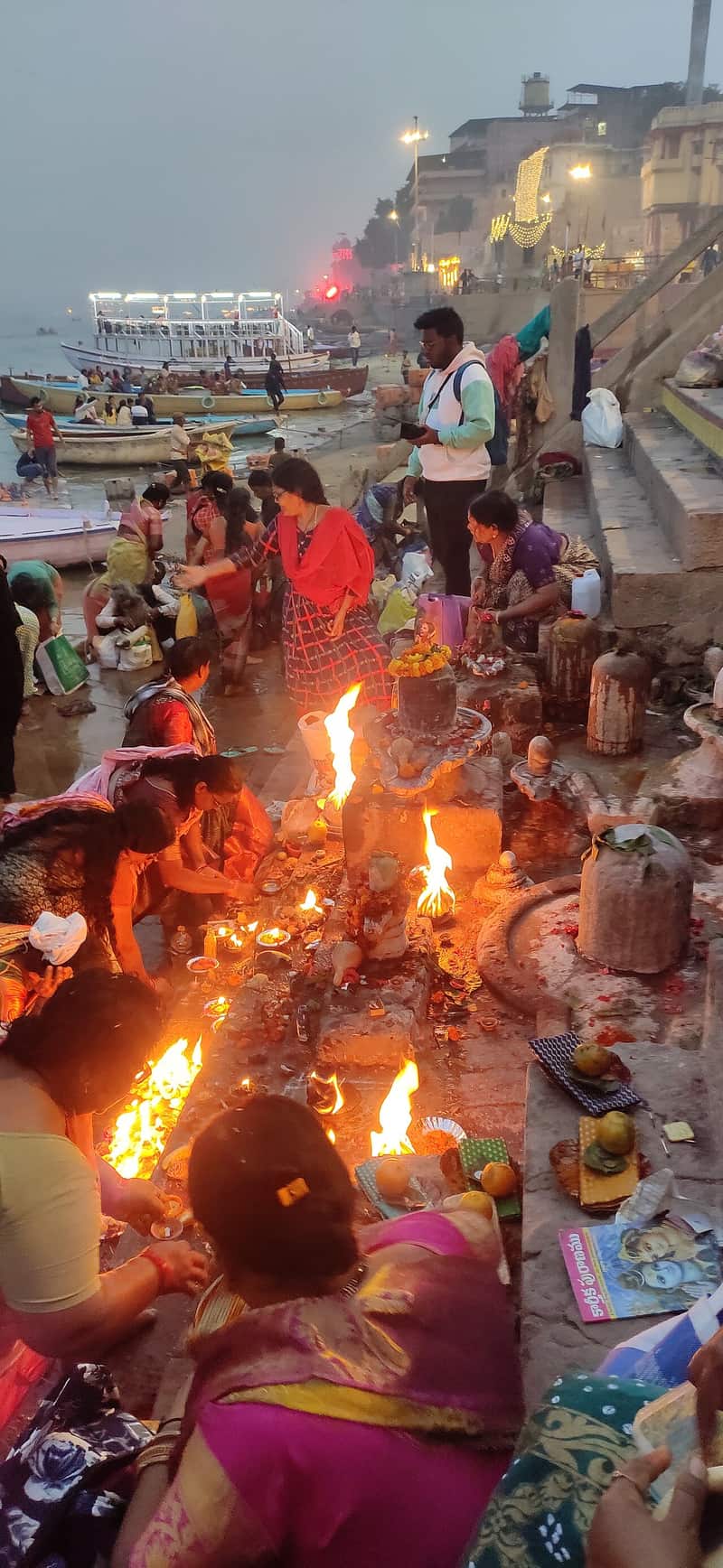
A Name That Means Coolness
The word shitala comes straight from the Sanskrit root shital, meaning cool, soothing, gentle to the touch. It is a word that appears constantly in daily speech in this part of India — shital pani is the water you drink in summer, shital bhav is the calm of a patient mind, and Shitala Devi is the goddess whose whole nature is coolness. The ghat therefore bears a name that is itself a prayer: Adi Shitla Ghat, the ghat of the primal coolness. In old records and on the lips of local people the name appears in several forms — Shitla Ghat, Adi Shitala Ghat, sometimes simply Shitala Ghat — but the meaning never changes.
The title Adi, meaning first or primal, is significant. It sets this ghat apart as the original seat of the cooling goddess on the northern riverfront, the first of her dwelling places along the steps of Kashi. Names in Varanasi are rarely decorative; they are invocations carved into the city. To name a ghat after Shitala was to ask her protection over everyone who steps into the water here — over the feverish child, the exhausted boatman, the widow who bathes before sunrise. The name is a shield held over the ghat, and the people who live by it say that the shield has never failed them.
Local elders add that the name also matches the place itself. The northern stretch of the river is quieter, the air fresher, the shade deeper than around the busy central ghats. There is a folk belief that where the goddess of coolness dwells, the very atmosphere stays shital — restful and kind. Whether that is poetry or truth, every visitor who sits on the shaded steps of Adi Shitla Ghat in the heat of May, feeling the river wind on a burning afternoon, will agree that the name is deserved.
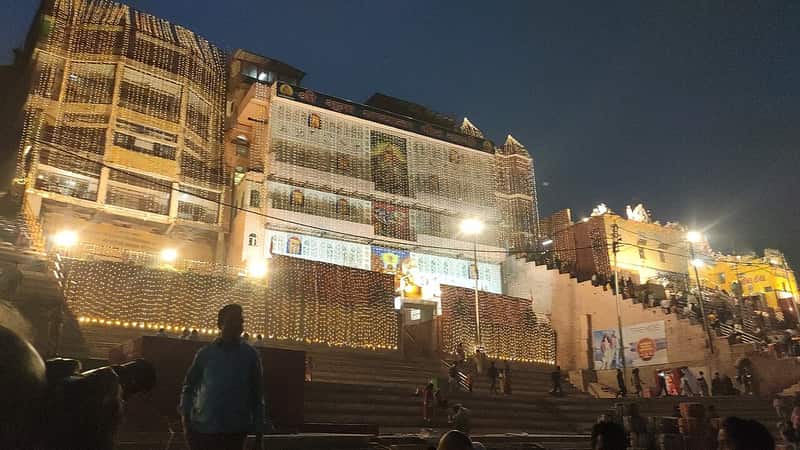
Morning Bathing: The First Ritual
The day at Adi Shitla Ghat begins long before the sun. At four in the morning the steps are still dark, the river is a sheet of grey silk, and the first bathers arrive with towels, brass lotas and quiet footsteps. They descend slowly, touch the water, murmur a mantra, and then step in — the shock of cold hits the skin and wakes every nerve. The cold, in the logic of this place, is not an enemy; it is a blessing. It is the shitala touch of the goddess herself, the coolness that drives out the fever of the body and the clutter of the mind.
By six the ghat is alive. Men in dhotis stand chest-deep, eyes closed, offering arghya to the rising sun; women in wet saris pour river water from small pots towards the east; older people sit on the waterline, doing japa, their lips moving in silent repetition. Priests and wandering sadhus pass through, sprinkling drops on the faithful. The water at this stretch is cleaner than at the central ghats, and the current is slow, so bathers can linger. The cold turns to a strange warmth, and the body, rinsed of sleep, rises from the river feeling newly made.
Bathing here is not a spectacle; it is a discipline, older than memory. Mothers bathe their children, scrubbing their small bodies with red earth, dipping them three times as the grandmothers did; the children shriek, the mothers laugh, and the river takes it all. For the people of the mohalla, no festival, no journey, no recovery from illness is complete without this dip. The water of the Ganga, they say, does not ask who you are. It asks only that you come with faith, and it gives back everything — cleanliness, coolness, and the strange lightness of a morning begun on the steps of the goddess.
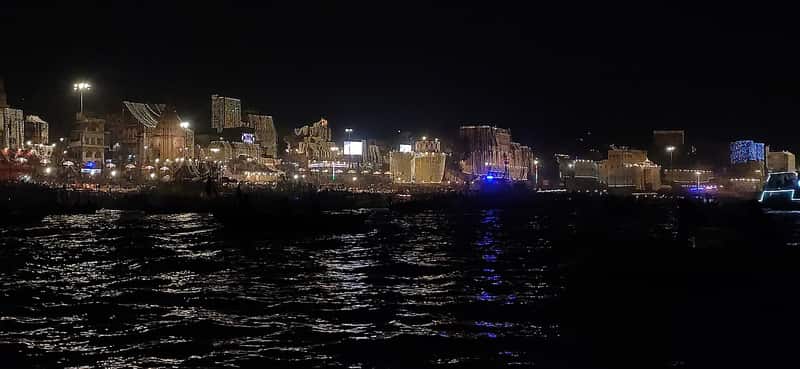
Bathers, Boatmen and the Rhythm of the Day
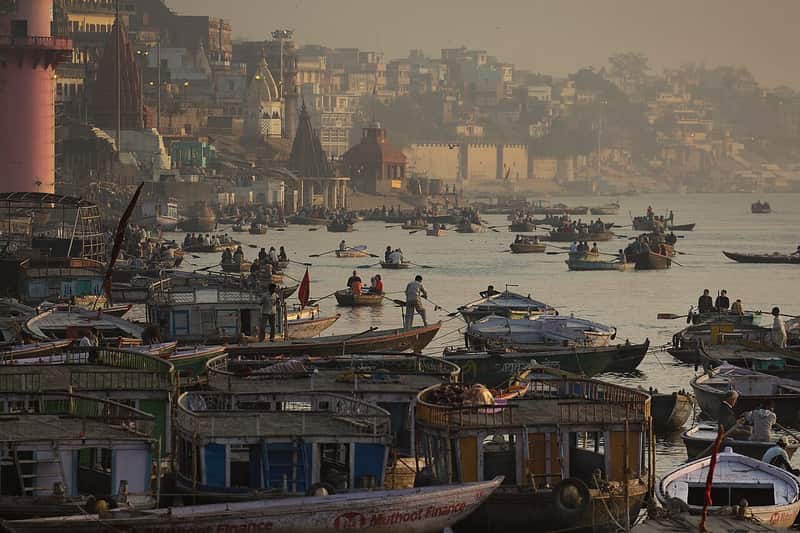
Through the day, Adi Shitla Ghat belongs to work as much as to prayer. The boatmen of this stretch are its true owners. They sit on the upturned keels of their wooden boats, mending ropes and patching hulls, their hands in a continuous quiet conversation with the river. When a fare arrives — a trader crossing to the sandbanks, a farmer returning from the eastern villages, a pilgrim heading to a festival — they push off without fuss, standing at the stern, leaning on the long pole or sculling the oar that trails behind.
The waterline is a busy workshop. Washermen kneel at the lowest steps, beating cloth against the stone in a rhythm like applause. Children splash in the shallows, filling the morning with laughter. Women arrive to wash pots, scrubbing brass until it flashes in the sun. A little higher, tea vendors balance trays of glasses, and the air carries the smell of woodsmoke and chai. Sadhus sit cross-legged under the trees, their alms bowls resting on the folded cloth of their lap, their eyes half closed in that long patience which only renouncers own.
What moves the visitor most is that none of this is performed. Nobody dresses up for the ghat; nobody tries to impress it. The ghat is simply the extended courtyard of the mohalla — part washing place, part temple, part bus stand, part playground. Grandfathers tell the same stories they heard from their grandfathers; young men talk of cricket and canals while coiling rope. In the evening the steps fill again with people who come only to sit, to watch the light die on the water, and to let the day dissolve in the sound of the river. This is the north riverfront of Kashi at its most true, and it asks nothing of the visitor except a place on the steps.
The Ganga: Water, Light and Sky
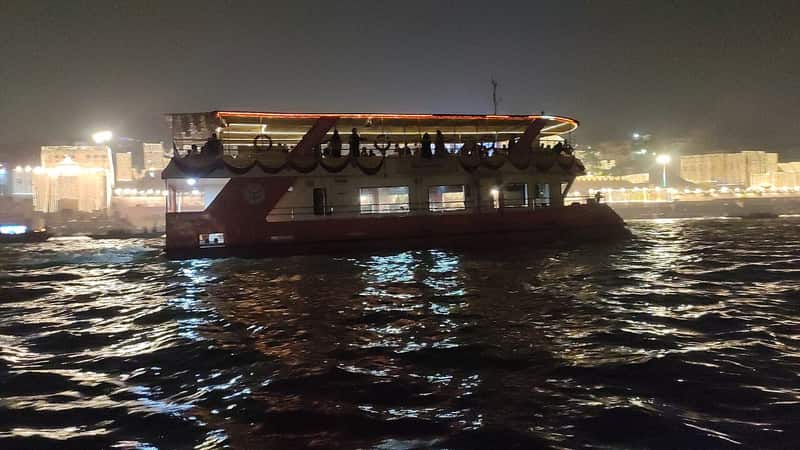
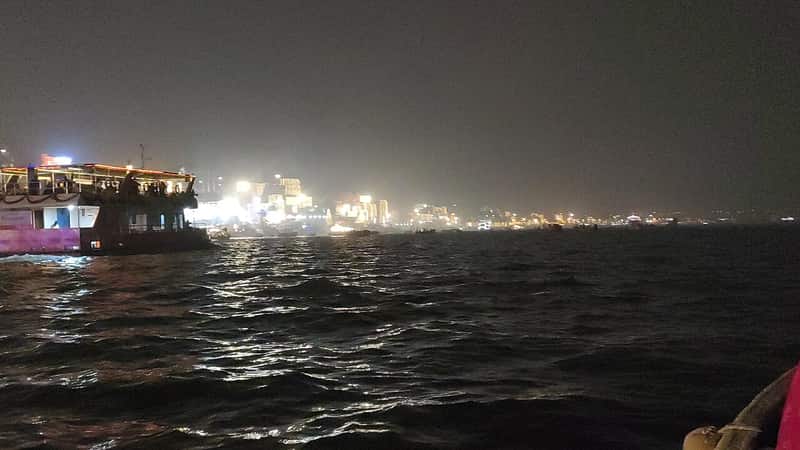
At Adi Shitla Ghat the Ganga is at her widest and most generous. The river here flows north for a stretch, sliding past the ghat in a broad, unhurried current, deep green in winter, the colour of wet earth in summer. The far bank is a low line of sand and tamarisk where the villages of the eastern plain stand hidden in trees. Looking north, the eye follows the water to the great iron spans of the Malviya Bridge at Raj Ghat, carrying the railway and the road across the river — a Victorian silhouette against which daily barges and fishing boats look like toys.
The river's moods rule the calendar of the ghat. In the monsoon the water climbs the steps to the very top, and the shrine lamps float among the waves; bathing is suspended, and the boatmen are busiest, ferrying people across the swollen current. In winter the water retreats, baring long sandbanks where pilgrims wade far out to bathe at sunrise. The light does the rest: gold at dawn, silver at noon, copper at dusk, and on moonlit nights the surface becomes a moving sheet of white fire that draws out the boatmen for a second voyage, silent and dreamlike.
The wildlife gives the river its final beauty. Herons stand motionless at the waterline; cormorants dry their wings on the posts of the ghat; kites wheel overhead on the warm air; and in winter, flocks of geese and gulls drift down to the sandbanks, filling the morning with calls. To sit at Adi Shitla Ghat is to watch a river that is at once a goddess, a highway, a larder and a home. Every hour the light changes, and every hour the river writes a different sentence of the same endless story. The boatmen know it by heart, the bathers know it by touch, and the visitor learns it slowly, sitting on the warm stone, letting the water do the telling.
Lanes and Mohallas Behind the Ghat
Behind Adi Shitla Ghat, the old city rises in a maze of lanes that have changed little in centuries. The mohallas of the northern riverfront are among the oldest inhabited quarters of Varanasi, and walking through them feels like walking through a city asleep inside time. The lanes are just wide enough for two people, lined with houses whose facades carry carved balconies, blue doors and peeling frescoes. Every few steps there is a shrine — a Shitala image under a peepal, a Hanuman at a corner, a weathered Shiva lingam in a niche — and the floor of the lane is scattered with marigold petals and tulsi leaves.
This is also a working neighbourhood. Small workshops clatter with brass and wood; bangle makers bend over their flames; sweet shops, their brass trays gleaming, sell peda and barfi beside tea stalls where the water boils through the day. Cows claim the lanes for their own, moving with the unhurried authority of residents. The people are talkative, curious and welcoming. A stranger standing with a map draws a small crowd of advisors within a minute, each with a different route and the same advice: ask for the Shitala temple, everyone knows it.
History here is not in museums; it is in the soil. The Rajghat mound, only a short walk to the north, is where archaeologists found the remains of the ancient city that existed a thousand years before the common era — pottery, coins, houses and streets of the Kashi that the Buddha knew. Standing on Adi Shitla Ghat, looking at the lanes climbing away from the water, it is easy to feel that the city has never truly moved. The people change, the language changes, but the river and the steps stay, and the lanes keep leading back down to them, carrying every generation of the faithful to the same cold, healing water.
Brahma Ghat and the Northern Chain
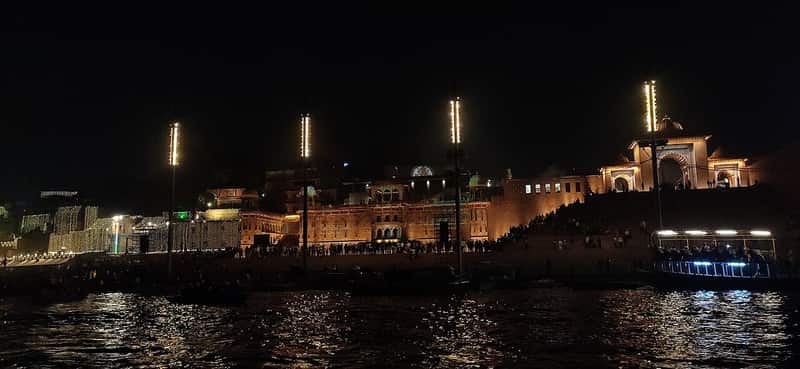
Adi Shitla Ghat is one link in a chain of small ghats that runs along the northern riverfront between the old city and the modern bridge. To the north lies Raj Ghat, where the ancient settlement of Kashi once stood and where the great iron bridge leaps across the river; to the south lies Brahma Ghat, one of the most sacred bathing places in the city. Between them the steps are divided into a dozen smaller ghats, each with its own name, its own shrine and its own faithful — Adi Keshav Ghat, Ganga Mahal Ghat and others whose histories survive only in the memory of the oldest boatmen.
Brahma Ghat, the southern neighbour, is the senior of the two and a destination in its own right. A fine old temple of the god Brahma stands above its steps, a rare honour, since Brahma is worshipped at very few places in India. Pilgrims bathe there, especially at dawn, and take a ritual circumambulation of the temple before turning north again. The short walk between Brahma Ghat and Adi Shitla Ghat is one of the loveliest stretches of the Varanasi riverfront — quiet, shaded, and empty of everything except river, sky and the pale stones of the old city.
For the traveller, the northern chain rewards a whole morning. Start early at Raj Ghat, watch the bridge catch the sunrise, walk south past the small ghats, pause for chai and jalebi in the lanes, bathe or merely stand at Adi Shitla Ghat, and finish at the temple of Brahma. Beyond, the riverfront continues south through Hanuman Ghat and the larger ghats of the old city toward Manikarnika and Dashashwamedh — a full day's walk, or a short, golden boat ride home. Each ghat of the chain adds a page to the story of the river, and Adi Shitla Ghat is the page where the goddess of coolness keeps her vigil.

Festivals of Coolness and Faith
The year at Adi Shitla Ghat turns on the festivals of the goddess. The greatest of these is Shitala Ashtami, observed in the month of Chaitra, in the days just after Holi, when the plains begin to heat up and fever is most feared. On this day the housewives of the mohalla keep a fast, cook nothing on the fire, and offer the goddess her favourite gifts — barley cakes and flatbreads soaked in cold water, curd, fresh fruits, and water from the river itself. The ghat and its small shrine fill with women in their best saris, their children washed and combed, and the day passes in quiet, grateful festival, cool and undramatic as the goddess herself.
Shitala Saptami, a week earlier, opens the festival season of the ghat, and throughout the year there are smaller observances — the Mondays of the month of Shravana, the days after the birth of a child, the day a fever finally breaks. On these days mothers bring the family to the ghat for a bath and a visit to the shrine, offering sweets and small coins in the brass bowls of the temple, tying the red thread of a mannat around the wrist of the image, promising a bigger offering if the child stays well.
The ghat also shares in the great bathing festivals of the city. On Makar Sankranti and Kartik Purnima the steps fill with bathers; on Ganga Dussehra oil lamps are floated on the current from every ghat of the northern chain; on Nag Panchami the snake deity is honoured at the water's edge. But even on the greatest days, the festivals of Adi Shitla Ghat remain intimate affairs, conducted by families who have done the same for generations — proof that in Kashi, holiness is not only spectacle. It is a household habit, kept alive by mothers and grandmothers at a small, shaded ghat that most of the world has never heard of.
The Healing Character of the Ghat
What truly distinguishes Adi Shitla Ghat from its grander neighbours is its healing character. This is a ghat of the sick and the anxious, of mothers carrying feverish children and of men come to pray for ailing parents. The worship of Shitala Devi is essentially a worship of health — a request that the burning heat of illness be turned to coolness. When a child in the mohalla runs a temperature, the grandmother is sent to the ghat with a promise; when a family receives bad news from the hospital, the first stop is the shrine of the cooling goddess.
The offerings made here are the plainest in all of Kashi — no gold, no silk, no grand processions. A pot of water, a handful of barley, a cucumber in summer, a small white coconut: these are the gifts that Shitala accepts. In return she gives what money cannot buy — the shital bhav, the calm, cooled mind that is the first medicine of every illness. The old women of the ghat say it simply: the goddess does not fight the fever with force. She persuades it to leave, the way a cool cloth persuades a burning brow.
Faith and care walk together on this ghat. The same mothers who tie the red thread of the mannat will be the first to take the child to the doctor; the boatman who touches the shrine before a crossing still watches the weather and the current. This is the genius of the river religion of Kashi — it does not replace the world, it comforts the world. Adi Shitla Ghat exists so that the fevered, the weary and the frightened might have a cool place to kneel. And in the long heat of the plains, where the sun punishes and the fever waits, that is no small thing at all.
A Traveller's Guide to Respect
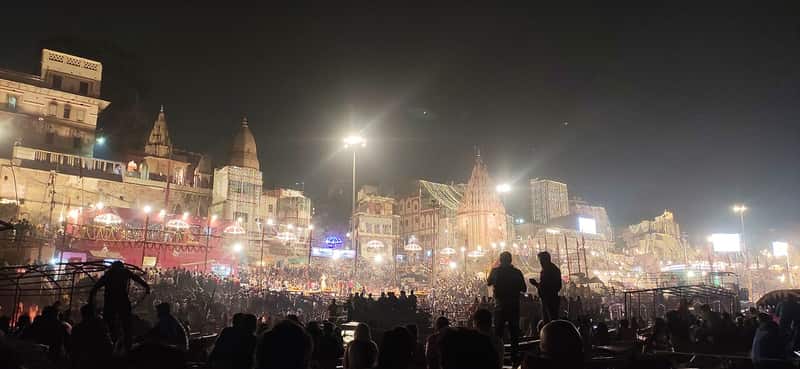
Adi Shitla Ghat is a working shrine as much as a tourist sight, and the first rule of the ghat is the same as the first rule of a neighbour's courtyard: behave as a guest. Dress modestly; shoulders and knees covered are the safest choice for both men and women. Remove footwear before entering the small shrines, and do not sit on the raised platforms where offerings are kept. If a bather is deep in prayer — eyes closed, mouth moving, body still — do not walk between them and the sun, and do not interrupt. The bath is sacred, and the cold water that is a pleasure for a visitor may be a penance or a promise for the local person.
Photography is the great temptation of the ghat and the great test of the traveller. The colours of dawn, the boatmen, the wrinkled faces of the old bathers — all invite the camera. Ask before photographing people, especially women and sadhus, and lower the camera when asked; a refusal given without resentment is a small offering to the goddess of good manners. Keep a respectful distance from children being bathed, and never photograph a ritual of healing or mourning without explicit permission.
Finally, the ghat asks only that you leave it as you found it. Plastic, bottles and food wrappers must never go into the river; the Ganga is a goddess, and even her waste belongs in the bins above the steps. Do not wash soap into the water while bathers are present, and do not block the steps with bags and tripods. Sit low, speak softly, buy your chai and your boat ride with a smile, and let the ghat keep its rhythm. A visitor who respects the river will always be welcomed back by the river's people — and by the cooling goddess who watches over them all.
Reaching Adi Shitla Ghat
Adi Shitla Ghat sits on the northern riverfront, between Raj Ghat and Brahma Ghat, and is easy to reach but easy to miss. From Varanasi Junction railway station, take an auto-rickshaw or a cycle rickshaw towards Raj Ghat, a ride of roughly half an hour through the lanes of the old city; ask the driver for the Shitala ghat of the north, and walk the last few hundred metres down to the water. From the central ghats, a boat from Dashashwamedh is the most beautiful approach — forty minutes upstream past Manikarnika, watching the city's face change from gold to stone as the river runs north.
The best time to visit is between October and March, when the mornings are cool and the water has retreated from the highest steps. Come at sunrise for the bathing hour and the pink light on the bridge; come again at sunset for the view downriver. Between July and September the monsoon floods the lower ghats, the steps vanish under the current and bathing is not possible; even then, the view of the river in full power is worth the walk. Comfortable shoes matter more than anywhere else in Varanasi — the steps are old, uneven and often wet.
Plan to stay two or three hours. Take the walk north to Raj Ghat and the old archaeological mound; return south to Brahma Ghat and its rare temple of the creator god; stop for chai in the lanes and for a plate of peda from the sweet shops. Carry water, respect the ghat's customs, and hire a boatman for the return with a fare agreed in advance. Small, quiet and deeply old, Adi Shitla Ghat is the perfect introduction to the northern riverfront — and the perfect place to begin a lifelong friendship with the Ganga and with the cool-eyed goddess who guards its steps.
Adi Shitla Ghat — Gallery (12 Photos)
Image Credits
adi-shitla-01.jpg · adi-shitla-02.jpg · adi-shitla-03.jpg · adi-shitla-04.jpg · adi-shitla-05.jpg · adi-shitla-06.jpg · adi-shitla-07.jpg · adi-shitla-08.jpg · adi-shitla-09.jpg · adi-shitla-10.jpg · adi-shitla-11.jpg · adi-shitla-12.jpg — Wikimedia Commons, under free licenses.
Continue exploring
Similar Ghats Nearby
Book This Ghat — Get Notified
Download the app now and book a boat ride to Adi Shitla Ghat