

Badri Narayan Ghat
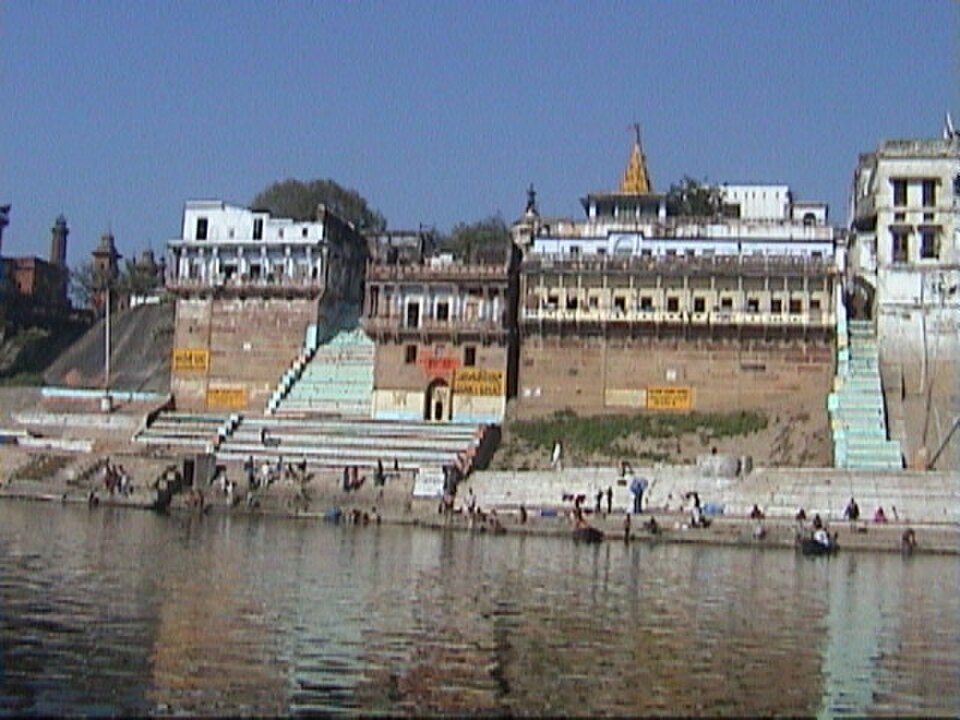
Neighbourhood GhatBadri Narayan Ghat is a famous ghat named after Lord Vishnu. It has a famous Badri Narain temple.


Type
Neighbourhood Ghat
Boat Fare
1x base fare
Best Time
6-10 AM when morning light illuminates the temple.
History
Named after Lord Vishnu. A famous Badri Narain temple is at the ghat center.
Highlights
- Memory of Badrinath
- Symbol of Vishnu devotion
- Peaceful northern bathing site
Festivals & Events
How pricing works in the NaviX app
No haggling at the ghat — everything is fixed in the app first
- 1
Fixed price before you board
The fare is shown in the app upfront — no bargaining at the ghat
- 2
Sharing or private — your choice
Share with fellow travelers or take the whole boat for your group
- 3
Pay only after the ride
UPI, card or cash — with an instant receipt
Daily at sunrise
Flowers and sweets offered to the deity on the ghat
Complete Guide
Badri Narayan Ghat — The Complete Guide
History, mythology, rites and practical details — everything in depth.
On this page
- 1.Badri Narayan Ghat — A Quiet Step on the Sacred River
- 2.Badri Narayan — The Lord of the Mountain and the River
- 3.The Deity and the Naming of the Ghat
- 4.Morning Bathing for Merit and Purity
- 5.Bathers, Boatmen and the Life of the Ghat
- 6.The River and the View from the Steps
- 7.The Lanes and Mohalla Behind the Ghat
- 8.Neighbours — Lal Ghat and Trilochan Ghat
- 9.Festivals of the Northern Riverfront
- 10.A Devoted and Serene Character
- 11.Respectful Conduct at the Ghat
- 12.Reach, Best Time and Nearby Ghats
📅 Updated: 21 Aug 2026 · Author: NaviX Field Team (field research 2024-26) · 12 sections · 12 photos
Badri Narayan Ghat — A Quiet Step on the Sacred River
Badri Narayan Ghat is one of the small, unpretentious landing places that make up the long chain of ghats along Varanasi's northern riverfront. It sits quietly between Lal Ghat and Trilochan Ghat, a modest flight of stone steps where the city meets the Ganga without ceremony or spectacle. No great temple towers rise behind it, no royal palaces frame its horizon, and no tour buses stop at its head. What the ghat offers instead is something more intimate: a working corner of the river where pilgrims arrive at dawn to bathe, boatmen tie up their wooden craft, and the life of the old neighbourhood spills down to the water in a steady, unhurried stream. For travellers who have seen the crowds of Dashashwamedh or the fires of Manikarnika, this quiet stretch comes as a kind of release, a place where the holiness of Kashi is felt rather than performed.
The ghat takes its name from Badri Narayan, a form of Lord Vishnu whose most famous shrine stands in the far Himalayan valley of Badrinath. Here in Varanasi the name is carried by a small shrine and a community of devotees who have tended it for generations. Pilgrims come to the ghat not for any great festival or royal monument but for something simpler: a bath in the sacred river, a darshan of the deity, and a few quiet moments of prayer. The steps are old and worn, patched here and there with cement, their stone polished by decades of bare feet. Everything about the place speaks of continuity rather than grandeur, and that is precisely the quality that endears it to the people of the neighbourhood who call it simply their ghat.
This guide walks through the ghat section by section, from the story of the deity whose name it carries to the practical details of reaching it. Along the way it explores the morning ritual of bathing, the daily life of bathers and boatmen, the river itself in its changing seasons, the lanes and mohalla behind the steps, the neighbouring ghats of Lal and Trilochan, the festivals that brighten the year, and the quiet etiquette that keeps the ghat a place of worship rather than a spectacle. The aim is simple: to help a traveller slow down, look closely, and understand a small ghat that holds a genuine piece of the living faith and ordinary life of Varanasi. It is written for those who prefer the unhurried hours of the river to the loudest moments of the city, and who know that the soul of Kashi is often best met where the crowd is thinnest.

Badri Narayan — The Lord of the Mountain and the River
The Badri Narayan of the ghat is the same deity whose golden temple stands more than three thousand metres up in the Garhwal Himalayas, at a place called Badrinath. In that high valley, Vishnu is worshipped in the form of a black stone image, flanked by Nara and Narayana, the divine sages said to have performed penance there for thousands of years. The name Badri comes from the badri berry, the wild Himalayan jujube, for legend says that Lakshmi, in the form of a berry bush, once sheltered her husband from the cold as he meditated in the mountain snow. The little shrine on this ghat carries the same name and the same image, a memory of the high mountains brought down to the sacred river.
In Kashi, the worship of Badri Narayan has always had a special place. The city's own legends claim that Vishnu's footprints — the Charanpaduka — rest on its ghats, and pilgrims who cannot travel the long road to the Himalayas find the mountain deity here in miniature, beside the Ganga. On the ghat, the deity is honoured with morning aarti, offerings of flowers and sweets, and the deep reverence of bathers who pause before the shrine after their dip. For many local families, Badri Narayan is a household god, prayed to at weddings, births and housewarmings, and the ghat is the place where those private devotions meet the public river.
Devotion here is unhurried and unshowy. Worshippers do not crowd the shrine; they come alone or in twos, at dawn or dusk, touch their foreheads to the cold stone, and sit for a while with folded hands. The deity of Badrinath is a god of renunciation and patience, and the worship at his Varanasi shrine reflects that mood faithfully. Standing on the ghat with the river running past, one understands how the same Lord Vishnu can watch over snow peaks in the north and bathing steps in the east, two holy places joined by a single thread of faith. The devotees themselves will tell you that the mountain temple and the riverside shrine are not two gods but one, and that the Ganga carries the blessing of Badrinath to every soul who dips in her water here.
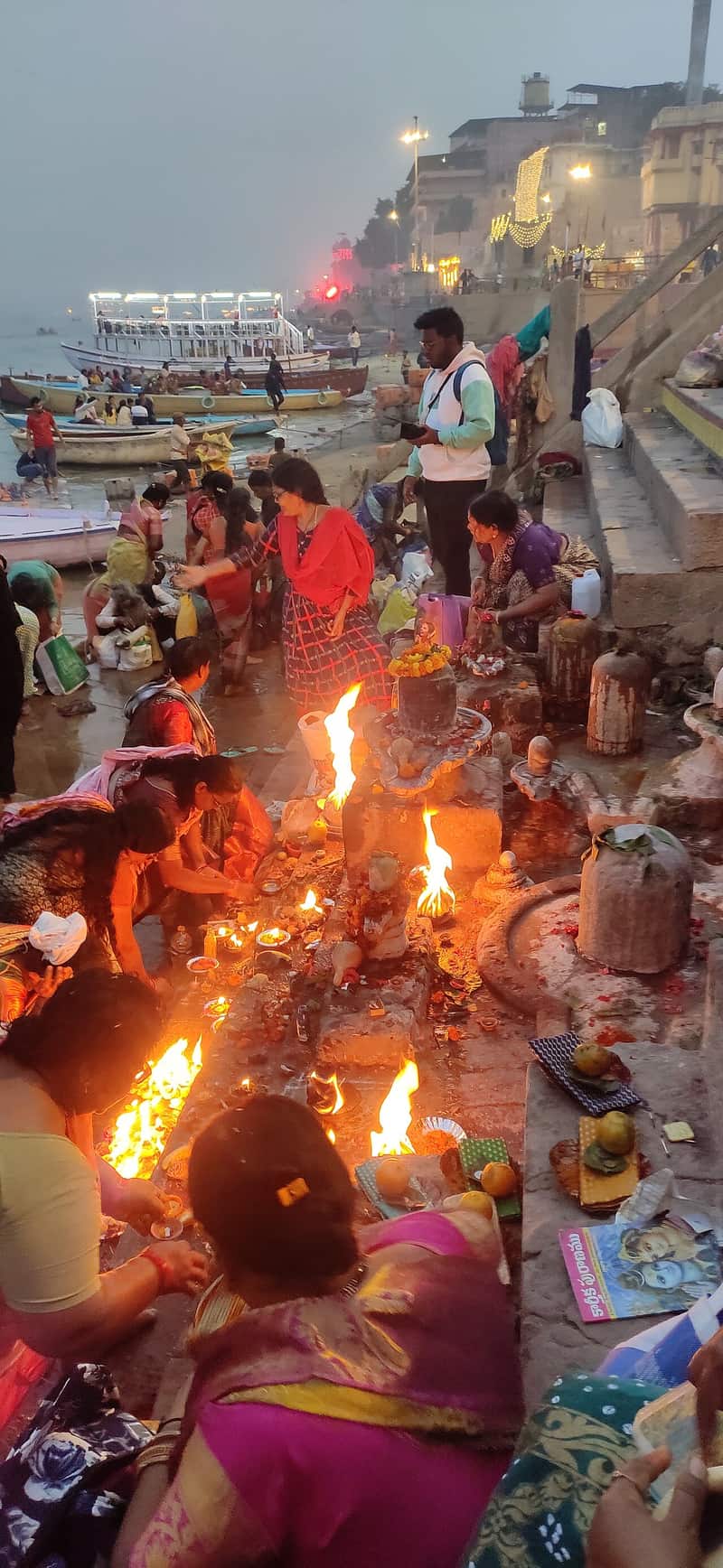
The Deity and the Naming of the Ghat
Like most ghats of the northern riverfront, Badri Narayan Ghat is named for the deity enshrined at its head. The practice is an old one in Varanasi: a ghat takes the name of the god who watches over it, so that the water itself becomes an address of faith. The small temple behind the steps, with its image of Vishnu as Badri Narayan, is the reason the ghat is known by this name in pilgrims' books and boatmen's calls alike. Local records, pilgrims' guides and the memory of the neighbourhood all point to the same simple fact: where the shrine stands, the ghat is called by its god.
The name also places the ghat within a wider geography of Vishnu worship along the river. Not far away stand ghats associated with other forms of the same deity, and the northern stretch of the riverfront is rich in these quiet Vishnu shrines, each with its own story. Unlike the great ghats named for kings or queens, Badri Narayan Ghat carries a name given by faith rather than patronage. There is no inscription recording the day it was built, no chronicle listing the patron who paid for the stone. The name simply grew with the ghat, spoken aloud every morning by a bather telling a friend where he had been, and written in the ledger of a hundred small histories of the neighbourhood.
Naming, in this city, is a form of remembering. Every time the boatman calls out the ghat's name or a pilgrim writes it in a diary, the old identity of the place is renewed. The deity's name and the ghat's name have become one thing, inseparable in the speech of the neighbourhood. To learn why the ghat is called Badri Narayan is to understand how faith names a city, one stone landing at a time, and how a devotion born in the high Himalayas came to rest, small and unassuming, at the edge of the holiest river in India. The name is both an address and a prayer, and it is spoken with the same quiet affection by the boatman, the priest and the bather, each of whom repeats it a dozen times a day without ever growing tired of its sound.
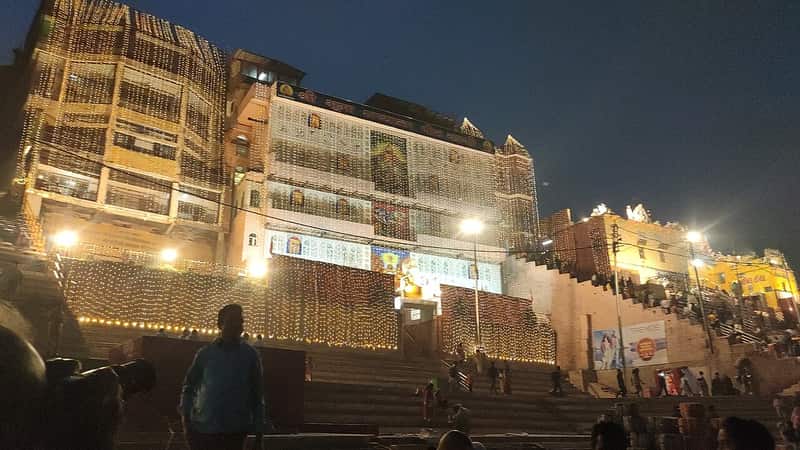
Morning Bathing for Merit and Purity
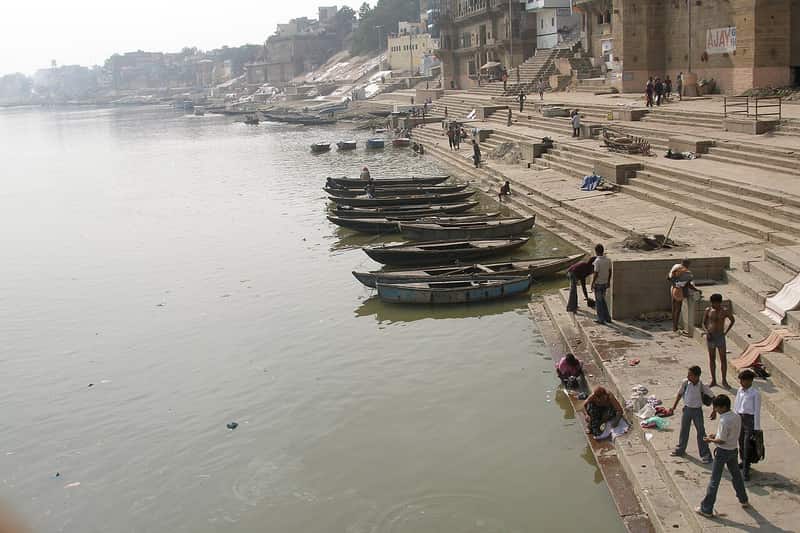
For most of the year, the day at Badri Narayan Ghat begins in the dark. Before the sun rises over the eastern bank, the first bathers arrive — old men with towels over their shoulders, women with brass lotas of river water, whole families moving quietly down the worn steps. They bathe for merit, for the purification that the Ganga is believed to grant, dipping three times, offering water to the sun, whispering mantras that have been recited on this shore for uncounted generations. The bath is not a brisk swim but a slow, careful ritual, and those who complete it sit on the steps to dry themselves, their wet clothes spread on the stone like a daily offering.
Hindus believe that bathing in the Ganga at Varanasi washes away accumulated sin and brings the blessing of the city's liberating power. At a small ghat like this, the belief is held with particular quietness. There is no crowd jostling for a place, no photographer, no drama; a woman pours water from her lota over her head, a man touches the water to his lips and his forehead, a child copies the grown-ups without quite understanding why. The elderly come here because the gentle steps are easy to manage, and the water at this northern stretch is open and clean. Some bring milk and flowers to float downstream, and some take home a small vessel of Ganga water to pour into the household shrine.
The bath is also a social hour. While they wait for their clothes to dry, the bathers exchange news, discuss the price of ghee, and call out greetings to the boatmen. In this way the morning dip renews not only the soul but the bonds of the neighbourhood, keeping alive the small courtesies that hold an old quarter together. By the time the sun is high, the steps empty again, and the ghat returns to the boatmen and the quiet lapping of the water, as if the whole community had simply stepped into the river and risen out of it blessed for another day. Visitors who bathe alongside the locals are always struck by the dignity of the ritual, and by the way the ghat absorbs strangers into its morning rhythm without fuss or fanfare.
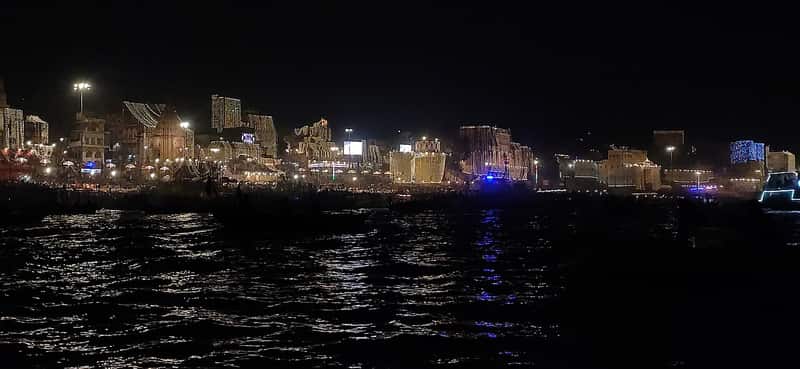
Bathers, Boatmen and the Life of the Ghat
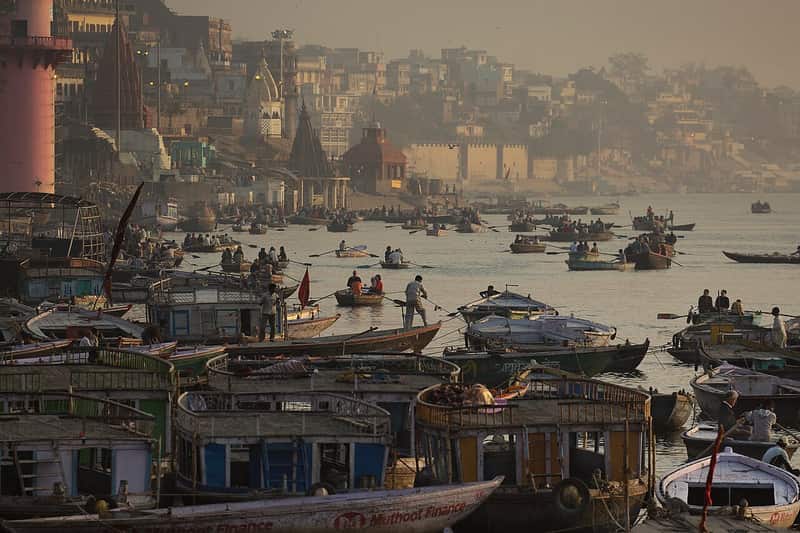
Beyond the morning bath, Badri Narayan Ghat is a working place, and its everyday life is a small drama that repeats itself daily. Boatmen are its most constant residents: they arrive at first light to untie the long wooden craft that carry pilgrims and tourists between the ghats, mending nets and ropes, calling out to each other in the easy dialect of the river. Their boats sit low in the water, painted in stripes of green and red, and their knowledge of the current, the sandbanks and the moods of the river is passed from father to son. A traveller who lingers will often hear one of them recite the long list of ghats the way other men recite poetry.
The rest of the neighbourhood comes and goes through the day. Women from the lanes behind the ghat arrive with brass pots to fill with river water, washing clothes at the stone slabs worn smooth by the work. Children skip stones and splash at the waterline while their mothers keep half an eye on them. Vendors set out small baskets of flowers, marigolds and red hibiscus for the shrine of Badri Narayan, and a tea seller balances his kettle down the steps around mid-morning. A cow or two descend to drink, and the sadhus who have made the ghat their home sit with their alms bowls, watching the river with the patience of men who have learned not to count time.
What strikes a visitor most is the absence of hurry. Nobody at Badri Narayan Ghat is performing for anyone; the work, the worship and the gossip are all just the texture of an ordinary day on the Ganga. Fishermen spread their nets in the shallows, a barber sets up his chair on the steps for the evening shave, and the boatmen settle into a game of cards under the hull of an upturned craft. This is the daily life that keeps the ghat alive long after the pilgrims have gone home, and it is the same life that has sustained this stretch of shore for centuries. To sit among these working people is to be reminded that the Ganga is not only a goddess but a livelihood, and that the holiness of Varanasi rests on the shoulders of ordinary men and women who rise before the sun and go about their craft without complaint.
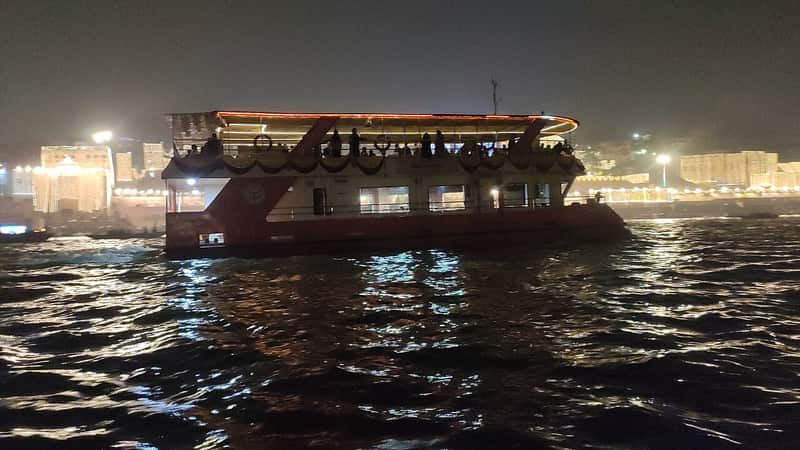
The River and the View from the Steps
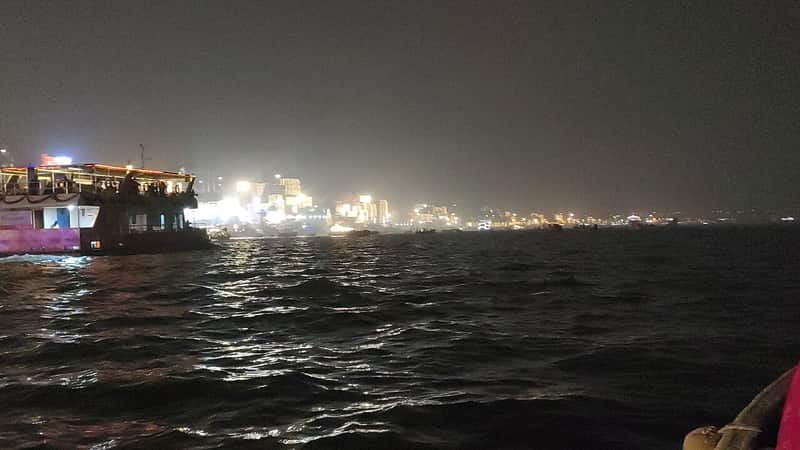
The river at Badri Narayan Ghat is the Ganga in its widest and most open mood. At this northern stretch of Varanasi, the holy stream flows broad and slow, and the far bank lies far across the water, a green fringe of trees and villages instead of the packed skyline seen from the central ghats. In the dry season the river withdraws, leaving sandbanks that glitter in the morning light and turn the ghat into a gentle beach; in the monsoon it rises to near the top of the steps, lapping at the last stone with the power of the whole Himalayan catchment behind it. Either way, the river here feels like a presence rather than a backdrop, and the ghat was built to face it with humility.
The view repays those who sit and watch. At dawn, the sun climbs over the eastern sandbanks and lays a path of gold across the water, while the smoke of cooking fires rises from the far villages. Fishermen's boats drift past, each with a small lamp and a net; kingfishers flash blue along the waterline. As evening falls, the light runs red over the rooftops of the western bank, the aarti lamps begin to glow on ghats upstream, and the river turns to a sheet of darkening glass. On moonlit nights in the cool season, the silver water is so calm that the reflection of the stars seems to continue into the deep.
For Hindus, this river is not scenery but deity. The Ganga is worshipped here as a living mother, and the ghat exists to touch her. A boatman will tell you that the water he rows on every day is the same water that carries the ashes of the faithful toward the sea and the same water the gods showered on Shiva's head when she fell from the heavens. The bathers who stand waist-deep in the current are not swimming but praying, and the dip itself is a conversation with the divine. To spend an hour watching the river from Badri Narayan Ghat is to understand why this stretch of water is called the most sacred in India, and why its calm, immense presence still draws the devotion of millions, year after year, with a pull that no drought of faith seems able to weaken.
The Lanes and Mohalla Behind the Ghat
Behind Badri Narayan Ghat lies a neighbourhood of narrow lanes and old houses that belongs to the older, quieter Varanasi. The mohalla climbs away from the river in a tangle of alleys barely wide enough for two people, shaded by balconies that lean toward each other across the sky. The houses are built of brick and plaster, some painted in fading colours, their doorways framed by the tulsi plant in its pot and the swastika symbols of household blessing. Every few steps there is a small shrine — a lingam in a niche, a peepal tree with a stone platform at its foot, a figure of Hanuman daubed with vermilion — and the lanes carry the smell of wood smoke, frying spices and the faint mustiness of old stone.
This is a residential mohalla, and its rhythms are those of family life. In the morning the lanes fill with schoolchildren in uniforms, milkmen making their rounds and the first customers of the small shops that sell everything from buttons to bananas. Women draw water, sweep the thresholds and decorate the doorways with rangoli; in the evening the men gather at the chai stalls to talk politics and prices. The families who live here have done so for generations, and many still keep the accounts of the ghat's little temple, or know by heart the dates of its festivals, or remember the floods of particular years and how high the water rose.
The lanes also hold surprises for the wandering visitor: a sweet shop famous only locally, a tailor's workshop where a sewing machine has hummed for sixty years, a tiny courtyard temple with an old image polished by a century of oil lamps. The neighbourhood guards its privacy, but a courteous namaste is answered with genuine warmth, and a visitor who lingers without prying will be offered tea more often than not. Walking these lanes, one sees how closely the ghat and the mohalla are woven together, how the whole quarter breathes through the river, and how the pilgrim's bath is only the most visible thread in a web of daily life that has been spun here for centuries. The lanes give the ghat its people, and the people give the ghat its living faith.
Neighbours — Lal Ghat and Trilochan Ghat
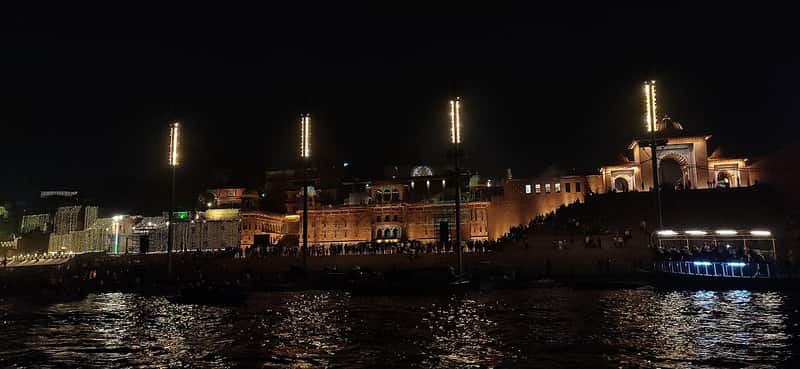
Badri Narayan Ghat is not an isolated spot but a link in the long chain of landing places that runs along this stretch of the northern riverfront. On one side lies Lal Ghat, whose name speaks of the red colour that once marked its buildings, a small and modest ghat of the same character, beloved of the same neighbourhood. On the other side, within an easy walk, stands Trilochan Ghat, one of the more significant ghats of this area, named for Shiva as the god of the three eyes and famous for the temple where the deity is said to gaze from three windows across the river. Walking from one to the other takes barely ten minutes, and the short stretch is one of the most pleasant riverside promenades in the city.
Trilochan Ghat deserves particular attention. Its name means the ghat of the three-eyed one, and its temple, built on high ground above the river, commands a famous view from its triple windows — the eyes of Shiva looking out across the Ganga. It is one of the oldest ghats of the city, with a history and legends of its own, and it attracts both pilgrims and travellers. In the eighteenth century the ghat was rebuilt, and it stands today as a handsome structure of steps and terraces that has long served as the ceremonial centre of this quarter. A visitor to Badri Narayan Ghat should not leave without climbing to Trilochan to see the river from above.
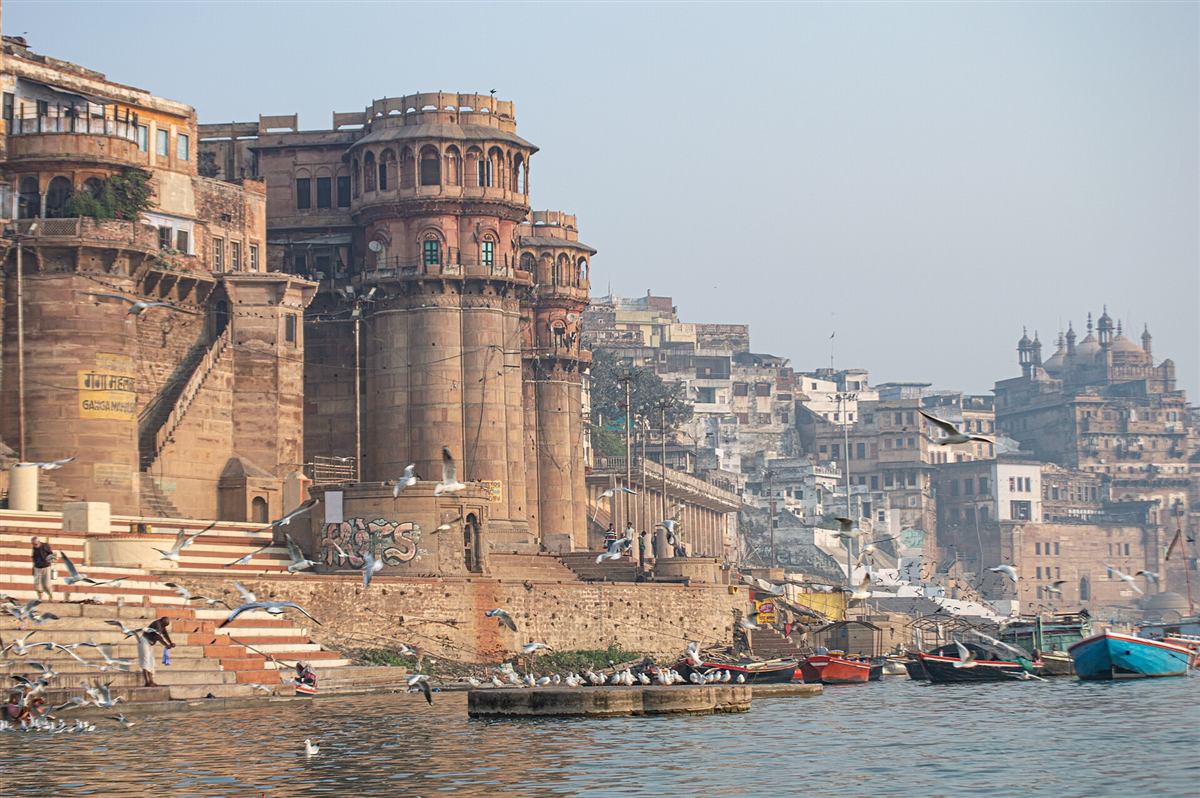
The stretch between the ghats also reveals the older riverfront beyond: the plain of Rajghat and the sites of the ancient city, the railway bridge that spans the river on its tall girders, and the procession of small ghats — Gai, Lal, Badri Narayan, Trilochan and others — each with its own shrine and its own stories. Seen from the water, these ghats form a continuous ribbon of stone and faith, and a slow boat ride along them is the best way to understand how the northern riverfront lives. Together with its neighbours, Badri Narayan Ghat reminds the traveller that Varanasi's holiness is not concentrated in a few famous spots but woven through the entire crescent of the river, so that even the humblest landing place holds a share of the city's sacred power.
Festivals of the Northern Riverfront
Though Badri Narayan Ghat is small, it takes its full part in the festivals of the year, and the neighbourhood celebrates them with a warmth that no guidebook can capture. The greatest of these is Kartik Purnima, the full moon of the month of Kartik, when the whole northern riverfront comes alive. Pilgrims bathe at dawn in huge numbers, lamps are floated on the river in the evening, and the ghat is festooned with lights and marigold garlands. The shrine of Badri Narayan is decorated and honoured with a special aarti, and the steps fill with families who have come down from the lanes to sit by the water until the moon rises over the far bank.
Later in the cool season, Dev Deepawali — the festival of the gods' own lamps, held on the full moon after Diwali — turns the river into a carpet of flame. Every ghat, large or small, sets out thousands of oil lamps on the steps and the water, and Badri Narayan Ghat glows with the same dedication as the grand ones upstream, its reflection shaking in the current. The whole month of Kartik, the traditional month of morning bathing, brings daily processions of pilgrims to the ghat, and the boatmen work their hardest season. Other festivals, too, touch the ghat in their turn: Ganga Dussehra in late spring, when the river's descent to earth is celebrated; Makar Sankranti with its ritual bathing; and the quieter local fairs that belong to the neighbourhood's own calendar.
What marks these celebrations at a small ghat is their intimacy. There are no grandstands, no loudspeaker announcements of the next show, no police barricades. Families bring their own diyas and their own sweets; the aarti is performed by the neighbourhood's own priest; and after the ceremony the crowd dissolves back into the lanes, carrying the festival home with them. For a traveller, these are the moments when the ghat is most truly itself — a place where the sacred is not displayed for visitors but lived, season after season, by a community that has celebrated the same festivals on the same steps for as long as anyone can remember. The lights fade, the river returns to its murmur, and the ghat settles back into the patient calm from which all its festivals arise.
A Devoted and Serene Character
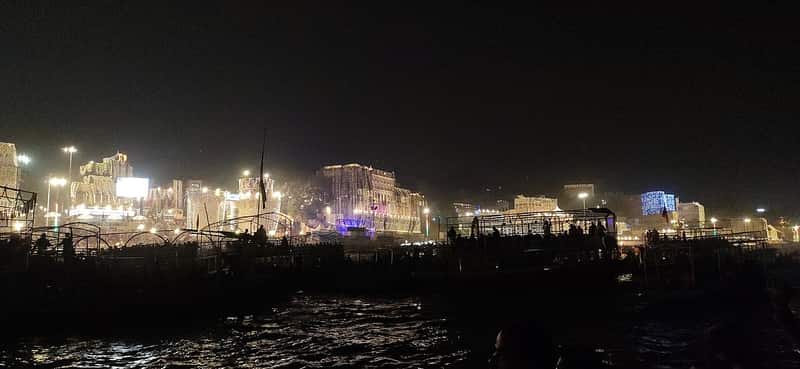
The character of Badri Narayan Ghat is best described in one word: serene. It is a place where devotion expresses itself in stillness rather than spectacle. Pilgrims who come here are often seeking exactly that — a corner of Kashi away from the clamour where prayer feels personal. The shrine is small, the aarti is unhurried, and the river is wide and calm, so that the whole atmosphere of the ghat invites a quietening of the mind. Elderly pilgrims from the neighbourhood sit on the steps for hours, their beads moving through their fingers; sadhus rest against the temple wall; and even the boatmen speak in lowered voices when the morning prayers begin.
This serenity is part of the ghat's oldest tradition. In Varanasi, the northern ghats have long been considered the quieter quarter of the sacred city, the place of retreat and renunciation, where the city's spiritual energy runs deep rather than loud. The worship of Badri Narayan, a deity of the silent Himalayas, belongs naturally to this mood. Here a devotee does not need to perform; the river, the steps and the shrine do the work of grace. Many of those who bathe at the ghat describe the feeling afterwards as one of release — of leaving the noise of the city, and of the mind, at the water's edge.
To witness this devotion is to see the faith of Varanasi in its essential form. The great ghats show the city's religion in full festival dress; a small ghat like this one shows its everyday heart. A woman pouring water for her ancestors, a boatman touching the river before his first trip of the day, an old man offering flowers to the image of Badri Narayan — these small gestures, repeated daily, are the real worship of Kashi. The visitor who sits quietly at the ghat and simply watches may well leave with the deepest impression of all: that holiness here is not something performed, but something breathed. The serenity of Badri Narayan Ghat is not an absence of devotion but its purest form, the kind that asks for nothing and gives everything.

Respectful Conduct at the Ghat
A small ghat like Badri Narayan is a place of living worship, not a stage, and visitors who approach it with courtesy will be received with courtesy. Modest dress is the first rule — shoulders and knees covered, as at any sacred site in India. Shoes should be left at the top of the steps or at the shrine, as local custom demands, and before bathing or taking photographs it is always proper to ask. Bathing itself is welcome at this friendly ghat, but the water at this northern stretch can be deep and swift near the steps; the wise visitor stays close to the shore and follows the example of the locals, who bathe with calm and control, never venturing into the current.
Photography deserves particular care. The bathers are performing a private act of faith, and the wise traveller asks permission before aiming a camera at them; many will politely refuse, and that refusal must be accepted with grace. The shrine of Badri Narayan should be photographed, if at all, from the outside, and never while the priest is performing the aarti. Offerings, if you wish to make them, are simple: flowers, sweets or a small donation in the temple's box are all appropriate. No one at the ghat will press you to buy anything or force any service upon you; the touts of the central ghats have not found their way here, and the visitor should keep it that way by not encouraging them.
Finally, remember that this is a working neighbourhood. The lanes behind the ghat are people's homes; the steps are their courtyard; the river is their livelihood. Speak softly, do not block the way of a woman carrying water, and do not treat the resident sadhus or boatmen as exhibits. A namaste and a smile go a long way, and the patience the neighbourhood shows to respectful strangers is legendary. By observing these simple courtesies, the visitor honours not only the ghat and its deity but the community that keeps the worship of Badri Narayan alive on this quiet stretch of the Ganga. In return, the ghat offers what it has always offered: a few unhurried hours beside the holiest river in India, undisturbed by crowds and blessed by stillness.
Reach, Best Time and Nearby Ghats
Reaching Badri Narayan Ghat is not difficult, though the visitor must leave the main tourist circuit. The ghat lies on the northern riverfront, between Lal Ghat and Trilochan Ghat, in the neighbourhood of the old city known for its quiet lanes. From Dashashwamedh Ghat, the city's centre, one can walk north along the river for about twenty minutes, passing ghat after ghat, or take a cycle rickshaw through the lanes — an adventure in itself. By boat it is a pleasant half-hour journey upstream, and many boatmen will happily combine a visit with a stop at Trilochan Ghat. Ask for Badri Narayan Ghat by name; everyone in the northern lanes knows it.
The best time to visit is early morning, when the first bathers arrive and the light is soft. Between about five and eight in the cool season, the ghat is at its most beautiful and most alive. Winter, from November to February, is the ideal season for bathing and lingering, with clear skies and pleasant days; summer and the monsoon bring heat and high water, when the steps may be partially submerged. Kartik Purnima and Dev Deepawali are the festival highlights of the year, drawing neighbourhood crowds, while on ordinary weekdays the visitor may well have the ghat almost to themselves. A visit of an hour — bathe or not, sit on the steps, watch the river — is enough to take away the ghat's true character.
Nearby, the visitor should not miss Trilochan Ghat and its famous temple, and the walk south passes a whole procession of historic ghats. The northern riverfront also offers the ancient sites of Rajghat, the remains of the oldest city of Varanasi, not far upstream. In short, Badri Narayan Ghat rewards the traveller who is willing to leave the crowds behind: a modest ghat, a simple shrine, a wide and sacred river, and one of the most peaceful hours that Kashi can offer. It is not a ghat that announces itself, but one that reveals itself slowly to those who sit long enough, and the quiet visitor will find that the ghat gives back far more than it demands — a memory of the Ganga at its gentlest, and of faith at its most personal.
Badri Narayan Ghat — Gallery (12 Photos)
Image Credits
badri-narayan-01.jpg · badri-narayan-02.jpg · badri-narayan-03.jpg · badri-narayan-04.jpg · badri-narayan-05.jpg · badri-narayan-06.jpg · badri-narayan-07.jpg · badri-narayan-08.jpg · badri-narayan-09.jpg · badri-narayan-10.jpg · badri-narayan-11.jpg · badri-narayan-12.jpg — Wikimedia Commons, under free licenses.
Continue exploring
Similar Ghats Nearby
Book This Ghat — Get Notified
Download the app now and book a boat ride to Badri Narayan Ghat