

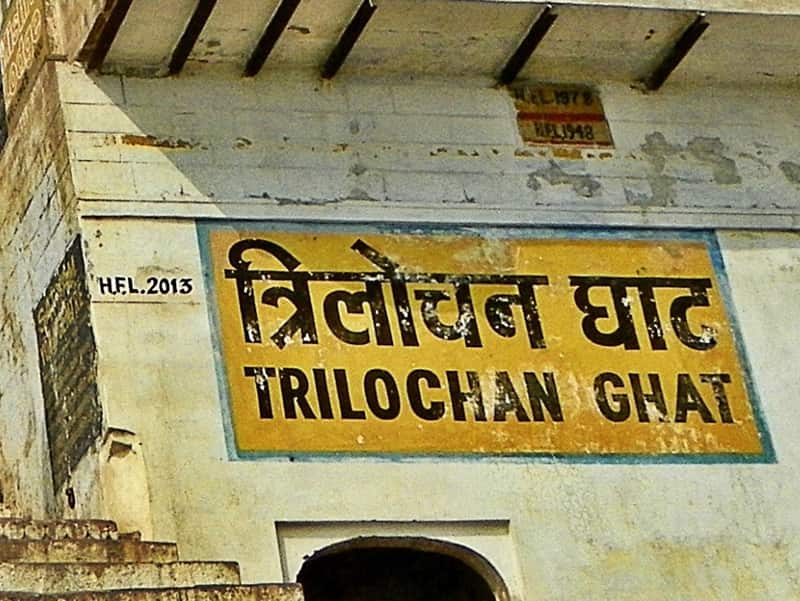
Trilochan Ghat
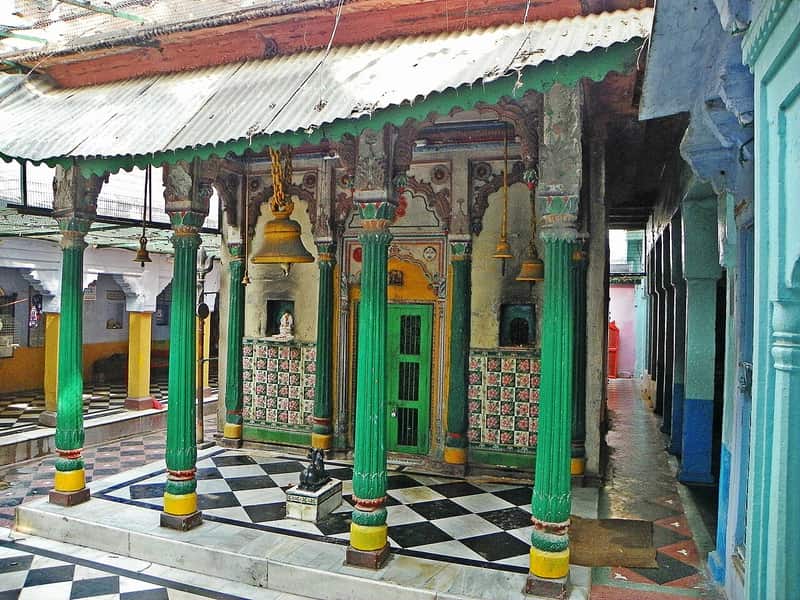
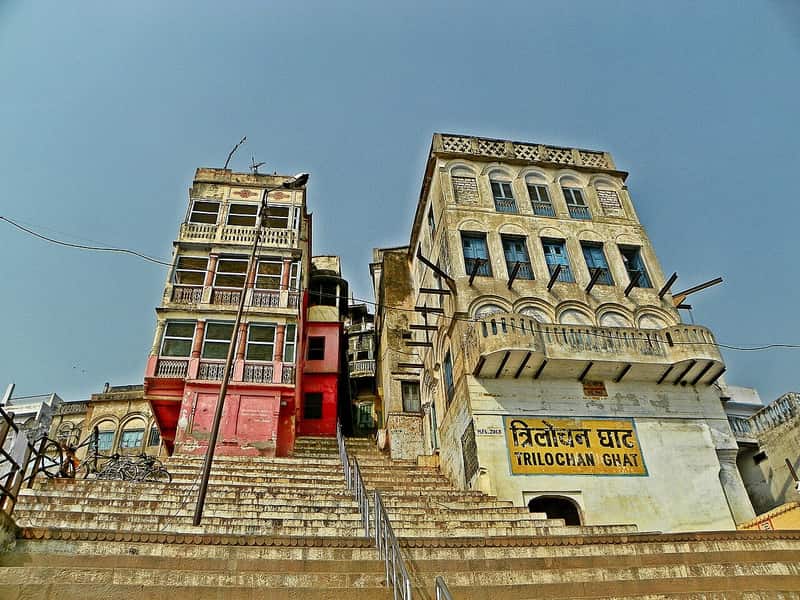
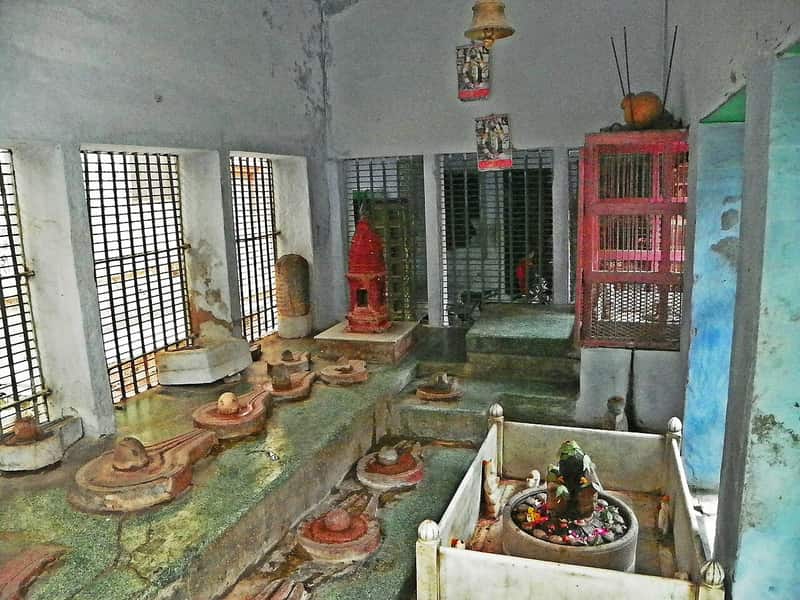
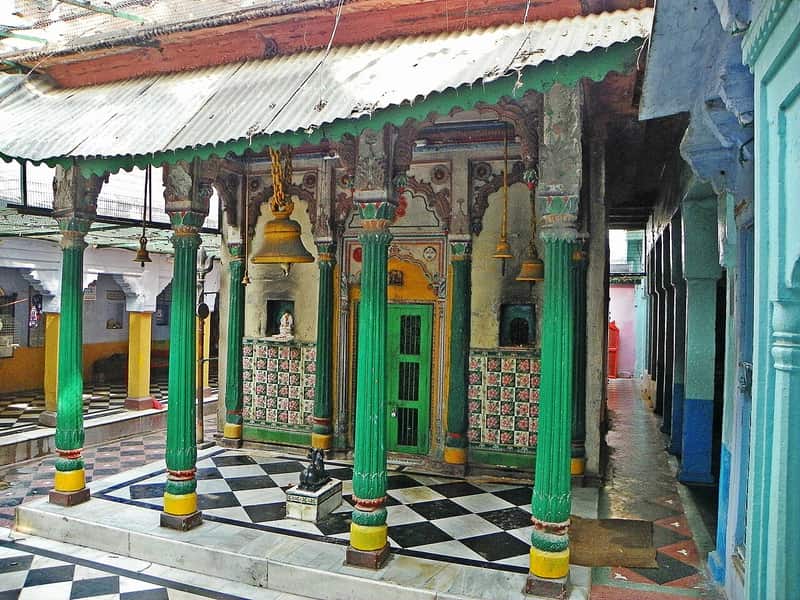
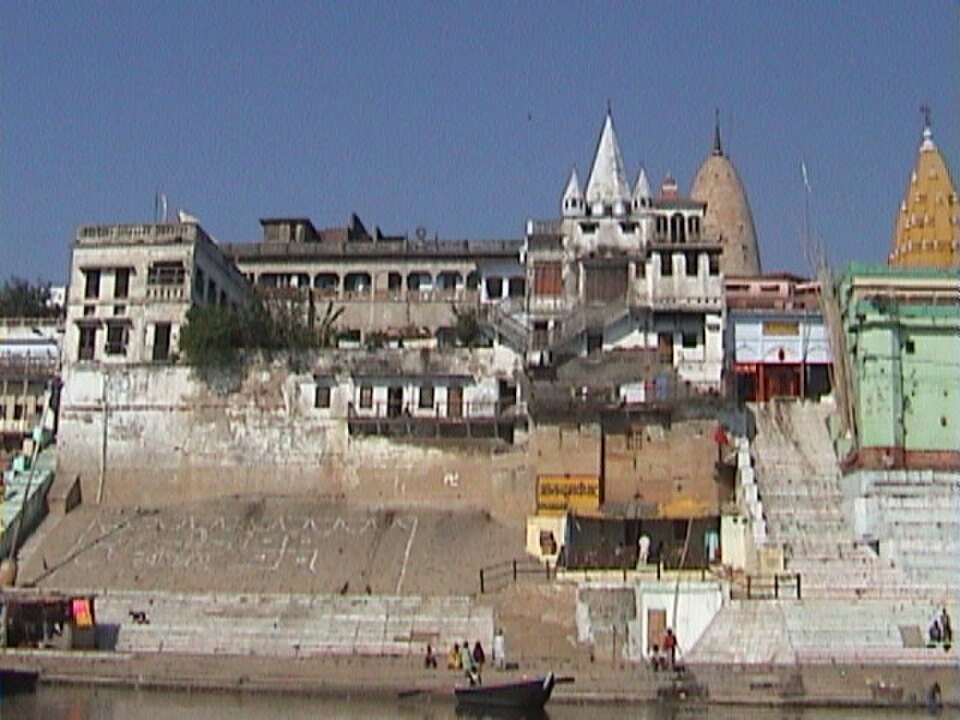
Heritage GhatTrilochan Ghat is a famous ghat named after Lord Shiva. It has a famous Trilochan temple.


Type
Heritage Ghat
Boat Fare
1x base fare
Best Time
6-10 AM when morning light illuminates the temple.
History
Named after Lord Shiva. A famous Trilochan temple is at the ghat center, located at the Yamuna riverbank.
Highlights
- Trilochan Mahadev temple (legend of the third eye)
- Morning and evening aarti
- Main ghat of northern Kashi
- Ancient Shiva architecture
Festivals & Events
How pricing works in the NaviX app
No haggling at the ghat — everything is fixed in the app first
- 1
Fixed price before you board
The fare is shown in the app upfront — no bargaining at the ghat
- 2
Sharing or private — your choice
Share with fellow travelers or take the whole boat for your group
- 3
Pay only after the ride
UPI, card or cash — with an instant receipt
6:00 AM & 6:00 PM
At the ancient Trilochan temple
Complete Guide
Trilochan Ghat — The Complete Guide
History, mythology, rites and practical details — everything in depth.
On this page
- 1.Trilochan Ghat: An Introduction
- 2.Lord Trilochan and the Legend
- 3.The Three-Eyed God and the Naming of the Ghat
- 4.The Morning Bath
- 5.Bathers, Boatmen and Daily Life
- 6.The River and the View
- 7.The Lanes and the Mohalla
- 8.Badri Narayan and the Neighbouring Ghats
- 9.The Mythic Character of the Ghat
- 10.Respectful Conduct for Visitors
- 11.Practical Information: Reach, Timing and Neighbours
📅 Updated: 21 Aug 2026 · Author: NaviX Field Team (field research 2024-26) · 11 sections · 11 photos
Trilochan Ghat: An Introduction
Trilochan Ghat stands on the northern riverfront of Varanasi, a modest landing of plain stone steps sharing the holy water with the grander ghats downstream. It takes its name from Lord Shiva as Trilochan, the three-eyed god, and local tradition holds that the deity himself once appeared on this very bank. There is no towering temple and no evening aarti of citywide fame; the ghat is simply itself, a place where the sacred and the everyday meet on the same worn stones. Pilgrims arrive at dawn for their ritual bath, boatmen knot their ropes along the edge, and the smell of incense mingles with the smoke of cooking fires rising from the houses behind the steps. The mythic and the ordinary share this landing without ceremony, and that is precisely its power.
The ghat belongs to the long chain of bathing places that lines the Ganga from Assi Ghat in the south to Raj Ghat in the north, and it sits in the northern stretch where the crowds of the central riverfront thin out. Its neighbours on this quiet stretch include Badri Narayan Ghat, with which it is often linked in pilgrim itineraries, and the older tradition of this whole quarter is steeped in devotional legend. Here the river is wide and the current strong, and the water carries a clean northern light that the photographers of the crowded ghats never quite capture. Bathers favour the sheltered pockets between the stone edges, boatmen ferry passengers across to the far sandbanks, and washermen beat cloth upon the steps as they have done for centuries. It is an intimate, honest corner of old Kashi, one that rewards patience rather than haste.
For the visitor, Trilochan Ghat is best approached as the northern ghats should be approached: slowly, early, and without a checklist. Arrive before sunrise and you will find the morning rituals unfolding in the half-dark, the first bathers chanting the name of the Ganga as they step into the chill water. By midday the landing belongs to the boatmen and the children of the neighbourhood; by evening the lamps glow along the edge and the river turns to hammered silver. The ghat asks nothing but attention, and it gives back a portrait of Varanasi that the guidebooks compress into a sentence. Modest, devotional, and deeply local, Trilochan is one of those places where the oldest city on earth shows its truest face — not in monuments, but in the daily, repeated acts of faith at the water's edge.
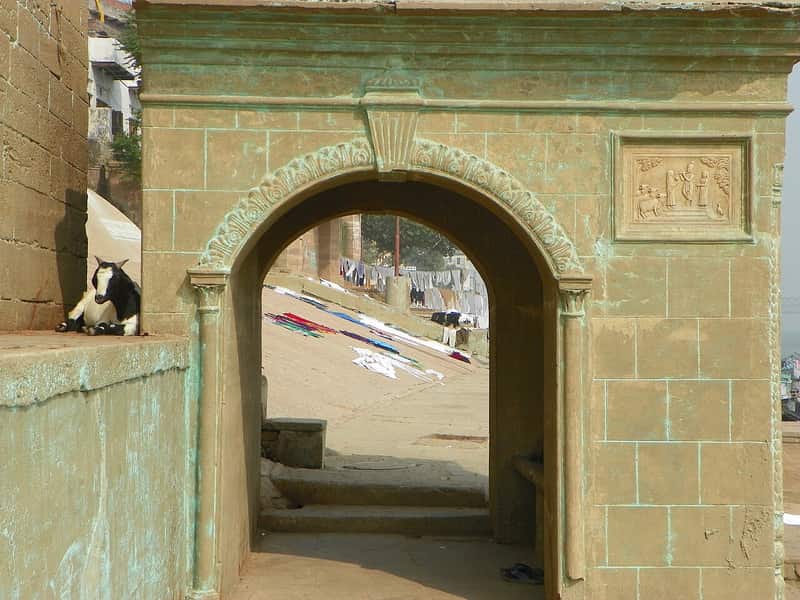
Lord Trilochan and the Legend
The legend at the heart of Trilochan Ghat concerns the appearance of Lord Shiva himself upon this bank. According to the tradition repeated by priests and pilgrims, Shiva appeared here in his form as Trilochan, the three-eyed one, and the spot has been considered sacred ever since. In Hindu belief the third eye of Shiva is no ornament: it is the eye of wisdom and of dissolution, the eye that burned the god of desire Kama to ashes and that will consume the universe at the end of time. Where the other two eyes see the world of forms, the third eye sees through appearances to the truth beneath them. To stand on a ghat that bears this name is to stand under the gaze of that vision, at a place where the fabric of the ordinary is held to be thin.
The mythology of Kashi is crowded with such appearances. Shiva is the lord of Varanasi itself, the city that he never leaves, and the stories say that he can be met at any bend of the river by those who have eyes to see him. Trilochan Ghat preserves this possibility more openly than most: its very name is a reminder that the divine may look upon this world with more than mortal sight. The old traditions link the name to the moment when the third eye blazed forth on this bank, and even today the shrine at the ghat draws devotees who come for a darshan of the three-eyed lord before taking their dip in the Ganga. The stone steps, the small lingam shrine, the morning light on the water — all of it forms part of the memory of that ancient appearance.
For the devotee, Shiva appearing here means that grace is present here in a particular way. The third eye is not only the eye of destruction; it is also the eye of compassion, the eye that sees the soul behind the body and the eternal behind the fleeting. At Trilochan Ghat, pilgrims pray that this eye may look upon them with kindness, that their own vision may be opened to the truth that the city teaches on every corner. The ghat thus offers something rarer than a scenic view: a mythic atmosphere in which the visible world seems to point beyond itself. Whether or not one shares the faith, the weight of the legend is tangible in the air, in the silence of the bathers, and in the certainty of the old men who sit on the upper steps and speak of Shiva as if he had left only an hour ago.
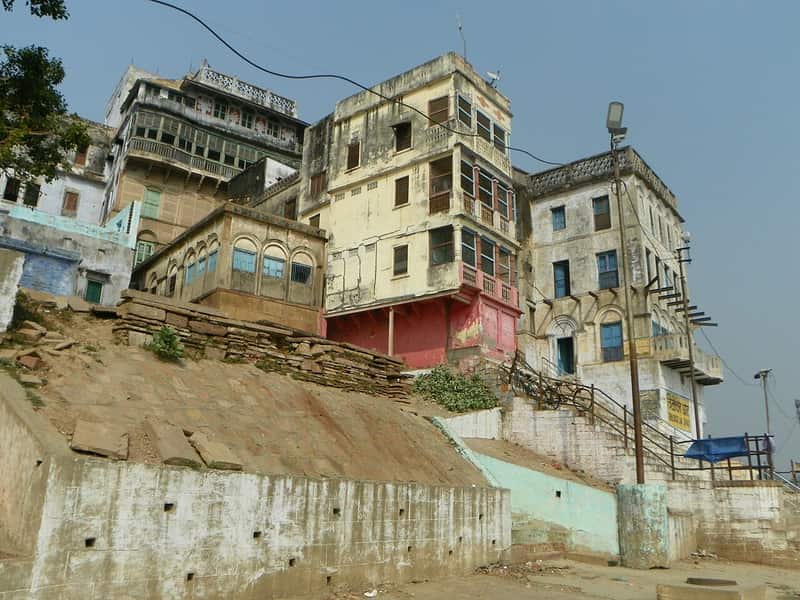
The Three-Eyed God and the Naming of the Ghat
The name Trilochan is built from two Sanskrit words: tri, meaning three, and lochan, meaning eyes. It is one of the oldest names of Shiva, appearing in the scriptures among the thousand names by which the god is invoked, and it refers to the third eye on his forehead, the eye of transcendent vision. In this quarter of the northern riverfront, the name was attached to the ghat at some point in the long history of Kashi, and no record survives of the exact day it was first used. What is certain is that the name carries the whole theology of the three-eyed god within a single word. Every time a bather says the name aloud, every time a boatman calls the landing by its title, the ancient meaning is renewed at the water's edge.
Local stories fill in the gap that the records leave open. One tradition says the ghat was named because Shiva stood here with his three eyes blazing, watching over the river and its worshippers. Another holds that a lingam consecrated here was installed in the name of Trilochan by a devotee who had a vision of the three-eyed form, and that the whole landing came to be called by the deity's name in the generations that followed. Priests at the ghat recite these versions with equal respect, choosing whichever suits the question of the pilgrim. The naming of ghats in Varanasi is rarely a matter of municipal convenience; it is an act of devotion that hardens into geography. What matters is not the year but the meaning, and the meaning has never changed: this landing belongs to the three-eyed lord.
The other eyes of Shiva enrich the name further. In the imagery of the scriptures, his right eye is the sun, his left eye the moon, and his third eye is fire — the flame that burns away illusion. To bathe at Trilochan Ghat, then, is to place oneself symbolically under sun, moon, and fire, the three lights that govern time and transformation. The name quietly ties the ghat to the great cycles of Hindu cosmology, in which Shiva is both the watcher and the destroyer of worlds. Visitors who learn this meaning find that the plain steps suddenly read like a page of scripture. A name that once seemed merely curious becomes a meditation: three eyes, three lights, one lord, and beneath them all, the endless river, which has been watching since before the name was ever spoken.
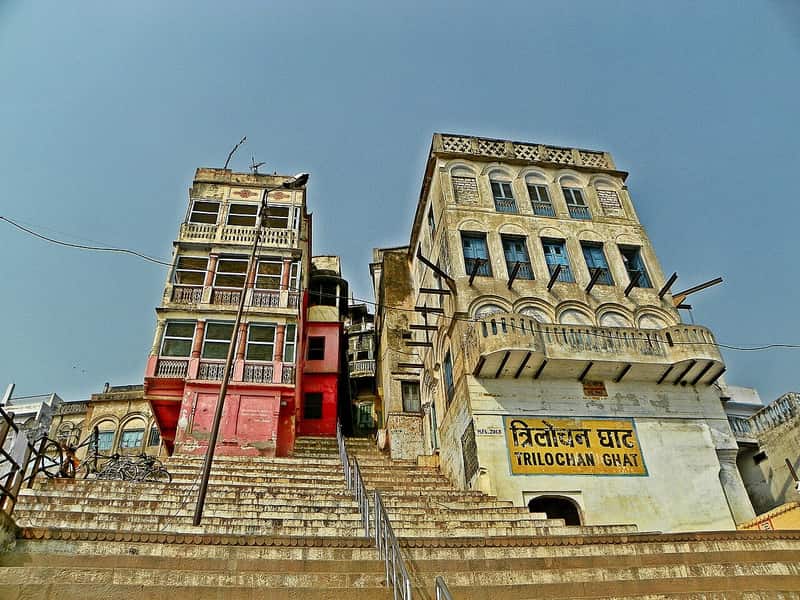
The Morning Bath
Bathing is the oldest work of Trilochan Ghat, and the morning ritual unfolds here with a simplicity that the crowded ghats have lost. Before the sun rises above the eastern horizon, the first bathers are already on the steps, carrying brass lotas, prayer cloths, and small pots of Ganga water to carry home. They descend in the half-darkness, chanting the name of the river, and enter the water with the deliberate reverence of a ritual that has not changed in centuries. The northern stretch of the Ganga is wide and swift here, and the chill of the water in the winter months is accepted without complaint; the cold is part of the offering. By first light the edge is lined with bathers, each absorbed in a private conversation with the river.
The bath at Trilochan is not a performance for visitors; it is the day's first duty. After their dip, bathers stand waist-deep, pour water for the rising sun, and murmur the morning mantras. Many carry a small lingam of clay or take a pinch of the river's silt as a blessing. Older traditions hold that bathing at a ghat named for the three-eyed lord carries particular merit, since the name itself invokes the divine presence believed to watch over this bank. For the men and women who come here daily, the distinction between the mythic and the everyday does not exist; the legend is simply the reason the water is holy, and the water is holy the way it has always been. The ritual, repeated ten thousand times a year, is the living thread that connects this ghat to its name.
Visitors who wish to join the bath should do so with the same quiet reverence. The etiquette is simple: arrive early, watch for a moment, ask if you may photograph, and enter the water slowly if you are comfortable. Locals make room with a nod; no one minds a respectful foreigner, and many will offer a word of guidance about the current, which runs strongly in this stretch. After the dip, sit on the steps and watch the morning unfold — the sun climbing over the water, the boatmen arriving, the first incense lit in the shrine above. A bath at Trilochan is not merely a swim; it is an act of participation in the oldest continuous ritual of this ancient riverfront, and it leaves the visitor feeling cleansed in a way no pool ever could.

Bathers, Boatmen and Daily Life
Between the rituals, Trilochan Ghat is a working place. The boatmen of the northern stretch moor their wooden vessels along its edge, mending nets, coiling ropes, and painting hulls between trips across the river. Some ferry passengers to the far bank, where the sand stretches toward the horizon; others carry pilgrims southward along the chain of ghats for the evening aartis. Washermen from the neighbourhood arrive with bundles of laundry and beat the cloth upon the stone steps with the rhythmic smack that has accompanied the Ganga for centuries. Milkmen cool their bottles in the shallows, children chase one another before school, and the small commerce of the day unfolds without fuss. The landing is never idle; even its quiet moments are the pause between two tides of activity.
The permanent life of the ghat gives it its human scale. Families live in the old houses crowded behind the steps, and their daily existence spills out onto the landing: women filling vessels at the public taps, shopkeepers opening stalls of prasad, flowers and sacred thread, grandmothers settling themselves on the upper steps with their beads. The ghat is not a stage but a street, and the people who use it are not actors but neighbours. This is what distinguishes the northern ghats from the grand showpieces of the centre: here the holy and the ordinary share the same stones without ceremony. The prayer and the washing of pots happen side by side, and the river blesses both equally. The stranger who joins this life, even for a single morning, understands at once why the riverfront is the true heart of every neighbourhood in Kashi.
For the traveller who lingers, these small scenes are the real portrait of Varanasi. A boatman sharing tea from a single glass, a grandmother showing a child how to fold a leaf offering, two friends arguing cheerfully over the price of a boat ride — this is the daily life that postcards leave out. Trilochan Ghat asks nothing of the visitor but patience. Sit long enough, and the riverfront will show you its whole rhythm: the morning bath, the midday quiet, the afternoon laundry, the evening lamps, and the night, when only the water and the stars keep watch. There is no better lesson in the unhurried wisdom of this city, and no better place to learn it than a ghat too modest to be famous. Watch, and you will learn; wait, and you will belong.
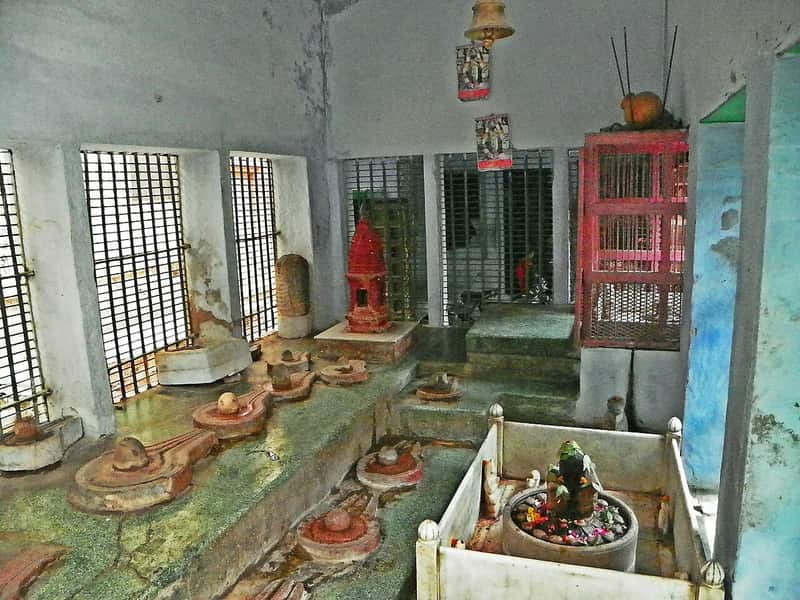
The River and the View
The river is the true subject of Trilochan Ghat. Here, on the northern reach, the Ganga runs wide and open, and the water carries a light that the crowded central ghats can never show. From the steps, the eye travels across a broad expanse of silver current toward the low sandbanks of the opposite shore, where buffaloes graze at dawn and herons stand motionless at the water's edge. On clear mornings the sky is a slow watercolour of rose and gold, and the reflection trembles on the moving surface. The river is neither gentle nor tame in this stretch; its current is strong and purposeful, and the boatmen who work here know every eddy and sandbar as a friend. It is a working river and a holy river at once, and both natures are visible from the same step.
The Ganga at Trilochan is alive with traffic from first light. Wooden boats set out for the far bank with bicycles, grain sacks and pilgrims; ferries cross with the unhurried regularity of a bus route; and along the shore, fishermen cast their nets in long, practised sweeps. The river's surface is a moving map of the city's life — laundry, commerce, worship and play all conducted on the same water. At sunset the scene changes completely: the water turns to hammered metal, the ghats to silhouettes, and the evening lamps of the neighbourhood float like small stars along the edge. Boats returning with pilgrims drift past the steps, and the last light of day lies on the water like a benediction. It is the hour for which the whole city waits, and Trilochan offers it without a crowd.
The river also carries the ghat's deepest meaning. Every dip in the Ganga is a purification, every offering set afloat is a prayer sent home, and every ash consigned to the current is a soul released. At Trilochan, as everywhere in Kashi, the river is understood not as scenery but as presence — the mother who washes, the goddess who forgives, the witness who forgets nothing. Standing on these steps, one understands why the city's whole life turns to face the water: the river is the road, the temple, the calendar and the confessor of this ancient place. The visitor who simply sits and watches the water for an hour has understood more of Varanasi than one who rushes through its monuments. The Ganga here runs wide, true and eternal, and Trilochan Ghat is simply the best seat in the house.
The Lanes and the Mohalla
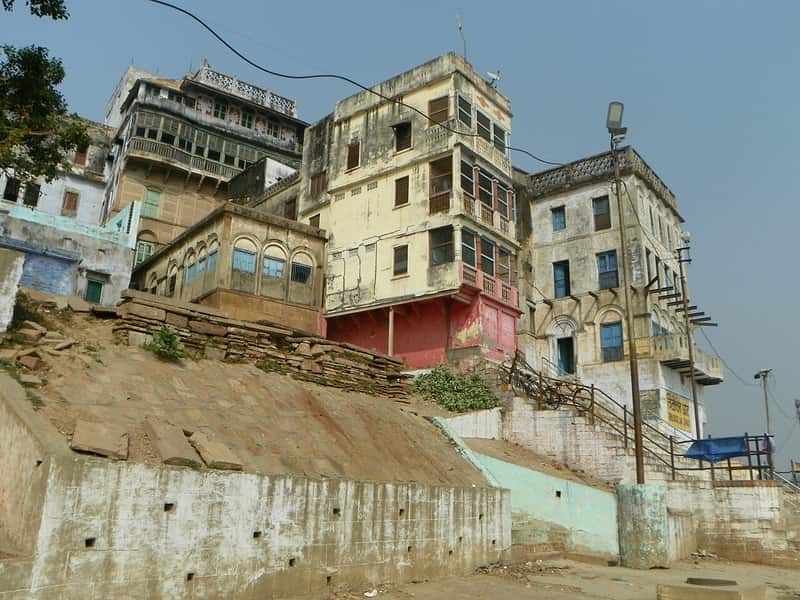
Behind Trilochan Ghat lies the old city of Kashi, a dense web of lanes that climbs away from the river toward the crowded heart of the town. The mohalla behind the ghat is a place of tall, leaning houses painted in faded shades of ochre and blue, of doorways that open onto courtyards with wells, and of roofs where pigeons and women share the morning. Every lane here leads to water or from water, and the entire neighbourhood is organised around the descent to the ghat. In the first light, the lanes carry the sound of temple bells and the smell of fresh bread; by mid-morning they are thick with bicycles, vendors and schoolchildren. It is an old, dense, self-sufficient quarter, the kind of neighbourhood that has been making its living from the river for a thousand years.
The lanes conceal a constellation of small shrines. Around the ghat one finds shrines to Hanuman, to the village deities, and above all to Shiva in his many forms, for this is Shiva's own quarter of the city. A narrow passage will open abruptly into a tiny temple with its own priest and its own legend; a doorstep will bear the imprint of a footprint shrine; a wall will carry a painted image of the goddess. These small sanctuaries are the true temples of daily Kashi, visited not on pilgrim tours but on the way to market, on the way to school, on the way home. The religious life of the neighbourhood is woven through its ordinary hours, and the ghat is simply the largest shrine in a chain of smaller ones that runs from every doorway to the water.
The neighbourhood around Trilochan is also a place of living craft and trade. Weavers, metalworkers and sweet-makers carry on their work within a few steps of the river, and the lanes are threaded with the sounds of looms, hammers and frying batter. The houses are home to families whose connection to the ghat goes back generations, and older residents can recite the history of the landing — its floods, its repairs, its festivals — as a family chronicle. For the visitor, the gift of this quarter is the discovery that Varanasi is not a museum of ghats but a city that lives on its ghats. Walk a few minutes away from the water, and the pilgrimage becomes a walk through the everyday; walk back, and the everyday resolves once more into the sacred. This rhythm, more than any monument, is the true character of the old city.
Badri Narayan and the Neighbouring Ghats
Trilochan Ghat does not stand alone; it is one link in the long chain of landings that makes the northern riverfront of Varanasi one continuous promenade of faith. Its closest and most famous neighbour is Badri Narayan Ghat, a short walk to the north, dedicated to the Lord of Badrinath and known for its temple and its quiet morning bathing. Between the two ghats the river makes a gentle curve, and the view from either landing includes the other, linked by the eternal traffic of boats, bathers and dhobis. In pilgrim itineraries the two ghats are often paired: first a darshan at Badri Narayan, then a dip at Trilochan, each step of the way measured by the sacred purpose that defines this whole stretch of bank. The ghats here are not competitors but companions.
To the south, the chain continues toward the grand landmarks of the riverfront: Panchganga Ghat with its five-river legend, and beyond it the crowded theatricality of Dashashwamedh, where the great evening aarti gathers thousands. A walk from Trilochan to Dashashwamedh takes less than half an hour and passes through nearly two dozen ghats, each with its own shrine, its own legend and its own rhythm. It is one of the finest walks in the world, yet most visitors hurry it in a boat. Northward, the character changes again as the ghats grow quieter, giving way to open sandbanks and the city's edges. This middle position gives Trilochan the best of both worlds: the peace of the northern stretch and the reach of the whole riverfront within a short walk or an easy boat ride.
The neighbourhood of ghats is also a map of legends. Badri Narayan remembers the Himalayan shrine of Vishnu; Panchganga recalls the five rivers that are said to meet invisibly beneath its waters; and Trilochan itself keeps the memory of the three-eyed lord. Each name is a doorway into a different story, and the traveller who walks this stretch slowly collects them like beads on a string. The ghats also share a practical life — boatmen ply the whole chain, priests serve several landings, and festivals spill from one ghat to the next in a single celebration. To understand Trilochan fully, one should visit its neighbours: see the crowds at Dashashwamedh, the legend at Panchganga, the quiet temple at Badri Narayan, and then return to this modest landing with fresh eyes, knowing exactly where it stands in the great family of Kashi.
The Mythic Character of the Ghat
What sets Trilochan Ghat apart is the density of its mythic character. In a city where every landing has its legend, this one is saturated with the presence of Shiva, and the daily life of the ghat is conducted under the shadow of the three-eyed lord. Devotees come not merely to bathe but to remember; the ritual acts of the morning are shaped by the story of the deity who is said to have appeared here. This is the essence of Kashi's devotion: the myth is not decoration but foundation, and every dip, every offering, every whispered mantra renews an ancient covenant between the city and its god. The ghat's modesty is itself part of its sacred character — the divine, the tradition holds, is often nearest where the architecture is simplest.
The festivals of the neighbourhood deepen this devotion. On Maha Shivratri, the great night of Shiva, the ghat and its lanes fill with worshippers; the shrine glows with lamps, and the air is thick with the smoke of offerings and the rhythm of bhajans that continue past midnight. During the month of Sawan, when Shiva is honoured across the city, streams of pilgrims in saffron descend to the water with offerings of bel leaves and Ganga water. On such days the mythic character of the ghat becomes visible: the quiet landing turns into a stage on which the old stories are lived again. For those who come from outside, these festivals are the clearest window into the devotion that sustains the ghat all year, the devotion that makes a plain stone landing one of the most auspicious places in the northern riverfront.
Devotion here is also personal and quiet. It is the old man who sits on the upper steps each morning with his beads, the woman who leaves a flower on the shrine before fetching water, the family that comes to offer prayers after every celebration and every sorrow. The ghat's piety is not confined to festival days; it is the texture of ordinary life, and it has been so for centuries beyond counting. For the visitor, this is the most important thing to understand: the devotion of Trilochan is not a performance staged for pilgrims but a continuous, living practice. To witness it is a privilege, and the respectful response is simply to be present without disturbing, to let the daily faith of the ghat wash over one like the river itself. In that quiet presence lies the truest darshan of this place.
Respectful Conduct for Visitors
Trilochan Ghat is not a monument but a living place of worship, and the first rule of visiting is respect. Dress modestly, covering shoulders and knees, as one would in any Indian temple town. Ask permission before photographing bathers, priests, or families, and put the camera away during rituals — many devotees consider the sacred acts of the morning a private matter between themselves and the river. Avoid entering the water in areas used for puja unless you are joining the bath, and never touch offerings, sacred threads, or the shrine without invitation. The people of the ghat are welcoming to visitors, but the welcome depends on the visitor's humility; those who come as guests are treated as guests, and those who come as spectators are quietly endured.
The ghat has no dress code board and no enforcement, but it has centuries of custom, and custom is its law. Keep your voice low in the early hours, when the bathers' mantras fill the air; let the boatmen, priests and residents go about their work without being pressed into posing for photographs. If you are offered prasad, accept it with both hands; if you take a boat ride, settle the price clearly before boarding; and if you are approached by guides, remember that a polite refusal is also a form of respect. Do not climb on shrines or railings, do not leave litter by the water, and never bathe with soap in the river, for the same water is drunk, worshipped and poured as offerings elsewhere. Small courtesies, repeated, make the visitor a friend of the ghat rather than a passer-through.
Finally, understand what the ghat is for, and let that understanding shape your conduct. The river here is not a backdrop; it is the goddess, the mother, the living presence of the divine. The bather at dawn may be mourning a loss, celebrating a birth, or keeping a vow made decades ago; every splash carries a story. Approach the water's edge with the same reverence you would bring to any place of prayer, and the ghat will repay you with its truest gift: acceptance. The people of Trilochan will teach you their rituals if you ask, share their tea if you sit long enough, and bless your journey when you leave. Respect the place, and the place will respect you back — that is the whole etiquette of the northern ghats.
Practical Information: Reach, Timing and Neighbours
Reaching Trilochan Ghat is straightforward for anyone who knows the northern riverfront. By land, the ghat is reached through the lanes that lead north from Panchganga Ghat; auto-rickshaws and cycle-rickshaws can drop visitors at the head of the lane, from where the descent to the water takes a few minutes on foot. The nearest major landmark is Badri Narayan Ghat, which can be reached by the same approach and lies a short walk away. By water, the ghat is best reached by boat: rowboats from Dashashwamedh or Panchganga ply the whole chain of ghats, and a morning boat ride along the northern stretch is one of the classic experiences of Varanasi. The ghat itself has no entrance fee and no opening hours; the river and the steps are public, and the shrine is open from before dawn until late evening.
The best time to visit is the early morning, between roughly five and eight, when the bathing rituals are at their height and the light on the river is at its finest. Winter months, from November to February, offer crisp mornings and comfortable days, and the morning mist on the Ganga is one of the great sights of this stretch; summer brings fierce heat and the river shrinks, while the monsoon swells the water and covers the lower steps. For the most atmospheric experience, combine a dawn visit with the walk south to Panchganga or north to Badri Narayan; allow two or three unhurried hours for the whole circuit. Those who wish to see the ghat from the water should book a boat for sunrise, when the ghats are golden and the river traffic is at its liveliest.
A few practical notes complete the picture. Carry drinking water, wear shoes that can be removed easily for the ghat approach, and keep valuables to a minimum; the ghat is safe and friendly, but the lanes are old and crowded, and the river has no railing. Small shops near the lane-head sell flowers, incense, prasad and sacred thread, and several simple tea stalls serve refreshment throughout the day. For those who plan to bathe, modest clothing is expected, and carrying a towel and a change of clothes is essential; changing rooms are few, so plan accordingly. Toilets are limited on the northern ghats, and rubbish should be carried back to the main road. With these small preparations, a visit to Trilochan Ghat becomes exactly what it should be: unhurried, respectful, and deeply memorable.
Trilochan Ghat — Gallery (11 Photos)
Image Credits
trilochan-01.jpg · trilochan-02.jpg · trilochan-03.jpg · trilochan-04.jpg · trilochan-05.jpg · trilochan-06.jpg · trilochan-07.jpg · trilochan-08.jpg · trilochan-09.jpg · trilochan-10.jpg · trilochan-11.jpg — Wikimedia Commons, under free licenses.
Continue exploring
Similar Ghats Nearby
Book This Ghat — Get Notified
Download the app now and book a boat ride to Trilochan Ghat