

Rana Mahal Ghat
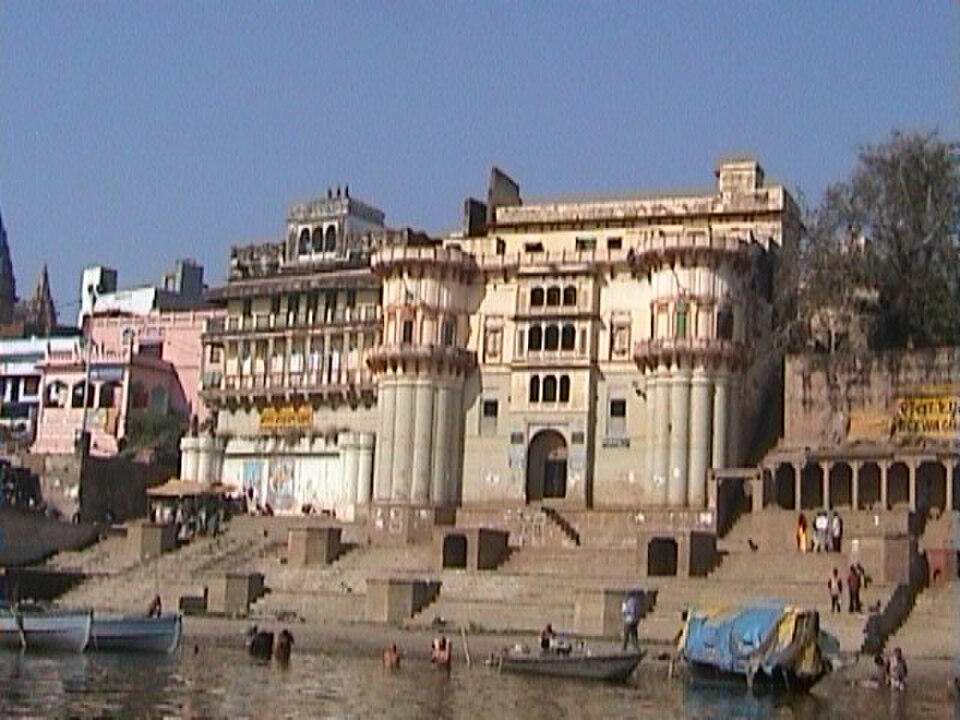
Heritage GhatRana Mahal Ghat is an 18th-century historic ghat with a famous Rana Mahal palace.


Type
Heritage Ghat
Boat Fare
1.1x base fare
Best Time
6-9 AM
History
Built in the 18th century. The ghat has a famous Rana Mahal palace now a museum.
Highlights
- Palace of the Mewar Rana
- Glimpse of Rajput architecture
- Historic glory
Festivals & Events
How pricing works in the NaviX app
No haggling at the ghat — everything is fixed in the app first
- 1
Fixed price before you board
The fare is shown in the app upfront — no bargaining at the ghat
- 2
Sharing or private — your choice
Share with fellow travelers or take the whole boat for your group
- 3
Pay only after the ride
UPI, card or cash — with an instant receipt
🕉️
Aarti details not available for this ghat yet
Complete Guide
Rana Mahal Ghat — The Complete Guide
History, mythology, rites and practical details — everything in depth.
On this page
- 1.Rana Mahal Ghat: An Introduction
- 2.The Rana Mahal and the Brijrama Palace Complex
- 3.The Darbhanga Royal Connection
- 4.Architecture: Painted Facades, Balconies and Steps
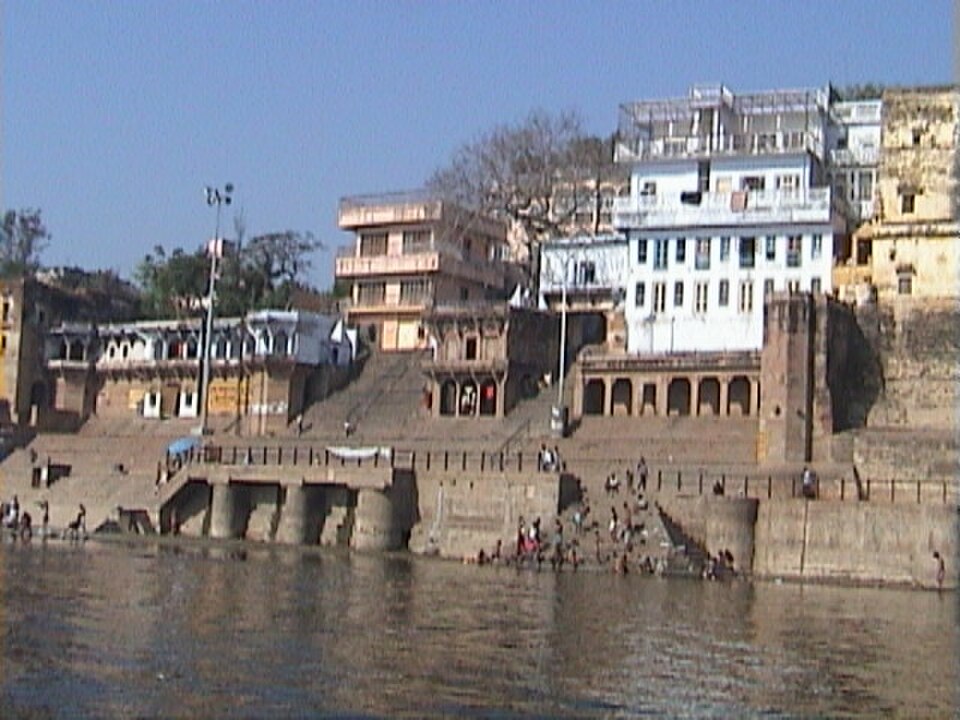
- 5.Daily Bathing at Rana Mahal Ghat
- 6.Moorings and Boat Excursions
- 7.The River and the View
- 8.Neighbouring Ghats: Ahilyabai and Darbhanga
- 9.Etiquette and Respectful Conduct
- 10.Practical Guide: Reaching the Ghat
📅 Updated: 21 Aug 2026 · Author: NaviX Field Team (field research 2024-26) · 10 sections · 10 photos
Rana Mahal Ghat: An Introduction
Rana Mahal Ghat stands at the heart of the middle riverfront of Varanasi, a palatial landing set into the long crescent of stone steps that curves along the western bank of the Ganga. It sits between Ahilyabai Ghat and Darbhanga Ghat, completing a chain of grand stairways that has no equal anywhere else along the sacred river. The ghat is the gateway to the Brijrama Palace, the celebrated riverside mansion of the Maharaja of Darbhanga, and the palace section that carries the name Rana Mahal remembers a Rana patron whose generosity helped raise these walls. Tall painted facades, rows of balconies and a broad flight of steps give the ghat the look of a royal residence built directly upon the water. Where the southern ghats are modest and the northern ones crowded, Rana Mahal belongs to the princely face of Kashi — luxurious, symmetrical and strikingly photogenic.
The ghat lives on several levels at once. At the water's edge, bathers and boatmen keep the ancient daily rhythm of the river — dipping, chanting, hauling boats, spreading nets. Above them, the palace rises with the calm authority of the nineteenth century, its painted arches and iron balconies turned toward the sunrise. Since its restoration, the Brijrama Palace has become one of the most luxurious hotel residences on the Ganga, hosting guests who want to wake to the sight of the sacred river from a maharaja's balcony. Boat excursions begin and end here, and the ghat is a favourite stage for film crews, wedding photographers and travellers who want their portrait taken against the most romantic facade in the city. Yet for all its grandeur, the ghat remains a working riverside landing where the oldest professions of Kashi — priesthood, boatmanship, flower selling — are practised daily in the shadow of the palace.
For the visitor, Rana Mahal rewards both distance and proximity. Seen from a boat midstream, it is the perfect palace ghat of the postcards — golden in the morning, rose-coloured at sunset, mysterious after dark. Seen from its own steps, it offers the intimacy of a living neighbourhood: tea stalls, flower sellers, priests, and the great river moving past. This guide follows the ghat through its palace, its history, its architecture and its daily life, and ends with practical advice for reaching it, bathing at it and understanding its etiquette. Whether your interest is royal heritage, sacred bathing or simply the best photograph on the Ganga, Rana Mahal Ghat will not disappoint — it is one of the most complete expressions of princely-era Kashi.
The Rana Mahal and the Brijrama Palace Complex
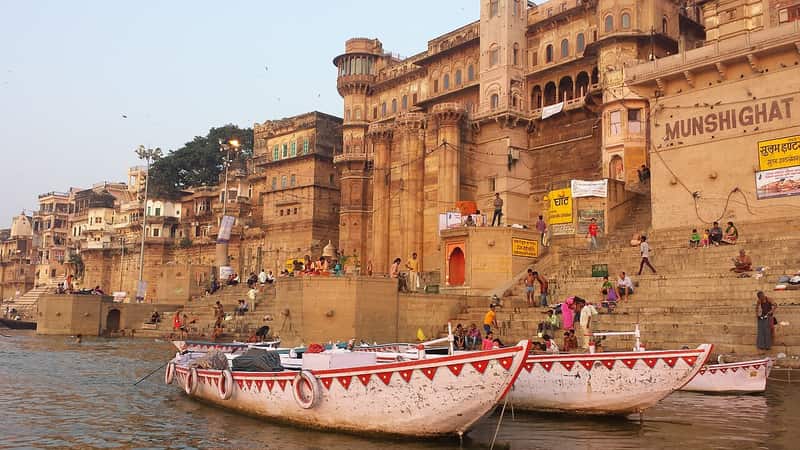
The palace that crowns Rana Mahal Ghat is the Brijrama Palace, one of the most romantic riverside mansions on the Ganga and the ancestral property of the Maharaja of Darbhanga. Built in the nineteenth century, the palace was designed as a riverside retreat where the maharaja and his court could receive the sacred river at their very door. Within the larger complex, the section called Rana Mahal takes its name from a Rana patron whose contribution is remembered in the building's history — a reminder that the great ghats of Kashi were raised not only by kings but by nobles, merchants and devotees from every corner of India. For decades the palace stood in dignified neglect, its painted walls fading above the busy steps, until a painstaking restoration transformed it into a heritage hotel of rare beauty. Today its terraces, courtyards and suites open onto the Ganga, and the palace glows at night like a lantern above the water.
The restoration of the Brijrama Palace is a story of patience and craftsmanship. Conservators rebuilt crumbling walls brick by brick, recovered original paint schemes from beneath layers of whitewash, and repaired the delicate ironwork of the balconies using traditional techniques. The result preserves the character of the princely residence while making it fit for modern guests: air-conditioned suites under original carved ceilings, a spa, a restaurant serving Banarasi cuisine, and a terrace where one can watch the evening aarti across the river. The palace is now managed as a boutique hotel under a heritage hospitality brand, and staying there is among the most extraordinary experiences Varanasi offers. Guests step from their rooms directly onto the ghat, take boat trips from the private landing, and sleep to the sound of the Ganga. It has become a destination in itself, attracting travellers who wish to live the fantasy of princely Kashi for a few nights.
Yet the palace is not a museum. The ground floor of the complex remains part of the living city — a small temple, priest quarters, stairways that lead to the ghat's upper lanes, and rooms occupied by families whose presence predates the hotel. This mingling of luxury and neighbourhood life is precisely what makes Rana Mahal Ghat so distinctive. From the water, the palace reads as a single grand gesture; from behind, it is a warren of everyday Kashi. Visitors who walk the lanes above the ghat will discover washing lines, cooking smells and the laughter of children under the same rooftops that shelter five-star guests. The palace, in other words, is not separate from the ghat — it is the ghat's most splendid expression, and the ghat is the palace's living foundation.
The Darbhanga Royal Connection
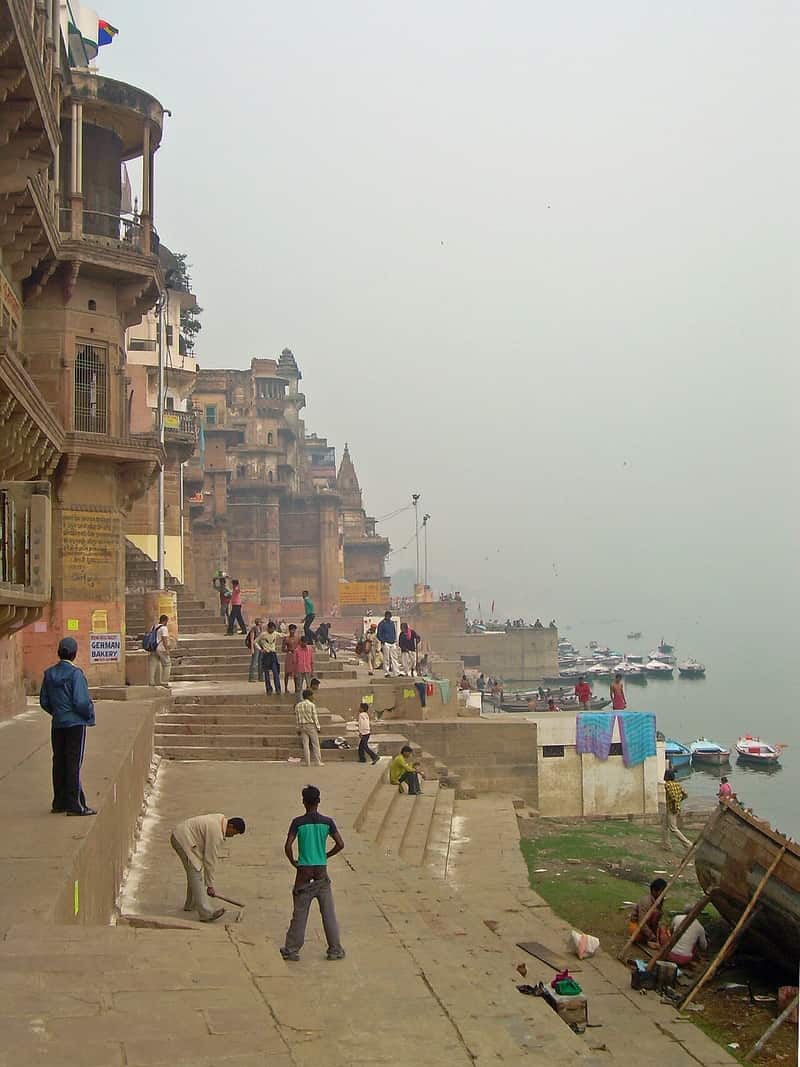
The history of Rana Mahal Ghat is inseparable from the royal house of Darbhanga, one of the largest and wealthiest princely estates of colonial India. The Maharajas of Darbhanga held zamindari rights over vast tracts of Bihar, and their annual income placed them among the richest men in the subcontinent. Wealth alone, however, did not make them memorable — it was their devotion that won them lasting honour in Kashi. The Darbhanga family was among the most generous patrons of the holy city, endowing ghats, temples, dharamshalas and Sanskrit colleges across its lanes. The mansion above Rana Mahal Ghat served as their riverside residence, a place where the family could worship the Ganga and receive pilgrims and scholars in surroundings worthy of their rank. When the maharaja travelled to Varanasi, the palace came alive with music, ceremony and the feeding of the poor — the traditional duties of a Hindu king.
The name Rana Mahal preserves a quieter thread of that history. The word Rana is an honorific of Rajput nobility, and the palace section bearing this name commemorates a Rana patron associated with the building's creation. Such titles were woven into the fabric of old Banaras, where every ghat, gateway and shrine recorded the generosity of a particular benefactor. For much of the twentieth century the palace complex declined, as the Darbhanga estate was divided and the family's fortunes changed with independence and land reform. The ghat itself, however, never lost its importance. Pilgrims and bathers continued to crowd the steps, priests kept the small temple rituals alive, and the palace remained fixed in the memory of the city as the last great monument of princely-era grandeur on the middle riverfront. Its revival in the twenty-first century, as part of the restored Brijrama Palace, has returned the Rana's name to the postcards.
The Darbhanga connection also explains the scale of the building. The maharajas built on a princely scale not for display alone but because the obligations of their rank demanded it — hospitality to pilgrims, shelter for students of scripture, and the maintenance of the sacred riverfront. The Brijrama Palace stands in a long line of Darbhanga benefactions that includes temples and wells throughout Varanasi, and its restoration is as much a tribute to that tradition of service as to architectural beauty. Today, when the palace lights come on at dusk, locals still say the riverfront looks the way it did in the days of the maharajas. For a traveller, that continuity is the deepest pleasure of the ghat: to stand on steps laid by a royal patron, beneath a palace restored with care, and to feel the old river exactly as it was felt a century ago.
Architecture: Painted Facades, Balconies and Steps
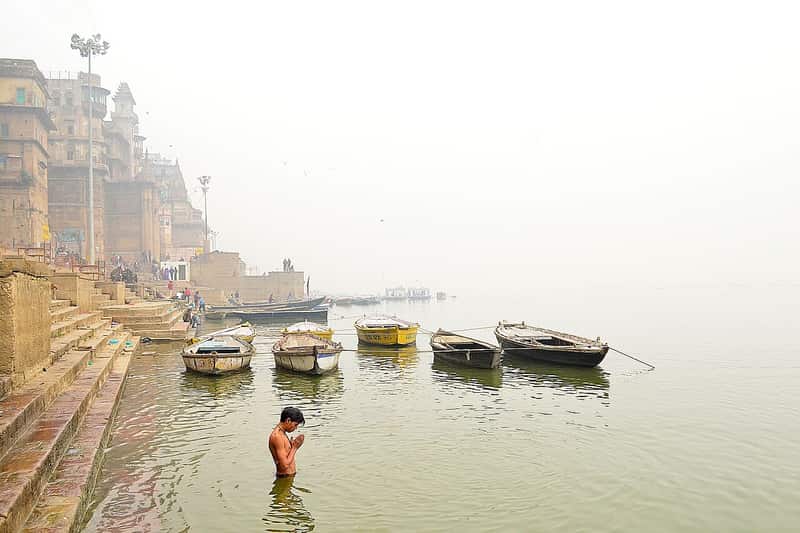
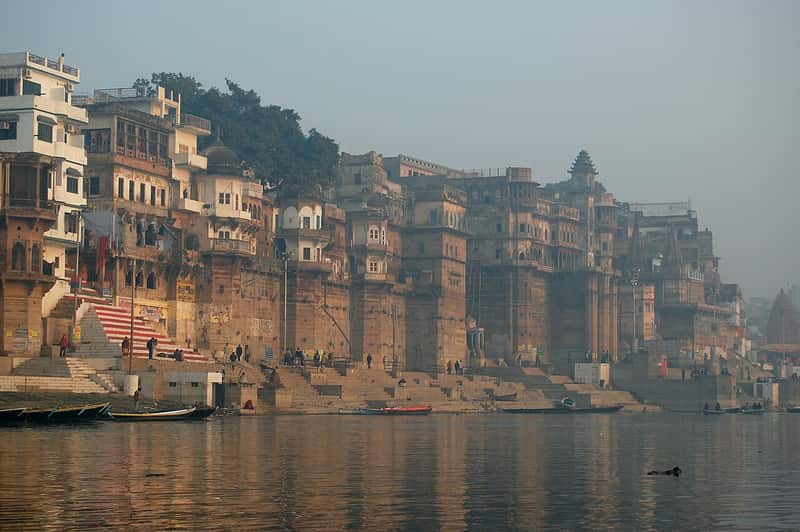
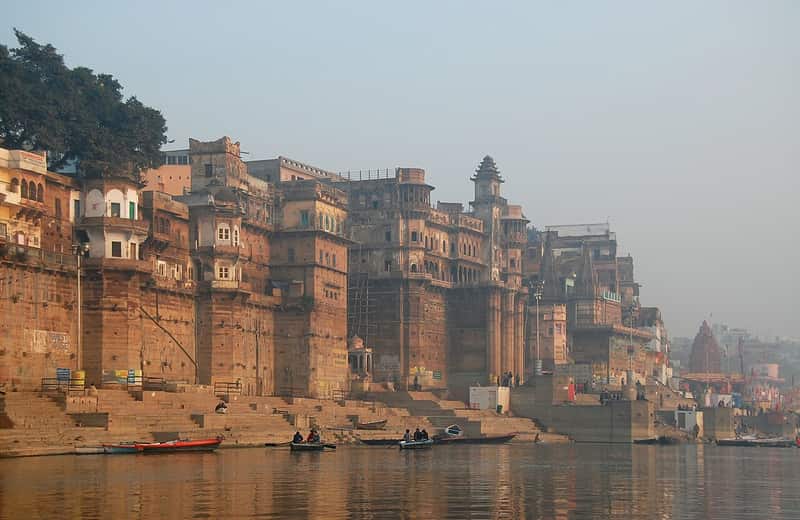
The architecture of Rana Mahal Ghat is a lesson in the palace style of nineteenth-century Banaras. The building rises several storeys directly from the riverfront, its walls painted in warm tones of ochre, cream and rose that glow in the first light of morning. Rows of arched windows and French doors open onto slender balconies of cast iron, whose curled railings were the pride of Banarasi craftsmen in the colonial era. Above the roofline, pavilions and parapets break the silhouette into a rhythm of verticals and horizontals that reads beautifully from the water. The composition is symmetrical, gracious and unmistakably regal — the architecture of a family that entertained on a princely scale. Every detail, from the cornices to the painted panels between the windows, was chosen to be seen from the river, because the river was the great highway of the age and the palace's true audience.
The steps are as important as the walls. A broad staircase descends from the palace level to the water, its stone slabs worn smooth by a century of bare feet. At intervals, landings and small platforms interrupt the descent, where priests sit, sadhus rest and tea sellers set up their stalls. Along the lower edge, iron rings and stone posts provide moorings for the boats that line the ghat, and a stone balustrade borders the stairway where the bank is steepest. In the monsoon, when the Ganga climbs the steps, the architecture shows its wisdom: the palace is raised high enough to stay dry, while the stairway is built to disappear beneath the flood without damage. The design is at once beautiful and practical, a marriage of princely taste and riverine engineering.
The painted facade deserves a closer look. Between the windows, panels of colour carry stylised floral motifs and geometrical borders, executed in the traditional lime-based pigments of the region. After restoration, the palace was repainted in a scheme that reproduces its original nineteenth-century palette, so the visitor today sees the building much as the maharaja's guests saw it. At sunset the low light turns the facade to honey, and the balconies cast long shadows across the steps — the most photographed hour of the ghat. Photographers and painters have long agreed that Rana Mahal Ghat is among the finest architectural subjects in Varanasi, a building that makes the river itself seem part of its design. Stand on the water in the evening, and the palace appears to float: walls of light above, their reflection trembling below, the whole composition framed by the darkening sky and the thousand lamps of the city.
Daily Bathing at Rana Mahal Ghat
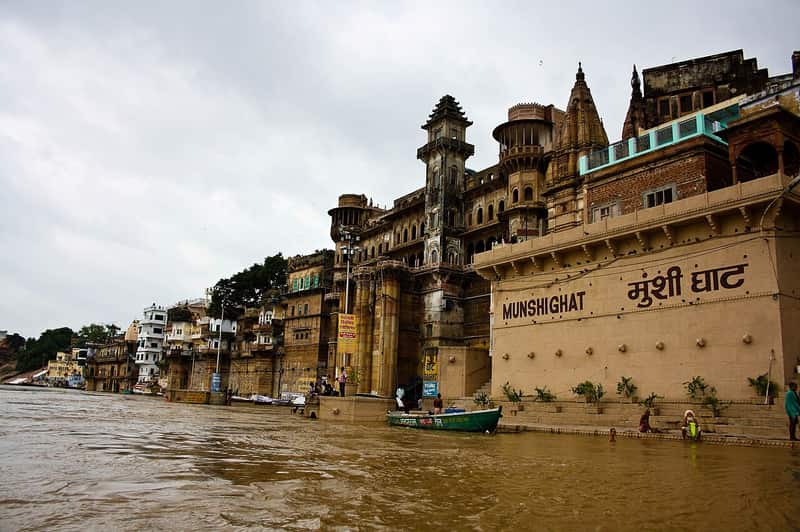
Despite the palace above, Rana Mahal Ghat is first of all a bathing ghat, and every morning the water's edge belongs to the bathers. Before sunrise, the first pilgrims arrive with brass lotas and bundles of clean clothes, descending the long steps in the half-dark while the palace looms pale above them. The ritual is the same as at every sacred ghat of Kashi: a dip three times into the current, rising each time with a whispered mantra, then arghya — the offering of water cupped in the palms — toward the rising sun. Bathers pour the water over their heads from the lota, mark their foreheads with sandal paste or sacred ash, and stand a moment in silent prayer before the immense river. For the devout, this is the holiest act of the day, the renewal of the soul in the body of the goddess Ganga.
What distinguishes bathing at Rana Mahal is the setting. The bather's prayers are said against a backdrop of balconies and painted arches that a maharaja once called his own — a daily reminder that in Kashi, holiness and royalty share the same steps. The water here is generally calmer and the bank shallower than at the great northern ghats, making it popular with families, the elderly and pilgrims from villages who prefer a gentler descent. Brass pots are filled and carried up the steps in long processions; priests at the water's edge bless newcomers with a dab of red kumkum; and by the time the sun is well up, the ghat is a scene of wet clothes drying on the balustrade, boats unloading, and the palace facade beginning its slow change of colours. The morning tide of faith passes, and the ghat returns to its other lives.
Visitors who wish to bathe should follow the local etiquette. The water is treated with the respect due to a goddess — bathing modestly, in the clothes you arrived in or traditional attire, and never with soap or shampoo, which belong to the washing ghats and public taps rather than to the sacred current. Shoes are left at the top of the steps or carried in a bag, and offerings of flowers, marigolds and small brass diyas can be bought from the stalls and set afloat. Winter mornings offer the clearest water and the gentlest sun; monsoon, when the river climbs the steps, is best watched rather than entered. Whether you bathe or merely watch, the morning at Rana Mahal is the truest introduction to the ghat's living spirit.
Moorings and Boat Excursions
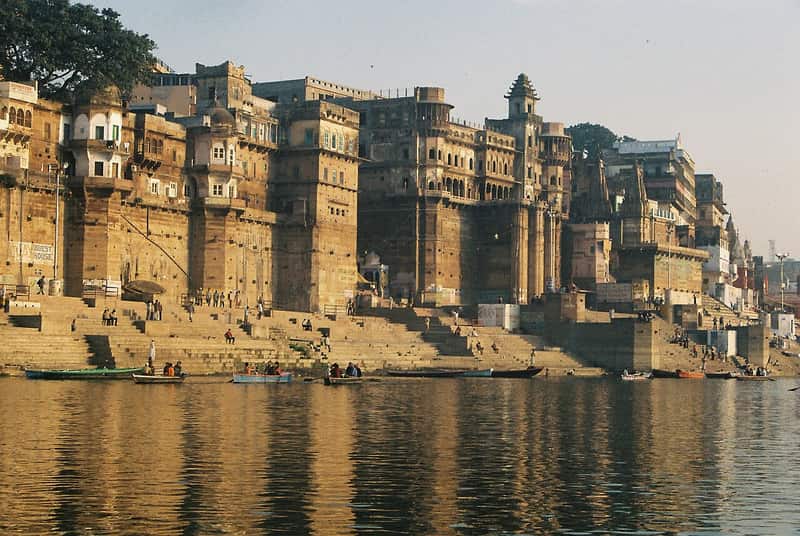
Boats have always been the lifeblood of Rana Mahal Ghat. In the nineteenth century the maharaja's guests arrived by boat at a private landing; today the same stretch of steps serves a fleet of wooden rowing boats that ply the middle riverfront. In the early morning, before the bathers arrive in numbers, the boatmen undo their moorings with practised ease, dip the oars and slide out onto the still water. Some boats are painted in bright colours with the owner's name in gold; others are simple, weathered craft that have crossed the Ganga thousands of times. The ghat's mooring posts and iron rings, worn smooth by a century of ropes, bear quiet witness to this endless traffic between stone and river. To stand on the steps at dawn and watch the fleet move out, one by one, is to see the ghat in its oldest habit.
From Rana Mahal the boatman will take you in either direction along the riverfront. Heading south, you pass Ahilyabai Ghat with its handsome colonnade, then the palace ghats of the old nobility and the leafy stretch beyond; heading north, the skyline of the central ghats crowds into view — Darbhanga, Munshi, Shivala, and far ahead the towers of the great burning ghats. The classic excursion is the sunrise boat ride, drifting from the southern ghats toward the palaces as the sun lifts over the eastern sandbanks, the mist burning off the water and the whole riverfront turning gold. The boatmen are storytellers as much as oarsmen, and a leisurely ride is usually punctuated by their versions of the legends of Kashi — where the earring fell, where the king burned his palace, where the god himself is said to walk at night.
The longer excursions follow the full sweep of the riverfront, from Assi in the south to Panchganga in the north — a journey of two to three hours by oar, shorter by motorised boat. For many travellers the finest moment comes in the evening, when the palace lamps are lit and the facade of Brijrama Palace glows above the water while the aarti lamps float past from the ghats upstream. Boats can be hired singly or shared, and the rates are set by the boatmen's association; agreeing on the route and price before boarding is the courteous and sensible way. Whatever the season, a boat gives the visitor the view the maharajas themselves enjoyed — the riverfront of Kashi seen whole, at the pace of the oar, with the palace of Rana Mahal taking its place in the grand procession of stone.

The River and the View
From Rana Mahal Ghat the Ganga reveals itself in its most majestic middle course. The river here is wide — more than half a kilometre from bank to bank in the monsoon — and its pace is unhurried, carrying the silt of the Himalaya past the palaces of Kashi. The eastern bank is low and open: sandbanks, fields, the occasional heron standing motionless at the water's edge. The western bank, by contrast, is a wall of stone and architecture, and Rana Mahal sits at its proud centre. Between the two, the water is a living mirror, reflecting the palace in the still mornings and throwing it back in golden fragments at sunset. Boats cross the expanse in a slow choreography, and waterbirds ride the current with the patience of creatures that have always lived here.
The view changes with the hour and the season. At dawn the river turns silver, and the palace, still dark, is outlined against a sky of rose and gold. By noon the water is a hard, bright blue and the ghats shimmer in heat; in the late afternoon the light mellows, and the long shadows of the balconies stretch across the steps. Winter brings the clearest skies and the bluest water, when the far bank is crisp and the reflection of the palace lies almost perfect on the surface. The monsoon transforms everything: the river climbs the lower steps, sandbanks vanish, and the water turns the colour of the hills it has carried down. Each season gives the ghat a different face, and those who visit in more than one season return with a gallery of images that seem to show different places.
The river is also the ghat's spiritual axis. Every ritual at Rana Mahal — the morning arghya, the floating diyas, the offerings of flowers — is performed toward the water, and the Ganga is honoured here with the same devotion as at the great pilgrim ghats upstream. The palace was built to face the river because the river is the goddess, and the maharajas, like the humblest bather, directed their worship toward it. Sitting on the steps in the evening, watching the current move and the lamps come on, one understands why the riverfront of Varanasi is counted among the great sights of the world. It is not a single monument but a living relationship between stone, water and faith, stretching over centuries — and Rana Mahal Ghat shows that relationship at its most beautiful. The palace watches the river, the river accepts the palace, and the traveller sits between them, quietly learning the oldest lesson of Kashi.

Neighbouring Ghats: Ahilyabai and Darbhanga
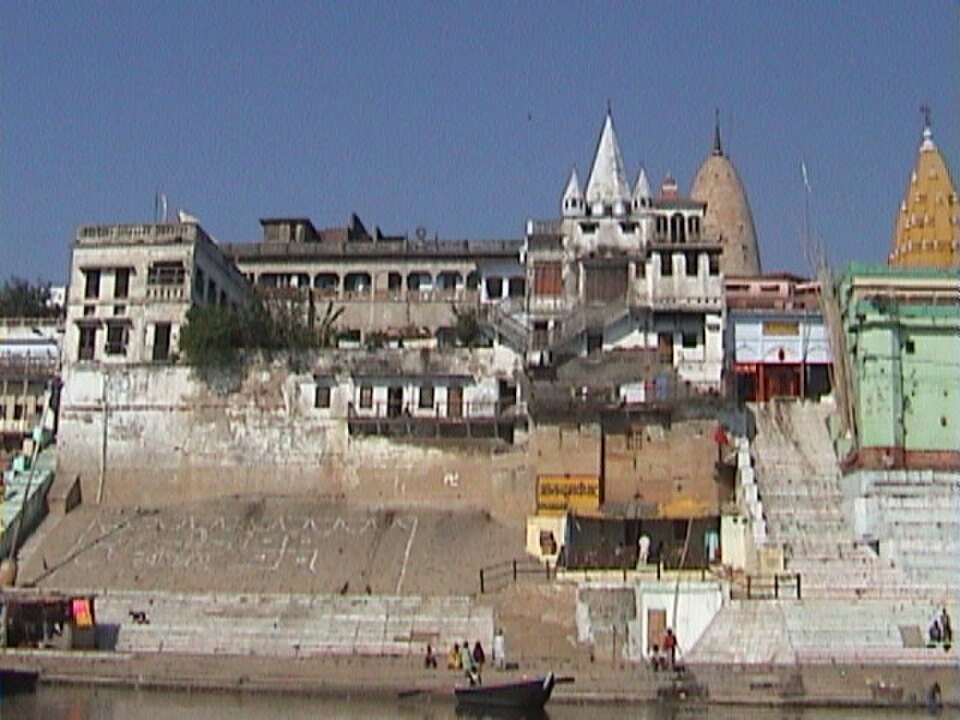
Rana Mahal Ghat sits in the most distinguished company on the riverfront. Immediately to the south lies Ahilyabai Ghat, named for the great queen of Indore, Ahilyabai Holkar, who rebuilt Kashi's sacred sites in the eighteenth century with a devotion that still commands reverence. Her ghat is a graceful colonnade of stone arches, quieter than Rana Mahal but no less historic, and it is a favourite with photographers for its pure, unbroken lines. To the north, Darbhanga Ghat extends the princely theme, a further flight of the Darbhanga family's riverside property, with its own shikhara temple rising above the steps. Together, the three ghats form a continuous gallery of palatial riverfront architecture, each with its own mood and its own stories.
A walk along this stretch of the riverfront is one of the finest short promenades in Varanasi. From Ahilyabai Ghat in the south you can follow the steps north past Rana Mahal, cross the lane of boatmen and flower sellers, and climb to Darbhanga Ghat's temple and platform. Between them lie small shrines, old wells, washing ghats where dhobis beat clothes on stone slabs, and stairways that vanish into the lanes of the old city. The upper terrace offers another Varanasi entirely — the labyrinth of the old quarter with its temples, sweets shops, paan stalls and centuries-old houses leaning over the alleys. For the traveller, the ghats are only the threshold; behind them lies one of the oldest inhabited quarters on earth, and a morning spent climbing its steps and lanes is a morning spent inside history itself.
Each neighbouring ghat repays a visit. Ahilyabai Ghat is at its best in the early morning, when the arches frame the sunrise and the bathers come in silence; Darbhanga Ghat rewards those who climb to its upper level, where the view north over the central ghats is among the best on the riverfront. In the evening, the whole group of palaces lights up together, and the boats that drift past carry passengers who are usually seeing the two palace ghats and Rana Mahal as one continuous golden facade. The practical traveller will note that this stretch has everything within easy walking distance — ghats, temples, lanes, tea stalls — and that staying near Rana Mahal puts the best of the middle riverfront on the doorstep. From here, the whole of Kashi lies open in both directions.
Etiquette and Respectful Conduct
Rana Mahal Ghat is a living place of worship, a royal residence and a neighbourhood street all at once, and its etiquette follows from that triple character. The steps are sacred ground: shoes are removed at the top or carried in a bag, and visitors should dress modestly, covering shoulders and knees, whether they are bathing or simply walking. The water is the goddess Ganga to those who use it, so bathing should be done with reverence — no soap, no shouting, no splashing games — and offerings such as flowers or diyas should be bought and floated with respect rather than tossed carelessly. Photographing bathers and pilgrims without asking is widely considered rude; a smile and a gesture of the camera usually produce a willing pose, especially at the hands of the touts who approach every tourist.
The human economy of the ghat has its own rules. Boatmen, priests, flower sellers and self-appointed guides all make their living from visitors, and the courteous way to deal with them is to be clear: if you want a boat or a ceremony, negotiate the price openly before the service begins; if you do not, decline politely and walk on. The priests at the water's edge will readily bless newcomers and accept a small donation, but an unwanted blessing can be refused with folded hands and a thank-you. At the hotel above, dress codes and quiet hours apply, and the palace is private property — visitors should not enter uninvited, though the terrace restaurants and public areas are open to all. A little firmness combined with good humour keeps the encounter friendly for both sides.
Above all, remember what the ghat is for. The bathing, the prayers and the rituals performed on these steps are matters of sincere faith, and the people who come here — many of them elderly, many from villages far away — deserve the same privacy and respect as any worshipper in any place of worship. Loud music, drunkenness, indecent dress and disrespectful remarks are deeply offensive here, and the locals, tolerant as they are, remember such visitors with displeasure. Keep the palace and the steps clean, do not climb on sacred structures or statues, and never touch the offerings laid out on the stone. If you follow these simple rules, you will be welcomed as a guest of Kashi rather than merely tolerated as a tourist, and the ghat will open itself to you in its fullest beauty.
Practical Guide: Reaching the Ghat
Rana Mahal Ghat lies in the heart of the old city, and reaching it is an adventure in itself. The nearest major landmark is Godowlia, the great crossing where the main streets of Varanasi meet; from there, walkers follow the lane toward the river, pass the Vishwanath temple crowds, and emerge at the riverfront a short distance from the ghat. Alternatively, a boat from any central ghat will deliver you directly to the steps — the most romantic arrival, and the one that shows the palace at its best. Taxis and auto-rickshaws can reach the riverfront lanes but cannot drive down to the water; the last stretch is always on foot, through the markets, the cow traffic and the centuries-old stairways that are the true arteries of Kashi.
The best times to visit are dawn and dusk. Sunrise brings the full morning drama — bathers, bells, the first boats, the palace turning gold — while the early evening offers the softer spectacle of the lamps and the last light on the water. The aarti, the great ceremony of lamps performed at several central ghats, can be watched from a boat or from the steps, with the palace glowing behind you. Winter months, from October to March, give the clearest light and the most comfortable temperatures; the summer heat and the monsoon are best avoided by those who are not used to them. Allow at least a full morning for the ghat and its lanes, and a full evening for the river. Photography is superb all day, but the light of the first and last hours is what the postcards are made of.
Nearby, the traveller will find everything needed for a long stay. The central ghats of Kashi — Dasaswamedh with its evening spectacle, Manikarnika with its profound sacredness, Assi with its cafes — are within easy walking or boating distance. Food is plentiful: the old city is famous for its sweets, its kachori stalls and its thalis, and the terrace restaurant at the palace offers a grander setting with a river view. The practical visitor should carry cash, as the lanes and stalls rarely accept cards; wear comfortable shoes for the steps; and allow time simply to sit. Rana Mahal Ghat rewards unhurried visitors with the thing the riverfront does best — a deep, quiet sense of Kashi itself, its palaces, its faith and its endless, moving water.
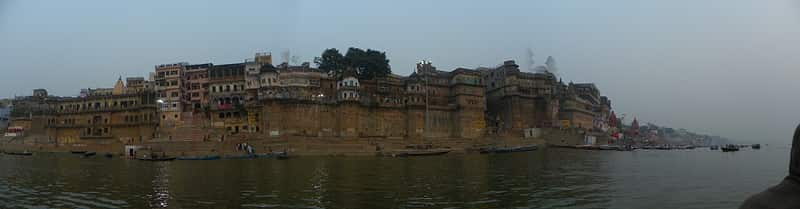
Rana Mahal Ghat — Gallery (10 Photos)
Image Credits
rana-mahal-01.jpg · rana-mahal-02.jpg · rana-mahal-03.jpg · rana-mahal-04.jpg · rana-mahal-05.jpg · rana-mahal-06.jpg · rana-mahal-07.jpg · rana-mahal-08.jpg · rana-mahal-09.jpg · rana-mahal-10.jpg — Wikimedia Commons, under free licenses.
Continue exploring
Similar Ghats Nearby
Nearby Temples
Book This Ghat — Get Notified
Download the app now and book a boat ride to Rana Mahal Ghat