

Rewa Ghat
Heritage GhatRewa Ghat is a historic ghat built by a king in the 18th century.


Type
Heritage Ghat
Boat Fare
1x base fare
Best Time
6-10 AM — calm morning bath
History
Built by a King in the 18th century. A famous temple is at the ghat center.
Highlights
- Old gardens and green surroundings
- Royal historic heritage
- Perfect for a peaceful dip
- Wide view of the Ganga from the ghat
Festivals & Events
How pricing works in the NaviX app
No haggling at the ghat — everything is fixed in the app first
- 1
Fixed price before you board
The fare is shown in the app upfront — no bargaining at the ghat
- 2
Sharing or private — your choice
Share with fellow travelers or take the whole boat for your group
- 3
Pay only after the ride
UPI, card or cash — with an instant receipt
🕉️
Aarti details not available for this ghat yet
Complete Guide
Rewa Ghat — The Complete Guide
History, mythology, rites and practical details — everything in depth.
On this page
- 1.Rewa Ghat — A Princely Rest on the River
- 2.The Maharaja's Palace — A Royal Face on the Water
- 3.A Princely State and a River's Patronage
- 4.Stone, Lime and Light — The Architecture of the Ghat
- 5.The Morning Bath — Daily Devotion at the Water
- 6.Boats and Boatmen — The River's Working Fleet
- 7.The First Light — Sunrise on the Southern Bank
- 8.The Riverline — Rewa Among Its Neighbours
- 9.Behind the Ghat — Lanes, Houses and Temples
- 10.Lamps on the Water — Festival Life at Rewa
- 11.The Courtesy of the Ghat — Conduct and Photography
- 12.Practical Rewa — Reaching the Ghat, Best Hours, Neighbours
📅 Updated: 21 Aug 2026 · Author: NaviX Field Team (field research 2024-26) · 12 sections · 12 photos
Rewa Ghat — A Princely Rest on the River
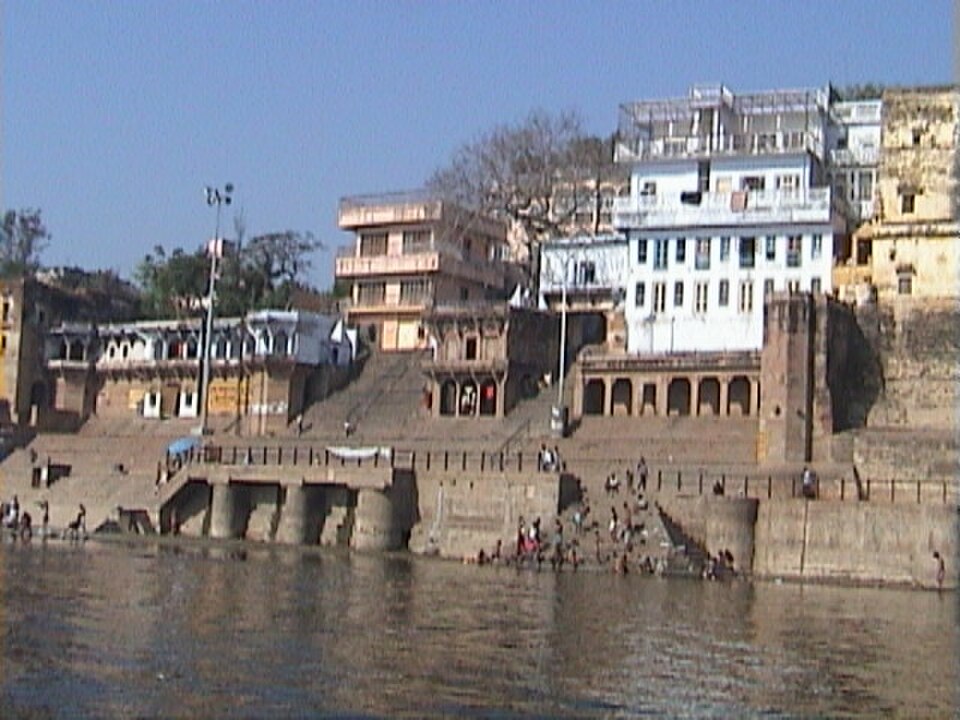
Rewa Ghat is one of the quieter treasures of Varanasi's southern riverfront, a gracious landing of wide stone steps set between Assi Ghat to the south and Bhadaini Ghat to the north. The ghat owes its name and its most striking feature to the princely state of Rewa in Madhya Pradesh, for the Maharaja of Rewa built his riverside palace here, and that white-washed facade still fronts the Ganga today. Where the great ghats of the north swarm with crowds, Rewa keeps a composed, unhurried air, and the palace above the water gives the whole scene the character of a royal retreat rather than a busy public landing. Pilgrims, local bathers and a handful of boatmen share the steps in easy harmony, and the river here runs broad and calm, making the ghat a favourite spot for those who want Kashi without its clamour.
The riverfront at Rewa is comparatively recent in the long history of the ghats, yet it continues an ancient tradition, for the maharajas of India's princely states considered it an honour to build a ghat in Kashi. Rewa's rulers followed the example of the Maratha queens and rajas whose names are written all along the waterline, and their palace turned this stretch of the bank into a place of royal pilgrimage. The palace's long verandas and balconies still look down upon the morning bathers, and on festival days the facade glows with lamps, as if the old court were still in residence. To stand on the steps and look up at those white walls is to see the meeting of two worlds: the sacred city of Shiva and the worldly grandeur of the princely courts that once courted her blessings.
For the traveller, Rewa Ghat offers a rare combination of tranquillity and convenience. It lies only a few minutes' walk from Assi Ghat, with its cafés, guesthouses and evening aarti, yet it remains noticeably quieter than its celebrated neighbour. Early mornings here are particularly fine, when the water is still, the sun climbs over the far bank, and the palace turns from grey to gold. Boatmen wait at the landing for those who wish to drift northward past Bhadaini and Tulsi Ghats or southward to the Assi sangam, and the calm current makes this an ideal place to begin a river journey. Rewa Ghat may not be the most famous name in Kashi, but it is one of the most agreeable places on the river to pause, bathe and breathe.
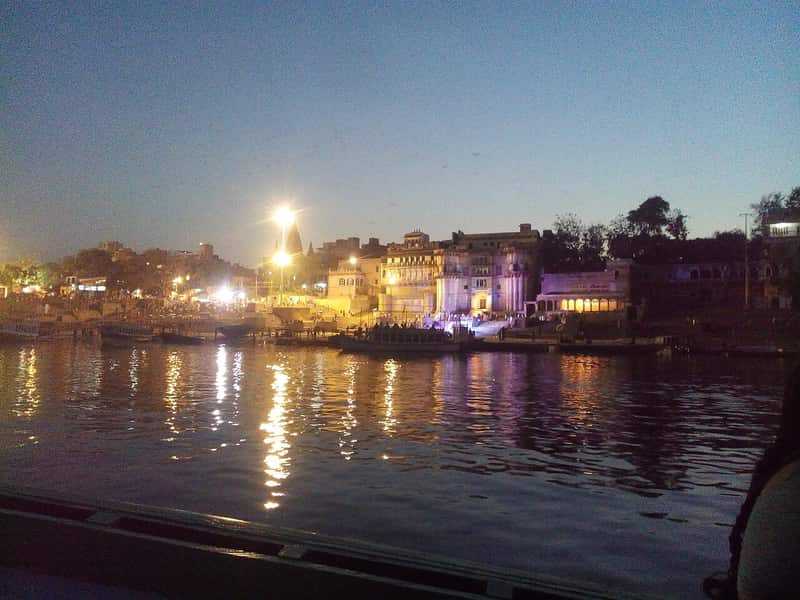
The Maharaja's Palace — A Royal Face on the Water
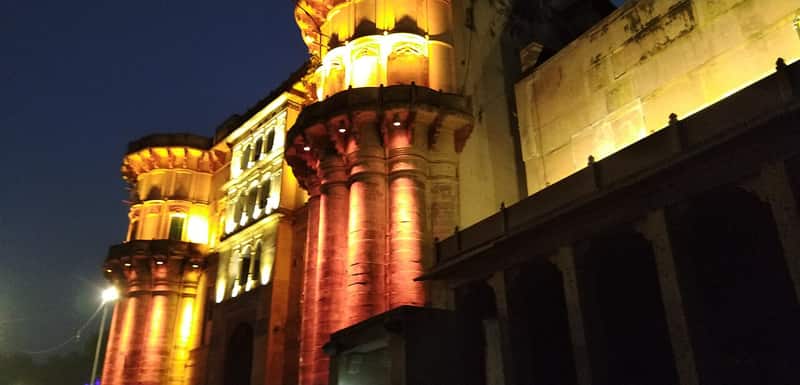
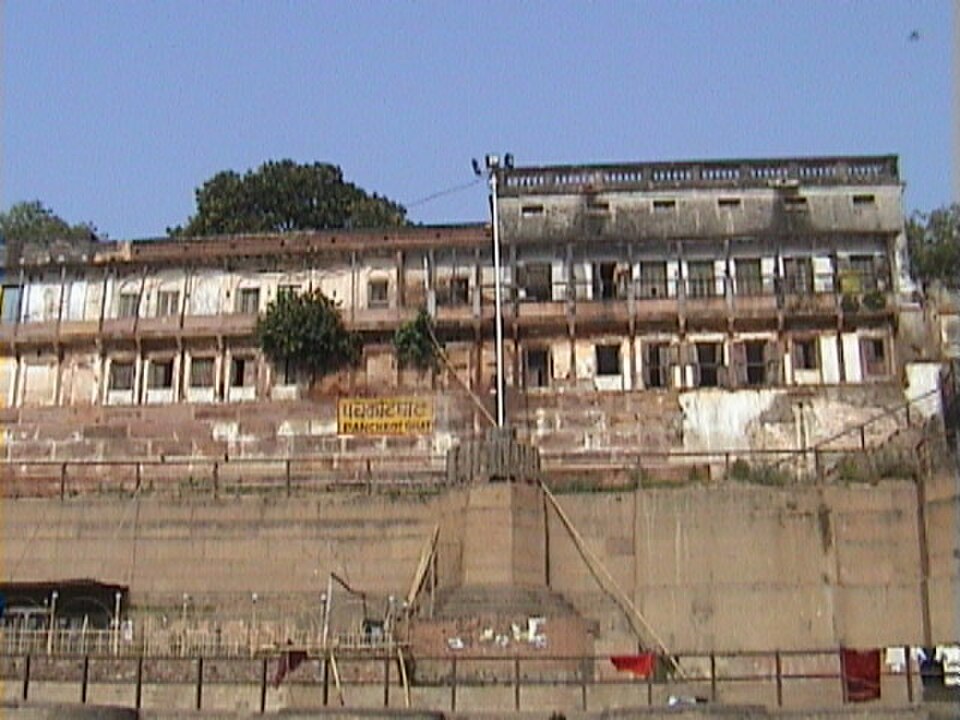
The dominant feature of Rewa Ghat is the palace of the Maharaja of Rewa, a long white-washed building that faces the Ganga with the serene confidence of a royal residence. Built when the princely state of Rewa was among the most powerful in central India, the palace was the maharaja's Kashi residence, where he and his family stayed during pilgrimages and sacred baths. Its facade is a study in the refined taste of the era: rows of arched windows, deep verandas, balconies with slender railings and chhatris — small domed pavilions — rising above the roofline. The long south wing, raised upon a high plinth, carries a row of deep-set doorways that open toward the river, and the veranda balustrades are worked in a delicate stone lattice. The whole composition is painted white, so that at dawn the building seems to glow against the blue of the river, and at sunset it turns the colour of old ivory.
The palace was more than a holiday house, for in the old order of things a princely presence on the Ganga was a statement of piety and power together. By building at Kashi, the maharaja placed his dynasty within the most sacred geography in India, and the palace became part of his state's identity, mentioned in court records and described by travellers who passed along the river. The royal ledgers of the state still record gifts made to Kashi's temples from this very house. When the maharaja came to the ghat, the steps below the palace filled with his retinue, priests, musicians and state officials, and the bathing of the royal family was a public ceremony attended by the city's nobles. The palace windows that now look out upon bathers and boatmen once looked out upon those processions, and the memory of that royal life still hangs about the building.
Today the palace no longer serves its royal purpose, and parts of it have passed into other hands, yet it remains the soul of the ghat and the reason travellers seek Rewa out. Its blank white walls, weathered by rain and sun, have become the backdrop of daily life: clothes drying on the railings, pigeons circling the chhatris, a tea stall tucked against the plinth. The contrast is part of the charm, for in Kashi the grand and the ordinary have always lived side by side. To sit on the steps at Rewa and watch the palace change with the light is to understand how a royal residence can age into a beloved neighbour: a caretaker family keeps the old gate swept, and the palace clock, long silent, is wound once a year on the maharaja's birthday. It is also to understand how the Ganga makes equals of princes and paupers alike.
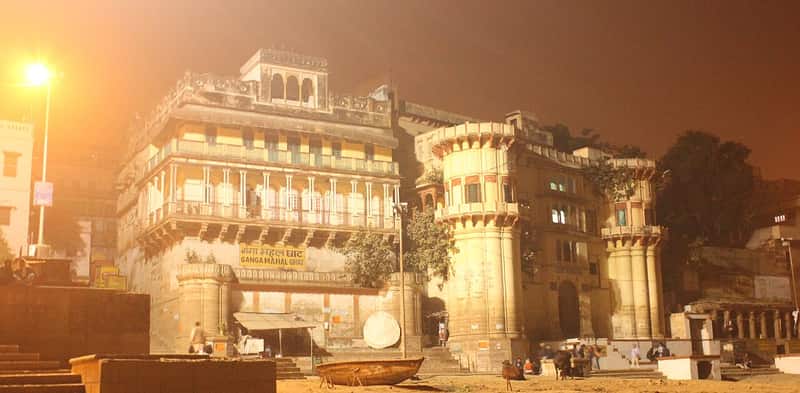
A Princely State and a River's Patronage
The history of Rewa Ghat is bound up with the fortunes of one of India's most distinguished princely states. The state of Rewa, centred on the city of the same name in present-day Madhya Pradesh, traced its dynasty to the Baghela clan of Rajputs, and at its height its dominions stretched across the fertile valleys of the central Indian plateau. The maharajas of Rewa were known for their scholarship and their patronage of music and the arts — one of them, Maharaja Venkatraman Ramanuj Prasad Singh Deo, was himself a noted sitarist and the inventor of a celebrated musical instrument. The state's court was famous for its durbar concerts, where the musicians of Rewa, many of them honoured by the throne, performed for visiting nobles and holy men. For such a house, a ghat in Kashi was not a luxury but a duty of devotion, a way of making the family's piety visible on the holiest river in the land.
The construction of the Rewa palace and its ghat belongs to the age when the princely states were lavishing their wealth upon the riverfront of Varanasi. In the eighteenth and nineteenth centuries, Maratha queens like Ahilyabai Holkar and the Maharajas of Scindia, Jaipur, Amethi and many other houses had built or rebuilt ghats along the crescent, each competing with the next in magnificence. Rewa's rulers entered this noble tradition, raising their palace and landing on the southern stretch of the bank, where the river is wide and the light is long. The work followed the pattern of the other royal ghats: a grand residence above, a broad stair of dressed stone below, and a landing where the state's own boats could moor in dignity when the maharaja came to Kashi. Inscriptions on neighbouring ghats still record the names of the royal patrons, and Rewa's own name was added to the roll in the same spirit.
What the palace chronicles do not record is the ordinary life that grew up around the royal building. Servants of the state, priests, shopkeepers and boatmen settled in the lanes behind the palace, and the ghat slowly became a neighbourhood. When the princely states were merged into the Indian Union after 1947, the palace lost its court but not its character, and the ghat continued as a place of bathing and worship, its royal origins remembered in its name. The last maharaja of Rewa is remembered in the city for his generosity, and the family's connection with the ghat continued long after the state was dissolved. Today the visitor sees a ghat that is at once princely and democratic — a palace that no longer rules, and a staircase where every pilgrim is a maharaja for the moment of the morning dip. The palace and the ghat together remain a graceful reminder of an age when kings measured their glory in the stones they set upon the Ganga.
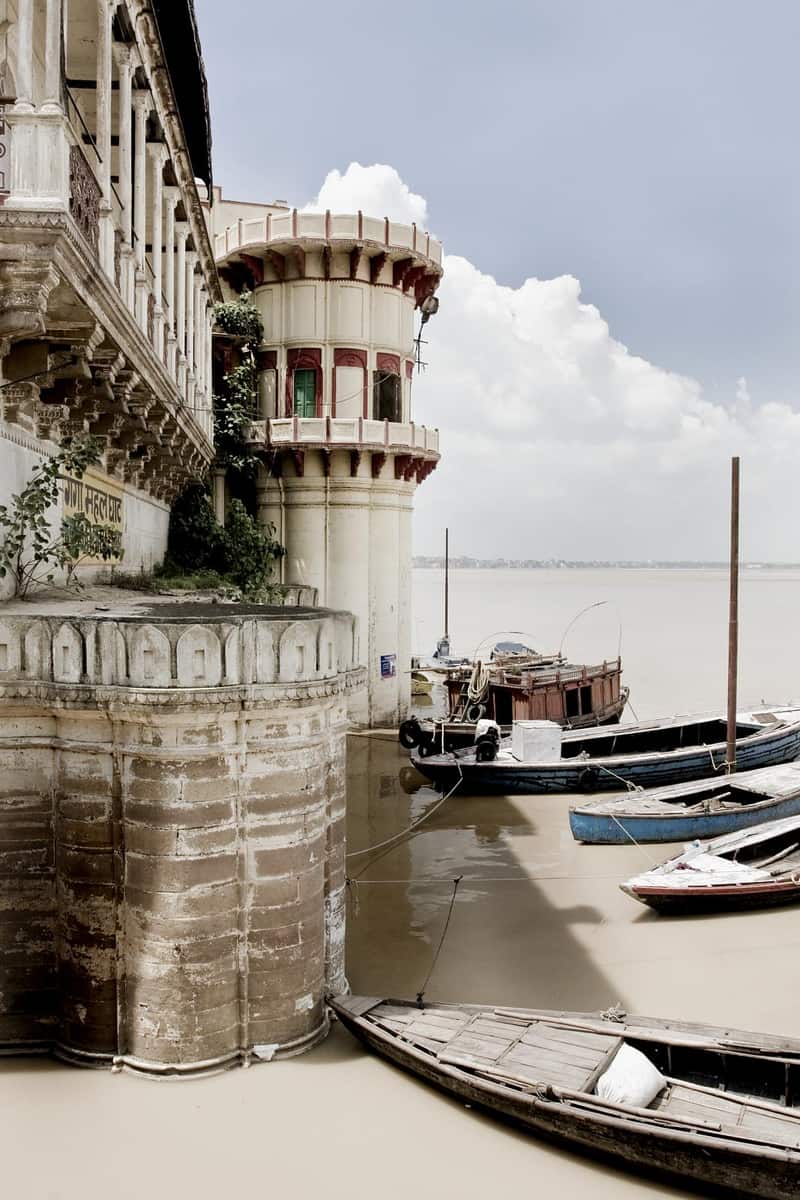
Stone, Lime and Light — The Architecture of the Ghat
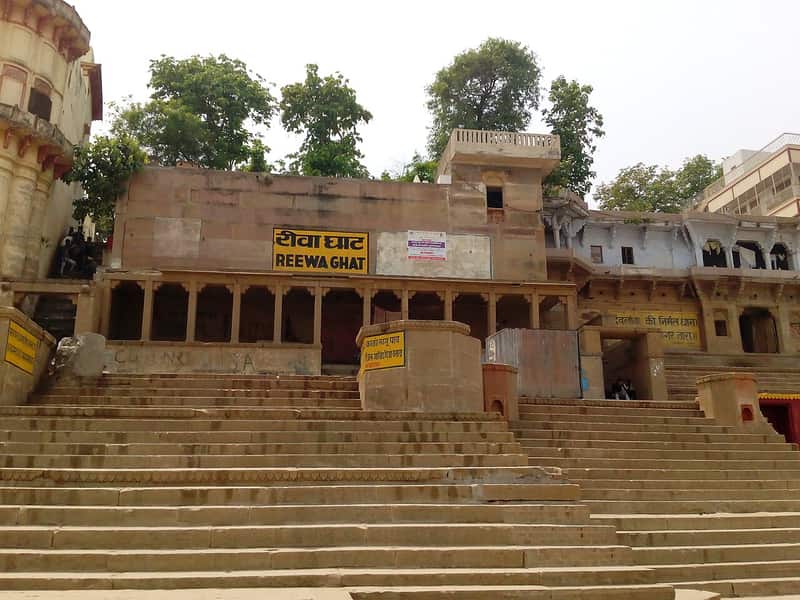
The architecture of Rewa Ghat is a dialogue between the palace above and the steps below, two structures built in different ages but composed to form a single harmonious front. The palace facade belongs to the Indo-Saracenic manner popular with princely states in the late nineteenth and early twentieth centuries: pointed arches, cusped openings, slender columns and small domed chhatris that crown the roofline like a row of sentinels. On the parapet of the facade, shallow niches alternate with small medallions in moulded plaster, a motif borrowed from the north Indian palaces of the period, and the corners are finished with slender pilasters that give the long wall a quiet vertical rhythm. The whole is finished in lime-wash, the traditional white coating that keeps the building cool under the summer sun and gives the ghat its name in the city's memory — the white ghat of the Rewa maharajas.
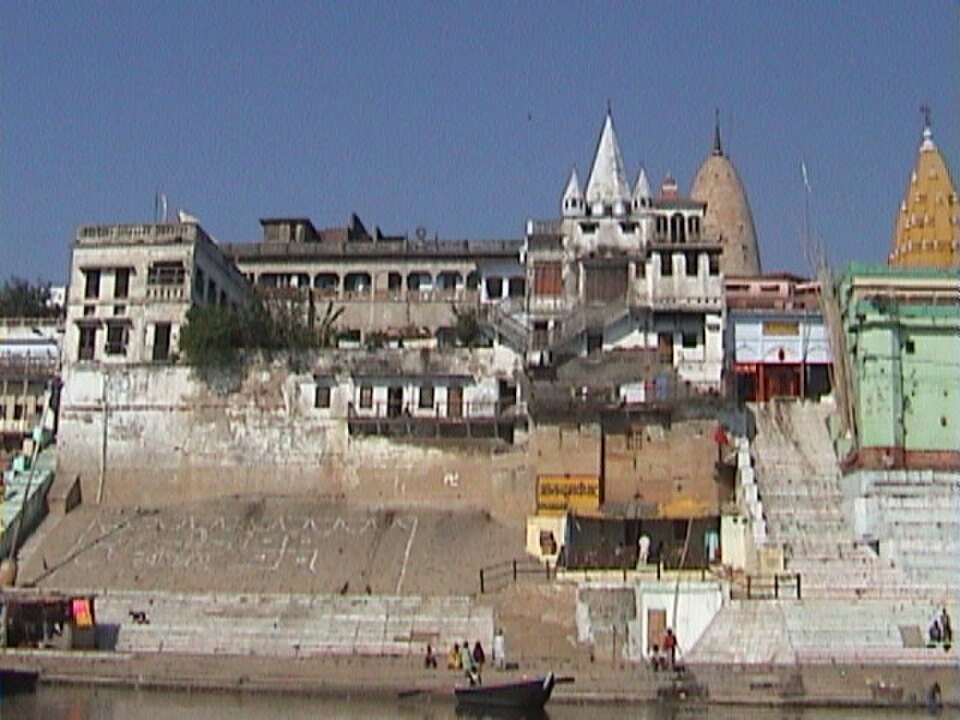
The steps below are the real architecture of worship, for a ghat is first of all a staircase between the world and the water. At Rewa the stairs are wide and gentle, cut from the sandstone of the region and worn smooth by a century of bare feet. They descend in long flights with occasional landings, so that the bather can pause and look back at the palace, and at the level of the river a broad platform of stone gives the priest his standing place and the boatmen their mooring. Low parapets line the edges, and small shrines and niches are set into the walls at intervals, each holding a lamp or an image, so that the whole descent is punctuated by reminders of the sacred. A pair of weathered stone lions, once the guardians of the palace gate, still stand at the head of the stairs, watching the comings and goings of the bathers.
Seen from the water, the ghat composes itself into a picture that has barely changed in a hundred years: the white palace, the grey steps, the brown current, the green of a few trees leaning from the bank above. In the monsoon, when the river rises to the lower flights, the architecture takes on its second life, and the palace is reflected in the floodwater like a temple in a lake. Architects and photographers alike come to Rewa for these moments, and the ghat has become a quiet favourite for those who study the way the old riverfront buildings answer the river's moods — now open and blazing in the sun, now mirrored and doubled in the stillness of the flood. On such days the ghat is at its most theatrical, the white walls floating above a sheet of brown water, and the steps turning into narrow islands where the boatmen tie up their craft and wait for the river to fall.
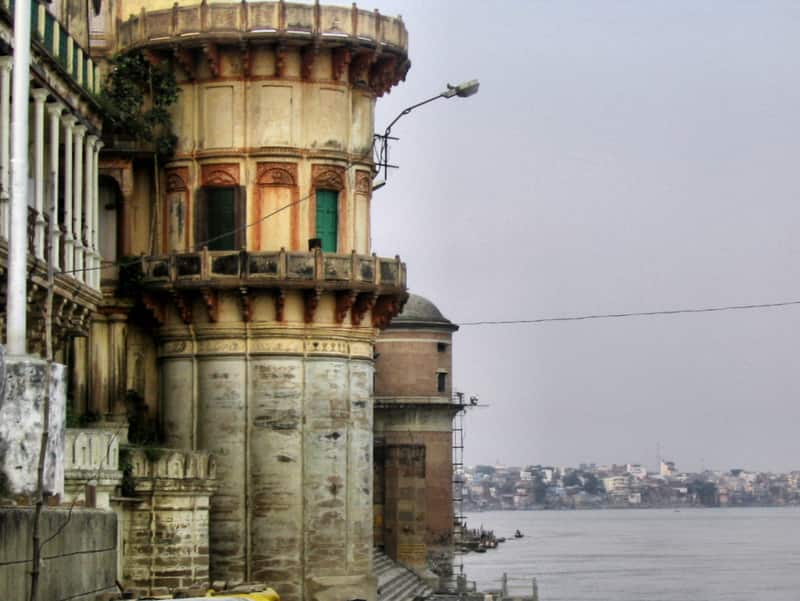
The Morning Bath — Daily Devotion at the Water
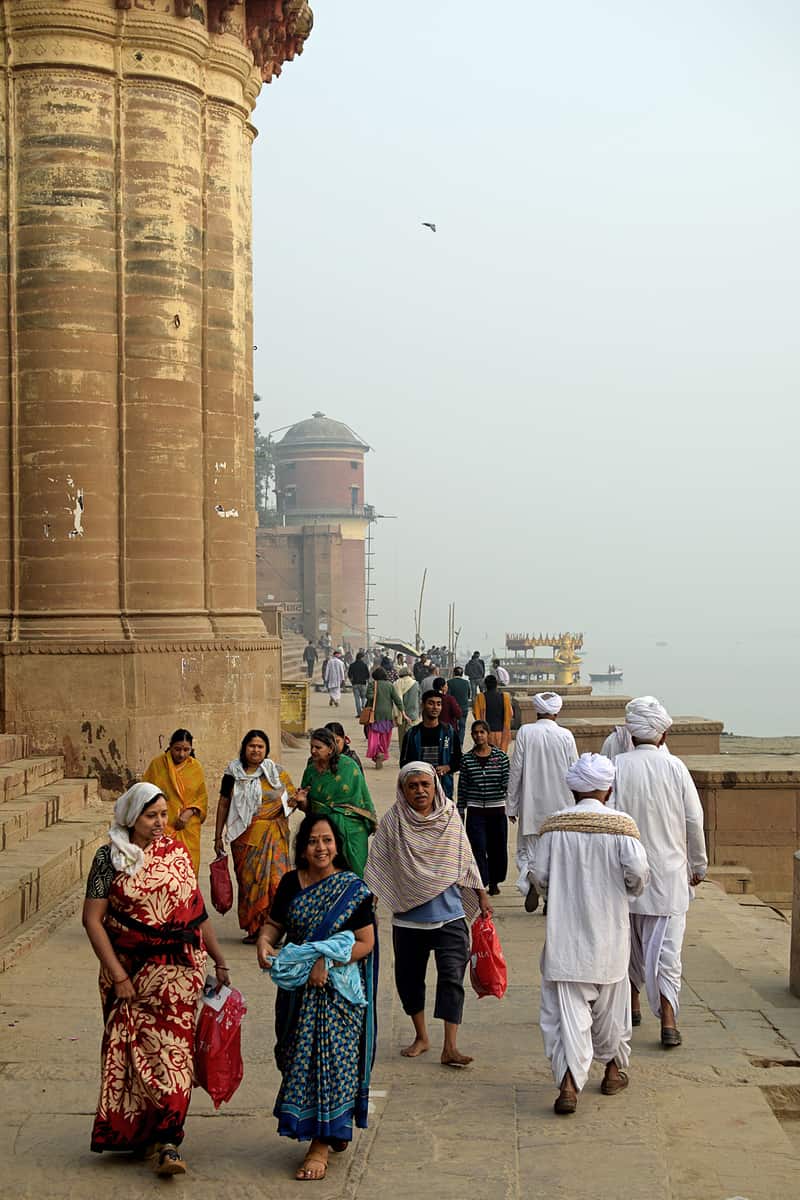
Bathing at Rewa Ghat begins long before the sun appears, when the river is a sheet of dark silk and the only sounds are the slap of water and the murmur of prayer. Men and women come down the wide steps in the half-light, carrying brass lotas and clean cloth, and wade into the current with a shiver and a blessing. For the people of the neighbourhood this is not exercise but worship, the first duty of the day, performed with the same gestures their ancestors used: three dips, a mouthful of water offered to the sun, prayers murmured toward the east, and a handful of water raised to the sky in homage. Small offerings of flowers are floated at the waterline, and a few grains of rice are scattered for the fish, which rise at once to the surface in a glittering rush — a sign, the old bathers say, that the river has accepted the gift.
The priests of the ghat, known here as in the rest of Kashi for their learning and their sharp wit, attend the bathers from the platform at the water's edge. They mark foreheads with sandalwood paste, recite the names of the gods, receive the small gifts of flowers and coins, and offer the rituals that pilgrims ask for — the shraddha for ancestors, the puja for a child, the petition for health and fortune. The fees are modest and openly stated, for the priests of the southern ghats live simply and take pride in their calling, and no family is turned away for want of means. Their presence keeps the ancient economy of the ghat alive, for bathing in Kashi has always been joined to giving, and no one leaves the water without some offering to the river and its servants.
What makes the bath at Rewa different from the great public baths of the northern ghats is its intimacy. Here the bathers are mostly local — householders from the lanes behind, old men who have swum the same stretch for fifty years, women who come in the quiet hours before the crowd. Pilgrims from other states also find their way here, sent by word of mouth for a ghat where the water is clean and the steps are not jammed. Often a family group comes together, three generations down the steps at once, the children splashing while the elders perform the full ritual; and after the bath there is tea at the stall above, where the morning's news is exchanged with the same ease as the morning's blessings. The mood is one of private devotion conducted in public, a whole community at prayer together yet each person alone with the Ganga, and that is perhaps the truest picture of Kashi that a visitor can carry away.
Boats and Boatmen — The River's Working Fleet
A ghat is not complete without its boats, and Rewa keeps a small, busy fleet at the water's edge. The traditional wooden boats of Varanasi — the long, slender shikaras and the sturdier patela with their arched bamboo canopies — lie moored along the stone platform, their hulls painted in bright bands of green, blue and red. The boatmen of Rewa are a hereditary community, many of them descended from families that have rowed on this stretch for generations, and they know the river the way a farmer knows his field: the sandbanks that shift with every monsoon, the channels that run deep, the exact hour when the light turns gold. The boats themselves are painted by hand each year before the monsoon, the wood caulked with cotton and tar, and the names of saints and sweethearts written along the bows; a boat without a name, the boatmen say, brings no passengers and no luck.
The morning brings the first crossings, ferrying bathers who prefer to perform their ablutions from the water rather than the steps, and pilgrims who wish to visit the ghats in a single slow procession. In the afternoon the fleet turns to pleasure: families, honeymooning couples and travellers drift northward past Bhadaini and Tulsi Ghats toward the great panoramas of the centre, or southward to the sangam at Assi, where the small river slips into the Ganga. The boatmen's patter is as old as their trade — prices opened high, closed with a smile and a handshake — but on the river itself the talk changes, and a good boatman becomes a storyteller, pointing out the palace, the temples and the legends of every landmark. The price of a ride is best settled before boarding, and the agreed sum, however small, is always honoured — a matter of pride among men whose word has been the river's currency for generations.
The boat is also the best seat in Kashi for seeing Rewa Ghat as it was meant to be seen. From fifty yards out on the water, the palace and the steps compose themselves into the classic postcard: the white facade above, the grey stair below, the bathers like small figures in an old painting, and behind them the tangle of rooftops and temple spires. At sunset the boats return and the boatmen haul them up the stones, coiling ropes and folding canopies with the unhurried ritual of men finishing a day's work. To watch that evening ritual from the steps, or to take part in the morning one, is to taste the oldest rhythm of the ghat — the rhythm of the river, measured in oars. It is a rhythm that has carried the ghats of Kashi since long before the palace was built, and it will carry them long after every visitor has gone home.
The First Light — Sunrise on the Southern Bank
There is a particular hour when Rewa Ghat belongs entirely to the sky. It comes just before sunrise, when the river is grey and the palace is still dark, and the eastern bank of the Ganga begins to glow with a soft, tentative rose. One by one the lamps of the night are put out, the last boatman stretches on his moorings, and the first bathers arrive. Then the sun itself clears the far shore, and in a single stroke the water turns to molten gold, the white palace blushes pink, and the birds that nest in the old walls rise into the light. It is a scene that has been repeated here every morning for a century, and no two mornings have ever been quite alike. Sometimes a fine mist hangs over the water, so that the far bank is only a rumour and the sun arrives as a ball of fire in a silver world; sometimes the sky is clear, and the river runs with colour from shore to shore.
For photographers and early risers, this is the ghat's finest gift. The light at Rewa is different from the light at the crowded northern ghats: softer, slower, coloured by the wide open water and the absence of tall buildings on the far bank. A lone bather standing waist-deep in the golden current, a shikara crossing the bright path of the sun, the palace half in shadow and half in glory — these are the images that travellers carry home from Rewa, and they are earned by the modest price of an early alarm. Local people, of course, need no alarm; the ghat is part of their daily morning, and the sunrise is their companion, not their spectacle. It is also the hour of the boatmen's great race, when the shikaras of the southern ghats run one another to the sangam and back, their oars flashing in the low sun and the crews calling out in the old rowing songs.
The hour after sunrise is when the ghat comes fully awake. The tea stalls at the top of the steps begin to steam, the priests take their places, and the rhythm of bathing, selling and rowing resumes. Yet something of the dawn lingers through the morning, as if the first light had left a blessing on the stones. Visitors who have seen the great sunrise aarti at the central ghats sometimes find in Rewa's quiet dawn a deeper experience — worship without ceremony, beauty without audience, a whole city greeting the sun with the simple, unscripted devotion of ordinary people. To be there once is to understand why the Ganga is called the daughter of the sun. Those who stay longer are rewarded too, for by mid-morning the ghat shows its everyday face: the dhobi beating clothes on the stones, the fishermen mending nets, the first pilgrims of the day arriving for their promised rituals.
The Riverline — Rewa Among Its Neighbours
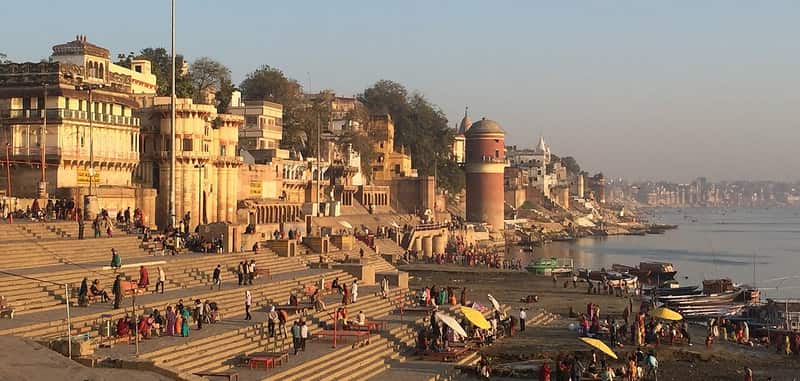
Seen from the water, Rewa Ghat sits at the heart of the southern riverline, that long curve of steps and palaces where the sacred city presents itself to the Ganga. To the south, beyond a short stretch of bank, rises Assi Ghat, the most famous name of the quarter, busy with its own aarti and its floating lamps; to the north lies Bhadaini Ghat, an older landing of considerable sanctity, and beyond it the fine lines of Tulsi Ghat and the princely palaces that follow toward the centre of the city. Rewa holds the middle ground between these celebrated neighbours, and its white palace makes it the landmark by which boatmen steer and visitors take their bearings. Boatmen describe the southern stretch in their own terms: the sangam, the palace, the clock ghat, the bathing steps — a working vocabulary of the river that has been handed down from father to son.
The riverline at this latitude has a character of its own. The water is wide and comparatively clean, the far bank is low and green, and the buildings on this side are older and more various than the monumental stone fronts of the centre. A boat journey of an hour from Assi to Bhadaini passes temples, palaces, ashrams and bathing platforms of every size, and Rewa's palace is the most striking of them all, its white facade standing out against the dark green of the trees. At sunset the whole line turns to silhouette, and the palace chhatris crown the skyline like small bells, while the lamps begin to glow in the doorways along the water. The reflections at this hour are the finest in the city, for the wide water holds the sky without a ripple, and a row of lamps on the steps appears twice over, once above and once below.
The riverline is also the pilgrim's map of the south, for each ghat here has its own deity, its own story and its own day of importance. Boatmen know the litany by heart and recite it as they row: the sangam at Assi, the palace at Rewa, the shrines of Bhadaini, the temples of Tulsi. For the visitor the lesson is simple — that the ghats are not a single monument but a chain of living places, each with its own face turned to the water, and that Rewa, for all its quietness, is one of the brightest links in that chain. To travel the riverline is to read the southern city in the only order that makes sense: the order of the current itself. It is the same order in which the sun travels, and in which the soul of the pilgrim is said to move toward the sea of liberation, carried by the same water that carries the city's story.
Behind the Ghat — Lanes, Houses and Temples
Behind Rewa Ghat lies the dense, living web of old Kashi: narrow lanes that turn and narrow again, houses of three and four storeys leaning toward each other across the sky, and a constant murmur of domestic life. This is a neighbourhood of working families, priests and shopkeepers, where washing hangs from balconies and the smell of cooking drifts into the street. The lanes are not built for vehicles, and the traffic is of bicycles, handcarts, holy men, schoolchildren and the occasional cow, moving with the patient choreography that has governed these streets for centuries. The lanes open here and there into small courts where a well or a tulsi plant marks the centre, and the evening brings the chatter of families sitting out on their thresholds, the women braiding each other's hair and the men arguing the day's prices in the comfortable way of old friends.
Scattered through the lanes are the temples that make this quarter a place of pilgrimage in its own right. Small shrines to Hanuman and Durga stand at the street corners, a centuries-old Shiva temple guards one of the principal crossings, and the houses themselves often shelter private family shrines, their doorways marked with vermilion and marigold. The temple at the crossing keeps a small priest's house and a bell whose sound carries across the rooftops to the river, and the shopkeepers who ply their trade beneath the eaves sell everything the pilgrims need: coconuts, red thread, incense, and the round earthen lamps that are floated on the Ganga at festival time. On festival days the neighbourhood comes out as one body — processions wind through the lanes, music fills the courtyards, and the temple bells ring from every direction. The ghat below is the front door of this community, and the lanes are its long, winding corridors.
For the visitor, wandering these lanes is the most rewarding way to spend an afternoon at Rewa. The houses reward a slow eye: carved wooden doorways, painted pillars, the fading traces of murals on plaster walls, and here and there a mansion of some old merchant or court official, its gate wide enough for a palanquin. The people are used to travellers and are courteous without being pushy, and a greeting in halting Hindi is met with smiles. To walk from the river to the top of the lanes, and to look back at the palace from the neighbourhood's rooftops, is to see the ghat from the inside — not as a postcard but as a home, the way its own people have always seen it. And if the visitor lingers until dusk, the lanes perform their oldest trick: the roofs catch the last light, the temple bells begin, and the whole quarter glows like the inside of a lantern.
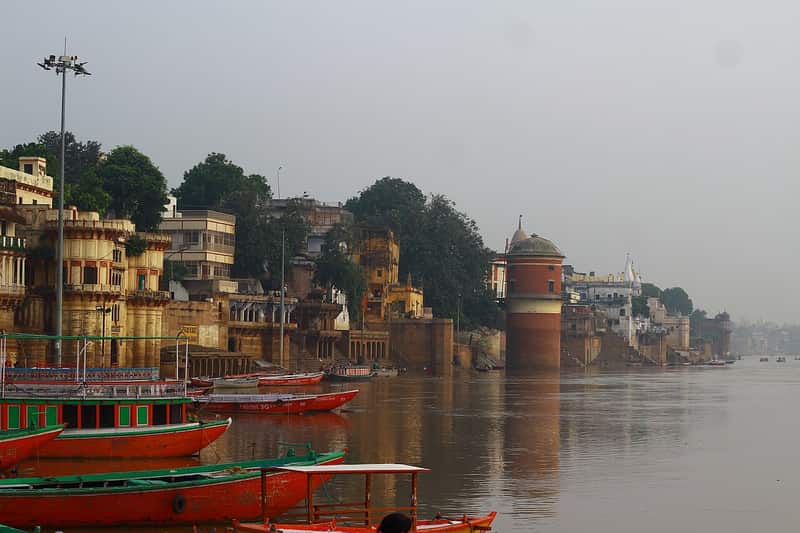
Lamps on the Water — Festival Life at Rewa
Festival days transform Rewa Ghat, as they transform every ghat of Kashi, but here the celebrations keep the intimate scale of the neighbourhood. On Ganga Dussehra, when the goddess's descent to earth is remembered, the whole community gathers at the water with lamps and garlands, and the steps glow with thousands of small flames. On Dev Deepawali, the festival of lights of the gods, celebrated some weeks after Diwali, the palace and the stairs are decked with marigolds and strings of lamps, and the river itself is offered a mirror of the sky, its surface covered with floating diyas. The day begins with a bathing procession, the families descending the steps in their festival clothes, and it ends with music, for the boatmen of Rewa are also singers, and their evening voices have accompanied the festival lamps for as long as anyone can remember.
The older festivals of the Hindu calendar find their local form on these steps. During Navratri the women of the lanes sing the songs of the goddess in the evenings, their voices carrying across the water, and on the final night the ghat is lit for the victory of Durga. Kartik Purnima brings its long line of pilgrims who bathe at dawn, and the month of Kartik as a whole is held sacred along the southern bank, when every sunrise finds the ghat crowded with lamp-bearers and singers. Between the great festivals, the smaller days of the calendar are kept with equal faith — the monthly sankranti baths, the worship of the river on the full moon, the little processions of the neighbourhood's own saints and sages. The priests of Rewa, who have led these celebrations for generations, keep the ancient order of the festivals, and the neighbourhood turns out for each one with undimmed enthusiasm.
For the visitor, festival time at Rewa is a rare chance to see the ghat as its own people see it — dressed, lit, crowded and joyful. The best evening is Dev Deepawali, when the palace, the steps and the water all burn with light at once, and the boundary between the sacred city and its river disappears entirely. At such moments the white facade glows like a shrine, the boats carry musicians, and the whole southern riverline turns into a single, singing procession. To stand among the crowd on the steps, to take the lamp that is offered and set it afloat, is to join a festival that has no beginning and no end — the festival of the Ganga herself. The crowd at Rewa on such nights is never a mob; it is a congregation, and even the visitors who arrive without understanding the ritual find themselves drawn into it, given lamps by strangers and folded into the singing as if they had always belonged.
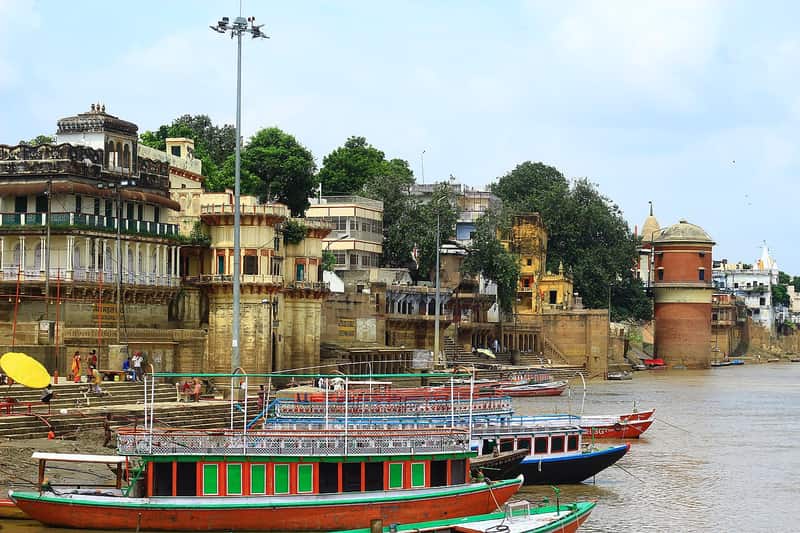
The Courtesy of the Ghat — Conduct and Photography
Rewa Ghat is a living place of worship before it is anything else, and the courtesy a visitor owes it is the courtesy owed to a temple. Bathers at their devotions should be left in peace, their rituals uninterrupted; priests at work should not be summoned for photographs; and the steps themselves, wet and slippery, demand the slow, careful walking of a pilgrim rather than the hurry of a tourist. It is wise to ask before entering any shrine, to remove shoes where it is customary, and to remember that the ghat belongs first to the people who live and pray here, and only second to those who visit. It is also wise to leave the ghat's silence alone: the morning is the time of prayer, not of conversation, and a visitor who sits quietly at the top of the steps will learn more about Kashi in an hour than in a week of guided tours.
Photography at Rewa asks for particular tact. The palace and the steps from the water are fair game at almost any hour, and the sunrise light makes even an amateur camera look gifted. But the bathers are not actors, and their morning ablutions are prayers; a photograph taken without permission, however harmless it seems, is a small theft of dignity. The rule that works everywhere in Kashi works here too — ask first, smile, and be grateful whether the answer is yes or no; offer a coin to the priest whose ritual you record; and never photograph a funeral or any rite of mourning, whatever the ghat. A respectful photographer is welcome; a predatory one is not. The same tact extends to the shops and the boats: prices in Kashi are fixed with a smile, and a bargain is expected, but haggling that turns bitter leaves a bad taste on a good ghat, and the traveller who pays a little more than the local rate buys not only the ride but the goodwill that goes with it.
The rewards of good conduct at Rewa are real. The boatmen who are treated with courtesy quote honest prices and become guides; the shopkeepers at the top of the steps keep their best tea for friendly faces; the priests offer blessings, tilak and conversation to those who greet them with folded hands. Visitors who respect the ghat find that the ghat opens itself — they are shown the old shrines, told the stories of the palace, invited to the festivals, and sent on their way with the warmth that Kashi reserves for the respectful stranger. To come to Rewa with humility is not to lose anything; it is to receive the ghat's own blessing in return. Many visitors leave Rewa with a small memento of the river — a shell, a painted boat, a strand of the marigold from the temple — and that is fitting, for the ghat gives freely to those who do not grasp at it.
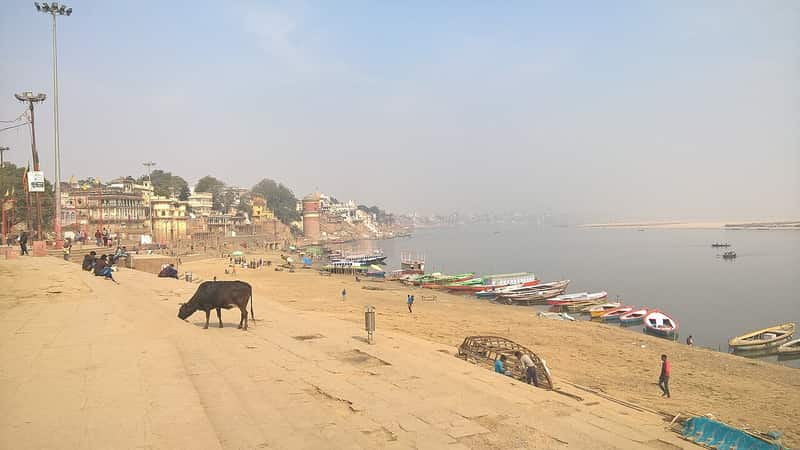
Practical Rewa — Reaching the Ghat, Best Hours, Neighbours
Rewa Ghat lies on the southern riverfront of Varanasi, roughly midway between Assi Ghat and Bhadaini Ghat, and it is easily reached on foot from either. From Assi, walk north along the paved bank for about five minutes, keeping the river on your left; from the centre of the city, take a rickshaw or auto to Assi and follow the same path. Those arriving by boat will find a good landing, for the water deepens quickly at this point and the platform is well maintained. The nearest railway station is Varanasi Junction, about eight kilometres away, and the airport at Babatpur is some thirty kilometres distant, both connected by road. Cyclists and walkers will find the way marked by the river itself, and the police outpost near Assi Ghat can direct newcomers with a word; the ghat is also on the route of the city's heritage walks, so the traveller may simply join one and let its pace carry them here.
The best hours at Rewa are the two ends of the day. Sunrise is the ghat's masterpiece, when the light and the bathing crowd combine in their finest colours, and the early morning is also the coolest and calmest time for a boat ride. Sunset, too, is lovely, though busier, with boats returning and the lamps being lit; the evening aarti is celebrated at Assi Ghat a short walk away, and can be combined with a late afternoon on the Rewa steps. Between ten in the morning and four in the afternoon the ghat is quiet and hot, suited to strolling the lanes behind rather than lingering on the open stone, and the monsoon months, while dramatic, make the steps slippery and the river strong. For the photographer, the light of the golden hours is reliable in October through March, and the festival evenings of November and December offer the richest scenes of the year.
Rewa's two neighbours complete the visitor's day. Southward lies Assi Ghat, the liveliest of the southern ghats, with its cafés, guesthouses, the sangam of the Assi river and the famous aarti; northward lies Bhadaini Ghat, an older and more austere landing with its own shrines, and beyond it the chain of Tulsi, Hanuman and the great ghats of the centre. A morning bath at Rewa, a walk to Assi for breakfast, a boat ride past Bhadaini in the evening — such is the day the southern riverline offers, and the visitor who follows it will take away not a single monument but a living river, in all its moods. Rewa Ghat asks nothing of the traveller but patience, and gives back peace in return. The southern riverline is compact, and the entire walk from Assi to Bhadaini, with pauses at every ghat, can be made in a single leisurely morning; few experiences in India reward the slow traveller more generously.
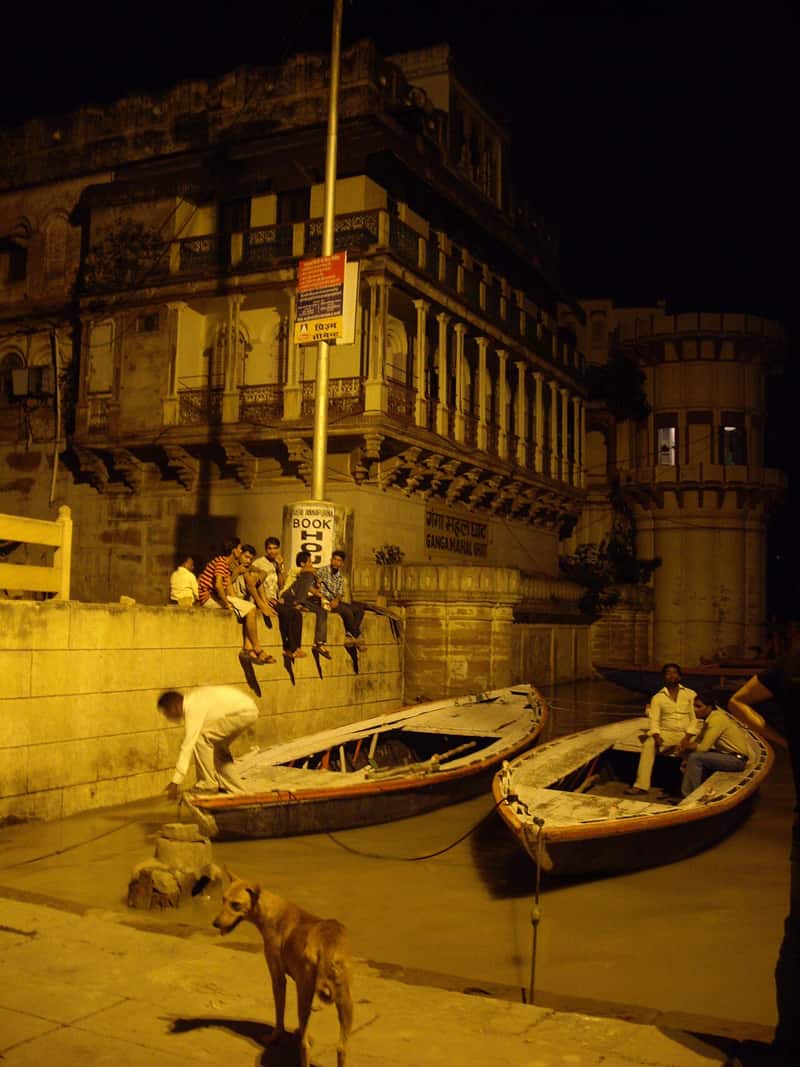
Rewa Ghat — Gallery (12 Photos)
Image Credits
rewa-01.jpg · rewa-02.jpg · rewa-03.jpg · rewa-04.jpg · rewa-05.jpg · rewa-06.jpg · rewa-07.jpg · rewa-08.jpg · rewa-09.jpg · rewa-10.jpg · rewa-11.jpg · rewa-12.jpg — Wikimedia Commons, under free licenses.
Continue exploring
Similar Ghats Nearby
Book This Ghat — Get Notified
Download the app now and book a boat ride to Rewa Ghat