

Chausatti Ghat
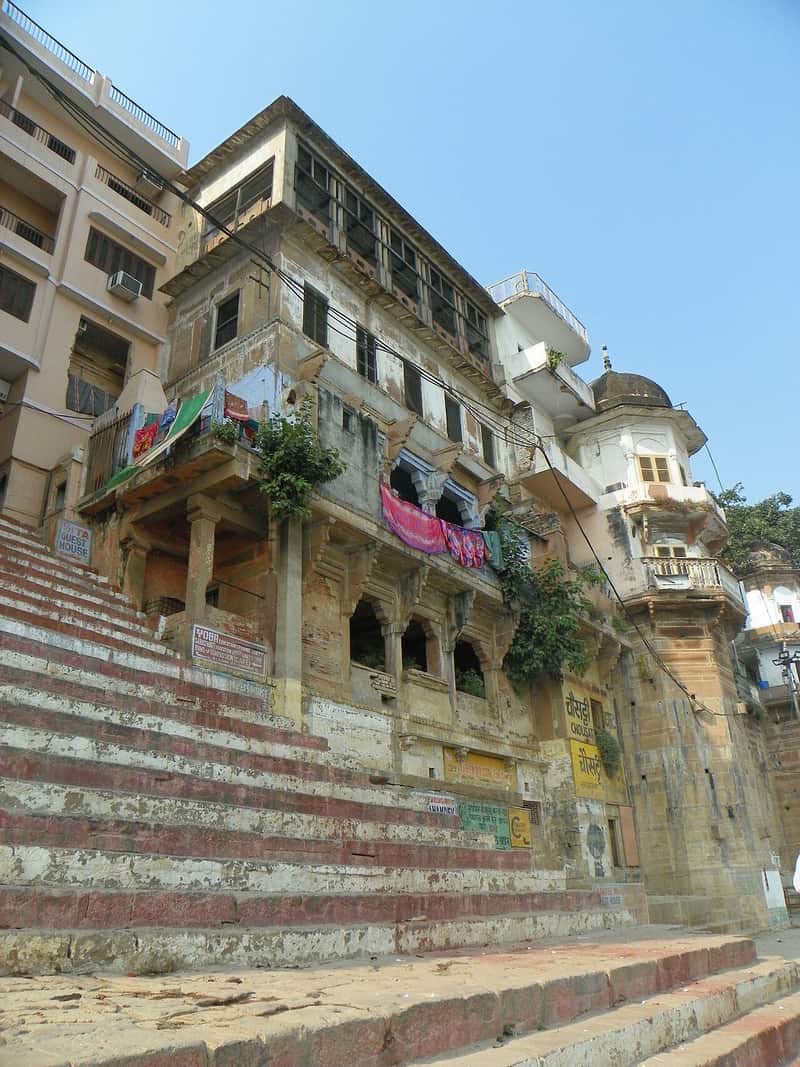
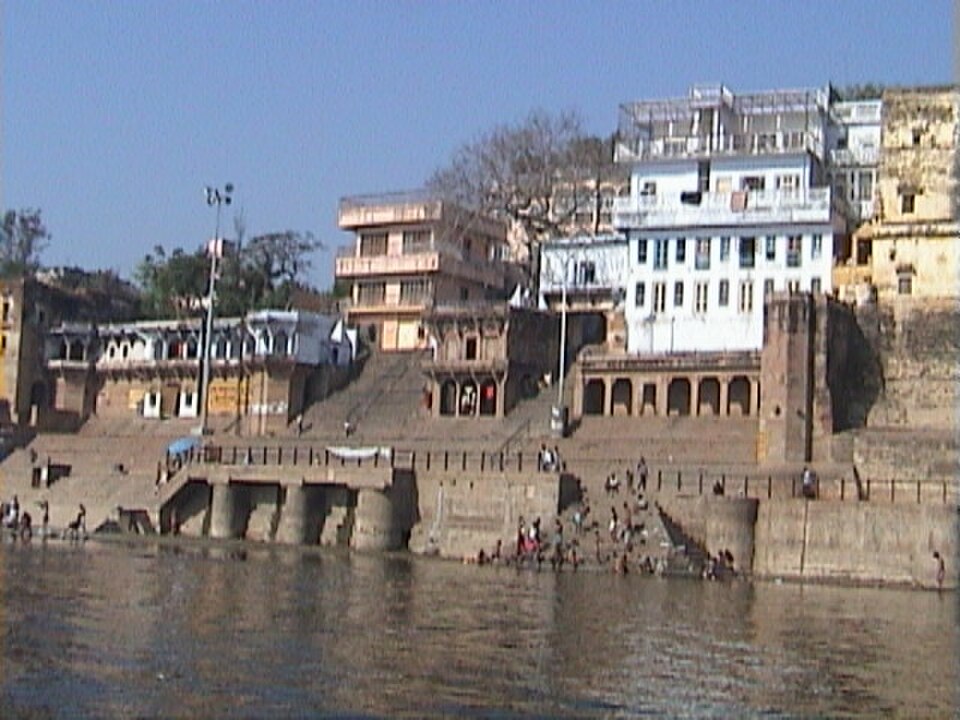
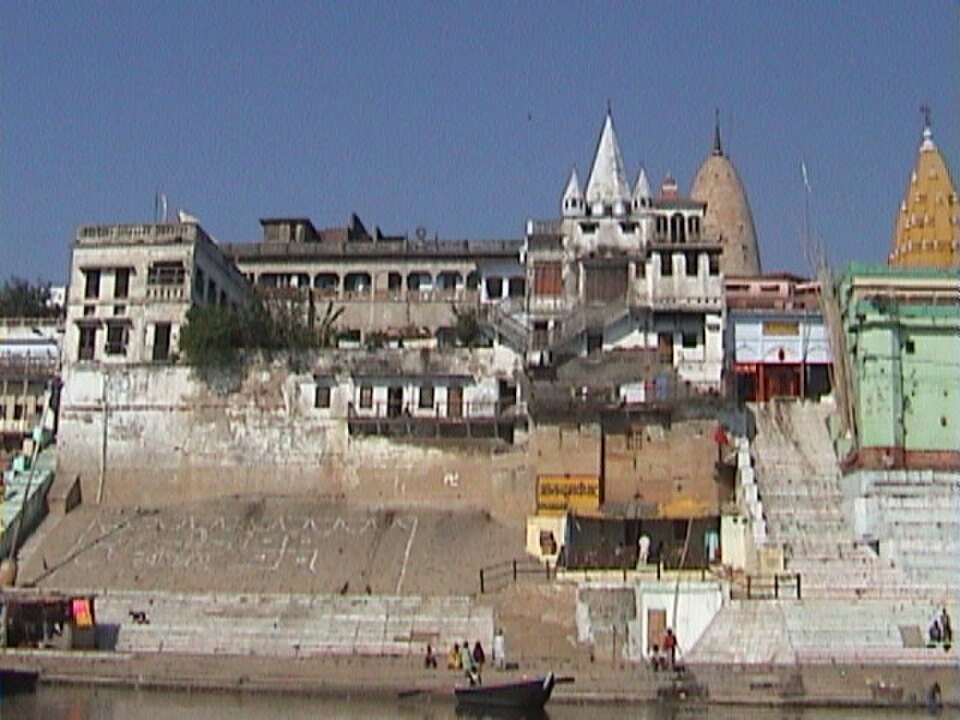
Heritage GhatChausatti Ghat is a historic ghat built in the 18th century.


Type
Heritage Ghat
Boat Fare
1x base fare
Best Time
6-10 AM
History
This ghat is linked to the temple of 64 Yoginis. The temple, dedicated to 64 goddesses, still stands here as a centre of tantra and power.
Highlights
- Darshan of the 64 Yogini temple
- Centre of tantra and shakti
- Historic importance
Festivals & Events
How pricing works in the NaviX app
No haggling at the ghat — everything is fixed in the app first
- 1
Fixed price before you board
The fare is shown in the app upfront — no bargaining at the ghat
- 2
Sharing or private — your choice
Share with fellow travelers or take the whole boat for your group
- 3
Pay only after the ride
UPI, card or cash — with an instant receipt
🕉️
Aarti details not available for this ghat yet
Complete Guide
Chausatti Ghat — The Complete Guide
History, mythology, rites and practical details — everything in depth.
On this page
- 1.Chausatti Ghat — The Ghat of the Sixty-Four Goddesses
- 2.The Sixty-Four Yoginis — Guardians of the Ghat
- 3.Chausath — The Sacred Number and the Tantric Tradition
- 4.The Sacred Feminine — The Goddesses of Kashi
- 5.Morning Bathing — Rituals on the Steps
- 6.Daily Life — Bathers, Boatmen and Locals
- 7.The River — The Ganga at Chausatti
- 8.The Neighbourhood — Lanes and Mohalla
- 9.Nearby Ghats — Raj Ghat and Lal Ghat
- 10.Festivals — Navratri and the Goddess Nights
- 11.Etiquette — Conduct on a Living Ghat
- 12.Practical Guide — How to Reach and When to Go
📅 Updated: 21 Aug 2026 · Author: NaviX Field Team (field research 2024-26) · 12 sections · 12 photos
Chausatti Ghat — The Ghat of the Sixty-Four Goddesses
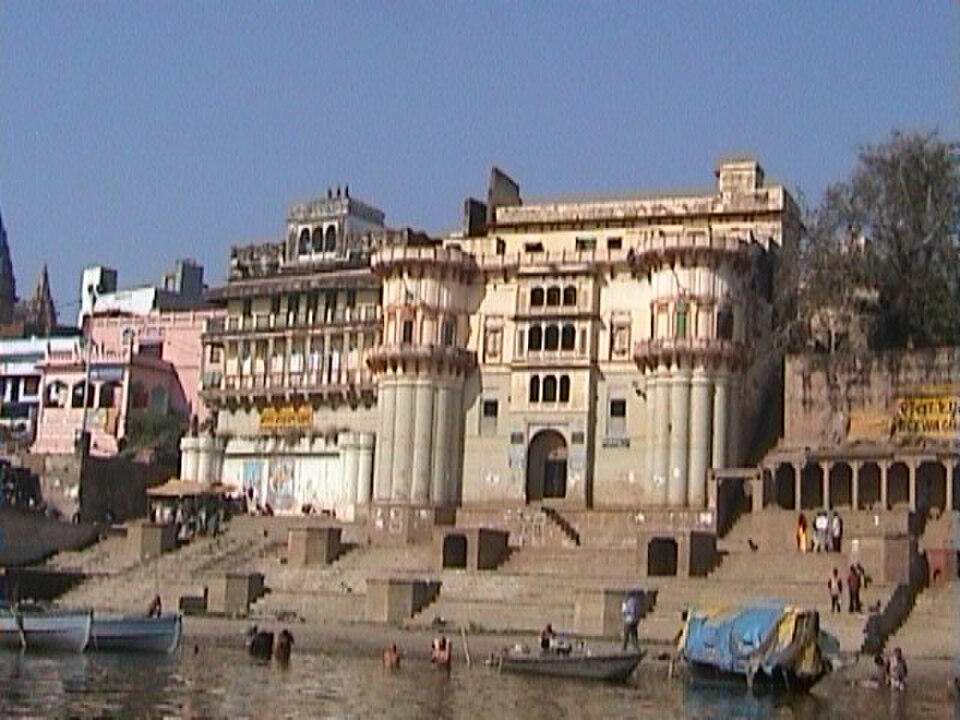
Chausatti Ghat stands on the northern riverfront of Varanasi, a short walk from the Malviya Bridge and the old Raj Ghat, among the quieter landings that guard the northern approach of the holy city. It was built in the eighteenth century, in the age when kings and merchants competed to lay stone upon the Ganga bank, and its broad, well-constructed steps still carry the dignity of that era. The river here is wide and unhurried, and the ghat keeps the calm character of the northern chain, far from the crowds of Dashashwamedh and the great ceremonies of the south. Most visitors who pass this way are on their way to somewhere else — the burning ghats, the old temples, the boat jetty at the bridge — and Chausatti rewards those who pause, for it holds a secret that few ghats can claim. Behind its steps stands the temple of the sixty-four yoginis, the fierce and beautiful goddesses of the tantric tradition, and that single fact gives this modest landing a spiritual weight out of all proportion to its size.
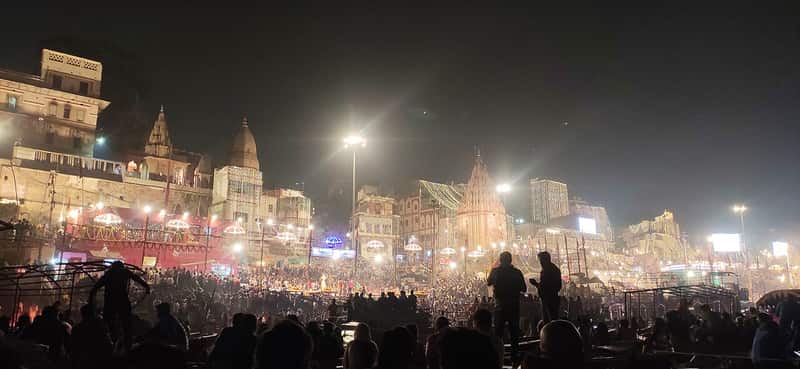
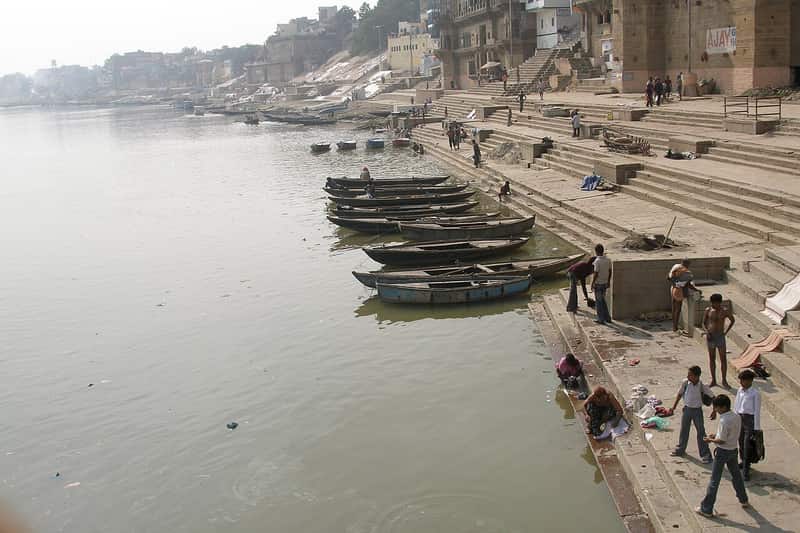
Like the other ghats of the far north, Chausatti lives by the rhythm of the river. At dawn the bathers come, elderly men with sacred threads and brass pots, women with their children, pilgrims who have walked from the railway station with their bundles and their faith. The boatmen sit on the lower steps mending their nets and arguing over the price of a crossing, while sadhus settle into the shade of the temple porch with their scriptures. Cows wander down the lanes that open onto the ghat, and washermen beat their clothes on the stones at the water's edge. There is no orchestra here, no grand aarti, no ranks of painted boats — only the quiet, unbroken routine of an old city meeting its river, morning after morning, century after century. It is this unassuming daily life, more than any monument, that gives Chausatti its character, and it is the yogini temple, standing above it all, that gives the ghat its soul.
For the traveller, Chausatti offers something increasingly rare in Varanasi: a ghat that feels genuinely lived in, where the sacred and the everyday are still one thing. The yogini connection lends the place a distinctive flavour — a whisper of the secret traditions of Kashi, of the goddesses who once stood guard over the city in a circle of power. To stand on its steps at sunrise, with the great bridge rising to the north and the long crescent of ghats fading into the mist to the south, is to understand the deepest charm of the oldest living city on earth. The ghat does not demand attention; it simply waits, and those who give it an hour find themselves carrying its quiet blessing for the rest of their journey through Banaras.
The Sixty-Four Yoginis — Guardians of the Ghat
The temple of the sixty-four yoginis is the beating heart of Chausatti, and one of the last living witnesses in Kashi to one of the oldest cults of the subcontinent. The yoginis were goddesses of the tantric tradition — fierce, beautiful, and possessed of terrifying power — who appeared in circles of sixty-four, surrounding the Great Goddess at the centre of their mandala. They were worshipped not in ordinary temples but in open-air circular shrines, under the sky, where the goddesses themselves were believed to descend. Each yogini had her own name, her own face, her own animal vehicle and her own gift: some granted mastery of the elements, others the power of flight, others the art of healing, and all of them together formed the complete circle of the female divine. In the yogini cult, the Goddess was not a distant queen of heaven but an immediate presence, worshipped with secret mantras and offered blood and flesh in the old days, when the tradition was at the height of its power.
The yogini cult flourished between the eighth and thirteenth centuries, when temples to the sixty-four goddesses rose from Odisha to Madhya Pradesh, and Kashi was among the cities where the tradition ran deepest. The temple at Chausatti belongs to this family of shrines, and although its present form is simpler than the great circular temples of Hirapur or Bhedaghat, its sanctity is no less real to those who keep its faith. Here the yoginis are honoured as the guardians of the ghat and of the quarter around it, protectors who know every lane and every household, who watch over births and deaths, who can bless a barren womb and punish a broken vow. On certain nights of the year, the temple becomes the meeting point of the city's tantric tradition, and worshippers gather with offerings of flowers, vermilion, liquor and sweets — a survival, softened by the centuries, of the old rites that once made this spot famous across the whole of India.
For most modern worshippers the yoginis have merged into the great family of the Devi — they are understood as the many forms of the mother goddess, the sixty-four faces of one power that pervades the world. The fierce rites of the old days have given way to gentle ones; the offerings of blood have become offerings of red flowers and red cloth, the colour red still speaking of the goddess's ancient appetite for power. What has not changed is the sense of awe the yoginis inspire, and the belief that the circle of goddesses stands guard over Kashi as it has for a thousand years. To climb the steps of the temple and bow before the images, to see the vermilion on the threshold and the tiny lamps flickering in the dark sanctum, is to touch a living thread that runs from the tantric masters of the medieval age to the housewives of the modern mohalla, unbroken and still burning.
Chausath — The Sacred Number and the Tantric Tradition
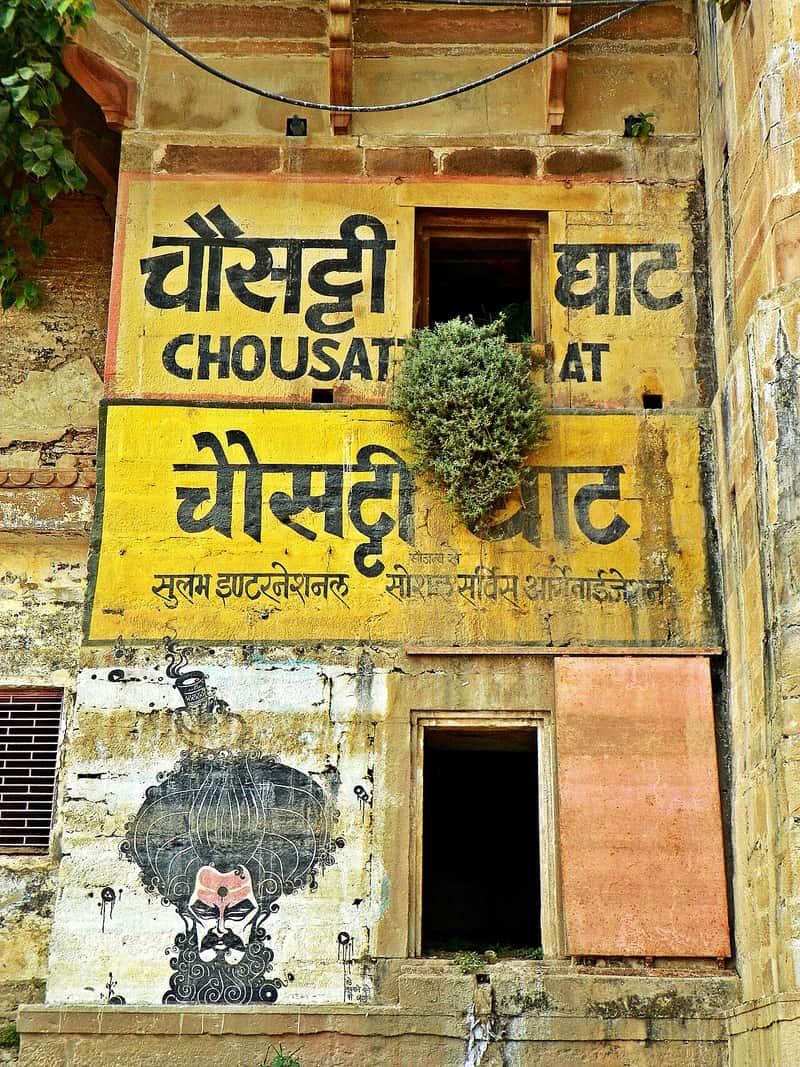
The name Chausatti is simply the local pronunciation of chausath, the Sanskrit word for sixty-four — the number of yoginis honoured at the temple behind the ghat. Numbers have always carried sacred weight in Indian tradition, and sixty-four is among the most potent of them all: sixty-four is the number of the arts, of the squares of the chessboard, of the goddesses of the tantric circle, of the positions of classical lovemaking described in the Kama Sutra, and of the yoginis themselves, who were said to assemble in exactly that number around the throne of the Great Goddess. In tantric texts the number is woven into the very structure of the universe — the sixty-four yoginis correspond to the divisions of time, to the phases of the moon, to the breaths of the body — and to name a ghat after them was to dedicate the river itself to their power.
The tantric tradition that gives the ghat its name runs deep in the religious history of Kashi. Long before the temple became a quiet neighbourhood shrine, the yoginis of this place were the objects of a secret and powerful worship, conducted by adepts who sought siddhis — supernatural powers — from the circle of goddesses. The number sixty-four was their sacred geometry: the yoginis stood at the eight directions and at every point between them, a web of divine female power that enclosed the worshipper on every side. To enter their circle was to be surrounded by the goddess in all her forms, and the ghat that bore their number was understood to be a place where that circle touched the river, where the currents of the Ganga and the currents of tantric power flowed together. Even today the name is spoken with a certain reverence by the people of the quarter, and the old boatmen who have spent their lives on this stretch of river will tell you that the ghat has carried its number for as long as anyone can remember, long before the British maps began to record the names of the northern landings.
Language itself tells the story of the ghat's antiquity. In the local dialect, chausath became chausatti, the way the people of the old city have always softened their Sanskrit — the same ease with which they call a temple a mandir and a lane a gali. The name has never been changed, never renamed after a king or a patron, which is itself remarkable in a city where almost every ghat honours the ruler who paid for its stones. Chausatti keeps the name of the goddesses, not of a donor, and that is a quiet testimony to the power the yoginis once held here. Where other ghats boast of maharajas and ministers, this one simply announces its devotion: sixty-four, the number of the mothers, the number of the divine circle, the number that still guards the northern steps of Kashi.
The Sacred Feminine — The Goddesses of Kashi
Kashi is the city of Shiva, but it is equally the city of the Goddess, and Chausatti is one of the places where that feminine face of the city shows itself most clearly. The old city is ringed with the shrines of the great goddesses: Annapurna, who feeds the world from her temple in the heart of the city; Vishalakshi, the wide-eyed one, whose shrine is counted among the fifty-one shakti pithas; Lalita, whose ghat lies nearby; and the yoginis of Chausatti, who stand in their circle above the northern steps. The goddess tradition of Kashi is as old as the city itself, and the Puranas record that Shiva could not bear to live in Kashi without the presence of the divine mother, so he placed her at the very centre of his city, and placed her fierce daughters in a ring around it.
The yoginis belong to the fiercest family of the goddess tradition. Unlike the gentle mother who feeds the world, they are the warriors and the healers, the goddesses who fight, who dance on the battlefield, who ride lions and tigers and stand upon corpses — images that are still carved on the walls of their temple, surviving from the centuries when the tantric rites were a dominant force in the religious life of India. In the old cosmology, the yoginis were believed to be the goddesses who consumed the offerings of the cremation ground, who walked among the ashes and the bones, who knew the secrets of both creation and destruction. To worship them was to embrace the whole of the divine feminine, the terrifying and the loving, the fierce and the fertile, the power that gives life and the power that takes it away.
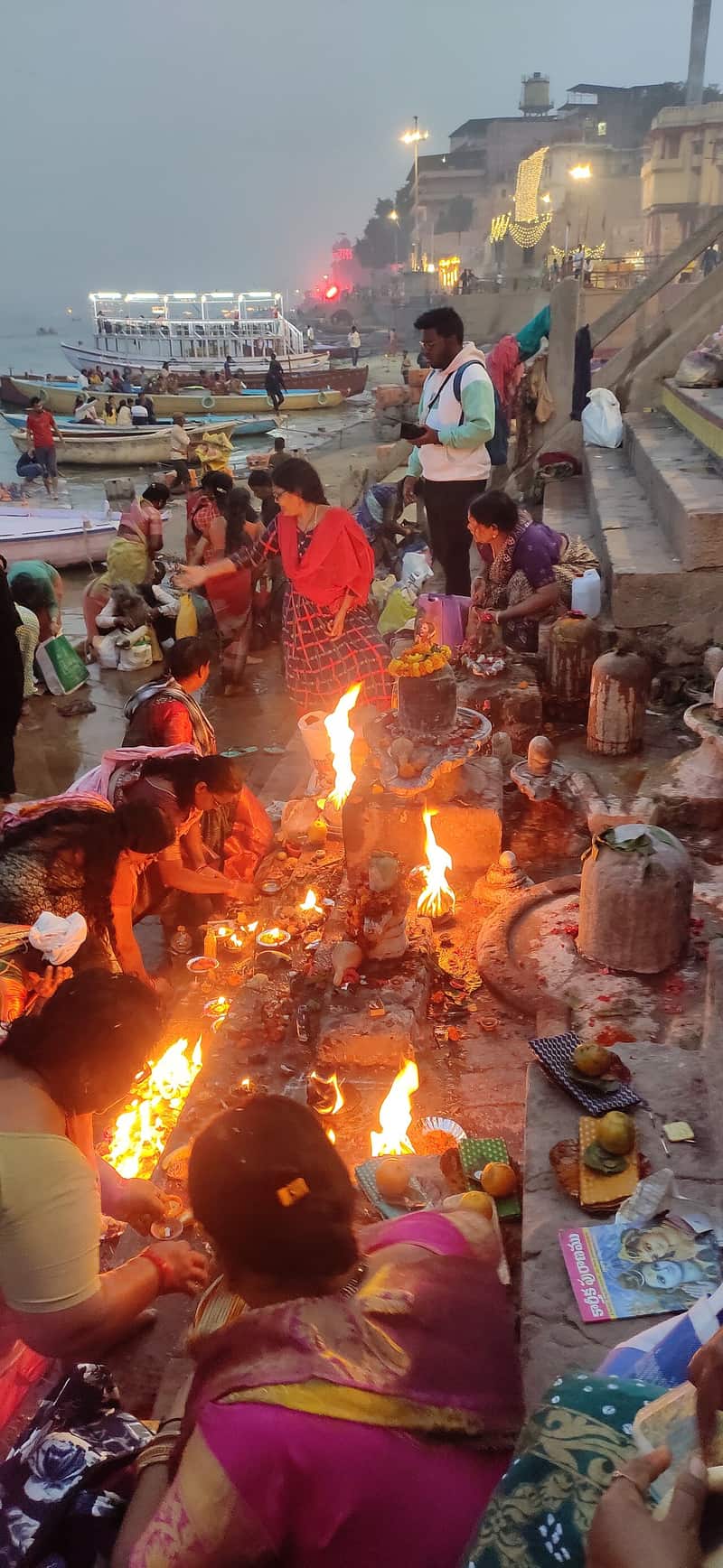
This sacred feminine is woven into the daily life of the ghat in ways both visible and subtle. The women of the quarter run the households that open onto the ghat's lanes, and their devotion flows to the yogini temple in an unbroken stream of small offerings — a pinch of vermilion, a handful of flowers, a lamp lit at dusk. When a daughter is married, the family visits the temple; when a son is born, the temple receives the first offerings; when illness strikes, the yoginis are invoked with names that have been spoken on this spot for centuries. The goddess tradition of Kashi is not a museum piece here; it is a living faith, carried in the voices of the women who sing bhajans in the temple courtyard and in the quiet confidence with which the whole neighbourhood places itself under the protection of the mothers of Chausatti.
Morning Bathing — Rituals on the Steps
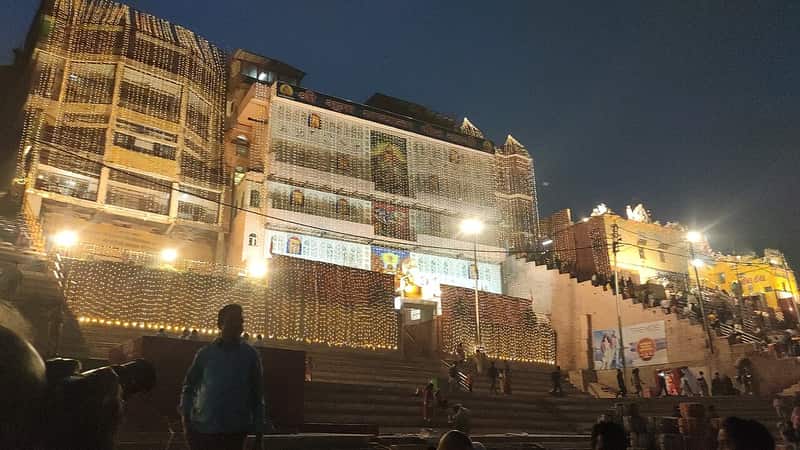
Bathing at Chausatti begins before sunrise, when the first bathers pick their way down the wide steps in the half-dark. The northern ghats draw fewer bathers than the great ceremonial landings of the south, and at this hour the ghat belongs to the local people — the old men of the quarter who have bathed here every morning for fifty years, the women who come in twos and threes with their brass pots, the pilgrims who have walked from the railway station to begin their first full day in Kashi with the holy dip. The water here is deep and slow, and the steps descend gently into it, making the ghat one of the easier landings for the elderly and the infirm. By seven o'clock the sun is up over the far bank, and the whole ritual of the morning is in full swing: the splashing, the chanting, the ringing of the temple bells above.
The bath itself follows the immemorial pattern of Hindu practice. The bather stands in the water facing the rising sun, cups the water in his hands, and offers it back to the east with the Gayatri mantra on his lips. Some perform tarpana for their ancestors, letting the water stream through their fingers with sesame and rice; others simply immerse themselves three times, surrender to the current, and climb out renewed. What makes bathing at Chausatti different from bathing at the crowded ghats is the silence and the space — here there is room to perform the rites with unhurried attention, and the yogini temple above seems to watch over the water with a special care, as if the goddesses themselves were present at the daily ablutions of their devotees. The river at this point is wide and almost rural, and the bather can look across to the far shore of the Ganga, still green with fields.
For the visitor, the bathing scene at Chausatti is one of the most intimate views of Hindu ritual that Varanasi offers. There is no crowd, no orchestra, no tourist boat pressing in — only the timeless sight of faith meeting water, enacted by people for whom this is not a spectacle but the first duty of the day. It is wise to come with the same respect: to watch quietly from the upper steps, to ask before photographing, and to remember that every person in the water is engaged in a private conversation with the divine. Those who do so are often rewarded with the most memorable hour of their stay — the slow light, the chanting, the temple bells, and the sense of having touched, however briefly, the everyday sanctity that has sustained this city for thousands of years.
Daily Life — Bathers, Boatmen and Locals
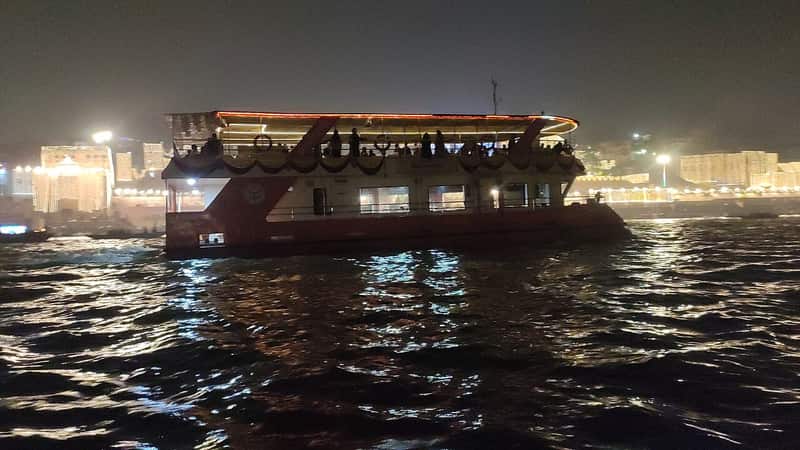
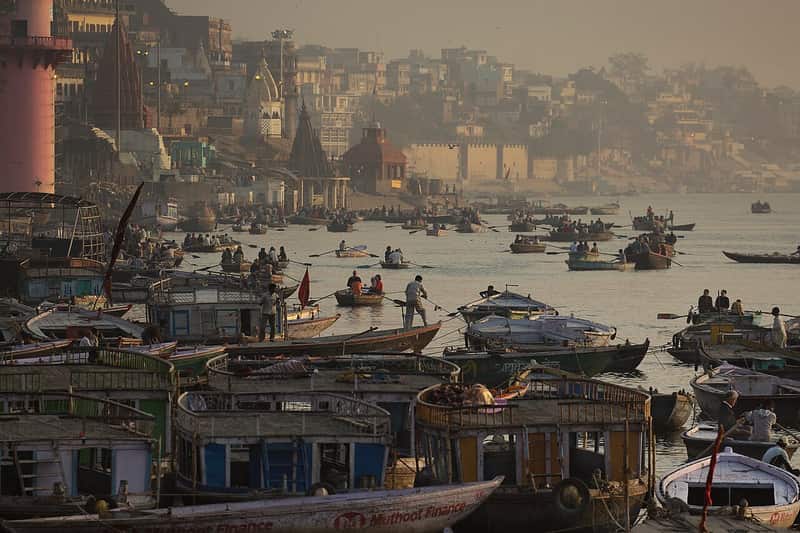
The daily life of Chausatti is the daily life of the river — work, worship and weather, all on the same stones. The boatmen are the ghat's first citizens: they arrive before dawn, untie their long wooden boats from the iron rings set in the steps, and set out into the grey water, ferrying pilgrims to the far bank, carrying loads of firewood and bricks, or simply fishing the slow current. In the middle of the day they sit on the lower steps, mending their nets, chewing paan, and arguing with a fine theatrical fury about the price of a crossing, while their sons dive from the moored boats with the perfect disregard for danger that only river children possess. The water itself is their office, their market and their temple, and they know every shift of its current the way a farmer knows his fields.
Around the bathers and boatmen moves the whole economy of a riverside quarter. Washermen beat the white cloth of the city on the stones, spreading it over the railings to dry; women scrub brass pots with sand at the water's edge; hawkers bring up baskets of vegetables and fish in the mornings, and by noon the upper steps are a small market of their own. Sadhus sit in the shade of the temple porch, reading and receiving offerings; children play cricket on the flat stones above the water; cows and goats wander down the lanes to drink. The tea stalls behind the ghat do a steady trade from first light, their little stoves glowing in the morning mist, and the smell of strong milk tea mixes with the smell of incense from the temple and smoke from the cremation ghats upstream — the whole life of Banaras compressed into a few hundred yards of stone.
What strikes the visitor most about Chausatti is how little its daily life has changed. The photographs taken here a century ago show the same steps, the same boats, the same laundry drying on the same railings, the same barefoot women carrying the same brass pots. The ghat has been rebuilt and repaired many times, but the pattern of life upon it is older than any of the stones, a rhythm that belongs to the river rather than to any age. The people of the quarter seem to know this too: they live their lives without self-consciousness, as if the visitor were not there, and that very indifference is a gift. To sit on the steps of Chausatti for an hour is to watch the oldest city on earth simply being itself — no performance, no welcome, no farewell, just the endless, tranquil traffic of human life on the banks of the Ganga.
The River — The Ganga at Chausatti
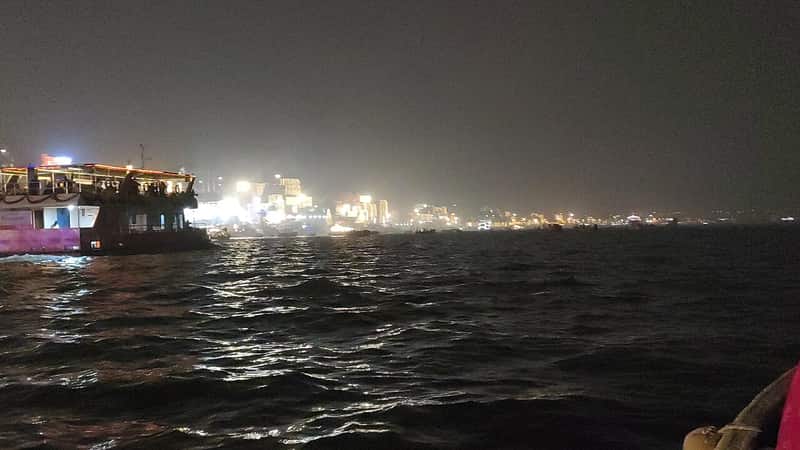
At Chausatti the Ganga shows a different face from the one she wears in the centre of the city. The river here is wider and wilder, still close to the countryside through which she enters the plain; from the ghat's steps one can see the far bank of the holy river, green with fields and villages, a sight impossible at the crowded ghats of the south. To the north, the great iron arch of the Malviya Bridge strides across the water, its trains and trucks carrying the life of India above the river of the gods, while beneath it the old Raj Ghat keeps its quiet watch. To the south, the chain of ghats stretches away into the morning mist, their steps and spires fading into the haze until the city dissolves into the river itself, one long grey silhouette against the rising sun.
The view from the water is even more rewarding. A boatman will take a visitor out into the current for very little, and from the middle of the river the ghat reveals itself as the ancients saw it — a staircase of stone climbing from the water to the sky, crowned by the yogini temple and the tiled roofs of the old city. The upstream view takes in the confluence of the Varuna, the river that comes down from the north to join the Ganga near the bridge, a meeting that has been sacred since the age of the Puranas. The downstream view runs past ghat after ghat to the great sweep of the southern riverfront, and at sunset the whole arc turns to gold and copper, the temple spires black against the burning sky, the water itself a mirror of fire. It is a panorama that has moved pilgrims and painters for centuries, and from the mid-river it is all the more moving for being framed by silence.
The river is also the ghat's calendar, rising and falling with the seasons and the moods of the monsoon. In the hot months the water recedes far from the steps, leaving broad sandbanks where children play and boats rest at anchor; in the rains it rises to the very top of the ghat, and the boatmen pull their craft high up the steps to save them from the flood. At Kartik Purnima, when the moon is full in the sacred month of Kartik, the whole riverfront is lit with lamps, and Chausatti's stretch of water glows with the offerings of the faithful — small flames floating past the yogini temple toward the sea. To stand on the steps of Chausatti and watch the river go by is to understand that this ghat, like all of Kashi, is not beside the Ganga but upon her — born of her, shaped by her, and blessed by her every single day.
The Neighbourhood — Lanes and Mohalla
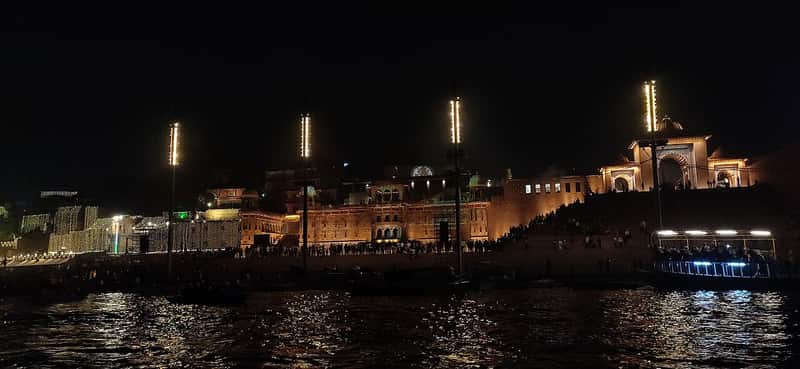
Behind Chausatti rises the dense, secretive warren of the northern mohallas, some of the oldest neighbourhoods of the old city. The lanes here are narrow and uneven, paved with stone and lined with houses two and three centuries old, their facades covered in worn plaster, carved balconies and doorways that open onto sudden courtyards. Life in these lanes runs on a schedule of its own: the morning milk arrives by cart before the sun, the bread comes hot from the ovens of the small bakeries, and the women of the quarter move between their houses and the ghat with the confidence of people who have known every step of the way since childhood. Every lane has its shrine — a small Hanuman under a tree, a stone snake worshipped with milk, a tiny yogini image blackened with age — and every evening the lanes fill with the sound of bells and bhajans.
The mohalla around Chausatti is a working quarter, not a museum. Weavers, metalworkers, tailors and sweet-makers ply their trades in rooms that open directly onto the lanes; the brass pots that shine on the ghat in the morning are scoured and sold in these very alleys. The neighbourhood has its own rhythm of festivals and sorrows, its own elders who sit on the stone platforms outside the temples settling quarrels and arranging marriages, its own cycle of births, deaths and weddings that has turned here for centuries. This is the real Banaras — not the Banaras of the tourist map, but the city of families who have lived on these same streets for ten generations, who still draw their water from the same river, worship at the same shrines and bury their dead on the same ground where their ancestors were consigned to the Ganga.
Wandering these lanes, the visitor begins to understand how completely the ghat and the quarter belong to each other. The steps of Chausatti are not a monument approached from outside; they are the front courtyard of the neighbourhood, the place where the lane's life spills out onto the river. The temple of the yoginis is not a tourist site but the household deity of the whole mohalla, visited daily, swept daily, dressed and decorated by the women who consider it their own. In the afternoon the lanes cool under the high walls, the shops close for a while, and the quarter rests; in the evening it wakes again, the lights come on in the doorways, and the sounds of cooking and conversation drift down toward the water. For those who stay a night or two in the lodgings above the ghat, this living neighbourhood becomes the truest memory of Kashi — a city that is not a stage but a home.

Nearby Ghats — Raj Ghat and Lal Ghat
Chausatti sits at the heart of one of the most interesting walks on the northern riverfront, a chain of ghats that leads from the great bridge down toward the sacred heart of the city. Immediately to the north lies Raj Ghat, one of the oldest landings in Kashi, traditionally the first ghat a pilgrim reached when entering the city from the east. It stands directly beneath the Malviya Bridge, and its ancient stone work and the old temple beside it give it an air of great antiquity. Beyond Raj Ghat, under the shadow of the bridge, the riverfront turns rural; sandbanks and fields stretch toward the Varuna confluence, and the holy city seems to dissolve into the countryside that gave it birth. The walk from Chausatti to Raj Ghat takes barely five minutes and feels like walking back a thousand years.
To the south, the chain continues through Lal Ghat and the other landings of the northern quarter before reaching the great Panchganga Ghat, where the five sacred rivers are said to meet. Lal Ghat is a small, peaceful landing with its own ancient temple, a good place to pause on the walk; the water here is calm, the crowds absent, and the view across the wide river is among the best on the whole riverfront. Further south the ghats become grander and busier — Trilochan, Darbhanga, Munshi — until the riverfront opens into the ceremonial sweep that ends at Dashashwamedh. For the visitor, this whole stretch can be walked in a single morning, with Chausatti as the natural midpoint: Raj Ghat and the bridge behind, the great ghats ahead, and the yogini temple above as a constant landmark.
Each of the neighbouring ghats has its own character and its own story. Raj Ghat, some say, was the ghat of the kings — the landing where royal processions reached the water, and where the old city of Kashi began its march along the riverbank. Lal Ghat, with its shrine and its quiet steps, is a favourite of local bathers who prefer its peace to the crowded southern landings. Beyond them the chain runs on, ghat after ghat, each with its temple, its patron and its history, together forming the longest riverfront staircase in the world. To walk this chain with Chausatti as a base is to see the northern ghats as they are meant to be seen — slowly, on foot, at the pace of the boatmen and the bathers, with the river always to one side and the old city always above.
Festivals — Navratri and the Goddess Nights
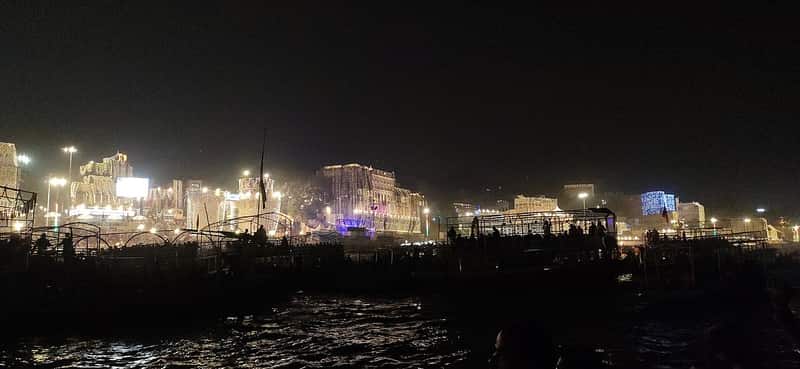
The great festival of Chausatti is Navratri, the nine nights of the Goddess, when the yogini temple comes into its own. For nine nights the shrine glows with lamps and fills with worshippers, and the goddesses are honoured in all their forms — the fierce and the gentle, the warrior and the mother. The women of the quarter keep the ancient fast, the small girls of the neighbourhood are dressed and honoured as the goddess herself, and the temple courtyard resounds with bhajans and the ringing of bells late into the night. On the final night, the great Vijaya Dashami, the whole mohalla gathers at the ghat for the immersion of the images of Durga, and the river below the yogini temple carries the lights and the flowers of the departing goddess toward the sea. Navratri at Chausatti is the feminine faith of the city made visible, a festival in which the very name of the ghat becomes a celebration.
The yogini temple has its own special days through the year. On the nights of the new moon and the full moon, the tantric tradition of the ghat stirs again: the inner sanctum is opened, special offerings are made, and the older worshippers perform rites that have been handed down in their families for generations. Chausath Yogini Puja, the special worship of the sixty-four goddesses, is held with particular care at these times, when the yoginis are believed to be at their most powerful. In the old days these rites drew adepts from across India; today they are a family tradition of the quarter, kept alive by a handful of families who still know the old mantras and the old ways. On these nights the ghat is quiet and the temple is lit, and the visitor who happens to be present may witness something rare: a living survival of the tantric practice that once made this spot famous.
The other festivals of the year pass over the ghat in their eternal procession. At Kartik Purnima the whole northern riverfront glows with lamps, and Chausatti's share of the holy dip draws bathers from the surrounding mohallas, their voices rising in the morning air. Holi brings its own chaos of colour to the lanes behind the ghat; Diwali lights every doorway; the full moon of Magh brings the winter bathing festival, when the faithful sleep on the riverbank to begin their ablutions before dawn. Through all of them, the yogini temple stands above the steps, its goddesses presiding over the turn of the year with the same impassive power they have held for a thousand years. For the visitor, the simplest way to share in this life is to come at festival time and join the crowd on the ghat — not as a spectator but as a guest, welcomed by a city that has been welcoming pilgrims for more than two thousand years.
Etiquette — Conduct on a Living Ghat
Chausatti is first of all a living ghat — a place of worship, work and everyday life — and the visitor is a guest upon it. The first rule of the ghat is simple respect: dress modestly, cover shoulders and knees, and leave the bright holiday clothes for the boat rides on the southern ghats. When the bathers are in the water, keep to the upper steps and speak softly; the people below are engaged in a private act of devotion, and although they are long accustomed to visitors, they are owed the same courtesy as anyone at prayer. Photography is the trickiest question: ask before photographing people, and never photograph anyone in the water without permission. A smile and a folded hand go a long way, and the people of the quarter, like the people of all Kashi, respond to genuine respect with genuine warmth.
The temple of the yoginis asks its own courtesies. Leave your shoes at the entrance or with the caretaker, remove your belt if you carry one, and enter quietly. Women who are menstruating traditionally do not enter the inner sanctum, a custom that the women of the quarter observe and expect to be observed. Offerings, if you wish to make them, are simple: flowers, vermilion, a coin or sweets bought from the stall at the foot of the steps. Do not touch the images, do not climb onto the platforms, and do not take photographs inside the sanctum unless you are invited to do so. If you are present during a rite, stand aside and watch in silence; the priests will happily speak to you afterwards, and many of them, in the old Kashi way, are more than willing to tell the stories of their goddesses to anyone who asks with genuine interest.
Finally, remember what kind of place this is. Chausatti is not a monument or a museum piece; it is a working landing where the sacred and the everyday are one thing, and it deserves the same care a guest would show in any home. Do not leave litter on the steps or in the river — the Ganga is the goddess herself, and the people of the ghat take her purity seriously. Do not haggle with the boatmen as if they were a sideshow; they are honest working men, and the rates are fair. And above all, do not be hurried. The ghat reveals itself to those who sit still, and the visitor who spends an unhurried hour on the steps of Chausatti, watching and listening and saying little, will carry away more of the true Kashi than any who rush through. Respect is repaid here a hundredfold, in the trust of the boatmen, the smiles of the women, and the peace of the river itself.
Practical Guide — How to Reach and When to Go
Chausatti is easy to reach and rewarding to visit, though it rewards those who come at the right hour. The ghat lies on the northern riverfront, about a kilometre and a half north of Dashashwamedh along the ghat road; the simplest approach is to take a cycle rickshaw or auto to Raj Ghat and walk the last few minutes south along the riverfront, or to walk the whole way from the centre if the morning is cool. By boat it is a pleasant run from the main ghats, and the boatmen of Dashashwamedh will take you there with a stop at the bridge on the way. The ghat is not on the main tourist circuit, and that is its charm: the walk itself, past the old ghats and temples of the northern quarter, is part of the experience.
The best time to visit is the early morning, between six and ten, when the bathing is at its height and the light is at its most beautiful; the afternoon sun is fierce, and the ghat, though never crowded, is at its quietest. October to March is the ideal season, with cool air and clear skies; the summer months are hot, and the monsoon brings the river high up the steps and the lanes muddy. Allow an hour for the ghat itself, and two or three if you plan to walk the northern chain — Raj Ghat, Lal Ghat, Panchganga — and return by boat. There is no entrance fee, no ticket, no timings to respect; the ghat is open and alive from before dawn until the last lamp is lit at night, and it asks nothing of the visitor but respect.
Chausatti is best combined with the other ghats of the north, and the day can be arranged as a single unhurried circuit. Start at sunrise at Raj Ghat beneath the Malviya Bridge, watch the city wake on the river, then walk south to Chausatti for the morning bath scene and the yogini temple. From there continue through Lal Ghat to Panchganga, where the five rivers are believed to meet, and end the morning with a boat ride back along the riverfront to the centre of the city. For those who wish to stay nearby, simple guesthouses and lodges are scattered through the lanes above the ghat, and the railway station is a short ride away. Whatever the route, the ghat asks one thing only of its visitors — that they come as pilgrims in spirit, with time on their hands and stillness in their hearts, and the old goddesses of the northern steps will do the rest.
Chausatti Ghat — Gallery (12 Photos)
Image Credits
chausatti-01.jpg · chausatti-02.jpg · chausatti-03.jpg · chausatti-04.jpg · chausatti-05.jpg · chausatti-06.jpg · chausatti-07.jpg · chausatti-08.jpg · chausatti-09.jpg · chausatti-10.jpg · chausatti-11.jpg · chausatti-12.jpg — Wikimedia Commons, under free licenses.
Continue exploring
Similar Ghats Nearby
Book This Ghat — Get Notified
Download the app now and book a boat ride to Chausatti Ghat