

Mata Anandamayee Ghat
Heritage GhatMata Anandamayee Ghat is a small ghat named after Anandamayi Ma.


Type
Heritage Ghat
Boat Fare
1x base fare
Best Time
6-10 AM
History
Named after Anandamayi Ma. A famous temple is at the ghat center.
Highlights
- Experience of spiritual peace
- Linked to the saint’s memory
- Ideal for a peaceful bath
Festivals & Events
How pricing works in the NaviX app
No haggling at the ghat — everything is fixed in the app first
- 1
Fixed price before you board
The fare is shown in the app upfront — no bargaining at the ghat
- 2
Sharing or private — your choice
Share with fellow travelers or take the whole boat for your group
- 3
Pay only after the ride
UPI, card or cash — with an instant receipt
🕉️
Aarti details not available for this ghat yet
Complete Guide
Mata Anandamayee Ghat — The Complete Guide
History, mythology, rites and practical details — everything in depth.
On this page
- 1.Mata Anandamayee Ghat — A Saint's Grace on the River
- 2.Anandamayi Ma — The Saint Whose Bliss Knew No Bounds
- 3.How the Ghat Came to Bear Her Name
- 4.An Ashram-Like Calm by the Water
- 5.The Morning Bath — A Sacred Beginning
- 6.The River Here — Wide, Clean and Bright
- 7.Daily Life on the Steps
- 8.The Lanes and the Ashram Behind the Ghat
- 9.Assi Ghat and the Southern Walk
- 10.Festivals of Faith — Honouring the Saint
- 11.A Guest's Courtesy — Etiquette at the Ghat
- 12.Practical Notes — Reaching the Ghat
📅 Updated: 21 Aug 2026 · Author: NaviX Field Team (field research 2024-26) · 12 sections · 12 photos
Mata Anandamayee Ghat — A Saint's Grace on the River
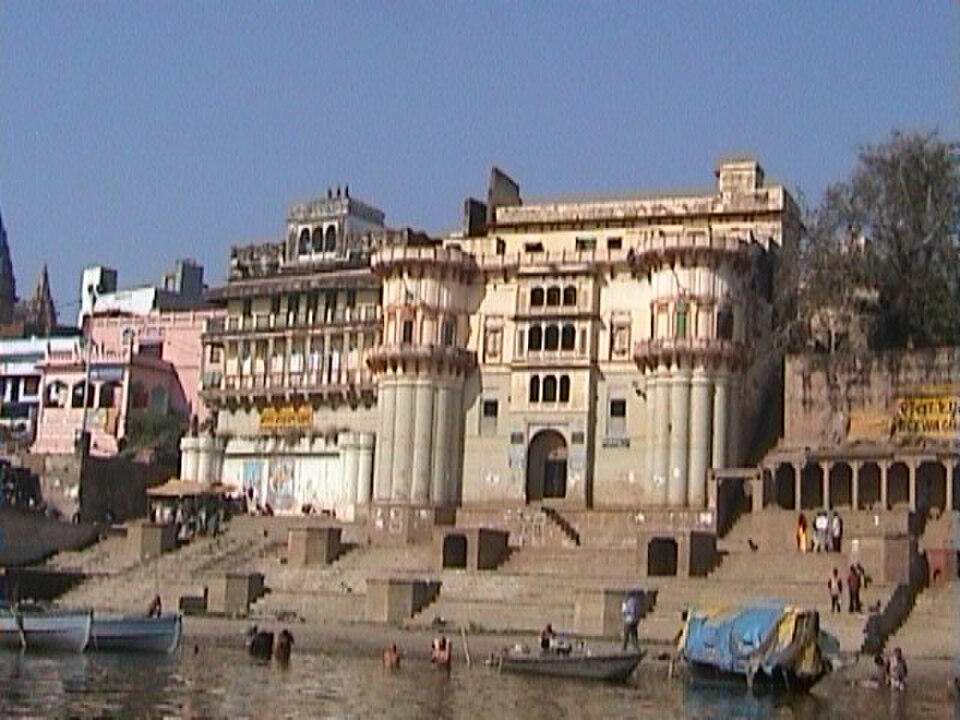
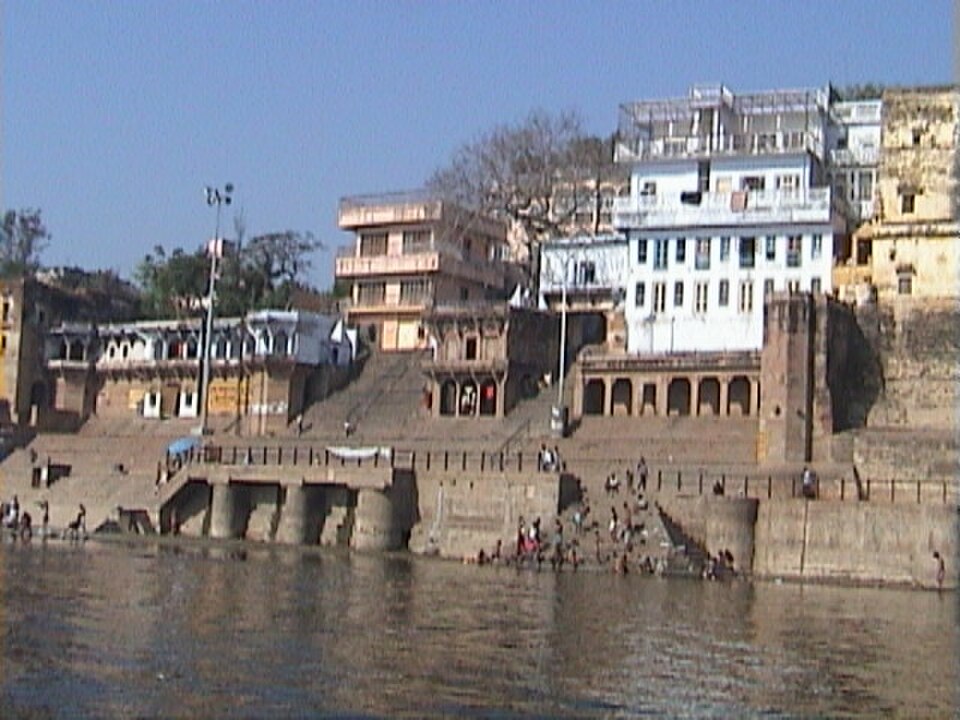
Mata Anandamayee Ghat rises on the southern stretch of Varanasi's riverfront, a clean and carefully maintained landing tucked between Janaki Ghat to the south and Jain Ghat to the north, just a short walk from the bustling energy of Assi Ghat. It is one of the newer names on this ancient shoreline, dedicated to Anandamayi Ma, the beloved twentieth-century saint whose memory still draws thousands of devotees from every corner of India. Wide paved steps descend gently to the water, and everything about the ghat feels orderly and cared for — swept stone, clear approaches, a quiet dignity that sets it apart from the crowded ceremonial ghats further north. This is a ghat of modern devotion: a saint of our own age standing watch over the oldest river in the world's oldest living city.
The ghat's character is defined by an ashram-like calm. There are no hawkers shouting, no ranks of tour boats jostling at the landing, no constant hubbub of ritual announcements. Instead, bathers come and go quietly through the morning, devotees of the saint sit in meditation on the upper steps, and the only sounds are the lap of the water, the cry of birds, and the distant chanting drifting from nearby temples. Local families use the ghat for their daily duties — bathing, washing, praying — while pilgrims who have come to honour Anandamayi Ma find here a place to sit and remember her. Visitors seeking a quiet morning by the Ganga often find this stretch the most rewarding on the entire southern riverfront, and many return to it again and again during their stay in the holy city.
What makes Mata Anandamayee Ghat remarkable is the way it joins two eras of faith. The river below has known every age of Kashi — the boats of merchants, the pyres of pilgrims, the processions of kings. The saint above it lived only in the last century, yet her presence here feels utterly natural, as if the Ganga had been waiting for her name all along. For the traveller, the ghat offers something rare: a place where the holy city's living tradition can be felt without noise, where modern devotion meets the ancient river, and where the patience of a single quiet morning reveals the true heart of Banaras.
Anandamayi Ma — The Saint Whose Bliss Knew No Bounds
Anandamayi Ma was born Nirmala Sundari on April 30, 1896, in the village of Kheora in East Bengal, in what is now Bangladesh. Her father was a devout Vaishnava singer, and from earliest childhood the girl showed a strange and beautiful disposition — she would slip into states of ecstatic devotion without warning, singing hymns she had never been taught and seeming to live in a world of unseen divine companionship. Those around her came to call her Ananda-mayi, she who is permeated with bliss, and the name stayed with her for life. Married at thirteen to Ramani Mohan Chakraborty, she transformed her household into a place of worship, and her husband himself became her first and most devoted follower, later taking the name Bholanath.
By the 1930s her fame had spread across India. From her home in Dhaka she moved through the subcontinent on endless journeys, and wherever she went, ashrams sprang up to receive her — at Kankhal near Haridwar, at Vrindavan, at Dehradun, at Almora, at Kolkata and at Varanasi itself. She never claimed a guru, saying that her state of realization had come spontaneously from God, and she never gave formal initiations in the usual sense, yet thousands of seekers — scholars, sadhus, governors, maharajas and ordinary villagers alike — sat at her feet. Her teaching was simple and ancient: love God, practise sadhana, serve all beings as forms of the divine, and trust that the bliss which filled her was the birthright of every soul that comes into the world.
She left her body on August 27, 1982, at Dehradun, in the state of samadhi, in the presence of her devotees. Her samadhi shrine at Kankhal still draws pilgrims from every corner of India, and her ashrams continue the daily round of kirtan, prayer and service that she established. For the city of Varanasi, her memory is especially alive: she came here often, and her devotees tell of her love for the Ganga and for the eternal city. It is altogether fitting that one of the riverfront's newest ghats should bear her name, for in her life the ancient promise of Kashi — that joy is the soul's true nature — was made visible in a single human being.
How the Ghat Came to Bear Her Name
Not every ghat of Varanasi is old. Mata Anandamayee Ghat belongs to a newer chapter in the city's long relationship with the river, one in which the state and the faithful together reshaped the shoreline in the second half of the twentieth century. The stretch between Janaki and Jain ghats was long an unremarkable landing, its steps worn and uneven, used quietly by the few households behind it. In the years after Anandamayi Ma's passing in 1982, her devotees — many of them citizens of Varanasi who had known her personally — pressed for a more fitting memorial on the very bank she had loved. The result was a thorough renovation: the old steps were replaced, the approach widened and paved, the surrounding area cleaned, and the ghat formally dedicated to her memory.
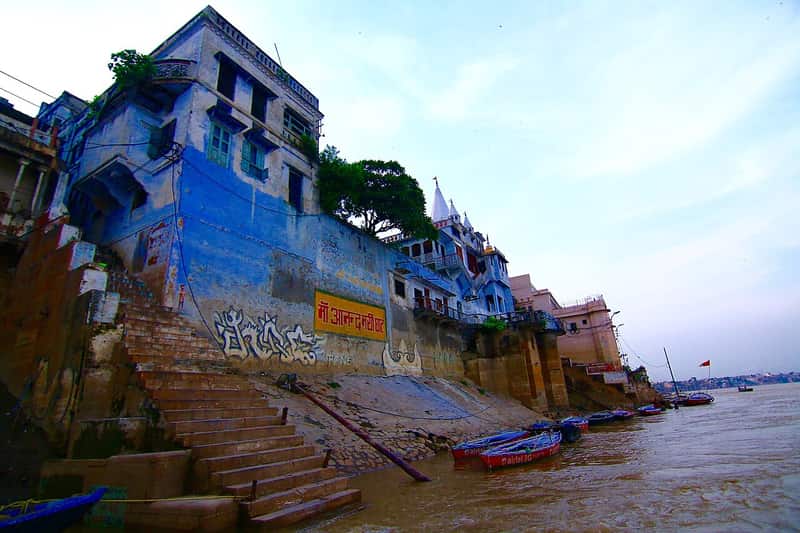
Today a sign at the top of the steps announces the name — Mata Anandamayee Ghat — and small plaques record the renovation and the spirit behind it. The work was a public act of love: funds came from devotees and well-wishers, the authorities contributed the planning and the labour, and the blessing of the site was given by monks and priests of the saint's tradition. Where once the landing had been nameless, it now carries the name of a woman who, in the words of her followers, lived the joy she taught. The ghat is thus a rare thing on this ancient shore — a monument not to a king or a deity of antiquity, but to a saint of the modern age, raised by the people who loved her.
The naming also testifies to something deep in the culture of Kashi. Throughout its history the city has absorbed new saints into its sacred geography, adding names to the river's edge as each generation found its own teachers. Anandamayi Ma joins that line — a twentieth-century presence taking her place beside the older ghats of the Mahabharata and the Puranas. For her devotees, the ghat is more than a memorial; it is a living place where her presence is felt, where her name is spoken at every morning bath, and where the ancient river continues to receive the devotion of a new age.
An Ashram-Like Calm by the Water
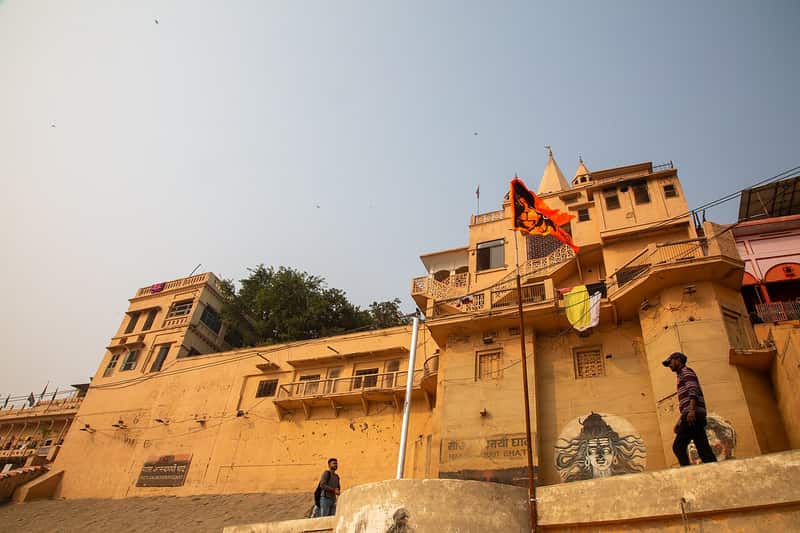
The first thing a visitor notices at Mata Anandamayee Ghat is the quiet. Even at hours when Assi Ghat, a few minutes to the south, is thronged with crowds and music, this landing preserves a stillness that feels almost monastic. The wide paved steps give the place an open, ordered character, and the unhurried movements of the few people around — a woman pouring water from a brass pot, an old man reading under a tree, a sadhu sitting motionless at the water's edge — seem part of a single slow composition. The sounds are elemental: water lapping at the stone, wind in the trees, the bells of distant temples, the low murmur of prayer. For many visitors this is the closest Varanasi offers to a meditation hall open to the sky.
The ghat's atmosphere owes much to the saint herself. Anandamayi Ma was famous for the atmosphere of peace that surrounded her; her devotees said that simply sitting near her stilled the mind, and that her presence taught without words. Something of that spirit clings to the ghat that bears her name. Devotees come here not for spectacle but for silence — to sit on the steps with eyes closed, to chant softly, to read her sayings, to pray. The upper level of the ghat has become an informal meditation spot, where morning finds clusters of people in quiet practice while the river goes about its eternal business below them. The calm is deep enough that even birds seem bolder here, perching close to the seated figures.
This calm is a gift that modern Varanasi does not offer everywhere. The northern ghats blaze with processions and cameras; Assi, just south, hums with cafés and music through the day. But here, between the two, the riverfront keeps the mood of an ashram. Morning is the finest hour: the sun rising over the eastern sandbanks, the water turning gold, the first bathers stepping in with folded hands. Travellers who want to feel the contemplative heart of Banaras — the city that has produced saints for three thousand years — will find it on these clean, quiet steps, where a twentieth-century saint's memory has become a place of peace for all who come.
The Morning Bath — A Sacred Beginning
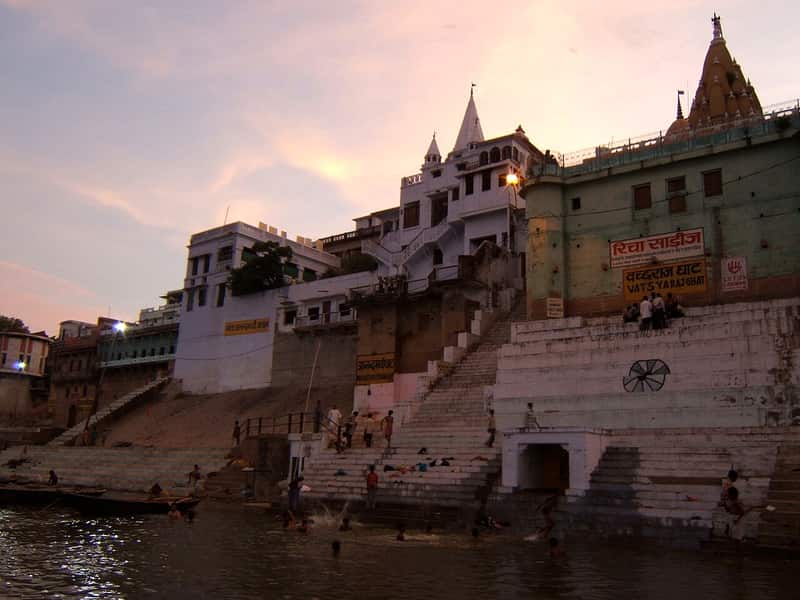
As the first light touches the river, the ghat comes quietly to life with its most sacred ritual: the morning bath. Men and women, young and old, descend the wide steps with brass lotas and small bundles of clothes, and step into the water with folded hands and murmured mantras. A full immersion — three dips, sometimes more — is followed by the pouring of water toward the rising sun in the gesture of arghya, and a brief standing prayer. The southern stretch of the riverfront, where this ghat lies, is widely considered cleaner than the northern ghats, and the bathers here are mostly local people who know their river well and choose this landing for its clear water and its quiet.
For the devotees of Anandamayi Ma, the bath carries an added layer of meaning. Many who come to this ghat are pilgrims who have known the saint's name all their lives, and they bathe here as much in her memory as in the river's sacred water. They speak her name as they dip, recall her sayings, and afterwards sit on the steps to dry their clothes and let the morning settle. The water that touches them is the same water she loved; the horizon they face is the same horizon she watched. For these bathers, the ghat is a place where a personal devotion and an ancient tradition of purification meet in a single, simple act, and the saint's blessing is felt in every immersion.
The bath at this ghat is also a social hour. The morning brings neighbours together — greetings are exchanged, news shared, plans made — all in the unhurried manner of Banaras. Families teach children how to stand in the water and fold the hands; old women soak for a while in the shallows; a priest or a wandering sadhu may give blessings in passing. By seven or eight the bathing is mostly done, the steps begin to empty, and the ghat settles into its daytime quiet. For a visitor, the early hours here offer a chance to see one of the oldest rituals of the world performed with the unselfconscious grace of daily life, unadorned and untouched by performance.
The River Here — Wide, Clean and Bright
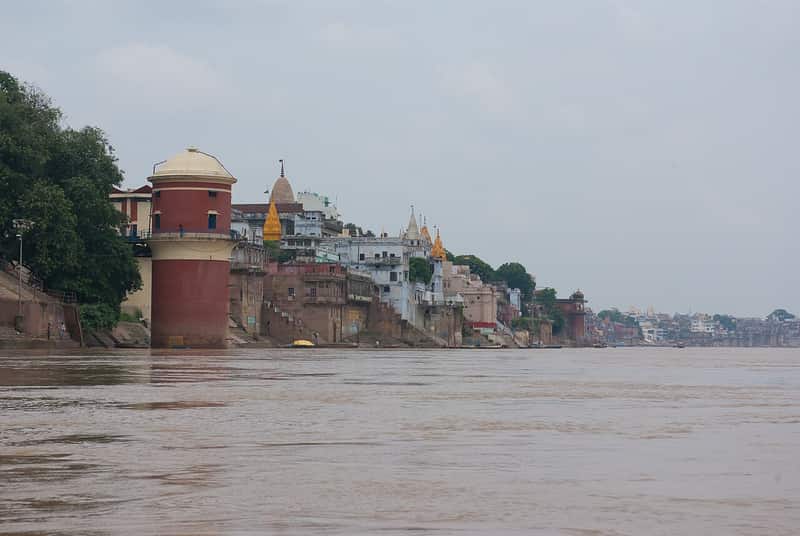
The Ganga at Mata Anandamayee Ghat is at its most generous. Here, on the southern riverfront, the great river runs broad and open, its current smoother and its water noticeably clearer than in the crowded north, where centuries of ritual and effluent have darkened the flow. In the dry season, wide sandy banks stretch out to the east, and the river's real channel lies far beyond, glinting under the sun. On monsoon mornings the water climbs high up the steps, and the ghat becomes a waterfront in the truest sense, the river at your feet in a single, immense sheet. Whatever the season, the river here feels alive — moving, breathing, changing colour with every hour of light.
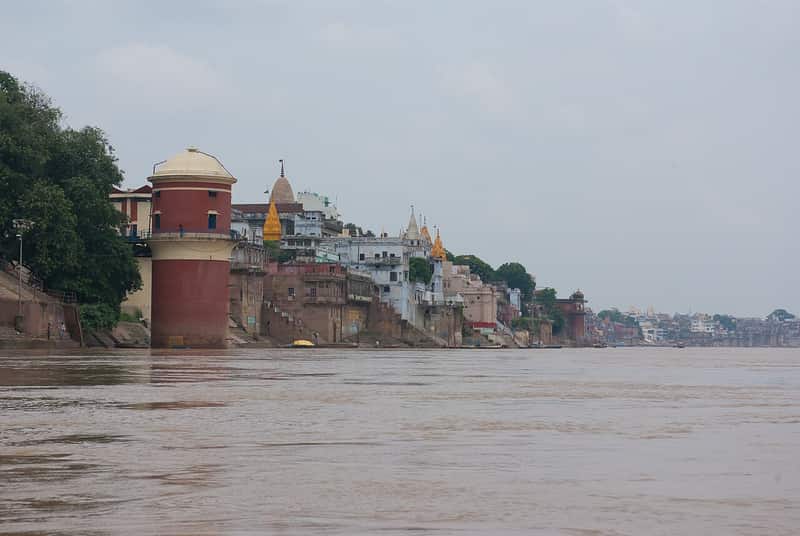
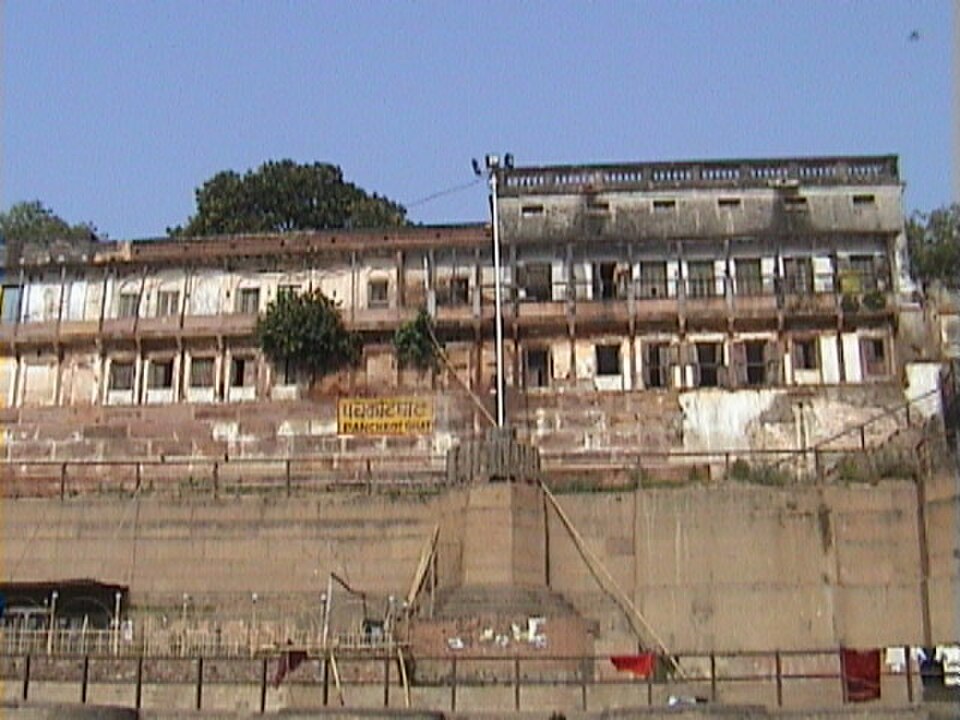
The view from the steps is a lesson in the geography of Kashi. To the south, the shore bends gently toward Assi Ghat, where the Assi stream joins the Ganga, and beyond it the temples of the Sankat Mochan quarter rise above the treetops. To the north, the ghats step up in a long sequence — Janaki, Jain, Panchkota, then the great ceremonial landings of the central city — their towers and palaces drawn in silhouette against the morning haze. Sunrise is the great hour: the east glows pink and gold over the sandbanks, the water turns to flame, and the first boats glide out across the shining surface while herons stand motionless at the edge of the shallows.
The river is also the ghat's link to the saint. Anandamayi Ma's devotees remember how she loved to sit by the Ganga, and the river she saw from Varanasi is the river still flowing here — the same water, the same eastern light, the same sandbanks. A boat ride from this ghat at dawn is one of the finest ways to experience it: drifting south past Janaki and Tulsi toward Assi, or north along the quiet ghats, the city recedes, the water widens, and the morning belongs wholly to the river. For those who stay on the steps, the river offers its own meditation — the endless play of light and current that has been Kashi's first teacher since time beyond memory.
Daily Life on the Steps
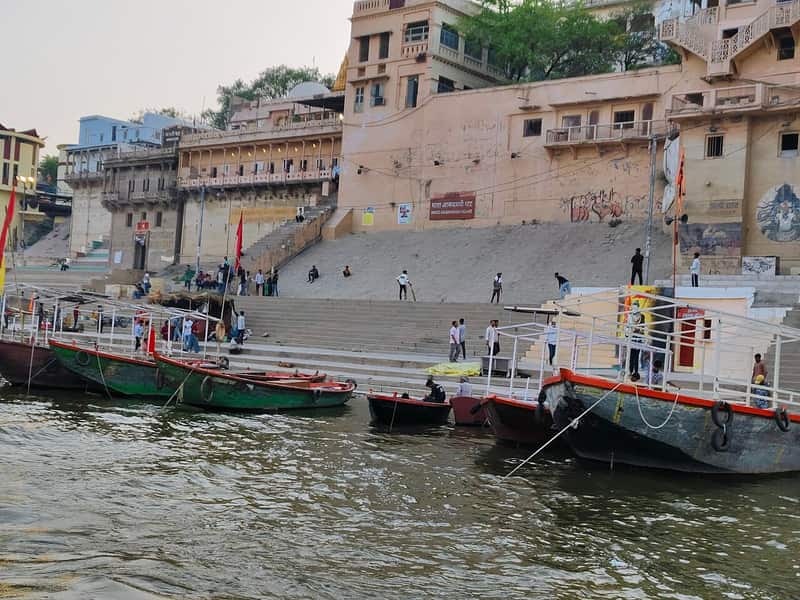
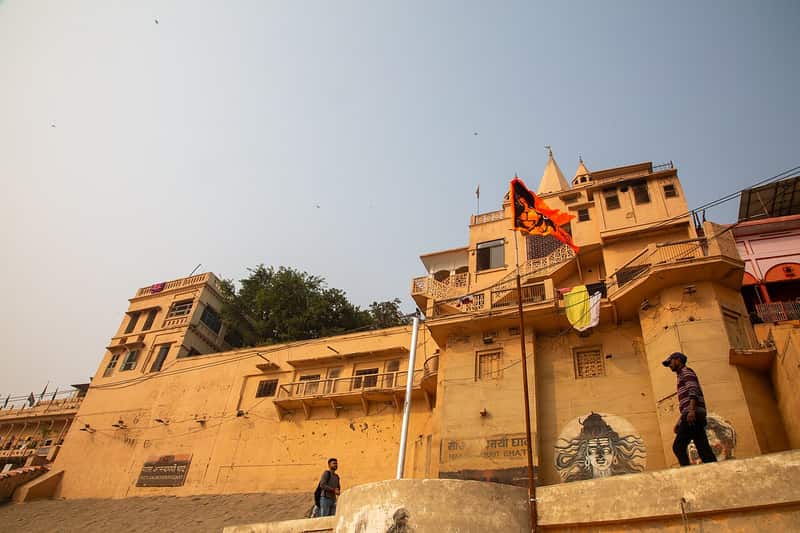
Like every ghat of Banaras, Mata Anandamayee is, above all, a neighbourhood — a working riverside where devotion and daily chores share the same stones. The day opens with the bathers, and soon the water's edge is busy with other tasks: women scrubbing brass pots with ash and river sand until they gleam, others beating clothes clean on flat stones, children splashing in the shallows under a watchful eye. Vendors set up small baskets of marigolds, kumkum and incense at the top of the steps, and a tea stall or two begin to steam in the lane behind. The ghat is used the way a village square is used — for everything, from worship to gossip to the drying of a thousand small things.
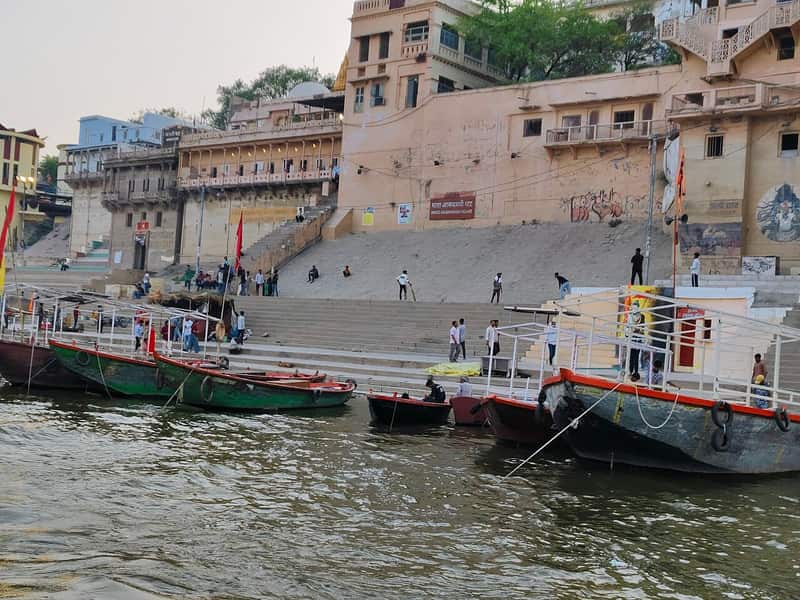
The boatmen are the ghat's other constant presence. A cluster of wooden boats rests along the shore, some with names painted in bright letters, their hulls patched and repainted many times over. Through the morning the boatmen lounge on the steps, mending nets, coiling ropes, or simply watching the river as their grandfathers did. When a tourist appears at the water's edge, a quiet negotiation begins — the fixed prices of the city's boat union apply here as elsewhere, and the ride south to Assi or north toward the old city is among the best on the river. Mostly, though, the boatmen wait, patient as the river itself, ready to carry pilgrims to the ghats that call them.
The rest of the day passes in a gentle rhythm. Old men sit under the trees discussing the morning's news; sadhus pause for water and a blessing; a priest may be seen performing a small ceremony at the water's edge for a family celebrating a birth or a first bath. Children play cricket on the paved upper level; bicycles lean against the railings; a flute player sometimes practises in the shade. In the evening the lamps are lit, a few prayers are offered, and the ghat grows quiet again. It is a picture of Banaras at its most ordinary and most charming — a holy city living its daily life on the banks of its holy river, without hurry and without show.
The Lanes and the Ashram Behind the Ghat
Behind Mata Anandamayee Ghat the land rises into one of the most pleasant residential quarters of southern Varanasi. Narrow lanes wind between old two-storey houses painted in faded pinks and greens, past tiny shrines where marigolds are renewed each morning, and under archways that open onto sudden courtyards with wells and tulsi plants. It is a walker's neighbourhood: scooters squeeze past, women carry water pots and vegetable baskets, shopkeepers sit at their counters playing with grandchildren. Compared with the dense, teeming alleys of the central city, these lanes feel open and calm — a fitting backdrop for a ghat dedicated to a saint of peace, and a reminder that the riverfront's life begins in the homes behind it.
The area is also the heartland of Anandamayi Ma's presence in Varanasi. The saint's ashram in the city, where she stayed during her visits and where her memory is preserved through daily worship and weekly kirtans, lies within easy walking distance of the ghat. Her devotees in the city gather there for the anniversaries of her birth and mahasamadhi, for Guru Purnima, and for the simple daily round of ashram life — prayers at dawn, reading of her teachings, service to visitors. For pilgrims, the two places belong together: the ashram where the saint's presence is guarded indoors, and the ghat where her name is joined to the river, each completing the other in a single landscape of devotion.
The neighbourhood gives the ghat its living context. The people who bathe here in the morning and sit here in the evening are the same people who live in these lanes — shopkeepers, teachers, boatmen, grandmothers, students of the nearby colleges. The small economy of the ghat — the flower sellers, the tea stalls, the boat crew — belongs to them. Walking from the ghat up through the lanes, a visitor sees how the saint's memory has woven itself into an ordinary Banaras neighbourhood: her photograph in a doorway, her name on a shop sign, her sayings quoted by an old man on a bench. Modern devotion, in this corner of Kashi, is simply part of the daily air.
Assi Ghat and the Southern Walk
Mata Anandamayee Ghat stands just north of Assi Ghat, and the two make a perfect pair for a morning's walk along the southern riverfront. Heading south from the ghat, the path passes Janaki Ghat, then Bhadaini, then Tulsi Ghat — each quieter than the last, each with its own small temples and its own cluster of bathers — before the shore opens onto the broad, busy sweep of Assi. There the mood changes entirely: cafés line the upper level, artists sell paintings, students practise yoga, and the famous Subah-e-Banaras sunrise ceremony gathers crowds of visitors every morning. From the quiet of Anandamayee to the hum of Assi is a ten-minute walk and a world of difference.
Heading north instead, the riverfront offers a different reward: the long quiet sequence of ghats that leads toward the central city. Jain Ghat lies immediately above, followed by Panchkota and Chet Singh, whose riverside fort still stands sentinel on the water. Beyond them rise Shivala, Hanuman and the great ceremonial landings of the old city, growing busier step by step. The southern stretch as a whole — from Assi north to Chet Singh — is the least crowded walking country on the entire riverfront, and it rewards those who take it slowly: small shrines, ancient trees, glimpses of daily life that the central ghats, for all their glory, never show.
For a fuller day, the walk can extend south of Assi into the open ground near Ravidas Gate, where the riverfront turns green and rural, or inland to the temples of the Sankat Mochan quarter — the famous Hanuman temple, the Durga Kund, the New Vishwanath campus — all within half an hour of the ghat. A common plan among locals is simple: bathe at Anandamayee, walk south for chai and a boat at Assi, then drift back along the river at dusk as the lights come on. Few itineraries capture the southern riverfront better, and few begin at a more peaceful doorstep than the clean, quiet steps of the saint's ghat.
Festivals of Faith — Honouring the Saint
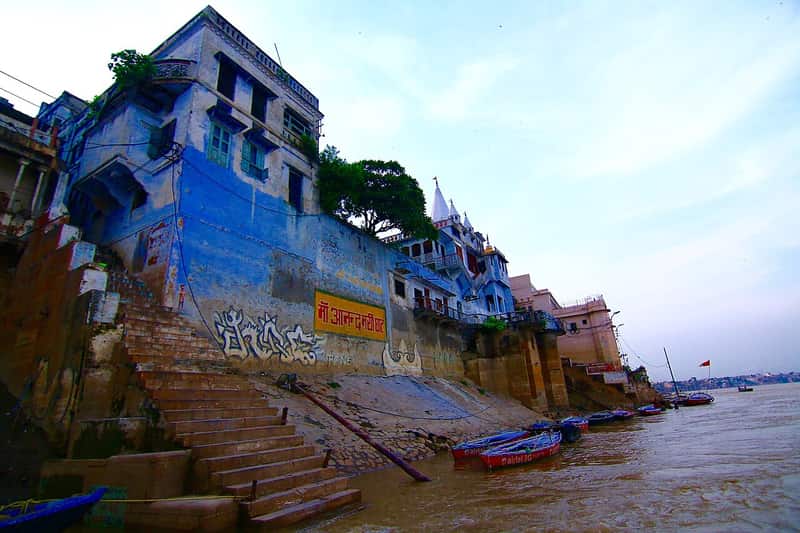
The great festival of Mata Anandamayee Ghat is the Janmotsav, the celebration of the saint's birth, observed each year in late April or early May, close to the date of her birth on April 30, 1896. On these days the ghat and the ashram together come alive with celebration. Devotees from Delhi, Kolkata, Gujarat and every part of India gather for a week of kirtan and bhajan, recitations of her sayings, discourses by senior monks, and a continuous stream of pilgrims arriving to offer flowers and sweets at her image. In the evening, the ghat is decorated with lamps and marigolds, and the songs of the saint's tradition float across the water long into the night.
The day of her mahasamadhi, August 27, is observed with equal reverence, though in a quieter key — a day of remembrance, meditation and shared memories of the saint, when devotees recall the moment of her passing and the teaching she left behind. Guru Purnima, the midsummer festival of teachers, also draws special gatherings to the ashram and the ghat, for Anandamayi Ma is honoured as the guru of thousands. On all these occasions, the ghat shows a livelier face than usual: more boats, more flowers, more colour — yet the character of the celebration remains what the saint herself would have wanted: devotion expressed in song, service and the simple sharing of prasad.
Beyond the saint's own festivals, the ghat takes its quiet part in the great calendar of Kashi. On Dev Deepawali, the festival of lights in November, the entire riverfront glows with a million lamps, and from these steps the view south toward Assi and north along the ghats is as fine as anywhere on the river. Ganga Dussehra, the festival of the river's descent, brings processions and bathing crowds; the mornings of Kartik, the holiest month, see lamps floated on the water at dawn. In every season the ghat hosts the small, unannounced celebrations of its neighbourhood — a thread ceremony, a child's first rice, a wedding blessing — each one drawing the community together on the saint's quiet steps.
A Guest's Courtesy — Etiquette at the Ghat
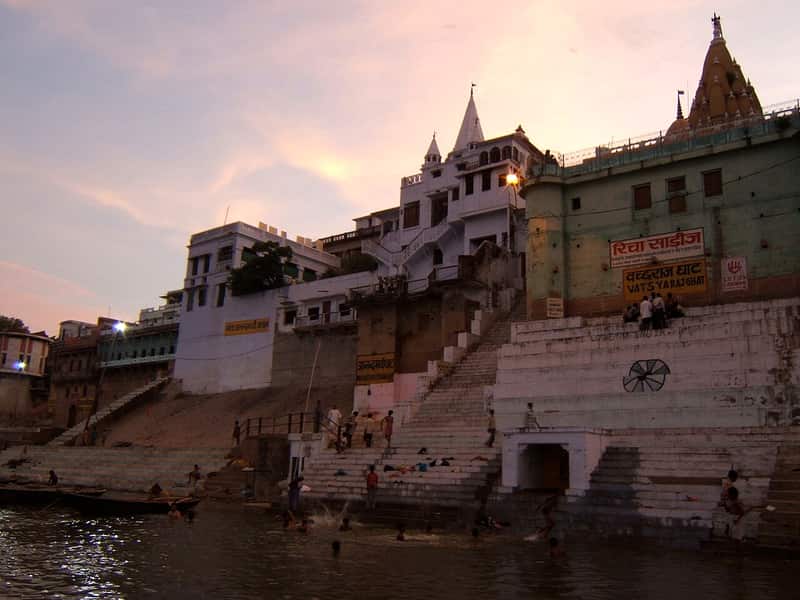
Mata Anandamayee Ghat is a place of worship before it is a place of sightseeing, and a few simple courtesies keep the visit respectful. Modest clothing is appreciated; shoulders and knees covered, as the local bathers do. Shoes are left at the top of the steps or removed near the small shrines, and smoking, alcohol and loud behaviour are out of place in a setting where devotees meditate and pray. Mobile phones should be silenced or kept low — a ringtone breaks the morning quiet far more sharply here than it would in a crowded market. The ghat rewards those who come in the spirit of the place: unhurried, quiet, observant.
Bathing and photography each carry their own etiquette. Those who bathe should keep to the established patterns of the ghat — changing discreetly, using the steps as the locals do, and not lingering where families are bathing. Photographs of the ghat itself are fine, but the camera should pause before pointing at people: bathers mid-dip, women at their ablutions, devotees in meditation. Ask first, and a smile and folded hands usually bring consent; the same courtesy applies to sadhus and to the elderly, who are not props in a picture but people of the ghat. Drones and flash photography, needless to say, have no place on this quiet landing.
Finally, the ghat's life is led by its own people, and visitors are guests in their home. A namaste and a few words of Hindi — even a simple good morning — are met with warmth almost everywhere. Beggars are present as at all ghats; giving is a personal choice, but many travellers prefer to offer modest help to the tea stalls and boatmen instead, letting their visit benefit the community. What the ghat asks of its visitors is what the saint asked of her devotees: a little silence, a little patience, a little reverence. Those who give it usually leave with the sense of having touched something true — the living, breathing faith of the world's oldest city.
Practical Notes — Reaching the Ghat
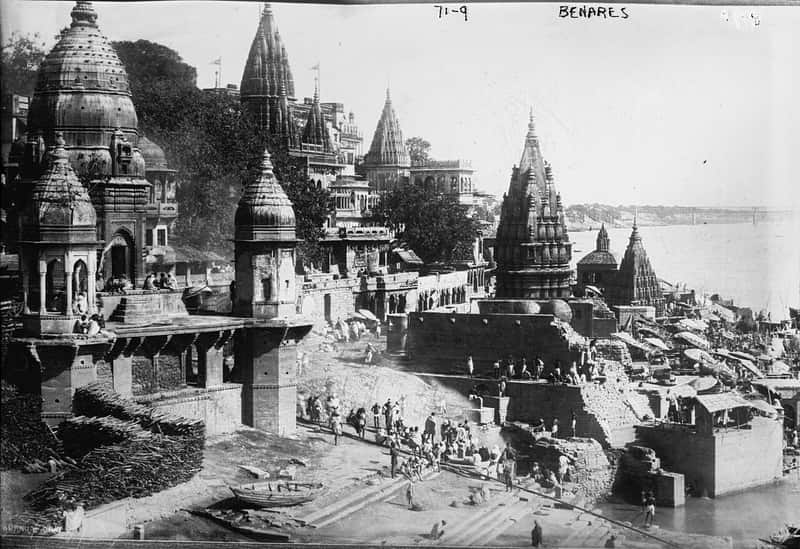
Mata Anandamayee Ghat lies on the southern riverfront of Varanasi, within the stretch between Janaki and Jain ghats, barely a ten-minute walk north of Assi Ghat. From the city centre at Godaulia, the easiest route is an e-rickshaw or auto to the lanes near Assi, then a short stroll north along the riverfront; from Assi itself, simply follow the shore. Most visitors reach it as part of the southern ghats walk, which makes the journey its own pleasure. The ghat's own lane rises from the steps into the residential quarter behind, and the surrounding neighbourhood is easy to navigate on foot — narrow but calm, and welcoming to travellers.
The best time to come is early morning, before seven, when the bathers are at their devotions, the light is golden and the ghat is at its most peaceful; a sunrise boat ride from the ghat adds the river's full magic to the hour. The winter months from October to March are the most pleasant season, with clear skies and mild days, while the summer heat of April and May is best endured in the early hours alone. In the monsoon, from July to September, the river rises and may cover the lower steps — the ghat remains safe, but bathing is best left to the locals, and the upper level offers the finest view of a river in full flood.
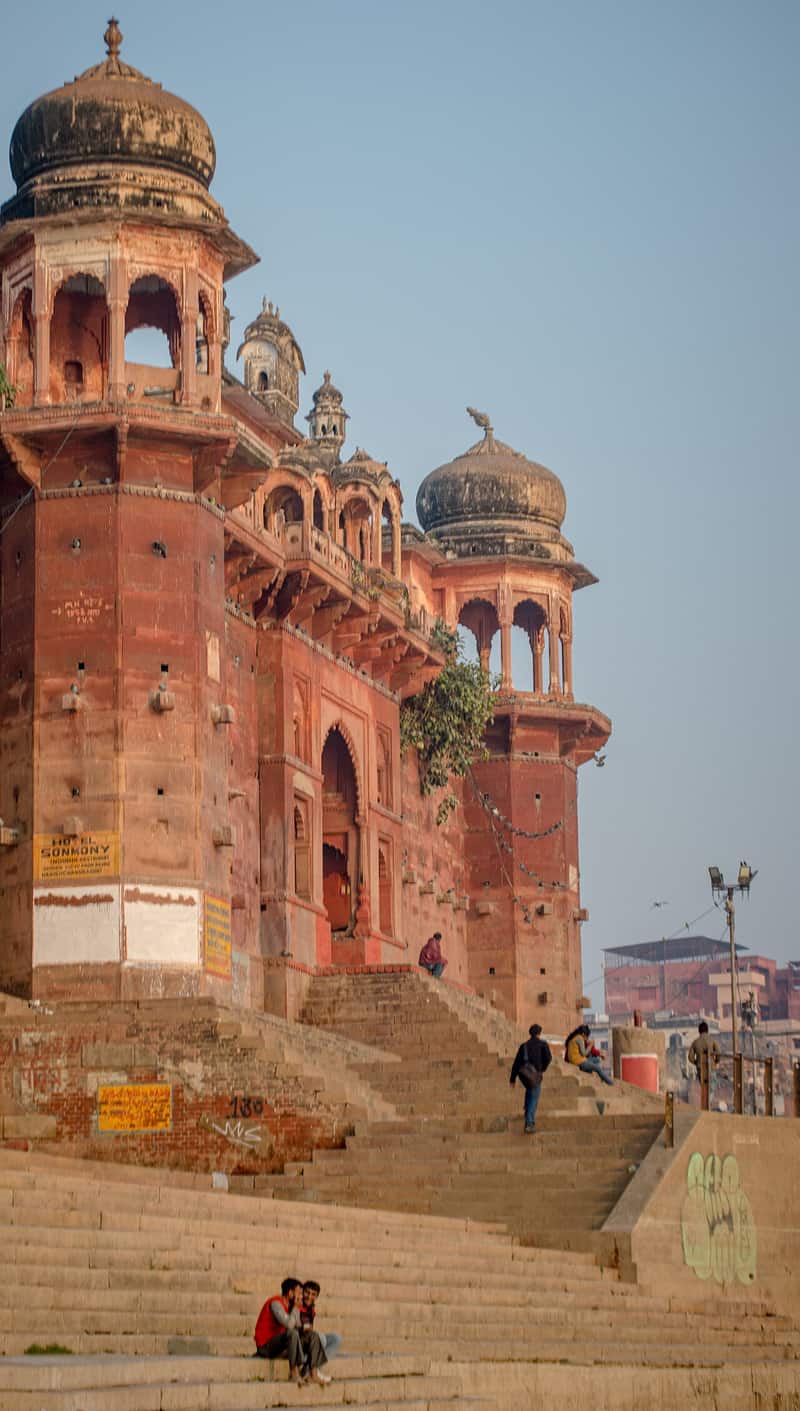
Facilities around the ghat are modest but sufficient: tea stalls and small shops in the lane behind, boatmen at the water's edge, and easy connections by foot to everything the southern city offers. A sensible half-day plan combines the ghat with its neighbours: bathe or watch the morning at Anandamayee, walk south through Janaki and Tulsi to Assi for breakfast and a boat, then return inland for the temples of the Sankat Mochan quarter — Hanuman, Durga Kund and New Vishwanath. However the hours are arranged, this quiet corner of the riverfront is best taken slowly, the way the saint herself would have taken it — with time to sit, to watch the water, and to let Kashi speak.
Mata Anandamayee Ghat — Gallery (12 Photos)
Image Credits
mata-anandamayee-01.jpg · mata-anandamayee-02.jpg · mata-anandamayee-03.jpg · mata-anandamayee-04.jpg · mata-anandamayee-05.jpg · mata-anandamayee-06.jpg · mata-anandamayee-07.jpg · mata-anandamayee-08.jpg · mata-anandamayee-09.jpg · mata-anandamayee-10.jpg · mata-anandamayee-11.jpg · mata-anandamayee-12.jpg — Wikimedia Commons, under free licenses.
Continue exploring
Similar Ghats Nearby
Book This Ghat — Get Notified
Download the app now and book a boat ride to Mata Anandamayee Ghat