

Rajendra Prasad Ghat
Major GhatRajendra Prasad Ghat is a modern ghat named after India's first President Rajendra Prasad.


Type
Major Ghat
Boat Fare
1.2x base fare
Best Time
6-10 AM when morning sun bathes the ghat.
History
Named after India's first President Rajendra Prasad. The ghat has a famous community kitchen operating daily.
Highlights
- Memory of the first President
- Close to Dashashwamedh
- Peaceful bathing site
Festivals & Events
How pricing works in the NaviX app
No haggling at the ghat — everything is fixed in the app first
- 1
Fixed price before you board
The fare is shown in the app upfront — no bargaining at the ghat
- 2
Sharing or private — your choice
Share with fellow travelers or take the whole boat for your group
- 3
Pay only after the ride
UPI, card or cash — with an instant receipt
🕉️
Aarti details not available for this ghat yet
Complete Guide
Rajendra Prasad Ghat — The Complete Guide
History, mythology, rites and practical details — everything in depth.
On this page
- 1.Rajendra Prasad Ghat — Where Modern India Meets Ancient Kashi
- 2.The President of the People — Dr. Rajendra Prasad
- 3.A Name in Stone — The Renaming and the Honour
- 4.The Ghat Through the Ages
- 5.The Morning Bath — Daily Life on the Steps
- 6.Pind Daan and the Rites of the Ancestors
- 7.Moorings and Boatmen — The River's Own Trade
- 8.The River and the View
- 9.The Old City Lanes Behind the Ghat
- 10.Neighbouring Ghats — Niranjani, Pandey and Lalita
- 11.Respectful Conduct on a Living Ghat
- 12.Practical Notes — Reaching, Timing and Nearby Ghats
📅 Updated: 21 Aug 2026 · Author: NaviX Field Team (field research 2024-26) · 12 sections · 12 photos
Rajendra Prasad Ghat — Where Modern India Meets Ancient Kashi
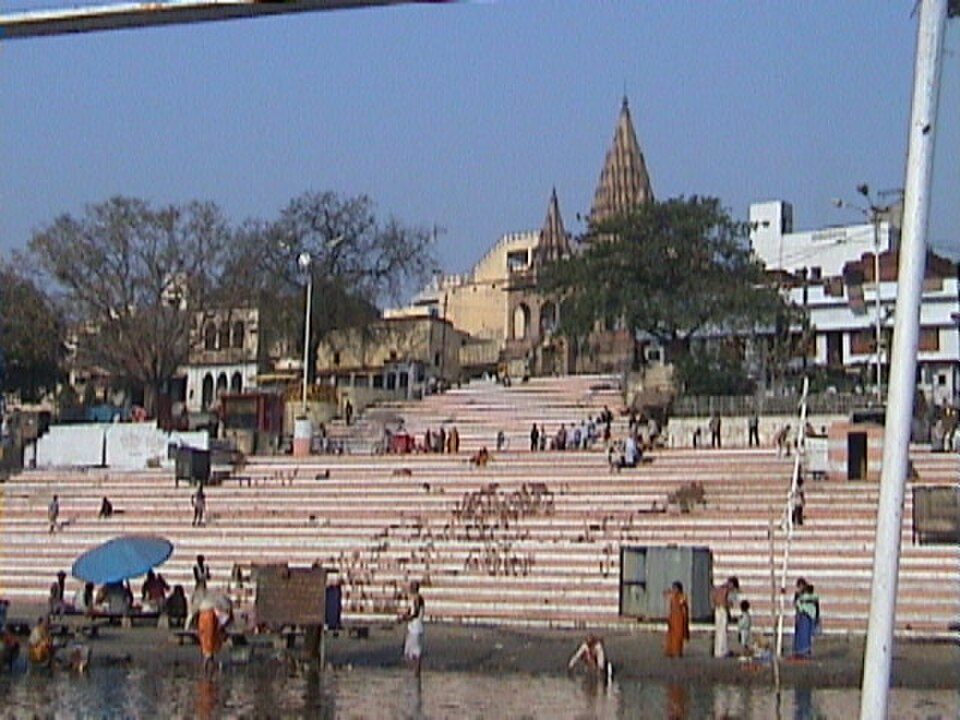
Rajendra Prasad Ghat is one of the broadest and most dignified ghats of the northern riverfront of Varanasi, set in the old city stretch between Niranjani Ghat and Pandey Ghat. Its wide, well-built stone steps rise in generous flights from the water to a spacious pavement, giving the ghat an open, unhurried character that sets it apart from the crowded centre of the city. The ghat carries the name of Dr. Rajendra Prasad, the first President of the Republic of India, who came here to perform his sacred rites — and in that single name the place holds two stories at once: the story of the ancient river and the daily life that has clustered upon it, and the story of a modern nation honouring the statesman who helped to found it. Both stories are written in the same well-worn stone. For the pilgrim and the traveller alike it is the gentlest introduction to the river, a place to arrive, to rest, and to begin.
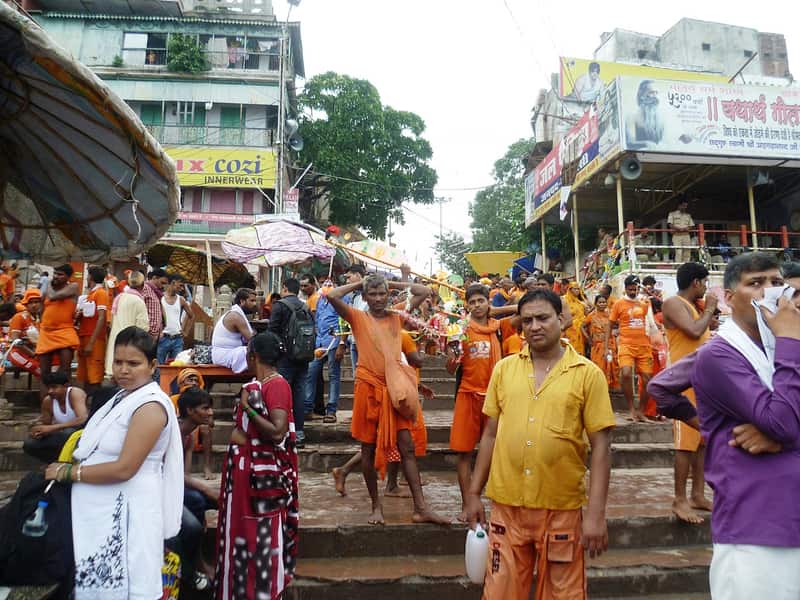
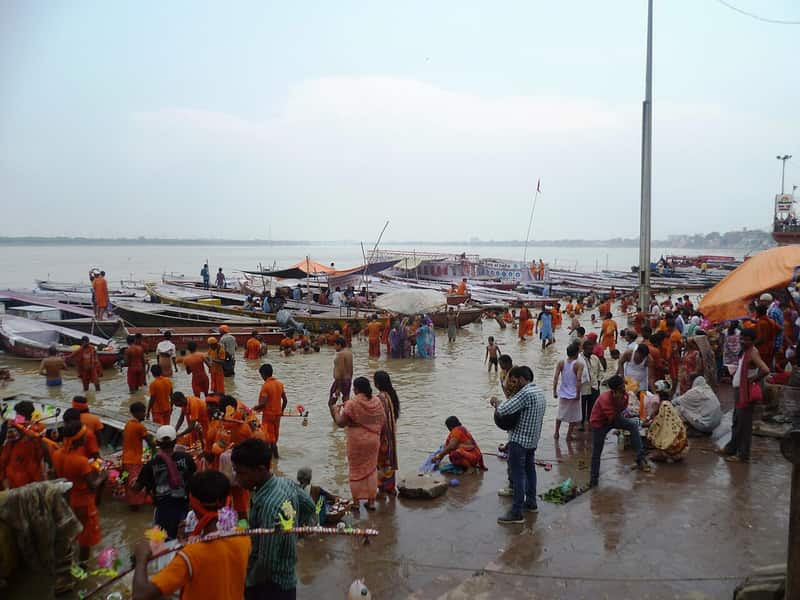
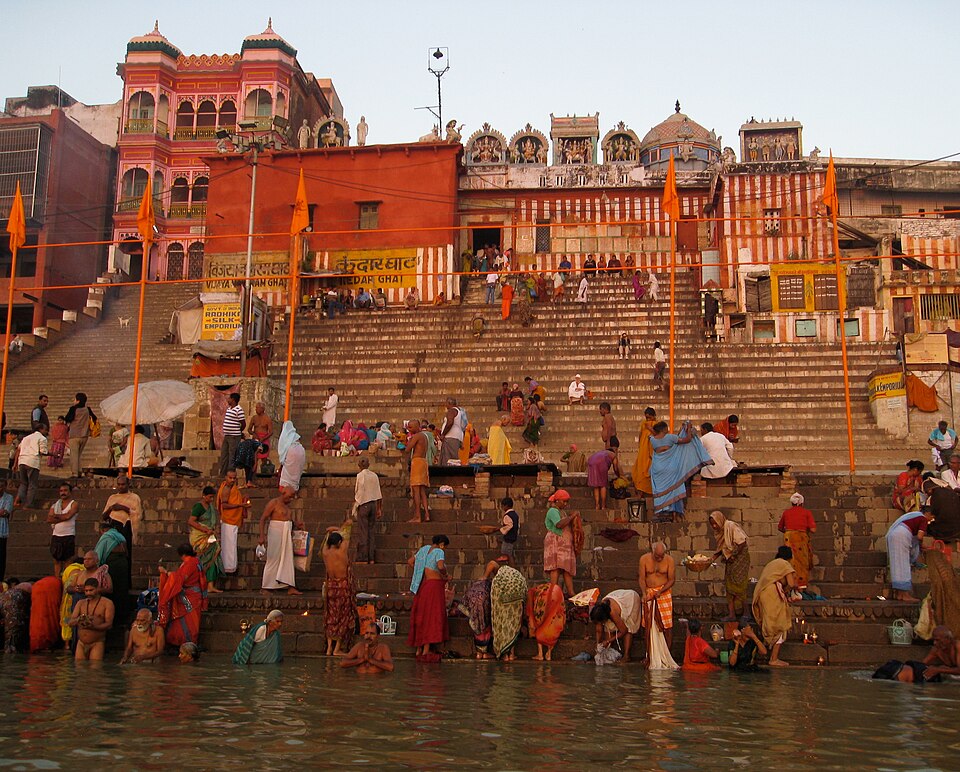
By day the ghat is a working place in the oldest sense. Pilgrims descend the steps to bathe in the Ganga while priests sit beneath cotton umbrellas and keep watch over the small shrines; boatmen moor their long wooden craft along the waterline and discuss fares in the patient, musical speech of Banaras; women in wet saris wring out their clothes beside the slowly moving river. Children leap from the steps, old men read newspapers on the pavement, and the smoke of temple incense mingles with the smells of jasmine and frying savouries from the lanes behind. Nothing here is staged for visitors. The ghat simply continues the rhythm of life that has occupied this stretch of bank for many centuries, indifferent to fame, content with the river.
Yet the presence of Rajendra Prasad gives the ghat its particular meaning. Here a man who rose from a village in Bihar to become the first citizen of independent India performed the rites that connect every Hindu to his ancestors, turning the ancient gestures of the river into a symbol of the new nation's reverence for its own past. The ghat thus stands where the oldest piety of Kashi meets the memory of modern India — a place where a pilgrim can bathe on the same steps as a president, and where the continuity of faith and the history of a free country are woven together upon a single riverside. It is this quiet union of eras, this unlikely meeting of the eternal and the contemporary, that makes Rajendra Prasad Ghat worth seeking out among the great crescent of the city's ghats. Its name is spoken with affection in the lanes behind, and no visitor leaves without understanding why the city chose to honour him upon this bank.
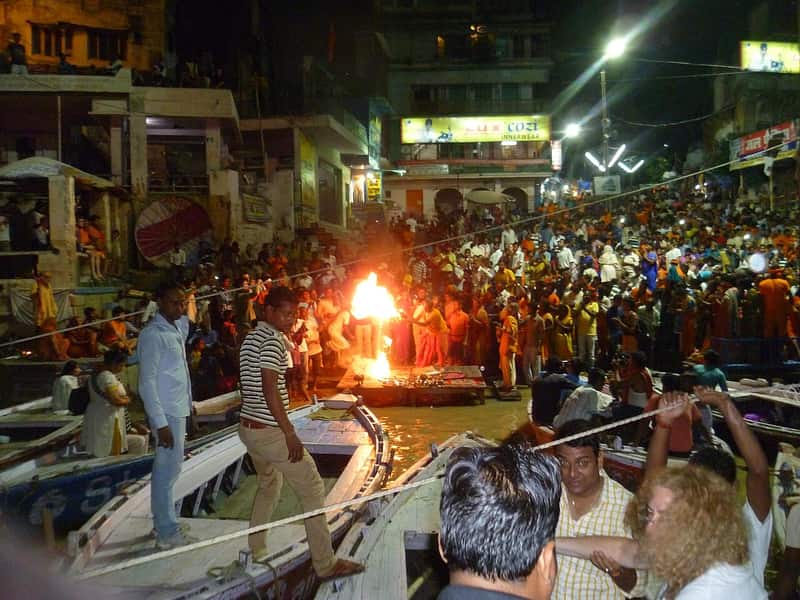
The President of the People — Dr. Rajendra Prasad
Dr. Rajendra Prasad was born on 3 December 1884 in the village of Jiradei in the Saran district of Bihar, the youngest son of a modest Kayastha family. A brilliant student, he mastered Persian and English at an early age and took his law degrees from the University of Calcutta, where his teachers predicted a great career at the bar. Yet in 1917, when Mahatma Gandhi came to Champaran to champion the indigo farmers of Bihar, the young lawyer Rajendra Prasad gave up his flourishing practice and threw himself into the freedom struggle. From that day the courtroom lost a fine advocate, but India gained a devoted servant who would become president of the Indian National Congress three times, president of the Constituent Assembly that framed the nation's constitution, and finally, in 1950, the first President of the Republic of India. Even as President, he remained at heart the scholar-pilgrim of Champaran, and his biographers noted that he valued the holy water of Kashi above the honours of state.
Prasad's bond with Varanasi was not the bond of a distant dignitary but of a devout pilgrim. Throughout his life he remained a man of deep personal faith — a lifelong scholar of Sanskrit who knew the scriptures, observed his daily prayers, and kept the fasts of the Hindu calendar. It was at this ghat on the northern riverfront that he came to perform his sacred rites: the bathing, the offerings to his ancestors, and the ceremonies that every devout Hindu owes to his forefathers. The citizens of Kashi, who watched their President descend the steps in simple khadi and offer his pindas to the river, understood that here was a ruler who did not merely visit the holy city but belonged to it, body and soul.
His two terms as President, from 1950 to 1962, were marked by the same humility. He lived simply in Rashtrapati Bhavan, refused to enrich his family, and preferred the company of scholars and village workers to the pomp of state. When he died on 28 February 1963, the grief of the nation was genuine, for he had been the last of the great leaders to embody both modern statesmanship and traditional piety. At Rajendra Prasad Ghat his memory lives on in the daily rites that continue upon the steps he trod — each pilgrim who offers water to the ancestors unknowingly repeats the gestures of the first President of India, linking the highest office of the republic to the oldest worship of the river. In an age of change, that memory is a quiet anchor, and the ghat that bears his name remains his most lasting monument on the river.
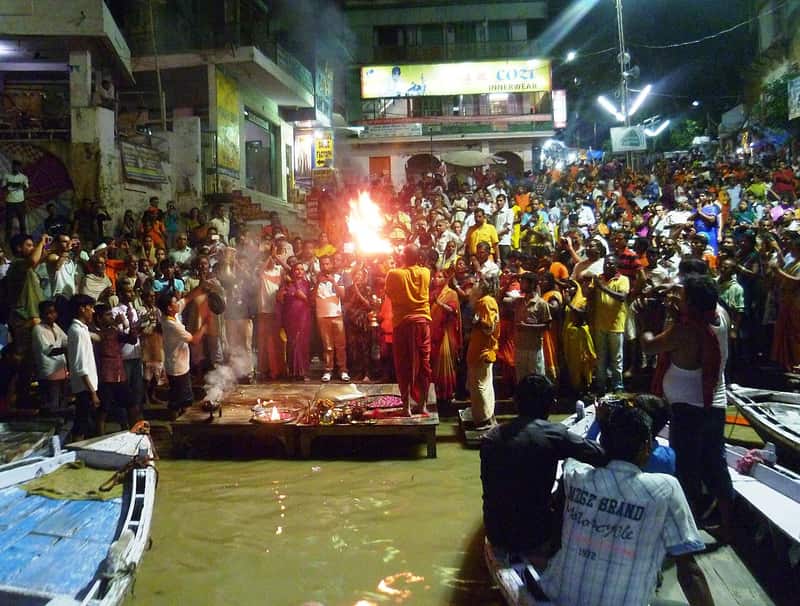
A Name in Stone — The Renaming and the Honour
The ghat did not always bear its present name. For most of its long life it was simply one of the many anonymous bathing ghats of the old city stretch — a solid, useful stairway of stone whose worth lay in its steps, not its title. It was in the years after Dr. Rajendra Prasad's death in 1963 that the citizens of Varanasi chose to honour him in the city's own traditional way: by giving his name to the riverfront. The renaming of a ghat is the highest tribute Kashi can pay, for the names of the ghats are the city's living history — every step of the river recalls a king, a queen, a saint, a benefactor, and now, for the first time in the modern era, a president of the republic. The old residents still point out the spot on the platform where the President used to stand, and the story has passed into the common memory of the quarter.
The act of naming carried deep meaning. Rajendra Prasad had performed his sacred rites upon this very stretch of the bank, and the citizens wanted the memory of that act preserved in stone. A name board was fixed above the steps, and gradually the old anonymous ghat acquired an identity that drew pilgrims who had once passed it by. Families from Bihar, in particular, began to make a point of bathing here, for the ghat belonged to their great son; and the government of the day, honouring the sentiment of the people, adopted the name in all official records of the city.
To this day the name works its quiet magic. A traveller descending the steps reads the sign and suddenly the ghat becomes more than stone: it becomes a meeting place of the republic and the river. Old residents still remember the crowds that gathered when the President's ashes were brought down this bank, and the manner in which the whole city observed mourning upon the ghats. The renaming, then, was not an administrative formality but an act of love — the way a city that never forgets its own commits a beloved statesman to the care of the Ganga, so that every bather who takes the holy water at this ghat takes it also in memory of Rajendra Prasad. A name, after all, is the smallest and most enduring of gifts a city can give — and this ghat has carried it now for more than half a century.
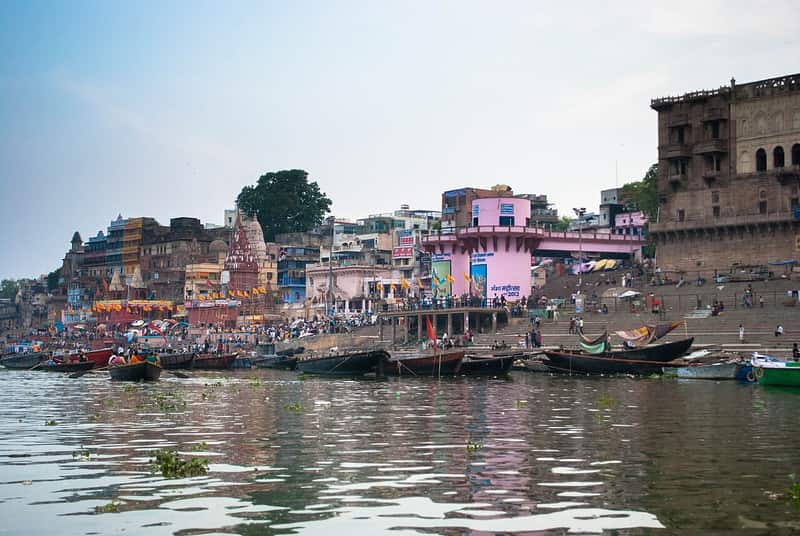
The Ghat Through the Ages
The stretch of riverfront that today holds Rajendra Prasad Ghat has been a place of bathing since the very beginning of Kashi. The northern ghats, lying beyond the hubbub of the great central steps, were the quiet quarter of the bank — the stretch where generations of pilgrims from the eastern country, from Bihar and Bengal and beyond, first touched the holy water after long journeys on foot and by boat. The Puranas enumerate the tirthas of the northern bank among the most sacred of the city, and the countless worn hollows in the older stone below the present steps are the record, cut one footstep at a time, of many hundreds of years of morning bathing. The very gentleness of the current here, so unlike the strong sweep of the river further south, was what drew the pilgrims of the eastern country to this bank.
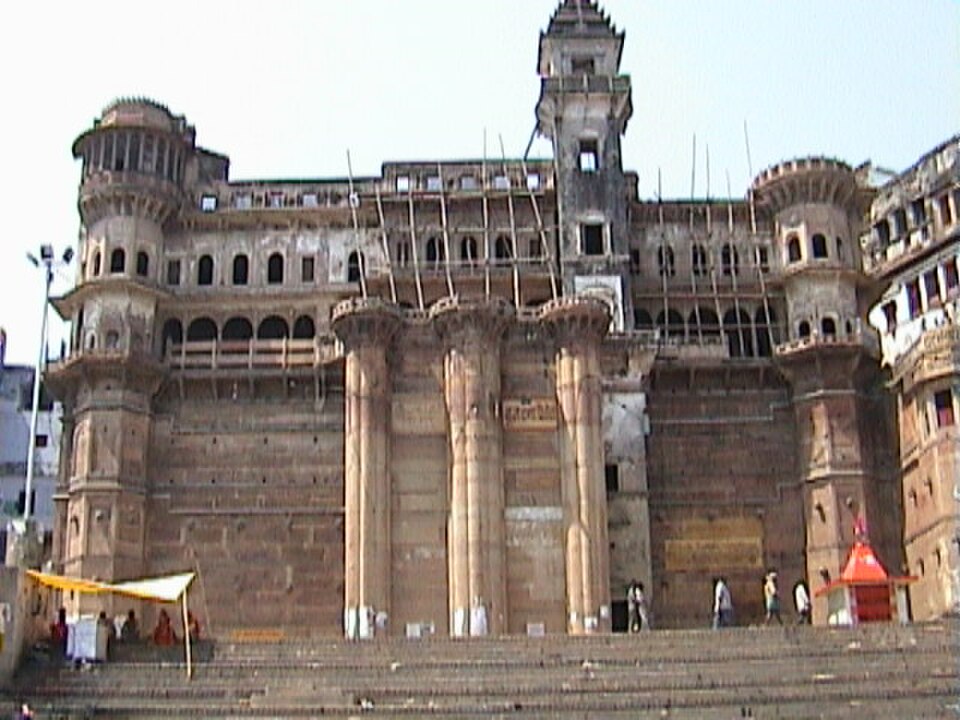
For most of its history the ghat was an unremarkable member of the great family of steps, maintained by a shifting succession of patrons. In the period of Maratha ascendancy, when the noble families of central India took the renovation of the Kashi ghats into their hands, broad new flights of masonry were laid along this bank; later, in the nineteenth century, the expansion of the city and the growth of the pilgrimage brought further repairs and widenings. Each generation added its course of stone, and if no single inscription records their names, the careful joints of the masonry still speak of masons who took pride in work meant to last forever.
The twentieth century brought the ghat its most dramatic change: the renaming after Dr. Rajendra Prasad, and with it a new attention. Civic bodies swept and repaired the steps, the platform was repaved, electric lights replaced the oil lamps of earlier generations, and the ghat entered the modern age without surrendering a single step of its old character. Today the maintenance is regular, the mornings bring the bathers, the evenings bring the families, and the ghat stands as a reminder that the history of Kashi is not only the history of its great monuments but the quieter history of its everyday steps — the history of water, stone and faith, renewed each dawn. Seen in the long light of evening, the ghat is a quiet chronicle of the city itself — patient, layered, and never quite finished.
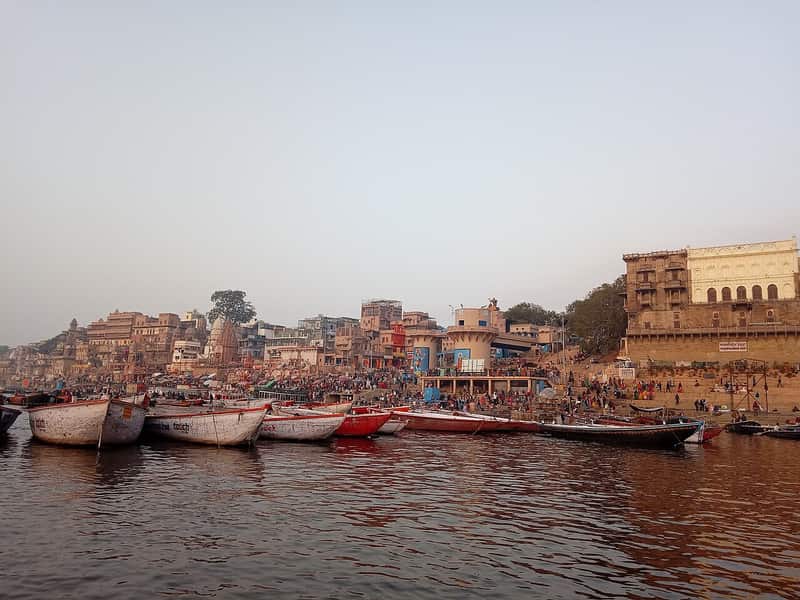
The Morning Bath — Daily Life on the Steps
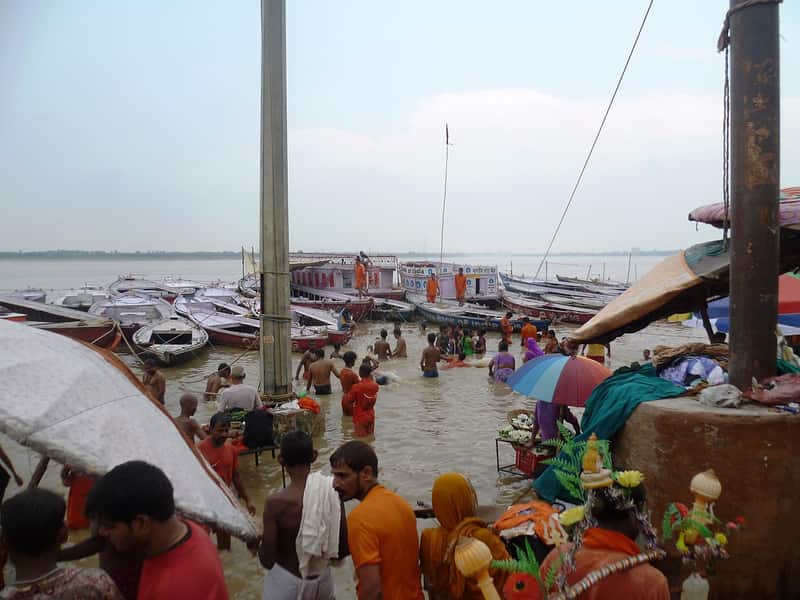
The day at Rajendra Prasad Ghat begins before the sun, in the grey half-light when the river lies like polished slate. The first bathers arrive with brass pots and towels — old men with sacred marks on their foreheads, women with water pots balanced on their hips, groups of pilgrims led by their priests who carry the record of their visit. They descend to the waterline, cup the Ganga in their hands, and raise it to the sun with a murmured mantra, then enter the river itself, which here runs wide and calm. To bathe in the Ganga at Kashi is not simply to wash; it is an act of devotion that purifies body and spirit alike, and the faces that rise from the water are quiet with the satisfaction of a duty fulfilled. The water at this point of the bank is considered exceptionally pure for the morning dip, and older residents will tell you they have bathed here since childhood without once falling ill.
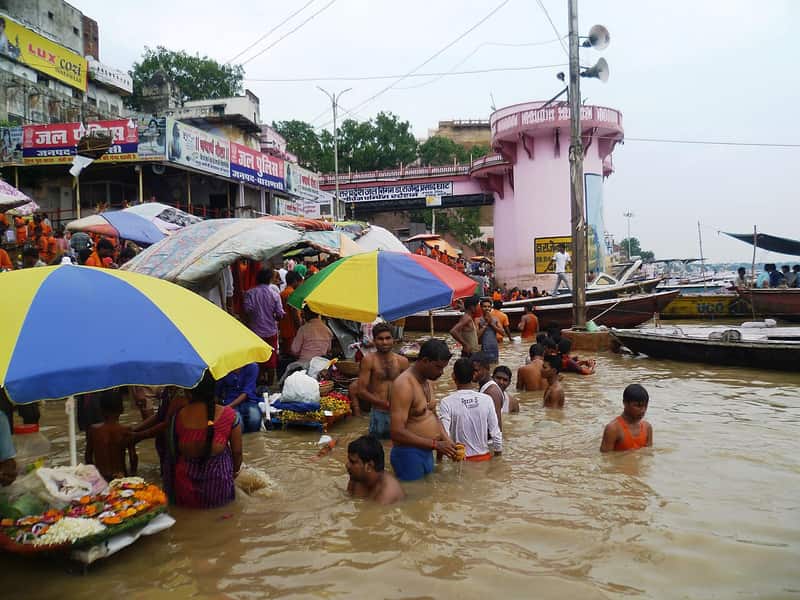
The ghat's construction serves this morning ritual well. Broad flat pavements at the water's edge give the bathers firm footing, flights of steps divide the bank into comfortable terraces, and high shelters roofed with corrugated iron keep the changing rooms and the little shops of the priests dry in the monsoon. The river itself is a living clock: in the summer months the water retreats far down the steps, exposing a wide apron of wet sand and stone; in the monsoon it climbs to meet the middle flights, and the pavements vanish beneath the brown flood. The bathers know these moods by heart and arrange their morning dip to the river's own schedule.
By seven the bathing is largely over, and the ghat changes character. Wrestlers oil their bodies on the lower platforms, washermen beat clothes upon the stones, children paddle in the shallows, and the priests, their morning clients gone, settle to their registers and their gossip. The water sellers refill their pots, the flower sellers unpack fresh garlands, and the whole ghat turns to the business of the day. Yet the morning bath remains the heart of the place — the daily renewal that has drawn generation after generation to these steps, and that makes Rajendra Prasad Ghat, for all its modern name, one of the most traditional bathing grounds of the northern riverfront. On festival mornings the whole stretch comes alive — a river of white cloth and brass pots flowing between the stone and the sun.
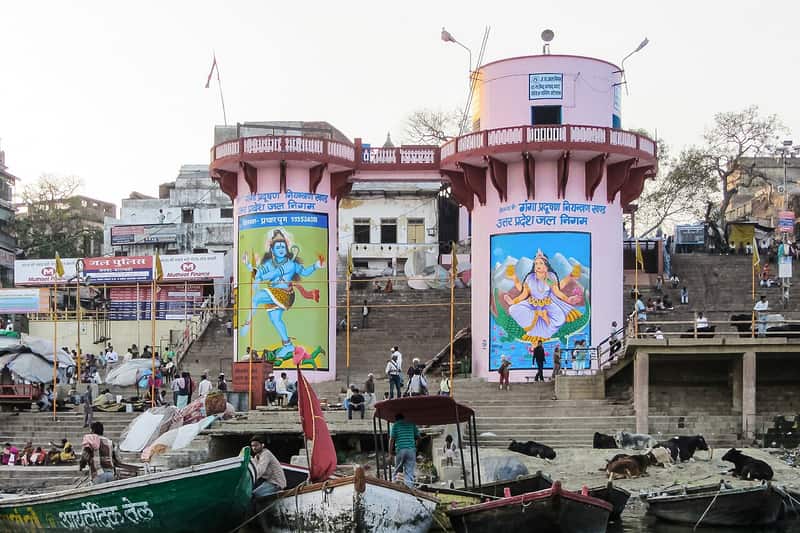
Pind Daan and the Rites of the Ancestors
Among the deepest duties of the Hindu at Kashi is the offering of pind daan — the giving of rice balls, barley and til to the souls of the departed. Rajendra Prasad Ghat, like the other ghats of the old city stretch, is a place where this rite is performed daily on the flat platform at the water's edge. The panda sits beside the pilgrim, reciting the gotra and the names of the ancestors; the pindas are shaped by hand and laid upon a leaf platter with flowers and sesame; water is poured from a pot in a single stream; and the offerings are committed to the river, which is believed to carry them directly to the world of the fathers. For families who have carried this duty for years, the moment is at once solemn and comforting. There is no spectacle in these rites, only devotion performed with the same seriousness it has carried for centuries — and that is precisely their power.
The great season of these rites is the Pitru Paksha, the fortnight of the ancestors that falls in September and October, when the moon wanes and the dead are said to draw near to the world of the living. During these fifteen days the platform of the ghat is crowded from dawn: sons who have come from distant cities, widows in white, family groups guided by their pandas — all arriving to offer the pindas and the sacred water. Priests keep long rolls of families who have performed their rites here for generations, and it is a mark of honour in many families of eastern India to record that their offerings have been made at this very ghat, upon the steps sanctified by the first President himself.
The ghat also sees the other ceremonies that mark the lives of the devout. Newborn children are brought for their first bath, boys for the shaving of the tonsure, and young couples for blessings before marriage; the dying are carried here that they may touch the holy water at the last. Whatever the occasion, the ritual has the same shape: the priest, the offerings, the river. And in every case the water of the Ganga is the true medium of grace — the carrier of pindas to the ancestors, of ashes to the sea, and of the prayers of ordinary people to the gods who have listened on this bank since before the memory of man. For the visitor who stands quietly at the edge, these ceremonies are the truest portrait of what Kashi is — a city where every ordinary day is lived against the background of eternity.
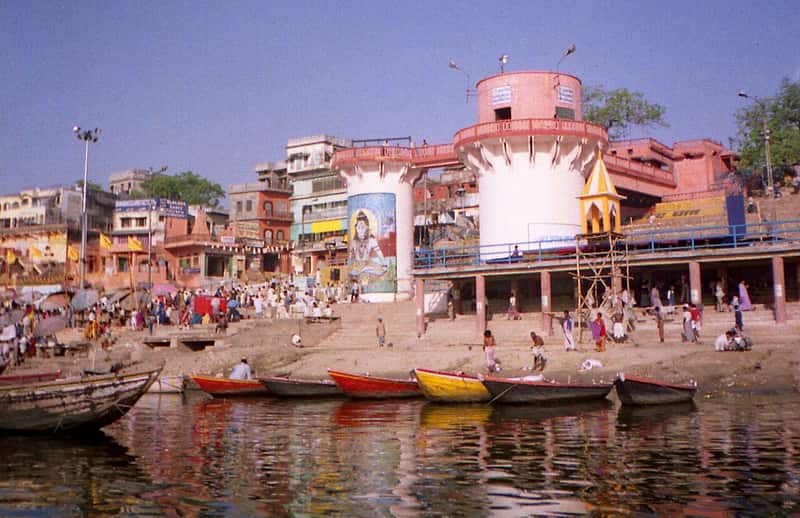
Moorings and Boatmen — The River's Own Trade
The waterline of Rajendra Prasad Ghat is a working harbour in miniature. Here lie the long flat-bottomed rowboats of Banaras, painted in broad stripes of green, red and blue, their curved prows lifted like birds about to dive. The boatmen of this stretch — ghatiyas who inherit their craft as surely as the priests inherit their registers — know every current and sandbank between Assi and the northern tip of the city. Their day begins before dawn, when the first boat is pushed out into the grey water for the pilgrims, and it ends only when the last family returns from the evening boat ride, the children asleep in their mothers' laps. Each boat carries its owner's mark, and a practised eye can read the family history of the craft in its painted stripes and mended planks.
From these moorings a boatman will row you in either direction along the crescent of ghats. Toward the south, past Niranjani and Lalita, the riverfront builds toward the great crowd of Dashashwamedh and the tower of Manikarnika; toward the north, the ghats thin out and the river widens into a reach of sandbanks and open sky. The most beloved of all trips is the one taken at sunrise, when the boats put out in a flotilla, the river turns to gold, and every ghat in the sweep comes alive with lamps and chants. The boatmen sing the old banayra songs — the sorrowful, rocking melodies of the river trade — and the travellers fall silent, held by the light.
The boatmen are more than ferrymen; they are the river's chroniclers. They can tell you how many steps a certain ghat has, which water level washed which platform away in the great flood, and what the city looked like from the water before the bridges were built. Their life is hard — the monsoon drives them ashore for months, when the boats are hauled up the steps and mended in the shade — but their knowledge is priceless, and their courtesy to the stranger is part of the oldest hospitality of the river. A ride in their boat is not merely a way of seeing the ghats; it is a way of hearing the river speak, in the accent of those who have always lived upon it. To sit in a boat at evening, drifting slowly past the lit ghats, is to watch the soul of Banaras breathe.
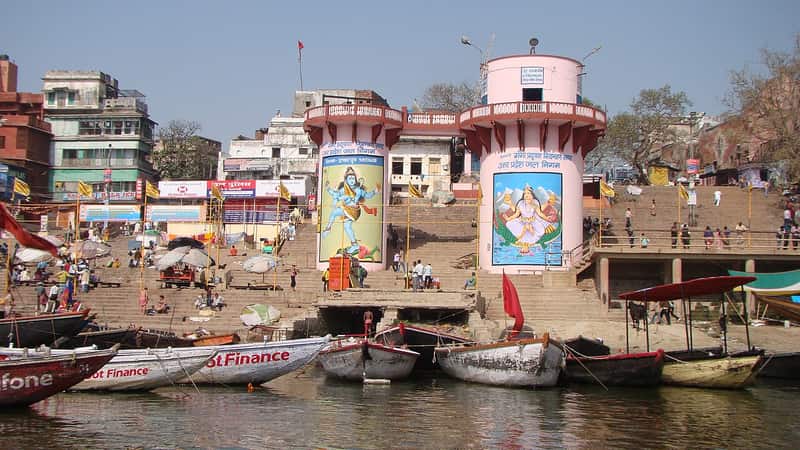
The River and the View
At Rajendra Prasad Ghat the Ganga runs wide and unhurried, far from the bustle of the central ghats. This is the river in its broadest mood: a sheet of water nearly a kilometre across at many seasons, its far bank low and sandy, its current steady without violence. Standing at the waterline, you see the river the way the old travellers saw it — as the great highway of north India, the artery along which pilgrimage and commerce moved for three thousand years, the water that carried the prayers of a hundred million souls toward the sea. The scale of it, after the narrow lanes of the old city, takes the breath away. Pilgrims say that the Ganga forgives all who take its water with devotion, and nowhere is that promise felt more clearly than on the wide, calm reaches of this northern bank.
The view from the ghat repays attention at every hour. In the first light the river lies like molten silver, and the ghats to the south — Niranjani, Lalita, and the long descent toward Dashashwamedh — emerge in soft outline, their temples and towers rising tier upon tier. At noon the water dazzles, and the far bank shimmers in heat haze. In the evening, as the sun goes down behind the city, the whole riverfront glows amber, oil lamps flicker along the steps, and the distant sound of the aarti bells comes across the water in waves. There is no view in India quite like this one — the meeting of the oldest city and the holiest river, seen from a quiet step of stone.
The river here is also a working and living water. Fishermen cast their nets from small craft; dhobi-wallahs beat washing on the flat stones; cormorants stand drying their wings on the moored boats while gulls wheel overhead; swimmers cross from bank to bank in the cool of the morning. The presence of the sacred is everywhere in this ordinary commerce: the water that bears the boatman's net is the same water in which the dying have been bathed and the ashes of the dead committed. To sit on the steps and watch the Ganga at Rajendra Prasad Ghat is to understand why this river, of all the rivers of the world, has been worshipped as a goddess. In the end, the ghat is only a frame for the river — and the river is the reason every frame along this bank was built.
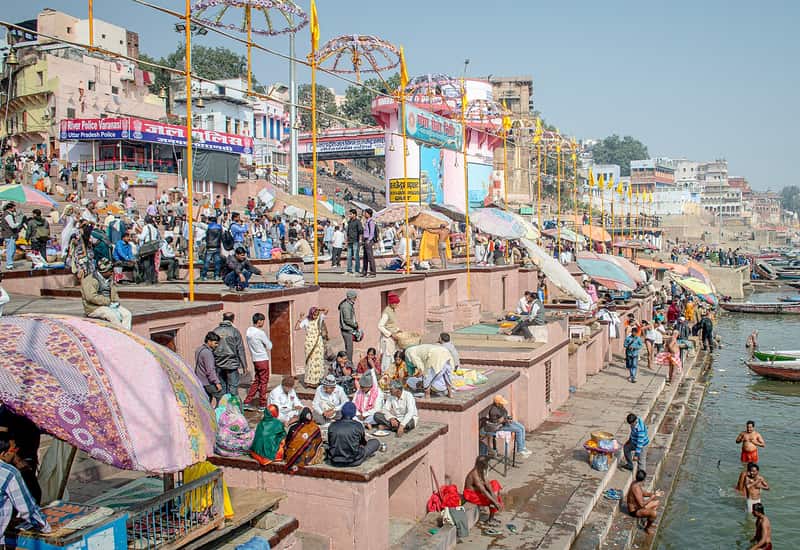
The Old City Lanes Behind the Ghat
Behind Rajendra Prasad Ghat rises the dense, ancient warren of the old city — the maze of lanes that has given Banaras its name and its character. The steps of the ghat lead up to a narrow street that dives immediately into the quarter: alleys barely wide enough for two men, their walls of dark stone and ochre plaster, their upper storeys leaning toward each other until they almost meet above the head. Doorways open into courtyards where hens scratch and children play; every few steps a tiny shrine, red with vermilion, holds its lamp; and from the depth of the houses come the sounds of grinding spices and the calls of women bargaining with the vendors. It is said that in Banaras even the pigeons know their way home through this labyrinth, and the stranger quickly learns to trust the instincts of the neighbourhood.
This is a neighbourhood of small trades, older than memory. Brassworkers hammer out pots and thalis in smoky workshops; sweet makers roll out laddoos and jalebi in copper pans at the back of their shops; paan wallahs arrange their betel leaves in neat green rows. There are shops selling marigold garlands and coconut for the rites, shops selling the bangles that every married woman of the north buys with her mother-in-law, and tea stalls where the boatmen gather between trips. Cows move with unhurried authority through the crowd, and the air is a constant, complicated perfume of incense, frying oil, jasmine and dust.
The life of the lanes is a life of long habits. In the morning the street fills with pilgrims on their way to the ghat and women going to the taps; at noon it drowsed in shadow; in the evening the shops light up and the smell of food draws families out for the evening stroll; at night it falls quiet except for the temple bells and the distant chanting of the aartis. The visitor who walks here walks through the oldest domestic India — a world of caste and craft and festival that has arranged itself around the river for a thousand years, and still keeps, in every courtyard, the memory of the ghat it serves. The lanes are the real Banaras that the boat rides only glimpse — and they are as much a part of the ghat as its steps.
Neighbouring Ghats — Niranjani, Pandey and Lalita
Rajendra Prasad Ghat is one of a company, and its neighbours on either side complete the character of this stretch of the riverfront. Immediately to the south lies Niranjani Ghat, a broad and well-built ghat associated with the Niranjani akhara, the ancient order of ascetics that has maintained a presence on this bank for centuries. Its wide terraces and solid stone make it one of the pleasantest places on the northern riverfront to sit in the evening, when the akhara's sadhus gather and the local families come out to take the air. Seen from the water, Niranjani and Rajendra Prasad together form an almost continuous amphitheatre of steps, their character open and generous after the crowded ghats of the centre. The ghats of this stretch are best walked slowly, and many a traveller has spent an entire morning simply moving from one step to the next in the changing light.
To the north, in the opposite direction, lies Pandey Ghat — a quieter, older ghat that belongs to the Pandey family of hereditary priests, who have guided the pilgrims of this bank for generations. Pandey Ghat is smaller and more domestic than its southern neighbours: its steps are older and more worn, its shrines more numerous, its pace slower. Between the two, a pilgrim can compare two worlds of the same faith — the broad public platform of Rajendra Prasad, open to the whole crowd of the republic, and the intimate family courtyard of the priest ghat, where every step knows the name of the family that has trodden it for three hundred years.
A little further south, just beyond Niranjani, lies Lalita Ghat, one of the oldest ghats of the city and a place of great sanctity. Named for the goddess Lalita, it is believed in the tradition of Kashi to be older than the city's famous central ghats, and it remains a centre of pilgrimage in its own right, its steps crowded with devotees on the days of the goddess. Walking from Lalita through Niranjani to Rajendra Prasad and on to Pandey is a short journey of perhaps twenty minutes along the water's edge, yet it carries the traveller through a thousand years of ghat building, worship and river life — the whole northern riverfront in miniature. In the crowded chronicle of the Kashi ghats, these four names belong together — and together they tell the story of the northern riverfront better than any single monument could.
Respectful Conduct on a Living Ghat
Rajendra Prasad Ghat is not a museum but a living place of worship, and the first rule of the visitor is simple: behave as you would in any sacred home. Dress modestly — shoulders and knees covered — and, if you wish to bathe, change into the wrapped cloth sold by the vendors at the top of the steps rather than undressing in public. A pilgrim who enters the water does so with a prayer, and the stranger who follows should observe the same courtesy, entering the river quietly and leaving it the same way. Keep your voice low, especially near the priests and the platforms where offerings are being made, and never walk on the cloths or articles laid out by bathers and worshippers. What seems a small gesture — a folded palm, a lowered voice, a step back from the water's edge — is understood on the ghat as the recognition of the sacred.
Photography requires particular care on a ghat. The steps, the river and the architecture may be photographed freely, but the people of the ghat — the bathers, the priests at their rites, the mourners and the pilgrims — have not come for the camera. Ask before photographing any person, accept a refusal gracefully, and put the camera away entirely during rituals. Some priests and sadhus offer to pose in return for money; if you accept, agree on the fee beforehand, and understand that refusing politely is always acceptable. What must never be done is to photograph someone's grief, someone's bath, or a private rite — the sacred moments of strangers are not souvenirs.
Finally, care for the river itself. The Ganga is the goddess of a billion people, and the ghats are its body; litter, plastic and soap suds are an insult that poisons the very water the pilgrims drink and bathe in. Carry your refuse back with you, use the bins, and prefer natural offerings over plastic-wrapped ones. Beware also of the touts who approach visitors with offers of tours and services at inflated prices: a pleasant refusal, repeated if necessary, costs nothing. And remember the simplest rule of all — to be gentle with the old, courteous to the priests, and patient with everyone, for in Kashi the stranger is believed to be a guest of the god himself. Practised with these few courtesies, a visit to Rajendra Prasad Ghat becomes what every pilgrimage should be: an exchange of respect between the visitor and the eternal.
Practical Notes — Reaching, Timing and Nearby Ghats
Rajendra Prasad Ghat is reached most pleasantly on foot along the river, and the walk from Dashashwamedh Ghat, the city's great central ghat, takes about twenty minutes northward along the steps, past Chet Singh, Niranjani and the small ghats between. From the old city the approach is quicker: from Godowlia and the lanes of Chowk, signs and shopkeepers will point the way through the alleys to the river, and the ghat's name is well known to every boatman, rickshaw wallah and shopkeeper of the quarter. The nearest railway station is Varanasi Junction, about four kilometres away; the nearest major bus and auto stands lie at Godowlia and at the foot of the Assi bridge for those coming from the southern end of the city. Cycling is another pleasant option in the cool season, and the ghat's own stairs connect directly to the lanes that lead to the main market streets.
The best time to visit is the morning, from around half past five until nine, when the bathing is at its fullest and the light on the water is at its finest. The months from October to March are ideal — mild, clear and dry — while April to June brings fierce heat that empties the steps by midday, and the monsoon months of July to September flood the lower flights and turn the river to a broad brown flood. In the cooler months the sunset hours are equally rewarding, as the ghats light up for the evening aarti and the families come out to stroll. Carry a cap and a bottle of water in summer; in winter, a shawl for the river breeze.
A good visit combines the ghat with its neighbours. Begin at Lalita Ghat, walk north through Niranjani to Rajendra Prasad, and finish at the quieter Pandey Ghat — a walk of twenty minutes that takes in a thousand years of the riverfront; or take a boat at sunrise from Rajendra Prasad's moorings and see the whole crescent of ghats from the water, returning to this ghat for a last look before the sun climbs high. Leave your shoes at one of the stalls at the top of the steps, carry a small offering of flowers if you wish to participate in the rites, and keep small change for the boatmen and the priests. Arrive as a guest, and the ghat will receive you as one. However long your stay, leave time simply to sit on the steps with a cup of tea and watch the river — that, in the end, is the whole point of coming.
Rajendra Prasad Ghat — Gallery (12 Photos)
Image Credits
rajendra-prasad-01.jpg · rajendra-prasad-02.jpg · rajendra-prasad-03.jpg · rajendra-prasad-04.jpg · rajendra-prasad-05.jpg · rajendra-prasad-06.jpg · rajendra-prasad-07.jpg · rajendra-prasad-08.jpg · rajendra-prasad-09.jpg · rajendra-prasad-10.jpg · rajendra-prasad-11.jpg · rajendra-prasad-12.jpg — Wikimedia Commons, under free licenses.
Continue exploring
Similar Ghats Nearby
Book This Ghat — Get Notified
Download the app now and book a boat ride to Rajendra Prasad Ghat