

Raja (Bhaisasur) Ghat
Major GhatRaja (Bhaisasur) Ghat is a famous ghat named after the demon Bhaisasur.


Type
Major Ghat
Boat Fare
1.1x base fare
Best Time
5-8 AM when morning light bathes the ghat.
History
Named after the demon Bhaisasur. This ghat is at the famous Raj Ghat where a memorial was established in memory of Gandhi.
Highlights
- Grand view of the Malviya Bridge
- Main bathing site of northern Kashi
- Best bridge-view photography
Festivals & Events
How pricing works in the NaviX app
No haggling at the ghat — everything is fixed in the app first
- 1
Fixed price before you board
The fare is shown in the app upfront — no bargaining at the ghat
- 2
Sharing or private — your choice
Share with fellow travelers or take the whole boat for your group
- 3
Pay only after the ride
UPI, card or cash — with an instant receipt
🕉️
Aarti details not available for this ghat yet
Complete Guide
Raja (Bhaisasur) Ghat — The Complete Guide
History, mythology, rites and practical details — everything in depth.
On this page
- 1.Raj Ghat — An Introduction to the Royal Ghat
- 2.The Royal Name — Why It Is Called Raj Ghat
- 3.History — Royal Processions and the Origins of Kashi
- 4.The Solemn Rites — Cremation at Raj Ghat
- 5.The Morning Bath — Daily Life on the Steps
- 6.Boats and Boatmen — The Working Landing
- 7.The River and the View
- 8.The Neighborhood — Lanes, Temples and the Bridge
- 9.Nearby Ghats — Prahlad and Bhainsasur
- 10.The Ghat Walk — The Northern Terminus
- 11.Etiquette — Respectful Conduct at the Ghat
- 12.Practical Guide — Reaching Raj Ghat and When to Go
📅 Updated: 21 Aug 2026 · Author: NaviX Field Team (field research 2024-26) · 12 sections · 12 photos
Raj Ghat — An Introduction to the Royal Ghat
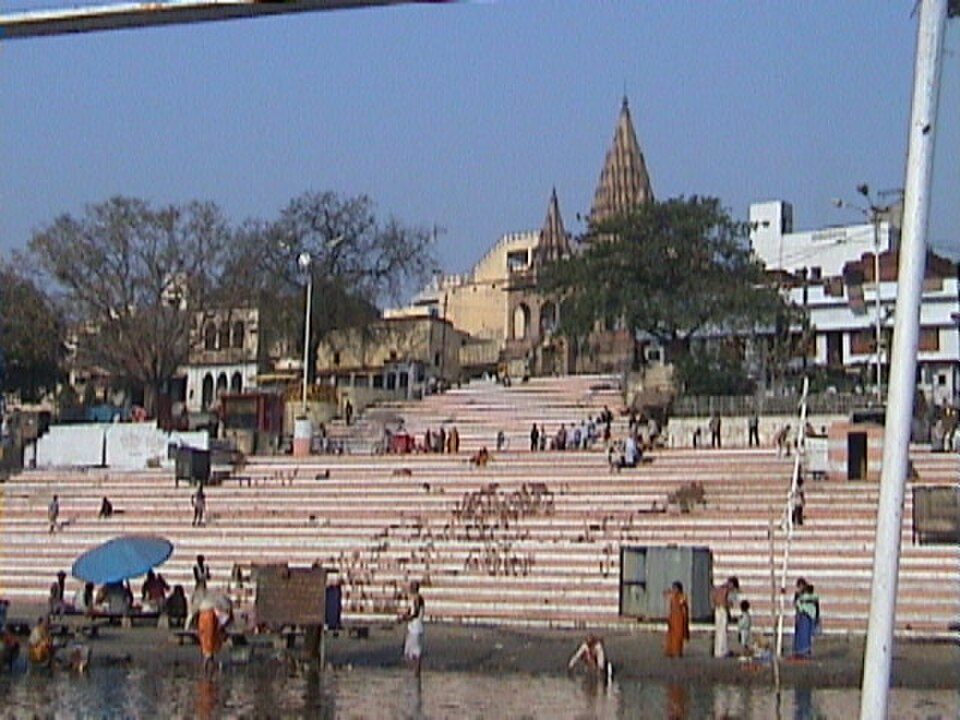
Raj Ghat stands at the northern end of the great crescent of ghats that sweeps along the western bank of the Ganga in Varanasi. It is the northernmost of the main chain of ghats, the point where the riverfront city begins and, for many pilgrims, where their walk along the river ends. The name alone tells its story: raj, the king, for this was a ghat of kings — the landing place of royal processions and royal cremations in old Kashi. Broad stone steps climb from the water in a wide, unhurried sweep, and there is a gravity about the place, a solemn and storied character that other ghats, however grand, do not quite possess. The Raj Ghat bridge, a double-decked giant built in 1887, strides across the river just to the north, its shadow falling across the water.
Unlike the crowded ritual stages of Dashashwamedh or Manikarnika, Raj Ghat is a quieter, more reflective part of the riverfront. Morning brings the bathers — old men in dhotis, women in saris, pilgrims who have come by train to Kashi railway station nearby — and the boatmen who moor their wooden craft along the shore. The ghat is famous among the people of Kashi for pind daan, the offering of rice balls to the ancestors, and for asthi visarjan, the consignment of ashes to the Ganga, and some of the most renowned priests of Kashi keep their stations on these steps. There is a dignity to the place, a sense that one has stepped out of the clamour of the city into an older, more patient India.
Here, according to the archaeologists, is where the city itself began: remnants of walls, pottery and brick believed to be some 2,800 years old have been found beside the ghat, the remains of Kashi's first settlement, and the site is today protected by the Archaeological Survey of India. The kings who ruled this ancient capital gave the ghat its name, and their memory still hangs in the air along with the smoke of funeral pyres and the smell of wet stone. For the visitor, Raj Ghat rewards a slow approach — a walk down the wide steps, a long look at the river, a seat on the stone in the evening light. It is the northern gate of Kashi's sacred riverfront, royal in name, ancient in fact, and solemn in character.
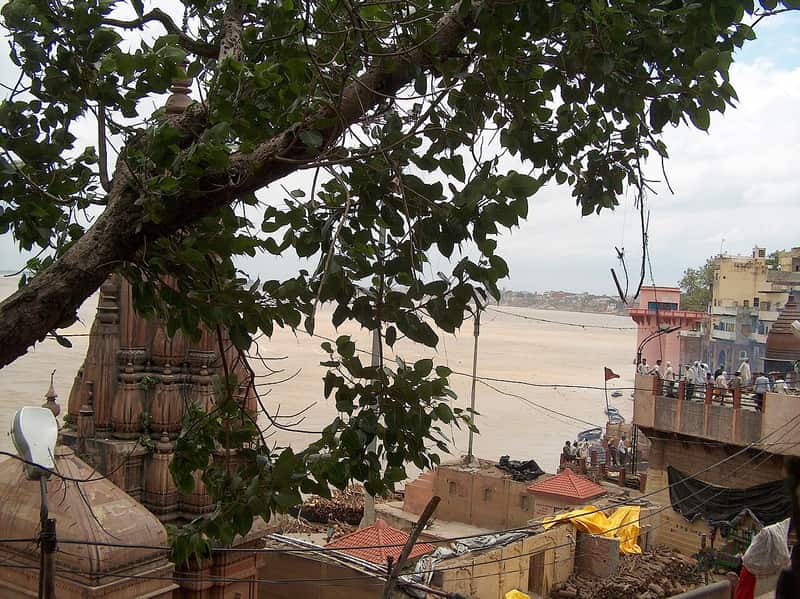
The Royal Name — Why It Is Called Raj Ghat
The name Raj Ghat carries the weight of a thousand years of kingship. Raj means king, and every account of the ghat agrees that this was the landing place of the rulers of Kashi — the kings whose palaces stood in the old town to the south and whose processions came down to the river by the broad lane that still leads to the ghat. In old Kashi, when a king bathed in the Ganga, or when a royal funeral wound its way through the streets, the destination was Raj Ghat. The royal families of the region kept their own cremation ground here, and the ghat's stones have carried more princes and more sacred palanquins than any other steps on the riverfront.
The antiquity behind the name is even greater than the kings who used it. The settlement that grew beside this ghat is believed to date from around 800 BCE, and the kings who ruled it — including the Gahadavalas, whose inscriptions mention the ghats of Kashi, among them the neighbouring Prahlad Ghat — made the area their administrative capital. Some traditions hold that the ghat was also known as Mahishasur Ghat, after the buffalo demon of the old myths, a name that links it to the very oldest layers of Kashi's story, before kings, before dynasties, when the riverfront belonged to legend. Whatever the name's precise origin, the impression is the same: this is ground that rulers chose, and rulers stamped with their memory.
The royal legacy lives on in the character of the place. Even today the ghat keeps a formality that the working ghats lack — its steps are broad and ceremonious, its approach is open and generous, and the priests who serve here are among the most learned of Kashi. When the funeral procession of an old family of the city descends to the water, it still moves with a measure of the old courtly order. The name, in the end, is not a decoration but a record: Raj Ghat is where the kings of Kashi touched the Ganga, and the river has not forgotten it. To stand on these steps is to stand where royalty once stood, and the air still carries the echo of their trumpets and their drums.
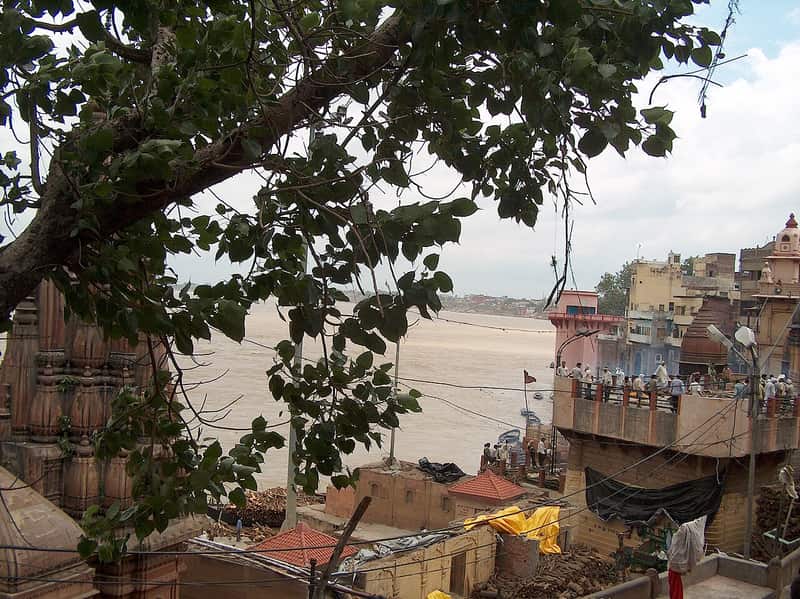
History — Royal Processions and the Origins of Kashi
The history of Raj Ghat is, in a real sense, the early history of Kashi itself. Excavations beside the ghat have uncovered the remains of what many archaeologists consider the city's original settlement — broken walls, hand-thrown pottery and the famous brick of the region — dating back nearly three millennia, to around 800 BCE. Here, where the wide river met the land, the first Kashi grew: a royal residence, a marketplace, a place of worship, the seed from which the greatest city of pilgrimage on earth would spring. The site is now a protected monument under the Archaeological Survey of India, and the low mound of earth beside the ghat is one of the most important archaeological landmarks of the riverfront.
In the centuries that followed, the ghat became the stage for the royal life of Kashi. The Gahadavala dynasty, whose inscriptions date to the eleventh and twelfth centuries, governed from this northern quarter, and the lane that descends to Raj Ghat was the royal way — the road down which kings rode to bathe, and down which their funeral processions later passed, banners dipping, drums beating, the city silent in respect. It is said that in old Kashi no royal death was complete until the pyre had been lit at Raj Ghat, and no royal accession began without the new king bathing here in the Ganga. The custom gave the ghat its permanent character: a place of beginnings and endings, of crowns and ashes, woven into the very idea of kingship in Kashi.
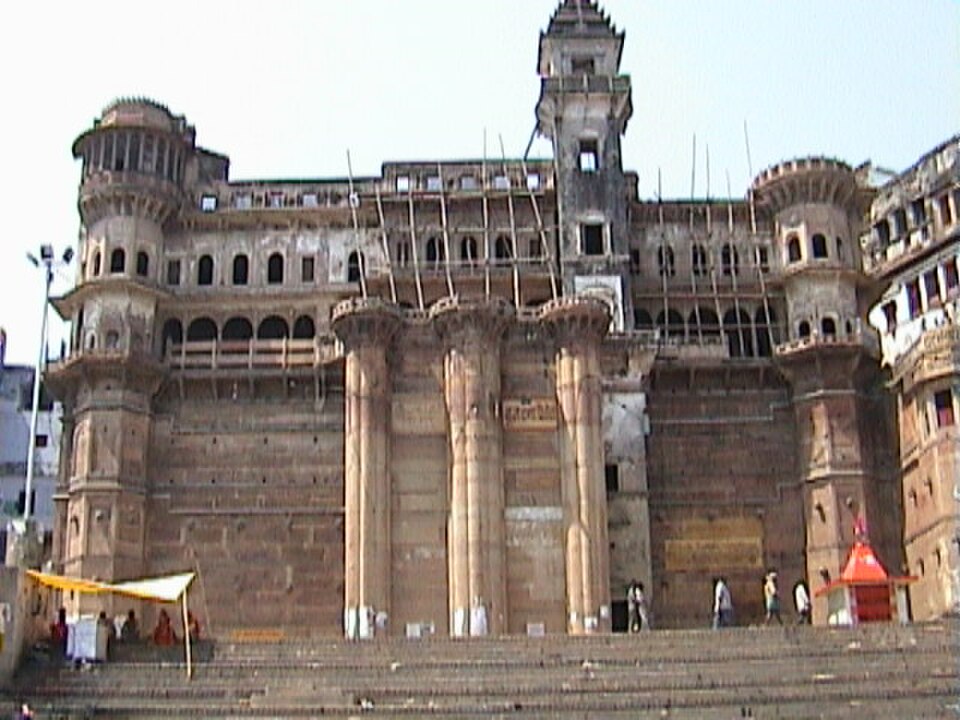
The ghat was remade and repaired many times, most recently paved with stone in 1988, but its role has shifted with the centuries. With the rise of modern Varanasi the royal court receded, and Raj Ghat became what it is today: a working ghat of bathers and boatmen, a place of pind daan and ash consignment, and the quiet northern terminus of the great ghat walk. The old royal residences are gone, but their memory survives in the name, in the width of the steps, and in the lane that still runs like a processional way toward the water. To walk that lane slowly is to walk in the footsteps of kings — and of the ordinary citizens of old Kashi who lined it to watch them pass.
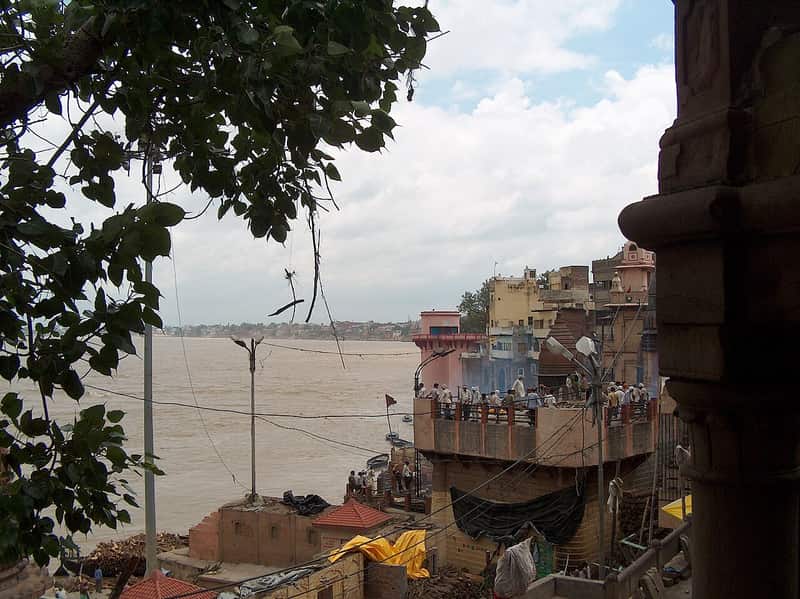
The Solemn Rites — Cremation at Raj Ghat
Raj Ghat remains a cremation ghat, though of a quieter kind than Manikarnika. In old Kashi the royal families burned their dead on these steps, and the custom never died out: today families from the northern quarters of the city and from the villages across the river bring their dead here, choosing the ghat for its space, its relative calm, and its long association with the final rites. The ceremonies follow the ancient order — the body bathed in the Ganga, the pyre built of wood on the platform at the water's edge, the ghee and camphor laid upon it, the chief mourner circling the pyre three times before lighting it — and the smoke rises over the river as it has done here for centuries.
The ghat is even more famous for the rites that follow the burning. Raj Ghat is one of the principal places in Varanasi for pind daan — the offering of rice balls, milk and water to the souls of the ancestors — and for asthi visarjan, the consignment of ashes and bones to the Ganga. Pilgrims come from across India to perform these ceremonies at this northern ghat, and the priests of Raj Ghat, among the most respected in Kashi, guide the rituals with a learning that has passed down through generations. On the days of the ancestor rites, especially the dark fortnight of Pitru Paksha in September and October, the steps fill with families in white, and the river receives a constant procession of offerings.
For the visitor the sight of the ghat in this role is humbling and instructive. The rites are conducted with the same gravity here as at the great burning ghats, but at Raj Ghat the scale is smaller, the pace slower, and the dignity of each individual family easier to perceive. This is where Kashi teaches its oldest lesson in its gentlest voice: that the river receives everything — kings and beggars, silks and rags — and returns the same answer, liberation for the soul and peace for the living. Photography, loud talk and curiosity have no place on a cremation ground; the correct response is quiet respect, and those who offer it are repaid with a glimpse of one of the oldest and most moving traditions on earth.
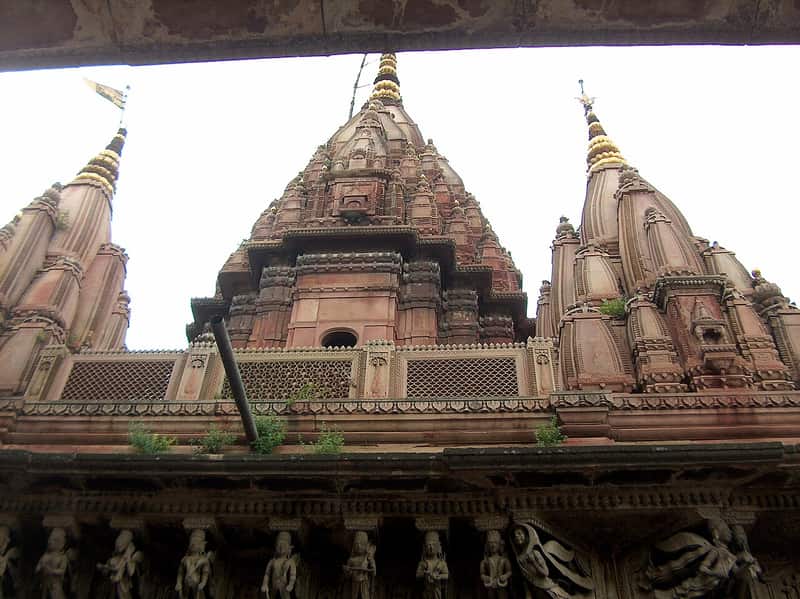
The Morning Bath — Daily Life on the Steps
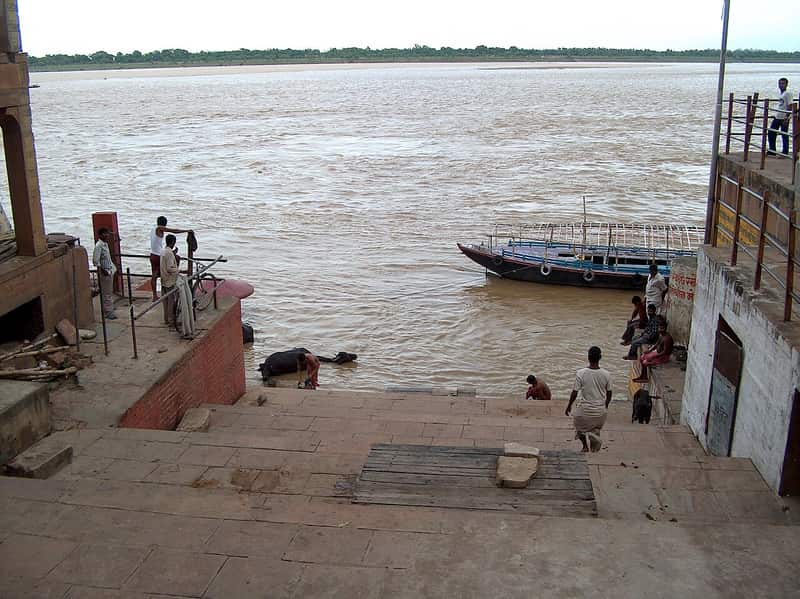
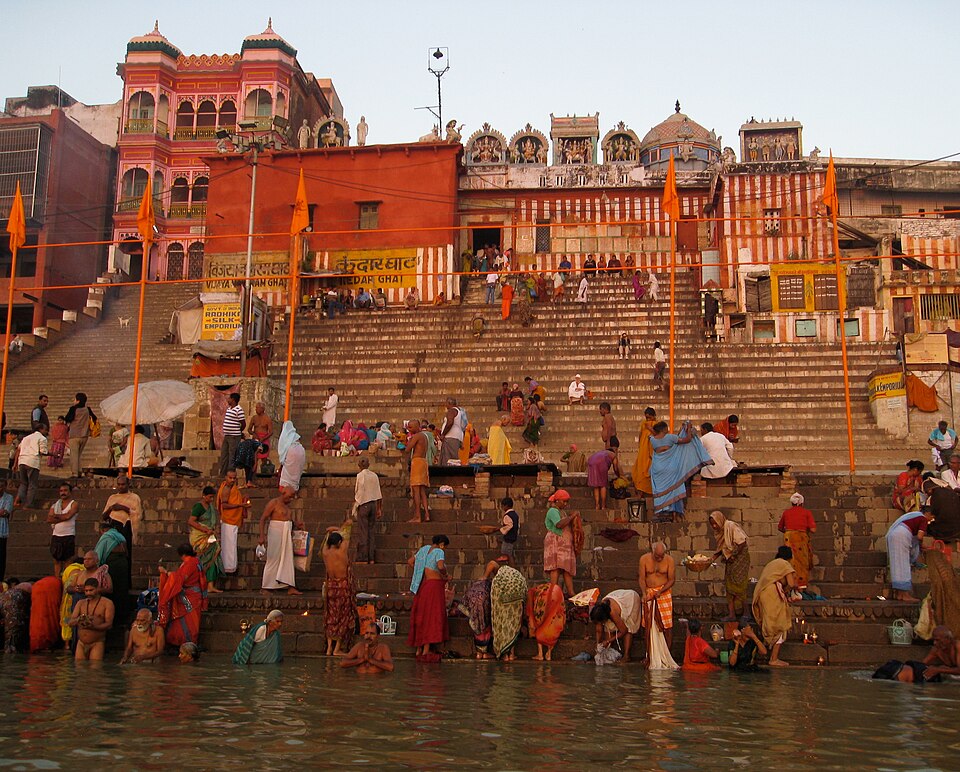
Before the sun clears the eastern bank, Raj Ghat is already awake. The first bathers arrive in the half-dark, wrapped in shawls against the chill, carrying brass lotas and small bundles of clean clothes. By six in the morning the broad steps are lined with pilgrims performing the ritual ablutions of Kashi: men standing chest-deep in the water with their hands folded to the rising sun, women pouring the river water in graceful arcs over their heads, the old who have come to die here taking their last baths, the young who have come to begin their lives taking their first of the year. The chatter of the riverbank, the splash of water and the ringing of distant temple bells blend into the particular music of the Kashi morning.
The bathing at Raj Ghat is less theatrical than at the great festival ghats, and more personal. Families come together, grandmothers instructing grandchildren in the correct mantras, fathers teaching sons how to duck beneath the water three times, how to face the sun while reciting the Gayatri. Priests move among the bathers, offering to perform the rituals for a coin or a handful of grain; vendors set out their trays of marigold garlands, vermilion, camphor and the small clay lamps that every bather sets adrift on the water. To bathe here is to take part in the oldest continuous custom of the city — a ritual performed on these very steps, in all probability, for more than two thousand years, on a site inhabited for nearly three thousand.
The bathers leave the water changed, and so does the ghat. By mid-morning the sacred work is done, and the steps turn to the everyday: boatmen mending nets, children splashing at the waterline, women beating laundry on the flat stones, holy men settling under the trees with their beads and their almanacs. Yet the morning's spirit lingers in the light on the water, and the mark of the day's first prayer is on every step. For the traveller the best introduction to Raj Ghat is this slow unfolding — to arrive before dawn, to sit above the steps, and to watch a city that has been bathing in this river since long before its name was written, begin its day exactly as it has always done.
Boats and Boatmen — The Working Landing
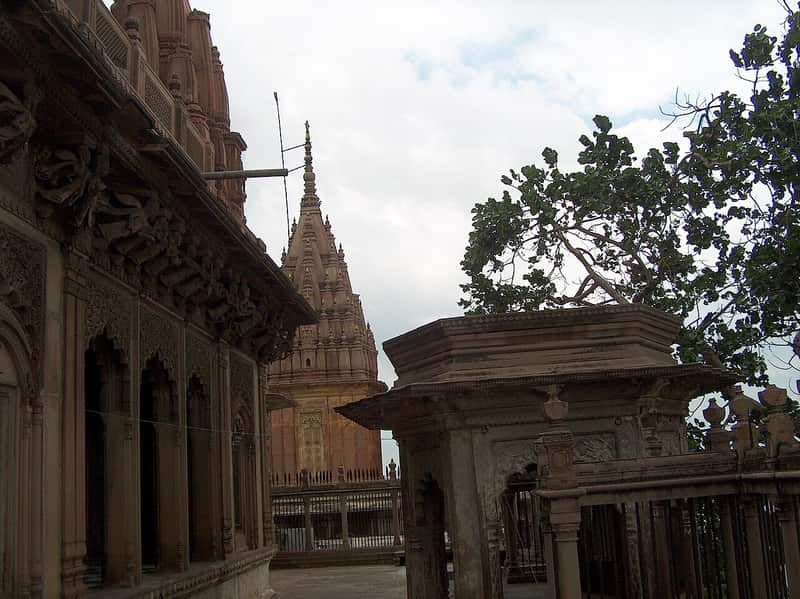
A small fleet of country boats is moored at Raj Ghat, and the boatmen of this northern landing are among the river's veterans. Many come from the same families that have worked the Ganga for generations, and they know the northern reach of the river as other boatmen know the centre of the city: where the current runs deep off the cremation platform, where the sandbanks build in summer, how the great bridge's shadows fall across the water at noon. Their boats are the classic wooden craft of Banaras — long, high-prowed, painted in faded blues and greens — and they lie along the shore in a tangle of ropes and oars that is pure riverfront business.
Their work is various and old. They ferry pilgrims across to the eastern bank, carry families to the cremation ground downstream, row mourners with their urns to the deep water for asthi visarjan, and take the evening passengers who want to see the ghats from the water as the lamps are lit. During Pitru Paksha the boats are busiest of all, carrying the pind daan parties along the shore while the priests recite the mantras over the offerings. Many of these boatmen are also the guides and ferrymen of the northern river — a morning row along this stretch of the Ganga, with the bridge arches echoing the splash of the oars, is one of the quietest pleasures of the riverfront, far from the crowds of Dashashwamedh.
Like the boatmen of every ghat, the men of Raj Ghat are shrewd, good-humoured and unhurried. They will quote a price, bargain for a while with a grin, then row you up and down the river with a patience that belongs to a different age. They are also the memory-keepers of the northern shore: they can point out where the old royal landing stood, where the river took the land in the great floods, where the first settlement of Kashi lies buried in the bank. Ask them about the kings and they will tell you the ghat's story with the same ease with which they tell of the weather. The boat ride from Raj Ghat, in their hands, becomes more than a ride — it becomes a lesson in the river's memory, spoken in the cadence of the oars.
The River and the View
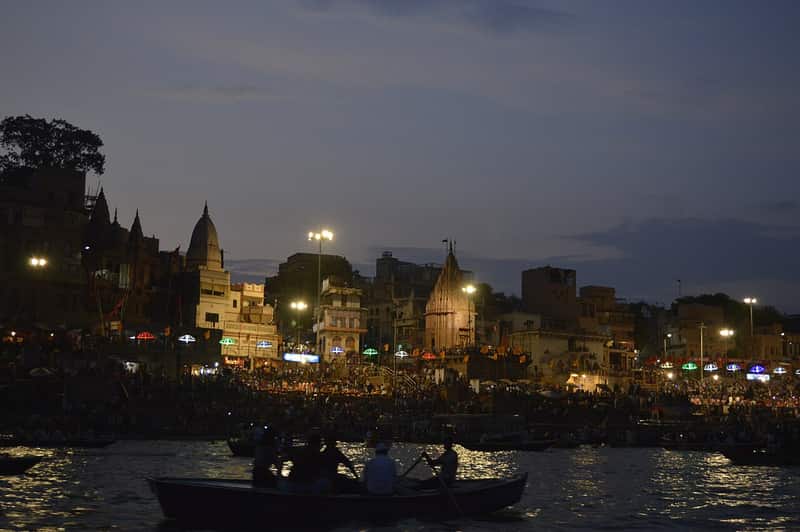
At Raj Ghat the Ganga reveals its northern character. Here the river is wider and deeper than in the city's centre, and it moves with a slower, grander current, as if it has left the bustle of the town behind and settled into a patient journey toward the plain beyond. The water is the colour of the sky it carries — grey-gold at dawn, silver at noon, copper at sunset — and on a still evening the reflection of the double-decked bridge hangs in it like a second bridge built of light. Boats drift across the expanse, and beyond them the far bank stretches flat and green to the horizon, dotted with villages and temple spires that look at once distant and dreamlike.
The view is framed by two great spans of engineering and time. Upstream, the Raj Ghat bridge strides across the river on massive stone piers — a double-decker built in 1887, carrying the railway on its lower deck and the road above, a marvel of the British era that still carries the life of the region. Beneath and beyond it, the river opens into the northern reaches where the ghats thin out and the shore returns to fields. From the steps of Raj Ghat, a visitor sees the whole history of this riverfront in a single glance: the oldest city of India behind, the newest horizons ahead, and the great bridge holding the two together like a clasp.
Sunset is the ghat's finest hour. The sun sets behind the city, and the river turns to flame; the bridge's arches darken into silhouette, and the lamps of the far bank begin to prick the dusk. The bathers have gone home, the boatmen idle at the shore, and the last funeral smoke rises in a straight grey column that seems to stand still against the fading sky. Few places in Varanasi offer such a combination of grandeur and peace, and those who sit on the steps at that hour understand why the kings of Kashi chose this northern bend of the river for their own. The river at Raj Ghat does not perform for the crowds; it simply flows — broad, deep and old — and that is precisely its beauty.
The Neighborhood — Lanes, Temples and the Bridge
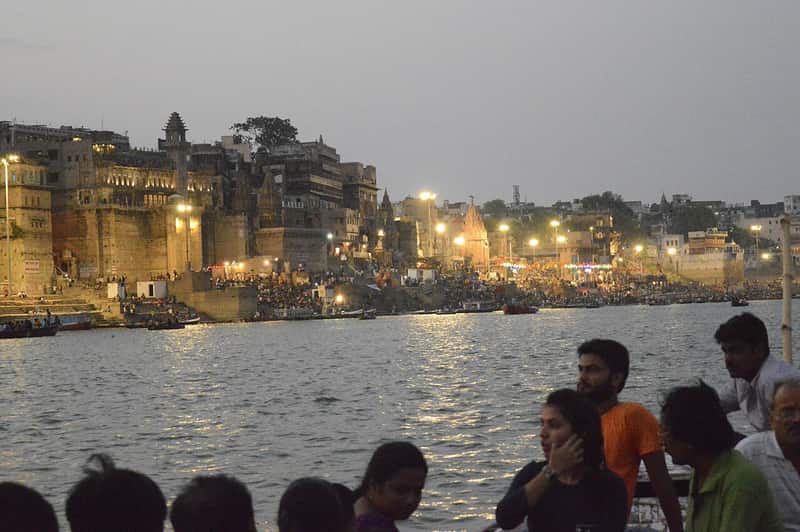
Behind Raj Ghat lies an old quarter of Varanasi that has its own quiet character. The lanes here are narrower and less polished than the bazaar streets of the old city — brick houses leaning toward each other, doors painted with ochre and indigo, courtyards where buffalo are tethered and kites wheel overhead. Here stands the Adikeshav temple, one of the sacred sites of the northern riverfront, and the area around the ghat is dotted with small shrines and the homes of priests who serve the ghat's rituals. The quarter also holds reminders of a more layered history: the Chandan Shaheed mausoleum, a Sufi shrine, stands nearby, a witness to the centuries in which the riverfront belonged to many faiths.
The neighborhood's most visible landmark, however, is the bridge that dominates the skyline. The Raj Ghat bridge — also called the Malaviya Bridge, and originally known as the Dufferin Bridge when it was built in 1887 — is a double-decker of stone and iron, carrying the railway on its lower deck and road traffic above. For more than a century it has been the northern gate of the city, the span under which every boat and every flood must pass. From the bridge walkway, a pedestrian gains the finest view of Raj Ghat from above: the wide steps, the boats, the smoke, and the whole curve of the northern riverfront spread out like a map of the city's history.
The area is also home to institutions that tie the old quarter to modern Varanasi. Vasanta College for Women, founded in the 1940s, stands in the neighborhood, and the archaeological site beside the ghat is fenced and labelled as a protected monument. The approach to the ghat is broad enough for cars, a rarity in Kashi, which makes Raj Ghat one of the few riverfront landmarks that elderly visitors can reach without fighting through the lanes. The neighborhood repays slow exploration: a walk from the ghat to the bridge, through the temple courtyards and past the mausoleum, is a walk through the strata of Kashi itself — royal, ancient, saintly and modern, all within a few hundred metres of the water.
Nearby Ghats — Prahlad and Bhainsasur
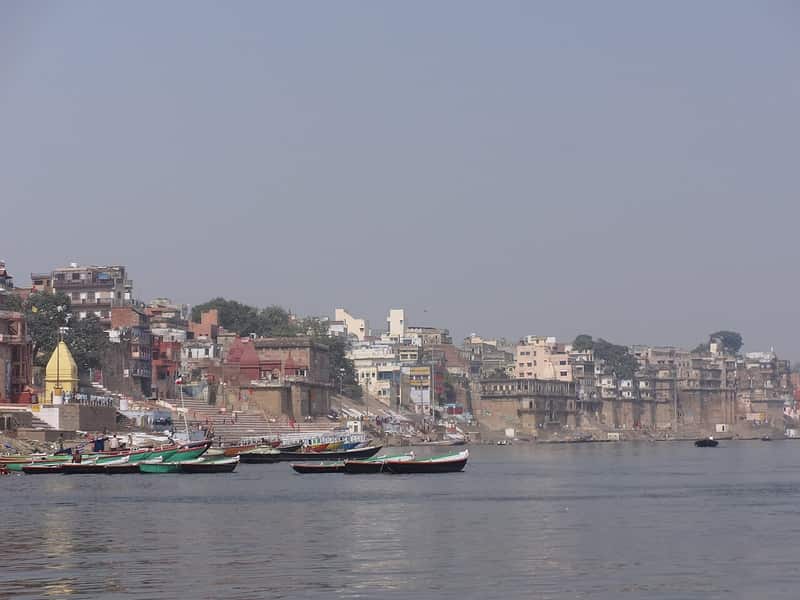
Raj Ghat is the meeting point of two of the most intriguing ghats of the northern riverfront. To the south lies Prahlad Ghat, named for the great devotee of Vishnu whose story is told in the Bhagavata Purana — the boy prince who worshipped Vishnu against the will of his demon king father, and who was saved when the Lord emerged as Narasimha, the man-lion. The ghat is ancient, mentioned in the inscriptions of the Gahadavala dynasty, and its name keeps alive the memory of one of the most beloved tales of devotion in all of Hindu scripture. A short walk from Raj Ghat, it offers a quieter landing, often almost empty even on festival mornings.
To the north lies Bhainsasur Ghat, whose name carries a different and wilder legend. Bhainsasur is the buffalo demon — a form of the great Mahishasura whose slaying by the goddess Durga is celebrated across India at Navaratri. The very name links these northern ghats to the oldest layer of Kashi's mythology, when the riverfront belonged to the great stories of gods and demons rather than to kings and dynasties. The ghat is small and functional, used by the bathers and boatmen of the neighborhood, and it is close to the bridge, its steps disappearing beneath the great span as the ghat chain runs out at the city's edge.
Walking between the three ghats is one of the finest short excursions of the northern riverfront — less than a kilometre, from the legend of Prahlad through the royal ground of Raj Ghat to the buffalo demon's landing. The walk takes in the whole northern character of Kashi in miniature: faith, kingship and myth within a few hundred steps of the water. Where the ghats end, the riverfront returns to fields and the bridge takes over the horizon, and the visitor who has walked this northern mile has seen the end of the chain — the point where the sacred city meets the plain, and where the Ganga, freed of the town, turns at last toward the sunrise.
The Ghat Walk — The Northern Terminus
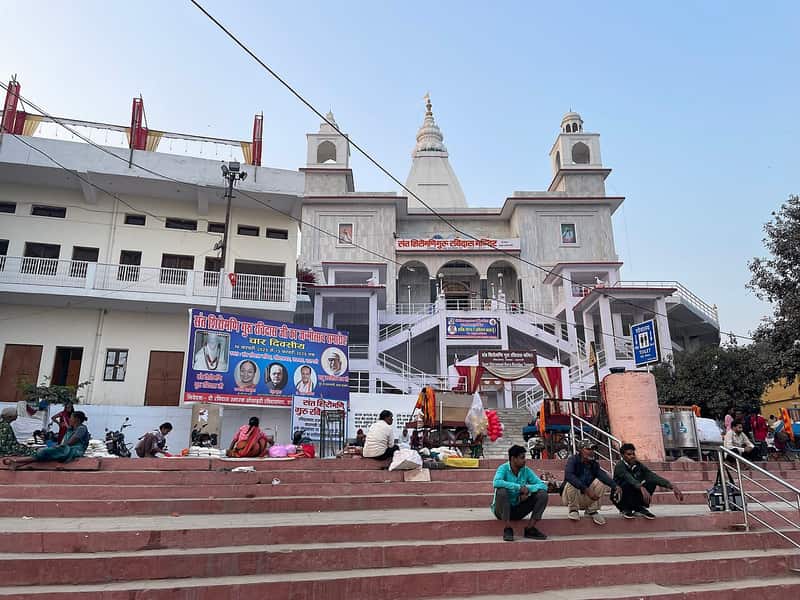
The great ghat walk of Varanasi — the six or seven kilometre promenade along the riverfront from Assi Ghat in the south to Raj Ghat in the north — reaches its destination on these steps. For those who complete the whole journey, the arrival at Raj Ghat has the feeling of a pilgrimage fulfilled: the city's riverfront, with all its shrines, palaces and burning ghats, has passed in review, and here, at the northern gate, the walk ends where the ghats end. Walkers come down the last stretch past Nandeshwar and Prahlad ghats with the bridge growing before them, and the wide, quiet steps of Raj Ghat receive them like a threshold — the formal close of the most celebrated walk in India.
The walk itself is a moving summary of everything Kashi contains. It begins among the students and ashrams of Assi, passes the festival ground of Dashashwamedh, skirts the great burning ghats of Manikarnika and Harishchandra, crosses the palaces of the maharajas, and climbs and descends the hundred staircases of the crescent — each ghat with its own name, its own story, its own incense and smoke. By the time the walker reaches Raj Ghat, the senses are full: bells and boat horns, saffron and marigold, the slap of laundry on stone and the crackle of the eternal fires. The northern terminus is not merely an ending; it is the point where the experience of the riverfront is finally gathered and understood.
Completing the walk has become a rite for travellers, and Raj Ghat rewards those who finish it. The ghat itself offers the essential pleasures of arrival — shade, water, boatmen ready to row the weary back to the centre by river — and the bridge above gives the walk's crowning view: the whole crescent behind, the whole plain ahead. The best time is early morning, when the walk can be taken in cool light, or late afternoon, arriving at the ghat just as the sun sets behind the city. However it is done, the walk to Raj Ghat leaves no doubt about the unity of this riverfront: one city, one river, one continuous story, of which the northern steps are the last and quietest page.
Etiquette — Respectful Conduct at the Ghat
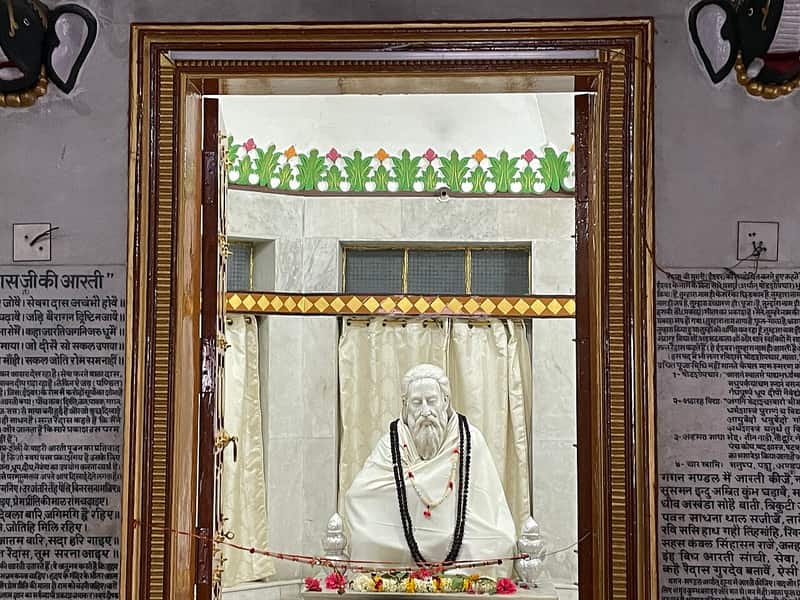
Raj Ghat is both a cremation ground and a place of daily worship, and the visitor's first duty is to understand which is happening at any given moment. When a funeral procession descends the steps, or when a pyre burns on the platform, the correct response is stillness: to pause, to lower the voice, and to give the family the space and silence they need. Photography is never appropriate during the rites of death, and even at other times the camera should be used with judgment — a ghat is not a museum, and the people on it are not exhibits. A rule of thumb that serves well in all of Kashi: if you would not photograph it at home, do not photograph it here.
A few practical courtesies make a visit to Raj Ghat easy and welcome. Dress modestly, as you would at any holy site in India; keep your shoes at the top of the steps, as the platform is sacred; and remember that offerings — a garland, a few flowers, a lamp — are always more appreciated than money pressed into a stranger's hand. The priests and boatmen who approach visitors are mostly honest men earning a hard living, but a polite namaste and a firm no is the language they understand best. Beware of anyone who offers to perform rituals for you without being asked, and never accept a boat ride without agreeing the fare and the route in advance.
Above all, the ghat asks for the one thing it has always asked of kings and beggars alike: humility in the presence of the river. The Ganga at Raj Ghat is worshipped, worked and mourned upon in the same morning, and the visitor who holds all three in the same reverence will take away far more than photographs. Sit quietly on the steps for a while, let the bells and the water find their rhythm, and allow the ghat to reveal itself at its own pace. In the end, respect at Raj Ghat is simple: observe the sacred as sacred, treat every person as a fellow traveller, and leave the ghat as you would leave a temple — with the river's blessing and not a trace of offense.
Practical Guide — Reaching Raj Ghat and When to Go
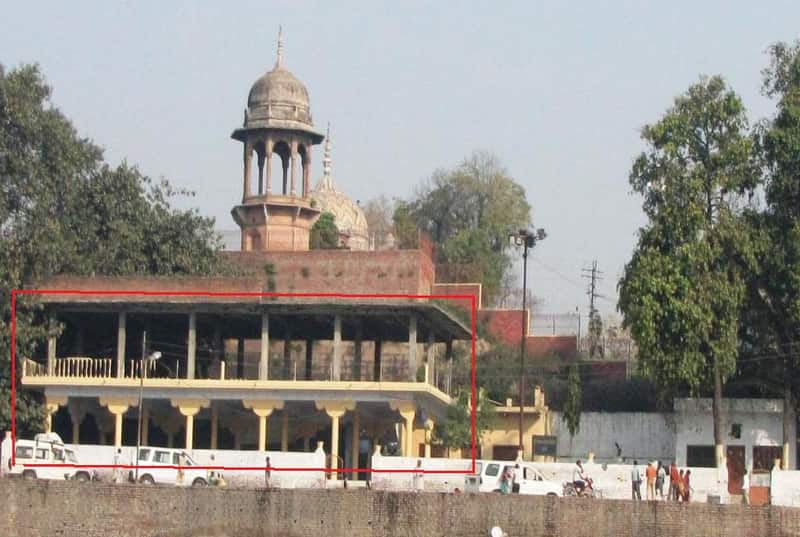
Raj Ghat is one of the most accessible ghats of Varanasi. It lies at the northern end of the riverfront, close to Kashi railway station, and — unlike most of the old city's ghats — it can be reached by car or rickshaw almost to the water's edge, with parking nearby. From the centre of the city it is a short ride, and many visitors combine the ghat with a visit to the Malaviya bridge or a boat trip that ends at the northern landing. For those who prefer the river, a boat from Dashashwamedh or Panchganga to Raj Ghat takes about an hour and is one of the best introductions to the northern ghats.
The best time to visit is early morning, when the bathing is in full swing and the light is golden, or late afternoon, when the sun sets behind the ghat and the bridge turns to silhouette. Mornings are livelier — bathers, boatmen, the first funeral processions — while evenings are quieter and more solemn. The festival of Pitru Paksha in September and October brings the great crowd of mourners performing pind daan, an intensely moving season to visit for those who respect its meaning. Winters are pleasant, summers hot, and the monsoon months of July and August leave the steps partly flooded — an awe-inspiring sight, but not one for a casual stroll.
The ghat sits in a compact cluster of riverfront landmarks worth combining. To the south lie Prahlad Ghat and, beyond it, Nandeshwar Ghat; to the north, Bhainsasur Ghat runs into the shadow of the bridge, and the chain ends there. The Adikeshav temple and the archaeological site lie just behind the ghat, and the bridge's upper deck offers a famous panoramic view. A practical itinerary: arrive at dawn, walk the northern mile through Bhainsasur, Raj Ghat and Prahlad, take a boat back to the city centre, and finish the day with the view from the bridge at sunset. In one quiet morning, the northern gate of Kashi will have shown you its whole character — royal, ancient and alive.
Raja (Bhaisasur) Ghat — Gallery (12 Photos)
Image Credits
raj-01.jpg · raj-02.jpg · raj-03.jpg · raj-04.jpg · raj-05.jpg · raj-06.jpg · raj-07.jpg · raj-08.jpg · raj-09.jpg · raj-10.jpg · raj-11.jpg · raj-12.jpg — Wikimedia Commons, under free licenses.
Continue exploring
Similar Ghats Nearby
Book This Ghat — Get Notified
Download the app now and book a boat ride to Raja (Bhaisasur) Ghat