

Prahlad Ghat
Neighbourhood GhatPrahlad Ghat is a 15th-century historic ghat with a famous Prahlad temple.


Type
Neighbourhood Ghat
Boat Fare
1x base fare
Best Time
6-10 AM when morning light illuminates the temple.
History
Built in the 15th century. A famous Prahlad temple is at the ghat center.
Highlights
- Memory of Bhakt Prahlad
- Symbol of devotion’s victory
- Peaceful northern ghat
Festivals & Events
How pricing works in the NaviX app
No haggling at the ghat — everything is fixed in the app first
- 1
Fixed price before you board
The fare is shown in the app upfront — no bargaining at the ghat
- 2
Sharing or private — your choice
Share with fellow travelers or take the whole boat for your group
- 3
Pay only after the ride
UPI, card or cash — with an instant receipt
🕉️
Aarti details not available for this ghat yet
Complete Guide
Prahlad Ghat — The Complete Guide
History, mythology, rites and practical details — everything in depth.
On this page
- 1.Prahlad Ghat — A Quiet Shrine of the Northern Riverfront
- 2.Prahlad — The Prince Whose Faith Defied a Tyrant
- 3.How the Ghat Came to Bear the Name of Prahlad
- 4.Morning Bathing at Prahlad Ghat
- 5.Everyday Life at the Ghat
- 6.The Ganga at Prahlad Ghat — Water, Light and Horizon
- 7.The Lanes Behind the Ghat
- 8.Raj Ghat and the Chain of Northern Ghats
- 9.Festivals at Prahlad Ghat
- 10.A Monument to Bhakti
- 11.Visiting with Respect — Etiquette at the Ghat
- 12.Practical Guide — Reaching Prahlad Ghat
📅 Updated: 21 Aug 2026 · Author: NaviX Field Team (field research 2024-26) · 12 sections · 12 photos
Prahlad Ghat — A Quiet Shrine of the Northern Riverfront
Prahlad Ghat stands quietly among the small ghats of the northern riverfront of Varanasi, a modest stretch of stone steps that the crowds of the great ceremonial ghats never reach. It lies in the chain of minor ghats that runs north of the city centre, close to Raj Ghat, where the riverfront begins to shed its palaces and temples and become a working shore of boats, washing stones and vegetable plots. There is no tall shikhara here, no royal pavilion, no press of pilgrims — only simple steps descending to the water, a small shrine, a few trees, and the unhurried rhythm of everyday river life. Yet the ghat carries a name that echoes through the oldest scriptures of Hinduism, for it is called after Prahlad, the devotee prince of the Vishnu Purana, and legend says his devotion touched this very bank.
The ghat is the northern riverfront's reply to the grandeur of Dashashwamedh: nothing is staged here, and nothing is for show. Bathers come down at dawn in small family groups, carrying brass lotas and clean clothes; boatmen tie their craft to iron rings in the stone and squat on the steps to mend nets; washermen beat cotton sheets against the washing stones at the waterline while their children splash beside them. Vegetable plots and banana palms soften the landward edge, and the air holds the smell of river water, wet earth and cooking smoke rather than incense and privilege. To stand on these steps in the early light is to see the Ganga not as a stage for ritual but as a working river, and to understand why the old faith of Kashi lives as comfortably in the lane and the boat as in the temple.
What the visitor finds at Prahlad Ghat, then, is not a monument but a memory kept alive by daily use — a memory of the prince who trusted God against every authority of the world. The ghat has no great inscription and no famous patron; its history is carried in the name, in the small shrine, and in the devotion of the neighbourhood that still tells the story of Prahlad to its children. It belongs to that quiet family of northern ghats — Naya, Raj, Khirkia and the rest — which together form a working museum of the riverfront. For the traveller willing to walk a little beyond the grand ghats, this modest landing offers something rare in Varanasi: a corner of the holiest city where bhakti is not performed but simply lived, morning after morning, at the edge of the river that Prahlad's God has guarded since time began.
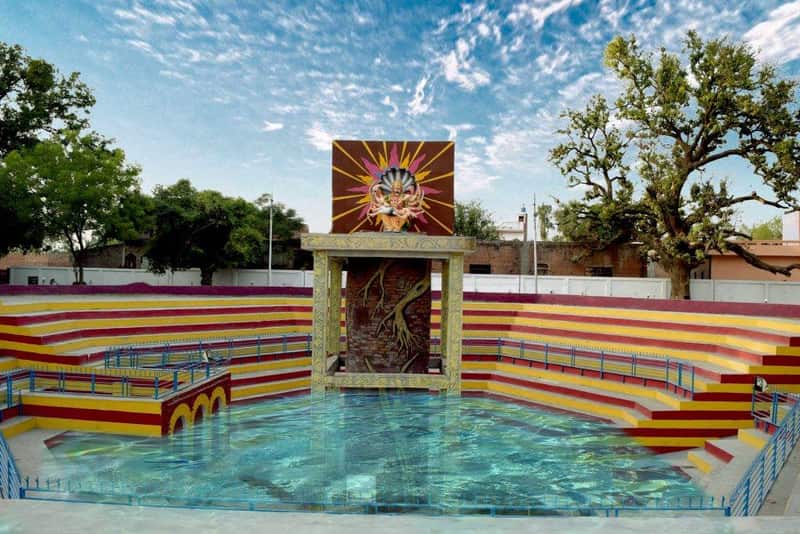
Prahlad — The Prince Whose Faith Defied a Tyrant
The story that gives Prahlad Ghat its name is one of the oldest and most beloved in Hindu scripture. In the Vishnu Purana and the Bhagavata Purana alike, Prahlad is the young son of Hiranyakashipu, the demon king who had won from Brahma the boon that he could not be killed by man or beast, by day or by night, inside or outside his palace, nor by any weapon. Armed with this absurd immunity, the tyrant demanded that he be worshipped as God himself. But even in the womb, so the Puranas say, the child Prahlad had heard the sage Narada's teaching, and his heart had already turned to Vishnu. When he grew old enough to speak, he told his father plainly that the only true lord was Narayana, who dwells in all beings and beyond all worlds.
Enraged, Hiranyakashipu tried every cruelty his court could devise. Poison was mixed into the boy's food, and it turned to nectar in his throat. Serpents were set upon him, and their bites did him no harm. He was thrown from a cliff, trampled by elephants, burned in fire — and each time he rose unharmed, chanting the name of Narayana. His father's sister, the ogress Holika, had a cloak that protected her from flames, and she took Prahlad onto her lap in a great blaze; the fire consumed Holika herself while the prince walked out untouched, a story remembered across India in the bonfire of Holika Dahan. The ministers of the demon court pleaded with the boy, threatened him, promised him riches, but Prahlad answered them all with the same unshakable calm: Narayana is the lord of all, and nothing in this world is beyond him.
At last Hiranyakashipu pointed to a pillar of his palace and demanded, 'Is your god in this pillar?' — the traditional telling says he struck the column with his mace, and from it emerged Narasimha, the man-lion, the form of Vishnu that was neither man nor beast, appearing at dusk, which is neither day nor night, at the threshold, which is neither inside nor outside, and tearing the tyrant apart with claws, which are no weapon. The boy prince, saved by the God he trusted, became the eternal example of bhakti: devotion that owes nothing to birth, wealth or strength, and that survives every force the world can bring against it. It is this Prince Prahlad, whose story is chanted in every household of the faithful, whose name this quiet northern ghat of Varanasi has carried for centuries.
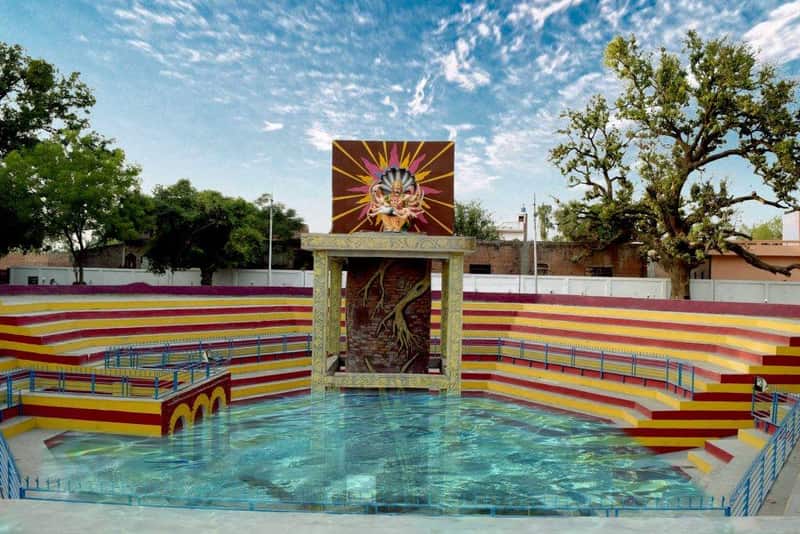
How the Ghat Came to Bear the Name of Prahlad
Unlike the great ghats of Varanasi, whose founders and dates are recorded in stone and royal records, the small ghats of the northern riverfront keep their history in legend, and Prahlad Ghat is no exception. No inscription names the patron who laid these steps, and no chronicle records the year of their building. Instead, local tradition — passed from generation to generation of the boatmen, washermen and priests of the neighbourhood — holds that the bank is linked to the devotion of Prince Prahlad himself. Some versions of the tale say that the prince performed his penance and meditated upon Narayana at this very spot, chanting the divine name while the Ganga flowed past him; others say he bathed here on his journey through the northern land, purifying the water with the touch of his devotion.
The naming follows a pattern as old as Kashi itself. The ghats of the city have been named for kings and queens, merchants and saints, pilgrims and philanthropists, and in the northern stretch, where the grand patrons of the central riverfront never built, the names remember characters of scripture and legend. Just as Nishadraj Ghat to the south honours the boatman king Guha, and as countless small landings across the city recall the stories of the Puranas, so this ghat of the north was given the name of the greatest devotee of the Vishnu Purana. The choice was not accidental; in a city where every stone has a story, the boatmen and farmers of the northern bank chose the name that best expressed what the place meant to them — a quiet corner of the river where faith, and not power, is the true sovereign.
What survives of the legend today is the devotion itself. There is no towering temple to Prahlad on the ghat, no grand festival processions in his name; the memory is carried in a different way. Children of the neighbourhood learn the story of the prince and the pillar from their grandparents, the small shrine at the water's edge receives its daily offerings, and the name of the ghat itself keeps the tale alive in the mouths of every boatman who rows past and calls the landing out to his passengers. For the pilgrim who comes seeking grand monuments, Prahlad Ghat offers almost nothing; but for the traveller who understands that in Kashi a name can be a scripture, these quiet steps speak of one of the oldest truths of the Hindu faith — that the pure devotion of a child once moved the creator of the universe himself.
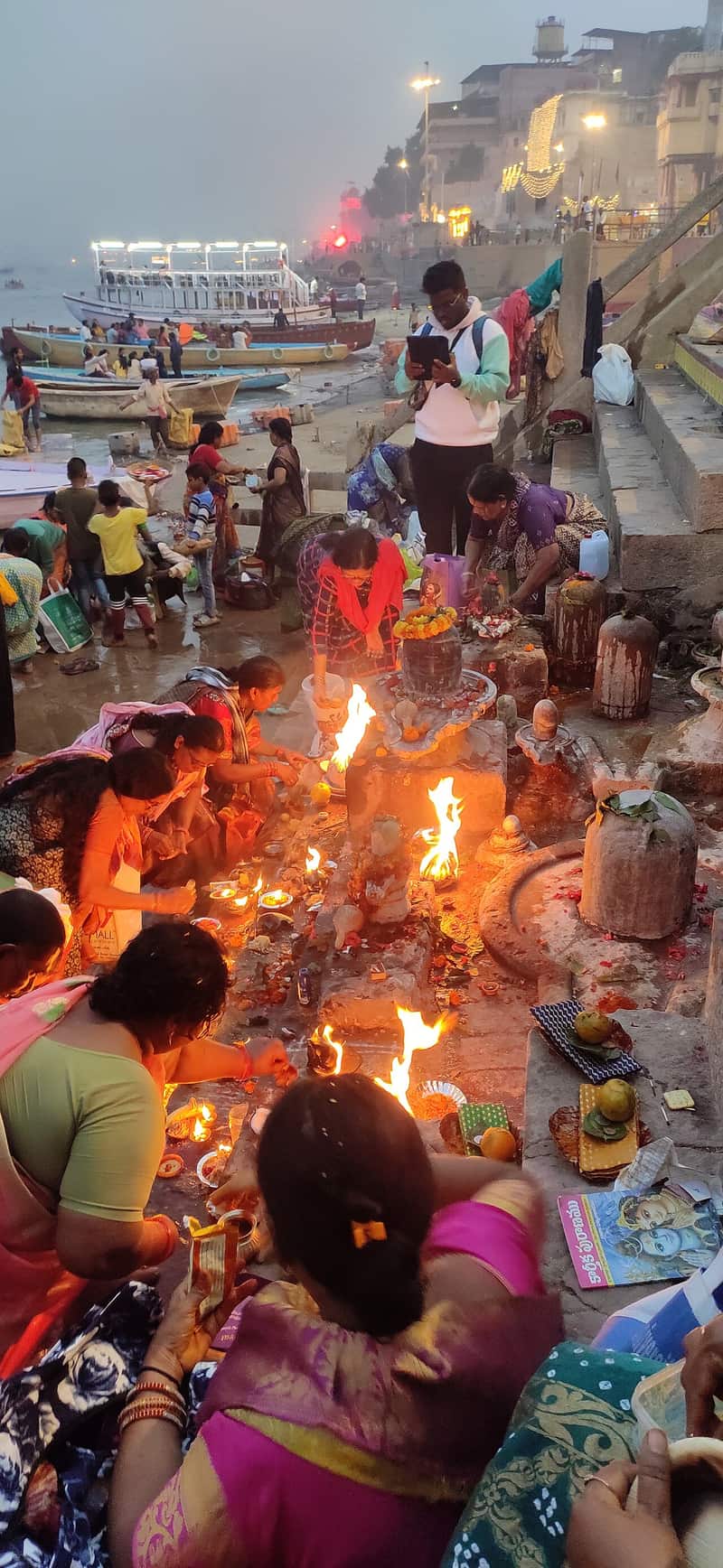
Morning Bathing at Prahlad Ghat
The day at Prahlad Ghat begins long before the sun clears the trees of the far bank. In the grey-blue hour before dawn, the first bathers pick their way down the worn steps, carrying brass lotas of Ganga water, a change of clothes, and the small copper pots of sindoor and kumkum that mark the rituals of the morning. Oil lamps glimmer at the shrine, and the air is cold and clean, smelling of river and wet stone. The bathers do not hurry; bathing at a northern ghat of Kashi is an unhurried act of devotion, a greeting to the river that is older than memory. Each person descends into the water with the same sequence — a prayer, a splash of water toward the rising sun, a murmured name of the Ganga — and rises marked by the river, ready for the day.
The bathing here differs from the great spectacle of Dashashwamedh, where priests in silk manage the crowds and charge for every blessing. At Prahlad Ghat there are no touts and no ceremonies for hire; only families, old men with their grandchildren, widows in white, students before their exams, each bathing in the same quiet way their ancestors did. The older bathers sit on the lower steps at the waterline, scooping water into their palms and letting it run back, reciting the sandhya prayers or simply watching the light spread across the river. Some bring a small wooden board and do their morning puja on the steps themselves, a private ritual in a public place, protected by the respect that the ghat's regulars show one another's devotions.
The water itself is the heart of the ritual. At this northern stretch of the riverfront, the Ganga runs wide and gentle, and after the monsoon the current settles into clear, slow-moving channels where the bathers can wade out to mid-thigh and beyond. Pilgrims rub wet sand over their arms and chests, bathe the deep stone steps and the shrine with the river's own water, and carry home a small lota of Ganga jal in a brass vessel to keep in the house shrine. For the faithful of the northern mohallas, the morning bath at Prahlad Ghat is not merely a cleansing of the body but a daily renewal of the bond with the river — the same bond that Prahlad's own devotion symbolised, the surrender of the self to something greater, repeated every dawn on these quiet steps.
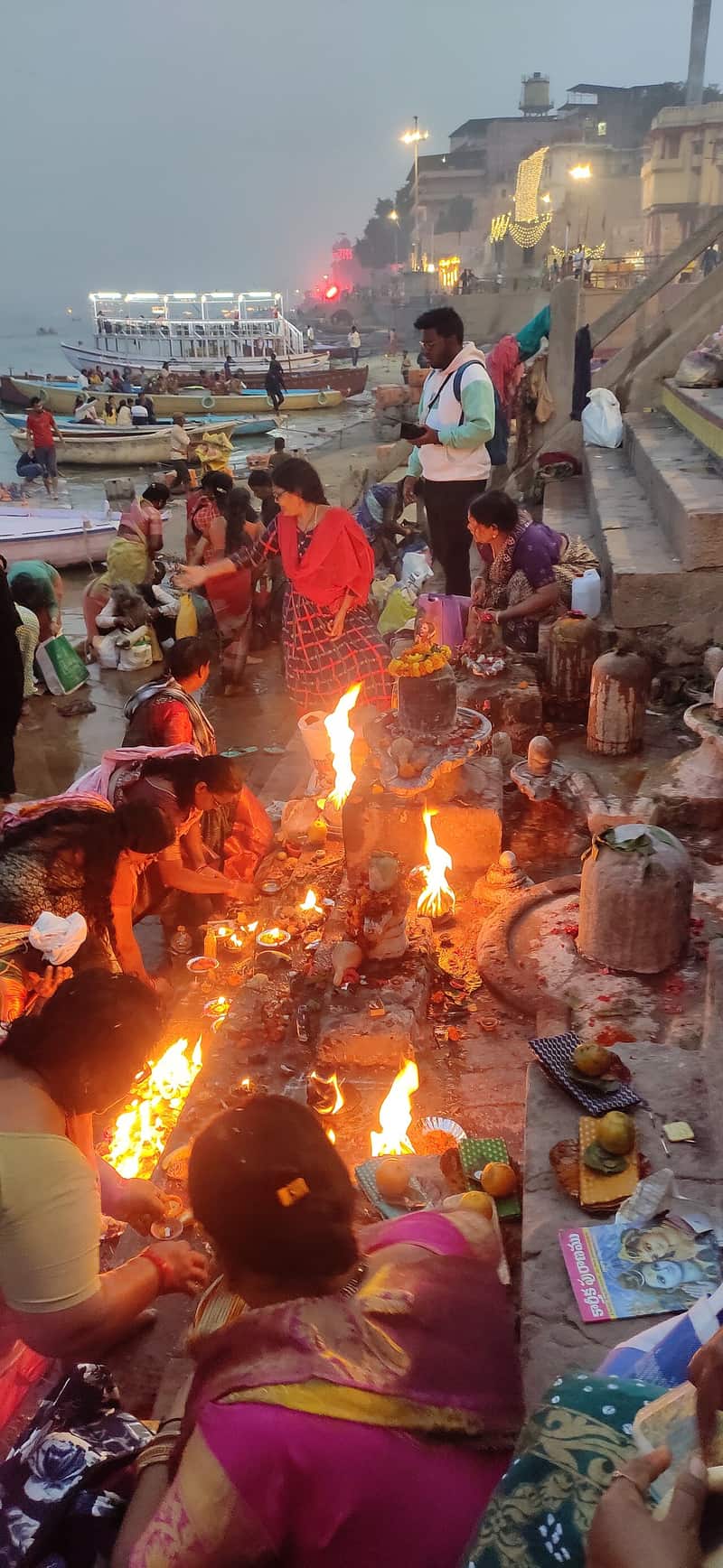
Everyday Life at the Ghat
Between the morning bath and the evening aarti, Prahlad Ghat lives the working life of the northern riverfront. The washermen arrive first, their bundles of cotton saris and white shirts balanced on their heads, and set to work at the sloping washing stones at the waterline, beating each cloth with wet slaps that echo across the water in a steady rhythm. Beside them the dhobi's helpers spread freshly washed sheets on the steps and the grass above, where they dry in bright rows of colour. Fishermen land their catches at the foot of the steps in the first hours of light, while women of the quarter kneel at the waterline scrubbing brass pots with sand and ash until they gleam. The boatmen come and go through the day, mending nets and ropes on the steps, repainting hulls with tar, and ferrying passengers, milk cans and market loads across to the villages of the far bank. Nothing here is performed for visitors; everything is simply done.
The ghat's customers are the neighbourhood itself. Women from the northern mohallas come down the lanes with their brass pots for Ganga water and their washing; children race down the steps to splash in the shallows, chased by the warnings of their mothers; vendors set up their baskets of guava, sugarcane and marigolds at the top of the landing. Buffaloes are driven down to drink and wallow in the river, and the cows of the locality amble across the steps at their own pace, certain of their right of way. When the press of work eases, the boatmen gather at the tea stall at the head of the ghat, where the news and the fares of the morning are exchanged at leisure. In the heat of noon the ghat grows sleepy; the bathers thin out, the washermen nap in the shade of their hanging sheets, and the only sound is the lapping of the water against the stones and the far-off calls of the boatmen.
What is striking about this daily life is its continuity. The same activities — washing, ferrying, bathing, selling, the cattle at the waterline — are described in the accounts of travellers who visited this riverfront centuries ago, and the same unhurried economy has sustained the northern ghats through every change of empire and age. There are no ticket windows and no visiting hours at Prahlad Ghat; it is a place that works, and the visitor is simply a passer-by in the middle of a life that does not pause for the camera. The evening brings the day full circle: bathers return for a second dip, families gather at the waterline to talk, and the cooking fires of the quarter send their smoke upward against the sunset. For that very reason this is one of the most honest windows in Varanasi into how a riverfront city has lived with its river — not in festival dress, but in the everyday clothes of morning washing, midday naps and evening cooking fires on the bank.
The Ganga at Prahlad Ghat — Water, Light and Horizon
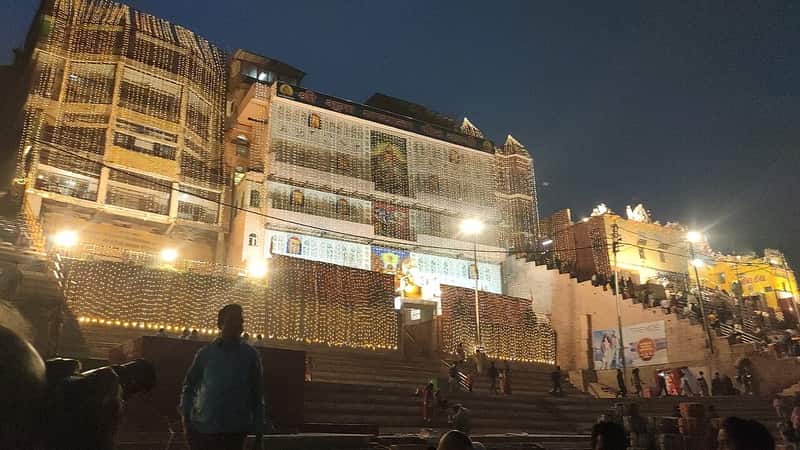
The river itself is the great presence at Prahlad Ghat, and in the northern stretch of Varanasi the Ganga is at its widest and most serene. Here, downstream of the crowded ceremonial centre, the water spreads across a broad expanse, and the far bank appears as a low green line of trees and village roofs, distant enough that the river feels like a small sea. The current is gentler than at the southern ghats, and the water reflects the sky in long unbroken sheets of light. On still mornings the surface is so calm that the boats seem to float on a mirror, their oars leaving silver trails; in the afternoon breeze the whole river is a field of dancing whitecaps, and the ghat's steps catch the sound of waves that are deep and living.
The light at this ghat is a daily performance. At sunrise the sun rises from beyond the far bank, and the river turns from grey to rose to gold in the space of minutes, while the bathers stand waist-deep with their palms joined in the direction of the light. At sunset the spectacle moves to the landward side: the sky above the rooftops of the mohallas burns orange and violet, and the water carries the reflection like a second sky. In the monsoon the river rises until the lower steps disappear and the boats are moored almost at the level of the lane; in the dry months the water retreats, leaving broad sandbanks where the children play and the boatmen beach their craft for repair. The Ganga here is not scenery but a living presence that changes the ghat with every season.
The river also carries the ghat's quiet traffic of meaning. Boats returning from the great ghats of the centre pass this way, their passengers still humming the evening aarti; funeral boats row past with marigold wreaths and diyas floating from their sterns; every day small offerings — a leaf cup of flowers, a burning lamp on a raft of leaves — drift down from the steps of Prahlad, joining the long procession of devotion that has moved on this water since before memory. In the dry season, when the water falls low, the river gives back its archaeology: old steps, drowned wells and fragments of temples emerge from the receding bank, reminders that the waterline has moved here many times over the centuries. Standing on these steps, watching the river widen and flow north toward its confluence with the Varuna, a visitor understands why the ghats of this city are turned so completely to the water: in Kashi the river is the road of the gods, the mirror of the sky, and the daily companion of every soul that lives on its bank.
The Lanes Behind the Ghat
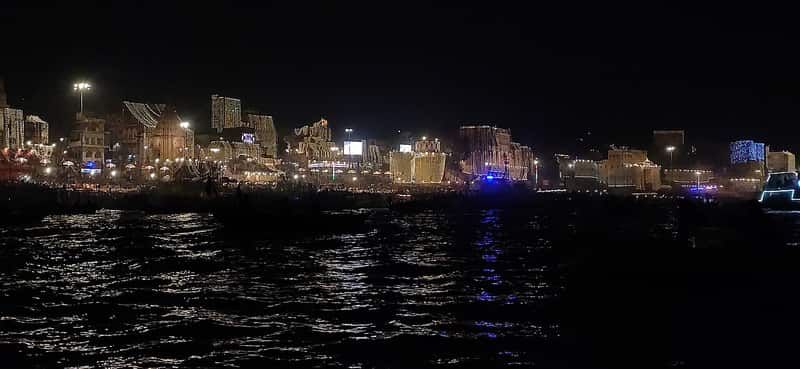
Behind Prahlad Ghat rises the dense, living maze of the northern mohallas, one of the oldest quarters of Varanasi. The lanes are narrow — so narrow in places that the eaves of the houses almost touch overhead — and cool, shaded from the midday sun by the close walls of old brick and plaster. The houses are tall and deep, with carved wooden doors, ornate balconies and small courtyards hidden from the street, home to families who trace their presence in the quarter back many generations. Every lane opens eventually onto another lane, and each one holds its own geography of small temples, water taps, tea stalls and gossip corners. To wander here is to step out of the guidebooks and into a living city that has arranged itself around the riverfront for centuries.
The quarter's daily commerce is small-scale and intimate. At the lane ends nearest the ghat, the sweet shops of the north set out their trays of jalebi and laddu beside the vegetable stalls and the fish sellers who come up from the river market; a paan wallah sits at the corner with his betel leaves and spice box; the chai shops brew in large kettles from early morning. The neighbourhood is proud and self-sufficient, its bakers, carpenters, priests and washermen all living within a few minutes' walk of the water they depend on. There is a particular kind of Varanasi courtesy in these lanes — the greeting of neighbours, the readiness to guide a stranger to the ghat, the patient bargaining over a basket of vegetables — that gives the whole quarter the feel of a large, close-knit family.
The lanes also guard the quarter's memories. Small shrines stand at crossroads, each with its own story; an old well is pointed out as the one the mohalla used before piped water; a carved lintel marks a house where a poet is said to have lived. The legend of Prahlad is part of this local memory, told and retold in the chai shops and at the evening gatherings, and the children of the quarter grow up knowing that their ghat carries the name of the boy who defeated a tyrant with nothing but faith. For the traveller, the lanes behind the ghat complete the picture: the riverfront is not a separate world of stone and water, but the front veranda of a neighbourhood whose whole life — births, marriages, festivals, arguments and reconciliations — has been lived out in these shadows for centuries.
Raj Ghat and the Chain of Northern Ghats
Prahlad Ghat belongs to a family of small ghats that stretches north along the riverfront from the vicinity of Raj Ghat toward the confluence of the Ganga with the Varuna. Its closest neighbours are the landings of Naya Ghat and Khirkia Ghat on one side and the more celebrated Raj Ghat on the other, and the whole chain — Adi Keshav, Prayag, Teliyanala, Naya, Prahlad, Raj, Khirkia and the rest — is strung together by the river and by the lanes that run behind them. The ghats here are joined not only by the water but by the families who move between them: washermen who work at several landings, boatmen whose boats moor where the evening finds them, bathers who choose their step according to the season and the light. These are not ghats of palaces and royal pavilions; they are the working landings of the northern city, each with its own character, its own shrines and its own circle of families, and together they form one of the least visited but most authentic stretches of the entire riverfront.
Raj Ghat, the ghat to which Prahlad is most often compared, carries the weight of Kashi's royal history. Its name recalls the rajas and maharajas of the region, and legend links it with the last rites of the great king Jaichand, who is said to have been cremated here in the twelfth century after the disaster of the war with the Ghurid forces. The ghat has known better days — once a place of processions and royal barges, it now shares the quiet character of its smaller neighbours, its steps worn and its waterline busy with the modest traffic of fishermen and bathers. Walking from Raj Ghat to Prahlad Ghat takes only a few minutes along the water, and the short stroll carries the visitor across centuries, from the age of kings to the age of the bhakta.
Beyond Raj Ghat the chain continues north through the smallest and most overlooked ghats of the city, gradually losing even the character of urban landings as the fields and village settlements of the northern bank take over. Here the riverfront belongs to the farmers, the fishermen and the boatmen, and the ghats are often no more than a few rough steps and a tree. For the traveller with time and curiosity, the walk from the heart of the city to this far northern stretch is one of the most rewarding in Varanasi: the grandeur fades gradually, the crowds thin, the Ganga widens, and the city that seems eternal eventually gives way to open sky and water. Prahlad Ghat stands at the threshold of this gradual change, a small, unassuming gate between the famous riverfront and the quiet, authentic north.
Festivals at Prahlad Ghat
The festivals of the northern ghats are smaller, more local and in some ways more intimate than the great spectacles of the central riverfront, and Prahlad Ghat has its own share of celebration through the year. The most significant is the festival that honours the ghat's own patron legend: Holi, and above all the Holika Dahan that precedes it. On the night of the burning of Holika, the neighbourhood of Prahlad Ghat gathers to light its bonfire in the courtyard of the quarter, remembering the ogress who was consumed by the fire she meant for the boy devotee. Children enact the story, the flames rise, and the ghat itself is briefly transformed by the glow. For one night the quiet landing becomes the centre of its own world, and the tale of the prince who survived the fire is told against the sound of the river itself.
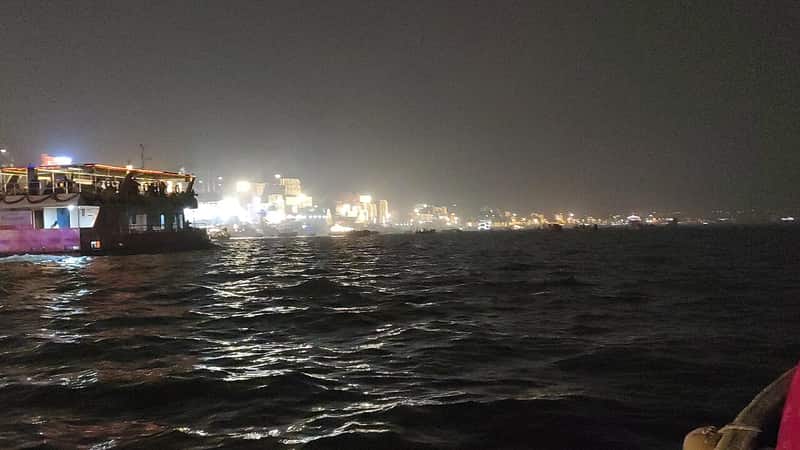
The winter season brings the river festivals, and the northern ghats observe them with devotion if not with grandeur. On Kartik Purnima, when the whole riverfront is said to be awaiting the descent of the gods, the bathers of Prahlad Ghat perform their ritual bath at the appointed hour and float small lamps on the water in the evening. Dev Deepawali, the festival of lights celebrated fifteen days after Diwali, finds the families of the northern mohallas lighting rows of diyas along the steps and the waterline, so that the reflection of a thousand flames shimmers across the river; while the great ghats of the centre draw the crowds with their grand ceremony, here the lights are lit by hand, family by family, in a quieter festival of the water. The effect is gentler but no less beautiful.
The year's other festivals pass through the ghat in the everyday manner of the quarter. On Makar Sankranti the children of the neighbourhood fly kites from the roofs above the river; on Basant Panchami the shrine is dressed in yellow; on Nag Panchami the small temples of the lanes receive offerings of milk and flowers. Throughout the year, on the auspicious days of the Hindu calendar, the bathers of Prahlad Ghat take their ritual dips, and each festival ends with the same quiet act: the floating of a diya on the water, the joining of palms toward the river, and the hope that the devotion of the ghat's patron prince may bless the lives of those who bathe in the water that bears his name. Whatever the festival, the pattern is the same — the neighbourhood comes down to the water, performs its offerings, and returns to the lanes carrying the river's blessing back into the ordinary day.
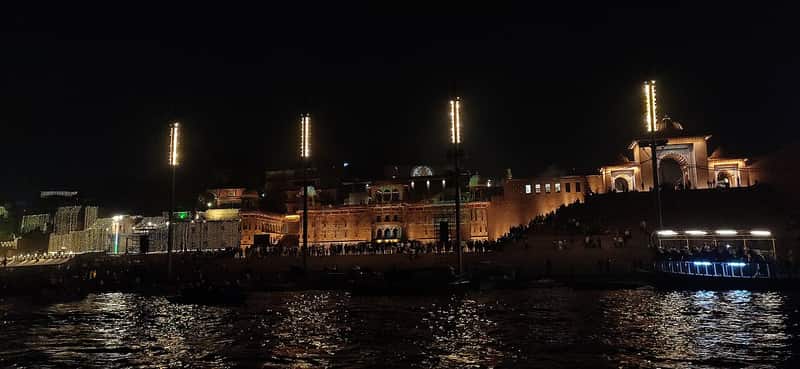
A Monument to Bhakti
If the great ghats of Varanasi are monuments to ritual, Prahlad Ghat is a monument to bhakti — the path of love and surrender that the devotee prince of its name embodies so completely. The bhakti tradition, which holds that God is reached not through learning or power but through devotion, trust and the constant remembrance of the divine name, finds one of its oldest exemplars in Prahlad, and one of its most natural settings on this quiet northern landing. Here there is no priestly show, no scripture debate, no bargaining over blessings; the faith of the ghat is expressed in the same acts the prince performed in the Puranas: the chant of the name, the bath in the sacred water, the simple offering, the unshaken trust that the Lord protects the devotee who surrenders to him.
The ghat's devotion is carried mostly by its old men and women, who come down in the morning with their japa malas and their unhurried hours. They chant the name of Narayana as the water laps at the steps, they tell the story of Prahlad to whoever will listen, and they teach the children of the quarter that faith is not a matter of grandeur but of constancy. In this the ghat echoes the whole spiritual history of Kashi, the city of the bhakti movement where Ramananda taught, where Kabir wove his songs at the loom, and where Tulsi Das sang the story of Rama to the same kind of humble audiences that gather on these steps. Prahlad Ghat is a small leaf of that great tree — a place where the bhakti of Kashi is practised rather than exhibited.
The visitor who comes to Prahlad Ghat looking for the spectacle of the famous riverfront will find none, but those who come looking for the soul of the city's faith will find it here in abundance. The devotion of the ghat is quiet, daily and unbroken: the same prayers at the same hour, the same small offerings, the same old people returning to the same steps, season after season, year after year. That steadfastness is precisely the quality that the Puranas ascribe to Prahlad — the faith that does not waver whether the world praises or persecutes it. Standing on these simple steps, watching the river and the bathers, one begins to understand what the name of this ghat has always proclaimed: that the power of devotion is older than kingdoms, gentler than ritual, and stronger than the tyrants of every age.
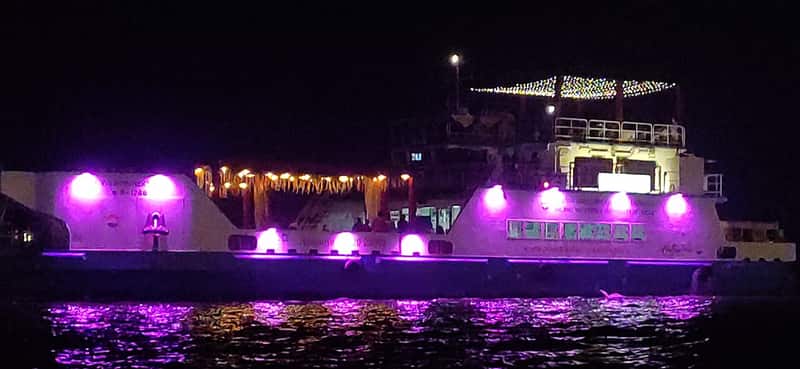
Visiting with Respect — Etiquette at the Ghat
Prahlad Ghat is a working place of devotion, not a stage built for visitors, and the courtesy it asks of those who come is simple but real. Dress modestly, covering the shoulders and knees, for the ghat is used for bathing and worship by the faithful of the neighbourhood; remove your shoes before approaching the small shrine, and keep your distance from the priests and the sacred objects unless you have been invited nearer. Do not touch the offerings, the lamps or the idols, and do not enter the water unless you intend to bathe as the bathers do, with respect for the river. The ghat's regulars will watch a newcomer with a quiet, patient attention, and they will remember how you behaved here long after you have forgotten the visit.
Photography calls for particular care. On the great ghats of the centre, crowds and ceremony make cameras almost invisible; on a small northern landing, a camera can be an intrusion into private prayer and daily work. It is best to ask before photographing a bather, a washerman or a boatman — most will agree with a smile — and to refrain altogether during moments of ritual, when the palms are joined and the prayers are being recited. The same respect extends to the river itself: do not throw litter, plastic or food into the Ganga, do not leave your rubbish on the steps, and remember that the water you are looking at is the sacred Ganga, the object of the deepest veneration of the people around you. A plastic bottle floating past the shrine would be an insult no guidebook can repair.
Finally, understand the ghat's human landscape. The bathers may be at prayer, the washermen at work, the boatmen negotiating their fare; none of them is a spectacle, and all of them are at home. If you hire a boat, agree on the price before you board and pay what you have agreed. If you are offered a blessing, a tilak or a flower by the shrine, you are free to accept or decline with politeness, and a small donation to the shrine is customary and welcome. With these simple courtesies — modesty, patience, asking before photographing, and respect for the water and the worship — the visitor will find in Prahlad Ghat not an awkward place to be seen in but a genuine welcome, the same welcome that has met pilgrims at this landing for as many centuries as the name has been spoken.
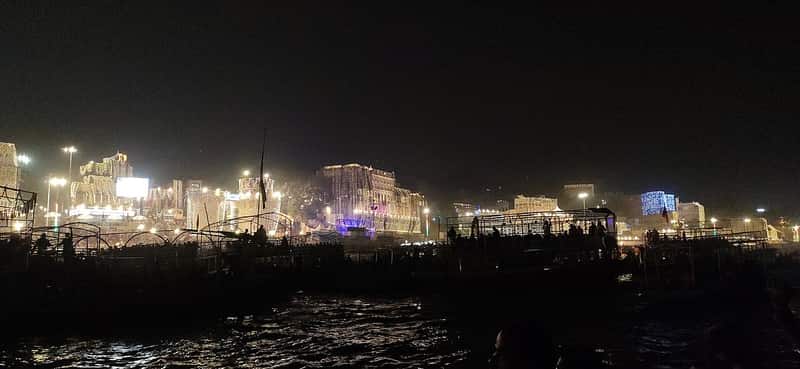
Practical Guide — Reaching Prahlad Ghat
Prahlad Ghat lies on the northern riverfront of Varanasi, about a kilometre north of Panchganga Ghat and within easy walking distance of Raj Ghat, and it is best reached on foot along the river. From the centre, walk north past the ghats of the Panchganga area and follow the waterline until the grand buildings give way to the working landings; the lanes that come down to the river in this stretch are marked by small shrines and tea stalls, and the way is safe and direct in daylight. The nearest main road runs parallel to the river a few hundred metres inland, from where narrow alleys lead down to the ghat, and cycle rickshaws and e-rickshaws from the cantonment side will bring you close before the final walk. There is no entrance fee and no gate; the ghat is simply a place of public worship and daily life.
The best time to visit is the early morning, between sunrise and mid-morning, when the bathers are at the water and the light is soft and golden; this is also the hour of the ghat's most vivid daily life. Winter months, from November to February, are the most pleasant, with cool mornings and clear air, while the monsoon months from July to September bring high water and dramatic skies. If you come in the evening, the sunset over the rooftops is beautiful and the ghat grows quiet; the great aarti of the central ghats is not performed here, so plan the evening around the river's own spectacle. Allow an hour or two for the visit itself, more if you wish to sit and watch, and carry water, a hat, and modest clothing that respects the sacred character of the place.
A visit to Prahlad Ghat combines naturally with the neighbouring landings. Walk south to Raj Ghat and on to Ganga Mahal and Panchganga, the ghats of the old city centre with their temples and stories; walk north past Khirkia and Naya toward the confluence of the Ganga and the Varuna, where the riverfront dissolves into fields and the bathers thin to a handful. Boat rides can be hired at the ghat itself or at the larger landings nearby; a slow row north from Prahlad in the early morning is one of the quietest journeys on the entire river, past ghats that most visitors never see. Whether you come for the story of the devotee prince, for the honest working life of the northern bank, or simply for an hour of calm at the water's edge, Prahlad Ghat asks only one thing of you — that you come as a pilgrim, not as a spectator.
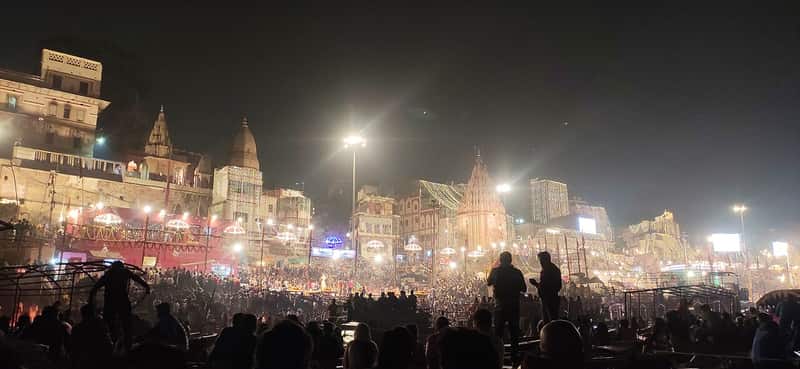
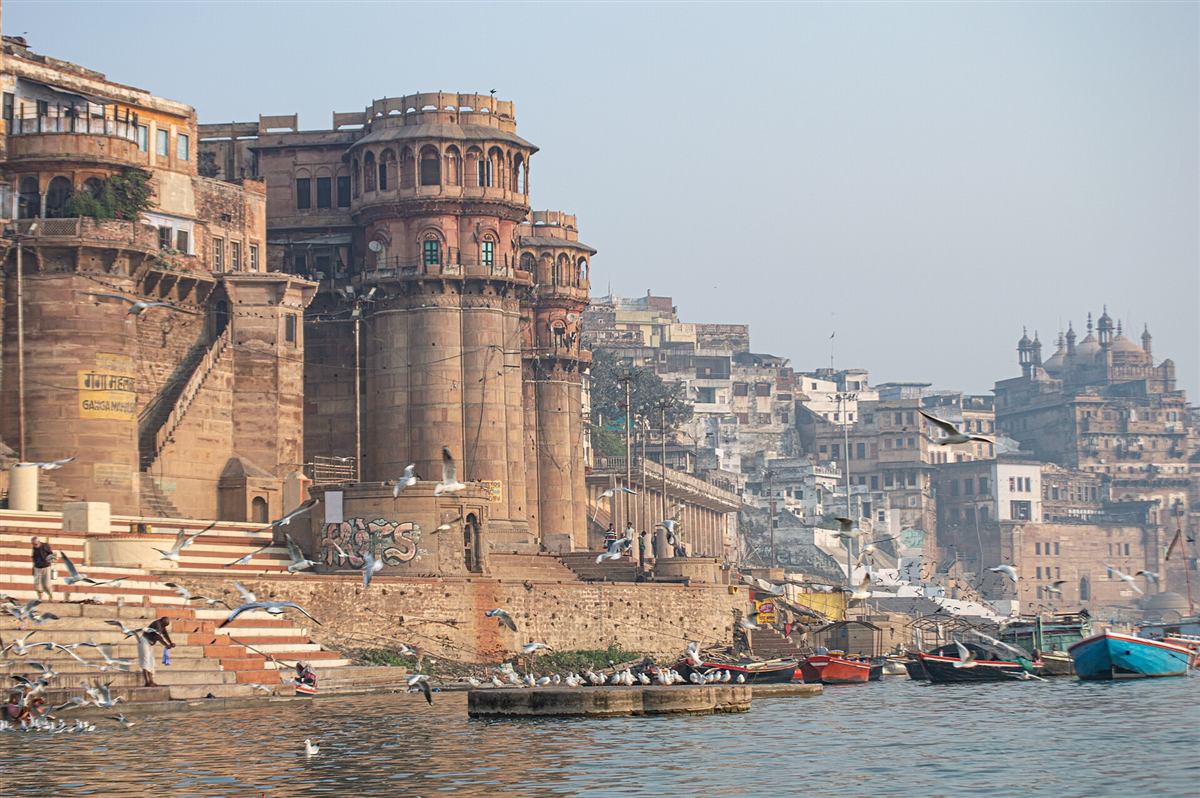
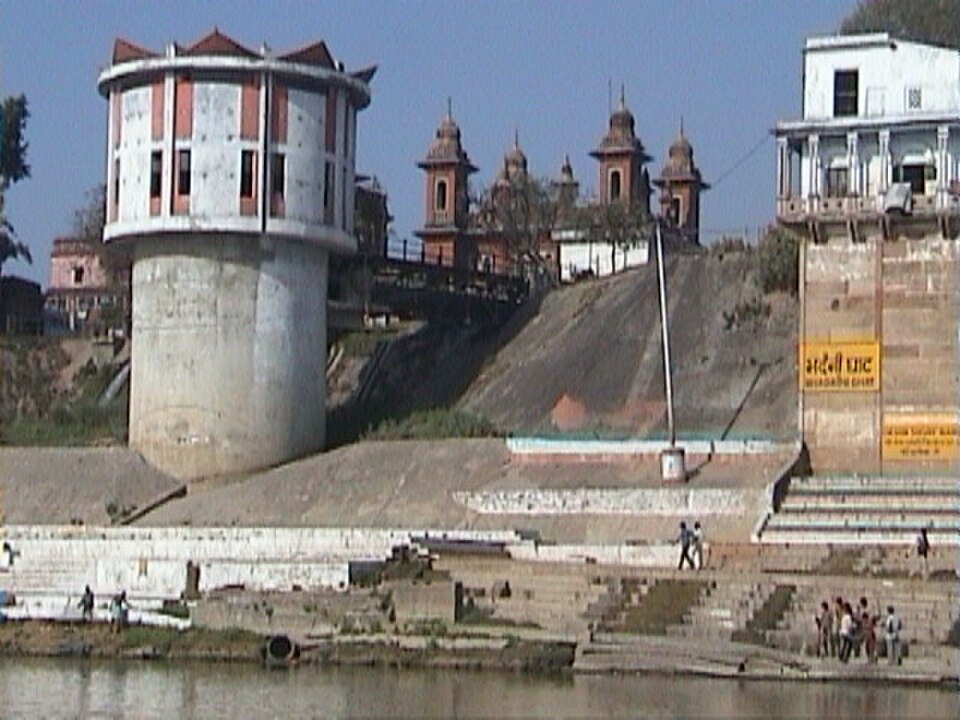
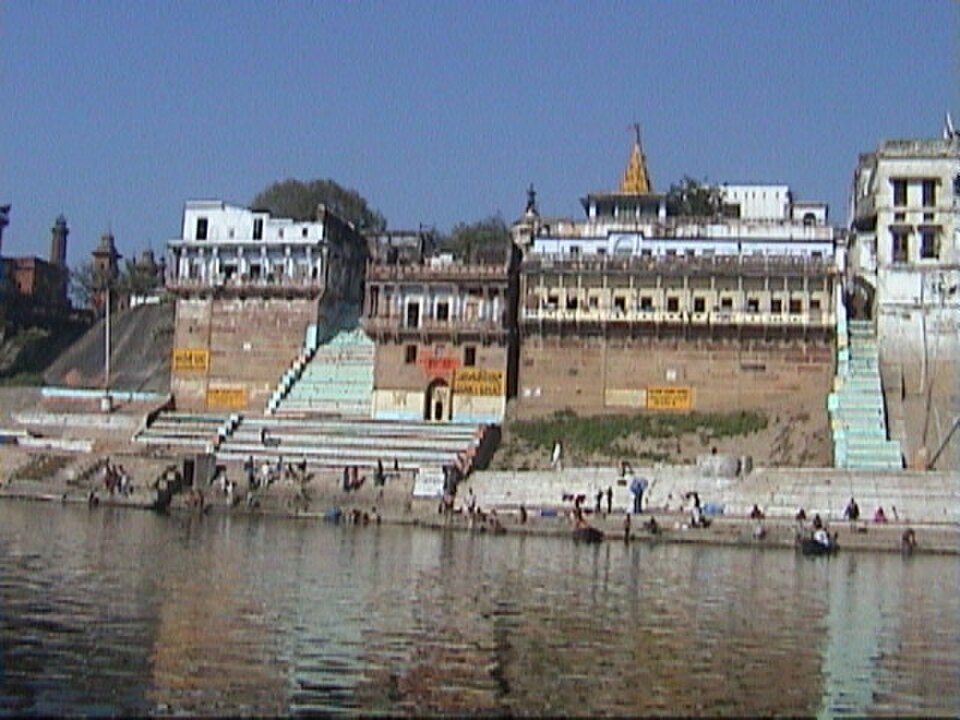
Prahlad Ghat — Gallery (12 Photos)
Image Credits
prahlad-01.jpg · prahlad-02.jpg · prahlad-03.jpg · prahlad-04.jpg · prahlad-05.jpg · prahlad-06.jpg · prahlad-07.jpg · prahlad-08.jpg · prahlad-09.jpg · prahlad-10.jpg · prahlad-11.jpg · prahlad-12.jpg — Wikimedia Commons, under free licenses.
Continue exploring
Similar Ghats Nearby
Book This Ghat — Get Notified
Download the app now and book a boat ride to Prahlad Ghat