

Prachin Hanuman Ghat
Neighbourhood GhatPrachin Hanuman Ghat is a famous ghat named after Lord Hanuman.


Type
Neighbourhood Ghat
Boat Fare
1x base fare
Best Time
6-9 AM
History
This ghat is associated with the Aadi Hanuman temple, one of the most ancient centres of Hanuman worship in Kashi.
Highlights
- Memory of Aadi Hanuman
- Site of faith and strength
- Peaceful bathing atmosphere
Festivals & Events
How pricing works in the NaviX app
No haggling at the ghat — everything is fixed in the app first
- 1
Fixed price before you board
The fare is shown in the app upfront — no bargaining at the ghat
- 2
Sharing or private — your choice
Share with fellow travelers or take the whole boat for your group
- 3
Pay only after the ride
UPI, card or cash — with an instant receipt
Daily at dawn
The priest opens the shrine at dawn; the conch carries across the water
Complete Guide
Prachin Hanuman Ghat — The Complete Guide
History, mythology, rites and practical details — everything in depth.
On this page
- 1.An Ancient Ghat on the Southern Riverfront
- 2.The Ancient Hanuman Shrine and Its Lore
- 3.Daily Worship and Tuesday Crowds
- 4.Morning Bathing at the Ghat
- 5.Bathers, Boatmen and Everyday River Life
- 6.The River and the View from the Steps
- 7.The Lanes and Mohalla Behind the Ghat
- 8.Hanuman Ghat and Dandi Ghat Nearby
- 9.Hanuman Jayanti and Local Gatherings
- 10.Etiquette: How to Visit with Respect
- 11.Practical Guide: Reaching and Visiting the Ghat
📅 Updated: 21 Aug 2026 · Author: NaviX Field Team (field research 2024-26) · 11 sections · 11 photos
An Ancient Ghat on the Southern Riverfront
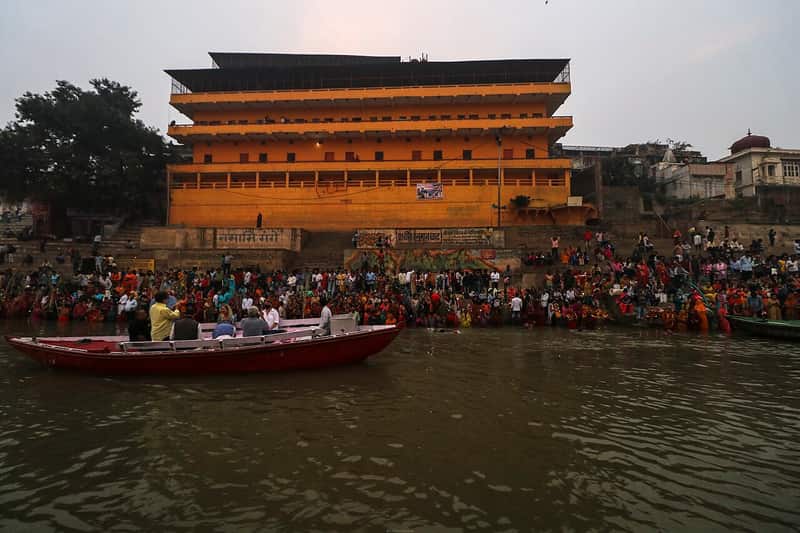
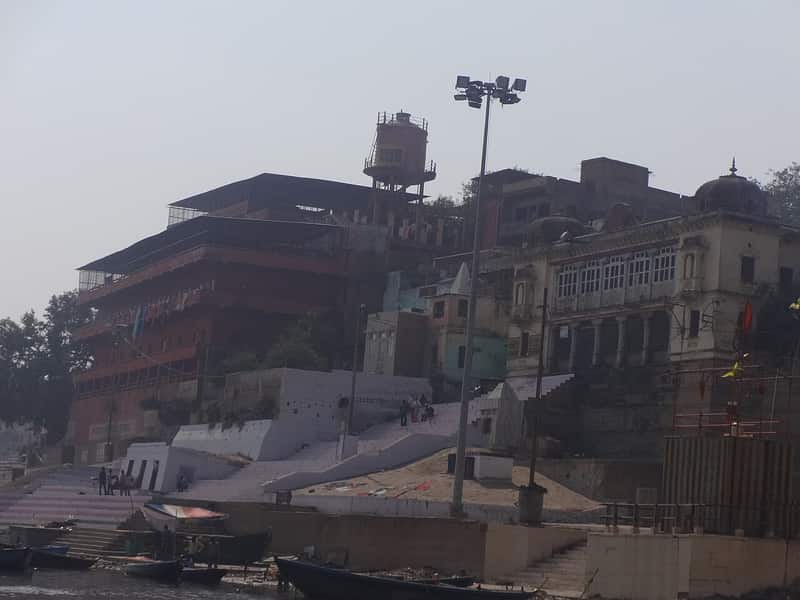
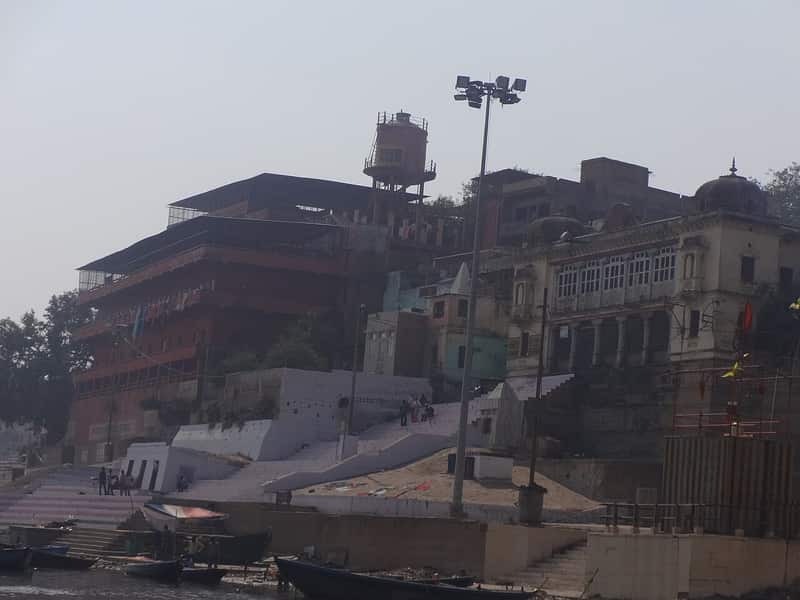
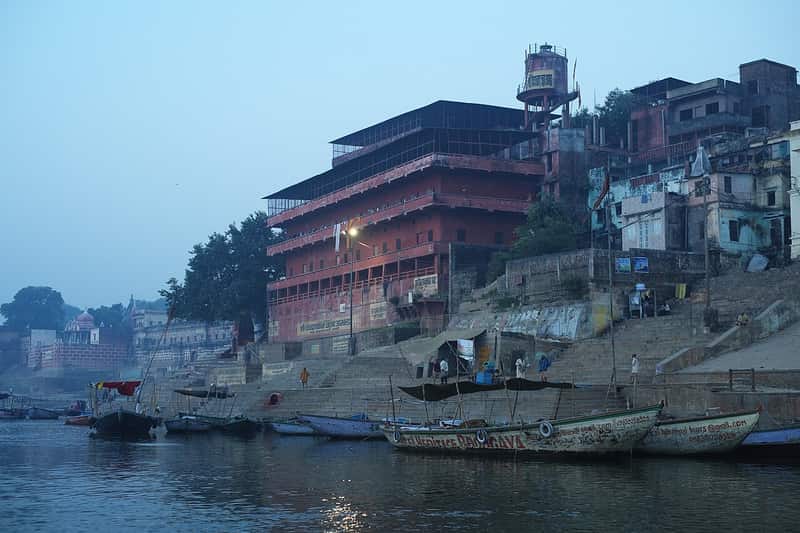
Prachin Hanuman Ghat is a small, unassuming landing on the southern riverfront of Varanasi, a place that feels far older than its modest dimensions suggest. Visitors who drift down the Ganga by boat often pass it without a second glance, yet those who step ashore discover a pocket of the city where everyday devotion, river labour and quiet routine have mingled for generations. The name itself points to antiquity, for prachin means ancient, and the ghat carries the weight of that word in its weathered stone, its unhurried pace, and the deep-rooted faith of the people who come here. Unlike the grand stairways of Dashashwamedh or the crowded commercial bustle of Assi, this ghat makes no claim to fame; it simply endures, as Kashi itself endures, holding its place in the long chain of bathing steps that stretches along the river between Assi and the old city.
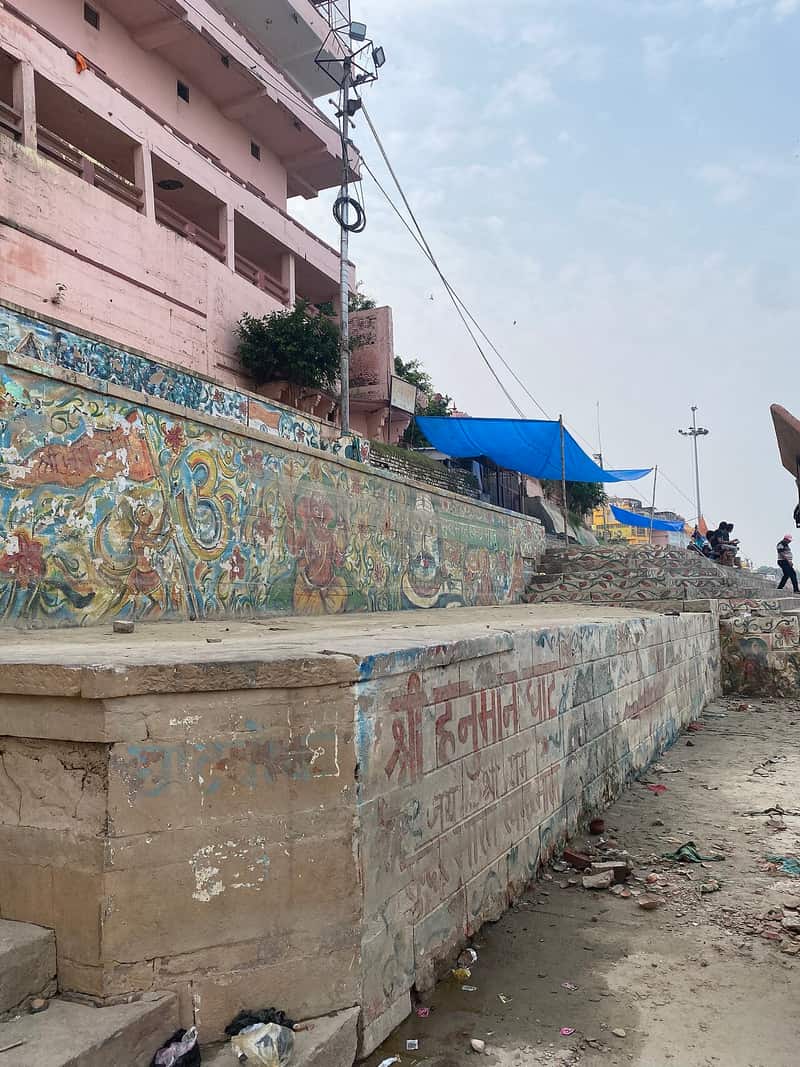
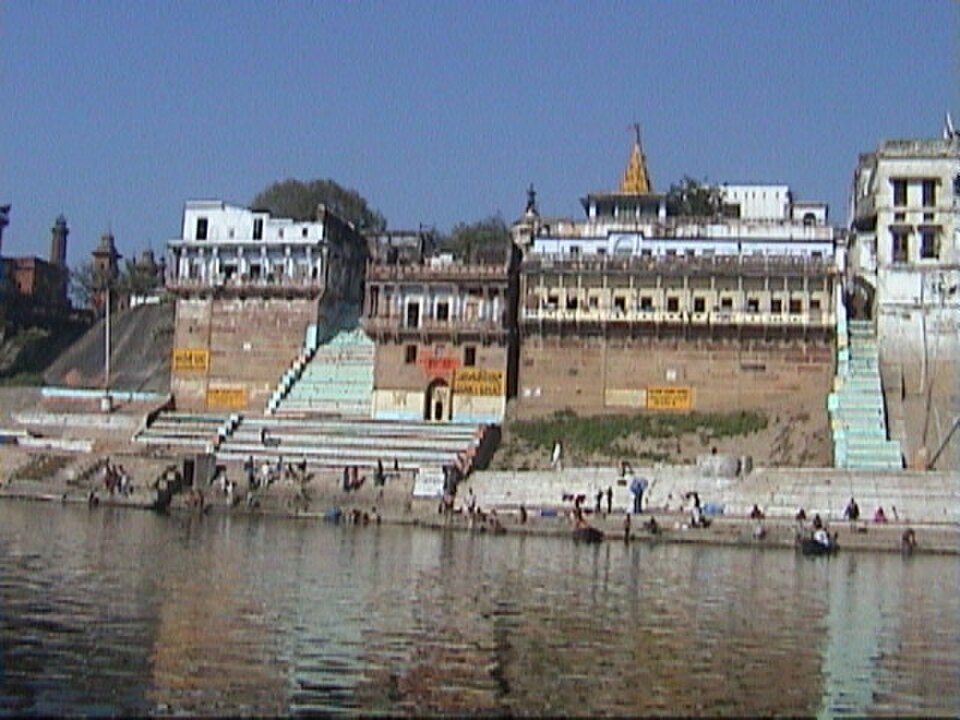
The ghat rises from the water in a short flight of plain stone steps, unadorned and practical, built for use rather than spectacle. At the top, a modest shrine devoted to Hanuman draws the faithful, its small sanctum tucked among the houses and lanes that crowd the bank. This is the heart of the ghat, the reason pilgrims seek it out, and the source of its quiet, ancient character. Around the shrine, daily life unfolds with a rhythm that has barely changed in centuries: women with brass pots climb the steps, boatmen repair their craft on the sand, and the sound of temple bells drifts across the water. All of this happens without ceremony or fanfare, for Prachin Hanuman Ghat belongs to the ordinary Kashi, the Kashi of small households, small prayers and small boats, where holiness is not displayed but simply lived.
Geographically, the ghat sits within the long southern stretch of the riverfront, close to Hanuman Ghat and Dandi Ghat, and it forms part of the great unbroken chain of bathing places that makes Varanasi unique among Indian cities. For the pilgrim walking from Assi towards the old city, it offers a moment of stillness before the crowds thicken further north. For the curious traveller, it is a window into old-Kashi piety, unmediated by ticket counters, guides or gift shops. To stand on these steps at dawn, with the mist rising off the Ganga and the first aarti lamps glowing somewhere upstream, is to feel the city exactly as generations before have felt it: simple, holy and utterly alive. It is not a place to be hurried through, but a place to sit, to watch, and to let the rhythm of the river set the pace of the day.
The Ancient Hanuman Shrine and Its Lore
At the crown of the steps stands the shrine that gives the ghat its identity, a Hanuman temple so old that no one remembers precisely when it was raised. Local priests tell visitors that the murti within has been worshipped here for centuries, long before the riverfront was paved with the stone stairs of later eras. The sanctum is small, dark and intimate, lit by oil lamps and the soft red of vermilion smeared across the deity. Unlike the grand temples of the city, this one makes no architectural claims; its power lies in age and in the unbroken chain of worshippers who have bowed before the same stone for generation after generation. For the old families of the neighbourhood, the shrine is simply part of the landscape of faith, as natural as the river itself, and they treat it with the casual affection of people who have known it all their lives.
The lore attached to the shrine is modest but firm. Older residents speak of a time when the Ganga flowed much closer to the temple and the steps led directly into deep water, when boats would pull in at this very point so that travellers could offer their first prayers to Hanuman before entering the city. Others recall that the idol was found in the river during a dredging season and brought ashore here, where it refused to be moved any further. Like many such stories in Kashi, the details vary with the teller, but the essential truth stays the same: this is a holy spot of great antiquity, and the monkey god has guarded this stretch of the bank since before memory. Whether the stories are history or imagination matters little to the faithful; what matters is that the shrine stands where it has always stood, receiving prayers in the same low, sincere murmur that has risen from these steps for ages.
The shrine's simplicity is itself a form of eloquence. There are no carved galleries, no painted epics, no crowds of tourists with cameras; there is only a small courtyard, a bell, and the ever-present fragrance of incense and marigold. The priest tends the flame, the lamp is lit at dawn and dusk, and the deity receives offerings of laddoos, tulsi leaves and the red cloth so favoured by devotees of Hanuman. In this quiet ritual, the ancient world of Kashi seems closer than in any museum or monument, because here the past is not exhibited but practised, renewed every morning by hands that follow habits older than the stones themselves. To watch a grandmother place her forehead against the doorframe of the sanctum, or a child learning to ring the bell, is to understand why this small shrine outlives empires: holiness, here, is a family matter.
Daily Worship and Tuesday Crowds
Worship at Prachin Hanuman Ghat follows a rhythm that begins before sunrise and continues until the last lamp is put out at night. The priest opens the shrine at dawn, performs the first aarti with the sound of the conch carrying across the water, and from that moment devotees come and go without pause. Most are neighbourhood people who stop by on their way to work or to the river, touching the threshold, offering a marigold or a handful of rice, and murmuring a prayer that takes no more than a minute. Yet the cumulative weight of these small acts is immense, and the shrine accumulates devotion the way the river accumulates silt, grain by grain, year by year. For the devout, no day is complete without the darshan of Hanuman, and the habit of stopping at the shrine has been handed down in families like a cherished inheritance.
On Tuesdays, the tempo changes completely. Hanuman's day draws crowds from across the southern part of the city, and the small courtyard fills to overflowing with worshippers carrying buckets of water, garlands, laddoos and the long red lengths of cloth draped around the deity. The air grows thick with the sound of the Hanuman Chalisa recited aloud, the ringing of bells and the singing of bhajans that build into a steady, joyful roar. Stalls appear at the edge of the ghat selling prasad, incense and images of the deity, and the lanes leading down to the water become rivers of colour. For a few hours the ghat, so quiet on ordinary mornings, becomes a living festival of faith that seems to belong to another, older time. Elderly devotees recall that the Tuesday crowds have looked exactly like this since their grandparents' childhood, a continuity that feels, to them, like the truest form of permanence.
Beyond Tuesday, the shrine observes the great festivals of Hanuman worship with particular warmth, and the ghat itself becomes an extension of the temple on those days. Saturday is also considered auspicious in many households, and the shrine sees a gentler but steady stream of visitors seeking strength and protection. Devotees speak of the deity here with a familiarity that is touching, calling him their protector, their elder brother, the guardian of the lane and the boat and the family. It is this deeply personal devotion, repeated day after day, that gives the ancient shrine its living soul — a soul that no guidebook can capture but any visitor with a quiet heart can feel. Those who come seeking nothing more than a moment of peace often leave with exactly that, and it is no wonder the ghat has held its devotees so long.
Morning Bathing at the Ghat
As the first light touches the water, the ghat wakes to its truest purpose. Men and women descend the worn steps with brass pots and cloth bags, settle into the shallows, and perform the ritual ablutions that have sanctified this stretch of river for untold centuries. The bathing is not a hurried act but a considered one, involving the pouring of water towards the sun, the repetition of mantras, and moments of complete stillness in the cold morning current. Elders who cannot wade far stay near the bank, letting a grandson splash water over their shoulders, while swimmers strike out into the deeper channel where the river runs swift and clean. The water at this southern stretch is relatively free of the crowds found further north, and bathers treasure the privacy, feeling the sacred river as something personal rather than a public spectacle.
Bathing here is as much a social ritual as a religious one. The water is a meeting ground where neighbours exchange news, where the barber from the lane meets the school teacher from the next mohalla, and where friendships are renewed with a splash and a greeting. Women in their bright saris form small groups, pouring water in perfect coordination while they talk of households and harvests, weddings and weather. For the elderly, the morning bath is the anchor of the day, and many are carried to the steps each dawn by their sons, for they believe, with complete conviction, that a dip in the Ganga washes away not only the tiredness of the body but the accumulated dust of the soul. Such faith cannot be argued with, only observed, and observers come away humbled by its simplicity. The ghat's shallows are gentle, and small children learn to swim here in the same patches of river where their great-grandfathers learned, an unbroken schooling in water and faith.
The bathing hour fades by mid-morning, but the steps remain wet with the memory of it, glinting under the climbing sun. Boatmen use the cleared space to launch their craft, washerwomen appear with bundles of clothes, and the ghat shifts smoothly from a place of prayer to a place of work. Yet something of the morning's sanctity lingers all day, and locals say the water itself remembers those who bathed in it, carrying their prayers downstream to the sea. For the visitor who comes later, the advice of every local is the same: return at dawn tomorrow, stand where the bathers stood, and let the river have its way with you, as it has with everyone who has ever trusted it. There is no ceremony more ancient in this city, and none more moving, than a hundred quiet people entering the Ganga together at first light, each alone with the river and yet each part of a single vast, ancient congregation.
Bathers, Boatmen and Everyday River Life
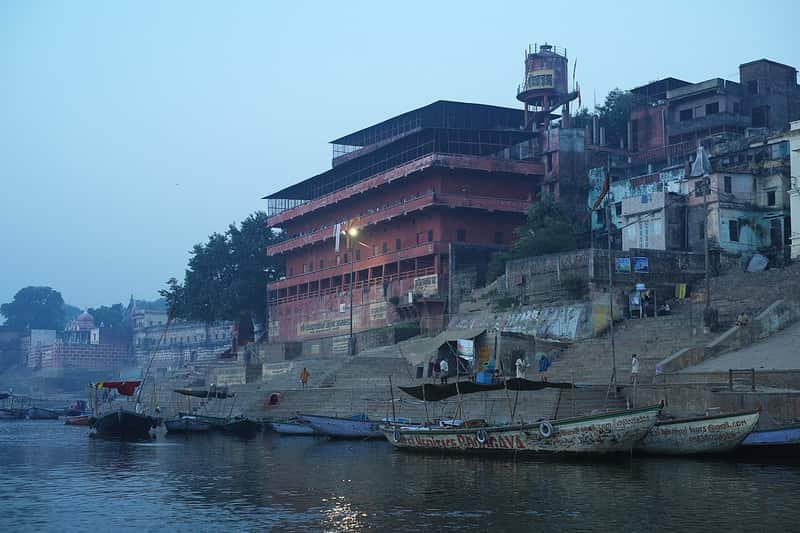
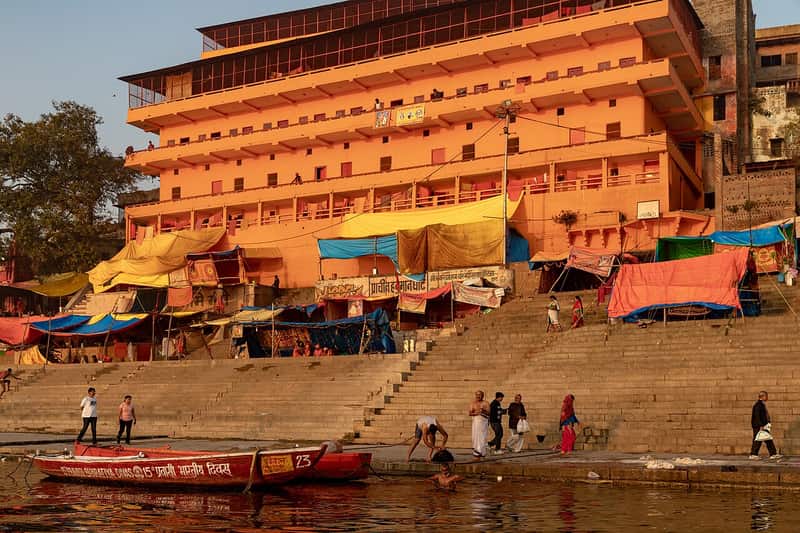
Between the dawn bathing and the evening lamps, Prachin Hanuman Ghat belongs to the working river. Boatmen lounge on their craft with ropes slack and oars resting, watching the water with the patient attention of men who read currents the way others read books. A repair job is always underway somewhere: a hull being caulked, a thwart replaced, a fresh coat of paint slapped over worn wood. The boats themselves are the ghat's living archive, each one named for a deity or a family member, each one carrying its small history of floods survived, storms ridden and passengers ferried across the wide grey river. Tea vendors arrive by mid-morning with their metal kettles, and the business of the day pauses briefly for the shared cup that oils every transaction on this riverfront. Crows and pigeons scavenge the steps, dogs sleep in the sun, and the ghat fills with the particular soundscape of a working bank: lapping water, hammering, laughter, and the endless creak of mooring ropes.
The human traffic of the ghat is endlessly varied. Women come to fill pots and wash utensils, beating them clean in the shallows with practiced, rhythmic strokes. Sadhus sit in the shade with their begging bowls, eyes half closed, unbothered by the world passing by. Children run errands, balancing bundles on their heads with the sure-footed grace that only river children possess, and students from the nearby lanes sit on the steps to study where the air is cooler and the distractions are, somehow, kinder. Every few minutes a transaction is concluded — a boat hired, a pot filled, a prayer said, a story told — and the ghat stitches these small moments into the fabric of an ordinary day. It is a busyness without urgency, the steady metabolism of a place that has always known exactly what it is for.
The locals, for their part, treat the visitor with the easy courtesy of people who see many travellers and are fond of few things more than telling their stories. A boatman will happily explain the currents, a shopkeeper the festivals, an old woman the history of the shrine, and each will do so without expecting payment, only the pleasure of an audience. What they share, almost unconsciously, is the deep knowledge that the ghat is not a monument but a home, not a spectacle but a life. To spend an afternoon here is to watch that life cycle through its rounds: the ferryman hauling in his rope, the schoolchildren heading home, the first lamps being lit in the shrine above, and the river itself, patient and immense, preparing for another night of the same. In this, the ghat teaches what no tour can: that the sacred and the everyday are not separate worlds here but the same world, seen from slightly different angles.
The River and the View from the Steps
The Ganga at Prachin Hanuman Ghat is wide, brown and unhurried, rolling past with the quiet authority of a river that has seen everything and is surprised by nothing. From the steps, the eye travels across the water to the flat, sandy far bank, where buffaloes graze and thin columns of smoke rise from scattered huts. Between here and there, the river moves in slow muscular bands, carrying boats of every size from single-oared dinghies to the broad, painted craft of the tourist trade. The view is not spectacular in the manner of the northern ghats, but it has a spaciousness, an honesty, that many visitors find more moving than any postcard panorama. The water here is quieter than further north, and on clear mornings it holds the sky like a great grey mirror, broken only by the passing of boats and the occasional leap of a fish.
Light is the ghat's constant companion and its most generous artist. At dawn the river turns copper and rose as the sun climbs over the far bank, and the ghat's ochre walls catch fire in the low rays. By noon the water is a blinding sheet of silver, and by evening it deepens through gold to violet as the western sky burns behind the city's rooftops. The best hour, locals agree, is the last one before sunset, when the riverfront settles into a hush and the shrine bells carry clearly across the water. It is a view that rewards patience, changing with every season — monsoon's swollen brown flood, winter's pale clarity, summer's glittering glare — and each season gives the ghat a different mood, a different face. Photographers who wait for the perfect light often find themselves abandoning their cameras and simply watching, for the river does not hold still long enough for any lens to capture it truly.
The river is also the ghat's clock and calendar. Its level dictates how many steps are visible, whether boats can land or must anchor mid-stream, whether the washerwomen will have their platforms or must wade deeper. In the monsoon, the water climbs past the lower steps and laps at the shrine's foundations, a reminder that the Ganga is not a decoration but a living force that shapes every aspect of this bank's existence. When the flood recedes, it leaves behind fresh sand, fresh stories, and the gratitude of a people who have learned to live with the river's moods rather than against them. To sit on these steps and watch the water pass is to understand why Kashi's identity is inseparable from the Ganga — the city was not built beside the river but upon it, stone by stone, faith by faith. The view from Prachin Hanuman Ghat is finally a view of that relationship, and it is worth coming simply to see it.

The Lanes and Mohalla Behind the Ghat
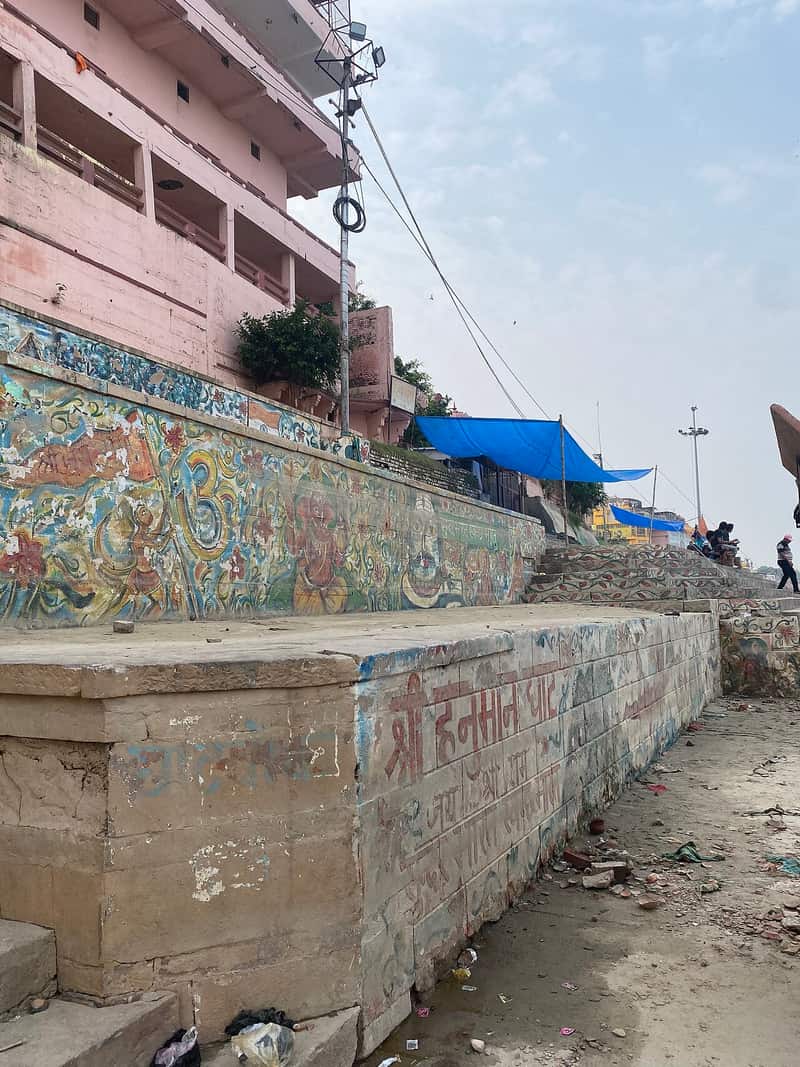
Behind the ghat, the bank rises steeply into a dense warren of lanes, courtyards and old houses that form the ghat's true neighbourhood. The alleys are narrow enough in places that neighbours can pass a cup of tea from one rooftop to another, and the walls are layered with generations of paint, posters, drying clothes and small shrines set into their niches. This is a residential Kashi of an older order, where families have lived for centuries in houses that grow organically upward, each floor added when the family expanded, each door opening onto a courtyard shared with cousins and cows and bicycles. The soundscape is intimate: cooking from a hundred kitchens, a harmonium being tuned, the raised voices of a family debate, the call of a vendor at the lane's end. To walk these lanes is to step out of the traveller's Varanasi and into the city's private life, where the ghat is simply the front yard.
The mohalla is organised around the shrine and the water, its rhythms shaped by the river's calendar. In the morning the lanes fill with people going down to bathe; in the afternoon they empty as the heat climbs and the whole neighbourhood naps; in the evening they fill again with the sound of children playing and families gathering on doorsteps. The temple's festival days bring the entire mohalla into the open, and the lanes are strung with lights and the smell of frying food. Old residents speak of the neighbourhood's lineage with quiet pride, tracing their families' presence here through generations of weddings, births, deaths and every festival in between. To them, the ghat is not an attraction; it is the address of their lives. For the visitor, the reward of the lanes is the discovery that this stretch of Kashi is lived, not performed, and that its hospitality is offered to anyone who walks in with respect.
The houses themselves tell the neighbourhood's story. Some doorways carry the carved stone lintels of the eighteenth century, while others bear the marks of the 1947 floods or the repairs of a recent monsoon. Water taps stand at intervals, installed in living memory, and the older women remember when every drop of domestic water was carried up from the Ganga. Small businesses are woven into the domestic fabric: a tailor's shop in a front room, a sweet shop whose laddoos are famous for two lanes, a Brahmin priest's home where the courtyard doubles as a ritual hall. It is a dense, layered, working world, and it gives the ghat its context and its soul, the human root system from which the stone steps draw their meaning. No tour visits these lanes, and that is precisely why they are worth visiting, slowly and without agenda.
Hanuman Ghat and Dandi Ghat Nearby
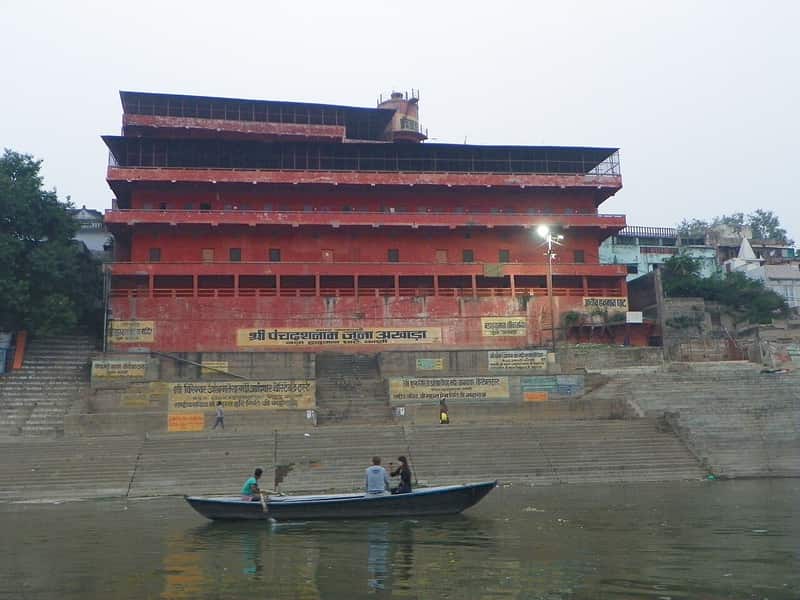
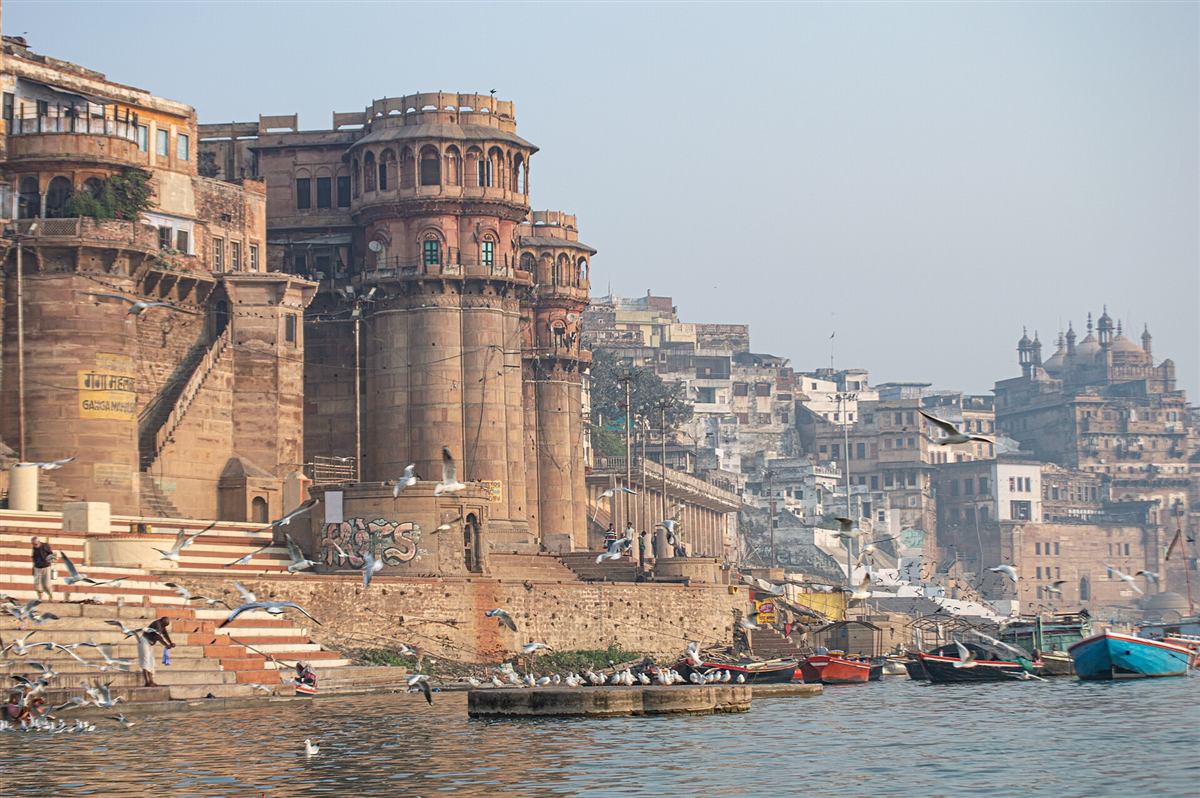
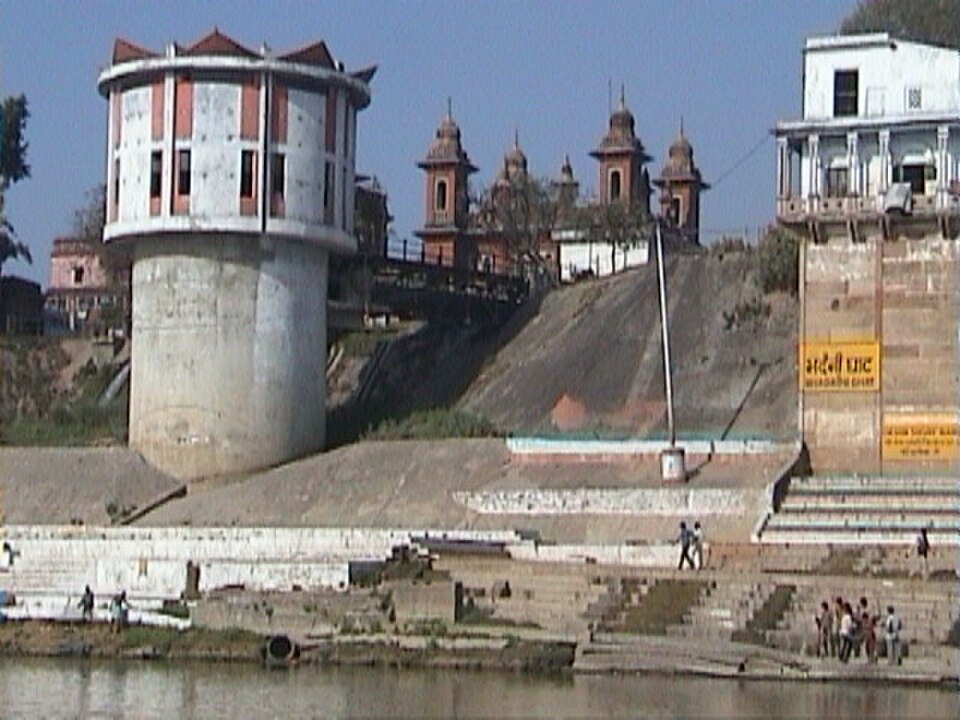
Prachin Hanuman Ghat does not stand alone; it is a thread in a long rope of ghats that runs along the southern bank, and its nearest neighbours are among the most interesting on the riverfront. Hanuman Ghat, a short walk to the north, shares the same tutelary deity and a similar character of quiet worship, its steps crowded with small temples and its name carved in the stone by the water. Further south, Dandi Ghat takes its name from the staff-carrying ascetics, the dandis of the Dashanami order, who have long made this stretch their home. Between these landmarks and the lanes behind, the riverfront forms a continuous, unbroken neighbourhood of faith, work and water that rewards the walker who takes it slowly. Walking from one to the other takes minutes; absorbing the differences between them could take a lifetime, and that is precisely the point of the southern ghats.
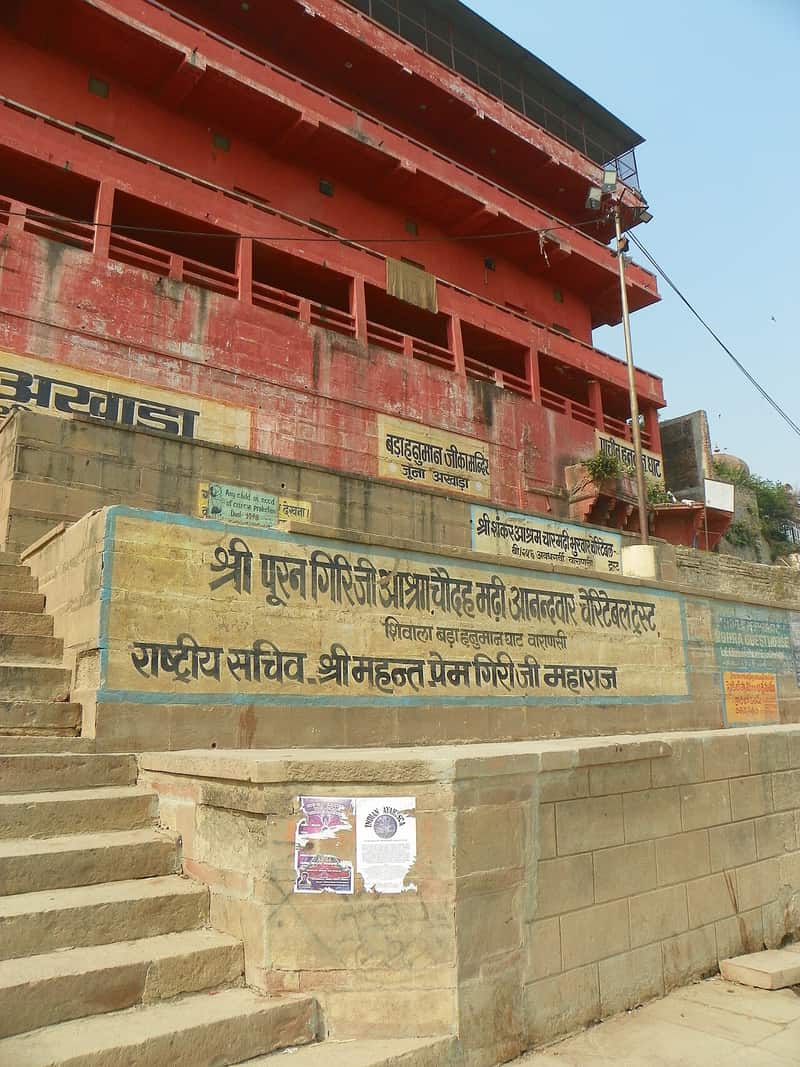
Hanuman Ghat, immediately north, is the livelier of the two neighbours, with a cluster of shrines pressing against the water's edge and a steady flow of worshippers at most hours of the day. Its stone bears the names of donors and the marks of countless monsoons, and its atmosphere blends the devotional with the commercial in the easy Varanasi manner. Dandi Ghat, to the south, is quieter and more austere, its spacious steps associated with ascetic practice and with the Ramakrishna Mission, whose ashram lends the place an air of serene study. Each of these ghats tells the same story as Prachin Hanuman from a different angle: the story of a river that gathers holy men, holy deeds and holy hopes upon its banks, and holds them all without discrimination. For the visitor, the three ghats together make a perfect morning circuit, each one adding a distinct note to the symphony of the bank.
Beyond these immediate neighbours, the southern riverfront continues its procession of famous and forgotten ghats toward Assi, and northwards toward the great cremation ghats and the old city. The walk between them is the best way to understand Varanasi's riverfront, for each ghat is a chapter in a single long book written over centuries. Boatmen on this stretch know every landing and every story, and a slow ferry ride past the southern ghats at golden hour is a lesson in the city's layered history. Yet for all the famous names nearby, Prachin Hanuman Ghat remains a place of withdrawal, the quiet one in a busy family, and visitors often find themselves returning to its modest steps precisely because everything around it is so grand. Its simplicity is not poverty of experience but its opposite, the distilled essence of the bank, where the traveller can rest between splendours and gather the impressions of the morning.
Hanuman Jayanti and Local Gatherings
The ghat's great day of the year is Hanuman Jayanti, the birthday of the monkey god, when the small shrine becomes the radiant heart of the entire neighbourhood. Preparations begin days in advance: the shrine is washed and decorated with marigold garlands by the hundred, the courtyard is strung with lights, and the priests rehearse the elaborate aarti that will mark the festival's climax. On the day itself, devotees arrive from every corner of the southern city, and the lanes behind the ghat swell with a tide of saffron, red and white. The Hanuman Chalisa is recited in relays through the day, and by evening the sound of conches, bells and drums rolls across the water like a storm of devotion. For the older residents, each Jayanti is another proof of the shrine's endurance, another year in which the ancient deity has drawn the city to his feet.
Tuesday throughout the year is the ghat's weekly festival, and the crowds of that day carry the same fervour in smaller measure. Local bhajan mandalis, small devotional singing groups, perform at the shrine through the year, and their open-air sessions draw the whole mohalla into the courtyard. On the full moon of Chaitra, the shrine celebrates the Ram Navami season with readings from the Ramcharitmanas, the sacred telling of Hanuman's lord and story. The monsoon month of Sawan brings its own gatherings, as devotees carry water from the Ganga to offer at the shrine in a small, local version of the great water-carrying traditions. Each gathering, large or small, renews the ghat's oldest function: to be the place where the neighbourhood meets its god. The continuity of these gatherings across the centuries is the shrine's quietest miracle, one that requires no legend to be believed.
Beyond the religious calendar, the ghat hosts the secular festivals of the city's life. In the autumn, the great carnival of Dev Deepawali lights the entire riverfront, and though the grandest displays are far to the north, the southern ghats celebrate in their own modest key, with lamps set afloat on little leaf boats and the water reflecting a thousand small flames. Marriages bring the ghat to life at other seasons, with wedding parties descending the steps for the ceremonial baths and blessings of the elders. Even the daily festivals of ordinary life — a child's first haircut, a student's new session, a boat's first launch — are celebrated here with the same devotion that greets the great days of the calendar. In this way the ghat keeps its promise: it is not merely a place for festivals, but a festival itself, renewed by every life it touches. Old and new blend so completely that no one thinks to separate them, and that seamless blending is the truest festival of all.
Etiquette: How to Visit with Respect
Prachin Hanuman Ghat is a working shrine and a residential neighbourhood, not a museum, and the rules of respect here are simple, practical and easily learned. Dress modestly, as you would at any place of worship in India: shoulders and knees covered, and remove your footwear before entering the shrine's courtyard. Photography of the deity is usually discouraged, and the wise visitor asks the priest before raising a camera, or simply leaves it in the bag. The shrine's interior is small and sacred; a quiet bow at the threshold and a folded-hands greeting, namaste, will be received with far more warmth than any number of offerings made in haste. The ghat itself, however, is open to all, and sitting on the steps to watch the river is not merely permitted but the very thing the locals themselves do.
On the steps and in the water, the etiquette of the bathing ghat applies. Do not photograph bathers without asking; many are performing private rituals, and a camera turned toward them can be deeply intrusive. If you bathe yourself, follow the lead of those around you — modest clothing, respectful gestures, no splashing of others. The water is sacred to your neighbours even if it is simply beautiful to you, so treat it gently and do not discard plastic, flowers or paper into the Ganga. Beggars and sadhus may approach you; a small coin given without fuss, or a gentle refusal, is entirely acceptable, and neither is judged. The ghat's true rule is the oldest rule of Kashi: respect the faith of others, and the city will respect you. What seems strange to a first-time visitor is often centuries-old custom, and patience is the best guidebook.
The etiquette of the shrine extends to the lanes behind, which are people's homes as much as the ghat is their front yard. Knock at doorways rather than walking in, keep voices low in the evening hours, and ask before photographing residents, who may be poor but are never subjects without their consent. Offerings of sweets or fruit are welcome at the shrine and can be bought at the small shops nearby, but note that food cooked elsewhere is not always accepted, so purchase with care. Above all, remember that this is a place where people are born, married, mourned and remembered, and every visitor is a guest in that continuum. Those who come with patience, modesty and an open heart will find the ghat's gates — of stone and of welcome — wide open to them. Such visitors leave with the thing the ghat gives most generously and most rarely: the feeling of having been allowed, for a while, to belong.
Practical Guide: Reaching and Visiting the Ghat
Prachin Hanuman Ghat lies in the southern stretch of the riverfront, roughly midway between the busy student quarter of Assi and the crowded ghats of the old city. The simplest approach is on foot from Assi, following the water or the parallel lane northwards for about fifteen to twenty minutes, past Tulsi Ghat and its neighbours. Rickshaws and e-rickshaws can reach the lanes above the ghat but cannot descend the steps, so expect a short walk at the end of any ride. A shared boat from Assi or the old city ghats is a delightful alternative, landing you directly at the ghat's own steps with the full riverfront panorama unfolding on the way. Whichever way you come, the final approach on foot is part of the experience, gathering the ghat's atmosphere before you even reach the water.
The best time to visit is early morning, between sunrise and nine o'clock, when the bathing is at its richest and the light is softest. The hours around sunset are nearly as rewarding, with the aarti in the shrine and the river turning gold; evenings on Tuesday are liveliest of all. The ghat is quietest in the heat of the afternoon, which suits travellers who prefer contemplation to crowds, but note that shops and stalls thin out at midday. Between November and February the weather is mild and the water low, revealing the full sweep of the steps; the monsoon months bring drama, rising water and intermittent rain. For the festival of Hanuman Jayanti, arrive early and expect crowds, or come the day before to see the preparations. In every season, the ghat rewards the early riser most generously, and the visitor who is up with the sun will have the ancient steps almost to themselves.
Practical needs are modestly served. Small shops near the ghat sell water, tea, snacks and simple offerings, and the lanes above host the usual range of small eateries serving Banarasi breakfasts of kachori and jalebi. For fuller facilities, Assi, fifteen minutes south, offers cafés, guesthouses and medical help, while the old city to the north offers grand temples and dense bazaars. Combine the ghat with a walk to nearby Hanuman Ghat and Dandi Ghat, or cross the river by boat for the far-bank view of the whole southern skyline. However you shape the day, leave the ghat as you found it, carrying nothing but memories, and the ancient ghat will welcome you back as it has welcomed every visitor since the first stone was laid in its gentle, enduring steps. No tickets, no queues, no gates — only the river, the shrine, and the quiet continuum of devotion that makes this ghat what it is.
Prachin Hanuman Ghat — Gallery (11 Photos)
Image Credits
prachin-hanuman-01.jpg · prachin-hanuman-02.jpg · prachin-hanuman-03.jpg · prachin-hanuman-04.jpg · prachin-hanuman-05.jpg · prachin-hanuman-06.jpg · prachin-hanuman-07.jpg · prachin-hanuman-08.jpg · prachin-hanuman-09.jpg · prachin-hanuman-10.jpg · prachin-hanuman-11.jpg — Wikimedia Commons, under free licenses.
Continue exploring
Similar Ghats Nearby
Book This Ghat — Get Notified
Download the app now and book a boat ride to Prachin Hanuman Ghat