

Ganesh Ghat
Neighbourhood GhatGanesh Ghat is a small ghat named after Lord Ganesha. It has a famous Ganesha temple.


Type
Neighbourhood Ghat
Boat Fare
1x base fare
Best Time
6-9 AM
History
This ghat is linked to a Ganesh temple. Devotees seek Ganesh’s blessings here before every auspicious work.
Highlights
- Darshan of the Ganesh temple
- Faith for auspicious beginnings
- Peaceful bathing site
Festivals & Events
How pricing works in the NaviX app
No haggling at the ghat — everything is fixed in the app first
- 1
Fixed price before you board
The fare is shown in the app upfront — no bargaining at the ghat
- 2
Sharing or private — your choice
Share with fellow travelers or take the whole boat for your group
- 3
Pay only after the ride
UPI, card or cash — with an instant receipt
6:00 AM & 6:00 PM
At the Ganesh temple nearby
Complete Guide
Ganesh Ghat — The Complete Guide
History, mythology, rites and practical details — everything in depth.
On this page
- 1.Ganesh Ghat: An Introduction
- 2.Lord Ganesha — The Remover of Obstacles
- 3.The Shrine at the Ghat
- 4.Morning Bathing at the Ghat
- 5.Everyday Life on the Steps
- 6.The River and the View
- 7.The Lanes and the Mohalla
- 8.The Neighbouring Ghats — Bhonsale and Mehta
- 9.Festivals — Ganesh Chaturthi and More
- 10.The Auspicious Spirit of the Ghat
- 11.Etiquette — Respectful Conduct
- 12.Practical Information — Reach, Best Time, Nearby Ghats
📅 Updated: 21 Aug 2026 · Author: NaviX Field Team (field research 2024-26) · 12 sections · 12 photos
Ganesh Ghat: An Introduction
Ganesh Ghat is a small, quietly devotional landing on the northern stretch of the Varanasi riverfront, a terrace of worn stone steps where the Ganga slides past the old city. It has none of the scale of Dashashwamedh and none of the pilgrim crowds of the central ghats; its character is intimate, domestic, and auspicious. The ghat takes its name from Lord Ganesha, the elephant-headed deity of beginnings, wisdom, and good fortune, and a shrine beside the steps keeps his presence at the heart of daily life. Every morning bathers arrive before sunrise, their brass lotas catching the first light as they descend slowly into the cool brown water. Boatmen gather at the landing, untying wooden craft and calling to one another in the unhurried rhythm of river work, and the smoke of small oil lamps drifts up from the shrine.
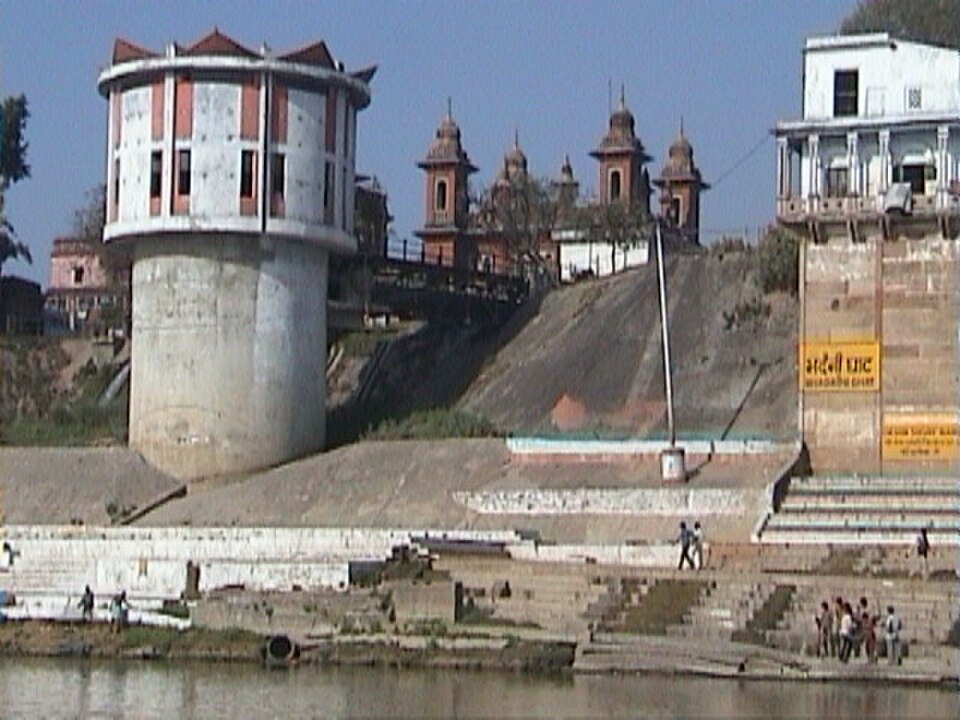
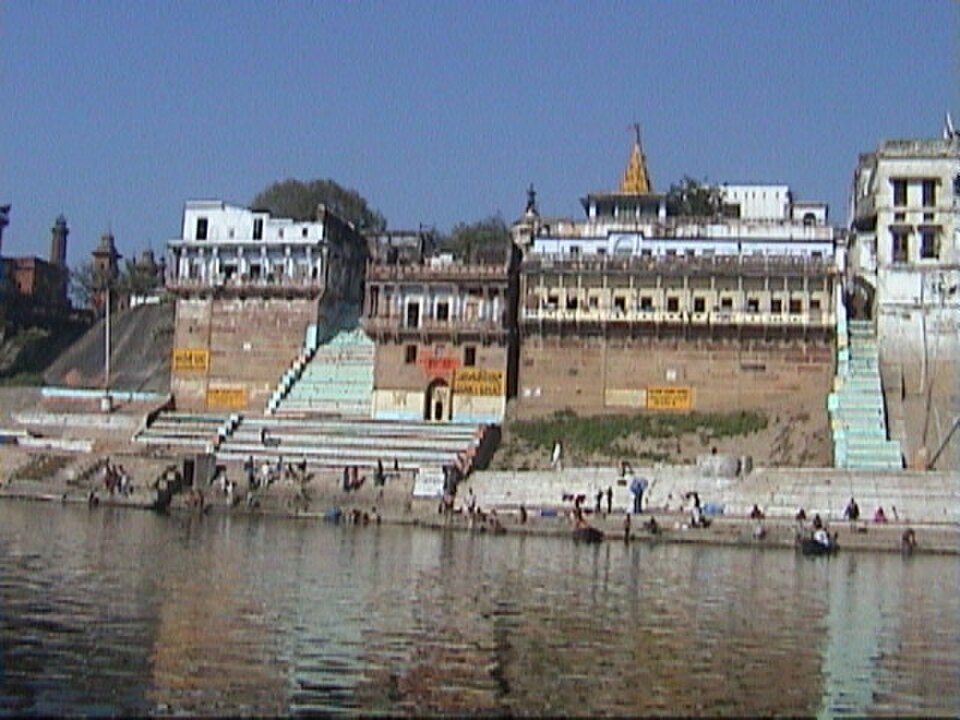
The steps themselves are modest, built for function rather than ceremony, yet generations of feet have worn them smooth, and in that smoothness lies the ghat's true age. Ganesh Ghat belongs to the chain of minor ghats that runs between Raj Ghat and the old city, a quieter stretch of the riverfront where life proceeds at the pace of the water itself. From the landing one can look south along the great arc of the Ganga, past the neighbouring landings of Bhonsale Ghat and Mehta Ghat, toward the distant skyline of temples and palaces. Behind the ghat, the lanes of the old mohalla twist into the city, thick with small shops, shrines, and the smell of incense and cooking oil.
For the traveller who wants the spirit of Varanasi without the spectacle, Ganesh Ghat offers something rare: a place to sit, watch the river, and feel the gentle gravity of the city at work. There is no grand aarti here and no wall of cameras; there are only bathers, boatmen, priests, and the eternal current moving south. Devotees stop at the Ganesha shrine before beginning anything new, touching the stone and offering a silent prayer for a good beginning. In a city of nearly a hundred ghats, Ganesh Ghat may be small, but it is precisely its smallness that makes it unforgettable. A single hour spent here, watching the light change on the water, teaches more about the real Varanasi than a day of sightseeing among the crowds.
Lord Ganesha — The Remover of Obstacles
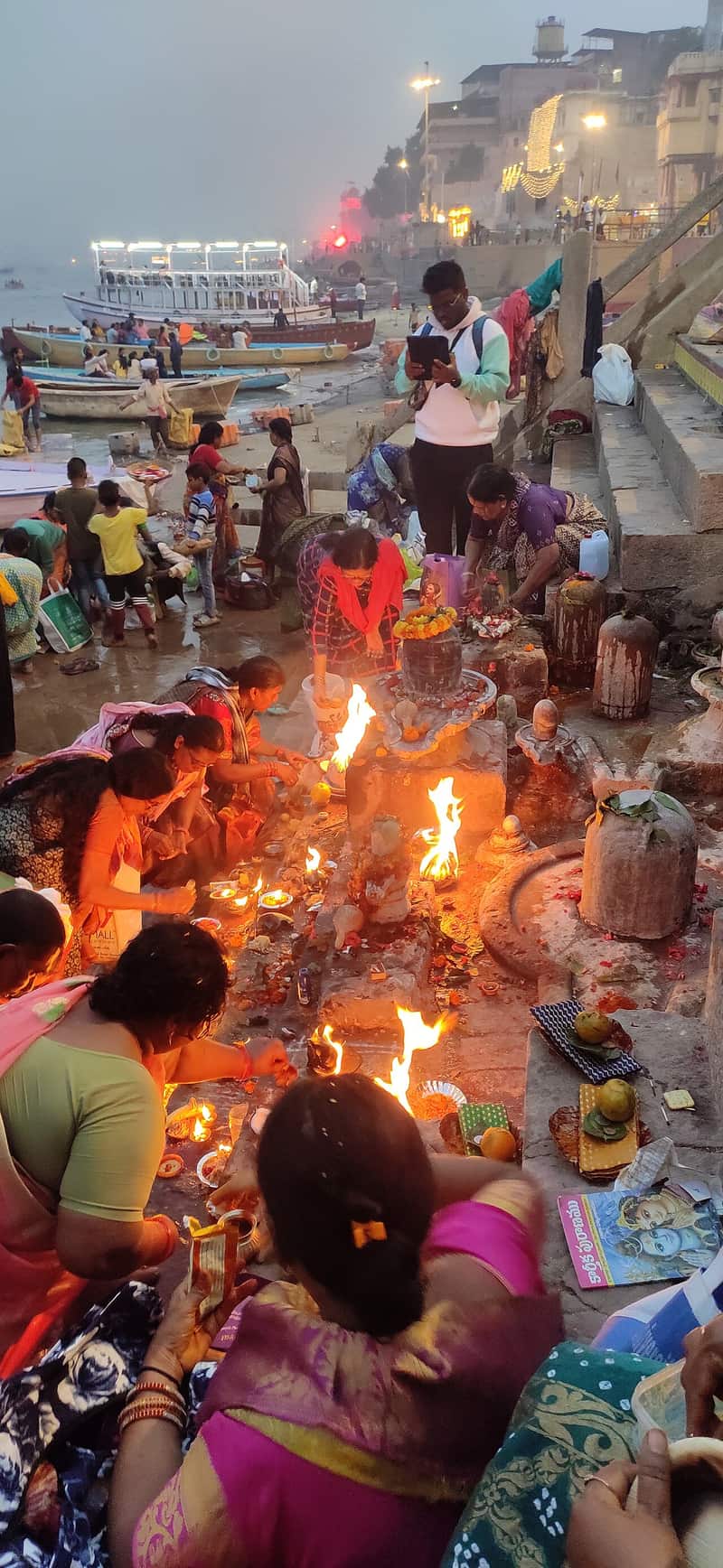
Lord Ganesha, the deity who gives this ghat its name, is perhaps the most beloved god in the Hindu pantheon — the elephant-headed son of Shiva and Parvati, the remover of obstacles and the lord of beginnings. His image is everywhere in Varanasi: above doorways, on dashboards, in shops, and in the small shrines that line the ghats. He is the first god invoked before any ritual, the one who clears the road before every journey, the guardian who stands at the threshold of every new enterprise. Devotees call him Vighnaharta, the remover of impediments, and Ganapati, the lord of the ganas, the hosts of Shiva who attend on the great ascetic god. To begin a task without remembering Ganesha is considered inauspicious across northern India, and on this ghat the custom is kept with special care.
The mythology of Ganesha is rich with meaning. The most famous story tells how Parvati created a boy from the turmeric paste of her own body and set him to guard her door; when Shiva returned and was refused entry, he struck off the boy's head in anger. To console the grieving Parvati, Shiva sent his hosts to bring the head of the first living creature they met — an elephant — and set it upon the boy's shoulders, giving him life again. Thus Ganesha was born, half elephant and half boy, a divine being who combines the wisdom of the elephant with the playfulness of a child. He rides a mouse, the humblest of creatures, teaching that no obstacle is too great for one who is humble, and he holds the noose and the goad, symbols of his power to bind obstacles and urge the devotee forward.
Worship of Ganesha is woven into the daily life of this ghat. Fishermen and boatmen, who begin their work on the water, do not push a boat out before touching the shrine. Women who begin a new task, a new cooking pot, a new business, first offer him a prayer. Children are taught to fold their hands before his image as they learn the alphabet, for Ganesha is also the lord of intellect and learning, the scribe of the Mahabharata who wrote down the great epic at Vyasa's dictation. His favourite offerings are modak, sweet dumplings of rice flour and coconut, still brought to the shrine on festival days. In every sense, the elephant-headed god is the quiet patron of this small ghat — its name, its blessing, and its constant guardian.
The Shrine at the Ghat
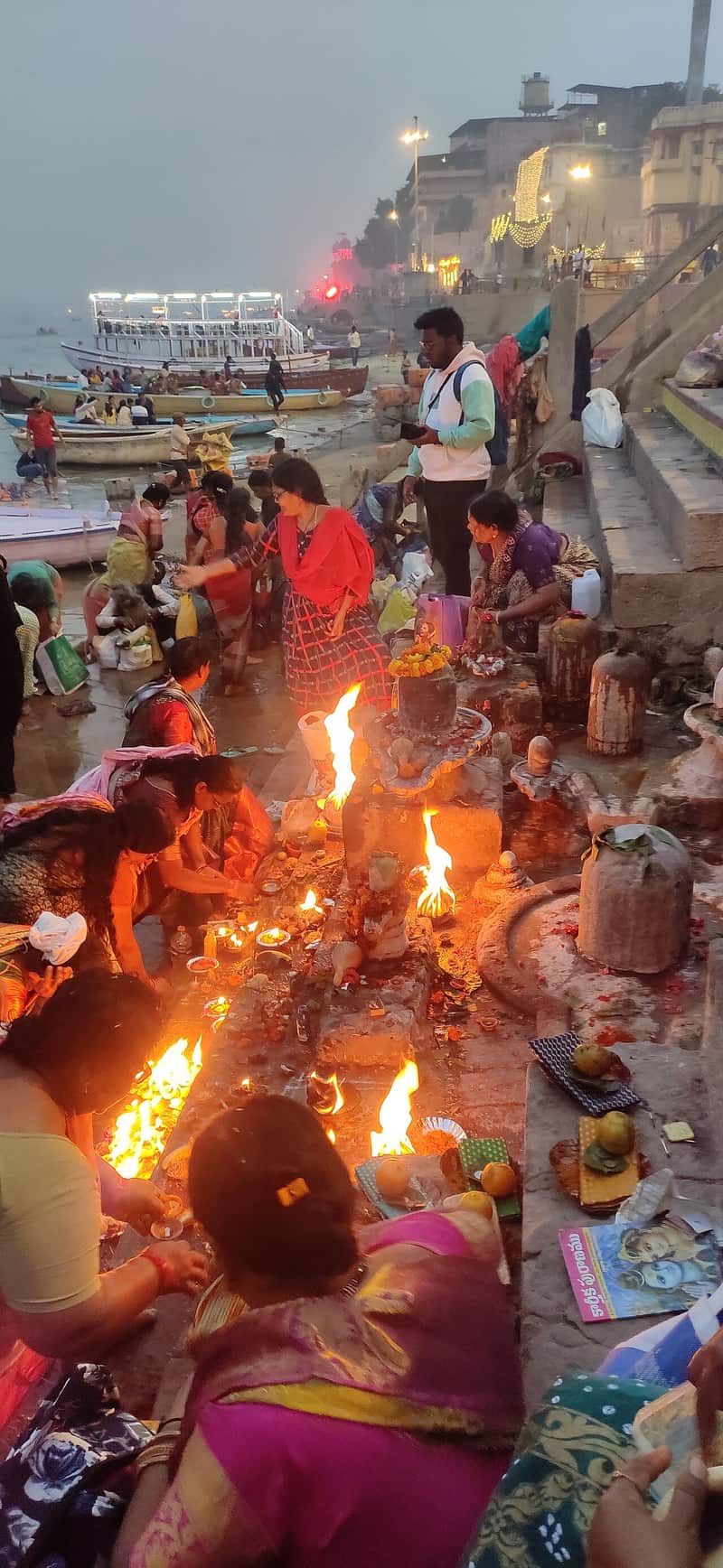
The shrine of Ganesha at Ganesh Ghat is a small and unassuming structure, typical of the hundreds of wayside temples that crowd the Varanasi riverfront. A raised platform of stone holds a painted image of the elephant-headed god, his trunk curved to one side, a crown upon his head, his small eyes bright with the pleasure of blessing his devotees. Around the image stand brass lamps, garlands of marigold and jasmine, and the small heaps of turmeric and vermilion that mark daily offerings. The shrine is open to the river breeze, and on its threshold lie the water-worn footprints of a thousand visitors who have climbed the steps to bow their heads before the remover of obstacles. There is no grand tower here, no elaborate gateway; the sanctity of the place is carried entirely by the devotion it attracts.
Life at the shrine begins before dawn. The priest arrives as the first light touches the river, cleans the platform, and lights the oil lamps, filling the air with the smell of ghee and camphor. The first bathers pause on their way down to the water, touch the stone, and murmur a short prayer; some ring the small bell that hangs above the image, its clear note carrying across the steps. As the morning grows, flower sellers and shopkeepers from the lanes behind the ghat arrive with offerings, and the shrine becomes a quiet crossroads of the neighbourhood's hopes and thankfulness. Women ask for the well-being of their children, boatmen for safe voyages, students for success in examinations, and newlywed couples for a harmonious life together.
A second, smaller presence is felt at the shrine in the evening, when the lamps are lit again and a simple aarti is sung by the gathered faithful. The glow of the flame against the dark river, the circling of the plate of light, and the voices raised in the old hymns give the small ghat a beauty that the grand temples cannot match. On festival days the shrine is dressed in new cloth, the image is bathed in milk and curd, and offerings of modak are laid before him. Devotees say that Ganesha at this ghat is especially swift to answer, because he lives so close to his people — not in a distant sanctum guarded by priests, but at the water's edge, among the bathers, boatmen, and children of the river.
Morning Bathing at the Ghat
Bathing at Ganesh Ghat is an act of devotion performed at the edge of the ordinary. Long before sunrise the ghat is already alive: women in wet saris wring out their cloths, men in dhotis shiver through their first immersion, and the water itself carries the murmur of prayers in the half-dark. For Hindus the Ganga is not merely a river but a goddess, Ganga Maiya, whose waters wash away the accumulated sins of a lifetime. A dip at any ghat of Kashi is believed to bring liberation, and this belief draws the devout to the steps of Ganesh Ghat just as it does to the grander ghats farther south. The ritual itself is simple: a descent, a dipping, a cupped handful of water offered to the rising sun, and a silent vow repeated every day of a lifetime.
The manner of the bath varies with the bather. Some plunge straight into the current with a cry of Har Har Gange; others ease themselves in slowly, afraid of the cold, and stand with water up to their waists, muttering mantras. Many pour water over the head from a brass lota, letting it run down the back, while others perform the sankalpa, the solemn resolution that gives the bath its purpose. On the steps above, priests sit with their books and offer to conduct a brief ceremony, and stalls sell small leaf-cups of flowers, vermilion, and sacred thread. Pilgrims who have come from distant villages perform the full rite, complete with offerings to the sun and prayers for their ancestors, while daily bathers from the neighbourhood complete their dip in a few practised minutes before hurrying back to the day's work.
Winter turns the morning bath into an act of courage. In December and January the river is cold, and the mist hangs so thick over the water that the far bank disappears entirely. Yet the bathers come, their breath clouding the air, and the same prayers rise from the steps that have risen here for centuries. In summer, by contrast, the water is warm and pleasant, and the ghat becomes a place of easy enjoyment, with children swimming and splashing beneath the watchful eyes of their elders. Through all seasons the river teaches the same lesson: that holiness does not depend on comfort, and that the water which accepts every impurity also washes every fault clean. The bath at Ganesh Ghat, simple as it is, stands in a tradition that reaches back to the oldest worship known to the city.
Everyday Life on the Steps
A morning at Ganesh Ghat is a small theatre of ordinary life. By six o'clock the steps are busy with bathers, and the waterline is crowded with the wooden boats that the boatmen of the neighbourhood have moored overnight. The boatmen themselves sit on the shore with their friends, sharing tea from small clay cups and discussing the river, the weather, and the price of fish. Fishermen stand knee-deep in the water, casting their nets in slow arcs, while boys dive from the boats for coins thrown by amused pilgrims. The air is full of the sounds of the riverfront: the slap of wet clothes beaten on stone, the creak of boats, the chatter of women at the washing steps, and the deep, calm voice of the Ganga herself.
Behind the bathers, on the middle steps, the business of the ghat goes quietly on. Washermen lay clothes out to dry on the warm stone, spreading white and blue across the grey like a flag of everyday life. Shopkeepers from the lanes set up small stalls at the head of the ghat, selling flowers, incense, coconuts, and the sweet tea that the whole riverfront seems to run on. A barber trims a customer's beard at the water's edge; a mendicant sings an old bhajan; children run up and down the steps with a freedom that city streets no longer allow. Here, nothing is staged for the visitor. Every face, every gesture, every basket of fish is part of a rhythm that has repeated itself at this spot for centuries, and that will continue long after the day's visitors have gone home.
For the people who live around Ganesh Ghat, the river is not a monument but a working companion. It provides fish, washing water, bathing water, and the quickest road north and south between the ghats; it carries the boats, the laundry, and the ashes of the dead; and in the monsoon it brings warnings of the season's mood, rising to the lower steps and occasionally flooding the courtyard of the shrine. The boatmen know every stone of the ghat, every current of the river, and the names of generations of families who have bathed at the same spot. To spend a day here is to see Varanasi without costume — a city of work and prayer, of men and the river, bound together in an old and honest companionship.
The River and the View
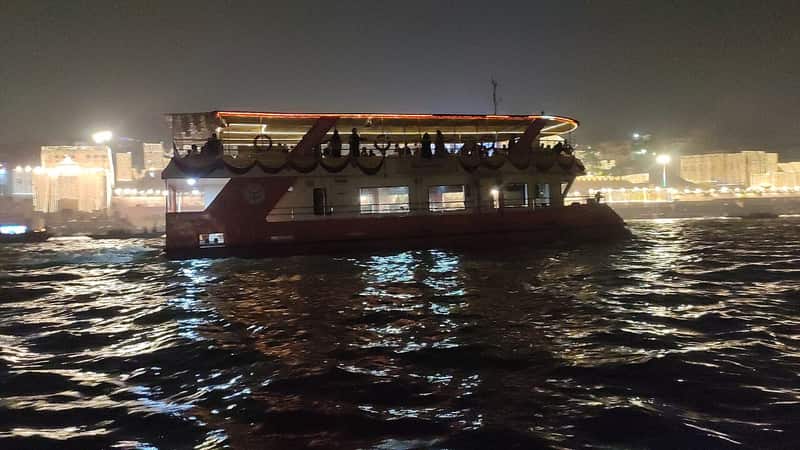
The Ganga at Ganesh Ghat is the river in its northern, working mood — broad, brown, and calm, carrying the accumulated silt of the Himalaya toward the sea. Here, away from the busy ghats of the centre, the water seems almost lazy, sliding past the steps with a soft gurgle that is the quiet heartbeat of the city. The far bank lies low and green, a long smear of fields and trees that in the morning mist looks as insubstantial as a painted backdrop. Between the two banks flows the great artery of northern India, and standing at the water's edge one feels the whole geography of the subcontinent in the movement of the current — snowmelt from the mountains, the plains of the Ganga basin, the delta where the river finally meets the sea.
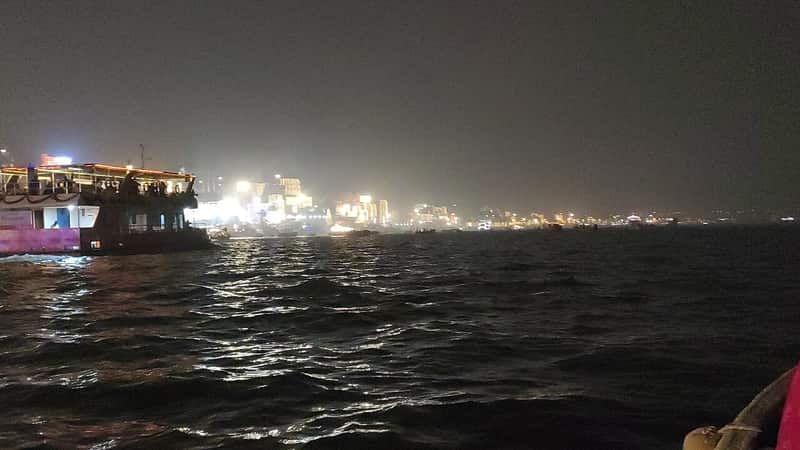
The river is at its most beautiful in the first hour of light. The sun rises over the far bank, and the water turns from grey to rose to gold, each change bringing a new pattern of light on the ripples. Boatmen row out to the middle of the stream, and from their boats the whole arc of the ghats can be seen as the builders of Kashi saw it — a long crescent of steps, temples, and palaces, each landing a door into the sacred city. On the water, life moves at the river's pace: a passenger boat heading south to Dashashwamedh, a fisherman checking his nets, a family of pilgrims seated on a small wooden craft, their brass lotas gleaming in the sun. Even the birds — the gulls, the cormorants, the kite wheeling overhead — seem to belong to the current itself.
The river also changes with the year, and the ghat changes with it. In the dry months of winter and spring the water falls back, exposing wide banks of sand where cattle graze and children play; in the monsoon the river swells enormously, its brown flood climbing the steps, at times almost touching the shrine itself. The people of the ghat read these changes the way farmers read the sky, and the same steps that are crowded with bathers in January become a vantage point for watching the flood in August. Through all its moods, the Ganga here remains what it has always been — a goddess in the form of a river, both terrible and tender, giving life, washing sin, and carrying the prayers of the city toward the horizon.
The Lanes and the Mohalla
Behind Ganesh Ghat, the old city of Varanasi rises in a tangle of lanes that has grown over a thousand years. The narrow streets are barely wide enough for two people to pass, and their ancient houses lean toward one another as if sharing secrets, their facades decorated with faded paintings and wooden balconies carved in the old style. Electric wires cross overhead like a net, and somewhere beyond the rooftops rises the call of a muezzin, answered by the bells of a temple. This is the mohalla of the ghat — its true world, the place where the families who bathe at the steps live, trade, and worship. The lanes smell of frying oil, incense, and the particular dampness of a very old city.
The lanes around Ganesh Ghat are home to a modest trading life. Small shops sell brass vessels for the rituals of the river, garlands of marigold, packets of vermilion, and the everyday necessities of the neighbourhood — grains, vegetables, kerosene, and paan. There are tea stalls where the boatmen gather, a sweet shop that does its best trade on festival mornings, and at least one narrow courtyard temple where the whole lane gathers for evening aarti. Families here are old, many claiming generations of residence at the same address, and the lane elders sit on low stools in the evening, settling disputes and telling stories. The neighbourhood lives with its back to the river and its face to the city, part of the deep human weave of old Kashi.
For the visitor, the lanes behind the ghat reward slow wandering. Every few paces opens a new scene — a doorway where a woman grinds spices, a boys' cricket game in a tiny courtyard, a painter restoring a fading wall fresco, a bull chewing its cud in a stone archway. The deeper one goes, the older the city feels, and the closer one comes to the Varanasi that existed before electricity, before the railway, before the traveller's handbook. In the evening, when the lights come on in the windows and the smells of dinner drift down the alleys, the neighbourhood gathers itself for the night. To stay in these lanes, even for an hour, is to understand what the ghats are for — not spectacle, but the daily life of a sacred city.
The Neighbouring Ghats — Bhonsale and Mehta
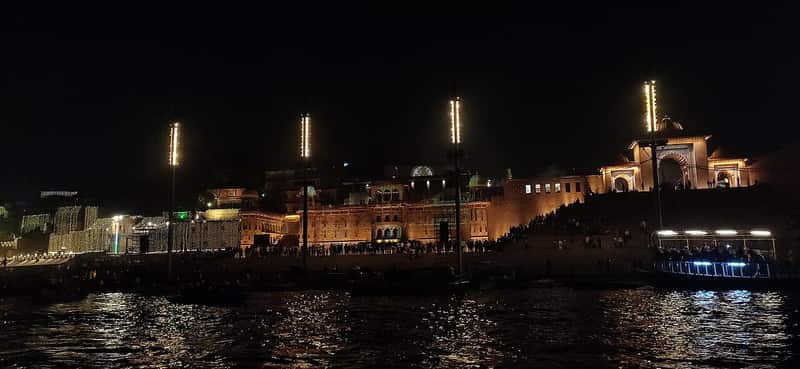
Ganesh Ghat does not stand alone; it is one link in the long chain of landings that makes up the northern riverfront of Varanasi. Immediately to its south lies Bhonsale Ghat, named for the Bhonsale dynasty of Maratha rulers who were among the great patrons of the city in the eighteenth century. The Bhonsales, whose power centre was in Nagpur, built several structures in Varanasi, and their ghat, like Ganesh Ghat, is a modest landing of worn steps and old stone, much quieter than the ceremonial ghats of the central riverfront. In the cold months it is a favourite spot of the same boatmen who ply their trade at Ganesh Ghat, and its banks, exposed when the river falls, become a broad field of sand.
Beyond Bhonsale Ghat lies Mehta Ghat, another of the minor landings that travellers rarely pause to name. It too is built of the old stone steps and served by the same lanes and the same river, and it carries its share of the everyday traffic of the northern ghats — morning bathers, evening worshipers, boats unloading at the waterline. Together with Ganesh Ghat, these three landings form a small, quiet cluster between the great Raj Ghat at the northern tip of the riverfront and the crowded ghats farther south. Here the riverfront has the character of a village rather than a monument: everyone knows everyone, and a new face is a topic of friendly conversation.
The closeness of these ghats makes the northern riverfront ideal for a slow walk. From Ganesh Ghat one can stroll along the water to Bhonsale and Mehta, then continue through the small spaces between the landings, where temples, wells, and old trees mark the long history of this part of Kashi. A boatman at Ganesh Ghat will gladly row visitors along this stretch, pointing out the ghats and their stories from the water, where the whole chain of steps and shrines looks as it must have looked for centuries. For those who walk, the reward is a sense of the riverfront's real scale — not the handful of famous ghats, but the many humble ones, each with its own name, its own families, and its own quiet life.

Festivals — Ganesh Chaturthi and More
The great festival of Ganesh Ghat is, naturally, Ganesh Chaturthi, celebrated on the fourth day of the bright fortnight of the Hindu month of Bhadrapada, which usually falls in August or September. On this day the whole neighbourhood gathers at the shrine, which is dressed with new cloth and flowers, and the image of the elephant-headed god is bathed with milk, curd, honey, and ghee in the rite called abhishekam. Devotional songs and bhajans fill the morning air, offerings of modak and fruit are distributed as prasad, and the small ghat takes on a festive life that contrasts beautifully with its usual quiet. For one day the remover of obstacles is honoured as the patron of the entire riverfront, and families who have celebrated at the same steps for generations come together in joy.
Ganesh Chaturthi has grown enormously popular across India in the past century, and Varanasi observes it with mounting enthusiasm. In the days before the festival, the lanes behind the ghat fill with stalls selling clay idols, garlands, and sweets, and the workshop of a local potter becomes a small factory of Ganesha images. Many households install a fresh idol in a corner of the home, worship it for a day or several days, and finally bring it to the river for immersion. At Ganesh Ghat, the immersions begin on the morning of the festival and continue into the evening, as families carry their idols down the steps, circle them in the water, and let the river take the deity home. The sight of the small clay gods riding the current is one of the most touching on the entire ghat.
The other festivals of the year find their own reflection at the ghat. On Makar Sankranti in January, the first great bathing day of the winter, the steps are crowded with bathers who come to wash away the sins of the season. On Holi, the ghat becomes a scene of colour, with the boatmen and their families smearing each other with bright powder as the evening light falls on the river. Diwali brings lines of lamps along the steps, and the shrine glows with candles and marigold. On each of these days Ganesh Ghat remembers that it is, above all, a place of worship — a stage on which the whole cycle of the Hindu year is performed, year after year, at the feet of the elephant-headed lord.
The Auspicious Spirit of the Ghat
The presiding spirit of Ganesh Ghat is the quality that Hindus call shubh — the auspiciousness that attends a good beginning. The ghat is not a place of fiery devotion or ecstatic procession; it is a place of quiet, confident faith, the kind that starts every day with a folded hand and an open heart. Because the ghat belongs to Ganesha, the lord of beginnings, every act performed on its steps partakes of his blessing — a bath, a boat trip, a first step on a journey. Old men repeat the same prayer they have repeated for fifty years; young mothers touch the shrine before carrying their children down to the water; and each gesture carries the sense that the day has begun well.
This auspicious character shapes the very mood of the ghat. There is a lightness here that the great cremation ghats cannot have, a sense of hope and preparation that belongs to morning rather than evening. Families arrive in the first light, perform their ablutions, and linger to talk; brides are brought here for blessing before their weddings; children receive their first ritual bath at these steps. The priests of the ghat keep a small calendar of auspicious days, and on them the crowd swells with people beginning new ventures — a shop, a journey, a house. The devotion of Ganesh Ghat is therefore not a devotion of fear or demand, but of trust: the trust that a good beginning, offered to a good god, will bring a good end.
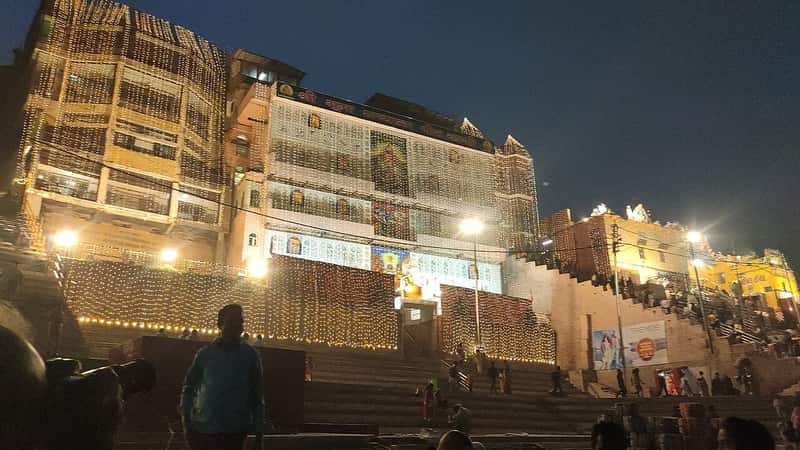
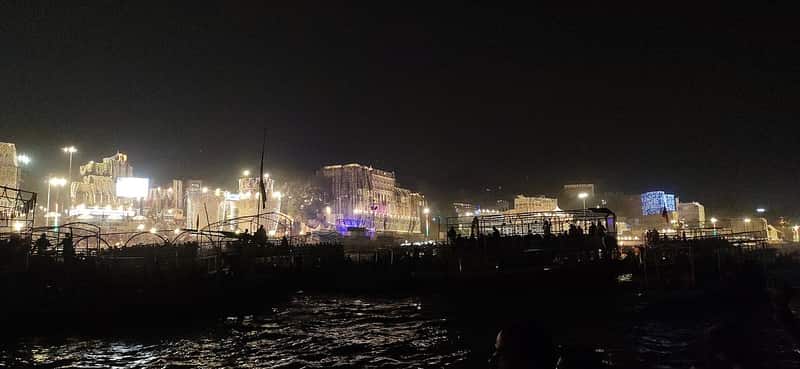
For many visitors, the deepest impression of Ganesh Ghat is not made by any single sight but by the quality of the atmosphere. Time here moves slowly, and the constant murmur of prayer, the soft bells, and the sliding of the river create a sense of being inside a vast and patient ritual. Devotees say that Ganesha listens not to the loudness of the prayer but to its sincerity, and the small shrine on the ghat rewards every honest offering with a sense of peace. To sit on the steps at dusk, watching the lamps tremble on the water, is to understand why this small ghat has kept its character through centuries of change. It is not grandeur that preserves a holy place, but the daily faith of ordinary people.
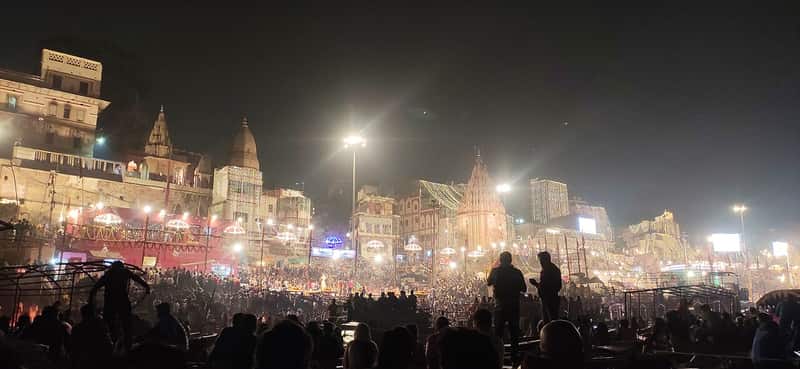
Etiquette — Respectful Conduct
A visit to Ganesh Ghat is a visit to a working place of worship, and a little care will make both the visitor and the ghat more comfortable. Modest clothing is expected: shoulders covered, and a short cotton lungi or a towel-wrap is the standard dress for anyone entering the water, men and women alike. Shoes are removed before approaching the shrine, and a quiet, respectful manner is appreciated by worshippers who have come to pray, not to perform. It is wise to ask permission before photographing people, especially bathers in the water, and many locals will smile and agree if the request is made warmly and simply.
On the steps, follow the flow of the ghat's own life. Do not block the way of bathers descending to the water, and do not disturb the clothes and belongings laid out for washing. The river itself deserves care: the Ganga is sacred to the people here, and treating the water with respect — no litter, no waste, nothing thrown carelessly into the current — is the simplest act of courtesy a visitor can perform. If a priest offers to conduct a ritual, it is customary to offer a small donation, and if one does not wish to participate, a polite refusal is always accepted. Bargaining at the stalls is normal, but a few rupees saved is not worth the souring of a human exchange on a sacred landing.
Finally, remember that the ghat belongs, above all, to the families who have lived beside it for generations. Bathing, boat rides, and photography are welcomed, but the daily life around the steps — the washing, the cooking smells from the lanes, the mourners and the mendicants — is not a display arranged for visitors. A patient, unhurried presence is the best behaviour: sit, watch, and let the ghat reveal itself in its own time. Offerings at the shrine, whether a flower, a coconut, or a few coins, are best given simply and without fuss. In return, the ghat gives what it has always given — the quiet blessing of a good beginning, which every visitor can carry home.
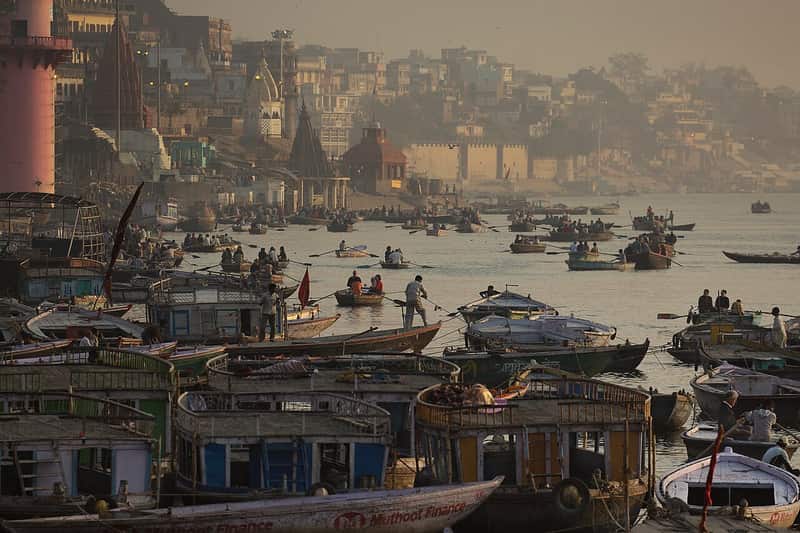
Practical Information — Reach, Best Time, Nearby Ghats
Ganesh Ghat lies on the northern stretch of the Varanasi riverfront, and reaching it is a matter of finding the northern lanes of the old city. The nearest point of reference is Raj Ghat, the historic landing at the northern end of the ghat chain, from which Ganesh Ghat is a short walk along the water. The old railway bridge across the Ganga, with its massive stone arches, stands nearby and serves as a simple landmark: the ghat lies south of the bridge, roughly between Bhonsale Ghat and Mehta Ghat. Visitors arriving by boat can simply ask a boatman at any ghat of the city to row them north; the journey along the water is one of the pleasantest ways to approach.
The best time to visit is early morning, before the sun is high, when the light on the river is golden and the daily life of the ghat is at its fullest. The winter months from October to March offer the most comfortable weather, and the festive bathing days of that season — especially Makar Sankranti — give a glimpse of the ghat at its most alive. From April to June the heat is intense, though the early hours remain bearable, and the monsoon months bring rain and rising water that can cover the lower steps. Whatever the season, morning is the hour of Ganesh Ghat; by mid-afternoon the steps are quiet, and at dusk the lamps of the shrine take over. An hour on the steps is enough to absorb the atmosphere, and the morning hours reward those who come early.
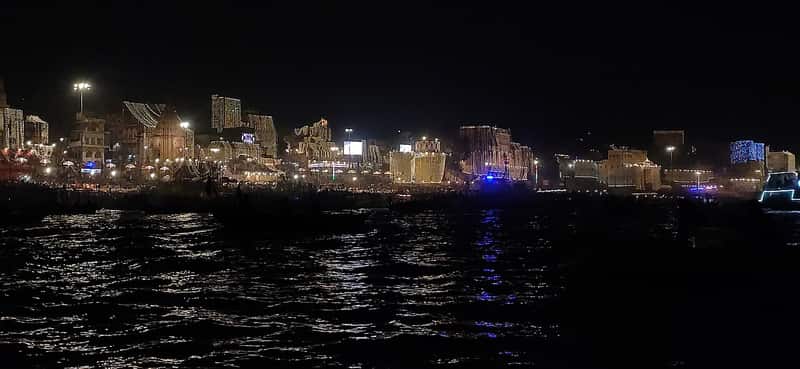
A visit to Ganesh Ghat combines naturally with the ghats around it. A walk north from the landing reaches Raj Ghat and the bridge; a walk south passes Bhonsale Ghat and Mehta Ghat before the riverfront grows busier. Boatmen at the ghat offer short trips along the northern stretch, and a sunset ride on the water, with the chain of ghats lit behind you, is a fitting end to the day. There is no admission fee, no ticketing, no official timings — the ghat simply is, as it has been for centuries. Carry water, a small offering for the shrine if you wish, and the patience to sit still. Everything else the ghat will provide itself.
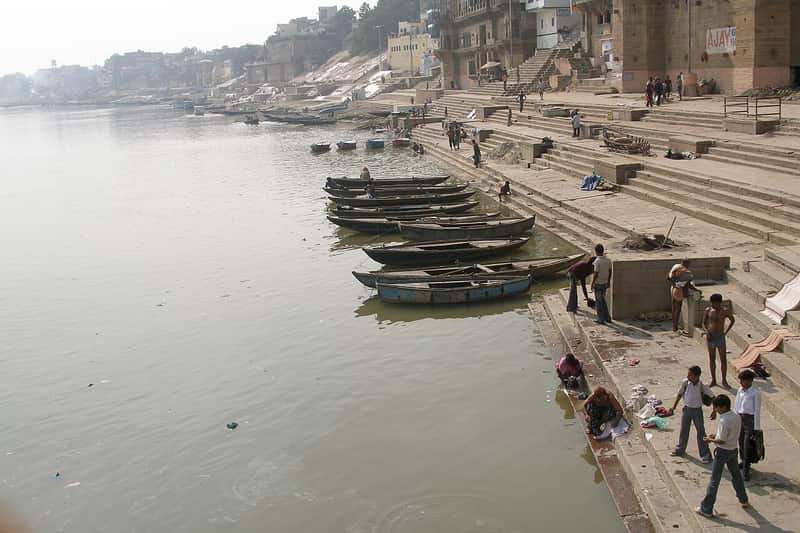
Ganesh Ghat — Gallery (12 Photos)
Image Credits
ganesh-01.jpg · ganesh-02.jpg · ganesh-03.jpg · ganesh-04.jpg · ganesh-05.jpg · ganesh-06.jpg · ganesh-07.jpg · ganesh-08.jpg · ganesh-09.jpg · ganesh-10.jpg · ganesh-11.jpg · ganesh-12.jpg — Wikimedia Commons, under free licenses.
Continue exploring
Similar Ghats Nearby
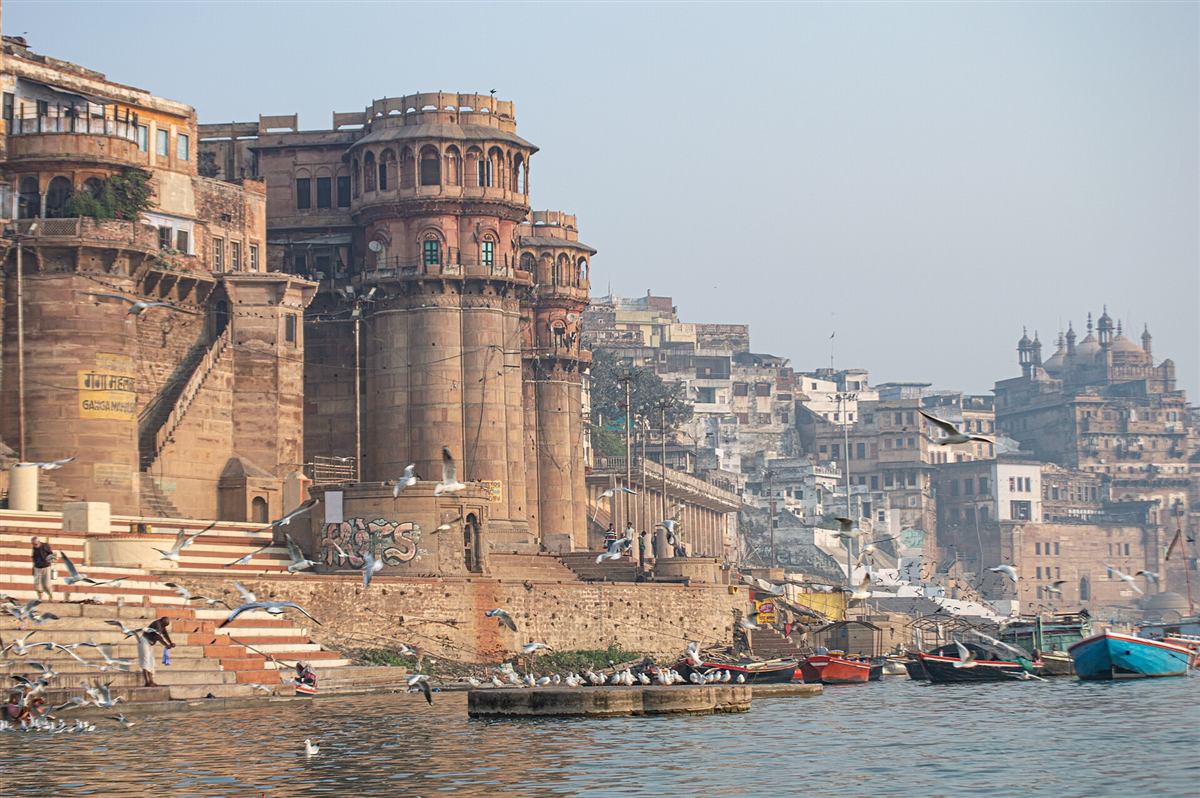
Book This Ghat — Get Notified
Download the app now and book a boat ride to Ganesh Ghat