

Digpatia Ghat
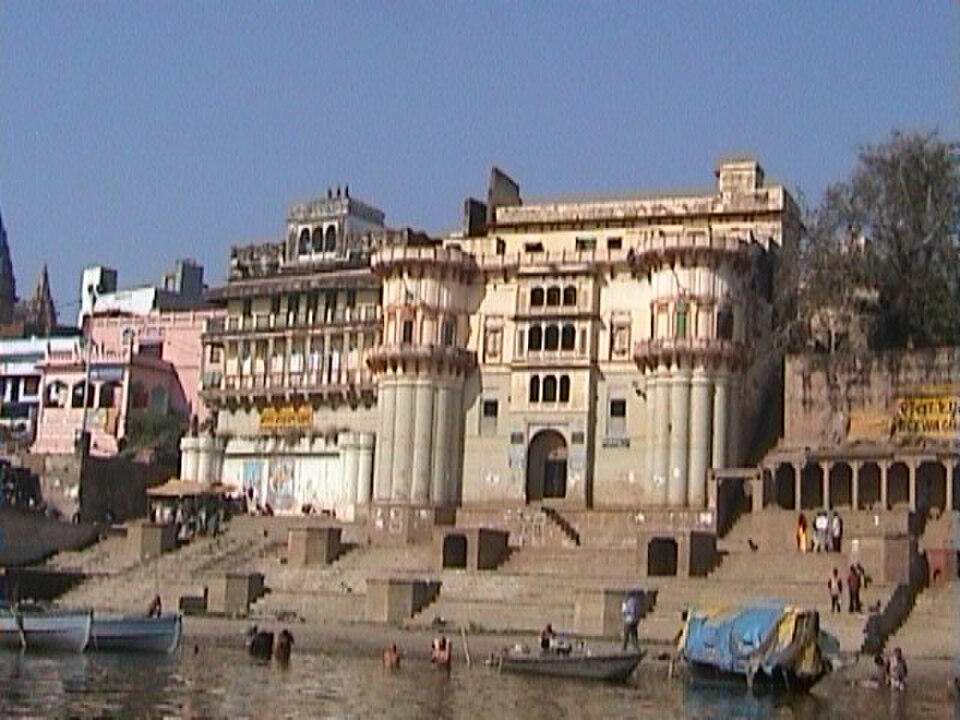
Heritage GhatDigpatia Ghat is a historic ghat built by the King of Bengal in the 18th century.


Type
Heritage Ghat
Boat Fare
1.1x base fare
Best Time
6-9 AM
History
Built by the King of Bengal in the 18th century.
Highlights
- Ancient architecture
- Historic importance
- Calm atmosphere
Festivals & Events
How pricing works in the NaviX app
No haggling at the ghat — everything is fixed in the app first
- 1
Fixed price before you board
The fare is shown in the app upfront — no bargaining at the ghat
- 2
Sharing or private — your choice
Share with fellow travelers or take the whole boat for your group
- 3
Pay only after the ride
UPI, card or cash — with an instant receipt
🕉️
Aarti details not available for this ghat yet
Complete Guide
Digpatia Ghat — The Complete Guide
History, mythology, rites and practical details — everything in depth.
On this page
- 1.An Introduction to Digpatia Ghat
- 2.The Legend of the Dai and the Name
- 3.The Ghat Through the Ages
- 4.Morning Bathing at the Ghat
- 5.Daily Life at the Ghat
- 6.The River and the View
- 7.Lanes and Mohalla Behind the Ghat
- 8.Neighbouring Ghats: Assi and Janaki
- 9.Local Festivals and Celebrations
- 10.The Humble Devotional Character
- 11.Etiquette and Respectful Conduct
- 12.Practical Information for Visitors
📅 Updated: 21 Aug 2026 · Author: NaviX Field Team (field research 2024-26) · 12 sections · 12 photos
An Introduction to Digpatia Ghat
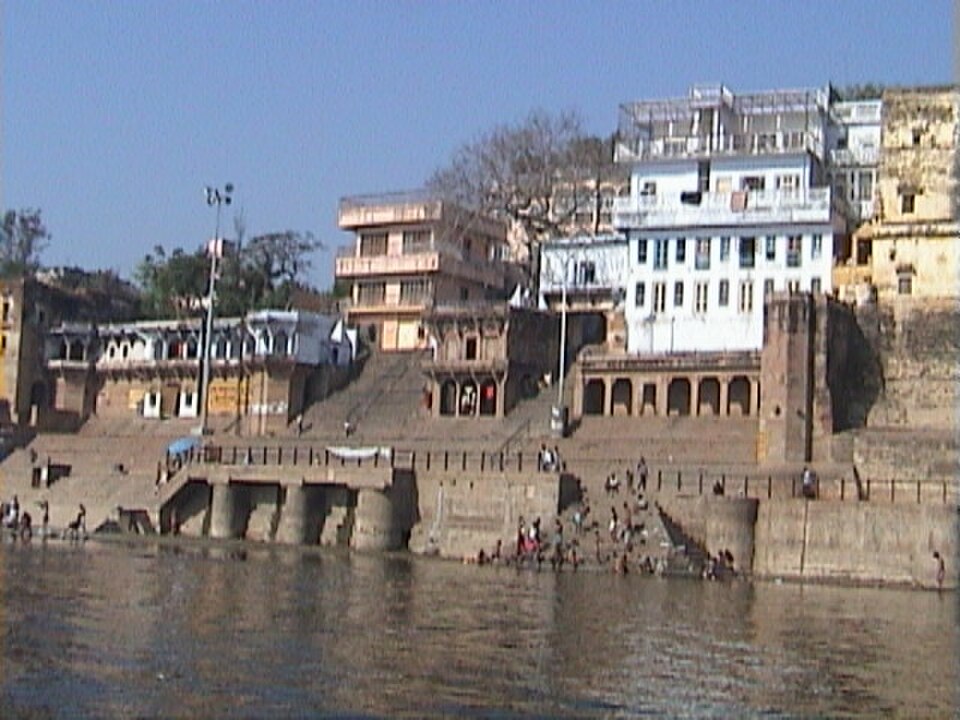
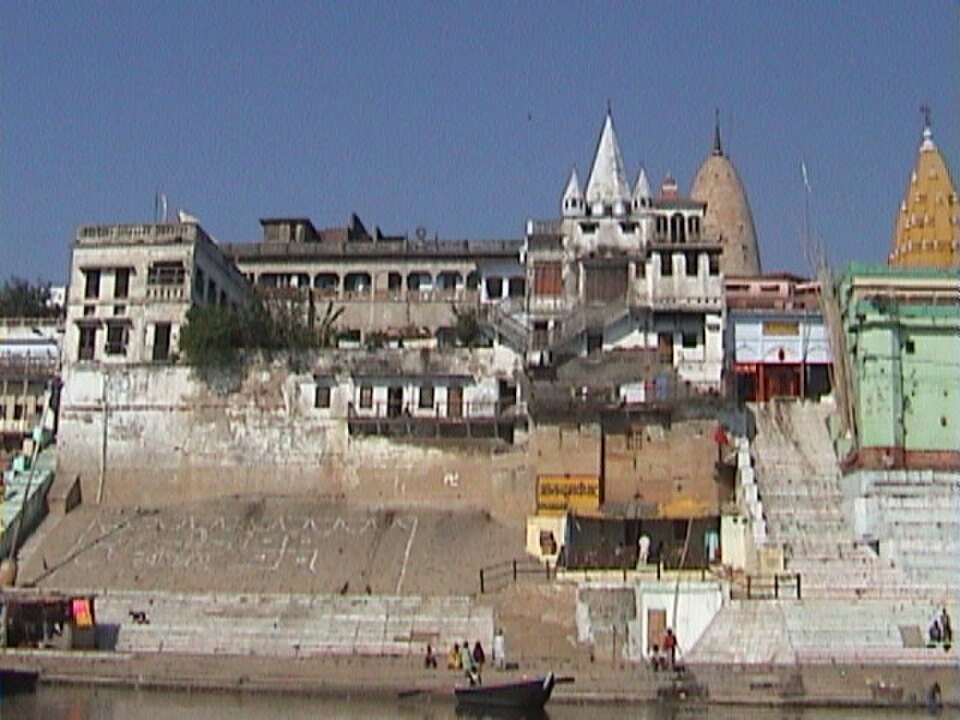
Digpatia Ghat is one of the quieter and more modest ghats of Varanasi, tucked into the southern stretch of the riverfront between the crowded steps of Assi Ghat and the gentler landing of Janaki Ghat. Locally it is also known as Digpatiyan Ghat, a name that carries a legend older than the stone of its steps. It is not a ghat of grand palaces or towering temples; it is a ghat of everyday people — women filling brass pots, children splashing at the water's edge, boatmen dozing in their wooden vessels, and bathers who come before sunrise to greet the Ganga. Pilgrims who hurry past it on the way to Assi rarely pause, yet for the people of the neighbouring mohallas, this short flight of steps is the front door of the sacred river.
Like every ghat of Kashi, Digpatia is believed to be a fragment of heaven touched down upon the earth. The Puranas count hundreds of these landing places along the Ganga, and each has its own story, its own deity and its own crowd of devotees. Digpatia claims no festival that draws lakhs and no aarti that is broadcast on television. What it offers instead is the unvarnished, unhurried rhythm of river life: a dhobi beating clothes on the steps, a fisherman mending his net, a sadhu warming himself in the winter sun, a child chasing a kite along the parapet. In the language of modern tourism this is called authenticity; for the people who live here it is simply Tuesday.
Yet the very humility of Digpatia Ghat is what makes it precious. In a city where every step of stone is believed to grant liberation, the small and the unremarkable ghats often carry the deepest faith, because they belong to ordinary people who could never afford a palace. The name Digpatiya itself is said to honour a poor old woman, a dai, who served the infant gods — a reminder that in Kashi even a grandmother's worn hands can be an instrument of worship. This guide explores the legend, the history, the daily life and the practical details of this gentle corner of the southern riverfront, so that the visitor may arrive not as a stranger but as a guest of the neighbourhood.
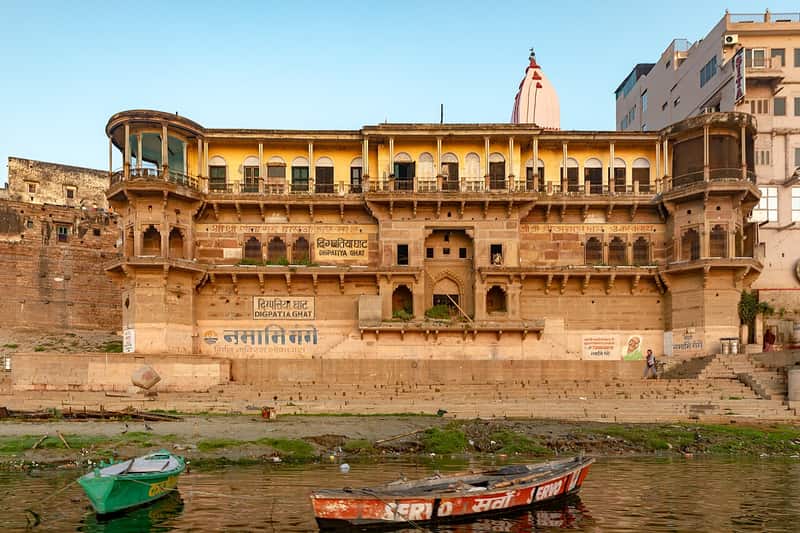
The Legend of the Dai and the Name
The name Digpatia — or Digpatiyan, as the old residents pronounce it — is tied by local tradition to a dai, an elderly serving woman or wet nurse, who once tended a group of newborn deities. According to the story told on the steps, a number of gods appeared as infants near this stretch of the river, and the care of the divine children fell to an old woman of the neighbourhood. She bathed them, fed them, rocked them to sleep and sang them the same lullabies she had sung to her own grandchildren. In gratitude, the gods blessed the ghat with her name, so that the world would remember that heaven itself had once been nursed on these very steps.
Some elders offer a second explanation rooted in the Sanskrit word dig, meaning direction or quarter. The ghat, they say, faces the south, one of the eight quarters of the compass, and from that comes Digpatiya, the lord or station of a direction. Others dismiss such learned readings with a smile and insist that the dai is the truer story, because it is the kind of tale a grandmother tells — simple, warm and a little improbable, which is precisely why people believe it. Whatever the etymology, the two traditions agree that this is a ghat consecrated not by kings but by service, and that its name was given in love rather than in ceremony.
What matters in Kashi is not which version is historically correct but what the story teaches. A poor old woman, whose name history did not record, is honoured in stone at the edge of the Ganga for the simple act of feeding and caring for children. The legend carries a quiet revolutionary idea: holiness belongs not only to priests and kings but to anyone who serves with love. Visitors who hear this tale at Digpatia often leave the ghat a little humbler, seeing in every old woman filling her pot the shadow of the dai of the gods, and understanding why the city that treasures the goddess herself should also treasure the memory of her nurse.
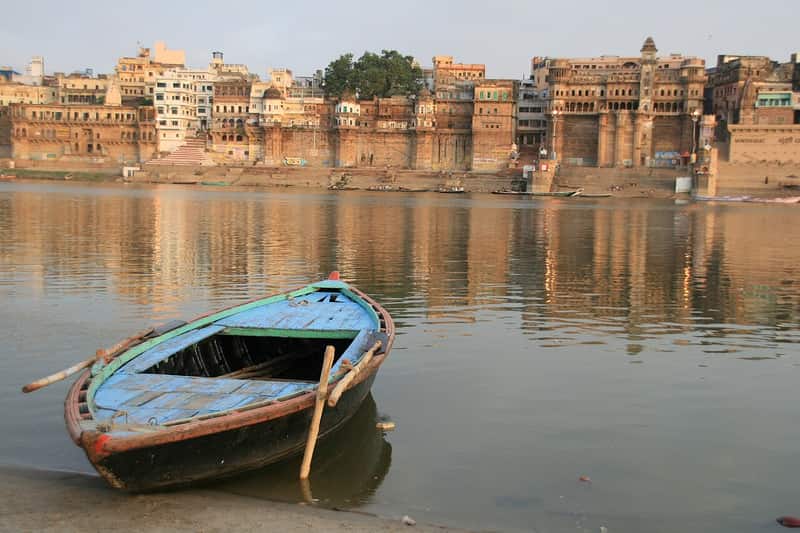
The Ghat Through the Ages
Unlike the great ghats raised by Maratha generals, Rajput queens and wealthy merchants, Digpatia never received a royal patron and therefore has no written record of a single grand inauguration. Its history is the history of the neighbourhood: generations of local families repairing the steps, replacing a broken slab, deepening a drain, whitewashing the small shrine at the top. Archaeological surveys of the southern riverfront note that most of these modest landings were laid out or rebuilt between the eighteenth and early twentieth centuries, when Kashi was already a crowded city of pilgrims and every patch of bank was needed for bathing.
The Ganga itself has been the ghat's greatest builder and its greatest enemy. In the rains the river rises and swallows the steps; in summer it retreats, leaving behind sand and silt that must be scraped away. Each generation has learnt to read the river — to know which stair will crack in the cold, which arch will hold in the flood. Several times the floods have swept away the lower platforms entirely, and each time the people of the mohalla returned with lime, brick and labour, raising the ghat again from the mud, as their grandfathers had done before them. The ghat's memory is written not in inscriptions but in the courses of its repaired stones.
Modern times have brought quieter changes. The municipal administration, under various ghat restoration schemes, has strengthened the foundations and added lamps and railings, while trying not to disturb the character of the place. Electricity reached the narrow lanes behind the ghat long ago; water taps were added; a small tea stall opened near the steps. None of this made headlines, and that is the point — Digpatia's history is unremarkable in the way that the history of a family is unremarkable, made of small acts of care repeated across centuries, which is another name for civilisation. On a ghat without monuments, the monument is the habit of returning.
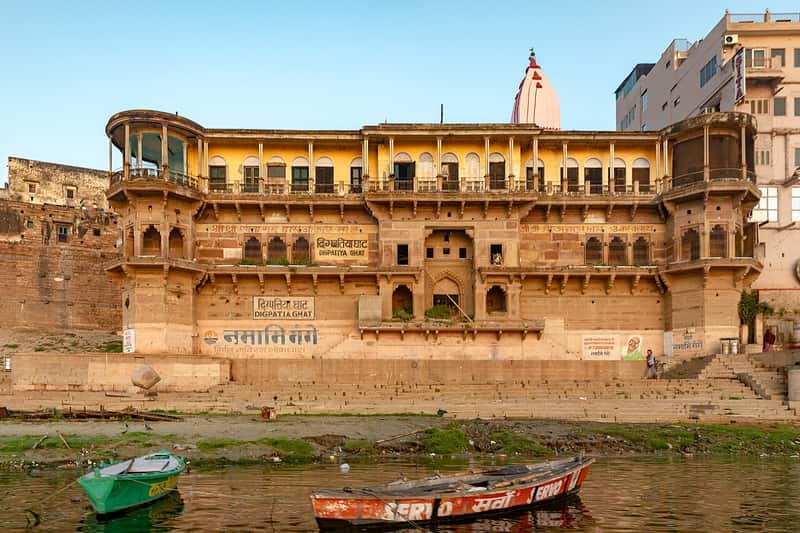
Morning Bathing at the Ghat
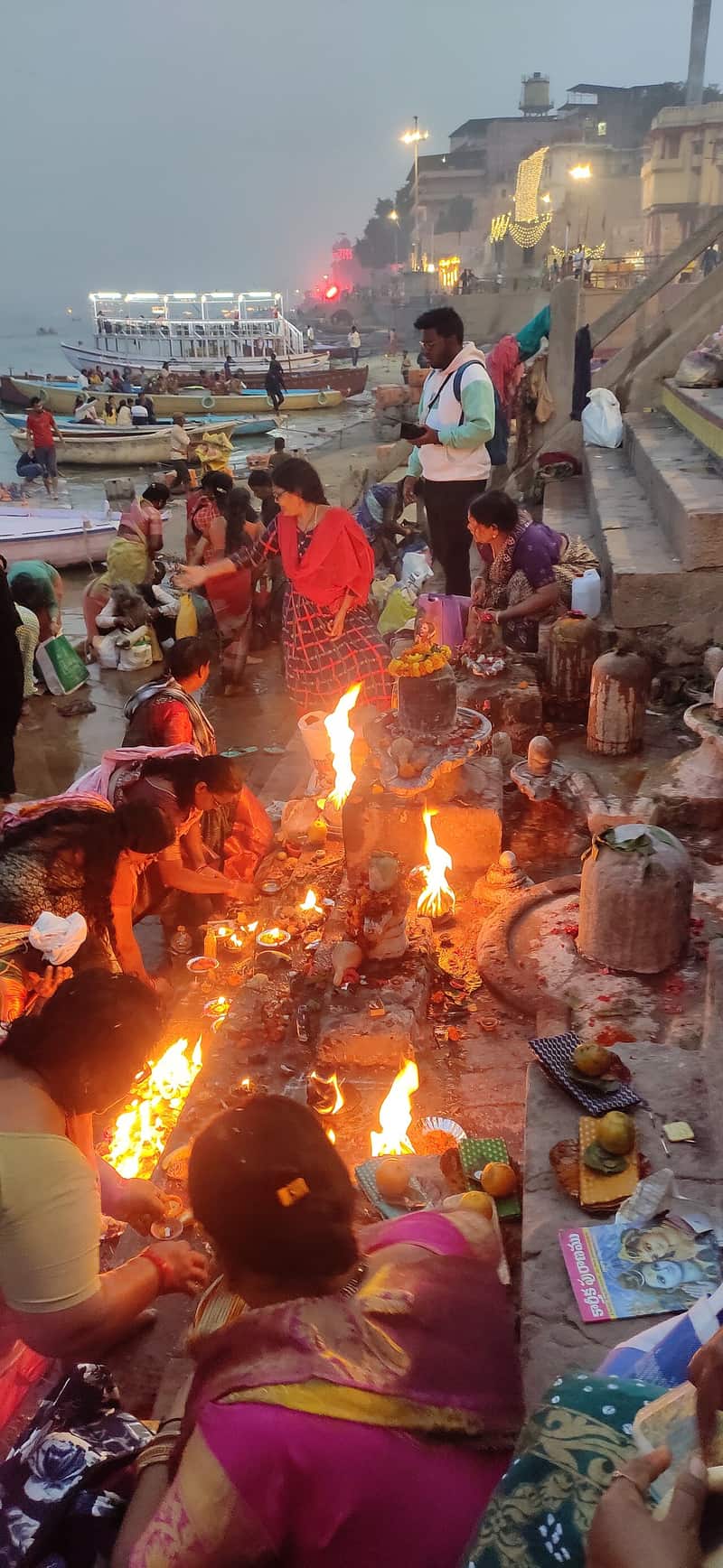
Bathing at Digpatia Ghat is a ritual stripped to its essence. There is no grand aarti, no queue of tourists, no hawkers pressing floating diyas into your hand. Long before dawn the first bathers arrive — old men with towels and brass lotas, women with changes of clothing wrapped in cloth bundles. They stand knee-deep in the cold water, murmur the mantras their ancestors have murmured for generations, dip once, twice, thrice, and pour water in offering to the rising sun. The water is not the cleanest in Kashi, and the wise visitor accepts this fact with the same matter-of-fact faith as the locals, for whom purity is an act of intention rather than of chemistry.
As the sun climbs over the eastern bank, the ghat grows busier but never crowded. Young men swim against the gentle current; women wash clothes in the shallows, beating them on flat stones; a priest performs an abhishek for a newly brought image; a family celebrates a child's first hair-cutting ceremony amid laughter and scattered marigolds. Some bathers bring pots of water to take home for the household deities, carrying the Ganga itself into their lanes. The etiquette is simple: modest clothing, no soap in the river, and never turn your back fully on the current while chanting. What seems like a hundred small actions is in truth one continuous prayer spoken by the whole community.
The seasons give the bathing its different faces. In winter the mist lies thick on the water and the steps are covered with dew, and bathers hurry in shivering and come out steaming. In the scorching summer the stone burns underfoot and the water is welcome relief; old men sit submerged up to their necks for hours, gossiping in the shallows. In the monsoon the river turns fierce and brown, the lower steps vanish underwater, and bathing moves to the upper platforms, where the Ganga's roar replaces the sound of the mantras. Through all of it, the faith remains the same: one dip in this river washes the sins of a lifetime, and the dip costs nothing but courage.
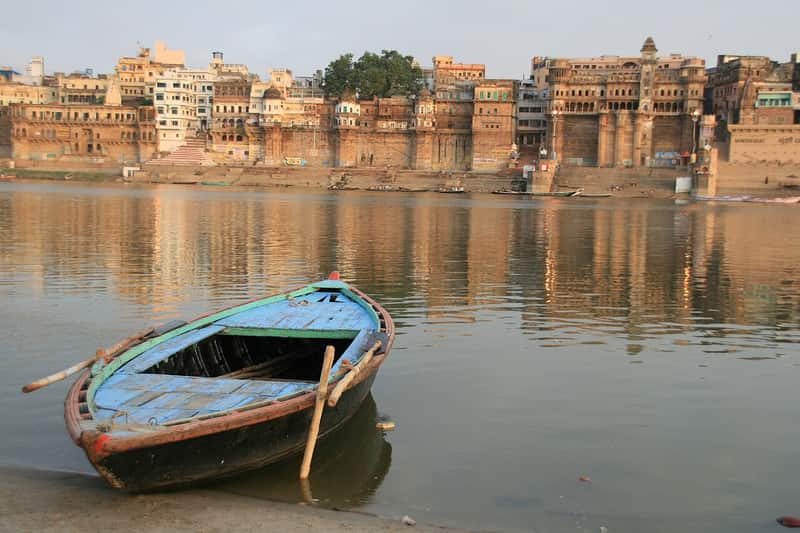
Daily Life at the Ghat
The true daily life of Digpatia Ghat begins when the pilgrims leave and the neighbourhood takes over. By mid-morning the bathers have gone home, and the steps become the backyard of the mohalla. Boatmen lounge in their wooden vessels, chewing tobacco and discussing the price of petrol; a woman scrubs her brass utensils in the shallows; dhobis spread wet clothes over the parapet until the stones bloom with coloured cotton. Children jump off the platform with shrieks of joy, swimming lessons conducted by the eldest boy of the lane, who charges nothing and accepts respect as payment.
The ghat is also a workplace. Fishermen untangle their nets at the waterline, sorting the day's catch of small silver fish. A man repairs the caulking of his boat with tar and rag, singing in a low voice. Sadhus who have renounced the world camp on the upper steps, their meagre belongings in a cloth bundle, their eyes on the river. Cows wander down the steps to drink, goats nibble at the grass between the stones, and a few pi-dogs have appointed themselves guardians of the tea stall, where the price of chai has not changed in years and the owner knows every customer's order.
In the late afternoon the ghat turns into a stage of quiet theatre. Old women sit in the shade with their grandchildren, shelling peas; men play cards on a spread cloth; a barber sets up his mirror and stool at the edge of the platform. The boats return from their trips with tourists and with vegetables from the far bank, and the boatmen tie them up with the same unhurried knots they have used all their lives. Nothing here is arranged for the visitor, which is exactly why visitors who take the trouble to sit and watch always say the same thing: this is where they finally saw the real Banaras.
The River and the View
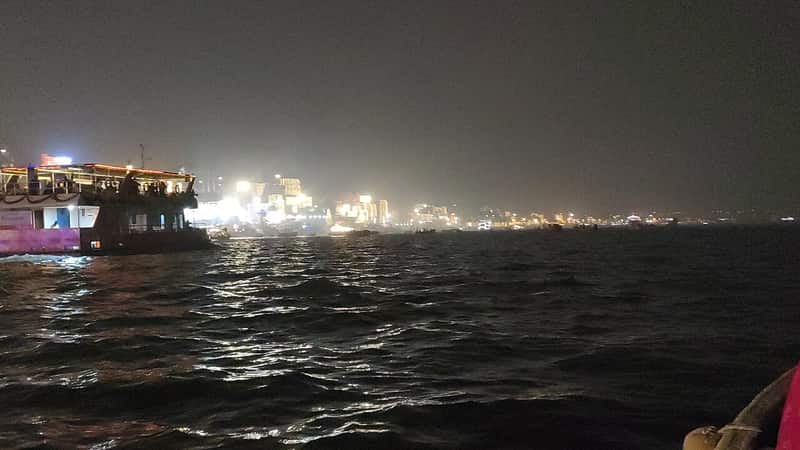
The view from Digpatia Ghat is not of the famous skyline of domes and temples that appears in posters, but of the river itself in its enormous, uncluttered simplicity. Here the Ganga runs wide and calm, a sheet of grey-green water several hundred metres across. The far bank is low and sandy, dotted with fields and a few thatched villages of the eastern side, where life goes on almost without the city's presence. In the early morning the sun rises directly over those fields, turning the river into a corridor of gold; by evening the west bank behind the ghat is in shadow while the water still holds the light.
The river here is a working river. Heavy wooden boats cross from bank to bank, ferrying men, cattle and sacks of produce; a narrow boat glides past with a whole family aboard, children waving from the prow. Sand dredgers idle at a distance, and gulls wheel above the water in noisy squadrons. In winter the mist erases the far bank completely, and the boats appear to sail into a white void; in the monsoon the current is so strong that boatmen row upstream at an angle and the sound of the water fills the whole ghat. The river gives the ghat its moods, its weather and its clock, and no two days on these steps look alike.
For the devout, this water is not scenery but the goddess herself, and the view from the steps is a form of darshan. Pilgrims pour a little water from their palms as an offering, facing south, thinking of their ancestors; others simply stand with folded hands, watching the evening light on the water, finding in the immense silence a prayer deeper than words. The visitor who spends an hour at Digpatia doing nothing but watching the river will understand why the sages chose to live here: the Ganga does not need to be visited, she needs to be beheld, and a humble ghat is the best place for it.
Lanes and Mohalla Behind the Ghat
Behind Digpatia Ghat, the city gathers itself into the dense, shadowy labyrinth of old Kashi. A few steps up from the river, the lane narrows until two people can barely pass, and the sky becomes a thin blue ribbon between roofs that lean toward each other like old friends. The houses are tall and worn, their wooden doors carved a century ago, their balconies hung with drying clothes and tulsi plants in clay pots. Every few paces a small shrine appears — a Hanuman under a peepal tree, a shiva linga in a niche, a sheet of foil over a photograph of a goddess — marking the neighbourhood's countless layers of devotion.
The mohalla is a world of its own. In the morning the lane is washed and swept, women draw water and call greetings to each other from doorways; by afternoon the shopkeepers unfold their shutters and the air fills with the smells of frying pakoras, burning incense and sweet paan. Children play cricket with a tennis ball and a wooden bat, the stumps chalked on a wall; a tailor squats over his machine at the lane's bend; a barber's shop is also the local newsroom, where every event in the neighbourhood is discussed and judged. The people here are mostly old families — Brahmins, boatmen, shopkeepers — who have lived within a hundred metres of the river for generations.
The lanes carry their own names, remembered by the old and half-forgotten by the young: narrow passages called after a temple, a well or a long-dead benefactor. At the head of the ghat stands a modest community well, and around it the women gather each evening in a ritual of gossip and laughter. The visitor who leaves the river and walks into these lanes is no longer a tourist but a curiosity — greeted with warmth, offered tea, asked where they are from and whether they have eaten. It is in these lanes, more than on any famous ghat, that the old Banaras of poets and storytellers is still alive.
Neighbouring Ghats: Assi and Janaki
Digpatia Ghat sits within a few minutes' walk of two very different neighbours. To the south lies Assi Ghat, the most celebrated and the busiest ghat of the southern riverfront — the place where the Assi stream meets the Ganga, where Subah-e-Banaras unfolds every dawn with songs, yoga and boat rides, and where the evening aarti draws hundreds of visitors. By comparison Digpatia is a village of two hundred people next to a metropolis. The contrast is instructive: visitors who spend an hour at Assi and then walk ten minutes north find themselves in a different world, silent, intimate and slow.
To the north, barely a stone's throw away, is Janaki Ghat, a small and peaceful landing that continues the quiet stretch of the riverfront. Beyond it lie the steps of Tulsi Ghat — intimately connected with the great poet-saint Tulsidas, who is said to have lived and written here, and where the Hanuman temple honours him — and then Bhadaini and other modest ghats climbing northward in a line. South of Assi stretches the newer riverside of Ravidas Ghat with its fine temple, and the open ground of the Nagwa area. In other words, the visitor to Digpatia stands at the hinge of the southern riverfront, with the city's liveliest ghat on one side and its quietest ones on the other.
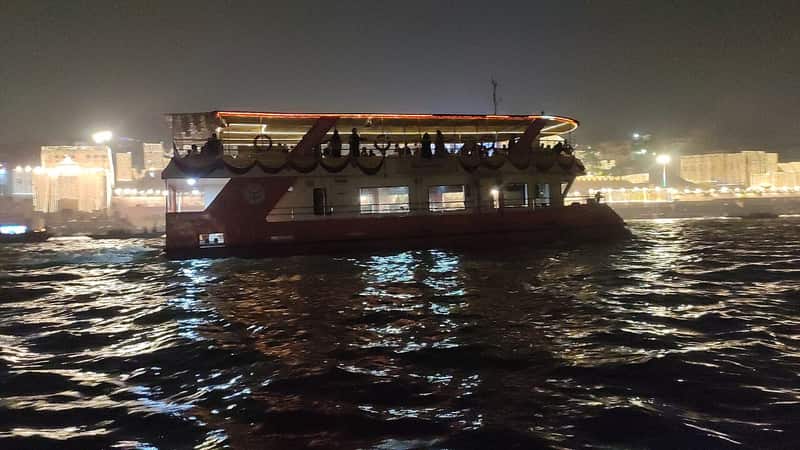
Because the ghats of this stretch are close together, they are best visited on foot along the river path. The walk from Assi to Tulsi Ghat takes about twenty unhurried minutes, past bathers, boats and tea stalls, with the river on one side and the old lanes on the other. A rowing boat can also ferry visitors between the ghats in a few minutes for a modest fare, giving a mariner's view of the entire stretch. Whatever the route, the sensible plan is to make Digpatia part of a longer southern walk — arriving at dawn with the bathers, resting on its steps in the heat of noon, and finishing the evening at the bright festivities of Assi.
Local Festivals and Celebrations
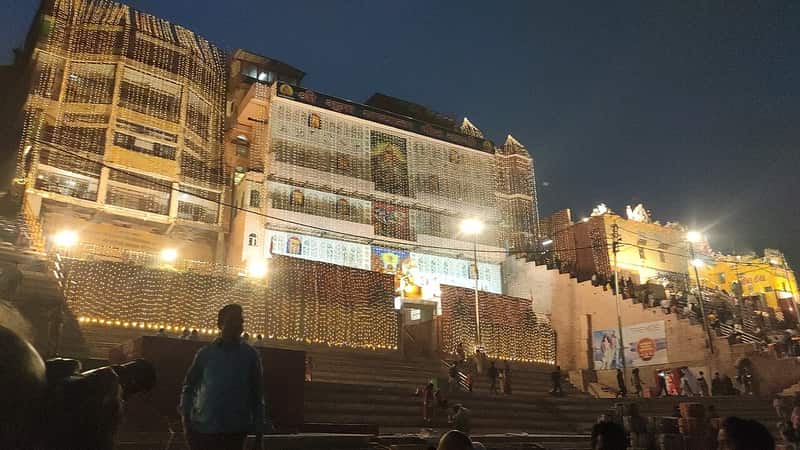
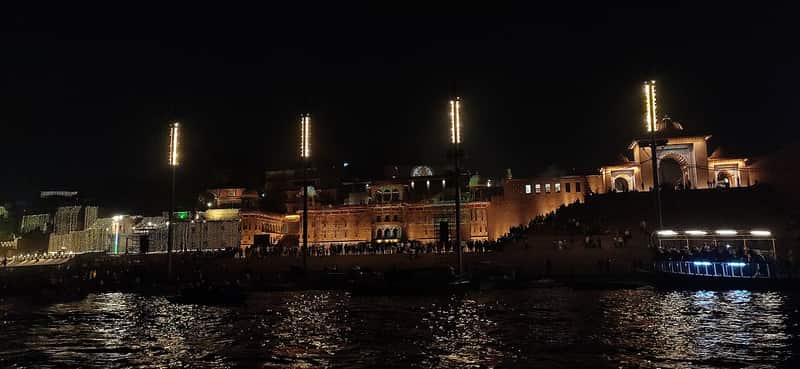
Festivals at Digpatia Ghat are scaled to the size of the ghat itself — they are the festivals of one mohalla, not of a city, and they are no less moving for that. On Kartik Purnima and Ganga Dussehra the entire riverfront of Kashi is lit, and Digpatia is no exception: in the evening the women of the neighbourhood float hundreds of little earthen lamps on leaf boats, setting the water alight with flickering flames, while children run along the steps chasing the drifting lights. It is Dev Deepawali on a domestic scale — no cameras, no stage, only families and their prayers on the dark water.
Through the year the ghat and its lanes follow the festival calendar of old Banaras. On Makar Sankranti the sky above the ghat fills with kites, and the steps are crowded with children and uncles in a fierce, friendly battle of string. During Durga Puja the neighbourhood raises a temporary pandal in the lane above the ghat, and the goddess's image arrives in a noisy procession of drums to the edge of the river for the ritual immersion. On Nag Nathaiya, celebrated a few ghats to the north at Tulsi Ghat, the people of the southern riverfront gather to remember Krishna's victory over the serpent, and Digpatia's families walk up the bank to join them.
Weddings and life-cycle rites give the ghat its most personal festivals. Bridal parties descend the steps to the water for the ritual bath and the offering to the ancestors; a newborn's hair is shaved at the water's edge with mantras and sweets; the ashes of the dead are given to the river, and the mourners wash away their grief. On every such occasion the neighbourhood turns out, the tea stall does brisk business, and the ghat glows with the sense that this small piece of the bank belongs to the family of the whole mohalla. For the visitor, these local celebrations offer the truest glimpse of how faith is lived in Kashi — not in spectacles, but in the small, repeated acts of a people's year.
The Humble Devotional Character
The devotional character of Digpatia Ghat is its deepest secret and its clearest message. Here worship is not performed for an audience; it is performed because it must be performed. In the dim hours of the morning one can hear the murmur of prayers from the upper steps, where a group of old men chant in a slow, practised rhythm. Women pour water on the small linga in the shrine at the head of the ghat, smear it with vermilion and marigold, ring the bell once, twice, and return to their chores. There is no priest collecting fees and no queue of devotees; there is only the steady, unspectacular machinery of everyday faith, which has never stopped since the ghat was built.
This is devotion of the kind the legend of the dai celebrates — service rendered without fame, holiness worn without display. The bather who dips at Digpatia does so not to be seen but because the river demands it; the old woman who feeds the pigeons on the steps asks nothing in return; the boatman who turns his face to the east at sunset is praying with a silence that needs no temple. The ghat's shrines are small and poor — a faded flag, a cracked bell, an oil lamp burning in a niche — and precisely in that poverty they carry the authentic accent of Kashi's piety, where God is found not in gold but in the folds of daily habit.
Devotees at Digpatia tend to describe their ghat with a particular word: humble. They say the Ganga listens here more attentively because the noise is less. They tell of old men who came to bathe every single morning of their lives, and when they died, their sons continued the habit, so that the water has become a family heirloom passed down through hands. The visitor seeking a spectacle will find nothing at Digpatia; the visitor seeking a place to pray will find that the ghat itself is a prayer — slow, old and still alive, murmuring its mantras to the river that has heard them for a thousand years.

Etiquette and Respectful Conduct
Because Digpatia is a working ghat rather than a tourist stage, visitors are welcomed with warmth but watched with curiosity, and a few simple rules of conduct will make the welcome lasting. Dress modestly when bathing or walking the steps — a kurta, salwar, or a shirt and long trousers is appropriate, and the traditional cloth wrap for men is customary in the water. Remove your footwear before entering the small shrines at the head of the ghat, and never photograph the deities, the ceremonies or the bathers without asking permission first. A friendly question in Hindi opens every door; a camera raised without one closes every heart.
Respect the water as the goddess the people believe her to be. Do not throw soap, plastic or any refuse into the Ganga; do not wash with detergent in the shallows; do not wade far from the steps during the monsoon when the current is dangerous. Take care around the boats and their owners — nothing on the riverfront is free, so agree on the fare before stepping into a boat, and tip the boatman generously at the end. Do not feed the cows or dogs scraps of fried food, and do not disturb the sadhus who camp on the steps; a namaste and a little distance are the correct form of respect.
The ghat belongs first to the people who use it every day, and the visitor who remembers this will find the experience transformed. Allow the bathers their privacy in their rituals; do not stand between a worshipper and the river; keep conversations low during the morning prayers; ask before joining any ceremony, and if invited, follow quietly and imitate the gestures. Elderly people, mothers with children and pilgrims carrying offerings always have the right of way on the steps. Above all, leave nothing behind but footprints in the sand — carry your rubbish back to the lane, and carry away only the memory of a river that received you with the same indifferent, generous silence it has shown everyone for centuries.
Practical Information for Visitors
Digpatia Ghat lies on the southern riverfront of Varanasi, between Assi Ghat and Janaki Ghat, and is easily reached on foot from either. From the busy Assi Ghat, walk north along the paved river walk for about five to ten minutes, past the smaller landings and boats; from the road, the ghat can be entered through the narrow lanes opposite, and a cycle-rickshaw can drop you within a few steps of the head of the ghat. For a more memorable approach, hire a rowing boat at Assi and cross the river to the ghat in a few minutes. The nearest major landmarks are Assi Ghat to the south and Ravidas Park in the same direction.
The best time to visit is early morning, between six and eight, when the bathing is at its most authentic and the light is golden; the evening hour before sunset is equally beautiful, when the water turns to molten metal and the boats return. The pleasant season runs from October to March, with cool, clear days; April to June is hot, and the monsoon from July to September raises the river, sometimes covering the lower steps and making bathing risky. On major festival days such as Dev Deepawali and Ganga Dussehra the ghat is at its most festive, but also crowded. Check the weather, and be mindful that the ghat offers steps only — there is no ramp or lift.
Around the ghat the visitor will find the basics of comfort: tea and snacks at small stalls on the lane above, a few simple eateries in the direction of Assi, and the wider choice of restaurants in the Assi area for meals. Public toilets are scarce in old Kashi, and the nearest reliable facilities are towards Assi Ghat. For a fuller day, combine Digpatia with a walk to Tulsi Ghat and its Hanuman temple to the north, and to Assi Ghat and Ravidas Ghat to the south, making a leisurely circuit of the southern riverfront. Carry a reusable water bottle, wear shoes that can handle wet stone, and give yourself time — Digpatia is a ghat to be sat with, not rushed through.
Digpatia Ghat — Gallery (12 Photos)
Image Credits
digpatia-01.jpg · digpatia-02.jpg · digpatia-03.jpg · digpatia-04.jpg · digpatia-05.jpg · digpatia-06.jpg · digpatia-07.jpg · digpatia-08.jpg · digpatia-09.jpg · digpatia-10.jpg · digpatia-11.jpg · digpatia-12.jpg — Wikimedia Commons, under free licenses.
Continue exploring
Similar Ghats Nearby
Book This Ghat — Get Notified
Download the app now and book a boat ride to Digpatia Ghat