

Pandey Ghat
Neighbourhood GhatPandey Ghat is a small ordinary ghat.


Type
Neighbourhood Ghat
Boat Fare
1x base fare
Best Time
5-9 AM
History
This ghat belongs to the pandit community, who have enriched Kashi’s ritual traditions. It remains a centre of puja and karmkand.
Highlights
- Ritual traditions of the priest community
- Centre of karmkand (rituals)
- Peaceful bathing site
Festivals & Events
How pricing works in the NaviX app
No haggling at the ghat — everything is fixed in the app first
- 1
Fixed price before you board
The fare is shown in the app upfront — no bargaining at the ghat
- 2
Sharing or private — your choice
Share with fellow travelers or take the whole boat for your group
- 3
Pay only after the ride
UPI, card or cash — with an instant receipt
🕉️
Aarti details not available for this ghat yet
Complete Guide
Pandey Ghat — The Complete Guide
History, mythology, rites and practical details — everything in depth.
On this page
- 1.Pandey Ghat — An Introduction to the Quiet Priest Ghat
- 2.The Pandey Family — Priests of the Ghat
- 3.A Priestly Legacy Written in Stone
- 4.Pind Daan, Tarpan and the Rites of the River
- 5.The Morning Bath — A City Washes in the Ganga
- 6.Bathers, Boatmen and the Everyday Riverfront
- 7.The River and the View from Pandey Ghat
- 8.The Lanes and Mohalla Behind the Ghat
- 9.Rajendra Prasad and Digpatia — The Neighbouring Ghats
- 10.Festivals on the Quiet Ghat
- 11.Etiquette for Visitors — Respect and the Priests
- 12.Practical Guide — Reaching Pandey Ghat
📅 Updated: 21 Aug 2026 · Author: NaviX Field Team (field research 2024-26) · 12 sections · 12 photos
Pandey Ghat — An Introduction to the Quiet Priest Ghat
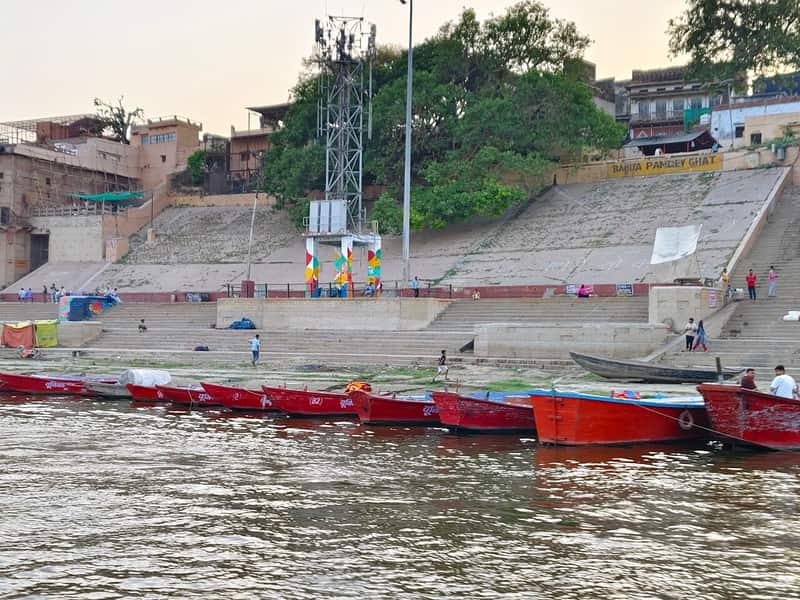
Pandey Ghat is one of the quiet old priest ghats of the northern riverfront of Varanasi, set in the long chain of steps and bathing platforms that runs north from the crowded centre of the city toward the open river. The ghat takes its name from the Pandey family of hereditary priests who have served this stretch of the bank for generations — receiving pilgrims, guiding their rites, keeping the registers of their visits and performing the daily ceremonies of the water — a thoroughly old-Kashi story, in which a ghat belongs not to a king or a merchant but to the priestly family that has prayed upon its stones since time out of mind. To the south lie the small Khori Ghat and the Rajarajeshwari Ghat, and just beyond them the broad steps of Rajendra Prasad Ghat; to the north begins the quieter run toward Digpatia Ghat and the ancient northern tip of the city.
Unlike the grand showpiece ghats of the centre, Pandey Ghat has no palace, no marble pavilion and no celebrated temple towering over its steps. What it possesses is older and rarer: well-worn stones hollowed by countless feet, wide bathing platforms at the waterline, small shrines tucked into the walls, and the everyday traffic of bathers, boatmen and families who have lived beside the river for centuries. In the first light the steps fill with pilgrims performing their ablutions while priests murmur the mantras of the morning rite; by midday the ghat belongs to the boatmen mending ropes and hauling their craft; at dusk the oil lamps of the little temples are lit one by one, exactly as they have been lit every evening for as long as memory reaches.
To stand on Pandey Ghat is to see the riverfront as it once was everywhere along the Ganga — unassuming, domestic and deeply alive. The ghat keeps no clock for tourists; its hours are the hours of prayer and work, of the sun on the water and the turning of the seasons. For the visitor willing to slow down, it offers the most honest introduction in Varanasi to what a ghat truly is: a sacred threshold between the city and the river, tended by the families who have always tended it, still performing day after day the oldest duties of the faith. There is no entrance fee and no spectacle, only the river, the steps and the life of the neighbourhood — a place to sit, to watch and to understand rather than to hurry past.
The Pandey Family — Priests of the Ghat
The story of Pandey Ghat is first of all the story of the Pandey family, the hereditary priests after whom the ghat is named. These are the pandas of Kashi — the pilgrim priests who for centuries have met travellers at the water's edge, welcomed them in the name of their ancestors, and guided them through the long sequence of rites that a visit to the holy city demands. Like the priestly families of the other ghats, the Pandeys inherited their office from father to son, and their memory of the ghat reaches back into the time of the great pilgrim routes, when every family of substance in northern India kept a bond with a particular panda family of Banaras, and every pilgrimage began with the greetings of the priest on the steps.
The work of the family was both sacred and practical. A panda received the pilgrims, noted their family and village in the great registers that priestly families still keep, arranged their lodging and their food, and performed the ceremonies — the shraddha for the ancestors, the offerings in the Ganga, the visits to the temples — with the precision that only generations of practice can give. The relationship was hereditary on both sides: a family that had once placed itself under a particular panda returned to him for decades, and the registers of the priestly households of Kashi record pilgrim families across many generations, a written memory of the devotion of millions. The Pandey family of this ghat played that role with quiet skill, and the ghat carried their name because the city remembered who had kept its faith alive.
The legacy of the family endures in the everyday rhythm of the ghat. The present generation still performs the morning rites, still receives the pilgrims who come by the old lanes, and still teaches its sons the mantras and the mudras, the Sanskrit of the ritual and the languages of the pilgrims who arrive from every province of India. Fewer pilgrims come to the northern ghats than in the age of the great pilgrimage caravans, and the family's work has grown quieter, but it has not ceased: the same hands that light the lamps at dusk are the hands of the priests whose forefathers gave this ghat its name. In this the Pandeys embody the deepest truth of old Kashi — that its sanctity has always been carried by families, not by monuments.
A Priestly Legacy Written in Stone
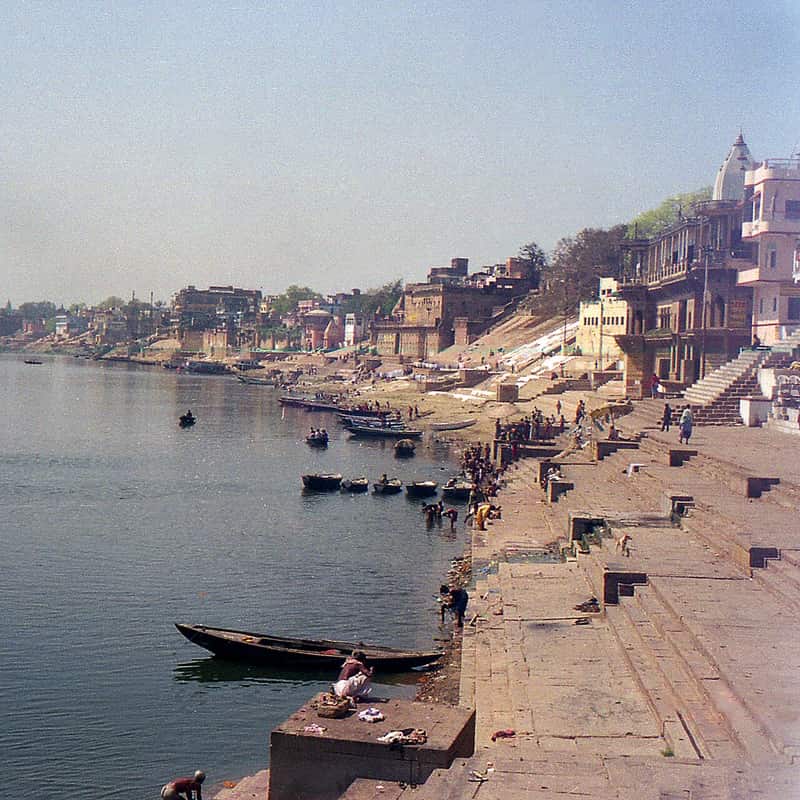
The history of Pandey Ghat is the history of the priestly tradition of Varanasi itself. Across the riverfront, ghats were built by kings, queens and merchants, but a great many were simply claimed, named and sanctified by the families of priests who served there — and the Pandeys belong to that second, humbler and more enduring class of founders. The stones of the ghat were laid and relaid over many centuries: a step here by a grateful pilgrim who returned year after year, a platform there by a merchant family honouring its guru, the whole worn smooth by the feet of the generations. No inscription announces a single builder, because the ghat was built by devotion itself, one stone at a time, and the family's memory is its only charter.
Written records of the priestly ghats are sparse but telling. The gazetteers and the accounts of European travellers who walked the northern riverfront in the eighteenth and nineteenth centuries describe a stretch of the bank dominated by the houses of pandit families, their long staircases running down to the water and their verandahs crowded with pilgrims waiting for the auspicious hour. Pandey Ghat figures in this literature as a modest, busy place — a residential ghat, as it remains today, where the ritual business of the city was carried on within earshot of the kitchens and the courtyard wells. The records show, too, how the ghats recovered again and again after floods and famines, the steps rebuilt by the same families that had always tended them.
Continuity is the real monument of the ghat. Where the great ghats of the centre were rebuilt in the nineteenth and twentieth centuries as grand ceremonial stages, Pandey Ghat kept its older shape: the plain steps, the simple platforms, the unpretentious shrines of a place that was always lived in rather than exhibited. Its history is written in the small things — the worn hollows of the stones where generations of feet have stood to pour water for the ancestors, the marks of the mooring rings worn into the masonry, the names of the family's forefathers preserved in the registers rather than in bronze. Read this way, the ghat is a living archive of the priestly tradition, and every morning rite performed upon its steps is a page added to a history that began before memory.
Pind Daan, Tarpan and the Rites of the River
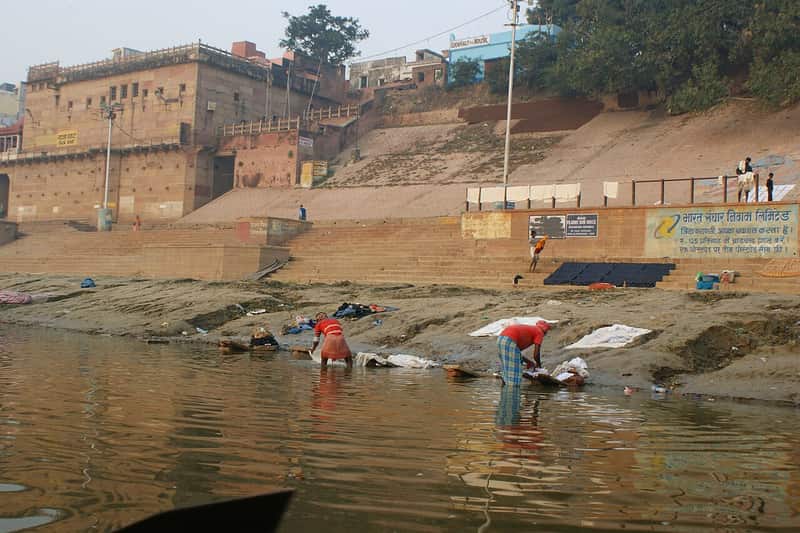
The rituals of Pandey Ghat are the oldest business of the riverfront, and at their centre stands pind daan — the offering of the pindas, the balls of rice, barley and sesame offered to the ancestors at the water's edge. Performed by pilgrims who have come to Kashi for the rites of their dead, the ceremony begins when the priest marks out a small sacred space on the platform, the mourner washes and offers water, and the pindas are placed upon the darbha grass with the names of the departed spoken aloud. The belief is simple and profound: that the offerings made in the Ganga at Kashi reach the ancestors wherever they may be, and that the river itself carries the prayers to the other shore. For this reason pilgrims travel sometimes hundreds of miles to perform the rite here, and the ghat sees this service throughout the year.
Beside pind daan stands tarpan, the offering of water and sesame to the souls of the departed, poured from the cupped hands while the names of three generations are recited. Tarpan is performed on the new moon, on the death anniversaries of the family, and above all during the fortnight of Pitru Paksha, the sacred season of the ancestors, when the northern ghats fill with mourners in white and the priests sit long hours at the waterline guiding the rite. In these weeks the atmosphere of the ghat changes: the steps are crowded with families from the villages and the far provinces, the air smells of incense and wet earth, and the murmur of the mantras rises and falls with the river. The priest's voice, low and unhurried, carries the ceremony from the first water to the last, and the rite ends only when the river has received everything.
Around these great ceremonies the ghat keeps a quieter daily calendar. Each morning the priests perform the sandhya and the small pujas of the shrines; each evening the lamps are lit and the bells ring; on festival days the platforms are washed and decorated, and on ordinary days the rites of the morning — the offerings of marigold, the pouring of water, the tilak and the blessing — are performed by the families of the neighbourhood themselves. What the visitor sees at Pandey Ghat, if he sits long enough, is the full shape of the ritual year: the great seasonal ceremonies drawing the crowds, and the small steady observances that carry the faith from day to day, unbroken, as they have been carried for centuries on this same stretch of stone.
The Morning Bath — A City Washes in the Ganga
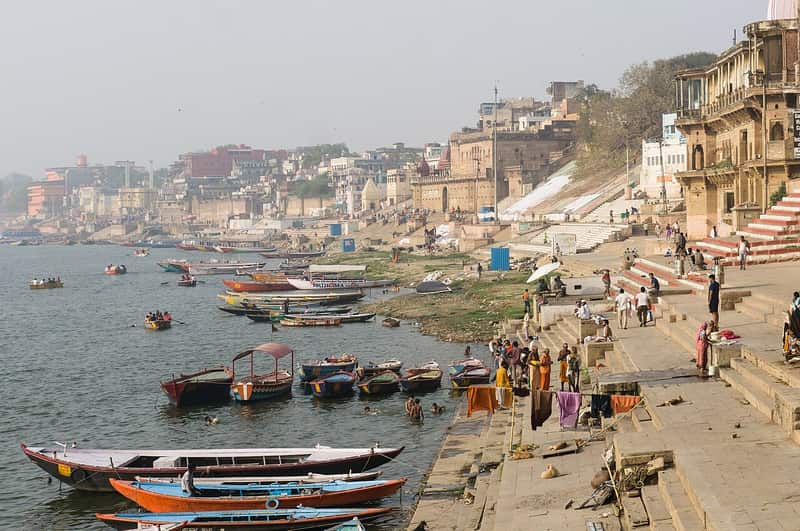
The day of Pandey Ghat begins, like the day of every ghat in Kashi, with bathing in the Ganga. Long before sunrise the first figures appear in the half-dark — old men with brass lotas and cotton towels, women in wet saris carrying their clothes in bundles, children still heavy with sleep — and descend the worn steps to the water's edge. The river here on the northern stretch is cold and comparatively clean, and the bathing is performed with the gravity of a duty: the triple dip, the pouring of water over the head, the facing of the east, the silent repetition of the names of the river. Then, one by one, the bathers climb out, wring their clothes, and sit on the steps to dry, their bodies steaming faintly in the first cold light.
By sunrise the ghat has become a moving, living picture of the morning. Women bathe and wash their clothes on the lower platforms, beating the fabric against the stone; men shave and perform their ablutions at the waterline; priests take their places with their almanacs, fixing the auspicious hour for a ceremony; and the flower sellers lay out their garlands on a cloth at the top of the steps. Children splash between the boats, old friends exchange news while they dry, and the barbers work at their patches of stone, serving mourners and festival-goers alike. The northern ghats are quieter than the great ghats of the centre, and here the bathing is more intimate — a domestic rite of the neighbourhood rather than a spectacle for pilgrims and cameras.
For the people who live behind the ghat, the morning bath is at once a necessity, a pleasure and a devotion. The river washes the body and the spirit together, and the habit is so old that no one can say when it began; the bathers of Pandey Ghat are simply the latest in a chain of generations that reaches back to the founding of the city. The visitor who comes at dawn and sits quietly on the upper steps will see the rite exactly as it has always been done — unhurried, unperformed, complete in itself. It is the oldest show in Varanasi, and the one that costs nothing and demands no applause, and it asks only to be witnessed with the same respect with which it is offered.
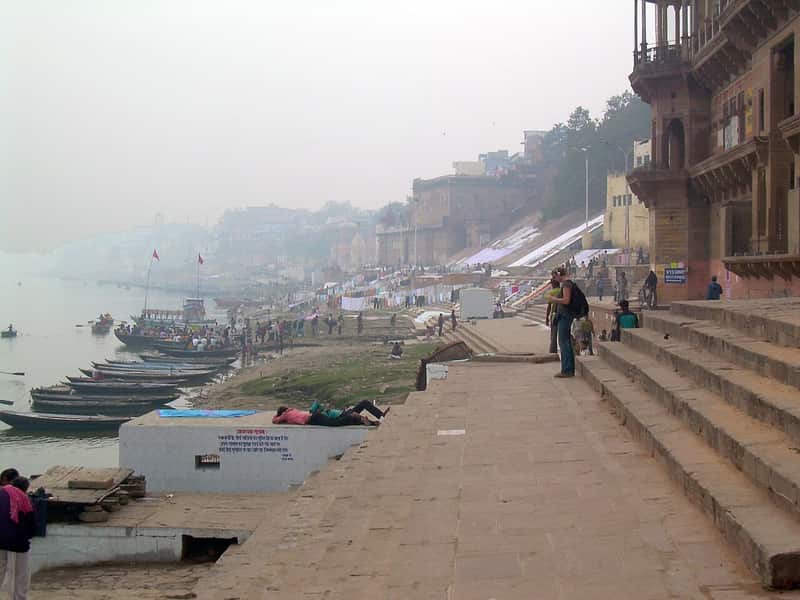
Bathers, Boatmen and the Everyday Riverfront
Away from the great ceremonies, Pandey Ghat is an ordinary working riverfront, and its daily life follows the plain rhythms of the water. In the early morning the boatmen arrive to check their craft, bail out the night's rain and coil the ropes; through the day their boats carry passengers and goods across to the villages of the far bank, returning with milk cans, market produce and school children; at dusk the last ferries come in and the boats are tied for the night, their lights bobbing on the darkening water. The landing at the foot of the ghat is a busy, unglamorous place of ropes and oars, wet wood and river mud — the working face of a city that has always lived by the river and on it.
Behind the boatmen, the life of the ghat is domestic and unhurried. Women of the neighbourhood come down to wash clothes and brassware on the platforms, spreading them to dry on the railings and the parapets; dhobis beat the washing with a practised rhythm; vendors set up their trays of bangles, vegetables and puja items at the top of the steps; and the elders of the mohalla sit in the shade of the walls, watching the river turn from silver to gold as the afternoon passes. Children treat the ghat as their playground, dogs sleep on the warm stones, and the sounds of the day — the bells of the temples, the cries of the boatmen, the splash of water — compose the steady background music of the neighbourhood.
It is precisely this ordinariness that makes Pandey Ghat precious. The grand ghats of the centre have been polished into stages where the life of the river is performed for visitors; here, at the northern end of the chain, the same life is simply lived. The traveller who lingers will be rewarded with the sight of Varanasi as it really is on an ordinary morning or evening — not the city of brochures and sunsets, but the city of families, of working hands and patient patience, of daily faith and daily bread. The ghat is small, unadorned and easily overlooked, and that is its charm: it asks nothing of the visitor except that he sit, watch and understand that the holiest city of India is, above all, a place where ordinary people live.
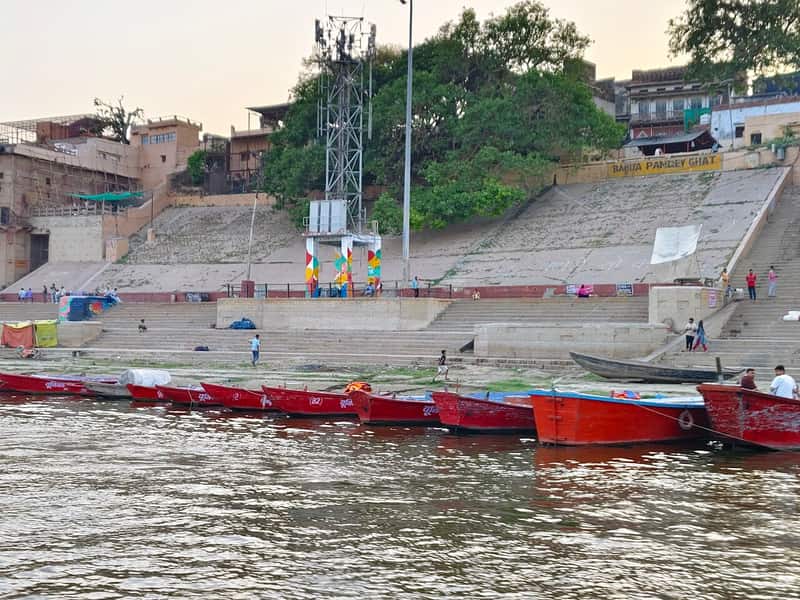
The River and the View from Pandey Ghat
The Ganga at Pandey Ghat is the river at its most expansive. The northern stretch of the riverfront, where the ghat lies, is broad and slow, the current lazy between the city bank and the long sandbanks of the far shore, and in the dry season the river withdraws so far that the boats lie on the sand and the waterline seems miles away. From the steps of the ghat the eye travels over an immense sheet of light: the pale gold of the morning, the hard white of noon, the amber and violet of the evening — and beyond the water, on the far bank, the low green villages of the countryside that have watched the city across the river since its beginning.
The life of the river is everywhere visible from the ghat. Herons stand motionless in the shallows, gulls wheel over the boats, and the great rafts of the fishermen drift past with the current; kingfishers flash blue over the water, and in the evenings the bats stream out over the sandbanks. Through the day the traffic of the river passes before the steps — the ferries and the cargo boats, the funeral processions moving north toward the burning ghats, the excursion boats of visitors returning from the city. In the monsoon the scene changes utterly: the river rises to the top of the steps, the sandbanks vanish, and the Ganga becomes a great moving sea of brown water, thundering past the ghat with the debris of the Himalayas in its current.
For those who live here, the river is not scenery but goddess — Ganga Ma, the mother who receives the ashes of the dead, the prayers of the living and the faith of the whole city. The reverence is visible in small things: the first water poured toward the sun at dawn, the lamps floated on the current on festival nights, the foreheads touched when the river is named. The view from Pandey Ghat, so plain and so immense, is in truth the view of the faith itself — the wide water between the world of men and the other shore, crossed every day by boats, by prayers and by the souls of the departed, and watched over by the same quiet families who have kept this stretch of the bank holy for centuries.
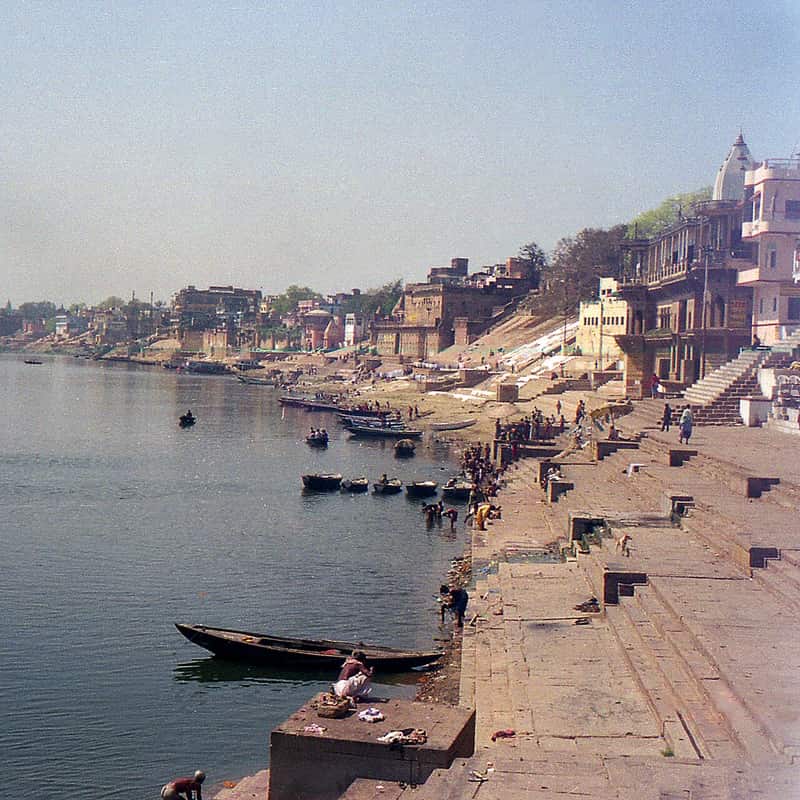
The Lanes and Mohalla Behind the Ghat
Behind Pandey Ghat the old city climbs away from the river in a maze of lanes, and here, more than on the ghat itself, the character of the place is set. The lanes are narrow and cool, their houses tall and close together, their facades carved and painted in the old style — wooden doors with brass fittings, balconies leaning toward each other across the alley, niches holding lamps and little images of the gods. Most of the families of this mohalla have lived here for generations, in houses that were old when their great-grandfathers were born, and the lane is their parlour: children play in it, women sit at the doorways, and the gossip of the neighbourhood travels up and down the steps of the ghat with the same ease as the river itself.
The life of the mohalla is domestic and self-contained. Small shops sell groceries, sweets and puja supplies; a temple at the bend of the lane rings its bells through the day; the sound of a radio, the smell of cooking oil, the cries of vendors — these are the ordinary music of the quarter. In the morning the women of the houses come down to the ghat with their washing, in the evening the men gather at the chai stalls at the top of the steps, and on festival days the lane is swept, washed and decorated with rangoli and lamps. The ghat is not separate from this life but its extension: the river is the back courtyard of the neighbourhood, and the steps are its verandah.
The lanes also connect the ghat to the greater city. Winding upward from the water, they join the old streets of the northern quarter — the bazaars of Chowk, the crowded lanes around the great temples — and a walk from the river to the road is a walk through the living layers of Kashi, from the timeless world of the water to the noise and commerce of the present. This is how pilgrims have always arrived: not by grand avenues but by these narrow, secret lanes, stepping from the chaos of the bazaar into the sudden peace of the river. To follow them down to Pandey Ghat is to enter the city the way the city enters itself — from behind, quietly, through the back door of its oldest street.
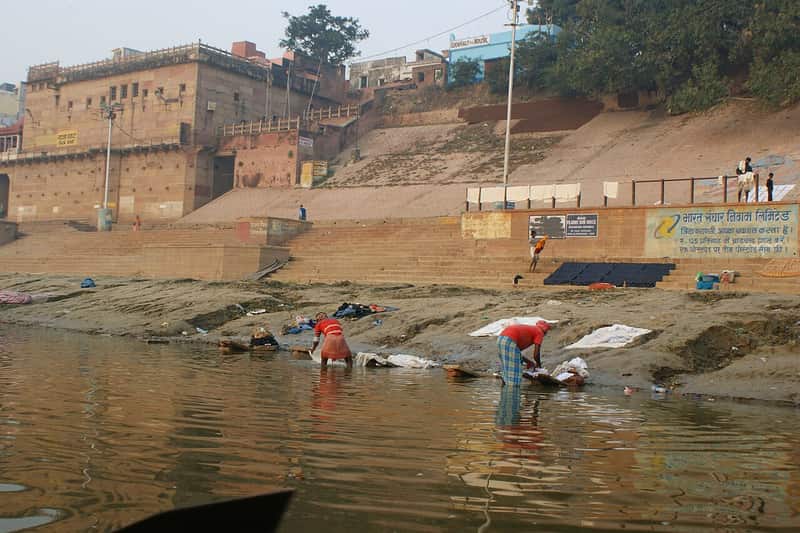
Rajendra Prasad and Digpatia — The Neighbouring Ghats
Pandey Ghat sits in the middle of one of the most interesting stretches of the Varanasi riverfront, the long northern chain that runs from the crowded centre toward the quieter reaches of the river. Immediately to the south lie the small Khori Ghat and the Rajarajeshwari Ghat, and beyond them the great open steps of Rajendra Prasad Ghat, named for Dr. Rajendra Prasad, the first President of India, who was himself a devotee of Kashi. To the north, a short walk along the water, stands Digpatia Ghat, the next in the chain. Together these ghats form a continuous ribbon of stone and platform, and walking it — or drifting past it in a boat — is the finest way to understand the shape and the mood of the northern riverfront.
Rajendra Prasad Ghat, the largest of the neighbours, is a broad and handsome landing, its long flights of steps running down to an unusually wide bathing area that makes it one of the most popular ghats of the northern stretch for pilgrims and local bathers alike. It was here, according to the tradition of the city, that the great Kashi Kumbh bathing festival gathers on Makar Sankranti, when the sadhus and the akharas of the region descend to the water in a fair of colour and faith that transforms the quiet riverfront for a day. In ordinary times, however, the ghat is calm, its platforms given over to laundry, to drying fish, to the slow commerce of the water — and it is a short and pleasant walk from the steps of Pandey Ghat.
Digpatia Ghat, the northern neighbour, is a smaller and older affair, a steep descent of worn steps set among the houses of the old quarter, and like Pandey Ghat it keeps the unhurried character of the residential riverfront. Beyond it the chain runs on toward the still quieter ghats of the far north, where the city thins and the river opens out into the countryside. For the visitor, the whole northern stretch — from Rajendra Prasad Ghat past Khori and Rajarajeshwari to Pandey, Digpatia and beyond — is best seen by boat, launched from Dashashwamedh or Manikarnika in the morning, drifting north with the current while the city rises and falls along the bank. No ghat in this chain demands attention; each simply offers the river, the steps and the quiet — and together they compose the most authentic picture of old Kashi that the riverfront has to give.
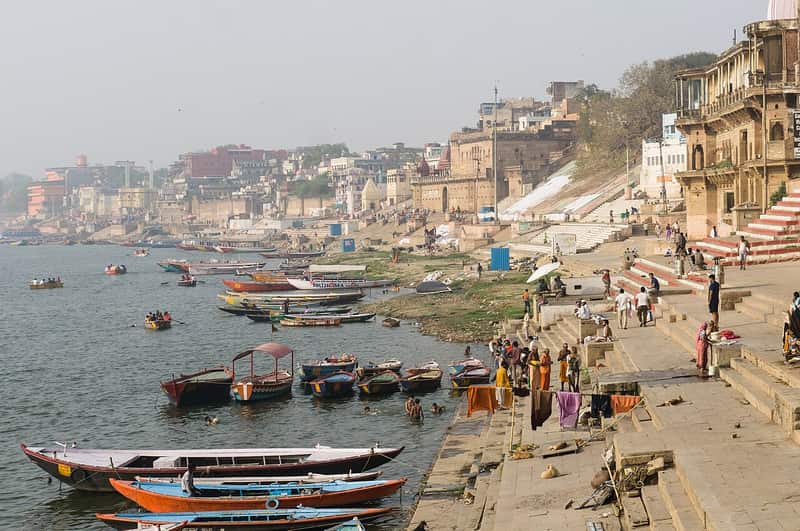
Festivals on the Quiet Ghat
Even a quiet ghat has its festival days, and Pandey Ghat comes alive through the year with the celebrations of the river and the neighbourhood. On Kartik Purnima and the great festival of Dev Deepawali, the festival of the gods' lights, the whole riverfront is transformed: every ghat, the small ones no less than the grand, is lined with rows of oil lamps, and the water itself carries hundreds of tiny flames drifting south with the current. The families of the northern mohallas come down to the water with their diyas and their prayers, and for one night the quiet stretch of the river shines like a second sky, the lamps of the small ghats burning with the same devotion as the great ones.
The grandest gathering of the northern riverfront is the Kashi Kumbh, the great bathing festival held on Makar Sankranti at Rajendra Prasad Ghat and the neighbouring ghats. On that day the calm of the stretch is broken by a vast tide of pilgrims, sadhus and ascetics who descend to the water at the auspicious hour, their processions with flags and drums rolling down the lanes from the old city; the akharas of the sadhus set up their camps on the platforms, and the river receives the greatest bath of its year. For Pandey Ghat, so close to the festival ground, the day brings a rare excitement — its own steps crowded with pilgrims, its own priests busy with rites, its own lamps lit in honour of the day.
The rest of the festival year is quieter and more domestic. In the fortnight of Pitru Paksha the ghat fills with families performing the rites of the ancestors; on the new moons the priests sit at the waterline through the day; on the local festivals of the quarter — the temple processions, the birthdays of the gods celebrated in the lanes behind the ghat — the mohalla carries its worship down to the water in procession, with music, sweets and marigolds. These are celebrations without publicity or crowds, the festivals of a neighbourhood rather than of a city, and they are among the most moving sights that Pandey Ghat has to offer: the faith of ordinary families, performed as it has been performed for centuries, in the light of the same river.
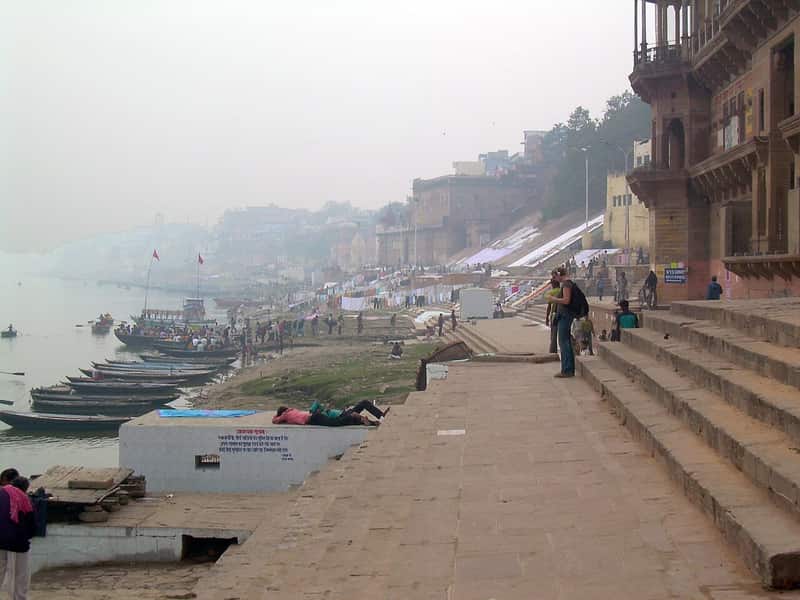
Etiquette for Visitors — Respect and the Priests
Because Pandey Ghat is a living, working place of worship rather than a monument, a visitor's conduct matters here more than at the showpiece ghats. The first rule is respect: dress modestly, keep your voice low, and do not disturb the bathers, the mourners or the priests at their rites. Photography, in particular, should be approached with care — ask before pointing a camera at people, and never photograph the rites of the dead or the private moments of the bathers; many local families simply do not wish to be photographed, and their wish must be honoured without argument. The ghat is a home as much as a temple, and it should be entered with the courtesy one would show entering a stranger's house.
The priests of the ghat are its hereditary guardians, and the visitor will almost certainly be approached by one of them with an offer of a puja or a guided rite. This is not a trap but an old custom of the city: the pandas earn their living by serving pilgrims, and the same families have done so here for centuries. The wise approach is clarity — if you wish to perform a rite, agree beforehand on the fee, the dakshina, and the extent of the ceremony, and pay it without dispute; if you do not wish to, decline politely and firmly, and no priest of the old school will press you further. A small donation for the ghat's upkeep, given freely, is always appropriate and always appreciated.
Small courtesies complete the picture. Leave your shoes at the base of the shrines, as everyone else does; keep the steps and the water free of plastic and litter, for the river is sacred and the ghat is someone's courtyard; give the bathers their privacy, especially the women; and do not haggle with the boatmen as if the fare were a matter of honour — a fair price, paid cheerfully, leaves both sides satisfied. If you come as a pilgrim, the priests will treat you with the old hospitality; if you come as a traveller, the same courtesy awaits, provided you extend the same courtesy yourself. The reward for good conduct at Pandey Ghat is the reward of all such places: to be allowed, for a while, to share in the quiet life of a sacred neighbourhood.
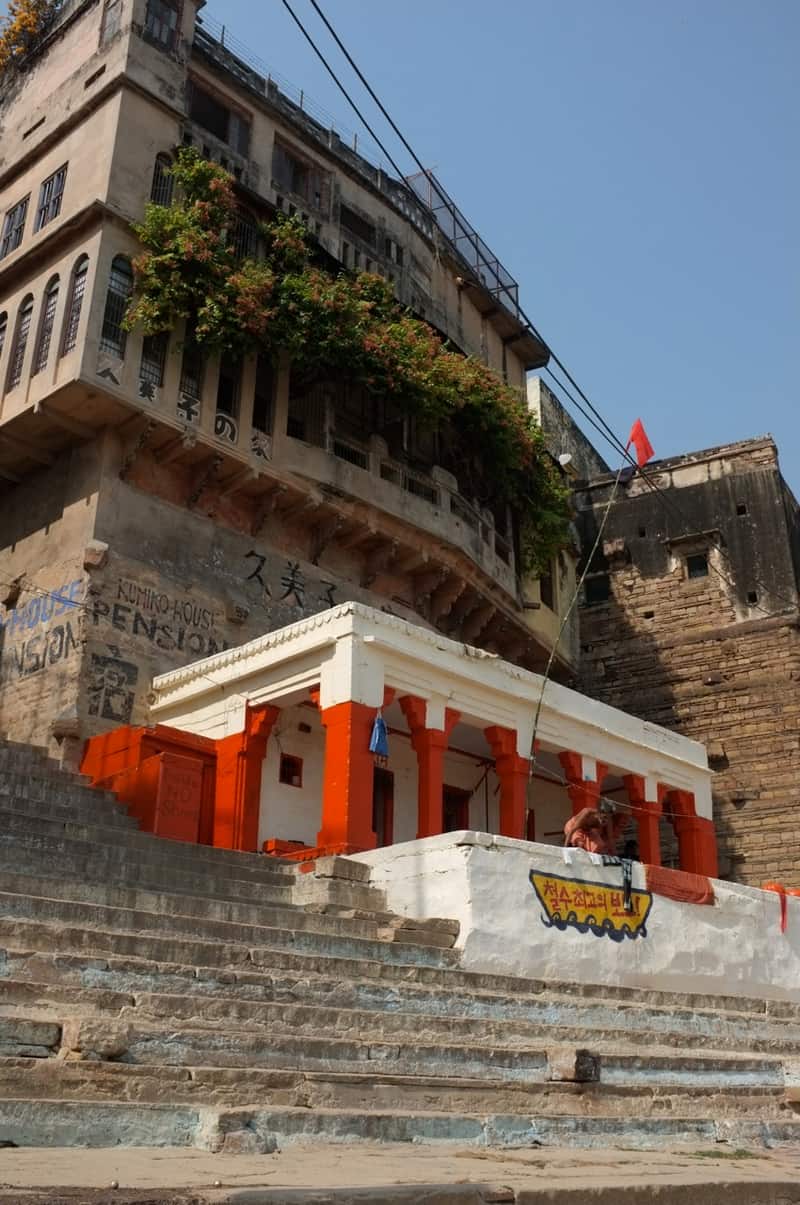
Practical Guide — Reaching Pandey Ghat
Pandey Ghat is easy to reach, though it rewards those who come by water. The simplest approach is by boat: from Dashashwamedh Ghat or Manikarnika Ghat, a country boat will carry you north along the chain of ghats to the landing at Pandey Ghat in fifteen or twenty minutes, with the whole northern riverfront unrolling beside you — the most beautiful way to arrive. On foot, follow the ghats north from Dashashwamedh past Man Mandir, Tripura Bhairavi and Lalita Ghat to Khori Ghat, and Pandey Ghat lies just beyond; the walk takes under half an hour. By road, the lanes of the old quarter descend to the ghat from the streets of the northern city, and a cycle-rickshaw or auto-rickshaw from Chowk can bring you close; the last stretch is on foot.
The best time to visit is early morning, when the bathing is at its height and the light is soft and golden; sunrise over the river from the steps of Pandey Ghat is one of the finest sights of the northern riverfront. The late afternoon and the hour before sunset are lovely too, the steps warming in the slanting light and the boatmen returning with the day's last ferries. Winter mornings are ideal, with clear skies and cool air; in summer the heat is fierce by mid-morning, and in the monsoon the steps can be slippery and the river dangerous, and caution is essential. Weekdays are quiet; the festival days — especially the Dev Deepawali of Kartik and the Kashi Kumbh of Makar Sankranti — bring crowds and colour.
Facilities on the ghat itself are minimal, and the visitor should come prepared. There are no large hotels or restaurants on the northern riverfront, though the lanes behind the ghat have small shops, chai stalls and simple eateries where the neighbourhood eats; carry drinking water, and be prepared for a long walk to the nearest modern amenities. The ghats worth combining with a visit to Pandey are all within easy reach — Khori Ghat and Rajarajeshwari Ghat to the south, Rajendra Prasad Ghat with its grand steps a little beyond them, Digpatia Ghat to the north — and a morning boat ride along the whole stretch makes an unforgettable introduction to the quiet, authentic face of Kashi. Come without haste, leave nothing behind but good wishes, and the ghat will give you its best.
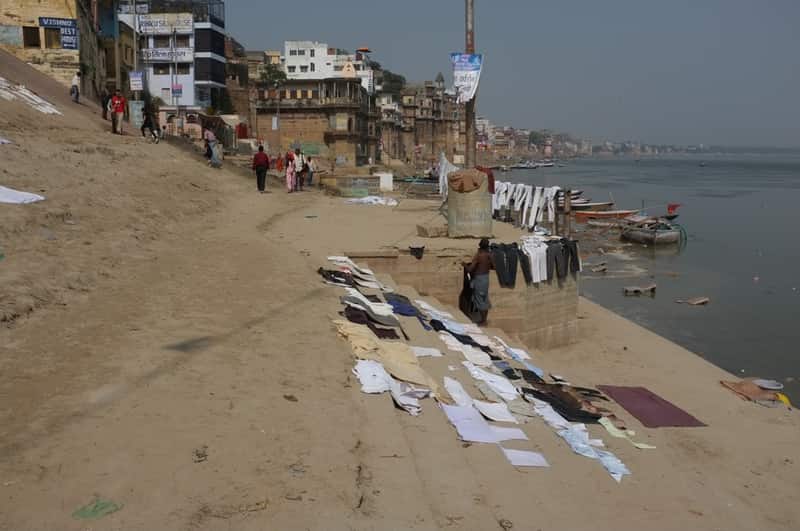
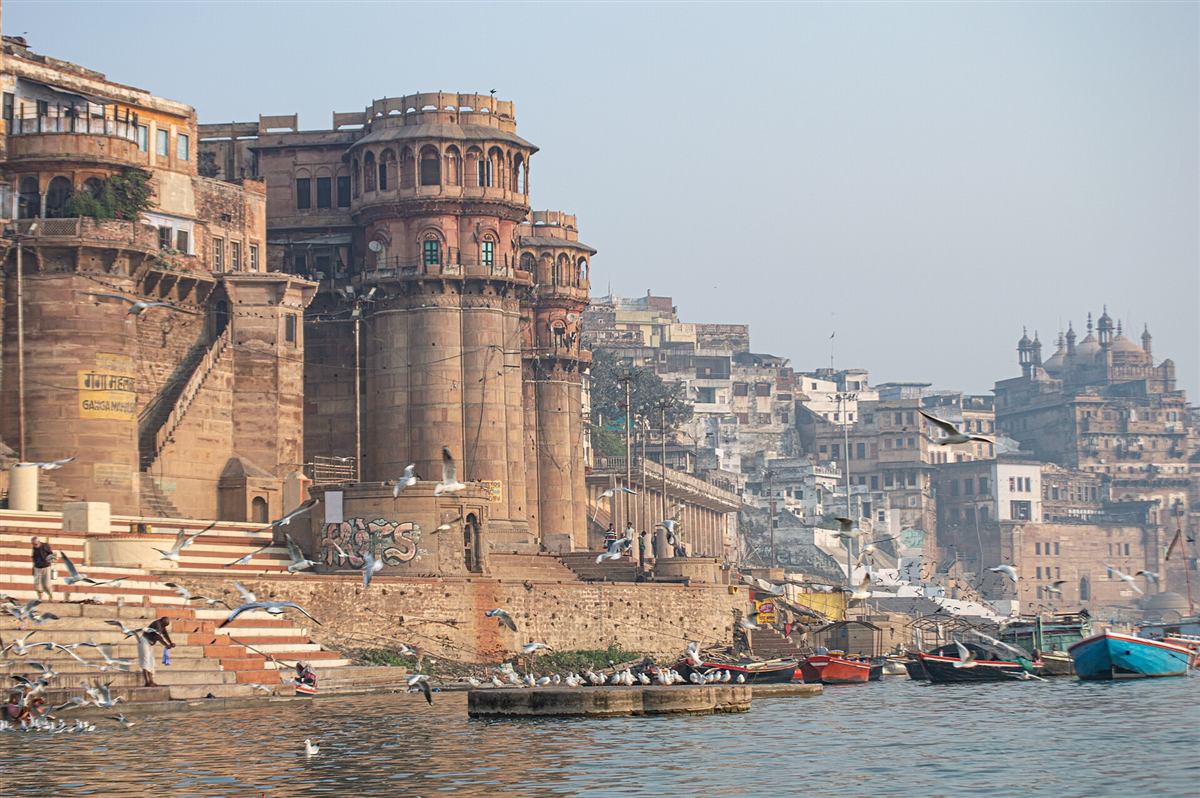
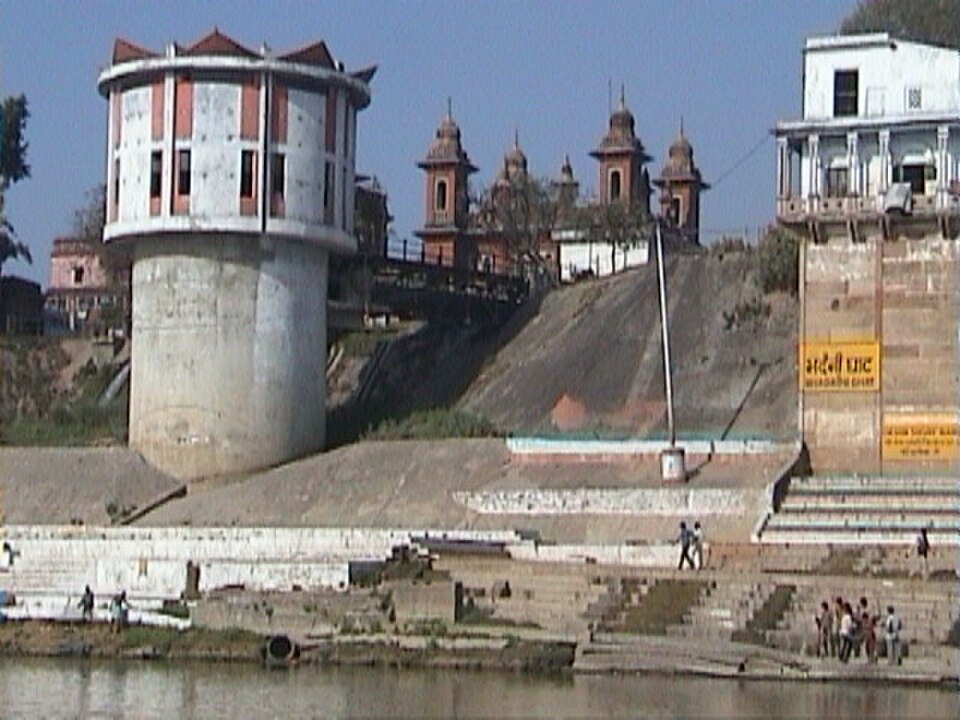
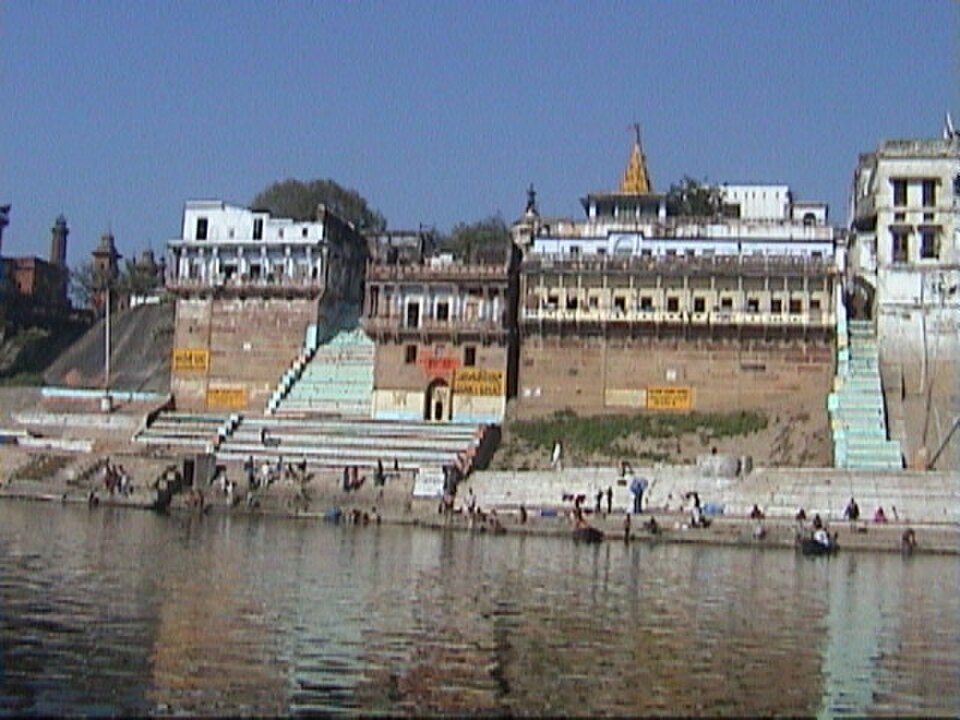
Pandey Ghat — Gallery (12 Photos)
Image Credits
pandey-01.jpg · pandey-02.jpg · pandey-03.jpg · pandey-04.jpg · pandey-05.jpg · pandey-06.jpg · pandey-07.jpg · pandey-08.jpg · pandey-09.jpg · pandey-10.jpg · pandey-11.jpg · pandey-12.jpg — Wikimedia Commons, under free licenses.
Continue exploring
Similar Ghats Nearby
Book This Ghat — Get Notified
Download the app now and book a boat ride to Pandey Ghat