

Panchganga Ghat
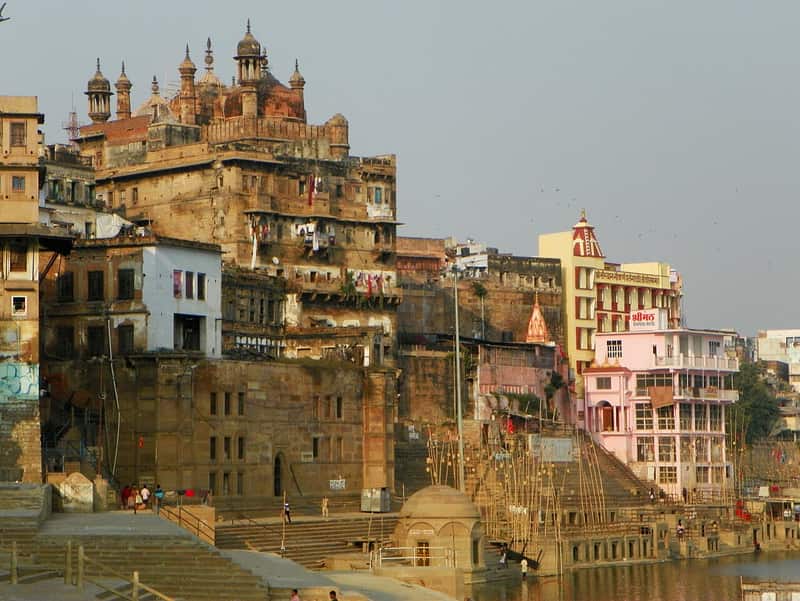
Heritage GhatA ghat believed to be the meeting of five rivers. The Alamgir Mosque overlooks it from above.


Type
Heritage Ghat
Boat Fare
1.2x base fare
Best Time
5-9 AM (sunrise) — evenings are beautiful too
History
Tradition holds that the Ganga, Yamuna and Saraswati vanish here into the Kirana and Dhutpapa - five rivers in one sangam. The mosque of 1669 is the tallest point of the northern arc.
Highlights
- Memory of the five-river confluence
- Architecture of the Alamgir Masjid
- Grand view of the Ganga
- Best for sunrise photography
Festivals & Events
How pricing works in the NaviX app
No haggling at the ghat — everything is fixed in the app first
- 1
Fixed price before you board
The fare is shown in the app upfront — no bargaining at the ghat
- 2
Sharing or private — your choice
Share with fellow travelers or take the whole boat for your group
- 3
Pay only after the ride
UPI, card or cash — with an instant receipt
6:00 AM & 6:00 PM
Where five rivers meet underground
Complete Guide
Panchganga Ghat — The Complete Guide
History, mythology, rites and practical details — everything in depth.
On this page
- 1.Panchganga Ghat — Where Five Rivers Meet
- 2.The Legend of Five Rivers
- 3.The Alamgir Mosque — A Mughal Crown Above the Water
- 4.From Bahuk to Panchganga — A History Written in Stone
- 5.The Great Staircase — Climbing Toward the Sky
- 6.Dev Deepawali — The Festival of a Million Lamps
- 7.A Sacred Circuit — Bathing, Shrines and Pind Daan
- 8.The Daily Life of the Ghat
- 9.The View from the Water
- 10.Above the Ghat — The Mosque Platform and Its View
- 11.Etiquette and Respect on the Ghat
- 12.Practical Information — How to Reach and When to Go
📅 Updated: 21 Aug 2026 · Author: NaviX Field Team (field research 2024-26) · 12 sections · 12 photos
Panchganga Ghat — Where Five Rivers Meet
Panchganga Ghat is one of the most sacred and monumental bathing places in Varanasi, standing in the northern stretch of the city's long crescent of steps. Its name means the ghat of five rivers, and for more than a thousand years pilgrims have counted it among the holiest fords of Kashi, second only to Manikarnika in the reverence it commands. Unlike the crowded ritual theatre of Dashashwamedh, Panchganga keeps a quieter and older gravity: a vast apron of stone, a tall disciplined sweep of stairway, a small temple lost among the clutter, and above everything a skyline crowned by the slender minarets of a Mughal mosque. Here the spiritual history of the city and its imperial history meet on a single bank of the Ganga, and the visitor feels at once the antiquity of the faith and the weight of the centuries.
The sanctity of the ghat comes from a belief as old as the town itself. Tradition holds that five rivers meet invisibly beneath this bank: the visible Ganga, joined in spirit by the Yamuna, the Saraswati, and two lesser streams, the Kirana and the Dhutapapa, all said to flow together in secret beneath the water. For this reason a single dip at Panchganga is believed to carry the merit of bathing in all five sacred rivers at once, a blessing that draws thousands of pilgrims even in the cold of winter. Every dawn the steps fill with bathers who come, they say, not only to wash the body but to be purified by the presence of all these rivers together, an act of faith repeated here for centuries without interruption.
What makes Panchganga unforgettable is the strange, powerful silhouette that rises behind it. Above the ghat tower the twin minarets of the Alamgir Mosque, built by the Mughal emperor Aurangzeb in the late seventeenth century, their long shadows falling across the water at sunset. The mosque stands where a great temple of Vishnu once stood, and its walls still whisper the older sanctity of the site. Pilgrims bathe at the water's edge; from the platform above, the call to prayer drifts down; and beyond both, the golden spire of the Kashi Vishwanath temple glints in the distance. This layering of Hindu faith and Mughal power, of ancient ritual and medieval conquest, gives Panchganga a character found nowhere else on the river.
The Legend of Five Rivers
The name Panchganga is not a metaphor; it is a geography of belief. According to the legend that gives the ghat its power, five rivers come together at this spot beneath the surface of the water. The first is the Ganga herself, sacred beyond all measure. The second is the Yamuna, who at her earthly confluence in Prayag joins the Ganga visibly, but who is believed to travel northward underground to meet her sister again here. The third is the Saraswati, the lost Vedic river, who flows invisibly beneath the earth from the Himalayas to this very bank. Completing the five are the Kirana and the Dhutapapa, two lesser sacred streams whose very names mean light and the washing away of sin.
The legend explains the ghat's supreme sanctity. To bathe at Panchganga, the pilgrims say, is to bathe in all five rivers at once, because the water itself is the meeting place of all their merits. A single immersion is therefore believed to carry the fruit of five pilgrimages — the purity of the Ganga, the devotion of the Yamuna, the ancient grace of the Saraswati, the radiance of the Kirana, and the sin-destroying power of the Dhutapapa. For this reason the ghat has been called the holiest ford of the northern city, a place where the mythology of the entire Gangetic plain is gathered into one small stretch of riverbank, and where the devout believe that no impurity can survive the touch of so many sacred streams.
The five-river belief is woven deep into the daily life of the ghat. Families who come from distant villages will stop first at the water's edge, cup the water in their hands, and murmur the names of the five rivers before they bathe. On auspicious days, when the moon and the stars are favourable, the steps are crowded with pilgrims who have come precisely because they trust that here, and only here, the five rivers truly meet. Even the boatmen know the legend by heart and will point across the water, telling visitors that beneath this shining surface flows the whole hidden geography of Hindu devotion — a faith so old that no one remembers its beginning, yet so alive that it fills the ghat with pilgrims every single day of the year.
The Alamgir Mosque — A Mughal Crown Above the Water
The most dramatic feature of Panchganga is not on the river but above it. Rising straight from the top of the ghat is the Alamgir Mosque, built on the orders of the Mughal emperor Aurangzeb in the late seventeenth century. Its two slender minarets climb far above the rooftops of the old city, and for three centuries they have been the great landmark of the northern ghats, visible from the river for miles. The mosque was named Alamgir, meaning conqueror of the world, the title Aurangzeb had taken for himself, and it was erected on a site already considered the holiest ground of the neighbourhood — a deliberate statement of imperial power planted in the very heart of Hindu devotion.
The ground beneath the mosque carries its own legend. Here once stood a great temple of Vishnu, and local tradition says that when Aurangzeb's officers demolished it, the deity was hurried away to a new home before the images could be destroyed. Some say the new temple was built barely a stone's throw from the ghat, so that the god could still watch over his ancient bathing place. The mosque is still called Beni Madhav ka Darera, the dwelling place of Beni Madhav, the name of the very Vishnu who was displaced, and many locals insist that the truncated minarets were never finished but were left as broken towers to echo the shikhara of the temple that had been cut down. The truth of the story matters less than its persistence; it shows how the ghat's sanctity survived even the conquest that built its most famous monument.
Today the mosque and the ghat live together in a state of uneasy, and yet familiar, harmony. The faithful bathe at the water's edge, their prayers rising to the same sky over which the muezzin's call floats five times a day. One of the mosque's two minarets crashed down in a storm in 1948, killing dozens who had gathered below, and the surviving tower stands a little taller in the city's memory because of it. Visitors are free to climb the ghat and admire the monument from the outside, while the interior remains a place of prayer and quiet. Whatever its history, the Alamgir Mosque has become part of the river's identity — as much a symbol of Varanasi as any temple, its silhouette burned into every postcard and every memory of the northern ghats.
From Bahuk to Panchganga — A History Written in Stone
Long before it bore the name Panchganga, the ghat was known by another, older title: Bahuk Ghat, or Siddh Ghat, the ghat of the accomplished ones. The name Bahuk is thought to refer to the ancient sage Bahuka, and the ghat is mentioned in the Kashi Khanda of the Skanda Purana among the tirthas whose waters carry the merit of liberation. In those early texts the ford was valued not for its great buildings but for the sacred meeting of waters, and pilgrims crossed the city to bathe here when the rest of the northern bank was still wild riverbank and sand. Even the name Siddh Ghat tells of the yogis and siddhas, the perfected beings of Hindu tradition, who were said to meditate on these very steps in search of powers beyond the ordinary world.
The eighteenth century brought the ghat its modern form. Under the patronage of the Peshwas, the Maratha rulers who dominated much of India at the time, Panchganga was repaired and rebuilt, its old landing re-laid in stone and its approach widened for the thousands who came to bathe. It was during this same period that the ghat began to take on the grand, monumental character that defines it today, with the great platform, the deep well, and the long flights of stairs that lead up from the water to the level of the city. Courtiers and merchants added their own donations, and the ghat grew into a place not only of worship but of public life, where processions landed, traders unloaded goods, and the riverfront became the great stage of the northern city.
Yet the greatest transformation was the Mughal one, which changed not the water but the skyline. When Aurangzeb's builders raised the Alamgir Mosque above the ghat in the late seventeenth century, they gave Panchganga the silhouette by which the world knows it today. The old Hindu shrines were pushed to the margins, the mosque became the dominant monument, and the ghat entered a new chapter in which worship, conquest and commerce shared the same strip of sacred earth. Seen across the centuries, Panchganga is a history of India in miniature — ancient pilgrimage, medieval destruction, Maratha rebuilding, imperial ambition — all of it gathered on one slope of stone beside a river that has watched every age without changing its course.
The Great Staircase — Climbing Toward the Sky
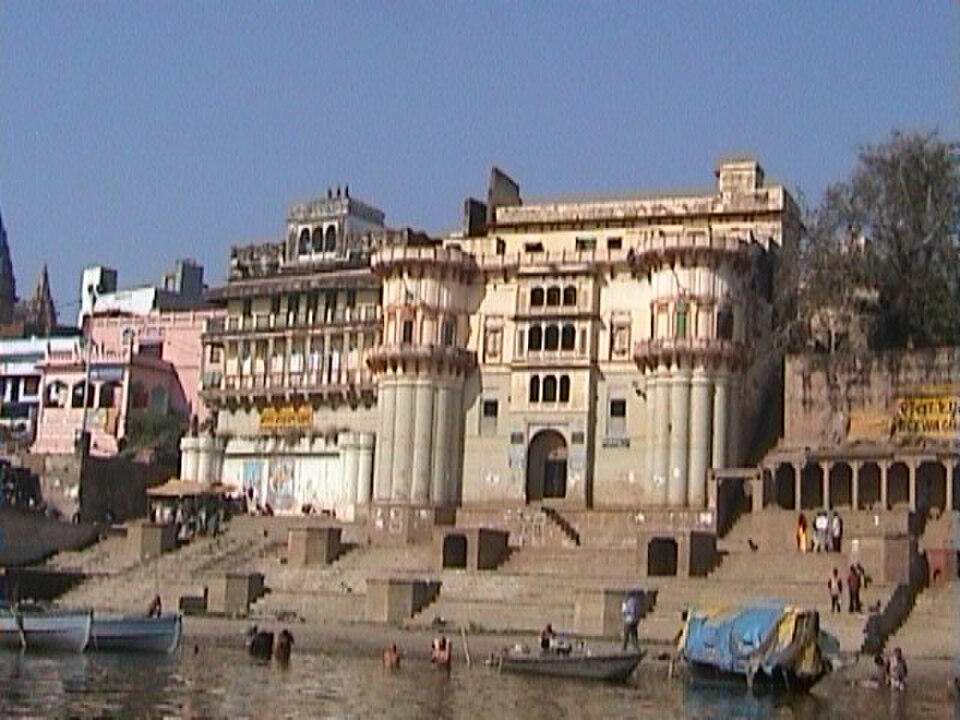
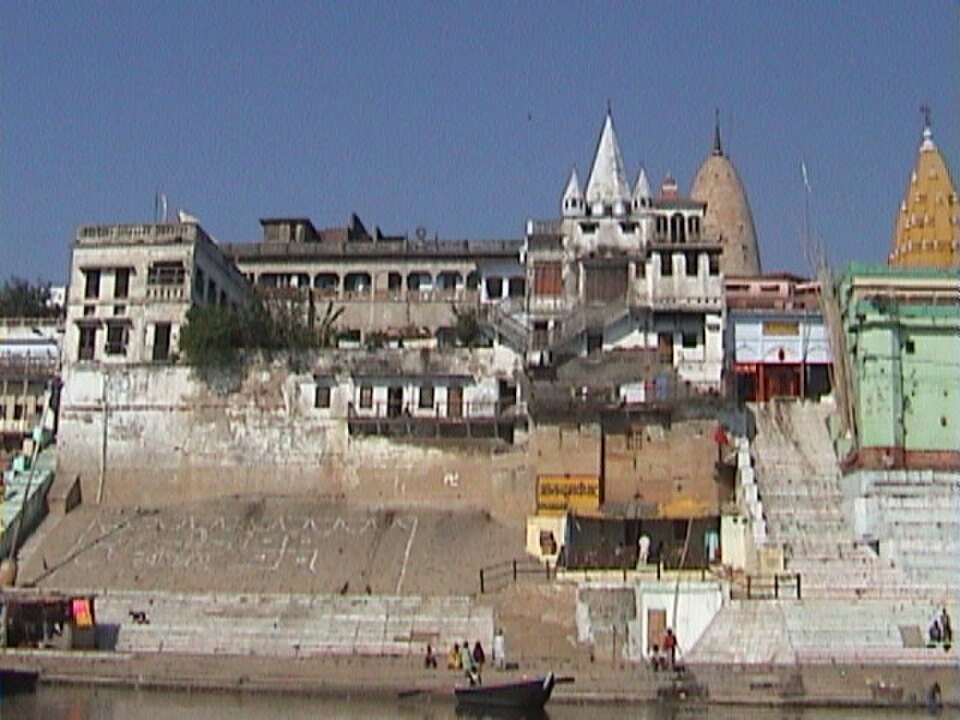
The most imposing single feature of Panchganga is its staircase. From the apron of stone at the water's edge, a long and disciplined flight of steps climbs without interruption toward the high platform on which the Alamgir Mosque stands, a monumental stairway that seems to carry the visitor from the realm of the river to the realm of the sky. The steps are broad and deep, built to carry the weight of thousands of feet, and their sheer scale is the first thing that strikes anyone who lands at the ghat by boat. Seen from the water, the staircase forms a great pale wedge against the dark buildings behind it, and at dawn the first light pours down it like a golden waterfall.
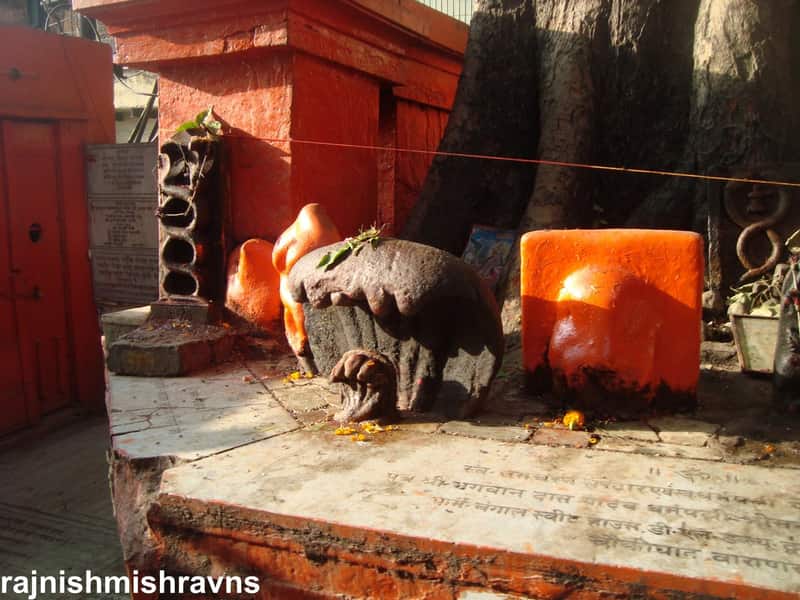
Near the top of the climb, set into the fabric of the ghat, visitors notice a huge carved stone, a single block of sculpture that survives from an older age of the site. Its details have been worn smooth by centuries of weather and worship, but its presence speaks of the temple that once stood here and of the artistry of the craftsmen who worked along this river when Panchganga was already ancient. Some pilgrims touch the stone as they pass, a small gesture of reverence to the older sanctity that still inhabits the steps. The staircase, in other words, is not just a way up — it is a pilgrimage in miniature, each landing a pause, each rise of steps a little closer to the sacred platform above.
The reward of the climb is the view. From the top of the staircase, at the level of the mosque platform, the whole river opens out before the visitor: the broad Ganga curving away to the north toward Raj Ghat and the far bank, the low line of sandbanks and villages on the eastern shore, and the sweep of ghats stretching southward until the roofs of the city dissolve into the haze. On clear winter evenings the sun sets directly across the water, and the long golden light turns the entire staircase into a stairway of fire, with pilgrims climbing it silhouetted against a sky of copper and rose. It is one of the great views of Varanasi, and it belongs to anyone willing to make the climb.
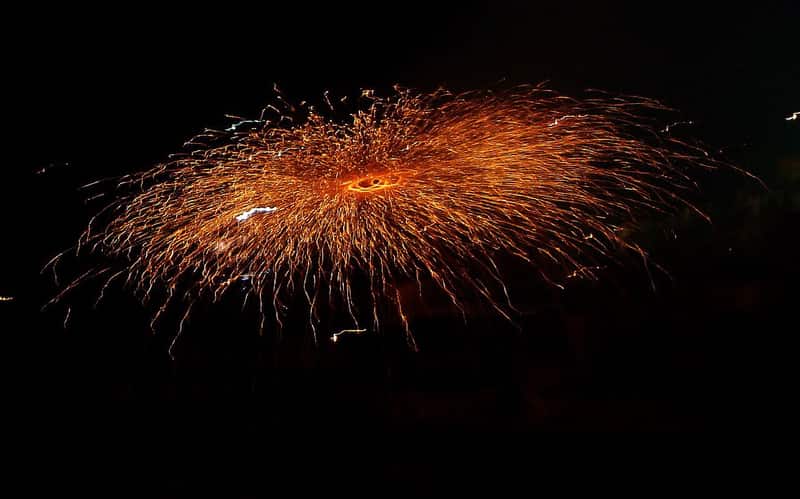
Dev Deepawali — The Festival of a Million Lamps
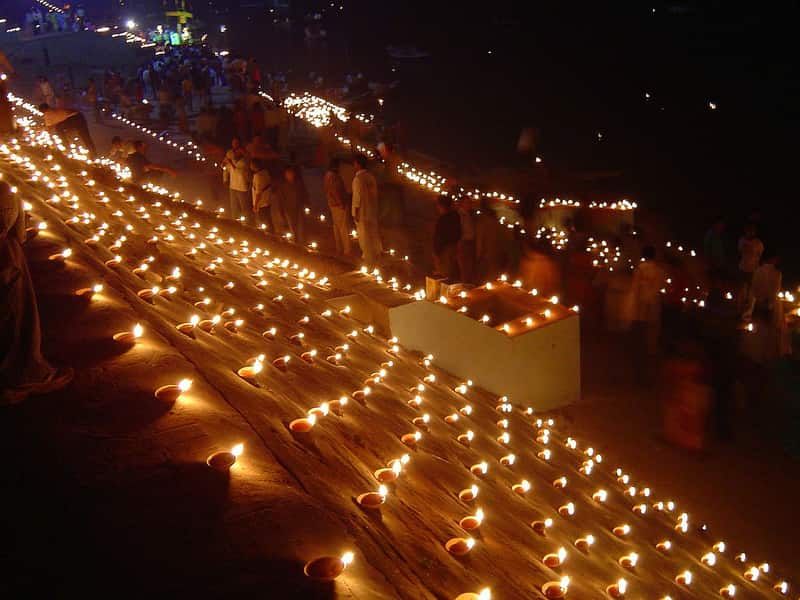
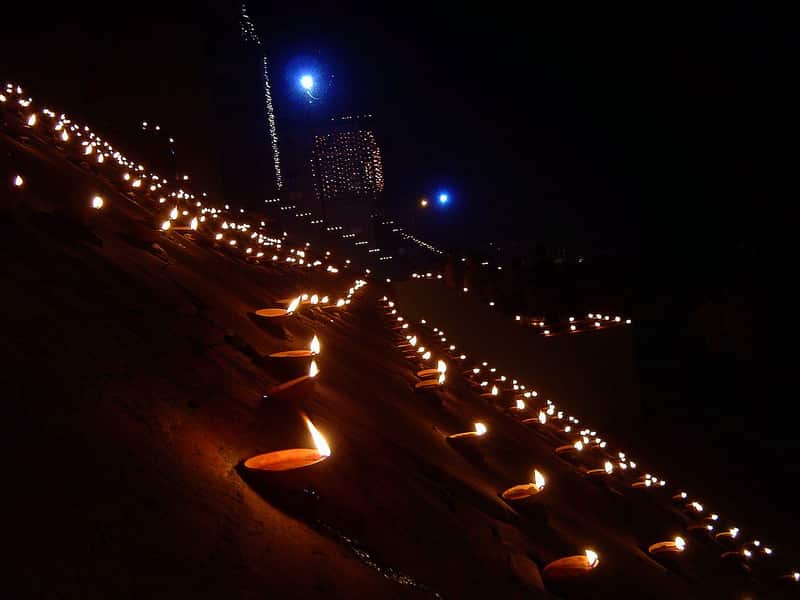
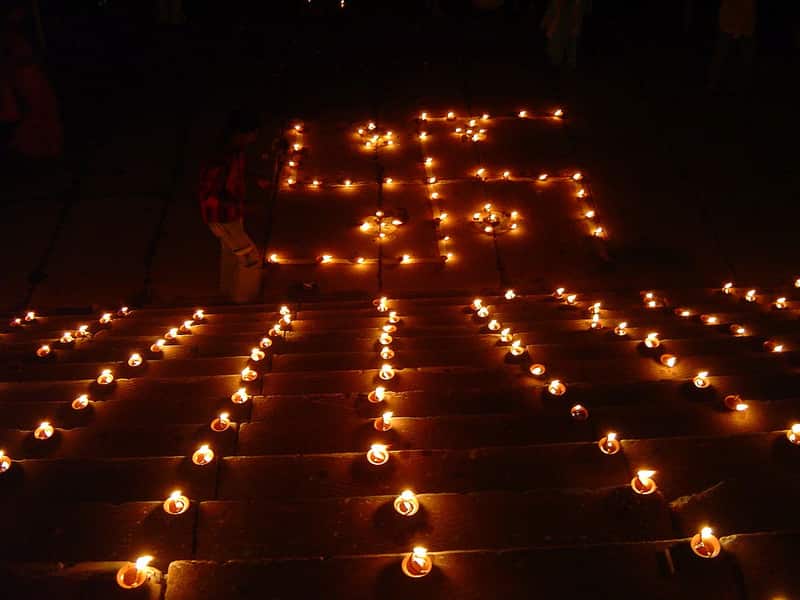
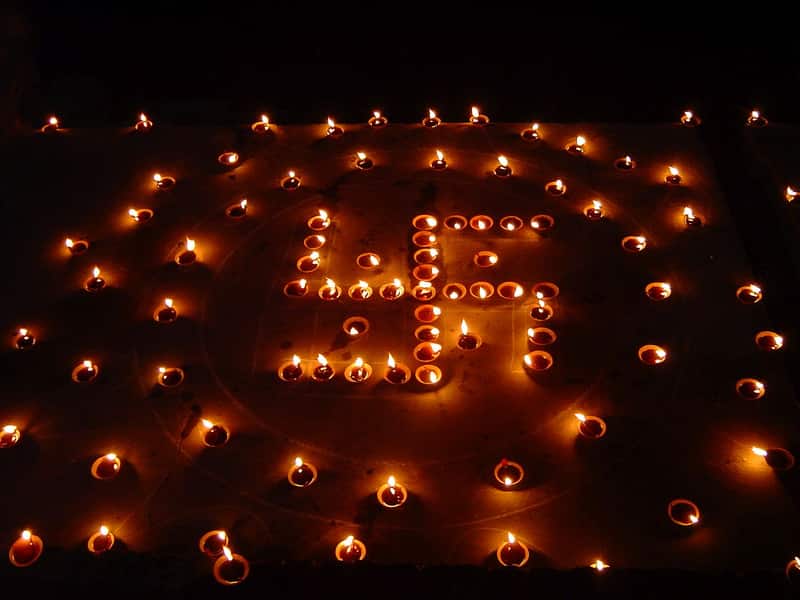
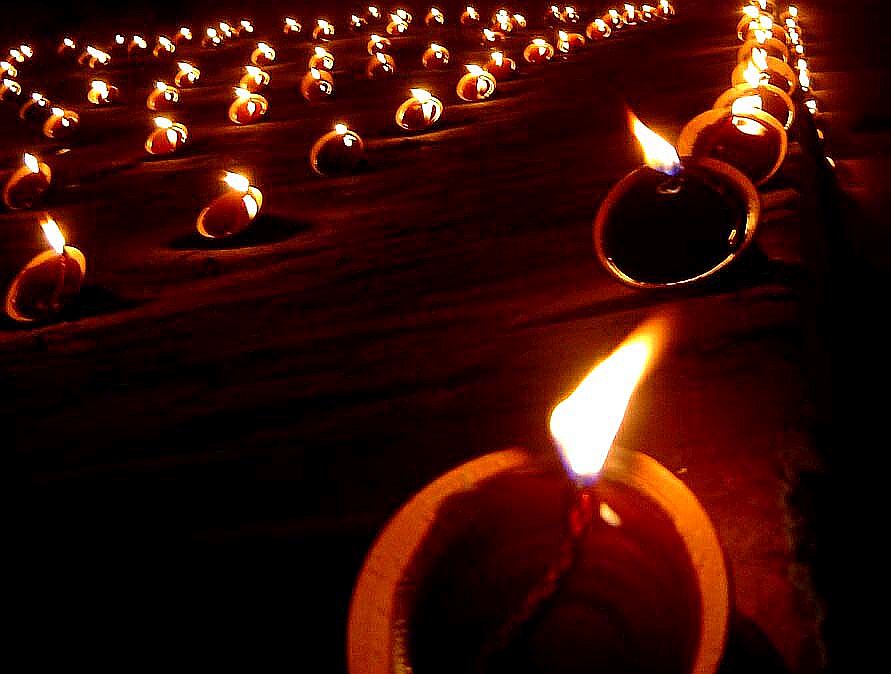
Panchganga Ghat becomes the very heart of Varanasi on Kartik Purnima, the night of the full moon in the month of Kartik, when the city celebrates Dev Deepawali — the festival of lights of the gods. On this single night, believed to be the anniversary of the gods' celebration after their victory over the demon Tripurasura, the entire riverfront is transformed. Lakhs of small earthen oil lamps are set out across the steps of the ghats, arranged in waves, patterns and long glowing lines, and the most elaborate of these displays are laid at Panchganga, where the great staircase itself becomes a staircase of light. Pilgrims and visitors alike crowd the water's edge, and every lamp is lit by hand, one by one, until the whole bank trembles with golden fire.
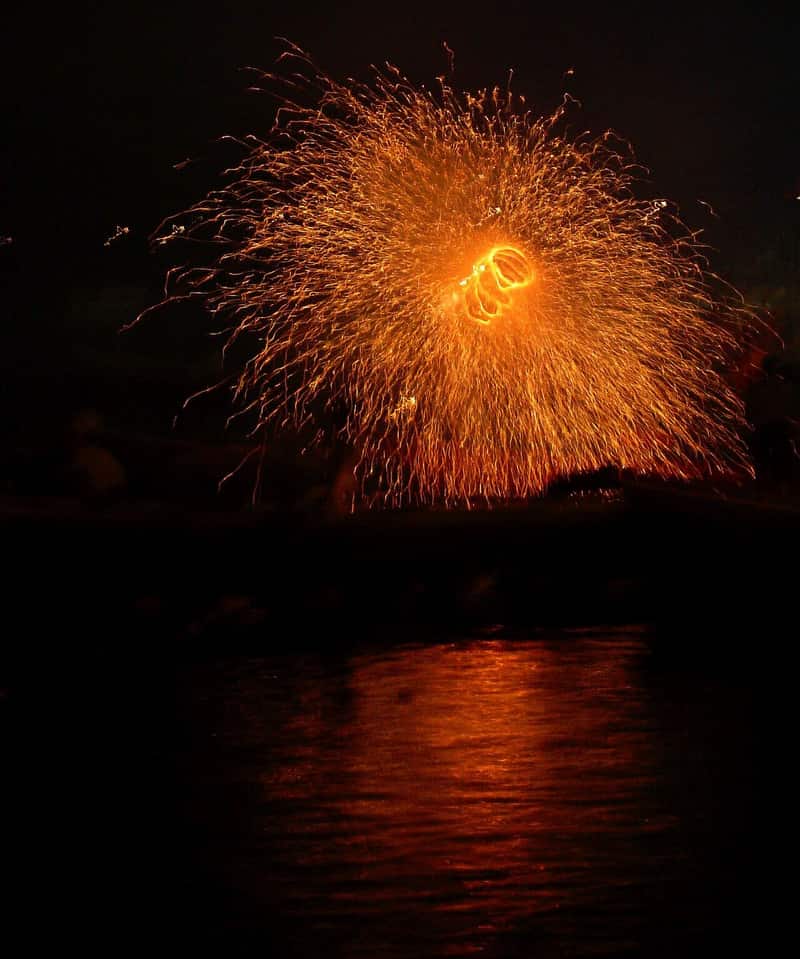
The festival has a particular ceremonial focus at Panchganga. Here, as at the other great ghats, a special puja is performed by the city's priests, accompanied by conch shells, bells, cymbals and the chanting of mantras, and the Ganga aarti is offered on a scale seen nowhere else in India. What draws the crowds is not only the devotion but the sheer spectacle: the reflection of a million lamps dancing on the dark water, oil lamps strung in festoons along the boats, marigold garlands bobbing on the current, and the sky above the Alamgir Mosque turning purple behind the smoke of incense. The night is so luminous that it is said the gods themselves come down to the ghats to bathe and to watch, and the whole city, in a single gesture, lights the way for them.
Why is Panchganga at the centre of this festival? The answer lies in the ghat's ancient reputation as the holiest ford of the northern city, the meeting place of five rivers, and the spot where the Ganga herself is believed to be most present. When the lamps are lit at Panchganga, they are lit not only for the gods but for the river, for the ancestors, and for every soul who has ever bathed here. In recent years the festival has grown into one of the world's great light festivals, drawing photographers and pilgrims from across the globe, yet the heart of it remains unchanged: a full moon, a great river, and a city pouring out its love in the form of ten million tiny flames.
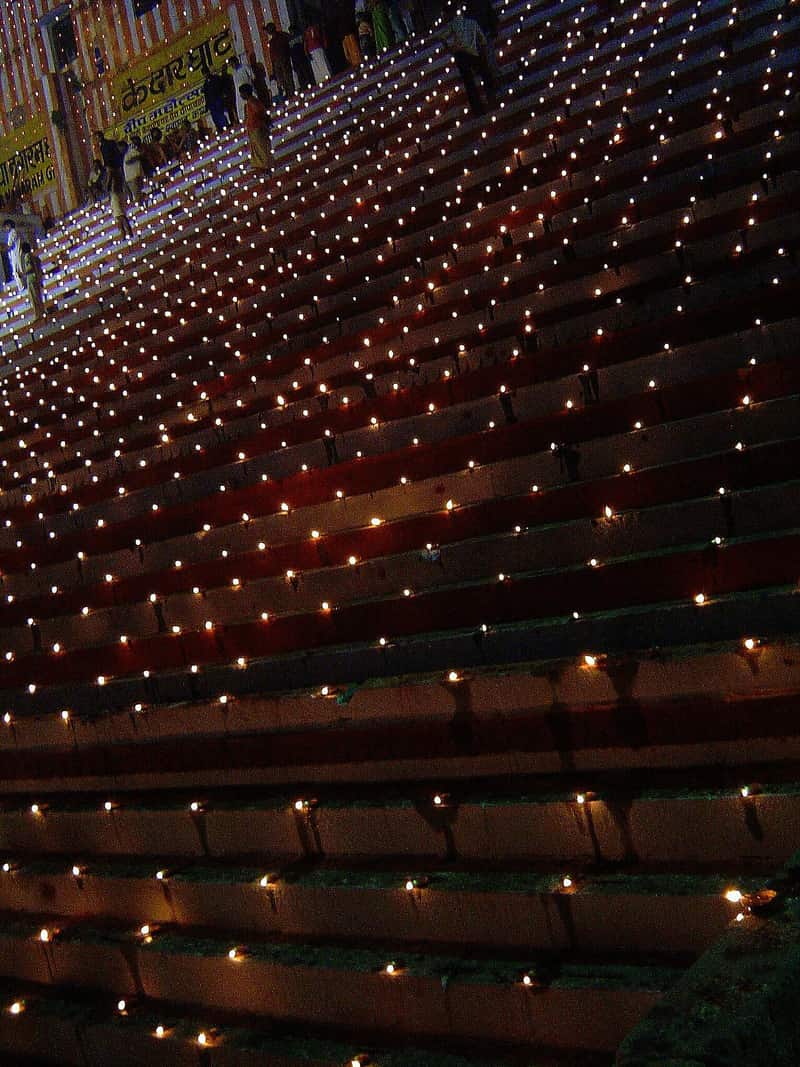
A Sacred Circuit — Bathing, Shrines and Pind Daan
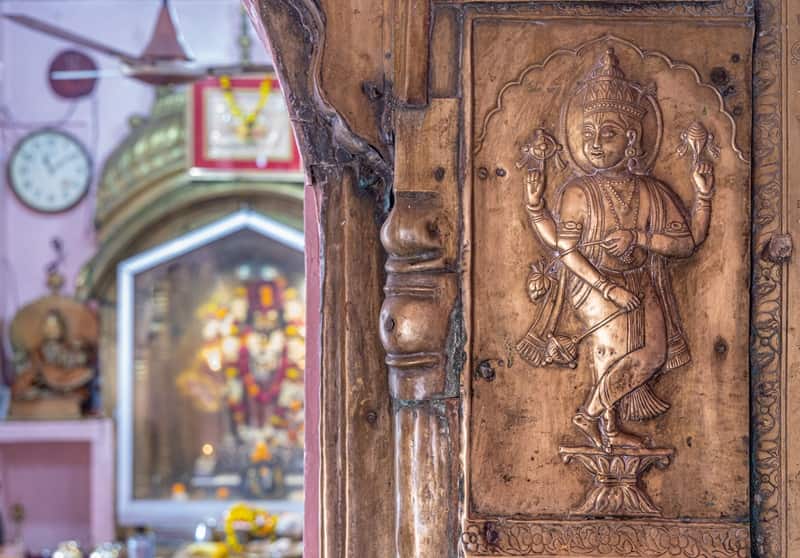
For the pilgrim, Panchganga is not a single act of bathing but a complete circuit of faith. The day begins at the water's edge, where the faithful take their holy dip in the five-river confluence, facing the rising sun and reciting the names of the rivers. From the steps they move to the old shrines that cluster along the ghat — small, unassuming temples where generations have stopped to pray, their doorways worn smooth by countless hands. Among these stands the temple of the god who was once displaced by the builders of the mosque, whose presence, tradition insists, still guards the ghat from a few yards away. Each shrine has its own story, and the priests who tend them know the pilgrims' routes as well as they know their scriptures.
Panchganga also holds its appointed place in the great Panchatirth yatra, the sacred circuit of the five fords of Kashi that pilgrims complete as the oldest pilgrimage of the city. In this ancient round, which leads the devotee from one holy bathing place to another, the northern ghats are the closing of the circle, and Panchganga is counted among the holiest of the five stations. Walking the route on foot, as tradition demands, the pilgrim passes from the crowded centre to the quieter north, from the ghats of the living to the thresholds of the river, and arrives at Panchganga with the accumulated merit of the whole journey. To complete the yatra without bathing here, the priests say, is to leave the circuit unfinished.
The most solemn rite of the circuit is pind daan — the offering of rice balls to the ancestors. It is performed at the water's edge by families who have come to remember their departed, often on the death anniversary, and the ghat's banks are considered particularly favourable ground because of the confluence of five rivers. A priest guides the ritual, offerings of rice, sesame and ghee are made to the name of the deceased, and the water is asked to carry the gift to the other world. This is done at Panchganga with a gravity that has not changed in centuries, and many families travel from far provinces of India, and increasingly from overseas, specifically to perform the rite on this bank.
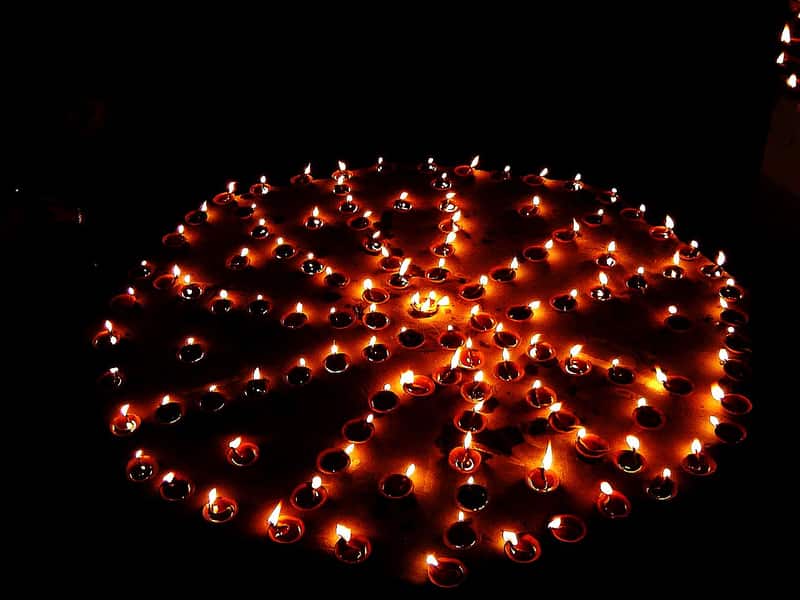
The Daily Life of the Ghat
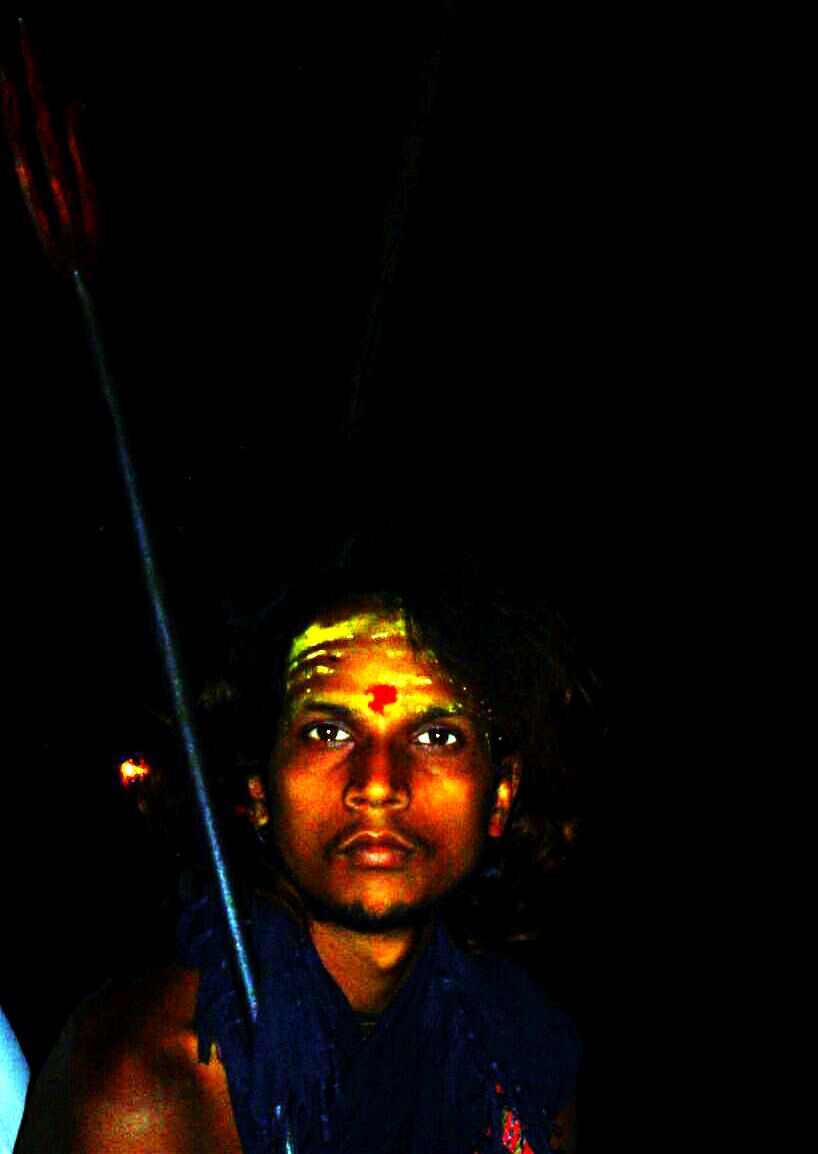
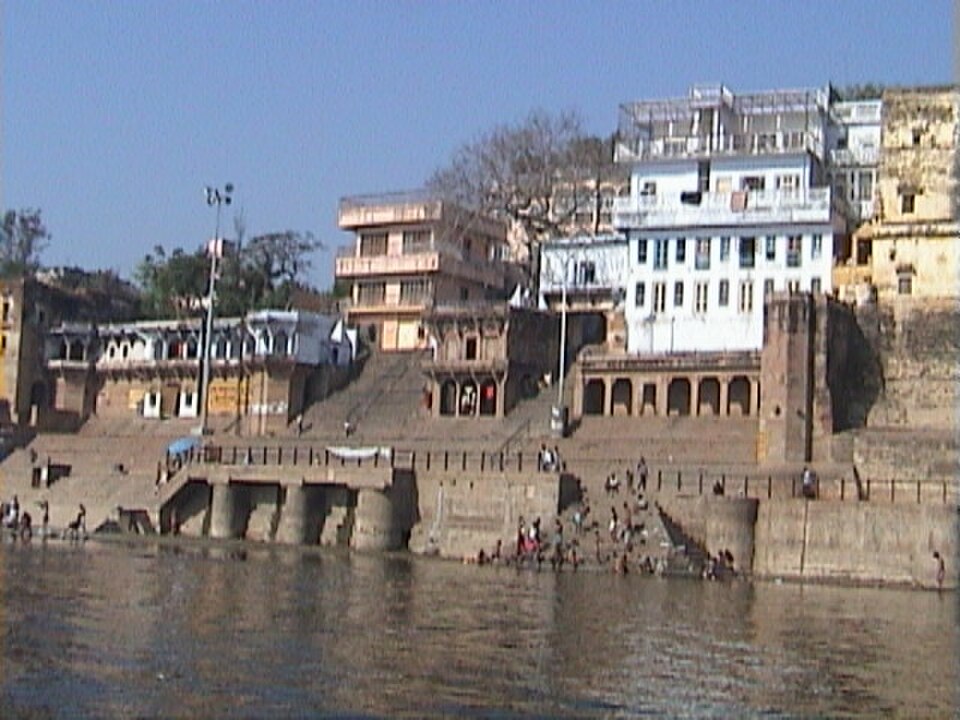
Before the sun clears the eastern horizon, the daily life of Panchganga has already begun. In the half-light of dawn, bathers descend the long staircase with brass pots and cloth bundles, their breath visible in the winter air, and step into the cold river with a shiver and a prayer. The water, which legend gives to five rivers, receives them one by one; men in white dhotis, women in bright saris, all facing the east as the first rays of light turn the Ganga to silver. Along the upper steps, barbers set up their tin mirrors and stools, shaving the heads of pilgrims in fulfilment of vows, while sadhus in ochre robes sit in meditation, their bodies streaked with ash and their eyes fixed on the water.
The ghat is a working place as well as a holy one. Laundry is beaten clean on the flat stones, brass pots are scrubbed until they gleam, and the priests of the small shrines begin their morning rounds with offerings of flowers and incense. Boatmen call out their prices from the water, flower-sellers and garland-makers spread their wares on the steps, and the first chai wallah of the day lights his stove on the pavement above. For all its ancient reputation, Panchganga is no museum of the past; it is a neighbourhood on the river, lived in and used by thousands, where the sacred and the everyday are woven so tightly together that no one thinks to separate them.
One of the most striking changes of the last century is visible only at the water's edge. The Ganga has receded steadily from the old city, and where boats once tied up directly at the base of the steps, broad sandbanks now spread out in winter, leaving the ghat high and dry at low water. Pilgrims who remember their grandparents' tales speak of a river that came right up to the great staircase, and even today, when the monsoon swells arrive, the water returns with a suddenness that startles the bathers. In the dry season the sandbanks become a strange, temporary world of their own — cricket matches, grazing buffaloes, drying clothes and wandering goats — a riverfront that changes its face with every season of the year.
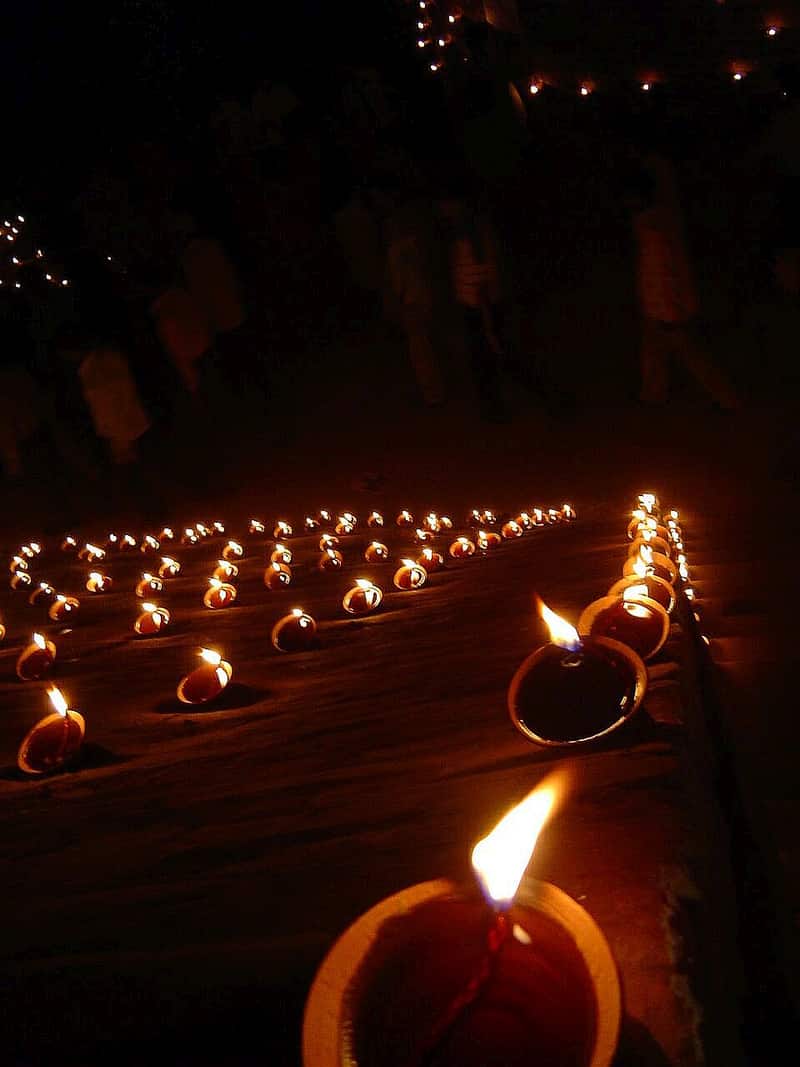
The View from the Water
Seen from a boat on the Ganga, Panchganga reveals its full majesty. From midstream the long staircase rises like a pale ramp against the old city, and above it the twin towers of the Alamgir Mosque break the sky with a silhouette that belongs to no other ghat in India. The moment of greatest beauty is sunset, when the western sky flushes copper and rose and the mosque's outline turns black against the burning light, its minarets seeming to pierce the heart of the sun. Boats cluster on the water at this hour — wooden country craft carrying pilgrims and photographers alike, all silent for a few minutes as the great light show plays itself out over the northern ghats.
The panorama from the water extends far beyond the ghat itself. To the north, the eye travels along the line of steps toward Raj Ghat and the far northern reaches of the city, where the newer buildings of the Kashi Vishwanath corridor rise beside the ancient riverfront, and beyond them the low blue hills of the far shore. To the south, the ghats continue in an unbroken chain — Darbhanga, Munshi, the wide apron of Dashashwamedh — until the smoke of Manikarnika marks the next bend of the river. On the far bank, across the broad sweep of water, lie sandbanks, fields and clusters of village trees, a green and tranquil world that seems centuries away from the crowded stone of the city.
Every hour brings a different riverline. In the pale light of morning the mosque floats above a veil of mist, and the boats of the flower-sellers drift past with their cargo of marigolds. At midday the ghat is a hive of colour and movement, the steps alive with bathers and pilgrims, the water speckled with the heads of swimmers. But it is in the last hour of light that the great silhouette comes into its own: the minarets turning dark gold, the reflected sky trembling on the water, and the first lamps of the evening being lit on the steps below. For a traveller on the river, this is the Panchganga that will be remembered longest — not the ghat of legend or history, but the ghat as seen from the water, framed by the fire of the setting sun.
Above the Ghat — The Mosque Platform and Its View
A visit to Panchganga is not complete without climbing to the platform on which the Alamgir Mosque stands. The ascent through the lanes of the old city is itself a journey through centuries: narrow alleys, ancient doorways, and flights of steps worn hollow by a thousand years of feet, until the path opens suddenly onto the wide stone platform high above the river. The mosque itself stands at the heart of this platform, its great domes and arches dwarfing everything around them. Visitors can walk freely in the open courtyard, feel the coolness of the stone underfoot, and stand in the very place where the mosque's builders stood four centuries ago, looking down at the same river.
The interior of the mosque, however, is a different matter. It remains a functioning place of prayer, and entry inside is reserved for the faithful; visitors are expected to view the monument from outside, respecting the sanctity of the house of worship. Local guides will usually explain this boundary politely, and there is no need for a visitor to test it. What is freely given is the view: from the platform the whole crescent of Varanasi's ghats lies spread out below, a great fan of stone steps curving along the water as far as the eye can see. The smoke of Manikarnika rises in the middle distance, and beyond the rooftops of the old city, the slender golden spire of the Kashi Vishwanath temple catches the sun like a small flame.
This is, for many travellers, the finest panorama in Varanasi. Below, the river bends around the northern ghats in a slow silver arc; to the right, the distant buildings of Raj Ghat and the new corridor; to the left, the long chain of steps leading toward the heart of the city. On festival evenings the platform becomes a vantage point for Dev Deepawali, when the lamps below spread out in glowing patterns and the whole scene turns to liquid gold. Standing at the mosque platform, the visitor holds all of Kashi in a single glance — the sacred river, the ancient city, the working ghats, and the monuments of both faiths, gathered together on one hill above the water.
Etiquette and Respect on the Ghat
Panchganga is a living place of worship, and it rewards visitors who come with the same respect they would show in any sacred home. Modest dress is expected — shoulders and knees covered, especially for those who wish to enter the old shrines or to be received politely by the priests. It is wise to remove shoes before stepping onto the platforms of the small temples, and to leave offerings only where they are clearly invited. Bathing, for those who wish to take part, has its own gentle rules: the water is used for prayer, not for swimming or splashing, and the Ganga is treated as a goddess, never as a public pool. A little humility goes a long way on these steps.
The mosque above the ghat requires a special measure of care. As a functioning house of prayer, its interior is not open to general visitors, and photography inside is not permitted; the respectful approach is to admire the monument from the courtyard and the platform, where the view is more than generous. Around the ghat itself, the same courtesy applies to the rituals of others: a pilgrim shaving his head after a vow, a family performing pind daan, a mourner at the water's edge — all are engaged in acts of deep personal significance, and a camera aimed at them can turn reverence into intrusion. The best photographs are the wide ones, of the steps and the river, taken with the subjects' distance respected.
Finally, a word about the commerce of the ghat. Panchganga has its share of touts, self-appointed guides and boatmen with enthusiastic pricing, and the prudent visitor listens politely, decides what is wanted, and negotiates before the service begins. A fixed price agreed at the start — for a boat ride, a guide, a garland — is worth more than any bargain made in haste afterwards. There is no charge to visit the ghat itself; entry is free, and the gifts, the puja services and the donations that sustain the place are offered freely, never demanded. With patience, courtesy and a modest dress, any traveller will leave Panchganga richer in understanding, and the ghat will remain exactly as it has always been: sacred, busy and utterly alive.
Practical Information — How to Reach and When to Go
Panchganga lies in the northern stretch of Varanasi's ghats, beyond the crowds of the central riverfront. The simplest approach is on foot: walking north from Manikarnika Ghat, past the lanes of the old city, brings the traveller to the ghat in about twenty minutes, the route itself passing through the living neighbourhoods where pilgrims, priests and traders have shared the same narrow streets for centuries. Alternatively, a boat from Dashashwamedh or Manikarnika will deliver the visitor directly to the water steps, offering the unforgettable approach from the river, with the mosque silhouette growing above the bow as the boat draws near. Taxis and cycle-rickshaws can reach the lanes above the ghat, though the final stretch is always on foot.
The best time to visit Panchganga is at sunrise, when the bathers arrive and the first light turns the great staircase golden, or in the last hour of the afternoon, when the mosque catches the western sun. The winter months, from October to March, offer the clearest skies and the finest views, and the river is low and peaceful — the season of broad sandbanks and bright cold mornings. For the experience of a lifetime, time the visit for Kartik Purnima in November, when Dev Deepawali turns the ghat into a sea of lamps and the whole city gathers on the riverbank. Entry to the ghat is entirely free, and there is no ticket, permit or barrier anywhere on the stone.
The ghat sits in good company. A short walk south brings the traveller past Darbhanga and Munshi toward the great centre of Dashashwamedh, while the boat route north reaches Raj Ghat and the newer reaches of the riverfront. The famous southern ghats of Chet Singh, Tulsi and Mansarovar are a longer journey by boat or by the road above the river, each with its own palace, temple and story. Many visitors combine Panchganga with the cremation ghats walk, moving between Manikarnika and this ghat along the water's edge, reading the river as the city's great open book. With a morning at the bathing steps, an afternoon in the lanes, and an evening on the water, a single day at Panchganga leaves the memory of a whole civilization.
Panchganga Ghat — Gallery (12 Photos)
Image Credits
panchganga-01.jpg · panchganga-02.jpg · panchganga-03.jpg · panchganga-04.jpg · panchganga-05.jpg · panchganga-06.jpg · panchganga-07.jpg · panchganga-08.jpg · panchganga-09.jpg · panchganga-10.jpg · panchganga-11.jpg · panchganga-12.jpg — Wikimedia Commons, under free licenses.
Continue exploring
Similar Ghats Nearby
Book This Ghat — Get Notified
Download the app now and book a boat ride to Panchganga Ghat