

Bhainsasur Ghat
Cremation GhatBhainsasur Ghat is named after the demon Bhainsasur.


Type
Cremation Ghat
Boat Fare
1x base fare
Best Time
The morning bath passes quietly on these steps.
History
Named after the demon Bhainsasur. A small ordinary ghat.
Highlights
- The tale of the demon Bhainsasur
- The victory of the goddess
- A place of bathing and rites
Festivals & Events
How pricing works in the NaviX app
No haggling at the ghat — everything is fixed in the app first
- 1
Fixed price before you board
The fare is shown in the app upfront — no bargaining at the ghat
- 2
Sharing or private — your choice
Share with fellow travelers or take the whole boat for your group
- 3
Pay only after the ride
UPI, card or cash — with an instant receipt
🕉️
Aarti details not available for this ghat yet
Complete Guide
Bhainsasur Ghat — The Complete Guide
History, mythology, rites and practical details — everything in depth.
On this page
- 1.Bhainsasur Ghat — An Introduction to the Northernmost Shore
- 2.The Legend of the Demon Bhainsasur
- 3.A Name Steeped in Mythology
- 4.Morning Bathing at Bhainsasur
- 5.Bathers, Boatmen and Everyday Life
- 6.The River and the View
- 7.Lanes and the Open Northern Shore
- 8.The Neighbouring Ghats — Raj and Namo
- 9.An Open and Rustic Atmosphere
- 10.Festivals on the Northern Shore
- 11.Etiquette for Visitors
- 12.Practical Information — Reaching Bhainsasur Ghat
📅 Updated: 21 Aug 2026 · Author: NaviX Field Team (field research 2024-26) · 12 sections · 12 photos
Bhainsasur Ghat — An Introduction to the Northernmost Shore
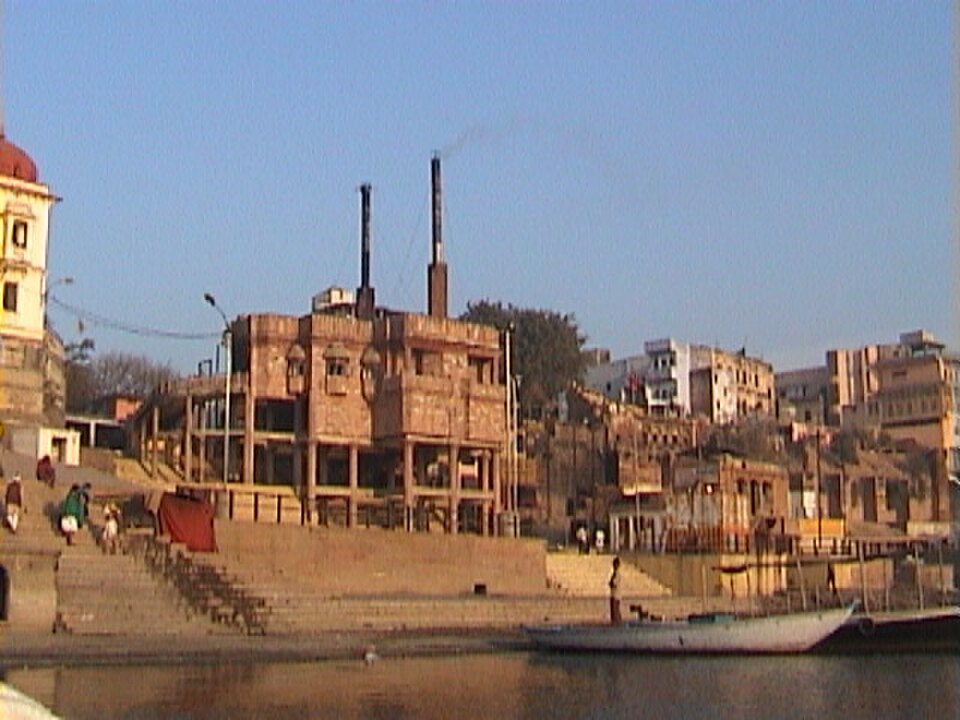
Bhainsasur Ghat is a quiet, minor ghat on the northern riverfront of Varanasi, situated beyond Raj Ghat at the northernmost end of the main ghat chain. Where the grander ghats of the city teem with pilgrims, priests and photographers, Bhainsasur remains open and rustic, a stretch of simple stone steps where everyday river life unfolds without ceremony. Its name recalls a demon of Hindu mythology, which gives it a character unlike that of any other ghat on the river, and its position at the far end of the crescent of bathing places means that even on festival mornings the crowd here never overwhelms the shore. This is the frontier ghat of Kashi, where the sacred riverfront begins to dissolve into the open fields of the northern country.
The ghat is not a monument but a place of living habit. Bathers arrive at dawn, boatmen moor their wooden country craft along the shore, and washerfolk beat clothes against the stone slabs with steady rhythm. There are no ornate palaces behind it and no towering temples announcing its presence; instead, low houses and dusty lanes open directly onto the riverbank, and the horizon beyond the water is broad and free. For travellers who have walked the entire stretch of the Varanasi riverfront, Bhainsasur is the quiet reward at the end of the journey, a place where the Ganga is seen as it truly is, wide, brown and unhurried, unadorned by the scaffolding of pilgrimage commerce.
This guide takes you through the ghat in twelve chapters: the legend of the demon who gave it its name, the mythology of its naming, the morning bathing, the daily life of bathers and boatmen, the river and its wide view, the lanes of the open northern shore, the neighbouring ghats of Raj and Namo, its open and rustic atmosphere, the local festivals, the etiquette that protects the place, and finally the practical matters of reaching it and choosing the best time to visit. Few ghats of Varanasi offer so much peace, and none rewards a slow visit so generously with the simple sight of the sacred river at its most unguarded.
The Legend of the Demon Bhainsasur
The name Bhainsasur at once conjures the buffalo demon of Hindu mythology, the asura Mahishasura who took the form of a mighty buffalo and terrorised heaven and earth alike. According to the Devi Mahatmya, he had earned such powerful boons that no god could defeat him, until the goddess Durga, created from the combined energy of all the deities, rode out on her lion to face him. The battle raged for nine days and nine nights, and at last the goddess drove her trident through the demon, freeing the worlds from his tyranny. That victory is still celebrated every autumn as the festival of Navaratri and Durga Puja, when the same battle is relived in song, story and dance across India.
The demon remembered on the northern shore of Varanasi is more local, a creature of the riverfront itself. The legend told by the boatmen and bathers of this shore is that a powerful buffalo demon once haunted this stretch of the Ganga, overturning boats, scattering herds and terrorising the villages along the bank. His end came not on a distant mythical battlefield but here, on the sandy shore beyond Raj Ghat, where the river itself rose against him. Some say the goddess in her warrior form struck him down; others say he was vanquished by the very waters he had disturbed. Either way, the battle is said to have left its mark on the land, and the ghat built at the spot kept the name of the vanquished.
Stories of demons defeated by divine power are among the oldest in Hinduism, and nearly every sacred place of Kashi carries one within its name. The legend of Bhainsasur belongs to this family of tales, but it carries a gentler note than most. The demon of this shore was not a great cosmic tyrant but a local nuisance, and his defeat was a domestic miracle, a victory for the ordinary people who lived beside the water. When the story is told today on the steps of the ghat, it is told with affection rather than fear, the way one might speak of a troublesome neighbour who was finally tamed, proof that even here, at the edge of the holy city, the old powers of myth are never far away.
A Name Steeped in Mythology
The ghats of Varanasi are named in many ways. Some take their names from the rulers and princes who built them, some from the temples that stand behind them, and some from the deities whose shrines overlook the water. Bhainsasur Ghat belongs to a smaller and older group, the ghats named after figures of myth and legend. In this it keeps company with the ghats that remember sages, heroes and demons, names that carry the city's vast storytelling tradition down to the present day. To know what a ghat is called in Kashi is often to know the story the city has chosen to remember at that spot, and the name of this ghat preserves a very particular memory.
The name itself is a local form of Mahishasura, the buffalo demon, transformed by the tongues of the city over centuries. Bhainsa is the Hindi word for a buffalo, and the suffix asur marks the demonic, so the name can be read plainly as the demon of the buffalo. Whether the ghat marks the exact site of the demon's fall or simply preserves a folk memory of his presence on this shore is a question that no inscription answers. What is certain is that the name has persisted for generations, used without a moment of hesitation by boatmen, bathers and the families who live in the lanes behind the ghat, passing from one tongue to another as naturally as the river itself passes the steps.
For the people of the northern riverfront the demon of the name has long become a familiar neighbour. No one here fears him, and no one finds it strange that a ghat should bear the name of a defeated enemy of the gods. The name has even acquired a fond, almost comic quality, the way names do when they are spoken every day. It is this everyday quality that makes the ghat's mythology so alive: the story of Bhainsasur is not locked in scripture but carried in the ordinary speech of the shore, anchored to the water by the same current that once, if the legend is true, rose up to defeat the demon whose name the steps now wear.
Morning Bathing at Bhainsasur
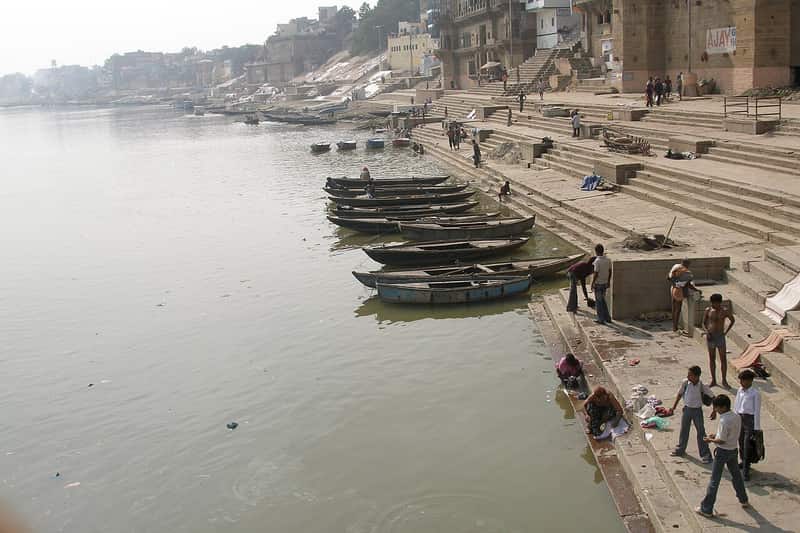
At Bhainsasur Ghat the day begins with water. Long before the sun clears the eastern bank of the Ganga, the first bathers arrive, men with towels folded over their shoulders and women with brass pots balanced on their hips. They step carefully down the stone steps, pause at the water's edge, and whisper a short prayer before entering. Because the ghat stands at the northern end of the riverfront, the water here is less disturbed than at the great central ghats, and those who bathe here value the quiet intimacy of the morning ritual. The sound of the dip, the murmur of mantras and the first light spreading over the far bank compose the ghat's true dawn chorus.
The bath itself is a simple and precise act, repeated in exactly the same form for centuries. The bather dips fully, surfaces, and pours water from cupped hands as an offering, facing the rising sun. Some recite mantras, others keep a companionable silence, and many dip a small brass vessel to carry water home for the household shrine. After the bath, wet clothes are wrung out, hair is combed back, and the bather lingers on the steps to greet neighbours and watch the river wake. At the far northern ghats there are no priests conducting elaborate ceremonies and no queues for a holy dip; there is only the river, the dawn and the private devotion of each person who comes.
For the families of the northern shore, bathing at Bhainsasur is not a special occasion but an ordinary part of the morning, as natural as making tea. Grandmothers remember bathing here as girls, and their granddaughters now carry the same pots to the same water. The river is the oldest member of the neighbourhood, and the daily visit is a form of greeting as much as worship. Visitors who join the bathers at dawn should do so gently, entering the water as the locals do, without noise and without haste. For many who come to Kashi, the unhurried bath at the northern end of the ghats becomes the most memorable ritual of all, because it is the most honest: no ceremony, no performance, only water and faith.
Bathers, Boatmen and Everyday Life
Bhainsasur Ghat is above all a working waterfront, and its daily rhythm is set by those who depend on the river for their living. The boatmen of the northern shore arrive with the light, inspecting their wooden craft, checking ropes and repairing nets spread across the steps. Their boats are simple country vessels in fading colours, carrying farmers' produce, firewood and passengers between the villages of the far bank and the city. Around them the washerfolk set up their stations, slapping wet clothes against flat stones with steady, rhythmic blows, while children dodge between the drying lines that appear on the shore like a second crop of laundry.
The life of the ghat gathers around these labours. Children swim in the shallows and dive from the low platforms; women fill their pots and climb into the lanes with the water balanced on their heads; old men settle on the steps in the warmth of the afternoon, watching the river and exchanging unhurried talk. Tea stalls, little more than an iron kettle and a few tin cups on a plank, appear along the top of the ghat in the morning and vanish by evening. Buffaloes are led down to drink, and a herd of goats often pauses on the steps to the amusement of everyone. Nothing here is arranged for visitors, and nothing is hidden from them either.
To stand on Bhainsasur Ghat is to watch a way of life that the river has shaped for centuries, a life of simple tasks performed with quiet competence, day after day. The work is hard and the incomes are modest, yet the atmosphere is rarely strained; the river provides, and the people of the shore have learned to take what it gives with patience and humour. For the visitor, the ghat offers a rare gift: a glimpse of the Varanasi riverfront not as a stage for pilgrimage but as a street, a workplace and a home. It is the difference between seeing the city's ghats as monuments and seeing them as life, and at Bhainsasur life is the only monument on show.
The River and the View
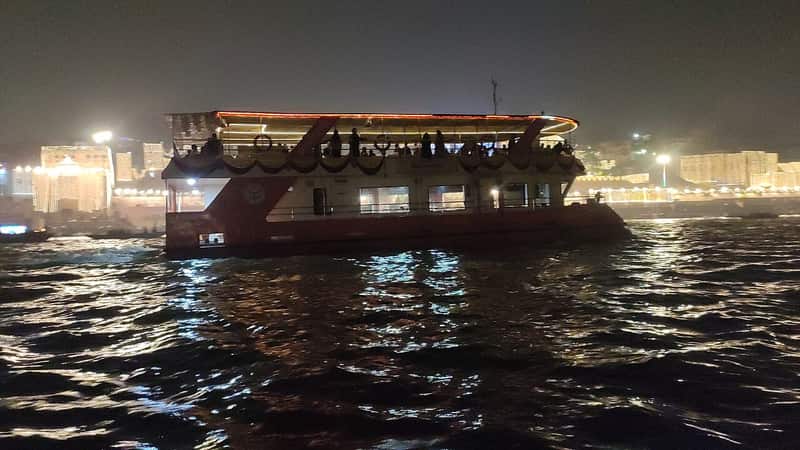
At Bhainsasur Ghat the Ganga reveals its widest face. The river here flows in a great sweep, broad and brown, with the far bank so distant that villages appear as clusters of pale houses and dark trees along the horizon. To the south the view follows the curve of the river past Raj Ghat toward the distant towers and domes of the central city, while to the north the shore dissolves into fields, orchards and the low haze of the open country. It is the Ganga of the poets, the river of open space and moving light, seen from the last step of the city before the sacred shore gives way to farmland.
Birds give the view its life. Egrets and cormorants fish in the shallows, kites wheel high above the water, and in the winter months migratory ducks rest along the sandbanks that appear when the river falls. On the water itself, country boats drift past with slow, creaking oars, heading upriver to the villages of the northern districts, and in the deep channel the current shows itself in long, muscular streaks. The near shore is equally open; there are no towering buildings here, only the low line of houses and the empty sky. Even the sounds are few: the lap of water, the cry of a bird, the distant thump of a washerman's stone.
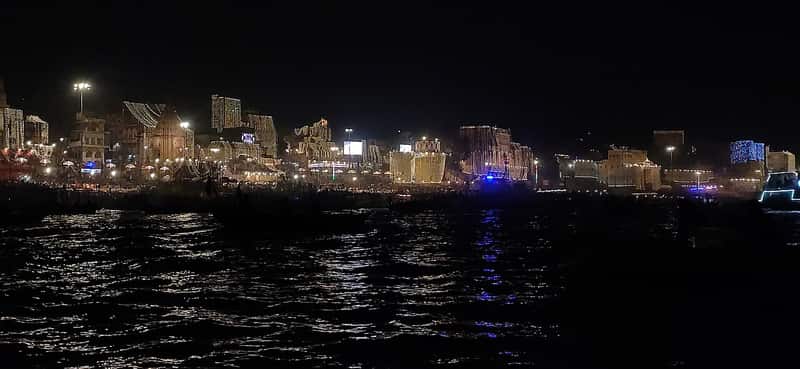
At sunset the water turns to bronze and the far bank to violet, and the silence that settles over Bhainsasur Ghat feels like the oldest thing in the city. Lights begin to appear one by one on the opposite shore, then across the sandbanks, and the river darkens slowly, gathering the day's last colour into its folds. On winter evenings the view is at its most dramatic, with the sun setting low over the northern fields and painting the entire sky in bands of gold and rose. This is the river as it was before the crowds and the lights, a Ganga of immense and generous space, and no photograph, however skilful, quite captures the feeling of standing at its northern edge and watching it go.
Lanes and the Open Northern Shore
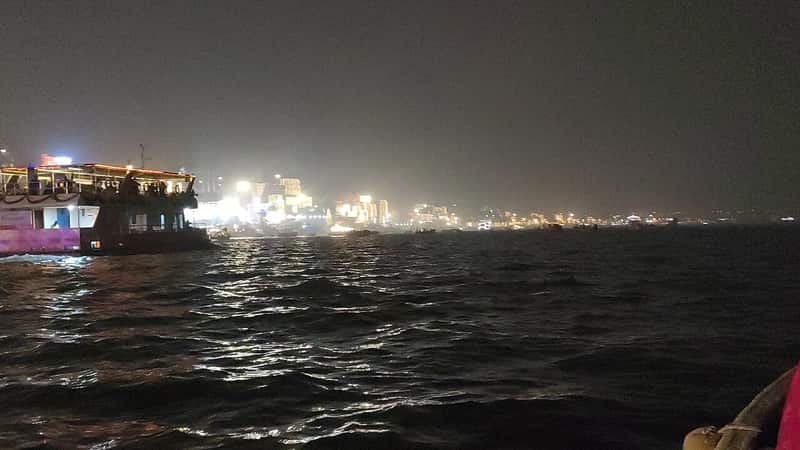
Behind Bhainsasur Ghat the city loosens its grip. The lanes here are wider than the famous alleys of the old city, and they run almost straight toward the open ground of the northern shore rather than twisting through crowded markets. The houses are low and modest, painted in lime and ochre, with courtyards where marigolds bloom and buffaloes stand tethered in the shade. Small shrines occupy the corners, their red flags stirring in the breeze, and the whole quarter has the settled, unhurried air of a large village rather than the restless energy of a pilgrimage centre. Children play in the open spaces, and the evening air carries the smell of wood smoke and cooking oil.
The open character of the shore extends into the everyday life of the quarter. Vegetable gardens spread along the edges of the settlement, their green rows running down toward the water; fishermen dry their nets on the grass; and in the evenings the fields beyond the houses fill with families taking the air. There is no bazaar here in the old-city sense, no glitter of brass and silk; the shops, such as they are, sell rope, grain, clay pots and the small necessities of a river village. The pace is slower, the faces are fewer, and the sun and the wind have more room to move. Even the dogs of the quarter seem lazier than their counterparts in the crowded lanes of the south.
Unlike the southern riverfront, where every metre of land is built upon and every step of every ghat is accounted for, the northern shore preserves a sense of space and sky. A walk through these lanes is a walk through the quieter history of Varanasi, the history of farmers and boatmen, of village shrines and river festivals, of a city that was once, in large part, a string of farming communities along a sacred river. The great ghats of the south tell the story of kings and pilgrims; the northern shore tells the older, plainer story of the people themselves, and the lanes behind Bhainsasur are where that story is still lived.
The Neighbouring Ghats — Raj and Namo
Bhainsasur Ghat stands at the northern end of the ghat chain, but it is far from isolated. To its south lies Raj Ghat, a ghat of great historical weight, associated with the visit of Guru Nanak Dev, the founder of Sikhism, and long used both as a bathing place and as a cremation ground. Its broad, low steps and the open ground behind it give it a solemn, spacious character, and its connection with the founder of a great faith makes it a place of pilgrimage for Sikhs from across India and the world, who come to pay homage beside the very river that the Guru walked.
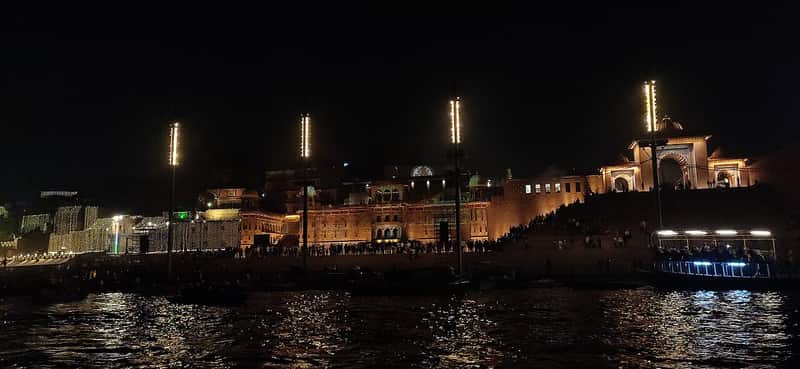
To the north of Bhainsasur, the newer Namo Ghat extends the riverfront with a long, well-paved promenade inaugurated in 2019 and named in honour of Prime Minister Narendra Modi. Where Bhainsasur is rustic and unplanned, Namo Ghat is clean, landscaped and well-lit, its wide platform drawing evening crowds and its gentle steps providing an easy place for families to sit by the water. The contrast between the two ghats is instructive: one is the riverfront as it has been for centuries, the other is the riverfront as the modern state imagines it, and both together show the remarkable range of faces that Kashi's sacred shore can wear within the space of a short walk.
The three ghats together form the northern frontier of Varanasi's sacred shore: Raj Ghat with its deep history and its cremation fires, Bhainsasur with its living village life, and Namo Ghat with its clean modern face. Walking between them along the river takes less than an hour at an easy pace, and the walk itself is one of the most pleasant on the entire riverfront, open, uncrowded and full of changing views of the water and the shore. For the traveller who begins at Namo and ends at Raj, the journey is a kind of living timeline of the city: from the newest stone laid on the bank to the oldest fires of the northern shore.
An Open and Rustic Atmosphere
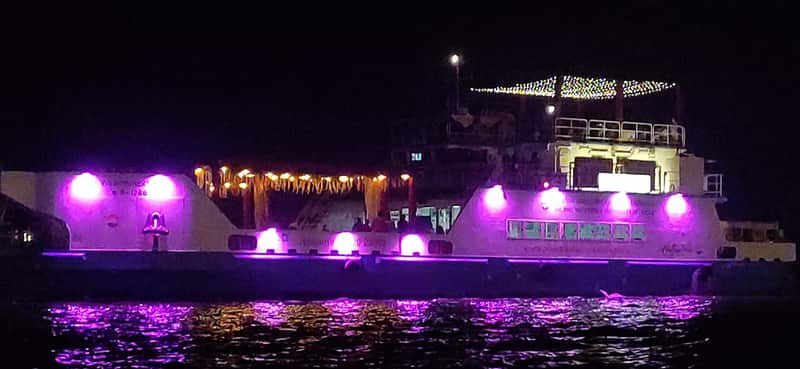
The atmosphere of Bhainsasur Ghat is its greatest gift. There are no souvenir stalls, no touts offering boat rides, no photographers arranging poses; the commercial apparatus that surrounds the famous ghats of the south is almost entirely absent here. What remains is the riverfront itself, open to the sky and to the eye, with nothing between the visitor and the water but air and a few worn steps. Cows wander the platforms, buffaloes cool themselves in the shallows, and the only music is the sound of water, of oars and of voices speaking in the unhurried tones of everyday life. The ghat does not perform; it simply is.
Rustic does not mean neglected. The steps are worn but cared for, the shrine at the top of the ghat is freshly painted, and the small temple lights are lit every evening with a punctual devotion. The simplicity is chosen and settled, a way of being that has suited this shore for centuries and that the people of the quarter would not trade for the marble and brass of the busier ghats. Vendors, when they appear, sell river stone, rope or vegetables rather than trinkets, and their trade is conducted with the easy familiarity of a village rather than the sharpness of a tourist market. This is a riverfront that has not yet been turned into a stage.
Visitors who come expecting drama will find instead a deep quiet, a place where the holy city shows its plainest face. There is a particular joy in sitting on the steps of Bhainsasur at dusk, watching the lights of the far bank come on one by one and knowing that this stretch of the Ganga remains exactly what it has always been: open, honest and utterly at peace. The air is cleaner here, the pace is slower, and the distance from the great ghats seems greater than the actual kilometre or two. For the traveller tired of being sold the sacred city, Bhainsasur is the antidote, the place where Kashi asks nothing of you except that you sit, watch and breathe.
Festivals on the Northern Shore
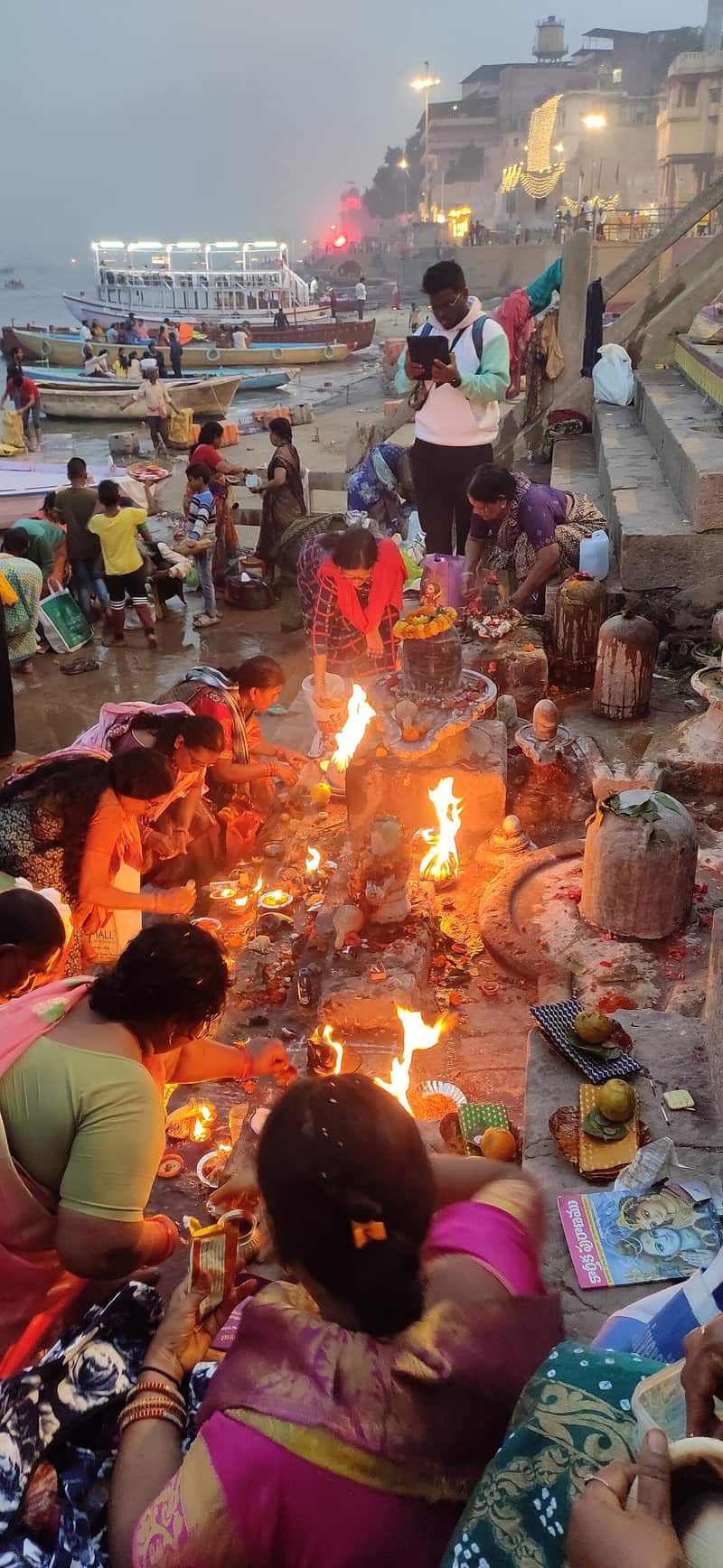
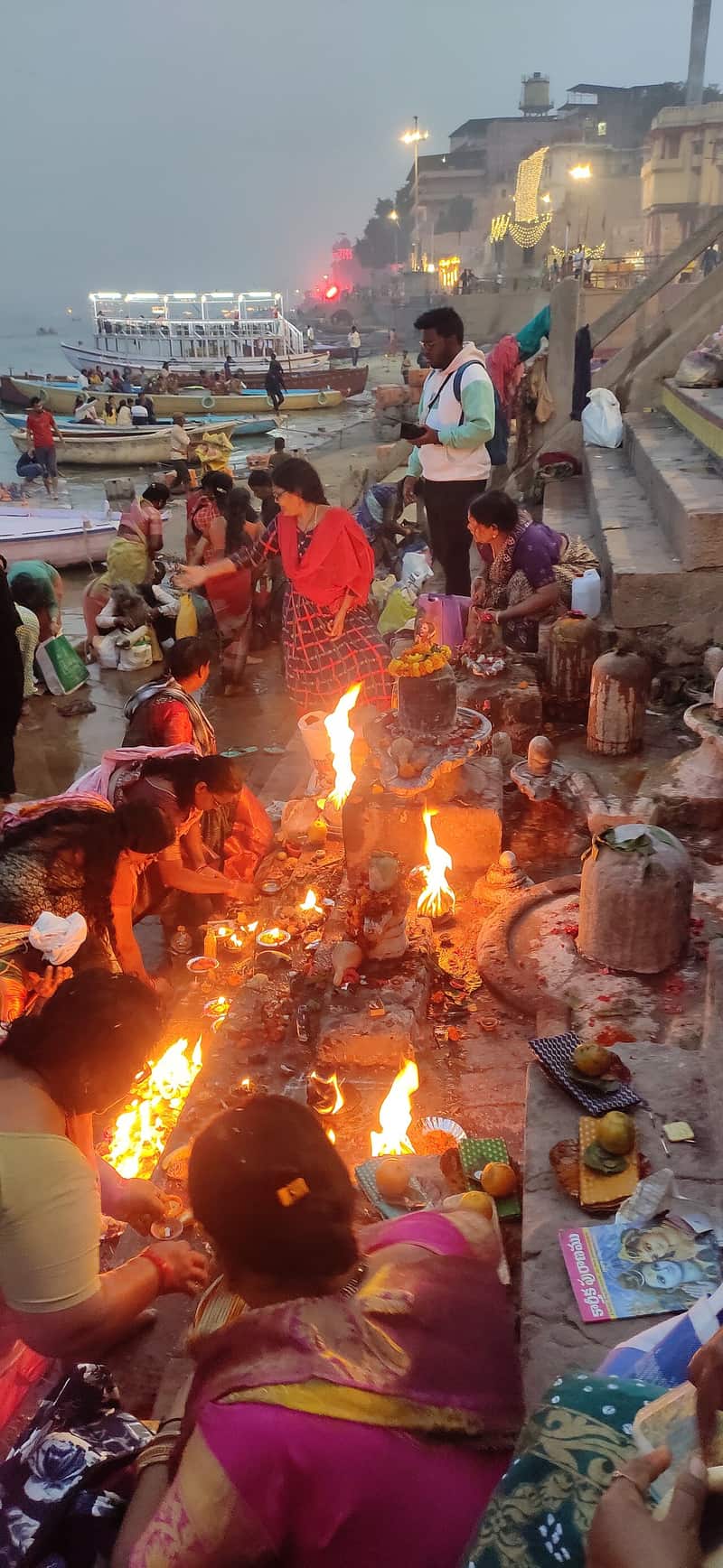
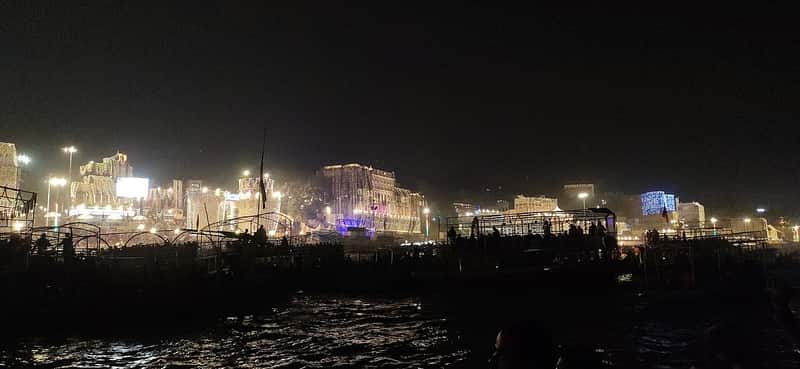
Though Bhainsasur Ghat holds no grand festivals of the kind that draw thousands to the southern riverfront, the northern shore observes the great river festivals in its own quiet way. On Kartik Purnima, the full moon night of the month of Kartik, the steps fill with families who have come to bathe and to float small lamps of leaf and clay upon the water. The practice is older than the ghats themselves, and on the northern shore it retains a simple, unarranged sincerity that the staged ceremonies of the south cannot match. The dark water takes the little flames one by one, and the far bank glitters with the same lights floating from the villages opposite.
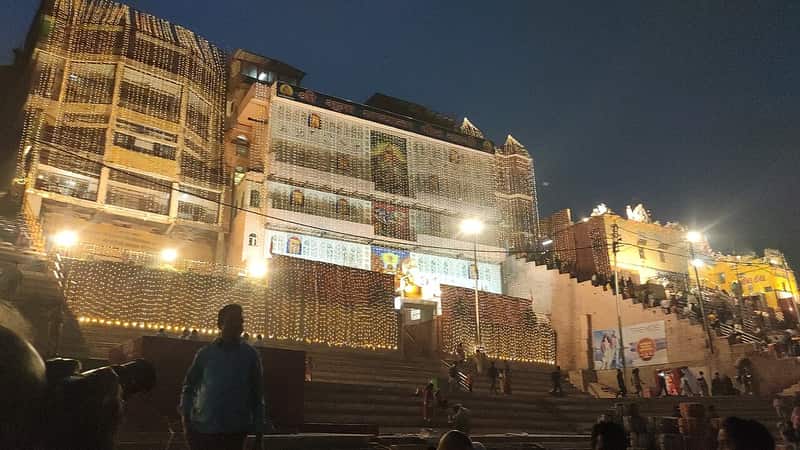
The legend of the ghat gives a special colour to Navaratri, the nine nights of the goddess. Because the ghat is named for the demon who fell to Durga, the festival of her victory carries a local resonance, and on each of the nine nights small processions of women with earthen lamps visit the shrines behind the ghat, pausing at the top of the steps to light a diya for the river. The monsoon month of Sawan brings processions of Shiva devotees walking along the shore toward the northern temples, their voices rising in song above the rain. Diwali, too, lays its rows of lamps upon the steps, each flame doubling in the water, and the ghat glows like a string of amber beads against the dark.
These are festivals of the neighbourhood rather than of the city at large, and that is precisely their charm. There are no grand pandals, no amplified announcements, no crowds pressing shoulder to shoulder; instead there are families, small offerings, and the sense that the celebration belongs to the people of the shore as much as to the calendar. To attend one is to take part in the festival life of Varanasi as it is lived, not as it is staged, and to see how a minor ghat with a demon's name carries the same old faith through the year with a dignity entirely its own.
Etiquette for Visitors
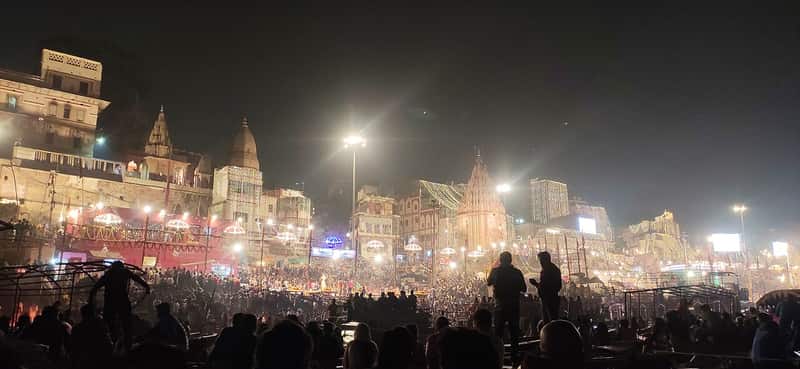
Varanasi is a city of living faith, and Bhainsasur Ghat, for all its quietness, is a place where that faith is practised every day. Visitors should approach the ghat with the same respect they would offer any working place of worship. Modest clothing is appropriate, especially when stepping down to the water. Bathers performing their ablutions should be given privacy; if you wish to photograph them, ask first, and accept a refusal with grace. The river itself is sacred to millions of people, so nothing should be thrown into it, no refuse, no plastic, no leftover food, and no offerings of your own invention.
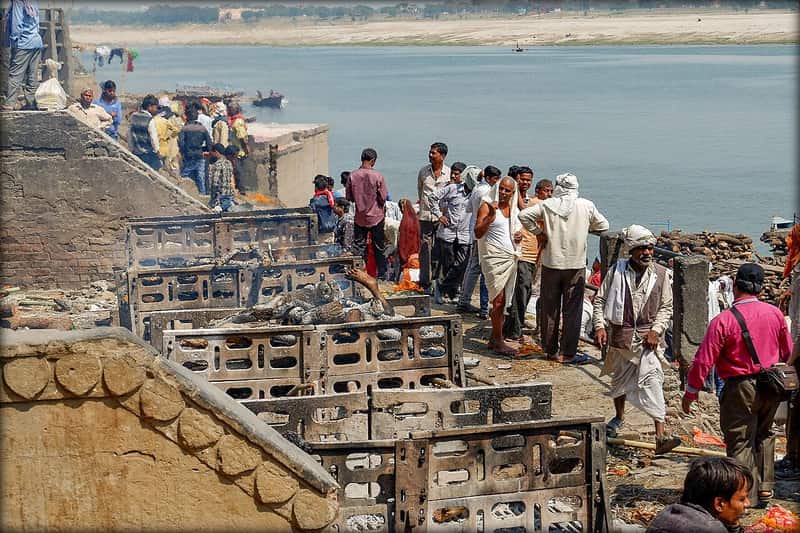
The northern shore also carries the duty of silence and restraint. The steps of Raj Ghat, a short walk to the south, are a cremation ground, and funeral processions pass along the riverfront on their way there. When a procession approaches, stand aside quietly, lower your camera and do not photograph it; the dignity of the mourners is more important than any image. Shoes should be removed before entering the small shrines at the top of the ghat, and offerings made at home temples are not appropriate here. Keep the shore clean, take your waste away with you, and remember that what looks to you like scenery is, to the people of the quarter, a place of work and worship.
Finally, be patient with the pace of life here. The ghat runs on its own rhythm, and the visitor who hurries will miss the very thing they came to see. Greet people with a namaste, accept tea if it is offered, and speak quietly in the presence of prayer. Respect given freely is always returned, and the people of the northern shore are generous hosts to those who honour their river. In return, Bhainsasur will give you something that the crowded ghats cannot: the sense that you have been not merely a tourist passing through, but a guest, however brief, of one of the oldest and kindest neighbourhoods of Kashi.
Practical Information — Reaching Bhainsasur Ghat
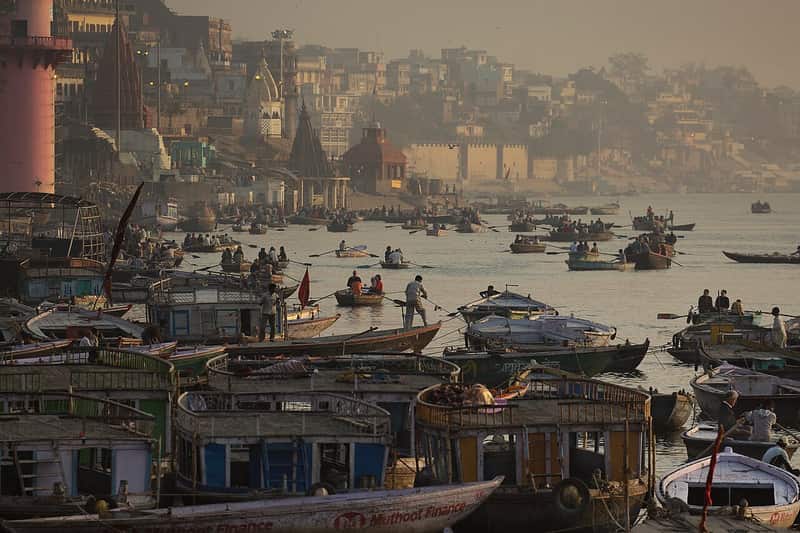
Bhainsasur Ghat lies at the far northern end of Varanasi's riverfront, roughly five kilometres from the city's central Dashashwamedh Ghat. The simplest approach is to follow the river north from Raj Ghat on foot, a pleasant walk of about fifteen minutes along the shore. For those coming by road, cycle-rickshaws and shared autos run to the northern lanes from the main road; from there the ghat is a short walk through the quiet neighbourhood. Boatmen at the central ghats will also carry you directly to Bhainsasur by water, and the journey upstream offers the best possible introduction to the ghat, with the whole chain of the sacred shore unwinding beside you.
The best time to visit is early morning, when the bathers arrive and the river is at its calmest, or in the late afternoon, when the light softens and the far bank glows. The winter months from October to March are the most comfortable, with clear skies and cool air; the monsoon months bring a swollen, tawny river and fewer visitors, which suits those who want the shore almost to themselves. Carry drinking water, as the tea stalls of the ghat are simple, and remember that the northern shore is open and exposed, so a hat and sunscreen are wise in summer. Wear shoes you can easily remove, for the shrines, and sandals you can carry across the sand in the dry season.
Allow at least half a day to walk the ghats between Raj and Namo, stopping at Bhainsasur to rest, to watch the river and to absorb the quiet with which the holy city begins and ends its day. Photography is fine on the open steps, but respect the privacy of bathers and mourners as described earlier. There is no entrance fee and no closing hour; the ghat, like the river, keeps its own schedule. Come once at dawn and once at dusk, and you will have seen the two faces of the northernmost ghat of Kashi, the first still and blue, the second golden and vast, both of them among the most peaceful sights that the sacred city has to offer.
Bhainsasur Ghat — Gallery (12 Photos)
Image Credits
bhainsasur-01.jpg · bhainsasur-02.jpg · bhainsasur-03.jpg · bhainsasur-04.jpg · bhainsasur-05.jpg · bhainsasur-06.jpg · bhainsasur-07.jpg · bhainsasur-08.jpg · bhainsasur-09.jpg · bhainsasur-10.jpg · bhainsasur-11.jpg · bhainsasur-12.jpg — Wikimedia Commons, under free licenses.
Continue exploring
Similar Ghats Nearby
Book This Ghat — Get Notified
Download the app now and book a boat ride to Bhainsasur Ghat