
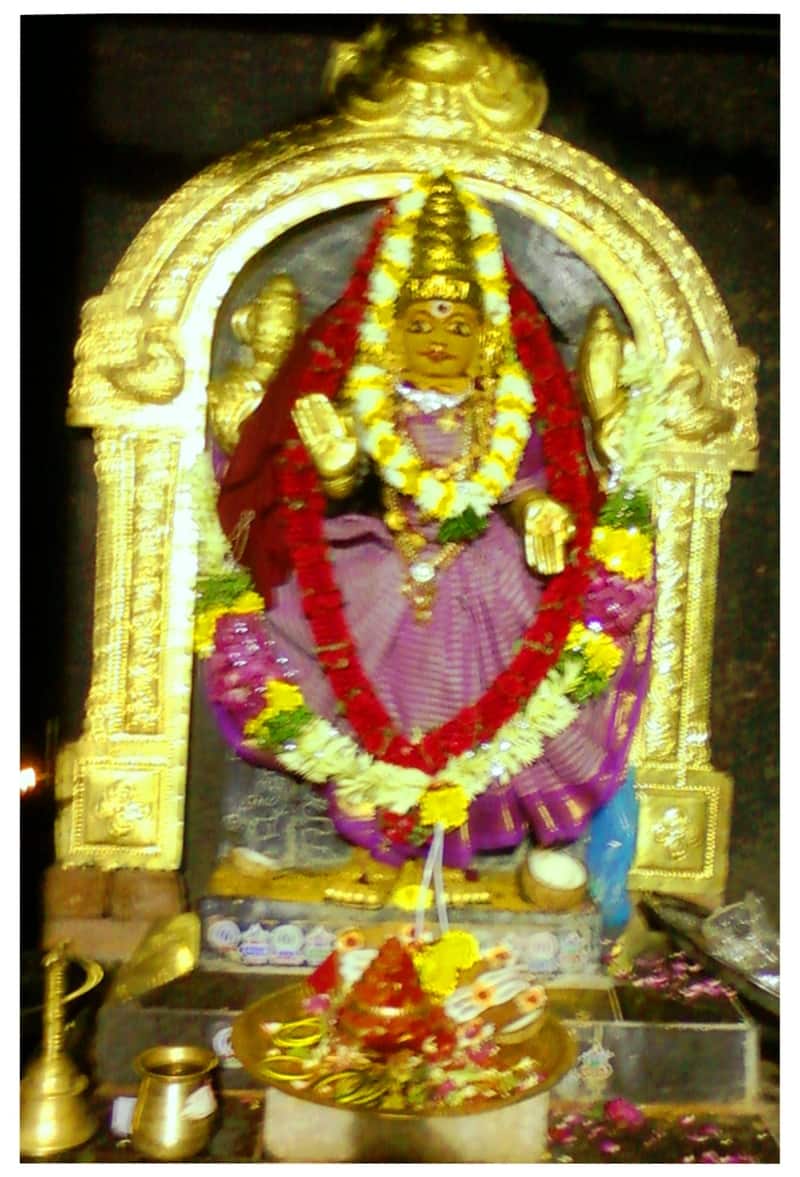
In the lanes just west of the great Vishwanath temple stands a shrine devoted to the goddess with the wide, all-seeing eyes. Vishalakshi, the third shakti peetha of Kashi, is worshipped here as Parvati herself, her gaze said to embrace every devotee who enters her presence. This guide takes you through the legends of the Shakti Peethas, the temple's quiet rituals, and the festivals that light up her shrine through the year.
Key Takeaways
- The Wide-Eyed Goddess
- The Shakti Peetha
- The Temple Today
- Vishalakshi Kund and the Old City Around
The Wide-Eyed Goddess
The name Vishalakshi joins two Sanskrit words: vishal, meaning vast or wide, and akshi, meaning eye. She is the goddess of the wide gaze, the one whose eyes see everything — past, present, and future — and whose look falls upon her devotees with the tenderness of a mother and the authority of a queen. In the iconography of Kashi, she is the companion presence to Vishwanath himself: where the lord of the universe resides, there too must his consort watch over the city with her boundless vision. Standing in her courtyard, devotees often speak of feeling seen in a way they have never felt elsewhere, as though the goddess's gaze has found them among the crowd and will not let them go until they are at peace.
For centuries, Vishalakshi has been the special goddess of women in Varanasi. Brides are brought to her shrine for blessings of marital happiness; women pray to her for the well-being of their husbands and children; and those who seek peace of mind in difficult marriages find in her wide, compassionate eyes a refuge that other deities do not offer. The temple's atmosphere is markedly different from the thunderous energy of Bhairav or the crowded urgency of Vishwanath — here, the devotion is quieter, more personal, spoken in whispers and fulfilled in small offerings of flowers and vermilion.
The Shakti Peetha
To understand Vishalakshi, one must understand the Shakti Peethas, the fifty-one shrines scattered across the Indian subcontinent that mark the places where the body of Sati fell. According to legend, when Sati immolated herself in the fire of her father Daksha's sacrificial rite, the grieving Shiva carried her body across the world in a dance of destruction, and the gods, seeking to calm him, scattered her limbs with the Sudarshan Chakra. Wherever a part of the goddess fell, the earth itself became a shrine, and the place became a seat of the goddess's power.
Kashi holds not one but three of these sacred seats. In addition to Vishalakshi, the city is home to the Annapurna peetha and the Manikarnika peetha, making the city a singular place of goddess worship. The traditions differ on which part of Sati fell at Vishalakshi — some say her earrings, others her eyes — but all agree that the shrine is a peetha of the highest order. For devotees, this means that the goddess here is not merely an image but a presence, a living residue of the divine mother herself, and the ground beneath the temple is itself sanctified by her touch.
The Shakti Peethas are not merely geographical markers; they are a geography of grief and grace. Each shrine preserves the memory of Sati's sacrifice and Shiva's sorrow, and each peetha offers a different face of the goddess to its devotees. At Vishalakshi, the face is that of compassion — the goddess who looks upon suffering without flinching and grants the strength to endure it. Women who come here with broken hearts often describe the shrine as a place where tears are welcome, where no prayer is too small, and where the wide-eyed goddess sees the truth behind every silent plea. This is why the temple's atmosphere feels different from the celebratory energy of other Kashi shrines — here, devotion is quieter and grief itself is honoured as a form of worship.
The Temple Today
The Vishalakshi temple, rebuilt and renovated over the centuries, is a compact but beautiful shrine in the style typical of Kashi's sacred architecture. A modest gateway opens into a courtyard where the sanctum rises, the goddess enshrined within a dark, polished chamber that glows with oil lamps and silver ornaments. The image of Vishalakshi is seated, serene, her wide eyes painted in the traditional style, her gaze fixed in the steady, compassionate stare that gives the temple its name. On the lintel above the sanctum doorway, the goddess's third eye is carved in stone, a reminder to every visitor that nothing escapes her notice.
The daily rhythm of the temple follows the old city's timeless schedule: the first aarti at dawn, the temple's busiest hours in the late afternoon, and a final aarti after nightfall when the courtyard fills with lamps and the sound of bells. Pilgrims circle the sanctum, offer vermilion and flowers, and linger in the courtyard, reluctant to leave the goddess's presence. Priests narrate the legends of the peetha to curious visitors, and the small shrines around the main sanctum house other forms of the goddess — each one drawing its own quiet stream of devotees.
Vishalakshi Kund and the Old City Around
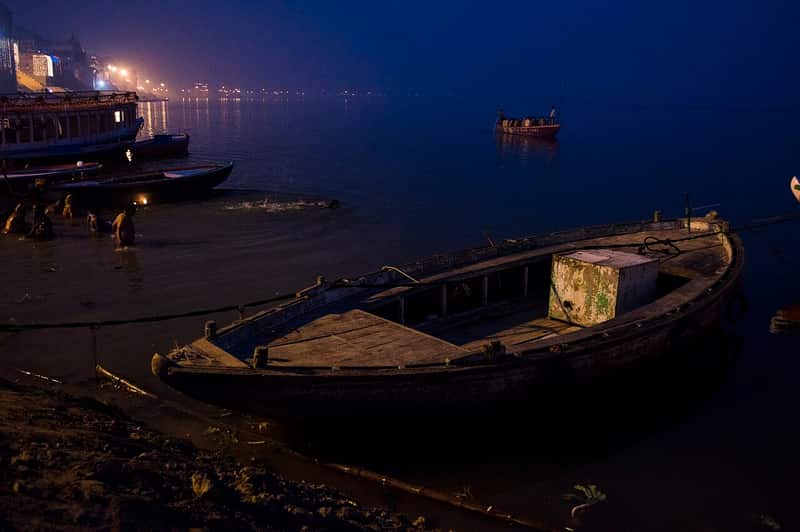
A short walk from the temple lies the Vishalakshi Kund, a sacred water tank that shares the goddess's name and legend. According to tradition, the kund's waters are charged with the same power as the peetha itself, and pilgrims bathe here before entering the temple, seeking purification of body and mind. The kund is surrounded by old buildings and ghats of its own, a hidden pocket of calm in the dense web of lanes that makes up this part of Varanasi. Elderly women of the neighbourhood still bathe in its waters on festival mornings, continuing a practice their grandmothers observed, and the tank's steps are worn smooth by generations of bare feet.
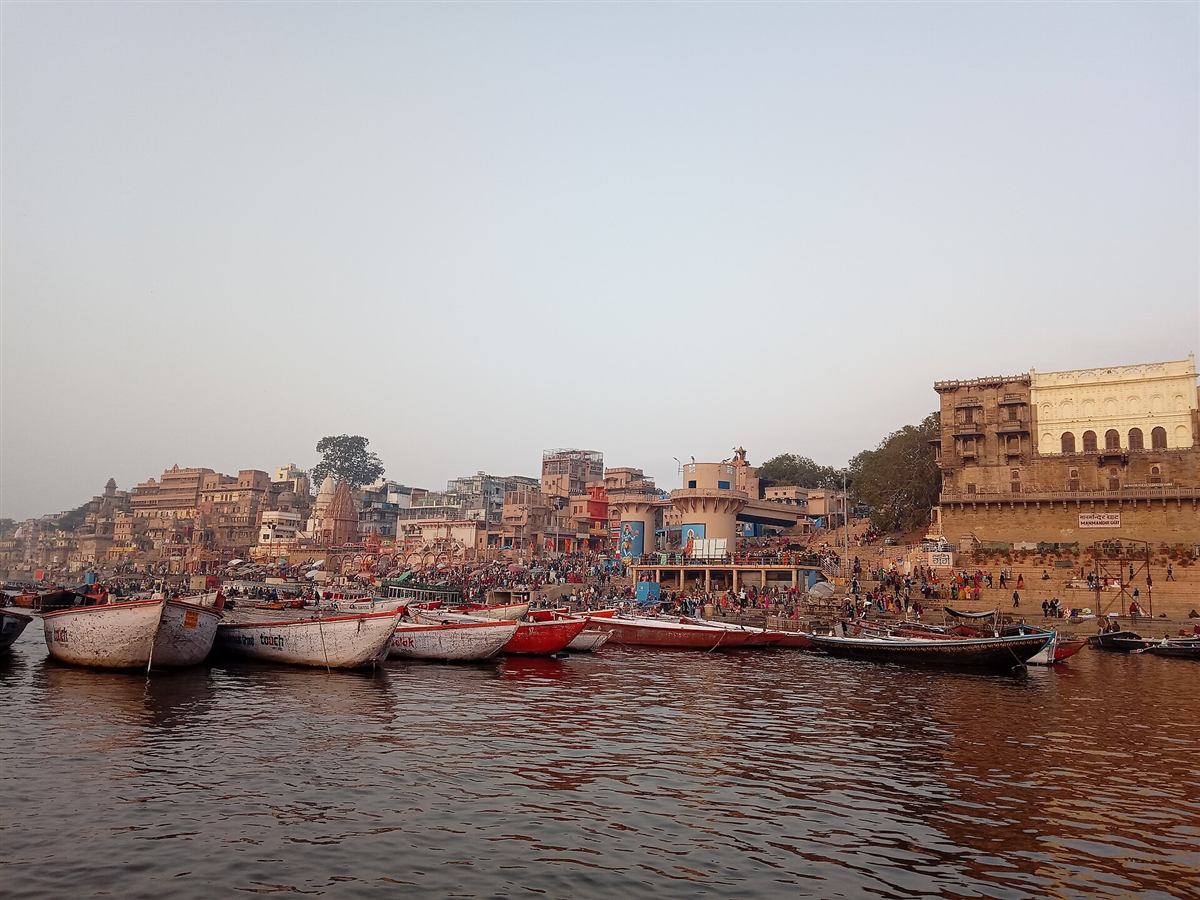
The surroundings of the Vishalakshi temple are among the most atmospheric quarters of the old city. Wandering the lanes, one passes ancient houses with carved wooden doors, tiny shrines tucked into walls, and shops selling the vermilion, bangles, and silk that pilgrims carry to the goddess. This is the Kashi of everyday worship, where the sacred is not confined to temples but spills into every threshold and courtyard. For visitors with time, the walk from Vishalakshi through these lanes to the ghats of the Ganga offers the most authentic glimpse of how the old city lives, worships, and endures.
Festivals of Vishalakshi
The goddess of the wide gaze has two great festivals in the Kashi calendar. The first is Shravan Purnima, the full moon of the monsoon month of Shravan, when the temple becomes the centre of a citywide celebration of the goddess. On this day, the image of Vishalakshi is adorned with new clothes and ornaments, processions carry the goddess through the surrounding lanes, and the courtyard fills with women performing the rites of the festival, their songs rising above the din of the old city. Young girls, newly wedded brides, and grandmothers all gather together, and the courtyard rings with laughter and song that belong to no single era but to the eternal rhythm of the goddess's worship.
The second great occasion is Gauri Utsav, the festival of the goddess's gracious form, celebrated with particular fervour among the women of Varanasi. Devotees observe fasts, offer the goddess the traditional dishes of the season, and pray for the prosperity of their families. During both festivals, the normally quiet temple takes on the energy of a grand celebration, and the goddess's promise of protection seems to radiate through every ritual. For visitors, these are the days when Vishalakshi reveals her full glory — a glimpse of the goddess as the city itself has always seen her.
Beyond the two great festivals, the temple observes a continuous calendar of smaller observances. Every Friday is considered auspicious for the worship of the goddess, and the courtyard fills with women who honour her with the rites their mothers taught them. Navratri, the nine nights of the goddess, draws special crowds, as each night honours a different form of the divine mother. For regular visitors, these smaller celebrations offer the truest portrait of the temple: a shrine where the goddess of the wide gaze is not an occasional presence but the daily companion of the women of Varanasi. Even on ordinary days, the scent of incense drifts from her doorway from morning till night, and the steady rhythm of prayer marks the hours like a temple bell.
Practical Guide
The Vishalakshi temple lies in the dense core of the old city, a few minutes' walk from Kashi Vishwanath towards the west. The temple is open through the day, with the calmest darshan in the early morning. Since the lanes here are extremely narrow and always crowded, allow extra time for walking and keep your belongings secure.
Location
Near Kashi Vishwanath, on the western side of the temple complex, off the main pilgrim route.
Timings
Open daily from around 5:00 AM to 9:00 PM; evening aarti around 7 PM.
Dress
Modest, traditional clothing is respectful; the temple is inside the Vishwanath security zone.
Offerings
Vermilion, flowers, bangles, and sweets are the customary gifts to the goddess.
Photography
No cameras inside the sanctum; phone photography is discouraged in the inner courtyard.
Nearby
Vishalakshi Kund is a short walk away; combine both in one visit.
Quick Tips
Visit on Shravan Purnima or during Gauri Utsav to see the temple in full festival glory — and do not miss the Vishalakshi Kund nearby.
Frequently Asked Questions
Was this article helpful?
Your feedback helps us improve
Enjoyed this article?
Get the latest Varanasi travel tips delivered to your inbox.
Related Articles
 Temples
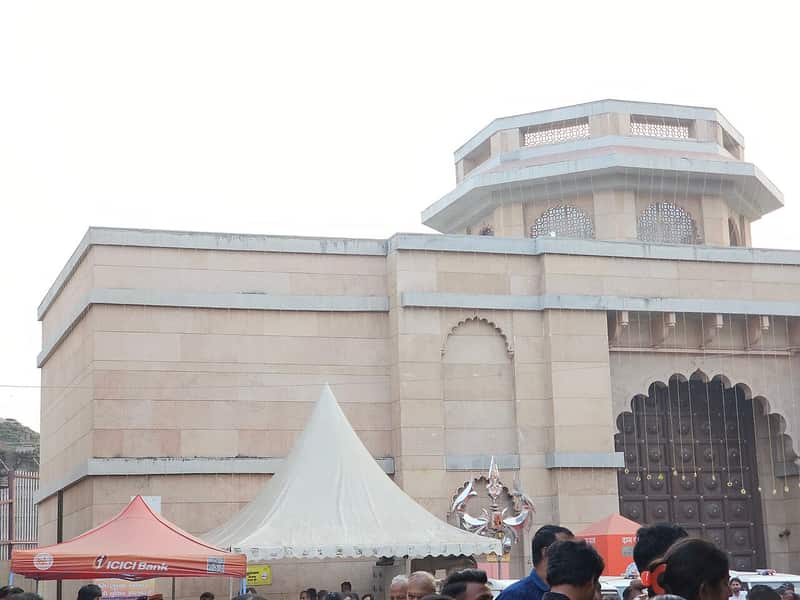
 Kashi Vishwanath Temple: Complete Guide to Darshan, History & Timings
History, entry passes, darshan timings, rituals, nearby spots and travel tips
 Temples
 Kaal Bhairav Temple: The Fierce Guardian of Kashi
Legends, rituals, and travel tips for the temple where every Kashi yatra begins.
 Temples
 Annapurna Temple: The Goddess Who Feeds Kashi
From Shiva's begging bowl to the Annakoot festival of khichdi, a guide to Kashi's goddess of nourishment.