
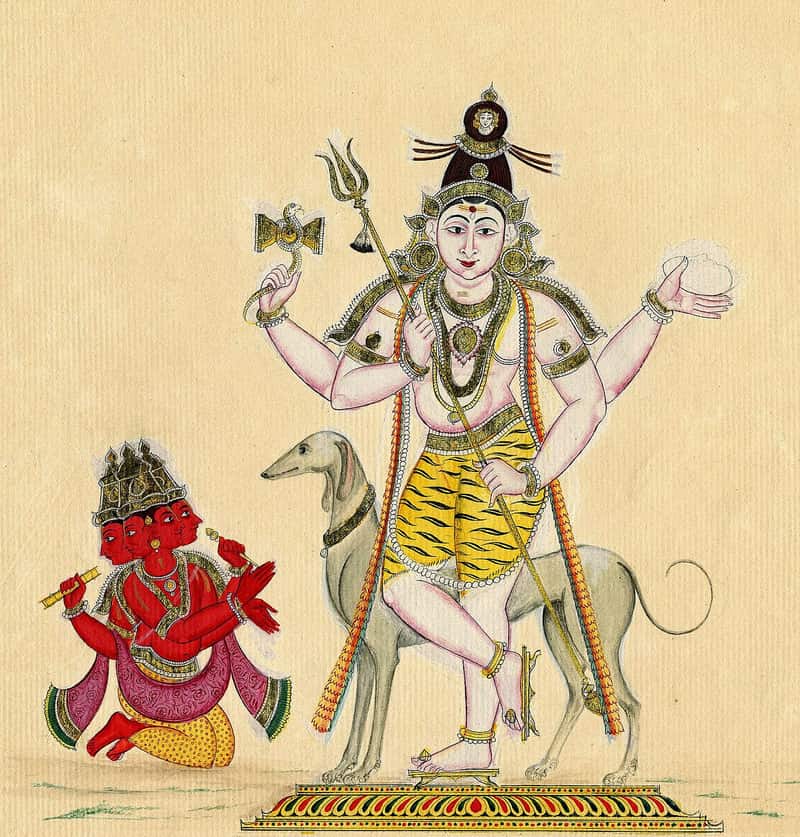
No visit to Kashi is complete without first paying respects to Kaal Bhairav, the fearsome guardian who stands watch over the city's sacred lanes. Known as the kotwal of Kashi, he is the deity every pilgrim seeks out before beginning their darshan of Vishwanath. This guide unpacks the legends, the rituals, and the practical details of the temple that opens the door to Varanasi's divine circuit.
Key Takeaways
- The Guardian of Kashi
- The Legend
- The Temple Today
- The Maal-Somra Offering
The Guardian of Kashi
In the spiritual geography of Varanasi, Kaal Bhairav occupies the office of kotwal, the chief of police, of the sacred city. Legend holds that Shiva appointed him the guardian of Kashi, granting him dominion over the entire city and its pilgrims. For this reason, the traditional order of worship in Kashi begins at this temple, where devotees seek the guardian's permission and blessings before they visit Kashi Vishwanath, Annapurna, and the other shrines of the old city. Without Kaal Bhairav's grace, the Kashi yatra is considered incomplete, and no darshan is thought to be fully blessed. The custom is so deeply rooted that even lifelong residents of Varanasi pause at the shrine's threshold to fold their hands before moving on with the day's business.
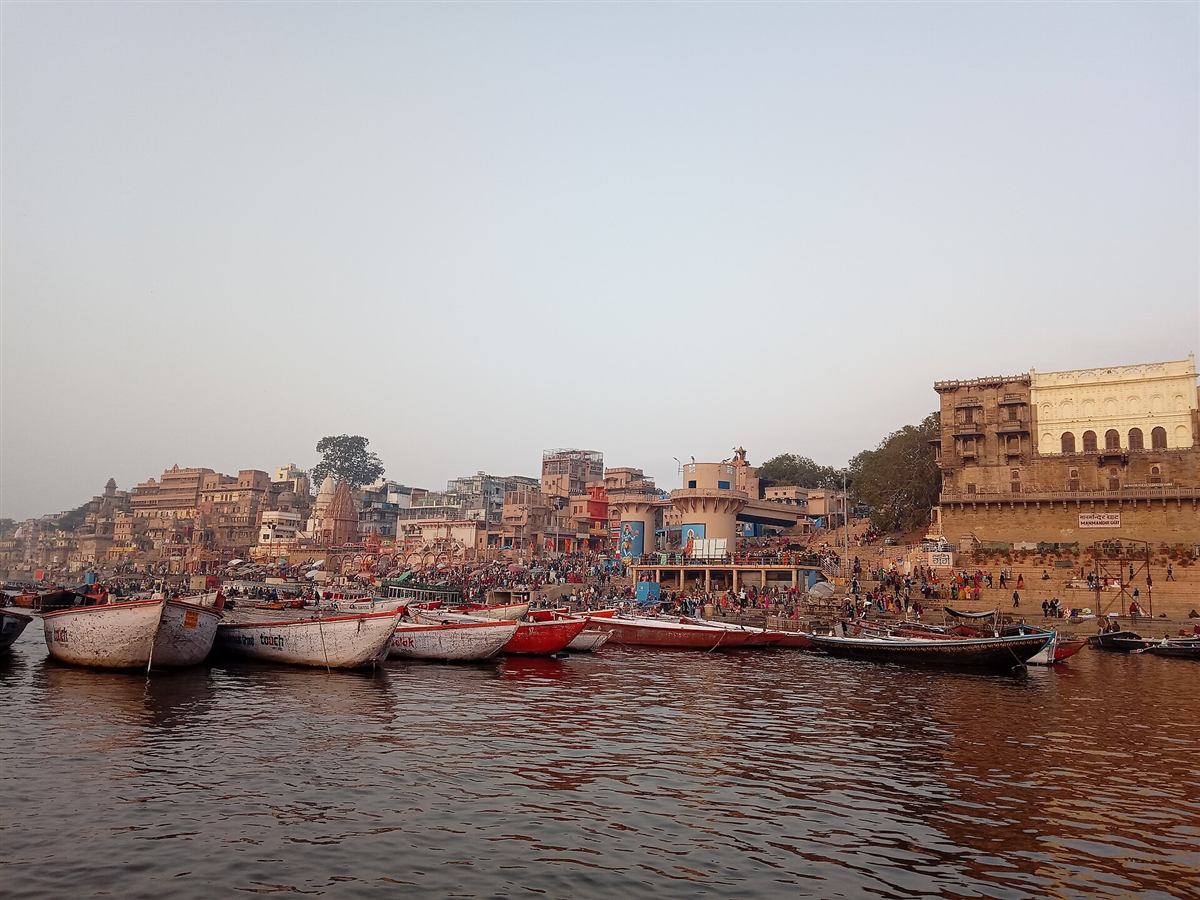
Kaal Bhairav is one of the eight Bhairavas who protect the eight directions of the city, and he is the most powerful among them. The name Kaal means both time and death, and Bhairav is the fierce form of Shiva himself. Worshipped as the lord who destroys fear and protects his devotees from enemies and calamities, he is both feared and loved by the people of Varanasi. His shrine in Bharonath, near Visheshwarganj, has stood at the heart of the old city for centuries, and pilgrims from every corner of India make their way to his gates before sunrise. Across the wall behind the sanctum, small brass images of the seven other Bhairavas keep watch, their names recited in the morning litany before the main deity is unveiled.
The worship of Kaal Bhairav is woven into the everyday life of Kashi in ways that surprise visitors. Shopkeepers open their shutters only after a silent nod towards the temple; drivers press a hand to the dashboard as they pass the lane's entrance; brides and grooms are brought here before their wedding processions begin. This is a deity of the street as much as of the shrine, a guardian who lives among his people rather than above them. To spend even an hour in Bharonath is to understand why Kashi trusts its kotwal so completely, and why every pilgrimage, from the humblest village yatra to the grandest royal visit, still begins at his feet.
The Legend
The story of Kaal Bhairav begins with one of the most dramatic episodes of Hindu mythology. When Brahma, the creator, grew proud and claimed to be the supreme deity, a dispute arose between him and Shiva. In his arrogance, Brahma insulted Shiva, and the wrathful lord manifested Bhairav, who severed one of Brahma's five heads with the tip of his nail. Yet the severed head would not leave Bhairav's hand, and the sin of Brahmahatya clung to him, forcing the fierce deity to wander the earth as a beggar, carrying the proof of his deed. Wherever he went, the head clung to his palm, and wherever he stopped, people shrank from the terrible wanderer with the burden of his sin.
In Kashi, however, the severed head finally fell from Bhairav's hand, and the sin that had pursued him dissolved in the city's holy air. At the very spot where the head touched the ground, Bhairav himself came to reside as the kotwal of Kashi, eternally grateful to the city that absolved him. Another legend links him to Vishnu's Sudarshan Chakra, telling of how Bhairav's own head was severed by the divine discus, leaving the deity to roam the earthly realm as a free spirit until Shiva granted him the guardianship of Kashi. Both tales speak of the same truth: Kaal Bhairav is the fierce protector whose power is bound to the soil of Kashi, and the city that absolved him still depends on his eternal vigilance.

The Temple Today
Step through the narrow alley near Visheshwarganj and the shrine of Kaal Bhairav reveals itself in a burst of sound and colour. The inner sanctum houses a small, black-faced deity seated upon a dog, his vehicle, with fierce eyes that seem to follow every devotee. Each morning, the priests bathe the image and adorn it with a silver mask, the face of Bhairav gleaming beneath a canopy of marigold and silk. The constant ring of bells, the chant of the Bhairav Chalisa, and the press of pilgrims create an atmosphere at once terrifying and deeply comforting. Above the doorway hangs a brass garuda bell, struck by every arriving devotee, and the sound rolls through the courtyard like a summons to the fierce lord himself.
Devotees circle the sanctum, pour milk and water over the silver face, and tie red threads around the temple's railings as offerings of faith. Many come with specific prayers — protection from enemies, relief from illness, victory in legal disputes — for Kaal Bhairav is the deity who answers the difficult petitions no one else will hear. Around the main shrine stand smaller images of his fellow Bhairavas and of the guardian's consort, and priests recite the Kaal Bhairav Ashtakam through the day. By nightfall, when the lamps are lit and the aarti resounds through Bharonath, the temple takes on an almost otherworldly glow that has drawn worshippers for over a thousand years.
The temple's priests belong to families who have served Kaal Bhairav for generations, and their rituals follow a schedule fixed long before living memory. Every day, the deity is bathed, dressed, and offered the traditional items — milk, honey, curd, and the somra — in a sequence that has not changed in centuries. Pilgrims from distant villages often arrive with handwritten lists of petitions, which the priests read aloud before the sanctum so that the guardian hears every request. In this way, the ancient office of the kotwal continues to function: every prayer is received, every problem is heard, and every devotee leaves with the sense that the fierce lord has taken their burden upon himself.
The Maal-Somra Offering
The most famous, and to many visitors the most surprising, ritual at Kaal Bhairav is the offering of liquor, known locally as maal-somra. Every day, devotees purchase small bottles of local spirits from the shops surrounding the temple and pour them over the silver mask of the deity as an act of worship. This is not an encouragement to drink, but a deeply symbolic offering — the fierce Bhairav, lord of the tamasic qualities, accepts what lesser deities refuse, and in return he burns away the impurities of his devotees. The act is performed with complete reverence, and first-time visitors are always struck by the seriousness with which the ritual is conducted.
The somra comes in two forms: the white variety made from sugarcane and the dark, almost black liquor distilled from mahua flowers. Priests apply a few drops to the devotee's hands as a blessing, and many visitors are taken aback until the meaning is explained. For the people of Kashi, the offering represents total surrender — giving the guardian the very thing that clouds the mind, so that he may consume it and leave the devotee clear-headed and protected. The ritual also echoes an ancient belief: that Kaal Bhairav, the destroyer of demons and diseases, must be kept fierce and satisfied, for the guardian's strength is the city's safety.
Bhairav Ashtami
The festival of Bhairav Ashtami, celebrated in the month of Margashirsha, is the guardian's own day, when Kashi pours its devotion into Bharonath. Falling on the eighth day of the waning moon, the festival marks the moment when Bhairav manifested upon the earth, and the temple erupts in celebration. Thousands of devotees throng the narrow lanes, carrying pots of somra, baskets of flowers, and plates of sweets; the air thickens with smoke, incense, and the roar of the faithful chanting the name of Kaal Bhairav. Shopkeepers along the route double as pilgrims for the day, closing their shutters to join the tide of devotees that moves from the bazaar into the temple courtyard.
Special abhishekams are performed through the night, and the silver mask of the deity is replaced with one of gold for the occasion. Long queues wind around the temple compound as families arrive to have their children's heads shaved in fulfilment of vows, a common offering to the guardian. For the people of Kashi, Bhairav Ashtami is more than a festival — it is a renewal of the ancient contract between the city and its protector. When the final aarti is offered and the lamps bow before the fierce lord, every devotee leaves with the same conviction: that the kotwal of Kashi will watch over them through another year of time and fate.
Practical Guide
Kaal Bhairav Mandir stands in Bharonath, just ten minutes on foot from Kashi Vishwanath through the lanes of the old city. The temple opens before sunrise and remains accessible until late at night, though mornings are the calmest time for a visit. Devotees traditionally come here first, before any other darshan in Kashi, and it is customary to offer somra, flowers, and coconut at the shrine.
Location
Bharonath, near Visheshwarganj, about 800 metres from Kashi Vishwanath temple.
Timings
Open roughly 4:00 AM to 11:00 PM daily; aarti in the morning and again in the evening.
Dress
Traditional Indian attire is preferred; remove shoes before entering the inner courtyard.
Offering
Maal-somra, flowers, coconut, and red thread; available from shops outside the temple.
Photography
The inner sanctum is off-limits for cameras; photography is allowed in outer areas.
Getting there
Auto-rickshaw to Visheshwarganj, then a short walk; or walk from Dashashwamedh Ghat.
Quick Tips
Visit Kaal Bhairav first — before Vishwanath — and carry a small offering of somra or flowers; the priests will guide you through the ritual.
Frequently Asked Questions
Was this article helpful?
Your feedback helps us improve
Enjoyed this article?
Get the latest Varanasi travel tips delivered to your inbox.
Related Articles
 Temples
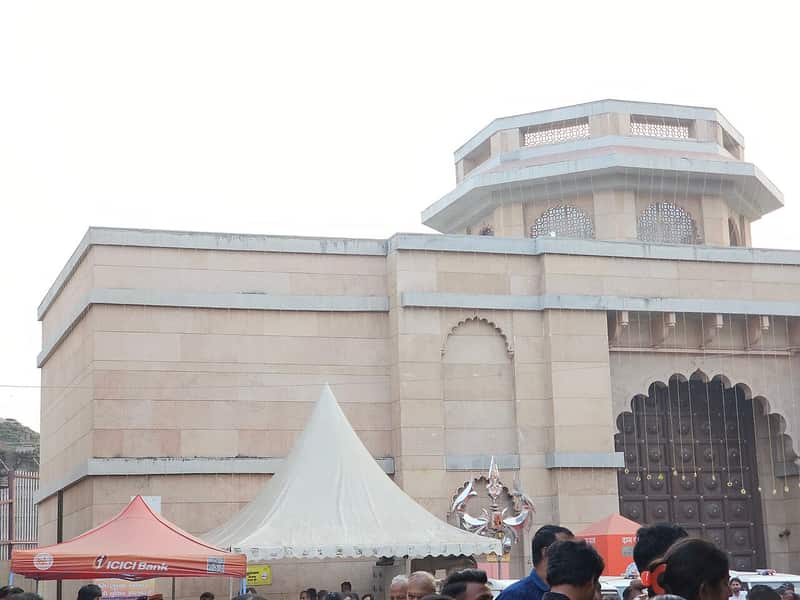
 Kashi Vishwanath Temple: Complete Guide to Darshan, History & Timings
History, entry passes, darshan timings, rituals, nearby spots and travel tips
 Temples
 Annapurna Temple: The Goddess Who Feeds Kashi
From Shiva's begging bowl to the Annakoot festival of khichdi, a guide to Kashi's goddess of nourishment.
 Temples
 Vishalakshi Temple: The Third Shakti Peeth of Kashi
The legends of Sati, the sacred kund, and the festivals of the goddess of the wide gaze.