
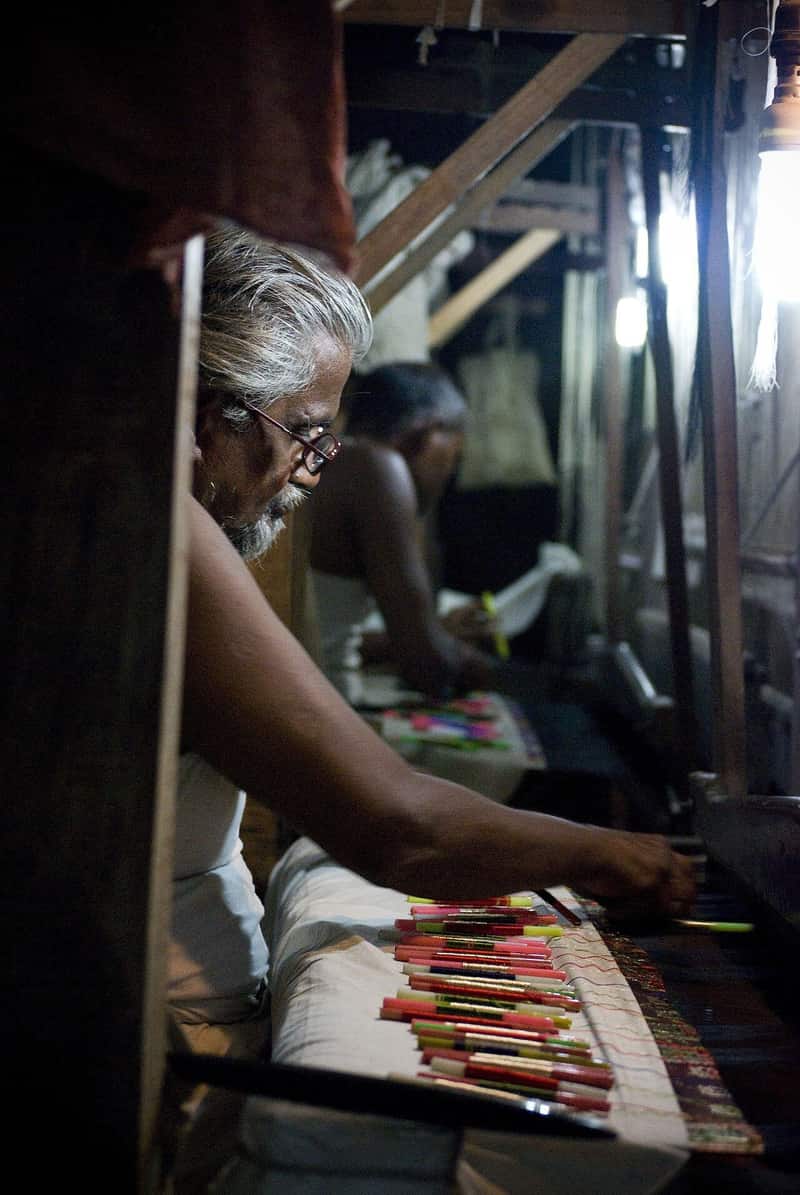
Banarasi silk is priced by honesty: cotton sarees run ₹2,000-8,000, pure silk starts past ₹8,000, tissue crosses ₹40,000, and the heirloom top sits near ₹2,00,000. The price ladder is real and the GI tag is checkable, but the lanes also run on touts who can inflate silk three to five times. Learn the weave names, the burn test and the 40-percent bargaining rule, and the bazaar starts telling the truth.
The honest price ladder
| Cotton sarees | ₹2,000-8,000, the everyday entry into Banarasi weaving. |
| Pure silk | ₹8,000 and up; katan and brocade territory. |
| Tissue | ₹40,000 and up; the translucent shimmer of the top shelves. |
| Heirloom top end | up to about ₹2,00,000 for the finest kadhwa with heavy zari. |
| Same design, different weave | kadhwa runs well above jangla for the same look. |
The weave families
Kadhwa
every motif woven separately; dense, durable and the dearest.
Jangla
fine vine and creeper patterns, lighter on the pocket.
Katan
the pure silk base, matte and cool to the touch.
Tissue
a translucent shine that turns with the light.
Brocade
the classic zari-worked body of Banarasi tradition.
Georgette
soft, flowing silk for everyday wear.
Katan, art silk, machine
| Pure katan | matte, soft and cool; burns like hair to a crushable ash. |
| Art silk | shiny, plastic-like hand; melts in the burn test with a chemical smell. |
| Machine weave | identical repeats, thin feel, pull marks on the underside. |
The authenticity checks
The zari
real brocade thread is silver and gold, cold and heavy; imitation is bright, light and loud.
The back
a handloom kadhwa has a clean, deliberate back; machine pulls show underneath.
The repeats
motifs that repeat too perfectly point to a machine loom.
The burn test
silk burns like hair and turns to ash; nylon melts and smells of plastic.
The papers
ask for the GI tag, a receipt with the GST number, and the weaver co-operative label.
The GI tag and the papers
Where the lanes work
| Thatheri Bazar | the classic silk lanes; fair bargaining, busy till late. |
| Vishwanath Gali | small shops between the temple and Godowlia, quick and crowded. |
| Godowlia | a mix of lanes and emporiums, good for first comparisons. |
| Chowk | older family shops with patient owners. |
| UP Handloom emporium | fixed printed tags, zero risk — the fair reference price. |
| KSV saree houses | certified weaver stock at printed prices. |
The weaving villages
Madanpura, Peeli Kothee and Lallapura hold hundreds of working looms a short auto ride from the old city. There are no showrooms and no signboards, only doors, and the price sits below the lanes because the middle layer is gone. Take a driver who knows a loom owner.
Give it half a day and an honest budget. Ready stock is the right way to buy; custom orders sit on the loom for weeks, and most shops deliver home.
Fakes and touts
Bargaining and payment
In the lanes, bargaining starts at 40 percent of the opening price and settles where both sides can breathe. In the emporiums and co-operatives the tag is the tag — respect it and you are not being cheated.
UPI works almost everywhere, cash still moves the best deals, and the receipt is your only proof of what you paid. A cash-only shop usually has more room in the price.
Beyond silk: the full bazaar
Brass and copper
Thateri Bazar, a UNESCO-listed living craft.
Wooden toys
from about ₹50 at Chowk and Vishwanath Gali.
Rudraksha
near the KVT corridor, always with a certificate.
Sitar and tabla
the instrument lanes near BHU and Assi.
Pattachitra and thangka
painted scrolls from ₹300 to ₹30,000.
Flower market
Dashashwamedh, 4-6 AM, before the aarti day begins.
Pottery
the clay works of Raj Ghat.
Timing and custom orders
| 10 AM to 1 PM | fresh stock, complete range, calm lanes. |
| 4 to 8 PM | the lanes light up and the bargaining warms up. |
| The midday pause | 1 to 4 PM is the quiet stretch for unhurried browsing. |
| Custom orders | weeks on the loom; most shops deliver to your home. |
Inspect in daylight
Folding, packing and care
Folding
loose lengthwise rolls so the zari lines stay straight.
Packing
the muslin cloth from the shop, never plastic for long storage.
Hanging
never hang heavy zari; the weight stretches the border.
Cleaning
air twice a year in the shade; dry clean only, never wash.
A one-day shopping plan
| 4-6 AM | the flower market at Dashashwamedh. |
| 10 AM-1 PM | the silk lanes, with daylight inspection. |
| After lunch | Madanpura or Peeli Kothi with a known driver. |
| 4-8 PM | Thateri brass, wooden toys and the evening bargaining. |
The receipt rule
Quick Takeaway
- ✓ Cotton ₹2,000-8,000; silk ₹8,000+; tissue ₹40,000+.
- ✓ Bargain from 40 percent of the opening price.
- ✓ Burn test: silk to ash, nylon melts.
- ✓ Villages: Madanpura, Peeli Kothi, Lallapura.
Quick Answers
How do I tell real Banarasi silk?
Check the feel — pure katan is matte and soft; check the zari — real brocade thread is silver and gold, cold and heavy; check the back of the weave; and ask the shop to burn a loose thread: silk burns like hair to ash, nylon melts like plastic.
What should a saree cost?
Entry-level cotton runs ₹2,000-8,000, pure silk starts past ₹8,000, tissue crosses ₹40,000, and heirloom kadhwa can near ₹2,00,000. Village looms at Madanpura and Peeli Kothi sit below the lane prices.
Is the burn test allowed in shops?
Most reputable shops agree to a thread test on a loose strand from the roll. If a shop refuses, that refusal is itself an answer.
Are the weaving villages worth the trip?
Yes, with a driver who knows the looms. Prices sit below the lanes because there is no middle layer, but the villages have no signboards — go with a driver who has a contact, and carry cash.
Do shops ship home?
Most lane shops arrange courier delivery with the receipt. Pay by UPI or card so there is a record, and keep the GST receipt — it is your only proof of what you bought.
How much should I bargain?
In the lanes, start at 40 percent of the opening price and settle around two-thirds to three-quarters. In fixed-price emporiums and co-operatives the tag is final — and that is precisely the point of buying there.
What about the touts and inflated prices?
Touts take a commission from your final price, and silk offered to tourists can be three to five times the real rate. Never let a tout decide which shop you enter — walk past the greeting, choose your own three shops and compare weaves.
What else can I buy in the lanes?
Thateri Bazar for brass and copper, wooden toys from about ₹50 at Chowk, certificate-backed rudraksha near the KVT corridor, sitars and tablas near BHU and Assi, thangka and pattachitra art, and pottery from Raj Ghat.
More Guides in explore
📅 Last updated: 21 Aug 2026 · Author: NaviX Field Team (field research 2024-26)
Sources: UP Tourism, Varanasi Smart City, IIT-BHU, GI Registry · Emergency Contacts