
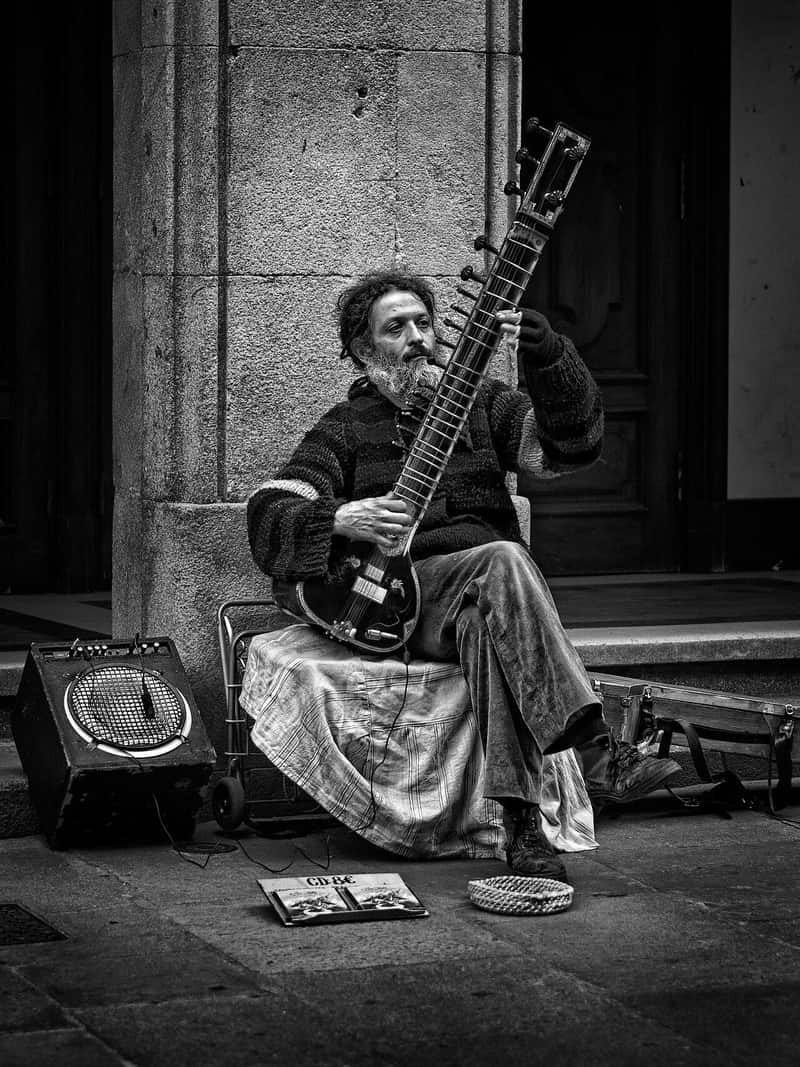
Kashi is the only city in India that sings before it wakes up. Before the first bus, before the chai stalls even, the dhrupad families are already on the ghats, warming their voices into the cold morning air. Music here is not a performance you buy a ticket for; it is the city breathing. From the free dawn concert at Assi Ghat to the shehnai of wedding processions and the all-night kirtan of the old temples, the whole day runs on raga, rhythm and devotion.
A city that sings at dawn
The oldest musical tradition of Kashi is dhrupad, the slow, meditative form that the great families have kept alive for generations. Long before sunrise you can hear their riyaz rolling over the water near the ghats — a low hum that turns into full-throated alaap as the sky lightens. Locals call it the sound of Kashi waking up.
You do not need an invitation. Walk down to any quiet ghat around 5 AM in winter or 4:30 AM in summer and the music comes to you, free of charge, better than anything on a stage.
Subah-e-Banaras at Assi Ghat
Every morning the city puts on a free dawn concert at Assi Ghat called Subah-e-Banaras — classical singers, young and old, performing ragas into the sunrise. It starts around 5 AM in summer and 5:30 AM in winter, and runs until about 7 AM. There are no tickets, no gates; you just sit on the steps with the chai wallahs and the sadhus.
Arrive early enough to catch the first raga at its quietest. The last twenty minutes, as the sun actually rises over the far bank, are the ones people remember for years.
Where to hear live music
Assi Ghat
Subah-e-Banaras every morning at dawn — free, open, magical. The best free show in India.
Sankat Mochan Temple
Evening kirtan in the courtyard all year, and the huge April Sangeet Samaroh where every major musician of the country performs.
Dashashwamedh aarti choirs
The evening aarti singers are professionals; stand behind them and you hear a full concert before the flames begin.
Havelis and small halls
In season, classical evenings happen in heritage havelis and private salons; ask your guesthouse for the week list.
The lanes at night
Mangala aarti kirtan at Kashi Vishwanath at 3-4 AM and bhajan parties in small temples turn the old city into an open concert hall.
The Sankat Mochan Sangeet Samaroh
Held every April at Sankat Mochan temple, this week-long festival is the crown of Kashi classical music. Seven nights of dhrupad, khyal, thumri, santoor and tabla, with performers of national fame, and it is completely free — you sit on the sand or the grass and listen until midnight.
The city fills with musicians in that week. If your dates are flexible, plan the trip around mid-April and you will hear more music in seven days than in a year anywhere else.
The shehnai story
No sound is more Varanasi than the shehnai, and no name more famous than Ustad Bismillah Khan, who practiced at Balaji Ghat for years and played on the ghats at dawn. His house still stands as a heritage landmark. Wedding processions, temple openings and the aarti keep the instrument alive in the lanes around Chowk.
Bismillah Khan's house is now a museum of sorts and the city guards his memory fiercely. A good time to hear shehnai is any wedding season evening, or during Dev Deepawali when processions play all night.
Buying instruments and learning
Instrument bazaar
The lanes behind Assi Ghat and around BHU stock sitars, tablas, bansuris and sarangis — ask the makers themselves, they usually play a note for you.
Classes
Private music lessons are easy to arrange; guesthouses and the instrument shops give honest referrals to gharana teachers.
Starting price
A student sitar or tabla costs a few thousand rupees; professional instruments run much higher, so fix your level before you bargain.
Music etiquette
The festival calendar
| February-March | Baba Kala Mahotsav and the classical evenings of the university — the run-up season. |
| Mid-April | Sankat Mochan Sangeet Samaroh — the biggest free classical festival of the city. |
| October-November | Navratri bhajans, Ramnagar Ramlila music and the Ganga Mahotsav stages at Ravidas Ghat. |
| Dev Deepawali | Processions, shehnai and fireworks on the ghats till late — the loudest night of the year. |
Quick tips
Be early
The best seats at any ghat concert are the front steps, gone 20 minutes before start.
Dress for the ground
Assi and Sankat Mochan concerts are on sand and stone; a mat or shawl under you changes the whole evening.
Ask the boatmen
They know which ghat has a private riyaz session or a wedding shehnai going on — the best local listings in town.
Quick Takeaway
- ✓ Subah-e-Banaras at Assi Ghat, free, 5-5:30 AM start.
- ✓ Sankat Mochan Sangeet Samaroh in April, seven free nights.
- ✓ Dawn riyaz of dhrupad families near the quiet ghats.
- ✓ Shehnai lanes and wedding processions around Chowk.
Quick Answers
Is Subah-e-Banaras really free?
Yes, completely free, every morning at Assi Ghat — around 5 AM in summer, 5:30 AM in winter, running to about 7 AM. A voluntary donation is welcome but never asked.
When is the Sankat Mochan festival?
Every April, for about seven nights. Dates move each year with the Hindu calendar, so check the current year schedule online before booking.
Can I photograph the musicians?
Street and ghat musicians rarely mind quiet photos. At formal concerts keep the camera low, skip the flash, and photograph between pieces.
Where can I learn music in Varanasi?
Ask your guesthouse for a gharana teacher referral, or the instrument shops behind Assi Ghat. Many teachers take short-term students for a week or a month.
What is the best time of year for music?
April for the big Samaroh, and October to March overall — the evenings are cool, concerts are frequent and Dev Deepawali brings processions and shehnai.
Do I need tickets for the temple concerts?
No. Temple courtyard performances and the ghat concerts are open to all. The only paid music you will find is at private haveli events.
More Guides in explore
📅 Last updated: 21 Aug 2026 · Author: NaviX Field Team (field research 2024-26)
Sources: UP Tourism, Varanasi Smart City, IIT-BHU, GI Registry · Emergency Contacts