

Festival Guide 2026
Ram Navami in Varanasi
Celebrating the birth of Lord Rama — the ideal king, devoted husband, and seventh avatar of Lord Vishnu — in the spiritual capital of India
The Spirit of Ram Navami
Ram Navami is one of the most revered Hindu festivals, celebrating the birth of Lord Rama — the seventh avatar of Lord Vishnu and the protagonist of the epic Ramayana. According to Hindu tradition, Lord Rama was born on the ninth day of the Chaitra month in the Ayodhya kingdom to King Dasharatha and Queen Kausalya. His birth is considered a divine intervention to restore dharma (righteousness) in the world.
In Varanasi, Ram Navami holds a special place because of the city's deep connection to the Ramayana. It was here that Tulsidas wrote the Ramcharitmanas, the Awadhi retelling of the Ramayana that is recited during the celebrations. The city's temples dedicated to Lord Rama come alive with devotion and festivity on this auspicious day.
The celebration typically falls in March or April and spans the entire day, from early morning prayers to evening processions. Temples across Varanasi are decorated with flowers, lights, and traditional ornaments, creating an atmosphere of divine joy and spiritual renewal.


How Varanasi Celebrates Ram Navami
Morning Prayers & Abhishek
The day begins with special pujas and abhishek (sacred bathing) of Lord Rama idols at temples across the city. Priots chant Vedic mantras and offer flowers, fruits, and sacred water. The atmosphere is filled with the sound of conch shells and bells.
Ramcharitmanas Recitation
Continuous recitation of the Ramcharitmanas by Tulsidas takes place at Tulsi Manas Temple and other venues. The entire epic is read aloud through the day, with devotees gathering to listen and absorb the teachings of Lord Rama's life and philosophy.
Bhajans & Kirtans
Devotional singing sessions (bhajans and kirtans) are organized at temples, community halls, and even on the ghats. Popular bhajans include "Raghupati Raghav Raja Ram" and "Shri Ram Chandra Kripalu Bhajman." The melodious chanting creates a deeply spiritual atmosphere throughout the city.
Evening Aarti & Lamp Lighting
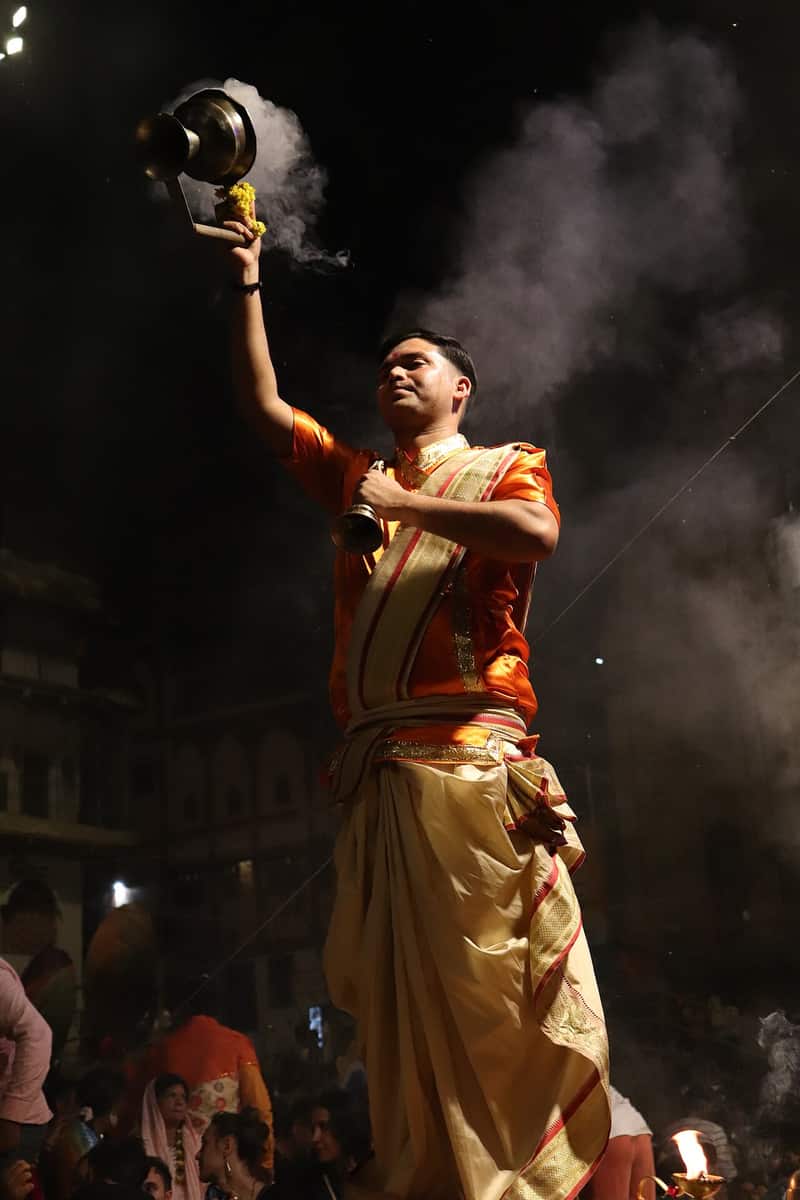
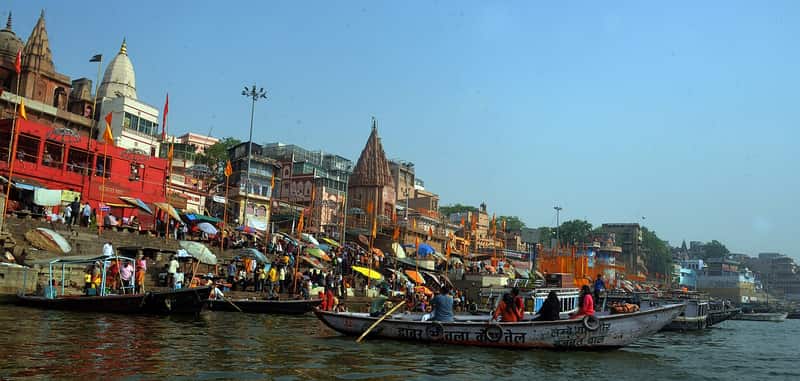
The evening Ganga Aarti at Dashashwamedh Ghat is especially grand during Ram Navami, with thousands of diyas (oil lamps) lit along the ghats. Special aartis are performed at all Rama temples with elaborate rituals, flower decorations, and traditional music.
Ram-Ram Chanting
Throughout the day, devotees chant "Siyavar Ramchandra Ki Jai" and "Jai Shri Ram" across the city. Groups of devotees move through the streets singing and chanting, creating a wave of devotion that sweeps through the ancient lanes of Varanasi.
Ram-Lalla Decorations
Temples display beautifully decorated Ram-Lalla (infant Rama) idols, often adorned with new clothes, jewels, and flower garlands. The Tulsi Manas Temple creates an elaborate cradle scene depicting Lord Rama's birth, complete with traditional ornaments and offerings.
Tulsi Manas Temple — The Heart of Ram Navami


The Tulsi Manas Temple, located near the Durga Temple in Varanasi, is the epicenter of Ram Navami celebrations. Built in 1964 by the Hotel Symphony group, this white marble temple is dedicated to Lord Rama and houses beautiful wall paintings depicting scenes from the Ramayana.
The temple derives its name from Sant Tulsidas, who is believed to have written the Ramcharitmanas at this very location. The walls of the temple are inscribed with verses from the epic, making it a living library of one of Hinduism's greatest literary works.
During Ram Navami, the temple hosts all-day celebrations including the birth ceremony of Lord Rama (Ram Janmotsav) at noon. The celebrations include Vedic chanting, special abhishek, distribution of prasad, and cultural programs featuring classical music and dance performances.
Temple Schedule on Ram Navami
Processions & Other Celebration Venues
Ram Navami Processions
Grand processions are taken out through the old city, featuring decorated tableaux (jhankis) depicting scenes from the Ramayana. These processions include traditional drummers (dhol players), folk dancers, musicians playing the shehnai, and groups of devotees singing bhajans. The main procession starts from the Tulsi Manas Temple and winds through the narrow lanes of the old city, ending at the ghats.
The processions are a sensory feast — the vibrant colors of the decorations, the rhythmic beats of the drums, the fragrance of incense and flowers, and the enthusiastic chanting of "Jai Shri Ram" create an unforgettable experience. The tableaux often feature actors dressed as characters from the Ramayana, including Lord Rama, Sita, Lakshmana, and Hanuman.
Hanuman Temple Celebrations
Hanuman Garhi, one of the most important Hanuman temples in India, witnesses massive gatherings during Ram Navami. Devotees believe that Hanuman is always present where Rama's name is chanted, making this temple a natural choice for celebrations. The temple distributes special prasad of boondi laddoo and chana to thousands of devotees.

Best Spots to Witness Ram Navami
Tulsi Manas Temple
Main celebrations, birth ceremony, prasad distribution
Hanuman Garhi Temple
Hanuman worship, prasad, community prayers
Dashashwamedh Ghat
Evening aarti, lamp lighting, Ganga worship
Assi Ghat
Morning prayers, smaller community celebrations
Ram-Raghav Temple
Elaborate decorations, cultural performances

Tulsidas & The Ramcharitmanas Connection
Goswami Tulsidas (1532-1623), one of Hinduism's greatest poets and saints, composed the Ramcharitmanas in Varanasi. This epic retelling of the Ramayana in Awadhi language is the foundation of Ram Navami celebrations in the city. Tulsidas is believed to have written the epic at the spot where the Tulsi Manas Temple now stands.
The Ramcharitmanas is not just a literary masterpiece but a living scripture that guides millions of Hindus in their daily lives. During Ram Navami, complete recitations of the epic take place at temples and homes across Varanasi. The seven chapters (kands) of the Ramcharitmanas are read aloud, with the birth of Lord Rama in the Bal Kand being the highlight of the day.
Tulsidas's connection to Varanasi runs deep — he spent most of his life in the city, writing and teaching. The Tulsi Manas Temple, though relatively modern, stands as a tribute to his enduring legacy and the timeless story of Lord Rama that continues to inspire devotion across generations.
Food Specialties & Prasad During Ram Navami

Sacred Prasad
Panjiri: The most iconic Ram Navami prasad, panjiri is a sweet mixture of roasted wheat flour, sugar, ghee, nuts, and cardamom. It is prepared in large quantities and distributed to devotees after the ceremonies.
Kheer: Rice pudding made with milk, sugar, and dry fruits is another common prasad. It is offered to Lord Rama and then distributed to devotees as blessed food.
Laddoos: Boondi laddoos and motichoor laddoos are prepared in temple kitchens and offered to the deity before distribution.
Festival Food Specialties


Puri-Chana: Many temples distribute puri (fried bread) with chana (spiced chickpeas) as prasad. This simple but delicious meal is a tradition during Ram Navami.
Kachori-Sabzi: Banarasi kachori with spiced potato curry is a popular breakfast on Ram Navami mornings. The old city's shops prepare special batches for the occasion.
Malaiyo: If Ram Navami falls during winter, don't miss the chance to try malaiyo — the famous Banarasi frothy milk dessert that is a local delicacy.
Tip: For the best food experience during Ram Navami, head to Kashi Chaat Bhandar, Blue Lassi Shop, or the street food stalls near Godowlia Crossing. Many homes also open their doors to share home-cooked prasad with visitors.
Safety Tips & Visitor Guide
Do's
- ✓ Arrive early (before 6:00 AM) to avoid crowds
- ✓ Wear comfortable traditional clothing
- ✓ Carry cash for offerings and food
- ✓ Stay hydrated and carry water
- ✓ Keep valuables in a money belt
- ✓ Follow the crowd flow and respect queues
- ✓ Accept prasad with the right hand
Don'ts
- ✗ Don't carry large bags or luggage
- ✗ Don't use flash photography during ceremonies
- ✗ Don't push or rush in crowded areas
- ✗ Don't wear leather items inside temples
- ✗ Don't eat non-vegetarian food near temples
- ✗ Don't touch religious artifacts without permission
- ✗ Don't ignore safety instructions from police
Visual Guide to Ram Navami in Varanasi





Frequently Asked Questions
What is Ram Navami?
Where is the main Ram Navami celebration in Varanasi?
What time should I arrive for Ram Navami celebrations?
Is Ram Navami a good time to visit Varanasi?
What prasad is distributed during Ram Navami?
Can tourists participate in Ram Navami celebrations?


Experience Ram Navami in Varanasi
Get temple schedules, celebration routes, and real-time updates on our app
Download the App