
Festival Guide 2026
Chhath Puja in Varanasi
Witness the ancient Vedic festival of sun worship on the sacred banks of the Ganges — one of the oldest rituals still practiced with unchanged traditions
Understanding Chhath Puja
Chhath Puja is one of the oldest Vedic festivals still celebrated with the same ancient rituals, dating back over 4,000 years. Dedicated to Sun God Surya and his sister Chhathi Maiya (Usha), this four-day festival involves rigorous fasting, holy bathing, and standing in water for extended periods to offer prayers to the rising and setting sun.
The word "Chhath" refers to the sixth day of the Kartik month (the sixth day after Diwali), which is when the main rituals take place. Unlike most Hindu festivals, Chhath Puja does not involve idol worship. Instead, devotees offer prayers directly to the Sun God, acknowledging his role as the source of all life on earth.
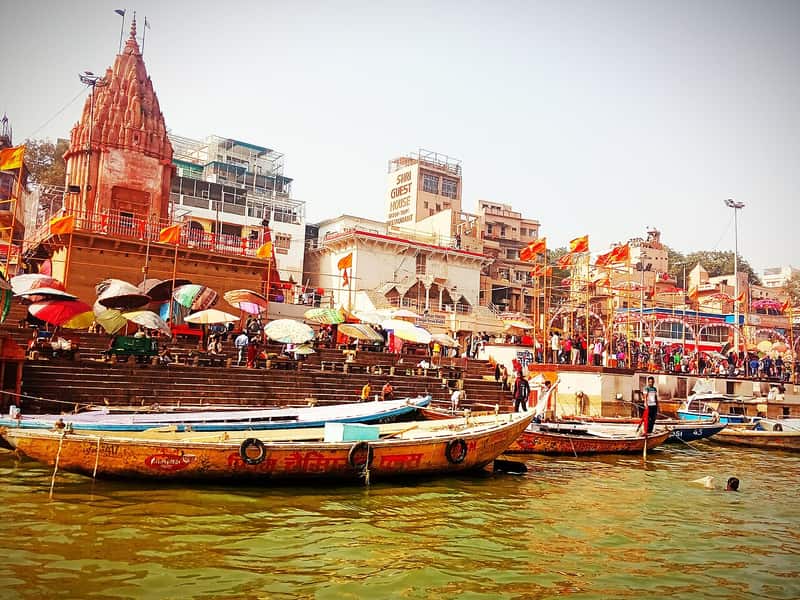
In Varanasi, the sacred Ganges provides the perfect setting for these ancient rituals. The sight of devotees standing waist-deep in the river, offering prayers to the rising and setting sun, is one of the most moving spectacles in Indian spirituality. The festival showcases the deep connection between the people of Varanasi and the natural elements.


Chhath Puja 2026 — Complete 4-Day Schedule
Nahay Khay
The first day involves ritual bathing in the Ganges and eating prasad. Devotees prepare their homes and kitchens for the three-day fast. Only one meal is eaten on this day, prepared in a clean kitchen with freshly polished utensils.
Key Ritual: Holy bath + first meal
Kharna / Lohanda
The second day devotees observe a strict nirjala fast (without water). In the evening, they eat a special meal of puri, kheer, and thekua after offering it to the Sun God. This meal is the last food until the fast ends on the fourth day.
Key Ritual: Nirjala fast + evening meal
Sandhya Arghya
The most spectacular day. Devotees stand in the Ganges at sunset, offering arghya (water offerings) to the setting sun with decorated bamboo baskets (soop) filled with fruits, thekua, and coconuts. Thousands of diyas float on the river.
Key Ritual: Sunset offerings in the river
Usha Arghya
The final and most beautiful day. Devotees stand in the river before sunrise to offer prayers to the rising sun. Hundreds of devotees waist-deep in the water, silhouetted against the first rays of dawn, creating an ethereal and deeply moving spectacle.
Key Ritual: Sunrise offerings + fast breaking
The Four-Day Rituals in Detail


Sandhya Arghya — The Sunset Offering
On the third day, devotees prepare decorated bamboo baskets called "soop" or "daura" filled with offerings. These include seasonal fruits (banana, coconut, sugarcane, sweet lime, pineapple), home-cooked thekua, rice laddoos, andSpecification coconut. The offerings are arranged beautifully in the basket with mango leaves and sacred grass.
As the sun begins to set, the vratin (fasting devotee, usually a married woman) carries the soop on her head and walks to the riverbank. Accompanied by family members singing Chhath songs, she enters the water and stands waist-deep, holding the offerings towards the setting sun. The arghya (water offering) is performed three times, with each offering accompanied by specific mantras.
Usha Arghya — The Sunrise Offering
The final day begins before dawn. Devotees gather at the riverbank in the dark, their diyas creating points of light across the ghat. As the first rays of the sun appear on the horizon, the vratin offers arghya to the rising sun. This moment — the offering to Usha (dawn) — is the most sacred and beautiful of the entire festival.
After the sunrise offering, the vratin breaks her 36-hour fast by drinking water from the Ganges and eating a piece of thekua. Family members touch her feet to receive her blessings, marking the completion of the Chhath Puja rituals.
Best Ghats for Chhath Puja Celebration

Assi Ghat
The most popular ghat for Chhath Puja in Varanasi. Hosts thousands of devotees for both Sandhya and Usha Arghya. The ghat is beautifully decorated with lights and flowers. Arrive by 3:00 AM for sunrise viewing. Local volunteers distribute free water and prasad.
Dashashwamedh Ghat
The main ghat of Varanasi hosts elaborate Chhath celebrations. The Ganga Aarti on Chhath evening is particularly grand. The ghat has good viewing areas for both sunset and sunrise offerings. Security and crowd management are well-organized here.
Rajghat Ghat
A more peaceful option with fewer tourists. Popular among local families for Chhath celebrations. The wide riverbank provides ample space for devotees. Less crowded than Assi or Dashashwamedh, making it easier to get good viewing spots.
Tulsi Ghat
Known for its literary and cultural programs during Chhath. Devotional songs and Ramcharitmanas readings accompany the rituals. A good choice for those interested in the cultural aspects of the festival.
Food Prepared During Chhath Puja


Sacred Foods of Chhath
Thekua
The most important Chhath offering. Made from wheat flour, jaggery, ghee, and dry fruits, thekua is prepared in special molds. It must be made in a clean kitchen without tasting during preparation. The shape varies — round, rectangular, or shell-shaped.
Puri & Kheer
Puri (fried bread) and kheer (rice pudding) are prepared on Kharna day as the meal to break the nirjala fast. These are offered to the Sun God first, then eaten by the devotee.
Seasonal Fruits
The soop (offering basket) is filled with seasonal fruits: banana, coconut, sugarcane, sweet lime (mosambi), pineapple, and apple. These represent nature's bounty and gratitude to the Sun God.
Rice Laddoos & Chana
Special rice flour laddoos and roasted chana (chickpeas) are also included in the offerings. These are prepared without onion, garlic, or any non-vegetarian ingredients.
Strict Rules: All cooking must be done in a freshly cleaned kitchen. The cook must be pure-minded and pure-bodied. No one tastes the food during preparation. Only new or freshly polished utensils are used. The food is prepared with devotion and gratitude.
Beliefs & Significance of Chhath Puja
Ancient Vedic Origins
Chhath Puja finds mention in the Rigveda, one of the oldest texts in the world. The hymns praising Surya (the Sun God) recited during Chhath are from this ancient scripture. The festival is believed to have been performed by Karna, the legendary warrior from the Mahabharata, who was the son of Surya.
The festival celebrates the Sun's role as the source of all energy and life on earth. It is a expression of gratitude for the life-sustaining power of sunlight and a prayer for its continued blessings.
Scientific Significance
Standing in water during sunrise and sunset exposes the body to the first and last rays of sunlight, which are believed to have healing properties. The Vitamin D from sunlight, combined with the cooling effect of water, creates a natural therapeutic experience that has been practiced for millennia.
The strict purity rules of food preparation promote hygiene and mindful eating. The fasting period allows the digestive system to rest and detoxify, which has documented health benefits.
Chhathi Maiya — The Sixth Mother
Chhath Puja is dedicated not just to Surya but also to his sister Chhathi Maiya (Usha), who is believed to be the protector of children. Parents pray to her for the health and well-being of their children. She is considered the sixth form of Adi Shakti (primordial cosmic energy).
In Varanasi, families with young children particularly observe Chhath Puja with great devotion, seeking Chhathi Maiya's blessings for their children's protection and prosperity.
What NOT to Do During Chhath
- ✗ Do not use onion, garlic, or non-vegetarian food in cooking
- ✗ Do not use the same kitchen utensils for regular cooking
- ✗ Do not wear leather items during the puja days
- ✗ Do not use flash photography near the offering areas
- ✗ Do not touch the offerings or the soop without permission
- ✗ Do not make loud noise near the bathing ghats during rituals
Safety Tips & Visitor Guide
Do's for Visitors
- ✓ Arrive at least 2 hours before sunrise/sunset for good spots
- ✓ Wear warm layers — October mornings are cold in Varanasi
- ✓ Carry a torch/flashlight for early morning navigation
- ✓ Respect the devotees' space and maintain silence
- ✓ Accept prasad if offered — it is a blessing
- ✓ Follow crowd management instructions from police
Transport & Crowd Management
- → Roads near ghats are closed to vehicles during peak hours
- → Use auto-rickshaws or walk to reach the ghats
- → Extra buses and shuttle services run during Chhath
- → Mobile phone signals may be slow due to network congestion
- → Keep children close — crowds can be overwhelming
- → Use designated pedestrian routes to reach ghats


Frequently Asked Questions
What is Chhath Puja?
When is Chhath Puja in 2026?
Where can I watch Chhath Puja in Varanasi?
What food is prepared during Chhath Puja?
Can anyone participate in Chhath Puja?
Is Chhath Puja safe for tourists to attend?


Witness Chhath Puja in Varanasi
Get festival timings, ghat guides, and viewing tips on our app
Download the App