
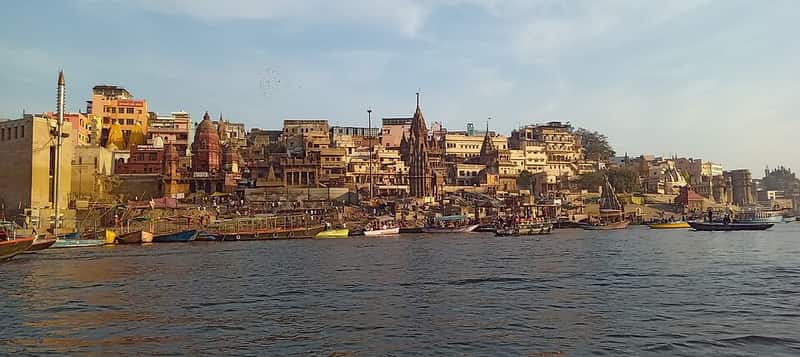
Varanasi photographs itself — a thousand-year-old city of stairs, smoke, silk and river light that artists have chased for two centuries. But it rewards a few honest rules: the light is sacred in the first and last hours, some places are not for the camera at all, and the best photographs are never taken from a moving vehicle. This guide maps the frames, the hours and the fences, so your gallery comes home golden and your conscience stays clean.
The hours that matter
Everything in Varanasi photography happens in the first and last hours of light. Sunrise on the river — 5:30 to 7 AM in summer, 6 to 7:30 in winter — gives you the classic: mist, bathers and boats in backlight. The evening window from 5 PM to the aarti paints the ghats amber, and the aarti itself is the only night show that rewards a fast lens.
Midday light is harsh but not dead: the shaded lanes of the old city, the covered bazaars and the interiors of temples work in any hour. Plan the skyline for sunrise, the streets for noon, and the aarti for dusk.
The classic frames
Assi Ghat at dawn
Yoga silhouettes, the sangam and the sunrise — the city's most composed morning.
Scindia at golden hour
The leaning, half-sunk Shiva temple with the evening light pouring off the stones.
The aarti from the water
A shared boat rowing out before 7 PM — the full crescent of flames in one frame.
Namo Ghat at sunset
The new modern ghat, wide promenades and the big statue in orange light.
From a boat
The river is the tripod of Varanasi photography. A sunrise row from Assi — shared ₹200-300, or private for your own pace — gives the full ghat skyline in backlight, the painted temples in clean side light, and the bathers unposed. Mid-day rows offer the northern ghats with fewer boats and clearer composition.
Carry your lens cloth: the river air and dawn moisture fog any glass in ten minutes.
The hard lines
Street photography in the lanes
The morning lanes
Godowlia and the milk lanes at 6 AM are empty, golden and full of characters — the finest street hour.
The weavers
Madanpura and the silk lanes: ask at the door, most weavers are proud to be photographed mid-loom.
The market frames
Thatheri Bazar at 8 AM and the flower market at Dashashwamedh before 6 AM are colour walls in themselves.
Kit for the city
| One body, two lenses | A 24-70 (or phone wide) for the ghats and a 85-135 for portraits; light beats kit. |
| Polarizer | Kills the river glare and deepens the water blue in the noon flat light. |
| Waterproof pouch | Monsoon rows are drizzly and the steps get slick; a cheap dry-bag saves the card. |
Respect shots
The best photographs of Varanasi are taken with permission, patience and a smile. The sadhus at Assi, the boatmen, the tea wallahs and the school children — almost everyone says yes if you ask. A small tip for a portrait is welcome, not required. And the photographs you do not take — the cremation, the grief, the sacred hush — are the ones that make the trip a pilgrimage and not just a photoshoot.
The same respect shapes the frame: silence the shutter near prayers, kneel to bather level instead of towering from above, and put the camera away at the moments that feel like arrival. The travellers who come home with the fewest files usually carry the most.
Quick Takeaway
- ✓ Shoot 6-7 AM and 5-6 PM — golden hours.
- ✓ Boat at sunrise: the full skyline in one row.
- ✓ Never at cremation ghats; no drones; no museum photos.
- ✓ Ask before portraits; a smile opens the lanes.
Quick Answers
Can I take photos at the ghats?
Yes — the ghats are open and camera-friendly, with two hard exceptions: the cremation ghats (never) and temple sanctums (no).
Are drones allowed in Varanasi?
No — the ghat area and old city are a no-drone zone, strictly enforced near the temples and crowd events. Fines are real.
Do I need a tripod?
Not for daylight — hand-held is fine on the ghats. For the aarti and low light, a tiny table-pod or the boat rail works better than a big tripod in the crowd.
What is the best portrait spot?
The Assi ghat steps at first light, with the river behind — soft, golden and private before the crowds.
Should I photograph people directly?
Ask first — a smile and a raised camera usually works. Many sadhus expect a small gift for a portrait; it is welcome, never demanded.
What about the aarti — photos allowed?
Yes, phones and cameras are everywhere at the aarti; keep the flash off and do not block the view of others. The water view from a boat is the cleanest frame.
More Guides in explore
📅 Last updated: 21 Aug 2026 · Author: NaviX Field Team (field research 2024-26)
Sources: UP Tourism, Varanasi Smart City, IIT-BHU, GI Registry · Emergency Contacts