
The Ganga Aarti at Dashashwamedh Ghat is Varanasi most photographed ritual — a mesmerizing ceremony of fire, music, and devotion performed every evening at sunset. But behind its visual grandeur lies a rich history spanning centuries and a deep philosophical meaning rooted in Hindu cosmology.
Key Takeaways
- Origins of the Aarti Tradition
- The Ritual Explained
- Spiritual Significance
- How to Experience the Aarti
Origins of the Aarti Tradition
The aarti tradition in Varanasi dates back to ancient times when Vedic priests performed fire rituals at the riverbanks. The modern format of the Dashashwamedh Ganga Aarti was formalized in the 1920s by the Mahant (head priest) of the temple.
The name "Dashashwamedh" means "the ghat where ten horses were sacrificed." According to legend, Lord Brahma performed the Ashvamedha Yagna here, and the aarti is believed to recreate that primordial fire ceremony.
Ancient Roots
Vedic fire rituals on the Ganga banks date back over 3,000 years.
Modern Format
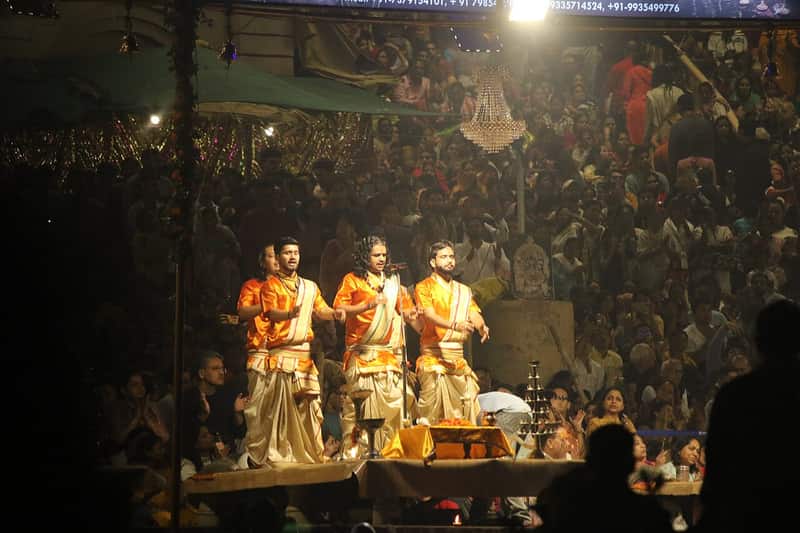
Formalized in the 1920s. Seven priests perform simultaneously, representing the seven continents.
The Ritual Explained
The aarti follows a precise sequence: first, conch shells are blown to purify the atmosphere. Then, sacred lamps of increasing size are waved in clockwise circles while priests chant mantras from the Rigveda. The entire ritual is synchronized to the rhythm of bells and drums.
The aarti is directed towards the Ganga as an offering of light to the river goddess. It represents the removal of darkness (ignorance) and the welcoming of divine wisdom.
Duration
45 minutes, starting at sunset (times change seasonally).
Number of Priests
Seven priests, each representing a continent, perform the ritual in unison.
Instruments Used
Conch shells, brass bells, cymbals, drums, and the multi-tiered aarti lamp.
Spiritual Significance
In Hindu philosophy, the aarti represents the five elements: earth (flowers), water (Ganga), fire (the lamp), air (incense), and space (the chanting). It is a complete offering that engages all senses in worship.
The clockwise motion of the aarti lamp symbolizes the orbit of planets and the cyclical nature of time. It reminds devotees that life, like the flame, is both fragile and powerful.
Five Elements
The aarti engages all five senses — sight (fire), sound (bells), smell (incense), touch (warmth), taste (prasad).
How to Experience the Aarti
The aarti happens daily at Dashashwamedh Ghat at sunset. During peak tourist season (October-March), the ghat fills up by 5:00 PM. Arriving early ensures a seat on the upper steps with a clear view.
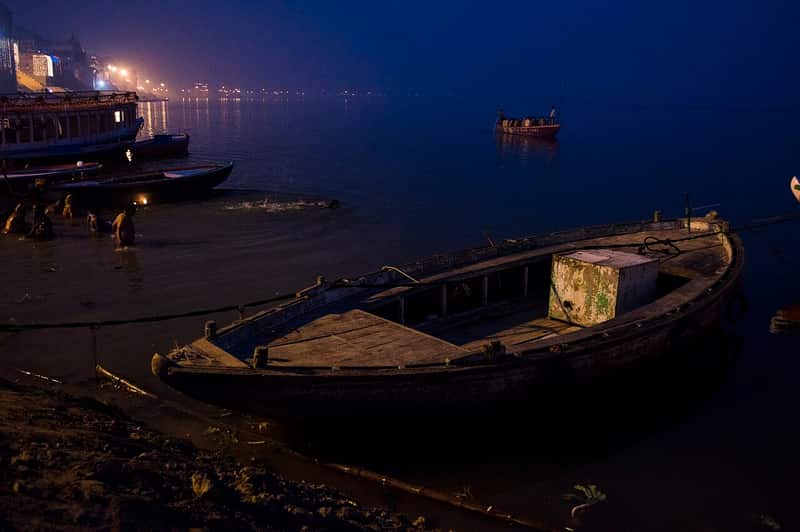
For an alternative perspective, book a boat ride (Rs 100-300 per person) and watch the aarti from the river. The reflection of flames on the water creates an unforgettable sight.
Free Viewing
Watch from the ghat steps. No charge. Arrive by 5 PM for good seats.
Boat Viewing
Rs 100-300 per person. Book from boat operators near the ghat.
VIP Seating
Reserved chairs on the ghat: Rs 200-500. Includes aarti kit and priority viewing.
Quick Tips
Ganga Aarti is daily at sunset at Dashashwamedh Ghat. Free on the steps — arrive by 5 PM. Boat rides Rs 100-300. The ritual lasts 45 minutes and represents the five elements. VIP seats Rs 200-500.
Frequently Asked Questions
Was this article helpful?
Your feedback helps us improve
Enjoyed this article?
Get the latest Varanasi travel tips delivered to your inbox.
Related Articles
 Culture
 Classical Music in Varanasi: The City That Sings
Varanasi is the birthplace of the Benares Gharana and home to countless musicians. Explore the city deep connection with Hindustani classical music.
Culture The Benares School of Art: Painting Divine Beauty
Explore the rich tradition of the Benares School of Painting — a style that blends Mughal miniatures with Hindu iconography to create luminous works of art.
Culture The Weaver Community of Varanasi: Threads of Tradition
Meet the master weavers of Varanasi whose families have woven Banarasi silk for generations. Discover the culture, struggles, and artistry behind every shimmering thread.