
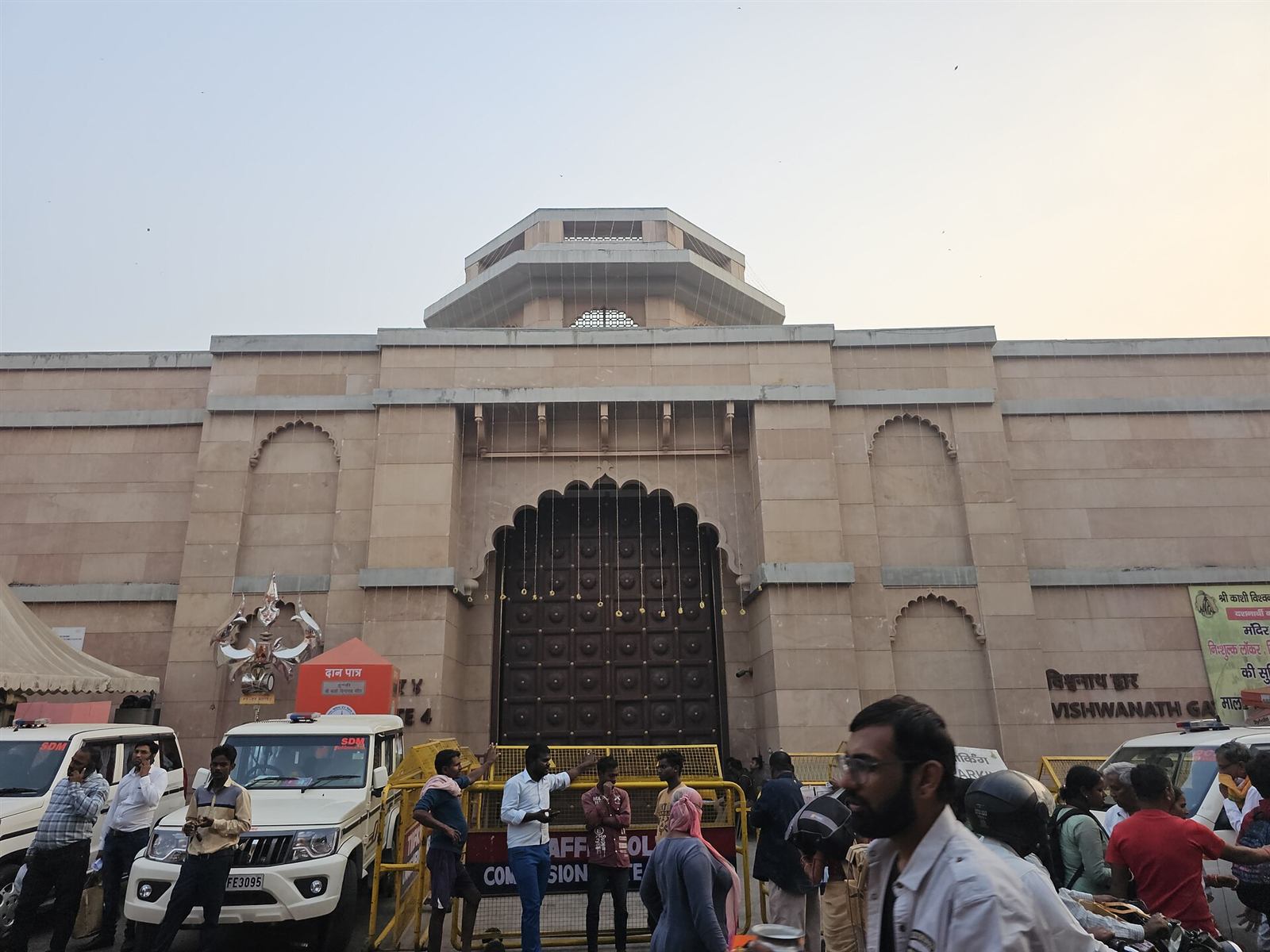
The Holiest Jyotirlinga
Kashi Vishwanath Temple
The abode of Lord Shiva where the Jyotirlinga radiates eternal light. A guide written for pilgrims who want to experience the temple — not just see it.
Sacred Mythology
The Legend of Kashi Vishwanath
Kashi Vishwanath — the "Lord of the Universe" — is one of the twelve sacred Jyotirlingas of Lord Shiva and arguably the most revered Hindu shrine on earth. According to the Kashi Khanda of the Skanda Purana, Varanasi itself rests on the trident of Shiva, and the city exists because Shiva chose it as his eternal home. The temple marks the spot where the first Jyotirlinga is said to have manifested, radiating light in all directions and dispelling the darkness of ignorance.
The mythology runs deep: when Brahma and Vishnu argued over supremacy, Shiva appeared as an infinite pillar of light — the Jyotirlinga — that stretched beyond the comprehension of either god. Brahma took the form of a swan to fly upward, Vishnu as a boar to dig downward, and neither could find the end. In Varanasi, that cosmic light never dimmed. The Kashi Vishwanath temple has been destroyed and rebuilt at least seventeen times throughout history, most recently by Mahadji Scindia in 1780, who financed the construction of the current golden dome with the weight of approximately 1.5 tonnes of gold gifted by Maharaja Ranjit Singh of Punjab.
Every devotee who dies in Varanasi is believed to achieve moksha — liberation from the cycle of rebirth. The temple's proximity to Manikarnika Ghat, the primary cremation ground, reinforces this belief: even death here is a doorway to freedom. The city is called "Mahashmshana" — the Great Cremation Ground — and the juxtaposition of the gleaming golden temple with the smoldering funeral pyres across the river encapsulates the Hindu understanding of life, death, and transcendence as inseparable realities.
Inside the Complex
What You'll See Inside
A walk through the temple reveals layers of devotion, art, and history. Here are the key elements that make this temple extraordinary.
The Jyotirlinga
The original lingam — dark, unadorned, and deeply powerful. It sits in the garbhagriha (inner sanctum) surrounded by silver-plated walls. The lingam is slightly tilted, a detail visible only from close range. Devotees pour water and offer bel leaves directly onto it. The sanctum is intimate — you stand within arm's reach of one of Hinduism's holiest objects.
The Golden Dome & Shikhara
Maharaja Ranjit Singh donated 1.5 tonnes of gold to plate the dome in the early 19th century. The dome rises about 50 feet above the sanctum and catches the first and last light of each day. From certain rooftops in the old city, you can see it glowing against the morning sky. The gold was re-plated in recent decades and remains immaculately maintained.
Nandi Hall
Before reaching the sanctum, you pass through a mandapa housing a large silver Nandi statue facing the lingam. The Nandi is dressed in flowers and garlands. Devotees whisper their prayers into Nandi's ear, believing the bull carries their petitions directly to Shiva. The hall echoes with the sound of bells and chanting.
Jnana Vapi (Wisdom Well)
A sacred well inside the temple complex believed to contain water from the Ganga itself. Legend says Shiva poured his divine knowledge (jnana) into this well to protect it during an invasion. The well is enclosed by a railing and is visible but not always accessible to the public. Its water is considered spiritually purifying.
The Corridor Complex
The recently completed Kashi Vishwanath Dham corridor connects Manikarnika Ghat to the temple via a grand 600-meter pathway. Restored heritage havelis, temples, and a museum line the route. The corridor has transformed what was once a chaotic, narrow-lane experience into a dignified, well-lit pilgrimage walk.
The Aarti Platforms
Designated platforms for Mangala Aarti (3 AM), Bhoga Aarti (11:15 AM), and evening aartis. The Mangala Aarti — pre-dawn, oil-lamp lit, with deep chanting — is the most spiritually intense. Tickets for seated aarti viewing are available online. The evening aarti coincides with the Ganga Aarti visible from the temple terraces.
Plan Your Visit
Darshan Types and Prices — 2026
All paid tickets ONLY on shrikashivishwanath.org — printed e-ticket + photo ID mandatory at the gate
General Darshan
Free
Regular queue through the sanctum passage. Open to all, no booking required. Arrive 5–6 AM on weekdays for shortest waits. Monday and Shravan month (Jul–Aug) are peak crowded.
Sugam Darshan (VIP)
₹250 (without prasad) / ₹300 (with prasad)
Fast-track escorted queue. Book ONLY at shrikashivishwanath.org — slots open 15 days ahead at midnight. Printed ticket + matching photo ID compulsory. Entry via Gate 4. Free locker included with prasad ticket.
Sparsh Darshan (Touch)
₹300–₹1,800
Enter the garbhagriha and touch the Shivling. Strict dress code: dhoti/kurta (men), saree (women). Book 15–45 days ahead; Shravan/Mahashivratri price peaks at ₹1,800. The most intimate darshan available.
Mangala Aarti
₹500
Seated viewing of the pre-dawn awakening ritual with abhishekam. The most prized ticket — set a 2:30 AM alarm on the release night (15 days ahead). Arrive by 2:45 AM. This is the aarti that no photograph can capture.
Bhog Aarti
₹180
Midday offering ritual. Less crowded than evening aarti. Seated viewing with prasad distribution. A good alternative if you missed the Mangala Aarti booking.
Sapta Rishi / Shringar Aarti
₹180 each
Evening aartis with oil lamps and deep devotional singing. Sapta Rishi is more elaborate; Shringar concludes with the night closing ritual. Both are atmospheric and photogenic from the viewing areas.
Booking Essentials
Portal
shrikashivishwanath.org only — fake sites exist
Slot release
15 days ahead, midnight sharp (Sparsh: 45 days)
Entry gate
Gate 4 (Shapuri Mall side) — arrive 30 min early
Helpline
+91 63931 31608
Daily Schedule
Temple Timings & Aartis
Pre-dawn awakening ritual. Requires advance booking. The most spiritually intense moment of the day.
Best time for peaceful darshan — arrive 5–6 AM on weekdays for shortest queues.
Midday offering ritual. Less crowded than evening aarti. Seated viewing available.
Longest queues of the day. Avoid 2–5 PM. Evening slot (5–7 PM) is slightly better.
Evening aarti with oil lamps and deep chanting. Atmospheric and less crowded.
The final aarti of the day — the deity is adorned and put to rest. Temple closes after this ritual.
Getting There
How to Reach Kashi Vishwanath
Walking from Godowlia
From Godowlia crossing, follow signs to the corridor entrance. 10-minute walk through old city lanes. Free and the most common approach for pilgrims.
Auto-rickshaw
Autos drop you at Godowlia or Maidagin — the corridor is pedestrian-only from there. Most autos know the route. Negotiate fare before boarding.
Taxi / Cab (Uber/Ola)
Cabs drop at Godowlia or collectorate road. Cars cannot enter the old city core. Short walk from drop point to corridor entry.
Boat to Manikarnika Ghat
The most atmospheric arrival — take a boat along the Ganga from Assi or Dashashwamedh Ghat. Get off at Manikarnika, right where the corridor begins. Stunning at sunrise.
Varanasi Ropeway (from Nov 2026)
The new ropeway from Cantonment lands at Godowlia — steps from the corridor entrance. Aerial views of the Ganga and old city.
Tips from a Local
Visit early (4–6 AM) on weekdays for the shortest queues and most peaceful atmosphere. The pre-dawn stillness transforms the experience.
Carry a small cloth bag for shoes and leather items. Lockers are available at entry points (₹10–25) but the queue for them adds time.
Avoid Monday and Shravan month (Jul–Aug) unless you want the peak devotional experience. Queues can stretch 6–8 hours during these periods.
Book VIP darshan 2–3 days in advance during festivals. The 6–7 AM Mangala Aarti slot vanishes within seconds of release at midnight.
The golden dome is best photographed at sunrise from rooftops near Dashashwamedh Ghat or from boats on the Ganga. Midday light is too harsh.
Combine with Manikarnika Ghat — the corridor connects them directly. Walk through the corridor, visit the ghat, then take a boat back to Dashashwamedh.
Frequently Asked Questions
What is the significance of Kashi Vishwanath Temple?
What are the temple timings?
Is there a dress code?
Can I take photos inside the temple?
How do I book VIP darshan?
What items are prohibited?
What is the best time to visit?
Continue Your Journey
Kashi Vishwanath Corridor Guide
Complete walkthrough of the 600m corridor from Manikarnika to the temple
Sugam Darshan Booking Guide
Step-by-step VIP darshan booking with tips for securing slots
Varanasi Temple Architecture
Understand the Nagara style and sacred design of Kashi Vishwanath
Ghat Map & Walking Guide
Navigate all 90 ghats — the ghats surround the temple on the river side
Plan Your Kashi Vishwanath Visit
Darshan timings, booking links, and insider tips — all in the NaviX app.
Download the App