

Namo Ghat
Modern GhatThe modern Khidkiya ghat — built for grand events, aarti and boat rides.


Type
Modern Ghat
Boat Fare
1.3x base fare
Best Time
6-9 AM and evening aarti — best for events
History
The new modern Khidkiya ghat was inaugurated by PM Narendra Modi in 2017. Built for grand events, aarti and boat rides, it features new-age architecture like the Vishwanath Dham.
Highlights
- Modern ghat with an event zone
- Grand aarti and laser light shows
- 5-min walk from Khidkiya railway station
- Wide steps — huge tourist capacity
Festivals & Events
How pricing works in the NaviX app
No haggling at the ghat — everything is fixed in the app first
- 1
Fixed price before you board
The fare is shown in the app upfront — no bargaining at the ghat
- 2
Sharing or private — your choice
Share with fellow travelers or take the whole boat for your group
- 3
Pay only after the ride
UPI, card or cash — with an instant receipt
6:30 PM
Modern ghat with evening cultural programs
Complete Guide
Namo Ghat — The Complete Guide
History, mythology, rites and practical details — everything in depth.
On this page
- 1.Namo Ghat: An Introduction
- 2.The Name and the Inauguration
- 3.The Prime Minister and Kashi
- 4.Building the New Ghat
- 5.Design and Architecture
- 6.The Morning Bathing Scene
- 7.Boats and Boatmen
- 8.The River and Its Moods
- 9.The Neighborhood Behind
- 10.Nearby Ghats and Walks
- 11.The New Kashi and Its Pride
- 12.Practical Information
📅 Updated: 21 Aug 2026 · Author: NaviX Field Team (field research 2024-26) · 12 sections · 12 photos
Namo Ghat: An Introduction
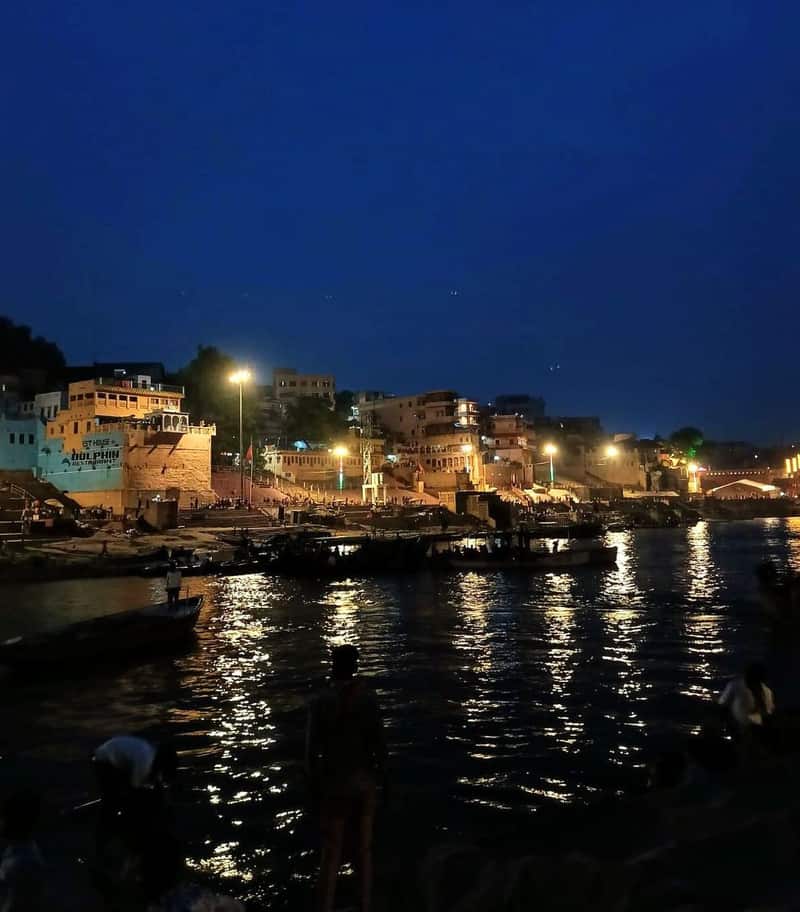
Namo Ghat is the newest and grandest addition to Varanasi's fabled riverfront, rising on the northern shore of the Ganga beyond Raj Ghat. Inaugurated in 2024, the ghat was built as a tribute to the modern spirit of Kashi while honouring the ancient city's timeless relationship with the river. Its name, a shorthand for the Prime Minister who dedicated it to the public, also echoes the Sanskrit word for salutation, so that the very name of the ghat greets the sacred river and the city itself.
The ghat was conceived as part of a larger effort to cleanse and beautify the northern stretch of the riverfront. For decades this area had been neglected, its shoreline cluttered and its access difficult. The new construction has changed all that: wide, even stone steps descend gently into the water, clean terraces frame the river, and careful landscaping makes the shore a pleasure to walk. Where once the riverfront was rough and unkempt, there is now order, light and dignity.
Yet Namo Ghat is no museum piece. Every morning bathers arrive with their brass pots, boatmen tie up their wooden craft along the steps, and visitors from every part of India come to witness the new face of Kashi. The ghat manages to be both modern and devout, a place where the old rituals continue in a setting that belongs to the twenty-first century. For anyone walking the northern ghats, Namo Ghat is the bright new landmark where ancient tradition and contemporary pride meet.
The Name and the Inauguration
The name Namo Ghat is inseparable from the day of its inauguration, which made it one of the most talked-about new landmarks of modern Varanasi. The ghat was dedicated to the public in 2024 amid great ceremony, with crowds thronging the northern shore to witness the moment. For the city it was a matter of pride that the newest ghat of the world's oldest living city carried a name tied to its own contemporary history.
The name itself works on two levels. On the surface it is drawn from the initials and popular shorthand used for the Prime Minister who inaugurated the ghat, a leader who has long cultivated a special relationship with Varanasi as his parliamentary constituency. But the word also carries the older resonance of the Sanskrit root nam, the gesture of respectful salutation. The coincidence is fortunate: every time the ghat's name is spoken, it offers a namaskar to the Ganga.
Since that day the ghat has entered the everyday life of the city. School children visit on outings, newlyweds come for photographs, and pilgrims pause on its steps before continuing to the older ghats upstream. The inauguration was a single day, but the name has become permanent, now printed on maps, boat tickets and the memory of the city. In a riverfront crowded with centuries of history, Namo Ghat has already claimed its own chapter.
The Prime Minister and Kashi
The connection between the Prime Minister and Kashi runs far deeper than a single ceremony. Varanasi has been his parliamentary constituency since 2014, and in that time the city has seen an extraordinary wave of renewal — new roads, new terminals, restored temples and, most visibly, a transformed riverfront. Namo Ghat is the most direct expression of that relationship made in stone, a gift to the city that adopted him as its representative.
For the people of the northern ghats, the connection is personal. The residents of the old mohallas near Raj Ghat watched their neighbourhood change over a decade: drains were covered, lanes were paved, and the shoreline that had been a dumping ground became a place of beauty. The new ghat was not an abstract project for them but the culmination of years of promise, and many of them attended the ceremony with the same joy they would bring to a festival.
The visit itself became part of the city's folklore. The Prime Minister's itinerary included a visit to the ghat, prayers at the river, and addresses to the crowds, and the day ended with the kind of atmosphere only Kashi can create — fire on the water, chants in the air, and a riverfront packed with people. Whatever one's politics, the moment marked a genuine turning point for the northern shore, and the ghat remains a daily reminder of a leader's bond with the city.
Building the New Ghat
The construction of Namo Ghat was a substantial engineering undertaking, carried out on a stretch of shoreline that had been degraded for generations. The first task was environmental: the shoreline had to be cleaned of silt, debris and encroachments, and the riverbed had to be surveyed to ensure that the new steps would be safe and durable. Engineers worked with the river's seasonal moods, since the Ganga rises and falls dramatically between summer and monsoon.
The work was guided by the example of the great ghats upstream, particularly the models of Dashashwamedh and Assi, but with modern materials and methods. Massive stone slabs were laid in precise courses, anchored to withstand the current; terraces and landings were created at intervals so that the ghat remains usable at different water levels; and drainage was carefully planned so that rain and flood waters would not erode the structure. The result is a ghat built to last for centuries.
Alongside the steps themselves, the project included lighting, landscaping, benches and paved approaches from the city side, transforming the whole northern entry to the river. Local labour was employed in large numbers, and for the workers of the surrounding mohallas the project was also a source of pride and livelihood. When the final slab was laid and the crowds gathered for the inauguration, it was the end of a journey that had begun years earlier with a simple promise to clean the riverfront.

Design and Architecture
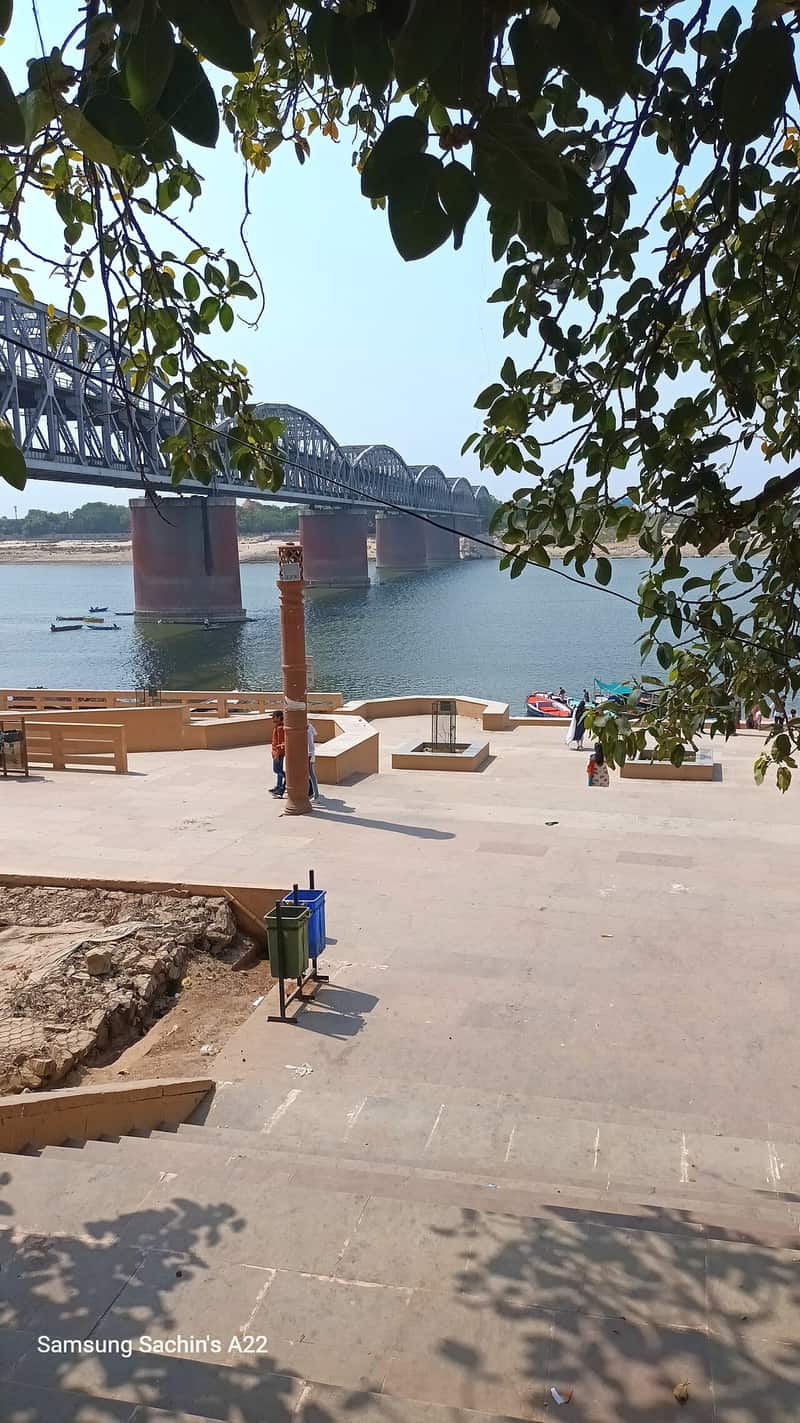
Namo Ghat's architecture is a deliberate fusion of the old and the new. The step geometry follows the classical pattern of Kashi's ghats — a broad cascade of stone descending to the water — but the execution is unmistakably contemporary. The stone is uniform and precisely cut, the courses are clean and level, and the overall effect is one of order and calm, a quiet counterpoint to the tangled lanes of the old city behind it.
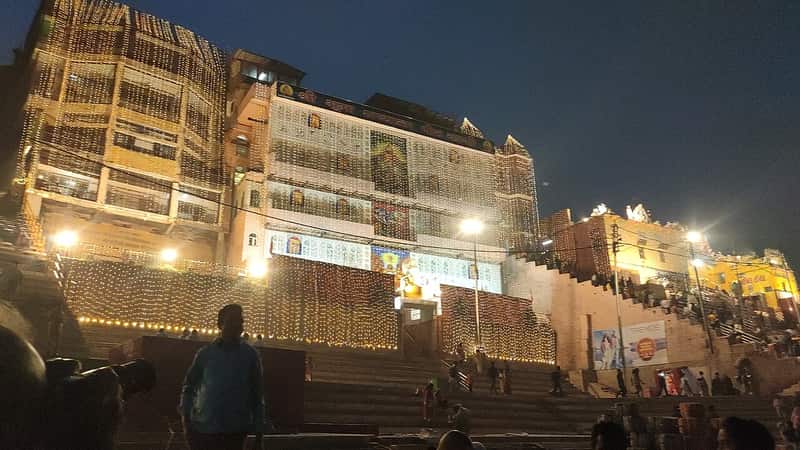
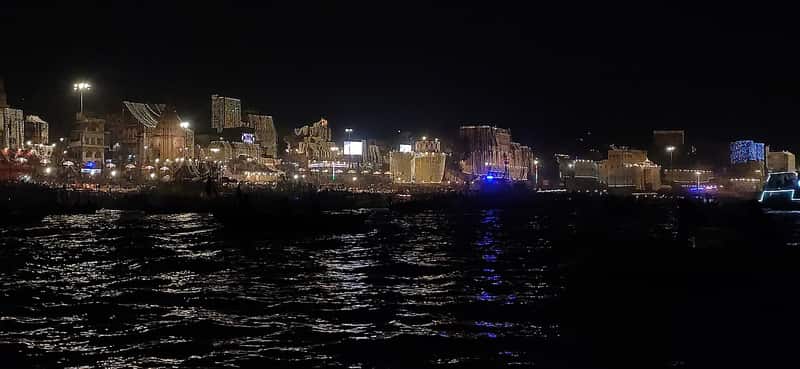
Lighting plays a central role in the design. At dusk, carefully placed lamps outline the steps and terraces, so that the ghat appears as a luminous staircase rising from the darkening river. The effect is spectacular from a boat, where the whole northern shore glows in a ribbon of warm light. The designers also paid attention to the approach: paved plazas, shade trees and low boundary walls make the ghat feel like a public park opening onto the sacred river.
Practicality was as important as beauty. The steps are wide enough for pilgrims to sit comfortably with their families, with shallow risers that are easy to climb for the elderly; drainage channels keep the stone dry and safe; and benches and shelters provide respite from the sun. The landscaping uses hardy native species that thrive beside the river. The result is an architecture that serves devotion and daily life with equal grace — the newest ghat, designed not merely to be admired but to be lived on.
The Morning Bathing Scene
Like every ghat of Kashi, Namo Ghat wakes with the sun. Long before dawn the first bathers arrive, their brass lotas and cloth bundles in hand, moving quietly down the wide steps to the water's edge. The river here, at the northern end of the ghat chain, is relatively calm, and the new steps provide a clean, safe place for the ablutions that are the heart of the ghat's life.
The morning scene is one of gentle order. Men and women bathe in their separate traditions, some pouring water over their heads in ritual sequences, others simply standing waist-deep in the cold current, murmuring prayers. Priests and pujaris offer the rituals for those who request them, and small offerings of flowers and lamps are set afloat on the river. By seven in the morning the steps are a tableau of colour — red and yellow saris, orange marigold garlands, grey stone and golden light.
What distinguishes Namo Ghat from its older neighbours is its ease. The broad terraces give bathers room, the clean stone means no mud and no mess, and the open plan means even visitors who have never performed a river ritual can watch respectfully or take part under guidance. The ghat has quickly become a favourite for families who want the full experience of a Ganga morning without the chaos of the crowded central ghats — proof that a new ghat can still be a true ghat, a stairway of devotion into the sacred water.
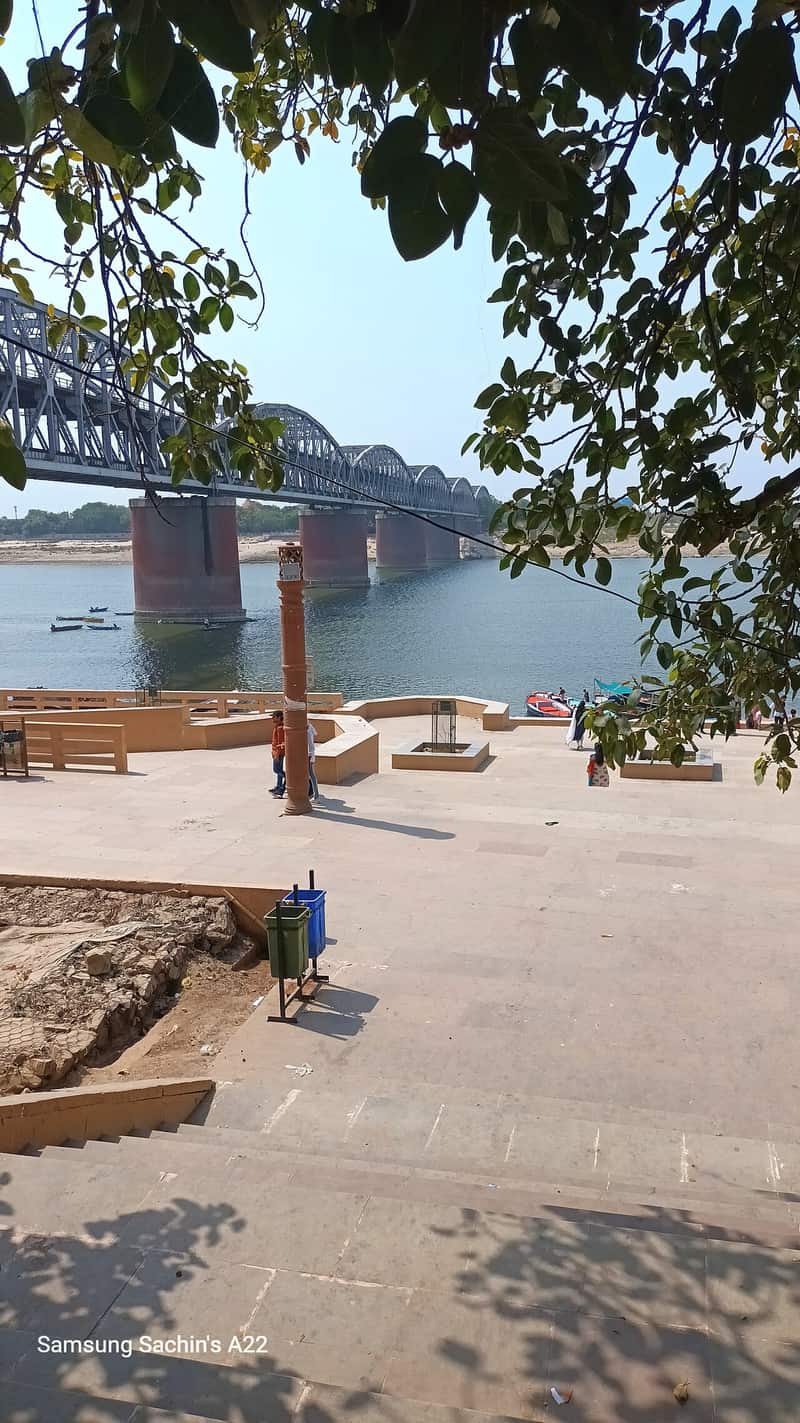
Boats and Boatmen
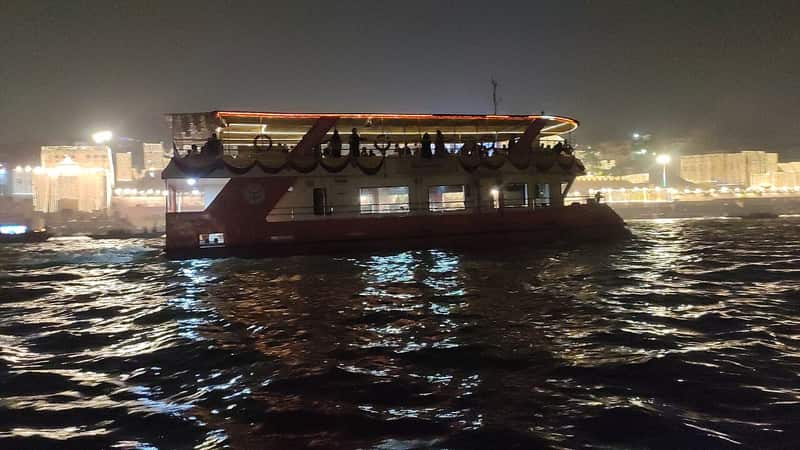
No Varanasi ghat is complete without its boats, and Namo Ghat has taken to river life quickly. The boatmen of the northern shore, many of whom had seen their trade shrink as the neglected stretch lost its charm, have found new custom since the ghat opened. Their wooden craft — painted in bright blues, greens and reds, with striped awnings and brass fittings — now line the new steps, bobbing gently in the current.
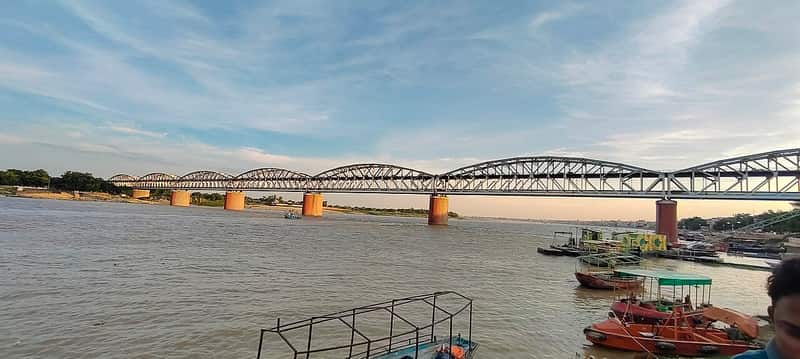
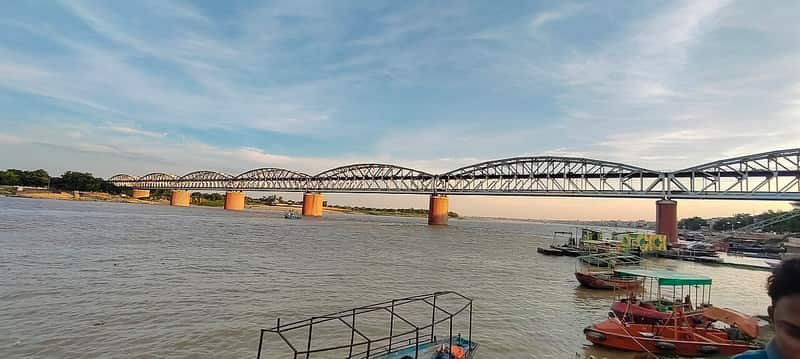
From the river, Namo Ghat reveals its full beauty. As the boatman rows north, the modern staircase rises out of the water like a monument, its clean lines contrasting with the ancient, worn silhouettes of the ghats behind. The crossing to the far bank is short, and the view back includes the whole panorama of the northern shore — Raj Ghat, the old city's skyline and, in the distance, the bridges spanning the Ganga.
The boatmen are the ghat's storytellers. They know the history of every step, the height of the river in every season, and the best hour for light on the water. They will tell you that the new ghat has brought new life to the whole northern stretch — more visitors, more evening boat rides, more festival processions on the water. For them, Namo Ghat is not just a staircase but a livelihood renewed, and their boats, rocking at the foot of its steps, are a sign of the riverfront's new vitality.
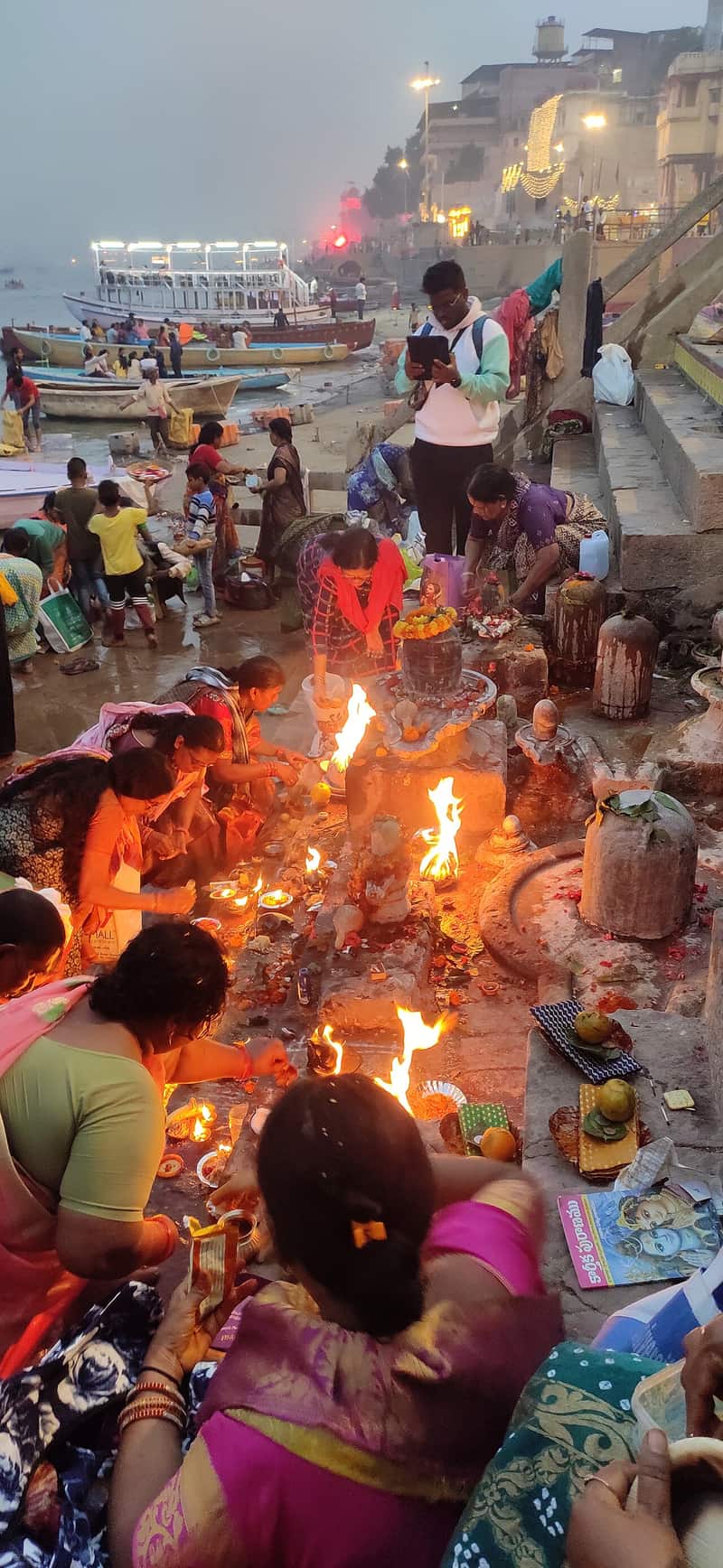
The River and Its Moods
The Ganga at Namo Ghat is a river of many moods. In the dry months of winter and spring the water withdraws far from the upper terraces, leaving the full sweep of stone exposed and creating wide sandbanks on the far side of the channel. In the monsoon the river rises almost to the top of the steps, and the ghat takes on an entirely different character — the same staircase, now lapped by a broad brown flood carrying the rain of the Himalayas to the sea.
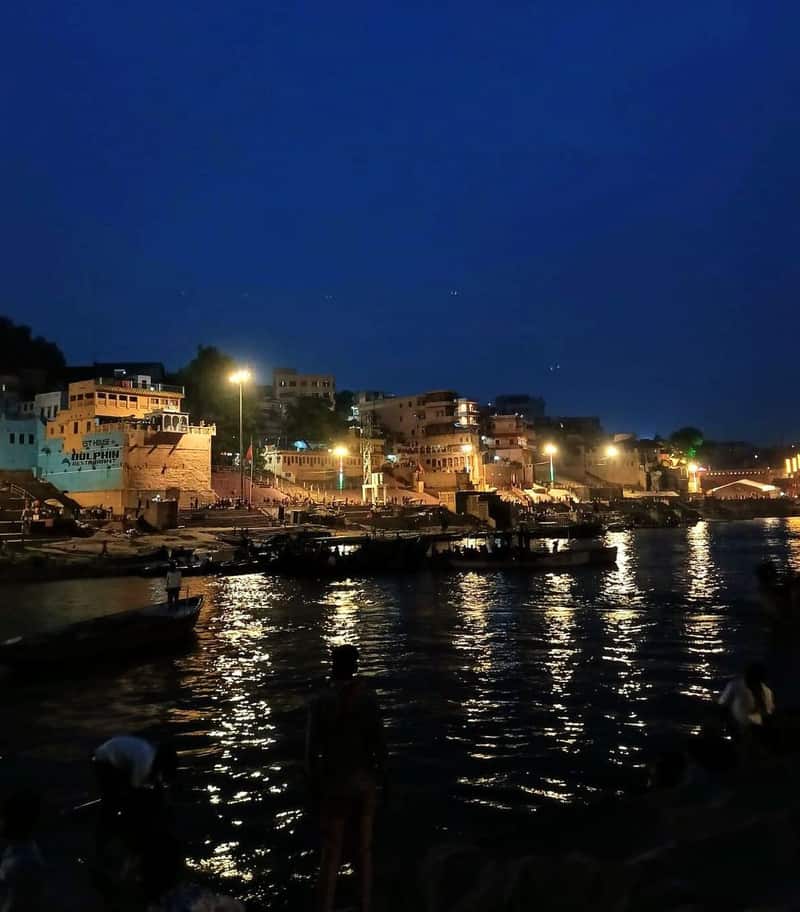
Morning and evening transform the scene with equal drama. At dawn the sun climbs over the far bank, turning the water to hammered gold and silhouetting the bathers on the steps; at dusk the lamps come on and the river becomes a dark mirror streaked with the reflections of the northern shore. Fishermen work their nets in the shallows, birds wheel over the sandbanks, and on festival nights the water carries hundreds of little leaf boats, each bearing a flame.
For those who love the river, Namo Ghat offers something the crowded central ghats cannot: space to simply watch. Sit on the terraces in the afternoon and you see the whole working river — sand dredgers moving up and down, ferries crossing to the far villages, egrets standing motionless in the shallows. The river is older than every stone on its banks, and the newest ghat has been built to honour that fact — a quiet platform from which to contemplate the oldest thing in Varanasi, the Ganga herself.
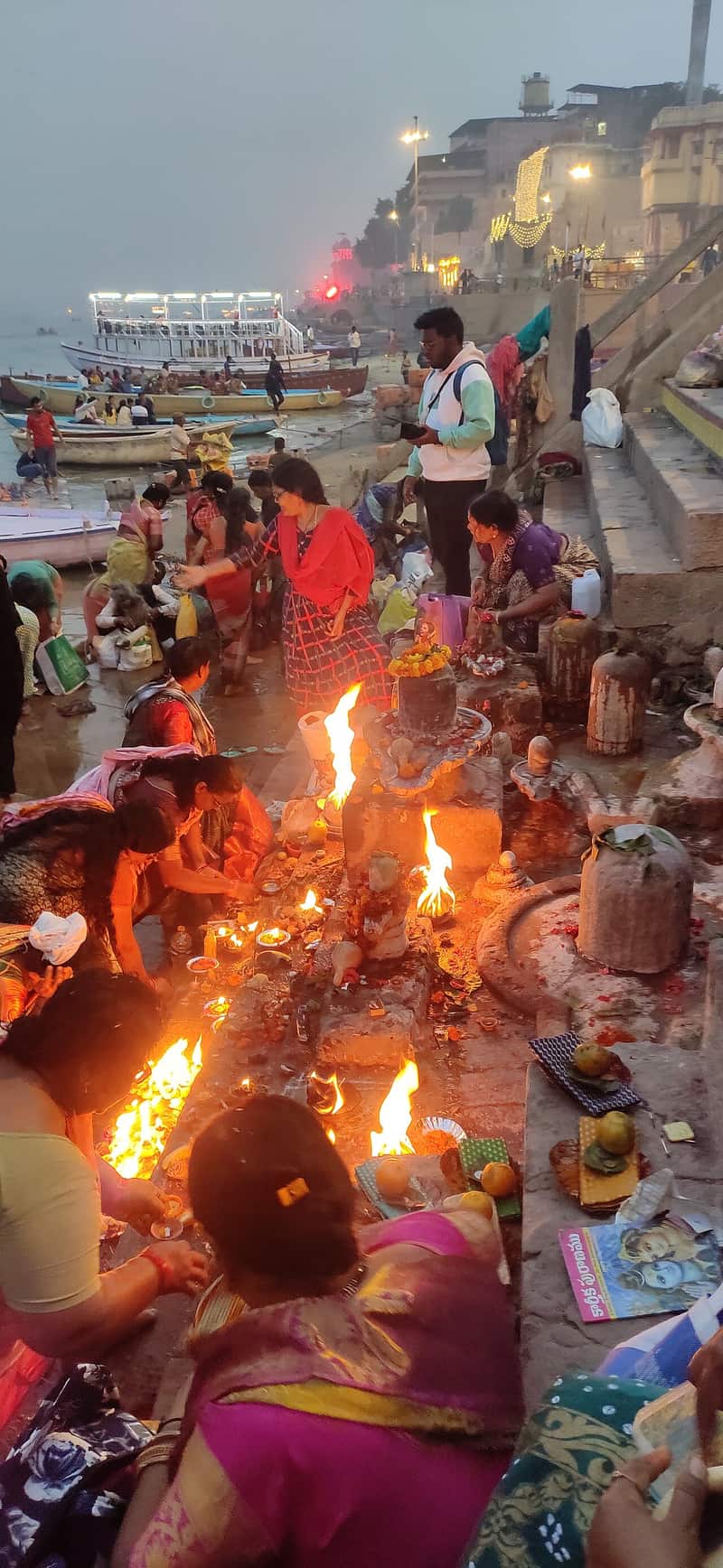
The Neighborhood Behind
Behind Namo Ghat lies a landscape that most visitors never see: the dense, ancient mohallas of northern Varanasi. These lanes, some barely wide enough for two people to pass, wind between houses that have stood for centuries, their facades painted in faded blues and pinks, their doorways opening onto courtyards where the life of the old city continues as it has for generations. The ghat is the front door of this neighbourhood to the river.
The relationship between the mohalla and the ghat has deepened since the new construction. The paved approaches mean that children can now reach the water safely, and the residents, many of whom are boatmen, priests and small traders, have taken a visible pride in the transformed shoreline. Old men gather on the terraces in the evening, women bring laundry to the river's edge, and the festivals of the neighbourhood spill down the steps to the water — the ghat has become an extension of the community's own courtyard.
A walk behind the ghat reveals the layers of the neighbourhood: the temple of a local deity in a lane corner, a small school in a converted mansion, tea shops where the boatmen gather before dawn. The people here will tell you that the new ghat has brought them not just beauty but respect — the attention of the whole city turning, at last, towards this neglected northern corner. For them, Namo Ghat is a homecoming of the river to their own doorstep.
Nearby Ghats and Walks
Namo Ghat sits at the northern end of the great chain of Varanasi ghats, and from its steps a walker can set out in two directions of completely different character. To the south, the ancient ghats follow one another in an unbroken line — Raj Ghat with its royal and cremation history, then the crowded, storied riverfront that culminates in Manikarnika and the great central ghats. To the north, beyond the open shore, the river bends toward the new bridge and the quieter villages of the far bank.
The walk south from Namo Ghat is one of the most atmospheric in all of Varanasi. Within a few hundred metres you pass the weathered stairs of Raj Ghat, the old cremation platforms, and the dense lanes that run down to the water between the ghats. Each ghat has its own patron, its own legend and its own smell of incense, wood smoke and river air. The new ghat makes a clean, bright starting point for this journey into the oldest part of the city.
By boat, the ghat is equally well placed. A short ride south brings the whole panorama of the riverfront into view, while heading north offers a rare sight: the ghat chain ending and the open river taking over, with sandbanks and fishing villages along the far shore. Whether on foot or by boat, Namo Ghat rewards those who begin their day here — the sun rises straight ahead over the water, and the whole sweep of Kashi lies at your back.
The New Kashi and Its Pride
Namo Ghat is more than a staircase; it is a statement about what Varanasi wants to be in the twenty-first century. For generations the northern shore was the forgotten end of the city's famous riverfront — the place where the ghats ran out and neglect began. The new ghat announces that the ghat chain no longer ends in dirt and shadow, but in a clean, lit, dignified landing that belongs to the whole city.
The pride is visible in the people who use it. Families from the northern mohallas bring their children to the ghat on Sundays; school groups come to learn about the river; young couples sit on the terraces at dusk, watching the lamps come on. The ghat has become a gathering place in a way that older ghats, worn by centuries of use, no longer are. It is a public space in the truest sense, and the city has taken it to heart.
In the longer run, the ghat is part of a larger vision for the river — a vision of clean water, cared-for banks and a riverfront worthy of the world's oldest living city. Namo Ghat proves that the vision is possible, that new construction can be beautiful, useful and devout all at once. As the years pass and the new stone weathers, the ghat will take its place among its ancient neighbours, one more stairway of Kashi descending to the eternal Ganga.
Practical Information
Reaching Namo Ghat is easy from most parts of the city. It lies just north of Raj Ghat, beyond the Raj Ghat bridge on the same riverfront road; auto-rickshaws and cycle-rickshaws from the old city reach it in a short ride, and the walk from Raj Ghat takes barely ten minutes along the shore. The paved approach from the city side makes the ghat accessible even for elderly visitors, who can descend the gentle terraces without difficulty.
The best time to visit is early morning, when the bathing scene is at its liveliest and the light on the water is soft and golden; the evening is equally rewarding, when the lamps come on and the river turns dark and reflective. The ghat is open and free at all hours, and no entry fee applies. Carry water and modest clothing; there are no large shops on the ghat itself, though tea stalls and small vendors serve the morning crowds.
Nearby attractions include the older ghats to the south — Raj Ghat, Bhainsasur, and the storied stretch running toward Manikarnika — as well as the northern reaches of the city beyond the bridge. A boat ride from Namo Ghat at dawn is one of the finest ways to see the whole northern riverfront. For photographers, the ghat offers clean lines and clear views of the sunrise; for pilgrims, it is simply another beautiful stairway into the sacred Ganga.
Namo Ghat — Gallery (12 Photos)
Image Credits
namo-01.jpg · namo-02.jpg · namo-03.jpg · namo-04.jpg · namo-05.jpg · namo-06.jpg · namo-07.jpg · namo-08.jpg · namo-09.jpg · namo-10.jpg · namo-11.jpg · namo-12.jpg — Wikimedia Commons, under free licenses.
Continue exploring
Book This Ghat — Get Notified
Download the app now and book a boat ride to Namo Ghat