
The Ganga Aarti of Varanasi is one of the most spectacular religious ceremonies in India. Performed every evening at Dashashwamedh Ghat, this fire ritual has ancient roots but its current form evolved over the centuries.
Key Takeaways
- Ancient Origins of the Aarti
- Evolution of the Modern Ceremony
- Significance and Practice
Ancient Origins of the Aarti
The tradition of offering light to the Ganges dates back to ancient Vedic rituals. The word aarti means the removal of darkness through light, symbolizing the triumph of good over evil.
Ancient texts describe the worship of the Ganges as a goddess, with lamp offerings being an integral part of the ritual. The Mahanirvana Tantra provides detailed instructions for Ganga worship.
Evolution of the Modern Ceremony
The current form of the Ganga Aarti at Dashashwamedh Ghat was formalized in the 20th century. The synchronized performance by young priests using large brass lamps has become an iconic image of Varanasi.
The ceremony has grown from a simple ritual to a grand spectacle, with hundreds of priests performing in unison. It now attracts thousands of spectators every evening.
Significance and Practice
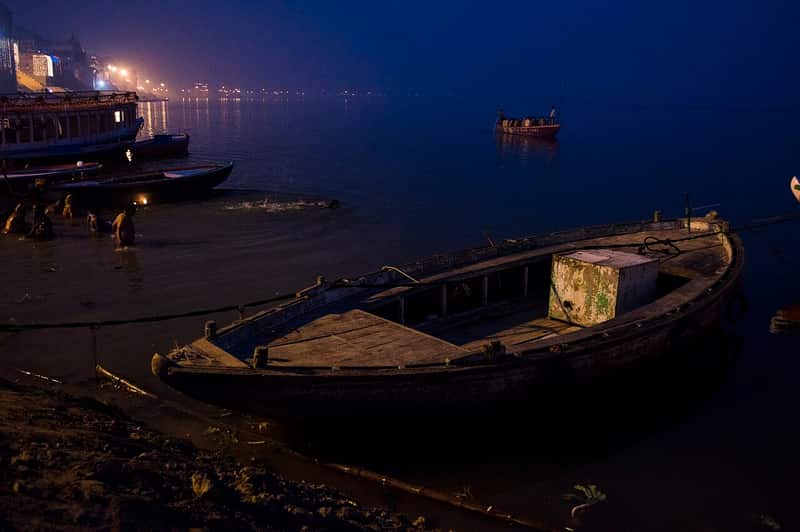
The aarti typically begins at sunset and involves the offering of light to the Ganges using camphor, incense, and multi-tiered brass lamps. Chants from the Vedas and bhajans accompany the ceremony.
The ceremony represents gratitude to the Ganges for sustaining life and the aspiration for spiritual purification. It embodies the deep connection between Varanasi and its sacred river.
Quick Tips
The Ganga Aarti at Dashashwamedh Ghat is performed every evening at sunset. While its roots are in ancient Vedic rituals, the current synchronized form evolved in the 20th century. It now attracts thousands of spectators and has become an iconic symbol of Varanasi.
Frequently Asked Questions
Was this article helpful?
Your feedback helps us improve
Enjoyed this article?
Get the latest Varanasi travel tips delivered to your inbox.
Related Articles
 history
 Varanasi: The Oldest Living City in World History
Exploring the 5,000-year-old city that has never been abandoned
history History of Kashi Vishwanath Temple
The epic journey of one of Hinduism's most sacred shrines
history Varanasi Through the Mughal Era
How the Mughal Empire shaped Varanasi culture over three centuries